





- Home
- Products
- Anti-Fatigue Mats & Runners
- All Anti-Fatigue Mats
All Anti-Fatigue Mats
This is the whole anti-fatigue range on one page — every standing mat we make, from a cushioned kitchen mat for a home sink line to welding-safe industrial fatigue matting, side by side. If your day is spent on concrete or tile, one of the thirty-one mats below is built for exactly the way you stand on it.
It's the right starting point for two kinds of buyers. If you're outfitting more than one space — a prep line, a register, a workshop bench — you can build the whole set here. And if you're not sure yet which kind of standing mat your floor needs, seeing the range in one place sorts that out faster than any single description.
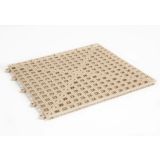 Dri-Dek Interlocking Tiles
Starting at $2.66
What Dri-Dek does before standing water turns a floor slick and moldy In a shower, sauna, locker room, or pool deck, water doesn't just make the floor slick — it sits. A flat surface, even a textured one, holds a film of water right where bare feet land, and the...
What Dri-Dek does before standing water turns a floor slick and moldy In a shower, sauna, locker room, or pool...
What Dri-Dek does before standing water turns a floor slick and moldy
In a shower, sauna, locker room, or pool deck, water doesn't just make the floor slick — it sits. A flat surface, even a textured one, holds a film of water right where bare feet land, and the warm, damp film that lingers between uses is exactly what mold, mildew, and germs feed on. Mopping buys you a few minutes; the water comes back.
Dri-Dek solves it from a different angle: it lifts you above the water. Each tile is a raised, knobby, perforated grid, so water drains straight through and flows away underneath while you stand on the dry high points on top. Air circulates in the gap below, so the floor actually dries between uses instead of staying wet. You get grip up top and a floor that isn't a permanent puddle.
That combination matters in barefoot wet areas. Hygiene and cleaning authorities like ISSA stress that standing water and damp, hard-to-dry floors are what drive both slip risk and microbial growth in showers and locker rooms. A surface that keeps feet up out of the water and lets the floor beneath dry is tackling the slip and the mold problem at the same time.
Why an interlocking raised-vinyl build, and why this one
Dri-Dek is molded from a tough, UV-stabilized virgin vinyl in a flame- and chemical-resistant formulation, which is what lets it live on a wet floor for years. It resists the inorganic acids, oils, grease, detergents, and brine that wet areas and cleaning routines throw at it, holds up from -30°F to 167°F, and carries UV stabilizers so outdoor sun doesn't break it down. The same material is made to resist mold, mildew, and bacteria rather than harbor them.
The design is the other half. Each 12-by-12-inch tile is 9/16 inch thick with a knobby, perforated top, so it drains in every direction and cushions underfoot at the same time — the flex in the raised knobs takes some of the ache out of standing on hard concrete or tile. It's also flame resistant, having passed the UL 94V-0 vertical flame test, and it's tough, with a tensile strength around 2,750 PSI.
Best of all, it goes down without a contractor. The tiles, sheets, and rolls snap together on all four sides to build a surface of any size or shape, and they trim with a knife to fit wall-to-wall or around a drain, a bench, or a corner. Beveled edge and corner pieces finish the exposed borders into gentle ramps. When it's time to clean, you hose it, pressure-wash it, or lift a section and rinse under it.
Where it belongs — and what it isn't
Dri-Dek is at home anywhere a floor gets wet and stays wet. That's pool decks and pool surrounds, showers, saunas, steam and changing rooms, locker rooms, and the damp ring around a spa or hot tub. Because it interlocks into any shape and handles sun and temperature swings, it works indoors and out, in commercial facilities and in a home bathroom, basement, or patio alike.
It helps to be clear about what this isn't. It's a walk-on modular floor surface, not a flotation device, and not the liner sheet that goes under an above-ground pool. If you want a mat to put under a pool or a float for the water, this isn't that product. Dri-Dek installs on top of your existing floor — concrete, tile, or decking — and turns it into a dry, draining surface.
One honest note on chemistry: the vinyl resists most acids, oils, and solvents, but a few aggressive industrial solvents are the exception, so for a specialized chemical environment it's worth checking the specifics with us. In a normal pool, shower, or locker-room setting, chlorine, cleaning products, and daily wear are well within what it's built to take.
Three Things to Check Before You Spec It
Dri-Dek is simple to order once you've settled three things.
First, choose your format. Loose 1-by-1-foot tiles are the most flexible for a small or intricate space and for lifting individually to clean. Pre-assembled 3-by-4-foot sheets or 3-by-12-foot rolls cover a big pool deck or locker room far faster, snapping to each other just like the tiles. Many jobs mix them: rolls for the open floor, loose tiles to fill the edges.
Second, plan your edges. Wherever the surface meets open floor that people step onto, the beveled edge strips and corner pieces turn the 9/16-inch height into a gentle ramp, so there's no lip to trip on and carts or wheelchairs can roll on. Decide which sides are exposed before you order so you have the right trim on hand.
Third, pick a color with the room in mind. It comes in twelve colors, so you can go practical or design-led. Pool Blue and Blue lean fresh and aquatic on a deck; gray, black, and almond read neutral and hide grit in a locker room; brighter colors can zone an area or match a brand. Darker, muted tones show debris the least between cleanings.
Why Mats Inc.
We've been matching mats to real floors since 1964, and a wet floor is one place where the right surface pays off every single day. We'll help you work out how many tiles, sheets, or rolls your space needs, which edge and corner pieces to add, and which of the twelve colors suits the room — and we'll flag anything about your setting that matters before you order. It's part of our wider lineup of pool and wet-area matting, and every order is backed by our 1-year limited warranty.
Material UV-stabilized virgin vinyl (PVC); flame- and chemical-resistant formulation Construction Interlocking modular tile; raised knobby, perforated self-draining surface Tile size 12" x 12" x 9/16" Formats 1' x 1' tiles; 3' x 4' sheets; 3' x 12' rolls (all interlock) Edge / corner pieces 2" x 12" beveled edge; 2" x 2" corner Weight ~14.5 oz per tile (~0.9 lb/sq ft) Colors Twelve (Pool Blue, Blue, Teal, Gray, Black, Almond, Green, Hunter Green, Burgundy, Yellow, White, Red) Temperature range -30°F to 167°F (ASTM D746) Chemical resistance Resists inorganic acids, oils, grease, detergents, brine, most solvents (a few aggressive solvents excepted) Tensile strength ~2,750 PSI (ASTM D412); elongation 348% Weather / UV UV-stabilized; ~98–99% retention of tensile strength and color at 720 hrs Flammability Passed UL 94V-0 vertical flame test Hygiene Resists mold, mildew, and bacteria Installation Snaps together on all sides; trims with a knife Warranty 1-year limited (Mats Inc.) Frequently Asked Questions
How does Dri-Dek keep you out of the water, exactly?
Answered by Dustin Thompson, Owner & CEO
It works by lifting you above the floor instead of just draining the top. Each tile is a raised grid of knobs with a perforated, open surface, so water falls straight through and flows away underneath while your feet rest on the dry high points. The gap beneath lets air move and the floor dry between uses, which is what stops the standing water and the mold and mildew that come with it. It's molded from a tough, UV-stabilized vinyl in a flame- and chemical-resistant formulation built to live in that wet environment.
Will it hold up to chlorine, sun, and years of wet use?
Answered by Dustin Thompson, Owner & CEO
It's built for exactly that. The vinyl resists inorganic acids, oils, grease, detergents, and the brine and chlorine of a pool environment, and it's UV-stabilized so sun doesn't make it brittle — in weatherometer testing it held around 98 to 99 percent of its tensile strength and color. It works continuously from -30°F to 167°F, so an outdoor deck through summer and winter is no problem, and it passed the UL 94V-0 vertical flame test. A couple of aggressive industrial solvents are the exception, so for a specialized chemical setting, check with us first.
How do the tiles, sheets, and rolls differ, and which should I get?
Answered by Dustin Thompson, Owner & CEO
They're the same surface in three formats, and they all interlock with each other. Loose 1-by-1-foot tiles are the most flexible — best for small or intricate spaces and for lifting one at a time to clean under. The 3-by-4-foot sheets and 3-by-12-foot rolls are pre-assembled tiles that cover a big pool deck or locker room much faster. Most large jobs mix them: rolls or sheets for the open floor, loose tiles to fill in edges and odd corners.
Where does Dri-Dek work best?
Answered by Jinna Hopson, VP of Marketing
Anywhere a floor gets wet and stays wet, indoors or out. It's a natural on pool decks and surrounds, in showers, saunas, steam and changing rooms, and locker rooms, and around the damp base of a spa or hot tub. Because it snaps into any shape and handles sun and temperature swings, it's just as at home in a commercial aquatic center as in a home bathroom, basement, mudroom, or patio. If the floor gets wet, it has a place there.
What colors does it come in, and how should I choose?
Answered by Jinna Hopson, VP of Marketing
It comes in twelve colors, which is part of what makes it easy to fit a space rather than fight it. Pool Blue and Blue feel fresh and aquatic on a deck or around a spa; gray, black, and almond read neutral and professional in a locker room and hide grit well; and the brighter colors — red, yellow, teal, green — can zone an area or pick up a facility's branding. If you want the floor to disappear and stay looking clean between washes, the darker, muted tones show the least debris.
My space is an odd shape — can I make it fit, and even design a pattern?
Answered by Jinna Hopson, VP of Marketing
Yes, and that's one of the best things about it. Because every piece interlocks on all sides and trims with a knife, you can build a surface to any footprint — around a drain, a bench, a curved pool edge — and finish the exposed sides with beveled edge and corner pieces for a clean, ramped border. And since it comes in twelve colors, you can mix them to create borders, lanes, or a simple pattern, or match a brand color. Send us your layout and we'll help you plan the pieces and colors.
Written by Jinna Hopson, VP of Marketing, Mats Inc.
↑
What Dri-Dek does before standing water turns a floor slick and moldy
In a shower, sauna, locker room, or pool deck, water doesn't just make the floor slick — it sits. A flat surface, even a textured one, holds a film of water right where bare feet land, and the warm, damp film that lingers between uses is exactly what mold, mildew, and germs feed on. Mopping buys you a few minutes; the water comes back.
Dri-Dek solves it from a different angle: it lifts you above the water. Each tile is a raised, knobby, perforated grid, so water drains straight through and flows away underneath while you stand on the dry high points on top. Air circulates in the gap below, so the floor actually dries between uses instead of staying wet. You get grip up top and a floor that isn't a permanent puddle.
That combination matters in barefoot wet areas. Hygiene and cleaning authorities like ISSA stress that standing water and damp, hard-to-dry floors are what drive both slip risk and microbial growth in showers and locker rooms. A surface that keeps feet up out of the water and lets the floor beneath dry is tackling the slip and the mold problem at the same time.
Why an interlocking raised-vinyl build, and why this one
Dri-Dek is molded from a tough, UV-stabilized virgin vinyl in a flame- and chemical-resistant formulation, which is what lets it live on a wet floor for years. It resists the inorganic acids, oils, grease, detergents, and brine that wet areas and cleaning routines throw at it, holds up from -30°F to 167°F, and carries UV stabilizers so outdoor sun doesn't break it down. The same material is made to resist mold, mildew, and bacteria rather than harbor them.
The design is the other half. Each 12-by-12-inch tile is 9/16 inch thick with a knobby, perforated top, so it drains in every direction and cushions underfoot at the same time — the flex in the raised knobs takes some of the ache out of standing on hard concrete or tile. It's also flame resistant, having passed the UL 94V-0 vertical flame test, and it's tough, with a tensile strength around 2,750 PSI.
Best of all, it goes down without a contractor. The tiles, sheets, and rolls snap together on all four sides to build a surface of any size or shape, and they trim with a knife to fit wall-to-wall or around a drain, a bench, or a corner. Beveled edge and corner pieces finish the exposed borders into gentle ramps. When it's time to clean, you hose it, pressure-wash it, or lift a section and rinse under it.
Where it belongs — and what it isn't
Dri-Dek is at home anywhere a floor gets wet and stays wet. That's pool decks and pool surrounds, showers, saunas, steam and changing rooms, locker rooms, and the damp ring around a spa or hot tub. Because it interlocks into any shape and handles sun and temperature swings, it works indoors and out, in commercial facilities and in a home bathroom, basement, or patio alike.
It helps to be clear about what this isn't. It's a walk-on modular floor surface, not a flotation device, and not the liner sheet that goes under an above-ground pool. If you want a mat to put under a pool or a float for the water, this isn't that product. Dri-Dek installs on top of your existing floor — concrete, tile, or decking — and turns it into a dry, draining surface.
One honest note on chemistry: the vinyl resists most acids, oils, and solvents, but a few aggressive industrial solvents are the exception, so for a specialized chemical environment it's worth checking the specifics with us. In a normal pool, shower, or locker-room setting, chlorine, cleaning products, and daily wear are well within what it's built to take.
Three Things to Check Before You Spec It
Dri-Dek is simple to order once you've settled three things.
First, choose your format. Loose 1-by-1-foot tiles are the most flexible for a small or intricate space and for lifting individually to clean. Pre-assembled 3-by-4-foot sheets or 3-by-12-foot rolls cover a big pool deck or locker room far faster, snapping to each other just like the tiles. Many jobs mix them: rolls for the open floor, loose tiles to fill the edges.
Second, plan your edges. Wherever the surface meets open floor that people step onto, the beveled edge strips and corner pieces turn the 9/16-inch height into a gentle ramp, so there's no lip to trip on and carts or wheelchairs can roll on. Decide which sides are exposed before you order so you have the right trim on hand.
Third, pick a color with the room in mind. It comes in twelve colors, so you can go practical or design-led. Pool Blue and Blue lean fresh and aquatic on a deck; gray, black, and almond read neutral and hide grit in a locker room; brighter colors can zone an area or match a brand. Darker, muted tones show debris the least between cleanings.
Why Mats Inc.
We've been matching mats to real floors since 1964, and a wet floor is one place where the right surface pays off every single day. We'll help you work out how many tiles, sheets, or rolls your space needs, which edge and corner pieces to add, and which of the twelve colors suits the room — and we'll flag anything about your setting that matters before you order. It's part of our wider lineup of pool and wet-area matting, and every order is backed by our 1-year limited warranty.
Material UV-stabilized virgin vinyl (PVC); flame- and chemical-resistant formulation Construction Interlocking modular tile; raised knobby, perforated self-draining surface Tile size 12" x 12" x 9/16" Formats 1' x 1' tiles; 3' x 4' sheets; 3' x 12' rolls (all interlock) Edge / corner pieces 2" x 12" beveled edge; 2" x 2" corner Weight ~14.5 oz per tile (~0.9 lb/sq ft) Colors Twelve (Pool Blue, Blue, Teal, Gray, Black, Almond, Green, Hunter Green, Burgundy, Yellow, White, Red) Temperature range -30°F to 167°F (ASTM D746) Chemical resistance Resists inorganic acids, oils, grease, detergents, brine, most solvents (a few aggressive solvents excepted) Tensile strength ~2,750 PSI (ASTM D412); elongation 348% Weather / UV UV-stabilized; ~98–99% retention of tensile strength and color at 720 hrs Flammability Passed UL 94V-0 vertical flame test Hygiene Resists mold, mildew, and bacteria Installation Snaps together on all sides; trims with a knife Warranty 1-year limited (Mats Inc.) Frequently Asked Questions
How does Dri-Dek keep you out of the water, exactly?
Answered by Dustin Thompson, Owner & CEO
It works by lifting you above the floor instead of just draining the top. Each tile is a raised grid of knobs with a perforated, open surface, so water falls straight through and flows away underneath while your feet rest on the dry high points. The gap beneath lets air move and the floor dry between uses, which is what stops the standing water and the mold and mildew that come with it. It's molded from a tough, UV-stabilized vinyl in a flame- and chemical-resistant formulation built to live in that wet environment.
Will it hold up to chlorine, sun, and years of wet use?
Answered by Dustin Thompson, Owner & CEO
It's built for exactly that. The vinyl resists inorganic acids, oils, grease, detergents, and the brine and chlorine of a pool environment, and it's UV-stabilized so sun doesn't make it brittle — in weatherometer testing it held around 98 to 99 percent of its tensile strength and color. It works continuously from -30°F to 167°F, so an outdoor deck through summer and winter is no problem, and it passed the UL 94V-0 vertical flame test. A couple of aggressive industrial solvents are the exception, so for a specialized chemical setting, check with us first.
How do the tiles, sheets, and rolls differ, and which should I get?
Answered by Dustin Thompson, Owner & CEO
They're the same surface in three formats, and they all interlock with each other. Loose 1-by-1-foot tiles are the most flexible — best for small or intricate spaces and for lifting one at a time to clean under. The 3-by-4-foot sheets and 3-by-12-foot rolls are pre-assembled tiles that cover a big pool deck or locker room much faster. Most large jobs mix them: rolls or sheets for the open floor, loose tiles to fill in edges and odd corners.
Where does Dri-Dek work best?
Answered by Jinna Hopson, VP of Marketing
Anywhere a floor gets wet and stays wet, indoors or out. It's a natural on pool decks and surrounds, in showers, saunas, steam and changing rooms, and locker rooms, and around the damp base of a spa or hot tub. Because it snaps into any shape and handles sun and temperature swings, it's just as at home in a commercial aquatic center as in a home bathroom, basement, mudroom, or patio. If the floor gets wet, it has a place there.
What colors does it come in, and how should I choose?
Answered by Jinna Hopson, VP of Marketing
It comes in twelve colors, which is part of what makes it easy to fit a space rather than fight it. Pool Blue and Blue feel fresh and aquatic on a deck or around a spa; gray, black, and almond read neutral and professional in a locker room and hide grit well; and the brighter colors — red, yellow, teal, green — can zone an area or pick up a facility's branding. If you want the floor to disappear and stay looking clean between washes, the darker, muted tones show the least debris.
My space is an odd shape — can I make it fit, and even design a pattern?
Answered by Jinna Hopson, VP of Marketing
Yes, and that's one of the best things about it. Because every piece interlocks on all sides and trims with a knife, you can build a surface to any footprint — around a drain, a bench, a curved pool edge — and finish the exposed sides with beveled edge and corner pieces for a clean, ramped border. And since it comes in twelve colors, you can mix them to create borders, lanes, or a simple pattern, or match a brand color. Send us your layout and we'll help you plan the pieces and colors.
Written by Jinna Hopson, VP of Marketing, Mats Inc.
↑
View Details
View Details
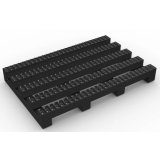 Vynagrip Matting
Starting at $543.00
What Vynagrip does before someone slips on a wet deck Around a pool, in a locker room, or behind a wet bar, the floor is the part of the room you stop noticing — right up until a foot goes out from under someone. It's easy to assume a textured...
What Vynagrip does before someone slips on a wet deck Around a pool, in a locker room, or behind a...
What Vynagrip does before someone slips on a wet deck
Around a pool, in a locker room, or behind a wet bar, the floor is the part of the room you stop noticing — right up until a foot goes out from under someone. It's easy to assume a textured tile or a quick wipe-down has it covered. The trouble is that water has nowhere to go on a flat surface, so it sits in a thin film exactly where people walk barefoot or in wet shoes.
Vynagrip is built to break that film. Its open-grid surface lets water drain straight through to the floor below, so the top of the mat stays in contact with feet instead of with a puddle. The raised diamond tread gives shoes and bare skin something to bite into. That combination is what separates a real non-slip pool mat from one that only looks grippy while it's dry.
A slick pool deck or wet-area floor isn't a small problem. The National Floor Safety Institute points to wet, hard floors as one of the most common settings for slip-and-fall injuries, and a busy deck or beverage station sees a steady stream of wet feet all day. Matting that keeps traction underfoot while the water disappears below is doing safety work, not decoration.
Why an open-grid PVC build, and why this one
Vynagrip is made from flexible, non-porous PVC in a two-layer, open-grid construction. Non-porous matters more than it sounds. Because water and spills can't soak into the material, the mat doesn't hold moisture the way a fabric or foam surface would — so it won't turn into a home for bacteria or mildew in a damp pool area or shower room.
The two-layer grid is what makes the drainage work. Water passes through the open pattern on top and clears out underneath, so the walking surface stays usable even when the deck around it is soaked. On traction, the surface is rated R11 under DIN 51130 and scores 72–88 wet on the ASTM E303 pendulum test — strong numbers for a barefoot, wet-area mat.
It's also tougher than a pool mat strictly needs to be, which is the point: it holds up. The PVC resists most acids, alkalines, and oils, and it stays workable across a wide temperature range, from well below freezing up to 140°F. The two-layer build adds a little give underfoot too, so standing on it for a while is easier on your legs than standing on bare concrete.
Where it belongs — and what it isn't
Vynagrip earns its place anywhere water and foot traffic meet. Think pool decks and the walkway from the pool to the locker room, shower and changing areas, the floor behind a poolside bar or beverage station, and wet work zones in kitchens, food service, and refrigerated spaces. In each of these, the same job repeats: drain the water, keep the grip.
It helps to be clear about what this mat is not. It's a walk-on surface mat, not a flotation device, and it's not the liner-protector cloth that goes underneath an above-ground pool. If you're looking for a mat to put under a pool or a float for in the water, this isn't that product. Vynagrip works on top of the deck, under your feet — whether that deck is concrete, tile, or paver.
One honest note for outdoor use: the PVC itself resists sun degradation, but the red color isn't colorfast in constant direct sunlight, so a red mat in full sun will fade over time. For exposed outdoor decks, the darker colors are the safer pick. In shaded or indoor wet areas, color holds up fine.
Three Things to Check Before You Spec It
Vynagrip is straightforward to order, but three things decide whether you get the right setup the first time.
First, decide between rolls and modules. Rolls come in 33-foot lengths and standard widths, and they're easy to cut to fit on site — the right call for covering a long deck or an open wet-area floor. Modules arrive pre-cut with finished ramped edging on three sides, so they sit cleanly against a wall or workstation without a trip lip.
Second, match the format to your edges. An open run of matting in the middle of a floor is one thing; a mat people step onto from a dry surface is another. Where a clean transition matters — a doorway, the edge of a bar, the lip of a shower — ramped edging keeps the change in height gentle, so the mat itself doesn't become the thing someone trips on.
Third, plan for sun and heat. Outdoors, choose a darker color and keep the red for shaded or indoor spots. Also know that PVC can shrink slightly — up to about 2% — and heat speeds that up, so on a hot, exposed deck, leave a little room at fixed edges rather than butting the mat tight wall to wall.
Why Mats Inc.
We've been matching mats to real floors since 1964, and wet areas are where the wrong choice shows up fastest. We'll help you size Vynagrip to your actual deck or work zone, talk through rolls versus modules for your layout, and flag the details — edging, color, sun exposure — that catch people out after a mat ships. It's part of our wider lineup of pool and wet-area matting, and every order is backed by our 1-year limited warranty.
Material Non-porous flexible PVC Construction Two-layer open grid with diamond tread Thickness 5/8" (15 mm) Weight 1.6 lb / sq ft Roll sizes 33' lengths in 2', 3', and 4' widths (cut to fit on site) Module sizes 4' x 2'5" and 5' x 3' (ramped edging on three sides) Custom sizes Available on request Slip resistance DIN 51130: R11; ASTM E303 wet: 72–88 Drainage DIN 51130: V10 Chemical resistance Most acids, alkalines, and oils Temperature range -9°F to +140°F Hygiene Non-porous; resists bacteria and mildew Environmental 100% recyclable; no SVHC substances (REACH) Colors Black and red (red not colorfast in direct sun) Warranty 1-year limited (Mats Inc.) Frequently Asked Questions
What is Vynagrip actually made of, and why does that matter near water?
Answered by Dustin Thompson, Owner & CEO
It's a flexible, non-porous PVC mat built in two layers, with an open-grid top and a diamond tread. The non-porous part is the key for wet areas — water and spills can't soak in, so the mat doesn't stay damp or trap the bacteria and mildew that build up on surfaces holding moisture. The open grid lets water drain straight through instead of pooling on top, which is what keeps the walking surface grippy when everything around it is wet.
How slip-resistant is it when the deck is soaking wet?
Answered by Dustin Thompson, Owner & CEO
Wet traction is exactly what it's built for. The surface is rated R11 on the DIN 51130 ramp test and scores 72–88 wet on the ASTM E303 pendulum test, both of which point to strong grip with water present. It also drains at the V10 level, so water keeps moving off the top rather than sitting under your feet. On top of that, the PVC shrugs off most acids, alkalines, and oils and works from below freezing up to 140°F, so a hot deck or a chemical splash won't break it down.
Does it come in rolls or tiles, and can I get a custom size?
Answered by Dustin Thompson, Owner & CEO
Both. You can order it as a roll in 33-foot lengths and 2-, 3-, or 4-foot widths, which you cut to fit on site — good for long decks and open floors. Or you can order modules at 4' x 2'5" or 5' x 3' that arrive with finished ramped edging on three sides, ready to drop against a wall or bar. If your space is an odd shape, custom sizes are available on request.
Can I use this outside around the pool, or is it really an indoor mat?
Answered by Jinna Hopson, VP of Marketing
It works in both, and the pool deck is one of its best homes. Outdoors it handles weather and a wide temperature swing without getting brittle, so it's at ease on an open deck, a poolside path, or a shower and changing area. The one thing to plan for outside is sun: pick a darker color for spots in constant direct sunlight, since the red can fade out there over time. Indoors and in shade, any color holds up.
What does it look like, and what colors can I get?
Answered by Jinna Hopson, VP of Marketing
It has a clean, open diamond-grid look that reads as purposeful rather than busy — like it belongs in a working wet area, not like an afterthought. It comes in black and red as standard. Black is the easy choice for hiding the bits of grit and debris a pool deck collects, while red can mark off a zone or add a little contrast. Just remember the red is best kept out of full, constant sun.
My deck has an awkward layout — will this actually fit it?
Answered by Jinna Hopson, VP of Marketing
Most likely, yes, and that's one of its strengths. Because the rolls cut easily on site, you can shape a run around steps, drains, ladders, and corners instead of forcing your space to match a fixed mat size. For built-in spots like a bar floor or a recessed changing area, the modules with ramped edges give you a finished look. And if nothing standard works, you can have it made to a custom size to fit the exact footprint you've got.
Written by Dustin Thompson, Owner & CEO, Mats Inc.
↑
What Vynagrip does before someone slips on a wet deck
Around a pool, in a locker room, or behind a wet bar, the floor is the part of the room you stop noticing — right up until a foot goes out from under someone. It's easy to assume a textured tile or a quick wipe-down has it covered. The trouble is that water has nowhere to go on a flat surface, so it sits in a thin film exactly where people walk barefoot or in wet shoes.
Vynagrip is built to break that film. Its open-grid surface lets water drain straight through to the floor below, so the top of the mat stays in contact with feet instead of with a puddle. The raised diamond tread gives shoes and bare skin something to bite into. That combination is what separates a real non-slip pool mat from one that only looks grippy while it's dry.
A slick pool deck or wet-area floor isn't a small problem. The National Floor Safety Institute points to wet, hard floors as one of the most common settings for slip-and-fall injuries, and a busy deck or beverage station sees a steady stream of wet feet all day. Matting that keeps traction underfoot while the water disappears below is doing safety work, not decoration.
Why an open-grid PVC build, and why this one
Vynagrip is made from flexible, non-porous PVC in a two-layer, open-grid construction. Non-porous matters more than it sounds. Because water and spills can't soak into the material, the mat doesn't hold moisture the way a fabric or foam surface would — so it won't turn into a home for bacteria or mildew in a damp pool area or shower room.
The two-layer grid is what makes the drainage work. Water passes through the open pattern on top and clears out underneath, so the walking surface stays usable even when the deck around it is soaked. On traction, the surface is rated R11 under DIN 51130 and scores 72–88 wet on the ASTM E303 pendulum test — strong numbers for a barefoot, wet-area mat.
It's also tougher than a pool mat strictly needs to be, which is the point: it holds up. The PVC resists most acids, alkalines, and oils, and it stays workable across a wide temperature range, from well below freezing up to 140°F. The two-layer build adds a little give underfoot too, so standing on it for a while is easier on your legs than standing on bare concrete.
Where it belongs — and what it isn't
Vynagrip earns its place anywhere water and foot traffic meet. Think pool decks and the walkway from the pool to the locker room, shower and changing areas, the floor behind a poolside bar or beverage station, and wet work zones in kitchens, food service, and refrigerated spaces. In each of these, the same job repeats: drain the water, keep the grip.
It helps to be clear about what this mat is not. It's a walk-on surface mat, not a flotation device, and it's not the liner-protector cloth that goes underneath an above-ground pool. If you're looking for a mat to put under a pool or a float for in the water, this isn't that product. Vynagrip works on top of the deck, under your feet — whether that deck is concrete, tile, or paver.
One honest note for outdoor use: the PVC itself resists sun degradation, but the red color isn't colorfast in constant direct sunlight, so a red mat in full sun will fade over time. For exposed outdoor decks, the darker colors are the safer pick. In shaded or indoor wet areas, color holds up fine.
Three Things to Check Before You Spec It
Vynagrip is straightforward to order, but three things decide whether you get the right setup the first time.
First, decide between rolls and modules. Rolls come in 33-foot lengths and standard widths, and they're easy to cut to fit on site — the right call for covering a long deck or an open wet-area floor. Modules arrive pre-cut with finished ramped edging on three sides, so they sit cleanly against a wall or workstation without a trip lip.
Second, match the format to your edges. An open run of matting in the middle of a floor is one thing; a mat people step onto from a dry surface is another. Where a clean transition matters — a doorway, the edge of a bar, the lip of a shower — ramped edging keeps the change in height gentle, so the mat itself doesn't become the thing someone trips on.
Third, plan for sun and heat. Outdoors, choose a darker color and keep the red for shaded or indoor spots. Also know that PVC can shrink slightly — up to about 2% — and heat speeds that up, so on a hot, exposed deck, leave a little room at fixed edges rather than butting the mat tight wall to wall.
Why Mats Inc.
We've been matching mats to real floors since 1964, and wet areas are where the wrong choice shows up fastest. We'll help you size Vynagrip to your actual deck or work zone, talk through rolls versus modules for your layout, and flag the details — edging, color, sun exposure — that catch people out after a mat ships. It's part of our wider lineup of pool and wet-area matting, and every order is backed by our 1-year limited warranty.
Material Non-porous flexible PVC Construction Two-layer open grid with diamond tread Thickness 5/8" (15 mm) Weight 1.6 lb / sq ft Roll sizes 33' lengths in 2', 3', and 4' widths (cut to fit on site) Module sizes 4' x 2'5" and 5' x 3' (ramped edging on three sides) Custom sizes Available on request Slip resistance DIN 51130: R11; ASTM E303 wet: 72–88 Drainage DIN 51130: V10 Chemical resistance Most acids, alkalines, and oils Temperature range -9°F to +140°F Hygiene Non-porous; resists bacteria and mildew Environmental 100% recyclable; no SVHC substances (REACH) Colors Black and red (red not colorfast in direct sun) Warranty 1-year limited (Mats Inc.) Frequently Asked Questions
What is Vynagrip actually made of, and why does that matter near water?
Answered by Dustin Thompson, Owner & CEO
It's a flexible, non-porous PVC mat built in two layers, with an open-grid top and a diamond tread. The non-porous part is the key for wet areas — water and spills can't soak in, so the mat doesn't stay damp or trap the bacteria and mildew that build up on surfaces holding moisture. The open grid lets water drain straight through instead of pooling on top, which is what keeps the walking surface grippy when everything around it is wet.
How slip-resistant is it when the deck is soaking wet?
Answered by Dustin Thompson, Owner & CEO
Wet traction is exactly what it's built for. The surface is rated R11 on the DIN 51130 ramp test and scores 72–88 wet on the ASTM E303 pendulum test, both of which point to strong grip with water present. It also drains at the V10 level, so water keeps moving off the top rather than sitting under your feet. On top of that, the PVC shrugs off most acids, alkalines, and oils and works from below freezing up to 140°F, so a hot deck or a chemical splash won't break it down.
Does it come in rolls or tiles, and can I get a custom size?
Answered by Dustin Thompson, Owner & CEO
Both. You can order it as a roll in 33-foot lengths and 2-, 3-, or 4-foot widths, which you cut to fit on site — good for long decks and open floors. Or you can order modules at 4' x 2'5" or 5' x 3' that arrive with finished ramped edging on three sides, ready to drop against a wall or bar. If your space is an odd shape, custom sizes are available on request.
Can I use this outside around the pool, or is it really an indoor mat?
Answered by Jinna Hopson, VP of Marketing
It works in both, and the pool deck is one of its best homes. Outdoors it handles weather and a wide temperature swing without getting brittle, so it's at ease on an open deck, a poolside path, or a shower and changing area. The one thing to plan for outside is sun: pick a darker color for spots in constant direct sunlight, since the red can fade out there over time. Indoors and in shade, any color holds up.
What does it look like, and what colors can I get?
Answered by Jinna Hopson, VP of Marketing
It has a clean, open diamond-grid look that reads as purposeful rather than busy — like it belongs in a working wet area, not like an afterthought. It comes in black and red as standard. Black is the easy choice for hiding the bits of grit and debris a pool deck collects, while red can mark off a zone or add a little contrast. Just remember the red is best kept out of full, constant sun.
My deck has an awkward layout — will this actually fit it?
Answered by Jinna Hopson, VP of Marketing
Most likely, yes, and that's one of its strengths. Because the rolls cut easily on site, you can shape a run around steps, drains, ladders, and corners instead of forcing your space to match a fixed mat size. For built-in spots like a bar floor or a recessed changing area, the modules with ramped edges give you a finished look. And if nothing standard works, you can have it made to a custom size to fit the exact footprint you've got.
Written by Dustin Thompson, Owner & CEO, Mats Inc.
↑
View Details
View Details
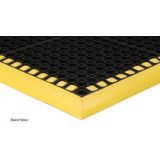 Safety Tru-Tread Rubber Mats
Starting at $158.00
Safety Tru-Tread rubber mats are built for the floors that stay wet and greasy all shift — dish pits, bar lines, oily industrial workstations. The heavy rubber body cushions long hours of standing while drainage holes send liquid through instead of letting it pool underfoot, and a bright yellow...
Safety Tru-Tread rubber mats are built for the floors that stay wet and greasy all shift — dish pits,...
Safety Tru-Tread rubber mats are built for the floors that stay wet and greasy all shift — dish pits, bar lines, oily industrial workstations. The heavy rubber body cushions long hours of standing while drainage holes send liquid through instead of letting it pool underfoot, and a bright yellow or orange border marks the mat's edge so nobody misjudges a step in a busy work zone.
What Safety Tru-Tread Does Before a Wet Floor Becomes an Incident
On a washdown floor, the danger stacks twice: liquid where feet land, and a mat edge nobody sees during a rush. This anti-fatigue mat answers both. Holes in the mat let water, grease, and debris pass through, while nibs on the underside lift the whole mat off the floor so what drains through keeps moving instead of sitting underneath.
The colored border handles the second problem. Against a black mat body and a dark floor, a high-visibility yellow or orange edge tells fast-moving staff exactly where the mat starts and stops. That's the difference between a rubber standing mat that quietly does its job and one that becomes the thing someone clips a toe on at hour nine.
Why This Construction, and Why This One
The body is 7/8-inch heavy-duty rubber — thick enough that the cushion holds up under all-day standing on concrete, in a compound that resists oil and grease rather than swelling and breaking down in it. That compound choice matters anywhere fryer grease, machine oil, or cleaning chemicals reach the floor.
The safety edging is beveled, so the transition on and off the mat stays low even with the added visibility. A grit-surface version is available where footing needs every extra bit of bite, and built-in connector hardware links multiple mats into one continuous run for longer lines.
One detail worth knowing before you order: the mats come in three-sided and four-sided bevel versions. Three-sided mats leave one short edge square to sit flush against a counter or wall; four-sided mats are beveled all the way around for open-floor placement.
Where It Belongs, and What It Is Not
This mat earns its keep in commercial kitchens, dish stations, bars, breweries, and oily or greasy industrial workstations — anywhere the job includes standing on ground that gets hosed, splashed, or dripped on. It handles dry duty fine, but wet and greasy floors are where its drainage and compound pay for the space they take up.
It is not the pick for a salon chair, an office standing desk, or a retail counter. Those dry stations are better served by a solid-surface mat with nothing for debris to settle into. And it isn't an entrance mat — the holes manage liquid at a workstation, not dirt at a doorway. Within the wider range of anti-fatigue floor mats, this is the wet-duty safety workhorse.
Three Things to Check Before You Spec It
First, the bevel configuration. Walk the spot where the mat will live. If one edge sits against a counter, sink base, or wall, order the three-sided bevel so the square edge tucks flush. If the mat floats in open floor with foot traffic from any direction, four-sided beveling keeps every approach low-profile.
Second, the border color. Yellow and orange both do the visibility job — match whichever your facility already uses for floor-level safety marking so the mat reads as part of the system, not an exception to it.
Third, the footprint. Standard sizes run from a single-station 26-by-40-inch mat up to 124-inch lengths, and connectors join mats into a continuous run for a full line. Measure the actual standing path — a run that stops short leaves someone working half on, half off the cushion.
Why Mats Inc.
Wet-duty matting is where a spec sheet and a real floor part ways, and we've put enough of these into kitchens and machine shops to know which questions matter before the order: what's in the liquid, where the drain sits, and how the mat gets rinsed. Tell us those three things and we'll confirm the size, bevel, and border that fit your line the first time.
Total thickness 7/8" Construction Heavy-duty rubber, oil- and grease-resistant compound Drainage Through-holes; nib underside elevates mat for flow beneath Body / border colors Black body with yellow or orange beveled safety border Surface option Grit-textured surface available for added traction Sizes (3-sided bevel) 26" x 40", 38" x 52", 38" x 64", 38" x 124" Sizes (4-sided bevel) 28" x 40", 40" x 52", 40" x 64", 40" x 124" Larger coverage Connectors join multiple mats; custom configurations available Warranty 1-year limited (Mats Inc.) Frequently Asked Questions
What makes Safety Tru-Tread hold up in greasy environments where other mats fail?
Answered by Dustin Thompson, Owner & CEO
Two things: the compound and the clearance. The rubber is formulated to resist oil and grease, so fryer splatter and machine oil don't soften or swell it the way they do a general-purpose mat. And the nib underside lifts the mat off the floor, so what drains through the holes keeps flowing instead of pooling into a slick film underneath.
How long should a mat like this last in daily washdown duty?
Answered by Dustin Thompson, Owner & CEO
The 7/8-inch body is nearly double the thickness of a typical half-inch kitchen mat, and the oil-tolerant compound removes the usual early killer in greasy spaces. Rinsed on schedule, three to five years of daily duty is a realistic run, and heavy rubber like this often goes past it.
What ends it early: holes left clogged until the rubber around them tears, or cart wheels repeatedly riding an edge. If a drainage hole is torn or a border won't lie flat, it's time.
How should it be positioned, and when do I need three-sided versus four-sided beveling?
Answered by Dustin Thompson, Owner & CEO
Set the mat where feet actually plant — at the sink, along the rail, in front of the machine — and orient it so drainage moves toward the floor drain rather than the walk path. No adhesive is needed; the mat's weight holds it.
Three-sided bevel is for mats butted against a counter or wall: the square edge tucks flush with no gap. Four-sided is for open floor, where people step on from every direction and every edge should slope.
Will the yellow or orange border look out of place in a customer-visible bar area?
Answered by Jinna Hopson, VP of Marketing
Behind the rail, a black mat with a clean colored border reads as professional equipment — the same visual language as marked steps and taped floor zones, which guests register as a well-run operation rather than clutter. The border sits low and stays on the working side of the bar.
If your space uses safety marking elsewhere, matching the border color ties it together. Yellow beside yellow floor tape looks planned; a lone orange accent can read as an afterthought.
What sizes does it come in, and can I cover a whole line with it?
Answered by Jinna Hopson, VP of Marketing
Standard sizes start at roughly 2-by-3 feet for a single station and run to 124-inch lengths for longer stretches. For a full prep line or a multi-position bar, connectors link mats into one continuous surface — no loose edges between stations and one consistent look down the whole run.
If the line doesn't match standard dimensions, custom configurations are available; measure the standing path end to end before you order.
Is this the right mat for my space, or is it more than I need?
Answered by Jinna Hopson, VP of Marketing
Simple test: does the floor at that station get wet or greasy as part of the workday? If yes — dish pit, bar, prep line, machine shop — this is the right tool, and the safety border is a bonus in any space where staff move fast. If the floor stays dry, a solid-surface anti-fatigue mat gives you the comfort without holes you don't need.
A home kitchen sits in the second camp for most people, unless yours runs like a commercial one.
By Dustin Thompson, Owner & CEO, Mats Inc.
↑
Safety Tru-Tread rubber mats are built for the floors that stay wet and greasy all shift — dish pits, bar lines, oily industrial workstations. The heavy rubber body cushions long hours of standing while drainage holes send liquid through instead of letting it pool underfoot, and a bright yellow or orange border marks the mat's edge so nobody misjudges a step in a busy work zone.
What Safety Tru-Tread Does Before a Wet Floor Becomes an Incident
On a washdown floor, the danger stacks twice: liquid where feet land, and a mat edge nobody sees during a rush. This anti-fatigue mat answers both. Holes in the mat let water, grease, and debris pass through, while nibs on the underside lift the whole mat off the floor so what drains through keeps moving instead of sitting underneath.
The colored border handles the second problem. Against a black mat body and a dark floor, a high-visibility yellow or orange edge tells fast-moving staff exactly where the mat starts and stops. That's the difference between a rubber standing mat that quietly does its job and one that becomes the thing someone clips a toe on at hour nine.
Why This Construction, and Why This One
The body is 7/8-inch heavy-duty rubber — thick enough that the cushion holds up under all-day standing on concrete, in a compound that resists oil and grease rather than swelling and breaking down in it. That compound choice matters anywhere fryer grease, machine oil, or cleaning chemicals reach the floor.
The safety edging is beveled, so the transition on and off the mat stays low even with the added visibility. A grit-surface version is available where footing needs every extra bit of bite, and built-in connector hardware links multiple mats into one continuous run for longer lines.
One detail worth knowing before you order: the mats come in three-sided and four-sided bevel versions. Three-sided mats leave one short edge square to sit flush against a counter or wall; four-sided mats are beveled all the way around for open-floor placement.
Where It Belongs, and What It Is Not
This mat earns its keep in commercial kitchens, dish stations, bars, breweries, and oily or greasy industrial workstations — anywhere the job includes standing on ground that gets hosed, splashed, or dripped on. It handles dry duty fine, but wet and greasy floors are where its drainage and compound pay for the space they take up.
It is not the pick for a salon chair, an office standing desk, or a retail counter. Those dry stations are better served by a solid-surface mat with nothing for debris to settle into. And it isn't an entrance mat — the holes manage liquid at a workstation, not dirt at a doorway. Within the wider range of anti-fatigue floor mats, this is the wet-duty safety workhorse.
Three Things to Check Before You Spec It
First, the bevel configuration. Walk the spot where the mat will live. If one edge sits against a counter, sink base, or wall, order the three-sided bevel so the square edge tucks flush. If the mat floats in open floor with foot traffic from any direction, four-sided beveling keeps every approach low-profile.
Second, the border color. Yellow and orange both do the visibility job — match whichever your facility already uses for floor-level safety marking so the mat reads as part of the system, not an exception to it.
Third, the footprint. Standard sizes run from a single-station 26-by-40-inch mat up to 124-inch lengths, and connectors join mats into a continuous run for a full line. Measure the actual standing path — a run that stops short leaves someone working half on, half off the cushion.
Why Mats Inc.
Wet-duty matting is where a spec sheet and a real floor part ways, and we've put enough of these into kitchens and machine shops to know which questions matter before the order: what's in the liquid, where the drain sits, and how the mat gets rinsed. Tell us those three things and we'll confirm the size, bevel, and border that fit your line the first time.
Total thickness 7/8" Construction Heavy-duty rubber, oil- and grease-resistant compound Drainage Through-holes; nib underside elevates mat for flow beneath Body / border colors Black body with yellow or orange beveled safety border Surface option Grit-textured surface available for added traction Sizes (3-sided bevel) 26" x 40", 38" x 52", 38" x 64", 38" x 124" Sizes (4-sided bevel) 28" x 40", 40" x 52", 40" x 64", 40" x 124" Larger coverage Connectors join multiple mats; custom configurations available Warranty 1-year limited (Mats Inc.) Frequently Asked Questions
What makes Safety Tru-Tread hold up in greasy environments where other mats fail?
Answered by Dustin Thompson, Owner & CEO
Two things: the compound and the clearance. The rubber is formulated to resist oil and grease, so fryer splatter and machine oil don't soften or swell it the way they do a general-purpose mat. And the nib underside lifts the mat off the floor, so what drains through the holes keeps flowing instead of pooling into a slick film underneath.
How long should a mat like this last in daily washdown duty?
Answered by Dustin Thompson, Owner & CEO
The 7/8-inch body is nearly double the thickness of a typical half-inch kitchen mat, and the oil-tolerant compound removes the usual early killer in greasy spaces. Rinsed on schedule, three to five years of daily duty is a realistic run, and heavy rubber like this often goes past it.
What ends it early: holes left clogged until the rubber around them tears, or cart wheels repeatedly riding an edge. If a drainage hole is torn or a border won't lie flat, it's time.
How should it be positioned, and when do I need three-sided versus four-sided beveling?
Answered by Dustin Thompson, Owner & CEO
Set the mat where feet actually plant — at the sink, along the rail, in front of the machine — and orient it so drainage moves toward the floor drain rather than the walk path. No adhesive is needed; the mat's weight holds it.
Three-sided bevel is for mats butted against a counter or wall: the square edge tucks flush with no gap. Four-sided is for open floor, where people step on from every direction and every edge should slope.
Will the yellow or orange border look out of place in a customer-visible bar area?
Answered by Jinna Hopson, VP of Marketing
Behind the rail, a black mat with a clean colored border reads as professional equipment — the same visual language as marked steps and taped floor zones, which guests register as a well-run operation rather than clutter. The border sits low and stays on the working side of the bar.
If your space uses safety marking elsewhere, matching the border color ties it together. Yellow beside yellow floor tape looks planned; a lone orange accent can read as an afterthought.
What sizes does it come in, and can I cover a whole line with it?
Answered by Jinna Hopson, VP of Marketing
Standard sizes start at roughly 2-by-3 feet for a single station and run to 124-inch lengths for longer stretches. For a full prep line or a multi-position bar, connectors link mats into one continuous surface — no loose edges between stations and one consistent look down the whole run.
If the line doesn't match standard dimensions, custom configurations are available; measure the standing path end to end before you order.
Is this the right mat for my space, or is it more than I need?
Answered by Jinna Hopson, VP of Marketing
Simple test: does the floor at that station get wet or greasy as part of the workday? If yes — dish pit, bar, prep line, machine shop — this is the right tool, and the safety border is a bonus in any space where staff move fast. If the floor stays dry, a solid-surface anti-fatigue mat gives you the comfort without holes you don't need.
A home kitchen sits in the second camp for most people, unless yours runs like a commercial one.
By Dustin Thompson, Owner & CEO, Mats Inc.
↑
View Details
View Details
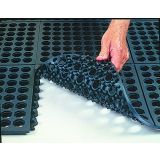 Safety Step Rubber Mats
Starting at $35.00
Safety Step rubber mats take a different approach to wet-area matting: instead of one big mat, you build the footprint you need from 3-by-3-foot modular sections with molded-in connectors on two sides. Perforations drain water and oil through the surface, cushioned rubber eases long standing shifts, and when one...
Safety Step rubber mats take a different approach to wet-area matting: instead of one big mat, you build the...
Safety Step rubber mats take a different approach to wet-area matting: instead of one big mat, you build the footprint you need from 3-by-3-foot modular sections with molded-in connectors on two sides. Perforations drain water and oil through the surface, cushioned rubber eases long standing shifts, and when one section finally wears out, you replace that section — not the whole installation.
What Safety Step Does Before a Layout Outgrows Its Matting
Most wet-area mats are cut to a rectangle and stay that way. Work areas aren't. Lines wrap around equipment, stations get added, a sanding cell moves across the shop — and a fixed mat that fit last year now leaves gaps where feet land on bare, wet floor.
A modular anti-fatigue mat solves that at the design level. Sections connect into whatever shape the work takes, wrap odd corners, and re-assemble when the layout changes. Underneath, a multi-nib backing lifts the whole surface off the floor so drained liquid keeps moving and the floor beneath can actually dry, instead of holding a wet film under the rubber.
Why This Construction, and Why This One
The mat comes in two compounds, and choosing between them is most of the spec decision. The black version is general-purpose rubber for wet duty — water, washdowns, standard cleaners — with recycled content up to 47%. The terra cotta version is a nitrile rubber blend built to resist grease, for kitchens and stations where oil reaches the floor daily.
Both wear hard: surface loss measures at or under 1% after 1,000 abrasion cycles on the standard test. And both share the modular system's quiet economics — a high-wear section at the sink or the grinder swaps out individually, while the rest of the installation stays in service.
Edging is optional rather than built in. Snap-on beveled ramps finish exposed sides where traffic steps on and off; sides butted against equipment or walls can stay square. Adding edging extends the mat roughly 3 inches per finished side, which matters when you're sizing to a tight footprint.
Where It Belongs, and What It Is Not
Safety Step earns its place in factories, workstations, sanding and grinding cells, dish rooms, and food service areas — heavy-duty wet and oily zones, and especially the large or odd-shaped ones a single rectangular mat can't cover cleanly. If the matting footprint might change in the next few years, modular is the format that keeps up.
It is not a dry-station comfort mat — a salon chair or standing desk wants a solid surface, not perforations. And for one fixed, standard-sized station that will never move, a single one-piece mat from the anti-fatigue mats and runners range does the job without assembly. This mat's case is coverage that's big, irregular, or likely to change.
Three Things to Check Before You Spec It
First, what reaches the floor. Water and cleaning solution point to the black general-purpose version. Grease, fryer oil, or petroleum-based fluids point to the terra cotta nitrile blend — putting the general-purpose compound under daily grease shortens its life and turns the surface slick sooner.
Second, the true footprint. Sections are 3-by-3, custom assemblies run up to 12 by 30 feet, and workstation layouts order in full-foot increments. Sketch the actual standing and walking zone around the equipment — the point of modular is covering that real shape, not the rectangle that approximates it.
Third, the exposed edges. Count the sides where people step on and off, and spec snap-on ramps for those; remember each finished side adds about 3 inches to the overall dimension. An unramped edge in a walk path is a stubbed toe waiting for a rush.
Why Mats Inc.
Modular matting gets ordered wrong in predictable ways — the compound that doesn't match the fluids, the layout that forgot the edging inches, the section count that's one short. Send us a sketch of the work area with what lands on the floor, and we'll spec the sections, compound, and ramps so the kit that arrives assembles into the mat you actually needed.
Format Modular sections, molded-in connectors on two adjoining sides Section size 3' x 3' Custom assemblies Up to 12' x 30'; workstations in full-foot increments Compounds / colors Black — general-purpose rubber (recycled content up to 47%); Terra Cotta — grease-resistant nitrile rubber blend Drainage Perforated surface; multi-nib backing aerates so floors dry quickly Hardness Black 55 / Terra Cotta 60 (ASTM D2240 durometer) Abrasion resistance ≤1% loss at 1,000 cycles (ASTM D3884), both compounds Edging Optional snap-on beveled ramps; each finished side adds ~3" Warranty 1-year limited (Mats Inc.) Frequently Asked Questions
What's the difference between the black and terra cotta versions?
Answered by Dustin Thompson, Owner & CEO
The compound. Black is general-purpose rubber — right for wet zones where water and standard cleaners are the exposure, and it carries up to 47% recycled content. Terra cotta is a nitrile rubber blend formulated to resist grease and oil, which is what you want under a fry line, in a machine shop, or anywhere petroleum-based fluids hit the floor.
If you're unsure, name the messiest thing that reaches that floor in a normal week. Grease in the answer means terra cotta.
How long does a modular drainage mat like this last?
Answered by Dustin Thompson, Owner & CEO
The wear data is unusually strong: both compounds lose 1% or less of their surface after 1,000 cycles on the standard abrasion test, which puts heavy daily duty in the multi-year range — three to five years is a fair expectation with routine rinsing.
The modular format changes the replacement math, though. Wear never lands evenly — the section at the sink or the grinder goes first. Here you swap that one section and keep the rest in service, instead of retiring a whole mat because one corner died.
How do the sections install, and do they need adhesive?
Answered by Dustin Thompson, Owner & CEO
No adhesive. Each section has connectors molded into two adjoining sides, so you lay the first section at the primary work position and snap outward until the footprint is covered. Check every joint as you go — a proud seam collects debris and catches toes.
Start on a clean, dry floor, orient the assembly so drainage runs toward the floor drain, and snap ramps onto any edge that faces foot traffic. Reconfiguring later is the same process in reverse.
Will terra cotta look better than black in a kitchen guests can see into?
Answered by Jinna Hopson, VP of Marketing
Often, yes — and not just on looks. Terra cotta is the traditional working color of commercial kitchens, so in an open-kitchen or chef's-counter setting it reads as authentic professional equipment. It also happens to be the grease-resistant compound, so the aesthetic choice and the right technical choice usually point the same direction in food service.
Black suits back-of-house and industrial floors where it disappears against dark concrete. Whichever you pick, keep it consistent across connected sections — a checkerboard of mixed colors reads as patched.
What sizes can I build, and can it fit an odd-shaped area?
Answered by Jinna Hopson, VP of Marketing
Odd shapes are the point. Sections are 3-by-3 feet and connect in any direction, so an L around a prep island, a U inside a work cell, or a long dish-room run all assemble from the same units. Custom assemblies go up to 12 by 30 feet, ordered in full-foot increments.
Two sizing notes: optional edging adds about 3 inches per finished side, and it's worth ordering to the real standing zone rather than rounding down — a footprint that stops one section short leaves someone half off the cushion all shift.
Is this the right choice over a single one-piece drainage mat?
Answered by Jinna Hopson, VP of Marketing
It depends on the shape and the future. One fixed station with standard dimensions is happily served by a one-piece mat — nothing to assemble, nothing to seam. Choose modular when the area is large, wraps equipment, doesn't match stock rectangles, or is likely to be rearranged.
The section-replacement benefit tips close calls: if one spot in your layout takes far more punishment than the rest, modular means that spot never forces a full replacement.
By Dustin Thompson, Owner & CEO, Mats Inc.
↑
Safety Step rubber mats take a different approach to wet-area matting: instead of one big mat, you build the footprint you need from 3-by-3-foot modular sections with molded-in connectors on two sides. Perforations drain water and oil through the surface, cushioned rubber eases long standing shifts, and when one section finally wears out, you replace that section — not the whole installation.
What Safety Step Does Before a Layout Outgrows Its Matting
Most wet-area mats are cut to a rectangle and stay that way. Work areas aren't. Lines wrap around equipment, stations get added, a sanding cell moves across the shop — and a fixed mat that fit last year now leaves gaps where feet land on bare, wet floor.
A modular anti-fatigue mat solves that at the design level. Sections connect into whatever shape the work takes, wrap odd corners, and re-assemble when the layout changes. Underneath, a multi-nib backing lifts the whole surface off the floor so drained liquid keeps moving and the floor beneath can actually dry, instead of holding a wet film under the rubber.
Why This Construction, and Why This One
The mat comes in two compounds, and choosing between them is most of the spec decision. The black version is general-purpose rubber for wet duty — water, washdowns, standard cleaners — with recycled content up to 47%. The terra cotta version is a nitrile rubber blend built to resist grease, for kitchens and stations where oil reaches the floor daily.
Both wear hard: surface loss measures at or under 1% after 1,000 abrasion cycles on the standard test. And both share the modular system's quiet economics — a high-wear section at the sink or the grinder swaps out individually, while the rest of the installation stays in service.
Edging is optional rather than built in. Snap-on beveled ramps finish exposed sides where traffic steps on and off; sides butted against equipment or walls can stay square. Adding edging extends the mat roughly 3 inches per finished side, which matters when you're sizing to a tight footprint.
Where It Belongs, and What It Is Not
Safety Step earns its place in factories, workstations, sanding and grinding cells, dish rooms, and food service areas — heavy-duty wet and oily zones, and especially the large or odd-shaped ones a single rectangular mat can't cover cleanly. If the matting footprint might change in the next few years, modular is the format that keeps up.
It is not a dry-station comfort mat — a salon chair or standing desk wants a solid surface, not perforations. And for one fixed, standard-sized station that will never move, a single one-piece mat from the anti-fatigue mats and runners range does the job without assembly. This mat's case is coverage that's big, irregular, or likely to change.
Three Things to Check Before You Spec It
First, what reaches the floor. Water and cleaning solution point to the black general-purpose version. Grease, fryer oil, or petroleum-based fluids point to the terra cotta nitrile blend — putting the general-purpose compound under daily grease shortens its life and turns the surface slick sooner.
Second, the true footprint. Sections are 3-by-3, custom assemblies run up to 12 by 30 feet, and workstation layouts order in full-foot increments. Sketch the actual standing and walking zone around the equipment — the point of modular is covering that real shape, not the rectangle that approximates it.
Third, the exposed edges. Count the sides where people step on and off, and spec snap-on ramps for those; remember each finished side adds about 3 inches to the overall dimension. An unramped edge in a walk path is a stubbed toe waiting for a rush.
Why Mats Inc.
Modular matting gets ordered wrong in predictable ways — the compound that doesn't match the fluids, the layout that forgot the edging inches, the section count that's one short. Send us a sketch of the work area with what lands on the floor, and we'll spec the sections, compound, and ramps so the kit that arrives assembles into the mat you actually needed.
Format Modular sections, molded-in connectors on two adjoining sides Section size 3' x 3' Custom assemblies Up to 12' x 30'; workstations in full-foot increments Compounds / colors Black — general-purpose rubber (recycled content up to 47%); Terra Cotta — grease-resistant nitrile rubber blend Drainage Perforated surface; multi-nib backing aerates so floors dry quickly Hardness Black 55 / Terra Cotta 60 (ASTM D2240 durometer) Abrasion resistance ≤1% loss at 1,000 cycles (ASTM D3884), both compounds Edging Optional snap-on beveled ramps; each finished side adds ~3" Warranty 1-year limited (Mats Inc.) Frequently Asked Questions
What's the difference between the black and terra cotta versions?
Answered by Dustin Thompson, Owner & CEO
The compound. Black is general-purpose rubber — right for wet zones where water and standard cleaners are the exposure, and it carries up to 47% recycled content. Terra cotta is a nitrile rubber blend formulated to resist grease and oil, which is what you want under a fry line, in a machine shop, or anywhere petroleum-based fluids hit the floor.
If you're unsure, name the messiest thing that reaches that floor in a normal week. Grease in the answer means terra cotta.
How long does a modular drainage mat like this last?
Answered by Dustin Thompson, Owner & CEO
The wear data is unusually strong: both compounds lose 1% or less of their surface after 1,000 cycles on the standard abrasion test, which puts heavy daily duty in the multi-year range — three to five years is a fair expectation with routine rinsing.
The modular format changes the replacement math, though. Wear never lands evenly — the section at the sink or the grinder goes first. Here you swap that one section and keep the rest in service, instead of retiring a whole mat because one corner died.
How do the sections install, and do they need adhesive?
Answered by Dustin Thompson, Owner & CEO
No adhesive. Each section has connectors molded into two adjoining sides, so you lay the first section at the primary work position and snap outward until the footprint is covered. Check every joint as you go — a proud seam collects debris and catches toes.
Start on a clean, dry floor, orient the assembly so drainage runs toward the floor drain, and snap ramps onto any edge that faces foot traffic. Reconfiguring later is the same process in reverse.
Will terra cotta look better than black in a kitchen guests can see into?
Answered by Jinna Hopson, VP of Marketing
Often, yes — and not just on looks. Terra cotta is the traditional working color of commercial kitchens, so in an open-kitchen or chef's-counter setting it reads as authentic professional equipment. It also happens to be the grease-resistant compound, so the aesthetic choice and the right technical choice usually point the same direction in food service.
Black suits back-of-house and industrial floors where it disappears against dark concrete. Whichever you pick, keep it consistent across connected sections — a checkerboard of mixed colors reads as patched.
What sizes can I build, and can it fit an odd-shaped area?
Answered by Jinna Hopson, VP of Marketing
Odd shapes are the point. Sections are 3-by-3 feet and connect in any direction, so an L around a prep island, a U inside a work cell, or a long dish-room run all assemble from the same units. Custom assemblies go up to 12 by 30 feet, ordered in full-foot increments.
Two sizing notes: optional edging adds about 3 inches per finished side, and it's worth ordering to the real standing zone rather than rounding down — a footprint that stops one section short leaves someone half off the cushion all shift.
Is this the right choice over a single one-piece drainage mat?
Answered by Jinna Hopson, VP of Marketing
It depends on the shape and the future. One fixed station with standard dimensions is happily served by a one-piece mat — nothing to assemble, nothing to seam. Choose modular when the area is large, wraps equipment, doesn't match stock rectangles, or is likely to be rearranged.
The section-replacement benefit tips close calls: if one spot in your layout takes far more punishment than the rest, modular means that spot never forces a full replacement.
By Dustin Thompson, Owner & CEO, Mats Inc.
↑
View Details
View Details
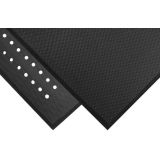 Traction Hog Anti-Fatigue Runner Mats
Starting at $85.00
Traction Hog Anti-Fatigue Runner Mats are cushioned rubber runners for the line of stations where people stand in place all shift, on a floor that may be wet, greasy, or both. The mat is 5/8 inch of nitrile/PVC-blended foam with beveled edges, made in stock sizes from 2 by 3...
Traction Hog Anti-Fatigue Runner Mats are cushioned rubber runners for the line of stations where people stand in place all...
Traction Hog Anti-Fatigue Runner Mats are cushioned rubber runners for the line of stations where people stand in place all shift, on a floor that may be wet, greasy, or both. The mat is 5/8 inch of nitrile/PVC-blended foam with beveled edges, made in stock sizes from 2 by 3 feet to a 3-by-10-foot runner and in custom lengths to 75 feet. It comes solid or with drainage holes, is built for indoor use, and is a comfort mat first, which decides where it goes.
What an Anti-Fatigue Rubber Mat Does Before the Shift Gets Long
Standing still on a hard floor is harder on the body than walking on it. The legs lock, blood pools, and by hour six the lower back is doing work the feet were supposed to do. A cushioned rubber standing mat gives the floor a small amount of give, so the muscles in the legs keep making tiny adjustments instead of freezing in place.
That is the comfort side. The safety side is footing. A dish pit, a fry station, a wet packing line, or a cooler floor puts water and grease under the same person for hours, and a mat that cushions but slides is worse than no mat. This one is certified high-traction by the National Floor Safety Institute, an independent slip-resistance testing program, not a manufacturer claim.
The third job is the edge. A thick mat with a square edge is a trip hazard and a cart stopper. Beveled edges taper the mat down to the floor so a foot or a caster rolls onto it rather than catching, which is what keeps a comfort mat from causing the fall it was meant to prevent.
Why Nitrile-Blend Foam, and Why This One
The cushion is a 5/8-inch nitrile/PVC-blended foam. Nitrile is the rubber that tolerates oil, and it is the reason this mat is grease and oil resistant and chemical resistant rather than a plain sponge that swells and softens the first time fryer oil hits it. Nightly sanitizing with standard cleaners does not eat it.
The foam is treated with an anti-microbial that provides lifetime protection from odors and degradation. On a wet-area mat that is the difference between a mat that is hosed off and returns to service and one that starts to smell by the second month and has to be thrown out.
The two configurations are the real choice. The solid mat suits dry stations and damp ones where spills are wiped up. The version with drainage holes is for truly wet work: liquid falls through to the floor instead of pooling under a boot, which is why a rubber mat with holes belongs at a dish machine or a wash-down station and a solid one belongs at a register or an assembly bench.
It is also lightweight and flexible. A 3-by-5-foot mat weighs 13.8 pounds, and the largest stock size, 4 by 8 feet, weighs 26.7 pounds. One person picks it up, hoses it, hangs it, and puts it back, which is what actually determines whether a mat gets cleaned on schedule.
Where It Belongs, and What It Is Not
Put it wherever a person holds one position on a hard indoor floor: dish pits, fry and prep stations, bar wells, packing and inspection stations, cashier stands, lab benches, and the floor in front of a machine control panel. Wet zones take the holed version; dry and damp zones take the solid one. It is one of several cushioned and traction mats in the heavy-duty rubber runner mats range, and it is the one to reach for when comfort is the problem.
What it is not is a traffic-lane mat. Foam cushion under cart wheels and constant foot traffic compresses at the edges and wears out early, and a thick mat in a busy lane is something to walk around. Where the floor problem is people and carts crossing wet tile, a thin solid-rubber traction runner is the right product, and the two are usually used together in the same room.
It is also rated for indoor use. Outdoor UV and freeze cycles are outside what the foam is built for, so a loading dock apron or an exterior landing needs a different mat.
Three Things to Check Before You Spec It
First, decide wet or dry, and buy the matching version. If water or grease reaches the floor around the station more than occasionally, take the holed mat. If the station is dry or only sees a wiped-up spill, the solid mat is easier to keep clean and gives a smoother surface. Buying solid for a wet zone is the most common mistake with this product.
Second, size the runner to the line of stations, not the room. Measure end to end along the positions people hold: a prep line, a dish run, a packing table, an assembly bench. Custom lengths run in whole feet to 75 feet in 3-foot and 4-foot widths, so one continuous runner covers the line with no seam to lift. The 3-by-10 stock runner handles most single long stations; the five shorter stock sizes cover one or two fixed positions. Finished sizes vary 3 to 5 percent as rubber moves with temperature.
Third, plan the cleaning routine before the mat arrives. A wet-area mat has to come up, get rinsed, and dry before it goes back down. Confirm there is a place to hang it and a person on the closing shift who owns the task. A lightweight mat helps, but the schedule is what keeps the anti-microbial doing its job instead of fighting a losing battle.
Why Mats Inc.
We carry this mat because it answers the question a hard kitchen or plant floor asks every shift: how do you keep the person at the station comfortable and upright without putting something under them that soaks up grease and slides. A nitrile-blend cushion with a third-party traction certification and a holed option does that. Mats Inc. has been matching mats to standing zones since 1964, and this is the one we put where people stand still on wet floors.
Type Anti-fatigue rubber runner mat, indoor Material Nitrile/PVC-blended foam Thickness 5/8" Traction Certified high-traction by the National Floor Safety Institute (NFSI) Edges Beveled Resistance Grease and oil resistant; chemical resistant Anti-microbial Treated; lifetime protection from odors and degradation Configurations Solid, or with drainage holes for wet areas Color Black Custom runner lengths 3' (36") and 4' (48") widths; whole-foot lengths up to 75' Stock sizes & weights 2' x 3' (24" x 36") — 6.3 lbs
3' x 4' (36" x 48") — 10 lbs
3' x 5' (36" x 60") — 13.8 lbs
3' x 10' (36" x 120") — 25.6 lbs
4' x 6' (48" x 72") — 20 lbs
4' x 8' (48" x 96") — 26.7 lbsSize tolerance 3–5% manufacturing variance Cleaning Lightweight and flexible for handling; rinse, hang, and return to service dry Origin Made in the USA Warranty 1-year limited (Mats Inc.) Frequently Asked Questions
What is the mat made of, and how thick is it?
Answered by Dustin Thompson, Owner & CEO
It is a single layer of nitrile/PVC-blended foam, 5/8 inch thick, with beveled edges molded around the perimeter. There is no separate top sheet or fabric layer, so there is nothing to delaminate. The nitrile content is what gives it grease, oil, and chemical resistance; a plain PVC or polyurethane foam of the same thickness softens and breaks down under fryer oil and sanitizer much sooner.
The foam is also treated with an anti-microbial that carries lifetime protection from odors and degradation. That treatment is doing real work on a mat that lives in a wet area and gets rinsed rather than replaced.
How long will it last, and what shortens its life?
Answered by Dustin Thompson, Owner & CEO
The maker does not publish a year figure, and the honest answer is that the floor decides. Kept at a standing station, rinsed on schedule, and allowed to dry before it goes back down, the anti-microbial treatment and nitrile blend are built to hold up for years of shifts. The mat carries a 1-year limited (Mats Inc.) warranty, and a 12-month check for edge compression and surface wear is a reasonable habit.
Three things end it early. Putting it in a traffic lane where carts and constant foot traffic compress the edges. Leaving it down wet so it never dries, which no anti-microbial fully overcomes. And putting an indoor-rated foam mat outside, where UV and freezing stiffen and crack it. Avoid those three and it outlasts most of the equipment around it.
Where should I put it, and where should I not?
Answered by Dustin Thompson, Owner & CEO
Put it where one person stands in one place on a hard indoor floor: dish machines, fry and prep stations, bar wells, packing and inspection stations, register stands, lab benches, machine control positions. If the floor around that station gets wet, use the version with drainage holes so water goes through instead of sitting under a boot. If it stays dry or only sees a wiped-up spill, the solid mat is the cleaner surface.
Do not put it in a walking lane or under cart traffic; cushion compresses and wears at the edges there, and a thick mat in a lane is an obstacle. Do not put it outdoors. For a wet lane that carts cross, a thin solid-rubber traction runner is the right product, and most kitchens run both.
Which size should I pick, and can I get a custom length?
Answered by Jinna Hopson, Vice President of Marketing
Start with the run. Custom lengths are available in whole feet up to 75 feet, in 3-foot and 4-foot widths, so a prep line, a dish run, or a packing table becomes one continuous runner instead of a row of mats with seams to trip on and lift. Three feet of width covers a single row of workers; four feet covers a row that steps back from the bench.
For a single position, pick from the six stock sizes. A 2-by-3 covers a register stand; 3-by-4 or 3-by-5 covers a station where someone shifts a step left and right; 3-by-10 handles one long station; 4-by-6 and 4-by-8 suit two people side by side. Allow 3 to 5 percent on finished dimensions, since rubber shrinks and expands with temperature and time.
What does it look like on the floor?
Answered by Jinna Hopson, Vice President of Marketing
Black, with a fine textured surface and a beveled border that slopes down to the floor on all four sides, so it reads as a finished piece rather than a slab of foam. The holed version has a grid of round drainage openings across the face; the solid version is unbroken. Both sit 5/8 inch high, which is noticeable underfoot but low enough not to look like an obstacle.
Because it is black and textured, scuffs and dried spills blend in until cleaning day rather than showing white. It looks right in a back-of-house kitchen, a plant floor, a lab, or a retail counter; for a customer-facing spot where the mat is part of the decor, a fabric-topped anti-fatigue mat is the better-looking option.
Is this a good fit for a commercial kitchen, and does it handle the cleaning?
Answered by Jinna Hopson, Vice President of Marketing
Yes; wet and greasy kitchens are what the holed version is for. Water and cooking oil drain through, the nitrile blend resists grease and standard sanitizers, and the NFSI high-traction certification means the surface has been independently tested for slip resistance rather than just described as non-slip. Put it at the dish machine, the fry station, and the prep line where people stand.
The cleaning routine is the part to plan. At close, the mat comes up, gets rinsed, and hangs to dry before it goes back down. At 13.8 pounds for a 3-by-5, one person handles it. That nightly lift is what keeps a kitchen mat from becoming the thing that smells, so pick the size someone will actually move.
By Jinna Hopson, Vice President of Marketing, Mats Inc.
↑
Traction Hog Anti-Fatigue Runner Mats are cushioned rubber runners for the line of stations where people stand in place all shift, on a floor that may be wet, greasy, or both. The mat is 5/8 inch of nitrile/PVC-blended foam with beveled edges, made in stock sizes from 2 by 3 feet to a 3-by-10-foot runner and in custom lengths to 75 feet. It comes solid or with drainage holes, is built for indoor use, and is a comfort mat first, which decides where it goes.
What an Anti-Fatigue Rubber Mat Does Before the Shift Gets Long
Standing still on a hard floor is harder on the body than walking on it. The legs lock, blood pools, and by hour six the lower back is doing work the feet were supposed to do. A cushioned rubber standing mat gives the floor a small amount of give, so the muscles in the legs keep making tiny adjustments instead of freezing in place.
That is the comfort side. The safety side is footing. A dish pit, a fry station, a wet packing line, or a cooler floor puts water and grease under the same person for hours, and a mat that cushions but slides is worse than no mat. This one is certified high-traction by the National Floor Safety Institute, an independent slip-resistance testing program, not a manufacturer claim.
The third job is the edge. A thick mat with a square edge is a trip hazard and a cart stopper. Beveled edges taper the mat down to the floor so a foot or a caster rolls onto it rather than catching, which is what keeps a comfort mat from causing the fall it was meant to prevent.
Why Nitrile-Blend Foam, and Why This One
The cushion is a 5/8-inch nitrile/PVC-blended foam. Nitrile is the rubber that tolerates oil, and it is the reason this mat is grease and oil resistant and chemical resistant rather than a plain sponge that swells and softens the first time fryer oil hits it. Nightly sanitizing with standard cleaners does not eat it.
The foam is treated with an anti-microbial that provides lifetime protection from odors and degradation. On a wet-area mat that is the difference between a mat that is hosed off and returns to service and one that starts to smell by the second month and has to be thrown out.
The two configurations are the real choice. The solid mat suits dry stations and damp ones where spills are wiped up. The version with drainage holes is for truly wet work: liquid falls through to the floor instead of pooling under a boot, which is why a rubber mat with holes belongs at a dish machine or a wash-down station and a solid one belongs at a register or an assembly bench.
It is also lightweight and flexible. A 3-by-5-foot mat weighs 13.8 pounds, and the largest stock size, 4 by 8 feet, weighs 26.7 pounds. One person picks it up, hoses it, hangs it, and puts it back, which is what actually determines whether a mat gets cleaned on schedule.
Where It Belongs, and What It Is Not
Put it wherever a person holds one position on a hard indoor floor: dish pits, fry and prep stations, bar wells, packing and inspection stations, cashier stands, lab benches, and the floor in front of a machine control panel. Wet zones take the holed version; dry and damp zones take the solid one. It is one of several cushioned and traction mats in the heavy-duty rubber runner mats range, and it is the one to reach for when comfort is the problem.
What it is not is a traffic-lane mat. Foam cushion under cart wheels and constant foot traffic compresses at the edges and wears out early, and a thick mat in a busy lane is something to walk around. Where the floor problem is people and carts crossing wet tile, a thin solid-rubber traction runner is the right product, and the two are usually used together in the same room.
It is also rated for indoor use. Outdoor UV and freeze cycles are outside what the foam is built for, so a loading dock apron or an exterior landing needs a different mat.
Three Things to Check Before You Spec It
First, decide wet or dry, and buy the matching version. If water or grease reaches the floor around the station more than occasionally, take the holed mat. If the station is dry or only sees a wiped-up spill, the solid mat is easier to keep clean and gives a smoother surface. Buying solid for a wet zone is the most common mistake with this product.
Second, size the runner to the line of stations, not the room. Measure end to end along the positions people hold: a prep line, a dish run, a packing table, an assembly bench. Custom lengths run in whole feet to 75 feet in 3-foot and 4-foot widths, so one continuous runner covers the line with no seam to lift. The 3-by-10 stock runner handles most single long stations; the five shorter stock sizes cover one or two fixed positions. Finished sizes vary 3 to 5 percent as rubber moves with temperature.
Third, plan the cleaning routine before the mat arrives. A wet-area mat has to come up, get rinsed, and dry before it goes back down. Confirm there is a place to hang it and a person on the closing shift who owns the task. A lightweight mat helps, but the schedule is what keeps the anti-microbial doing its job instead of fighting a losing battle.
Why Mats Inc.
We carry this mat because it answers the question a hard kitchen or plant floor asks every shift: how do you keep the person at the station comfortable and upright without putting something under them that soaks up grease and slides. A nitrile-blend cushion with a third-party traction certification and a holed option does that. Mats Inc. has been matching mats to standing zones since 1964, and this is the one we put where people stand still on wet floors.
Type Anti-fatigue rubber runner mat, indoor Material Nitrile/PVC-blended foam Thickness 5/8" Traction Certified high-traction by the National Floor Safety Institute (NFSI) Edges Beveled Resistance Grease and oil resistant; chemical resistant Anti-microbial Treated; lifetime protection from odors and degradation Configurations Solid, or with drainage holes for wet areas Color Black Custom runner lengths 3' (36") and 4' (48") widths; whole-foot lengths up to 75' Stock sizes & weights 2' x 3' (24" x 36") — 6.3 lbs
3' x 4' (36" x 48") — 10 lbs
3' x 5' (36" x 60") — 13.8 lbs
3' x 10' (36" x 120") — 25.6 lbs
4' x 6' (48" x 72") — 20 lbs
4' x 8' (48" x 96") — 26.7 lbsSize tolerance 3–5% manufacturing variance Cleaning Lightweight and flexible for handling; rinse, hang, and return to service dry Origin Made in the USA Warranty 1-year limited (Mats Inc.) Frequently Asked Questions
What is the mat made of, and how thick is it?
Answered by Dustin Thompson, Owner & CEO
It is a single layer of nitrile/PVC-blended foam, 5/8 inch thick, with beveled edges molded around the perimeter. There is no separate top sheet or fabric layer, so there is nothing to delaminate. The nitrile content is what gives it grease, oil, and chemical resistance; a plain PVC or polyurethane foam of the same thickness softens and breaks down under fryer oil and sanitizer much sooner.
The foam is also treated with an anti-microbial that carries lifetime protection from odors and degradation. That treatment is doing real work on a mat that lives in a wet area and gets rinsed rather than replaced.
How long will it last, and what shortens its life?
Answered by Dustin Thompson, Owner & CEO
The maker does not publish a year figure, and the honest answer is that the floor decides. Kept at a standing station, rinsed on schedule, and allowed to dry before it goes back down, the anti-microbial treatment and nitrile blend are built to hold up for years of shifts. The mat carries a 1-year limited (Mats Inc.) warranty, and a 12-month check for edge compression and surface wear is a reasonable habit.
Three things end it early. Putting it in a traffic lane where carts and constant foot traffic compress the edges. Leaving it down wet so it never dries, which no anti-microbial fully overcomes. And putting an indoor-rated foam mat outside, where UV and freezing stiffen and crack it. Avoid those three and it outlasts most of the equipment around it.
Where should I put it, and where should I not?
Answered by Dustin Thompson, Owner & CEO
Put it where one person stands in one place on a hard indoor floor: dish machines, fry and prep stations, bar wells, packing and inspection stations, register stands, lab benches, machine control positions. If the floor around that station gets wet, use the version with drainage holes so water goes through instead of sitting under a boot. If it stays dry or only sees a wiped-up spill, the solid mat is the cleaner surface.
Do not put it in a walking lane or under cart traffic; cushion compresses and wears at the edges there, and a thick mat in a lane is an obstacle. Do not put it outdoors. For a wet lane that carts cross, a thin solid-rubber traction runner is the right product, and most kitchens run both.
Which size should I pick, and can I get a custom length?
Answered by Jinna Hopson, Vice President of Marketing
Start with the run. Custom lengths are available in whole feet up to 75 feet, in 3-foot and 4-foot widths, so a prep line, a dish run, or a packing table becomes one continuous runner instead of a row of mats with seams to trip on and lift. Three feet of width covers a single row of workers; four feet covers a row that steps back from the bench.
For a single position, pick from the six stock sizes. A 2-by-3 covers a register stand; 3-by-4 or 3-by-5 covers a station where someone shifts a step left and right; 3-by-10 handles one long station; 4-by-6 and 4-by-8 suit two people side by side. Allow 3 to 5 percent on finished dimensions, since rubber shrinks and expands with temperature and time.
What does it look like on the floor?
Answered by Jinna Hopson, Vice President of Marketing
Black, with a fine textured surface and a beveled border that slopes down to the floor on all four sides, so it reads as a finished piece rather than a slab of foam. The holed version has a grid of round drainage openings across the face; the solid version is unbroken. Both sit 5/8 inch high, which is noticeable underfoot but low enough not to look like an obstacle.
Because it is black and textured, scuffs and dried spills blend in until cleaning day rather than showing white. It looks right in a back-of-house kitchen, a plant floor, a lab, or a retail counter; for a customer-facing spot where the mat is part of the decor, a fabric-topped anti-fatigue mat is the better-looking option.
Is this a good fit for a commercial kitchen, and does it handle the cleaning?
Answered by Jinna Hopson, Vice President of Marketing
Yes; wet and greasy kitchens are what the holed version is for. Water and cooking oil drain through, the nitrile blend resists grease and standard sanitizers, and the NFSI high-traction certification means the surface has been independently tested for slip resistance rather than just described as non-slip. Put it at the dish machine, the fry station, and the prep line where people stand.
The cleaning routine is the part to plan. At close, the mat comes up, gets rinsed, and hangs to dry before it goes back down. At 13.8 pounds for a 3-by-5, one person handles it. That nightly lift is what keeps a kitchen mat from becoming the thing that smells, so pick the size someone will actually move.
By Jinna Hopson, Vice President of Marketing, Mats Inc.
↑
View Details
View Details
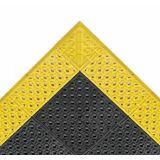 Cushion-Lok Mats
Starting at $139.00
What Cushion-Lok Does Before Spillage Decides Where People Stand Cushion-Lok is a raised, interlocking drainage mat that turns a wet, oily workstation into a dry standing platform. Hundreds of portholes carry liquids and debris down through the surface, while a series of blades elevates the worker above the spillage —...
What Cushion-Lok Does Before Spillage Decides Where People Stand Cushion-Lok is a raised, interlocking drainage mat that turns a wet,...
What Cushion-Lok Does Before Spillage Decides Where People Stand
Cushion-Lok is a raised, interlocking drainage mat that turns a wet, oily workstation into a dry standing platform. Hundreds of portholes carry liquids and debris down through the surface, while a series of blades elevates the worker above the spillage — footing stays gripped and dry even when the floor beneath isn't.
On a plant floor, spills don't wait for cleanup schedules. Cutting fluids drift off machines, wash water travels, and the person stationed in the middle of it stands there for a full shift. Without a raised platform, the choice is bad footing or constant mopping. With one, the liquid goes down and the work goes on.
Why Injection-Molded PVC, and Why This One
The material is a tough, injection-molded PVC — with black components manufactured from 100 percent recycled PVC — chosen for its resistance to harsh industrial chemicals, cutting fluids, oils, and greases. That chemistry is what lets the mat live where it's needed most: directly in the splash zone that destroys ordinary rubber and foam.
The build quality reads in the numbers: a 7/8-inch overall thickness, 1.9 pounds per square foot of injection-molded structure, beveled edges, and a heavy-duty usage rating. The manufacturer rates it "Best" — its top tier — for anti-fatigue, slip resistance, and wear resistance all at once, a rare trifecta in one construction.
The compliance sheet is equally clean: the available yellow borders along the sides comply with OSHA code 1910-144, the mat passes US fire rating requirements, it's REACH compliant, and the material is free of DOP, DMF, ozone-depleting substances, silicone, and heavy metals.
Where It Belongs, and What It Is Not
Cushion-Lok belongs in wet, dry, and oily industrial spaces: manufacturing plants, assembly lines, picking, packing and logistics warehouses, and individual work stations wherever spillage meets standing work. Because it interlocks, it's as much a flooring system as a mat — sized to a single post or built out across an entire work cell.
What it is not: a plush front-of-house comfort mat. This is industrial platform equipment, engineered for chemical exposure and heavy duty rather than for a hotel front desk — those softer stations are served by the comfort options in our anti-fatigue mats and runners lineup. Match the tool to the floor, and this one owns the harsh end.
Three Things to Check Before You Spec It
First, decide between stock and built-to-fit. Eight assembled stock sizes run from 30 by 36 inches up to 42 inches by 10 feet — or the interlocking tiles, ramps, and corners let you create your own configuration around machines, columns, and odd footprints. Factory-assembled custom configurations are available too.
Second, plan the borders and transitions. Yellow side borders meeting OSHA code 1910-144 mark the platform edge where forklifts and foot traffic pass close, and the yellow ramp and corner pieces give carts and hurried feet a proper transition onto the raised surface instead of a step up.
Third, match the chemistry to your floor. The PVC resists most chemicals, cutting fluids, oils, and greases — but "most" deserves a check when your process uses something aggressive. Tell us what actually reaches the floor at the station, and we'll verify compatibility before the mat ships.
Why Mats Inc.
Some stations don't need a mat so much as a small piece of infrastructure — and since 1964 we've helped plants build exactly that, one interlocking section at a time. We carry this system for the wet, oily floors that defeat everything simpler, we verify every claim here against the manufacturer's published specifications, and we back it with a 1-year limited Mats Inc. warranty.
Construction Raised interlocking drainage mat; porthole drainage surface over blade footing; injection molded Material PVC; black components manufactured from 100% recycled PVC; resistant to most chemicals, cutting fluids, oils, and greases Thickness 7/8" Colors Black, with yellow border options (yellow side borders comply with OSHA code 1910-144) Standard Sizes 30" x 36", 30" x 48", 30" x 60", 30" x 72", 30" x 96", 42" x 72", 42" x 96", 42" x 120" Modular Components 12" x 12" tiles (black), 6" x 12" ramps (yellow), 6" x 6" corners (yellow); factory-assembled custom configurations available Edges Beveled Weight 1.9 lbs per square foot Ratings Heavy duty; manufacturer-rated "Best" for anti-fatigue, slip resistance, and wear resistance Compliance US fire rating: pass; REACH compliant; free of DOP, DMF, ozone-depleting substances, silicone, and heavy metals Use Area Wet, dry, and oily areas; manufacturing, assembly, picking/packing and logistics, individual workstations Warranty 1-year limited (Mats Inc.) Frequently Asked Questions
How does the raised design actually keep feet out of spills?
Answered by Dustin Thompson, Owner & CEO
Two mechanisms stacked. The surface carries hundreds of portholes, so liquids and debris drop through instead of sitting where shoes land. Beneath the surface, the worker stands on a series of molded blades that elevate footing above whatever collected below — traction up top, spillage down below, and the two never meet. It's the difference between a mat that gets wet with the floor and a platform that stands above it.
Will cutting fluids and industrial chemicals break it down?
Answered by Dustin Thompson, Owner & CEO
Resisting them is this construction's reason for existing. The injection-molded PVC — 100 percent recycled in the black components — was chosen specifically for resistance to harsh industrial chemicals, cutting fluids, oils, and greases, and the manufacturer rates the mat at its top tier for wear resistance on a heavy-duty rating. For genuinely aggressive process chemistry, name the specific exposure and we'll confirm compatibility before you commit a work cell to it.
What does the compliance list actually cover?
Answered by Dustin Thompson, Owner & CEO
More than most mats bother to document. The available yellow side borders comply with OSHA code 1910-144 for safety color marking, the mat passes US fire rating requirements, and the material is REACH compliant and free of DOP, DMF, ozone-depleting substances, silicone, and heavy metals. For facilities where purchasing has to answer to a safety office, that paper trail is part of what you're buying.
Can it really be built around machines and odd layouts?
Answered by Jinna Hopson, Vice President of Marketing
That's the system's signature. Interlocking 12 by 12 inch tiles build the platform in any footprint — an L around a press, a ring around a column, a full runway down a work cell — and the yellow ramps and corners finish every open edge with a proper transition. If assembling it yourself isn't appealing, factory-assembled custom configurations arrive ready to lay down. The mat fits the station instead of the station adapting to the mat.
Which stock size fits a single workstation versus a line?
Answered by Jinna Hopson, Vice President of Marketing
Match the width to the stance and the length to the walk. The 30-inch width covers a single planted post — the 30 by 36 or 30 by 48 for one operator at one machine. Where workers slide station to station, step up to the longer runs: 30 inches by 8 feet, or the 42-inch width at 6, 8, and 10 feet for lines where people pass behind each other. Eight assembled stock sizes cover most stations before custom work even enters the conversation.
What does the yellow border communicate on a busy floor?
Answered by Jinna Hopson, Vice President of Marketing
It draws the official line between the standing platform and everything moving past it. Yellow is the recognized safety-marking color — these borders comply with OSHA code 1910-144 — so forklift operators, cart pushers, and visitors read the platform edge at a glance, from a distance, without a painted line that wears away. And because the border travels with the mat, the marking stays accurate every time the layout changes.
By Dustin Thompson, Owner & CEO, Mats Inc.
↑
What Cushion-Lok Does Before Spillage Decides Where People Stand
Cushion-Lok is a raised, interlocking drainage mat that turns a wet, oily workstation into a dry standing platform. Hundreds of portholes carry liquids and debris down through the surface, while a series of blades elevates the worker above the spillage — footing stays gripped and dry even when the floor beneath isn't.
On a plant floor, spills don't wait for cleanup schedules. Cutting fluids drift off machines, wash water travels, and the person stationed in the middle of it stands there for a full shift. Without a raised platform, the choice is bad footing or constant mopping. With one, the liquid goes down and the work goes on.
Why Injection-Molded PVC, and Why This One
The material is a tough, injection-molded PVC — with black components manufactured from 100 percent recycled PVC — chosen for its resistance to harsh industrial chemicals, cutting fluids, oils, and greases. That chemistry is what lets the mat live where it's needed most: directly in the splash zone that destroys ordinary rubber and foam.
The build quality reads in the numbers: a 7/8-inch overall thickness, 1.9 pounds per square foot of injection-molded structure, beveled edges, and a heavy-duty usage rating. The manufacturer rates it "Best" — its top tier — for anti-fatigue, slip resistance, and wear resistance all at once, a rare trifecta in one construction.
The compliance sheet is equally clean: the available yellow borders along the sides comply with OSHA code 1910-144, the mat passes US fire rating requirements, it's REACH compliant, and the material is free of DOP, DMF, ozone-depleting substances, silicone, and heavy metals.
Where It Belongs, and What It Is Not
Cushion-Lok belongs in wet, dry, and oily industrial spaces: manufacturing plants, assembly lines, picking, packing and logistics warehouses, and individual work stations wherever spillage meets standing work. Because it interlocks, it's as much a flooring system as a mat — sized to a single post or built out across an entire work cell.
What it is not: a plush front-of-house comfort mat. This is industrial platform equipment, engineered for chemical exposure and heavy duty rather than for a hotel front desk — those softer stations are served by the comfort options in our anti-fatigue mats and runners lineup. Match the tool to the floor, and this one owns the harsh end.
Three Things to Check Before You Spec It
First, decide between stock and built-to-fit. Eight assembled stock sizes run from 30 by 36 inches up to 42 inches by 10 feet — or the interlocking tiles, ramps, and corners let you create your own configuration around machines, columns, and odd footprints. Factory-assembled custom configurations are available too.
Second, plan the borders and transitions. Yellow side borders meeting OSHA code 1910-144 mark the platform edge where forklifts and foot traffic pass close, and the yellow ramp and corner pieces give carts and hurried feet a proper transition onto the raised surface instead of a step up.
Third, match the chemistry to your floor. The PVC resists most chemicals, cutting fluids, oils, and greases — but "most" deserves a check when your process uses something aggressive. Tell us what actually reaches the floor at the station, and we'll verify compatibility before the mat ships.
Why Mats Inc.
Some stations don't need a mat so much as a small piece of infrastructure — and since 1964 we've helped plants build exactly that, one interlocking section at a time. We carry this system for the wet, oily floors that defeat everything simpler, we verify every claim here against the manufacturer's published specifications, and we back it with a 1-year limited Mats Inc. warranty.
Construction Raised interlocking drainage mat; porthole drainage surface over blade footing; injection molded Material PVC; black components manufactured from 100% recycled PVC; resistant to most chemicals, cutting fluids, oils, and greases Thickness 7/8" Colors Black, with yellow border options (yellow side borders comply with OSHA code 1910-144) Standard Sizes 30" x 36", 30" x 48", 30" x 60", 30" x 72", 30" x 96", 42" x 72", 42" x 96", 42" x 120" Modular Components 12" x 12" tiles (black), 6" x 12" ramps (yellow), 6" x 6" corners (yellow); factory-assembled custom configurations available Edges Beveled Weight 1.9 lbs per square foot Ratings Heavy duty; manufacturer-rated "Best" for anti-fatigue, slip resistance, and wear resistance Compliance US fire rating: pass; REACH compliant; free of DOP, DMF, ozone-depleting substances, silicone, and heavy metals Use Area Wet, dry, and oily areas; manufacturing, assembly, picking/packing and logistics, individual workstations Warranty 1-year limited (Mats Inc.) Frequently Asked Questions
How does the raised design actually keep feet out of spills?
Answered by Dustin Thompson, Owner & CEO
Two mechanisms stacked. The surface carries hundreds of portholes, so liquids and debris drop through instead of sitting where shoes land. Beneath the surface, the worker stands on a series of molded blades that elevate footing above whatever collected below — traction up top, spillage down below, and the two never meet. It's the difference between a mat that gets wet with the floor and a platform that stands above it.
Will cutting fluids and industrial chemicals break it down?
Answered by Dustin Thompson, Owner & CEO
Resisting them is this construction's reason for existing. The injection-molded PVC — 100 percent recycled in the black components — was chosen specifically for resistance to harsh industrial chemicals, cutting fluids, oils, and greases, and the manufacturer rates the mat at its top tier for wear resistance on a heavy-duty rating. For genuinely aggressive process chemistry, name the specific exposure and we'll confirm compatibility before you commit a work cell to it.
What does the compliance list actually cover?
Answered by Dustin Thompson, Owner & CEO
More than most mats bother to document. The available yellow side borders comply with OSHA code 1910-144 for safety color marking, the mat passes US fire rating requirements, and the material is REACH compliant and free of DOP, DMF, ozone-depleting substances, silicone, and heavy metals. For facilities where purchasing has to answer to a safety office, that paper trail is part of what you're buying.
Can it really be built around machines and odd layouts?
Answered by Jinna Hopson, Vice President of Marketing
That's the system's signature. Interlocking 12 by 12 inch tiles build the platform in any footprint — an L around a press, a ring around a column, a full runway down a work cell — and the yellow ramps and corners finish every open edge with a proper transition. If assembling it yourself isn't appealing, factory-assembled custom configurations arrive ready to lay down. The mat fits the station instead of the station adapting to the mat.
Which stock size fits a single workstation versus a line?
Answered by Jinna Hopson, Vice President of Marketing
Match the width to the stance and the length to the walk. The 30-inch width covers a single planted post — the 30 by 36 or 30 by 48 for one operator at one machine. Where workers slide station to station, step up to the longer runs: 30 inches by 8 feet, or the 42-inch width at 6, 8, and 10 feet for lines where people pass behind each other. Eight assembled stock sizes cover most stations before custom work even enters the conversation.
What does the yellow border communicate on a busy floor?
Answered by Jinna Hopson, Vice President of Marketing
It draws the official line between the standing platform and everything moving past it. Yellow is the recognized safety-marking color — these borders comply with OSHA code 1910-144 — so forklift operators, cart pushers, and visitors read the platform edge at a glance, from a distance, without a painted line that wears away. And because the border travels with the mat, the marking stays accurate every time the layout changes.
By Dustin Thompson, Owner & CEO, Mats Inc.
↑
View Details
View Details
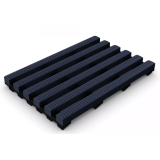 Heronrib Matting$1,020.00What Heronrib does before a wet pool deck takes someone's feet out A poolside or locker-room floor seems harmless until someone crosses it barefoot and the water underfoot decides the rest. It's tempting to trust textured tile or a fast mop. But on a flat surface, water spreads into a
...
What Heronrib does before a wet pool deck takes someone's feet out A poolside or locker-room floor seems harmless until...
What Heronrib does before a wet pool deck takes someone's feet out
A poolside or locker-room floor seems harmless until someone crosses it barefoot and the water underfoot decides the rest. It's tempting to trust textured tile or a fast mop. But on a flat surface, water spreads into a thin film right where bare feet land, and tile that grips when dry turns slick the moment it's wet.
Heronrib is built to clear that film. Its two-layer body sits on channelled underbars that self-drain in four directions, so water runs off and away instead of pooling on top. The embossed surface gives bare feet a firm grip. That's what makes it a true non-slip pool mat rather than one that only feels safe dry.
On a barefoot wet floor, a slip isn't minor. The National Floor Safety Institute links wet, hard floors to a large share of slip-and-fall injuries, and pools, showers, and changing rooms keep those floors wet from open to close. A mat that drains water away and holds grip underfoot is doing safety work every hour it's down.
Why a self-draining PVC build, and why this one
Heronrib is made from strong, non-porous PVC, and non-porous is the word that matters in a barefoot wet area. Because water can't soak in, the mat doesn't stay damp or harbor the bacteria and fungus that thrive on wet floors. On top of that, it's built with anti-microbial and anti-fungal properties, so it actively resists the athlete's foot fungus and mildew that locker rooms and showers tend to grow.
The two-layer construction is what makes the drainage work. Channelled underbars lift the walking surface off the floor and send water away in four directions, while the embossed top holds traction. That grip is certified — Classification C on the DIN 51097 barefoot ramp test, and a 0.9 dry / 0.7 wet reading on ASTM F1677 — strong figures for a surface people cross with no shoes on.
It's also made to last in tough conditions. The PVC resists most acids, alkalines, and oils, stands up to UV without degrading, and works from below freezing up to 140°F, so an outdoor deck and an indoor shower are both fair game. The two-layer body adds cushioning and sound absorption underfoot, so a busy pool hall is a little softer and quieter to walk through.
Where it belongs — and what it isn't
Heronrib earns its place wherever bare feet meet a wet floor. That's the pool deck and pool surround, but also changing rooms, locker rooms, shower rooms, spa and sauna areas, and the wet zones of gyms and recreation centers. Because it works indoors or out and contours to uneven surfaces, it suits both a tiled shower floor and a textured outdoor deck.
It's worth being clear about what this mat is not. It's a walk-on barefoot surface, not a flotation device, and not the liner-protector sheet that goes under an above-ground pool. If you're after a mat to put under a pool or a float for the water, this isn't that product. Heronrib works on top of the deck, under your feet — on concrete, tile, or a finished pool surround.
For larger areas it behaves like a system. Rolls join edge-to-edge with connector clips or welded snap track to cover a whole pool hall seamlessly, ramped edging finishes the borders so there's no trip lip, and floor hooks anchor sections where they need to stay put. The same mat scales from a single shower bay to a wall-to-wall deck.
Three Things to Check Before You Spec It
Heronrib is easy to order well once you've settled three things.
First, plan the layout and joins. For a single shower or changing bay, one cut piece does it. For a full deck or pool hall, rolls join side-to-side and end-to-end with connector clips or welded snap track, so map where the seams fall and where you'll want ramped edging to finish an exposed border cleanly.
Second, measure the whole wet path, not just the obvious spot. The walk from the pool to the showers, the full changing-room floor, the lip around a spa — size the mat to cover wherever feet are actually wet, because a dry-foot gap is exactly where the next slip happens. It cuts to fit on site, so odd shapes and obstacles aren't a problem.
Third, plan for heat and movement outdoors. The PVC handles sun and a wide temperature range, but like any thermoplastic it can shrink slightly — up to about 2%, faster in heat — so on a hot, exposed deck, anchor sections with floor hooks and leave a little room at fixed edges rather than butting it tight wall to wall.
Why Mats Inc.
We've been matching mats to real floors since 1964, and barefoot wet areas are where the wrong choice gets noticed fastest — by feet, by inspectors, and by anyone who slips. We'll help you size Heronrib to your actual wet path, plan the seams and edging for a clean install, and choose the right anchoring for an outdoor deck. It's part of our wider lineup of pool and wet-area matting, and every order is backed by our 1-year limited warranty.
Material Non-porous flexible PVC Construction Two-layer with channelled underbars; embossed top surface Thickness 13/32" (10.5 mm) Weight 1.10 lb / sq ft Roll options 33' lengths in 2', 3', and 4' widths (cut to fit on site) Custom sizes Custom matting available Slip resistance DIN 51097: Class C; ASTM F1677 dry/wet: 0.9/0.7 Drainage Four-way self-draining (channelled underbars) Chemical resistance Most acids, alkalines, and oils Temperature range -9°F to +140°F Hygiene Non-porous; anti-microbial and anti-fungal Acoustic Sound absorption Environmental 100% recyclable; no SVHC substances (REACH) UV Resists PVC degradation Warranty 1-year limited (Mats Inc.) Frequently Asked Questions
What's Heronrib made of, and how does it drain so well?
Answered by Dustin Thompson, Owner & CEO
It's made from strong, non-porous PVC in a two-layer build. The top layer carries an embossed surface that grips bare feet; underneath, a set of channelled underbars lifts that surface off the floor and lets water run away in four directions. So instead of sitting in a puddle, water clears the moment it lands. The non-porous PVC won't soak up moisture, and it's built with anti-microbial and anti-fungal properties, so the same mat that drains also resists the bacteria and fungus wet floors tend to breed.
How slip-resistant is it for bare feet, and will it last outdoors?
Answered by Dustin Thompson, Owner & CEO
Its grip is certified for barefoot use specifically — Classification C on the DIN 51097 ramp test, with a 0.9 dry / 0.7 wet reading on ASTM F1677, both strong for a no-shoes surface. As for lasting outdoors, the PVC resists UV without degrading, shrugs off most acids, alkalines, and oils, and works from below freezing up to 140°F. That combination is why the same mat holds up on a sun-exposed deck and in a daily-use shower room without going brittle or slick.
What sizes does it come in, and can it cover a big area?
Answered by Dustin Thompson, Owner & CEO
It comes in 33-foot rolls in 2-, 3-, and 4-foot widths, and you cut it to fit on site. For a large pool hall or deck, rolls join side-to-side and end-to-end with connector clips or welded snap track, so there's no practical limit to the area you can cover in one continuous, seamless surface. For a small space like a shower bay, a single cut piece does the job. Custom matting is available when a standard width won't fit the layout.
Besides right at the pool, where does Heronrib make sense?
Answered by Jinna Hopson, VP of Marketing
Anywhere people go barefoot on a wet floor. It's a natural fit for changing rooms, locker rooms, and shower rooms, the surrounds of spas and saunas, and the wet zones of gyms and recreation centers — not just the pool deck itself. Because it works indoors or outdoors and contours to uneven ground, it's as comfortable on a textured outdoor deck as on a tiled indoor floor. If a space mixes bare feet, water, and foot traffic, it belongs there.
What does it look and feel like underfoot?
Answered by Jinna Hopson, VP of Marketing
It has a clean, ribbed, embossed surface that reads as purposeful — clearly there to grip and drain rather than to decorate. The look is low-key and functional, the kind of surface that signals the floor is handled without drawing attention to itself. Underfoot, the two-layer body adds a bit of cushioning and even absorbs sound, so a busy, echoey pool hall feels a touch warmer and quieter to cross. If a specific color or finish matters for your space, let us know and we'll confirm what's available.
My pool area is an odd shape with drains and corners — will it fit?
Answered by Jinna Hopson, VP of Marketing
Almost certainly. Because it cuts to fit on site and contours to uneven surfaces, you can shape a run around drains, ladders, corners, and changing benches instead of forcing the space to match a fixed mat. Ramped edging finishes any exposed border so there's no trip lip, and for a tricky footprint custom matting is available. Send us the dimensions and the obstacles, and we'll map out a layout that covers the wet path cleanly.
Written by Dustin Thompson, Owner & CEO, Mats Inc.
↑
What Heronrib does before a wet pool deck takes someone's feet out
A poolside or locker-room floor seems harmless until someone crosses it barefoot and the water underfoot decides the rest. It's tempting to trust textured tile or a fast mop. But on a flat surface, water spreads into a thin film right where bare feet land, and tile that grips when dry turns slick the moment it's wet.
Heronrib is built to clear that film. Its two-layer body sits on channelled underbars that self-drain in four directions, so water runs off and away instead of pooling on top. The embossed surface gives bare feet a firm grip. That's what makes it a true non-slip pool mat rather than one that only feels safe dry.
On a barefoot wet floor, a slip isn't minor. The National Floor Safety Institute links wet, hard floors to a large share of slip-and-fall injuries, and pools, showers, and changing rooms keep those floors wet from open to close. A mat that drains water away and holds grip underfoot is doing safety work every hour it's down.
Why a self-draining PVC build, and why this one
Heronrib is made from strong, non-porous PVC, and non-porous is the word that matters in a barefoot wet area. Because water can't soak in, the mat doesn't stay damp or harbor the bacteria and fungus that thrive on wet floors. On top of that, it's built with anti-microbial and anti-fungal properties, so it actively resists the athlete's foot fungus and mildew that locker rooms and showers tend to grow.
The two-layer construction is what makes the drainage work. Channelled underbars lift the walking surface off the floor and send water away in four directions, while the embossed top holds traction. That grip is certified — Classification C on the DIN 51097 barefoot ramp test, and a 0.9 dry / 0.7 wet reading on ASTM F1677 — strong figures for a surface people cross with no shoes on.
It's also made to last in tough conditions. The PVC resists most acids, alkalines, and oils, stands up to UV without degrading, and works from below freezing up to 140°F, so an outdoor deck and an indoor shower are both fair game. The two-layer body adds cushioning and sound absorption underfoot, so a busy pool hall is a little softer and quieter to walk through.
Where it belongs — and what it isn't
Heronrib earns its place wherever bare feet meet a wet floor. That's the pool deck and pool surround, but also changing rooms, locker rooms, shower rooms, spa and sauna areas, and the wet zones of gyms and recreation centers. Because it works indoors or out and contours to uneven surfaces, it suits both a tiled shower floor and a textured outdoor deck.
It's worth being clear about what this mat is not. It's a walk-on barefoot surface, not a flotation device, and not the liner-protector sheet that goes under an above-ground pool. If you're after a mat to put under a pool or a float for the water, this isn't that product. Heronrib works on top of the deck, under your feet — on concrete, tile, or a finished pool surround.
For larger areas it behaves like a system. Rolls join edge-to-edge with connector clips or welded snap track to cover a whole pool hall seamlessly, ramped edging finishes the borders so there's no trip lip, and floor hooks anchor sections where they need to stay put. The same mat scales from a single shower bay to a wall-to-wall deck.
Three Things to Check Before You Spec It
Heronrib is easy to order well once you've settled three things.
First, plan the layout and joins. For a single shower or changing bay, one cut piece does it. For a full deck or pool hall, rolls join side-to-side and end-to-end with connector clips or welded snap track, so map where the seams fall and where you'll want ramped edging to finish an exposed border cleanly.
Second, measure the whole wet path, not just the obvious spot. The walk from the pool to the showers, the full changing-room floor, the lip around a spa — size the mat to cover wherever feet are actually wet, because a dry-foot gap is exactly where the next slip happens. It cuts to fit on site, so odd shapes and obstacles aren't a problem.
Third, plan for heat and movement outdoors. The PVC handles sun and a wide temperature range, but like any thermoplastic it can shrink slightly — up to about 2%, faster in heat — so on a hot, exposed deck, anchor sections with floor hooks and leave a little room at fixed edges rather than butting it tight wall to wall.
Why Mats Inc.
We've been matching mats to real floors since 1964, and barefoot wet areas are where the wrong choice gets noticed fastest — by feet, by inspectors, and by anyone who slips. We'll help you size Heronrib to your actual wet path, plan the seams and edging for a clean install, and choose the right anchoring for an outdoor deck. It's part of our wider lineup of pool and wet-area matting, and every order is backed by our 1-year limited warranty.
Material Non-porous flexible PVC Construction Two-layer with channelled underbars; embossed top surface Thickness 13/32" (10.5 mm) Weight 1.10 lb / sq ft Roll options 33' lengths in 2', 3', and 4' widths (cut to fit on site) Custom sizes Custom matting available Slip resistance DIN 51097: Class C; ASTM F1677 dry/wet: 0.9/0.7 Drainage Four-way self-draining (channelled underbars) Chemical resistance Most acids, alkalines, and oils Temperature range -9°F to +140°F Hygiene Non-porous; anti-microbial and anti-fungal Acoustic Sound absorption Environmental 100% recyclable; no SVHC substances (REACH) UV Resists PVC degradation Warranty 1-year limited (Mats Inc.) Frequently Asked Questions
What's Heronrib made of, and how does it drain so well?
Answered by Dustin Thompson, Owner & CEO
It's made from strong, non-porous PVC in a two-layer build. The top layer carries an embossed surface that grips bare feet; underneath, a set of channelled underbars lifts that surface off the floor and lets water run away in four directions. So instead of sitting in a puddle, water clears the moment it lands. The non-porous PVC won't soak up moisture, and it's built with anti-microbial and anti-fungal properties, so the same mat that drains also resists the bacteria and fungus wet floors tend to breed.
How slip-resistant is it for bare feet, and will it last outdoors?
Answered by Dustin Thompson, Owner & CEO
Its grip is certified for barefoot use specifically — Classification C on the DIN 51097 ramp test, with a 0.9 dry / 0.7 wet reading on ASTM F1677, both strong for a no-shoes surface. As for lasting outdoors, the PVC resists UV without degrading, shrugs off most acids, alkalines, and oils, and works from below freezing up to 140°F. That combination is why the same mat holds up on a sun-exposed deck and in a daily-use shower room without going brittle or slick.
What sizes does it come in, and can it cover a big area?
Answered by Dustin Thompson, Owner & CEO
It comes in 33-foot rolls in 2-, 3-, and 4-foot widths, and you cut it to fit on site. For a large pool hall or deck, rolls join side-to-side and end-to-end with connector clips or welded snap track, so there's no practical limit to the area you can cover in one continuous, seamless surface. For a small space like a shower bay, a single cut piece does the job. Custom matting is available when a standard width won't fit the layout.
Besides right at the pool, where does Heronrib make sense?
Answered by Jinna Hopson, VP of Marketing
Anywhere people go barefoot on a wet floor. It's a natural fit for changing rooms, locker rooms, and shower rooms, the surrounds of spas and saunas, and the wet zones of gyms and recreation centers — not just the pool deck itself. Because it works indoors or outdoors and contours to uneven ground, it's as comfortable on a textured outdoor deck as on a tiled indoor floor. If a space mixes bare feet, water, and foot traffic, it belongs there.
What does it look and feel like underfoot?
Answered by Jinna Hopson, VP of Marketing
It has a clean, ribbed, embossed surface that reads as purposeful — clearly there to grip and drain rather than to decorate. The look is low-key and functional, the kind of surface that signals the floor is handled without drawing attention to itself. Underfoot, the two-layer body adds a bit of cushioning and even absorbs sound, so a busy, echoey pool hall feels a touch warmer and quieter to cross. If a specific color or finish matters for your space, let us know and we'll confirm what's available.
My pool area is an odd shape with drains and corners — will it fit?
Answered by Jinna Hopson, VP of Marketing
Almost certainly. Because it cuts to fit on site and contours to uneven surfaces, you can shape a run around drains, ladders, corners, and changing benches instead of forcing the space to match a fixed mat. Ramped edging finishes any exposed border so there's no trip lip, and for a tricky footprint custom matting is available. Send us the dimensions and the obstacles, and we'll map out a layout that covers the wet path cleanly.
Written by Dustin Thompson, Owner & CEO, Mats Inc.
↑
View Details
View Details
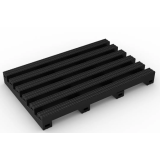 Heronair Matting
Starting at $588.00
What Heronair does before a wet work floor causes a fall In a busy work area, the floor gets wet and stays wet — washdown, splashes, drips, tracked-in water. It's easy to assume a quick mop or a coat of non-slip paint keeps people safe. The catch is that water...
What Heronair does before a wet work floor causes a fall In a busy work area, the floor gets wet...
What Heronair does before a wet work floor causes a fall
In a busy work area, the floor gets wet and stays wet — washdown, splashes, drips, tracked-in water. It's easy to assume a quick mop or a coat of non-slip paint keeps people safe. The catch is that water spreads into a thin film on a hard floor, right where people walk and stand, and a painted or tiled surface that grips dry can turn slick the moment it's wet.
Heronair is built to take that film out of play. It's an open-grid PVC mat that's impermeable to fluids, so water and debris drop through and disperse below the surface instead of pooling on top. The etched surface gives shoes traction, and the mat keeps draining even when the floor around it is soaked. That's the difference between a real non-slip wet-area mat and a surface that only behaves when it's dry.
A wet, slick work floor isn't a minor nuisance. The National Floor Safety Institute ties wet, hard floors to a large share of slip, trip, and fall injuries, and a walkway or wet work zone keeps feeding that risk shift after shift. A mat that drains the water away and holds grip underfoot is doing safety work the whole time it's down.
Why a lightweight tubular PVC build, and why this one
Heronair is made from non-porous PVC in a two-layer, tubular construction — and that hollow build is the heart of what makes it different. The tubes make the mat genuinely light: at around 0.9 pounds per square foot, it's easy to lift, roll, and reposition by hand. In a space where mats get pulled up for cleaning or moved between tasks, that lightness is a real day-to-day advantage.
The same open structure that keeps it light also keeps it draining. Liquids pass straight through and clear away beneath the mat, and it's certified slip resistant at R11 with V10 drainage under DIN 51130. Grip comes from an etched surface, so traction is strongest across the lines of the pattern. The hollow body also insulates against a cold floor and absorbs sound, taking some of the chill and clatter out of a hard work area.
Because people stand on these floors for hours, the cushioning matters. The give in the tubular build reduces fatigue underfoot, which is easier on legs and backs than bare concrete. The PVC itself resists most acids, alkalines, and oils, handles UV without degrading, and works from below freezing up to 140°F. Made in black, it's produced from post-industrial recycled material — averaging at least 30% recycled content — and the whole mat is 100% recyclable.
Where it belongs — and what it isn't
Heronair belongs in wet, working spaces where people are on their feet in shoes. Think light-industrial areas and walkways, washdown zones, beverage and prep stations, and the wet service and back-of-house areas around a pool — pump and equipment rooms, plant rooms, and staff walkways — rather than the barefoot deck itself. Wherever liquids underfoot meet standing workers, it earns its place.
It's worth being clear about what this mat is not. It's a shod, walk-on work mat — not a barefoot-certified pool mat, not a flotation device, and not the liner sheet that goes under an above-ground pool. For the barefoot pool deck, shower, or changing room, a barefoot-rated mat is the right call. Heronair's job is the working wet floor, in shoes, where drainage and anti-fatigue support matter most.
How it goes down is simple. It comes in 33-foot rolls, cuts to fit on site, and contours to uneven surfaces, so it follows a real floor instead of fighting it. For larger areas, rolls join side-to-side and end-to-end with connector clips or welded snap track, and ramped edging finishes an exposed border so the mat doesn't become a trip point.
Three Things to Check Before You Spec It
Heronair is easy to order well once you've thought through three things.
First, match it to the duty. This is the lighter, more versatile end of wet-area matting — ideal where you want easy handling, anti-fatigue support, and reliable drainage in shoes. For the most punishing wet floors or the highest wet-grip demands, a heavier, higher-traction mat may suit better. Be honest about how hard the floor gets worked before you choose.
Second, measure the whole wet path and plan the joins. Size the mat to cover wherever liquid actually reaches — the full washdown zone, the length of a walkway — since a dry-foot gap is where the next slip waits. For bigger areas, map where rolls will join with clips or snap track and where ramped edging finishes the border.
Third, plan for heat and movement. The PVC handles a wide temperature range, but like any thermoplastic it can shrink slightly — up to about 2%, faster in heat — so in a hot space or an exposed spot, leave a little room at fixed edges rather than butting it tight wall to wall, and use edging or clips to keep sections in place.
Why Mats Inc.
We've been matching mats to real floors since 1964, and wet work areas are where the wrong mat shows up fastest — in sore legs, slick steps, and mats too heavy to bother moving. We'll help you decide whether Heronair's lightweight, easy-handling build fits your space or whether a heavier mat suits the duty, size it to your actual wet path, and plan the seams and edging. It's part of our wider lineup of pool and wet-area matting, and every order is backed by our 1-year limited warranty.
Material Non-porous flexible PVC Construction Two-layer tubular (hollow); etched open-grid surface Thickness 3/8" (10 mm) Weight 0.9 lb / sq ft Roll options 33' lengths in 2', 3', and 4' widths (cut to fit on site) Custom sizes Custom matting available Slip resistance DIN 51130: R11; ASTM F1677: 0.6/0.6; ASTM E303 wet: 58–77 (by direction) Drainage DIN 51130: V10 Chemical resistance Most acids, alkalines, and oils Temperature range -9°F to +140°F Hygiene Non-porous PVC; naturally resists bacteria growth Acoustic / thermal Sound absorption; insulating Environmental 100% recyclable; black made from ≥30% post-industrial recycled content; no SVHC (REACH) UV Resists PVC degradation Color Black (other colors available) Warranty 1-year limited (Mats Inc.) Frequently Asked Questions
What's Heronair made of, and why is it so light?
Answered by Dustin Thompson, Owner & CEO
It's made from non-porous PVC in a two-layer, tubular construction — essentially an open grid of hollow tubes. That hollow build is why it's light: about 0.9 pounds per square foot, easy to lift, roll, and move by hand. The open structure also means it's impermeable to fluids — water and debris drop straight through and clear away underneath instead of pooling on top. So the same thing that makes it light also makes it drain, and keeps the walking surface usable when the floor's wet.
How slip-resistant and tough is it, especially with chemicals around?
Answered by Dustin Thompson, Owner & CEO
It's certified slip resistant at R11 with V10 drainage under DIN 51130, with traction coming from an etched surface — grip is strongest across the lines of the pattern, reading 58 to 77 wet on the ASTM E303 pendulum test depending on direction. On toughness, the PVC resists most acids, alkalines, and oils, stands up to UV without degrading, and works from below freezing up to 140°F. That's what lets the same mat hold up in a washdown area, a chemical-prone work zone, or an outdoor walkway without going brittle.
What sizes does it come in, and can it cover a large floor?
Answered by Dustin Thompson, Owner & CEO
It comes in 33-foot rolls in 2-, 3-, and 4-foot widths, and you cut it to fit on site. For a large floor, rolls join side-to-side and end-to-end with connector clips or welded snap track, so you can cover a whole walkway or work area in one continuous surface. Because it contours to uneven ground, it follows a real floor rather than needing a perfectly flat one, and custom matting is available when a standard width won't fit.
Can I use this around a pool, or is it really a workplace mat?
Answered by Jinna Hopson, VP of Marketing
It's really a workplace mat, and that's where it shines — light-industrial areas, walkways, washdown and prep zones. Around a pool, its place is the working, in-shoes areas: pump and plant rooms, staff walkways, and back-of-house service spaces, rather than the barefoot deck or shower. For those barefoot areas you'd want a barefoot-rated pool mat instead. If your space is a wet floor where people work on their feet in shoes, Heronair fits.
What does it look like underfoot?
Answered by Jinna Hopson, VP of Marketing
It has a practical, industrial look — an open, etched grid that clearly reads as a working surface built to drain and grip, not as decoration. The standard color is black, which is the easy choice for a work area because it hides the grit, oil, and debris these floors collect between cleanings; the black version is also the one made from recycled material. Other colors are available if you want to mark off a zone or match a scheme — tell us what you need and we'll confirm the options.
My work area has an awkward layout — will it fit, and is it easy to live with?
Answered by Jinna Hopson, VP of Marketing
Yes on both counts. Because it cuts to fit on site and contours to uneven surfaces, you can shape a run around machinery, drains, and corners instead of forcing the space to match a fixed mat. And it's genuinely easy to live with day to day: it's light enough to lift or roll up for cleaning by hand, needs no special tools, and rinses down with a hose. Send us your layout and we'll help you plan widths, joins, and edging.
Written by Dustin Thompson, Owner & CEO, Mats Inc.
↑
What Heronair does before a wet work floor causes a fall
In a busy work area, the floor gets wet and stays wet — washdown, splashes, drips, tracked-in water. It's easy to assume a quick mop or a coat of non-slip paint keeps people safe. The catch is that water spreads into a thin film on a hard floor, right where people walk and stand, and a painted or tiled surface that grips dry can turn slick the moment it's wet.
Heronair is built to take that film out of play. It's an open-grid PVC mat that's impermeable to fluids, so water and debris drop through and disperse below the surface instead of pooling on top. The etched surface gives shoes traction, and the mat keeps draining even when the floor around it is soaked. That's the difference between a real non-slip wet-area mat and a surface that only behaves when it's dry.
A wet, slick work floor isn't a minor nuisance. The National Floor Safety Institute ties wet, hard floors to a large share of slip, trip, and fall injuries, and a walkway or wet work zone keeps feeding that risk shift after shift. A mat that drains the water away and holds grip underfoot is doing safety work the whole time it's down.
Why a lightweight tubular PVC build, and why this one
Heronair is made from non-porous PVC in a two-layer, tubular construction — and that hollow build is the heart of what makes it different. The tubes make the mat genuinely light: at around 0.9 pounds per square foot, it's easy to lift, roll, and reposition by hand. In a space where mats get pulled up for cleaning or moved between tasks, that lightness is a real day-to-day advantage.
The same open structure that keeps it light also keeps it draining. Liquids pass straight through and clear away beneath the mat, and it's certified slip resistant at R11 with V10 drainage under DIN 51130. Grip comes from an etched surface, so traction is strongest across the lines of the pattern. The hollow body also insulates against a cold floor and absorbs sound, taking some of the chill and clatter out of a hard work area.
Because people stand on these floors for hours, the cushioning matters. The give in the tubular build reduces fatigue underfoot, which is easier on legs and backs than bare concrete. The PVC itself resists most acids, alkalines, and oils, handles UV without degrading, and works from below freezing up to 140°F. Made in black, it's produced from post-industrial recycled material — averaging at least 30% recycled content — and the whole mat is 100% recyclable.
Where it belongs — and what it isn't
Heronair belongs in wet, working spaces where people are on their feet in shoes. Think light-industrial areas and walkways, washdown zones, beverage and prep stations, and the wet service and back-of-house areas around a pool — pump and equipment rooms, plant rooms, and staff walkways — rather than the barefoot deck itself. Wherever liquids underfoot meet standing workers, it earns its place.
It's worth being clear about what this mat is not. It's a shod, walk-on work mat — not a barefoot-certified pool mat, not a flotation device, and not the liner sheet that goes under an above-ground pool. For the barefoot pool deck, shower, or changing room, a barefoot-rated mat is the right call. Heronair's job is the working wet floor, in shoes, where drainage and anti-fatigue support matter most.
How it goes down is simple. It comes in 33-foot rolls, cuts to fit on site, and contours to uneven surfaces, so it follows a real floor instead of fighting it. For larger areas, rolls join side-to-side and end-to-end with connector clips or welded snap track, and ramped edging finishes an exposed border so the mat doesn't become a trip point.
Three Things to Check Before You Spec It
Heronair is easy to order well once you've thought through three things.
First, match it to the duty. This is the lighter, more versatile end of wet-area matting — ideal where you want easy handling, anti-fatigue support, and reliable drainage in shoes. For the most punishing wet floors or the highest wet-grip demands, a heavier, higher-traction mat may suit better. Be honest about how hard the floor gets worked before you choose.
Second, measure the whole wet path and plan the joins. Size the mat to cover wherever liquid actually reaches — the full washdown zone, the length of a walkway — since a dry-foot gap is where the next slip waits. For bigger areas, map where rolls will join with clips or snap track and where ramped edging finishes the border.
Third, plan for heat and movement. The PVC handles a wide temperature range, but like any thermoplastic it can shrink slightly — up to about 2%, faster in heat — so in a hot space or an exposed spot, leave a little room at fixed edges rather than butting it tight wall to wall, and use edging or clips to keep sections in place.
Why Mats Inc.
We've been matching mats to real floors since 1964, and wet work areas are where the wrong mat shows up fastest — in sore legs, slick steps, and mats too heavy to bother moving. We'll help you decide whether Heronair's lightweight, easy-handling build fits your space or whether a heavier mat suits the duty, size it to your actual wet path, and plan the seams and edging. It's part of our wider lineup of pool and wet-area matting, and every order is backed by our 1-year limited warranty.
Material Non-porous flexible PVC Construction Two-layer tubular (hollow); etched open-grid surface Thickness 3/8" (10 mm) Weight 0.9 lb / sq ft Roll options 33' lengths in 2', 3', and 4' widths (cut to fit on site) Custom sizes Custom matting available Slip resistance DIN 51130: R11; ASTM F1677: 0.6/0.6; ASTM E303 wet: 58–77 (by direction) Drainage DIN 51130: V10 Chemical resistance Most acids, alkalines, and oils Temperature range -9°F to +140°F Hygiene Non-porous PVC; naturally resists bacteria growth Acoustic / thermal Sound absorption; insulating Environmental 100% recyclable; black made from ≥30% post-industrial recycled content; no SVHC (REACH) UV Resists PVC degradation Color Black (other colors available) Warranty 1-year limited (Mats Inc.) Frequently Asked Questions
What's Heronair made of, and why is it so light?
Answered by Dustin Thompson, Owner & CEO
It's made from non-porous PVC in a two-layer, tubular construction — essentially an open grid of hollow tubes. That hollow build is why it's light: about 0.9 pounds per square foot, easy to lift, roll, and move by hand. The open structure also means it's impermeable to fluids — water and debris drop straight through and clear away underneath instead of pooling on top. So the same thing that makes it light also makes it drain, and keeps the walking surface usable when the floor's wet.
How slip-resistant and tough is it, especially with chemicals around?
Answered by Dustin Thompson, Owner & CEO
It's certified slip resistant at R11 with V10 drainage under DIN 51130, with traction coming from an etched surface — grip is strongest across the lines of the pattern, reading 58 to 77 wet on the ASTM E303 pendulum test depending on direction. On toughness, the PVC resists most acids, alkalines, and oils, stands up to UV without degrading, and works from below freezing up to 140°F. That's what lets the same mat hold up in a washdown area, a chemical-prone work zone, or an outdoor walkway without going brittle.
What sizes does it come in, and can it cover a large floor?
Answered by Dustin Thompson, Owner & CEO
It comes in 33-foot rolls in 2-, 3-, and 4-foot widths, and you cut it to fit on site. For a large floor, rolls join side-to-side and end-to-end with connector clips or welded snap track, so you can cover a whole walkway or work area in one continuous surface. Because it contours to uneven ground, it follows a real floor rather than needing a perfectly flat one, and custom matting is available when a standard width won't fit.
Can I use this around a pool, or is it really a workplace mat?
Answered by Jinna Hopson, VP of Marketing
It's really a workplace mat, and that's where it shines — light-industrial areas, walkways, washdown and prep zones. Around a pool, its place is the working, in-shoes areas: pump and plant rooms, staff walkways, and back-of-house service spaces, rather than the barefoot deck or shower. For those barefoot areas you'd want a barefoot-rated pool mat instead. If your space is a wet floor where people work on their feet in shoes, Heronair fits.
What does it look like underfoot?
Answered by Jinna Hopson, VP of Marketing
It has a practical, industrial look — an open, etched grid that clearly reads as a working surface built to drain and grip, not as decoration. The standard color is black, which is the easy choice for a work area because it hides the grit, oil, and debris these floors collect between cleanings; the black version is also the one made from recycled material. Other colors are available if you want to mark off a zone or match a scheme — tell us what you need and we'll confirm the options.
My work area has an awkward layout — will it fit, and is it easy to live with?
Answered by Jinna Hopson, VP of Marketing
Yes on both counts. Because it cuts to fit on site and contours to uneven surfaces, you can shape a run around machinery, drains, and corners instead of forcing the space to match a fixed mat. And it's genuinely easy to live with day to day: it's light enough to lift or roll up for cleaning by hand, needs no special tools, and rinses down with a hose. Send us your layout and we'll help you plan widths, joins, and edging.
Written by Dustin Thompson, Owner & CEO, Mats Inc.
↑
View Details
View Details
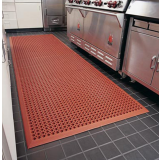 Safe Walk Mats
Starting at $194.00
Safe Walk mats are the straightforward heavy answer for wet and greasy standing zones: a one-piece rubber anti-fatigue mat, 7/8 of an inch thick, with circular drain-through holes and square-cut edges built to take years of abuse. Three versions cover the range — general-purpose black, black with pre-assembled yellow...
Safe Walk mats are the straightforward heavy answer for wet and greasy standing zones: a one-piece rubber anti-fatigue mat,...
Safe Walk mats are the straightforward heavy answer for wet and greasy standing zones: a one-piece rubber anti-fatigue mat, 7/8 of an inch thick, with circular drain-through holes and square-cut edges built to take years of abuse. Three versions cover the range — general-purpose black, black with pre-assembled yellow safety borders, and a grease-resistant terra cotta nitrile blend.
What Safe Walk Does Before the Edges Give Out
Drainage mats rarely die in the middle. They die at the edges — thin bevels that curl after months of cart wheels and boot toes, then crack, then turn the mat itself into the trip hazard it was bought to prevent. Meanwhile the wet floor problem never went away: liquid where feet plant, all shift.
This rubber standing mat attacks both ends of that story. The holes pass water, grease, and debris through the surface so footing stays sure, the resilient rubber body cushions long hours on concrete, and the robust square edges keep their shape where lighter perimeters fail first.
Why This Construction, and Why This One
The build is deliberately simple: heavy-duty rubber, 7/8 inch thick, one piece. That thickness keeps the cushion working under all-day industrial standing, and the compound carries up to 40% recycled material.
The version choice does the specifying. General-purpose black handles wet duty — washdowns, water, standard cleaners. The terra cotta version is a nitrile rubber blend for floors that see grease and oil daily. And where edge visibility matters in a fast-moving space, the bordered version arrives with yellow safety borders already assembled — no separate edging to order, fit, or lose.
Where It Belongs, and What It Is Not
Safe Walk earns its footprint in industrial workstations, food processing areas, commercial kitchens, bars, and cafeterias — the wet and oily floors where a mat gets hosed off as often as it gets stood on. If your station is a fixed rectangle that takes a beating, this one-piece format is the low-maintenance pick.
It is not a dry-area comfort mat; a solid surface serves salons, counters, and standing desks better than perforations ever will. And for sprawling or odd-shaped coverage that a rectangle can't fit, a modular system is the better tool. Within the full range of anti-fatigue floor mats, Safe Walk is the fixed-station heavyweight.
Three Things to Check Before You Spec It
First, the compound against the floor's reality. Water only: general-purpose black does the job. Grease, fryer oil, or petroleum fluids in the mix: go terra cotta nitrile — a general-purpose compound under daily grease softens and shortens its own life.
Second, whether the edge needs to announce itself. In a dim back-of-house or a fast line, the pre-assembled yellow-border version marks the mat's perimeter for people moving at speed. In a calm, well-lit station, plain black keeps a lower profile.
Third, the footprint against the size runs. The standard mat is 3 by 5 feet; the bordered versions come pre-assembled in set sizes up to 124 inches long, in three-sided and four-sided border layouts. Measure the real standing path — the border layout should match which sides face open floor.
Why Mats Inc.
The mats that come back for early replacement almost always failed the same way: right idea, wrong compound, or an edge that met a cart path it wasn't specced for. Tell us what runs across your floor — liquids, wheels, and feet — and we'll confirm which Safe Walk version and border layout holds up in that exact spot before you commit.
Format One-piece heavy-duty rubber mat, square edges Thickness 7/8" Versions General-purpose black rubber; black with pre-assembled yellow borders; grease-resistant terra cotta nitrile rubber blend Drainage Circular drain-through holes Recycled content Up to 40% Standard size 3' x 5' Bordered sizes (3-sided) 26" x 40", 38" x 40", 38" x 64", 38" x 124" Bordered sizes (4-sided) 28" x 40", 40" x 40", 40" x 64", 40" x 124" Warranty 1-year limited (Mats Inc.) Frequently Asked Questions
Which Safe Walk version do I need — black, bordered, or terra cotta?
Answered by Dustin Thompson, Owner & CEO
Answer two questions. What's in the liquid: if grease or oil reaches that floor in a normal week, take the terra cotta nitrile blend; if it's water and cleaners, black is right. And who's moving past it: if staff cross that zone at speed or the light is poor, the yellow-bordered version makes the mat's edge unmistakable.
How long does a mat this heavy actually last?
Answered by Dustin Thompson, Owner & CEO
At 7/8 inch of heavy rubber, this is built for the long haul — years of daily washdown duty is the normal run, and the square-cut edges remove the usual first failure point, since there's no thin bevel to curl and crack.
What still ends one early: the wrong compound under constant grease, or drain holes left clogged until debris grinds the surface. Rinse it on schedule and check that edges still sit dead flat; when one won't, plan the replacement.
How should it be placed, and does it need anchoring?
Answered by Dustin Thompson, Owner & CEO
No anchoring — at this weight the mat holds its position. Set it on a clean, dry floor centered on where feet actually plant through the shift, and orient it so what drains through moves toward the floor drain rather than into the walk lane.
Lift it during floor cleaning so the concrete beneath dries fully, then set it back the same way each time.
Is the yellow border too industrial-looking for a bar or cafeteria guests can see?
Answered by Jinna Hopson, VP of Marketing
It depends what story the space tells. In a cafeteria or service line, a clean yellow border reads as a well-run operation that takes footing seriously — the same cue as a marked step. Behind a polished bar, plain black usually sits better, disappearing against the floor while the bartender gets the cushion.
The nice thing about a three-version lineup is you don't have to compromise: bordered where safety marking fits the room, plain where it doesn't.
What sizes are available, and what do "3-sided" and "4-sided" borders mean?
Answered by Jinna Hopson, VP of Marketing
The plain black and terra cotta versions come in the standard 3-by-5-foot mat. The bordered version arrives pre-assembled in sizes from 26-by-40 inches up to 124-inch lengths.
Three-sided means the yellow border wraps three edges, leaving one short edge square to butt flush against a counter, sink base, or wall. Four-sided wraps everything, for a mat that floats in open floor with traffic from any direction. Match the layout to which sides actually face walking space.
Would this suit a busy home kitchen, or is it commercial overkill?
Answered by Jinna Hopson, VP of Marketing
For most home kitchens it's more mat than the floor needs — nearly an inch of industrial rubber with drainage holes belongs where floors get hosed, not mopped weekly. A solid-surface cushioned kitchen mat gives home cooks the comfort without the perforations.
The exception is the home that runs commercial: canning weekends, a serious home bar, a prep-heavy kitchen with a wet zone. If you're regularly standing on a wet floor for hours, the commercial answer is the honest one.
By Dustin Thompson, Owner & CEO, Mats Inc.
↑
Safe Walk mats are the straightforward heavy answer for wet and greasy standing zones: a one-piece rubber anti-fatigue mat, 7/8 of an inch thick, with circular drain-through holes and square-cut edges built to take years of abuse. Three versions cover the range — general-purpose black, black with pre-assembled yellow safety borders, and a grease-resistant terra cotta nitrile blend.
What Safe Walk Does Before the Edges Give Out
Drainage mats rarely die in the middle. They die at the edges — thin bevels that curl after months of cart wheels and boot toes, then crack, then turn the mat itself into the trip hazard it was bought to prevent. Meanwhile the wet floor problem never went away: liquid where feet plant, all shift.
This rubber standing mat attacks both ends of that story. The holes pass water, grease, and debris through the surface so footing stays sure, the resilient rubber body cushions long hours on concrete, and the robust square edges keep their shape where lighter perimeters fail first.
Why This Construction, and Why This One
The build is deliberately simple: heavy-duty rubber, 7/8 inch thick, one piece. That thickness keeps the cushion working under all-day industrial standing, and the compound carries up to 40% recycled material.
The version choice does the specifying. General-purpose black handles wet duty — washdowns, water, standard cleaners. The terra cotta version is a nitrile rubber blend for floors that see grease and oil daily. And where edge visibility matters in a fast-moving space, the bordered version arrives with yellow safety borders already assembled — no separate edging to order, fit, or lose.
Where It Belongs, and What It Is Not
Safe Walk earns its footprint in industrial workstations, food processing areas, commercial kitchens, bars, and cafeterias — the wet and oily floors where a mat gets hosed off as often as it gets stood on. If your station is a fixed rectangle that takes a beating, this one-piece format is the low-maintenance pick.
It is not a dry-area comfort mat; a solid surface serves salons, counters, and standing desks better than perforations ever will. And for sprawling or odd-shaped coverage that a rectangle can't fit, a modular system is the better tool. Within the full range of anti-fatigue floor mats, Safe Walk is the fixed-station heavyweight.
Three Things to Check Before You Spec It
First, the compound against the floor's reality. Water only: general-purpose black does the job. Grease, fryer oil, or petroleum fluids in the mix: go terra cotta nitrile — a general-purpose compound under daily grease softens and shortens its own life.
Second, whether the edge needs to announce itself. In a dim back-of-house or a fast line, the pre-assembled yellow-border version marks the mat's perimeter for people moving at speed. In a calm, well-lit station, plain black keeps a lower profile.
Third, the footprint against the size runs. The standard mat is 3 by 5 feet; the bordered versions come pre-assembled in set sizes up to 124 inches long, in three-sided and four-sided border layouts. Measure the real standing path — the border layout should match which sides face open floor.
Why Mats Inc.
The mats that come back for early replacement almost always failed the same way: right idea, wrong compound, or an edge that met a cart path it wasn't specced for. Tell us what runs across your floor — liquids, wheels, and feet — and we'll confirm which Safe Walk version and border layout holds up in that exact spot before you commit.
Format One-piece heavy-duty rubber mat, square edges Thickness 7/8" Versions General-purpose black rubber; black with pre-assembled yellow borders; grease-resistant terra cotta nitrile rubber blend Drainage Circular drain-through holes Recycled content Up to 40% Standard size 3' x 5' Bordered sizes (3-sided) 26" x 40", 38" x 40", 38" x 64", 38" x 124" Bordered sizes (4-sided) 28" x 40", 40" x 40", 40" x 64", 40" x 124" Warranty 1-year limited (Mats Inc.) Frequently Asked Questions
Which Safe Walk version do I need — black, bordered, or terra cotta?
Answered by Dustin Thompson, Owner & CEO
Answer two questions. What's in the liquid: if grease or oil reaches that floor in a normal week, take the terra cotta nitrile blend; if it's water and cleaners, black is right. And who's moving past it: if staff cross that zone at speed or the light is poor, the yellow-bordered version makes the mat's edge unmistakable.
How long does a mat this heavy actually last?
Answered by Dustin Thompson, Owner & CEO
At 7/8 inch of heavy rubber, this is built for the long haul — years of daily washdown duty is the normal run, and the square-cut edges remove the usual first failure point, since there's no thin bevel to curl and crack.
What still ends one early: the wrong compound under constant grease, or drain holes left clogged until debris grinds the surface. Rinse it on schedule and check that edges still sit dead flat; when one won't, plan the replacement.
How should it be placed, and does it need anchoring?
Answered by Dustin Thompson, Owner & CEO
No anchoring — at this weight the mat holds its position. Set it on a clean, dry floor centered on where feet actually plant through the shift, and orient it so what drains through moves toward the floor drain rather than into the walk lane.
Lift it during floor cleaning so the concrete beneath dries fully, then set it back the same way each time.
Is the yellow border too industrial-looking for a bar or cafeteria guests can see?
Answered by Jinna Hopson, VP of Marketing
It depends what story the space tells. In a cafeteria or service line, a clean yellow border reads as a well-run operation that takes footing seriously — the same cue as a marked step. Behind a polished bar, plain black usually sits better, disappearing against the floor while the bartender gets the cushion.
The nice thing about a three-version lineup is you don't have to compromise: bordered where safety marking fits the room, plain where it doesn't.
What sizes are available, and what do "3-sided" and "4-sided" borders mean?
Answered by Jinna Hopson, VP of Marketing
The plain black and terra cotta versions come in the standard 3-by-5-foot mat. The bordered version arrives pre-assembled in sizes from 26-by-40 inches up to 124-inch lengths.
Three-sided means the yellow border wraps three edges, leaving one short edge square to butt flush against a counter, sink base, or wall. Four-sided wraps everything, for a mat that floats in open floor with traffic from any direction. Match the layout to which sides actually face walking space.
Would this suit a busy home kitchen, or is it commercial overkill?
Answered by Jinna Hopson, VP of Marketing
For most home kitchens it's more mat than the floor needs — nearly an inch of industrial rubber with drainage holes belongs where floors get hosed, not mopped weekly. A solid-surface cushioned kitchen mat gives home cooks the comfort without the perforations.
The exception is the home that runs commercial: canning weekends, a serious home bar, a prep-heavy kitchen with a wet zone. If you're regularly standing on a wet floor for hours, the commercial answer is the honest one.
By Dustin Thompson, Owner & CEO, Mats Inc.
↑
View Details
View Details
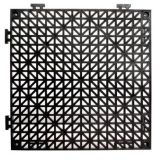 Cushion Tile
Starting at $10.00
What Cushion Tile does before a hard, wet floor wears people out A wet concrete or tile floor around a pool, in a plant room, or behind a counter does two kinds of damage you don't always connect. It's slick where water sits, and it's punishing to stand on for...
What Cushion Tile does before a hard, wet floor wears people out A wet concrete or tile floor around a...
What Cushion Tile does before a hard, wet floor wears people out
A wet concrete or tile floor around a pool, in a plant room, or behind a counter does two kinds of damage you don't always connect. It's slick where water sits, and it's punishing to stand on for hours — hard, cold, and unforgiving on legs, backs, and feet. Most people notice the slip risk and miss the standing fatigue, but both come from the same hard, wet surface.
Cushion Tile takes on both at once. Each tile is a thick, flexible vinyl square with a waffle-grid, open-mesh surface, so it lifts your feet up out of the water while water drains away through the grid below. At the same time, the give in the recycled vinyl cushions every step, so a floor that used to punish now gives a little back. You stand drier and more comfortably on the same spot.
On a wet, hard floor, that combination matters more than it looks. Standing all day on unforgiving concrete is a genuine source of fatigue and strain, and standing water on top of it adds a slip risk. A cushioned tile that raises feet above the water and softens the surface underneath is protecting the people on it and the floor itself.
Why a recycled cushioned tile, and why this one
Cushion Tile is molded from recycled flexible vinyl, which does two useful things. It gives the tile its cushioning flex — enough to conform to an uneven floor and soften a hard surface underfoot — and it puts a recycled material to work instead of a virgin one, which matters if sustainability is part of your spec. The vinyl is grease and moisture resistant, so a wet or greasy floor doesn't break it down.
The surface is a waffle-grid, open-mesh top on a 3/4-inch-thick tile — noticeably thicker than a thin drainage mat, which is where the cushioning comes from. The open grid lets water and debris fall through and away, keeping the top of the tile clear while your feet stay up above any standing water. It guards against slipping and against the wear that vibration and moisture put on a floor.
It goes down without tools or a contractor. The 12-by-12-inch tiles interlock on every side to build a surface of any size or shape, and they trim to fit around a drain, a bench, or a corner. Interlocking beveled edge and corner pieces ramp the 3/4-inch height down to the floor for a finished, trip-free border. When it's time to clean, you lift a section, rinse, and drop it back.
Where it belongs — and what it isn't
Cushion Tile suits any hard, wet, or greasy floor where people stand or move around. That includes pool decks and surrounds, locker and changing rooms, and shower approaches, but also the wet, standing-work zones it was bred for — behind bars and counters, in plant and equipment rooms, workshops, and washdown areas. Because it handles indoors and out and conforms to an uneven floor, it covers a lot of different ground.
It's worth being clear about what this isn't. It's a walk-on cushioned floor tile, not a flotation device, and not the liner sheet that goes under an above-ground pool. If you want a mat to put under a pool or a float for the water, this isn't that product. Cushion Tile installs on top of your existing floor and turns a hard, wet surface into a cushioned, draining one.
One honest note on grip: this tile's strength is cushioning and lifting feet above the water, and its waffle surface gives solid footing for a walkway or standing area. For the most slip-critical wet spots — a steep, constantly streaming surface where aggressive traction is the priority — a coarser, grittier surface may serve better, and we can point you to one. For general wet-area comfort and safety, this is a strong fit.
Three Things to Check Before You Spec It
Cushion Tile is simple to order once you've thought through three things.
First, size the coverage and count your tiles. Each tile covers one square foot, so a deck or work zone is just its area in tiles, plus edge and corner pieces for any exposed sides. Because it's ideal for covering large surfaces, map the whole area you want cushioned and draining, not just a single standing spot.
Second, plan your edges. Wherever the tiled surface meets open floor people step onto, the beveled edge and corner pieces ramp the 3/4-inch height down so there's no lip to trip on and carts can roll on and off. Decide which sides are exposed before you order so the right ramp pieces come with the tiles.
Third, pick a color for the setting. It comes in several colors, including blue, green, gray, red, and beige, with more available. Blue and gray read clean and neutral around a pool or in a locker room; beige is easy and warm; brighter colors can zone an area or mark a walkway. Darker, muted tones show grit the least between cleanings.
Why Mats Inc.
We've been matching mats to real floors since 1964, and a hard, wet floor is one of the clearest cases for the right surface — it shows up in comfort, safety, and how the floor holds up. We'll help you work out how many tiles and edge pieces your space needs, choose a color for the room, and flag whether Cushion Tile's cushioned surface or a grittier one suits your particular wet spot. It's part of our wider lineup of pool and wet-area matting, and every order is backed by our 1-year limited warranty.
Material Recycled flexible vinyl Surface Waffle-grid, open-mesh top Tile size 12" x 12" Thickness 3/4" Weight ~1.5 lb per tile Colors Blue, green, gray, red, beige (more available) Edge / corner pieces Interlocking beveled edge (2" x 12") and corner (2" x 13.6") ramps Installation Interlocking modular; snaps together; trims to fit any size or shape Use Indoor or outdoor; grease and moisture resistant; conforms to uneven floors Sustainability Made from recycled material Warranty 1-year limited (Mats Inc.) Frequently Asked Questions
How does Cushion Tile keep feet out of the water and still feel soft?
Answered by Dustin Thompson, Owner & CEO
It does both jobs with one design. Each tile is a 3/4-inch-thick square of flexible recycled vinyl with a waffle-grid, open-mesh top. The grid raises your feet above the floor and lets water drain straight through and away, so you're standing on the tile rather than in a puddle. And because the vinyl is thick and flexible, it gives underfoot — that cushioning is where the "cushion" in the name comes from. The same flex also lets it conform to a floor that isn't perfectly flat.
Will it hold up on a wet, greasy, or outdoor floor?
Answered by Dustin Thompson, Owner & CEO
It's built for exactly those conditions. The recycled vinyl is grease and moisture resistant, so a wet pool deck, a greasy back-of-house floor, or a damp plant room won't degrade it, and it works indoors or outdoors. It also guards the floor beneath it from the wear that vibration and moisture cause. At 3/4 inch thick it's a substantial tile rather than a thin mat, and while the maker rates it for years of service, through us it's backed by our 1-year limited warranty.
What size are the tiles, and can I cover a big area?
Answered by Dustin Thompson, Owner & CEO
Each tile is 12 by 12 inches — one square foot — and they interlock on every side, so you can build a surface of any size or shape by snapping more together. It's specifically suited to covering large surfaces, so a whole pool deck or work floor is very doable. The tiles trim to fit around drains, corners, and equipment, and interlocking beveled edge and corner pieces finish the exposed borders. Custom sizing is available if you need it.
Where does Cushion Tile make the most sense?
Answered by Jinna Hopson, VP of Marketing
Anywhere a hard floor is wet or greasy and people stand or move on it. Around water, that's pool decks and surrounds, locker and changing rooms, and shower approaches. It's just as at home in the standing-work spots it was designed for — behind a bar or counter, in a plant or equipment room, a workshop, or a washdown area. Because it works indoors and out and conforms to uneven ground, it fits both a poolside setting and a working back-of-house floor.
What colors does it come in, and how should I choose?
Answered by Jinna Hopson, VP of Marketing
It comes in several colors, including blue, green, gray, red, and beige, with more available. The color is a chance to fit the tile to the room: blue and gray feel clean and neutral around a pool or in a locker room, beige reads warm and low-key, and brighter shades like green or red can mark off a walkway or zone an area for safety. If you want the floor to stay looking tidy between cleanings, the darker, muted tones hide grit and debris best.
My space is an odd shape — can I make it fit, and even zone areas by color?
Answered by Jinna Hopson, VP of Marketing
Yes to both. Because every tile interlocks on all sides and trims with a knife, you can build a surface to any footprint — around a curved pool edge, a drain, or a bench — and finish the exposed sides with beveled edge and corner ramps for a clean border. And with several colors to choose from, you can mix them to mark walkways, zone a wet area, or match a facility's look. Send us your layout and we'll help you plan the tiles, edges, and colors.
Written by Dustin Thompson, Owner & CEO, Mats Inc.
↑
What Cushion Tile does before a hard, wet floor wears people out
A wet concrete or tile floor around a pool, in a plant room, or behind a counter does two kinds of damage you don't always connect. It's slick where water sits, and it's punishing to stand on for hours — hard, cold, and unforgiving on legs, backs, and feet. Most people notice the slip risk and miss the standing fatigue, but both come from the same hard, wet surface.
Cushion Tile takes on both at once. Each tile is a thick, flexible vinyl square with a waffle-grid, open-mesh surface, so it lifts your feet up out of the water while water drains away through the grid below. At the same time, the give in the recycled vinyl cushions every step, so a floor that used to punish now gives a little back. You stand drier and more comfortably on the same spot.
On a wet, hard floor, that combination matters more than it looks. Standing all day on unforgiving concrete is a genuine source of fatigue and strain, and standing water on top of it adds a slip risk. A cushioned tile that raises feet above the water and softens the surface underneath is protecting the people on it and the floor itself.
Why a recycled cushioned tile, and why this one
Cushion Tile is molded from recycled flexible vinyl, which does two useful things. It gives the tile its cushioning flex — enough to conform to an uneven floor and soften a hard surface underfoot — and it puts a recycled material to work instead of a virgin one, which matters if sustainability is part of your spec. The vinyl is grease and moisture resistant, so a wet or greasy floor doesn't break it down.
The surface is a waffle-grid, open-mesh top on a 3/4-inch-thick tile — noticeably thicker than a thin drainage mat, which is where the cushioning comes from. The open grid lets water and debris fall through and away, keeping the top of the tile clear while your feet stay up above any standing water. It guards against slipping and against the wear that vibration and moisture put on a floor.
It goes down without tools or a contractor. The 12-by-12-inch tiles interlock on every side to build a surface of any size or shape, and they trim to fit around a drain, a bench, or a corner. Interlocking beveled edge and corner pieces ramp the 3/4-inch height down to the floor for a finished, trip-free border. When it's time to clean, you lift a section, rinse, and drop it back.
Where it belongs — and what it isn't
Cushion Tile suits any hard, wet, or greasy floor where people stand or move around. That includes pool decks and surrounds, locker and changing rooms, and shower approaches, but also the wet, standing-work zones it was bred for — behind bars and counters, in plant and equipment rooms, workshops, and washdown areas. Because it handles indoors and out and conforms to an uneven floor, it covers a lot of different ground.
It's worth being clear about what this isn't. It's a walk-on cushioned floor tile, not a flotation device, and not the liner sheet that goes under an above-ground pool. If you want a mat to put under a pool or a float for the water, this isn't that product. Cushion Tile installs on top of your existing floor and turns a hard, wet surface into a cushioned, draining one.
One honest note on grip: this tile's strength is cushioning and lifting feet above the water, and its waffle surface gives solid footing for a walkway or standing area. For the most slip-critical wet spots — a steep, constantly streaming surface where aggressive traction is the priority — a coarser, grittier surface may serve better, and we can point you to one. For general wet-area comfort and safety, this is a strong fit.
Three Things to Check Before You Spec It
Cushion Tile is simple to order once you've thought through three things.
First, size the coverage and count your tiles. Each tile covers one square foot, so a deck or work zone is just its area in tiles, plus edge and corner pieces for any exposed sides. Because it's ideal for covering large surfaces, map the whole area you want cushioned and draining, not just a single standing spot.
Second, plan your edges. Wherever the tiled surface meets open floor people step onto, the beveled edge and corner pieces ramp the 3/4-inch height down so there's no lip to trip on and carts can roll on and off. Decide which sides are exposed before you order so the right ramp pieces come with the tiles.
Third, pick a color for the setting. It comes in several colors, including blue, green, gray, red, and beige, with more available. Blue and gray read clean and neutral around a pool or in a locker room; beige is easy and warm; brighter colors can zone an area or mark a walkway. Darker, muted tones show grit the least between cleanings.
Why Mats Inc.
We've been matching mats to real floors since 1964, and a hard, wet floor is one of the clearest cases for the right surface — it shows up in comfort, safety, and how the floor holds up. We'll help you work out how many tiles and edge pieces your space needs, choose a color for the room, and flag whether Cushion Tile's cushioned surface or a grittier one suits your particular wet spot. It's part of our wider lineup of pool and wet-area matting, and every order is backed by our 1-year limited warranty.
Material Recycled flexible vinyl Surface Waffle-grid, open-mesh top Tile size 12" x 12" Thickness 3/4" Weight ~1.5 lb per tile Colors Blue, green, gray, red, beige (more available) Edge / corner pieces Interlocking beveled edge (2" x 12") and corner (2" x 13.6") ramps Installation Interlocking modular; snaps together; trims to fit any size or shape Use Indoor or outdoor; grease and moisture resistant; conforms to uneven floors Sustainability Made from recycled material Warranty 1-year limited (Mats Inc.) Frequently Asked Questions
How does Cushion Tile keep feet out of the water and still feel soft?
Answered by Dustin Thompson, Owner & CEO
It does both jobs with one design. Each tile is a 3/4-inch-thick square of flexible recycled vinyl with a waffle-grid, open-mesh top. The grid raises your feet above the floor and lets water drain straight through and away, so you're standing on the tile rather than in a puddle. And because the vinyl is thick and flexible, it gives underfoot — that cushioning is where the "cushion" in the name comes from. The same flex also lets it conform to a floor that isn't perfectly flat.
Will it hold up on a wet, greasy, or outdoor floor?
Answered by Dustin Thompson, Owner & CEO
It's built for exactly those conditions. The recycled vinyl is grease and moisture resistant, so a wet pool deck, a greasy back-of-house floor, or a damp plant room won't degrade it, and it works indoors or outdoors. It also guards the floor beneath it from the wear that vibration and moisture cause. At 3/4 inch thick it's a substantial tile rather than a thin mat, and while the maker rates it for years of service, through us it's backed by our 1-year limited warranty.
What size are the tiles, and can I cover a big area?
Answered by Dustin Thompson, Owner & CEO
Each tile is 12 by 12 inches — one square foot — and they interlock on every side, so you can build a surface of any size or shape by snapping more together. It's specifically suited to covering large surfaces, so a whole pool deck or work floor is very doable. The tiles trim to fit around drains, corners, and equipment, and interlocking beveled edge and corner pieces finish the exposed borders. Custom sizing is available if you need it.
Where does Cushion Tile make the most sense?
Answered by Jinna Hopson, VP of Marketing
Anywhere a hard floor is wet or greasy and people stand or move on it. Around water, that's pool decks and surrounds, locker and changing rooms, and shower approaches. It's just as at home in the standing-work spots it was designed for — behind a bar or counter, in a plant or equipment room, a workshop, or a washdown area. Because it works indoors and out and conforms to uneven ground, it fits both a poolside setting and a working back-of-house floor.
What colors does it come in, and how should I choose?
Answered by Jinna Hopson, VP of Marketing
It comes in several colors, including blue, green, gray, red, and beige, with more available. The color is a chance to fit the tile to the room: blue and gray feel clean and neutral around a pool or in a locker room, beige reads warm and low-key, and brighter shades like green or red can mark off a walkway or zone an area for safety. If you want the floor to stay looking tidy between cleanings, the darker, muted tones hide grit and debris best.
My space is an odd shape — can I make it fit, and even zone areas by color?
Answered by Jinna Hopson, VP of Marketing
Yes to both. Because every tile interlocks on all sides and trims with a knife, you can build a surface to any footprint — around a curved pool edge, a drain, or a bench — and finish the exposed sides with beveled edge and corner ramps for a clean border. And with several colors to choose from, you can mix them to mark walkways, zone a wet area, or match a facility's look. Send us your layout and we'll help you plan the tiles, edges, and colors.
Written by Dustin Thompson, Owner & CEO, Mats Inc.
↑
View Details
View Details
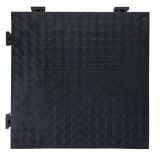 Solid Top Cushion Tile
Starting at $10.00
Solid Top Cushion Tile is a modular anti-fatigue mat for dry work areas: solid-surface vulcanized rubber sections that lock together into whatever footprint your line, cell, or bench run actually needs. The top stays sealed so debris sweeps off instead of falling in, while rubber nibs underneath keep air...
Solid Top Cushion Tile is a modular anti-fatigue mat for dry work areas: solid-surface vulcanized rubber sections that lock...
Solid Top Cushion Tile is a modular anti-fatigue mat for dry work areas: solid-surface vulcanized rubber sections that lock together into whatever footprint your line, cell, or bench run actually needs. The top stays sealed so debris sweeps off instead of falling in, while rubber nibs underneath keep air moving beneath the mat and add give to every step.
What Solid Top Cushion Tile Does Before a Dry Floor Wears Your Crew Down
Dry industrial floors punish people twice. Concrete stiffens legs and backs over a shift, and the fixed rectangular mats most facilities buy never quite fit the workspace — so operators end up standing half on, half off the cushion, right where the work happens.
A modular solid-top mat closes both gaps. Sections connect into the real shape of the station, so the cushion is under every position that matters. The textured surface keeps footing sure, and the sealed top means metal shavings, dust, and packaging debris stay where a broom can reach them.
The nib underside does quiet work too: it holds the mat off the floor so air circulates beneath, keeping the concrete under the mat drier instead of sealing in mopping moisture and condensation.
Why This Construction, and Why This One
The body is vulcanized rubber with an anti-fatigue textured surface, and it wears like it sounds: surface loss of half a percent or less after 1,000 cycles on the standard abrasion test. At 2.2 pounds per square foot, an assembled installation has real heft — it stays where you put it without adhesive.
Connectors are molded into two sides of each 3-by-3-foot section, so assemblies build out in any direction, reconfigure when the work cell changes, and let a worn high-traffic section swap out individually. The compound carries 47% recycled material, and flammability is rated to DOC FF 1-70.
Edging is optional: snap-on beveled ramps, in black or safety yellow, finish any side that faces foot traffic. Each finished side adds roughly 3 inches to the overall dimension.
Where It Belongs, and What It Is Not
This tile earns its footprint in factories, workstations, large work cells, and assembly lines — dry areas where coverage is big, irregular, or likely to be rearranged, and where debris control matters as much as cushion. If your matting needs to wrap a machine base or follow an L-shaped bench run, modular is the format that fits.
It is not a wet-area mat: no drainage means standing liquid stays on top, so washdown zones and greasy lines call for a perforated mat instead. And a single fixed station with standard dimensions is served more simply by a one-piece mat from the anti-fatigue mats and runners range. This tile's case is dry coverage shaped like your work, not like a stock rectangle.
Three Things to Check Before You Spec It
First, confirm the area truly runs dry. Occasional mopping is fine — the nib underside helps the floor beneath dry — but recurring spills, washdowns, or oil point you to a drainage-style mat rather than a solid top.
Second, map the real footprint. Sections are 3 by 3 feet, custom assemblies run up to 12 by 30 feet, and workstation layouts order in full-foot increments. Sketch where people actually stand and walk through a full shift — the point of modular is covering that shape edge to edge.
Third, plan the ramps. Count the sides that face open floor and spec snap-on beveled edging for those — yellow where you want the perimeter to announce itself, black where you don't — and remember each finished side adds about 3 inches to the assembly.
Why Mats Inc.
Modular dry-area installations succeed or fail at the sketch stage — the section count, the ramp sides, the 3 inches the edging adds. Send us the dimensions of the cell and a note on what the floor sees in a week, and we'll turn it into a section-and-ramp order that assembles into full coverage the first time, with no orphan gaps where someone stands.
Format Modular solid-surface sections; molded-in connectors on two sides Section size 3' x 3' Custom assemblies Up to 12' x 30'; workstations in full-foot increments Material / surface Vulcanized rubber with anti-fatigue textured solid top; rubber nib underside for comfort and aeration Color Black Abrasion resistance ≤0.5% loss at 1,000 cycles (ASTM D3884) Weight 2.2 lbs per sq. ft. Flammability DOC FF 1-70 Recycled content 47% Edging Optional snap-on beveled ramps, black or yellow; each finished side adds ~3" Warranty 1-year limited (Mats Inc.) Frequently Asked Questions
When is a solid top the right call instead of a perforated mat?
Answered by Dustin Thompson, Owner & CEO
When the floor runs dry and the debris is solid. In a machine shop or on a packing line, shavings, dust, and scrap stay on a sealed surface where a broom clears them in seconds — the same material falling into perforations gets ground underfoot and works into the openings.
The moment liquid becomes a daily fact of that floor, the logic flips and drainage wins. Solid top is the dry-area specialist.
How durable is it, really, and what would end its life early?
Answered by Dustin Thompson, Owner & CEO
The wear numbers are about as strong as this class gets: half a percent or less surface loss after 1,000 abrasion cycles, in dense vulcanized rubber weighing 2.2 pounds per square foot. Treated as a floor fixture rather than a consumable, installations commonly run many years — and a high-wear section in front of one machine swaps out without touching the rest.
What cuts life short: parking it under standing liquid it was never meant to drain, or letting grit sit in the connector joints until seams stop locking flat.
How does installation work across a big or odd-shaped cell?
Answered by Dustin Thompson, Owner & CEO
No adhesive, no tools. Each section carries connectors on two sides — start at the primary operator position, lock sections outward until the footprint is covered, and press every joint flush as you go. The assembly's own weight keeps it planted.
Snap ramps onto the sides that face walking traffic, wrap sections around machine bases as the shape demands, and when the cell gets rearranged next year, unlock and rebuild to the new layout.
It only comes in black — how do I keep a big installation from looking grim?
Answered by Jinna Hopson, VP of Marketing
Lean into it. A continuous black rubber field reads as deliberate, engineered flooring — far cleaner than a patchwork of mismatched mats collected over the years. The uniformity is the aesthetic.
Yellow snap-on ramps are your accent tool: they trace the perimeter in the same visual language as floor marking, which makes the whole cell look planned and keeps edges conspicuous exactly where people step on and off.
What sizes can I build, and how does the edging change the math?
Answered by Jinna Hopson, VP of Marketing
Sections are 3 by 3 feet and build into custom assemblies up to 12 by 30 feet, ordered in full-foot increments — L-shapes, U-shaped cells, and long assembly-line runs all come from the same units.
Budget the edging into your dimensions: each ramped side adds about 3 inches. In a tight aisle, that's the difference between a clean fit and a mat that crowds the cart path, so measure to the walls, not just the work.
Would this work outside a factory — a stockroom, a workshop, a packing bench at home?
Answered by Jinna Hopson, VP of Marketing
Anywhere someone stands for hours on a dry hard floor, yes — retail stockrooms, shipping benches, framing counters, a serious garage workshop. The modular format is actually friendlier outside the factory, since small spaces rarely match stock mat sizes and a two- or three-section assembly fits exactly.
Just hold the one rule: dry duty. If the space doubles as a wash bay or sees regular spills, choose a drainage mat instead.
By Dustin Thompson, Owner & CEO, Mats Inc.
↑
Solid Top Cushion Tile is a modular anti-fatigue mat for dry work areas: solid-surface vulcanized rubber sections that lock together into whatever footprint your line, cell, or bench run actually needs. The top stays sealed so debris sweeps off instead of falling in, while rubber nibs underneath keep air moving beneath the mat and add give to every step.
What Solid Top Cushion Tile Does Before a Dry Floor Wears Your Crew Down
Dry industrial floors punish people twice. Concrete stiffens legs and backs over a shift, and the fixed rectangular mats most facilities buy never quite fit the workspace — so operators end up standing half on, half off the cushion, right where the work happens.
A modular solid-top mat closes both gaps. Sections connect into the real shape of the station, so the cushion is under every position that matters. The textured surface keeps footing sure, and the sealed top means metal shavings, dust, and packaging debris stay where a broom can reach them.
The nib underside does quiet work too: it holds the mat off the floor so air circulates beneath, keeping the concrete under the mat drier instead of sealing in mopping moisture and condensation.
Why This Construction, and Why This One
The body is vulcanized rubber with an anti-fatigue textured surface, and it wears like it sounds: surface loss of half a percent or less after 1,000 cycles on the standard abrasion test. At 2.2 pounds per square foot, an assembled installation has real heft — it stays where you put it without adhesive.
Connectors are molded into two sides of each 3-by-3-foot section, so assemblies build out in any direction, reconfigure when the work cell changes, and let a worn high-traffic section swap out individually. The compound carries 47% recycled material, and flammability is rated to DOC FF 1-70.
Edging is optional: snap-on beveled ramps, in black or safety yellow, finish any side that faces foot traffic. Each finished side adds roughly 3 inches to the overall dimension.
Where It Belongs, and What It Is Not
This tile earns its footprint in factories, workstations, large work cells, and assembly lines — dry areas where coverage is big, irregular, or likely to be rearranged, and where debris control matters as much as cushion. If your matting needs to wrap a machine base or follow an L-shaped bench run, modular is the format that fits.
It is not a wet-area mat: no drainage means standing liquid stays on top, so washdown zones and greasy lines call for a perforated mat instead. And a single fixed station with standard dimensions is served more simply by a one-piece mat from the anti-fatigue mats and runners range. This tile's case is dry coverage shaped like your work, not like a stock rectangle.
Three Things to Check Before You Spec It
First, confirm the area truly runs dry. Occasional mopping is fine — the nib underside helps the floor beneath dry — but recurring spills, washdowns, or oil point you to a drainage-style mat rather than a solid top.
Second, map the real footprint. Sections are 3 by 3 feet, custom assemblies run up to 12 by 30 feet, and workstation layouts order in full-foot increments. Sketch where people actually stand and walk through a full shift — the point of modular is covering that shape edge to edge.
Third, plan the ramps. Count the sides that face open floor and spec snap-on beveled edging for those — yellow where you want the perimeter to announce itself, black where you don't — and remember each finished side adds about 3 inches to the assembly.
Why Mats Inc.
Modular dry-area installations succeed or fail at the sketch stage — the section count, the ramp sides, the 3 inches the edging adds. Send us the dimensions of the cell and a note on what the floor sees in a week, and we'll turn it into a section-and-ramp order that assembles into full coverage the first time, with no orphan gaps where someone stands.
Format Modular solid-surface sections; molded-in connectors on two sides Section size 3' x 3' Custom assemblies Up to 12' x 30'; workstations in full-foot increments Material / surface Vulcanized rubber with anti-fatigue textured solid top; rubber nib underside for comfort and aeration Color Black Abrasion resistance ≤0.5% loss at 1,000 cycles (ASTM D3884) Weight 2.2 lbs per sq. ft. Flammability DOC FF 1-70 Recycled content 47% Edging Optional snap-on beveled ramps, black or yellow; each finished side adds ~3" Warranty 1-year limited (Mats Inc.) Frequently Asked Questions
When is a solid top the right call instead of a perforated mat?
Answered by Dustin Thompson, Owner & CEO
When the floor runs dry and the debris is solid. In a machine shop or on a packing line, shavings, dust, and scrap stay on a sealed surface where a broom clears them in seconds — the same material falling into perforations gets ground underfoot and works into the openings.
The moment liquid becomes a daily fact of that floor, the logic flips and drainage wins. Solid top is the dry-area specialist.
How durable is it, really, and what would end its life early?
Answered by Dustin Thompson, Owner & CEO
The wear numbers are about as strong as this class gets: half a percent or less surface loss after 1,000 abrasion cycles, in dense vulcanized rubber weighing 2.2 pounds per square foot. Treated as a floor fixture rather than a consumable, installations commonly run many years — and a high-wear section in front of one machine swaps out without touching the rest.
What cuts life short: parking it under standing liquid it was never meant to drain, or letting grit sit in the connector joints until seams stop locking flat.
How does installation work across a big or odd-shaped cell?
Answered by Dustin Thompson, Owner & CEO
No adhesive, no tools. Each section carries connectors on two sides — start at the primary operator position, lock sections outward until the footprint is covered, and press every joint flush as you go. The assembly's own weight keeps it planted.
Snap ramps onto the sides that face walking traffic, wrap sections around machine bases as the shape demands, and when the cell gets rearranged next year, unlock and rebuild to the new layout.
It only comes in black — how do I keep a big installation from looking grim?
Answered by Jinna Hopson, VP of Marketing
Lean into it. A continuous black rubber field reads as deliberate, engineered flooring — far cleaner than a patchwork of mismatched mats collected over the years. The uniformity is the aesthetic.
Yellow snap-on ramps are your accent tool: they trace the perimeter in the same visual language as floor marking, which makes the whole cell look planned and keeps edges conspicuous exactly where people step on and off.
What sizes can I build, and how does the edging change the math?
Answered by Jinna Hopson, VP of Marketing
Sections are 3 by 3 feet and build into custom assemblies up to 12 by 30 feet, ordered in full-foot increments — L-shapes, U-shaped cells, and long assembly-line runs all come from the same units.
Budget the edging into your dimensions: each ramped side adds about 3 inches. In a tight aisle, that's the difference between a clean fit and a mat that crowds the cart path, so measure to the walls, not just the work.
Would this work outside a factory — a stockroom, a workshop, a packing bench at home?
Answered by Jinna Hopson, VP of Marketing
Anywhere someone stands for hours on a dry hard floor, yes — retail stockrooms, shipping benches, framing counters, a serious garage workshop. The modular format is actually friendlier outside the factory, since small spaces rarely match stock mat sizes and a two- or three-section assembly fits exactly.
Just hold the one rule: dry duty. If the space doubles as a wash bay or sees regular spills, choose a drainage mat instead.
By Dustin Thompson, Owner & CEO, Mats Inc.
↑
View Details
View Details
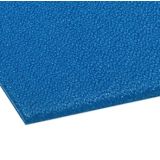 Comfort King Anti-Fatigue Matting
Starting at $83.00
What Comfort King Does Before a Standing Shift Wears People Down Comfort King is a cushioned anti-fatigue mat built for dry-area standing work. Its foam core delivers three times more resilience than a regular mat — every small weight shift gets a gentle push back instead of dead compression, and...
What Comfort King Does Before a Standing Shift Wears People Down Comfort King is a cushioned anti-fatigue mat built for...
What Comfort King Does Before a Standing Shift Wears People Down
Comfort King is a cushioned anti-fatigue mat built for dry-area standing work. Its foam core delivers three times more resilience than a regular mat — every small weight shift gets a gentle push back instead of dead compression, and that steady rebound relieves stress on knees, feet, ankle joints, and pressure points over a long stretch of standing.
Anyone who has stood on bare concrete all day knows how it ends: sore feet, stiff knees, a back that complains before the shift does. Left alone, that fatigue turns into slower work, more breaks, and a higher risk of injury at cashier stations, benches, and counters. A standing mat with real rebound changes what the floor asks of the body.
Why This Foam, and Why This One
Plenty of foam mats feel soft the first week and flat by the third. Comfort King's core is a patented anti-fatigue PVC foam engineered for rebound rather than plain squish — measured at 30 percent resiliency per ASTM D-2632. That spring is what actually eases pressure on knee, foot, and ankle joints; softness alone doesn't do it.
The surface holds up too. A pebble-textured top gives shoes something to grip, and abrasion testing comes in at half a gram or less of material lost under the Taber method — a genuine wear surface, not a throwaway pad. Anti-microbial additives throughout the mat help hold off mold, mildew, and bacterial growth between cleanings.
Two thicknesses cover different kinds of days. The 3/8-inch version suits typical standing stations, while the 1/2-inch version adds 33 percent more cushioning for long hours over hard floors. Both come as standard mats, long runners, and full rolls, so one construction can serve a single register or a whole assembly line.
Where It Belongs, and What It Is Not
Comfort King belongs anywhere people stand in a dry area: workstations, finishing and assembly benches, cashier stations, pharmacy counters, and standing posts in hospitals and care facilities. It's equally at home on a salon or barber shop floor, where a stylist holds the same spot behind a chair for hours, and at a dry home kitchen sink or standing desk.
What it is not: a wet-area mat. There are no drainage holes here, and the foam is meant to stay dry — greasy dish lines and washdown zones call for the drainage-style options elsewhere in our anti-fatigue mats and runners lineup. Keeping Comfort King in dry service is what keeps the cushion doing its job.
Three Things to Check Before You Spec It
First, match the thickness to the hours. Where people rotate through a station, the 3/8-inch version carries the load comfortably. Where one person holds the same spot on concrete most of the day, the 1/2-inch version's 33 percent extra cushioning earns its place.
Second, size to the actual standing path. Standard mats run from 2 by 3 feet up to 4 by 12 feet, rolls come in widths from 2 to 6 feet at 60-foot lengths, and custom lengths up to 60 feet let one continuous mat trace a counter or work line without seams underfoot.
Third, pick the color for the setting. Black hides scuffs in back-of-house spaces, black with yellow borders makes the mat edge obvious where foot traffic and equipment mix, and blue or steel gray sit comfortably in front-of-house and clinical settings. One note: the 6-foot-wide roll isn't offered with yellow borders.
Why Mats Inc.
We've been matching mats to standing work since 1964, and Comfort King earns its spot in our line because it answers the most common complaint about foam mats: losing their bounce. We verify the construction and test figures behind every product we carry, and we back this one with a 1-year limited Mats Inc. warranty — so the mat that arrives is the mat the spec promised.
Material Patented anti-fatigue PVC foam Thickness 3/8" and 1/2" (1/2" provides 33% more cushioning) Standard Sizes 2' x 3', 3' x 5', 3' x 12', 4' x 6', 4' x 12' Roll Sizes 2' x 60', 3' x 60', 4' x 60', 6' x 60' Custom Lengths Up to 60' Colors Black, Black/Yellow, Blue, Steel Gray (6' x 60' roll not available with yellow borders) Surface Pattern Pebble Resiliency 30% per ASTM D-2632 Abrasion ≤ 0.5 gram (Taber) Electrical Resistance 10⁹ ohms per square (ASTM D-257) Use Area Dry areas only Warranty 1-year limited (Mats Inc.) Frequently Asked Questions
What makes this different from an ordinary foam kitchen mat?
Answered by Dustin Thompson, Owner & CEO
Most household foam pads compress once and stay compressed — soft on day one, flat by the end of the month. Comfort King's core is a patented anti-fatigue PVC foam engineered for rebound, delivering three times more resilience than a regular mat and measuring 30 percent resiliency under ASTM D-2632. That spring, not plain softness, is what relieves pressure on knees, feet, and ankles. The foam also carries anti-microbial additives to help resist mold, mildew, and bacterial growth.
How well does the surface hold up under daily use?
Answered by Dustin Thompson, Owner & CEO
The pebble-textured top is a tested wear surface: Taber abrasion results show half a gram or less of material lost, which is the difference between a mat that keeps its texture through years of shoe traffic and a pad that scuffs smooth. The one condition is keeping it in dry service — this construction has no drainage and isn't built for greasy or washdown environments. In a dry station with routine cleaning, the surface and the cushion age together gracefully.
Should I choose the 3/8-inch or the 1/2-inch thickness?
Answered by Dustin Thompson, Owner & CEO
Think about how long one person holds one spot. The 3/8-inch version handles stations where staff rotate through — checkout lanes with shift changes, shared benches, a home kitchen sink. The 1/2-inch version provides 33 percent more cushioning, and that extra give matters most where someone stands on concrete in the same footprint for most of a shift: an assembly post, a pharmacy fill counter, a machine station. When in doubt for all-day concrete work, go thicker.
Does it work in customer-facing spaces like salons and checkout lanes?
Answered by Jinna Hopson, Vice President of Marketing
That's exactly where it shines. Cashier stations, pharmacy counters, and salon and barber floors are dry areas where staff stand for hours in full view of customers — the mat has to work hard and still look like it belongs. The pebble surface reads clean and intentional rather than industrial, and the blue and steel gray colorways sit comfortably in front-of-house and clinical settings where a plain black shop mat would feel out of place.
Can I get it sized to a full counter run or work line?
Answered by Jinna Hopson, Vice President of Marketing
Yes — this is one of the few anti-fatigue constructions offered as a true roll. Widths run 2, 3, 4, and 6 feet at 60-foot lengths, and custom lengths up to 60 feet mean one continuous mat can follow your counter, line, or corridor without seams underfoot. That matters day to day: no edges creeping apart mid-shift, no gaps collecting debris, and a run that looks like it was planned for the space rather than pieced together.
Which color should I pick for my space?
Answered by Jinna Hopson, Vice President of Marketing
Let the setting decide. Black is the workhorse for back-of-house stations because it hides scuffs and shoe marks. Black with yellow borders makes the mat edge unmistakable where foot traffic and rolling equipment share an aisle. Blue and steel gray belong out front — salons, pharmacies, retail counters — where the mat is part of what customers see. One planning note: the 6-foot-wide roll isn't offered with yellow borders, so wide safety-bordered runs should be built from the narrower widths.
By Jinna Hopson, Vice President of Marketing, Mats Inc.
↑
What Comfort King Does Before a Standing Shift Wears People Down
Comfort King is a cushioned anti-fatigue mat built for dry-area standing work. Its foam core delivers three times more resilience than a regular mat — every small weight shift gets a gentle push back instead of dead compression, and that steady rebound relieves stress on knees, feet, ankle joints, and pressure points over a long stretch of standing.
Anyone who has stood on bare concrete all day knows how it ends: sore feet, stiff knees, a back that complains before the shift does. Left alone, that fatigue turns into slower work, more breaks, and a higher risk of injury at cashier stations, benches, and counters. A standing mat with real rebound changes what the floor asks of the body.
Why This Foam, and Why This One
Plenty of foam mats feel soft the first week and flat by the third. Comfort King's core is a patented anti-fatigue PVC foam engineered for rebound rather than plain squish — measured at 30 percent resiliency per ASTM D-2632. That spring is what actually eases pressure on knee, foot, and ankle joints; softness alone doesn't do it.
The surface holds up too. A pebble-textured top gives shoes something to grip, and abrasion testing comes in at half a gram or less of material lost under the Taber method — a genuine wear surface, not a throwaway pad. Anti-microbial additives throughout the mat help hold off mold, mildew, and bacterial growth between cleanings.
Two thicknesses cover different kinds of days. The 3/8-inch version suits typical standing stations, while the 1/2-inch version adds 33 percent more cushioning for long hours over hard floors. Both come as standard mats, long runners, and full rolls, so one construction can serve a single register or a whole assembly line.
Where It Belongs, and What It Is Not
Comfort King belongs anywhere people stand in a dry area: workstations, finishing and assembly benches, cashier stations, pharmacy counters, and standing posts in hospitals and care facilities. It's equally at home on a salon or barber shop floor, where a stylist holds the same spot behind a chair for hours, and at a dry home kitchen sink or standing desk.
What it is not: a wet-area mat. There are no drainage holes here, and the foam is meant to stay dry — greasy dish lines and washdown zones call for the drainage-style options elsewhere in our anti-fatigue mats and runners lineup. Keeping Comfort King in dry service is what keeps the cushion doing its job.
Three Things to Check Before You Spec It
First, match the thickness to the hours. Where people rotate through a station, the 3/8-inch version carries the load comfortably. Where one person holds the same spot on concrete most of the day, the 1/2-inch version's 33 percent extra cushioning earns its place.
Second, size to the actual standing path. Standard mats run from 2 by 3 feet up to 4 by 12 feet, rolls come in widths from 2 to 6 feet at 60-foot lengths, and custom lengths up to 60 feet let one continuous mat trace a counter or work line without seams underfoot.
Third, pick the color for the setting. Black hides scuffs in back-of-house spaces, black with yellow borders makes the mat edge obvious where foot traffic and equipment mix, and blue or steel gray sit comfortably in front-of-house and clinical settings. One note: the 6-foot-wide roll isn't offered with yellow borders.
Why Mats Inc.
We've been matching mats to standing work since 1964, and Comfort King earns its spot in our line because it answers the most common complaint about foam mats: losing their bounce. We verify the construction and test figures behind every product we carry, and we back this one with a 1-year limited Mats Inc. warranty — so the mat that arrives is the mat the spec promised.
Material Patented anti-fatigue PVC foam Thickness 3/8" and 1/2" (1/2" provides 33% more cushioning) Standard Sizes 2' x 3', 3' x 5', 3' x 12', 4' x 6', 4' x 12' Roll Sizes 2' x 60', 3' x 60', 4' x 60', 6' x 60' Custom Lengths Up to 60' Colors Black, Black/Yellow, Blue, Steel Gray (6' x 60' roll not available with yellow borders) Surface Pattern Pebble Resiliency 30% per ASTM D-2632 Abrasion ≤ 0.5 gram (Taber) Electrical Resistance 10⁹ ohms per square (ASTM D-257) Use Area Dry areas only Warranty 1-year limited (Mats Inc.) Frequently Asked Questions
What makes this different from an ordinary foam kitchen mat?
Answered by Dustin Thompson, Owner & CEO
Most household foam pads compress once and stay compressed — soft on day one, flat by the end of the month. Comfort King's core is a patented anti-fatigue PVC foam engineered for rebound, delivering three times more resilience than a regular mat and measuring 30 percent resiliency under ASTM D-2632. That spring, not plain softness, is what relieves pressure on knees, feet, and ankles. The foam also carries anti-microbial additives to help resist mold, mildew, and bacterial growth.
How well does the surface hold up under daily use?
Answered by Dustin Thompson, Owner & CEO
The pebble-textured top is a tested wear surface: Taber abrasion results show half a gram or less of material lost, which is the difference between a mat that keeps its texture through years of shoe traffic and a pad that scuffs smooth. The one condition is keeping it in dry service — this construction has no drainage and isn't built for greasy or washdown environments. In a dry station with routine cleaning, the surface and the cushion age together gracefully.
Should I choose the 3/8-inch or the 1/2-inch thickness?
Answered by Dustin Thompson, Owner & CEO
Think about how long one person holds one spot. The 3/8-inch version handles stations where staff rotate through — checkout lanes with shift changes, shared benches, a home kitchen sink. The 1/2-inch version provides 33 percent more cushioning, and that extra give matters most where someone stands on concrete in the same footprint for most of a shift: an assembly post, a pharmacy fill counter, a machine station. When in doubt for all-day concrete work, go thicker.
Does it work in customer-facing spaces like salons and checkout lanes?
Answered by Jinna Hopson, Vice President of Marketing
That's exactly where it shines. Cashier stations, pharmacy counters, and salon and barber floors are dry areas where staff stand for hours in full view of customers — the mat has to work hard and still look like it belongs. The pebble surface reads clean and intentional rather than industrial, and the blue and steel gray colorways sit comfortably in front-of-house and clinical settings where a plain black shop mat would feel out of place.
Can I get it sized to a full counter run or work line?
Answered by Jinna Hopson, Vice President of Marketing
Yes — this is one of the few anti-fatigue constructions offered as a true roll. Widths run 2, 3, 4, and 6 feet at 60-foot lengths, and custom lengths up to 60 feet mean one continuous mat can follow your counter, line, or corridor without seams underfoot. That matters day to day: no edges creeping apart mid-shift, no gaps collecting debris, and a run that looks like it was planned for the space rather than pieced together.
Which color should I pick for my space?
Answered by Jinna Hopson, Vice President of Marketing
Let the setting decide. Black is the workhorse for back-of-house stations because it hides scuffs and shoe marks. Black with yellow borders makes the mat edge unmistakable where foot traffic and rolling equipment share an aisle. Blue and steel gray belong out front — salons, pharmacies, retail counters — where the mat is part of what customers see. One planning note: the 6-foot-wide roll isn't offered with yellow borders, so wide safety-bordered runs should be built from the narrower widths.
By Jinna Hopson, Vice President of Marketing, Mats Inc.
↑
View Details
View Details
One Range, Three Jobs
Everything here does the same core work: a cushioned surface keeps the muscles in your feet and legs subtly moving, which is what fights the ache of standing still on a hard floor. What splits our anti-fatigue mats and runners range into groups is the floor around the mat.
Wet floors take anti-fatigue mats with holes, which drain spills through instead of holding them underfoot. Dry floors take anti-fatigue mats without holes — seamless comfort mats for offices, salons, counters, and kitchens. And fabrication spaces take welding mats and runners rated for sparks, oils, and grinding debris. Browse everything below, or step into the group that matches your floor.
The Softest-Mat Mistake
The mistake anti-fatigue buyers make most is shopping for squish. It feels logical — softer must mean more comfortable — but a mat that's too soft is like standing in sand: your muscles work harder to stabilize, and the fatigue you bought the mat to fix comes back by mid-shift. Real relief comes from support with rebound, not from sinking in.
It's also why gel and memory foam mats rarely survive commercial duty. They bottom out under shift-length standing and compress flat within months. Commercial anti-fatigue mats use closed-cell nitrile and PVC foams instead because they recover their shape every time weight shifts — some here are certified high-traction by the National Floor Safety Institute, a rating that covers the footing, not just the feel.
Browse the Full Range
Wet-Area and Drainage Builds
For kitchens, dish pits, bars, and washdown zones, these drain liquid through and keep grip up. Comfort Flow handles greasy, chemical-exposed wet areas, Safe Walk Jr. is the heavy rubber ring mat for high-traffic wet floors, and the grease-resistant Safe Walk Jr. is its red nitrile sibling for commercial kitchen duty.
Multi-Mat II is reversible — flip it and the service life doubles — with a low profile carts roll over easily. Cushion-Lok interlocks recycled-PVC sections with hundreds of drainage portholes to cover big work cells, and Cushion Dek pairs a raised-pyramid grip surface with slotted drainage and a studded bottom that lets the floor breathe.
Nyracord Counter Tread blends rubber and nylon fibers into a half-inch open-slot mat that lives behind bars and counters for years. Cushion Station comes with or without holes — antimicrobial nitrile foam either way — and Air Flex keeps air and water moving under a rubber top at lighter-duty stations.
Three more cover the edges of the wet job: Comfort Scrape adds shoe-scraping texture to fatigue relief at greasy thresholds, Versa Runner is the slotted nitrile runner that cuts to 60-foot lengths, and Tire Link weaves rubberized links on galvanized steel wire for doorways and workbench fronts that chew up lesser mats.
Dry-Area Cushion Builds
For offices, salons, retail counters, home kitchens, and dry workstations. Hog Heaven is the flagship — NFSI-certified high-traction, welding-safe, ESD-rated, in 5/8-inch and 7/8-inch builds — and Hog Heaven Fashion puts the same cushion under a fabric top in four neutral colors, which makes it the decorative anti fatigue mat for spaces guests actually see.
Tuff-Spun is the workhorse PVC sponge, cut to length in widths from two to six feet with ribbed, pebble, or diamond surfaces, and Safety Striped Tuff-Spun adds a high-visibility yellow border that channels foot traffic. Double Thick Super Foot Lover is the plushest mat in the catalog — extra-thick foam that still supports — for dry spots where comfort is the whole brief.
Happy Feet bonds a dense foam cushion to a nitrile rubber face that shrugs off grease and welding sparks, and Knob Top Niru is solid nitrile with a raised-knob surface that stands up to chemicals, oils, and animal fats.
The pattern-surfaced builds finish the group: Diamond Deck Plate with Colored Borders and Workers Delight Diamond Deck Plate fuse a diamond-plate face to energized PVC foam for shop floors, while Workers Delight Marbleized, Cushion Step Marbleized, and the Marble Anti-Fatigue Mat dress the same relief in marbleized rubber surfaces that suit pharmacies, salons, and retail counters.
Runners and Roll Goods
For aisles, lines, and long counters, the runner formats cover distance. Traction Tread is the nitrile-foam anti fatigue runner built to outlast standard PVC foam, and the vinyl trio — Ripple, Dome Top, and Nickel Vinyl — protects floors along heavy-traffic industrial runs, with textures that keep traction up and oil, grease, and chemical resistance built in.
Tiles and Modular Systems
When the space is bigger than any one mat, tiles build the floor. Smart Cells tiles use cylindrical rubber cells that soften under pressure and spring back as weight shifts — support that works like suspension. Senator SoftStep and Cushioned Carpet Tiles put the relief under carpet, for offices and customer-facing floors where the mat shouldn't look like one.
Three Ways to Narrow Thirty-One Options
First, the water question. If the floor gets wet during work — spills, washdowns, dish spray — stay in the drainage group. If it's dry, the cushion builds and carpet tiles open up. This one answer cuts the field in half.
Second, the shape of the coverage. One person at one station needs a single mat, usually three by five feet. A line of people needs a runner cut to length. A whole room or an odd footprint calls for interlocking systems like Cushion-Lok or Smart Cells that build to the space.
Third, what the mat has to survive. Grease and oil point to nitrile builds like Hog Heaven, Happy Feet, and Knob Top Niru. Sparks and grinding point to the welding-safe group. Public view points to Fashion's fabric top, the marbleized surfaces, or carpet tile. If two mats still tie after all three questions, either will serve you well.
Why Choose Mats Inc.?
Standing floors are a specialty here. Mats Inc. has matched people to anti-fatigue matting since 1964, and this page is the proof of range — economy PVC sponge for a stockroom, NFSI-certified nitrile for a weld cell, fabric-topped comfort for a hotel desk, and carpet-faced tiles for an office, all from one catalog.
Thirty-one options is a lot to weigh alone, so don't. Tell us who's standing, on what floor, in what conditions, and we'll narrow it to the right mat and the right size — most of the range cuts to custom lengths, and orders ship free.
Frequently Asked Questions
How do I choose the right anti-fatigue mat?
Answer three questions in order: is the floor wet or dry, is the coverage one station or a long run, and what does the mat have to survive — grease, sparks, chemicals, or just hours of standing. One caution while you shop: skip gel and memory foam for anything beyond light home use. They feel plush in the first week and bottom out within months; closed-cell nitrile and PVC foams recover their shape for years.
Which anti-fatigue mats work best in a commercial kitchen?
Kitchens need the drainage group. The grease-resistant Safe Walk Jr. and Cushion Station handle the cook line, where oil and water hit the floor all shift, and Nyracord Counter Tread earns its keep behind bars and prep counters. Position mats where people actually plant — at the range, the sink, the pass — and let spills drain through rather than pool underfoot. For a home kitchen, a dry-area cushion mat at the sink usually covers it.
How long do anti-fatigue mats last?
In commercial duty, plan on five to ten years from the nitrile rubber builds and roughly two to five from economy PVC sponge — the price difference is mostly a lifespan difference. What ends mats early is compression set (the too-soft-foam problem), dragging instead of lifting, and chemical exposure beyond a mat's rating. Matching the mat to the duty, not just the budget, is the single biggest lifespan lever.
Do anti-fatigue mats have to look industrial?
Not anymore. Hog Heaven Fashion tops commercial-grade cushion with a fade-resistant fabric surface in four neutral colors, the marbleized rubber mats read as finished flooring at pharmacy and salon counters, and the cushioned carpet tiles disappear into an office floor entirely. Black rubber still rules the back of house, where it hides wear — but customer-facing spaces have real choices now.
Can anti-fatigue mats be custom sized?
Much of the range cuts to order. Tuff-Spun runs in widths from two to six feet at custom lengths, Hog Heaven Fashion goes up to 60 feet in three-foot widths, and Versa Runner matches that 60-foot reach in three widths. The interlocking systems — Cushion-Lok and Smart Cells — build to odd footprints a single custom anti fatigue mat can't. Send the dimensions and we'll spec the closest fit.
What should salons and barber shops look for in a floor mat?
Three things: cushioning for someone standing at a chair through back-to-back appointments, a surface that sweeps clean of hair fast, and a look that fits the room. The marbleized rubber mats and Hog Heaven Fashion cover all three, and Tuff-Spun's cut-to-length runs suit a wall of stations. Smooth-surfaced dry-area builds beat textured ones here — hair slides off a smooth face and lodges in an aggressive one.
Written by Jinna Hopson, Vice President of Marketing, Mats Inc.