




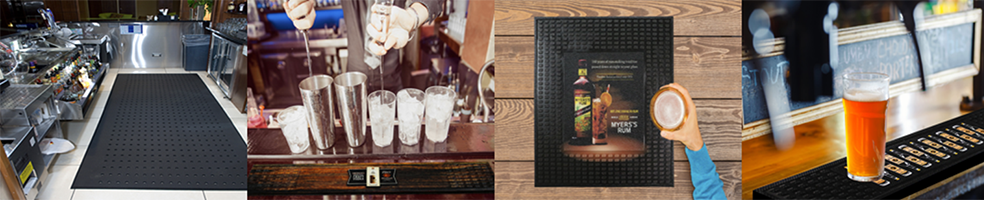
Commercial Bar Mats for Floors, Counters & Bar Tops
What Bar Mats Do Before a Wet Floor Becomes a Claim
Bar work happens on a floor that never fully dries. Rinse water runs off glassware, ice melts where it lands, and citrus and syrup leave a film that shoes cannot grip. Bar floor mats sit between that mess and the person carrying a full tray. Drainage moves liquid below the walking surface, and the rubber above it gives feet something to hold.
The counter has the same problem in miniature. Glassware slides on a wet bar top, bottles chip against hard surfaces, and every pour leaves a ring. Bar top mats and bar counter mats give the build area a non-slip working surface that catches drips and holds glass still while a bartender's hands are busy elsewhere.
Neither job substitutes for the other. A bar drip mat on the rail does nothing for the person standing behind it, and rubber bar floor mats will not keep a cocktail station dry. Most bars need both, which is why counter mats and floor mats sit side by side in this range.
 Custom Drink Mats$334.00Custom Drink Mats turn a bar or service counter into branded space while doing the everyday work of a good bar mat — protecting the countertop and keeping glassware from sliding. Your logo, image, or message is printed in full color into the mat surface, so the branding is
...
Custom Drink Mats turn a bar or service counter into branded space while doing the everyday work of a...
Custom Drink Mats turn a bar or service counter into branded space while doing the everyday work of a good bar mat — protecting the countertop and keeping glassware from sliding. Your logo, image, or message is printed in full color into the mat surface, so the branding is part of a working mat rather than a sticker on top of it. They're among our most customizable pieces in the full logo-mats range, sized to your counter.
Underneath the print, it's built for a wet counter. The mat is nitrile rubber at 3/16 inch thick over a cushion backing, with the artwork carried on a polymetric film bonded to the rubber surface. Nitrile shrugs off the spills, citrus, and constant wipe-downs a bar throws at it, and the cushioned body gives it some give on a hard counter while the rubber face grips glassware.
The surface prints in full color, and up to four PMS colors can be matched per design for brand accuracy, with a one-time setup fee per color. One honest caveat on color: the mat is finished under a hot press that bonds the rubber and cushion, and the heat tends to lighten the print slightly, so a PMS match comes close but isn't exact. Bold, clean artwork reproduces best — we proof every design before it runs.
It's made for countertop point-of-purchase use — bars, restaurants and cafés, tasting rooms, and retail counters where a branded surface meets a working one. A few artwork rules keep the result clean: text reads best at 1/2 inch or taller, lines at 1/16 inch or thicker, and white isn't usable as a background or in the imprint because it discolors in service (there are light alternatives that hold up). Replace it when the print wears from heavy daily use.
Surface Nitrile rubber Logo / image Full-color digital print on polymetric film, bonded to the surface Thickness 3/16" (0.1875") Backing Cushion backing Colors 150 standard; up to 4 PMS matched per design ($270.38 per color, one-time) Minimum lettering Text 1/2" tall; lines 1/16" (white not usable in the imprint) Standard sizes 3.5"×21" and 14"×14"; custom sizes available Use Countertop point-of-purchase (bars, restaurants, retail counters) Function Counter protection and a non-slip surface for glassware Warranty 1-year limited (Mats Inc.) Frequently Asked Questions
Can I print my logo in our exact brand colors?
Answered by Jinna Hopson, Vice President of Marketing
You can get close, and we'll tell you honestly how close. The surface prints in full color, and we can match up to four PMS colors per design for brand accuracy, with a one-time setup fee of $270.38 per PMS color. The honest part: the mat is finished under a hot press, and that heat tends to lighten the print a few shades, so an exact PMS match isn't guaranteed — we get near it. Send us your brand colors and artwork and we'll build a proof so you can see the match before anything runs.
Are there artwork rules I should know before sending a design?
Answered by Jinna Hopson, Vice President of Marketing
A few, and they're all about keeping the print clean. Keep text at least 1/2 inch tall and lines at least 1/16 inch thick; very thin or special fonts may need to be sized up, which we handle case by case. Don't use white as a background or in the imprint — it discolors through manufacturing — but there are light tones that hold up in its place. And if you're working in CorelDraw, avoid PowerClips in the file. Send the art over and we'll flag anything that needs adjusting.
What's it made of, and how long does it last?
Answered by Dustin Thompson, Owner & CEO
It's nitrile rubber at 3/16 inch thick over a cushion backing, with the printed artwork carried on a polymetric film bonded to the surface. Nitrile holds up well to the spills, citrus, and constant wipe-downs a bar surface sees, and the cushion gives it some give on a hard counter. Lifespan comes down to how hard it's worked and how it's cleaned; on a busy bar, plan to replace it when the print starts to wear in the heavy-use zone rather than waiting for the rubber to give out.
Will it protect the counter and keep glasses from sliding?
Answered by Dustin Thompson, Owner & CEO
That's the working half of the job. The cushioned rubber body shields the countertop from glassware, bottles, and the constant set-down-and-slide of a service area, and the non-slip rubber face grips so glasses and bottles stay put instead of skating across a wet counter. It's built specifically for countertop protection and a slip-resistant surface for glassware, so it earns its place as a working bar mat first, with the branding on top of that.
By Jinna Hopson, Vice President of Marketing, Mats Inc.
↑
Custom Drink Mats turn a bar or service counter into branded space while doing the everyday work of a good bar mat — protecting the countertop and keeping glassware from sliding. Your logo, image, or message is printed in full color into the mat surface, so the branding is part of a working mat rather than a sticker on top of it. They're among our most customizable pieces in the full logo-mats range, sized to your counter.
Underneath the print, it's built for a wet counter. The mat is nitrile rubber at 3/16 inch thick over a cushion backing, with the artwork carried on a polymetric film bonded to the rubber surface. Nitrile shrugs off the spills, citrus, and constant wipe-downs a bar throws at it, and the cushioned body gives it some give on a hard counter while the rubber face grips glassware.
The surface prints in full color, and up to four PMS colors can be matched per design for brand accuracy, with a one-time setup fee per color. One honest caveat on color: the mat is finished under a hot press that bonds the rubber and cushion, and the heat tends to lighten the print slightly, so a PMS match comes close but isn't exact. Bold, clean artwork reproduces best — we proof every design before it runs.
It's made for countertop point-of-purchase use — bars, restaurants and cafés, tasting rooms, and retail counters where a branded surface meets a working one. A few artwork rules keep the result clean: text reads best at 1/2 inch or taller, lines at 1/16 inch or thicker, and white isn't usable as a background or in the imprint because it discolors in service (there are light alternatives that hold up). Replace it when the print wears from heavy daily use.
Surface Nitrile rubber Logo / image Full-color digital print on polymetric film, bonded to the surface Thickness 3/16" (0.1875") Backing Cushion backing Colors 150 standard; up to 4 PMS matched per design ($270.38 per color, one-time) Minimum lettering Text 1/2" tall; lines 1/16" (white not usable in the imprint) Standard sizes 3.5"×21" and 14"×14"; custom sizes available Use Countertop point-of-purchase (bars, restaurants, retail counters) Function Counter protection and a non-slip surface for glassware Warranty 1-year limited (Mats Inc.) Frequently Asked Questions
Can I print my logo in our exact brand colors?
Answered by Jinna Hopson, Vice President of Marketing
You can get close, and we'll tell you honestly how close. The surface prints in full color, and we can match up to four PMS colors per design for brand accuracy, with a one-time setup fee of $270.38 per PMS color. The honest part: the mat is finished under a hot press, and that heat tends to lighten the print a few shades, so an exact PMS match isn't guaranteed — we get near it. Send us your brand colors and artwork and we'll build a proof so you can see the match before anything runs.
Are there artwork rules I should know before sending a design?
Answered by Jinna Hopson, Vice President of Marketing
A few, and they're all about keeping the print clean. Keep text at least 1/2 inch tall and lines at least 1/16 inch thick; very thin or special fonts may need to be sized up, which we handle case by case. Don't use white as a background or in the imprint — it discolors through manufacturing — but there are light tones that hold up in its place. And if you're working in CorelDraw, avoid PowerClips in the file. Send the art over and we'll flag anything that needs adjusting.
What's it made of, and how long does it last?
Answered by Dustin Thompson, Owner & CEO
It's nitrile rubber at 3/16 inch thick over a cushion backing, with the printed artwork carried on a polymetric film bonded to the surface. Nitrile holds up well to the spills, citrus, and constant wipe-downs a bar surface sees, and the cushion gives it some give on a hard counter. Lifespan comes down to how hard it's worked and how it's cleaned; on a busy bar, plan to replace it when the print starts to wear in the heavy-use zone rather than waiting for the rubber to give out.
Will it protect the counter and keep glasses from sliding?
Answered by Dustin Thompson, Owner & CEO
That's the working half of the job. The cushioned rubber body shields the countertop from glassware, bottles, and the constant set-down-and-slide of a service area, and the non-slip rubber face grips so glasses and bottles stay put instead of skating across a wet counter. It's built specifically for countertop protection and a slip-resistant surface for glassware, so it earns its place as a working bar mat first, with the branding on top of that.
By Jinna Hopson, Vice President of Marketing, Mats Inc.
↑
View Details
View Details
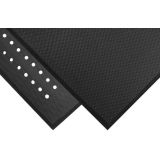 Traction Hog Anti-Fatigue Runner Mats
Starting at $85.00
Traction Hog Anti-Fatigue Runner Mats are cushioned rubber runners for the line of stations where people stand in place all shift, on a floor that may be wet, greasy, or both. The mat is 5/8 inch of nitrile/PVC-blended foam with beveled edges, made in stock sizes from 2 by 3...
Traction Hog Anti-Fatigue Runner Mats are cushioned rubber runners for the line of stations where people stand in place all...
Traction Hog Anti-Fatigue Runner Mats are cushioned rubber runners for the line of stations where people stand in place all shift, on a floor that may be wet, greasy, or both. The mat is 5/8 inch of nitrile/PVC-blended foam with beveled edges, made in stock sizes from 2 by 3 feet to a 3-by-10-foot runner and in custom lengths to 75 feet. It comes solid or with drainage holes, is built for indoor use, and is a comfort mat first, which decides where it goes.
What an Anti-Fatigue Rubber Mat Does Before the Shift Gets Long
Standing still on a hard floor is harder on the body than walking on it. The legs lock, blood pools, and by hour six the lower back is doing work the feet were supposed to do. A cushioned rubber standing mat gives the floor a small amount of give, so the muscles in the legs keep making tiny adjustments instead of freezing in place.
That is the comfort side. The safety side is footing. A dish pit, a fry station, a wet packing line, or a cooler floor puts water and grease under the same person for hours, and a mat that cushions but slides is worse than no mat. This one is certified high-traction by the National Floor Safety Institute, an independent slip-resistance testing program, not a manufacturer claim.
The third job is the edge. A thick mat with a square edge is a trip hazard and a cart stopper. Beveled edges taper the mat down to the floor so a foot or a caster rolls onto it rather than catching, which is what keeps a comfort mat from causing the fall it was meant to prevent.
Why Nitrile-Blend Foam, and Why This One
The cushion is a 5/8-inch nitrile/PVC-blended foam. Nitrile is the rubber that tolerates oil, and it is the reason this mat is grease and oil resistant and chemical resistant rather than a plain sponge that swells and softens the first time fryer oil hits it. Nightly sanitizing with standard cleaners does not eat it.
The foam is treated with an anti-microbial that provides lifetime protection from odors and degradation. On a wet-area mat that is the difference between a mat that is hosed off and returns to service and one that starts to smell by the second month and has to be thrown out.
The two configurations are the real choice. The solid mat suits dry stations and damp ones where spills are wiped up. The version with drainage holes is for truly wet work: liquid falls through to the floor instead of pooling under a boot, which is why a rubber mat with holes belongs at a dish machine or a wash-down station and a solid one belongs at a register or an assembly bench.
It is also lightweight and flexible. A 3-by-5-foot mat weighs 13.8 pounds, and the largest stock size, 4 by 8 feet, weighs 26.7 pounds. One person picks it up, hoses it, hangs it, and puts it back, which is what actually determines whether a mat gets cleaned on schedule.
Where It Belongs, and What It Is Not
Put it wherever a person holds one position on a hard indoor floor: dish pits, fry and prep stations, bar wells, packing and inspection stations, cashier stands, lab benches, and the floor in front of a machine control panel. Wet zones take the holed version; dry and damp zones take the solid one. It is one of several cushioned and traction mats in the heavy-duty rubber runner mats range, and it is the one to reach for when comfort is the problem.
What it is not is a traffic-lane mat. Foam cushion under cart wheels and constant foot traffic compresses at the edges and wears out early, and a thick mat in a busy lane is something to walk around. Where the floor problem is people and carts crossing wet tile, a thin solid-rubber traction runner is the right product, and the two are usually used together in the same room.
It is also rated for indoor use. Outdoor UV and freeze cycles are outside what the foam is built for, so a loading dock apron or an exterior landing needs a different mat.
Three Things to Check Before You Spec It
First, decide wet or dry, and buy the matching version. If water or grease reaches the floor around the station more than occasionally, take the holed mat. If the station is dry or only sees a wiped-up spill, the solid mat is easier to keep clean and gives a smoother surface. Buying solid for a wet zone is the most common mistake with this product.
Second, size the runner to the line of stations, not the room. Measure end to end along the positions people hold: a prep line, a dish run, a packing table, an assembly bench. Custom lengths run in whole feet to 75 feet in 3-foot and 4-foot widths, so one continuous runner covers the line with no seam to lift. The 3-by-10 stock runner handles most single long stations; the five shorter stock sizes cover one or two fixed positions. Finished sizes vary 3 to 5 percent as rubber moves with temperature.
Third, plan the cleaning routine before the mat arrives. A wet-area mat has to come up, get rinsed, and dry before it goes back down. Confirm there is a place to hang it and a person on the closing shift who owns the task. A lightweight mat helps, but the schedule is what keeps the anti-microbial doing its job instead of fighting a losing battle.
Why Mats Inc.
We carry this mat because it answers the question a hard kitchen or plant floor asks every shift: how do you keep the person at the station comfortable and upright without putting something under them that soaks up grease and slides. A nitrile-blend cushion with a third-party traction certification and a holed option does that. Mats Inc. has been matching mats to standing zones since 1964, and this is the one we put where people stand still on wet floors.
Type Anti-fatigue rubber runner mat, indoor Material Nitrile/PVC-blended foam Thickness 5/8" Traction Certified high-traction by the National Floor Safety Institute (NFSI) Edges Beveled Resistance Grease and oil resistant; chemical resistant Anti-microbial Treated; lifetime protection from odors and degradation Configurations Solid, or with drainage holes for wet areas Color Black Custom runner lengths 3' (36") and 4' (48") widths; whole-foot lengths up to 75' Stock sizes & weights 2' x 3' (24" x 36") — 6.3 lbs
3' x 4' (36" x 48") — 10 lbs
3' x 5' (36" x 60") — 13.8 lbs
3' x 10' (36" x 120") — 25.6 lbs
4' x 6' (48" x 72") — 20 lbs
4' x 8' (48" x 96") — 26.7 lbsSize tolerance 3–5% manufacturing variance Cleaning Lightweight and flexible for handling; rinse, hang, and return to service dry Origin Made in the USA Warranty 1-year limited (Mats Inc.) Frequently Asked Questions
What is the mat made of, and how thick is it?
Answered by Dustin Thompson, Owner & CEO
It is a single layer of nitrile/PVC-blended foam, 5/8 inch thick, with beveled edges molded around the perimeter. There is no separate top sheet or fabric layer, so there is nothing to delaminate. The nitrile content is what gives it grease, oil, and chemical resistance; a plain PVC or polyurethane foam of the same thickness softens and breaks down under fryer oil and sanitizer much sooner.
The foam is also treated with an anti-microbial that carries lifetime protection from odors and degradation. That treatment is doing real work on a mat that lives in a wet area and gets rinsed rather than replaced.
How long will it last, and what shortens its life?
Answered by Dustin Thompson, Owner & CEO
The maker does not publish a year figure, and the honest answer is that the floor decides. Kept at a standing station, rinsed on schedule, and allowed to dry before it goes back down, the anti-microbial treatment and nitrile blend are built to hold up for years of shifts. The mat carries a 1-year limited (Mats Inc.) warranty, and a 12-month check for edge compression and surface wear is a reasonable habit.
Three things end it early. Putting it in a traffic lane where carts and constant foot traffic compress the edges. Leaving it down wet so it never dries, which no anti-microbial fully overcomes. And putting an indoor-rated foam mat outside, where UV and freezing stiffen and crack it. Avoid those three and it outlasts most of the equipment around it.
Where should I put it, and where should I not?
Answered by Dustin Thompson, Owner & CEO
Put it where one person stands in one place on a hard indoor floor: dish machines, fry and prep stations, bar wells, packing and inspection stations, register stands, lab benches, machine control positions. If the floor around that station gets wet, use the version with drainage holes so water goes through instead of sitting under a boot. If it stays dry or only sees a wiped-up spill, the solid mat is the cleaner surface.
Do not put it in a walking lane or under cart traffic; cushion compresses and wears at the edges there, and a thick mat in a lane is an obstacle. Do not put it outdoors. For a wet lane that carts cross, a thin solid-rubber traction runner is the right product, and most kitchens run both.
Which size should I pick, and can I get a custom length?
Answered by Jinna Hopson, Vice President of Marketing
Start with the run. Custom lengths are available in whole feet up to 75 feet, in 3-foot and 4-foot widths, so a prep line, a dish run, or a packing table becomes one continuous runner instead of a row of mats with seams to trip on and lift. Three feet of width covers a single row of workers; four feet covers a row that steps back from the bench.
For a single position, pick from the six stock sizes. A 2-by-3 covers a register stand; 3-by-4 or 3-by-5 covers a station where someone shifts a step left and right; 3-by-10 handles one long station; 4-by-6 and 4-by-8 suit two people side by side. Allow 3 to 5 percent on finished dimensions, since rubber shrinks and expands with temperature and time.
What does it look like on the floor?
Answered by Jinna Hopson, Vice President of Marketing
Black, with a fine textured surface and a beveled border that slopes down to the floor on all four sides, so it reads as a finished piece rather than a slab of foam. The holed version has a grid of round drainage openings across the face; the solid version is unbroken. Both sit 5/8 inch high, which is noticeable underfoot but low enough not to look like an obstacle.
Because it is black and textured, scuffs and dried spills blend in until cleaning day rather than showing white. It looks right in a back-of-house kitchen, a plant floor, a lab, or a retail counter; for a customer-facing spot where the mat is part of the decor, a fabric-topped anti-fatigue mat is the better-looking option.
Is this a good fit for a commercial kitchen, and does it handle the cleaning?
Answered by Jinna Hopson, Vice President of Marketing
Yes; wet and greasy kitchens are what the holed version is for. Water and cooking oil drain through, the nitrile blend resists grease and standard sanitizers, and the NFSI high-traction certification means the surface has been independently tested for slip resistance rather than just described as non-slip. Put it at the dish machine, the fry station, and the prep line where people stand.
The cleaning routine is the part to plan. At close, the mat comes up, gets rinsed, and hangs to dry before it goes back down. At 13.8 pounds for a 3-by-5, one person handles it. That nightly lift is what keeps a kitchen mat from becoming the thing that smells, so pick the size someone will actually move.
By Jinna Hopson, Vice President of Marketing, Mats Inc.
↑
Traction Hog Anti-Fatigue Runner Mats are cushioned rubber runners for the line of stations where people stand in place all shift, on a floor that may be wet, greasy, or both. The mat is 5/8 inch of nitrile/PVC-blended foam with beveled edges, made in stock sizes from 2 by 3 feet to a 3-by-10-foot runner and in custom lengths to 75 feet. It comes solid or with drainage holes, is built for indoor use, and is a comfort mat first, which decides where it goes.
What an Anti-Fatigue Rubber Mat Does Before the Shift Gets Long
Standing still on a hard floor is harder on the body than walking on it. The legs lock, blood pools, and by hour six the lower back is doing work the feet were supposed to do. A cushioned rubber standing mat gives the floor a small amount of give, so the muscles in the legs keep making tiny adjustments instead of freezing in place.
That is the comfort side. The safety side is footing. A dish pit, a fry station, a wet packing line, or a cooler floor puts water and grease under the same person for hours, and a mat that cushions but slides is worse than no mat. This one is certified high-traction by the National Floor Safety Institute, an independent slip-resistance testing program, not a manufacturer claim.
The third job is the edge. A thick mat with a square edge is a trip hazard and a cart stopper. Beveled edges taper the mat down to the floor so a foot or a caster rolls onto it rather than catching, which is what keeps a comfort mat from causing the fall it was meant to prevent.
Why Nitrile-Blend Foam, and Why This One
The cushion is a 5/8-inch nitrile/PVC-blended foam. Nitrile is the rubber that tolerates oil, and it is the reason this mat is grease and oil resistant and chemical resistant rather than a plain sponge that swells and softens the first time fryer oil hits it. Nightly sanitizing with standard cleaners does not eat it.
The foam is treated with an anti-microbial that provides lifetime protection from odors and degradation. On a wet-area mat that is the difference between a mat that is hosed off and returns to service and one that starts to smell by the second month and has to be thrown out.
The two configurations are the real choice. The solid mat suits dry stations and damp ones where spills are wiped up. The version with drainage holes is for truly wet work: liquid falls through to the floor instead of pooling under a boot, which is why a rubber mat with holes belongs at a dish machine or a wash-down station and a solid one belongs at a register or an assembly bench.
It is also lightweight and flexible. A 3-by-5-foot mat weighs 13.8 pounds, and the largest stock size, 4 by 8 feet, weighs 26.7 pounds. One person picks it up, hoses it, hangs it, and puts it back, which is what actually determines whether a mat gets cleaned on schedule.
Where It Belongs, and What It Is Not
Put it wherever a person holds one position on a hard indoor floor: dish pits, fry and prep stations, bar wells, packing and inspection stations, cashier stands, lab benches, and the floor in front of a machine control panel. Wet zones take the holed version; dry and damp zones take the solid one. It is one of several cushioned and traction mats in the heavy-duty rubber runner mats range, and it is the one to reach for when comfort is the problem.
What it is not is a traffic-lane mat. Foam cushion under cart wheels and constant foot traffic compresses at the edges and wears out early, and a thick mat in a busy lane is something to walk around. Where the floor problem is people and carts crossing wet tile, a thin solid-rubber traction runner is the right product, and the two are usually used together in the same room.
It is also rated for indoor use. Outdoor UV and freeze cycles are outside what the foam is built for, so a loading dock apron or an exterior landing needs a different mat.
Three Things to Check Before You Spec It
First, decide wet or dry, and buy the matching version. If water or grease reaches the floor around the station more than occasionally, take the holed mat. If the station is dry or only sees a wiped-up spill, the solid mat is easier to keep clean and gives a smoother surface. Buying solid for a wet zone is the most common mistake with this product.
Second, size the runner to the line of stations, not the room. Measure end to end along the positions people hold: a prep line, a dish run, a packing table, an assembly bench. Custom lengths run in whole feet to 75 feet in 3-foot and 4-foot widths, so one continuous runner covers the line with no seam to lift. The 3-by-10 stock runner handles most single long stations; the five shorter stock sizes cover one or two fixed positions. Finished sizes vary 3 to 5 percent as rubber moves with temperature.
Third, plan the cleaning routine before the mat arrives. A wet-area mat has to come up, get rinsed, and dry before it goes back down. Confirm there is a place to hang it and a person on the closing shift who owns the task. A lightweight mat helps, but the schedule is what keeps the anti-microbial doing its job instead of fighting a losing battle.
Why Mats Inc.
We carry this mat because it answers the question a hard kitchen or plant floor asks every shift: how do you keep the person at the station comfortable and upright without putting something under them that soaks up grease and slides. A nitrile-blend cushion with a third-party traction certification and a holed option does that. Mats Inc. has been matching mats to standing zones since 1964, and this is the one we put where people stand still on wet floors.
Type Anti-fatigue rubber runner mat, indoor Material Nitrile/PVC-blended foam Thickness 5/8" Traction Certified high-traction by the National Floor Safety Institute (NFSI) Edges Beveled Resistance Grease and oil resistant; chemical resistant Anti-microbial Treated; lifetime protection from odors and degradation Configurations Solid, or with drainage holes for wet areas Color Black Custom runner lengths 3' (36") and 4' (48") widths; whole-foot lengths up to 75' Stock sizes & weights 2' x 3' (24" x 36") — 6.3 lbs
3' x 4' (36" x 48") — 10 lbs
3' x 5' (36" x 60") — 13.8 lbs
3' x 10' (36" x 120") — 25.6 lbs
4' x 6' (48" x 72") — 20 lbs
4' x 8' (48" x 96") — 26.7 lbsSize tolerance 3–5% manufacturing variance Cleaning Lightweight and flexible for handling; rinse, hang, and return to service dry Origin Made in the USA Warranty 1-year limited (Mats Inc.) Frequently Asked Questions
What is the mat made of, and how thick is it?
Answered by Dustin Thompson, Owner & CEO
It is a single layer of nitrile/PVC-blended foam, 5/8 inch thick, with beveled edges molded around the perimeter. There is no separate top sheet or fabric layer, so there is nothing to delaminate. The nitrile content is what gives it grease, oil, and chemical resistance; a plain PVC or polyurethane foam of the same thickness softens and breaks down under fryer oil and sanitizer much sooner.
The foam is also treated with an anti-microbial that carries lifetime protection from odors and degradation. That treatment is doing real work on a mat that lives in a wet area and gets rinsed rather than replaced.
How long will it last, and what shortens its life?
Answered by Dustin Thompson, Owner & CEO
The maker does not publish a year figure, and the honest answer is that the floor decides. Kept at a standing station, rinsed on schedule, and allowed to dry before it goes back down, the anti-microbial treatment and nitrile blend are built to hold up for years of shifts. The mat carries a 1-year limited (Mats Inc.) warranty, and a 12-month check for edge compression and surface wear is a reasonable habit.
Three things end it early. Putting it in a traffic lane where carts and constant foot traffic compress the edges. Leaving it down wet so it never dries, which no anti-microbial fully overcomes. And putting an indoor-rated foam mat outside, where UV and freezing stiffen and crack it. Avoid those three and it outlasts most of the equipment around it.
Where should I put it, and where should I not?
Answered by Dustin Thompson, Owner & CEO
Put it where one person stands in one place on a hard indoor floor: dish machines, fry and prep stations, bar wells, packing and inspection stations, register stands, lab benches, machine control positions. If the floor around that station gets wet, use the version with drainage holes so water goes through instead of sitting under a boot. If it stays dry or only sees a wiped-up spill, the solid mat is the cleaner surface.
Do not put it in a walking lane or under cart traffic; cushion compresses and wears at the edges there, and a thick mat in a lane is an obstacle. Do not put it outdoors. For a wet lane that carts cross, a thin solid-rubber traction runner is the right product, and most kitchens run both.
Which size should I pick, and can I get a custom length?
Answered by Jinna Hopson, Vice President of Marketing
Start with the run. Custom lengths are available in whole feet up to 75 feet, in 3-foot and 4-foot widths, so a prep line, a dish run, or a packing table becomes one continuous runner instead of a row of mats with seams to trip on and lift. Three feet of width covers a single row of workers; four feet covers a row that steps back from the bench.
For a single position, pick from the six stock sizes. A 2-by-3 covers a register stand; 3-by-4 or 3-by-5 covers a station where someone shifts a step left and right; 3-by-10 handles one long station; 4-by-6 and 4-by-8 suit two people side by side. Allow 3 to 5 percent on finished dimensions, since rubber shrinks and expands with temperature and time.
What does it look like on the floor?
Answered by Jinna Hopson, Vice President of Marketing
Black, with a fine textured surface and a beveled border that slopes down to the floor on all four sides, so it reads as a finished piece rather than a slab of foam. The holed version has a grid of round drainage openings across the face; the solid version is unbroken. Both sit 5/8 inch high, which is noticeable underfoot but low enough not to look like an obstacle.
Because it is black and textured, scuffs and dried spills blend in until cleaning day rather than showing white. It looks right in a back-of-house kitchen, a plant floor, a lab, or a retail counter; for a customer-facing spot where the mat is part of the decor, a fabric-topped anti-fatigue mat is the better-looking option.
Is this a good fit for a commercial kitchen, and does it handle the cleaning?
Answered by Jinna Hopson, Vice President of Marketing
Yes; wet and greasy kitchens are what the holed version is for. Water and cooking oil drain through, the nitrile blend resists grease and standard sanitizers, and the NFSI high-traction certification means the surface has been independently tested for slip resistance rather than just described as non-slip. Put it at the dish machine, the fry station, and the prep line where people stand.
The cleaning routine is the part to plan. At close, the mat comes up, gets rinsed, and hangs to dry before it goes back down. At 13.8 pounds for a 3-by-5, one person handles it. That nightly lift is what keeps a kitchen mat from becoming the thing that smells, so pick the size someone will actually move.
By Jinna Hopson, Vice President of Marketing, Mats Inc.
↑
View Details
View Details
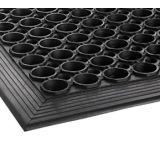 Safe Walk Jr. Rubber Mats$137.00What Safe Walk Jr. Does Before a Wet Floor Takes Someone Down Safe Walk Jr. is a lightweight anti-fatigue drainage mat for wet areas. Its raised base keeps liquids moving underneath instead of pooling where shoes land, while the rubber surface gives feet better slip resistance than the ceramic and
...
What Safe Walk Jr. Does Before a Wet Floor Takes Someone Down Safe Walk Jr. is a lightweight anti-fatigue drainage...
What Safe Walk Jr. Does Before a Wet Floor Takes Someone Down
Safe Walk Jr. is a lightweight anti-fatigue drainage mat for wet areas. Its raised base keeps liquids moving underneath instead of pooling where shoes land, while the rubber surface gives feet better slip resistance than the ceramic and cement floors it covers — and cushions the hours spent standing over them.
Wet floors don't announce themselves. Rinse water, dish spray, and spills collect through a shift, and the moment someone hurries — a rush order, a carried tray — is exactly when footing matters most. A slip at a busy station means an injured worker, a stopped line, and an incident report. Drainage under the feet changes those odds.
Why a Raised-Base Drainage Design, and Why This One
The mechanism is simple and constant: the raised base holds the standing surface above the floor, so spills and rinse-down drain through and keep moving rather than sitting under someone's next step. The result the vendor testing points to is a safer work environment — traction that outperforms bare ceramic and cement underfoot.
The rubber is a general-purpose SBR compound in black — the workhorse choice for everyday water duty. It's the right material where the floor's daily challenge is moisture rather than chemistry: dependable grip, a cushioned stand, and a surface that shrugs off the constant wet-dry cycle of a working station without fuss.
The rest of the design is built around easy living. A low profile with molded edging keeps the transition on and off the mat clean, the whole mat contains up to 60 percent recycled material, and the lightweight build means it actually gets lifted, hosed off, and put back — clean underneath included.
Where It Belongs, and What It Is Not
Safe Walk Jr. is a medium-duty solution for wet floors: dish and rinse-down stations, kitchens and cafeterias, food processing facilities, and packaging operations. It suits the stations where water is a daily reality but not an extreme one — and where the crew doing nightly cleanup will appreciate a mat one person can handle.
What it is not: the answer to every hard floor. Where oil and fats hit the floor daily, a grease-rated nitrile compound is the honest spec, and where deep grease, harsh chemicals, or punishing traffic rule the zone, the heavier-duty drainage constructions in our anti-fatigue mats and runners lineup carry that load. Matching the duty level honestly is what makes this one earn its keep for years.
Three Things to Check Before You Spec It
First, confirm water is the main event. Walk the station at the end of a real shift: if what's on the floor is rinse water, dish spray, and the day's spills, this general-purpose rubber is squarely in its lane. If there's an oil film in the picture daily, spec a grease-rated compound instead — same drainage idea, different chemistry.
Second, plan the run. Every size is 3 feet wide, with lengths of 5, 10, 15, and 20 feet, so a single mat can trace a full dish line or packing row. One planning note: mats 10 feet and longer carry a seam every 5 feet — worth knowing before you map coverage.
Third, be honest about duty level. This is a medium-duty mat by design — that's what makes it light enough to lift daily and easy to keep clean. If your environment reads heavy-industrial, step up a class instead of asking a lighter mat to survive it.
Why Mats Inc.
Not every wet floor needs the heaviest mat in the warehouse — and we've spent decades since 1964 helping buyers land on the right duty level rather than the biggest one. We carry this mat for the kitchens and lines it genuinely fits, we verify what's behind it before it ships, and we back it with a 1-year limited Mats Inc. warranty.
Construction Drainage mat; raised base promotes movement of liquids Material SBR rubber (general purpose) Color Black Thickness 1/2" Sizes 3' x 5', 3' x 10', 3' x 15', 3' x 20' (10' and longer have a seam every 5') Edges Low profile, molded edging Traction Provides better slip resistance than ceramic and cement floors Recycled Content Up to 60% Duty / Use Area Medium duty; wet areas Warranty 1-year limited (Mats Inc.) Frequently Asked Questions
How does the raised base actually make the floor safer?
Answered by Dustin Thompson, Owner & CEO
It separates feet from liquid. The raised base lifts the standing surface off the floor, so water drains down and keeps moving instead of forming the slick film that causes falls. Up top, the rubber surface grips better than the ceramic and cement floors it typically covers — so the shoe meets traction while the spill meets the drain path. The low-profile molded edging finishes the safety picture at the transition on and off the mat.
What is the mat made of, and how long will it hold up?
Answered by Dustin Thompson, Owner & CEO
It's a general-purpose SBR rubber — a proven, hard-wearing compound for water duty — with up to 60 percent recycled material in the mat. Kept in its lane, it holds up well: the wet-dry cycle of a dish station or rinse-down zone is exactly what it's built to live with. What ages it early is asking it to do a different mat's job — daily oil and fats belong on a grease-rated compound, and harsh industrial zones belong on a heavier class.
How heavy-duty is it, honestly?
Answered by Dustin Thompson, Owner & CEO
It's a medium-duty mat, and that's a feature, not a confession. Kitchens, cafeterias, dish lines, food processing, and packaging floors get exactly the drainage and traction they need in a build light enough for one person to lift and hose off nightly. Where the environment turns heavy-industrial — deep grease, harsh chemicals, relentless cart traffic — a heavier drainage class is the honest spec. Matching duty to reality is what makes any mat last.
Is a plain black mat the right look outside the back of house?
Answered by Jinna Hopson, Vice President of Marketing
Black earns its place almost anywhere a wet-area mat lives. It disappears visually against most commercial flooring, hides the scuffs and soil that land between cleanings, and the low profile keeps it reading as part of the floor rather than an obstacle on it. In a cafeteria serving line or a visible dish pass, that quiet, tidy look is usually exactly right — the mat does its safety work without asking anyone to notice it.
What lengths should I plan for a dish line?
Answered by Jinna Hopson, Vice President of Marketing
Measure the working run, not the room. Every size is 3 feet wide, and lengths of 5, 10, 15, and 20 feet let one mat follow the full path a dish crew or packer actually walks — no gaps where a wet stride lands on bare floor between two short mats. Note that mats 10 feet and longer carry a seam every 5 feet, so plan seam positions away from the busiest pivot points where you can.
Will the crew actually keep it clean?
Answered by Jinna Hopson, Vice President of Marketing
That's the quiet advantage of the lightweight build. A mat that's easy to handle gets lifted at close, rinsed, and set back — while heavy mats tend to get mopped around, letting the floor beneath become the dirtiest surface in the kitchen. This one is designed to be easy to handle, clean, and maintain, which means the drainage path stays open and the whole system keeps doing its job week after week instead of just the first one.
By Dustin Thompson, Owner & CEO, Mats Inc.
↑
What Safe Walk Jr. Does Before a Wet Floor Takes Someone Down
Safe Walk Jr. is a lightweight anti-fatigue drainage mat for wet areas. Its raised base keeps liquids moving underneath instead of pooling where shoes land, while the rubber surface gives feet better slip resistance than the ceramic and cement floors it covers — and cushions the hours spent standing over them.
Wet floors don't announce themselves. Rinse water, dish spray, and spills collect through a shift, and the moment someone hurries — a rush order, a carried tray — is exactly when footing matters most. A slip at a busy station means an injured worker, a stopped line, and an incident report. Drainage under the feet changes those odds.
Why a Raised-Base Drainage Design, and Why This One
The mechanism is simple and constant: the raised base holds the standing surface above the floor, so spills and rinse-down drain through and keep moving rather than sitting under someone's next step. The result the vendor testing points to is a safer work environment — traction that outperforms bare ceramic and cement underfoot.
The rubber is a general-purpose SBR compound in black — the workhorse choice for everyday water duty. It's the right material where the floor's daily challenge is moisture rather than chemistry: dependable grip, a cushioned stand, and a surface that shrugs off the constant wet-dry cycle of a working station without fuss.
The rest of the design is built around easy living. A low profile with molded edging keeps the transition on and off the mat clean, the whole mat contains up to 60 percent recycled material, and the lightweight build means it actually gets lifted, hosed off, and put back — clean underneath included.
Where It Belongs, and What It Is Not
Safe Walk Jr. is a medium-duty solution for wet floors: dish and rinse-down stations, kitchens and cafeterias, food processing facilities, and packaging operations. It suits the stations where water is a daily reality but not an extreme one — and where the crew doing nightly cleanup will appreciate a mat one person can handle.
What it is not: the answer to every hard floor. Where oil and fats hit the floor daily, a grease-rated nitrile compound is the honest spec, and where deep grease, harsh chemicals, or punishing traffic rule the zone, the heavier-duty drainage constructions in our anti-fatigue mats and runners lineup carry that load. Matching the duty level honestly is what makes this one earn its keep for years.
Three Things to Check Before You Spec It
First, confirm water is the main event. Walk the station at the end of a real shift: if what's on the floor is rinse water, dish spray, and the day's spills, this general-purpose rubber is squarely in its lane. If there's an oil film in the picture daily, spec a grease-rated compound instead — same drainage idea, different chemistry.
Second, plan the run. Every size is 3 feet wide, with lengths of 5, 10, 15, and 20 feet, so a single mat can trace a full dish line or packing row. One planning note: mats 10 feet and longer carry a seam every 5 feet — worth knowing before you map coverage.
Third, be honest about duty level. This is a medium-duty mat by design — that's what makes it light enough to lift daily and easy to keep clean. If your environment reads heavy-industrial, step up a class instead of asking a lighter mat to survive it.
Why Mats Inc.
Not every wet floor needs the heaviest mat in the warehouse — and we've spent decades since 1964 helping buyers land on the right duty level rather than the biggest one. We carry this mat for the kitchens and lines it genuinely fits, we verify what's behind it before it ships, and we back it with a 1-year limited Mats Inc. warranty.
Construction Drainage mat; raised base promotes movement of liquids Material SBR rubber (general purpose) Color Black Thickness 1/2" Sizes 3' x 5', 3' x 10', 3' x 15', 3' x 20' (10' and longer have a seam every 5') Edges Low profile, molded edging Traction Provides better slip resistance than ceramic and cement floors Recycled Content Up to 60% Duty / Use Area Medium duty; wet areas Warranty 1-year limited (Mats Inc.) Frequently Asked Questions
How does the raised base actually make the floor safer?
Answered by Dustin Thompson, Owner & CEO
It separates feet from liquid. The raised base lifts the standing surface off the floor, so water drains down and keeps moving instead of forming the slick film that causes falls. Up top, the rubber surface grips better than the ceramic and cement floors it typically covers — so the shoe meets traction while the spill meets the drain path. The low-profile molded edging finishes the safety picture at the transition on and off the mat.
What is the mat made of, and how long will it hold up?
Answered by Dustin Thompson, Owner & CEO
It's a general-purpose SBR rubber — a proven, hard-wearing compound for water duty — with up to 60 percent recycled material in the mat. Kept in its lane, it holds up well: the wet-dry cycle of a dish station or rinse-down zone is exactly what it's built to live with. What ages it early is asking it to do a different mat's job — daily oil and fats belong on a grease-rated compound, and harsh industrial zones belong on a heavier class.
How heavy-duty is it, honestly?
Answered by Dustin Thompson, Owner & CEO
It's a medium-duty mat, and that's a feature, not a confession. Kitchens, cafeterias, dish lines, food processing, and packaging floors get exactly the drainage and traction they need in a build light enough for one person to lift and hose off nightly. Where the environment turns heavy-industrial — deep grease, harsh chemicals, relentless cart traffic — a heavier drainage class is the honest spec. Matching duty to reality is what makes any mat last.
Is a plain black mat the right look outside the back of house?
Answered by Jinna Hopson, Vice President of Marketing
Black earns its place almost anywhere a wet-area mat lives. It disappears visually against most commercial flooring, hides the scuffs and soil that land between cleanings, and the low profile keeps it reading as part of the floor rather than an obstacle on it. In a cafeteria serving line or a visible dish pass, that quiet, tidy look is usually exactly right — the mat does its safety work without asking anyone to notice it.
What lengths should I plan for a dish line?
Answered by Jinna Hopson, Vice President of Marketing
Measure the working run, not the room. Every size is 3 feet wide, and lengths of 5, 10, 15, and 20 feet let one mat follow the full path a dish crew or packer actually walks — no gaps where a wet stride lands on bare floor between two short mats. Note that mats 10 feet and longer carry a seam every 5 feet, so plan seam positions away from the busiest pivot points where you can.
Will the crew actually keep it clean?
Answered by Jinna Hopson, Vice President of Marketing
That's the quiet advantage of the lightweight build. A mat that's easy to handle gets lifted at close, rinsed, and set back — while heavy mats tend to get mopped around, letting the floor beneath become the dirtiest surface in the kitchen. This one is designed to be easy to handle, clean, and maintain, which means the drainage path stays open and the whole system keeps doing its job week after week instead of just the first one.
By Dustin Thompson, Owner & CEO, Mats Inc.
↑
View Details
View Details
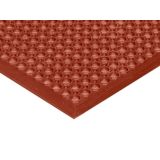 Safe Walk Jr. Rubber Mats - Grease Resistant$189.00What Safe Walk Jr. Grease Resistant Does Before Fryer Oil Wins the Floor Safe Walk Jr. Grease Resistant is a nitrile-blend drainage mat built for the stations where oil and fats are part of the job. The nitrile rubber compound raises the mat's resistance to grease, the raised base underneath
...
What Safe Walk Jr. Grease Resistant Does Before Fryer Oil Wins the Floor Safe Walk Jr. Grease Resistant is a...
What Safe Walk Jr. Grease Resistant Does Before Fryer Oil Wins the Floor
Safe Walk Jr. Grease Resistant is a nitrile-blend drainage mat built for the stations where oil and fats are part of the job. The nitrile rubber compound raises the mat's resistance to grease, the raised base underneath keeps liquids moving away from footing, and the cushioned surface eases the standing hours in between.
Grease is the floor hazard that doesn't behave like water. It doesn't evaporate, it doesn't rinse off with a splash, and it turns tile treacherous in a film too thin to see. Worse, it works on the mat itself — ordinary rubber in a fryer zone slowly gives up. Beating it takes a compound chosen for it, not just a mat placed over it.
Why a Nitrile Blend, and Why This One
The compound is the headline. This version is built from a nitrile rubber blend specifically because nitrile increases resistance to oil and fats — so the daily splatter that reaches the floor around a fryer or grill doesn't shorten the mat's working life the way it would for a general-purpose rubber.
Under the surface, the raised base gives oil and rinse water somewhere to go, moving liquids through rather than holding them where shoes land — the design the vendor's own testing ties to a safer work environment. Up top, traction outperforms the ceramic and cement floors the mat typically covers, and a low profile with molded edging keeps every step on and off clean.
The practical details round it out: a 1/2-inch profile, a build light enough for one person to lift and rinse, and up to 60 percent recycled material in the mat. It's a working tool sized for daily handling — which, in a grease zone, is exactly what keeps it effective.
Where It Belongs, and What It Is Not
This mat belongs where fats meet the floor: fryer and grill lines, greasy prep and dish zones, food processing areas where rendered oils reach the concrete, and packaging floors that handle oils daily. It's a medium-duty answer for the food-service and processing spaces where grease is constant but conditions stop short of heavy-industrial.
What it is not: the mat for every wet floor. Where the challenge is water alone — rinse-down, dish spray, cafeteria spills without the oil — the general-purpose wet-area options in our anti-fatigue mats and runners lineup fit that duty. Spec the nitrile blend where grease is real; that's the condition it was compounded for.
Three Things to Check Before You Spec It
First, confirm grease is the daily reality, not the occasional accident. Walk the station at the end of a normal shift: if there's an oil film near the fryer, splatter tracking off the grill line, or fats reaching the floor in processing, this compound earns its place. That's the honest trigger for choosing it.
Second, map the run from the grease source outward. Every size is 3 feet wide with lengths of 5, 10, 15, and 20 feet, so coverage can start at the fryer and follow the path oily shoes actually travel. Mats 10 feet and longer carry a seam every 5 feet — set seams away from the hardest-working spots when you plan the layout.
Third, pair it with a degreasing routine. Resistance means the compound stands up to oil; it doesn't mean grease should live on the surface indefinitely. The lightweight build makes the lift-rinse-return cycle a one-person job, which keeps the drainage path open and the traction honest.
Why Mats Inc.
Grease zones are where we see the most mats fail early — bought for wet duty, dissolved by fryer duty. Since 1964 we've helped kitchens and processors match the compound to the contaminant, and we carry this nitrile-blend version for exactly that call. Every claim here is checked against the manufacturer's published data, and the mat carries a 1-year limited Mats Inc. warranty.
Construction Drainage mat; raised base promotes movement of liquids Material Nitrile rubber blend — increased resistance to oil and fats Color Terra Cotta Thickness 1/2" Sizes 3' x 5', 3' x 10', 3' x 15', 3' x 20' (10' and longer have a seam every 5') Edges Low profile, molded edging Traction Provides better slip resistance than ceramic and cement floors Recycled Content Up to 60% Duty / Use Area Medium duty; wet and oily areas Warranty 1-year limited (Mats Inc.) Frequently Asked Questions
What actually makes this version grease resistant?
Answered by Dustin Thompson, Owner & CEO
The rubber itself. This mat is built from a nitrile rubber blend, and nitrile's defining trait is increased resistance to oil and fats — the exact substances that degrade general-purpose rubber over months of fryer-line duty. It's not a coating that wears off; the resistance is the compound, top to bottom. Pair that with the raised drainage base moving oil off the footing zone, and the mat is fighting grease on both fronts at once.
If it resists grease, do we still have to clean it?
Answered by Dustin Thompson, Owner & CEO
Yes — and the distinction matters. Resistance means oil and fats don't break the compound down the way they would ordinary rubber; it doesn't mean a grease film on the walking surface is harmless to footing. Build a regular degreasing rinse into the closing routine. The mat is designed to be easy to handle, clean, and maintain, so the lift-rinse-return cycle stays a quick one-person job rather than a chore that gets skipped.
How does it handle traction on slick tile?
Answered by Dustin Thompson, Owner & CEO
Better than the floor it covers — the surface provides better slip resistance than ceramic and cement, which are precisely the floors most kitchens and processing lines stand on. The raised base does the quieter half of the work, giving oil and rinse water a path through instead of a place to pool under the next step, and the low-profile molded edging keeps the on-and-off transition from becoming its own hazard during a rush.
Why terra cotta instead of black?
Answered by Jinna Hopson, Vice President of Marketing
The color is the compound's signature — terra cotta is how this nitrile blend comes, so it doubles as an at-a-glance marker that the grease-rated mat is where it belongs. It's also simply a pleasant color to have in sight: in an open kitchen or a serving-adjacent line, terra cotta reads warm and deliberate where a black industrial mat can feel like back-of-house equipment that wandered out front. Function chose the color; the look holds its own anyway.
What size makes sense for a fry station versus a full line?
Answered by Jinna Hopson, Vice President of Marketing
Start where the oil starts. A single fry or grill station is usually well served by the 3 by 5; a hood-to-pass line where cooks slide station to station wants one continuous run — 10, 15, or 20 feet — so nobody's pivot lands on bare, greasy tile between mats. Remember that lengths of 10 feet and up carry a seam every 5 feet, so lay the run out with seams falling between stations rather than under the busiest feet.
We already run general wet-area mats — when should we switch to this one?
Answered by Jinna Hopson, Vice President of Marketing
Switch wherever grease shows up daily. General wet-area mats are the right call for rinse water and spills, but a fryer zone quietly asks more of the rubber than water duty ever does — and that's where an all-purpose mat ages fastest. The practical approach many kitchens land on: nitrile blend at the fryer and grill, general-purpose everywhere else. Each floor zone gets the compound its mess demands, and no mat is asked to survive a job it wasn't built for.
By Dustin Thompson, Owner & CEO, Mats Inc.
↑
What Safe Walk Jr. Grease Resistant Does Before Fryer Oil Wins the Floor
Safe Walk Jr. Grease Resistant is a nitrile-blend drainage mat built for the stations where oil and fats are part of the job. The nitrile rubber compound raises the mat's resistance to grease, the raised base underneath keeps liquids moving away from footing, and the cushioned surface eases the standing hours in between.
Grease is the floor hazard that doesn't behave like water. It doesn't evaporate, it doesn't rinse off with a splash, and it turns tile treacherous in a film too thin to see. Worse, it works on the mat itself — ordinary rubber in a fryer zone slowly gives up. Beating it takes a compound chosen for it, not just a mat placed over it.
Why a Nitrile Blend, and Why This One
The compound is the headline. This version is built from a nitrile rubber blend specifically because nitrile increases resistance to oil and fats — so the daily splatter that reaches the floor around a fryer or grill doesn't shorten the mat's working life the way it would for a general-purpose rubber.
Under the surface, the raised base gives oil and rinse water somewhere to go, moving liquids through rather than holding them where shoes land — the design the vendor's own testing ties to a safer work environment. Up top, traction outperforms the ceramic and cement floors the mat typically covers, and a low profile with molded edging keeps every step on and off clean.
The practical details round it out: a 1/2-inch profile, a build light enough for one person to lift and rinse, and up to 60 percent recycled material in the mat. It's a working tool sized for daily handling — which, in a grease zone, is exactly what keeps it effective.
Where It Belongs, and What It Is Not
This mat belongs where fats meet the floor: fryer and grill lines, greasy prep and dish zones, food processing areas where rendered oils reach the concrete, and packaging floors that handle oils daily. It's a medium-duty answer for the food-service and processing spaces where grease is constant but conditions stop short of heavy-industrial.
What it is not: the mat for every wet floor. Where the challenge is water alone — rinse-down, dish spray, cafeteria spills without the oil — the general-purpose wet-area options in our anti-fatigue mats and runners lineup fit that duty. Spec the nitrile blend where grease is real; that's the condition it was compounded for.
Three Things to Check Before You Spec It
First, confirm grease is the daily reality, not the occasional accident. Walk the station at the end of a normal shift: if there's an oil film near the fryer, splatter tracking off the grill line, or fats reaching the floor in processing, this compound earns its place. That's the honest trigger for choosing it.
Second, map the run from the grease source outward. Every size is 3 feet wide with lengths of 5, 10, 15, and 20 feet, so coverage can start at the fryer and follow the path oily shoes actually travel. Mats 10 feet and longer carry a seam every 5 feet — set seams away from the hardest-working spots when you plan the layout.
Third, pair it with a degreasing routine. Resistance means the compound stands up to oil; it doesn't mean grease should live on the surface indefinitely. The lightweight build makes the lift-rinse-return cycle a one-person job, which keeps the drainage path open and the traction honest.
Why Mats Inc.
Grease zones are where we see the most mats fail early — bought for wet duty, dissolved by fryer duty. Since 1964 we've helped kitchens and processors match the compound to the contaminant, and we carry this nitrile-blend version for exactly that call. Every claim here is checked against the manufacturer's published data, and the mat carries a 1-year limited Mats Inc. warranty.
Construction Drainage mat; raised base promotes movement of liquids Material Nitrile rubber blend — increased resistance to oil and fats Color Terra Cotta Thickness 1/2" Sizes 3' x 5', 3' x 10', 3' x 15', 3' x 20' (10' and longer have a seam every 5') Edges Low profile, molded edging Traction Provides better slip resistance than ceramic and cement floors Recycled Content Up to 60% Duty / Use Area Medium duty; wet and oily areas Warranty 1-year limited (Mats Inc.) Frequently Asked Questions
What actually makes this version grease resistant?
Answered by Dustin Thompson, Owner & CEO
The rubber itself. This mat is built from a nitrile rubber blend, and nitrile's defining trait is increased resistance to oil and fats — the exact substances that degrade general-purpose rubber over months of fryer-line duty. It's not a coating that wears off; the resistance is the compound, top to bottom. Pair that with the raised drainage base moving oil off the footing zone, and the mat is fighting grease on both fronts at once.
If it resists grease, do we still have to clean it?
Answered by Dustin Thompson, Owner & CEO
Yes — and the distinction matters. Resistance means oil and fats don't break the compound down the way they would ordinary rubber; it doesn't mean a grease film on the walking surface is harmless to footing. Build a regular degreasing rinse into the closing routine. The mat is designed to be easy to handle, clean, and maintain, so the lift-rinse-return cycle stays a quick one-person job rather than a chore that gets skipped.
How does it handle traction on slick tile?
Answered by Dustin Thompson, Owner & CEO
Better than the floor it covers — the surface provides better slip resistance than ceramic and cement, which are precisely the floors most kitchens and processing lines stand on. The raised base does the quieter half of the work, giving oil and rinse water a path through instead of a place to pool under the next step, and the low-profile molded edging keeps the on-and-off transition from becoming its own hazard during a rush.
Why terra cotta instead of black?
Answered by Jinna Hopson, Vice President of Marketing
The color is the compound's signature — terra cotta is how this nitrile blend comes, so it doubles as an at-a-glance marker that the grease-rated mat is where it belongs. It's also simply a pleasant color to have in sight: in an open kitchen or a serving-adjacent line, terra cotta reads warm and deliberate where a black industrial mat can feel like back-of-house equipment that wandered out front. Function chose the color; the look holds its own anyway.
What size makes sense for a fry station versus a full line?
Answered by Jinna Hopson, Vice President of Marketing
Start where the oil starts. A single fry or grill station is usually well served by the 3 by 5; a hood-to-pass line where cooks slide station to station wants one continuous run — 10, 15, or 20 feet — so nobody's pivot lands on bare, greasy tile between mats. Remember that lengths of 10 feet and up carry a seam every 5 feet, so lay the run out with seams falling between stations rather than under the busiest feet.
We already run general wet-area mats — when should we switch to this one?
Answered by Jinna Hopson, Vice President of Marketing
Switch wherever grease shows up daily. General wet-area mats are the right call for rinse water and spills, but a fryer zone quietly asks more of the rubber than water duty ever does — and that's where an all-purpose mat ages fastest. The practical approach many kitchens land on: nitrile blend at the fryer and grill, general-purpose everywhere else. Each floor zone gets the compound its mess demands, and no mat is asked to survive a job it wasn't built for.
By Dustin Thompson, Owner & CEO, Mats Inc.
↑
View Details
View Details
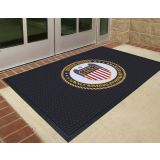 Super Scrape Rubber Logo Mats$185.00Super Scrape Rubber Logo Mats put your logo on a mat that earns its place at the door. The nitrile rubber surface uses raised circular cleats to scrape dirt and water off shoes before they reach your floors, and the artwork is set into the rubber rather than coated
...
Super Scrape Rubber Logo Mats put your logo on a mat that earns its place at the door. The...
Super Scrape Rubber Logo Mats put your logo on a mat that earns its place at the door. The nitrile rubber surface uses raised circular cleats to scrape dirt and water off shoes before they reach your floors, and the artwork is set into the rubber rather than coated on top — so the branding holds up through heavy traffic instead of scuffing away. They're among the most rugged of our outdoor logo mats, built for real commercial use indoors or out.
The logo is digitally printed on a polymeric film, then heat-pressed into the nitrile rubber so it becomes part of the mat. That process reproduces photo-realistic detail — multi-color artwork, tones, and gradients all come through cleanly, which is what separates these printed floor mats from simple one-color welcome mats. You get 150 standard colors to work from, with PMS matching available — up to four PMS colors per design — when a logo has to be exact.
The raised cleats give the mat a high-traction surface that's certified by the National Floor Safety Institute, which matters at a wet entrance where a slip turns into a liability claim. The all-nitrile build also resists oils and chemicals, so the mat holds up at tougher doorways — entries near commercial kitchens, service bays, and manufacturing floors — not just clean lobby entrances. It works indoors or out, though under constant direct sun the printed color softens over time.
The mat comes in standard sizes from 2.5' x 3' up to 6' x 8', so most entrances are covered without custom cutting — what's custom is the artwork, built to your logo and colors. Cleaning is simple: shake or sweep off loose debris and hose it down, or have it commercially laundered. Plan to replace it when the cleats wear smooth or the printed color has faded enough to lose its punch at the door.
Material Nitrile rubber (oil- and chemical-resistant) Logo / image Digitally printed polymeric film, heat-pressed into the rubber Thickness 3/16" (0.1875") Surface Raised circular cleats; high-traction Traction rating NFSI Certified high-traction Colors 150 standard; PMS matching available (up to 4 per design) Standard sizes 2.5'×3', 3'×4', 3'×5', 3'×10', 4'×6', 4'×8', 6'×6', 6'×8' Use Indoor and outdoor Care Hose off, sweep, or commercially launder Warranty 1-year limited (Mats Inc.) Frequently Asked Questions
How well does the logo hold up outdoors and under heavy traffic?
Answered by Dustin Thompson, Owner & CEO
Better than a surface-printed mat. The artwork is printed on a film and heat-pressed into the nitrile rubber, so it's set into the mat instead of sitting on top as a coating that can scuff or peel. Under heavy door traffic, the raised cleats usually wear smooth before the logo gives out. Outdoors, direct sun is the limiting factor — the color softens gradually over the years rather than failing all at once.
Can you match our exact brand colors?
Answered by Jinna Hopson, Vice President of Marketing
Yes. There are 150 standard colors to work from, which covers most logos as they are. When a brand needs precise color, PMS matching is available for up to four colors per design. Because the image is digitally printed before it's pressed into the rubber, photo-realistic detail holds up — multi-color marks, gradients, and fine type come through cleanly instead of being simplified into flat blocks.
What artwork do you need from us, and how detailed can the logo get?
Answered by Jinna Hopson, Vice President of Marketing
Print-ready artwork works best — vector files or high-resolution images reproduce most cleanly. The process handles real detail, including photo-realistic images, multi-color designs, and shaded tones. As a rule of thumb, keep text at least half an inch tall and lines at least a sixteenth of an inch thick so they hold up in production. Send us the logo and the size you need, and we'll confirm how it reproduces before anything is made.
Can these go near kitchens or areas with oil and chemicals?
Answered by Dustin Thompson, Owner & CEO
Yes — that's one of the real advantages of nitrile rubber. Standard rubber softens and breaks down with regular oil and chemical exposure, while nitrile resists both. That lets the mat hold up at doorways near commercial kitchens, auto and service bays, manufacturing floors, and food-service areas, where a standard logo mat would degrade.
By Dustin Thompson, Owner & CEO, Mats Inc.
↑
Super Scrape Rubber Logo Mats put your logo on a mat that earns its place at the door. The nitrile rubber surface uses raised circular cleats to scrape dirt and water off shoes before they reach your floors, and the artwork is set into the rubber rather than coated on top — so the branding holds up through heavy traffic instead of scuffing away. They're among the most rugged of our outdoor logo mats, built for real commercial use indoors or out.
The logo is digitally printed on a polymeric film, then heat-pressed into the nitrile rubber so it becomes part of the mat. That process reproduces photo-realistic detail — multi-color artwork, tones, and gradients all come through cleanly, which is what separates these printed floor mats from simple one-color welcome mats. You get 150 standard colors to work from, with PMS matching available — up to four PMS colors per design — when a logo has to be exact.
The raised cleats give the mat a high-traction surface that's certified by the National Floor Safety Institute, which matters at a wet entrance where a slip turns into a liability claim. The all-nitrile build also resists oils and chemicals, so the mat holds up at tougher doorways — entries near commercial kitchens, service bays, and manufacturing floors — not just clean lobby entrances. It works indoors or out, though under constant direct sun the printed color softens over time.
The mat comes in standard sizes from 2.5' x 3' up to 6' x 8', so most entrances are covered without custom cutting — what's custom is the artwork, built to your logo and colors. Cleaning is simple: shake or sweep off loose debris and hose it down, or have it commercially laundered. Plan to replace it when the cleats wear smooth or the printed color has faded enough to lose its punch at the door.
Material Nitrile rubber (oil- and chemical-resistant) Logo / image Digitally printed polymeric film, heat-pressed into the rubber Thickness 3/16" (0.1875") Surface Raised circular cleats; high-traction Traction rating NFSI Certified high-traction Colors 150 standard; PMS matching available (up to 4 per design) Standard sizes 2.5'×3', 3'×4', 3'×5', 3'×10', 4'×6', 4'×8', 6'×6', 6'×8' Use Indoor and outdoor Care Hose off, sweep, or commercially launder Warranty 1-year limited (Mats Inc.) Frequently Asked Questions
How well does the logo hold up outdoors and under heavy traffic?
Answered by Dustin Thompson, Owner & CEO
Better than a surface-printed mat. The artwork is printed on a film and heat-pressed into the nitrile rubber, so it's set into the mat instead of sitting on top as a coating that can scuff or peel. Under heavy door traffic, the raised cleats usually wear smooth before the logo gives out. Outdoors, direct sun is the limiting factor — the color softens gradually over the years rather than failing all at once.
Can you match our exact brand colors?
Answered by Jinna Hopson, Vice President of Marketing
Yes. There are 150 standard colors to work from, which covers most logos as they are. When a brand needs precise color, PMS matching is available for up to four colors per design. Because the image is digitally printed before it's pressed into the rubber, photo-realistic detail holds up — multi-color marks, gradients, and fine type come through cleanly instead of being simplified into flat blocks.
What artwork do you need from us, and how detailed can the logo get?
Answered by Jinna Hopson, Vice President of Marketing
Print-ready artwork works best — vector files or high-resolution images reproduce most cleanly. The process handles real detail, including photo-realistic images, multi-color designs, and shaded tones. As a rule of thumb, keep text at least half an inch tall and lines at least a sixteenth of an inch thick so they hold up in production. Send us the logo and the size you need, and we'll confirm how it reproduces before anything is made.
Can these go near kitchens or areas with oil and chemicals?
Answered by Dustin Thompson, Owner & CEO
Yes — that's one of the real advantages of nitrile rubber. Standard rubber softens and breaks down with regular oil and chemical exposure, while nitrile resists both. That lets the mat hold up at doorways near commercial kitchens, auto and service bays, manufacturing floors, and food-service areas, where a standard logo mat would degrade.
By Dustin Thompson, Owner & CEO, Mats Inc.
↑
View Details
View Details
 Berber Logo Mats
Starting at $194.00
Berber Logo Mats put your logo at the door on a looped berber surface — a tight, low-profile weave with a subtle hobnail texture that reads as upscale rather than promotional. The logo is digitally printed in high definition, so the artwork stays crisp, and the same tight weave that...
Berber Logo Mats put your logo at the door on a looped berber surface — a tight, low-profile weave with...
Berber Logo Mats put your logo at the door on a looped berber surface — a tight, low-profile weave with a subtle hobnail texture that reads as upscale rather than promotional. The logo is digitally printed in high definition, so the artwork stays crisp, and the same tight weave that holds the print also scrapes dirt and moisture off shoes before either reaches your floor.
What a Berber Logo Mat Does Before Your Brand Looks Tired at the Door
A logo mat is doing two jobs from the moment someone walks up: it shows your brand and it protects the floor. ISSA field data shows a building takes on up to 12 times more dirt during wet weather, and it takes six to eight steps to walk a sole dry. A mat that catches that grit keeps your entrance clean — and keeps the logo from sitting in a smear of tracked-in dirt.
The looped berber weave is tight enough to scrape and hold dirt and moisture, so the floor past the mat stays cleaner and the logo stays legible instead of muddy. That matters because a worn or grimy logo mat does the opposite of its job — it makes the brand look neglected at the exact spot where a visitor forms a first impression.
Why Berber Loop, and Why This One
The surface is needle-punched PET fiber, about 44 ounces per square yard, made with at least 80% recycled content reclaimed from plastic bottles. The loop-pile berber has a smooth, even face, which is what lets the logo print crisply — the artwork is built up in layers of color and matched to a standard palette of 56 colors, so edges and lettering stay sharp.
Berber's tight weave is the durable part. It stands up to heavy foot traffic without the surface breaking down, and the hobnail texture gives it an upscale look that plain printed mats miss. The fiber is naturally stain- and fade-resistant, so the logo holds its color through regular cleaning rather than washing out after a season.
Underneath is an SBR rubber backing that contains 20% recycled tire content and keeps the mat in place to cut slipping. You can spec a universal cleated backing for carpet or a smooth backing for hard floors, and the whole mat sits low — easy to clean by vacuuming or hosing off, and low enough not to catch a door swing.
Where It Belongs (and Where It Doesn't)
This is a branding mat for indoor and covered-outdoor entries — lobbies, front desks, storefronts, building entrances, and anywhere you want a company logo greeting people as they arrive. As premium carpet logo mats go, the berber loop is on the upscale end, and it works equally well as commercial rugs with logo inside reception areas and retail floors.
What it is not is a full-sun outdoor mat. The print fades in direct sunlight, so it belongs under a canopy, an overhang, a vestibule, or indoors — not exposed on an open sidewalk. It's also a branding mat that catches dirt and moisture, not an aggressive scraper for mud and gravel; keep the heaviest debris to a coarse outdoor mat and let the berber handle the finish and the logo.
Three Things to Check Before You Spec It
Three things decide whether a berber logo mat is the right call.
First, the light. The print fades in direct sun, so this mat is for covered or indoor spots only. If your entrance faces open sky for hours a day, a different construction will hold its color better — be honest about the exposure before you commit the logo to it.
Second, the artwork. Logos print best with text at least 1.5 inches tall and lines no thinner than a quarter inch, and very fine detail or pale backgrounds don't translate well — light colors also show dirt faster. Simple, bold artwork in darker or neutral tones reads cleanly and stays looking sharp.
Third, the floor and the size. Choose a cleated backing for carpet or a smooth one for hard floors, and size the mat to the traffic, not just the doorway — aim to cover the six-to-eight steps it takes to dry a sole. Standard sizes run up to 6'×12', with custom lengths to 20 feet.
Why Mats Inc.
Mats Inc. has specified commercial matting since 1964, so when you're putting your brand on the floor, you're working with people who know which logo construction survives your specific entrance — and which will fade or flatten in it. We help you set up the artwork inside the print limits, pick the backing for your floor, and size the run so the mat protects as well as it presents. For the rest of the range, start with our commercial entrance mats.
Specifications Type Custom logo entrance mat — indoor / covered outdoor Surface Needle-punched PET, loop-pile berber with hobnail texture Weight 44 oz/yd² Recycled content At least 80% recycled PET face; SBR rubber backing with 20% recycled tire content Logo HD digital print, color matched to a 56-color standard palette Backing SBR rubber — smooth or universal cleated Colors 56 standard Use Indoor and covered outdoor; not for direct sunlight (print fades) Print limits Minimum text 1.5"; minimum line thickness 1/4" Sizes Standard 2'×3' to 6'×12'; custom widths in lengths up to 20' Warranty 1-year limited (Mats Inc.) Frequently Asked Questions
How is the logo actually printed, and will it stay sharp?
Answered by Dustin Thompson, Owner & CEO
The logo is built up in layers of color on the smooth berber surface and matched to a standard palette of 56 colors. That layering is what gives the high-definition look — crisp edges and clean lettering — as long as the artwork respects the print limits: text at least 1.5 inches tall, lines no thinner than a quarter inch, and no fine tints or transparencies. Bold, simple artwork holds up best. The fiber is naturally stain- and fade-resistant, so the print stays sharp through regular cleaning rather than washing out.
How well does it hold up to heavy traffic?
Answered by Dustin Thompson, Owner & CEO
The tight berber weave is the durable part — it's built to take heavy foot traffic without the surface breaking down, and the hobnail loop holds its texture rather than crushing flat the way a softer pile would. A mat that mats down stops scraping and starts looking worn, so that crush resistance is what keeps both the logo and the floor protection working.
The one thing that shortens its life is sunlight: the print fades in direct sun, so a covered or indoor spot is essential. Used under cover and cleaned regularly — vacuumed, or hosed off and hung to dry — it holds its look for years.
Can I put it outside?
Answered by Dustin Thompson, Owner & CEO
Only under cover. Berber logo mats are made for indoor and covered-outdoor entries — under a canopy, in a vestibule, or inside a lobby. They're not built for full sun, because the print fades when it's exposed directly, and they're branding mats rather than coarse scrapers for mud and gravel. The best setup outdoors is a rugged scraper mat first to take the heavy debris, with the berber logo mat just inside or under the overhang where it stays clean, dry, and out of direct light.
What sizes can I get?
Answered by Jinna Hopson, Vice President of Marketing
Standard sizes run from 2'×3' up to 6'×12', and custom lengths are available in standard widths up to 20 feet — useful for a wide storefront entry or a long lobby walkway.
Size it to the traffic, not just the door opening. Aim to cover the six-to-eight steps it takes to dry a sole, so the mat protects the floor and shows the logo at full size rather than getting walked past in a stride or two.
What does it look like, and what colors are there?
Answered by Jinna Hopson, Vice President of Marketing
It has an upscale, low-profile look — the looped berber weave with a subtle hobnail texture reads as refined rather than promotional, which suits a polished lobby or reception area. There are 56 standard colors to build the logo and background from, so you can match a brand palette closely. One tip: skip very light background colors, since pale tones show tracked-in dirt faster — darker or neutral backgrounds keep the mat looking clean longer between cleanings.
Can it match our exact brand colors, and what artwork works best?
Answered by Jinna Hopson, Vice President of Marketing
Colors are matched to a standard 56-color palette rather than exact PMS values, so it's a close brand match within that range rather than a precise ink match — worth knowing if your brand standard is strict. For artwork, bold logos and clear lettering reproduce beautifully; very fine detail, thin lines, gradients, and transparencies don't translate well to the woven surface. Send us your logo and we'll tell you straight whether it'll read well at mat scale or needs a small adjustment first.
By Jinna Hopson, Vice President of Marketing, Mats Inc.
↑
Berber Logo Mats put your logo at the door on a looped berber surface — a tight, low-profile weave with a subtle hobnail texture that reads as upscale rather than promotional. The logo is digitally printed in high definition, so the artwork stays crisp, and the same tight weave that holds the print also scrapes dirt and moisture off shoes before either reaches your floor.
What a Berber Logo Mat Does Before Your Brand Looks Tired at the Door
A logo mat is doing two jobs from the moment someone walks up: it shows your brand and it protects the floor. ISSA field data shows a building takes on up to 12 times more dirt during wet weather, and it takes six to eight steps to walk a sole dry. A mat that catches that grit keeps your entrance clean — and keeps the logo from sitting in a smear of tracked-in dirt.
The looped berber weave is tight enough to scrape and hold dirt and moisture, so the floor past the mat stays cleaner and the logo stays legible instead of muddy. That matters because a worn or grimy logo mat does the opposite of its job — it makes the brand look neglected at the exact spot where a visitor forms a first impression.
Why Berber Loop, and Why This One
The surface is needle-punched PET fiber, about 44 ounces per square yard, made with at least 80% recycled content reclaimed from plastic bottles. The loop-pile berber has a smooth, even face, which is what lets the logo print crisply — the artwork is built up in layers of color and matched to a standard palette of 56 colors, so edges and lettering stay sharp.
Berber's tight weave is the durable part. It stands up to heavy foot traffic without the surface breaking down, and the hobnail texture gives it an upscale look that plain printed mats miss. The fiber is naturally stain- and fade-resistant, so the logo holds its color through regular cleaning rather than washing out after a season.
Underneath is an SBR rubber backing that contains 20% recycled tire content and keeps the mat in place to cut slipping. You can spec a universal cleated backing for carpet or a smooth backing for hard floors, and the whole mat sits low — easy to clean by vacuuming or hosing off, and low enough not to catch a door swing.
Where It Belongs (and Where It Doesn't)
This is a branding mat for indoor and covered-outdoor entries — lobbies, front desks, storefronts, building entrances, and anywhere you want a company logo greeting people as they arrive. As premium carpet logo mats go, the berber loop is on the upscale end, and it works equally well as commercial rugs with logo inside reception areas and retail floors.
What it is not is a full-sun outdoor mat. The print fades in direct sunlight, so it belongs under a canopy, an overhang, a vestibule, or indoors — not exposed on an open sidewalk. It's also a branding mat that catches dirt and moisture, not an aggressive scraper for mud and gravel; keep the heaviest debris to a coarse outdoor mat and let the berber handle the finish and the logo.
Three Things to Check Before You Spec It
Three things decide whether a berber logo mat is the right call.
First, the light. The print fades in direct sun, so this mat is for covered or indoor spots only. If your entrance faces open sky for hours a day, a different construction will hold its color better — be honest about the exposure before you commit the logo to it.
Second, the artwork. Logos print best with text at least 1.5 inches tall and lines no thinner than a quarter inch, and very fine detail or pale backgrounds don't translate well — light colors also show dirt faster. Simple, bold artwork in darker or neutral tones reads cleanly and stays looking sharp.
Third, the floor and the size. Choose a cleated backing for carpet or a smooth one for hard floors, and size the mat to the traffic, not just the doorway — aim to cover the six-to-eight steps it takes to dry a sole. Standard sizes run up to 6'×12', with custom lengths to 20 feet.
Why Mats Inc.
Mats Inc. has specified commercial matting since 1964, so when you're putting your brand on the floor, you're working with people who know which logo construction survives your specific entrance — and which will fade or flatten in it. We help you set up the artwork inside the print limits, pick the backing for your floor, and size the run so the mat protects as well as it presents. For the rest of the range, start with our commercial entrance mats.
Specifications Type Custom logo entrance mat — indoor / covered outdoor Surface Needle-punched PET, loop-pile berber with hobnail texture Weight 44 oz/yd² Recycled content At least 80% recycled PET face; SBR rubber backing with 20% recycled tire content Logo HD digital print, color matched to a 56-color standard palette Backing SBR rubber — smooth or universal cleated Colors 56 standard Use Indoor and covered outdoor; not for direct sunlight (print fades) Print limits Minimum text 1.5"; minimum line thickness 1/4" Sizes Standard 2'×3' to 6'×12'; custom widths in lengths up to 20' Warranty 1-year limited (Mats Inc.) Frequently Asked Questions
How is the logo actually printed, and will it stay sharp?
Answered by Dustin Thompson, Owner & CEO
The logo is built up in layers of color on the smooth berber surface and matched to a standard palette of 56 colors. That layering is what gives the high-definition look — crisp edges and clean lettering — as long as the artwork respects the print limits: text at least 1.5 inches tall, lines no thinner than a quarter inch, and no fine tints or transparencies. Bold, simple artwork holds up best. The fiber is naturally stain- and fade-resistant, so the print stays sharp through regular cleaning rather than washing out.
How well does it hold up to heavy traffic?
Answered by Dustin Thompson, Owner & CEO
The tight berber weave is the durable part — it's built to take heavy foot traffic without the surface breaking down, and the hobnail loop holds its texture rather than crushing flat the way a softer pile would. A mat that mats down stops scraping and starts looking worn, so that crush resistance is what keeps both the logo and the floor protection working.
The one thing that shortens its life is sunlight: the print fades in direct sun, so a covered or indoor spot is essential. Used under cover and cleaned regularly — vacuumed, or hosed off and hung to dry — it holds its look for years.
Can I put it outside?
Answered by Dustin Thompson, Owner & CEO
Only under cover. Berber logo mats are made for indoor and covered-outdoor entries — under a canopy, in a vestibule, or inside a lobby. They're not built for full sun, because the print fades when it's exposed directly, and they're branding mats rather than coarse scrapers for mud and gravel. The best setup outdoors is a rugged scraper mat first to take the heavy debris, with the berber logo mat just inside or under the overhang where it stays clean, dry, and out of direct light.
What sizes can I get?
Answered by Jinna Hopson, Vice President of Marketing
Standard sizes run from 2'×3' up to 6'×12', and custom lengths are available in standard widths up to 20 feet — useful for a wide storefront entry or a long lobby walkway.
Size it to the traffic, not just the door opening. Aim to cover the six-to-eight steps it takes to dry a sole, so the mat protects the floor and shows the logo at full size rather than getting walked past in a stride or two.
What does it look like, and what colors are there?
Answered by Jinna Hopson, Vice President of Marketing
It has an upscale, low-profile look — the looped berber weave with a subtle hobnail texture reads as refined rather than promotional, which suits a polished lobby or reception area. There are 56 standard colors to build the logo and background from, so you can match a brand palette closely. One tip: skip very light background colors, since pale tones show tracked-in dirt faster — darker or neutral backgrounds keep the mat looking clean longer between cleanings.
Can it match our exact brand colors, and what artwork works best?
Answered by Jinna Hopson, Vice President of Marketing
Colors are matched to a standard 56-color palette rather than exact PMS values, so it's a close brand match within that range rather than a precise ink match — worth knowing if your brand standard is strict. For artwork, bold logos and clear lettering reproduce beautifully; very fine detail, thin lines, gradients, and transparencies don't translate well to the woven surface. Send us your logo and we'll tell you straight whether it'll read well at mat scale or needs a small adjustment first.
By Jinna Hopson, Vice President of Marketing, Mats Inc.
↑
View Details
View Details
 Cushion Station Anti-Fatigue Mats$64.00What Cushion Station Does Before Fatigue and Hygiene Become Competing Problems Cushion Station is an anti-fatigue mat built for floors where comfort alone isn't enough — the mat itself has to stay sanitary. A 7/16-inch high-density nitrile rubber foam cushions long standing shifts, while a lifetime anti-microbial treatment protects the
...
What Cushion Station Does Before Fatigue and Hygiene Become Competing Problems Cushion Station is an anti-fatigue mat built for floors...
What Cushion Station Does Before Fatigue and Hygiene Become Competing Problems
Cushion Station is an anti-fatigue mat built for floors where comfort alone isn't enough — the mat itself has to stay sanitary. A 7/16-inch high-density nitrile rubber foam cushions long standing shifts, while a lifetime anti-microbial treatment protects the mat against odors and degradation between cleanings.
In healthcare and food environments, an ordinary mat becomes a liability twice over: the crew still aches by mid-shift, and the mat quietly turns into the hardest thing in the room to keep clean. Floors like these need a mat that supports the people standing on it and survives the sanitation regimen the space demands.
Why Closed-Cell Nitrile, and Why This One
The cushion is a high-density, closed-cell nitrile foam — a material chosen for what it refuses to absorb. It's grease and oil proof, chemical resistant, and welding safe, so the exposures that soak into and destroy open foams simply stay on the surface here, where cleaning can remove them completely.
Safety is certified rather than claimed: the surface carries high-traction certification from the National Floor Safety Institute, and beveled edges give feet and cart wheels a safe transition from floor to mat. Two surface options cover both floor types — a solid top for dry areas, or drainage holes that carry liquids away from feet in wet zones.
Then comes the part that sets it apart: the sanitation ceiling. The flexible construction scrubs clean with a deck brush and neutral-pH detergent, rinses with a hose or pressure washer, hangs to dry — and when the protocol demands more, the mat can be autoclave sterilized. It also meets FDA and USDA standards for non-contact surfaces in food processing and preparation areas.
Where It Belongs, and What It Is Not
Cushion Station belongs where standing work and strict hygiene share a floor: healthcare facilities, food service and food manufacturing lines, and the industrial or commercial stations that get sanitized on a schedule. The holes version handles dish, prep, and washdown zones; the solid version covers dry stations in the same demanding buildings.
What it is not: the default for every standing post. Where hygiene protocols aren't part of the floor's life — a dry workshop bench, a cashier stand — the simpler dry-area options in our anti-fatigue mats and runners lineup do that job well. This mat earns its place where the cleaning regimen would defeat anything less.
Three Things to Check Before You Spec It
First, choose the surface by the floor's normal day. If liquid reaches the floor daily — dish spray, rinse-down, prep runoff — the drainage-hole version keeps water moving away from feet. If the station stays dry, the solid top gives a continuous standing surface with nothing for small items to fall through.
Second, size to the full working path. Eleven standard sizes run from a compact 2 by 3.2 feet up to 4 by 20.1 feet, in 38-inch and 48-inch widths — enough range to cover a single scrub sink or a whole production line in one piece. Sizes are approximate, with a 3 to 5 percent manufacturing variance, so leave allowance where the fit is tight.
Third, match the mat to your sanitation protocol before it arrives. Decide how it will be cleaned — deck brush and hose on the floor, pulled and pressure-washed, or autoclave sterilized — and who owns that cycle. A mat that fits the existing protocol gets cleaned on schedule; one that doesn't gets cleaned around.
Why Mats Inc.
Hygiene-critical floors are where mat choices get audited — by inspectors, infection-control teams, and food-safety programs — and we've been helping facilities pass those checks since 1964. We carry this mat because it's the rare cushion that keeps up with a sanitation regimen, we verify every claim against the manufacturer's published data, and we back it with a 1-year limited Mats Inc. warranty.
Material High-density, closed-cell nitrile rubber foam Thickness 7/16" Surface Options Solid (dry areas) or drainage holes (wet areas) Resistance Grease and oil proof; chemical resistant; welding safe Hygiene Lifetime anti-microbial treatment; autoclave sterilizable; meets FDA and USDA standards for non-contact surfaces Traction Certified high-traction by NFSI Edges Beveled for safe floor-to-mat transition Sizes Eleven standard sizes from 2' x 3.2' up to 4' x 20.1', in 38" and 48" widths; approximate, 3–5% variance Cleaning Deck brush with neutral-pH detergent; hose or pressure-washer rinse; hang to dry; autoclave sterilizable Use Area Healthcare, food service and manufacturing, industrial and commercial settings; wet or dry per surface option Warranty 1-year limited (Mats Inc.) Frequently Asked Questions
Why closed-cell nitrile for a hygiene-critical floor?
Answered by Dustin Thompson, Owner & CEO
Because sanitation only works on surfaces that don't absorb. Closed-cell nitrile foam keeps grease, oil, chemicals, and wash water on the outside of the material, where a brush and rinse can remove them completely — open foams drink those things in and slowly become what you're trying to clean off. Add the lifetime anti-microbial treatment guarding against odors and degradation, and the mat stays part of the sanitation solution instead of joining the problem.
How does it keep footing safe in wet, greasy conditions?
Answered by Dustin Thompson, Owner & CEO
Two certified and built-in ways. The surface carries high-traction certification from the National Floor Safety Institute — independent slip-resistance testing, not a marketing line — and the beveled edges slope to the floor so a hurried step on or off never catches a raised lip. In wet zones, the drainage-hole version adds the third layer: liquids pass through and away from feet rather than pooling where the next step lands.
Should I choose the solid top or the drainage holes?
Answered by Dustin Thompson, Owner & CEO
Walk the station during a real shift and watch the floor. Daily liquid — dish spray, prep runoff, washdown — calls for the holes, which keep water moving instead of sitting underfoot. A floor that stays dry calls for the solid top, which gives a continuous surface where dropped items stay in reach and cleaning is a straight wipe-down. Same nitrile construction, same certifications either way; the surface is purely a match to the floor's habits.
Can it really live in a healthcare facility?
Answered by Jinna Hopson, Vice President of Marketing
That's the environment it was designed to satisfy. The detail that wins over infection-control teams is the sterilization ceiling: beyond daily scrubbing and rinsing, the mat can be autoclave sterilized — the same standard the most demanding equipment in the building is held to. Combined with the lifetime anti-microbial treatment, it means the comfort under a standing team doesn't have to be the exception to the facility's hygiene rules.
What sizes make sense for a full production line?
Answered by Jinna Hopson, Vice President of Marketing
Think in continuous runs. With eleven standard sizes reaching 4 feet wide and just over 20 feet long, one mat can trace an entire line or sink row without seams collecting debris between sections. Choose the 38-inch width for standard aisleside stations and the 48-inch width where workers step back and pivot. And plan with a little slack: sizes are approximate, varying 3 to 5 percent as rubber expands and contracts, so a tight alcove deserves a measuring margin.
How much work is it to keep clean?
Answered by Jinna Hopson, Vice President of Marketing
Less than the environments it serves would suggest. The routine is honest floor-crew work: scrub with a deck brush and neutral-pH detergent as needed, rinse with a hose or pressure washer, hang it to dry. The flexible construction means lifting and moving it isn't a two-person project, which is what keeps the floor beneath it in the cleaning rotation too. When protocol calls for a deeper reset, the autoclave option is there — most mats can't follow you that far.
By Dustin Thompson, Owner & CEO, Mats Inc.
↑
What Cushion Station Does Before Fatigue and Hygiene Become Competing Problems
Cushion Station is an anti-fatigue mat built for floors where comfort alone isn't enough — the mat itself has to stay sanitary. A 7/16-inch high-density nitrile rubber foam cushions long standing shifts, while a lifetime anti-microbial treatment protects the mat against odors and degradation between cleanings.
In healthcare and food environments, an ordinary mat becomes a liability twice over: the crew still aches by mid-shift, and the mat quietly turns into the hardest thing in the room to keep clean. Floors like these need a mat that supports the people standing on it and survives the sanitation regimen the space demands.
Why Closed-Cell Nitrile, and Why This One
The cushion is a high-density, closed-cell nitrile foam — a material chosen for what it refuses to absorb. It's grease and oil proof, chemical resistant, and welding safe, so the exposures that soak into and destroy open foams simply stay on the surface here, where cleaning can remove them completely.
Safety is certified rather than claimed: the surface carries high-traction certification from the National Floor Safety Institute, and beveled edges give feet and cart wheels a safe transition from floor to mat. Two surface options cover both floor types — a solid top for dry areas, or drainage holes that carry liquids away from feet in wet zones.
Then comes the part that sets it apart: the sanitation ceiling. The flexible construction scrubs clean with a deck brush and neutral-pH detergent, rinses with a hose or pressure washer, hangs to dry — and when the protocol demands more, the mat can be autoclave sterilized. It also meets FDA and USDA standards for non-contact surfaces in food processing and preparation areas.
Where It Belongs, and What It Is Not
Cushion Station belongs where standing work and strict hygiene share a floor: healthcare facilities, food service and food manufacturing lines, and the industrial or commercial stations that get sanitized on a schedule. The holes version handles dish, prep, and washdown zones; the solid version covers dry stations in the same demanding buildings.
What it is not: the default for every standing post. Where hygiene protocols aren't part of the floor's life — a dry workshop bench, a cashier stand — the simpler dry-area options in our anti-fatigue mats and runners lineup do that job well. This mat earns its place where the cleaning regimen would defeat anything less.
Three Things to Check Before You Spec It
First, choose the surface by the floor's normal day. If liquid reaches the floor daily — dish spray, rinse-down, prep runoff — the drainage-hole version keeps water moving away from feet. If the station stays dry, the solid top gives a continuous standing surface with nothing for small items to fall through.
Second, size to the full working path. Eleven standard sizes run from a compact 2 by 3.2 feet up to 4 by 20.1 feet, in 38-inch and 48-inch widths — enough range to cover a single scrub sink or a whole production line in one piece. Sizes are approximate, with a 3 to 5 percent manufacturing variance, so leave allowance where the fit is tight.
Third, match the mat to your sanitation protocol before it arrives. Decide how it will be cleaned — deck brush and hose on the floor, pulled and pressure-washed, or autoclave sterilized — and who owns that cycle. A mat that fits the existing protocol gets cleaned on schedule; one that doesn't gets cleaned around.
Why Mats Inc.
Hygiene-critical floors are where mat choices get audited — by inspectors, infection-control teams, and food-safety programs — and we've been helping facilities pass those checks since 1964. We carry this mat because it's the rare cushion that keeps up with a sanitation regimen, we verify every claim against the manufacturer's published data, and we back it with a 1-year limited Mats Inc. warranty.
Material High-density, closed-cell nitrile rubber foam Thickness 7/16" Surface Options Solid (dry areas) or drainage holes (wet areas) Resistance Grease and oil proof; chemical resistant; welding safe Hygiene Lifetime anti-microbial treatment; autoclave sterilizable; meets FDA and USDA standards for non-contact surfaces Traction Certified high-traction by NFSI Edges Beveled for safe floor-to-mat transition Sizes Eleven standard sizes from 2' x 3.2' up to 4' x 20.1', in 38" and 48" widths; approximate, 3–5% variance Cleaning Deck brush with neutral-pH detergent; hose or pressure-washer rinse; hang to dry; autoclave sterilizable Use Area Healthcare, food service and manufacturing, industrial and commercial settings; wet or dry per surface option Warranty 1-year limited (Mats Inc.) Frequently Asked Questions
Why closed-cell nitrile for a hygiene-critical floor?
Answered by Dustin Thompson, Owner & CEO
Because sanitation only works on surfaces that don't absorb. Closed-cell nitrile foam keeps grease, oil, chemicals, and wash water on the outside of the material, where a brush and rinse can remove them completely — open foams drink those things in and slowly become what you're trying to clean off. Add the lifetime anti-microbial treatment guarding against odors and degradation, and the mat stays part of the sanitation solution instead of joining the problem.
How does it keep footing safe in wet, greasy conditions?
Answered by Dustin Thompson, Owner & CEO
Two certified and built-in ways. The surface carries high-traction certification from the National Floor Safety Institute — independent slip-resistance testing, not a marketing line — and the beveled edges slope to the floor so a hurried step on or off never catches a raised lip. In wet zones, the drainage-hole version adds the third layer: liquids pass through and away from feet rather than pooling where the next step lands.
Should I choose the solid top or the drainage holes?
Answered by Dustin Thompson, Owner & CEO
Walk the station during a real shift and watch the floor. Daily liquid — dish spray, prep runoff, washdown — calls for the holes, which keep water moving instead of sitting underfoot. A floor that stays dry calls for the solid top, which gives a continuous surface where dropped items stay in reach and cleaning is a straight wipe-down. Same nitrile construction, same certifications either way; the surface is purely a match to the floor's habits.
Can it really live in a healthcare facility?
Answered by Jinna Hopson, Vice President of Marketing
That's the environment it was designed to satisfy. The detail that wins over infection-control teams is the sterilization ceiling: beyond daily scrubbing and rinsing, the mat can be autoclave sterilized — the same standard the most demanding equipment in the building is held to. Combined with the lifetime anti-microbial treatment, it means the comfort under a standing team doesn't have to be the exception to the facility's hygiene rules.
What sizes make sense for a full production line?
Answered by Jinna Hopson, Vice President of Marketing
Think in continuous runs. With eleven standard sizes reaching 4 feet wide and just over 20 feet long, one mat can trace an entire line or sink row without seams collecting debris between sections. Choose the 38-inch width for standard aisleside stations and the 48-inch width where workers step back and pivot. And plan with a little slack: sizes are approximate, varying 3 to 5 percent as rubber expands and contracts, so a tight alcove deserves a measuring margin.
How much work is it to keep clean?
Answered by Jinna Hopson, Vice President of Marketing
Less than the environments it serves would suggest. The routine is honest floor-crew work: scrub with a deck brush and neutral-pH detergent as needed, rinse with a hose or pressure washer, hang it to dry. The flexible construction means lifting and moving it isn't a two-person project, which is what keeps the floor beneath it in the cleaning rotation too. When protocol calls for a deeper reset, the autoclave option is there — most mats can't follow you that far.
By Dustin Thompson, Owner & CEO, Mats Inc.
↑
View Details
View Details
 Interlocking Bar Mat$75.00Interlocking Bar Mats Keep your bar and restaurant floors safe, dry, and comfortable with our high-quality Interlocking Bar Mats. Designed for high-traffic areas, these durable rubber mats provide superior slip resistance and drainage, making them ideal for bartending stations, kitchens, and prep areas. Why Choose Interlocking Bar Mats? Slip-Resistant Surface:
...
Interlocking Bar Mats Keep your bar and restaurant floors safe, dry, and comfortable with our high-quality Interlocking Bar Mats. Designed...
Interlocking Bar Mats
Keep your bar and restaurant floors safe, dry, and comfortable with our high-quality Interlocking Bar Mats. Designed for high-traffic areas, these durable rubber mats provide superior slip resistance and drainage, making them ideal for bartending stations, kitchens, and prep areas.
Why Choose Interlocking Bar Mats?
- Slip-Resistant Surface: Provides a stable, non-slip grip to prevent accidents in wet or greasy conditions.
- Efficient Drainage: Open-grid design allows liquids to drain quickly, keeping floors dry and safe.
- Comfortable Support: Reduces foot fatigue for bartenders, servers, and kitchen staff during long shifts.
- Durable & Long-Lasting: Made from heavy-duty rubber that withstands high-traffic use in busy bars and restaurants.
- Easy to Clean: Simply hose down or wipe clean for hassle-free maintenance.
- Interlocking Design: Expand coverage easily by connecting multiple mats for a custom fit in any space.
Perfect for Bars and Restaurants
Whether behind the bar, in the dishwashing area, or throughout the kitchen, our Interlocking Bar Mats provide the protection and comfort your staff needs. Designed to withstand spills, grease, and heavy use, these mats are essential for creating a safer and more efficient workspace.
Order Your Bar Mats Today
Upgrade your bar or restaurant with premium-quality Interlocking Bar Mats. Keep your team safe, comfortable, and productive with the best flooring solution for food service environments. Order now and experience the difference!
↑
Interlocking Bar Mats
Keep your bar and restaurant floors safe, dry, and comfortable with our high-quality Interlocking Bar Mats. Designed for high-traffic areas, these durable rubber mats provide superior slip resistance and drainage, making them ideal for bartending stations, kitchens, and prep areas.
Why Choose Interlocking Bar Mats?
- Slip-Resistant Surface: Provides a stable, non-slip grip to prevent accidents in wet or greasy conditions.
- Efficient Drainage: Open-grid design allows liquids to drain quickly, keeping floors dry and safe.
- Comfortable Support: Reduces foot fatigue for bartenders, servers, and kitchen staff during long shifts.
- Durable & Long-Lasting: Made from heavy-duty rubber that withstands high-traffic use in busy bars and restaurants.
- Easy to Clean: Simply hose down or wipe clean for hassle-free maintenance.
- Interlocking Design: Expand coverage easily by connecting multiple mats for a custom fit in any space.
Perfect for Bars and Restaurants
Whether behind the bar, in the dishwashing area, or throughout the kitchen, our Interlocking Bar Mats provide the protection and comfort your staff needs. Designed to withstand spills, grease, and heavy use, these mats are essential for creating a safer and more efficient workspace.
Order Your Bar Mats Today
Upgrade your bar or restaurant with premium-quality Interlocking Bar Mats. Keep your team safe, comfortable, and productive with the best flooring solution for food service environments. Order now and experience the difference!
↑
View Details
View Details
The Mistake That Sends Bars Back for a Second Order
The common error is not buying cheap. It is buying for the mess you can see. Spills on the bar top are visible all night, so the first order goes there — a run of bar spill mats for the rail and nothing for the floor. Meanwhile the real exposure sits underfoot, where one slip means an injured bartender, a short-staffed Friday, and an incident report.
The second error is compound. Rubber is not one material. General-purpose rubber handles water and standard cleaners well, but a bar running a fry station, or pouring heavy citrus and dairy all night, puts oils and fats on the floor. Those attack ordinary rubber, which swells and breaks down, while a nitrile compound keeps working.
Both mistakes cost nothing to avoid at the ordering stage and a full replacement cycle to fix afterward. Walk the space during service rather than before it. Note where feet plant, where liquid lands, and what kind of liquid it actually is. That walk decides the order.
How the Eight Options Compare
Custom Drink Mats put branding on the surface where drinks get built. Artwork is printed on a polymetric film and bonded into a nitrile rubber face, 3/16 inch thick over a cushion backing, so the logo is part of a working mat instead of a print sitting on top of one. Nitrile shrugs off the citrus, spirits, and syrups a rail sees nightly. Strongest fit for branded taprooms, hotel bars, distillery tasting rooms, and any counter the customer reads from the other side.
Interlocking Bar Mats are the flexible floor answer. An open-grid surface drops spills below the tread, the rubber is heavy enough for constant service traffic, and sections connect so coverage grows to match the space rather than the other way round. Individual sections lift out for cleaning or replacement without pulling the whole run. Strongest fit for irregular bar wells, service stations that change shape, and operators who would rather add coverage over time than commit to one size.
Safe Walk Jr. Rubber Mats are the lightweight drainage mat for general wet duty. A raised base keeps liquid moving underneath instead of pooling where shoes land, and the rubber surface holds better than the tile or sealed concrete it covers. Built-in beveled edges keep the step on and off low. A grit-coated surface is available where footing needs extra bite. Strongest fit for glass-wash areas, ice wells, and rinse zones where water is the exposure rather than grease.
Safe Walk Jr. Rubber Mats - Grease Resistant is the same drainage design in a nitrile-blend compound. Grease does not behave like water — it never evaporates, a splash of water will not rinse it away, and it turns a hard floor treacherous in a film too thin to see. The nitrile raises the mat's resistance to oils and fats so it holds its shape where a general-purpose mat ages fast. Strongest fit for bars with a fryer, a grill, or a shared kitchen line.
Traction Hog Mats lead with standing comfort. The body is 5/8-inch nitrile-blended foam, thick enough to carry a full shift on concrete, and the surface is coated with silicone carbide for grip in wet and oily conditions. A lifetime anti-microbial treatment works against odors and material breakdown between cleanings, and beveled edges let carts roll on without catching. Strongest fit for the bartender's home station, the well, and any spot where one person stands for hours.
Cushion Station Anti-Fatigue Mats are built for floors where comfort alone is not the whole job and the mat itself has to stay sanitary. A 7/16-inch high-density nitrile rubber foam cushions long standing shifts while a lifetime anti-microbial treatment guards against odors and degradation. The mat comes with or without drainage holes, so the same construction covers a wet well or a dry back-bar. Strongest fit for bars sharing space with food prep, and for anywhere health inspection is routine.
Super Scrape Impression Logo Mats move branding to the doorway on a mat that works for its place. Circular surface cleats scrape dirt and water off shoes, and the logo is a digitally printed polymeric film pressed into 3/16-inch nitrile rubber, so heavy traffic wears the mat rather than the artwork. The surface is certified high-traction by the National Floor Safety Institute, which sets that mark at a wet coefficient of friction of 0.60 or better. Strongest fit for pub and brewery entrances, patio thresholds, and service doors near a kitchen.
Berber Logo Mats take the softer route to the same doorway. A 52-ounce average face weight of polypropylene and polyethylene fiber traps grit and holds moisture, and the logo is inlaid into the surface rather than printed on it, so the color runs through. Berber shrugs off ultraviolet light and cuts to shape without the edges unraveling. Made in the USA, and available recessed or with beveled reducer edging. Strongest fit for hotel lounges, restaurant foyers, and covered entries where the mat should read as decor.
Three Things to Check Before You Pick
First, name the surface. If glassware slides and the rail stays wet, the answer is a counter mat — Custom Drink Mats, sized to the build area. If the problem is people, it is a floor mat. If the brand needs to greet guests before either, that is a doorway mat, and Super Scrape Impression Logo Mats or Berber Logo Mats do that job without giving up traction.
Second, name the liquid. Water, ice melt, and rinse spray are general wet duty, which is where Safe Walk Jr. Rubber Mats and Interlocking Bar Mats belong. Grease, frying oil, and animal fats call for a nitrile compound instead — Safe Walk Jr. Grease Resistant, Cushion Station, or Traction Hog. Putting a general-purpose mat in a fryer zone is the fastest way to shorten its life.
Third, name the shape of the standing. One person planted at one station for eight hours wants cushion depth, and Traction Hog's 5/8-inch foam gives the most of it. A moving line that changes with the season wants sections that connect, which is Interlocking Bar Mats. A space that gets inspected wants the anti-microbial build of Cushion Station.
Why Mats Inc.
Mats Inc. has supplied commercial floors since 1964, and bars are among the hardest rooms we specify for — wet, greasy, tight underfoot, and busiest exactly when footing matters most. What is in this range is what has come back from real service in good shape. Send us the layout of your well and what actually reaches the floor, and we will spec the compound, the coverage, and the drainage before anything ships.
Frequently Asked Questions
Do I need a bar top mat, a bar floor mat, or both?
Answered by Dustin Thompson, Owner & CEO
Most bars need both, because they solve unrelated problems. A bar top mat protects the counter and keeps glassware from sliding while drinks are built. A bar floor mat protects the person building them. If the budget only covers one to start, start on the floor — a slip behind the bar costs far more than a stained counter.
Can I put our logo on a bar mat, and where does branding actually work?
Answered by Jinna Hopson, Vice President of Marketing
Three products here carry artwork. Custom Drink Mats put it on the counter, which is the only branded surface a guest reads up close, all night, while they wait for a drink. Super Scrape Impression Logo Mats and Berber Logo Mats put it at the door instead.
Branding on the floor behind the bar is the one placement we steer people away from. Staff stand on it, it is rarely visible from the guest side, and the artwork earns nothing for the wear it takes.
Where should the floor mats actually go behind the bar?
Answered by Dustin Thompson, Owner & CEO
Put them where feet plant, not where the floor looks worst. That is the well, the glass-wash sink, the ice bin, and the register — the four spots a bartender pivots between all night. Cover the pivot path, not just the stations.
With a drainage mat, orient the run so liquid moves toward the floor drain rather than into the walk path. No adhesive is needed; the weight of the rubber holds it. Leave the mat's own edges clear of cart wheels, since a wheel riding an edge repeatedly is what tears one first.
What colors and finishes can we get for the counter and entry mats?
Answered by Jinna Hopson, Vice President of Marketing
Super Scrape Impression Logo Mats reproduce photographic detail, with 150 standard colors and PMS matching available, so gradients and fine artwork survive the process. Custom Drink Mats print in full color on the film before it is bonded, which gives similar range on a counter-sized piece.
Berber Logo Mats work differently. The logo is inlaid from solid colored fiber, so the look is crisp and textural rather than photographic. Pick solid contrasting colors for a Berber design — the loop surface flattens gradients — and lean toward deeper, saturated tones on anything that sees sun.
How long do bar floor mats last, and what ends them early?
Answered by Dustin Thompson, Owner & CEO
Lifespan tracks the match between compound and exposure more than it tracks brand. A nitrile mat in a greasy well outlives a general-purpose mat in the same spot by a wide margin, and the same general-purpose mat in a water-only zone can run for years without complaint.
Three things end a mat early: drainage holes left clogged until the rubber around them tears, cart wheels riding the same edge night after night, and grease sitting on a compound that was never rated for it. Replace when a hole is torn, an edge will not lie flat, or the surface texture has gone smooth underfoot.
How does sizing work, and is there a minimum order on custom mats?
Answered by Jinna Hopson, Vice President of Marketing
Custom Drink Mats are sized to your counter and carry a minimum of 20 mats per design and per size — different designs or sizes cannot be combined to reach the 20. Super Scrape Impression Logo Mats run in standard sizes from 2.5 by 3 feet up to 6 by 8 feet, with the artwork rather than the footprint being the custom part.
Berber Logo Mats cut to any size or shape without the edges unraveling, which is what makes them the choice for an odd foyer or a recessed well. Measure the walk path rather than the doorway, and send us the dimensions with the artwork so we can confirm what is manufacturable before proofing.
By Dustin Thompson, Owner & CEO, Mats Inc.