




LRP Rubber
LRP Rubber is a leading manufacturer of high-quality rubber flooring solutions, specializing in durable horse stall mats and rubber equine stall matting. Designed for strength, comfort, and longevity, LRP Rubber products offer superior protection for horses by providing a cushioned, slip-resistant surface that reduces joint strain and increases safety in stalls, barns, and other equestrian environments.
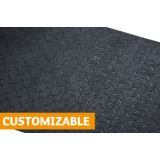 Soft Stall Mats$282.00Soft Stall Mats are the lighter, made-to-measure option in the line. At 1/2 inch, they're thinner and easier to handle than the heavier 3/4-inch stall mats, and they're cut to your stall's exact dimensions — in sizes up to 6 by 16 feet — rather than forcing a standard
...
Soft Stall Mats are the lighter, made-to-measure option in the line. At 1/2 inch, they're thinner and easier to...
Soft Stall Mats are the lighter, made-to-measure option in the line. At 1/2 inch, they're thinner and easier to handle than the heavier 3/4-inch stall mats, and they're cut to your stall's exact dimensions — in sizes up to 6 by 16 feet — rather than forcing a standard mat into the space. For stalls that don't need the heaviest mat, or that are an awkward size, this is the one built to fit.
The mat is 1/2-inch rubber, laid as a barrier between the hoof and the hard floor below. Penn State Extension notes that a rubber mat over a hard subfloor gives a horse a more forgiving surface than bare concrete, and that's the core of what this mat does — it also insulates against cold and damp. The lighter weight makes a large custom mat easier to move, position, and lift for cleaning than a heavier mat of the same footprint.
Because the mats are made to measure and can be supplied interlocking on request, a large or irregular stall gets covered as one clean layout instead of a patchwork of standard mats. The rubber is non-absorbent, so urine and moisture stay on top and off the subfloor, and the surface wipes and rinses clean. Within the stall mats for horses range, it's the lighter, custom-fit choice.
This mat suits stalls with lighter or moderate traffic, setups where a thinner, low-profile floor helps at doorways and thresholds, and spaces where easy handling matters. For heavy-traffic stalls and maximum durability, the thicker 3/4-inch mats are the better call. Installed over a level, prepared base and cleaned on a normal routine, a 1/2-inch mat holds up well; as with any stall floor, an uneven base or trapped moisture underneath is what shortens its life.
Thickness 1/2" Material Rubber Sizing Made to measure, up to 6' × 16' Edges Straight, or interlocking on request Care Sweep, then damp-mop or hose Installation Over a level prepared base Frequently Asked Questions
When should I choose the 1/2-inch mat over a thicker 3/4-inch one?
Answered by Dustin Thompson, Owner & CEO
The 1/2-inch mat fits stalls with lighter or moderate traffic, spots where a thinner, low-profile floor helps at doorways or thresholds, and setups where easy handling matters — it's lighter to move and position, especially in large custom sizes. For heavy-traffic stalls where you want the most durability and mass underfoot, step up to a 3/4-inch mat. Both do the core job: a non-absorbent rubber barrier over the hard floor.
How durable is a 1/2-inch mat, and what base does it need?
Answered by Dustin Thompson, Owner & CEO
It's built to take normal stall use over years, provided it's on the right base. Lay it over a level, prepared surface — concrete or well-compacted stone — so it sits flat and doesn't flex over voids. The rubber is non-absorbent, so it keeps moisture off the subfloor. As with any stall mat, the fastest way to shorten its life is an uneven base or water trapped underneath, not the rubber itself.
Can the mats be cut to my exact stall size?
Answered by Jinna Hopson, Vice President of Marketing
Yes — that's the main reason to choose these. Rather than forcing standard mats into the space, they're made to measure to your stall's dimensions, in sizes up to 6 by 16 feet, and can be supplied interlocking on request. That suits oversized stalls and the irregular layouts in older barns, where standard mats leave awkward gaps. Send your measurements and anything to work around, and we'll lay out a clean, full-floor fit.
How do I order a custom size?
Answered by Jinna Hopson, Vice President of Marketing
Because each mat is made to your dimensions, it's a custom order rather than an off-the-shelf size. Send the stall's measurements — and note any posts, drains, or openings to work around — and we'll lay out the right configuration, including whether interlocking edges make sense for your layout, before anything is cut. If you're doing several stalls, send all the dimensions so the set is consistent across the barn.
By Dustin Thompson, Owner & CEO, Mats Inc.
↑
Soft Stall Mats are the lighter, made-to-measure option in the line. At 1/2 inch, they're thinner and easier to handle than the heavier 3/4-inch stall mats, and they're cut to your stall's exact dimensions — in sizes up to 6 by 16 feet — rather than forcing a standard mat into the space. For stalls that don't need the heaviest mat, or that are an awkward size, this is the one built to fit.
The mat is 1/2-inch rubber, laid as a barrier between the hoof and the hard floor below. Penn State Extension notes that a rubber mat over a hard subfloor gives a horse a more forgiving surface than bare concrete, and that's the core of what this mat does — it also insulates against cold and damp. The lighter weight makes a large custom mat easier to move, position, and lift for cleaning than a heavier mat of the same footprint.
Because the mats are made to measure and can be supplied interlocking on request, a large or irregular stall gets covered as one clean layout instead of a patchwork of standard mats. The rubber is non-absorbent, so urine and moisture stay on top and off the subfloor, and the surface wipes and rinses clean. Within the stall mats for horses range, it's the lighter, custom-fit choice.
This mat suits stalls with lighter or moderate traffic, setups where a thinner, low-profile floor helps at doorways and thresholds, and spaces where easy handling matters. For heavy-traffic stalls and maximum durability, the thicker 3/4-inch mats are the better call. Installed over a level, prepared base and cleaned on a normal routine, a 1/2-inch mat holds up well; as with any stall floor, an uneven base or trapped moisture underneath is what shortens its life.
Thickness 1/2" Material Rubber Sizing Made to measure, up to 6' × 16' Edges Straight, or interlocking on request Care Sweep, then damp-mop or hose Installation Over a level prepared base Frequently Asked Questions
When should I choose the 1/2-inch mat over a thicker 3/4-inch one?
Answered by Dustin Thompson, Owner & CEO
The 1/2-inch mat fits stalls with lighter or moderate traffic, spots where a thinner, low-profile floor helps at doorways or thresholds, and setups where easy handling matters — it's lighter to move and position, especially in large custom sizes. For heavy-traffic stalls where you want the most durability and mass underfoot, step up to a 3/4-inch mat. Both do the core job: a non-absorbent rubber barrier over the hard floor.
How durable is a 1/2-inch mat, and what base does it need?
Answered by Dustin Thompson, Owner & CEO
It's built to take normal stall use over years, provided it's on the right base. Lay it over a level, prepared surface — concrete or well-compacted stone — so it sits flat and doesn't flex over voids. The rubber is non-absorbent, so it keeps moisture off the subfloor. As with any stall mat, the fastest way to shorten its life is an uneven base or water trapped underneath, not the rubber itself.
Can the mats be cut to my exact stall size?
Answered by Jinna Hopson, Vice President of Marketing
Yes — that's the main reason to choose these. Rather than forcing standard mats into the space, they're made to measure to your stall's dimensions, in sizes up to 6 by 16 feet, and can be supplied interlocking on request. That suits oversized stalls and the irregular layouts in older barns, where standard mats leave awkward gaps. Send your measurements and anything to work around, and we'll lay out a clean, full-floor fit.
How do I order a custom size?
Answered by Jinna Hopson, Vice President of Marketing
Because each mat is made to your dimensions, it's a custom order rather than an off-the-shelf size. Send the stall's measurements — and note any posts, drains, or openings to work around — and we'll lay out the right configuration, including whether interlocking edges make sense for your layout, before anything is cut. If you're doing several stalls, send all the dimensions so the set is consistent across the barn.
By Dustin Thompson, Owner & CEO, Mats Inc.
↑
View Details
View Details
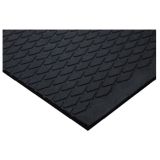 4x6 Premium Stall Mats$134.004x6 Premium Stall Mats are the workhorse standard for working barns — a 4-foot-by-6-foot sheet of dense rubber that protects the stall floor underneath and gives a horse a stable, durable surface on top. Offered with a studded or flat top, the 5/8-inch construction insulates against cold and damp
...
4x6 Premium Stall Mats are the workhorse standard for working barns — a 4-foot-by-6-foot sheet of dense rubber that...
4x6 Premium Stall Mats are the workhorse standard for working barns — a 4-foot-by-6-foot sheet of dense rubber that protects the stall floor underneath and gives a horse a stable, durable surface on top. Offered with a studded or flat top, the 5/8-inch construction insulates against cold and damp and puts a solid barrier between hooves and the subfloor. It's the stall matting most barns start with, and the one most stick with.
At 5/8 inch thick and about 91.5 pounds a mat, these fiber-reinforced rubber stall mats carry the weight of a standing horse without flexing or shifting, and they lie flat instead of curling at the corners the way thinner mats do. The studded top adds grip and hides wear; a flat top is there for stalls where a smooth surface is preferred. Subfloor protection is the other half of the job — the mat keeps urine and moisture off the concrete or packed base underneath. Penn State Extension flags subfloor protection and a stable base as the factors most tied to flooring lifespan.
In the barn, these are the right pick for standard working stalls, aisles, and grooming areas — anywhere durability and subfloor protection are the main jobs and horses are turned out enough that cushioned mats aren't necessary. The same density that makes them work in a stall makes them a popular pick for home and garage gyms, where they protect the slab and quiet dropped weights. What controls odor and wear is the whole system — a sound mat over a sound subfloor — not the mat by itself.
The 4'x6' size covers a standard 12'x12' stall with six mats and tiles easily into gym layouts. Within the stall mats for horses range it's the standard rubber tier, below the cushioned and drainage constructions. Installed over a level, prepared base and cleaned on a normal routine, dense rubber stall mats like these last well over a decade — the failure modes are an uneven subfloor, trapped moisture, or going too thin, none of which apply to a properly installed 5/8-inch mat.
Size 4' x 6' Thickness 5/8" Weight 91.5 lb per mat Material Fiber-reinforced rubber Top profile Studded or flat (both offered) Origin Made in USA Stall coverage Six mats cover a standard 12' x 12' stall Installation Over a level, prepared base (compacted stone or smooth concrete); trims to fit Frequently Asked Questions
Is 5/8 inch thick enough for a horse stall?
Answered by Dustin Thompson, Owner & CEO
Yes — 5/8 inch is the standard working-stall thickness because it carries a standing horse's weight without flexing, lies flat instead of curling, and puts a real barrier between hooves and the subfloor. Thinner mats shift, curl at the corners, and wear through faster under hoof traffic. You only step up from 5/8-inch standard rubber when the horse needs cushioning for extended standing — foaling, rehab, geriatric — which is a different construction, not just more thickness.
How long will these last, and what makes them fail early?
Answered by Dustin Thompson, Owner & CEO
Installed right, dense 5/8-inch rubber stall mats last well over a decade. What shortens that is almost never the mat — it's the base. An uneven or soft subfloor lets the mat shift and wear unevenly; trapped moisture underneath breaks the mat and the subfloor down together. A level, prepared base of compacted stone or smooth concrete, with the floor cleaned and the mats lifted periodically, is what gets the full service life.
Can I use these as gym or garage flooring, not just in a stall?
Answered by Jinna Hopson, Vice President of Marketing
Absolutely — the same 4x6 mats are one of the most popular home-gym and garage-gym floors there is. The dense rubber protects a concrete slab, absorbs the shock of dropped weights, and quiets the noise, and the 4'x6' size tiles across a gym floor with minimal cutting. It's the same mat doing the same job — heavy, durable, floor-protecting — whether it's under a horse or a squat rack.
How many mats do I need, and can they be cut to fit?
Answered by Jinna Hopson, Vice President of Marketing
A standard 12'x12' stall takes six 4'x6' mats with little to no trimming, and gym or garage spaces tile out the same way. For non-standard stalls or rooms, the mats can be trimmed to fit around walls, posts, and equipment. Send the floor dimensions — stall or gym — and we'll work out the mat count and any cuts before you order so there's minimal fitting on site.
By Dustin Thompson, Owner & CEO, Mats Inc.
↑
4x6 Premium Stall Mats are the workhorse standard for working barns — a 4-foot-by-6-foot sheet of dense rubber that protects the stall floor underneath and gives a horse a stable, durable surface on top. Offered with a studded or flat top, the 5/8-inch construction insulates against cold and damp and puts a solid barrier between hooves and the subfloor. It's the stall matting most barns start with, and the one most stick with.
At 5/8 inch thick and about 91.5 pounds a mat, these fiber-reinforced rubber stall mats carry the weight of a standing horse without flexing or shifting, and they lie flat instead of curling at the corners the way thinner mats do. The studded top adds grip and hides wear; a flat top is there for stalls where a smooth surface is preferred. Subfloor protection is the other half of the job — the mat keeps urine and moisture off the concrete or packed base underneath. Penn State Extension flags subfloor protection and a stable base as the factors most tied to flooring lifespan.
In the barn, these are the right pick for standard working stalls, aisles, and grooming areas — anywhere durability and subfloor protection are the main jobs and horses are turned out enough that cushioned mats aren't necessary. The same density that makes them work in a stall makes them a popular pick for home and garage gyms, where they protect the slab and quiet dropped weights. What controls odor and wear is the whole system — a sound mat over a sound subfloor — not the mat by itself.
The 4'x6' size covers a standard 12'x12' stall with six mats and tiles easily into gym layouts. Within the stall mats for horses range it's the standard rubber tier, below the cushioned and drainage constructions. Installed over a level, prepared base and cleaned on a normal routine, dense rubber stall mats like these last well over a decade — the failure modes are an uneven subfloor, trapped moisture, or going too thin, none of which apply to a properly installed 5/8-inch mat.
Size 4' x 6' Thickness 5/8" Weight 91.5 lb per mat Material Fiber-reinforced rubber Top profile Studded or flat (both offered) Origin Made in USA Stall coverage Six mats cover a standard 12' x 12' stall Installation Over a level, prepared base (compacted stone or smooth concrete); trims to fit Frequently Asked Questions
Is 5/8 inch thick enough for a horse stall?
Answered by Dustin Thompson, Owner & CEO
Yes — 5/8 inch is the standard working-stall thickness because it carries a standing horse's weight without flexing, lies flat instead of curling, and puts a real barrier between hooves and the subfloor. Thinner mats shift, curl at the corners, and wear through faster under hoof traffic. You only step up from 5/8-inch standard rubber when the horse needs cushioning for extended standing — foaling, rehab, geriatric — which is a different construction, not just more thickness.
How long will these last, and what makes them fail early?
Answered by Dustin Thompson, Owner & CEO
Installed right, dense 5/8-inch rubber stall mats last well over a decade. What shortens that is almost never the mat — it's the base. An uneven or soft subfloor lets the mat shift and wear unevenly; trapped moisture underneath breaks the mat and the subfloor down together. A level, prepared base of compacted stone or smooth concrete, with the floor cleaned and the mats lifted periodically, is what gets the full service life.
Can I use these as gym or garage flooring, not just in a stall?
Answered by Jinna Hopson, Vice President of Marketing
Absolutely — the same 4x6 mats are one of the most popular home-gym and garage-gym floors there is. The dense rubber protects a concrete slab, absorbs the shock of dropped weights, and quiets the noise, and the 4'x6' size tiles across a gym floor with minimal cutting. It's the same mat doing the same job — heavy, durable, floor-protecting — whether it's under a horse or a squat rack.
How many mats do I need, and can they be cut to fit?
Answered by Jinna Hopson, Vice President of Marketing
A standard 12'x12' stall takes six 4'x6' mats with little to no trimming, and gym or garage spaces tile out the same way. For non-standard stalls or rooms, the mats can be trimmed to fit around walls, posts, and equipment. Send the floor dimensions — stall or gym — and we'll work out the mat count and any cuts before you order so there's minimal fitting on site.
By Dustin Thompson, Owner & CEO, Mats Inc.
↑
View Details
View Details
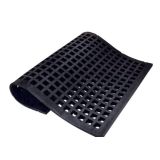 Comfort Grid Horse Stall Mat$275.00The Comfort Grid Horse Stall Mat solves the one problem solid rubber mats can't — standing moisture. Its open-grid surface, built with 2-inch square openings, lets urine and water drain straight through to the base below instead of pooling on top, which is the root of the ammonia and
...
The Comfort Grid Horse Stall Mat solves the one problem solid rubber mats can't — standing moisture. Its open-grid...
The Comfort Grid Horse Stall Mat solves the one problem solid rubber mats can't — standing moisture. Its open-grid surface, built with 2-inch square openings, lets urine and water drain straight through to the base below instead of pooling on top, which is the root of the ammonia and odor buildup that plagues wet stalls. By keeping the horse up out of standing liquid, it's the drainage matting built for the wettest, highest-urinary-load areas of a barn.
The grid works by getting liquid off the walking surface fast. Where a solid flat mat traps urine on top or wicks it into bedding, the open grid drains it straight down, keeping the standing surface drier and slowing the bacterial growth that drives odor. Controlling ammonia is a whole-system job — bedding, surface, and subfloor together — and a draining surface is a direct lever on it rather than a cover-up.
This is the right mat where moisture is the dominant concern — wash bays, recovery stalls, geriatric stalls with high urinary frequency, and humid-climate barns where conventional flat mats hold moisture against the subfloor. The one requirement is a base that can handle the water passing through. Penn State Extension identifies subfloor drainage as one of the factors most tied to long-term equine flooring performance — and the grid only delivers when the subfloor is graded to drain.
Each section runs 4'x5' at 1 inch thick and lays out across wet stalls and wash areas as needed. Within the stall mats for horses range it's the drainage-tier construction, distinct from the standard rubber and cushioned options. Installed over a properly draining base and cleaned on a normal routine, the grid holds up for years — the failure mode isn't the mat, it's putting it over a sealed slab where the drained moisture has nowhere to go and pools underneath.
Size 5' L x 4' W per section Thickness 1" Weight 92.59 lb per section Grid 2" x 2" square openings Material Rubber Drainage Open grid passes water through to the base below Base requirement A base graded to drain (concrete with drainage, or a well-draining stone/packed base) — not a sealed slab Frequently Asked Questions
How does the open-grid design handle moisture differently from a solid mat?
Answered by Dustin Thompson, Owner & CEO
The grid lets urine and water drain straight through to the base below instead of pooling on the surface or wicking sideways into bedding. That directly attacks the ammonia and odor problem that builds up in high-moisture stalls, where a solid flat mat traps liquid on top or against its underside. The tradeoff is that the moisture goes somewhere — so the grid belongs over a base built to drain it, not a sealed slab where water would just collect underneath.
What kind of base does the Comfort Grid need underneath?
Answered by Dustin Thompson, Owner & CEO
One that can take the moisture passing through it. The best base is a graded concrete surface with drainage, or a thoughtfully prepared, well-draining packed-dirt or stone base that lets liquid move away rather than pool. On a sealed, flat slab with nowhere to drain, the grid loses its advantage — water collects in the low spots underneath. Tell us what's under the stall and we'll confirm whether the grid is the right call or a solid mat fits better.
Is the open grid comfortable for a horse to stand on?
Answered by Jinna Hopson, Vice President of Marketing
Its comfort comes from keeping the horse dry, not from cushioning. The open grid drains liquid away so the horse stands on a drier surface instead of in pooled urine or water — the real comfort and health gain in a wet stall. It isn't a soft, give-underfoot mat; if a horse needs cushioning for long hours of standing, that's the cushioned soft-stall construction, not the grid. Use the grid where staying dry is the priority.
What size is it, and where should we use it across the barn?
Answered by Jinna Hopson, Vice President of Marketing
Each section is 4'x5', and the grid lays out across wash bays, recovery and geriatric stalls, and any high-moisture area where pooling is the problem. For a multi-stall facility, the practical pattern is the grid in the wet and high-urinary-load areas and solid rubber in standard working stalls, kept consistent so replacement is simple. Send the stall or wash-bay dimensions and we'll work out the layout and section count.
By Dustin Thompson, Owner & CEO, Mats Inc.
↑
The Comfort Grid Horse Stall Mat solves the one problem solid rubber mats can't — standing moisture. Its open-grid surface, built with 2-inch square openings, lets urine and water drain straight through to the base below instead of pooling on top, which is the root of the ammonia and odor buildup that plagues wet stalls. By keeping the horse up out of standing liquid, it's the drainage matting built for the wettest, highest-urinary-load areas of a barn.
The grid works by getting liquid off the walking surface fast. Where a solid flat mat traps urine on top or wicks it into bedding, the open grid drains it straight down, keeping the standing surface drier and slowing the bacterial growth that drives odor. Controlling ammonia is a whole-system job — bedding, surface, and subfloor together — and a draining surface is a direct lever on it rather than a cover-up.
This is the right mat where moisture is the dominant concern — wash bays, recovery stalls, geriatric stalls with high urinary frequency, and humid-climate barns where conventional flat mats hold moisture against the subfloor. The one requirement is a base that can handle the water passing through. Penn State Extension identifies subfloor drainage as one of the factors most tied to long-term equine flooring performance — and the grid only delivers when the subfloor is graded to drain.
Each section runs 4'x5' at 1 inch thick and lays out across wet stalls and wash areas as needed. Within the stall mats for horses range it's the drainage-tier construction, distinct from the standard rubber and cushioned options. Installed over a properly draining base and cleaned on a normal routine, the grid holds up for years — the failure mode isn't the mat, it's putting it over a sealed slab where the drained moisture has nowhere to go and pools underneath.
Size 5' L x 4' W per section Thickness 1" Weight 92.59 lb per section Grid 2" x 2" square openings Material Rubber Drainage Open grid passes water through to the base below Base requirement A base graded to drain (concrete with drainage, or a well-draining stone/packed base) — not a sealed slab Frequently Asked Questions
How does the open-grid design handle moisture differently from a solid mat?
Answered by Dustin Thompson, Owner & CEO
The grid lets urine and water drain straight through to the base below instead of pooling on the surface or wicking sideways into bedding. That directly attacks the ammonia and odor problem that builds up in high-moisture stalls, where a solid flat mat traps liquid on top or against its underside. The tradeoff is that the moisture goes somewhere — so the grid belongs over a base built to drain it, not a sealed slab where water would just collect underneath.
What kind of base does the Comfort Grid need underneath?
Answered by Dustin Thompson, Owner & CEO
One that can take the moisture passing through it. The best base is a graded concrete surface with drainage, or a thoughtfully prepared, well-draining packed-dirt or stone base that lets liquid move away rather than pool. On a sealed, flat slab with nowhere to drain, the grid loses its advantage — water collects in the low spots underneath. Tell us what's under the stall and we'll confirm whether the grid is the right call or a solid mat fits better.
Is the open grid comfortable for a horse to stand on?
Answered by Jinna Hopson, Vice President of Marketing
Its comfort comes from keeping the horse dry, not from cushioning. The open grid drains liquid away so the horse stands on a drier surface instead of in pooled urine or water — the real comfort and health gain in a wet stall. It isn't a soft, give-underfoot mat; if a horse needs cushioning for long hours of standing, that's the cushioned soft-stall construction, not the grid. Use the grid where staying dry is the priority.
What size is it, and where should we use it across the barn?
Answered by Jinna Hopson, Vice President of Marketing
Each section is 4'x5', and the grid lays out across wash bays, recovery and geriatric stalls, and any high-moisture area where pooling is the problem. For a multi-stall facility, the practical pattern is the grid in the wet and high-urinary-load areas and solid rubber in standard working stalls, kept consistent so replacement is simple. Send the stall or wash-bay dimensions and we'll work out the layout and section count.
By Dustin Thompson, Owner & CEO, Mats Inc.
↑
View Details
View Details
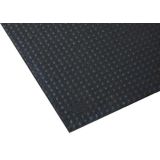 Hammer Top Stall Mat$141.00The Hammer Top Stall Mat is the versatile standard for working barns — a heavy 3/4-inch fiber-reinforced rubber stall mat with a hammered, textured surface that grips underfoot and lies flat without curling. Where some mats shift and lift at the corners under hoof traffic, this one stays put
...
The Hammer Top Stall Mat is the versatile standard for working barns — a heavy 3/4-inch fiber-reinforced rubber stall...
The Hammer Top Stall Mat is the versatile standard for working barns — a heavy 3/4-inch fiber-reinforced rubber stall mat with a hammered, textured surface that grips underfoot and lies flat without curling. Where some mats shift and lift at the corners under hoof traffic, this one stays put and stays flat, which is why it suits such a wide range of spaces: horse stalls, aisles, grooming areas, and even cow barns and mixed-livestock buildings.
The textured top is the defining feature. It gives the horse footing instead of a slick surface, holds traction when the mat is damp from cleaning, and helps the mat resist the shifting and corner-curl that turn a cheap stall mat into a trip hazard within months. Underneath that, it does the standard stall-mat job — a solid rubber barrier protecting the subfloor from urine and moisture that would otherwise saturate the concrete or packed base.
As an everyday working mat, it's the right pick for standard stalls and barn floors where durability and traction are the priorities and horses are turned out enough that cushioned mats aren't necessary. Penn State Extension identifies subfloor protection and a stable base as key factors most tied to flooring lifespan — and a flat-lying, stay-put mat like this is what keeps that subfloor protected over the long run.
Within the stall mats for horses range it's the standard rubber tier, alongside the other workhorse constructions and below the cushioned and drainage options. Installed over a level, prepared base and cleaned on a normal routine, it lasts well over a decade. Odor and wear come down to the whole mat-and-subfloor system, not the mat alone — so a level, drained base does as much for service life as the mat itself.
Size 4' x 6' Thickness 3/4" Material Fiber-reinforced rubber Top profile Hammered, textured for grip Origin Made in USA Stall coverage Six mats cover a standard 12' x 12' stall Installation Over a level, prepared base; trims to fit Frequently Asked Questions
What does the hammer-top surface actually do?
Answered by Dustin Thompson, Owner & CEO
The hammered, textured top gives the mat grip — footing for the horse and a surface that doesn't get slick when it's damp — and it helps the mat lie flat and resist shifting under hoof traffic. That flat-lying, stay-put behavior is what separates a good standard stall mat from a cheap one that curls at the corners within months and starts collecting bedding in the gaps. The texture is traction and stability, not just looks.
How durable is it, and how long should it last?
Answered by Dustin Thompson, Owner & CEO
It's heavy standard rubber built to take continuous hoof traffic, and installed over a level, prepared base it lasts well over a decade. The mat itself rarely fails first — what shortens stall-mat life is an uneven subfloor that lets the mat shift and wear unevenly, or trapped moisture underneath. Keep the base level and drained and lift the mats periodically to clean beneath them, and you get the full service life.
Does the textured surface make a difference for the horse?
Answered by Jinna Hopson, Vice President of Marketing
It does — the hammer-top texture gives the horse reliable footing instead of a slick surface, which matters most when the mat's damp from cleaning or a spill. A horse that trusts its footing moves and settles more comfortably in the stall. The same texture works across animals, which is why these hold up in cow barns and mixed-livestock buildings as well as horse stalls.
Can we use the same mat across all our stalls and aisles?
Answered by Jinna Hopson, Vice President of Marketing
Yes — Hammer Top is the versatile standard for exactly that. Running one mat across working stalls, aisles, grooming areas, and even cow-barn floors keeps your specification and replacement stock simple, and the textured surface suits all of those spaces. For specialty stalls — foaling, rehab, high-moisture — you'd pair it with cushioned or drainage constructions, but for the everyday floors, one consistent mat is the cleanest approach. Send the dimensions and we'll work out the count.
By Dustin Thompson, Owner & CEO, Mats Inc.
↑
The Hammer Top Stall Mat is the versatile standard for working barns — a heavy 3/4-inch fiber-reinforced rubber stall mat with a hammered, textured surface that grips underfoot and lies flat without curling. Where some mats shift and lift at the corners under hoof traffic, this one stays put and stays flat, which is why it suits such a wide range of spaces: horse stalls, aisles, grooming areas, and even cow barns and mixed-livestock buildings.
The textured top is the defining feature. It gives the horse footing instead of a slick surface, holds traction when the mat is damp from cleaning, and helps the mat resist the shifting and corner-curl that turn a cheap stall mat into a trip hazard within months. Underneath that, it does the standard stall-mat job — a solid rubber barrier protecting the subfloor from urine and moisture that would otherwise saturate the concrete or packed base.
As an everyday working mat, it's the right pick for standard stalls and barn floors where durability and traction are the priorities and horses are turned out enough that cushioned mats aren't necessary. Penn State Extension identifies subfloor protection and a stable base as key factors most tied to flooring lifespan — and a flat-lying, stay-put mat like this is what keeps that subfloor protected over the long run.
Within the stall mats for horses range it's the standard rubber tier, alongside the other workhorse constructions and below the cushioned and drainage options. Installed over a level, prepared base and cleaned on a normal routine, it lasts well over a decade. Odor and wear come down to the whole mat-and-subfloor system, not the mat alone — so a level, drained base does as much for service life as the mat itself.
Size 4' x 6' Thickness 3/4" Material Fiber-reinforced rubber Top profile Hammered, textured for grip Origin Made in USA Stall coverage Six mats cover a standard 12' x 12' stall Installation Over a level, prepared base; trims to fit Frequently Asked Questions
What does the hammer-top surface actually do?
Answered by Dustin Thompson, Owner & CEO
The hammered, textured top gives the mat grip — footing for the horse and a surface that doesn't get slick when it's damp — and it helps the mat lie flat and resist shifting under hoof traffic. That flat-lying, stay-put behavior is what separates a good standard stall mat from a cheap one that curls at the corners within months and starts collecting bedding in the gaps. The texture is traction and stability, not just looks.
How durable is it, and how long should it last?
Answered by Dustin Thompson, Owner & CEO
It's heavy standard rubber built to take continuous hoof traffic, and installed over a level, prepared base it lasts well over a decade. The mat itself rarely fails first — what shortens stall-mat life is an uneven subfloor that lets the mat shift and wear unevenly, or trapped moisture underneath. Keep the base level and drained and lift the mats periodically to clean beneath them, and you get the full service life.
Does the textured surface make a difference for the horse?
Answered by Jinna Hopson, Vice President of Marketing
It does — the hammer-top texture gives the horse reliable footing instead of a slick surface, which matters most when the mat's damp from cleaning or a spill. A horse that trusts its footing moves and settles more comfortably in the stall. The same texture works across animals, which is why these hold up in cow barns and mixed-livestock buildings as well as horse stalls.
Can we use the same mat across all our stalls and aisles?
Answered by Jinna Hopson, Vice President of Marketing
Yes — Hammer Top is the versatile standard for exactly that. Running one mat across working stalls, aisles, grooming areas, and even cow-barn floors keeps your specification and replacement stock simple, and the textured surface suits all of those spaces. For specialty stalls — foaling, rehab, high-moisture — you'd pair it with cushioned or drainage constructions, but for the everyday floors, one consistent mat is the cleanest approach. Send the dimensions and we'll work out the count.
By Dustin Thompson, Owner & CEO, Mats Inc.
↑
View Details
View Details
Why Choose LRP Rubber Stable Mats?
LRP Rubber mats are made from premium materials that withstand heavy hoof traffic, ensuring long-lasting performance in the most demanding conditions. The mats are designed to prevent slipping, absorb shock, and provide insulation, making them the perfect choice for horse stalls and other equine areas. Available in a variety of sizes and thicknesses, these mats can be customized to fit any space.
- Durable & Shock-Absorbing: Provides cushioning to reduce the impact on joints and hooves, improving animal comfort.
- Slip-Resistant Surface: Designed to ensure traction and safety in wet or dry conditions, reducing the risk of injury.
- Easy to Clean & Maintain: Resistant to moisture and odors, making it easy to maintain a hygienic environment.
- Versatile Applications: Ideal for use in horse stalls, barns, and other equestrian facilities.
Whether you need rubber horse stall mats or equine stable matting, LRP Rubber delivers unmatched quality and performance, ensuring a safer, more comfortable environment for your horses.