






Notrax
Notrax is a global leader in high-quality, durable matting solutions designed to improve safety, comfort, and cleanliness in a variety of environments. From industrial workspaces to commercial entrances, Notrax mats are engineered to provide optimal performance. Known for their innovation and reliability, Notrax offers a wide range of products, including anti-fatigue mats, entrance mats, and safety floor mats, making them a trusted choice for businesses around the world.
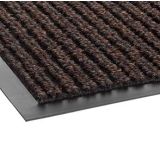 Needle Rib Matting
Starting at $55.00
Needle Rib Matting is a low-profile, linear-ribbed entrance mat built for lighter-traffic doors — side entrances, small storefronts, boutiques, and interior thresholds that see foot traffic but not a flood of it. The close ribbed surface wipes moisture off shoes and holds it on the mat, so a smaller entrance...
Needle Rib Matting is a low-profile, linear-ribbed entrance mat built for lighter-traffic doors — side entrances, small storefronts, boutiques, and...
Needle Rib Matting is a low-profile, linear-ribbed entrance mat built for lighter-traffic doors — side entrances, small storefronts, boutiques, and interior thresholds that see foot traffic but not a flood of it. The close ribbed surface wipes moisture off shoes and holds it on the mat, so a smaller entrance stays cleaner and the floor past it stays drier.
What Needle Rib Matting Does Before Water Reaches Your Floor
Even a quiet entrance lets dirt and water in on shoes. ISSA field data shows a building takes on up to 12 times more dirt during wet weather, and it takes six to eight steps to walk a sole dry. A mat at a lighter-traffic door is what keeps that moisture from spreading onto the floor just past it.
Needle Rib leans on moisture. The linear ribbed surface scrapes off light grit and, more importantly, pulls water off shoes and holds it in the mat — it's a strong moisture-retaining mat first and a light scraper second. The vinyl backing keeps that trapped water off the floor underneath rather than letting it bleed through.
Why a Ribbed Needle-Punched Surface, and Why This One
The surface is a needle-punched blend of polypropylene and polyester fiber, made with 50% recycled PET content. The linear rib runs the length of the mat, which is what gives it its action — shoes cross the ribs and leave moisture behind in the channels. The fiber is quick-drying and fade-resistant, so it dries between uses and keeps its color.
Underneath is a DINP-free PVC vinyl backing that holds the mat to the floor and protects it from the moisture the mat collects. This is a lighter-duty construction than a heavy bi-level rubber mat — which is the point. It's matched to lighter traffic, where a heavyweight mat would be more than the door needs.
Where It Belongs (and Where It Doesn't)
This mat is for interior, light-traffic spots — small businesses, boutiques, side and secondary entrances, back offices, and similar doors that don't take a constant stream of people. It's also certified high-traction by the National Floor Safety Institute, so a smaller entry still gets a safe, slip-resistant surface.
Where it's the wrong call is a busy main entrance or any outdoor spot. Put a light-traffic mat under heavy footfall and the surface crushes and saturates fast, and it stops doing its job; outdoors it isn't built for weather at all. For a high-traffic front door, step up to a heavier bi-level mat, and keep Needle Rib for the lighter doors it's sized for.
Three Things to Check Before You Spec It
Three things decide whether Needle Rib fits your entrance.
First, the traffic. This is a light-traffic mat — right for a side door or a small shop, wrong for a main lobby that sees hundreds of people a day. Match the mat to the footfall, or a busier door will wear it down before its time.
Second, the size and shape. It comes in standard sizes from 2'×3' up to 6'×10', plus 60-foot rolls cut to length — but only in standard widths, with no custom width cuts. Plan around the standard widths, and size the length to cover the steps it takes to dry a sole.
Third, the floor and the finish. The vinyl backing suits hard floors and low carpet and protects the surface beneath from trapped moisture. If the mat will sit out in the open rather than wall-to-wall, order edged ends, since standard rolls ship without edging unless you ask.
Why Mats Inc.
Mats Inc. has specified commercial matting since 1964, so when a door doesn't need a heavyweight mat, we'll tell you — and point you to the one that's actually sized for the traffic instead of putting more mat at the door than the spot calls for. We help you match construction to footfall, pick sizes that fit, and set up a matting plan across a building's doors. For the rest of the indoor range, see our all indoor entrance mats.
Specifications Type Indoor entrance mat, light traffic Surface Needle-punched polypropylene / polyester, linear rib pattern Recycled content 50% recycled PET fiber surface Thickness 5/16" Backing DINP-free PVC vinyl (2.5 lb vinyl strength, ASTM D624 die-T) Flammability Passes DOC-FF-1-70 Traction Certified high-traction by the National Floor Safety Institute (NFSI) Colors Blue, Brown, Charcoal, Gray Standard sizes 2'×3', 3'×4', 3'×5', 3'×6', 3'×8', 3'×10', 4'×6', 4'×8', 4'×10', 6'×10' Roll sizes 3'×60', 4'×60', 6'×60' (cut to length; no custom widths) Warranty 1-year limited (Mats Inc.) Frequently Asked Questions
How does the ribbed surface clean shoes?
Answered by Dustin Thompson, Owner & CEO
The surface is a linear ribbed fiber — rows of raised ribs running the length of the mat. As someone walks across, the ribs scrape light grit off the shoe and, more importantly, the fiber pulls moisture off the sole and holds it in the channels between the ribs. It's built to retain water rather than just push it around, so a wet shoe leaves most of its moisture on the mat. The vinyl backing then keeps that water off the floor underneath instead of letting it soak through.
How much traffic can it take?
Answered by Dustin Thompson, Owner & CEO
It's rated for light traffic — think a side entrance, a small shop, or a back-office door, not a main lobby. In the right spot it holds up well for years; in the wrong one it wears out fast. A light-traffic mat under heavy footfall crushes flat and saturates, and once it does that it stops scraping and holding water and just sits there wet.
So the honest answer is that durability here is about matching the mat to the door. Kept to the lighter traffic it's made for, and cleaned regularly, it keeps working and protecting the floor. Pushed past that, it gives up early.
Can I use it outdoors or at a busy main entrance?
Answered by Dustin Thompson, Owner & CEO
Neither is a good fit. Needle Rib is an interior, light-traffic mat — it isn't built for weather, so outdoor use is out, and a busy main entrance will overwhelm it. The better setup is to use it where it belongs — a quieter interior door — and put a heavier bi-level mat at the high-traffic front entrance and a coarse scraper outside. Matching each door to the right mat keeps more dirt and water off your floors than stretching one light mat past what it's made for.
What sizes can I get, and can it be cut to fit?
Answered by Jinna Hopson, Vice President of Marketing
It comes in standard sizes from 2'×3' up to 6'×10', and in 60-foot rolls that can be cut to length. The one limit is width: there are no custom width cuts, so you work within the standard widths rather than a made-to-measure size.
Size the length to cover the steps it takes to dry a sole, not just the doorway. And if the mat will sit out in the open rather than wall-to-wall, ask for edged ends — standard rolls ship without edging unless you specify it.
What does it look like, and what colors are there?
Answered by Jinna Hopson, Vice President of Marketing
It has a simple, low-profile linear-rib look — clean and unobtrusive rather than decorative, which suits a small shop or a quiet interior door where you want the mat to blend into the space. There are four colors: Blue, Brown, Charcoal, and Gray. The darker tones like Charcoal and Brown hide tracked-in dirt better between cleanings, which helps a lighter-traffic mat keep looking tidy without constant attention.
Can I get it in a custom size or with a logo?
Answered by Jinna Hopson, Vice President of Marketing
Not really, on either count. There are no custom width cuts — you choose from standard widths, with rolls cut to length — and this is a plain ribbed mat, not a logo or printed construction. If you need a branded mat for the same kind of entrance, that's a different product — a logo mat — and we can point you to one. For a simple, clean mat that holds moisture at a lighter-traffic door, Needle Rib does that job without the extras.
By Dustin Thompson, Owner & CEO, Mats Inc.
↑
Needle Rib Matting is a low-profile, linear-ribbed entrance mat built for lighter-traffic doors — side entrances, small storefronts, boutiques, and interior thresholds that see foot traffic but not a flood of it. The close ribbed surface wipes moisture off shoes and holds it on the mat, so a smaller entrance stays cleaner and the floor past it stays drier.
What Needle Rib Matting Does Before Water Reaches Your Floor
Even a quiet entrance lets dirt and water in on shoes. ISSA field data shows a building takes on up to 12 times more dirt during wet weather, and it takes six to eight steps to walk a sole dry. A mat at a lighter-traffic door is what keeps that moisture from spreading onto the floor just past it.
Needle Rib leans on moisture. The linear ribbed surface scrapes off light grit and, more importantly, pulls water off shoes and holds it in the mat — it's a strong moisture-retaining mat first and a light scraper second. The vinyl backing keeps that trapped water off the floor underneath rather than letting it bleed through.
Why a Ribbed Needle-Punched Surface, and Why This One
The surface is a needle-punched blend of polypropylene and polyester fiber, made with 50% recycled PET content. The linear rib runs the length of the mat, which is what gives it its action — shoes cross the ribs and leave moisture behind in the channels. The fiber is quick-drying and fade-resistant, so it dries between uses and keeps its color.
Underneath is a DINP-free PVC vinyl backing that holds the mat to the floor and protects it from the moisture the mat collects. This is a lighter-duty construction than a heavy bi-level rubber mat — which is the point. It's matched to lighter traffic, where a heavyweight mat would be more than the door needs.
Where It Belongs (and Where It Doesn't)
This mat is for interior, light-traffic spots — small businesses, boutiques, side and secondary entrances, back offices, and similar doors that don't take a constant stream of people. It's also certified high-traction by the National Floor Safety Institute, so a smaller entry still gets a safe, slip-resistant surface.
Where it's the wrong call is a busy main entrance or any outdoor spot. Put a light-traffic mat under heavy footfall and the surface crushes and saturates fast, and it stops doing its job; outdoors it isn't built for weather at all. For a high-traffic front door, step up to a heavier bi-level mat, and keep Needle Rib for the lighter doors it's sized for.
Three Things to Check Before You Spec It
Three things decide whether Needle Rib fits your entrance.
First, the traffic. This is a light-traffic mat — right for a side door or a small shop, wrong for a main lobby that sees hundreds of people a day. Match the mat to the footfall, or a busier door will wear it down before its time.
Second, the size and shape. It comes in standard sizes from 2'×3' up to 6'×10', plus 60-foot rolls cut to length — but only in standard widths, with no custom width cuts. Plan around the standard widths, and size the length to cover the steps it takes to dry a sole.
Third, the floor and the finish. The vinyl backing suits hard floors and low carpet and protects the surface beneath from trapped moisture. If the mat will sit out in the open rather than wall-to-wall, order edged ends, since standard rolls ship without edging unless you ask.
Why Mats Inc.
Mats Inc. has specified commercial matting since 1964, so when a door doesn't need a heavyweight mat, we'll tell you — and point you to the one that's actually sized for the traffic instead of putting more mat at the door than the spot calls for. We help you match construction to footfall, pick sizes that fit, and set up a matting plan across a building's doors. For the rest of the indoor range, see our all indoor entrance mats.
Specifications Type Indoor entrance mat, light traffic Surface Needle-punched polypropylene / polyester, linear rib pattern Recycled content 50% recycled PET fiber surface Thickness 5/16" Backing DINP-free PVC vinyl (2.5 lb vinyl strength, ASTM D624 die-T) Flammability Passes DOC-FF-1-70 Traction Certified high-traction by the National Floor Safety Institute (NFSI) Colors Blue, Brown, Charcoal, Gray Standard sizes 2'×3', 3'×4', 3'×5', 3'×6', 3'×8', 3'×10', 4'×6', 4'×8', 4'×10', 6'×10' Roll sizes 3'×60', 4'×60', 6'×60' (cut to length; no custom widths) Warranty 1-year limited (Mats Inc.) Frequently Asked Questions
How does the ribbed surface clean shoes?
Answered by Dustin Thompson, Owner & CEO
The surface is a linear ribbed fiber — rows of raised ribs running the length of the mat. As someone walks across, the ribs scrape light grit off the shoe and, more importantly, the fiber pulls moisture off the sole and holds it in the channels between the ribs. It's built to retain water rather than just push it around, so a wet shoe leaves most of its moisture on the mat. The vinyl backing then keeps that water off the floor underneath instead of letting it soak through.
How much traffic can it take?
Answered by Dustin Thompson, Owner & CEO
It's rated for light traffic — think a side entrance, a small shop, or a back-office door, not a main lobby. In the right spot it holds up well for years; in the wrong one it wears out fast. A light-traffic mat under heavy footfall crushes flat and saturates, and once it does that it stops scraping and holding water and just sits there wet.
So the honest answer is that durability here is about matching the mat to the door. Kept to the lighter traffic it's made for, and cleaned regularly, it keeps working and protecting the floor. Pushed past that, it gives up early.
Can I use it outdoors or at a busy main entrance?
Answered by Dustin Thompson, Owner & CEO
Neither is a good fit. Needle Rib is an interior, light-traffic mat — it isn't built for weather, so outdoor use is out, and a busy main entrance will overwhelm it. The better setup is to use it where it belongs — a quieter interior door — and put a heavier bi-level mat at the high-traffic front entrance and a coarse scraper outside. Matching each door to the right mat keeps more dirt and water off your floors than stretching one light mat past what it's made for.
What sizes can I get, and can it be cut to fit?
Answered by Jinna Hopson, Vice President of Marketing
It comes in standard sizes from 2'×3' up to 6'×10', and in 60-foot rolls that can be cut to length. The one limit is width: there are no custom width cuts, so you work within the standard widths rather than a made-to-measure size.
Size the length to cover the steps it takes to dry a sole, not just the doorway. And if the mat will sit out in the open rather than wall-to-wall, ask for edged ends — standard rolls ship without edging unless you specify it.
What does it look like, and what colors are there?
Answered by Jinna Hopson, Vice President of Marketing
It has a simple, low-profile linear-rib look — clean and unobtrusive rather than decorative, which suits a small shop or a quiet interior door where you want the mat to blend into the space. There are four colors: Blue, Brown, Charcoal, and Gray. The darker tones like Charcoal and Brown hide tracked-in dirt better between cleanings, which helps a lighter-traffic mat keep looking tidy without constant attention.
Can I get it in a custom size or with a logo?
Answered by Jinna Hopson, Vice President of Marketing
Not really, on either count. There are no custom width cuts — you choose from standard widths, with rolls cut to length — and this is a plain ribbed mat, not a logo or printed construction. If you need a branded mat for the same kind of entrance, that's a different product — a logo mat — and we can point you to one. For a simple, clean mat that holds moisture at a lighter-traffic door, Needle Rib does that job without the extras.
By Dustin Thompson, Owner & CEO, Mats Inc.
↑
View Details
View Details
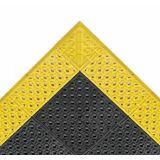 Cushion-Lok Mats
Starting at $139.00
What Cushion-Lok Does Before Spillage Decides Where People Stand Cushion-Lok is a raised, interlocking drainage mat that turns a wet, oily workstation into a dry standing platform. Hundreds of portholes carry liquids and debris down through the surface, while a series of blades elevates the worker above the spillage —...
What Cushion-Lok Does Before Spillage Decides Where People Stand Cushion-Lok is a raised, interlocking drainage mat that turns a wet,...
What Cushion-Lok Does Before Spillage Decides Where People Stand
Cushion-Lok is a raised, interlocking drainage mat that turns a wet, oily workstation into a dry standing platform. Hundreds of portholes carry liquids and debris down through the surface, while a series of blades elevates the worker above the spillage — footing stays gripped and dry even when the floor beneath isn't.
On a plant floor, spills don't wait for cleanup schedules. Cutting fluids drift off machines, wash water travels, and the person stationed in the middle of it stands there for a full shift. Without a raised platform, the choice is bad footing or constant mopping. With one, the liquid goes down and the work goes on.
Why Injection-Molded PVC, and Why This One
The material is a tough, injection-molded PVC — with black components manufactured from 100 percent recycled PVC — chosen for its resistance to harsh industrial chemicals, cutting fluids, oils, and greases. That chemistry is what lets the mat live where it's needed most: directly in the splash zone that destroys ordinary rubber and foam.
The build quality reads in the numbers: a 7/8-inch overall thickness, 1.9 pounds per square foot of injection-molded structure, beveled edges, and a heavy-duty usage rating. The manufacturer rates it "Best" — its top tier — for anti-fatigue, slip resistance, and wear resistance all at once, a rare trifecta in one construction.
The compliance sheet is equally clean: the available yellow borders along the sides comply with OSHA code 1910-144, the mat passes US fire rating requirements, it's REACH compliant, and the material is free of DOP, DMF, ozone-depleting substances, silicone, and heavy metals.
Where It Belongs, and What It Is Not
Cushion-Lok belongs in wet, dry, and oily industrial spaces: manufacturing plants, assembly lines, picking, packing and logistics warehouses, and individual work stations wherever spillage meets standing work. Because it interlocks, it's as much a flooring system as a mat — sized to a single post or built out across an entire work cell.
What it is not: a plush front-of-house comfort mat. This is industrial platform equipment, engineered for chemical exposure and heavy duty rather than for a hotel front desk — those softer stations are served by the comfort options in our anti-fatigue mats and runners lineup. Match the tool to the floor, and this one owns the harsh end.
Three Things to Check Before You Spec It
First, decide between stock and built-to-fit. Eight assembled stock sizes run from 30 by 36 inches up to 42 inches by 10 feet — or the interlocking tiles, ramps, and corners let you create your own configuration around machines, columns, and odd footprints. Factory-assembled custom configurations are available too.
Second, plan the borders and transitions. Yellow side borders meeting OSHA code 1910-144 mark the platform edge where forklifts and foot traffic pass close, and the yellow ramp and corner pieces give carts and hurried feet a proper transition onto the raised surface instead of a step up.
Third, match the chemistry to your floor. The PVC resists most chemicals, cutting fluids, oils, and greases — but "most" deserves a check when your process uses something aggressive. Tell us what actually reaches the floor at the station, and we'll verify compatibility before the mat ships.
Why Mats Inc.
Some stations don't need a mat so much as a small piece of infrastructure — and since 1964 we've helped plants build exactly that, one interlocking section at a time. We carry this system for the wet, oily floors that defeat everything simpler, we verify every claim here against the manufacturer's published specifications, and we back it with a 1-year limited Mats Inc. warranty.
Construction Raised interlocking drainage mat; porthole drainage surface over blade footing; injection molded Material PVC; black components manufactured from 100% recycled PVC; resistant to most chemicals, cutting fluids, oils, and greases Thickness 7/8" Colors Black, with yellow border options (yellow side borders comply with OSHA code 1910-144) Standard Sizes 30" x 36", 30" x 48", 30" x 60", 30" x 72", 30" x 96", 42" x 72", 42" x 96", 42" x 120" Modular Components 12" x 12" tiles (black), 6" x 12" ramps (yellow), 6" x 6" corners (yellow); factory-assembled custom configurations available Edges Beveled Weight 1.9 lbs per square foot Ratings Heavy duty; manufacturer-rated "Best" for anti-fatigue, slip resistance, and wear resistance Compliance US fire rating: pass; REACH compliant; free of DOP, DMF, ozone-depleting substances, silicone, and heavy metals Use Area Wet, dry, and oily areas; manufacturing, assembly, picking/packing and logistics, individual workstations Warranty 1-year limited (Mats Inc.) Frequently Asked Questions
How does the raised design actually keep feet out of spills?
Answered by Dustin Thompson, Owner & CEO
Two mechanisms stacked. The surface carries hundreds of portholes, so liquids and debris drop through instead of sitting where shoes land. Beneath the surface, the worker stands on a series of molded blades that elevate footing above whatever collected below — traction up top, spillage down below, and the two never meet. It's the difference between a mat that gets wet with the floor and a platform that stands above it.
Will cutting fluids and industrial chemicals break it down?
Answered by Dustin Thompson, Owner & CEO
Resisting them is this construction's reason for existing. The injection-molded PVC — 100 percent recycled in the black components — was chosen specifically for resistance to harsh industrial chemicals, cutting fluids, oils, and greases, and the manufacturer rates the mat at its top tier for wear resistance on a heavy-duty rating. For genuinely aggressive process chemistry, name the specific exposure and we'll confirm compatibility before you commit a work cell to it.
What does the compliance list actually cover?
Answered by Dustin Thompson, Owner & CEO
More than most mats bother to document. The available yellow side borders comply with OSHA code 1910-144 for safety color marking, the mat passes US fire rating requirements, and the material is REACH compliant and free of DOP, DMF, ozone-depleting substances, silicone, and heavy metals. For facilities where purchasing has to answer to a safety office, that paper trail is part of what you're buying.
Can it really be built around machines and odd layouts?
Answered by Jinna Hopson, Vice President of Marketing
That's the system's signature. Interlocking 12 by 12 inch tiles build the platform in any footprint — an L around a press, a ring around a column, a full runway down a work cell — and the yellow ramps and corners finish every open edge with a proper transition. If assembling it yourself isn't appealing, factory-assembled custom configurations arrive ready to lay down. The mat fits the station instead of the station adapting to the mat.
Which stock size fits a single workstation versus a line?
Answered by Jinna Hopson, Vice President of Marketing
Match the width to the stance and the length to the walk. The 30-inch width covers a single planted post — the 30 by 36 or 30 by 48 for one operator at one machine. Where workers slide station to station, step up to the longer runs: 30 inches by 8 feet, or the 42-inch width at 6, 8, and 10 feet for lines where people pass behind each other. Eight assembled stock sizes cover most stations before custom work even enters the conversation.
What does the yellow border communicate on a busy floor?
Answered by Jinna Hopson, Vice President of Marketing
It draws the official line between the standing platform and everything moving past it. Yellow is the recognized safety-marking color — these borders comply with OSHA code 1910-144 — so forklift operators, cart pushers, and visitors read the platform edge at a glance, from a distance, without a painted line that wears away. And because the border travels with the mat, the marking stays accurate every time the layout changes.
By Dustin Thompson, Owner & CEO, Mats Inc.
↑
What Cushion-Lok Does Before Spillage Decides Where People Stand
Cushion-Lok is a raised, interlocking drainage mat that turns a wet, oily workstation into a dry standing platform. Hundreds of portholes carry liquids and debris down through the surface, while a series of blades elevates the worker above the spillage — footing stays gripped and dry even when the floor beneath isn't.
On a plant floor, spills don't wait for cleanup schedules. Cutting fluids drift off machines, wash water travels, and the person stationed in the middle of it stands there for a full shift. Without a raised platform, the choice is bad footing or constant mopping. With one, the liquid goes down and the work goes on.
Why Injection-Molded PVC, and Why This One
The material is a tough, injection-molded PVC — with black components manufactured from 100 percent recycled PVC — chosen for its resistance to harsh industrial chemicals, cutting fluids, oils, and greases. That chemistry is what lets the mat live where it's needed most: directly in the splash zone that destroys ordinary rubber and foam.
The build quality reads in the numbers: a 7/8-inch overall thickness, 1.9 pounds per square foot of injection-molded structure, beveled edges, and a heavy-duty usage rating. The manufacturer rates it "Best" — its top tier — for anti-fatigue, slip resistance, and wear resistance all at once, a rare trifecta in one construction.
The compliance sheet is equally clean: the available yellow borders along the sides comply with OSHA code 1910-144, the mat passes US fire rating requirements, it's REACH compliant, and the material is free of DOP, DMF, ozone-depleting substances, silicone, and heavy metals.
Where It Belongs, and What It Is Not
Cushion-Lok belongs in wet, dry, and oily industrial spaces: manufacturing plants, assembly lines, picking, packing and logistics warehouses, and individual work stations wherever spillage meets standing work. Because it interlocks, it's as much a flooring system as a mat — sized to a single post or built out across an entire work cell.
What it is not: a plush front-of-house comfort mat. This is industrial platform equipment, engineered for chemical exposure and heavy duty rather than for a hotel front desk — those softer stations are served by the comfort options in our anti-fatigue mats and runners lineup. Match the tool to the floor, and this one owns the harsh end.
Three Things to Check Before You Spec It
First, decide between stock and built-to-fit. Eight assembled stock sizes run from 30 by 36 inches up to 42 inches by 10 feet — or the interlocking tiles, ramps, and corners let you create your own configuration around machines, columns, and odd footprints. Factory-assembled custom configurations are available too.
Second, plan the borders and transitions. Yellow side borders meeting OSHA code 1910-144 mark the platform edge where forklifts and foot traffic pass close, and the yellow ramp and corner pieces give carts and hurried feet a proper transition onto the raised surface instead of a step up.
Third, match the chemistry to your floor. The PVC resists most chemicals, cutting fluids, oils, and greases — but "most" deserves a check when your process uses something aggressive. Tell us what actually reaches the floor at the station, and we'll verify compatibility before the mat ships.
Why Mats Inc.
Some stations don't need a mat so much as a small piece of infrastructure — and since 1964 we've helped plants build exactly that, one interlocking section at a time. We carry this system for the wet, oily floors that defeat everything simpler, we verify every claim here against the manufacturer's published specifications, and we back it with a 1-year limited Mats Inc. warranty.
Construction Raised interlocking drainage mat; porthole drainage surface over blade footing; injection molded Material PVC; black components manufactured from 100% recycled PVC; resistant to most chemicals, cutting fluids, oils, and greases Thickness 7/8" Colors Black, with yellow border options (yellow side borders comply with OSHA code 1910-144) Standard Sizes 30" x 36", 30" x 48", 30" x 60", 30" x 72", 30" x 96", 42" x 72", 42" x 96", 42" x 120" Modular Components 12" x 12" tiles (black), 6" x 12" ramps (yellow), 6" x 6" corners (yellow); factory-assembled custom configurations available Edges Beveled Weight 1.9 lbs per square foot Ratings Heavy duty; manufacturer-rated "Best" for anti-fatigue, slip resistance, and wear resistance Compliance US fire rating: pass; REACH compliant; free of DOP, DMF, ozone-depleting substances, silicone, and heavy metals Use Area Wet, dry, and oily areas; manufacturing, assembly, picking/packing and logistics, individual workstations Warranty 1-year limited (Mats Inc.) Frequently Asked Questions
How does the raised design actually keep feet out of spills?
Answered by Dustin Thompson, Owner & CEO
Two mechanisms stacked. The surface carries hundreds of portholes, so liquids and debris drop through instead of sitting where shoes land. Beneath the surface, the worker stands on a series of molded blades that elevate footing above whatever collected below — traction up top, spillage down below, and the two never meet. It's the difference between a mat that gets wet with the floor and a platform that stands above it.
Will cutting fluids and industrial chemicals break it down?
Answered by Dustin Thompson, Owner & CEO
Resisting them is this construction's reason for existing. The injection-molded PVC — 100 percent recycled in the black components — was chosen specifically for resistance to harsh industrial chemicals, cutting fluids, oils, and greases, and the manufacturer rates the mat at its top tier for wear resistance on a heavy-duty rating. For genuinely aggressive process chemistry, name the specific exposure and we'll confirm compatibility before you commit a work cell to it.
What does the compliance list actually cover?
Answered by Dustin Thompson, Owner & CEO
More than most mats bother to document. The available yellow side borders comply with OSHA code 1910-144 for safety color marking, the mat passes US fire rating requirements, and the material is REACH compliant and free of DOP, DMF, ozone-depleting substances, silicone, and heavy metals. For facilities where purchasing has to answer to a safety office, that paper trail is part of what you're buying.
Can it really be built around machines and odd layouts?
Answered by Jinna Hopson, Vice President of Marketing
That's the system's signature. Interlocking 12 by 12 inch tiles build the platform in any footprint — an L around a press, a ring around a column, a full runway down a work cell — and the yellow ramps and corners finish every open edge with a proper transition. If assembling it yourself isn't appealing, factory-assembled custom configurations arrive ready to lay down. The mat fits the station instead of the station adapting to the mat.
Which stock size fits a single workstation versus a line?
Answered by Jinna Hopson, Vice President of Marketing
Match the width to the stance and the length to the walk. The 30-inch width covers a single planted post — the 30 by 36 or 30 by 48 for one operator at one machine. Where workers slide station to station, step up to the longer runs: 30 inches by 8 feet, or the 42-inch width at 6, 8, and 10 feet for lines where people pass behind each other. Eight assembled stock sizes cover most stations before custom work even enters the conversation.
What does the yellow border communicate on a busy floor?
Answered by Jinna Hopson, Vice President of Marketing
It draws the official line between the standing platform and everything moving past it. Yellow is the recognized safety-marking color — these borders comply with OSHA code 1910-144 — so forklift operators, cart pushers, and visitors read the platform edge at a glance, from a distance, without a painted line that wears away. And because the border travels with the mat, the marking stays accurate every time the layout changes.
By Dustin Thompson, Owner & CEO, Mats Inc.
↑
View Details
View Details
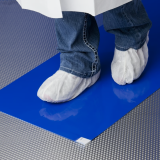 Walk-N-Clean Indoor Adhesive Mats
Starting at $125.00
Keep Critical Spaces Clean with Walk-N-Clean Mats Walk-N-Clean tacky mats are engineered to trap dirt, dust, and debris before they can enter clean-sensitive environments. Designed for use in labs, medical facilities, food processing areas, and cleanrooms, these mats feature peel-away adhesive layers that remove particles from shoes and wheeled equipment,...
Keep Critical Spaces Clean with Walk-N-Clean Mats Walk-N-Clean tacky mats are engineered to trap dirt, dust, and debris before they...
Keep Critical Spaces Clean with Walk-N-Clean Mats
Walk-N-Clean tacky mats are engineered to trap dirt, dust, and debris before they can enter clean-sensitive environments. Designed for use in labs, medical facilities, food processing areas, and cleanrooms, these mats feature peel-away adhesive layers that remove particles from shoes and wheeled equipment, maintaining hygienic flooring at all times.
Features & Benefits
- 60-Layer Adhesive Pads: Disposable tacky sheets peel away easily for constant freshness and performance.
- Non-Slip Base: Rugged reusable base prevents shifting, ensuring safety and durability in high-traffic areas.
- Contamination Control: Effectively removes particulate matter to reduce airborne contaminants and maintain compliance.
- Low Profile: Designed to lay flat without obstructing foot or cart traffic.
- Ideal for Sensitive Areas: Recommended for pharmaceutical labs, hospitals, electronics production, and food prep zones.
A Smarter Solution for Hygiene Control
Walk-N-Clean is the trusted choice for facilities that demand superior cleanliness and contamination prevention. With its easy-to-maintain adhesive surface and secure base, it provides reliable protection for your workspace and peace of mind for your team.
↑
Keep Critical Spaces Clean with Walk-N-Clean Mats
Walk-N-Clean tacky mats are engineered to trap dirt, dust, and debris before they can enter clean-sensitive environments. Designed for use in labs, medical facilities, food processing areas, and cleanrooms, these mats feature peel-away adhesive layers that remove particles from shoes and wheeled equipment, maintaining hygienic flooring at all times.
Features & Benefits
- 60-Layer Adhesive Pads: Disposable tacky sheets peel away easily for constant freshness and performance.
- Non-Slip Base: Rugged reusable base prevents shifting, ensuring safety and durability in high-traffic areas.
- Contamination Control: Effectively removes particulate matter to reduce airborne contaminants and maintain compliance.
- Low Profile: Designed to lay flat without obstructing foot or cart traffic.
- Ideal for Sensitive Areas: Recommended for pharmaceutical labs, hospitals, electronics production, and food prep zones.
A Smarter Solution for Hygiene Control
Walk-N-Clean is the trusted choice for facilities that demand superior cleanliness and contamination prevention. With its easy-to-maintain adhesive surface and secure base, it provides reliable protection for your workspace and peace of mind for your team.
↑
View Details
View Details
 Multi-Mat II Rubber Matting$85.00Multi-Mat II Rubber Matting is a reversible drainage mat for wet and greasy floors. The open-pattern rubber lets water, rinse, and light grease fall through to the floor instead of pooling under a boot, the non-skid surface holds footing on both faces, and a low profile lets carts roll on
...
Multi-Mat II Rubber Matting is a reversible drainage mat for wet and greasy floors. The open-pattern rubber lets water, rinse,...
Multi-Mat II Rubber Matting is a reversible drainage mat for wet and greasy floors. The open-pattern rubber lets water, rinse, and light grease fall through to the floor instead of pooling under a boot, the non-skid surface holds footing on both faces, and a low profile lets carts roll on and off without a bump. When one side wears, flip it. Cut sizes run from 2 by 3 feet to 4 by 8 feet in black general-purpose rubber.
What a Drainage Mat Does Before Standing Water Puts Someone Down
A solid mat on a wet floor moves the problem, it does not solve it. Water runs off the edges or sits on top, and a boot on a wet solid surface is a boot on a slide. Dish pits, wash-down bays, bar wells, locker-room walkways, and food-prep lines all put liquid on the floor faster than anyone mops it, and the person standing there is the one who pays for it.
A drainage mat changes the physics. The surface is an open grid of rubber with holes through it, so liquid drops through to the floor and away from the sole. The rubber that is left is what the foot lands on, and its non-skid texture does the gripping. The worker stands on a surface that stays clear even while the floor under it is soaked.
The stakes are simple. A wet-area slip is the injury that shows up most in kitchens and wash bays, and the fix is not a sign or a mop schedule; it is putting a surface between the worker and the water. This mat is built for that specific job, and the way it is built decides how long it keeps doing it.
Why a Reversible Open-Grid Rubber Mat, and Why This One
The mat is solid rubber with no top layer, backing, or foam core, molded as an open drainage pattern that is identical on both faces. That is what makes it reversible: when the top face wears or gets stained, turn the mat over and the second face is new. The vendor's own phrase for it is a design that adds to the service life of the mat, and in practice it doubles the surface you paid for.
The compound is general-purpose rubber in black, manufactured with an anti-microbial additive that inhibits the growth of bacteria and fungi in the rubber. On a mat that spends its life wet, that is the difference between one that is hosed and returned to service and one that smells by the second month. The vendor also produces a heavy-duty nitrile version in red for heavier grease and oil exposure; the black mat here is rated for some exposure to grease, oil, and water.
The profile is low. A drainage mat that sits tall becomes a lip that carts and hand trucks catch on and a step that tired feet trip over. This one is designed for easy cart access, so a bus cart, a dish rack dolly, or a keg on a hand truck rolls across it. That is why the vendor lists it for longer runs as well as single stations.
Underfoot there is a little give in the rubber, enough to be kinder than bare tile, but this is not a cushion mat. Its comfort comes from getting the water away from the feet and giving them something to grip, not from foam.
Where It Belongs, and What It Is Not
Put it where liquid hits the floor and someone has to stand or walk on it anyway: dish machines and pot sinks, bar wells and beer coolers, wash-down bays, food-prep and packing lines, shower and locker-room walkways, and the strip along a wet counter. The vendor specifies it for workstation environments and longer runs where drainage, a non-slip surface, and cart clearance are the requirements. It sits among the heavy-duty rubber runner mats as the one that lets the water through.
The black general-purpose compound is right for water and light grease. Where the floor sees heavy fryer oil, fat, or constant petroleum exposure, the vendor's nitrile version is the one to ask about instead. Match the compound to the liquid.
What it is not is an anti-fatigue mat or a dry-area runner. It does not have foam under it, so someone standing eight hours at a dry register wants a cushioned mat. And on a dry floor the open grid has nothing to drain and simply collects crumbs and grit; a solid runner is the better surface there.
Three Things to Check Before You Spec It
First, confirm the floor is actually wet, and with what. If water pools or runs across the floor during a shift, a drainage mat earns its place. If the liquid is mostly water and rinse with light grease, the black general-purpose compound covers it. If it is heavy oil or fat every shift, ask about the nitrile version rather than putting general-purpose rubber in a fryer zone.
Second, size it to the wet zone and to the carts that cross it. A 2-by-3 covers a single sink or bar-well position. A 3-by-4 or 3-by-5 covers a dish station where the worker moves a step either way. A 4-by-6 or 4-by-8 covers a wash-down area or a short run along a wet line. Keep the mat clear of the drain grate itself and leave room at the edges for the cart wheels to roll on square.
Third, plan the flip and the rinse. The mat is reversible, so mark a date and turn it over on schedule rather than waiting for one face to look tired. At close, pick it up, hose both faces, and let it drain before it goes back down; the anti-microbial compound does its best work on a mat that dries. A mat left down on a wet floor around the clock never gets that chance.
Why Mats Inc.
We stock this mat for the floors that are wet by design: the dish pit, the bar back, the wash bay. A solid runner in those spots just moves the puddle, and a cushion mat soaks it up. An open rubber grid that drains, grips on both faces, flips over when one side wears, and lets a cart roll across it is the right tool for that floor, and Mats Inc. has been putting the right tool on the right floor since 1964.
Type Reversible drainage anti-slip mat Material General-purpose rubber, black (heavy-duty nitrile version in red available on request) Surface Non-skid, open drainage pattern; identical on both faces Reversible Yes; flip to extend service life Profile Low profile for easy cart access Anti-microbial Rubber compound inhibits growth of bacteria and fungi Exposure rating Wet or dry; some exposure to grease, oil, and water Sizes Cut sizes from 2' x 3' to 4' x 8'; longer roll lengths available on request Cleaning Lift, hose both faces, allow to drain before replacing Warranty 1-year limited (Mats Inc.) Frequently Asked Questions
How is Multi-Mat II built, and what is it made of?
Answered by Dustin Thompson, Owner & CEO
It is a single piece of molded rubber with an open drainage pattern that runs all the way through, so both faces are the same non-skid surface. There is no foam core, fabric, or bonded backing. The black version is a general-purpose rubber compound, manufactured with an anti-microbial additive that inhibits bacteria and fungi in the rubber itself rather than as a coating that washes off.
Because the two faces are identical, the mat is reversible: flip it when the top face wears or stains and you are standing on a fresh surface. The vendor also makes the same mat in a heavy-duty nitrile compound, colored red, for heavier grease and oil.
How long does it last, and what shortens its life?
Answered by Dustin Thompson, Owner & CEO
The vendor does not publish a service-life figure. What it does state is that the reversible construction adds to the service life, and that is the practical number: two working faces instead of one, so a mat that would be worn out on one side keeps going on the other. It carries a 1-year limited (Mats Inc.) warranty, and flipping it on a schedule rather than when it looks tired is what gets the most out of it.
What shortens it is the wrong liquid and no dry time. General-purpose rubber rated for some grease exposure will soften and get slick under heavy fryer oil every shift; that floor wants the nitrile version. And a drainage mat left down wet around the clock never dries, which defeats the anti-microbial compound. Lift it, hose it, let it drain.
Where should I use it, and where should I not?
Answered by Dustin Thompson, Owner & CEO
Use it where the floor is wet while someone works on it: dish machines and pot sinks, bar wells, wash-down bays, food-prep and packing lines, shower and locker-room walkways, and along wet counters. The vendor specifies it for workstations and longer runs that need drainage, a non-slip surface, and low-profile cart access, and the black compound is right for water and light grease.
Do not use it as a cushion for a dry standing station; it has no foam and an anti-fatigue mat does that job. Do not put it on a dry floor as a runner, where the open grid only collects grit. And do not put the black general-purpose compound under constant heavy oil; ask about the nitrile version for that.
Which size should I pick?
Answered by Jinna Hopson, Vice President of Marketing
Size it to the wet zone, not the room. A 2-by-3 covers one sink or one bar-well position. A 3-by-4 or 3-by-5 covers a dish station where the worker takes a step either way. A 4-by-6 or 4-by-8 covers a wash-down area, a two-person station, or a short run along a wet line. Longer runs are available as roll lengths on request.
Two placement habits help. Keep the mat clear of the floor drain grate so the water it sheds has somewhere to go, and leave a few inches at the cart side so wheels roll on square rather than catching a corner. Measure the puddle, not the floor plan.
What does it look like in a kitchen or bar?
Answered by Jinna Hopson, Vice President of Marketing
A black open-grid rubber mat: a lattice of textured rubber with regular drainage openings, low to the floor, and the same pattern on both faces. It reads as working equipment rather than decor, which is exactly right for a dish pit, a bar back, or a wash bay where staff see it and customers do not. Black hides the stains that a wet, greasy floor puts on any mat between rinses.
Because the vendor's nitrile version comes in red, some operations use the two colors as a code: red where the fryer oil is, black everywhere else wet. For a front-of-house floor where the mat is on display, this is not the product; it lives behind the line.
Is this a good fit for a dish pit or wash bay where carts come through?
Answered by Jinna Hopson, Vice President of Marketing
Yes; that combination of standing water and rolling carts is the case it was designed around. The drainage pattern takes the rinse water and light grease off the surface, the non-skid faces keep the dish crew upright, and the low profile means a bus cart, dish dolly, or hand truck rolls across it instead of stopping at a lip. The vendor specifies it for exactly that: drainage, anti-slip surface, low profile for cart traffic.
Plan the routine and it stays that way: lift at close, hose both faces, let it drain, and flip it on a schedule so the two faces wear evenly. At a dish machine that runs all day, that habit is what keeps the mat from becoming the thing that smells.
By Dustin Thompson, Owner & CEO, Mats Inc.
↑
Multi-Mat II Rubber Matting is a reversible drainage mat for wet and greasy floors. The open-pattern rubber lets water, rinse, and light grease fall through to the floor instead of pooling under a boot, the non-skid surface holds footing on both faces, and a low profile lets carts roll on and off without a bump. When one side wears, flip it. Cut sizes run from 2 by 3 feet to 4 by 8 feet in black general-purpose rubber.
What a Drainage Mat Does Before Standing Water Puts Someone Down
A solid mat on a wet floor moves the problem, it does not solve it. Water runs off the edges or sits on top, and a boot on a wet solid surface is a boot on a slide. Dish pits, wash-down bays, bar wells, locker-room walkways, and food-prep lines all put liquid on the floor faster than anyone mops it, and the person standing there is the one who pays for it.
A drainage mat changes the physics. The surface is an open grid of rubber with holes through it, so liquid drops through to the floor and away from the sole. The rubber that is left is what the foot lands on, and its non-skid texture does the gripping. The worker stands on a surface that stays clear even while the floor under it is soaked.
The stakes are simple. A wet-area slip is the injury that shows up most in kitchens and wash bays, and the fix is not a sign or a mop schedule; it is putting a surface between the worker and the water. This mat is built for that specific job, and the way it is built decides how long it keeps doing it.
Why a Reversible Open-Grid Rubber Mat, and Why This One
The mat is solid rubber with no top layer, backing, or foam core, molded as an open drainage pattern that is identical on both faces. That is what makes it reversible: when the top face wears or gets stained, turn the mat over and the second face is new. The vendor's own phrase for it is a design that adds to the service life of the mat, and in practice it doubles the surface you paid for.
The compound is general-purpose rubber in black, manufactured with an anti-microbial additive that inhibits the growth of bacteria and fungi in the rubber. On a mat that spends its life wet, that is the difference between one that is hosed and returned to service and one that smells by the second month. The vendor also produces a heavy-duty nitrile version in red for heavier grease and oil exposure; the black mat here is rated for some exposure to grease, oil, and water.
The profile is low. A drainage mat that sits tall becomes a lip that carts and hand trucks catch on and a step that tired feet trip over. This one is designed for easy cart access, so a bus cart, a dish rack dolly, or a keg on a hand truck rolls across it. That is why the vendor lists it for longer runs as well as single stations.
Underfoot there is a little give in the rubber, enough to be kinder than bare tile, but this is not a cushion mat. Its comfort comes from getting the water away from the feet and giving them something to grip, not from foam.
Where It Belongs, and What It Is Not
Put it where liquid hits the floor and someone has to stand or walk on it anyway: dish machines and pot sinks, bar wells and beer coolers, wash-down bays, food-prep and packing lines, shower and locker-room walkways, and the strip along a wet counter. The vendor specifies it for workstation environments and longer runs where drainage, a non-slip surface, and cart clearance are the requirements. It sits among the heavy-duty rubber runner mats as the one that lets the water through.
The black general-purpose compound is right for water and light grease. Where the floor sees heavy fryer oil, fat, or constant petroleum exposure, the vendor's nitrile version is the one to ask about instead. Match the compound to the liquid.
What it is not is an anti-fatigue mat or a dry-area runner. It does not have foam under it, so someone standing eight hours at a dry register wants a cushioned mat. And on a dry floor the open grid has nothing to drain and simply collects crumbs and grit; a solid runner is the better surface there.
Three Things to Check Before You Spec It
First, confirm the floor is actually wet, and with what. If water pools or runs across the floor during a shift, a drainage mat earns its place. If the liquid is mostly water and rinse with light grease, the black general-purpose compound covers it. If it is heavy oil or fat every shift, ask about the nitrile version rather than putting general-purpose rubber in a fryer zone.
Second, size it to the wet zone and to the carts that cross it. A 2-by-3 covers a single sink or bar-well position. A 3-by-4 or 3-by-5 covers a dish station where the worker moves a step either way. A 4-by-6 or 4-by-8 covers a wash-down area or a short run along a wet line. Keep the mat clear of the drain grate itself and leave room at the edges for the cart wheels to roll on square.
Third, plan the flip and the rinse. The mat is reversible, so mark a date and turn it over on schedule rather than waiting for one face to look tired. At close, pick it up, hose both faces, and let it drain before it goes back down; the anti-microbial compound does its best work on a mat that dries. A mat left down on a wet floor around the clock never gets that chance.
Why Mats Inc.
We stock this mat for the floors that are wet by design: the dish pit, the bar back, the wash bay. A solid runner in those spots just moves the puddle, and a cushion mat soaks it up. An open rubber grid that drains, grips on both faces, flips over when one side wears, and lets a cart roll across it is the right tool for that floor, and Mats Inc. has been putting the right tool on the right floor since 1964.
Type Reversible drainage anti-slip mat Material General-purpose rubber, black (heavy-duty nitrile version in red available on request) Surface Non-skid, open drainage pattern; identical on both faces Reversible Yes; flip to extend service life Profile Low profile for easy cart access Anti-microbial Rubber compound inhibits growth of bacteria and fungi Exposure rating Wet or dry; some exposure to grease, oil, and water Sizes Cut sizes from 2' x 3' to 4' x 8'; longer roll lengths available on request Cleaning Lift, hose both faces, allow to drain before replacing Warranty 1-year limited (Mats Inc.) Frequently Asked Questions
How is Multi-Mat II built, and what is it made of?
Answered by Dustin Thompson, Owner & CEO
It is a single piece of molded rubber with an open drainage pattern that runs all the way through, so both faces are the same non-skid surface. There is no foam core, fabric, or bonded backing. The black version is a general-purpose rubber compound, manufactured with an anti-microbial additive that inhibits bacteria and fungi in the rubber itself rather than as a coating that washes off.
Because the two faces are identical, the mat is reversible: flip it when the top face wears or stains and you are standing on a fresh surface. The vendor also makes the same mat in a heavy-duty nitrile compound, colored red, for heavier grease and oil.
How long does it last, and what shortens its life?
Answered by Dustin Thompson, Owner & CEO
The vendor does not publish a service-life figure. What it does state is that the reversible construction adds to the service life, and that is the practical number: two working faces instead of one, so a mat that would be worn out on one side keeps going on the other. It carries a 1-year limited (Mats Inc.) warranty, and flipping it on a schedule rather than when it looks tired is what gets the most out of it.
What shortens it is the wrong liquid and no dry time. General-purpose rubber rated for some grease exposure will soften and get slick under heavy fryer oil every shift; that floor wants the nitrile version. And a drainage mat left down wet around the clock never dries, which defeats the anti-microbial compound. Lift it, hose it, let it drain.
Where should I use it, and where should I not?
Answered by Dustin Thompson, Owner & CEO
Use it where the floor is wet while someone works on it: dish machines and pot sinks, bar wells, wash-down bays, food-prep and packing lines, shower and locker-room walkways, and along wet counters. The vendor specifies it for workstations and longer runs that need drainage, a non-slip surface, and low-profile cart access, and the black compound is right for water and light grease.
Do not use it as a cushion for a dry standing station; it has no foam and an anti-fatigue mat does that job. Do not put it on a dry floor as a runner, where the open grid only collects grit. And do not put the black general-purpose compound under constant heavy oil; ask about the nitrile version for that.
Which size should I pick?
Answered by Jinna Hopson, Vice President of Marketing
Size it to the wet zone, not the room. A 2-by-3 covers one sink or one bar-well position. A 3-by-4 or 3-by-5 covers a dish station where the worker takes a step either way. A 4-by-6 or 4-by-8 covers a wash-down area, a two-person station, or a short run along a wet line. Longer runs are available as roll lengths on request.
Two placement habits help. Keep the mat clear of the floor drain grate so the water it sheds has somewhere to go, and leave a few inches at the cart side so wheels roll on square rather than catching a corner. Measure the puddle, not the floor plan.
What does it look like in a kitchen or bar?
Answered by Jinna Hopson, Vice President of Marketing
A black open-grid rubber mat: a lattice of textured rubber with regular drainage openings, low to the floor, and the same pattern on both faces. It reads as working equipment rather than decor, which is exactly right for a dish pit, a bar back, or a wash bay where staff see it and customers do not. Black hides the stains that a wet, greasy floor puts on any mat between rinses.
Because the vendor's nitrile version comes in red, some operations use the two colors as a code: red where the fryer oil is, black everywhere else wet. For a front-of-house floor where the mat is on display, this is not the product; it lives behind the line.
Is this a good fit for a dish pit or wash bay where carts come through?
Answered by Jinna Hopson, Vice President of Marketing
Yes; that combination of standing water and rolling carts is the case it was designed around. The drainage pattern takes the rinse water and light grease off the surface, the non-skid faces keep the dish crew upright, and the low profile means a bus cart, dish dolly, or hand truck rolls across it instead of stopping at a lip. The vendor specifies it for exactly that: drainage, anti-slip surface, low profile for cart traffic.
Plan the routine and it stays that way: lift at close, hose both faces, let it drain, and flip it on a schedule so the two faces wear evenly. At a dish machine that runs all day, that habit is what keeps the mat from becoming the thing that smells.
By Dustin Thompson, Owner & CEO, Mats Inc.
↑
View Details
View Details
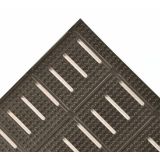 Versa Runner Rubber Matting$96.00What Versa Runner does before water and grime turn a floor slick In a wet area, the floor problem usually isn't the water you can see — it's the thin, greasy film that builds up where water mixes with whatever else is on the ground. You might figure a solid
...
What Versa Runner does before water and grime turn a floor slick In a wet area, the floor problem usually...
What Versa Runner does before water and grime turn a floor slick
In a wet area, the floor problem usually isn't the water you can see — it's the thin, greasy film that builds up where water mixes with whatever else is on the ground. You might figure a solid rubber mat handles it. The catch is that a solid mat traps that film on top, right where feet land, so the surface that's supposed to help can end up just as slick.
Versa Runner takes a different route. Its surface is cut with slotted perforations, so water and grime drain straight through instead of pooling on top. Side-to-side scraper ribs and a knobbed top give shoes something to grab, and the ribbed underside channels liquid out from beneath the mat. The result is a non-slip surface that keeps working while the floor around it stays wet.
A slick wet-area floor is one of the most common places people get hurt. The National Floor Safety Institute ties wet, hard floors to a large share of slip-and-fall injuries, and a pool deck, locker room, or wet work zone feeds that risk all day. A mat that drains the water away and holds traction underfoot is doing real safety work.
Why nitrile rubber, and why this one
Versa Runner is made from 100% nitrile rubber, and that choice does a lot of quiet work. Nitrile shrugs off grease, oils, and animal fats that would soften or break down lesser rubber, so the mat keeps its shape and grip in tough conditions. For a wet area that also sees cleaning chemicals or kitchen runoff, that chemical resistance is what keeps it from going gummy or brittle.
It's also built with a MicroStop anti-microbial compound, which inhibits the bacteria and fungi that love to settle into damp, warm spots like pool surrounds and shower floors. Pair that with the through-draining slotted surface and you get a mat that doesn't sit in its own moisture. At 3/8" thick, it stays low enough that carts and wheeled traffic roll on and off without catching an edge.
The same build that drains also cushions. The ribbed underside adds a measure of give, so standing on it for a stretch is easier on the legs than standing on bare concrete or tile. And because nitrile is genuinely durable, the mat takes foot traffic, rolling loads, and repeated wash-downs without falling apart — it's made to stay in service, not to be replaced every season.
Where it belongs — and what it isn't
Versa Runner belongs wherever a floor stays wet and people keep moving. Around a pool that means the service and back-of-house zones as much as the deck itself: the bar or concession floor, the path into the locker room, shower and changing areas, and equipment or pump rooms. It's just as at home in kitchens, food-prep areas, and other wet work zones where grease and water share the floor.
It's worth being clear about what this mat is not. It's a walk-on drainage runner, not a flotation mat and not the liner-protector sheet that goes under an above-ground pool. If you came looking for a mat to put under a pool or a float for the water, this isn't it. Versa Runner works on top of the floor, under your feet, on concrete, tile, or a finished deck.
One honest note: this is a rubber mat built for service and work areas, so it's happiest indoors or in covered, shaded wet zones. The source doesn't rate it for constant sun or direct pool-chemical contact, so for a fully exposed, barefoot sunbathing deck, ask us first — we'll tell you straight whether it's the right fit or point you to a mat that's purpose-built for that spot.
Three Things to Check Before You Spec It
Versa Runner is easy to order well if you sort out three things up front.
First, choose between a cut mat and a roll. Cut mats in set sizes drop in fast at a single station — a bar, a shower entry, a pump-room doorway. Rolls come in 2-, 3-, and 4-foot widths and run up to 60 feet, which you cut to length on site to cover a long deck run or a whole wet aisle in one continuous piece.
Second, map the width to your walkway. Measure the wettest path — pool edge to locker room, or the lane behind a bar — and pick the roll width that covers it without leaving a dry-foot gap where people step off the mat onto slick floor. A runner only protects the path it actually covers, so size it to the traffic, not just the doorway.
Third, think about edges and transitions. A cut mat sits with straight edges, which is fine in the middle of a run but can be a lip where people step on from a dry surface. Where that transition matters, plan the layout so the mat butts against a wall or threshold, or ask us about edge options, so the mat itself never becomes the thing someone trips over.
Why Mats Inc.
We've been matching mats to real floors since 1964, and wet areas punish the wrong pick fastest. We'll help you decide between cut mats and rolls, size the width to your actual traffic path, and flag the things that bite people later — sun exposure, transitions, chemical contact. It's part of our wider lineup of pool and wet-area matting, and every order is backed by our 1-year limited warranty.
Material 100% nitrile rubber (grease-proof) Anti-microbial MicroStop compound (inhibits bacteria and fungi) Top surface Slotted perforations with side-to-side scraper ribs and knobbed top Underside Ribbed; channels liquid away and adds anti-fatigue give Thickness 3/8" Formats Cut mats and rolls Roll widths 2', 3', and 4' Roll length Up to 60' Custom sizes Cut to size on site / custom lengths Cart traffic Low profile; suitable for wheeled traffic Color Black (standard) Warranty 1-year limited (Mats Inc.) Frequently Asked Questions
What exactly is Versa Runner made of, and how does it drain?
Answered by Dustin Thompson, Owner & CEO
It's made from 100% nitrile rubber, with a surface cut full of slotted perforations and a knobbed, scraper-ribbed top. Water and grime fall through the slots to the floor below instead of pooling where you step, while the ribs give shoes and bare feet traction. Underneath, a ribbed pattern channels liquid out from beneath the mat and adds a little cushioning. It's also built with a MicroStop anti-microbial compound that helps hold back bacteria and fungi in damp spots.
How well does it hold up to heavy use and chemicals?
Answered by Dustin Thompson, Owner & CEO
Nitrile rubber is the reason it lasts. It resists grease, oils, and animal fats that would break down ordinary rubber, so it keeps its grip and shape through wash-downs and daily traffic. At 3/8" thick it's low enough for carts and wheeled loads to roll on and off without snagging, yet substantial enough to take real foot traffic. For a wet area that also sees cleaning chemicals, that chemical resistance is what keeps the mat from turning gummy or brittle over time.
Can I get it in a custom size or just standard mats?
Answered by Dustin Thompson, Owner & CEO
Both. You can order set-size cut mats for a single spot like a doorway or a station, or buy it by the roll in 2-, 3-, or 4-foot widths up to 60 feet long. The roll is the flexible option — it cuts cleanly on site, so you can run one continuous piece down a long deck or wet aisle and trim it to the exact length your space needs.
Where around a pool does this actually make sense?
Answered by Jinna Hopson, VP of Marketing
Its sweet spot is the working, wet parts of a pool area rather than the open sunbathing deck. Think the floor behind the bar or concession stand, the walk into the locker room, shower and changing areas, and pump or equipment rooms — anywhere water and foot traffic mix indoors or under cover. It's a rubber mat built for service zones, so for a fully sun-exposed deck it's worth checking with us before you commit.
What does it look like underfoot?
Answered by Jinna Hopson, VP of Marketing
It has a practical, no-nonsense look — a black surface broken up by drainage slots and a ribbed, knobbed top that reads as purposeful, like equipment that's there to do a job. Black is the standard color, and it's a smart one for wet work areas because it hides the grit, scuffs, and bits of debris these floors collect between cleanings. It's not trying to be decorative; it's trying to keep people upright.
My space is an odd shape — will it fit?
Answered by Jinna Hopson, VP of Marketing
Almost certainly. Because the roll cuts easily on site, you can shape a run around drains, ladders, corners, and equipment instead of forcing your floor to match a fixed mat. That makes it a strong pick when an off-the-shelf size just won't sit right. If you'd like help planning the layout or choosing widths for a tricky footprint, send us the dimensions and we'll map it out with you.
Written by Dustin Thompson, Owner & CEO, Mats Inc.
↑
What Versa Runner does before water and grime turn a floor slick
In a wet area, the floor problem usually isn't the water you can see — it's the thin, greasy film that builds up where water mixes with whatever else is on the ground. You might figure a solid rubber mat handles it. The catch is that a solid mat traps that film on top, right where feet land, so the surface that's supposed to help can end up just as slick.
Versa Runner takes a different route. Its surface is cut with slotted perforations, so water and grime drain straight through instead of pooling on top. Side-to-side scraper ribs and a knobbed top give shoes something to grab, and the ribbed underside channels liquid out from beneath the mat. The result is a non-slip surface that keeps working while the floor around it stays wet.
A slick wet-area floor is one of the most common places people get hurt. The National Floor Safety Institute ties wet, hard floors to a large share of slip-and-fall injuries, and a pool deck, locker room, or wet work zone feeds that risk all day. A mat that drains the water away and holds traction underfoot is doing real safety work.
Why nitrile rubber, and why this one
Versa Runner is made from 100% nitrile rubber, and that choice does a lot of quiet work. Nitrile shrugs off grease, oils, and animal fats that would soften or break down lesser rubber, so the mat keeps its shape and grip in tough conditions. For a wet area that also sees cleaning chemicals or kitchen runoff, that chemical resistance is what keeps it from going gummy or brittle.
It's also built with a MicroStop anti-microbial compound, which inhibits the bacteria and fungi that love to settle into damp, warm spots like pool surrounds and shower floors. Pair that with the through-draining slotted surface and you get a mat that doesn't sit in its own moisture. At 3/8" thick, it stays low enough that carts and wheeled traffic roll on and off without catching an edge.
The same build that drains also cushions. The ribbed underside adds a measure of give, so standing on it for a stretch is easier on the legs than standing on bare concrete or tile. And because nitrile is genuinely durable, the mat takes foot traffic, rolling loads, and repeated wash-downs without falling apart — it's made to stay in service, not to be replaced every season.
Where it belongs — and what it isn't
Versa Runner belongs wherever a floor stays wet and people keep moving. Around a pool that means the service and back-of-house zones as much as the deck itself: the bar or concession floor, the path into the locker room, shower and changing areas, and equipment or pump rooms. It's just as at home in kitchens, food-prep areas, and other wet work zones where grease and water share the floor.
It's worth being clear about what this mat is not. It's a walk-on drainage runner, not a flotation mat and not the liner-protector sheet that goes under an above-ground pool. If you came looking for a mat to put under a pool or a float for the water, this isn't it. Versa Runner works on top of the floor, under your feet, on concrete, tile, or a finished deck.
One honest note: this is a rubber mat built for service and work areas, so it's happiest indoors or in covered, shaded wet zones. The source doesn't rate it for constant sun or direct pool-chemical contact, so for a fully exposed, barefoot sunbathing deck, ask us first — we'll tell you straight whether it's the right fit or point you to a mat that's purpose-built for that spot.
Three Things to Check Before You Spec It
Versa Runner is easy to order well if you sort out three things up front.
First, choose between a cut mat and a roll. Cut mats in set sizes drop in fast at a single station — a bar, a shower entry, a pump-room doorway. Rolls come in 2-, 3-, and 4-foot widths and run up to 60 feet, which you cut to length on site to cover a long deck run or a whole wet aisle in one continuous piece.
Second, map the width to your walkway. Measure the wettest path — pool edge to locker room, or the lane behind a bar — and pick the roll width that covers it without leaving a dry-foot gap where people step off the mat onto slick floor. A runner only protects the path it actually covers, so size it to the traffic, not just the doorway.
Third, think about edges and transitions. A cut mat sits with straight edges, which is fine in the middle of a run but can be a lip where people step on from a dry surface. Where that transition matters, plan the layout so the mat butts against a wall or threshold, or ask us about edge options, so the mat itself never becomes the thing someone trips over.
Why Mats Inc.
We've been matching mats to real floors since 1964, and wet areas punish the wrong pick fastest. We'll help you decide between cut mats and rolls, size the width to your actual traffic path, and flag the things that bite people later — sun exposure, transitions, chemical contact. It's part of our wider lineup of pool and wet-area matting, and every order is backed by our 1-year limited warranty.
Material 100% nitrile rubber (grease-proof) Anti-microbial MicroStop compound (inhibits bacteria and fungi) Top surface Slotted perforations with side-to-side scraper ribs and knobbed top Underside Ribbed; channels liquid away and adds anti-fatigue give Thickness 3/8" Formats Cut mats and rolls Roll widths 2', 3', and 4' Roll length Up to 60' Custom sizes Cut to size on site / custom lengths Cart traffic Low profile; suitable for wheeled traffic Color Black (standard) Warranty 1-year limited (Mats Inc.) Frequently Asked Questions
What exactly is Versa Runner made of, and how does it drain?
Answered by Dustin Thompson, Owner & CEO
It's made from 100% nitrile rubber, with a surface cut full of slotted perforations and a knobbed, scraper-ribbed top. Water and grime fall through the slots to the floor below instead of pooling where you step, while the ribs give shoes and bare feet traction. Underneath, a ribbed pattern channels liquid out from beneath the mat and adds a little cushioning. It's also built with a MicroStop anti-microbial compound that helps hold back bacteria and fungi in damp spots.
How well does it hold up to heavy use and chemicals?
Answered by Dustin Thompson, Owner & CEO
Nitrile rubber is the reason it lasts. It resists grease, oils, and animal fats that would break down ordinary rubber, so it keeps its grip and shape through wash-downs and daily traffic. At 3/8" thick it's low enough for carts and wheeled loads to roll on and off without snagging, yet substantial enough to take real foot traffic. For a wet area that also sees cleaning chemicals, that chemical resistance is what keeps the mat from turning gummy or brittle over time.
Can I get it in a custom size or just standard mats?
Answered by Dustin Thompson, Owner & CEO
Both. You can order set-size cut mats for a single spot like a doorway or a station, or buy it by the roll in 2-, 3-, or 4-foot widths up to 60 feet long. The roll is the flexible option — it cuts cleanly on site, so you can run one continuous piece down a long deck or wet aisle and trim it to the exact length your space needs.
Where around a pool does this actually make sense?
Answered by Jinna Hopson, VP of Marketing
Its sweet spot is the working, wet parts of a pool area rather than the open sunbathing deck. Think the floor behind the bar or concession stand, the walk into the locker room, shower and changing areas, and pump or equipment rooms — anywhere water and foot traffic mix indoors or under cover. It's a rubber mat built for service zones, so for a fully sun-exposed deck it's worth checking with us before you commit.
What does it look like underfoot?
Answered by Jinna Hopson, VP of Marketing
It has a practical, no-nonsense look — a black surface broken up by drainage slots and a ribbed, knobbed top that reads as purposeful, like equipment that's there to do a job. Black is the standard color, and it's a smart one for wet work areas because it hides the grit, scuffs, and bits of debris these floors collect between cleanings. It's not trying to be decorative; it's trying to keep people upright.
My space is an odd shape — will it fit?
Answered by Jinna Hopson, VP of Marketing
Almost certainly. Because the roll cuts easily on site, you can shape a run around drains, ladders, corners, and equipment instead of forcing your floor to match a fixed mat. That makes it a strong pick when an off-the-shelf size just won't sit right. If you'd like help planning the layout or choosing widths for a tricky footprint, send us the dimensions and we'll map it out with you.
Written by Dustin Thompson, Owner & CEO, Mats Inc.
↑
View Details
View Details
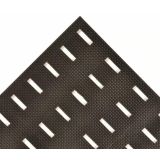 Cushion Dek Matting$95.00What Cushion Dek Does Before a Wet Platform Becomes a Slip Report Cushion Dek is a one-piece anti-slip drainage mat for wet worker platforms. A molded pyramid surface gives shoes traction from every angle, slotted perforations carry moisture down off the standing surface, and a studded underside raises the whole
...
What Cushion Dek Does Before a Wet Platform Becomes a Slip Report Cushion Dek is a one-piece anti-slip drainage mat...
What Cushion Dek Does Before a Wet Platform Becomes a Slip Report
Cushion Dek is a one-piece anti-slip drainage mat for wet worker platforms. A molded pyramid surface gives shoes traction from every angle, slotted perforations carry moisture down off the standing surface, and a studded underside raises the whole mat so water keeps channeling away beneath it — three answers to a wet floor in one tough sheet of PVC.
Wet stations fail people quietly. Rinse water and process moisture spread a film across the platform, and the hurried step — the one taken mid-rush, carrying something — is the one that finds it. A worker platform that drains itself and grips through the wet changes what that hurried step lands on.
Why Pyramid-Molded PVC, and Why This One
The mat is molded from a tough PVC compound — made from 100 percent recycled PVC — with the traction built into the geometry itself. Raised pyramids present a gripping edge to a shoe in every direction of movement, so the surface holds footing whether the worker is planted, pivoting, or stepping through.
Drainage runs on two levels. Up top, slotted perforations — 1/2 inch wide by 1-7/8 inches long — let moisture escape the worker platform instead of pooling where shoes land. Underneath, the studded bottom surface raises the mat off the floor, channeling that moisture away while allowing continuous aeration, so the space under the mat isn't a sealed wet pocket.
The profile stays practical at 7/16 inch — enough body to do drainage work, low enough to keep transitions manageable — and the format runs from compact station mats up to a 4-foot-wide, 30-foot roll for continuous coverage down a full wet line.
Where It Belongs, and What It Is Not
Cushion Dek belongs on wet worker platforms: dish and prep stations, wet processing and wash areas, and the industrial posts where moisture reaches the floor as part of the job. Anywhere a crew stands over water for a shift, the pyramid grip and the two-level drainage earn their place together.
What it is not: a plush dry-area comfort mat, and not a modular build-your-own platform for wrapping machines and odd footprints — it's the simpler tool, a one-piece deck you lay down and put to work. Dry stations and configurable platforms are both served elsewhere in our anti-fatigue mats and runners lineup; this page is for the wet floor that needs a straightforward answer.
Three Things to Check Before You Spec It
First, confirm the platform genuinely runs wet. If moisture reaches the standing surface daily — spray, rinse-down, process water — the slotted drainage is solving a real problem. If the floor stays dry, a solid-top construction keeps small items from finding the slots and gives the same standing comfort without holes.
Second, choose mat or roll by the shape of the work. Station mats cover a single wet post, while the 4-foot by 30-foot roll traces an entire line in one continuous piece — no seams collecting debris, no gaps where a wet stride lands on bare floor between mats.
Third, build the lift-and-look habit. The studded base keeps air moving underneath, which works in your favor — but the floor under any wet-area mat still belongs in the cleaning rotation. Lift it on schedule, rinse what gathered, and both the mat and the floor stay in honest condition.
Why Mats Inc.
Wet platforms are where mat decisions stop being about comfort and start being about incident reports — and we've been specifying drainage matting for those floors since 1964. We verify every claim on this page against the manufacturer's published materials, and Cushion Dek is backed by a 1-year limited Mats Inc. warranty.
Construction One-piece molded drainage mat; raised pyramid traction surface; slotted perforations; studded underside Material Tough PVC compound, made from 100% recycled PVC Drainage Slotted perforations 1/2" x 1-7/8"; studded bottom raises mat, channels moisture, and allows continuous aeration Thickness 7/16" Color Black Mat Sizes 2' x 3', 2' x 6', 3' x 4', 3' x 6', 4' x 6', 4' x 8' Roll Size 4' x 30' Use Area Wet worker platforms and wet environments Warranty 1-year limited (Mats Inc.) Frequently Asked Questions
How do the pyramids and the slots work together?
Answered by Dustin Thompson, Owner & CEO
They split the job a wet floor creates. The molded pyramid pattern is the grip — raised edges meeting the shoe in every direction it moves, so traction doesn't depend on which way the worker turns. The slotted perforations are the exit — each slot 1/2 inch by 1-7/8 inches — giving the water that lands on the platform somewhere to go besides underfoot. Grip handles what's on the surface; drainage keeps the surface from having much on it.
What does the studded bottom actually do?
Answered by Dustin Thompson, Owner & CEO
It solves the problem most drainage mats create. Water that drains through a mat has to live somewhere, and a flat-bottomed mat seals it against the floor — a trapped wet layer that never dries. The studded underside raises Cushion Dek off the floor, so the moisture that passes through keeps channeling away, and continuous aeration lets the space beneath actually dry between cleanings. The floor under the mat stays part of the solution instead of becoming the hidden problem.
How does recycled PVC hold up in constant wet duty?
Answered by Dustin Thompson, Owner & CEO
The compound is the point: this is a tough, molded PVC — not a foam that wet cycles break down — and PVC's indifference to water is exactly why it's the material here. The whole mat is molded as one piece from 100 percent recycled PVC, so there's no laminated wear layer to peel and no absorbent core to swell. Wet-dry cycling, the routine that ages softer constructions, is simply this mat's normal operating condition.
When is a one-piece mat the right call versus a modular platform?
Answered by Jinna Hopson, Vice President of Marketing
When the station is a rectangle, simplicity wins. A one-piece deck lays down in seconds, lifts in one motion for cleaning, and has no components to assemble, track, or reconfigure — the right rhythm for dish lines, wash stations, and straightforward wet posts. Modular platforms earn their complexity when the footprint is genuinely odd: wrapping machines, turning corners, covering an irregular cell. If you're not solving that puzzle, don't buy the puzzle pieces.
Which size fits a station, and when does the roll make sense?
Answered by Jinna Hopson, Vice President of Marketing
Match the footprint to the standing pattern. A single wet post — one person at a sink or station — is covered by the compact sizes, while wider working stances and two-person posts step up through the mid-sizes to 4 by 8 feet. The 4-foot by 30-foot roll is for the line: one continuous drainage surface down an entire wet run, with no seams to collect debris and no bare-floor gaps where a wet stride lands between mats.
What's the recycled content worth beyond the label?
Answered by Jinna Hopson, Vice President of Marketing
It's the full number: the mat is made from 100 percent recycled PVC — not a percentage blended in for the brochure, but the whole compound. For organizations reporting sustainability metrics, that's a clean, defensible line item. And there's no trade-off hiding behind it, since the recycled compound is the same tough, molded PVC delivering the traction and the wet-duty endurance the mat is specified for. The responsible choice and the durable one are the same purchase.
By Dustin Thompson, Owner & CEO, Mats Inc.
↑
What Cushion Dek Does Before a Wet Platform Becomes a Slip Report
Cushion Dek is a one-piece anti-slip drainage mat for wet worker platforms. A molded pyramid surface gives shoes traction from every angle, slotted perforations carry moisture down off the standing surface, and a studded underside raises the whole mat so water keeps channeling away beneath it — three answers to a wet floor in one tough sheet of PVC.
Wet stations fail people quietly. Rinse water and process moisture spread a film across the platform, and the hurried step — the one taken mid-rush, carrying something — is the one that finds it. A worker platform that drains itself and grips through the wet changes what that hurried step lands on.
Why Pyramid-Molded PVC, and Why This One
The mat is molded from a tough PVC compound — made from 100 percent recycled PVC — with the traction built into the geometry itself. Raised pyramids present a gripping edge to a shoe in every direction of movement, so the surface holds footing whether the worker is planted, pivoting, or stepping through.
Drainage runs on two levels. Up top, slotted perforations — 1/2 inch wide by 1-7/8 inches long — let moisture escape the worker platform instead of pooling where shoes land. Underneath, the studded bottom surface raises the mat off the floor, channeling that moisture away while allowing continuous aeration, so the space under the mat isn't a sealed wet pocket.
The profile stays practical at 7/16 inch — enough body to do drainage work, low enough to keep transitions manageable — and the format runs from compact station mats up to a 4-foot-wide, 30-foot roll for continuous coverage down a full wet line.
Where It Belongs, and What It Is Not
Cushion Dek belongs on wet worker platforms: dish and prep stations, wet processing and wash areas, and the industrial posts where moisture reaches the floor as part of the job. Anywhere a crew stands over water for a shift, the pyramid grip and the two-level drainage earn their place together.
What it is not: a plush dry-area comfort mat, and not a modular build-your-own platform for wrapping machines and odd footprints — it's the simpler tool, a one-piece deck you lay down and put to work. Dry stations and configurable platforms are both served elsewhere in our anti-fatigue mats and runners lineup; this page is for the wet floor that needs a straightforward answer.
Three Things to Check Before You Spec It
First, confirm the platform genuinely runs wet. If moisture reaches the standing surface daily — spray, rinse-down, process water — the slotted drainage is solving a real problem. If the floor stays dry, a solid-top construction keeps small items from finding the slots and gives the same standing comfort without holes.
Second, choose mat or roll by the shape of the work. Station mats cover a single wet post, while the 4-foot by 30-foot roll traces an entire line in one continuous piece — no seams collecting debris, no gaps where a wet stride lands on bare floor between mats.
Third, build the lift-and-look habit. The studded base keeps air moving underneath, which works in your favor — but the floor under any wet-area mat still belongs in the cleaning rotation. Lift it on schedule, rinse what gathered, and both the mat and the floor stay in honest condition.
Why Mats Inc.
Wet platforms are where mat decisions stop being about comfort and start being about incident reports — and we've been specifying drainage matting for those floors since 1964. We verify every claim on this page against the manufacturer's published materials, and Cushion Dek is backed by a 1-year limited Mats Inc. warranty.
Construction One-piece molded drainage mat; raised pyramid traction surface; slotted perforations; studded underside Material Tough PVC compound, made from 100% recycled PVC Drainage Slotted perforations 1/2" x 1-7/8"; studded bottom raises mat, channels moisture, and allows continuous aeration Thickness 7/16" Color Black Mat Sizes 2' x 3', 2' x 6', 3' x 4', 3' x 6', 4' x 6', 4' x 8' Roll Size 4' x 30' Use Area Wet worker platforms and wet environments Warranty 1-year limited (Mats Inc.) Frequently Asked Questions
How do the pyramids and the slots work together?
Answered by Dustin Thompson, Owner & CEO
They split the job a wet floor creates. The molded pyramid pattern is the grip — raised edges meeting the shoe in every direction it moves, so traction doesn't depend on which way the worker turns. The slotted perforations are the exit — each slot 1/2 inch by 1-7/8 inches — giving the water that lands on the platform somewhere to go besides underfoot. Grip handles what's on the surface; drainage keeps the surface from having much on it.
What does the studded bottom actually do?
Answered by Dustin Thompson, Owner & CEO
It solves the problem most drainage mats create. Water that drains through a mat has to live somewhere, and a flat-bottomed mat seals it against the floor — a trapped wet layer that never dries. The studded underside raises Cushion Dek off the floor, so the moisture that passes through keeps channeling away, and continuous aeration lets the space beneath actually dry between cleanings. The floor under the mat stays part of the solution instead of becoming the hidden problem.
How does recycled PVC hold up in constant wet duty?
Answered by Dustin Thompson, Owner & CEO
The compound is the point: this is a tough, molded PVC — not a foam that wet cycles break down — and PVC's indifference to water is exactly why it's the material here. The whole mat is molded as one piece from 100 percent recycled PVC, so there's no laminated wear layer to peel and no absorbent core to swell. Wet-dry cycling, the routine that ages softer constructions, is simply this mat's normal operating condition.
When is a one-piece mat the right call versus a modular platform?
Answered by Jinna Hopson, Vice President of Marketing
When the station is a rectangle, simplicity wins. A one-piece deck lays down in seconds, lifts in one motion for cleaning, and has no components to assemble, track, or reconfigure — the right rhythm for dish lines, wash stations, and straightforward wet posts. Modular platforms earn their complexity when the footprint is genuinely odd: wrapping machines, turning corners, covering an irregular cell. If you're not solving that puzzle, don't buy the puzzle pieces.
Which size fits a station, and when does the roll make sense?
Answered by Jinna Hopson, Vice President of Marketing
Match the footprint to the standing pattern. A single wet post — one person at a sink or station — is covered by the compact sizes, while wider working stances and two-person posts step up through the mid-sizes to 4 by 8 feet. The 4-foot by 30-foot roll is for the line: one continuous drainage surface down an entire wet run, with no seams to collect debris and no bare-floor gaps where a wet stride lands between mats.
What's the recycled content worth beyond the label?
Answered by Jinna Hopson, Vice President of Marketing
It's the full number: the mat is made from 100 percent recycled PVC — not a percentage blended in for the brochure, but the whole compound. For organizations reporting sustainability metrics, that's a clean, defensible line item. And there's no trade-off hiding behind it, since the recycled compound is the same tough, molded PVC delivering the traction and the wet-duty endurance the mat is specified for. The responsible choice and the durable one are the same purchase.
By Dustin Thompson, Owner & CEO, Mats Inc.
↑
View Details
View Details
Why Choose Notrax Mats?
Notrax products are designed with safety and comfort in mind, helping to reduce slips, falls, and worker fatigue in both commercial and industrial environments. With a commitment to quality and sustainability, Notrax mats are made from high-performance materials that withstand heavy foot traffic, chemical exposure, and harsh working conditions, ensuring long-lasting durability.
- Anti-Fatigue & Safety: Notrax anti-fatigue mats help reduce strain on workers’ feet and legs, improving productivity and comfort.
- Entrance Mats for Cleanliness: Designed to trap dirt and moisture, Notrax entrance mats keep floors clean and safe.
- Durable & Long-Lasting: Made from premium materials that ensure longevity in high-traffic and industrial settings.
- Eco-Friendly Options: Notrax offers a range of sustainable matting solutions crafted from recycled materials.
Whether you need anti-fatigue mats for industrial use, entrance mats for cleanliness, or slip-resistant safety mats, Notrax has a solution that meets your needs. Explore the full range of Notrax products and enhance the safety and comfort of your workplace.