




- Home
- Products
- Entrance Mats
- Indoor Mats & Runners
- All Indoor Entrance Mats
All Indoor Entrance Mats
The full Mats Inc. indoor entrance mat catalog. Every indoor construction we sell — Waterhog, Berber, Olefin, ribbed scrapers, branded logo mats, runner-format coverage — surfaced in one grid below. If you've spec'd from us before, this is the fastest way to find what you ordered or expand to a new location. If you're comparing across the full range before narrowing down, the constructions vary in what they're built to handle, and the section below the grid covers what to look for when picking between them.
 Needle Rib Matting
Starting at $55.00
Needle Rib Matting is a low-profile, linear-ribbed entrance mat built for lighter-traffic doors — side entrances, small storefronts, boutiques, and interior thresholds that see foot traffic but not a flood of it. The close ribbed surface wipes moisture off shoes and holds it on the mat, so a smaller entrance...
Needle Rib Matting is a low-profile, linear-ribbed entrance mat built for lighter-traffic doors — side entrances, small storefronts, boutiques, and...
Needle Rib Matting is a low-profile, linear-ribbed entrance mat built for lighter-traffic doors — side entrances, small storefronts, boutiques, and interior thresholds that see foot traffic but not a flood of it. The close ribbed surface wipes moisture off shoes and holds it on the mat, so a smaller entrance stays cleaner and the floor past it stays drier.
What Needle Rib Matting Does Before Water Reaches Your Floor
Even a quiet entrance lets dirt and water in on shoes. ISSA field data shows a building takes on up to 12 times more dirt during wet weather, and it takes six to eight steps to walk a sole dry. A mat at a lighter-traffic door is what keeps that moisture from spreading onto the floor just past it.
Needle Rib leans on moisture. The linear ribbed surface scrapes off light grit and, more importantly, pulls water off shoes and holds it in the mat — it's a strong moisture-retaining mat first and a light scraper second. The vinyl backing keeps that trapped water off the floor underneath rather than letting it bleed through.
Why a Ribbed Needle-Punched Surface, and Why This One
The surface is a needle-punched blend of polypropylene and polyester fiber, made with 50% recycled PET content. The linear rib runs the length of the mat, which is what gives it its action — shoes cross the ribs and leave moisture behind in the channels. The fiber is quick-drying and fade-resistant, so it dries between uses and keeps its color.
Underneath is a DINP-free PVC vinyl backing that holds the mat to the floor and protects it from the moisture the mat collects. This is a lighter-duty construction than a heavy bi-level rubber mat — which is the point. It's matched to lighter traffic, where a heavyweight mat would be more than the door needs.
Where It Belongs (and Where It Doesn't)
This mat is for interior, light-traffic spots — small businesses, boutiques, side and secondary entrances, back offices, and similar doors that don't take a constant stream of people. It's also certified high-traction by the National Floor Safety Institute, so a smaller entry still gets a safe, slip-resistant surface.
Where it's the wrong call is a busy main entrance or any outdoor spot. Put a light-traffic mat under heavy footfall and the surface crushes and saturates fast, and it stops doing its job; outdoors it isn't built for weather at all. For a high-traffic front door, step up to a heavier bi-level mat, and keep Needle Rib for the lighter doors it's sized for.
Three Things to Check Before You Spec It
Three things decide whether Needle Rib fits your entrance.
First, the traffic. This is a light-traffic mat — right for a side door or a small shop, wrong for a main lobby that sees hundreds of people a day. Match the mat to the footfall, or a busier door will wear it down before its time.
Second, the size and shape. It comes in standard sizes from 2'×3' up to 6'×10', plus 60-foot rolls cut to length — but only in standard widths, with no custom width cuts. Plan around the standard widths, and size the length to cover the steps it takes to dry a sole.
Third, the floor and the finish. The vinyl backing suits hard floors and low carpet and protects the surface beneath from trapped moisture. If the mat will sit out in the open rather than wall-to-wall, order edged ends, since standard rolls ship without edging unless you ask.
Why Mats Inc.
Mats Inc. has specified commercial matting since 1964, so when a door doesn't need a heavyweight mat, we'll tell you — and point you to the one that's actually sized for the traffic instead of putting more mat at the door than the spot calls for. We help you match construction to footfall, pick sizes that fit, and set up a matting plan across a building's doors. For the rest of the indoor range, see our all indoor entrance mats.
Specifications Type Indoor entrance mat, light traffic Surface Needle-punched polypropylene / polyester, linear rib pattern Recycled content 50% recycled PET fiber surface Thickness 5/16" Backing DINP-free PVC vinyl (2.5 lb vinyl strength, ASTM D624 die-T) Flammability Passes DOC-FF-1-70 Traction Certified high-traction by the National Floor Safety Institute (NFSI) Colors Blue, Brown, Charcoal, Gray Standard sizes 2'×3', 3'×4', 3'×5', 3'×6', 3'×8', 3'×10', 4'×6', 4'×8', 4'×10', 6'×10' Roll sizes 3'×60', 4'×60', 6'×60' (cut to length; no custom widths) Warranty 1-year limited (Mats Inc.) Frequently Asked Questions
How does the ribbed surface clean shoes?
Answered by Dustin Thompson, Owner & CEO
The surface is a linear ribbed fiber — rows of raised ribs running the length of the mat. As someone walks across, the ribs scrape light grit off the shoe and, more importantly, the fiber pulls moisture off the sole and holds it in the channels between the ribs. It's built to retain water rather than just push it around, so a wet shoe leaves most of its moisture on the mat. The vinyl backing then keeps that water off the floor underneath instead of letting it soak through.
How much traffic can it take?
Answered by Dustin Thompson, Owner & CEO
It's rated for light traffic — think a side entrance, a small shop, or a back-office door, not a main lobby. In the right spot it holds up well for years; in the wrong one it wears out fast. A light-traffic mat under heavy footfall crushes flat and saturates, and once it does that it stops scraping and holding water and just sits there wet.
So the honest answer is that durability here is about matching the mat to the door. Kept to the lighter traffic it's made for, and cleaned regularly, it keeps working and protecting the floor. Pushed past that, it gives up early.
Can I use it outdoors or at a busy main entrance?
Answered by Dustin Thompson, Owner & CEO
Neither is a good fit. Needle Rib is an interior, light-traffic mat — it isn't built for weather, so outdoor use is out, and a busy main entrance will overwhelm it. The better setup is to use it where it belongs — a quieter interior door — and put a heavier bi-level mat at the high-traffic front entrance and a coarse scraper outside. Matching each door to the right mat keeps more dirt and water off your floors than stretching one light mat past what it's made for.
What sizes can I get, and can it be cut to fit?
Answered by Jinna Hopson, Vice President of Marketing
It comes in standard sizes from 2'×3' up to 6'×10', and in 60-foot rolls that can be cut to length. The one limit is width: there are no custom width cuts, so you work within the standard widths rather than a made-to-measure size.
Size the length to cover the steps it takes to dry a sole, not just the doorway. And if the mat will sit out in the open rather than wall-to-wall, ask for edged ends — standard rolls ship without edging unless you specify it.
What does it look like, and what colors are there?
Answered by Jinna Hopson, Vice President of Marketing
It has a simple, low-profile linear-rib look — clean and unobtrusive rather than decorative, which suits a small shop or a quiet interior door where you want the mat to blend into the space. There are four colors: Blue, Brown, Charcoal, and Gray. The darker tones like Charcoal and Brown hide tracked-in dirt better between cleanings, which helps a lighter-traffic mat keep looking tidy without constant attention.
Can I get it in a custom size or with a logo?
Answered by Jinna Hopson, Vice President of Marketing
Not really, on either count. There are no custom width cuts — you choose from standard widths, with rolls cut to length — and this is a plain ribbed mat, not a logo or printed construction. If you need a branded mat for the same kind of entrance, that's a different product — a logo mat — and we can point you to one. For a simple, clean mat that holds moisture at a lighter-traffic door, Needle Rib does that job without the extras.
By Dustin Thompson, Owner & CEO, Mats Inc.
↑
Needle Rib Matting is a low-profile, linear-ribbed entrance mat built for lighter-traffic doors — side entrances, small storefronts, boutiques, and interior thresholds that see foot traffic but not a flood of it. The close ribbed surface wipes moisture off shoes and holds it on the mat, so a smaller entrance stays cleaner and the floor past it stays drier.
What Needle Rib Matting Does Before Water Reaches Your Floor
Even a quiet entrance lets dirt and water in on shoes. ISSA field data shows a building takes on up to 12 times more dirt during wet weather, and it takes six to eight steps to walk a sole dry. A mat at a lighter-traffic door is what keeps that moisture from spreading onto the floor just past it.
Needle Rib leans on moisture. The linear ribbed surface scrapes off light grit and, more importantly, pulls water off shoes and holds it in the mat — it's a strong moisture-retaining mat first and a light scraper second. The vinyl backing keeps that trapped water off the floor underneath rather than letting it bleed through.
Why a Ribbed Needle-Punched Surface, and Why This One
The surface is a needle-punched blend of polypropylene and polyester fiber, made with 50% recycled PET content. The linear rib runs the length of the mat, which is what gives it its action — shoes cross the ribs and leave moisture behind in the channels. The fiber is quick-drying and fade-resistant, so it dries between uses and keeps its color.
Underneath is a DINP-free PVC vinyl backing that holds the mat to the floor and protects it from the moisture the mat collects. This is a lighter-duty construction than a heavy bi-level rubber mat — which is the point. It's matched to lighter traffic, where a heavyweight mat would be more than the door needs.
Where It Belongs (and Where It Doesn't)
This mat is for interior, light-traffic spots — small businesses, boutiques, side and secondary entrances, back offices, and similar doors that don't take a constant stream of people. It's also certified high-traction by the National Floor Safety Institute, so a smaller entry still gets a safe, slip-resistant surface.
Where it's the wrong call is a busy main entrance or any outdoor spot. Put a light-traffic mat under heavy footfall and the surface crushes and saturates fast, and it stops doing its job; outdoors it isn't built for weather at all. For a high-traffic front door, step up to a heavier bi-level mat, and keep Needle Rib for the lighter doors it's sized for.
Three Things to Check Before You Spec It
Three things decide whether Needle Rib fits your entrance.
First, the traffic. This is a light-traffic mat — right for a side door or a small shop, wrong for a main lobby that sees hundreds of people a day. Match the mat to the footfall, or a busier door will wear it down before its time.
Second, the size and shape. It comes in standard sizes from 2'×3' up to 6'×10', plus 60-foot rolls cut to length — but only in standard widths, with no custom width cuts. Plan around the standard widths, and size the length to cover the steps it takes to dry a sole.
Third, the floor and the finish. The vinyl backing suits hard floors and low carpet and protects the surface beneath from trapped moisture. If the mat will sit out in the open rather than wall-to-wall, order edged ends, since standard rolls ship without edging unless you ask.
Why Mats Inc.
Mats Inc. has specified commercial matting since 1964, so when a door doesn't need a heavyweight mat, we'll tell you — and point you to the one that's actually sized for the traffic instead of putting more mat at the door than the spot calls for. We help you match construction to footfall, pick sizes that fit, and set up a matting plan across a building's doors. For the rest of the indoor range, see our all indoor entrance mats.
Specifications Type Indoor entrance mat, light traffic Surface Needle-punched polypropylene / polyester, linear rib pattern Recycled content 50% recycled PET fiber surface Thickness 5/16" Backing DINP-free PVC vinyl (2.5 lb vinyl strength, ASTM D624 die-T) Flammability Passes DOC-FF-1-70 Traction Certified high-traction by the National Floor Safety Institute (NFSI) Colors Blue, Brown, Charcoal, Gray Standard sizes 2'×3', 3'×4', 3'×5', 3'×6', 3'×8', 3'×10', 4'×6', 4'×8', 4'×10', 6'×10' Roll sizes 3'×60', 4'×60', 6'×60' (cut to length; no custom widths) Warranty 1-year limited (Mats Inc.) Frequently Asked Questions
How does the ribbed surface clean shoes?
Answered by Dustin Thompson, Owner & CEO
The surface is a linear ribbed fiber — rows of raised ribs running the length of the mat. As someone walks across, the ribs scrape light grit off the shoe and, more importantly, the fiber pulls moisture off the sole and holds it in the channels between the ribs. It's built to retain water rather than just push it around, so a wet shoe leaves most of its moisture on the mat. The vinyl backing then keeps that water off the floor underneath instead of letting it soak through.
How much traffic can it take?
Answered by Dustin Thompson, Owner & CEO
It's rated for light traffic — think a side entrance, a small shop, or a back-office door, not a main lobby. In the right spot it holds up well for years; in the wrong one it wears out fast. A light-traffic mat under heavy footfall crushes flat and saturates, and once it does that it stops scraping and holding water and just sits there wet.
So the honest answer is that durability here is about matching the mat to the door. Kept to the lighter traffic it's made for, and cleaned regularly, it keeps working and protecting the floor. Pushed past that, it gives up early.
Can I use it outdoors or at a busy main entrance?
Answered by Dustin Thompson, Owner & CEO
Neither is a good fit. Needle Rib is an interior, light-traffic mat — it isn't built for weather, so outdoor use is out, and a busy main entrance will overwhelm it. The better setup is to use it where it belongs — a quieter interior door — and put a heavier bi-level mat at the high-traffic front entrance and a coarse scraper outside. Matching each door to the right mat keeps more dirt and water off your floors than stretching one light mat past what it's made for.
What sizes can I get, and can it be cut to fit?
Answered by Jinna Hopson, Vice President of Marketing
It comes in standard sizes from 2'×3' up to 6'×10', and in 60-foot rolls that can be cut to length. The one limit is width: there are no custom width cuts, so you work within the standard widths rather than a made-to-measure size.
Size the length to cover the steps it takes to dry a sole, not just the doorway. And if the mat will sit out in the open rather than wall-to-wall, ask for edged ends — standard rolls ship without edging unless you specify it.
What does it look like, and what colors are there?
Answered by Jinna Hopson, Vice President of Marketing
It has a simple, low-profile linear-rib look — clean and unobtrusive rather than decorative, which suits a small shop or a quiet interior door where you want the mat to blend into the space. There are four colors: Blue, Brown, Charcoal, and Gray. The darker tones like Charcoal and Brown hide tracked-in dirt better between cleanings, which helps a lighter-traffic mat keep looking tidy without constant attention.
Can I get it in a custom size or with a logo?
Answered by Jinna Hopson, Vice President of Marketing
Not really, on either count. There are no custom width cuts — you choose from standard widths, with rolls cut to length — and this is a plain ribbed mat, not a logo or printed construction. If you need a branded mat for the same kind of entrance, that's a different product — a logo mat — and we can point you to one. For a simple, clean mat that holds moisture at a lighter-traffic door, Needle Rib does that job without the extras.
By Dustin Thompson, Owner & CEO, Mats Inc.
↑
View Details
View Details
 Berber Logo Mats
Starting at $194.00
Berber Logo Mats put your logo at the door on a looped berber surface — a tight, low-profile weave with a subtle hobnail texture that reads as upscale rather than promotional. The logo is digitally printed in high definition, so the artwork stays crisp, and the same tight weave that...
Berber Logo Mats put your logo at the door on a looped berber surface — a tight, low-profile weave with...
Berber Logo Mats put your logo at the door on a looped berber surface — a tight, low-profile weave with a subtle hobnail texture that reads as upscale rather than promotional. The logo is digitally printed in high definition, so the artwork stays crisp, and the same tight weave that holds the print also scrapes dirt and moisture off shoes before either reaches your floor.
What a Berber Logo Mat Does Before Your Brand Looks Tired at the Door
A logo mat is doing two jobs from the moment someone walks up: it shows your brand and it protects the floor. ISSA field data shows a building takes on up to 12 times more dirt during wet weather, and it takes six to eight steps to walk a sole dry. A mat that catches that grit keeps your entrance clean — and keeps the logo from sitting in a smear of tracked-in dirt.
The looped berber weave is tight enough to scrape and hold dirt and moisture, so the floor past the mat stays cleaner and the logo stays legible instead of muddy. That matters because a worn or grimy logo mat does the opposite of its job — it makes the brand look neglected at the exact spot where a visitor forms a first impression.
Why Berber Loop, and Why This One
The surface is needle-punched PET fiber, about 44 ounces per square yard, made with at least 80% recycled content reclaimed from plastic bottles. The loop-pile berber has a smooth, even face, which is what lets the logo print crisply — the artwork is built up in layers of color and matched to a standard palette of 56 colors, so edges and lettering stay sharp.
Berber's tight weave is the durable part. It stands up to heavy foot traffic without the surface breaking down, and the hobnail texture gives it an upscale look that plain printed mats miss. The fiber is naturally stain- and fade-resistant, so the logo holds its color through regular cleaning rather than washing out after a season.
Underneath is an SBR rubber backing that contains 20% recycled tire content and keeps the mat in place to cut slipping. You can spec a universal cleated backing for carpet or a smooth backing for hard floors, and the whole mat sits low — easy to clean by vacuuming or hosing off, and low enough not to catch a door swing.
Where It Belongs (and Where It Doesn't)
This is a branding mat for indoor and covered-outdoor entries — lobbies, front desks, storefronts, building entrances, and anywhere you want a company logo greeting people as they arrive. As premium carpet logo mats go, the berber loop is on the upscale end, and it works equally well as commercial rugs with logo inside reception areas and retail floors.
What it is not is a full-sun outdoor mat. The print fades in direct sunlight, so it belongs under a canopy, an overhang, a vestibule, or indoors — not exposed on an open sidewalk. It's also a branding mat that catches dirt and moisture, not an aggressive scraper for mud and gravel; keep the heaviest debris to a coarse outdoor mat and let the berber handle the finish and the logo.
Three Things to Check Before You Spec It
Three things decide whether a berber logo mat is the right call.
First, the light. The print fades in direct sun, so this mat is for covered or indoor spots only. If your entrance faces open sky for hours a day, a different construction will hold its color better — be honest about the exposure before you commit the logo to it.
Second, the artwork. Logos print best with text at least 1.5 inches tall and lines no thinner than a quarter inch, and very fine detail or pale backgrounds don't translate well — light colors also show dirt faster. Simple, bold artwork in darker or neutral tones reads cleanly and stays looking sharp.
Third, the floor and the size. Choose a cleated backing for carpet or a smooth one for hard floors, and size the mat to the traffic, not just the doorway — aim to cover the six-to-eight steps it takes to dry a sole. Standard sizes run up to 6'×12', with custom lengths to 20 feet.
Why Mats Inc.
Mats Inc. has specified commercial matting since 1964, so when you're putting your brand on the floor, you're working with people who know which logo construction survives your specific entrance — and which will fade or flatten in it. We help you set up the artwork inside the print limits, pick the backing for your floor, and size the run so the mat protects as well as it presents. For the rest of the range, start with our commercial entrance mats.
Specifications Type Custom logo entrance mat — indoor / covered outdoor Surface Needle-punched PET, loop-pile berber with hobnail texture Weight 44 oz/yd² Recycled content At least 80% recycled PET face; SBR rubber backing with 20% recycled tire content Logo HD digital print, color matched to a 56-color standard palette Backing SBR rubber — smooth or universal cleated Colors 56 standard Use Indoor and covered outdoor; not for direct sunlight (print fades) Print limits Minimum text 1.5"; minimum line thickness 1/4" Sizes Standard 2'×3' to 6'×12'; custom widths in lengths up to 20' Warranty 1-year limited (Mats Inc.) Frequently Asked Questions
How is the logo actually printed, and will it stay sharp?
Answered by Dustin Thompson, Owner & CEO
The logo is built up in layers of color on the smooth berber surface and matched to a standard palette of 56 colors. That layering is what gives the high-definition look — crisp edges and clean lettering — as long as the artwork respects the print limits: text at least 1.5 inches tall, lines no thinner than a quarter inch, and no fine tints or transparencies. Bold, simple artwork holds up best. The fiber is naturally stain- and fade-resistant, so the print stays sharp through regular cleaning rather than washing out.
How well does it hold up to heavy traffic?
Answered by Dustin Thompson, Owner & CEO
The tight berber weave is the durable part — it's built to take heavy foot traffic without the surface breaking down, and the hobnail loop holds its texture rather than crushing flat the way a softer pile would. A mat that mats down stops scraping and starts looking worn, so that crush resistance is what keeps both the logo and the floor protection working.
The one thing that shortens its life is sunlight: the print fades in direct sun, so a covered or indoor spot is essential. Used under cover and cleaned regularly — vacuumed, or hosed off and hung to dry — it holds its look for years.
Can I put it outside?
Answered by Dustin Thompson, Owner & CEO
Only under cover. Berber logo mats are made for indoor and covered-outdoor entries — under a canopy, in a vestibule, or inside a lobby. They're not built for full sun, because the print fades when it's exposed directly, and they're branding mats rather than coarse scrapers for mud and gravel. The best setup outdoors is a rugged scraper mat first to take the heavy debris, with the berber logo mat just inside or under the overhang where it stays clean, dry, and out of direct light.
What sizes can I get?
Answered by Jinna Hopson, Vice President of Marketing
Standard sizes run from 2'×3' up to 6'×12', and custom lengths are available in standard widths up to 20 feet — useful for a wide storefront entry or a long lobby walkway.
Size it to the traffic, not just the door opening. Aim to cover the six-to-eight steps it takes to dry a sole, so the mat protects the floor and shows the logo at full size rather than getting walked past in a stride or two.
What does it look like, and what colors are there?
Answered by Jinna Hopson, Vice President of Marketing
It has an upscale, low-profile look — the looped berber weave with a subtle hobnail texture reads as refined rather than promotional, which suits a polished lobby or reception area. There are 56 standard colors to build the logo and background from, so you can match a brand palette closely. One tip: skip very light background colors, since pale tones show tracked-in dirt faster — darker or neutral backgrounds keep the mat looking clean longer between cleanings.
Can it match our exact brand colors, and what artwork works best?
Answered by Jinna Hopson, Vice President of Marketing
Colors are matched to a standard 56-color palette rather than exact PMS values, so it's a close brand match within that range rather than a precise ink match — worth knowing if your brand standard is strict. For artwork, bold logos and clear lettering reproduce beautifully; very fine detail, thin lines, gradients, and transparencies don't translate well to the woven surface. Send us your logo and we'll tell you straight whether it'll read well at mat scale or needs a small adjustment first.
By Jinna Hopson, Vice President of Marketing, Mats Inc.
↑
Berber Logo Mats put your logo at the door on a looped berber surface — a tight, low-profile weave with a subtle hobnail texture that reads as upscale rather than promotional. The logo is digitally printed in high definition, so the artwork stays crisp, and the same tight weave that holds the print also scrapes dirt and moisture off shoes before either reaches your floor.
What a Berber Logo Mat Does Before Your Brand Looks Tired at the Door
A logo mat is doing two jobs from the moment someone walks up: it shows your brand and it protects the floor. ISSA field data shows a building takes on up to 12 times more dirt during wet weather, and it takes six to eight steps to walk a sole dry. A mat that catches that grit keeps your entrance clean — and keeps the logo from sitting in a smear of tracked-in dirt.
The looped berber weave is tight enough to scrape and hold dirt and moisture, so the floor past the mat stays cleaner and the logo stays legible instead of muddy. That matters because a worn or grimy logo mat does the opposite of its job — it makes the brand look neglected at the exact spot where a visitor forms a first impression.
Why Berber Loop, and Why This One
The surface is needle-punched PET fiber, about 44 ounces per square yard, made with at least 80% recycled content reclaimed from plastic bottles. The loop-pile berber has a smooth, even face, which is what lets the logo print crisply — the artwork is built up in layers of color and matched to a standard palette of 56 colors, so edges and lettering stay sharp.
Berber's tight weave is the durable part. It stands up to heavy foot traffic without the surface breaking down, and the hobnail texture gives it an upscale look that plain printed mats miss. The fiber is naturally stain- and fade-resistant, so the logo holds its color through regular cleaning rather than washing out after a season.
Underneath is an SBR rubber backing that contains 20% recycled tire content and keeps the mat in place to cut slipping. You can spec a universal cleated backing for carpet or a smooth backing for hard floors, and the whole mat sits low — easy to clean by vacuuming or hosing off, and low enough not to catch a door swing.
Where It Belongs (and Where It Doesn't)
This is a branding mat for indoor and covered-outdoor entries — lobbies, front desks, storefronts, building entrances, and anywhere you want a company logo greeting people as they arrive. As premium carpet logo mats go, the berber loop is on the upscale end, and it works equally well as commercial rugs with logo inside reception areas and retail floors.
What it is not is a full-sun outdoor mat. The print fades in direct sunlight, so it belongs under a canopy, an overhang, a vestibule, or indoors — not exposed on an open sidewalk. It's also a branding mat that catches dirt and moisture, not an aggressive scraper for mud and gravel; keep the heaviest debris to a coarse outdoor mat and let the berber handle the finish and the logo.
Three Things to Check Before You Spec It
Three things decide whether a berber logo mat is the right call.
First, the light. The print fades in direct sun, so this mat is for covered or indoor spots only. If your entrance faces open sky for hours a day, a different construction will hold its color better — be honest about the exposure before you commit the logo to it.
Second, the artwork. Logos print best with text at least 1.5 inches tall and lines no thinner than a quarter inch, and very fine detail or pale backgrounds don't translate well — light colors also show dirt faster. Simple, bold artwork in darker or neutral tones reads cleanly and stays looking sharp.
Third, the floor and the size. Choose a cleated backing for carpet or a smooth one for hard floors, and size the mat to the traffic, not just the doorway — aim to cover the six-to-eight steps it takes to dry a sole. Standard sizes run up to 6'×12', with custom lengths to 20 feet.
Why Mats Inc.
Mats Inc. has specified commercial matting since 1964, so when you're putting your brand on the floor, you're working with people who know which logo construction survives your specific entrance — and which will fade or flatten in it. We help you set up the artwork inside the print limits, pick the backing for your floor, and size the run so the mat protects as well as it presents. For the rest of the range, start with our commercial entrance mats.
Specifications Type Custom logo entrance mat — indoor / covered outdoor Surface Needle-punched PET, loop-pile berber with hobnail texture Weight 44 oz/yd² Recycled content At least 80% recycled PET face; SBR rubber backing with 20% recycled tire content Logo HD digital print, color matched to a 56-color standard palette Backing SBR rubber — smooth or universal cleated Colors 56 standard Use Indoor and covered outdoor; not for direct sunlight (print fades) Print limits Minimum text 1.5"; minimum line thickness 1/4" Sizes Standard 2'×3' to 6'×12'; custom widths in lengths up to 20' Warranty 1-year limited (Mats Inc.) Frequently Asked Questions
How is the logo actually printed, and will it stay sharp?
Answered by Dustin Thompson, Owner & CEO
The logo is built up in layers of color on the smooth berber surface and matched to a standard palette of 56 colors. That layering is what gives the high-definition look — crisp edges and clean lettering — as long as the artwork respects the print limits: text at least 1.5 inches tall, lines no thinner than a quarter inch, and no fine tints or transparencies. Bold, simple artwork holds up best. The fiber is naturally stain- and fade-resistant, so the print stays sharp through regular cleaning rather than washing out.
How well does it hold up to heavy traffic?
Answered by Dustin Thompson, Owner & CEO
The tight berber weave is the durable part — it's built to take heavy foot traffic without the surface breaking down, and the hobnail loop holds its texture rather than crushing flat the way a softer pile would. A mat that mats down stops scraping and starts looking worn, so that crush resistance is what keeps both the logo and the floor protection working.
The one thing that shortens its life is sunlight: the print fades in direct sun, so a covered or indoor spot is essential. Used under cover and cleaned regularly — vacuumed, or hosed off and hung to dry — it holds its look for years.
Can I put it outside?
Answered by Dustin Thompson, Owner & CEO
Only under cover. Berber logo mats are made for indoor and covered-outdoor entries — under a canopy, in a vestibule, or inside a lobby. They're not built for full sun, because the print fades when it's exposed directly, and they're branding mats rather than coarse scrapers for mud and gravel. The best setup outdoors is a rugged scraper mat first to take the heavy debris, with the berber logo mat just inside or under the overhang where it stays clean, dry, and out of direct light.
What sizes can I get?
Answered by Jinna Hopson, Vice President of Marketing
Standard sizes run from 2'×3' up to 6'×12', and custom lengths are available in standard widths up to 20 feet — useful for a wide storefront entry or a long lobby walkway.
Size it to the traffic, not just the door opening. Aim to cover the six-to-eight steps it takes to dry a sole, so the mat protects the floor and shows the logo at full size rather than getting walked past in a stride or two.
What does it look like, and what colors are there?
Answered by Jinna Hopson, Vice President of Marketing
It has an upscale, low-profile look — the looped berber weave with a subtle hobnail texture reads as refined rather than promotional, which suits a polished lobby or reception area. There are 56 standard colors to build the logo and background from, so you can match a brand palette closely. One tip: skip very light background colors, since pale tones show tracked-in dirt faster — darker or neutral backgrounds keep the mat looking clean longer between cleanings.
Can it match our exact brand colors, and what artwork works best?
Answered by Jinna Hopson, Vice President of Marketing
Colors are matched to a standard 56-color palette rather than exact PMS values, so it's a close brand match within that range rather than a precise ink match — worth knowing if your brand standard is strict. For artwork, bold logos and clear lettering reproduce beautifully; very fine detail, thin lines, gradients, and transparencies don't translate well to the woven surface. Send us your logo and we'll tell you straight whether it'll read well at mat scale or needs a small adjustment first.
By Jinna Hopson, Vice President of Marketing, Mats Inc.
↑
View Details
View Details
 Wonder-Pro Olefin Matting
Starting at $55.00
Wonder Pro Matting is a plush, cut-pile olefin entrance mat made to soak up water and fine dust at the door, in a deep range of colors. Where some entrance mats scrape coarse grit, this one is built to wipe shoes clean and hold moisture and fine dirt — pulling...
Wonder Pro Matting is a plush, cut-pile olefin entrance mat made to soak up water and fine dust at the...
Wonder Pro Matting is a plush, cut-pile olefin entrance mat made to soak up water and fine dust at the door, in a deep range of colors. Where some entrance mats scrape coarse grit, this one is built to wipe shoes clean and hold moisture and fine dirt — pulling it off the sole and keeping it on the mat, so a medium-traffic interior stays cleaner and drier past the threshold.
What Wonder Pro Matting Does Before Water and Dust Reach Your Floor
Most of what dirties an interior floor comes in on shoes — not just mud, but fine dust and moisture you don't always see. ISSA field data shows a building takes on up to 12 times more dirt during wet weather, and it takes six to eight steps to walk a sole dry. A mat at the door is where that gets caught before it spreads onto the floor.
Wonder Pro is built for the fine stuff. The plush cut-pile olefin face holds water and fine dirt rather than letting it pass through — it retains about 60% more liquid and fine dust than a standard mat — and a vinyl backing acts as a moisture barrier, keeping what the mat collects off the floor underneath instead of soaking through to it.
Why a Plush Olefin Surface, and Why This One
The face is cut-pile olefin — a dense, soft polypropylene pile that behaves like carpet and holds moisture deep in the fibers. That plush surface is what lets it pull moisture from shoes: a sole sinks slightly into the pile and leaves water and fine dust behind. The olefin resists fading, staining, mold, and mildew, so it keeps its look and doesn't turn musty as it works.
Underneath is a DINP-free PVC vinyl backing that doubles as a moisture barrier — it grips the floor and stops the water the mat holds from reaching the surface below. This mat holds moisture and fine dust rather than scraping coarse grit: it's rated for medium interior traffic and tuned for the fine stuff, not for knocking heavy mud off boots.
It also comes in a deep set of colors — Black, Castellan Red, Charcoal, Marlin Blue, Pebble Brown, and Walnut — so the mat can match a lobby or reception scheme rather than just sit there in standard gray. The colors are part of the point: this is the entrance mat for spots where the floor is on show.
Where It Belongs (and Where It Doesn't)
This is an interior, medium-traffic mat for spaces where appearance and a clean, dry floor both matter — office building lobbies, small retail floors, banks, churches, motels, and reception areas. It shines a few steps inside the door, finishing the job of drying shoes and catching the fine dust a coarse mat misses.
Where it's the wrong call is outdoors or against heavy mud and grit. As a plush mat it isn't built to scrape coarse debris or take the weather, and a flood of mud would clog the pile. The right setup is a scraper outside or at the first door, with Wonder Pro inside to finish the job — and to look good doing it.
Three Things to Check Before You Spec It
Three things decide whether Wonder Pro fits your entrance.
First, where it sits. Wonder Pro is a moisture-and-dust mat for the interior, after coarse debris is mostly off. If it's the only mat facing a muddy or gritty entrance, it'll load up faster than it can handle; paired with a scraper ahead of it, it does its job for years.
Second, the size. It comes in standard sizes from 2'×3' up to 6'×10', plus rolls and custom sizes up to 11'9" wide — useful for a wide lobby run or an odd opening. Size it to cover the steps it takes to dry a sole, not just the doorway.
Third, the color and the look. With six colors to choose from, pick a tone that fits the space and hides traffic — darker shades like Charcoal and Walnut stay looking clean longer between cleanings, while a color like Marlin Blue or Castellan Red can pick up a brand or interior accent.
Why Mats Inc.
Mats Inc. has specified commercial matting since 1964, so when the floor at your entrance is on display, we help you choose a mat that protects it and looks right doing it — matching the surface, size, and color to the space and the traffic. We'll also tell you when a spot needs a coarse scraper ahead of a plush mat like this rather than the plush mat alone. For the rest of the indoor range, see our all indoor entrance mats.
Specifications Type Indoor entrance mat, medium traffic (moisture & fine dust) Surface Plush cut-pile olefin (polypropylene) Pile weight 18 oz/yd² Thickness 7/16" Backing DINP-free PVC vinyl moisture barrier (3 lb vinyl strength, ASTM D624 die-T) Flammability Passes DOC-FF-1-70 Moisture retention Holds ~60% more liquid and fine dirt than a standard mat Resistance Resists fading, staining, mold, and mildew Colors Black, Castellan Red, Charcoal, Marlin Blue, Pebble Brown, Walnut Standard sizes 2'×3', 3'×4', 3'×5', 3'×6', 3'×8', 3'×10', 4'×6', 4'×8', 4'×10', 6'×10' Roll / custom sizes 3'×60', 4'×60', 6'×60'; custom up to 11'9" × 60' Warranty 1-year limited (Mats Inc.) Frequently Asked Questions
How does a plush mat hold dirt and water?
Answered by Dustin Thompson, Owner & CEO
It's the opposite approach to a hard scraper. The face is a dense cut-pile olefin — a soft, carpet-like pile — and when a shoe presses into it, water and fine dust transfer off the sole and settle down between the fibers, where they stay instead of being tracked on. The pile holds about 60% more liquid and fine dirt than a standard mat. Underneath, a vinyl backing works as a moisture barrier, so the water the mat collects stays in the pile and off the floor below.
How much traffic can it handle, and what wears it out?
Answered by Dustin Thompson, Owner & CEO
It's rated for medium interior traffic — office lobbies, retail floors, reception areas, and similar spaces. In those spots it holds up for years, and the olefin resists fading, staining, mold, and mildew, so it keeps its look and doesn't turn musty as it absorbs moisture.
What wears it out early is the wrong job. A plush pile clogs and mats down if it's left to face heavy mud and grit alone, or placed where far more traffic crosses it than it's rated for. Keep it to medium interior traffic, with coarse debris handled ahead of it, and it lasts.
Can I use it outdoors, and how do I clean it?
Answered by Dustin Thompson, Owner & CEO
Keep it indoors. Wonder Pro is built for interior medium traffic — it isn't made for weather or for scraping heavy outdoor grit, so an exposed exterior door will wear it down fast. Inside, it's the mat that finishes drying shoes a few steps in. To clean it, vacuum regularly and extract or hose it off when it's heavily soiled, then let it dry fully before it goes back down — the olefin resists mold and mildew, but any mat works best dry.
What sizes can I get, and can it be made to fit?
Answered by Jinna Hopson, Vice President of Marketing
Standard sizes run from 2'×3' up to 6'×10', and it also comes in 60-foot rolls. If you need a custom size, it can be made up to 11'9" wide and 60 feet long — wide enough for a full lobby run or an unusual opening.
Size it to the traffic path, not just the door, so it covers the steps it takes to dry a sole. And if the mat will sit out in the open rather than wall-to-wall, ask for edged ends — standard rolls ship without edging unless you specify it.
What does it look like, and what colors are there?
Answered by Jinna Hopson, Vice President of Marketing
It has a plush, carpet-like surface that looks more finished and softer underfoot than a hard ribbed or rubber mat — a good fit for a lobby, bank, church, or reception area where the entrance is on display. There are six colors: Black, Castellan Red, Charcoal, Marlin Blue, Pebble Brown, and Walnut. The colors resist fading and staining, and darker tones like Charcoal and Walnut keep looking clean longer between cleanings, while Castellan Red or Marlin Blue can pick up a brand or interior accent.
Can I match it to our space or get a custom size?
Answered by Jinna Hopson, Vice President of Marketing
On size, yes — custom dimensions up to 11'9" by 60 feet mean you can fit a wide entry or a specific footprint rather than settling for the nearest stock size. On color, the six-color range lets you tie the mat to an interior scheme or a brand palette.
If you want an actual printed logo at the door, that's a different construction — a logo mat — and we can point you to one. Wonder Pro itself is about a clean, colored, plush surface that protects the floor and looks the part, rather than carrying artwork.
By Jinna Hopson, Vice President of Marketing, Mats Inc.
↑
Wonder Pro Matting is a plush, cut-pile olefin entrance mat made to soak up water and fine dust at the door, in a deep range of colors. Where some entrance mats scrape coarse grit, this one is built to wipe shoes clean and hold moisture and fine dirt — pulling it off the sole and keeping it on the mat, so a medium-traffic interior stays cleaner and drier past the threshold.
What Wonder Pro Matting Does Before Water and Dust Reach Your Floor
Most of what dirties an interior floor comes in on shoes — not just mud, but fine dust and moisture you don't always see. ISSA field data shows a building takes on up to 12 times more dirt during wet weather, and it takes six to eight steps to walk a sole dry. A mat at the door is where that gets caught before it spreads onto the floor.
Wonder Pro is built for the fine stuff. The plush cut-pile olefin face holds water and fine dirt rather than letting it pass through — it retains about 60% more liquid and fine dust than a standard mat — and a vinyl backing acts as a moisture barrier, keeping what the mat collects off the floor underneath instead of soaking through to it.
Why a Plush Olefin Surface, and Why This One
The face is cut-pile olefin — a dense, soft polypropylene pile that behaves like carpet and holds moisture deep in the fibers. That plush surface is what lets it pull moisture from shoes: a sole sinks slightly into the pile and leaves water and fine dust behind. The olefin resists fading, staining, mold, and mildew, so it keeps its look and doesn't turn musty as it works.
Underneath is a DINP-free PVC vinyl backing that doubles as a moisture barrier — it grips the floor and stops the water the mat holds from reaching the surface below. This mat holds moisture and fine dust rather than scraping coarse grit: it's rated for medium interior traffic and tuned for the fine stuff, not for knocking heavy mud off boots.
It also comes in a deep set of colors — Black, Castellan Red, Charcoal, Marlin Blue, Pebble Brown, and Walnut — so the mat can match a lobby or reception scheme rather than just sit there in standard gray. The colors are part of the point: this is the entrance mat for spots where the floor is on show.
Where It Belongs (and Where It Doesn't)
This is an interior, medium-traffic mat for spaces where appearance and a clean, dry floor both matter — office building lobbies, small retail floors, banks, churches, motels, and reception areas. It shines a few steps inside the door, finishing the job of drying shoes and catching the fine dust a coarse mat misses.
Where it's the wrong call is outdoors or against heavy mud and grit. As a plush mat it isn't built to scrape coarse debris or take the weather, and a flood of mud would clog the pile. The right setup is a scraper outside or at the first door, with Wonder Pro inside to finish the job — and to look good doing it.
Three Things to Check Before You Spec It
Three things decide whether Wonder Pro fits your entrance.
First, where it sits. Wonder Pro is a moisture-and-dust mat for the interior, after coarse debris is mostly off. If it's the only mat facing a muddy or gritty entrance, it'll load up faster than it can handle; paired with a scraper ahead of it, it does its job for years.
Second, the size. It comes in standard sizes from 2'×3' up to 6'×10', plus rolls and custom sizes up to 11'9" wide — useful for a wide lobby run or an odd opening. Size it to cover the steps it takes to dry a sole, not just the doorway.
Third, the color and the look. With six colors to choose from, pick a tone that fits the space and hides traffic — darker shades like Charcoal and Walnut stay looking clean longer between cleanings, while a color like Marlin Blue or Castellan Red can pick up a brand or interior accent.
Why Mats Inc.
Mats Inc. has specified commercial matting since 1964, so when the floor at your entrance is on display, we help you choose a mat that protects it and looks right doing it — matching the surface, size, and color to the space and the traffic. We'll also tell you when a spot needs a coarse scraper ahead of a plush mat like this rather than the plush mat alone. For the rest of the indoor range, see our all indoor entrance mats.
Specifications Type Indoor entrance mat, medium traffic (moisture & fine dust) Surface Plush cut-pile olefin (polypropylene) Pile weight 18 oz/yd² Thickness 7/16" Backing DINP-free PVC vinyl moisture barrier (3 lb vinyl strength, ASTM D624 die-T) Flammability Passes DOC-FF-1-70 Moisture retention Holds ~60% more liquid and fine dirt than a standard mat Resistance Resists fading, staining, mold, and mildew Colors Black, Castellan Red, Charcoal, Marlin Blue, Pebble Brown, Walnut Standard sizes 2'×3', 3'×4', 3'×5', 3'×6', 3'×8', 3'×10', 4'×6', 4'×8', 4'×10', 6'×10' Roll / custom sizes 3'×60', 4'×60', 6'×60'; custom up to 11'9" × 60' Warranty 1-year limited (Mats Inc.) Frequently Asked Questions
How does a plush mat hold dirt and water?
Answered by Dustin Thompson, Owner & CEO
It's the opposite approach to a hard scraper. The face is a dense cut-pile olefin — a soft, carpet-like pile — and when a shoe presses into it, water and fine dust transfer off the sole and settle down between the fibers, where they stay instead of being tracked on. The pile holds about 60% more liquid and fine dirt than a standard mat. Underneath, a vinyl backing works as a moisture barrier, so the water the mat collects stays in the pile and off the floor below.
How much traffic can it handle, and what wears it out?
Answered by Dustin Thompson, Owner & CEO
It's rated for medium interior traffic — office lobbies, retail floors, reception areas, and similar spaces. In those spots it holds up for years, and the olefin resists fading, staining, mold, and mildew, so it keeps its look and doesn't turn musty as it absorbs moisture.
What wears it out early is the wrong job. A plush pile clogs and mats down if it's left to face heavy mud and grit alone, or placed where far more traffic crosses it than it's rated for. Keep it to medium interior traffic, with coarse debris handled ahead of it, and it lasts.
Can I use it outdoors, and how do I clean it?
Answered by Dustin Thompson, Owner & CEO
Keep it indoors. Wonder Pro is built for interior medium traffic — it isn't made for weather or for scraping heavy outdoor grit, so an exposed exterior door will wear it down fast. Inside, it's the mat that finishes drying shoes a few steps in. To clean it, vacuum regularly and extract or hose it off when it's heavily soiled, then let it dry fully before it goes back down — the olefin resists mold and mildew, but any mat works best dry.
What sizes can I get, and can it be made to fit?
Answered by Jinna Hopson, Vice President of Marketing
Standard sizes run from 2'×3' up to 6'×10', and it also comes in 60-foot rolls. If you need a custom size, it can be made up to 11'9" wide and 60 feet long — wide enough for a full lobby run or an unusual opening.
Size it to the traffic path, not just the door, so it covers the steps it takes to dry a sole. And if the mat will sit out in the open rather than wall-to-wall, ask for edged ends — standard rolls ship without edging unless you specify it.
What does it look like, and what colors are there?
Answered by Jinna Hopson, Vice President of Marketing
It has a plush, carpet-like surface that looks more finished and softer underfoot than a hard ribbed or rubber mat — a good fit for a lobby, bank, church, or reception area where the entrance is on display. There are six colors: Black, Castellan Red, Charcoal, Marlin Blue, Pebble Brown, and Walnut. The colors resist fading and staining, and darker tones like Charcoal and Walnut keep looking clean longer between cleanings, while Castellan Red or Marlin Blue can pick up a brand or interior accent.
Can I match it to our space or get a custom size?
Answered by Jinna Hopson, Vice President of Marketing
On size, yes — custom dimensions up to 11'9" by 60 feet mean you can fit a wide entry or a specific footprint rather than settling for the nearest stock size. On color, the six-color range lets you tie the mat to an interior scheme or a brand palette.
If you want an actual printed logo at the door, that's a different construction — a logo mat — and we can point you to one. Wonder Pro itself is about a clean, colored, plush surface that protects the floor and looks the part, rather than carrying artwork.
By Jinna Hopson, Vice President of Marketing, Mats Inc.
↑
View Details
View Details
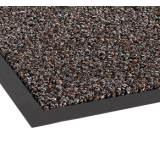 Cross-Over Matting
Starting at $46.00
Cross-Over Matting is a loop-pile entrance mat that scrapes debris and moisture off shoes at the door while starting to dry them — the middle step in a layered entrance setup, between the coarse mat outside and the absorbent mat inside. The looped olefin surface is abrasive enough to clean...
Cross-Over Matting is a loop-pile entrance mat that scrapes debris and moisture off shoes at the door while starting to...
Cross-Over Matting is a loop-pile entrance mat that scrapes debris and moisture off shoes at the door while starting to dry them — the middle step in a layered entrance setup, between the coarse mat outside and the absorbent mat inside. The looped olefin surface is abrasive enough to clean shoes and resilient enough to hold its look in steady commercial traffic.
What Cross-Over Matting Does Before Dirt and Water Reach Your Floor
Dirt and water come into a building on shoes — and one mat at the threshold usually can't catch all of it. ISSA field data shows a building takes on up to 12 times more dirt during wet weather, and it takes six to eight steps to walk a sole dry. The most effective entrances use more than one mat to catch debris in stages.
Cross-Over is built to be the middle of that sequence. Its abrasive loop-pile surface scrapes off the grit and moisture a coarse outdoor mat leaves behind, and the sturdy olefin fibers begin drying the shoe before someone steps onto the floor or onto a softer absorbent mat further in. It's non-absorbent by design — it cleans the shoe and passes it along rather than soaking up and holding water.
Why a Loop-Pile Olefin Surface, and Why This One
The surface is a loop pile built from polypropylene ribbon yarn and continuous filament yarn — a combination that gives it an abrasive, hard-wearing texture rather than a soft plush one. That loop scrapes debris off the bottom of shoes and resists crushing, so it keeps its cleaning bite and its appearance instead of matting down into flat lanes under traffic.
The olefin fiber resists fading and crushing, which is what lets a loop-pile mat keep a tidy, finished look at a visible entrance over time. The loop construction reads richer than a flat ribbed mat, so it suits a lobby or front-of-house spot where appearance counts — while still doing real scraping work.
Underneath is a DINP-free PVC vinyl backing that grips the floor and protects it from whatever the mat scrapes off. It holds the mat flat on hard floors and low carpet, and at 5/16 inch the whole mat stays low enough not to catch a door swing or trip a foot at the edge.
Where It Belongs (and Where It Doesn't)
Cross-Over fits interior, medium-traffic entrances — convenience stores, restaurants, hotels, theaters, museums, and convention centers, where a steady stream of people crosses the threshold and the entrance is on view. It's certified high-traction by the National Floor Safety Institute, so it gives a safe surface where shoes arrive wet.
Where it falls short is as a building's only mat or as an outdoor scraper. It's the middle of a system, not the whole system: against heavy mud it wants a coarse scraper ahead of it, and because it's non-absorbent, a wet climate benefits from an absorbent mat inside it to finish the drying. Outdoors and in full weather, it isn't the right construction.
Three Things to Check Before You Spec It
Three things decide whether Cross-Over fits your entrance.
First, the rest of your matting. Cross-Over works best as the middle mat — a coarse scraper outside, this loop-pile mat at the door, and an absorbent mat inside. If it's going in alone, be honest about how much dirt and water it'll face, because one mat rarely catches it all.
Second, the size. Standard sizes run from 2'×3' up to 6'×10', and larger sizes over 6 feet — up to 11'9" — are made by seaming. Plan for that seam on the widest runs, and size the mat to cover the steps it takes to dry a sole, not just the doorway.
Third, the floor and the finish. The vinyl backing suits hard floors and low carpet and protects the surface beneath. If the mat will sit out in the open rather than wall-to-wall, order edged ends — standard rolls ship without edging unless you ask for it.
Why Mats Inc.
Mats Inc. has specified commercial entrance matting since 1964, so we don't just sell you a mat — we help you build the entrance. For a real front door we'll map the whole sequence, from the coarse scraper outside to the loop-pile mat at the threshold to the absorbent mat inside, and tell you where Cross-Over fits in yours. We match construction to traffic and size to the doorway. For the rest of the indoor range, see our all indoor entrance mats.
Specifications Type Indoor entrance mat, medium traffic Surface Loop-pile olefin (polypropylene ribbon + continuous filament yarn) Surface behavior Non-absorbent, abrasive; scrapes debris and moisture, begins drying; resists fading and crushing Pile weight 18 oz/yd² Thickness 5/16" Backing DINP-free PVC vinyl (4 lb vinyl strength, ASTM D624 die-T) Flammability Passes DOC-FF-1-70 Traction Certified high-traction by the National Floor Safety Institute (NFSI) Colors Brown, Gray (two-tone) Standard sizes 2'×3', 3'×4', 3'×5', 3'×6', 3'×8', 3'×10', 4'×6', 4'×8', 4'×10', 6'×10' Custom / roll sizes Over 6' up to 11'9" (seamed); rolls 3'×60', 4'×60', 6'×60' Warranty 1-year limited (Mats Inc.) Frequently Asked Questions
How does a loop-pile mat clean shoes?
Answered by Dustin Thompson, Owner & CEO
The surface is a loop pile made from polypropylene ribbon and filament yarn — a tough, slightly abrasive texture rather than a soft plush one. As a shoe crosses it, the loops scrape grit and surface moisture off the sole, and the olefin fibers start drying the shoe. It's non-absorbent on purpose: instead of soaking up and holding water like a plush mat, it cleans the shoe and passes it along, which is why it works best as one mat in a layered entrance rather than the only one.
Will it crush down or fade in a busy entrance?
Answered by Dustin Thompson, Owner & CEO
It's built to resist both. The loop-pile construction is crush-resistant, so it holds its texture instead of matting flat into shiny traffic lanes, and the olefin fiber resists fading, so the color stays even at a visible entrance. Those two things are what usually go first on a loop mat, and they're the ones this construction is made to hold.
It's rated for medium interior traffic — convenience stores, restaurants, hotels, and similar spots. Pushed past that, or left to face heavy mud alone, any loop mat loads up and wears faster, so the way to get years out of it is to keep it to medium traffic with coarser debris handled ahead of it.
Can I use it by itself, or outdoors?
Answered by Dustin Thompson, Owner & CEO
It's designed as the middle mat in a layered entrance, not a standalone or an outdoor mat. The best setup is a coarse scraper outside to take heavy debris, Cross-Over at the threshold to scrape off what's left and start drying, and an absorbent mat just inside to finish — because Cross-Over is non-absorbent, it doesn't hold much water on its own. Used alone at a busy or wet door, more gets past it than you'd want; outdoors, it isn't built for the weather.
What sizes can I get?
Answered by Jinna Hopson, Vice President of Marketing
Standard sizes run from 2'×3' up to 6'×10', and it comes in 60-foot rolls. Larger mats over 6 feet — up to 11'9" — are made by seaming panels together, so a wide lobby run is possible, just with a seam in it.
Size the mat to the traffic path, not only the door, so it covers the steps it takes to dry a sole. If it'll sit out in the open rather than wall-to-wall, ask for edged ends — standard rolls ship without edging unless you specify it.
What does it look like, and what colors are there?
Answered by Jinna Hopson, Vice President of Marketing
The loop-pile surface has a richer, more textured look than a flat ribbed or rubber mat, which is why it suits a front-of-house entrance — a hotel lobby, a restaurant, a museum — where the floor is on display. It comes in two two-tone colors, Brown and Gray, both designed to blend with common interior schemes and hide tracked-in dirt between cleanings. The two-tone effect helps the mat read as finished rather than utilitarian while it does its work.
Can I get it in a custom size or with our logo?
Answered by Jinna Hopson, Vice President of Marketing
On size, yes within limits — beyond the standard sizes, widths over 6 feet up to 11'9" are made by seaming, so you can cover a wider entrance with a seam in the mat. On a logo, no: Cross-Over is a plain two-color loop mat, not a printed or logo construction. If you want branding at the door, that's a different product — a logo mat — and we can point you to one. For a clean, hard-wearing mat that looks the part at a front entrance, Cross-Over does that without the artwork.
By Dustin Thompson, Owner & CEO, Mats Inc.
↑
Cross-Over Matting is a loop-pile entrance mat that scrapes debris and moisture off shoes at the door while starting to dry them — the middle step in a layered entrance setup, between the coarse mat outside and the absorbent mat inside. The looped olefin surface is abrasive enough to clean shoes and resilient enough to hold its look in steady commercial traffic.
What Cross-Over Matting Does Before Dirt and Water Reach Your Floor
Dirt and water come into a building on shoes — and one mat at the threshold usually can't catch all of it. ISSA field data shows a building takes on up to 12 times more dirt during wet weather, and it takes six to eight steps to walk a sole dry. The most effective entrances use more than one mat to catch debris in stages.
Cross-Over is built to be the middle of that sequence. Its abrasive loop-pile surface scrapes off the grit and moisture a coarse outdoor mat leaves behind, and the sturdy olefin fibers begin drying the shoe before someone steps onto the floor or onto a softer absorbent mat further in. It's non-absorbent by design — it cleans the shoe and passes it along rather than soaking up and holding water.
Why a Loop-Pile Olefin Surface, and Why This One
The surface is a loop pile built from polypropylene ribbon yarn and continuous filament yarn — a combination that gives it an abrasive, hard-wearing texture rather than a soft plush one. That loop scrapes debris off the bottom of shoes and resists crushing, so it keeps its cleaning bite and its appearance instead of matting down into flat lanes under traffic.
The olefin fiber resists fading and crushing, which is what lets a loop-pile mat keep a tidy, finished look at a visible entrance over time. The loop construction reads richer than a flat ribbed mat, so it suits a lobby or front-of-house spot where appearance counts — while still doing real scraping work.
Underneath is a DINP-free PVC vinyl backing that grips the floor and protects it from whatever the mat scrapes off. It holds the mat flat on hard floors and low carpet, and at 5/16 inch the whole mat stays low enough not to catch a door swing or trip a foot at the edge.
Where It Belongs (and Where It Doesn't)
Cross-Over fits interior, medium-traffic entrances — convenience stores, restaurants, hotels, theaters, museums, and convention centers, where a steady stream of people crosses the threshold and the entrance is on view. It's certified high-traction by the National Floor Safety Institute, so it gives a safe surface where shoes arrive wet.
Where it falls short is as a building's only mat or as an outdoor scraper. It's the middle of a system, not the whole system: against heavy mud it wants a coarse scraper ahead of it, and because it's non-absorbent, a wet climate benefits from an absorbent mat inside it to finish the drying. Outdoors and in full weather, it isn't the right construction.
Three Things to Check Before You Spec It
Three things decide whether Cross-Over fits your entrance.
First, the rest of your matting. Cross-Over works best as the middle mat — a coarse scraper outside, this loop-pile mat at the door, and an absorbent mat inside. If it's going in alone, be honest about how much dirt and water it'll face, because one mat rarely catches it all.
Second, the size. Standard sizes run from 2'×3' up to 6'×10', and larger sizes over 6 feet — up to 11'9" — are made by seaming. Plan for that seam on the widest runs, and size the mat to cover the steps it takes to dry a sole, not just the doorway.
Third, the floor and the finish. The vinyl backing suits hard floors and low carpet and protects the surface beneath. If the mat will sit out in the open rather than wall-to-wall, order edged ends — standard rolls ship without edging unless you ask for it.
Why Mats Inc.
Mats Inc. has specified commercial entrance matting since 1964, so we don't just sell you a mat — we help you build the entrance. For a real front door we'll map the whole sequence, from the coarse scraper outside to the loop-pile mat at the threshold to the absorbent mat inside, and tell you where Cross-Over fits in yours. We match construction to traffic and size to the doorway. For the rest of the indoor range, see our all indoor entrance mats.
Specifications Type Indoor entrance mat, medium traffic Surface Loop-pile olefin (polypropylene ribbon + continuous filament yarn) Surface behavior Non-absorbent, abrasive; scrapes debris and moisture, begins drying; resists fading and crushing Pile weight 18 oz/yd² Thickness 5/16" Backing DINP-free PVC vinyl (4 lb vinyl strength, ASTM D624 die-T) Flammability Passes DOC-FF-1-70 Traction Certified high-traction by the National Floor Safety Institute (NFSI) Colors Brown, Gray (two-tone) Standard sizes 2'×3', 3'×4', 3'×5', 3'×6', 3'×8', 3'×10', 4'×6', 4'×8', 4'×10', 6'×10' Custom / roll sizes Over 6' up to 11'9" (seamed); rolls 3'×60', 4'×60', 6'×60' Warranty 1-year limited (Mats Inc.) Frequently Asked Questions
How does a loop-pile mat clean shoes?
Answered by Dustin Thompson, Owner & CEO
The surface is a loop pile made from polypropylene ribbon and filament yarn — a tough, slightly abrasive texture rather than a soft plush one. As a shoe crosses it, the loops scrape grit and surface moisture off the sole, and the olefin fibers start drying the shoe. It's non-absorbent on purpose: instead of soaking up and holding water like a plush mat, it cleans the shoe and passes it along, which is why it works best as one mat in a layered entrance rather than the only one.
Will it crush down or fade in a busy entrance?
Answered by Dustin Thompson, Owner & CEO
It's built to resist both. The loop-pile construction is crush-resistant, so it holds its texture instead of matting flat into shiny traffic lanes, and the olefin fiber resists fading, so the color stays even at a visible entrance. Those two things are what usually go first on a loop mat, and they're the ones this construction is made to hold.
It's rated for medium interior traffic — convenience stores, restaurants, hotels, and similar spots. Pushed past that, or left to face heavy mud alone, any loop mat loads up and wears faster, so the way to get years out of it is to keep it to medium traffic with coarser debris handled ahead of it.
Can I use it by itself, or outdoors?
Answered by Dustin Thompson, Owner & CEO
It's designed as the middle mat in a layered entrance, not a standalone or an outdoor mat. The best setup is a coarse scraper outside to take heavy debris, Cross-Over at the threshold to scrape off what's left and start drying, and an absorbent mat just inside to finish — because Cross-Over is non-absorbent, it doesn't hold much water on its own. Used alone at a busy or wet door, more gets past it than you'd want; outdoors, it isn't built for the weather.
What sizes can I get?
Answered by Jinna Hopson, Vice President of Marketing
Standard sizes run from 2'×3' up to 6'×10', and it comes in 60-foot rolls. Larger mats over 6 feet — up to 11'9" — are made by seaming panels together, so a wide lobby run is possible, just with a seam in it.
Size the mat to the traffic path, not only the door, so it covers the steps it takes to dry a sole. If it'll sit out in the open rather than wall-to-wall, ask for edged ends — standard rolls ship without edging unless you specify it.
What does it look like, and what colors are there?
Answered by Jinna Hopson, Vice President of Marketing
The loop-pile surface has a richer, more textured look than a flat ribbed or rubber mat, which is why it suits a front-of-house entrance — a hotel lobby, a restaurant, a museum — where the floor is on display. It comes in two two-tone colors, Brown and Gray, both designed to blend with common interior schemes and hide tracked-in dirt between cleanings. The two-tone effect helps the mat read as finished rather than utilitarian while it does its work.
Can I get it in a custom size or with our logo?
Answered by Jinna Hopson, Vice President of Marketing
On size, yes within limits — beyond the standard sizes, widths over 6 feet up to 11'9" are made by seaming, so you can cover a wider entrance with a seam in the mat. On a logo, no: Cross-Over is a plain two-color loop mat, not a printed or logo construction. If you want branding at the door, that's a different product — a logo mat — and we can point you to one. For a clean, hard-wearing mat that looks the part at a front entrance, Cross-Over does that without the artwork.
By Dustin Thompson, Owner & CEO, Mats Inc.
↑
View Details
View Details
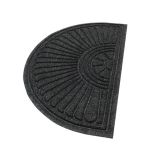 Half-Circle Waterhog Elite Entrance Mat$67.00The Half-Circle Waterhog Entrance Mat takes the bi-level Waterhog face you'd put inside a busy front door and curves one end into a half-oval, so a plain rectangular runner reads as a finished, grand entrance. It scrapes shoes and holds water below the walking surface, and the rounded end softens
...
The Half-Circle Waterhog Entrance Mat takes the bi-level Waterhog face you'd put inside a busy front door and curves one...
The Half-Circle Waterhog Entrance Mat takes the bi-level Waterhog face you'd put inside a busy front door and curves one end into a half-oval, so a plain rectangular runner reads as a finished, grand entrance. It scrapes shoes and holds water below the walking surface, and the rounded end softens the look at lobby doors, hotel vestibules, and curved thresholds where a square mat looks cut off.
What a Waterhog Mat Stops Before It Reaches Your Floor
Most of the dirt and water in a building walks in on shoes. ISSA field data shows a building takes on up to 12 times more dirt during wet weather, and it takes six to eight steps for a person to track moisture off their soles. A mat at the door is where that gets caught — or where it gets missed and ends up on your floor.
The bi-level face does the catching. Raised ridges scrape grit and moisture off shoes, then drop it into the channels below the walking surface so it isn't picked up again and tracked deeper inside. A water-dam border rings the mat and holds what it collects — up to 1.5 gallons of water per square yard — keeping it off the floor instead of spreading it around the threshold.
Why the Bi-Level Waterhog Face, and Why the Half-Circle
The face is solution-dyed PET fiber, about 30 ounces per square yard, made from at least 90% recycled content reclaimed from plastic bottles. Rubber reinforcement runs through the bi-level pattern so the pile holds its shape and doesn't crush flat under steady traffic — a crushed mat stops scraping and starts looking tired, which is the usual reason an entrance mat gets pulled early.
Underneath is an SBR rubber backing that contains 20% recycled tire content and lies flat without curling the way vinyl-backed mats can. You can spec a universal cleated backing, the standard for carpet, or a smooth backing for hard floors. Beveled edges ease the transition on and off, so the mat sits as a safe step rather than a trip point.
The half-circle is the reason to choose this version. The half-oval end finishes a run of matting with a curve instead of a hard corner, so you can build a longer grand entrance by pairing the curved end with a rectangular mat. Set against the bi-level textured face and a color-coordinating fabric border, it reads as a designed threshold, not just floor protection.
Where the Half-Circle Belongs (and Where It Doesn't)
This is an indoor entrance mat first. It earns its place in lobbies, hotel vestibules, restaurant foyers, healthcare entries, and office building doors — high-visibility spots where the floor is on display and the threshold sets the first impression. The curved end suits wide or rounded entries and revolving-door approaches, where a rectangle would look stranded.
It is not a coarse outdoor scraper for mud, gravel, or grease, and it isn't the mat for a loading dock or a wash-down bay. Put it where people walk in from a parking lot or sidewalk and you want the building to stay clean and look finished — not where the heaviest grit needs to be knocked off before anyone reaches the door.
Three Things to Check Before You Spec It
Three things decide whether this mat fits your entrance.
First, the floor under it. A universal cleated backing grips carpet and keeps the mat from creeping; a smooth backing is the right call on tile, stone, or polished concrete, where cleats can rock. Match the backing to the surface or the mat will shift underfoot.
Second, the size of the run. The half-oval ends come in roughly 3-, 4-, and 6-foot widths, and they pair with rectangular mats to extend a true grand-entrance length. Measure the door swing and the walking path so the mat covers the six-to-eight steps it takes to dry a sole, not just the doorway itself.
Third, the look you want at the door. Seven colors and a color-coordinating fabric border let you tie the mat to a lobby palette or a brand standard, and the curved end is what separates a presentation entrance from a plain mat. If the threshold is on display, that finish is the point.
Why Mats Inc.
Mats Inc. has specified commercial entrance matting since 1964, so when you ask whether a half-circle layout suits your doorway, you're talking to people who match mat construction to real traffic rather than reading off a box. This mat is certified high-traction by the National Floor Safety Institute, which carries weight at a wet entrance where a slip is a liability, not just a mess. We help you size the run and pick the backing for your floor, and point you to the rest of our commercial entrance matting if the half-circle isn't the right fit.
Specifications Face fiber Solution-dyed PET, ~30 oz/yd², bi-level surface Recycled content At least 90% recycled PET face; SBR rubber backing with 20% recycled tire content Thickness 3/8" Backing SBR rubber — universal cleated (standard, for carpet) or smooth (optional, for hard floors) Border / edges Color-coordinating fabric border with water-dam edge; beveled transition Water capacity Up to 1.5 gallons per square yard Traction Certified high-traction by the National Floor Safety Institute (NFSI) Colors 7 Shape / sizing Half-oval end in ~3', 4', and 6' widths; pairs with rectangular mats for grand-entrance runs Use Indoor commercial entrance Warranty 1-year limited (Mats Inc.) Frequently Asked Questions
How does the bi-level surface actually keep dirt off my floor?
Answered by Dustin Thompson, Owner & CEO
The face is built on two levels. Raised ridges scrape grit and water off the bottom of shoes, and the lower channels between them hold what's scraped below the walking surface, so it isn't picked up again and carried farther inside. A raised water-dam border rings the whole mat and traps moisture — up to 1.5 gallons per square yard — so it stays in the mat instead of running onto your floor. That's the difference between a mat that collects and one that just spreads water around the threshold.
How long will it hold up in a busy entrance?
Answered by Dustin Thompson, Owner & CEO
In a typical commercial entrance, expect several years of service before the look starts to fade. The reason it lasts is the rubber reinforcement molded through the bi-level face — it keeps the pile from crushing flat. A crushed pile is what usually ends a mat's life: once it lies down it stops scraping and starts looking worn.
The solution-dyed PET fiber resists fading and won't rot, so it holds its color and its grip instead of going dull and slick. What shortens that life early is the wrong backing for the floor, or a mat sized too small for the traffic it's taking.
Should I get the cleated or the smooth backing?
Answered by Dustin Thompson, Owner & CEO
Match it to the floor. The universal cleated backing is standard for carpet — the cleats bite in and keep the mat from creeping as people walk across it. The smooth backing is the one for hard floors like tile, stone, or polished concrete, where cleats can rock and flat rubber stays put.
Both versions lie flat without curling, and the beveled edges give a safe transition on and off. The one real mistake is a cleated mat on a hard floor, or a smooth-backed mat on carpet.
What sizes does the half-circle come in, and how do I build a grand entrance?
Answered by Jinna Hopson, Vice President of Marketing
The half-oval ends come in roughly 3-, 4-, and 6-foot widths. On their own they round off a doorway; paired with a rectangular mat they extend into a longer run — a curved end, a straight middle, and a second curve if you want both ends rounded. That's how you build the grand-entrance look down a wide vestibule.
Measure the door swing and the walking path before you order, and size for the six-to-eight steps it takes to dry a sole. You want the mat covering the traffic, not just the doorway.
What does it look like, and what colors can I get?
Answered by Jinna Hopson, Vice President of Marketing
It's a refined, low-profile look rather than a utility mat. The bi-level face has a finished texture, and a color-coordinating fabric border frames it cleanly at the edge. There are seven colors to choose from, formulated to stay colorfast with the recycled fiber, so you can match a lobby palette or keep to a neutral that hides traffic between cleanings. The curved end is what reads as designed — the detail that makes the entrance look intentional instead of just protected.
Can I match it to our brand or pair it with mats we already have?
Answered by Jinna Hopson, Vice President of Marketing
You can build around your space. The seven-color range and fabric border let you tie the mat to a brand standard or an interior scheme, and the half-oval ends are designed to pair with rectangular Waterhog mats so a curved entrance and a straight runner read as one set. If you're after a printed logo at the door, that's a different construction — a logo mat — and we can point you there, but for a clean, color-matched threshold the half-circle does the presentation work on its own.
By Jinna Hopson, Vice President of Marketing, Mats Inc.
↑
The Half-Circle Waterhog Entrance Mat takes the bi-level Waterhog face you'd put inside a busy front door and curves one end into a half-oval, so a plain rectangular runner reads as a finished, grand entrance. It scrapes shoes and holds water below the walking surface, and the rounded end softens the look at lobby doors, hotel vestibules, and curved thresholds where a square mat looks cut off.
What a Waterhog Mat Stops Before It Reaches Your Floor
Most of the dirt and water in a building walks in on shoes. ISSA field data shows a building takes on up to 12 times more dirt during wet weather, and it takes six to eight steps for a person to track moisture off their soles. A mat at the door is where that gets caught — or where it gets missed and ends up on your floor.
The bi-level face does the catching. Raised ridges scrape grit and moisture off shoes, then drop it into the channels below the walking surface so it isn't picked up again and tracked deeper inside. A water-dam border rings the mat and holds what it collects — up to 1.5 gallons of water per square yard — keeping it off the floor instead of spreading it around the threshold.
Why the Bi-Level Waterhog Face, and Why the Half-Circle
The face is solution-dyed PET fiber, about 30 ounces per square yard, made from at least 90% recycled content reclaimed from plastic bottles. Rubber reinforcement runs through the bi-level pattern so the pile holds its shape and doesn't crush flat under steady traffic — a crushed mat stops scraping and starts looking tired, which is the usual reason an entrance mat gets pulled early.
Underneath is an SBR rubber backing that contains 20% recycled tire content and lies flat without curling the way vinyl-backed mats can. You can spec a universal cleated backing, the standard for carpet, or a smooth backing for hard floors. Beveled edges ease the transition on and off, so the mat sits as a safe step rather than a trip point.
The half-circle is the reason to choose this version. The half-oval end finishes a run of matting with a curve instead of a hard corner, so you can build a longer grand entrance by pairing the curved end with a rectangular mat. Set against the bi-level textured face and a color-coordinating fabric border, it reads as a designed threshold, not just floor protection.
Where the Half-Circle Belongs (and Where It Doesn't)
This is an indoor entrance mat first. It earns its place in lobbies, hotel vestibules, restaurant foyers, healthcare entries, and office building doors — high-visibility spots where the floor is on display and the threshold sets the first impression. The curved end suits wide or rounded entries and revolving-door approaches, where a rectangle would look stranded.
It is not a coarse outdoor scraper for mud, gravel, or grease, and it isn't the mat for a loading dock or a wash-down bay. Put it where people walk in from a parking lot or sidewalk and you want the building to stay clean and look finished — not where the heaviest grit needs to be knocked off before anyone reaches the door.
Three Things to Check Before You Spec It
Three things decide whether this mat fits your entrance.
First, the floor under it. A universal cleated backing grips carpet and keeps the mat from creeping; a smooth backing is the right call on tile, stone, or polished concrete, where cleats can rock. Match the backing to the surface or the mat will shift underfoot.
Second, the size of the run. The half-oval ends come in roughly 3-, 4-, and 6-foot widths, and they pair with rectangular mats to extend a true grand-entrance length. Measure the door swing and the walking path so the mat covers the six-to-eight steps it takes to dry a sole, not just the doorway itself.
Third, the look you want at the door. Seven colors and a color-coordinating fabric border let you tie the mat to a lobby palette or a brand standard, and the curved end is what separates a presentation entrance from a plain mat. If the threshold is on display, that finish is the point.
Why Mats Inc.
Mats Inc. has specified commercial entrance matting since 1964, so when you ask whether a half-circle layout suits your doorway, you're talking to people who match mat construction to real traffic rather than reading off a box. This mat is certified high-traction by the National Floor Safety Institute, which carries weight at a wet entrance where a slip is a liability, not just a mess. We help you size the run and pick the backing for your floor, and point you to the rest of our commercial entrance matting if the half-circle isn't the right fit.
Specifications Face fiber Solution-dyed PET, ~30 oz/yd², bi-level surface Recycled content At least 90% recycled PET face; SBR rubber backing with 20% recycled tire content Thickness 3/8" Backing SBR rubber — universal cleated (standard, for carpet) or smooth (optional, for hard floors) Border / edges Color-coordinating fabric border with water-dam edge; beveled transition Water capacity Up to 1.5 gallons per square yard Traction Certified high-traction by the National Floor Safety Institute (NFSI) Colors 7 Shape / sizing Half-oval end in ~3', 4', and 6' widths; pairs with rectangular mats for grand-entrance runs Use Indoor commercial entrance Warranty 1-year limited (Mats Inc.) Frequently Asked Questions
How does the bi-level surface actually keep dirt off my floor?
Answered by Dustin Thompson, Owner & CEO
The face is built on two levels. Raised ridges scrape grit and water off the bottom of shoes, and the lower channels between them hold what's scraped below the walking surface, so it isn't picked up again and carried farther inside. A raised water-dam border rings the whole mat and traps moisture — up to 1.5 gallons per square yard — so it stays in the mat instead of running onto your floor. That's the difference between a mat that collects and one that just spreads water around the threshold.
How long will it hold up in a busy entrance?
Answered by Dustin Thompson, Owner & CEO
In a typical commercial entrance, expect several years of service before the look starts to fade. The reason it lasts is the rubber reinforcement molded through the bi-level face — it keeps the pile from crushing flat. A crushed pile is what usually ends a mat's life: once it lies down it stops scraping and starts looking worn.
The solution-dyed PET fiber resists fading and won't rot, so it holds its color and its grip instead of going dull and slick. What shortens that life early is the wrong backing for the floor, or a mat sized too small for the traffic it's taking.
Should I get the cleated or the smooth backing?
Answered by Dustin Thompson, Owner & CEO
Match it to the floor. The universal cleated backing is standard for carpet — the cleats bite in and keep the mat from creeping as people walk across it. The smooth backing is the one for hard floors like tile, stone, or polished concrete, where cleats can rock and flat rubber stays put.
Both versions lie flat without curling, and the beveled edges give a safe transition on and off. The one real mistake is a cleated mat on a hard floor, or a smooth-backed mat on carpet.
What sizes does the half-circle come in, and how do I build a grand entrance?
Answered by Jinna Hopson, Vice President of Marketing
The half-oval ends come in roughly 3-, 4-, and 6-foot widths. On their own they round off a doorway; paired with a rectangular mat they extend into a longer run — a curved end, a straight middle, and a second curve if you want both ends rounded. That's how you build the grand-entrance look down a wide vestibule.
Measure the door swing and the walking path before you order, and size for the six-to-eight steps it takes to dry a sole. You want the mat covering the traffic, not just the doorway.
What does it look like, and what colors can I get?
Answered by Jinna Hopson, Vice President of Marketing
It's a refined, low-profile look rather than a utility mat. The bi-level face has a finished texture, and a color-coordinating fabric border frames it cleanly at the edge. There are seven colors to choose from, formulated to stay colorfast with the recycled fiber, so you can match a lobby palette or keep to a neutral that hides traffic between cleanings. The curved end is what reads as designed — the detail that makes the entrance look intentional instead of just protected.
Can I match it to our brand or pair it with mats we already have?
Answered by Jinna Hopson, Vice President of Marketing
You can build around your space. The seven-color range and fabric border let you tie the mat to a brand standard or an interior scheme, and the half-oval ends are designed to pair with rectangular Waterhog mats so a curved entrance and a straight runner read as one set. If you're after a printed logo at the door, that's a different construction — a logo mat — and we can point you there, but for a clean, color-matched threshold the half-circle does the presentation work on its own.
By Jinna Hopson, Vice President of Marketing, Mats Inc.
↑
View Details
View Details
 Super Berber Matting
Starting at $60.00
Super Berber Matting is a dense berber entrance mat that does the two hardest jobs at a busy door at once: it scrapes grit off shoes and soaks up the moisture they carry. The needle-punch berber surface is solution-dyed in up to 40 colors, and a custom logo can...
Super Berber Matting is a dense berber entrance mat that does the two hardest jobs at a busy door...
Super Berber Matting is a dense berber entrance mat that does the two hardest jobs at a busy door at once: it scrapes grit off shoes and soaks up the moisture they carry. The needle-punch berber surface is solution-dyed in up to 40 colors, and a custom logo can be inlaid right into it — so it cleans the entrance and carries the brand in the same mat.
What Super Berber Does Before Dirt and Water Reach the Floor
At a busy entrance, dirt and water arrive on shoes — ISSA research shows the door is where most of a building's dirt comes in. Left to cross the threshold, that grit grinds at the floor and wet shoes leave a lobby slick. The dense berber pile catches both: it scrapes solids loose and holds moisture in the fiber, while the all-weather rubber backing keeps the mat planted, so the dirt and water stay on the mat, not the floor.
Why Solution-Dyed Berber, and Why This One
The mat is built from 100% solution-dyed polypropylene berber, needle-punched into a dense half-inch pile that weighs about 52 ounces per square yard. Solution-dyed means the color is locked into the fiber rather than printed on top, so it does not bleach or wear pale. The polypropylene is UV- and abrasion-resistant, which is what lets the mat hold its look under heavy traffic and sun.
Of the two jobs an entrance mat does, this one leans toward wiping — the deep pile is built to pull moisture and fine dirt off shoes and keep it there, with strong scraping behind it. An all-weather rubber backing grips the floor and stands up to wet conditions, so the mat works at an interior lobby or a covered outdoor entrance alike.
Where It Belongs, and What It Is Not
Super Berber fits heavy-traffic entrances where appearance counts as much as cleaning — office buildings, shops, lobbies, schools, airports, and sport concourses. It works indoors or at a covered outdoor entrance, and it sits in our range of moisture-control entrance matting as the absorbent option that traps water in the pile rather than channeling it away.
What it is not is a drainage grid or a heavy-mud scraper. It holds the moisture it collects, so where standing water has to drain off, an open grid mat is the better tool — and where shoes arrive caked in mud, a coarse scraper out front will spare the pile. Super Berber is the mat that finishes the job: wiping shoes clean and dry once the worst is knocked off.
Three Things to Check Before You Spec It
First, decide what the door mostly throws at it. If the entrance is about moisture and a clean, finished look, Super Berber is built for exactly that. If shoes arrive heavy with mud or grit, set a coarse scraper ahead of it so the berber handles the wiping rather than clogging with debris it was not meant to take alone.
Second, size it and pick the edge. It comes in standard mats up to four by fourteen feet, in rolls, or custom-cut to your dimensions — up to thirteen feet two inches wide and inlaid runs to a hundred feet. Borders can be heat-sealed, square-cut, or beveled, and custom shapes are on the table if the entrance calls for one.
Third, plan the logo and colors early. The logo is needle-punched into the pile from a palette of up to 40 colors, so it needs camera-ready artwork before a quote. One thing to know up front: this construction does not do exact PMS brand-color matching — you choose from the 40 — so check that your colors are covered before you commit.
Why Mats Inc.
We have specified entrance matting since 1964, and a logo mat only works if the artwork, the colors, and the size are right before it is made. We take your logo, match it to the available colors, confirm the size and border, and lay out the inlay — so the mat that arrives cleans the entrance and reads as your brand, not a near-miss. Send your artwork and we will start there.
Super Berber Matting — Specifications Construction 100% solution-dyed polypropylene berber, needle-punch Pile weight 52 oz/sq yd Thickness 1/2" Backing All-weather rubber Properties UV-resistant, abrasion-resistant; solution-dyed (color through the fiber) Strengths Strong scraping; high wiping / moisture absorption Colors Up to 40 (no PMS color match) Logo Needle-punch inlay; custom shapes; camera-ready artwork required Borders Heat-sealed, square-cut, or beveled (standard black; brown / yellow on request) Standard sizes 2'×3' through 4'×14' Roll sizes 4'×16'–4'×20', 6'×5'–6'×20' Custom Width to 13'2"; inlay length to 100' Use Indoor or outdoor; heavy traffic Origin Made in USA Warranty 1-year limited (Mats Inc.) Frequently Asked Questions
What is Super Berber Matting made of?
Answered by Dustin Thompson, Owner & CEO
It is built from 100% solution-dyed polypropylene berber, needle-punched into a dense half-inch pile of about 52 ounces per square yard, over an all-weather rubber backing. Solution-dyed means the color runs through each fiber instead of sitting on the surface, so it resists fading and bleaching. The polypropylene is UV- and abrasion-resistant, which is what lets the mat keep its look under heavy traffic, indoors or at a covered outdoor entrance.
How much traffic can it take, and how well does it handle water?
Answered by Dustin Thompson, Owner & CEO
It is rated for heavy traffic, and wiping is its strong suit — the deep berber pile is built to pull moisture and fine dirt off shoes and hold it down in the fiber, away from the floor. The solution-dyed, UV- and abrasion-resistant construction keeps it from looking worn or faded as the traffic adds up. Like any pile mat, it performs best when it is vacuumed regularly and washed when it needs it, so the trapped soil does not pack down into the pile.
Is it a scraper or a wiper, and where should I place it?
Answered by Dustin Thompson, Owner & CEO
It does both, but it leans wiper — it is at its best absorbing moisture and fine grit rather than knocking off heavy mud. Place it where it covers the full walking path so shoes take several steps on it. If the entrance sees heavy mud or sand, put a coarse scraper mat outside the door first and let Super Berber do the wiping inside; that two-stage setup keeps the pile from clogging and keeps the floor beyond it clean and dry.
Can you inlay our logo, and how sharp will it look?
Answered by Jinna Hopson, Vice President of Marketing
Yes — the logo is needle-punched right into the berber pile, not printed on top, so it wears in with the mat instead of scuffing off. It is one of the largest custom logo mats made, which gives a logo room to read cleanly at the door, and custom shapes are possible if you want the mat itself to follow a form. We do need camera-ready artwork before quoting, so the inlay is laid out accurately from the start.
What colors can we get, and can you match our exact brand color?
Answered by Jinna Hopson, Vice President of Marketing
There are up to 40 colors to build the base and the logo from, which covers most brand palettes. The one honest limit to flag: this construction does not offer exact PMS brand-color matching — you choose from the 40 standard colors rather than a custom-mixed shade. Because the colors are solution-dyed into the fiber, whatever you pick holds up without fading. Send your brand colors and we will confirm the closest matches before anything is made.
Will it still look professional after a season of heavy use?
Answered by Jinna Hopson, Vice President of Marketing
That is what the solution-dyed berber is for. With the color locked into the fiber and the polypropylene resisting UV and abrasion, the mat holds its appearance far better than a surface-printed mat, which tends to go pale and tired at a busy door. The berber texture reads clean and upscale rather than utilitarian, so it suits a lobby or storefront where the entrance is part of the first impression.
By Jinna Hopson, Vice President of Marketing, Mats Inc.
↑
Super Berber Matting is a dense berber entrance mat that does the two hardest jobs at a busy door at once: it scrapes grit off shoes and soaks up the moisture they carry. The needle-punch berber surface is solution-dyed in up to 40 colors, and a custom logo can be inlaid right into it — so it cleans the entrance and carries the brand in the same mat.
What Super Berber Does Before Dirt and Water Reach the Floor
At a busy entrance, dirt and water arrive on shoes — ISSA research shows the door is where most of a building's dirt comes in. Left to cross the threshold, that grit grinds at the floor and wet shoes leave a lobby slick. The dense berber pile catches both: it scrapes solids loose and holds moisture in the fiber, while the all-weather rubber backing keeps the mat planted, so the dirt and water stay on the mat, not the floor.
Why Solution-Dyed Berber, and Why This One
The mat is built from 100% solution-dyed polypropylene berber, needle-punched into a dense half-inch pile that weighs about 52 ounces per square yard. Solution-dyed means the color is locked into the fiber rather than printed on top, so it does not bleach or wear pale. The polypropylene is UV- and abrasion-resistant, which is what lets the mat hold its look under heavy traffic and sun.
Of the two jobs an entrance mat does, this one leans toward wiping — the deep pile is built to pull moisture and fine dirt off shoes and keep it there, with strong scraping behind it. An all-weather rubber backing grips the floor and stands up to wet conditions, so the mat works at an interior lobby or a covered outdoor entrance alike.
Where It Belongs, and What It Is Not
Super Berber fits heavy-traffic entrances where appearance counts as much as cleaning — office buildings, shops, lobbies, schools, airports, and sport concourses. It works indoors or at a covered outdoor entrance, and it sits in our range of moisture-control entrance matting as the absorbent option that traps water in the pile rather than channeling it away.
What it is not is a drainage grid or a heavy-mud scraper. It holds the moisture it collects, so where standing water has to drain off, an open grid mat is the better tool — and where shoes arrive caked in mud, a coarse scraper out front will spare the pile. Super Berber is the mat that finishes the job: wiping shoes clean and dry once the worst is knocked off.
Three Things to Check Before You Spec It
First, decide what the door mostly throws at it. If the entrance is about moisture and a clean, finished look, Super Berber is built for exactly that. If shoes arrive heavy with mud or grit, set a coarse scraper ahead of it so the berber handles the wiping rather than clogging with debris it was not meant to take alone.
Second, size it and pick the edge. It comes in standard mats up to four by fourteen feet, in rolls, or custom-cut to your dimensions — up to thirteen feet two inches wide and inlaid runs to a hundred feet. Borders can be heat-sealed, square-cut, or beveled, and custom shapes are on the table if the entrance calls for one.
Third, plan the logo and colors early. The logo is needle-punched into the pile from a palette of up to 40 colors, so it needs camera-ready artwork before a quote. One thing to know up front: this construction does not do exact PMS brand-color matching — you choose from the 40 — so check that your colors are covered before you commit.
Why Mats Inc.
We have specified entrance matting since 1964, and a logo mat only works if the artwork, the colors, and the size are right before it is made. We take your logo, match it to the available colors, confirm the size and border, and lay out the inlay — so the mat that arrives cleans the entrance and reads as your brand, not a near-miss. Send your artwork and we will start there.
Super Berber Matting — Specifications Construction 100% solution-dyed polypropylene berber, needle-punch Pile weight 52 oz/sq yd Thickness 1/2" Backing All-weather rubber Properties UV-resistant, abrasion-resistant; solution-dyed (color through the fiber) Strengths Strong scraping; high wiping / moisture absorption Colors Up to 40 (no PMS color match) Logo Needle-punch inlay; custom shapes; camera-ready artwork required Borders Heat-sealed, square-cut, or beveled (standard black; brown / yellow on request) Standard sizes 2'×3' through 4'×14' Roll sizes 4'×16'–4'×20', 6'×5'–6'×20' Custom Width to 13'2"; inlay length to 100' Use Indoor or outdoor; heavy traffic Origin Made in USA Warranty 1-year limited (Mats Inc.) Frequently Asked Questions
What is Super Berber Matting made of?
Answered by Dustin Thompson, Owner & CEO
It is built from 100% solution-dyed polypropylene berber, needle-punched into a dense half-inch pile of about 52 ounces per square yard, over an all-weather rubber backing. Solution-dyed means the color runs through each fiber instead of sitting on the surface, so it resists fading and bleaching. The polypropylene is UV- and abrasion-resistant, which is what lets the mat keep its look under heavy traffic, indoors or at a covered outdoor entrance.
How much traffic can it take, and how well does it handle water?
Answered by Dustin Thompson, Owner & CEO
It is rated for heavy traffic, and wiping is its strong suit — the deep berber pile is built to pull moisture and fine dirt off shoes and hold it down in the fiber, away from the floor. The solution-dyed, UV- and abrasion-resistant construction keeps it from looking worn or faded as the traffic adds up. Like any pile mat, it performs best when it is vacuumed regularly and washed when it needs it, so the trapped soil does not pack down into the pile.
Is it a scraper or a wiper, and where should I place it?
Answered by Dustin Thompson, Owner & CEO
It does both, but it leans wiper — it is at its best absorbing moisture and fine grit rather than knocking off heavy mud. Place it where it covers the full walking path so shoes take several steps on it. If the entrance sees heavy mud or sand, put a coarse scraper mat outside the door first and let Super Berber do the wiping inside; that two-stage setup keeps the pile from clogging and keeps the floor beyond it clean and dry.
Can you inlay our logo, and how sharp will it look?
Answered by Jinna Hopson, Vice President of Marketing
Yes — the logo is needle-punched right into the berber pile, not printed on top, so it wears in with the mat instead of scuffing off. It is one of the largest custom logo mats made, which gives a logo room to read cleanly at the door, and custom shapes are possible if you want the mat itself to follow a form. We do need camera-ready artwork before quoting, so the inlay is laid out accurately from the start.
What colors can we get, and can you match our exact brand color?
Answered by Jinna Hopson, Vice President of Marketing
There are up to 40 colors to build the base and the logo from, which covers most brand palettes. The one honest limit to flag: this construction does not offer exact PMS brand-color matching — you choose from the 40 standard colors rather than a custom-mixed shade. Because the colors are solution-dyed into the fiber, whatever you pick holds up without fading. Send your brand colors and we will confirm the closest matches before anything is made.
Will it still look professional after a season of heavy use?
Answered by Jinna Hopson, Vice President of Marketing
That is what the solution-dyed berber is for. With the color locked into the fiber and the polypropylene resisting UV and abrasion, the mat holds its appearance far better than a surface-printed mat, which tends to go pale and tired at a busy door. The berber texture reads clean and upscale rather than utilitarian, so it suits a lobby or storefront where the entrance is part of the first impression.
By Jinna Hopson, Vice President of Marketing, Mats Inc.
↑
View Details
View Details
 Waterhog Eco Premier Mats$52.00Waterhog Eco Premier Mats put a heavy-duty bi-level Waterhog surface at the door, with a diamond-pattern face that scrapes grit and pulls water off shoes from any direction. The raised pattern traps dirt and moisture below the walking surface so it isn't tracked deeper inside, and a rubber-reinforced face keeps
...
Waterhog Eco Premier Mats put a heavy-duty bi-level Waterhog surface at the door, with a diamond-pattern face that scrapes grit...
Waterhog Eco Premier Mats put a heavy-duty bi-level Waterhog surface at the door, with a diamond-pattern face that scrapes grit and pulls water off shoes from any direction. The raised pattern traps dirt and moisture below the walking surface so it isn't tracked deeper inside, and a rubber-reinforced face keeps the mat doing that for years instead of crushing flat under traffic.
What a Waterhog Eco Premier Mat Stops Before It Reaches Your Floor
Most of the dirt and water in a building comes in on shoes. ISSA field data shows a building takes on up to 12 times more dirt during wet weather, and it takes six to eight steps to walk a sole dry. A mat at the entrance is what decides whether that grit and moisture get caught — or get ground into the floor past the door.
The Waterhog surface is bi-level: raised ridges scrape grit and water off shoes, and recessed channels hold both below the walking surface so they aren't picked back up. A raised water-dam border rings the mat and keeps what it collects — up to 1.5 gallons of water per square yard — on the mat instead of spreading toward your floor.
Why the Diamond Waterhog Surface, and Why This One
The face is solution-dyed PET fiber, 24 ounces per square yard, made from at least 90% recycled content reclaimed from plastic bottles. The diamond pattern gives it multi-directional bite — it scrapes just as well whether foot or cart traffic crosses it straight on or at an angle, which is how traffic actually moves through a wide doorway.
What keeps it working is the rubber reinforcement molded through the raised pattern. It stops the pile from crushing flat under steady traffic, and a crushed mat is the usual reason an entrance mat gets pulled early — once it lies down it stops scraping and starts looking worn. The solution-dyed fiber also resists staining and won't fade or rot, so it keeps its color and grip.
Underneath is a 78-mil SBR rubber backing with 20% recycled tire content, in a universal cleated version for carpet or a smooth version for hard floors. Beveled edges ease the step on and off. You choose a classic rubber border for a tougher, more utilitarian edge, or a fashion fabric border that color-matches the mat for a cleaner, more finished look.
Where It Belongs (and Where It Doesn't)
This is a workhorse entrance mat for indoor and outdoor commercial entries — hotel and office lobbies, retail and restaurant doors, healthcare entrances, schools, and similar high-traffic thresholds. The PET face is rated for indoor or outdoor use and isn't bothered by salt or ice melt, so it holds up at a real front door through the seasons. It's also certified high-traction by the National Floor Safety Institute.
Where it's less suited is the heaviest coarse-debris duty — a loading dock caked in mud and gravel, or a job-site door. It scrapes and holds a lot, but for that kind of punishment you'd put a coarse outdoor scraper first and let the Waterhog finish the job a step inside. As the main entrance mat for ordinary commercial traffic, though, it's built to be the one that does the work.
Three Things to Check Before You Spec It
Three things decide whether this is the right Waterhog for your door.
First, the floor under it. A universal cleated backing grips carpet and stops the mat creeping; a smooth backing is the one for tile, stone, polished concrete, or other hard floors, where cleats can rock. Match the backing to the surface or the mat will shift as people walk it.
Second, the size of the run. It comes in standard sizes from 2'×3' up to 6'×20', plus longer custom lengths. Size it to cover the six-to-eight steps it takes to dry a sole, not just the door opening — an undersized mat lets damp shoes finish the job on your floor and takes all the wear in one strip.
Third, the border. A classic rubber border is the more rugged, lower-maintenance edge for heavy or outdoor use; a fashion fabric border color-matches the mat for a more polished look indoors. Pick by how exposed the spot is and how much the appearance matters at that threshold.
Why Mats Inc.
Mats Inc. has specified commercial entrance matting since 1964, so when you're choosing a Waterhog for a specific door, you're working with people who match the surface, backing, and border to your floor and your traffic rather than reading a box. We help you size the run, pick the backing for your floor, and choose the border for the look you want — and we'll tell you when a coarser scraper belongs in front of it. For the rest of the indoor range, see our all indoor entrance mats.
Specifications Type Indoor/outdoor commercial entrance mat Surface Solution-dyed PET, needle-punched, bi-level diamond pattern Face weight 24 oz/yd² Recycled content At least 90% recycled PET face; SBR rubber backing with 20% recycled tire content Thickness 3/8" overall (78-mil SBR backing) Backing SBR rubber — universal cleated (carpet) or smooth (hard floors) Border Classic rubber or fashion fabric Water capacity Up to 1.5 gallons per square yard Edges / traction Beveled edges; certified high-traction by the National Floor Safety Institute (NFSI) Flammability Passes DOC-FF1-70 (CPSC FF 1-70) Colors 11 Sizes Standard 2'×3' to 6'×20'; longer custom lengths available Warranty 1-year limited (Mats Inc.) Frequently Asked Questions
How does the bi-level diamond surface work?
Answered by Dustin Thompson, Owner & CEO
It works on two levels. The raised diamond ridges scrape grit and water off the bottom of shoes, and the recessed channels between them hold what's scraped below the walking surface, so it isn't picked up again and tracked deeper inside. The diamond layout also means it scrapes from any direction — useful at a wide door where people cross at all angles. A raised water-dam border rings the mat and holds the moisture it collects, up to 1.5 gallons per square yard, keeping it on the mat instead of on your floor.
How long does it hold up, and what wears it out?
Answered by Dustin Thompson, Owner & CEO
In ordinary commercial traffic, expect years of service. The reason it lasts is the rubber reinforcement molded through the raised pattern — it keeps the pile from crushing flat. A crushed pile is what usually ends a mat's life: once it lies down it stops scraping and starts looking worn.
The 24-ounce solution-dyed PET face resists staining and won't fade or rot, so it holds its look indoors or out. What shortens its life early is the wrong backing for the floor, or sizing it too small so a narrow strip takes all the traffic.
Can I use it outside, and how do I clean it?
Answered by Dustin Thompson, Owner & CEO
Yes — the PET face is rated for indoor or outdoor use and isn't affected by salt or ice melt, so it works at a real exterior door through the seasons, or just inside one. The main limit is the heaviest coarse debris: against mud and gravel, put a rugged scraper first and let this mat finish the job. Cleaning is simple — vacuum regularly, and hose or extract it when it's heavily soiled, then hang it to dry before putting it back down.
What sizes can I get?
Answered by Jinna Hopson, Vice President of Marketing
Standard sizes run from 2'×3' up to 6'×20', and longer custom lengths are available for a wide entry or a long walkway.
Size it to the traffic, not just the door. Aim to cover the six-to-eight steps it takes to dry a sole, so the mat protects the floor across the whole approach rather than getting walked past in a stride or two. For a busy entrance, lean toward the larger end.
What does it look like, and what colors are there?
Answered by Jinna Hopson, Vice President of Marketing
The diamond pattern gives it a more refined, finished look than a plain ribbed or waffle mat — it reads as upscale enough for a lobby while still being a serious working mat. There are 11 colors to match a building palette, and darker or neutral tones hide tracked-in dirt better between cleanings. Because the reinforced surface doesn't crush into shiny lanes, it keeps an even appearance across the whole mat instead of showing where everyone walks.
What's the difference between the classic and fashion border?
Answered by Jinna Hopson, Vice President of Marketing
The border changes both the look and the durability. A classic rubber border is the tougher, lower-maintenance edge — a good match for heavy traffic or outdoor exposure, where it takes abuse without showing it. A fashion fabric border color-matches the mat for a cleaner, more seamless look that suits a polished indoor entrance. Neither changes how the mat cleans shoes; it's about how rugged versus how finished you want the edge to look at that particular door.
By Dustin Thompson, Owner & CEO, Mats Inc.
↑
Waterhog Eco Premier Mats put a heavy-duty bi-level Waterhog surface at the door, with a diamond-pattern face that scrapes grit and pulls water off shoes from any direction. The raised pattern traps dirt and moisture below the walking surface so it isn't tracked deeper inside, and a rubber-reinforced face keeps the mat doing that for years instead of crushing flat under traffic.
What a Waterhog Eco Premier Mat Stops Before It Reaches Your Floor
Most of the dirt and water in a building comes in on shoes. ISSA field data shows a building takes on up to 12 times more dirt during wet weather, and it takes six to eight steps to walk a sole dry. A mat at the entrance is what decides whether that grit and moisture get caught — or get ground into the floor past the door.
The Waterhog surface is bi-level: raised ridges scrape grit and water off shoes, and recessed channels hold both below the walking surface so they aren't picked back up. A raised water-dam border rings the mat and keeps what it collects — up to 1.5 gallons of water per square yard — on the mat instead of spreading toward your floor.
Why the Diamond Waterhog Surface, and Why This One
The face is solution-dyed PET fiber, 24 ounces per square yard, made from at least 90% recycled content reclaimed from plastic bottles. The diamond pattern gives it multi-directional bite — it scrapes just as well whether foot or cart traffic crosses it straight on or at an angle, which is how traffic actually moves through a wide doorway.
What keeps it working is the rubber reinforcement molded through the raised pattern. It stops the pile from crushing flat under steady traffic, and a crushed mat is the usual reason an entrance mat gets pulled early — once it lies down it stops scraping and starts looking worn. The solution-dyed fiber also resists staining and won't fade or rot, so it keeps its color and grip.
Underneath is a 78-mil SBR rubber backing with 20% recycled tire content, in a universal cleated version for carpet or a smooth version for hard floors. Beveled edges ease the step on and off. You choose a classic rubber border for a tougher, more utilitarian edge, or a fashion fabric border that color-matches the mat for a cleaner, more finished look.
Where It Belongs (and Where It Doesn't)
This is a workhorse entrance mat for indoor and outdoor commercial entries — hotel and office lobbies, retail and restaurant doors, healthcare entrances, schools, and similar high-traffic thresholds. The PET face is rated for indoor or outdoor use and isn't bothered by salt or ice melt, so it holds up at a real front door through the seasons. It's also certified high-traction by the National Floor Safety Institute.
Where it's less suited is the heaviest coarse-debris duty — a loading dock caked in mud and gravel, or a job-site door. It scrapes and holds a lot, but for that kind of punishment you'd put a coarse outdoor scraper first and let the Waterhog finish the job a step inside. As the main entrance mat for ordinary commercial traffic, though, it's built to be the one that does the work.
Three Things to Check Before You Spec It
Three things decide whether this is the right Waterhog for your door.
First, the floor under it. A universal cleated backing grips carpet and stops the mat creeping; a smooth backing is the one for tile, stone, polished concrete, or other hard floors, where cleats can rock. Match the backing to the surface or the mat will shift as people walk it.
Second, the size of the run. It comes in standard sizes from 2'×3' up to 6'×20', plus longer custom lengths. Size it to cover the six-to-eight steps it takes to dry a sole, not just the door opening — an undersized mat lets damp shoes finish the job on your floor and takes all the wear in one strip.
Third, the border. A classic rubber border is the more rugged, lower-maintenance edge for heavy or outdoor use; a fashion fabric border color-matches the mat for a more polished look indoors. Pick by how exposed the spot is and how much the appearance matters at that threshold.
Why Mats Inc.
Mats Inc. has specified commercial entrance matting since 1964, so when you're choosing a Waterhog for a specific door, you're working with people who match the surface, backing, and border to your floor and your traffic rather than reading a box. We help you size the run, pick the backing for your floor, and choose the border for the look you want — and we'll tell you when a coarser scraper belongs in front of it. For the rest of the indoor range, see our all indoor entrance mats.
Specifications Type Indoor/outdoor commercial entrance mat Surface Solution-dyed PET, needle-punched, bi-level diamond pattern Face weight 24 oz/yd² Recycled content At least 90% recycled PET face; SBR rubber backing with 20% recycled tire content Thickness 3/8" overall (78-mil SBR backing) Backing SBR rubber — universal cleated (carpet) or smooth (hard floors) Border Classic rubber or fashion fabric Water capacity Up to 1.5 gallons per square yard Edges / traction Beveled edges; certified high-traction by the National Floor Safety Institute (NFSI) Flammability Passes DOC-FF1-70 (CPSC FF 1-70) Colors 11 Sizes Standard 2'×3' to 6'×20'; longer custom lengths available Warranty 1-year limited (Mats Inc.) Frequently Asked Questions
How does the bi-level diamond surface work?
Answered by Dustin Thompson, Owner & CEO
It works on two levels. The raised diamond ridges scrape grit and water off the bottom of shoes, and the recessed channels between them hold what's scraped below the walking surface, so it isn't picked up again and tracked deeper inside. The diamond layout also means it scrapes from any direction — useful at a wide door where people cross at all angles. A raised water-dam border rings the mat and holds the moisture it collects, up to 1.5 gallons per square yard, keeping it on the mat instead of on your floor.
How long does it hold up, and what wears it out?
Answered by Dustin Thompson, Owner & CEO
In ordinary commercial traffic, expect years of service. The reason it lasts is the rubber reinforcement molded through the raised pattern — it keeps the pile from crushing flat. A crushed pile is what usually ends a mat's life: once it lies down it stops scraping and starts looking worn.
The 24-ounce solution-dyed PET face resists staining and won't fade or rot, so it holds its look indoors or out. What shortens its life early is the wrong backing for the floor, or sizing it too small so a narrow strip takes all the traffic.
Can I use it outside, and how do I clean it?
Answered by Dustin Thompson, Owner & CEO
Yes — the PET face is rated for indoor or outdoor use and isn't affected by salt or ice melt, so it works at a real exterior door through the seasons, or just inside one. The main limit is the heaviest coarse debris: against mud and gravel, put a rugged scraper first and let this mat finish the job. Cleaning is simple — vacuum regularly, and hose or extract it when it's heavily soiled, then hang it to dry before putting it back down.
What sizes can I get?
Answered by Jinna Hopson, Vice President of Marketing
Standard sizes run from 2'×3' up to 6'×20', and longer custom lengths are available for a wide entry or a long walkway.
Size it to the traffic, not just the door. Aim to cover the six-to-eight steps it takes to dry a sole, so the mat protects the floor across the whole approach rather than getting walked past in a stride or two. For a busy entrance, lean toward the larger end.
What does it look like, and what colors are there?
Answered by Jinna Hopson, Vice President of Marketing
The diamond pattern gives it a more refined, finished look than a plain ribbed or waffle mat — it reads as upscale enough for a lobby while still being a serious working mat. There are 11 colors to match a building palette, and darker or neutral tones hide tracked-in dirt better between cleanings. Because the reinforced surface doesn't crush into shiny lanes, it keeps an even appearance across the whole mat instead of showing where everyone walks.
What's the difference between the classic and fashion border?
Answered by Jinna Hopson, Vice President of Marketing
The border changes both the look and the durability. A classic rubber border is the tougher, lower-maintenance edge — a good match for heavy traffic or outdoor exposure, where it takes abuse without showing it. A fashion fabric border color-matches the mat for a cleaner, more seamless look that suits a polished indoor entrance. Neither changes how the mat cleans shoes; it's about how rugged versus how finished you want the edge to look at that particular door.
By Dustin Thompson, Owner & CEO, Mats Inc.
↑
View Details
View Details
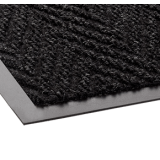 Chevron Matting$42.00Chevron Matting is an indoor entrance mat that catches grit and pulls moisture off shoes a few steps inside the door, before either reaches your floor. Its V-pattern surface works traffic coming from any direction, and a crush-resistant face keeps it doing that job for years instead of matting down
...
Chevron Matting is an indoor entrance mat that catches grit and pulls moisture off shoes a few steps inside the...
Chevron Matting is an indoor entrance mat that catches grit and pulls moisture off shoes a few steps inside the door, before either reaches your floor. Its V-pattern surface works traffic coming from any direction, and a crush-resistant face keeps it doing that job for years instead of matting down and looking tired after one busy season.
What Chevron Matting Does Before Dirt Reaches Your Floor
Most of the dirt and water in a building arrives on shoes. ISSA field data shows a building takes on up to 12 times more dirt during wet weather, and it takes six to eight steps to walk a sole dry. An interior mat in that landing zone is what decides whether grit and moisture get caught — or get ground into your floor.
Chevron does two jobs at once. The raised V-pattern scrapes coarser grit off the shoe, and the polypropylene face soaks up and holds moisture so it isn't tracked deeper inside. It leans toward moisture pickup more than heavy scraping, which is what an interior entrance needs once the worst of the outdoor debris is already off.
Why This Construction, and Why This One
The face is needle-punched polypropylene, about 18 ounces per square yard, made with 50% recycled content. The V-pattern isn't only decorative — it gives the mat multi-directional bite, so it works whether people cross it straight on or at an angle, which is how foot traffic actually moves through a doorway.
The surface is built to resist crushing. That matters more than it sounds: a matted-down mat stops standing up to clean shoes and starts showing every traffic lane, which is the usual reason an interior mat looks worn and gets pulled. A crush-resistant face holds its texture and hides foot-traffic patterns longer.
Underneath is a DINP-free PVC vinyl backing that grips the floor and protects it from the mat itself — no bleed-through, no staining the surface below. It's the kind of backing that lets the mat sit flat on a hard floor or low carpet without curling or sliding.
Where Chevron Belongs (and Where It Doesn't)
This is an interior, medium-traffic mat. It fits office building lobbies, small retail floors, banks, postal counters, motels, and similar spaces — places where people are already mostly indoors and you want the floor to stay clean and dry. It's also certified high-traction by the National Floor Safety Institute, which is the reassurance you want on the wet side of an entrance.
It is not an aggressive outdoor scraper for mud, snowmelt, or gravel, and it isn't a boot brush for a job-site door. Put it where the heaviest debris has already come off outside — as the interior mat in a two-mat system — not as the first line against a parking lot. Used that way it finishes the job; used outdoors against raw grit, it gives up its look fast.
Three Things to Check Before You Spec It
Three things decide whether Chevron is the right mat for your door.
First, where it sits in the system. Chevron is built for the interior landing, not the coarse outdoor scraper that takes the first hit. If you only have room for one mat against heavy outdoor debris, this isn't it; if you're finishing the job a few steps inside, it's built for exactly that.
Second, the size of the run. It comes in standard sizes from 2'×3' up to 6'×10', plus 60-foot rolls you can cut to a custom length. Size it for the six-to-eight steps it takes to dry a sole, not just the door opening — a mat that ends too soon lets damp shoes finish the job on your floor.
Third, the floor under it. The vinyl backing is made to protect the floor and stay put on hard surfaces and low carpet. On very high or plush carpet it won't sit as flat, so confirm the surface before you order, and order edged ends if the mat will sit out in the open rather than wall-to-wall.
Why Mats Inc.
Mats Inc. has specified commercial matting since 1964, so when you ask where a mat like this fits in your entrance, you're talking to people who lay out matting systems for a living rather than reading a spec sheet back to you. We help you match the mat to the traffic and the floor, size the run to the doorway, and tell you honestly when a different construction would hold up better. For the rest of the range, start with our commercial entrance mats.
Specifications Type Indoor entrance mat, medium traffic Surface Needle-punched polypropylene, chevron V-pattern Pile weight 18 oz/yd² Recycled content 50% recycled-content surface Thickness 5/16" Backing DINP-free PVC vinyl (4 lb vinyl strength, ASTM D624 die-T) Flammability Passes DOC-FF-1-70 Traction Certified high-traction by the National Floor Safety Institute (NFSI) Colors Steel Blue, Brown, Burgundy, Charcoal, Forest Green Standard sizes 2'×3', 3'×4', 3'×5', 3'×6', 3'×8', 3'×10', 4'×6', 4'×8', 4'×10', 6'×10' Roll sizes 3'×60', 4'×60', 6'×60' (cut to custom length) Customization Custom sizes available Warranty 1-year limited (Mats Inc.) Frequently Asked Questions
Does Chevron scrape dirt or absorb moisture?
Answered by Dustin Thompson, Owner & CEO
It does both, but it's stronger at moisture. The raised V-pattern knocks medium grit off the bottom of a shoe, and the polypropylene face soaks up and holds the moisture that's left so it isn't tracked deeper inside. That balance is exactly what an interior entrance needs: by the time someone is a few steps inside, the heavy outdoor debris is mostly gone, and what's left is damp shoes and fine dirt — which is what this surface is built to handle.
How long does it hold up, and what wears it out?
Answered by Dustin Thompson, Owner & CEO
In a medium-traffic interior spot, expect years of service. This V-pattern is a long-proven construction, not an unknown. The thing that ends an interior mat's life early is pile crush: once the surface mats down, it stops cleaning shoes and every traffic lane starts to show.
Chevron's surface is built to resist that crushing, so it holds its texture and hides foot-traffic patterns longer than a softer mat. What shortens its life is using it outdoors against raw grit, or sizing it too small so a few square feet take all the traffic.
Can I use it outside the front door?
Answered by Dustin Thompson, Owner & CEO
Better not. Chevron is an interior, medium-traffic mat — its job is the landing a few steps inside the door, after the worst outdoor debris is already off. Outdoors against mud, gravel, and snowmelt the surface loads up and mats down fast, and it isn't built to take constant weather. The right setup is a coarse scraper outside and Chevron just inside to finish the job; that two-mat approach keeps far more dirt and water off your floor than one mat trying to do everything.
What sizes can I get, and how do I pick one?
Answered by Jinna Hopson, Vice President of Marketing
Standard sizes run from 2'×3' up to 6'×10', and it also comes in 60-foot rolls that can be cut to a custom length for a long entry or a specific opening. If you don't see your size, a custom cut is available.
To pick one, measure the walking path, not just the door. Aim to cover the six-to-eight steps it takes to dry a sole, so size toward the larger end if the doorway is busy. If the mat will sit out in the open instead of running wall-to-wall, order edged ends so it lies clean.
What does it look like, and will it show dirt?
Answered by Jinna Hopson, Vice President of Marketing
It has a clean, decorative V-pattern rather than a plain ribbed look, so it reads as finished rather than industrial. There are five colors — Steel Blue, Brown, Burgundy, Charcoal, and Forest Green — and the darker tones like Charcoal and Burgundy are good at hiding fine dirt between cleanings. The crush-resistant surface helps here too: because it doesn't mat down into shiny lanes, it keeps looking even across the whole mat instead of showing where everyone walks.
Can I get a custom size or match it to our space?
Answered by Jinna Hopson, Vice President of Marketing
Yes on size — the rolls cut to custom lengths, so you can fit an odd opening or a long entry run. Color choice lets you tie it to an interior scheme: pick a tone that works with the floor and the lobby rather than fighting them. If you specifically want a logo or printed artwork at the door, that's a different construction — an image or logo mat — so let us know and we'll point you to the right one. Chevron itself is about clean, patterned coverage, not custom print.
By Dustin Thompson, Owner & CEO, Mats Inc.
↑
Chevron Matting is an indoor entrance mat that catches grit and pulls moisture off shoes a few steps inside the door, before either reaches your floor. Its V-pattern surface works traffic coming from any direction, and a crush-resistant face keeps it doing that job for years instead of matting down and looking tired after one busy season.
What Chevron Matting Does Before Dirt Reaches Your Floor
Most of the dirt and water in a building arrives on shoes. ISSA field data shows a building takes on up to 12 times more dirt during wet weather, and it takes six to eight steps to walk a sole dry. An interior mat in that landing zone is what decides whether grit and moisture get caught — or get ground into your floor.
Chevron does two jobs at once. The raised V-pattern scrapes coarser grit off the shoe, and the polypropylene face soaks up and holds moisture so it isn't tracked deeper inside. It leans toward moisture pickup more than heavy scraping, which is what an interior entrance needs once the worst of the outdoor debris is already off.
Why This Construction, and Why This One
The face is needle-punched polypropylene, about 18 ounces per square yard, made with 50% recycled content. The V-pattern isn't only decorative — it gives the mat multi-directional bite, so it works whether people cross it straight on or at an angle, which is how foot traffic actually moves through a doorway.
The surface is built to resist crushing. That matters more than it sounds: a matted-down mat stops standing up to clean shoes and starts showing every traffic lane, which is the usual reason an interior mat looks worn and gets pulled. A crush-resistant face holds its texture and hides foot-traffic patterns longer.
Underneath is a DINP-free PVC vinyl backing that grips the floor and protects it from the mat itself — no bleed-through, no staining the surface below. It's the kind of backing that lets the mat sit flat on a hard floor or low carpet without curling or sliding.
Where Chevron Belongs (and Where It Doesn't)
This is an interior, medium-traffic mat. It fits office building lobbies, small retail floors, banks, postal counters, motels, and similar spaces — places where people are already mostly indoors and you want the floor to stay clean and dry. It's also certified high-traction by the National Floor Safety Institute, which is the reassurance you want on the wet side of an entrance.
It is not an aggressive outdoor scraper for mud, snowmelt, or gravel, and it isn't a boot brush for a job-site door. Put it where the heaviest debris has already come off outside — as the interior mat in a two-mat system — not as the first line against a parking lot. Used that way it finishes the job; used outdoors against raw grit, it gives up its look fast.
Three Things to Check Before You Spec It
Three things decide whether Chevron is the right mat for your door.
First, where it sits in the system. Chevron is built for the interior landing, not the coarse outdoor scraper that takes the first hit. If you only have room for one mat against heavy outdoor debris, this isn't it; if you're finishing the job a few steps inside, it's built for exactly that.
Second, the size of the run. It comes in standard sizes from 2'×3' up to 6'×10', plus 60-foot rolls you can cut to a custom length. Size it for the six-to-eight steps it takes to dry a sole, not just the door opening — a mat that ends too soon lets damp shoes finish the job on your floor.
Third, the floor under it. The vinyl backing is made to protect the floor and stay put on hard surfaces and low carpet. On very high or plush carpet it won't sit as flat, so confirm the surface before you order, and order edged ends if the mat will sit out in the open rather than wall-to-wall.
Why Mats Inc.
Mats Inc. has specified commercial matting since 1964, so when you ask where a mat like this fits in your entrance, you're talking to people who lay out matting systems for a living rather than reading a spec sheet back to you. We help you match the mat to the traffic and the floor, size the run to the doorway, and tell you honestly when a different construction would hold up better. For the rest of the range, start with our commercial entrance mats.
Specifications Type Indoor entrance mat, medium traffic Surface Needle-punched polypropylene, chevron V-pattern Pile weight 18 oz/yd² Recycled content 50% recycled-content surface Thickness 5/16" Backing DINP-free PVC vinyl (4 lb vinyl strength, ASTM D624 die-T) Flammability Passes DOC-FF-1-70 Traction Certified high-traction by the National Floor Safety Institute (NFSI) Colors Steel Blue, Brown, Burgundy, Charcoal, Forest Green Standard sizes 2'×3', 3'×4', 3'×5', 3'×6', 3'×8', 3'×10', 4'×6', 4'×8', 4'×10', 6'×10' Roll sizes 3'×60', 4'×60', 6'×60' (cut to custom length) Customization Custom sizes available Warranty 1-year limited (Mats Inc.) Frequently Asked Questions
Does Chevron scrape dirt or absorb moisture?
Answered by Dustin Thompson, Owner & CEO
It does both, but it's stronger at moisture. The raised V-pattern knocks medium grit off the bottom of a shoe, and the polypropylene face soaks up and holds the moisture that's left so it isn't tracked deeper inside. That balance is exactly what an interior entrance needs: by the time someone is a few steps inside, the heavy outdoor debris is mostly gone, and what's left is damp shoes and fine dirt — which is what this surface is built to handle.
How long does it hold up, and what wears it out?
Answered by Dustin Thompson, Owner & CEO
In a medium-traffic interior spot, expect years of service. This V-pattern is a long-proven construction, not an unknown. The thing that ends an interior mat's life early is pile crush: once the surface mats down, it stops cleaning shoes and every traffic lane starts to show.
Chevron's surface is built to resist that crushing, so it holds its texture and hides foot-traffic patterns longer than a softer mat. What shortens its life is using it outdoors against raw grit, or sizing it too small so a few square feet take all the traffic.
Can I use it outside the front door?
Answered by Dustin Thompson, Owner & CEO
Better not. Chevron is an interior, medium-traffic mat — its job is the landing a few steps inside the door, after the worst outdoor debris is already off. Outdoors against mud, gravel, and snowmelt the surface loads up and mats down fast, and it isn't built to take constant weather. The right setup is a coarse scraper outside and Chevron just inside to finish the job; that two-mat approach keeps far more dirt and water off your floor than one mat trying to do everything.
What sizes can I get, and how do I pick one?
Answered by Jinna Hopson, Vice President of Marketing
Standard sizes run from 2'×3' up to 6'×10', and it also comes in 60-foot rolls that can be cut to a custom length for a long entry or a specific opening. If you don't see your size, a custom cut is available.
To pick one, measure the walking path, not just the door. Aim to cover the six-to-eight steps it takes to dry a sole, so size toward the larger end if the doorway is busy. If the mat will sit out in the open instead of running wall-to-wall, order edged ends so it lies clean.
What does it look like, and will it show dirt?
Answered by Jinna Hopson, Vice President of Marketing
It has a clean, decorative V-pattern rather than a plain ribbed look, so it reads as finished rather than industrial. There are five colors — Steel Blue, Brown, Burgundy, Charcoal, and Forest Green — and the darker tones like Charcoal and Burgundy are good at hiding fine dirt between cleanings. The crush-resistant surface helps here too: because it doesn't mat down into shiny lanes, it keeps looking even across the whole mat instead of showing where everyone walks.
Can I get a custom size or match it to our space?
Answered by Jinna Hopson, Vice President of Marketing
Yes on size — the rolls cut to custom lengths, so you can fit an odd opening or a long entry run. Color choice lets you tie it to an interior scheme: pick a tone that works with the floor and the lobby rather than fighting them. If you specifically want a logo or printed artwork at the door, that's a different construction — an image or logo mat — so let us know and we'll point you to the right one. Chevron itself is about clean, patterned coverage, not custom print.
By Dustin Thompson, Owner & CEO, Mats Inc.
↑
View Details
View Details
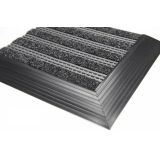 Design LinksDesign Links is a modular walk-off matting system for high-traffic commercial entrances — the kind of doorway where one mat will not cover the span and the entrance is part of how the building presents itself. Its open-weave grid scrapes shoes on every step while alternating carpet strips dry
...
Design Links is a modular walk-off matting system for high-traffic commercial entrances — the kind of doorway where one...
Design Links is a modular walk-off matting system for high-traffic commercial entrances — the kind of doorway where one mat will not cover the span and the entrance is part of how the building presents itself. Its open-weave grid scrapes shoes on every step while alternating carpet strips dry them, and the panels are engineered to fit an entry of almost any size or shape.
What Design Links Does Before the Entrance Wears the Floor Inside
Most of a building's dirt and moisture arrives on shoes at the front door — ISSA research shows the entrance is where the bulk of it enters. Left unchecked, that grit grinds down interior flooring and wet shoes turn a lobby floor slick. Design Links stops both at the threshold: the grid scrapes the dirt off, the open weave drops it below the walking surface, and the carpet strips wick the water, so shoes leave the mat cleaner and drier than they arrived.
Why an Open-Weave Grid with Carpet Strips, and Why This One
The system is built from flexible, injection-molded PVC panels in an open-weave, grid-rib design. The raised ribs scrape shoe bottoms from every direction, and the gaps between them let dirt and water fall through to the well below, out of the traffic path. Set between the ribs are dense polypropylene carpet strips that pull moisture off shoes — the drying half of a scrape-and-dry surface.
It comes with permanent carpet strips or easily replaceable ones, plus a heavy-duty build for pallet-jack and heavy wheel traffic. The surface is genuinely slip-resistant, not just textured: under ASTM D2047 it measures a static coefficient of friction — a standard grip rating — of 0.79 dry and 1.04 wet, where anything above 0.5 counts as slip-resistant. So it grips harder wet than many floors do dry.
Where It Belongs, and Where It Doesn't
Design Links fits busy commercial entrances where appearance and performance both matter — medical buildings, schools, offices, banks, retail floors with shopping carts, and apartment lobbies. It is built for high foot, cart, and pallet-jack traffic, and it reads as a designed part of the entrance rather than a mat dropped on the floor. It sits in our range of exterior entrance matting for entries that need a full walk-off system.
What it is not is a quick single-door doormat. It is a configured system, engineered to a floor plan, so it is more than a low-traffic side entrance needs. It is also an entryway system at heart — the optional aluminum trim is all-weather, but plan it for the entrance threshold and vestibule, where a scrape-and-dry grid earns its place, rather than as an open-air mat out in the elements.
Three Things to Check Before You Spec It
First, decide how it sits in the floor. Recessed into a half-inch well, the mat finishes flush with the surrounding floor — no lip to trip on, which is what makes it ADA-friendly and the cleanest-looking option. Surface-mounted, it sits on top inside a ramped aluminum frame. Either way, the floor underneath needs to be hard and smooth.
Second, match the version to the traffic. Permanent carpet strips suit steady foot traffic and a fixed look; replaceable strips let you swap worn or restyled inserts without redoing the mat; and the heavy-duty build is the one for pallet jacks and heavy rolling loads. Be honest about what crosses the door, because that choice drives how long the surface lasts.
Third, measure the opening and pick the finishes. The panels are custom-engineered to your width, length, and door swing, so wide, long, or irregular entries are all workable. Then choose the base color, the carpet-strip tone, and — if you are recessing it — the anodized trim finish, so the entrance reads the way you want it to.
Why Mats Inc.
We have specified entrance systems since 1964, and a walk-off system lives or dies on the layout. We take your opening, your door swing, and your traffic, then engineer the panel configuration and help you choose the version and finishes — so the grid covers the path without awkward gaps and the entrance protects the floor behind it. Send the measurements and we will lay it out.
Design Links — Specifications Construction Injection-molded PVC open-weave grid with alternating carpet strips Mat profile 1/2" (fits a 1/2"-deep recessed well) Action Grid ribs scrape; open weave drops debris below; carpet strips dry Carpet strips Permanent or replaceable (Velcro); heavy-duty build for pallet-jack / heavy wheel traffic Carpet fiber 100% polypropylene, dense cut pile, 26 oz/sq yd Slip resistance ASTM D2047 static coefficient of friction — 0.79 dry, 1.04 wet (≥ 0.5 = slip-resistant) Base (vinyl) colors Black, gray, brown, green; custom available Carpet-strip colors Charcoal, gingerbread, emerald Aluminum trim Anodized; clear, black, bronze, or gold (all-weather) Installation Surface-mounted (ramped frame) or recessed flush (1/2" well); hard, smooth subfloor Sizing Custom-engineered to any width and length; cut and fit on-site Compliance ADA compliant; recyclable PVC and aluminum (may contribute toward LEED credits — confirm in writing) Origin Made in USA Warranty 1-year limited (Mats Inc.) Frequently Asked Questions
How does Design Links install — can it go flush into the floor?
Answered by Dustin Thompson, Owner & CEO
Two main ways. Recessed, it drops into a half-inch-deep well and finishes flush with the surrounding floor, so there is no raised edge — that is the ADA-friendly option and the one that looks built-in. Surface-mounted, it sits on top of the floor inside a ramped aluminum frame that eases the edges. In both cases the floor underneath should be hard and smooth, and the panels are custom-engineered and fit to the opening on-site.
Can Design Links handle carts and heavy traffic, and how slip-resistant is it?
Answered by Dustin Thompson, Owner & CEO
Yes — it is built for heavy foot, cart, and pallet-jack traffic, with a heavy-duty version for the busiest rolling loads, so it holds up at retail, healthcare, and institutional entrances where lighter mats break down. On slip resistance it tests well above the bar: under ASTM D2047 it measures a static coefficient of friction of 0.79 dry and 1.04 wet, where anything over 0.5 is considered slip-resistant. As with any walk-off system, lifting the panels periodically to vacuum out the debris collected beneath them is what keeps it performing and extends its life. It carries our standard one-year warranty.
How does it scrape and dry at the same time?
Answered by Dustin Thompson, Owner & CEO
The surface does two jobs. The raised PVC grid ribs scrape grit off shoe bottoms with every step, and because the grid is open, that loosened dirt and water fall through to the well below instead of riding back up onto the next shoe. Running between the ribs are dense polypropylene carpet strips that wick moisture off shoes. So one pass scrapes the solids loose and dries the wet, which is what keeps both off the floor inside.
What are the color and finish options?
Answered by Jinna Hopson, Vice President of Marketing
More than most entrance systems. The PVC base comes in black, gray, brown, and green, with custom base colors available for a specific palette. The carpet strips come in charcoal, gingerbread, and emerald. And if you are recessing the mat, the anodized aluminum trim is offered in clear, black, bronze, and gold. That range is the point — it lets the entrance read as a designed part of the space, which is usually why a building chooses this over a plain walk-off mat.
Can Design Links be made to fit an odd-shaped or oversized entry?
Answered by Jinna Hopson, Vice President of Marketing
That is exactly what the modular design is for. The panels are custom-engineered and cut to your width and length, and laid out around doors and floor-plan features, so wide double-door entries, long approaches, and irregular footprints are all workable. There is no standard size to force the space into. Send the area's measurements and shape, along with the door swing, and we will lay out a configuration that covers it cleanly, without partial pieces stranded at the edges.
Will it look upscale, or like a utility mat?
Answered by Jinna Hopson, Vice President of Marketing
It is designed for upscale entrances, and it shows. The grid-and-carpet surface looks deliberate and finished, especially recessed flush with anodized trim framing it, so it presents as part of the architecture rather than a mat thrown down at the door. With the base color, carpet tone, and trim finish chosen to match the space, it carries the entrance instead of cluttering it — which is the reason buildings specify a system like this where appearance counts.
By Jinna Hopson, Vice President of Marketing, Mats Inc.
↑
Design Links is a modular walk-off matting system for high-traffic commercial entrances — the kind of doorway where one mat will not cover the span and the entrance is part of how the building presents itself. Its open-weave grid scrapes shoes on every step while alternating carpet strips dry them, and the panels are engineered to fit an entry of almost any size or shape.
What Design Links Does Before the Entrance Wears the Floor Inside
Most of a building's dirt and moisture arrives on shoes at the front door — ISSA research shows the entrance is where the bulk of it enters. Left unchecked, that grit grinds down interior flooring and wet shoes turn a lobby floor slick. Design Links stops both at the threshold: the grid scrapes the dirt off, the open weave drops it below the walking surface, and the carpet strips wick the water, so shoes leave the mat cleaner and drier than they arrived.
Why an Open-Weave Grid with Carpet Strips, and Why This One
The system is built from flexible, injection-molded PVC panels in an open-weave, grid-rib design. The raised ribs scrape shoe bottoms from every direction, and the gaps between them let dirt and water fall through to the well below, out of the traffic path. Set between the ribs are dense polypropylene carpet strips that pull moisture off shoes — the drying half of a scrape-and-dry surface.
It comes with permanent carpet strips or easily replaceable ones, plus a heavy-duty build for pallet-jack and heavy wheel traffic. The surface is genuinely slip-resistant, not just textured: under ASTM D2047 it measures a static coefficient of friction — a standard grip rating — of 0.79 dry and 1.04 wet, where anything above 0.5 counts as slip-resistant. So it grips harder wet than many floors do dry.
Where It Belongs, and Where It Doesn't
Design Links fits busy commercial entrances where appearance and performance both matter — medical buildings, schools, offices, banks, retail floors with shopping carts, and apartment lobbies. It is built for high foot, cart, and pallet-jack traffic, and it reads as a designed part of the entrance rather than a mat dropped on the floor. It sits in our range of exterior entrance matting for entries that need a full walk-off system.
What it is not is a quick single-door doormat. It is a configured system, engineered to a floor plan, so it is more than a low-traffic side entrance needs. It is also an entryway system at heart — the optional aluminum trim is all-weather, but plan it for the entrance threshold and vestibule, where a scrape-and-dry grid earns its place, rather than as an open-air mat out in the elements.
Three Things to Check Before You Spec It
First, decide how it sits in the floor. Recessed into a half-inch well, the mat finishes flush with the surrounding floor — no lip to trip on, which is what makes it ADA-friendly and the cleanest-looking option. Surface-mounted, it sits on top inside a ramped aluminum frame. Either way, the floor underneath needs to be hard and smooth.
Second, match the version to the traffic. Permanent carpet strips suit steady foot traffic and a fixed look; replaceable strips let you swap worn or restyled inserts without redoing the mat; and the heavy-duty build is the one for pallet jacks and heavy rolling loads. Be honest about what crosses the door, because that choice drives how long the surface lasts.
Third, measure the opening and pick the finishes. The panels are custom-engineered to your width, length, and door swing, so wide, long, or irregular entries are all workable. Then choose the base color, the carpet-strip tone, and — if you are recessing it — the anodized trim finish, so the entrance reads the way you want it to.
Why Mats Inc.
We have specified entrance systems since 1964, and a walk-off system lives or dies on the layout. We take your opening, your door swing, and your traffic, then engineer the panel configuration and help you choose the version and finishes — so the grid covers the path without awkward gaps and the entrance protects the floor behind it. Send the measurements and we will lay it out.
Design Links — Specifications Construction Injection-molded PVC open-weave grid with alternating carpet strips Mat profile 1/2" (fits a 1/2"-deep recessed well) Action Grid ribs scrape; open weave drops debris below; carpet strips dry Carpet strips Permanent or replaceable (Velcro); heavy-duty build for pallet-jack / heavy wheel traffic Carpet fiber 100% polypropylene, dense cut pile, 26 oz/sq yd Slip resistance ASTM D2047 static coefficient of friction — 0.79 dry, 1.04 wet (≥ 0.5 = slip-resistant) Base (vinyl) colors Black, gray, brown, green; custom available Carpet-strip colors Charcoal, gingerbread, emerald Aluminum trim Anodized; clear, black, bronze, or gold (all-weather) Installation Surface-mounted (ramped frame) or recessed flush (1/2" well); hard, smooth subfloor Sizing Custom-engineered to any width and length; cut and fit on-site Compliance ADA compliant; recyclable PVC and aluminum (may contribute toward LEED credits — confirm in writing) Origin Made in USA Warranty 1-year limited (Mats Inc.) Frequently Asked Questions
How does Design Links install — can it go flush into the floor?
Answered by Dustin Thompson, Owner & CEO
Two main ways. Recessed, it drops into a half-inch-deep well and finishes flush with the surrounding floor, so there is no raised edge — that is the ADA-friendly option and the one that looks built-in. Surface-mounted, it sits on top of the floor inside a ramped aluminum frame that eases the edges. In both cases the floor underneath should be hard and smooth, and the panels are custom-engineered and fit to the opening on-site.
Can Design Links handle carts and heavy traffic, and how slip-resistant is it?
Answered by Dustin Thompson, Owner & CEO
Yes — it is built for heavy foot, cart, and pallet-jack traffic, with a heavy-duty version for the busiest rolling loads, so it holds up at retail, healthcare, and institutional entrances where lighter mats break down. On slip resistance it tests well above the bar: under ASTM D2047 it measures a static coefficient of friction of 0.79 dry and 1.04 wet, where anything over 0.5 is considered slip-resistant. As with any walk-off system, lifting the panels periodically to vacuum out the debris collected beneath them is what keeps it performing and extends its life. It carries our standard one-year warranty.
How does it scrape and dry at the same time?
Answered by Dustin Thompson, Owner & CEO
The surface does two jobs. The raised PVC grid ribs scrape grit off shoe bottoms with every step, and because the grid is open, that loosened dirt and water fall through to the well below instead of riding back up onto the next shoe. Running between the ribs are dense polypropylene carpet strips that wick moisture off shoes. So one pass scrapes the solids loose and dries the wet, which is what keeps both off the floor inside.
What are the color and finish options?
Answered by Jinna Hopson, Vice President of Marketing
More than most entrance systems. The PVC base comes in black, gray, brown, and green, with custom base colors available for a specific palette. The carpet strips come in charcoal, gingerbread, and emerald. And if you are recessing the mat, the anodized aluminum trim is offered in clear, black, bronze, and gold. That range is the point — it lets the entrance read as a designed part of the space, which is usually why a building chooses this over a plain walk-off mat.
Can Design Links be made to fit an odd-shaped or oversized entry?
Answered by Jinna Hopson, Vice President of Marketing
That is exactly what the modular design is for. The panels are custom-engineered and cut to your width and length, and laid out around doors and floor-plan features, so wide double-door entries, long approaches, and irregular footprints are all workable. There is no standard size to force the space into. Send the area's measurements and shape, along with the door swing, and we will lay out a configuration that covers it cleanly, without partial pieces stranded at the edges.
Will it look upscale, or like a utility mat?
Answered by Jinna Hopson, Vice President of Marketing
It is designed for upscale entrances, and it shows. The grid-and-carpet surface looks deliberate and finished, especially recessed flush with anodized trim framing it, so it presents as part of the architecture rather than a mat thrown down at the door. With the base color, carpet tone, and trim finish chosen to match the space, it carries the entrance instead of cluttering it — which is the reason buildings specify a system like this where appearance counts.
By Jinna Hopson, Vice President of Marketing, Mats Inc.
↑
View Details
View Details
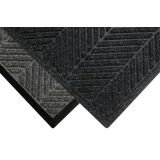 Waterhog Elite Herringbone Mats$75.00The Waterhog Elite Herringbone is a bi-level entrance mat built to pull dirt and water off shoes and keep them off your floor. Raised nubs scrape debris and moisture down below foot level, while a raised water-dam border around the edge holds the runoff on the mat instead of
...
The Waterhog Elite Herringbone is a bi-level entrance mat built to pull dirt and water off shoes and keep...
The Waterhog Elite Herringbone is a bi-level entrance mat built to pull dirt and water off shoes and keep them off your floor. Raised nubs scrape debris and moisture down below foot level, while a raised water-dam border around the edge holds the runoff on the mat instead of letting it spread onto the floor. The herringbone face gives it an upscale look right at the door.
What the Waterhog Elite Herringbone Does Before Water Reaches Your Floor
Most of a building's dirt and water walks in on shoes at the entrance — ISSA research puts the bulk of it right at the door. This mat's bi-level surface scrapes that grit and moisture off and drops it below the level your shoe touches, so it stays in the mat instead of riding onto the floor. A raised water-dam border around the edge keeps the trapped water from running off, which is what stops a slick spot from forming at the threshold.
Why Recycled PET and a Bi-Level Face, and Why This One
The face is solution-dyed PET — a polyester made from recycled plastic drink bottles, at least 90% recycled content — woven into a dense herringbone at about 30 ounces per square yard. Solution-dyed means the color is locked into the fiber, so it resists staining and will not fade or rot. The raised nubs that do the scraping are reinforced with rubber, so the pile does not crush flat under steady traffic.
Underneath, the SBR rubber backing — a synthetic rubber — contains about 20% recycled rubber from car tires, and comes in a smooth or a cleated version. The mat is certified high-traction by the National Floor Safety Institute, and beveled edges ease the step up onto it. The water-dam border holds up to 1.5 gallons of water per square yard before it overflows.
Where It Belongs, and What It Is Not
This is an entrance mat for the front of the building — lobbies, office and retail entries, hotels, and restaurants, indoors or out — where you want both performance and a finished look. The herringbone face and recycled build earn it a place in our range of water-capture entrance matting, where the job is holding tracked-in water on the mat and off the floor.
What it is not is a mat for a kitchen or a fuel or service bay — the PET fiber should not sit in areas exposed to animal fats or petroleum, which break it down. It is also a single stage: it traps a lot, but in a downpour or very heavy traffic, pairing it with a second mat just inside keeps the floor beyond it dry.
Three Things to Check Before You Spec It
First, choose the border. The classic border is rubber — rugged, and the better pick for an exposed outdoor or high-abuse entrance. The fashion border is fabric, wrapped in the same recycled material as the face, for a more finished look in a lobby or retail space. Both come in a range of seven colors, so you can match the mat to the floor or the décor.
Second, match the backing to the floor. The cleated backing grips a carpeted surface and resists shifting, while the smooth backing sits flat on hard floors like tile or stone. Picking the wrong one is the usual reason a mat creeps or wrinkles underfoot.
Third, size it to the entrance. It comes in a range of standard sizes and can be made to order in whole-foot lengths up to sixty feet, for a long approach or a wide doorway. Aim for enough length that a person takes several steps across the mat — that is what gives the nubs the chance to clean the whole sole.
Why Mats Inc.
We have specified entrance matting since 1964, and a performance mat like this only pays off when it is matched to the entrance. We will help you weigh the classic border against the fashion border, pick the backing for your floor, choose from the seven colors, and size it to the doorway so it traps what it should. Tell us the entrance and we will spec it to fit.
Waterhog Elite Herringbone Mats — Specifications Surface Solution-dyed PET (recycled polyester), needle-punched, herringbone pattern Face weight 30 oz/sq yd Recycled content Face: at least 90% post-consumer recycled PET (plastic bottles); backing: 20% recycled rubber (car tires) Surface design Bi-level raised nubs, reinforced with rubber to resist crushing Water-dam border Holds up to 1.5 gal water per sq yd Overall thickness 3/8" Backing SBR rubber — smooth or cleated; body 78-mil, border 143-mil Traction NFSI-certified high-traction; beveled edges Flammability Passes DOC-FF1-70 (confirm — see notes) Fade / stain Solution-dyed; stain-resistant; will not fade or rot; unaffected by salt or ice melt Borders & colors Classic (rubber) or fashion (fabric) border; 7 colors Not recommended for Areas exposed to animal fats (kitchens) or petroleum products Sizes Range of standard sizes; custom to 60' (whole-foot increments) Care Vacuum or hose off; hang to dry before returning to service Warranty 1-year limited (Mats Inc.) Frequently Asked Questions
What is the Waterhog Elite Herringbone made of?
Answered by Dustin Thompson, Owner & CEO
The face is solution-dyed PET — a polyester woven from recycled plastic drink bottles, at least 90 percent recycled content — set in a herringbone pattern at about 30 ounces per square yard. The raised nubs that do the scraping are reinforced with rubber so the pile will not crush flat under traffic. Underneath is an SBR rubber backing, a synthetic rubber, made with about 20 percent recycled rubber from car tires. That recycled content may also count toward LEED credits, depending on the rating version and the project.
How much water does it hold, and how slip-safe is it?
Answered by Dustin Thompson, Owner & CEO
The raised water-dam border around the edge holds up to 1.5 gallons of water per square yard before it overflows, which keeps tracked-in rain and snowmelt on the mat instead of pooling on your floor. The surface is certified high-traction by the National Floor Safety Institute, and the beveled edges give a safe transition from the floor up onto the mat. Because the PET is solution-dyed, it resists staining and will not fade or rot, and it stands up to salt and ice melt without breaking down — useful through a hard winter.
Should I get smooth or cleated backing, and where can I use it?
Answered by Dustin Thompson, Owner & CEO
The cleated backing grips a carpeted floor and resists shifting; the smooth backing lays flat on hard surfaces like tile or stone — match it to whatever the mat will sit on. The mat works indoors or out at an entrance. The one place to avoid is anywhere exposed to animal fats, like a commercial kitchen, or to petroleum products, since those break down the PET fiber over time.
What sizes does it come in?
Answered by Jinna Hopson, Vice President of Marketing
It comes in a range of standard sizes for typical doorways, and it can be made to order in whole-foot lengths up to sixty feet — handy for a long entry approach or a wide double-door opening. The thing to aim for is enough length that someone takes several steps across the mat, because that is what lets the nubs clean the whole sole rather than just clipping it. Send the opening dimensions and the walking path, and we will point you to the right size.
What colors and border styles are available?
Answered by Jinna Hopson, Vice President of Marketing
There are seven colors to choose from, and two border styles. The classic border is rubber — clean and rugged, the usual pick for an outdoor or heavy-duty entrance. The fashion border is fabric, wrapped in the same recycled material as the face, for a softer, more finished edge that suits a lobby or retail floor. The herringbone face pattern gives either version an upscale look, rather than the plain appearance of a basic utility mat.
Will it look right at a customer-facing entrance?
Answered by Jinna Hopson, Vice President of Marketing
Yes — the herringbone pattern and the fabric fashion border are what set this mat apart from a plain entrance mat, so it reads as intentional in an office lobby, a hotel, a restaurant, or a retail entry. If the entrance is more exposed or takes rougher use, the rubber classic border holds up better outdoors while still looking finished. Either way, you get a mat that performs like a workhorse but does not look like one.
By Jinna Hopson, Vice President of Marketing, Mats Inc.
↑
The Waterhog Elite Herringbone is a bi-level entrance mat built to pull dirt and water off shoes and keep them off your floor. Raised nubs scrape debris and moisture down below foot level, while a raised water-dam border around the edge holds the runoff on the mat instead of letting it spread onto the floor. The herringbone face gives it an upscale look right at the door.
What the Waterhog Elite Herringbone Does Before Water Reaches Your Floor
Most of a building's dirt and water walks in on shoes at the entrance — ISSA research puts the bulk of it right at the door. This mat's bi-level surface scrapes that grit and moisture off and drops it below the level your shoe touches, so it stays in the mat instead of riding onto the floor. A raised water-dam border around the edge keeps the trapped water from running off, which is what stops a slick spot from forming at the threshold.
Why Recycled PET and a Bi-Level Face, and Why This One
The face is solution-dyed PET — a polyester made from recycled plastic drink bottles, at least 90% recycled content — woven into a dense herringbone at about 30 ounces per square yard. Solution-dyed means the color is locked into the fiber, so it resists staining and will not fade or rot. The raised nubs that do the scraping are reinforced with rubber, so the pile does not crush flat under steady traffic.
Underneath, the SBR rubber backing — a synthetic rubber — contains about 20% recycled rubber from car tires, and comes in a smooth or a cleated version. The mat is certified high-traction by the National Floor Safety Institute, and beveled edges ease the step up onto it. The water-dam border holds up to 1.5 gallons of water per square yard before it overflows.
Where It Belongs, and What It Is Not
This is an entrance mat for the front of the building — lobbies, office and retail entries, hotels, and restaurants, indoors or out — where you want both performance and a finished look. The herringbone face and recycled build earn it a place in our range of water-capture entrance matting, where the job is holding tracked-in water on the mat and off the floor.
What it is not is a mat for a kitchen or a fuel or service bay — the PET fiber should not sit in areas exposed to animal fats or petroleum, which break it down. It is also a single stage: it traps a lot, but in a downpour or very heavy traffic, pairing it with a second mat just inside keeps the floor beyond it dry.
Three Things to Check Before You Spec It
First, choose the border. The classic border is rubber — rugged, and the better pick for an exposed outdoor or high-abuse entrance. The fashion border is fabric, wrapped in the same recycled material as the face, for a more finished look in a lobby or retail space. Both come in a range of seven colors, so you can match the mat to the floor or the décor.
Second, match the backing to the floor. The cleated backing grips a carpeted surface and resists shifting, while the smooth backing sits flat on hard floors like tile or stone. Picking the wrong one is the usual reason a mat creeps or wrinkles underfoot.
Third, size it to the entrance. It comes in a range of standard sizes and can be made to order in whole-foot lengths up to sixty feet, for a long approach or a wide doorway. Aim for enough length that a person takes several steps across the mat — that is what gives the nubs the chance to clean the whole sole.
Why Mats Inc.
We have specified entrance matting since 1964, and a performance mat like this only pays off when it is matched to the entrance. We will help you weigh the classic border against the fashion border, pick the backing for your floor, choose from the seven colors, and size it to the doorway so it traps what it should. Tell us the entrance and we will spec it to fit.
Waterhog Elite Herringbone Mats — Specifications Surface Solution-dyed PET (recycled polyester), needle-punched, herringbone pattern Face weight 30 oz/sq yd Recycled content Face: at least 90% post-consumer recycled PET (plastic bottles); backing: 20% recycled rubber (car tires) Surface design Bi-level raised nubs, reinforced with rubber to resist crushing Water-dam border Holds up to 1.5 gal water per sq yd Overall thickness 3/8" Backing SBR rubber — smooth or cleated; body 78-mil, border 143-mil Traction NFSI-certified high-traction; beveled edges Flammability Passes DOC-FF1-70 (confirm — see notes) Fade / stain Solution-dyed; stain-resistant; will not fade or rot; unaffected by salt or ice melt Borders & colors Classic (rubber) or fashion (fabric) border; 7 colors Not recommended for Areas exposed to animal fats (kitchens) or petroleum products Sizes Range of standard sizes; custom to 60' (whole-foot increments) Care Vacuum or hose off; hang to dry before returning to service Warranty 1-year limited (Mats Inc.) Frequently Asked Questions
What is the Waterhog Elite Herringbone made of?
Answered by Dustin Thompson, Owner & CEO
The face is solution-dyed PET — a polyester woven from recycled plastic drink bottles, at least 90 percent recycled content — set in a herringbone pattern at about 30 ounces per square yard. The raised nubs that do the scraping are reinforced with rubber so the pile will not crush flat under traffic. Underneath is an SBR rubber backing, a synthetic rubber, made with about 20 percent recycled rubber from car tires. That recycled content may also count toward LEED credits, depending on the rating version and the project.
How much water does it hold, and how slip-safe is it?
Answered by Dustin Thompson, Owner & CEO
The raised water-dam border around the edge holds up to 1.5 gallons of water per square yard before it overflows, which keeps tracked-in rain and snowmelt on the mat instead of pooling on your floor. The surface is certified high-traction by the National Floor Safety Institute, and the beveled edges give a safe transition from the floor up onto the mat. Because the PET is solution-dyed, it resists staining and will not fade or rot, and it stands up to salt and ice melt without breaking down — useful through a hard winter.
Should I get smooth or cleated backing, and where can I use it?
Answered by Dustin Thompson, Owner & CEO
The cleated backing grips a carpeted floor and resists shifting; the smooth backing lays flat on hard surfaces like tile or stone — match it to whatever the mat will sit on. The mat works indoors or out at an entrance. The one place to avoid is anywhere exposed to animal fats, like a commercial kitchen, or to petroleum products, since those break down the PET fiber over time.
What sizes does it come in?
Answered by Jinna Hopson, Vice President of Marketing
It comes in a range of standard sizes for typical doorways, and it can be made to order in whole-foot lengths up to sixty feet — handy for a long entry approach or a wide double-door opening. The thing to aim for is enough length that someone takes several steps across the mat, because that is what lets the nubs clean the whole sole rather than just clipping it. Send the opening dimensions and the walking path, and we will point you to the right size.
What colors and border styles are available?
Answered by Jinna Hopson, Vice President of Marketing
There are seven colors to choose from, and two border styles. The classic border is rubber — clean and rugged, the usual pick for an outdoor or heavy-duty entrance. The fashion border is fabric, wrapped in the same recycled material as the face, for a softer, more finished edge that suits a lobby or retail floor. The herringbone face pattern gives either version an upscale look, rather than the plain appearance of a basic utility mat.
Will it look right at a customer-facing entrance?
Answered by Jinna Hopson, Vice President of Marketing
Yes — the herringbone pattern and the fabric fashion border are what set this mat apart from a plain entrance mat, so it reads as intentional in an office lobby, a hotel, a restaurant, or a retail entry. If the entrance is more exposed or takes rougher use, the rubber classic border holds up better outdoors while still looking finished. Either way, you get a mat that performs like a workhorse but does not look like one.
By Jinna Hopson, Vice President of Marketing, Mats Inc.
↑
View Details
View Details
What's in the Indoor Catalog
The grid above covers four construction families. Bi-level wiper mats — Waterhog Elite Herringbone, Half-Circle Waterhog Elite, Waterhog Eco Premier — use a raised waffle or herringbone surface to scrape shoes while channeling moisture into recessed wells below.
Dense-pile carpet-faced mats — Super Berber, Cross-Over, Chevron — prioritize appearance retention and fine-debris capture in interior placements.
Olefin and rubber-backed commercial mats — Wonder-Pro Olefin, Needle Rib — handle high-traffic durability with rubber-backed stability.
Modular and specialty constructions — Design Links, Berber Logo Mats — cover specific use cases like recessed wells, irregular thresholds, and branded entrances.
Each family has different strengths, and the right pick depends more on what your entrance is fighting than on the product photo.
How the Constructions Differ When You're Comparing
Looking at a grid of indoor mats, the surface texture and color are usually the things that catch the eye first — but those aren't the things that determine whether the mat lasts. Three things matter more when you're comparing across the catalog.
First, what the surface is built to do: scrape, wipe, or absorb. Bi-level constructions like Waterhog do the scrape-plus-channel work. Dense carpet faces like Berber wipe and conceal soil. Ribbed scrapers like Needle Rib focus on debris removal in lighter-traffic placements.
Second, what the backing is rated for: rubber-reinforced backings stay planted under continuous traffic; lighter backings work in moderate traffic but migrate or curl in commercial volumes.
Third, what fits the placement: a corporate lobby and a school side entry have different traffic profiles, and the same mat doesn't perform identically in both.
Three Things Worth Checking Before You Order
First, the size against the entrance. Most buyers undersize the mat because they're sizing to the doorway width instead of to the walk-off depth. ISSA research shows it takes six to eight footsteps to wipe a shoe clean — about 15 feet of mat from the door inward.
Second, the construction against the climate. A mat that handles dry interior placements doesn't hold up the same way at a vestibule that sees moisture from outside. Bi-level constructions and rubber-backed commercial mats handle the moisture transition; dense-pile carpet faces work better away from the threshold.
Third, the spec against the procurement requirement if you're buying for an institutional building. Schools, hospitals, and government facilities often need fire ratings (ASTM E662, FF 1-70) or certifications (NFPA 99 for healthcare, NFSI High-Traction for slip-and-fall liability). Several constructions in the catalog meet those standards, but the spec sheet matters more than the product photo at that point.
Why Mats Inc.
The catalog above is the indoor range Mats Inc. has refined across decades of supplying real commercial buildings — the indoor half of the full entrance matting catalog. The constructions that survived to stay in the catalog are the ones that hold up in actual installations — what didn't work has long since been retired.
For returning customers, that means the spec you ordered before is almost certainly still here, and we can pull your order history if the product name didn't stick. The part that matters most for new and returning buyers is matching the construction to what the entrance is actually doing — get the spec right at the start and the catalog has the durability to hold up for years.
Frequently Asked Questions
How do I tell which of these constructions is right for my entrance?
Answered by Dustin Thompson, Owner & CEO
Start with what the entrance is fighting most. Heavy moisture from outside weather points to bi-level constructions like Waterhog. Steady foot traffic with appearance priority — corporate lobbies, hospitality reception — points to Berber or Cross-Over.
Long lobbies and corridors that need extended coverage point to runners (Needle Rib in this catalog, plus runner-format options under the Entryway Runners path). Service entrances and high-debris doors point to ribbed scrapers or rubber-backed commercial constructions. If you can't tell which fits, send us a description of the entrance and we'll spec it.
What's the difference between Waterhog Elite Herringbone and Waterhog Eco Premier?
Answered by Dustin Thompson, Owner & CEO
Both are bi-level Waterhog constructions, both use the raised-waffle pattern for scraping and moisture channeling. The Herringbone has a more architectural surface pattern and is the spec most often pulled into corporate and hospitality entries where appearance is part of the selection.
The Eco Premier uses recycled content and meets sustainability procurement specs that some institutional buyers require. Performance is similar across the two; the choice usually comes down to which spec fits the building's procurement requirements better.
How do I navigate this catalog when I'm comparing across all the construction families?
Answered by Jinna Hopson, Vice President of Marketing
For buyers comparing across the full indoor range, the most useful approach is to start by narrowing to the construction families that fit your placement scenario — bi-level Waterhog if moisture management is the priority, dense-pile Berber or Cross-Over if appearance retention in lobbies and reception areas matters, ribbed scrapers like Needle Rib if debris removal at lighter-traffic doors is the focus, modular Design Links if you have a recessed well or non-standard layout.
Once you're down to one or two families, comparing within those is much faster than comparing across the whole catalog at once. For multi-location programs where consistency across sites matters, the comparison gets easier when we know what placements each location actually has — send us the locations and entry types and we can pull a focused comparison spec sheet across the constructions that fit.
I see Berber Logo Mats in this catalog — should I be on the Custom Logo Mats page instead?
Answered by Dustin Thompson, Owner & CEO
Either page gets you to the product. Berber Logo Mats and similar branded indoor constructions show up here because they're indoor entrance mats first; they show up under Custom Logo Mats because they're branded second.
If you're comparing branded options against unbranded options for the same placement, this catalog gives you the side-by-side. If you're spec'ing across multiple branded constructions for a logo program, the Custom Logo Mats path organizes by branding workflow.
Can I order custom sizes of any of these constructions?
Answered by Jinna Hopson, Vice President of Marketing
Most of them, yes. Bi-level Waterhog constructions, Berber, Olefin, and ribbed scrapers all support custom sizing within the construction's manufacturing tolerances. Some specialty products — modular link constructions, recessed-well-specific products — have more flexibility for irregular shapes and odd dimensions. Custom logo constructions are inherently custom and built to specification per order.
If your entrance has a non-standard threshold, recessed mat well, angled approach, or irregular shape, give us the dimensions and we'll confirm what's manufacturable in the construction you want. Custom orders typically take two to four weeks depending on complexity.
What if I find the right construction here but need a different color than what's shown?
Answered by Jinna Hopson, Vice President of Marketing
Most product cards show the standard stocked colors, but the actual color palette per construction is broader. Waterhog runs 18-plus standard colors across the line. Berber and Olefin constructions have similar palette breadth. Custom logo constructions support PMS color matching for brand-specific work.
The product page for each construction shows the full available palette; if you're spec'ing for a multi-location program where color consistency matters, send us the brand color reference and we'll confirm which constructions support it cleanly.
By Dustin Thompson, Owner & CEO, Mats Inc.