





Vinyl Flooring
Four vinyl flooring formats sit on this page: three plank sizes and one tile. A 6x36 plank, a 7x48 plank, a 7x60 plank, and an 18x18 tile. That looks like a small difference on a spec sheet and it isn't — format is the decision that determines how a finished floor actually reads in a room.
Most vinyl plank flooring gets chosen from a sample chip, which tells you the color and nothing about the scale. A 60-inch plank and a 36-inch plank in the same visual produce two genuinely different floors. Start with the room's dimensions, then pick the format, then pick the look.
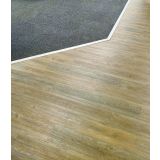 6" x 36" Natures View Luxury Vinyl Plank$223.00This 6" x 36" luxury vinyl plank has a rustic wood look and one of the thickest top layers we carry, at 40 mil. It was made for rooms that take a beating — heavy foot traffic, rolling carts, dropped equipment. It handles 2,000 psi of pressure without denting. What
...
This 6" x 36" luxury vinyl plank has a rustic wood look and one of the thickest top layers we...
This 6" x 36" luxury vinyl plank has a rustic wood look and one of the thickest top layers we carry, at 40 mil. It was made for rooms that take a beating — heavy foot traffic, rolling carts, dropped equipment. It handles 2,000 psi of pressure without denting.
What a 40 Mil Wear Layer Does Before Your Floor Takes the Room Out of Service
Wood floors don't fail dramatically. They accumulate. A dropped tray dents one board, a rolling cart scars a lane, a spill sits too long near a doorway. None of it is urgent alone, and none of it can be fixed alone either.
That's the real cost of hardwood in a commercial space. Repair means refinishing, refinishing means sanding and sealing across a whole area, and the room is unusable for days. A retail floor, a hotel lobby, a clinic corridor — none can go dark while a crew works.
Vinyl plank flooring changes that arithmetic twice over. Damage stays local to the plank it happened to, and replacement is genuinely simple: warm the plank with a hair dryer to soften the adhesive, lift it with a putty knife, prep the spot, set a new one. The room is back in use the same day.
The wear layer is what keeps damage rare in the first place. It's the clear film over the printed surface, measured in mils, and at 40 mil this sits above the 28 mil tier most specifications treat as heavy commercial. Abrasion resistance tests at under 0.15 grams per 1,000 cycles, and static load holds to 2,000 psi.
What actually consumes a wear layer is grit. Sand and street soil ride in on shoes and grind at the surface underfoot, and guidance from ISSA holds that soil keeps transferring off shoes for the first six to eight footsteps past a door. Entrance matting ahead of a vinyl floor extends its life by more than most people expect.
Why 40 Mil, a Rustic Visual, and a 1x Coating
Overall thickness is 3.175 mm — an eighth of an inch — with 1.0 mm of that being wear layer. That ratio matters more than the total. Two planks of identical thickness can carry very different wear layers, and the wear layer is the part standing between traffic and the printed visual underneath.
The surface carries a protective coating the manufacturer measures at a 26.6% improvement over most leading coatings on the market. That's a scratch-resistance claim rather than a wear-layer claim, and the two work on different problems — the coating handles the daily scuffs, the wear layer handles the years.
The rustic character does something practical alongside the aesthetic. Grain movement, knots, and tonal variation break up the surface visually, so scuffs and everyday marks have nothing uniform to contrast against. A smooth pale floor announces every scratch; a rustic one absorbs them. It's a Type B embossed surface, so the texture is physical rather than printed.
The test results back the commercial positioning. Flammability passes ASTM E648 Radiant Panel at Class 1, smoke density passes ASTM E662 under 450, and slip resistance measures 0.61 to ASTM D2047 — exceeding ADA standards. Indentation resistance passes under 8%, stain and chemical resistance rates excellent, and it exceeds HUD and FHA requirements.
One spec worth noting for anyone doing acoustic work: sound insulation measures 4 dB to DIN 52210. That's modest, and in spaces where noise transmission matters you'll want an underlayment conversation rather than relying on the plank.
Where It Belongs, and Where It Doesn't
The manufacturer's suggested uses run wide: beauty salons, conference rooms, corporate lunchrooms, general office, hospitals, libraries, pharmacies, retail and department stores, resorts, restaurants, spas, and supermarkets. The common thread is steady traffic on a floor that still has to look considered.
Within a building it belongs in circulation and occupied space — corridors, open offices, sales floors, waiting areas, and guest rooms. It also goes where wood couldn't, since vinyl doesn't swell or cup with moisture. It sits with the rest of our vinyl flooring, which spans the other plank formats and tile.
It's rated indoor only, and that's a hard limit rather than a preference. No covered patios, no sunrooms with direct exposure, no anywhere temperature swings.
It's also not an entrance surface. Vinyl plank is not matting, and making it the first thing a wet, gritty shoe touches means it absorbs the full abrasive load daily. Put a proper scraper and wiper system at the door and let the plank start behind it.
And it isn't a stair tread. Stairs need a purpose-built tread with a proper nosing for edge definition and grip, and running plank up a staircase is a different product decision with real safety implications. We carry treads separately for that reason.
Three Things to Check Before You Spec It
First, plan for professional glue-down installation. This is a wet-set adhesive product requiring a 1/16 inch square-notch trowel and a 100 pound three-section roller, with the floor re-rolled after an hour or two. Material and adhesive both need conditioning at 65°F minimum for 24 hours before and after. It also must be professionally installed to validate the manufacturer's warranty.
Second, test the subfloor for moisture before anything else. The instructions are explicit that adhesive must not be used where moisture is present in concrete or wood subfloors, because moisture can retard or prevent the adhesive setting entirely. On concrete, a latex primer both aids adhesion and helps block moisture between plank and slab. Test first — this is the most common reason a good floor fails early.
Third, expect real variation and see it at scale. The manufacturer states plainly that significant color and design variation is normal and part of the design. That's the point of a rustic visual, but a small swatch can't show how much movement appears across a full floor. Ask us for large samples and lay several out in the actual room, in the actual light.
Why Mats Inc.
We've been specifying commercial flooring since 1964, and vinyl is where a sample box does buyers the most damage. A chip shows the color and hides everything that decides whether the floor survives — the wear layer, the static load rating, whether it was built for a supermarket or a spare bedroom. This one publishes all of it, which is why we carry it. Tell us what happens in your space and we'll confirm the numbers match before you order.
Product Type Luxury vinyl plank (LVP), glue down Plank Size 6 in. x 36 in. Wear Layer 40 mil (1.0 mm) Overall Thickness 0.125 in. (3.175 mm) Manufacturing Standard Class III printed film vinyl plank, coated, Type B embossed surface Visual Rustic wood grain — Weathered Barn Packing 26 planks per carton / 39 sq. ft. / 38.82 lb. Slip Resistance ASTM D2047 — 0.61, exceeds ADA standards Static Load ASTM F970 modified — 2,000 psi Abrasion Resistance EN 660 — excellent, less than 0.15 g per 1,000 cycles Indentation Resistance F 1914 — pass, less than 8% Stain & Chemical Resistance ASTM 925 — excellent Flammability ASTM E648 Radiant Panel — Class 1 Smoke Density ASTM E662 — pass, less than 450 sdi Sound Insulation DIN 52210 — 4 dB Other Standards FloorScore certified; stability EN 986 pass; light resistance F 1515 pass; heat stability ASTM 1514 pass; exceeds HUD/FHA requirements Use Rating Zone 3, indoor only Installation Glue down, wet set; professional installation required Warranty 1-year limited (Mats Inc.) Frequently Asked Questions
What does a 40 mil wear layer actually mean?
The wear layer is the clear protective film over the printed surface, and it's measured in mils — thousandths of an inch. At 40 mil, or 1.0 mm, this sits at the top of the commercial range. Light residential product often runs 6 to 12 mil, and 20 to 28 mil is common for commercial work, so this is above the tier most specifications treat as heavy duty.
What that buys you is time before the printed visual underneath starts showing through. The abrasion testing supports it — under 0.15 grams lost per 1,000 cycles, rated excellent to EN 660. Worth understanding that wear layer is separate from overall thickness. Total thickness here is 0.125 inch, but a plank of the same thickness with a 12 mil wear layer is a fundamentally different product. Always compare the wear layer, not the total. — Dustin Thompson, Owner & CEO, Mats Inc.
Will it handle heavy equipment, carts, and point loads?
Static load tests at 2,000 psi under ASTM F970 modified, which covers the concentrated loads that come from shelving legs, equipment feet, and furniture in commercial use. Indentation resistance passes under 8% to F 1914, meaning it recovers rather than holding a permanent dimple.
Two practical notes from the maintenance guidance. Vacuum wheels can cause indenting and scuffing, so check them for embedded grit — a wheel with a stone in it will mark a floor faster than foot traffic. And when vacuuming, turn the beater bar off and use a hose or upholstery attachment instead. Small habits, but they're the difference between a floor that ages well and one that looks worn early. — Dustin Thompson, Owner & CEO, Mats Inc.
How does it install, and can I do it myself?
It's a glue-down wet-set product, and the manufacturer requires professional installation to validate the warranty — so this isn't a self-install job. The method is specific: 1/16 inch square-notch trowel, adhesive spread in small sections so it doesn't skin over, each section rolled immediately with a 100 pound three-section roller, then the whole floor re-rolled after an hour or two.
Conditioning matters too. Planks and adhesive both need to sit at 65°F minimum for 24 hours before installation and 24 hours after. Don't wash or treat the floor for at least 48 hours. And the subfloor has to be structurally sound, clean, smooth, and dry — adhesive must not be used where moisture is present in concrete or wood, since moisture can prevent it setting. Over concrete, a latex primer aids adhesion and helps block moisture. Test the slab before you schedule anyone. — Dustin Thompson, Owner & CEO, Mats Inc.
How much do I need, and what does a carton cover?
Each carton holds 26 planks covering 39 square feet and weighs 38.82 pounds, which makes the math straightforward and the cartons easy to move around a site.
Measure each room's length and width in feet, multiply for square footage, add your rooms together, then add roughly ten percent for cuts around door frames, columns, and irregular walls, plus attic stock for later replacements. Push that closer to fifteen percent if the space has a lot of angles, built-ins, or a diagonal layout, since all three generate more offcuts. Divide the total by 39 and round up for cartons — or send us the room dimensions and we'll run it with you. — Jinna Hopson, Vice President of Marketing, Mats Inc.
What does the rustic visual look like across a whole floor?
It's a weathered barn wood character — grain movement, knots, tonal shifts, the marks a real reclaimed board carries. The surface is Type B embossed, meaning the texture is physically pressed into the plank rather than printed, so it reads as wood underfoot as well as to the eye.
The manufacturer is direct that significant color and design variation is normal and enhances the look, and that's worth taking seriously in both directions. It's what makes the floor convincing rather than a repeating print, and it means a small swatch genuinely can't represent the finished result. There's a maintenance dividend as well: all that variation gives scuffs and everyday marks nothing uniform to sit against, so the floor stays presentable between cleanings. Ask us for large samples and see them in your own light. — Jinna Hopson, Vice President of Marketing, Mats Inc.
Does it work in a modern or branded space, and what about air quality?
Rustic wood usually works better in a contemporary space than a clean visual does. Warmth and texture are what stop a room full of glass, metal, and painted drywall from feeling clinical, which is exactly why modern interiors reach for natural texture so often. As a warm neutral base it sits underneath signage, fixtures, and your palette rather than competing with them.
On air quality, it's FloorScore certified — the standard for indoor air quality emissions in hard surface flooring, and one that matters for occupied spaces like hospitals, libraries, and offices, as well as for green building credits. If you're working to a brand standard or chasing certification points, send us the requirements and we'll tell you how this fits. A custom logo mat at the entrance gives you a deliberate brand moment with the plank running the space behind it. — Jinna Hopson, Vice President of Marketing, Mats Inc.
Written by Dustin Thompson, Owner & CEO, Mats Inc.
↑
This 6" x 36" luxury vinyl plank has a rustic wood look and one of the thickest top layers we carry, at 40 mil. It was made for rooms that take a beating — heavy foot traffic, rolling carts, dropped equipment. It handles 2,000 psi of pressure without denting.
What a 40 Mil Wear Layer Does Before Your Floor Takes the Room Out of Service
Wood floors don't fail dramatically. They accumulate. A dropped tray dents one board, a rolling cart scars a lane, a spill sits too long near a doorway. None of it is urgent alone, and none of it can be fixed alone either.
That's the real cost of hardwood in a commercial space. Repair means refinishing, refinishing means sanding and sealing across a whole area, and the room is unusable for days. A retail floor, a hotel lobby, a clinic corridor — none can go dark while a crew works.
Vinyl plank flooring changes that arithmetic twice over. Damage stays local to the plank it happened to, and replacement is genuinely simple: warm the plank with a hair dryer to soften the adhesive, lift it with a putty knife, prep the spot, set a new one. The room is back in use the same day.
The wear layer is what keeps damage rare in the first place. It's the clear film over the printed surface, measured in mils, and at 40 mil this sits above the 28 mil tier most specifications treat as heavy commercial. Abrasion resistance tests at under 0.15 grams per 1,000 cycles, and static load holds to 2,000 psi.
What actually consumes a wear layer is grit. Sand and street soil ride in on shoes and grind at the surface underfoot, and guidance from ISSA holds that soil keeps transferring off shoes for the first six to eight footsteps past a door. Entrance matting ahead of a vinyl floor extends its life by more than most people expect.
Why 40 Mil, a Rustic Visual, and a 1x Coating
Overall thickness is 3.175 mm — an eighth of an inch — with 1.0 mm of that being wear layer. That ratio matters more than the total. Two planks of identical thickness can carry very different wear layers, and the wear layer is the part standing between traffic and the printed visual underneath.
The surface carries a protective coating the manufacturer measures at a 26.6% improvement over most leading coatings on the market. That's a scratch-resistance claim rather than a wear-layer claim, and the two work on different problems — the coating handles the daily scuffs, the wear layer handles the years.
The rustic character does something practical alongside the aesthetic. Grain movement, knots, and tonal variation break up the surface visually, so scuffs and everyday marks have nothing uniform to contrast against. A smooth pale floor announces every scratch; a rustic one absorbs them. It's a Type B embossed surface, so the texture is physical rather than printed.
The test results back the commercial positioning. Flammability passes ASTM E648 Radiant Panel at Class 1, smoke density passes ASTM E662 under 450, and slip resistance measures 0.61 to ASTM D2047 — exceeding ADA standards. Indentation resistance passes under 8%, stain and chemical resistance rates excellent, and it exceeds HUD and FHA requirements.
One spec worth noting for anyone doing acoustic work: sound insulation measures 4 dB to DIN 52210. That's modest, and in spaces where noise transmission matters you'll want an underlayment conversation rather than relying on the plank.
Where It Belongs, and Where It Doesn't
The manufacturer's suggested uses run wide: beauty salons, conference rooms, corporate lunchrooms, general office, hospitals, libraries, pharmacies, retail and department stores, resorts, restaurants, spas, and supermarkets. The common thread is steady traffic on a floor that still has to look considered.
Within a building it belongs in circulation and occupied space — corridors, open offices, sales floors, waiting areas, and guest rooms. It also goes where wood couldn't, since vinyl doesn't swell or cup with moisture. It sits with the rest of our vinyl flooring, which spans the other plank formats and tile.
It's rated indoor only, and that's a hard limit rather than a preference. No covered patios, no sunrooms with direct exposure, no anywhere temperature swings.
It's also not an entrance surface. Vinyl plank is not matting, and making it the first thing a wet, gritty shoe touches means it absorbs the full abrasive load daily. Put a proper scraper and wiper system at the door and let the plank start behind it.
And it isn't a stair tread. Stairs need a purpose-built tread with a proper nosing for edge definition and grip, and running plank up a staircase is a different product decision with real safety implications. We carry treads separately for that reason.
Three Things to Check Before You Spec It
First, plan for professional glue-down installation. This is a wet-set adhesive product requiring a 1/16 inch square-notch trowel and a 100 pound three-section roller, with the floor re-rolled after an hour or two. Material and adhesive both need conditioning at 65°F minimum for 24 hours before and after. It also must be professionally installed to validate the manufacturer's warranty.
Second, test the subfloor for moisture before anything else. The instructions are explicit that adhesive must not be used where moisture is present in concrete or wood subfloors, because moisture can retard or prevent the adhesive setting entirely. On concrete, a latex primer both aids adhesion and helps block moisture between plank and slab. Test first — this is the most common reason a good floor fails early.
Third, expect real variation and see it at scale. The manufacturer states plainly that significant color and design variation is normal and part of the design. That's the point of a rustic visual, but a small swatch can't show how much movement appears across a full floor. Ask us for large samples and lay several out in the actual room, in the actual light.
Why Mats Inc.
We've been specifying commercial flooring since 1964, and vinyl is where a sample box does buyers the most damage. A chip shows the color and hides everything that decides whether the floor survives — the wear layer, the static load rating, whether it was built for a supermarket or a spare bedroom. This one publishes all of it, which is why we carry it. Tell us what happens in your space and we'll confirm the numbers match before you order.
Product Type Luxury vinyl plank (LVP), glue down Plank Size 6 in. x 36 in. Wear Layer 40 mil (1.0 mm) Overall Thickness 0.125 in. (3.175 mm) Manufacturing Standard Class III printed film vinyl plank, coated, Type B embossed surface Visual Rustic wood grain — Weathered Barn Packing 26 planks per carton / 39 sq. ft. / 38.82 lb. Slip Resistance ASTM D2047 — 0.61, exceeds ADA standards Static Load ASTM F970 modified — 2,000 psi Abrasion Resistance EN 660 — excellent, less than 0.15 g per 1,000 cycles Indentation Resistance F 1914 — pass, less than 8% Stain & Chemical Resistance ASTM 925 — excellent Flammability ASTM E648 Radiant Panel — Class 1 Smoke Density ASTM E662 — pass, less than 450 sdi Sound Insulation DIN 52210 — 4 dB Other Standards FloorScore certified; stability EN 986 pass; light resistance F 1515 pass; heat stability ASTM 1514 pass; exceeds HUD/FHA requirements Use Rating Zone 3, indoor only Installation Glue down, wet set; professional installation required Warranty 1-year limited (Mats Inc.) Frequently Asked Questions
What does a 40 mil wear layer actually mean?
The wear layer is the clear protective film over the printed surface, and it's measured in mils — thousandths of an inch. At 40 mil, or 1.0 mm, this sits at the top of the commercial range. Light residential product often runs 6 to 12 mil, and 20 to 28 mil is common for commercial work, so this is above the tier most specifications treat as heavy duty.
What that buys you is time before the printed visual underneath starts showing through. The abrasion testing supports it — under 0.15 grams lost per 1,000 cycles, rated excellent to EN 660. Worth understanding that wear layer is separate from overall thickness. Total thickness here is 0.125 inch, but a plank of the same thickness with a 12 mil wear layer is a fundamentally different product. Always compare the wear layer, not the total. — Dustin Thompson, Owner & CEO, Mats Inc.
Will it handle heavy equipment, carts, and point loads?
Static load tests at 2,000 psi under ASTM F970 modified, which covers the concentrated loads that come from shelving legs, equipment feet, and furniture in commercial use. Indentation resistance passes under 8% to F 1914, meaning it recovers rather than holding a permanent dimple.
Two practical notes from the maintenance guidance. Vacuum wheels can cause indenting and scuffing, so check them for embedded grit — a wheel with a stone in it will mark a floor faster than foot traffic. And when vacuuming, turn the beater bar off and use a hose or upholstery attachment instead. Small habits, but they're the difference between a floor that ages well and one that looks worn early. — Dustin Thompson, Owner & CEO, Mats Inc.
How does it install, and can I do it myself?
It's a glue-down wet-set product, and the manufacturer requires professional installation to validate the warranty — so this isn't a self-install job. The method is specific: 1/16 inch square-notch trowel, adhesive spread in small sections so it doesn't skin over, each section rolled immediately with a 100 pound three-section roller, then the whole floor re-rolled after an hour or two.
Conditioning matters too. Planks and adhesive both need to sit at 65°F minimum for 24 hours before installation and 24 hours after. Don't wash or treat the floor for at least 48 hours. And the subfloor has to be structurally sound, clean, smooth, and dry — adhesive must not be used where moisture is present in concrete or wood, since moisture can prevent it setting. Over concrete, a latex primer aids adhesion and helps block moisture. Test the slab before you schedule anyone. — Dustin Thompson, Owner & CEO, Mats Inc.
How much do I need, and what does a carton cover?
Each carton holds 26 planks covering 39 square feet and weighs 38.82 pounds, which makes the math straightforward and the cartons easy to move around a site.
Measure each room's length and width in feet, multiply for square footage, add your rooms together, then add roughly ten percent for cuts around door frames, columns, and irregular walls, plus attic stock for later replacements. Push that closer to fifteen percent if the space has a lot of angles, built-ins, or a diagonal layout, since all three generate more offcuts. Divide the total by 39 and round up for cartons — or send us the room dimensions and we'll run it with you. — Jinna Hopson, Vice President of Marketing, Mats Inc.
What does the rustic visual look like across a whole floor?
It's a weathered barn wood character — grain movement, knots, tonal shifts, the marks a real reclaimed board carries. The surface is Type B embossed, meaning the texture is physically pressed into the plank rather than printed, so it reads as wood underfoot as well as to the eye.
The manufacturer is direct that significant color and design variation is normal and enhances the look, and that's worth taking seriously in both directions. It's what makes the floor convincing rather than a repeating print, and it means a small swatch genuinely can't represent the finished result. There's a maintenance dividend as well: all that variation gives scuffs and everyday marks nothing uniform to sit against, so the floor stays presentable between cleanings. Ask us for large samples and see them in your own light. — Jinna Hopson, Vice President of Marketing, Mats Inc.
Does it work in a modern or branded space, and what about air quality?
Rustic wood usually works better in a contemporary space than a clean visual does. Warmth and texture are what stop a room full of glass, metal, and painted drywall from feeling clinical, which is exactly why modern interiors reach for natural texture so often. As a warm neutral base it sits underneath signage, fixtures, and your palette rather than competing with them.
On air quality, it's FloorScore certified — the standard for indoor air quality emissions in hard surface flooring, and one that matters for occupied spaces like hospitals, libraries, and offices, as well as for green building credits. If you're working to a brand standard or chasing certification points, send us the requirements and we'll tell you how this fits. A custom logo mat at the entrance gives you a deliberate brand moment with the plank running the space behind it. — Jinna Hopson, Vice President of Marketing, Mats Inc.
Written by Dustin Thompson, Owner & CEO, Mats Inc.
↑
View Details
View Details
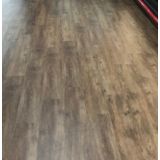 7 x 48 VistaPlank Luxury Vinyl Plank$198.00VistaPlank is a 7" x 48" luxury vinyl plank that comes in twenty-one wood colors, more than anything else in our vinyl line. Tiny ceramic beads in the surface help it shrug off scuffs and wear, it holds 2,000 psi without denting, and it is certified for low chemical emissions
...
VistaPlank is a 7" x 48" luxury vinyl plank that comes in twenty-one wood colors, more than anything else in...
VistaPlank is a 7" x 48" luxury vinyl plank that comes in twenty-one wood colors, more than anything else in our vinyl line. Tiny ceramic beads in the surface help it shrug off scuffs and wear, it holds 2,000 psi without denting, and it is certified for low chemical emissions by both FloorScore and GREENGUARD Gold.
What Twenty-One Colorways Do That a Short Palette Cannot
Most commercial vinyl plank lines give you six or eight choices. That's enough to find something acceptable and rarely enough to find the right thing, so the floor ends up being the surface everyone compromised on and then designed around.
Twenty-one changes what the floor can do. The palette runs from pale greys through warm oaks to genuinely dark woods — Cape Cod Grey and Silver Sand at the light end, Toasted Oak and Harvest Oak in the middle, African Blackwood and Honduran Rosewood at the dark end. That's enough range to match an existing scheme instead of accommodating one.
It also matters across a building. A hospitality group running the same plank line through lobbies, corridors, and guest rooms can shift tone by space while keeping one product, one thickness, and one installation method. Transitions stay flat and the specification stays simple.
Eighteen of the twenty-one use registered embossing, which means the surface texture aligns with the printed grain rather than running as a generic pattern over it. Knots you can see are knots you can feel. That alignment is the main thing separating a convincing wood floor from one that reads as printed the moment you look down.
Three colorways are not registered embossed — Antique Brown, Canyon Dust Cross-Cut, and Whiskey Cross-Cut. They're still embossed, just not in register with the print. Worth knowing if texture realism is driving your choice.
Why 40 Mil, Ceramic Beads, and a 7 by 48 Format
Overall thickness is 3.175 mm — an eighth of an inch — with 1.0 mm of that being wear layer. At 40 mil the wear layer sits above the 28 mil tier most specifications treat as heavy commercial. That ratio matters more than the total, because the wear layer is what stands between traffic and the printed visual underneath.
The surface uses ceramic-bead technology, which disperses hard particles through the coating so the plank resists scuffing and abrasion rather than relying on the wear layer alone. It works alongside the wear layer rather than instead of it — beads handle daily scuffs, the wear layer handles years.
The test results support the commercial positioning. Abrasion resistance rates excellent at under 0.15 grams lost per 1,000 cycles to EN 660. Static load holds to 2,000 psi under ASTM F970 modified. Indentation resistance passes under 8%, and dimensional stability passes EN 986.
Flammability passes ASTM E648 Radiant Panel at Class 1, smoke density passes ASTM E662 under 450, slip resistance exceeds ADA recommendations to ASTM D2047, and it exceeds HUD and FHA requirements.
On format, 7 by 48 is where most commercial specifications land, and it's the reason this is the safest choice when one floor has to work across rooms of different sizes. Wide enough to read as contemporary, not so long that it looks chopped in an average-sized space.
The construction is layered: a transparent 40 mil wear layer over the coating, a high-definition photographic layer beneath that, then registered embossing, vinyl backing and extruded core layers, and an adhesive layer to the subfloor.
Where It Belongs, and Where It Doesn't
Suggested uses run wide: beauty salons, conference rooms, corporate lunchrooms, general office, hospitals, libraries, pharmacies, retail and department stores, resorts, restaurants, spas, and supermarkets. The common thread is steady traffic on a floor that has to look considered.
The air quality certifications open specific doors. FloorScore and GREENGUARD Gold together are the pairing that matters in hospitals, schools, and libraries where occupants are present continuously, and both contribute to green building credit documentation. It sits with the rest of our vinyl flooring, which spans the other plank format and tile.
It's rated Zone 3 and indoor only. That's a hard limit — no covered patios, no sunrooms, nowhere temperature swings.
It's also not an entrance surface. Vinyl plank is not matting, and making it the first thing a wet, gritty shoe touches means it absorbs the full abrasive load every day. Put a proper scraper and wiper system at the door and let the plank start behind it.
And it isn't a stair tread. Stairs need a purpose-built tread with a proper nosing for edge definition and grip, and running plank up a staircase is a different product decision with real safety implications. We carry treads separately.
Three Things to Check Before You Spec It
First, plan for professional glue-down installation. This is an adhesive-set product, not a floating or click-lock floor, and the manufacturer requires professional installation to validate the warranty. That means an installer, a properly prepared subfloor, and a schedule that accounts for conditioning the material before work starts.
Second, narrow the twenty-one colorways down before you order samples. Twenty-one is a genuine advantage and it's also a lot to sort through. Decide your tonal direction first — light and airy, mid-tone warm, or dark and grounding — then ask us for four or five in that range at full size. And check the registered embossing note if texture realism matters to your choice.
Third, test the subfloor for moisture. Adhesive-set flooring depends on a sound bond, and moisture migrating up through a concrete slab can compromise it after everything looks finished. Vinyl is also thin enough to telegraph high spots, old adhesive ridges, and trowel marks. Test and level before the material arrives, not after.
Why Mats Inc.
We've been specifying commercial flooring since 1964, and twenty-one colorways is the kind of choice that helps buyers and overwhelms them in equal measure. What we do is narrow it. Tell us the space, the light it gets, and what's already in the room, and we'll send four or five worth looking at rather than a fan deck. We'll also tell you plainly that this is a professionally installed glue-down floor, because that shapes your schedule and your budget more than the colorway does.
Product Type Luxury vinyl plank (LVP), glue down Plank Size 7 in. x 48 in. Wear Layer 40 mil (1.0 mm) Overall Thickness 0.125 in. (3.175 mm) Manufacturing Standard Class III printed film vinyl plank, coated, registered embossed surface Colorways 21 (18 registered embossed; 3 embossed but not in register) Surface Technology Ceramic-bead wear resistance with protective coating Packing 15 planks per carton / 35 sq. ft. / 34.81 lb. Slip Resistance ASTM D2047 — pass, exceeds ADA recommendations Static Load ASTM F970 modified — 2,000 psi Abrasion Resistance EN 660 — excellent, less than 0.15 g per 1,000 cycles Indentation Resistance F 1914 — pass, less than 8% Flammability ASTM E648 Radiant Panel — Class 1 Smoke Density ASTM E662 — pass, less than 450 sdi Sound Insulation DIN 52210 — 4 dB Air Quality FloorScore certified; GREENGUARD Gold certified Other Standards Stability EN 986 pass; stain and chemical resistance ASTM 925 pass; light resistance F 1515 pass; heat stability ASTM 1514 pass; exceeds HUD/FHA requirements Use Rating Zone 3, indoor only Installation Glue down; professional installation required Warranty 1-year limited (Mats Inc.) Frequently Asked Questions
What is ceramic-bead technology, and how does it work with the wear layer?
They're two separate defenses doing different jobs. Ceramic-bead technology disperses hard ceramic particles through the surface coating, and because ceramic is considerably harder than vinyl, the surface resists scuffing and abrasion from the things that mark a floor day to day — grit underfoot, chair legs, cart wheels.
The wear layer works on a longer timescale. At 40 mil it's the thickness of clear film standing between traffic and the printed visual underneath, and it determines how many years pass before the pattern starts showing through. The abrasion testing reflects both working together: under 0.15 grams lost per 1,000 cycles, rated excellent to EN 660. When you're comparing this against another product, ask for the wear layer figure specifically — total thickness tells you almost nothing. — Dustin Thompson, Owner & CEO, Mats Inc.
Will it handle carts, shelving, and heavy point loads?
Static load tests at 2,000 psi under ASTM F970 modified, which covers the concentrated loads from shelving legs, equipment feet, and commercial furniture. Indentation resistance passes under 8% to F 1914, meaning it recovers rather than holding a permanent dimple. Dimensional stability passes EN 986, so it holds its shape rather than creeping at the seams.
Two practical notes from the maintenance guidance that people ignore and shouldn't. Vacuum wheels can cause indenting and scuffing, so check them for embedded grit — a wheel carrying a stone will mark a floor faster than any amount of foot traffic. And when vacuuming, turn the beater bar off and use a hose or upholstery attachment. Small habits, big difference over a few years. — Dustin Thompson, Owner & CEO, Mats Inc.
How does it install, and what happens when a plank gets damaged?
It's a glue-down floor, not a floating or click-lock system, and the manufacturer requires professional installation for the warranty to hold. The subfloor has to be structurally sound, clean, smooth, and dry — vinyl is thin enough to telegraph high spots, old adhesive ridges, and trowel marks straight through to the finished surface. Test concrete slabs for moisture before anything is ordered.
Replacement is more straightforward than people expect for an adhesive floor. Warm the damaged plank with a hair dryer to soften the adhesive underneath, lift it with a wide blade putty knife, prep the area, and set a new plank. Never use a heat gun — it puts out too much heat and will damage the material. That's the argument for keeping attic stock from the same run. — Dustin Thompson, Owner & CEO, Mats Inc.
How much do I need, and what does a carton cover?
Each carton holds 15 planks covering 35 square feet and weighs 34.81 pounds — light enough to move around a site easily, which matters on a multi-room job.
Measure each room's length and width in feet, multiply for square footage, add your rooms together, then add roughly ten percent for cuts around door frames, columns, and irregular walls, plus attic stock for replacements down the road. Push that closer to fifteen percent if the space has a lot of angles, built-ins, or a diagonal layout. Divide by 35 and round up for cartons. One thing worth doing: if you're using more than one colorway across a building, work out quantities per colorway before ordering rather than after. Send us the floor plan and we'll do it with you. — Jinna Hopson, Vice President of Marketing, Mats Inc.
How do I choose among twenty-one colorways?
Narrow by tone before you look at anything. The palette splits roughly three ways: light and airy in the greys and pale oaks like Cape Cod Grey, Silver Sand, and Ice Frost Oak; mid-tone warm in Toasted Oak, Harvest Oak, and Wheatfields; and dark and grounding in African Blackwood, Honduran Rosewood, and Smoked Walnut. Pick the direction first and you've cut twenty-one down to seven.
Then look at what's already in the room. Light floors make a space feel larger and show less dust but more scuffing. Dark floors ground a room and read as more formal, though they show dust and footprints sooner. Mid-tones are the most forgiving of both. One technical note worth knowing: eighteen of the twenty-one are registered embossed, meaning the texture lines up with the printed grain. Antique Brown, Canyon Dust Cross-Cut, and Whiskey Cross-Cut are not. If texture realism is what's driving you, stay with the eighteen. — Jinna Hopson, Vice President of Marketing, Mats Inc.
Can I use different colorways across a building, and does it help with certification?
Using several is often the better approach on a larger project, and twenty-one options make it workable in a way a six-color line never is. Run a light tone through open offices where you want the space to feel bigger, something warmer in hospitality or waiting areas, and a darker grounding tone in a boardroom or a feature space. Same product, same thickness, same installation — so transitions sit flat and the specification stays simple.
On certification, this carries both FloorScore and GREENGUARD Gold for indoor air quality emissions. That pairing matters most where people are present continuously — hospitals, schools, libraries, offices — and both contribute to green building credit documentation. If you're chasing points or working to a brand standard, send us the requirements and the palette and we'll tell you how this fits against them. — Jinna Hopson, Vice President of Marketing, Mats Inc.
Written by Jinna Hopson, Vice President of Marketing, Mats Inc.
↑
VistaPlank is a 7" x 48" luxury vinyl plank that comes in twenty-one wood colors, more than anything else in our vinyl line. Tiny ceramic beads in the surface help it shrug off scuffs and wear, it holds 2,000 psi without denting, and it is certified for low chemical emissions by both FloorScore and GREENGUARD Gold.
What Twenty-One Colorways Do That a Short Palette Cannot
Most commercial vinyl plank lines give you six or eight choices. That's enough to find something acceptable and rarely enough to find the right thing, so the floor ends up being the surface everyone compromised on and then designed around.
Twenty-one changes what the floor can do. The palette runs from pale greys through warm oaks to genuinely dark woods — Cape Cod Grey and Silver Sand at the light end, Toasted Oak and Harvest Oak in the middle, African Blackwood and Honduran Rosewood at the dark end. That's enough range to match an existing scheme instead of accommodating one.
It also matters across a building. A hospitality group running the same plank line through lobbies, corridors, and guest rooms can shift tone by space while keeping one product, one thickness, and one installation method. Transitions stay flat and the specification stays simple.
Eighteen of the twenty-one use registered embossing, which means the surface texture aligns with the printed grain rather than running as a generic pattern over it. Knots you can see are knots you can feel. That alignment is the main thing separating a convincing wood floor from one that reads as printed the moment you look down.
Three colorways are not registered embossed — Antique Brown, Canyon Dust Cross-Cut, and Whiskey Cross-Cut. They're still embossed, just not in register with the print. Worth knowing if texture realism is driving your choice.
Why 40 Mil, Ceramic Beads, and a 7 by 48 Format
Overall thickness is 3.175 mm — an eighth of an inch — with 1.0 mm of that being wear layer. At 40 mil the wear layer sits above the 28 mil tier most specifications treat as heavy commercial. That ratio matters more than the total, because the wear layer is what stands between traffic and the printed visual underneath.
The surface uses ceramic-bead technology, which disperses hard particles through the coating so the plank resists scuffing and abrasion rather than relying on the wear layer alone. It works alongside the wear layer rather than instead of it — beads handle daily scuffs, the wear layer handles years.
The test results support the commercial positioning. Abrasion resistance rates excellent at under 0.15 grams lost per 1,000 cycles to EN 660. Static load holds to 2,000 psi under ASTM F970 modified. Indentation resistance passes under 8%, and dimensional stability passes EN 986.
Flammability passes ASTM E648 Radiant Panel at Class 1, smoke density passes ASTM E662 under 450, slip resistance exceeds ADA recommendations to ASTM D2047, and it exceeds HUD and FHA requirements.
On format, 7 by 48 is where most commercial specifications land, and it's the reason this is the safest choice when one floor has to work across rooms of different sizes. Wide enough to read as contemporary, not so long that it looks chopped in an average-sized space.
The construction is layered: a transparent 40 mil wear layer over the coating, a high-definition photographic layer beneath that, then registered embossing, vinyl backing and extruded core layers, and an adhesive layer to the subfloor.
Where It Belongs, and Where It Doesn't
Suggested uses run wide: beauty salons, conference rooms, corporate lunchrooms, general office, hospitals, libraries, pharmacies, retail and department stores, resorts, restaurants, spas, and supermarkets. The common thread is steady traffic on a floor that has to look considered.
The air quality certifications open specific doors. FloorScore and GREENGUARD Gold together are the pairing that matters in hospitals, schools, and libraries where occupants are present continuously, and both contribute to green building credit documentation. It sits with the rest of our vinyl flooring, which spans the other plank format and tile.
It's rated Zone 3 and indoor only. That's a hard limit — no covered patios, no sunrooms, nowhere temperature swings.
It's also not an entrance surface. Vinyl plank is not matting, and making it the first thing a wet, gritty shoe touches means it absorbs the full abrasive load every day. Put a proper scraper and wiper system at the door and let the plank start behind it.
And it isn't a stair tread. Stairs need a purpose-built tread with a proper nosing for edge definition and grip, and running plank up a staircase is a different product decision with real safety implications. We carry treads separately.
Three Things to Check Before You Spec It
First, plan for professional glue-down installation. This is an adhesive-set product, not a floating or click-lock floor, and the manufacturer requires professional installation to validate the warranty. That means an installer, a properly prepared subfloor, and a schedule that accounts for conditioning the material before work starts.
Second, narrow the twenty-one colorways down before you order samples. Twenty-one is a genuine advantage and it's also a lot to sort through. Decide your tonal direction first — light and airy, mid-tone warm, or dark and grounding — then ask us for four or five in that range at full size. And check the registered embossing note if texture realism matters to your choice.
Third, test the subfloor for moisture. Adhesive-set flooring depends on a sound bond, and moisture migrating up through a concrete slab can compromise it after everything looks finished. Vinyl is also thin enough to telegraph high spots, old adhesive ridges, and trowel marks. Test and level before the material arrives, not after.
Why Mats Inc.
We've been specifying commercial flooring since 1964, and twenty-one colorways is the kind of choice that helps buyers and overwhelms them in equal measure. What we do is narrow it. Tell us the space, the light it gets, and what's already in the room, and we'll send four or five worth looking at rather than a fan deck. We'll also tell you plainly that this is a professionally installed glue-down floor, because that shapes your schedule and your budget more than the colorway does.
Product Type Luxury vinyl plank (LVP), glue down Plank Size 7 in. x 48 in. Wear Layer 40 mil (1.0 mm) Overall Thickness 0.125 in. (3.175 mm) Manufacturing Standard Class III printed film vinyl plank, coated, registered embossed surface Colorways 21 (18 registered embossed; 3 embossed but not in register) Surface Technology Ceramic-bead wear resistance with protective coating Packing 15 planks per carton / 35 sq. ft. / 34.81 lb. Slip Resistance ASTM D2047 — pass, exceeds ADA recommendations Static Load ASTM F970 modified — 2,000 psi Abrasion Resistance EN 660 — excellent, less than 0.15 g per 1,000 cycles Indentation Resistance F 1914 — pass, less than 8% Flammability ASTM E648 Radiant Panel — Class 1 Smoke Density ASTM E662 — pass, less than 450 sdi Sound Insulation DIN 52210 — 4 dB Air Quality FloorScore certified; GREENGUARD Gold certified Other Standards Stability EN 986 pass; stain and chemical resistance ASTM 925 pass; light resistance F 1515 pass; heat stability ASTM 1514 pass; exceeds HUD/FHA requirements Use Rating Zone 3, indoor only Installation Glue down; professional installation required Warranty 1-year limited (Mats Inc.) Frequently Asked Questions
What is ceramic-bead technology, and how does it work with the wear layer?
They're two separate defenses doing different jobs. Ceramic-bead technology disperses hard ceramic particles through the surface coating, and because ceramic is considerably harder than vinyl, the surface resists scuffing and abrasion from the things that mark a floor day to day — grit underfoot, chair legs, cart wheels.
The wear layer works on a longer timescale. At 40 mil it's the thickness of clear film standing between traffic and the printed visual underneath, and it determines how many years pass before the pattern starts showing through. The abrasion testing reflects both working together: under 0.15 grams lost per 1,000 cycles, rated excellent to EN 660. When you're comparing this against another product, ask for the wear layer figure specifically — total thickness tells you almost nothing. — Dustin Thompson, Owner & CEO, Mats Inc.
Will it handle carts, shelving, and heavy point loads?
Static load tests at 2,000 psi under ASTM F970 modified, which covers the concentrated loads from shelving legs, equipment feet, and commercial furniture. Indentation resistance passes under 8% to F 1914, meaning it recovers rather than holding a permanent dimple. Dimensional stability passes EN 986, so it holds its shape rather than creeping at the seams.
Two practical notes from the maintenance guidance that people ignore and shouldn't. Vacuum wheels can cause indenting and scuffing, so check them for embedded grit — a wheel carrying a stone will mark a floor faster than any amount of foot traffic. And when vacuuming, turn the beater bar off and use a hose or upholstery attachment. Small habits, big difference over a few years. — Dustin Thompson, Owner & CEO, Mats Inc.
How does it install, and what happens when a plank gets damaged?
It's a glue-down floor, not a floating or click-lock system, and the manufacturer requires professional installation for the warranty to hold. The subfloor has to be structurally sound, clean, smooth, and dry — vinyl is thin enough to telegraph high spots, old adhesive ridges, and trowel marks straight through to the finished surface. Test concrete slabs for moisture before anything is ordered.
Replacement is more straightforward than people expect for an adhesive floor. Warm the damaged plank with a hair dryer to soften the adhesive underneath, lift it with a wide blade putty knife, prep the area, and set a new plank. Never use a heat gun — it puts out too much heat and will damage the material. That's the argument for keeping attic stock from the same run. — Dustin Thompson, Owner & CEO, Mats Inc.
How much do I need, and what does a carton cover?
Each carton holds 15 planks covering 35 square feet and weighs 34.81 pounds — light enough to move around a site easily, which matters on a multi-room job.
Measure each room's length and width in feet, multiply for square footage, add your rooms together, then add roughly ten percent for cuts around door frames, columns, and irregular walls, plus attic stock for replacements down the road. Push that closer to fifteen percent if the space has a lot of angles, built-ins, or a diagonal layout. Divide by 35 and round up for cartons. One thing worth doing: if you're using more than one colorway across a building, work out quantities per colorway before ordering rather than after. Send us the floor plan and we'll do it with you. — Jinna Hopson, Vice President of Marketing, Mats Inc.
How do I choose among twenty-one colorways?
Narrow by tone before you look at anything. The palette splits roughly three ways: light and airy in the greys and pale oaks like Cape Cod Grey, Silver Sand, and Ice Frost Oak; mid-tone warm in Toasted Oak, Harvest Oak, and Wheatfields; and dark and grounding in African Blackwood, Honduran Rosewood, and Smoked Walnut. Pick the direction first and you've cut twenty-one down to seven.
Then look at what's already in the room. Light floors make a space feel larger and show less dust but more scuffing. Dark floors ground a room and read as more formal, though they show dust and footprints sooner. Mid-tones are the most forgiving of both. One technical note worth knowing: eighteen of the twenty-one are registered embossed, meaning the texture lines up with the printed grain. Antique Brown, Canyon Dust Cross-Cut, and Whiskey Cross-Cut are not. If texture realism is what's driving you, stay with the eighteen. — Jinna Hopson, Vice President of Marketing, Mats Inc.
Can I use different colorways across a building, and does it help with certification?
Using several is often the better approach on a larger project, and twenty-one options make it workable in a way a six-color line never is. Run a light tone through open offices where you want the space to feel bigger, something warmer in hospitality or waiting areas, and a darker grounding tone in a boardroom or a feature space. Same product, same thickness, same installation — so transitions sit flat and the specification stays simple.
On certification, this carries both FloorScore and GREENGUARD Gold for indoor air quality emissions. That pairing matters most where people are present continuously — hospitals, schools, libraries, offices — and both contribute to green building credit documentation. If you're chasing points or working to a brand standard, send us the requirements and the palette and we'll tell you how this fits against them. — Jinna Hopson, Vice President of Marketing, Mats Inc.
Written by Jinna Hopson, Vice President of Marketing, Mats Inc.
↑
View Details
View Details
 18" x 18" StoneCrest Luxury Vinyl Tile$202.00StoneCrest gives you the look and feel of natural stone and stained concrete without the stone. It is an 18" x 18" luxury vinyl tile that glues down to the floor, and its thick 40 mil top layer is built for places that stay busy all day — stores,
...
StoneCrest gives you the look and feel of natural stone and stained concrete without the stone. It is an...
StoneCrest gives you the look and feel of natural stone and stained concrete without the stone. It is an 18" x 18" luxury vinyl tile that glues down to the floor, and its thick 40 mil top layer is built for places that stay busy all day — stores, clinics, hotels, restaurants.
Square-format vinyl floor tiles behave differently from plank. Layouts stay simple, cuts stay predictable, and a damaged tile comes up and goes back down without disturbing the run around it. What follows is what the tile is built from, where it belongs, and what to confirm before you put it on a drawing.
What StoneCrest Does Before Traffic Wears the Pattern Off Your Floor
Every shoe that crosses a lobby carries grit. Grit does not scratch a floor all at once. It polishes and abrades, one pass at a time, along the paths people actually walk. That is why traffic lanes go dull and patchy while the corners of the same room still look new after years of service.
The wear layer is the clear thickness sitting above the printed pattern. It takes the abrasion, and it is meant to be consumed slowly. At 40 mil — 1.0 mm — StoneCrest gives that process a long runway. Abrasion testing puts material loss under 0.15 g per 1,000 cycles, which is where commercial-rated vinyl flooring needs to sit.
When a thin wear layer runs out, the pattern goes with it. A printed floor cannot be refinished. The area gets closed off, the tile comes up, and the room works around the crew until the new material has set. A thicker wear layer pushes that day further out.
Why This Construction, and Why This Tile
StoneCrest is a Class III printed film vinyl tile — a layered build rather than a solid one. From the bottom up: an extruded vinyl core and backing, an adhesive layer, a high-definition photographic layer carrying the stone pattern, a 40 mil transparent wear layer, and a factory-applied 1x surface coating. Overall thickness is 3.175 mm, or 0.125".
The surface is Type B embossed. That texture is registered to the printed image, so the grain and pitting you see line up with what your hand feels. It is the difference between a stone-look floor that reads as stone from three feet away and one that reads as a photograph of stone.
Load is the other half of the argument. Static load resistance is rated at 2,000 psi under modified ASTM F970, and indentation stays under 8 percent on ASTM F1914. Display fixtures, casework legs, and rolling carts press into the same few square inches all day, and those two numbers say whether they leave a mark behind.
Dimensional stability passes EN 986, so tiles hold their size and joints stay tight instead of opening into visible seams. On flammability, the tile is Class 1 on the ASTM E648 radiant panel test with smoke density under 450 sdi on E662 — the rating most commercial corridor and exit-path specifications call for.
Where It Belongs, and What It Is Not
This is an indoor, glue-down commercial floor. It was built for beauty salons, spas, conference rooms, corporate lunchrooms, general office, hospitals, libraries, pharmacies, retail and department stores, resorts, restaurants, and supermarkets — spaces where the floor is on display all day and still absorbs a full day of feet.
Across our vinyl flooring line, the square tile format is what you reach for when the design calls for a stone read and a grid layout rather than a directional plank run. It is also the format that lets a single damaged piece be replaced without touching its neighbors.
What it is not: not a floating floor, not a loose-lay tile, and not rated for outdoor use. It is also not a mat. It will not stop water or grit at the door — that job belongs to entrance matting, and a stone-look vinyl floor holds its finish far longer when something upstream is catching the grit first.
Slip resistance passes ASTM D2047 and exceeds ADA recommendations. The ADA Standards for Accessible Design call for floor surfaces that are stable, firm, and slip resistant, and this tile tests above that line dry. Standing water is a separate problem, and no hard surface solves it alone.
Three Things to Check Before You Spec It
First, the subfloor. StoneCrest is adhered directly to the substrate, which means the floor you end up with is the floor underneath it. Slab moisture, high spots, old adhesive residue, and cracks all telegraph through the tile. Test the slab, prepare it properly, and use a professional installer — professional vinyl flooring installation is a condition of the warranty, not a recommendation.
Second, the traffic and the load. Foot count tells you what the wear layer has to survive. Fixtures and equipment tell you what the core has to survive. If the space runs pallet jacks, heavy rolling gear, or point loads above 2,000 psi, that sits outside what this tile is rated for and you want a different floor under it.
Third, the light and the variation. Shade and pattern variation between tiles is intentional here. The designs are cut from a larger natural image, so no two tiles are identical, and that is exactly what keeps a stone floor from looking printed. Request samples, view them under the room's real lighting, and keep material from one production run together.
Why Mats Inc.
We have supplied commercial floors since 1964, which means we have watched a lot of specifications meet a lot of real buildings. On a tile like this, that shows up in the unglamorous parts of the conversation: whether your slab is ready, how many cartons a 36 sq. ft. yield actually gets you, and whether the colorway you fell for is one of the ones that also comes in 18" x 36". Ask us before the order goes in. We would rather answer it now.
18" x 18" StoneCrest Luxury Vinyl Tile — Specifications Tile size 18" x 18" (select colorways also available in 18" x 36") Format Square luxury vinyl tile, glue-down Manufacturing standard Class III printed film vinyl tile; 1x-coated Surface Type B embossed Overall thickness 3.175 mm • 0.125" Wear layer thickness 1.0 mm • 40 mil Abrasion resistance (EN 660) Excellent — under 0.15 g / 1,000 cycles Static load (ASTM F970, modified) 2,000 psi Indentation resistance (ASTM F1914) Pass — under 8% Dimensional stability (EN 986) Pass Slip resistance (ASTM D2047) Pass — exceeds ADA recommendations Stain & chemical resistance (ASTM 925) Pass Light resistance (ASTM F1515) Pass Sound insulation (DIN 52210) 4 dB Radiant panel test (ASTM E648) Class 1 Smoke density (ASTM E662) Pass — under 450 sdi Heat stability (ASTM 1514) Pass HUD/FHA requirements Exceeds Packaging 16 tiles per carton • 36 sq. ft. per carton Weight 2.08 lbs per tile • 36 lbs per carton Use Indoor only Installation Glue-down over prepared subfloor; professional installation required Warranty 1-year limited (Mats Inc.) Frequently Asked Questions
What is actually in a 40 mil wear layer, and why does that number matter?
The wear layer is a clear vinyl film sitting on top of the printed pattern, and 40 mil means it is 1.0 mm thick. Nothing about it is decorative. It is sacrificial material that takes the abrasion from foot traffic, grit, and cleaning equipment so the pattern underneath stays untouched for as long as possible.
The number matters because it is the closest thing to a service-life figure you get on a printed floor. Residential-grade vinyl often runs 6 to 12 mil. At 40 mil with abrasion loss under 0.15 g per 1,000 cycles, this tile is built for spaces where the same square foot gets walked on thousands of times a week.
— Dustin Thompson, Owner & CEO, Mats Inc.
How much traffic and load can this tile handle?
Two separate questions live inside that one. Foot traffic is handled by the wear layer, and this tile is rated for heavy commercial use. Point and rolling loads are handled by the core, and that is where the static load figure comes in: 2,000 psi under modified ASTM F970, with indentation staying under 8 percent on ASTM F1914.
In practice that covers display fixtures, casework, office chairs, service carts, and gurneys. What it does not cover is industrial rolling load — pallet jacks, forklifts, heavy equipment on small hard wheels. If that is your traffic, tell us and we will point you at a floor built for it instead.
— Dustin Thompson, Owner & CEO, Mats Inc.
How many tiles come in a carton, and how do I estimate what to order?
Each carton holds 16 tiles and covers 36 square feet. A tile weighs 2.08 lbs, so a full carton runs about 36 lbs, which matters if the material has to go up stairs or into a building without a service elevator.
Take the square footage of the space, divide by 36, and round up. Then add material on top of that for perimeter cuts and for attic stock, because keeping spare tiles from the same production run is the difference between an invisible repair three years from now and a patch that does not quite match. Send us the layout and we will run the count with you.
— Dustin Thompson, Owner & CEO, Mats Inc.
Where does this tile work best, and where should I not put it?
It shines in rooms where the floor is part of the design and still has to work: salons, spas, resort lobbies, restaurants, retail and department stores, pharmacies, hospitals, libraries, conference rooms, corporate lunchrooms, and supermarkets. Anywhere a client walks in and forms an impression before anyone greets them, a stone-look floor is doing quiet work.
Where it should not go: outdoors, in any wet area that needs drainage, or over a subfloor that has not been tested and prepared. It also should not be the first surface inside an exterior door. Put matting there and let this tile live in the rooms beyond it, where it stays looking the way you specified it.
— Jinna Hopson, Vice President of Marketing, Mats Inc.
Will every tile look the same once it is installed?
No, and that is deliberate. Each design is cut from one larger natural image, so shade and marking shift from tile to tile the way they would in a real stone floor. Uniform tiles are what make a printed floor read as printed. The variation is what makes this one read as stone.
Two practical notes. Order samples and look at them in the actual room, under the actual lighting, at the time of day the space is busiest — showroom light flatters everything. And ask your installer to open several cartons at once and mix tiles as they lay, so the variation spreads evenly instead of clustering in one corner.
— Jinna Hopson, Vice President of Marketing, Mats Inc.
How do I choose a colorway, and can I bring in a larger format?
Start with what is already fixed in the room. Millwork, countertops, and wall color are harder to change than a floor, so let them narrow the palette first. The range runs from cool greys and slate through warm oyster and almond tones, so the honest question is usually whether the room wants the floor to recede or to be part of the story.
On format: several colorways are also produced in 18 by 36 inch tiles, which opens up running-bond and mixed-format layouts. Not every color offers it, so decide on the layout and the color together rather than in sequence. Tell us the direction you are heading and we will confirm which colorways can do both.
— Jinna Hopson, Vice President of Marketing, Mats Inc.
Written by Jinna Hopson, Vice President of Marketing, Mats Inc.
↑
StoneCrest gives you the look and feel of natural stone and stained concrete without the stone. It is an 18" x 18" luxury vinyl tile that glues down to the floor, and its thick 40 mil top layer is built for places that stay busy all day — stores, clinics, hotels, restaurants.
Square-format vinyl floor tiles behave differently from plank. Layouts stay simple, cuts stay predictable, and a damaged tile comes up and goes back down without disturbing the run around it. What follows is what the tile is built from, where it belongs, and what to confirm before you put it on a drawing.
What StoneCrest Does Before Traffic Wears the Pattern Off Your Floor
Every shoe that crosses a lobby carries grit. Grit does not scratch a floor all at once. It polishes and abrades, one pass at a time, along the paths people actually walk. That is why traffic lanes go dull and patchy while the corners of the same room still look new after years of service.
The wear layer is the clear thickness sitting above the printed pattern. It takes the abrasion, and it is meant to be consumed slowly. At 40 mil — 1.0 mm — StoneCrest gives that process a long runway. Abrasion testing puts material loss under 0.15 g per 1,000 cycles, which is where commercial-rated vinyl flooring needs to sit.
When a thin wear layer runs out, the pattern goes with it. A printed floor cannot be refinished. The area gets closed off, the tile comes up, and the room works around the crew until the new material has set. A thicker wear layer pushes that day further out.
Why This Construction, and Why This Tile
StoneCrest is a Class III printed film vinyl tile — a layered build rather than a solid one. From the bottom up: an extruded vinyl core and backing, an adhesive layer, a high-definition photographic layer carrying the stone pattern, a 40 mil transparent wear layer, and a factory-applied 1x surface coating. Overall thickness is 3.175 mm, or 0.125".
The surface is Type B embossed. That texture is registered to the printed image, so the grain and pitting you see line up with what your hand feels. It is the difference between a stone-look floor that reads as stone from three feet away and one that reads as a photograph of stone.
Load is the other half of the argument. Static load resistance is rated at 2,000 psi under modified ASTM F970, and indentation stays under 8 percent on ASTM F1914. Display fixtures, casework legs, and rolling carts press into the same few square inches all day, and those two numbers say whether they leave a mark behind.
Dimensional stability passes EN 986, so tiles hold their size and joints stay tight instead of opening into visible seams. On flammability, the tile is Class 1 on the ASTM E648 radiant panel test with smoke density under 450 sdi on E662 — the rating most commercial corridor and exit-path specifications call for.
Where It Belongs, and What It Is Not
This is an indoor, glue-down commercial floor. It was built for beauty salons, spas, conference rooms, corporate lunchrooms, general office, hospitals, libraries, pharmacies, retail and department stores, resorts, restaurants, and supermarkets — spaces where the floor is on display all day and still absorbs a full day of feet.
Across our vinyl flooring line, the square tile format is what you reach for when the design calls for a stone read and a grid layout rather than a directional plank run. It is also the format that lets a single damaged piece be replaced without touching its neighbors.
What it is not: not a floating floor, not a loose-lay tile, and not rated for outdoor use. It is also not a mat. It will not stop water or grit at the door — that job belongs to entrance matting, and a stone-look vinyl floor holds its finish far longer when something upstream is catching the grit first.
Slip resistance passes ASTM D2047 and exceeds ADA recommendations. The ADA Standards for Accessible Design call for floor surfaces that are stable, firm, and slip resistant, and this tile tests above that line dry. Standing water is a separate problem, and no hard surface solves it alone.
Three Things to Check Before You Spec It
First, the subfloor. StoneCrest is adhered directly to the substrate, which means the floor you end up with is the floor underneath it. Slab moisture, high spots, old adhesive residue, and cracks all telegraph through the tile. Test the slab, prepare it properly, and use a professional installer — professional vinyl flooring installation is a condition of the warranty, not a recommendation.
Second, the traffic and the load. Foot count tells you what the wear layer has to survive. Fixtures and equipment tell you what the core has to survive. If the space runs pallet jacks, heavy rolling gear, or point loads above 2,000 psi, that sits outside what this tile is rated for and you want a different floor under it.
Third, the light and the variation. Shade and pattern variation between tiles is intentional here. The designs are cut from a larger natural image, so no two tiles are identical, and that is exactly what keeps a stone floor from looking printed. Request samples, view them under the room's real lighting, and keep material from one production run together.
Why Mats Inc.
We have supplied commercial floors since 1964, which means we have watched a lot of specifications meet a lot of real buildings. On a tile like this, that shows up in the unglamorous parts of the conversation: whether your slab is ready, how many cartons a 36 sq. ft. yield actually gets you, and whether the colorway you fell for is one of the ones that also comes in 18" x 36". Ask us before the order goes in. We would rather answer it now.
18" x 18" StoneCrest Luxury Vinyl Tile — Specifications Tile size 18" x 18" (select colorways also available in 18" x 36") Format Square luxury vinyl tile, glue-down Manufacturing standard Class III printed film vinyl tile; 1x-coated Surface Type B embossed Overall thickness 3.175 mm • 0.125" Wear layer thickness 1.0 mm • 40 mil Abrasion resistance (EN 660) Excellent — under 0.15 g / 1,000 cycles Static load (ASTM F970, modified) 2,000 psi Indentation resistance (ASTM F1914) Pass — under 8% Dimensional stability (EN 986) Pass Slip resistance (ASTM D2047) Pass — exceeds ADA recommendations Stain & chemical resistance (ASTM 925) Pass Light resistance (ASTM F1515) Pass Sound insulation (DIN 52210) 4 dB Radiant panel test (ASTM E648) Class 1 Smoke density (ASTM E662) Pass — under 450 sdi Heat stability (ASTM 1514) Pass HUD/FHA requirements Exceeds Packaging 16 tiles per carton • 36 sq. ft. per carton Weight 2.08 lbs per tile • 36 lbs per carton Use Indoor only Installation Glue-down over prepared subfloor; professional installation required Warranty 1-year limited (Mats Inc.) Frequently Asked Questions
What is actually in a 40 mil wear layer, and why does that number matter?
The wear layer is a clear vinyl film sitting on top of the printed pattern, and 40 mil means it is 1.0 mm thick. Nothing about it is decorative. It is sacrificial material that takes the abrasion from foot traffic, grit, and cleaning equipment so the pattern underneath stays untouched for as long as possible.
The number matters because it is the closest thing to a service-life figure you get on a printed floor. Residential-grade vinyl often runs 6 to 12 mil. At 40 mil with abrasion loss under 0.15 g per 1,000 cycles, this tile is built for spaces where the same square foot gets walked on thousands of times a week.
— Dustin Thompson, Owner & CEO, Mats Inc.
How much traffic and load can this tile handle?
Two separate questions live inside that one. Foot traffic is handled by the wear layer, and this tile is rated for heavy commercial use. Point and rolling loads are handled by the core, and that is where the static load figure comes in: 2,000 psi under modified ASTM F970, with indentation staying under 8 percent on ASTM F1914.
In practice that covers display fixtures, casework, office chairs, service carts, and gurneys. What it does not cover is industrial rolling load — pallet jacks, forklifts, heavy equipment on small hard wheels. If that is your traffic, tell us and we will point you at a floor built for it instead.
— Dustin Thompson, Owner & CEO, Mats Inc.
How many tiles come in a carton, and how do I estimate what to order?
Each carton holds 16 tiles and covers 36 square feet. A tile weighs 2.08 lbs, so a full carton runs about 36 lbs, which matters if the material has to go up stairs or into a building without a service elevator.
Take the square footage of the space, divide by 36, and round up. Then add material on top of that for perimeter cuts and for attic stock, because keeping spare tiles from the same production run is the difference between an invisible repair three years from now and a patch that does not quite match. Send us the layout and we will run the count with you.
— Dustin Thompson, Owner & CEO, Mats Inc.
Where does this tile work best, and where should I not put it?
It shines in rooms where the floor is part of the design and still has to work: salons, spas, resort lobbies, restaurants, retail and department stores, pharmacies, hospitals, libraries, conference rooms, corporate lunchrooms, and supermarkets. Anywhere a client walks in and forms an impression before anyone greets them, a stone-look floor is doing quiet work.
Where it should not go: outdoors, in any wet area that needs drainage, or over a subfloor that has not been tested and prepared. It also should not be the first surface inside an exterior door. Put matting there and let this tile live in the rooms beyond it, where it stays looking the way you specified it.
— Jinna Hopson, Vice President of Marketing, Mats Inc.
Will every tile look the same once it is installed?
No, and that is deliberate. Each design is cut from one larger natural image, so shade and marking shift from tile to tile the way they would in a real stone floor. Uniform tiles are what make a printed floor read as printed. The variation is what makes this one read as stone.
Two practical notes. Order samples and look at them in the actual room, under the actual lighting, at the time of day the space is busiest — showroom light flatters everything. And ask your installer to open several cartons at once and mix tiles as they lay, so the variation spreads evenly instead of clustering in one corner.
— Jinna Hopson, Vice President of Marketing, Mats Inc.
How do I choose a colorway, and can I bring in a larger format?
Start with what is already fixed in the room. Millwork, countertops, and wall color are harder to change than a floor, so let them narrow the palette first. The range runs from cool greys and slate through warm oyster and almond tones, so the honest question is usually whether the room wants the floor to recede or to be part of the story.
On format: several colorways are also produced in 18 by 36 inch tiles, which opens up running-bond and mixed-format layouts. Not every color offers it, so decide on the layout and the color together rather than in sequence. Tell us the direction you are heading and we will confirm which colorways can do both.
— Jinna Hopson, Vice President of Marketing, Mats Inc.
Written by Jinna Hopson, Vice President of Marketing, Mats Inc.
↑
View Details
View Details
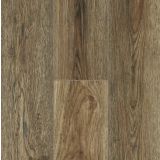 7" x 60" Lutea Zen Luxury Vinyl Plank$147.00Lutea Zen is a 7" x 60" luxury vinyl plank with an oak wood look and a soft, low-shine finish. The planks click together and lay over your existing floor, so there is no glue and no mess. At nearly a quarter inch thick, they feel solid underfoot rather
...
Lutea Zen is a 7" x 60" luxury vinyl plank with an oak wood look and a soft, low-shine...
Lutea Zen is a 7" x 60" luxury vinyl plank with an oak wood look and a soft, low-shine finish. The planks click together and lay over your existing floor, so there is no glue and no mess. At nearly a quarter inch thick, they feel solid underfoot rather than thin and hollow.
That thickness is the whole argument for this plank. Flexible vinyl plank conforms to whatever is beneath it. A rigid core does not. What follows is how that changes the floor's behavior, where it belongs, and what to settle before you order.
What a Rigid Core Does Before Your Subfloor Shows Through
Most floors fail from underneath. A trowel ridge in the old adhesive, a seam in the plywood, a dip where the slab settled — none of it looks like much during installation. Six months later it is a visible line running across the room, catching light at exactly the angle you notice.
Thin vinyl plank telegraphs those defects because it bends to meet them. It is thin enough to follow the shape of what it covers. Rigid core plank resists that. The board holds its own shape and bridges minor irregularities instead of draping over them, so the finished floor reads flat.
The same stiffness handles point loads. A chair leg, a table foot, a dropped tool — these press into a soft floor and leave a dimple that never comes back out. A dense core spreads that force across a wider area, which is why dent resistance is the specification people actually notice years later.
When a plank floor does dent or telegraph, there is no repair. You cannot sand a printed floor flat. The boards come up, the room shuts down, and the work happens again.
Why This Construction, and Why This Plank
Rigid core is a different animal from glue-down vinyl plank flooring. The board carries its own structure, joins to its neighbors with a mechanical locking edge, and floats over the subfloor rather than bonding to it. No adhesive, no trowel, no open time.
At 0.196" thick and 7.1" wide by 60" long, these are full-size planks. The width matters visually as much as structurally — wider boards mean fewer seams across a room, and fewer seams is most of what separates a floor that reads as wood from one that reads as vinyl plank tiles.
The surface is a traditional oak visual in low gloss. Low gloss is the deliberate choice here. High-shine finishes throw glare, and more to the point they broadcast every scuff and footprint. A low sheen hides daily traffic instead of advertising it, which is why it has become the default in wood-look flooring.
The wear layer is urethane. That coating is what stands between shoes and the printed grain, and it is why routine care is sweeping and damp mopping rather than waxing or buffing. Nine colorways run across the Zen design — three greys, four beiges, and two browns — covering cool to warm without leaving the natural-wood register.
Where It Belongs, and What It Is Not
This plank is rated for any room, at, below, or above ground level. Below-grade approval is the useful part of that sentence — basements defeat a lot of flooring, and a floating rigid core floor handles a below-grade slab better than most alternatives.
The natural fit is living areas, bedrooms, kitchens, hallways, finished basements, and the lighter-duty rooms in small offices and professional suites. Within our vinyl flooring range, this is the plank you reach for when the room wants a wood look and the subfloor is not perfect.
Now the honest part. This is a residential-duty floor. It is not built for heavy commercial traffic — not retail sales floors, not restaurant service paths, not healthcare corridors, not any space where hundreds of people cross the same square foot daily. Those rooms need a commercial-rated floor, and we carry them. Ask, and we will route you there instead.
Two more limits worth naming. Floating rigid core plank is not a stair product — vinyl stair treads are a separate item with their own nosing and fastening, and a click-lock plank does not substitute. And it is not a mat. Grit at the entry is what kills a wood-look floor, so put matting where the traffic enters and let the plank live beyond it.
Three Things to Check Before You Spec It
First, how flat the subfloor really is. A rigid core bridges minor irregularities, but "minor" has a limit, and it is smaller than people assume. Lay a long straightedge across the room in several directions and look for daylight underneath. Anything meaningful gets patched or ground before the first plank goes down, not after.
Second, whether the room's duty matches the floor's. Count the traffic honestly, including the wheeled traffic — office chairs and rolling carts do more damage than feet. If the answer is commercial-scale, this is the wrong plank and finding that out now is far cheaper than finding out in year two.
Third, expansion and layout. Floating floors move with temperature and humidity, so they need a perimeter gap left clear and covered by trim, and long runs may need transitions. Decide plank direction and starting wall before delivery. Vinyl plank flooring installation goes fast when that thinking is already done and slowly when it is not.
Why Mats Inc.
We have been supplying floors since 1964, and the most valuable thing we do on a plank like this is tell people when it is not the right floor. A rigid core plank in a room that needed commercial-duty material is a problem that surfaces slowly and expensively. Describe the room to us — what is under it, who walks on it, what rolls across it — and we will tell you straight whether this is your plank or whether you want something else in the catalog.
7" x 60" Lutea Zen Luxury Vinyl Plank — Specifications Plank size 7.1" wide x 60" long Thickness 0.196" Construction Rigid core luxury vinyl plank, floating installation Visual Traditional wood — oak Gloss level Low gloss Wear layer type Urethane Colorways 9 — 3 grey, 4 beige, 2 brown Coverage 29.53 sq. ft. per box Grade level Any room — above, on, or below grade Duty rating Residential Warranty 1-year limited (Mats Inc.) Frequently Asked Questions
What makes a rigid core plank different from regular vinyl plank flooring?
Flexibility, and everything that follows from it. Standard vinyl plank is thin and bends easily, so it is glued down and takes on the shape of whatever is underneath. A rigid core plank is thicker and structurally stiff, joins mechanically at the edges, and floats over the subfloor without adhesive.
In practice that means three things. It bridges minor subfloor imperfections instead of telegraphing them. It resists denting from point loads better, because a stiff board spreads the force. And it installs without trowels or adhesive open time, which is why this style of vinyl plank installation moves quickly.
— Dustin Thompson, Owner & CEO, Mats Inc.
How much traffic will this plank actually take?
This is a residential-duty floor, and we would rather be blunt about that than have you find out later. It is built for homes and lighter-duty professional spaces — living areas, bedrooms, kitchens, hallways, finished basements, small offices, private suites. In those rooms it holds up well.
Where it is not the right call: retail sales floors, restaurants, healthcare corridors, schools, anything with sustained commercial foot traffic or heavy rolling equipment. Those rooms need a commercial-rated floor, which is a different product with different testing behind it. Tell us the space and we will point you at the right one.
— Dustin Thompson, Owner & CEO, Mats Inc.
How many boxes do I need, and what does the subfloor have to be like?
Each box covers 29.53 square feet. Measure the room, divide by 29.53, and round up — then add roughly ten percent for cuts and waste, more if the room has angles, closets, or an offset layout. Keep a box back as attic stock, because matching a production run years later is difficult.
On the subfloor: clean, dry, structurally sound, and flat. Run a long straightedge across the space in several directions and check for gaps underneath. The rigid core handles small variations, but real dips and ridges get corrected before installation, not covered up by it.
— Dustin Thompson, Owner & CEO, Mats Inc.
Can I install this in a basement, and can I put it on stairs?
Basements, yes. This plank is approved for any room above, on, or below grade, and below-grade rooms are where a floating floor earns its keep — it is not bonded to a slab that may carry moisture. Confirm the slab is dry and follow the moisture guidance for the space before you start.
Stairs are a different answer: no. A floating click-lock plank has no correct way to wrap a nosing or fasten to a riser, and stairs are the last place to improvise. Stair treads are a separate product engineered for that job, and we would rather sell you the right one than watch this one fail there.
— Jinna Hopson, Vice President of Marketing, Mats Inc.
What does the finish look like in a real room?
Low gloss, traditional oak. It reads as a lived-in wood floor rather than a polished one, which is the point — high-shine finishes look impressive in a showroom and then show every scuff, footprint, and skid mark once furniture and people arrive.
The 7 by 60 inch board is what sells the effect. Long, wide planks mean fewer seams across a room, and seam density is most of what tells your eye whether a floor is wood or a wood look. Order samples and set them on the actual floor, in the room's own light, before you commit.
— Jinna Hopson, Vice President of Marketing, Mats Inc.
How do I pick a colorway from nine options?
Let the fixed elements decide. Cabinets, countertops, trim, and doors are far harder to change than a floor, so start by ruling out anything that fights them. That usually cuts nine down to three quickly. The range spans three greys, four beiges, and two browns — cool and contemporary at one end, warm and traditional at the other.
Then look at the light. North-facing rooms pull cool, and a grey floor can go flat and cold in them; warm beiges hold up better. South and west light does the opposite and can push warm tones orange by late afternoon. View samples at the hour the room is busiest, not just at midday.
— Jinna Hopson, Vice President of Marketing, Mats Inc.
Written by Dustin Thompson, Owner & CEO, Mats Inc.
↑
Lutea Zen is a 7" x 60" luxury vinyl plank with an oak wood look and a soft, low-shine finish. The planks click together and lay over your existing floor, so there is no glue and no mess. At nearly a quarter inch thick, they feel solid underfoot rather than thin and hollow.
That thickness is the whole argument for this plank. Flexible vinyl plank conforms to whatever is beneath it. A rigid core does not. What follows is how that changes the floor's behavior, where it belongs, and what to settle before you order.
What a Rigid Core Does Before Your Subfloor Shows Through
Most floors fail from underneath. A trowel ridge in the old adhesive, a seam in the plywood, a dip where the slab settled — none of it looks like much during installation. Six months later it is a visible line running across the room, catching light at exactly the angle you notice.
Thin vinyl plank telegraphs those defects because it bends to meet them. It is thin enough to follow the shape of what it covers. Rigid core plank resists that. The board holds its own shape and bridges minor irregularities instead of draping over them, so the finished floor reads flat.
The same stiffness handles point loads. A chair leg, a table foot, a dropped tool — these press into a soft floor and leave a dimple that never comes back out. A dense core spreads that force across a wider area, which is why dent resistance is the specification people actually notice years later.
When a plank floor does dent or telegraph, there is no repair. You cannot sand a printed floor flat. The boards come up, the room shuts down, and the work happens again.
Why This Construction, and Why This Plank
Rigid core is a different animal from glue-down vinyl plank flooring. The board carries its own structure, joins to its neighbors with a mechanical locking edge, and floats over the subfloor rather than bonding to it. No adhesive, no trowel, no open time.
At 0.196" thick and 7.1" wide by 60" long, these are full-size planks. The width matters visually as much as structurally — wider boards mean fewer seams across a room, and fewer seams is most of what separates a floor that reads as wood from one that reads as vinyl plank tiles.
The surface is a traditional oak visual in low gloss. Low gloss is the deliberate choice here. High-shine finishes throw glare, and more to the point they broadcast every scuff and footprint. A low sheen hides daily traffic instead of advertising it, which is why it has become the default in wood-look flooring.
The wear layer is urethane. That coating is what stands between shoes and the printed grain, and it is why routine care is sweeping and damp mopping rather than waxing or buffing. Nine colorways run across the Zen design — three greys, four beiges, and two browns — covering cool to warm without leaving the natural-wood register.
Where It Belongs, and What It Is Not
This plank is rated for any room, at, below, or above ground level. Below-grade approval is the useful part of that sentence — basements defeat a lot of flooring, and a floating rigid core floor handles a below-grade slab better than most alternatives.
The natural fit is living areas, bedrooms, kitchens, hallways, finished basements, and the lighter-duty rooms in small offices and professional suites. Within our vinyl flooring range, this is the plank you reach for when the room wants a wood look and the subfloor is not perfect.
Now the honest part. This is a residential-duty floor. It is not built for heavy commercial traffic — not retail sales floors, not restaurant service paths, not healthcare corridors, not any space where hundreds of people cross the same square foot daily. Those rooms need a commercial-rated floor, and we carry them. Ask, and we will route you there instead.
Two more limits worth naming. Floating rigid core plank is not a stair product — vinyl stair treads are a separate item with their own nosing and fastening, and a click-lock plank does not substitute. And it is not a mat. Grit at the entry is what kills a wood-look floor, so put matting where the traffic enters and let the plank live beyond it.
Three Things to Check Before You Spec It
First, how flat the subfloor really is. A rigid core bridges minor irregularities, but "minor" has a limit, and it is smaller than people assume. Lay a long straightedge across the room in several directions and look for daylight underneath. Anything meaningful gets patched or ground before the first plank goes down, not after.
Second, whether the room's duty matches the floor's. Count the traffic honestly, including the wheeled traffic — office chairs and rolling carts do more damage than feet. If the answer is commercial-scale, this is the wrong plank and finding that out now is far cheaper than finding out in year two.
Third, expansion and layout. Floating floors move with temperature and humidity, so they need a perimeter gap left clear and covered by trim, and long runs may need transitions. Decide plank direction and starting wall before delivery. Vinyl plank flooring installation goes fast when that thinking is already done and slowly when it is not.
Why Mats Inc.
We have been supplying floors since 1964, and the most valuable thing we do on a plank like this is tell people when it is not the right floor. A rigid core plank in a room that needed commercial-duty material is a problem that surfaces slowly and expensively. Describe the room to us — what is under it, who walks on it, what rolls across it — and we will tell you straight whether this is your plank or whether you want something else in the catalog.
7" x 60" Lutea Zen Luxury Vinyl Plank — Specifications Plank size 7.1" wide x 60" long Thickness 0.196" Construction Rigid core luxury vinyl plank, floating installation Visual Traditional wood — oak Gloss level Low gloss Wear layer type Urethane Colorways 9 — 3 grey, 4 beige, 2 brown Coverage 29.53 sq. ft. per box Grade level Any room — above, on, or below grade Duty rating Residential Warranty 1-year limited (Mats Inc.) Frequently Asked Questions
What makes a rigid core plank different from regular vinyl plank flooring?
Flexibility, and everything that follows from it. Standard vinyl plank is thin and bends easily, so it is glued down and takes on the shape of whatever is underneath. A rigid core plank is thicker and structurally stiff, joins mechanically at the edges, and floats over the subfloor without adhesive.
In practice that means three things. It bridges minor subfloor imperfections instead of telegraphing them. It resists denting from point loads better, because a stiff board spreads the force. And it installs without trowels or adhesive open time, which is why this style of vinyl plank installation moves quickly.
— Dustin Thompson, Owner & CEO, Mats Inc.
How much traffic will this plank actually take?
This is a residential-duty floor, and we would rather be blunt about that than have you find out later. It is built for homes and lighter-duty professional spaces — living areas, bedrooms, kitchens, hallways, finished basements, small offices, private suites. In those rooms it holds up well.
Where it is not the right call: retail sales floors, restaurants, healthcare corridors, schools, anything with sustained commercial foot traffic or heavy rolling equipment. Those rooms need a commercial-rated floor, which is a different product with different testing behind it. Tell us the space and we will point you at the right one.
— Dustin Thompson, Owner & CEO, Mats Inc.
How many boxes do I need, and what does the subfloor have to be like?
Each box covers 29.53 square feet. Measure the room, divide by 29.53, and round up — then add roughly ten percent for cuts and waste, more if the room has angles, closets, or an offset layout. Keep a box back as attic stock, because matching a production run years later is difficult.
On the subfloor: clean, dry, structurally sound, and flat. Run a long straightedge across the space in several directions and check for gaps underneath. The rigid core handles small variations, but real dips and ridges get corrected before installation, not covered up by it.
— Dustin Thompson, Owner & CEO, Mats Inc.
Can I install this in a basement, and can I put it on stairs?
Basements, yes. This plank is approved for any room above, on, or below grade, and below-grade rooms are where a floating floor earns its keep — it is not bonded to a slab that may carry moisture. Confirm the slab is dry and follow the moisture guidance for the space before you start.
Stairs are a different answer: no. A floating click-lock plank has no correct way to wrap a nosing or fasten to a riser, and stairs are the last place to improvise. Stair treads are a separate product engineered for that job, and we would rather sell you the right one than watch this one fail there.
— Jinna Hopson, Vice President of Marketing, Mats Inc.
What does the finish look like in a real room?
Low gloss, traditional oak. It reads as a lived-in wood floor rather than a polished one, which is the point — high-shine finishes look impressive in a showroom and then show every scuff, footprint, and skid mark once furniture and people arrive.
The 7 by 60 inch board is what sells the effect. Long, wide planks mean fewer seams across a room, and seam density is most of what tells your eye whether a floor is wood or a wood look. Order samples and set them on the actual floor, in the room's own light, before you commit.
— Jinna Hopson, Vice President of Marketing, Mats Inc.
How do I pick a colorway from nine options?
Let the fixed elements decide. Cabinets, countertops, trim, and doors are far harder to change than a floor, so start by ruling out anything that fights them. That usually cuts nine down to three quickly. The range spans three greys, four beiges, and two browns — cool and contemporary at one end, warm and traditional at the other.
Then look at the light. North-facing rooms pull cool, and a grey floor can go flat and cold in them; warm beiges hold up better. South and west light does the opposite and can push warm tones orange by late afternoon. View samples at the hour the room is busiest, not just at midday.
— Jinna Hopson, Vice President of Marketing, Mats Inc.
Written by Dustin Thompson, Owner & CEO, Mats Inc.
↑
View Details
View Details
What Luxury Vinyl Does That Wood and Stone Cannot
Vinyl floor covering earns its place through three properties that hard surfaces struggle to combine. It handles moisture without swelling or cupping, which is why it ends up in kitchens, restrooms, entryway transitions, and below-grade spaces where wood simply cannot go.
It's also modular. When a chair leg gouges a plank or a leaking cooler stains a section, you lift those pieces and set new ones. A damaged hardwood or tile floor means refinishing or demolition across a much wider area, usually with the room out of service while it happens.
And it's forgiving underfoot. Vinyl plank tiles have more give than ceramic or stone, which matters in spaces where staff stand for long stretches, and it's noticeably quieter — a real consideration in offices, clinics, and anywhere sound carries.
The thing that actually wears vinyl flooring out is grit. Sand and street dirt ride in on shoes and act like sandpaper underfoot, and guidance from ISSA holds that soil keeps transferring off shoes for the first six to eight footsteps past a door. Put proper entrance matting in front of a vinyl floor and you meaningfully extend how long it looks new.
The Mistake That Burns Buyers: Picking Plank Size by Taste Instead of by Room
Long planks photograph beautifully. A 60-inch plank in a showroom image looks expensive and modern, and that image is what most people are buying from. The problem is that scale only works when the room can carry it.
Here's the mechanic. Long planks read as continuous because you see fewer seams across a given span. In a large open floor plan that creates a calm, expansive surface. In a 10-foot room, a 60-inch plank crosses half the space on its own, so you get two planks and a cut piece — the floor looks chopped rather than continuous, which is the opposite of the intended effect.
Shorter planks work the other way. A 36-inch plank in a big open area produces a busy, repetitive field with seams everywhere the eye lands. In a corridor, a small office, or a residential room, that same plank reads as natural and appropriately scaled.
The second version of this mistake is format. Square tile in a room being sold as a wood look never quite lands, and plank in a space that wants a stone or ceramic character reads as a compromise. Those are different design languages, and a floor is too large a surface to hedge on.
None of this is expensive to get right. Measure the room, note its longest dimension, and match the format to it before anyone opens a sample box.
How the Four Products Compare
6x36 Nature's View Luxury Vinyl Plank is the narrowest and shortest plank here, and its proportions are closest to traditional hardwood strip flooring. More planks across a given area means more seam lines and more visual texture, which suits rooms that would look barren under a large-format floor. It's also the most forgiving format in spaces with irregular walls, since shorter pieces mean less waste in cuts. Strongest fit for corridors, smaller offices, residential rooms, and renovations where the floor should feel familiar rather than dramatic.
7x48 VistaPlank Luxury Vinyl Plank sits at the format most commercial specifications default to, and that's not an accident. At 7 inches by 48, it's wide enough to read as contemporary without the scale problems long planks create in average-sized rooms, and it's the safest choice when a single product has to work across spaces of different dimensions. Strongest fit for multi-room commercial projects, offices, retail floors, and any job where one floor needs to run through rooms you haven't individually measured.
18x18 StoneCrest Luxury Vinyl Tile is the only square format on the page, and square is a different design language entirely. Tile proportions belong to stone and ceramic rather than wood, so this is the product when a space wants that character without the weight, cold, and hardness of the real material. Grid layouts also handle rooms that aren't rectangular more gracefully than plank runs do. Strongest fit for lobbies, restrooms, kitchens, healthcare spaces, and entry areas where a stone visual sets the tone.
7x60 Lutea Zen Luxury Vinyl Plank is the long-format option, and the extra 12 inches over a 48-inch plank changes the finished floor more than the number suggests. Fewer seams across a span produce a calmer, more continuous surface that makes a large room read as larger still. It needs the space to work — in a small room the length becomes a liability. Strongest fit for open office plans, hospitality spaces, large retail floors, and residential great rooms with genuine length to run.
Three Things to Check Before You Pick
First, measure the room's longest run and match the format to it. As a working rule, a plank shouldn't span more than a small fraction of the room's length. If your longest dimension is under about 12 feet, the 6x36 or the 7x48 will look right. Reserve the 7x60 for genuinely open spaces. And if the visual you want is stone rather than wood, the 18x18 tile is the honest answer regardless of room size.
Second, ask us for the wear layer figure before you commit. Wear layer is the clear top film measured in mils, and it's the single number that determines how long a floor holds up under traffic. Residential-grade and heavy-commercial-grade products can look identical in a sample box and perform nothing alike over five years. Tell us the traffic level and we'll tell you which of these four is rated for it.
Third, look hard at the subfloor. Vinyl is thin and it telegraphs what's underneath — high spots, old adhesive ridges, and trowel marks all show through eventually, and moisture in a slab can undo an installation entirely. Test slabs for moisture, level the substrate properly, and budget for that work up front. It's the most common reason a good floor fails early.
Why Mats Inc.
We've been supplying commercial flooring since 1964, and vinyl is a category where the sample box actively works against good decisions. A chip tells you the color and hides the scale, the wear layer, and whether the product suits your traffic. We'll ask for your room dimensions and what happens in the space before we recommend anything, and we'll send samples large enough to judge properly rather than a swatch that flatters everything equally.
Frequently Asked Questions
Plank or tile — how do I decide?
Decide it on the visual you're after, not on the room. Plank formats read as wood; square tile reads as stone or ceramic. Those are different design languages, and trying to get one to do the other's job is where floors end up looking almost right without anyone quite naming why.
So work backwards from the space's character. A warm office, a hospitality area, a residential room — those usually want wood, which points to the 6x36, 7x48, or 7x60 planks. A lobby, restroom, kitchen, or clinical space where you want something cooler and more architectural is tile territory, and the 18x18 is built for exactly that. One practical note in tile's favor: square grids handle angled walls and irregular rooms more gracefully than plank runs, which have to commit to a direction. — Jinna Hopson, Vice President of Marketing, Mats Inc.
Where does luxury vinyl work well, and where would you steer me away?
It works where moisture, maintenance, and repairability all matter at once — offices, retail floors, healthcare spaces, hospitality, classrooms, kitchens, restrooms, and below-grade rooms where wood can't go. It handles spills and mopping without swelling, and damaged pieces come out individually rather than requiring the whole floor to be refinished.
Where I'd steer you away: directly inside an exterior door. Vinyl flooring is not entrance matting, and putting it as the first surface a wet, gritty shoe touches means it takes the full abrasive load every day. Give it a proper scraper and wiper system at the threshold and let the vinyl start behind that. Also think twice about spaces with heavy point loads or rolling steel-wheeled equipment, and talk to us first if that's your situation. — Dustin Thompson, Owner & CEO, Mats Inc.
How long does vinyl flooring last, and what determines it?
The wear layer determines it, and it's worth understanding how it's measured. The wear layer is a clear film over the printed surface, measured in mils — thousandths of an inch. Common tiers run from around 6 mil at the light residential end, through 12 and 20 mil, up to 28 mil and above for heavy commercial traffic. That single number does more to predict service life than anything else on the spec sheet.
Two floors with identical wear layers can still age differently, and that comes down to grit and maintenance. Abrasive soil ground into a surface is what dulls it, so entrance matting and a regular cleaning routine genuinely extend service life. Ask us for the wear layer figure on whichever of these four you're considering, and tell us the traffic level, and we'll make sure the rating matches the room rather than the budget. — Dustin Thompson, Owner & CEO, Mats Inc.
What does vinyl plank flooring installation involve?
The floor itself goes down quickly. The subfloor prep is where the time and the risk actually sit. Vinyl is thin enough to telegraph whatever it covers, so high spots, old adhesive ridges, trowel marks, and fastener heads will eventually read through the surface. That has to be leveled properly before anything is laid.
Moisture is the other thing to get right, particularly over concrete slabs. Moisture migrating up through a slab can compromise adhesive and lift a floor, and it doesn't announce itself until after the installation is finished. Test the slab, follow the manufacturer's moisture limits, and let material acclimate in the space before installing. Installation method varies by product across click-lock, glue-down, and loose-lay, so check which applies to the one you choose before scheduling a crew. — Dustin Thompson, Owner & CEO, Mats Inc.
How much difference does plank size really make to how a room looks?
More than almost any other choice you'll make, and it's consistently underestimated because samples are all cut to the same small size. What you're really choosing is how many seam lines cross the floor. Fewer, longer lines read as calm and expansive. More, shorter lines read as textured and traditional.
Concretely: the 7x60 in an open plan creates long uninterrupted runs that draw the eye across the space and make the room feel larger. The same plank in a 10-foot room crosses half of it and produces a chopped, awkward floor. The 6x36 does the reverse — it looks natural and appropriately scaled in a corridor or a modest room, and busy in a large open area. The 7x48 is the middle ground and the reason it's the commercial default. Ask us for large samples and lay several out on the actual floor before deciding. — Jinna Hopson, Vice President of Marketing, Mats Inc.
Can I mix formats across a building or use different products in different rooms?
You can, and in larger projects it's often the better approach. Running a wood-look plank through offices and corridors while using the 18x18 tile in restrooms, kitchens, and entry areas is a common and coherent scheme — each space gets the character it should have, and the tile handles the wetter rooms without argument.
Two things to plan for. Transitions need deciding early, since different products can carry different thicknesses and you'll want the change to fall at a doorway or a natural threshold rather than mid-room. And keep the palette deliberate — the products should share a tonal family so the building reads as one decision rather than several. Send us your floor plan with the room uses marked and we'll work through which format belongs where. — Jinna Hopson, Vice President of Marketing, Mats Inc.
Written by Jinna Hopson, Vice President of Marketing, Mats Inc.