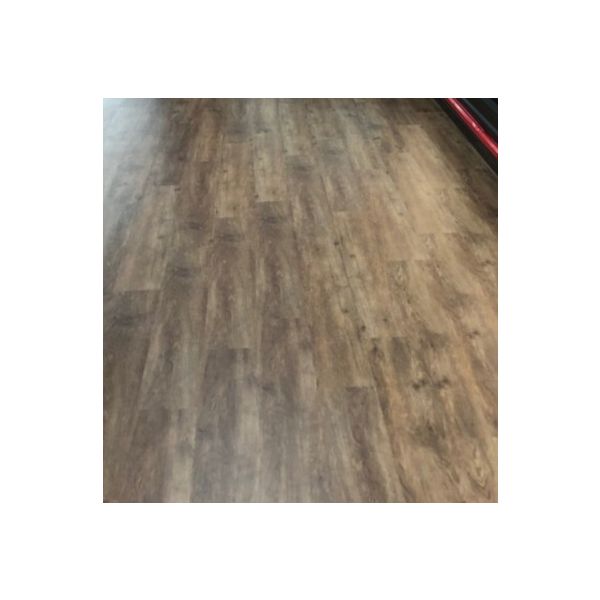
VistaPlank is a 7" x 48" luxury vinyl plank that comes in twenty-one wood colors, more than anything else in our vinyl line. Tiny ceramic beads in the surface help it shrug off scuffs and wear, it holds 2,000 psi without denting, and it is certified for low chemical emissions by both FloorScore and GREENGUARD Gold.
What Twenty-One Colorways Do That a Short Palette Cannot
Most commercial vinyl plank lines give you six or eight choices. That's enough to find something acceptable and rarely enough to find the right thing, so the floor ends up being the surface everyone compromised on and then designed around.
Twenty-one changes what the floor can do. The palette runs from pale greys through warm oaks to genuinely dark woods — Cape Cod Grey and Silver Sand at the light end, Toasted Oak and Harvest Oak in the middle, African Blackwood and Honduran Rosewood at the dark end. That's enough range to match an existing scheme instead of accommodating one.
It also matters across a building. A hospitality group running the same plank line through lobbies, corridors, and guest rooms can shift tone by space while keeping one product, one thickness, and one installation method. Transitions stay flat and the specification stays simple.
Eighteen of the twenty-one use registered embossing, which means the surface texture aligns with the printed grain rather than running as a generic pattern over it. Knots you can see are knots you can feel. That alignment is the main thing separating a convincing wood floor from one that reads as printed the moment you look down.
Three colorways are not registered embossed — Antique Brown, Canyon Dust Cross-Cut, and Whiskey Cross-Cut. They're still embossed, just not in register with the print. Worth knowing if texture realism is driving your choice.
Why 40 Mil, Ceramic Beads, and a 7 by 48 Format
Overall thickness is 3.175 mm — an eighth of an inch — with 1.0 mm of that being wear layer. At 40 mil the wear layer sits above the 28 mil tier most specifications treat as heavy commercial. That ratio matters more than the total, because the wear layer is what stands between traffic and the printed visual underneath.
The surface uses ceramic-bead technology, which disperses hard particles through the coating so the plank resists scuffing and abrasion rather than relying on the wear layer alone. It works alongside the wear layer rather than instead of it — beads handle daily scuffs, the wear layer handles years.
The test results support the commercial positioning. Abrasion resistance rates excellent at under 0.15 grams lost per 1,000 cycles to EN 660. Static load holds to 2,000 psi under ASTM F970 modified. Indentation resistance passes under 8%, and dimensional stability passes EN 986.
Flammability passes ASTM E648 Radiant Panel at Class 1, smoke density passes ASTM E662 under 450, slip resistance exceeds ADA recommendations to ASTM D2047, and it exceeds HUD and FHA requirements.
On format, 7 by 48 is where most commercial specifications land, and it's the reason this is the safest choice when one floor has to work across rooms of different sizes. Wide enough to read as contemporary, not so long that it looks chopped in an average-sized space.
The construction is layered: a transparent 40 mil wear layer over the coating, a high-definition photographic layer beneath that, then registered embossing, vinyl backing and extruded core layers, and an adhesive layer to the subfloor.
Where It Belongs, and Where It Doesn't
Suggested uses run wide: beauty salons, conference rooms, corporate lunchrooms, general office, hospitals, libraries, pharmacies, retail and department stores, resorts, restaurants, spas, and supermarkets. The common thread is steady traffic on a floor that has to look considered.
The air quality certifications open specific doors. FloorScore and GREENGUARD Gold together are the pairing that matters in hospitals, schools, and libraries where occupants are present continuously, and both contribute to green building credit documentation. It sits with the rest of our vinyl flooring, which spans the other plank format and tile.
It's rated Zone 3 and indoor only. That's a hard limit — no covered patios, no sunrooms, nowhere temperature swings.
It's also not an entrance surface. Vinyl plank is not matting, and making it the first thing a wet, gritty shoe touches means it absorbs the full abrasive load every day. Put a proper scraper and wiper system at the door and let the plank start behind it.
And it isn't a stair tread. Stairs need a purpose-built tread with a proper nosing for edge definition and grip, and running plank up a staircase is a different product decision with real safety implications. We carry treads separately.
Three Things to Check Before You Spec It
First, plan for professional glue-down installation. This is an adhesive-set product, not a floating or click-lock floor, and the manufacturer requires professional installation to validate the warranty. That means an installer, a properly prepared subfloor, and a schedule that accounts for conditioning the material before work starts.
Second, narrow the twenty-one colorways down before you order samples. Twenty-one is a genuine advantage and it's also a lot to sort through. Decide your tonal direction first — light and airy, mid-tone warm, or dark and grounding — then ask us for four or five in that range at full size. And check the registered embossing note if texture realism matters to your choice.
Third, test the subfloor for moisture. Adhesive-set flooring depends on a sound bond, and moisture migrating up through a concrete slab can compromise it after everything looks finished. Vinyl is also thin enough to telegraph high spots, old adhesive ridges, and trowel marks. Test and level before the material arrives, not after.
Why Mats Inc.
We've been specifying commercial flooring since 1964, and twenty-one colorways is the kind of choice that helps buyers and overwhelms them in equal measure. What we do is narrow it. Tell us the space, the light it gets, and what's already in the room, and we'll send four or five worth looking at rather than a fan deck. We'll also tell you plainly that this is a professionally installed glue-down floor, because that shapes your schedule and your budget more than the colorway does.
| Product Type |
Luxury vinyl plank (LVP), glue down |
| Plank Size |
7 in. x 48 in. |
| Wear Layer |
40 mil (1.0 mm) |
| Overall Thickness |
0.125 in. (3.175 mm) |
| Manufacturing Standard |
Class III printed film vinyl plank, coated, registered embossed surface |
| Colorways |
21 (18 registered embossed; 3 embossed but not in register) |
| Surface Technology |
Ceramic-bead wear resistance with protective coating |
| Packing |
15 planks per carton / 35 sq. ft. / 34.81 lb. |
| Slip Resistance |
ASTM D2047 — pass, exceeds ADA recommendations |
| Static Load |
ASTM F970 modified — 2,000 psi |
| Abrasion Resistance |
EN 660 — excellent, less than 0.15 g per 1,000 cycles |
| Indentation Resistance |
F 1914 — pass, less than 8% |
| Flammability |
ASTM E648 Radiant Panel — Class 1 |
| Smoke Density |
ASTM E662 — pass, less than 450 sdi |
| Sound Insulation |
DIN 52210 — 4 dB |
| Air Quality |
FloorScore certified; GREENGUARD Gold certified |
| Other Standards |
Stability EN 986 pass; stain and chemical resistance ASTM 925 pass; light resistance F 1515 pass; heat stability ASTM 1514 pass; exceeds HUD/FHA requirements |
| Use Rating |
Zone 3, indoor only |
| Installation |
Glue down; professional installation required |
| Warranty |
1-year limited (Mats Inc.) |
Frequently Asked Questions
What is ceramic-bead technology, and how does it work with the wear layer?
They're two separate defenses doing different jobs. Ceramic-bead technology disperses hard ceramic particles through the surface coating, and because ceramic is considerably harder than vinyl, the surface resists scuffing and abrasion from the things that mark a floor day to day — grit underfoot, chair legs, cart wheels.
The wear layer works on a longer timescale. At 40 mil it's the thickness of clear film standing between traffic and the printed visual underneath, and it determines how many years pass before the pattern starts showing through. The abrasion testing reflects both working together: under 0.15 grams lost per 1,000 cycles, rated excellent to EN 660. When you're comparing this against another product, ask for the wear layer figure specifically — total thickness tells you almost nothing. — Dustin Thompson, Owner & CEO, Mats Inc.
Will it handle carts, shelving, and heavy point loads?
Static load tests at 2,000 psi under ASTM F970 modified, which covers the concentrated loads from shelving legs, equipment feet, and commercial furniture. Indentation resistance passes under 8% to F 1914, meaning it recovers rather than holding a permanent dimple. Dimensional stability passes EN 986, so it holds its shape rather than creeping at the seams.
Two practical notes from the maintenance guidance that people ignore and shouldn't. Vacuum wheels can cause indenting and scuffing, so check them for embedded grit — a wheel carrying a stone will mark a floor faster than any amount of foot traffic. And when vacuuming, turn the beater bar off and use a hose or upholstery attachment. Small habits, big difference over a few years. — Dustin Thompson, Owner & CEO, Mats Inc.
How does it install, and what happens when a plank gets damaged?
It's a glue-down floor, not a floating or click-lock system, and the manufacturer requires professional installation for the warranty to hold. The subfloor has to be structurally sound, clean, smooth, and dry — vinyl is thin enough to telegraph high spots, old adhesive ridges, and trowel marks straight through to the finished surface. Test concrete slabs for moisture before anything is ordered.
Replacement is more straightforward than people expect for an adhesive floor. Warm the damaged plank with a hair dryer to soften the adhesive underneath, lift it with a wide blade putty knife, prep the area, and set a new plank. Never use a heat gun — it puts out too much heat and will damage the material. That's the argument for keeping attic stock from the same run. — Dustin Thompson, Owner & CEO, Mats Inc.
How much do I need, and what does a carton cover?
Each carton holds 15 planks covering 35 square feet and weighs 34.81 pounds — light enough to move around a site easily, which matters on a multi-room job.
Measure each room's length and width in feet, multiply for square footage, add your rooms together, then add roughly ten percent for cuts around door frames, columns, and irregular walls, plus attic stock for replacements down the road. Push that closer to fifteen percent if the space has a lot of angles, built-ins, or a diagonal layout. Divide by 35 and round up for cartons. One thing worth doing: if you're using more than one colorway across a building, work out quantities per colorway before ordering rather than after. Send us the floor plan and we'll do it with you. — Jinna Hopson, Vice President of Marketing, Mats Inc.
How do I choose among twenty-one colorways?
Narrow by tone before you look at anything. The palette splits roughly three ways: light and airy in the greys and pale oaks like Cape Cod Grey, Silver Sand, and Ice Frost Oak; mid-tone warm in Toasted Oak, Harvest Oak, and Wheatfields; and dark and grounding in African Blackwood, Honduran Rosewood, and Smoked Walnut. Pick the direction first and you've cut twenty-one down to seven.
Then look at what's already in the room. Light floors make a space feel larger and show less dust but more scuffing. Dark floors ground a room and read as more formal, though they show dust and footprints sooner. Mid-tones are the most forgiving of both. One technical note worth knowing: eighteen of the twenty-one are registered embossed, meaning the texture lines up with the printed grain. Antique Brown, Canyon Dust Cross-Cut, and Whiskey Cross-Cut are not. If texture realism is what's driving you, stay with the eighteen. — Jinna Hopson, Vice President of Marketing, Mats Inc.
Can I use different colorways across a building, and does it help with certification?
Using several is often the better approach on a larger project, and twenty-one options make it workable in a way a six-color line never is. Run a light tone through open offices where you want the space to feel bigger, something warmer in hospitality or waiting areas, and a darker grounding tone in a boardroom or a feature space. Same product, same thickness, same installation — so transitions sit flat and the specification stays simple.
On certification, this carries both FloorScore and GREENGUARD Gold for indoor air quality emissions. That pairing matters most where people are present continuously — hospitals, schools, libraries, offices — and both contribute to green building credit documentation. If you're chasing points or working to a brand standard, send us the requirements and the palette and we'll tell you how this fits against them. — Jinna Hopson, Vice President of Marketing, Mats Inc.
Written by Jinna Hopson, Vice President of Marketing, Mats Inc.