




More Information
| Manufacturer | Reese |
|---|
Reviews
- Grate inlay MatI was told about this company and wanted to see what they have to offer. This is really a one stop shop for your flooring needs. This product (walk-off mat) is custom and had to talk with the Mats-inc sales people. They really helped me on all my flooring needs for a renovation project.
Posted on
$0.00

Have a question? We're here to help!
Description
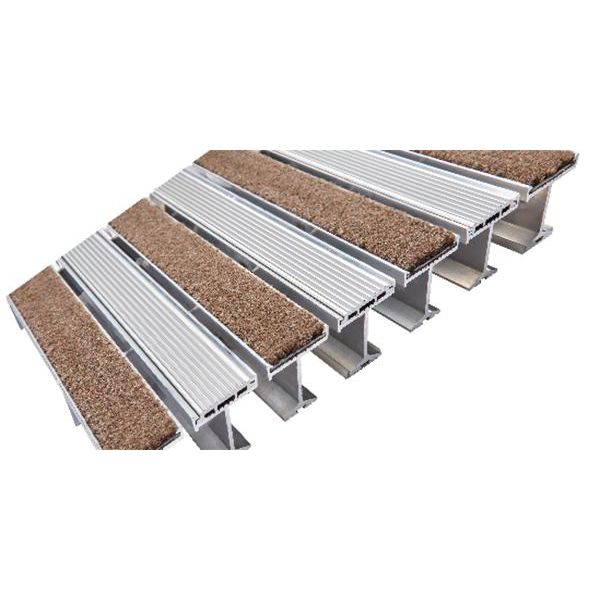
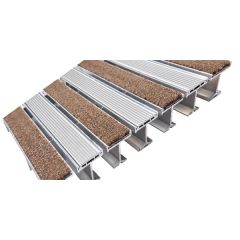
The 1-5/8" rigid grate is the heaviest-built recessed entrance grate we carry — aluminum sections locked and welded into one solid surface, set into a deep pit that scrapes grit and drains water well below the floor. It's the grate you spec for the busiest entrances, where you want maximum strength underfoot and a pit deep enough to hold a season's worth of dirt between cleanings.
What a rigid recessed grate does before grit and water reach your floor
A recessed walk-off grate sits flush in a pit at the entrance, so everyone crosses it coming in. The open surface scrapes dirt off shoes and lets rain, snowmelt, and grit fall into the pit below instead of tracking across your floor. This grate is built deep, so that pit holds a large amount of debris before anyone needs to clear it.
At a busy door, that keeps more than the floor clean. A flush grate that drains water away leaves less standing moisture at the threshold, which is where slips happen. NFSI ties a meaningful share of slip-and-fall claims to building entrances, so pulling water off shoes and into the pit is a safety measure as much as a cleaning one.
Why a rigid welded grate, and why this one
Where the roll-up versions flex, this grate is rigid. The aluminum sections are locked and welded together into a solid structure built for maximum strength, which is what suits it to the heaviest, most constant traffic. There's no hinge to flex underfoot — it's a firm, stable surface.
It still comes apart when you need it to. Each section undocks on its own, so a crew can lift out a panel to clear the pit underneath or to handle the grate during maintenance, then lock it back in. You get the strength of a welded grate without it being a single immovable slab.
At 1-5/8", it's the deepest profile in the line, and the depth is the feature. A deep pit gives rain, snow, dirt, and debris room to collect at a high-traffic entrance, so the grate keeps working longer between cleanings instead of filling up and pushing grit back onto the floor.
As with the rest of the line, you choose the tread — bare serrated aluminum, nylon carpet, Diamond Peak vinyl, or a polypropylene brush — to match how much scraping the entrance needs and the look you want.
Where it belongs, and what it is not
This is the grate for the highest-traffic, most permanent entrances — major retail and grocery doors, transit hubs, convention and hospital entrances, anywhere a steady crowd and the weather come through all day. It's one of our recessed grate systems, set into a deep pit so the surface finishes flush with the floor around it.
It is not a surface-laid or light-duty mat — it needs a deep recessed pit, so it's a poor fit for a slab you can't cut into or a quiet, low-traffic door. And it's not the soft mat that dries shoes; it does the heavy scrape-and-drain at the threshold. Pair it with an absorbent interior mat a few steps inside.
Three things to check before you spec it
First, confirm the pit depth. This is the deepest grate in the line, so it needs a pit cut to suit it. On a new pour that's straightforward to design in; on an existing slab, make sure you can cut a pit deep enough before choosing this grate over a thinner one.
Second, plan how it gets cleaned. A deep pit holds a lot, but it still has to be cleared. The sections undock so a crew can lift them out and clean the pit, so think about access and who handles maintenance on a wide or heavy grate before you finalize the size.
Third, pick the tread for the entrance. Brush knocks off coarse grit, carpet holds fine moisture and reads softer, vinyl gives a wipeable surface, and bare aluminum scrapes hardest. The grate takes any of them, so you match the tread to the door without changing the grate.
Why Mats Inc.
We've specified entrance flooring since 1964, and a rigid recessed grate is a long-term commitment to the floor — once the pit is cut and the grate is set, it's there for years, so the spec has to be right the first time. We help you size the pit, choose the frame and tread, and plan for maintenance before anything gets cut, then ship the grate built to your opening. Mats Inc. specifies the system; your installer sets it into the prepared pit.
| Profile thickness | 1-5/8" (deepest profile in the line) |
| Construction | Rigid aluminum sections locked and welded together for maximum strength; sections undock individually for cleaning and handling |
| Traffic rating | High traffic; heaviest, most permanent entrances |
| Pit | Deep pit; large debris capacity between cleanings |
| Tread / insert options | Bare serrated aluminum (no insert), nylon carpet, Diamond Peak vinyl, or polypropylene brush |
| Color options | Multiple per insert plus anodized aluminum finishes; sample card available for matching |
| Installation | Recessed (pit-embed); deep pit required |
| Drainage | Open construction; rain, snow, dirt, and debris fall into the pit below |
| Spec section | CSI 12 48 13 / 12 48 16 (Entrance Floor Mats & Grilles) |
| Origin | Made in the USA; Buy American Act compliant |
| Warranty | 1-year limited (Mats Inc.) |
Frequently Asked Questions
What makes this a rigid grate instead of a roll-up?
Answered by Dustin Thompson, Owner & CEO
The difference is in how the sections are joined. A roll-up grate uses hinges so it can curl up for cleaning; this one locks and welds its aluminum sections together into a solid, rigid surface built for maximum strength, with no flex underfoot.
When you need to get into the pit, the sections undock individually, so a crew can lift them out, clean underneath, and lock them back in place.
How tough is it, and what shortens its life?
Answered by Dustin Thompson, Owner & CEO
The welded aluminum construction is built for maximum strength, which is why it's the grate for the busiest, most permanent entrances. Aluminum doesn't rust, so the structure isn't fighting the weather.
What actually shortens a grate's useful life is neglect — a deep pit that never gets cleared fills with grit, and once it's full it stops capturing dirt and starts pushing it back onto the floor. Keep the pit cleaned out and a rigid grate lasts a very long time.
Does it need a recessed pit, or can it sit on top of the floor?
Answered by Dustin Thompson, Owner & CEO
It needs a recessed pit. This is the deepest grate in the line, designed to drop into a pit cut into the floor rather than sit on top with a ramp — and that depth is the whole point, because it gives dirt and water room to collect at a busy door. If you can't cut a deep enough pit, a thinner recessed mat is the better fit, and we can steer you to one.
What insert and color options does it come with?
Answered by Jinna Hopson, Vice President of Marketing
The tread comes in four types — bare serrated aluminum, nylon carpet, Diamond Peak vinyl, and polypropylene brush — each in a range of colors, with anodized finishes available on the aluminum. So even though it's a heavy structural grate, you have real say over how it looks.
Because screen colors aren't exact, we send a sample card before you order so the tread matches your floor or your brand.
Can it be made to fit a wide or unusually shaped entrance?
Answered by Jinna Hopson, Vice President of Marketing
Yes. The grate is built in sections to your opening rather than sold in a few stock sizes, so a wide vestibule or a long entry run can be covered fully — the sections lock together across the span. Send us the pit dimensions and we'll build the grate and frame to fit. On a busy door you want it spanning the whole width so traffic can't step around it onto the bare floor.
Will it still look good in a high-traffic lobby a few years in?
Answered by Jinna Hopson, Vice President of Marketing
That's where a heavy grate earns its keep. A flush, rigid grate doesn't curl, ripple, or shift the way a lighter mat can once thousands of people have crossed it, so it tends to keep a clean, intentional look over time.
The tread does the visible aging — carpet shows wear sooner than brush or aluminum — so on the most punishing doors, a harder-wearing tread keeps the entrance looking sharp longer.
By Dustin Thompson, Owner & CEO, Mats Inc.
Ordering Info
These are custom made to order to exact sizes. Please contact us for assistance with sizing options and pricing.
Mats-Inc Phone: 713-748-0200
Email: mats@mats-inc.com
Reviews
Customer Reviews
- Grate inlay MatI was told about this company and wanted to see what they have to offer. This is really a one stop shop for your flooring needs. This product (walk-off mat) is custom and had to talk with the Mats-inc sales people. They really helped me on all my flooring needs for a renovation project.
Posted on
Write Your Own Review
Related Products
Super Scrape Rubber Mats
Safety Track Non-Skid Tape - Coarse

Smooth Marbleized Vinyl Switchboard Matting (Mil Spec)
Super Scrape Rubber Logo Mats
Strip Doors
Perfec Clean 3/8" Rollup Mats - Aluminum Hinge
Perfec Clean 3/8" Rollup Mats - Rubber Hinge
Perfec Clean 3/4" Rollup Grate - Rubber Hinge
Perfec Clean 1-5/8" Grate
WP-70 Non-Skid Epoxy Coating