





Temporary Road Mats
When heavy equipment has to cross soft ground, the ground usually loses. Temporary road mats give crews a working surface that carries the load instead, so the soil underneath stays where it belongs. This category holds two ways to get there: buy the panels outright as a Temporary Road Mat, or bring them in for the length of the job through Temporary Road Mat Rental.
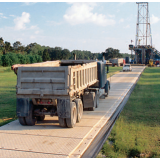 Temporary Road Mat$2,999.00A Temporary Road Mat is a single molded panel, 8 feet by 14 feet, that weighs about half a ton on its own. That mass is the point. This is not a cover laid over the dirt to keep boots clean. It is a structural element that takes concentrated load
...
A Temporary Road Mat is a single molded panel, 8 feet by 14 feet, that weighs about half a ton...
View Details
View Details
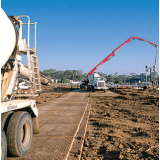 Temporary Road Mat Rental$6.00Most site access problems have an end date. The lane has to hold for a tie-in, a phase, an outage window, or a build season, and then the crews leave and the ground goes back to being someone's field. Temporary Road Mat Rental fits that shape of work: the same
...
Most site access problems have an end date. The lane has to hold for a tie-in, a phase, an outage...
View Details
View Details
What a Temporary Roadway Actually Does
A temporary roadway spreads concentrated wheel and track loads across a much wider footprint. Instead of a loaded truck pressing its full weight through four contact patches, that force gets distributed over the panel and into the ground as a whole. Rutting slows down, soft spots stop swallowing tires, and the access lane stays passable after rain instead of turning into the reason nobody works that morning.
The panels here are compression-molded high-density polyethylene, formed as a single piece rather than layered or laminated. Each one measures 8' x 14' x 4" and delivers 91 usable square feet of surface. The formula carries UV protection for long outdoor exposure and static dissipation, and the sealed, non-permeable body will not absorb fuel, mud, or standing water.
What turns individual panels into an actual road is the connection system. A locking pin with a stainless-steel rotor core inside a thermoplastic polyurethane housing ties each mat to its neighbors, forming one continuous surface. Because the panels are two-sided and flexible, crews can lay them either face up and follow the contour of uneven ground without shimming or grading first.
The Mistake That Burns Site Managers
The instinct is understandable: plywood sheets or timber mats are already on the yard, so why not use what you have? The trouble shows up on day three. Loose panels shift under traffic, edges lift, and gaps open between pieces. Those gaps become trip hazards for crews on foot and catch points for tracked equipment, and every pass makes the surface a little worse.
A pinned, continuous surface removes that failure mode by design. Nothing moves independently, so there is no differential movement between panels and no gapping to step into. Sites running composite matting have documented reductions in recordable injury rates, which matters more on projects where the same crew crosses the same lane forty times a day.
Logistics is the second place timber costs you. A standard 18-wheeler carries 46 composite panels, which works out to more than 4,100 square feet of surface per load, roughly three times what the same truck moves in traditional timber. On a phased job with shifting access routes, that ratio decides how many trips your crew spends hauling instead of building.
How the Two Options Compare
Temporary Road Mat is the purchase route, and it makes sense when site access is a recurring condition of how you work rather than a one-time problem. The panels carry a 12-plus year performance life, and because they are non-absorbent and fully recyclable at end of life, they clean up with a rinse and go back on the trailer for the next job. Owning the fleet also means you control deployment timing instead of waiting on availability. Strongest fit for utility contractors, pipeline crews, and civil construction firms cycling the same panels across multiple sites in a season.
Temporary Road Mat Rental puts the same panel on your site without the yard space, handling equipment, or off-season storage that ownership assumes. It fits work with a defined end date, and it fits projects where the access route changes shape as phases complete and nobody can say up front how much surface the job will need. Strongest fit for one-off builds, storm and outage response, film and event grounds on turf, and municipal work where the access footprint is set by permit rather than by preference.
Three Things to Check Before You Pick
Your heaviest single load, not your average one. These panels are rated to 600 psi compressive strength, which works out to 86,400 pounds per square foot. That number matters most under crane outriggers and boom trucks, where the entire machine concentrates through a few small pads. Size the lane around that worst case, not around the pickup trucks that use it most often.
Coverage math, including the parts nobody measures. At 91 usable square feet per panel, a 200-foot access lane one panel wide runs roughly 15 mats. Then add turning radii at both ends, the staging pad, and any pull-off where two vehicles need to pass. Access lanes almost always need more surface than the straight-line distance suggests, and coming up short mid-project stalls the work.
How long the surface has to stay put. This is the factor that separates the two options cleanly. Recurring, multi-site access over years points to the purchase route with Temporary Road Mat. A single project with a known completion date, or one where the footprint is still in flux, points to Temporary Road Mat Rental. If you genuinely cannot tell yet, rental keeps the decision open.
Why Mats Inc.
We have been supplying commercial and industrial flooring since 1964, which means we have spent a long time on the specification side of these conversations rather than the catalog side. Ground protection is a load problem and a logistics problem before it is a product problem, and the right answer depends on your equipment list, your soil, and how long the lane has to hold.
Send us the site conditions and the heaviest machine crossing that lane, and we will work the coverage and configuration with you. If rental is the better call for your timeline, we will say so.
Frequently Asked Questions
What are temporary road mats made of, and why not just use timber?
These are compression-molded high-density polyethylene, formed as one solid piece rather than assembled from layers or planks. That construction is what keeps them from splintering, warping, or absorbing water the way wood does after a few wet cycles. The panels are also non-permeable and sealed, so fuel spills and mud stay on the surface instead of soaking in, and they can be washed off before the mats move to the next site. Timber still has a place on some jobs, but it does not survive repeated redeployment the same way, and it takes about three times the truck space to move the same coverage. — Dustin Thompson
How much weight can they actually carry?
Compressive strength is rated at 600 psi, or 86,400 pounds per square foot. In practice that covers the heavy end of what rolls onto a job site: loaded dump trucks, excavators, boom trucks, and crane setups. The figure to check against is not vehicle weight but contact pressure, since a crane putting its full weight through four outrigger pads concentrates far more force per square inch than a truck spreading it across six tires. Each panel weighs about 1,000 pounds on its own, which is part of why the surface stays put under traffic rather than creeping. — Dustin Thompson
Do we need to grade or prep the ground first?
Usually not. The panels are flexible and two-sided by design, so they follow the contour of uneven ground and can be laid either face up. Crews typically clear obvious obstructions, large rocks, stumps, sharp debris, then lay the mats end to end along the intended lane and connect them with the locking pins. On genuinely soft or saturated soil the surface may settle slightly under the first few passes as the load distributes, which is normal and does not require relaying. Deployment is fast enough that most access lanes go in the same day the mats arrive. — Dustin Thompson
Is it better to rent or to buy?
It comes down to how often you need site access, and how much yard you have. If ground protection is a regular part of your work and you are moving panels between jobs through the season, owning them means they are ready when the schedule says go. If this is one project with a finish date, rental gets the same panel onto the site without committing your storage space or your handling equipment to something you will use once. There is also a middle case worth naming: when the access footprint is still changing as phases complete, rental keeps you from guessing at quantity before you know the answer. — Jinna Hopson
What does the ground look like after we pull the mats up?
Far better than the alternative, which is the whole point on turf, landscaped areas, and anywhere a property owner is watching. Because the load spreads across the panel instead of concentrating in tire tracks, you avoid the deep rutting and soil compaction that take a season to recover from. The sealed, non-permeable surface also keeps soil, seeds, and plant material from transferring between sites, which matters on projects with invasive species conditions in the permit. Expect flattened grass and some settling rather than the torn-up scar that unprotected access leaves behind. — Jinna Hopson
How do the mats get to our site, and how many fit on a truck?
They ship on standard flatbed trailers, 46 panels to a U.S. 18-wheeler, which comes out to more than 4,100 square feet of surface per load. Knowing that ratio ahead of time helps you plan delivery windows against your build schedule, especially on phased work where the access route extends as the project moves. You will need equipment on site capable of handling 1,000-pound panels, typically a telehandler or an excavator with a thumb. Tell us the lane length and site access when you reach out and we will work out the load count with you. — Jinna Hopson
Written by Dustin Thompson, Owner & CEO, Mats Inc.