




More Information
| Manufacturer | Newpark Mats & Integration/NPK |
|---|
Reviews
- road mats needed for safe accessMats-Inc was easy to work with was able to get the mats we needed to complete the jog without having to purchase
Posted on
$6.00

Have a question? We're here to help!
Description
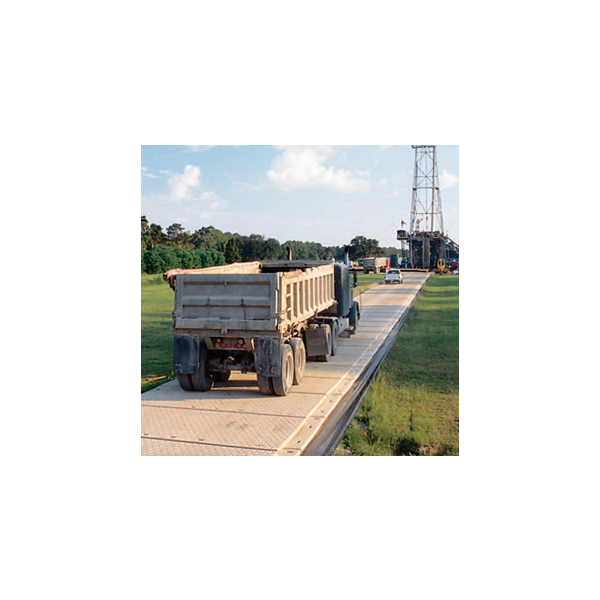
Most site access problems have an end date. The lane has to hold for a tie-in, a phase, an outage window, or a build season, and then the crews leave and the ground goes back to being someone's field. Temporary Road Mat Rental fits that shape of work: the same heavy composite panels that carry cranes and loaded trucks, on site for as long as the job runs and gone when it doesn't.
What Rented Access Solves Before the Schedule Slips
The hard part of temporary access is rarely the mat. It is that nobody knows the final footprint on day one. Routes move as phases complete, a staging pad turns out to need twice the surface anyone drew, and a wet week turns a lane that was fine into the reason two crews are standing around.
Renting keeps that uncertainty from becoming a permanent decision. You put surface where the work actually is, adjust as the site reveals itself, and hand the panels back at demobilization instead of finding somewhere to keep half an acre of polyethylene until the next project needs it.
There is a second thing renting solves, and it is the one people notice at the end. Ground that carried traffic on a distributed surface comes back. Ground that carried it directly needs restoration, and that work lands on whoever signed the permit. Getting surface down early is what keeps that scope off the closeout.
Why This Panel, and Why It Holds Up in a Rental Fleet
Every panel is a single slab of high-density polyethylene shaped under compression, with no plies, planks, or hardware buried inside it. That is precisely what makes them viable as fleet equipment: nothing can work loose or separate internally, so a mat cannot accumulate hidden damage across the sites it has already served.
The sealed, non-permeable body matters for the same reason. Fuel, mud, and standing water stay on the surface instead of soaking in, so panels wash down between deployments and arrive clean rather than carrying the last job with them. On sites where permits address invasive species, that sealed surface is doing real work.
Capacity does not soften with fleet age either. Each mat is rated to 600 psi compressive strength, covers 91 usable square feet, and holds a rated life beyond a dozen years. A panel in its sixth season carries what a new one carries. If you want the full engineering detail behind the construction, it lives on the Temporary Road Mats category page alongside the purchase option.
Where Renting Belongs, and Where It Doesn't
Rental is the stronger call whenever the access requirement has a horizon. Single pipeline tie-ins and utility cut-overs, storm and outage response where nobody planned for the site at all, film and event production on turf, municipal work where a permit sets the footprint, and phased civil construction where the lane extends as the project moves.
It also fits contractors who have the work but not the yard. Panels weigh about 1,000 pounds each and stack into serious square footage, so owning a fleet means committing storage, handling equipment, and someone's attention to maintaining it between jobs. Renting moves all of that off your side of the fence.
Where renting stops making sense: if site access is a standing condition of how you operate, and you are running panels across multiple sites continuously through the season, ownership gives you control over timing that a rental calendar cannot. Crews that mat something every month are usually better served buying.
One thing rental does not change is the handling requirement. Placement and pickup call for lifting equipment rated to move half-ton panels repeatedly. Sort that out before the trailer gets scheduled, because who owns the mats has no bearing on it.
Three Things to Check Before You Book It
First, work out the footprint honestly, including the parts that are not the straight run. At 91 usable square feet a panel, a 200-foot lane one panel wide is roughly 15 mats, and then turning radii at both ends, the staging pad, and any passing pull-off routinely add a third again on top. Booking short and discovering it mid-phase is the most common way these go wrong.
Second, map the delivery against your build sequence rather than your start date. One trailer moves 46 panels, roughly 4,100 square feet of coverage, so any lane past that size arrives in stages. Knowing which section of the route has to go live first tells us what order to send them in.
Third, pin down both ends of the window, not just the front. Demobilization needs a laydown area, machine time, and enough notice to schedule pickup, and projects that plan the arrival carefully often leave the departure vague. Tell us your target completion and how firm it is, and we will talk through how to structure the period around a schedule that may move.
Why Mats Inc.
Rental works when the quantity and the sequence are right, and getting those right takes a conversation about your site rather than a line item on an order. We have been in commercial and industrial flooring since 1964, and on ground protection that mostly means we will ask what is crossing the lane, where it turns, and how firm your dates are before anyone talks quantity. If your volume says you should own these instead, we will say so.
Panel Specifications
| Material | Compression-molded high-density polyethylene, single-piece construction |
| Panel Size | 8' x 14' x 4" (2.44 m x 4.27 m x 10.2 cm) |
| Usable Coverage | 91 sq ft per panel |
| Panel Weight | 1,000 lbs (454 kg) |
| Compressive Strength | 600 psi (86,400 psf) |
| Connection System | Interlocking locking pin; stainless-steel rotor core in thermoplastic polyurethane body |
| Material Properties | UV protection; static dissipation; non-permeable sealed body |
| Transport | 46 panels per U.S. standard 18-wheeler; 4,100+ sq ft per load |
| Site Handling | Telehandler or excavator with thumb required for placement and pickup |
| Rental Terms | Quoted by project — contact us with lane length, equipment, and dates |
Frequently Asked Questions
What condition do rental panels show up in?
Working condition, with honest wear. Panels come back from previous sites, get washed down, and get inspected before they go out again, so what arrives is clean rather than carrying the last job's mud. There will be visible marking where tracked machines have worked the surface, since these are fleet panels rather than showroom stock. What you should not see is cracking, delamination, or edge damage that affects how the mats sit and lock together. If something arrives that does not look right to your site supervisor, tell us and we will sort it out rather than having your crew work around it. — Dustin Thompson
Does a used panel carry as much as a new one?
Yes, and the construction is why. Compressive strength is rated at 600 psi, or 86,400 pounds per square foot, and that rating comes from the panel body itself rather than from fasteners or laminate layers that loosen with age. There is no internal joint to fatigue, so there is no mechanism by which a panel quietly loses capacity across deployments. Rated life extends beyond a dozen years, and original-production panels remain in active fleets today. Practical upshot: spec the lane against your worst point load, usually crane outriggers rather than your heaviest truck, and fleet age is not a variable you need to account for. — Dustin Thompson
What does the site need to have ready for delivery and pickup?
Two things, at both ends of the job. First, a machine that can lift half a ton repeatedly; most sites use a telehandler, though a tracked excavator with a thumb does the job. Second, a laydown area with truck access where a trailer can offload without blocking the work. Each load brings 46 panels, so plan where they stage before they go down the lane. Pickup needs the same two things plus notice, and it is the part crews forget when a project wraps faster than expected. Flag your demobilization window when you book and we will schedule around it. — Dustin Thompson
How do we set the rental period when our schedule is not firm?
Start from the phase the mats are actually serving rather than the whole project. Most access requirements are tied to one span of work, and dating the rental against that span is more accurate than guessing at overall completion. If the dates genuinely could move, say so up front, because a period structured with that expectation is easier to work with than one that has to be renegotiated mid-job. Terms are quoted by project, so reach out with your target window and how firm it is and we will build the arrangement around the schedule you actually have. — Jinna Hopson
Can we add or return panels partway through a project?
That flexibility is usually the reason people rent rather than buy, and it works best with a bit of warning. Sites regularly discover mid-phase that a staging pad needs more surface than anyone drew, or that a route extends further than the original plan. Because the panels interlock into a continuous run, adding to an existing lane is straightforward rather than a rebuild. Returning surface you no longer need works the same way in reverse. Give us lead time on either move so we can schedule transport rather than scrambling a truck, and tell us which section changes so we send the right count. — Jinna Hopson
Can we combine rented panels with mats we already own?
Often yes, and it is a common setup for contractors who own enough surface for routine work but hit a project that needs more. The thing to confirm first is the connection system, since panels only form a continuous run when they interlock with the same locking hardware. Mats from a different system will sit next to each other but will not tie together, which reintroduces the gapping and edge lift you are trying to avoid in the first place. Tell us what you already have on the yard and we will work out whether it integrates or whether the rented section should run as its own continuous stretch. — Jinna Hopson
Written by Jinna Hopson, Vice President of Marketing, Mats Inc.
Reviews
Customer Reviews
- road mats needed for safe accessMats-Inc was easy to work with was able to get the mats we needed to complete the jog without having to purchase
Posted on
Write Your Own Review
Related Products
Super Scrape Rubber Mats
Safety Track Non-Skid Tape - Coarse

Smooth Marbleized Vinyl Switchboard Matting (Mil Spec)
Super Scrape Rubber Logo Mats
Strip Doors
Perfec Clean 3/8" Rollup Mats - Aluminum Hinge
Perfec Clean 3/8" Rollup Mats - Rubber Hinge
Perfec Clean 3/4" Rollup Grate - Rubber Hinge
Perfec Clean 1-5/8" Grate
WP-70 Non-Skid Epoxy Coating