




Turtle Plastics
Turtle Plastics provides premium, eco-friendly flooring and matting solutions engineered for safety, durability, and environmental sustainability. With products crafted from recycled materials, Turtle Plastics offers versatile floor matting ideal for industrial, commercial, and recreational applications. Their innovative flooring options are designed to improve traction, reduce slip risks, and withstand high-traffic environments.
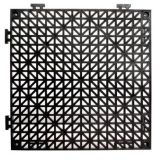 Cushion Tile
Starting at $10.00
What Cushion Tile does before a hard, wet floor wears people out A wet concrete or tile floor around a pool, in a plant room, or behind a counter does two kinds of damage you don't always connect. It's slick where water sits, and it's punishing to stand on for...
What Cushion Tile does before a hard, wet floor wears people out A wet concrete or tile floor around a...
What Cushion Tile does before a hard, wet floor wears people out
A wet concrete or tile floor around a pool, in a plant room, or behind a counter does two kinds of damage you don't always connect. It's slick where water sits, and it's punishing to stand on for hours — hard, cold, and unforgiving on legs, backs, and feet. Most people notice the slip risk and miss the standing fatigue, but both come from the same hard, wet surface.
Cushion Tile takes on both at once. Each tile is a thick, flexible vinyl square with a waffle-grid, open-mesh surface, so it lifts your feet up out of the water while water drains away through the grid below. At the same time, the give in the recycled vinyl cushions every step, so a floor that used to punish now gives a little back. You stand drier and more comfortably on the same spot.
On a wet, hard floor, that combination matters more than it looks. Standing all day on unforgiving concrete is a genuine source of fatigue and strain, and standing water on top of it adds a slip risk. A cushioned tile that raises feet above the water and softens the surface underneath is protecting the people on it and the floor itself.
Why a recycled cushioned tile, and why this one
Cushion Tile is molded from recycled flexible vinyl, which does two useful things. It gives the tile its cushioning flex — enough to conform to an uneven floor and soften a hard surface underfoot — and it puts a recycled material to work instead of a virgin one, which matters if sustainability is part of your spec. The vinyl is grease and moisture resistant, so a wet or greasy floor doesn't break it down.
The surface is a waffle-grid, open-mesh top on a 3/4-inch-thick tile — noticeably thicker than a thin drainage mat, which is where the cushioning comes from. The open grid lets water and debris fall through and away, keeping the top of the tile clear while your feet stay up above any standing water. It guards against slipping and against the wear that vibration and moisture put on a floor.
It goes down without tools or a contractor. The 12-by-12-inch tiles interlock on every side to build a surface of any size or shape, and they trim to fit around a drain, a bench, or a corner. Interlocking beveled edge and corner pieces ramp the 3/4-inch height down to the floor for a finished, trip-free border. When it's time to clean, you lift a section, rinse, and drop it back.
Where it belongs — and what it isn't
Cushion Tile suits any hard, wet, or greasy floor where people stand or move around. That includes pool decks and surrounds, locker and changing rooms, and shower approaches, but also the wet, standing-work zones it was bred for — behind bars and counters, in plant and equipment rooms, workshops, and washdown areas. Because it handles indoors and out and conforms to an uneven floor, it covers a lot of different ground.
It's worth being clear about what this isn't. It's a walk-on cushioned floor tile, not a flotation device, and not the liner sheet that goes under an above-ground pool. If you want a mat to put under a pool or a float for the water, this isn't that product. Cushion Tile installs on top of your existing floor and turns a hard, wet surface into a cushioned, draining one.
One honest note on grip: this tile's strength is cushioning and lifting feet above the water, and its waffle surface gives solid footing for a walkway or standing area. For the most slip-critical wet spots — a steep, constantly streaming surface where aggressive traction is the priority — a coarser, grittier surface may serve better, and we can point you to one. For general wet-area comfort and safety, this is a strong fit.
Three Things to Check Before You Spec It
Cushion Tile is simple to order once you've thought through three things.
First, size the coverage and count your tiles. Each tile covers one square foot, so a deck or work zone is just its area in tiles, plus edge and corner pieces for any exposed sides. Because it's ideal for covering large surfaces, map the whole area you want cushioned and draining, not just a single standing spot.
Second, plan your edges. Wherever the tiled surface meets open floor people step onto, the beveled edge and corner pieces ramp the 3/4-inch height down so there's no lip to trip on and carts can roll on and off. Decide which sides are exposed before you order so the right ramp pieces come with the tiles.
Third, pick a color for the setting. It comes in several colors, including blue, green, gray, red, and beige, with more available. Blue and gray read clean and neutral around a pool or in a locker room; beige is easy and warm; brighter colors can zone an area or mark a walkway. Darker, muted tones show grit the least between cleanings.
Why Mats Inc.
We've been matching mats to real floors since 1964, and a hard, wet floor is one of the clearest cases for the right surface — it shows up in comfort, safety, and how the floor holds up. We'll help you work out how many tiles and edge pieces your space needs, choose a color for the room, and flag whether Cushion Tile's cushioned surface or a grittier one suits your particular wet spot. It's part of our wider lineup of pool and wet-area matting, and every order is backed by our 1-year limited warranty.
Material Recycled flexible vinyl Surface Waffle-grid, open-mesh top Tile size 12" x 12" Thickness 3/4" Weight ~1.5 lb per tile Colors Blue, green, gray, red, beige (more available) Edge / corner pieces Interlocking beveled edge (2" x 12") and corner (2" x 13.6") ramps Installation Interlocking modular; snaps together; trims to fit any size or shape Use Indoor or outdoor; grease and moisture resistant; conforms to uneven floors Sustainability Made from recycled material Warranty 1-year limited (Mats Inc.) Frequently Asked Questions
How does Cushion Tile keep feet out of the water and still feel soft?
Answered by Dustin Thompson, Owner & CEO
It does both jobs with one design. Each tile is a 3/4-inch-thick square of flexible recycled vinyl with a waffle-grid, open-mesh top. The grid raises your feet above the floor and lets water drain straight through and away, so you're standing on the tile rather than in a puddle. And because the vinyl is thick and flexible, it gives underfoot — that cushioning is where the "cushion" in the name comes from. The same flex also lets it conform to a floor that isn't perfectly flat.
Will it hold up on a wet, greasy, or outdoor floor?
Answered by Dustin Thompson, Owner & CEO
It's built for exactly those conditions. The recycled vinyl is grease and moisture resistant, so a wet pool deck, a greasy back-of-house floor, or a damp plant room won't degrade it, and it works indoors or outdoors. It also guards the floor beneath it from the wear that vibration and moisture cause. At 3/4 inch thick it's a substantial tile rather than a thin mat, and while the maker rates it for years of service, through us it's backed by our 1-year limited warranty.
What size are the tiles, and can I cover a big area?
Answered by Dustin Thompson, Owner & CEO
Each tile is 12 by 12 inches — one square foot — and they interlock on every side, so you can build a surface of any size or shape by snapping more together. It's specifically suited to covering large surfaces, so a whole pool deck or work floor is very doable. The tiles trim to fit around drains, corners, and equipment, and interlocking beveled edge and corner pieces finish the exposed borders. Custom sizing is available if you need it.
Where does Cushion Tile make the most sense?
Answered by Jinna Hopson, VP of Marketing
Anywhere a hard floor is wet or greasy and people stand or move on it. Around water, that's pool decks and surrounds, locker and changing rooms, and shower approaches. It's just as at home in the standing-work spots it was designed for — behind a bar or counter, in a plant or equipment room, a workshop, or a washdown area. Because it works indoors and out and conforms to uneven ground, it fits both a poolside setting and a working back-of-house floor.
What colors does it come in, and how should I choose?
Answered by Jinna Hopson, VP of Marketing
It comes in several colors, including blue, green, gray, red, and beige, with more available. The color is a chance to fit the tile to the room: blue and gray feel clean and neutral around a pool or in a locker room, beige reads warm and low-key, and brighter shades like green or red can mark off a walkway or zone an area for safety. If you want the floor to stay looking tidy between cleanings, the darker, muted tones hide grit and debris best.
My space is an odd shape — can I make it fit, and even zone areas by color?
Answered by Jinna Hopson, VP of Marketing
Yes to both. Because every tile interlocks on all sides and trims with a knife, you can build a surface to any footprint — around a curved pool edge, a drain, or a bench — and finish the exposed sides with beveled edge and corner ramps for a clean border. And with several colors to choose from, you can mix them to mark walkways, zone a wet area, or match a facility's look. Send us your layout and we'll help you plan the tiles, edges, and colors.
Written by Dustin Thompson, Owner & CEO, Mats Inc.
↑
What Cushion Tile does before a hard, wet floor wears people out
A wet concrete or tile floor around a pool, in a plant room, or behind a counter does two kinds of damage you don't always connect. It's slick where water sits, and it's punishing to stand on for hours — hard, cold, and unforgiving on legs, backs, and feet. Most people notice the slip risk and miss the standing fatigue, but both come from the same hard, wet surface.
Cushion Tile takes on both at once. Each tile is a thick, flexible vinyl square with a waffle-grid, open-mesh surface, so it lifts your feet up out of the water while water drains away through the grid below. At the same time, the give in the recycled vinyl cushions every step, so a floor that used to punish now gives a little back. You stand drier and more comfortably on the same spot.
On a wet, hard floor, that combination matters more than it looks. Standing all day on unforgiving concrete is a genuine source of fatigue and strain, and standing water on top of it adds a slip risk. A cushioned tile that raises feet above the water and softens the surface underneath is protecting the people on it and the floor itself.
Why a recycled cushioned tile, and why this one
Cushion Tile is molded from recycled flexible vinyl, which does two useful things. It gives the tile its cushioning flex — enough to conform to an uneven floor and soften a hard surface underfoot — and it puts a recycled material to work instead of a virgin one, which matters if sustainability is part of your spec. The vinyl is grease and moisture resistant, so a wet or greasy floor doesn't break it down.
The surface is a waffle-grid, open-mesh top on a 3/4-inch-thick tile — noticeably thicker than a thin drainage mat, which is where the cushioning comes from. The open grid lets water and debris fall through and away, keeping the top of the tile clear while your feet stay up above any standing water. It guards against slipping and against the wear that vibration and moisture put on a floor.
It goes down without tools or a contractor. The 12-by-12-inch tiles interlock on every side to build a surface of any size or shape, and they trim to fit around a drain, a bench, or a corner. Interlocking beveled edge and corner pieces ramp the 3/4-inch height down to the floor for a finished, trip-free border. When it's time to clean, you lift a section, rinse, and drop it back.
Where it belongs — and what it isn't
Cushion Tile suits any hard, wet, or greasy floor where people stand or move around. That includes pool decks and surrounds, locker and changing rooms, and shower approaches, but also the wet, standing-work zones it was bred for — behind bars and counters, in plant and equipment rooms, workshops, and washdown areas. Because it handles indoors and out and conforms to an uneven floor, it covers a lot of different ground.
It's worth being clear about what this isn't. It's a walk-on cushioned floor tile, not a flotation device, and not the liner sheet that goes under an above-ground pool. If you want a mat to put under a pool or a float for the water, this isn't that product. Cushion Tile installs on top of your existing floor and turns a hard, wet surface into a cushioned, draining one.
One honest note on grip: this tile's strength is cushioning and lifting feet above the water, and its waffle surface gives solid footing for a walkway or standing area. For the most slip-critical wet spots — a steep, constantly streaming surface where aggressive traction is the priority — a coarser, grittier surface may serve better, and we can point you to one. For general wet-area comfort and safety, this is a strong fit.
Three Things to Check Before You Spec It
Cushion Tile is simple to order once you've thought through three things.
First, size the coverage and count your tiles. Each tile covers one square foot, so a deck or work zone is just its area in tiles, plus edge and corner pieces for any exposed sides. Because it's ideal for covering large surfaces, map the whole area you want cushioned and draining, not just a single standing spot.
Second, plan your edges. Wherever the tiled surface meets open floor people step onto, the beveled edge and corner pieces ramp the 3/4-inch height down so there's no lip to trip on and carts can roll on and off. Decide which sides are exposed before you order so the right ramp pieces come with the tiles.
Third, pick a color for the setting. It comes in several colors, including blue, green, gray, red, and beige, with more available. Blue and gray read clean and neutral around a pool or in a locker room; beige is easy and warm; brighter colors can zone an area or mark a walkway. Darker, muted tones show grit the least between cleanings.
Why Mats Inc.
We've been matching mats to real floors since 1964, and a hard, wet floor is one of the clearest cases for the right surface — it shows up in comfort, safety, and how the floor holds up. We'll help you work out how many tiles and edge pieces your space needs, choose a color for the room, and flag whether Cushion Tile's cushioned surface or a grittier one suits your particular wet spot. It's part of our wider lineup of pool and wet-area matting, and every order is backed by our 1-year limited warranty.
Material Recycled flexible vinyl Surface Waffle-grid, open-mesh top Tile size 12" x 12" Thickness 3/4" Weight ~1.5 lb per tile Colors Blue, green, gray, red, beige (more available) Edge / corner pieces Interlocking beveled edge (2" x 12") and corner (2" x 13.6") ramps Installation Interlocking modular; snaps together; trims to fit any size or shape Use Indoor or outdoor; grease and moisture resistant; conforms to uneven floors Sustainability Made from recycled material Warranty 1-year limited (Mats Inc.) Frequently Asked Questions
How does Cushion Tile keep feet out of the water and still feel soft?
Answered by Dustin Thompson, Owner & CEO
It does both jobs with one design. Each tile is a 3/4-inch-thick square of flexible recycled vinyl with a waffle-grid, open-mesh top. The grid raises your feet above the floor and lets water drain straight through and away, so you're standing on the tile rather than in a puddle. And because the vinyl is thick and flexible, it gives underfoot — that cushioning is where the "cushion" in the name comes from. The same flex also lets it conform to a floor that isn't perfectly flat.
Will it hold up on a wet, greasy, or outdoor floor?
Answered by Dustin Thompson, Owner & CEO
It's built for exactly those conditions. The recycled vinyl is grease and moisture resistant, so a wet pool deck, a greasy back-of-house floor, or a damp plant room won't degrade it, and it works indoors or outdoors. It also guards the floor beneath it from the wear that vibration and moisture cause. At 3/4 inch thick it's a substantial tile rather than a thin mat, and while the maker rates it for years of service, through us it's backed by our 1-year limited warranty.
What size are the tiles, and can I cover a big area?
Answered by Dustin Thompson, Owner & CEO
Each tile is 12 by 12 inches — one square foot — and they interlock on every side, so you can build a surface of any size or shape by snapping more together. It's specifically suited to covering large surfaces, so a whole pool deck or work floor is very doable. The tiles trim to fit around drains, corners, and equipment, and interlocking beveled edge and corner pieces finish the exposed borders. Custom sizing is available if you need it.
Where does Cushion Tile make the most sense?
Answered by Jinna Hopson, VP of Marketing
Anywhere a hard floor is wet or greasy and people stand or move on it. Around water, that's pool decks and surrounds, locker and changing rooms, and shower approaches. It's just as at home in the standing-work spots it was designed for — behind a bar or counter, in a plant or equipment room, a workshop, or a washdown area. Because it works indoors and out and conforms to uneven ground, it fits both a poolside setting and a working back-of-house floor.
What colors does it come in, and how should I choose?
Answered by Jinna Hopson, VP of Marketing
It comes in several colors, including blue, green, gray, red, and beige, with more available. The color is a chance to fit the tile to the room: blue and gray feel clean and neutral around a pool or in a locker room, beige reads warm and low-key, and brighter shades like green or red can mark off a walkway or zone an area for safety. If you want the floor to stay looking tidy between cleanings, the darker, muted tones hide grit and debris best.
My space is an odd shape — can I make it fit, and even zone areas by color?
Answered by Jinna Hopson, VP of Marketing
Yes to both. Because every tile interlocks on all sides and trims with a knife, you can build a surface to any footprint — around a curved pool edge, a drain, or a bench — and finish the exposed sides with beveled edge and corner ramps for a clean border. And with several colors to choose from, you can mix them to mark walkways, zone a wet area, or match a facility's look. Send us your layout and we'll help you plan the tiles, edges, and colors.
Written by Dustin Thompson, Owner & CEO, Mats Inc.
↑
View Details
View Details
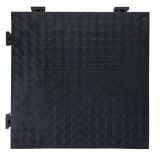 Solid Top Cushion Tile
Starting at $10.00
Solid Top Cushion Tile is a modular anti-fatigue mat for dry work areas: solid-surface vulcanized rubber sections that lock together into whatever footprint your line, cell, or bench run actually needs. The top stays sealed so debris sweeps off instead of falling in, while rubber nibs underneath keep air...
Solid Top Cushion Tile is a modular anti-fatigue mat for dry work areas: solid-surface vulcanized rubber sections that lock...
Solid Top Cushion Tile is a modular anti-fatigue mat for dry work areas: solid-surface vulcanized rubber sections that lock together into whatever footprint your line, cell, or bench run actually needs. The top stays sealed so debris sweeps off instead of falling in, while rubber nibs underneath keep air moving beneath the mat and add give to every step.
What Solid Top Cushion Tile Does Before a Dry Floor Wears Your Crew Down
Dry industrial floors punish people twice. Concrete stiffens legs and backs over a shift, and the fixed rectangular mats most facilities buy never quite fit the workspace — so operators end up standing half on, half off the cushion, right where the work happens.
A modular solid-top mat closes both gaps. Sections connect into the real shape of the station, so the cushion is under every position that matters. The textured surface keeps footing sure, and the sealed top means metal shavings, dust, and packaging debris stay where a broom can reach them.
The nib underside does quiet work too: it holds the mat off the floor so air circulates beneath, keeping the concrete under the mat drier instead of sealing in mopping moisture and condensation.
Why This Construction, and Why This One
The body is vulcanized rubber with an anti-fatigue textured surface, and it wears like it sounds: surface loss of half a percent or less after 1,000 cycles on the standard abrasion test. At 2.2 pounds per square foot, an assembled installation has real heft — it stays where you put it without adhesive.
Connectors are molded into two sides of each 3-by-3-foot section, so assemblies build out in any direction, reconfigure when the work cell changes, and let a worn high-traffic section swap out individually. The compound carries 47% recycled material, and flammability is rated to DOC FF 1-70.
Edging is optional: snap-on beveled ramps, in black or safety yellow, finish any side that faces foot traffic. Each finished side adds roughly 3 inches to the overall dimension.
Where It Belongs, and What It Is Not
This tile earns its footprint in factories, workstations, large work cells, and assembly lines — dry areas where coverage is big, irregular, or likely to be rearranged, and where debris control matters as much as cushion. If your matting needs to wrap a machine base or follow an L-shaped bench run, modular is the format that fits.
It is not a wet-area mat: no drainage means standing liquid stays on top, so washdown zones and greasy lines call for a perforated mat instead. And a single fixed station with standard dimensions is served more simply by a one-piece mat from the anti-fatigue mats and runners range. This tile's case is dry coverage shaped like your work, not like a stock rectangle.
Three Things to Check Before You Spec It
First, confirm the area truly runs dry. Occasional mopping is fine — the nib underside helps the floor beneath dry — but recurring spills, washdowns, or oil point you to a drainage-style mat rather than a solid top.
Second, map the real footprint. Sections are 3 by 3 feet, custom assemblies run up to 12 by 30 feet, and workstation layouts order in full-foot increments. Sketch where people actually stand and walk through a full shift — the point of modular is covering that shape edge to edge.
Third, plan the ramps. Count the sides that face open floor and spec snap-on beveled edging for those — yellow where you want the perimeter to announce itself, black where you don't — and remember each finished side adds about 3 inches to the assembly.
Why Mats Inc.
Modular dry-area installations succeed or fail at the sketch stage — the section count, the ramp sides, the 3 inches the edging adds. Send us the dimensions of the cell and a note on what the floor sees in a week, and we'll turn it into a section-and-ramp order that assembles into full coverage the first time, with no orphan gaps where someone stands.
Format Modular solid-surface sections; molded-in connectors on two sides Section size 3' x 3' Custom assemblies Up to 12' x 30'; workstations in full-foot increments Material / surface Vulcanized rubber with anti-fatigue textured solid top; rubber nib underside for comfort and aeration Color Black Abrasion resistance ≤0.5% loss at 1,000 cycles (ASTM D3884) Weight 2.2 lbs per sq. ft. Flammability DOC FF 1-70 Recycled content 47% Edging Optional snap-on beveled ramps, black or yellow; each finished side adds ~3" Warranty 1-year limited (Mats Inc.) Frequently Asked Questions
When is a solid top the right call instead of a perforated mat?
Answered by Dustin Thompson, Owner & CEO
When the floor runs dry and the debris is solid. In a machine shop or on a packing line, shavings, dust, and scrap stay on a sealed surface where a broom clears them in seconds — the same material falling into perforations gets ground underfoot and works into the openings.
The moment liquid becomes a daily fact of that floor, the logic flips and drainage wins. Solid top is the dry-area specialist.
How durable is it, really, and what would end its life early?
Answered by Dustin Thompson, Owner & CEO
The wear numbers are about as strong as this class gets: half a percent or less surface loss after 1,000 abrasion cycles, in dense vulcanized rubber weighing 2.2 pounds per square foot. Treated as a floor fixture rather than a consumable, installations commonly run many years — and a high-wear section in front of one machine swaps out without touching the rest.
What cuts life short: parking it under standing liquid it was never meant to drain, or letting grit sit in the connector joints until seams stop locking flat.
How does installation work across a big or odd-shaped cell?
Answered by Dustin Thompson, Owner & CEO
No adhesive, no tools. Each section carries connectors on two sides — start at the primary operator position, lock sections outward until the footprint is covered, and press every joint flush as you go. The assembly's own weight keeps it planted.
Snap ramps onto the sides that face walking traffic, wrap sections around machine bases as the shape demands, and when the cell gets rearranged next year, unlock and rebuild to the new layout.
It only comes in black — how do I keep a big installation from looking grim?
Answered by Jinna Hopson, VP of Marketing
Lean into it. A continuous black rubber field reads as deliberate, engineered flooring — far cleaner than a patchwork of mismatched mats collected over the years. The uniformity is the aesthetic.
Yellow snap-on ramps are your accent tool: they trace the perimeter in the same visual language as floor marking, which makes the whole cell look planned and keeps edges conspicuous exactly where people step on and off.
What sizes can I build, and how does the edging change the math?
Answered by Jinna Hopson, VP of Marketing
Sections are 3 by 3 feet and build into custom assemblies up to 12 by 30 feet, ordered in full-foot increments — L-shapes, U-shaped cells, and long assembly-line runs all come from the same units.
Budget the edging into your dimensions: each ramped side adds about 3 inches. In a tight aisle, that's the difference between a clean fit and a mat that crowds the cart path, so measure to the walls, not just the work.
Would this work outside a factory — a stockroom, a workshop, a packing bench at home?
Answered by Jinna Hopson, VP of Marketing
Anywhere someone stands for hours on a dry hard floor, yes — retail stockrooms, shipping benches, framing counters, a serious garage workshop. The modular format is actually friendlier outside the factory, since small spaces rarely match stock mat sizes and a two- or three-section assembly fits exactly.
Just hold the one rule: dry duty. If the space doubles as a wash bay or sees regular spills, choose a drainage mat instead.
By Dustin Thompson, Owner & CEO, Mats Inc.
↑
Solid Top Cushion Tile is a modular anti-fatigue mat for dry work areas: solid-surface vulcanized rubber sections that lock together into whatever footprint your line, cell, or bench run actually needs. The top stays sealed so debris sweeps off instead of falling in, while rubber nibs underneath keep air moving beneath the mat and add give to every step.
What Solid Top Cushion Tile Does Before a Dry Floor Wears Your Crew Down
Dry industrial floors punish people twice. Concrete stiffens legs and backs over a shift, and the fixed rectangular mats most facilities buy never quite fit the workspace — so operators end up standing half on, half off the cushion, right where the work happens.
A modular solid-top mat closes both gaps. Sections connect into the real shape of the station, so the cushion is under every position that matters. The textured surface keeps footing sure, and the sealed top means metal shavings, dust, and packaging debris stay where a broom can reach them.
The nib underside does quiet work too: it holds the mat off the floor so air circulates beneath, keeping the concrete under the mat drier instead of sealing in mopping moisture and condensation.
Why This Construction, and Why This One
The body is vulcanized rubber with an anti-fatigue textured surface, and it wears like it sounds: surface loss of half a percent or less after 1,000 cycles on the standard abrasion test. At 2.2 pounds per square foot, an assembled installation has real heft — it stays where you put it without adhesive.
Connectors are molded into two sides of each 3-by-3-foot section, so assemblies build out in any direction, reconfigure when the work cell changes, and let a worn high-traffic section swap out individually. The compound carries 47% recycled material, and flammability is rated to DOC FF 1-70.
Edging is optional: snap-on beveled ramps, in black or safety yellow, finish any side that faces foot traffic. Each finished side adds roughly 3 inches to the overall dimension.
Where It Belongs, and What It Is Not
This tile earns its footprint in factories, workstations, large work cells, and assembly lines — dry areas where coverage is big, irregular, or likely to be rearranged, and where debris control matters as much as cushion. If your matting needs to wrap a machine base or follow an L-shaped bench run, modular is the format that fits.
It is not a wet-area mat: no drainage means standing liquid stays on top, so washdown zones and greasy lines call for a perforated mat instead. And a single fixed station with standard dimensions is served more simply by a one-piece mat from the anti-fatigue mats and runners range. This tile's case is dry coverage shaped like your work, not like a stock rectangle.
Three Things to Check Before You Spec It
First, confirm the area truly runs dry. Occasional mopping is fine — the nib underside helps the floor beneath dry — but recurring spills, washdowns, or oil point you to a drainage-style mat rather than a solid top.
Second, map the real footprint. Sections are 3 by 3 feet, custom assemblies run up to 12 by 30 feet, and workstation layouts order in full-foot increments. Sketch where people actually stand and walk through a full shift — the point of modular is covering that shape edge to edge.
Third, plan the ramps. Count the sides that face open floor and spec snap-on beveled edging for those — yellow where you want the perimeter to announce itself, black where you don't — and remember each finished side adds about 3 inches to the assembly.
Why Mats Inc.
Modular dry-area installations succeed or fail at the sketch stage — the section count, the ramp sides, the 3 inches the edging adds. Send us the dimensions of the cell and a note on what the floor sees in a week, and we'll turn it into a section-and-ramp order that assembles into full coverage the first time, with no orphan gaps where someone stands.
Format Modular solid-surface sections; molded-in connectors on two sides Section size 3' x 3' Custom assemblies Up to 12' x 30'; workstations in full-foot increments Material / surface Vulcanized rubber with anti-fatigue textured solid top; rubber nib underside for comfort and aeration Color Black Abrasion resistance ≤0.5% loss at 1,000 cycles (ASTM D3884) Weight 2.2 lbs per sq. ft. Flammability DOC FF 1-70 Recycled content 47% Edging Optional snap-on beveled ramps, black or yellow; each finished side adds ~3" Warranty 1-year limited (Mats Inc.) Frequently Asked Questions
When is a solid top the right call instead of a perforated mat?
Answered by Dustin Thompson, Owner & CEO
When the floor runs dry and the debris is solid. In a machine shop or on a packing line, shavings, dust, and scrap stay on a sealed surface where a broom clears them in seconds — the same material falling into perforations gets ground underfoot and works into the openings.
The moment liquid becomes a daily fact of that floor, the logic flips and drainage wins. Solid top is the dry-area specialist.
How durable is it, really, and what would end its life early?
Answered by Dustin Thompson, Owner & CEO
The wear numbers are about as strong as this class gets: half a percent or less surface loss after 1,000 abrasion cycles, in dense vulcanized rubber weighing 2.2 pounds per square foot. Treated as a floor fixture rather than a consumable, installations commonly run many years — and a high-wear section in front of one machine swaps out without touching the rest.
What cuts life short: parking it under standing liquid it was never meant to drain, or letting grit sit in the connector joints until seams stop locking flat.
How does installation work across a big or odd-shaped cell?
Answered by Dustin Thompson, Owner & CEO
No adhesive, no tools. Each section carries connectors on two sides — start at the primary operator position, lock sections outward until the footprint is covered, and press every joint flush as you go. The assembly's own weight keeps it planted.
Snap ramps onto the sides that face walking traffic, wrap sections around machine bases as the shape demands, and when the cell gets rearranged next year, unlock and rebuild to the new layout.
It only comes in black — how do I keep a big installation from looking grim?
Answered by Jinna Hopson, VP of Marketing
Lean into it. A continuous black rubber field reads as deliberate, engineered flooring — far cleaner than a patchwork of mismatched mats collected over the years. The uniformity is the aesthetic.
Yellow snap-on ramps are your accent tool: they trace the perimeter in the same visual language as floor marking, which makes the whole cell look planned and keeps edges conspicuous exactly where people step on and off.
What sizes can I build, and how does the edging change the math?
Answered by Jinna Hopson, VP of Marketing
Sections are 3 by 3 feet and build into custom assemblies up to 12 by 30 feet, ordered in full-foot increments — L-shapes, U-shaped cells, and long assembly-line runs all come from the same units.
Budget the edging into your dimensions: each ramped side adds about 3 inches. In a tight aisle, that's the difference between a clean fit and a mat that crowds the cart path, so measure to the walls, not just the work.
Would this work outside a factory — a stockroom, a workshop, a packing bench at home?
Answered by Jinna Hopson, VP of Marketing
Anywhere someone stands for hours on a dry hard floor, yes — retail stockrooms, shipping benches, framing counters, a serious garage workshop. The modular format is actually friendlier outside the factory, since small spaces rarely match stock mat sizes and a two- or three-section assembly fits exactly.
Just hold the one rule: dry duty. If the space doubles as a wash bay or sees regular spills, choose a drainage mat instead.
By Dustin Thompson, Owner & CEO, Mats Inc.
↑
View Details
View Details
Why Choose Turtle Plastics Matting?
Turtle Plastics’ flooring solutions prioritize safety and resilience, making them the go-to choice for businesses seeking reliable and environmentally conscious matting. Their modular and interlocking mat systems are easy to install and customize for any space, providing a safe and comfortable surface in wet or dry conditions. From anti-slip industrial mats to cushioned recreational flooring, Turtle Plastics matting meets a range of functional needs.
- Eco-Friendly Materials: Made from recycled materials, aligning with sustainability goals.
- Slip-Resistant & Durable: Provides excellent traction and resists wear in high-traffic areas.
- Modular Design: Interlocking mats offer flexibility for customized configurations.
- Easy to Clean & Maintain: Built for efficient cleaning, ensuring hygiene and safety in any environment.
Explore Turtle Plastics’ wide range of eco-friendly, slip-resistant matting solutions for industrial, commercial, and recreational use. With Turtle Plastics, you get durable, sustainable flooring that prioritizes safety and environmental impact.