




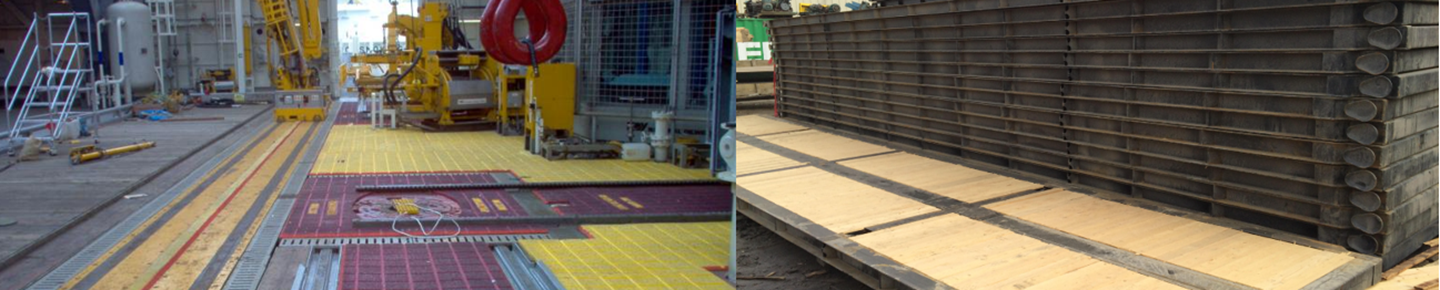
Rotary Table & Rig Floor Mats
Two very different products answer to the phrase "rig mats," and which one you need depends entirely on where it sits. Rotary Table & Rig Floor Mats go on the drill floor itself, giving crews traction on steel decking slick with invert. Rig Mats go underneath everything, spreading the load of the rig and its equipment across unimproved ground.
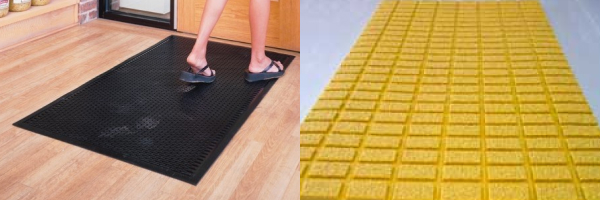
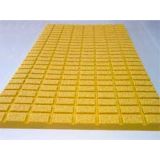 Rotary Table & Rig Floor MatsRotary Table & Rig Floor Mats are not cut from a roll. Each one is cast from a two-component polyurethane blend to drawings you supply, with stainless steel studs set into the surface while the material is still forming. That production method is why the traction is part of the
...
Rotary Table & Rig Floor Mats are not cut from a roll. Each one is cast from a two-component polyurethane...
View Details
View Details
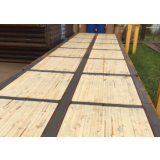 Rig MatsA rig mat is a structural platform, not a floor covering. Steel beams carry the load, laminated timber sections spread it between them, and the whole assembly sits directly on ground that was never engineered to hold a drilling rig. Get the platform right and the location stays workable through
...
A rig mat is a structural platform, not a floor covering. Steel beams carry the load, laminated timber sections spread...
View Details
View Details
What Drill Floor Matting Is Actually Fighting
A drill floor is one of the least forgiving walking surfaces in industry. Invert emulsion mud, brine, and hydraulic fluid land on steel decking throughout the shift, and crews move fast across it while handling pipe. Plain deck plate gives up its traction the moment a film of oil-based fluid gets on it, and grit tracked in from the pits works like a lubricant rather than an abrasive.
Drill floor matting is engineered against that specific chemistry, not against water. The traction matting here is a two-component custom blend of polyol polyurethane, formulated to hold up to invert and the other fluids that come with the drilling process. It is 100% solids with zero VOC, so nothing flashes off during cure, and the flash point sits at 175ºC.
Two features do the actual gripping. Stainless steel studs are embedded into the surface, so the traction comes from hardware set in the material rather than a coating that scrubs off. Channels molded across the face let fluid run off instead of pooling, which means the surface a boot lands on is draining rather than holding a film.
The Mistake That Costs Rigs a Recordable
The first mistake is ordering by phrase instead of by location. Crews searching "rig mats" routinely land on structural mats when what the drill floor needed was traction matting, or the reverse. The two products share a name, a customer, and nothing else. Decide where the mat sits before anything else, and the choice makes itself.
The second is specifying general industrial anti-slip for a drilling environment. Standard grit tape and coated anti-slip surfaces are qualified against water and foot traffic, not against oil-based drilling fluid. Invert gets under coatings and lifts them, and once an edge starts peeling on a working drill floor it becomes a trip hazard faster than anyone schedules a replacement.
The material data is where you can see the difference. This polyurethane carries 3,000 psi tensile strength, 231% elongation, and 95 Shore A hardness, with a Taber abrasion loss of 4.4 mg per 1,000 cycles on a CS-17 wheel and split tear resistance of 400 lb F/IN. Those numbers describe a material that resists tearing at the edges under dragged pipe and equipment.
How the Two Options Compare
Rotary Table & Rig Floor Mats are the traction surface, custom manufactured in polyurethane to your drawings so they fit the rotary table opening and the deck geometry you actually have. Rotary table mats run 1.25" thick as standard, with 0.75" available and other thicknesses on request, and weigh roughly 8 lbs per square foot.
They are typically safety yellow with orange sloped edges, and company name, rig number, and danger callouts get embedded in a contrasting color rather than painted on top. They attach to rig floors by conventional methods, and worn surfaces can be repaired and resurfaced rather than pulled. Strongest fit for drilling contractors, offshore and marine platforms, and workover operations where crews work fluid-covered steel on foot.
Rig Mats work the opposite problem. Built in wood and steel, they create a stable load-bearing platform beneath the rig, equipment, and traffic, distributing weight across ground that was never built to carry it. Their job is keeping the setup level and the ground intact through the life of the location rather than giving anyone traction. Strongest fit for oilfield pad construction, lease road and access work, and any site where equipment has to sit or move over soft, uneven, or seasonally unstable terrain.
Three Things to Check Before You Pick
Where the mat sits. This is the whole decision, and it sorts cleanly. On the deck, under boots, around the rotary table means Rotary Table & Rig Floor Mats. Under the substructure, under equipment, under wheels and tracks means Rig Mats. Rigs frequently need both, and they are not alternatives to each other.
Your fluid program and your temperature range. Traction matting specified for water-based environments behaves differently in invert. The polyurethane here is built for it, holds up to 2,500 hours of weatherability testing, and carries a cold temperature rating to −70ºC, which matters on northern and arctic locations where matting can go brittle. It also passed UL94-HB flammability testing through an independent laboratory.
Whether you need the mat to communicate, not just grip. Because the traction matting is manufactured to your drawings in any color, danger zones can be built into the mat itself. That turns the surface into a visual boundary crews read without thinking, which is a different function from traction and worth deciding on deliberately before you order.
Why Mats Inc.
Custom-manufactured matting lives or dies on the drawings, and that is the part we work through with you before anything gets made. We have been in industrial flooring since 1964, and on drill floor work that mostly means asking about your fluid program, your deck geometry, and what your safety team wants marked, rather than pulling a size off a shelf. If your location needs structural matting instead of traction matting, we will point you there.
Frequently Asked Questions
What makes drill floor matting different from standard industrial anti-slip?
Chemistry and construction, mostly. General anti-slip products are qualified against water and light industrial soil, and they typically rely on a grit coating bonded to a backing. Drilling environments run oil-based invert emulsion, which gets underneath coatings and lifts them from the edges. This matting is a two-component polyurethane blend formulated for those fluids, with stainless steel studs embedded into the material and drainage channels molded into the face. The traction is structural rather than applied, so there is no coating layer to peel. At 95 Shore A hardness and 400 lb F/IN split tear resistance, it also handles dragged pipe and equipment without tearing at the edges. — Dustin Thompson
Where on the rig does traction matting actually go?
The rotary table surround is the priority, since that is where crews stand longest in the worst fluid exposure. After that, the areas that earn matting are the pipe handling zones, the path to and from the driller's console, and any walkway where crews move while carrying or guiding equipment. Mats attach to rig floors using conventional methods, and because each one is manufactured to supplied drawings, coverage can follow the actual deck rather than working around fixed rectangles. Most operations mat the rotary table first and expand from there as the layout proves itself. — Dustin Thompson
What is the service life, and can a worn mat be saved?
Wear shows up as abrasion on the traction surface, and the material is built to slow that down: Taber abrasion testing puts loss at 4.4 mg per 1,000 cycles on a CS-17 wheel, and weatherability testing ran 2,500 hours without failure. The more useful answer is what happens at the other end. Worn surfaces on this matting can be repaired, restored, and resurfaced rather than scrapped, so a mat that has taken a few years of pipe traffic goes back into service instead of being replaced outright. That changes how you plan matting over the life of a rig. — Dustin Thompson
Can we get our rig number and safety markings built into the mat?
Yes, and this is one of the more useful things about custom polyurethane. Company name, rig number, and danger callouts are embedded into the mat in a contrasting color, so they are part of the material rather than paint or decals sitting on a surface that gets scoured by pipe and fluid. Identified danger zones can be built in the same way. The practical effect is that markings stay legible long after applied graphics would have worn off, and crews get a boundary they read at a glance in poor light. — Jinna Hopson
What colors are available, and does the color choice matter?
Any color is available, and the typical specifications are safety yellow and red, with rotary table mats usually running safety yellow with orange sloped edges. Color is doing real work here rather than being cosmetic. High-visibility yellow reads as a defined work zone against dark steel decking and mud, and contrasting sloped edges make the transition onto the mat visible so crews do not catch a toe on it. If your operation already uses a color convention for hazard zones, the matting can be built to match it. — Jinna Hopson
How do we know whether we need floor mats or rig mats?
Ask what problem you are solving. If the answer involves people, footing, or fluid on a walking surface, you need traction matting on the deck. If it involves weight, ground, or keeping equipment level and stable, you need structural rig mats underneath. The confusion happens because the same phrase covers both products across the industry, and a search for one turns up the other constantly. Plenty of locations need both, serving completely separate purposes. Tell us what is happening on the location and we will sort out which product, or which combination, fits it. — Jinna Hopson
Written by Dustin Thompson, Owner & CEO, Mats Inc.