






- Home
- Application Areas
- Industrial Facilities
Heavy-Duty Industrial Floor Mats
Our tough heavy-duty industrial floor mats will transport you to a place of incomparable security. These industrial safety mats have increased grip, making them ideal for high-traffic areas that may lead to slips and falls at work.
Every industrial safety mat we offer has been crafted with durability as a top priority, ensuring it can withstand time and heavy-duty usage. They are more than just mats; they are a testament to our commitment to quality and your safety.
The bonus? These mats are functional and aesthetically pleasing, adding a professional touch to your industrial space. They are easy to clean and maintain, reinforcing your workplace's cleanliness and hygiene standards.
Invest in our heavy-duty industrial floor mats today. Not only will you be elevating the safety and well-being of your employees, but you will also be enhancing your workspace's overall appearance and professionalism.
 Smooth Marbleized Vinyl Switchboard Matting (Mil Spec)$1,249.00This is marbleized vinyl insulating sheet flooring built to MIL-DTL-15562G, Type I — the version installed in naval vessels in high-voltage compartments. Unlike a portable runner, it's laid as continuous flooring with heat-welded seams that give the finished surface water-tight integrity. It comes in blue standard or blue high gloss
...
This is marbleized vinyl insulating sheet flooring built to MIL-DTL-15562G, Type I — the version installed in naval vessels in...
This is marbleized vinyl insulating sheet flooring built to MIL-DTL-15562G, Type I — the version installed in naval vessels in high-voltage compartments. Unlike a portable runner, it's laid as continuous flooring with heat-welded seams that give the finished surface water-tight integrity. It comes in blue standard or blue high gloss at 1/8 inch thick.
What a Welded Insulating Floor Does That a Portable Mat Cannot
The insulating principle is the same across every product in this family. Current needs a complete circuit, and a person standing on bare deck in front of energized equipment is half of one. A non-conductive surface underfoot means the circuit has nowhere to close.
What changes here is coverage. A portable mat protects the footprint it occupies, and it has edges — places where the protection stops and somebody can step off without noticing. Sheet flooring with welded seams protects the whole compartment. There is no edge to step past because the floor itself is the barrier.
That distinction matters most in spaces where people work all around energized equipment rather than standing at one panel. In a shipboard high-voltage compartment, there isn't a single spot to place a mat. The protection has to be the deck.
The welded seams do a second job. Heat-welding the joints with matching thread produces a water-tight surface, so moisture can't get beneath the flooring and sit between the covering and the deck. On a vessel that matters for corrosion as much as for insulation, and it's the reason this product is installed rather than laid down.
The trade is permanence. This isn't something you roll out, use, and move. It's installed, and it stays. If you need coverage you can reposition, a portable runner is the right product and this one isn't.
Why Type I Marbleized, and What Gets Certified
MIL-DTL-15562G is the military detail specification for insulating switchboard matting and sheet floor covering. It's approved for use by the Department of the Navy and available across all departments and agencies of the Department of Defense. It supersedes MIL-M-15562F, which still appears on older drawings.
Type I within that specification is the marbleized sheeting. It has no connection to ASTM D178's Type I — same words, unrelated numbering systems, and both standards appear side by side in this catalog. Check which standard a drawing names before reading the type number.
The voltage figures are identical across all three MIL types, because the type describes surface and installation method rather than electrical rating. Dielectric test voltage is 30,000 VAC. Proof testing runs at 15,000 VAC across the entire surface of every roll. Recommended maximum use voltage is 3,000 VAC.
Read that last figure carefully. Military specification does not mean higher rated — commercial ASTM D178 Class 2 matting is cleared to 17,000 volts, well above this. The military standard applies a much wider margin between test voltage and service voltage. Different philosophy, not a different capability.
Where the military specification does go further is durability. The material meets additional property requirements for oxygen bomb aging, sulfuric acid exposure, and ultraviolet light exposure. Those test how the compound survives over years rather than what it withstands in a single dielectric test — which is the right emphasis for flooring that gets installed permanently.
The surface is fire-retardant, every roll is certified to the specification, and it's manufactured in blue standard or blue high gloss finish. Matching color welding thread is available for the seams.
Where It Belongs, and Where It Doesn't
Naval vessels first — high-voltage compartments are the application this was designed around. Beyond that, it suits any permanently occupied electrical space where a continuous insulating floor makes more sense than placed mats: control rooms, equipment compartments, and dedicated electrical spaces operating within the rated voltage. It sits with the rest of our electrical and switchboard matting, which covers the portable types and the commercial standards.
The finish choice follows the room. Blue standard is the workhorse and hides marks better in a working compartment. Blue high gloss reflects more light, which brightens a windowless space and reads as a more finished installation — worth considering where the compartment gets visitors or inspections.
The voltage boundary is 3,000 VAC. Equipment above that needs a different product regardless of what the specification package says, and that conflict belongs with whoever wrote the drawing rather than resolved on the deck.
Where it's the wrong choice: any application needing portability. If the requirement is a mat in front of one panel, or coverage that moves with the work, Type II smooth and Type III diamond plate exist for exactly that and install in minutes rather than requiring a flooring crew.
What it is not: an ESD or anti-static floor. Those are conductive by design, built to drain static charge to ground and protect sensitive electronics. This is an insulator — it blocks the path to ground entirely, offers no static control, and must never be grounded.
And it is not primary protection. De-energizing, verification, protective equipment, and trained procedure come first. This is the layer beneath all of that.
Three Things to Check Before You Spec It
First, confirm you want installed flooring rather than a mat. This is bonded down and welded at the seams, which means a proper installation and a permanent result. That's the right answer for a compartment and the wrong answer for a single panel. If the coverage needs to move, buy a runner instead.
Second, plan the seams before you measure. Rolls are 36 inches wide, so any space wider than that has seams, and every seam has to be heat-welded with matching thread for the water-tight integrity to hold. Lay out the seam positions with the installer, and order the welding thread with the material rather than after it.
Third, check 3,000 VAC against your equipment. Find the real working voltage rather than assuming, because the military designation implies capability the rating doesn't support. This is the most common error on MIL spec products, and permanent flooring is an expensive place to discover it.
Why Mats Inc.
Since 1964 we've learned to ask one question early on this product: is this a mat or a floor? People arrive asking for switchboard matting and describe a compartment, which is a flooring job with welded seams and an installer. Others describe a panel, which is a runner they can roll out this afternoon. We'll ask which one you actually have, along with your voltage and your specification call-out, before we quote anything.
Product Type Insulating (non-conductive) switchboard matting and sheet floor covering Standard MIL-DTL-15562G (formerly MIL-M-15562F), Type I Approvals Approved for use by the Department of the Navy; available to all Department of Defense departments and agencies Dielectric Test Voltage 30,000 VAC Proof Test 15,000 VAC, tested over the entire surface Recommended Max Use Voltage 3,000 VAC Additional Testing Oxygen bomb aging, sulfuric acid, ultraviolet light exposure Material Vinyl, fire-retardant Surface Marbleized Finishes Blue standard or blue high gloss Seaming Heat-welded seams for water-tight integrity; matching color welding thread available Thickness 1/8 inch Size 36 inch width x 75 ft. length Roll Weight 225 lb. Certification Every roll certified to MIL-DTL-15562G Recommended For Naval vessel high-voltage compartments, permanently installed electrical spaces Static Control None — this is an insulator, not an ESD or anti-static product Warranty 1-year limited (Mats Inc.) Frequently Asked Questions
What makes Type I different from the other military spec options?
Installation method, and it's a bigger difference than it sounds. Type I is sheet floor covering — bonded down and joined with heat-welded seams so the finished surface is continuous and water-tight. Type II smooth and Type III diamond plate are portable runners you roll out in front of equipment or across a bench.
The electrical performance is identical across all three: 30,000 VAC dielectric test, 15,000 VAC proof test over the entire surface, 3,000 VAC recommended maximum use. What you're choosing between is coverage and permanence. A runner protects where it sits and has edges somebody can step past. Welded sheet flooring protects the whole compartment with no edge at all, which is why it's what goes into naval high-voltage spaces. — Dustin Thompson, Owner & CEO, Mats Inc.
What are the ratings, and what does the additional testing cover?
Dielectric test voltage is 30,000 VAC, proof testing runs at 15,000 VAC across the entire surface of every roll rather than sampled sections, and the recommended maximum use voltage is 3,000 VAC. That last number governs placement. The margin above it is deliberate rather than capacity to draw on.
The additional requirements are what set this specification apart from a pure voltage standard. The material has to perform against oxygen bomb aging, sulfuric acid exposure, and ultraviolet light. Those test how the vinyl survives over years and against conditions that degrade it — which matters far more on permanently installed flooring than on a mat you can replace in an afternoon. The surface is also fire-retardant, and every roll is certified to the specification. — Dustin Thompson, Owner & CEO, Mats Inc.
How does it install, and does it need grounding?
It's bonded to the existing deck or floor and the seams are heat-welded with matching color thread. That welding is what delivers the water-tight integrity, so it isn't optional finishing — it's what makes the installation perform as specified. This is work for someone experienced with welded vinyl flooring, not a roll-and-trim job.
No grounding, and that deserves emphasis on a permanent installation. Grounding an insulating floor destroys its entire function, because the mechanism is that no path runs from a person through the covering to ground. Anyone used to conductive or ESD flooring may expect a ground connection as part of the install. On this product that expectation is dangerous, and it's much harder to undo once the floor is down and welded. — Dustin Thompson, Owner & CEO, Mats Inc.
What size does it come in, and how do I estimate a compartment?
It ships in 36 inch by 75 foot rolls at 1/8 inch thick, and each roll weighs 225 pounds — plan on two people and equipment to move it.
For estimating, measure the length and width of each space and calculate square footage, then think in strips rather than area. At 36 inches wide, work out how many runs the room takes and where the seams land, adding a few inches of overlap at each joint for trimming and welding. Add margin for cuts around equipment bases, hatches, and fixtures. Order the matching welding thread at the same time — you'll need it, and it's frustrating to have the flooring on site without it. Send us the room dimensions and we'll work the strip layout with you. — Jinna Hopson, Vice President of Marketing, Mats Inc.
What's the difference between blue standard and blue high gloss?
Both are the same marbleized blue with identical specification, thickness, certification, and rating. The difference is the finish, and it changes how a compartment reads more than you'd expect.
Blue standard has a lower sheen that diffuses light and forgives scuffs, marks, and foot traffic — the practical choice for a working space that sees daily use. Blue high gloss reflects considerably more light, which genuinely brightens a windowless compartment where lighting is limited, and it presents as a finished, maintained installation. That makes it worth considering in spaces that get inspections, tours, or visitors. The trade is that gloss shows wear and scuffing sooner, so it asks for more upkeep to keep looking the way it did on day one. — Jinna Hopson, Vice President of Marketing, Mats Inc.
Do I need this, a portable runner, or a commercial mat?
Three questions sort it out. Does your paperwork name MIL-DTL-15562G or the older MIL-M-15562F? If so, you're in the military line, and a commercial mat won't satisfy that call-out however it's rated. Is the equipment within 3,000 volts? Above that, you need the commercial ASTM line, where Class 2 reaches 17,000 and higher classes go further.
Then the question that actually separates this product from its siblings: are you covering a compartment or protecting a position? A whole space with people working all around energized equipment wants continuous welded flooring with no edges to step past. A single panel or a bench wants a portable runner — Type II smooth for benches and clean-down, Type III diamond plate where traction matters. Describe the space and the specification to us and we'll tell you which of the three fits. — Jinna Hopson, Vice President of Marketing, Mats Inc.
Written by Jinna Hopson, Vice President of Marketing, Mats Inc.
↑
This is marbleized vinyl insulating sheet flooring built to MIL-DTL-15562G, Type I — the version installed in naval vessels in high-voltage compartments. Unlike a portable runner, it's laid as continuous flooring with heat-welded seams that give the finished surface water-tight integrity. It comes in blue standard or blue high gloss at 1/8 inch thick.
What a Welded Insulating Floor Does That a Portable Mat Cannot
The insulating principle is the same across every product in this family. Current needs a complete circuit, and a person standing on bare deck in front of energized equipment is half of one. A non-conductive surface underfoot means the circuit has nowhere to close.
What changes here is coverage. A portable mat protects the footprint it occupies, and it has edges — places where the protection stops and somebody can step off without noticing. Sheet flooring with welded seams protects the whole compartment. There is no edge to step past because the floor itself is the barrier.
That distinction matters most in spaces where people work all around energized equipment rather than standing at one panel. In a shipboard high-voltage compartment, there isn't a single spot to place a mat. The protection has to be the deck.
The welded seams do a second job. Heat-welding the joints with matching thread produces a water-tight surface, so moisture can't get beneath the flooring and sit between the covering and the deck. On a vessel that matters for corrosion as much as for insulation, and it's the reason this product is installed rather than laid down.
The trade is permanence. This isn't something you roll out, use, and move. It's installed, and it stays. If you need coverage you can reposition, a portable runner is the right product and this one isn't.
Why Type I Marbleized, and What Gets Certified
MIL-DTL-15562G is the military detail specification for insulating switchboard matting and sheet floor covering. It's approved for use by the Department of the Navy and available across all departments and agencies of the Department of Defense. It supersedes MIL-M-15562F, which still appears on older drawings.
Type I within that specification is the marbleized sheeting. It has no connection to ASTM D178's Type I — same words, unrelated numbering systems, and both standards appear side by side in this catalog. Check which standard a drawing names before reading the type number.
The voltage figures are identical across all three MIL types, because the type describes surface and installation method rather than electrical rating. Dielectric test voltage is 30,000 VAC. Proof testing runs at 15,000 VAC across the entire surface of every roll. Recommended maximum use voltage is 3,000 VAC.
Read that last figure carefully. Military specification does not mean higher rated — commercial ASTM D178 Class 2 matting is cleared to 17,000 volts, well above this. The military standard applies a much wider margin between test voltage and service voltage. Different philosophy, not a different capability.
Where the military specification does go further is durability. The material meets additional property requirements for oxygen bomb aging, sulfuric acid exposure, and ultraviolet light exposure. Those test how the compound survives over years rather than what it withstands in a single dielectric test — which is the right emphasis for flooring that gets installed permanently.
The surface is fire-retardant, every roll is certified to the specification, and it's manufactured in blue standard or blue high gloss finish. Matching color welding thread is available for the seams.
Where It Belongs, and Where It Doesn't
Naval vessels first — high-voltage compartments are the application this was designed around. Beyond that, it suits any permanently occupied electrical space where a continuous insulating floor makes more sense than placed mats: control rooms, equipment compartments, and dedicated electrical spaces operating within the rated voltage. It sits with the rest of our electrical and switchboard matting, which covers the portable types and the commercial standards.
The finish choice follows the room. Blue standard is the workhorse and hides marks better in a working compartment. Blue high gloss reflects more light, which brightens a windowless space and reads as a more finished installation — worth considering where the compartment gets visitors or inspections.
The voltage boundary is 3,000 VAC. Equipment above that needs a different product regardless of what the specification package says, and that conflict belongs with whoever wrote the drawing rather than resolved on the deck.
Where it's the wrong choice: any application needing portability. If the requirement is a mat in front of one panel, or coverage that moves with the work, Type II smooth and Type III diamond plate exist for exactly that and install in minutes rather than requiring a flooring crew.
What it is not: an ESD or anti-static floor. Those are conductive by design, built to drain static charge to ground and protect sensitive electronics. This is an insulator — it blocks the path to ground entirely, offers no static control, and must never be grounded.
And it is not primary protection. De-energizing, verification, protective equipment, and trained procedure come first. This is the layer beneath all of that.
Three Things to Check Before You Spec It
First, confirm you want installed flooring rather than a mat. This is bonded down and welded at the seams, which means a proper installation and a permanent result. That's the right answer for a compartment and the wrong answer for a single panel. If the coverage needs to move, buy a runner instead.
Second, plan the seams before you measure. Rolls are 36 inches wide, so any space wider than that has seams, and every seam has to be heat-welded with matching thread for the water-tight integrity to hold. Lay out the seam positions with the installer, and order the welding thread with the material rather than after it.
Third, check 3,000 VAC against your equipment. Find the real working voltage rather than assuming, because the military designation implies capability the rating doesn't support. This is the most common error on MIL spec products, and permanent flooring is an expensive place to discover it.
Why Mats Inc.
Since 1964 we've learned to ask one question early on this product: is this a mat or a floor? People arrive asking for switchboard matting and describe a compartment, which is a flooring job with welded seams and an installer. Others describe a panel, which is a runner they can roll out this afternoon. We'll ask which one you actually have, along with your voltage and your specification call-out, before we quote anything.
Product Type Insulating (non-conductive) switchboard matting and sheet floor covering Standard MIL-DTL-15562G (formerly MIL-M-15562F), Type I Approvals Approved for use by the Department of the Navy; available to all Department of Defense departments and agencies Dielectric Test Voltage 30,000 VAC Proof Test 15,000 VAC, tested over the entire surface Recommended Max Use Voltage 3,000 VAC Additional Testing Oxygen bomb aging, sulfuric acid, ultraviolet light exposure Material Vinyl, fire-retardant Surface Marbleized Finishes Blue standard or blue high gloss Seaming Heat-welded seams for water-tight integrity; matching color welding thread available Thickness 1/8 inch Size 36 inch width x 75 ft. length Roll Weight 225 lb. Certification Every roll certified to MIL-DTL-15562G Recommended For Naval vessel high-voltage compartments, permanently installed electrical spaces Static Control None — this is an insulator, not an ESD or anti-static product Warranty 1-year limited (Mats Inc.) Frequently Asked Questions
What makes Type I different from the other military spec options?
Installation method, and it's a bigger difference than it sounds. Type I is sheet floor covering — bonded down and joined with heat-welded seams so the finished surface is continuous and water-tight. Type II smooth and Type III diamond plate are portable runners you roll out in front of equipment or across a bench.
The electrical performance is identical across all three: 30,000 VAC dielectric test, 15,000 VAC proof test over the entire surface, 3,000 VAC recommended maximum use. What you're choosing between is coverage and permanence. A runner protects where it sits and has edges somebody can step past. Welded sheet flooring protects the whole compartment with no edge at all, which is why it's what goes into naval high-voltage spaces. — Dustin Thompson, Owner & CEO, Mats Inc.
What are the ratings, and what does the additional testing cover?
Dielectric test voltage is 30,000 VAC, proof testing runs at 15,000 VAC across the entire surface of every roll rather than sampled sections, and the recommended maximum use voltage is 3,000 VAC. That last number governs placement. The margin above it is deliberate rather than capacity to draw on.
The additional requirements are what set this specification apart from a pure voltage standard. The material has to perform against oxygen bomb aging, sulfuric acid exposure, and ultraviolet light. Those test how the vinyl survives over years and against conditions that degrade it — which matters far more on permanently installed flooring than on a mat you can replace in an afternoon. The surface is also fire-retardant, and every roll is certified to the specification. — Dustin Thompson, Owner & CEO, Mats Inc.
How does it install, and does it need grounding?
It's bonded to the existing deck or floor and the seams are heat-welded with matching color thread. That welding is what delivers the water-tight integrity, so it isn't optional finishing — it's what makes the installation perform as specified. This is work for someone experienced with welded vinyl flooring, not a roll-and-trim job.
No grounding, and that deserves emphasis on a permanent installation. Grounding an insulating floor destroys its entire function, because the mechanism is that no path runs from a person through the covering to ground. Anyone used to conductive or ESD flooring may expect a ground connection as part of the install. On this product that expectation is dangerous, and it's much harder to undo once the floor is down and welded. — Dustin Thompson, Owner & CEO, Mats Inc.
What size does it come in, and how do I estimate a compartment?
It ships in 36 inch by 75 foot rolls at 1/8 inch thick, and each roll weighs 225 pounds — plan on two people and equipment to move it.
For estimating, measure the length and width of each space and calculate square footage, then think in strips rather than area. At 36 inches wide, work out how many runs the room takes and where the seams land, adding a few inches of overlap at each joint for trimming and welding. Add margin for cuts around equipment bases, hatches, and fixtures. Order the matching welding thread at the same time — you'll need it, and it's frustrating to have the flooring on site without it. Send us the room dimensions and we'll work the strip layout with you. — Jinna Hopson, Vice President of Marketing, Mats Inc.
What's the difference between blue standard and blue high gloss?
Both are the same marbleized blue with identical specification, thickness, certification, and rating. The difference is the finish, and it changes how a compartment reads more than you'd expect.
Blue standard has a lower sheen that diffuses light and forgives scuffs, marks, and foot traffic — the practical choice for a working space that sees daily use. Blue high gloss reflects considerably more light, which genuinely brightens a windowless compartment where lighting is limited, and it presents as a finished, maintained installation. That makes it worth considering in spaces that get inspections, tours, or visitors. The trade is that gloss shows wear and scuffing sooner, so it asks for more upkeep to keep looking the way it did on day one. — Jinna Hopson, Vice President of Marketing, Mats Inc.
Do I need this, a portable runner, or a commercial mat?
Three questions sort it out. Does your paperwork name MIL-DTL-15562G or the older MIL-M-15562F? If so, you're in the military line, and a commercial mat won't satisfy that call-out however it's rated. Is the equipment within 3,000 volts? Above that, you need the commercial ASTM line, where Class 2 reaches 17,000 and higher classes go further.
Then the question that actually separates this product from its siblings: are you covering a compartment or protecting a position? A whole space with people working all around energized equipment wants continuous welded flooring with no edges to step past. A single panel or a bench wants a portable runner — Type II smooth for benches and clean-down, Type III diamond plate where traction matters. Describe the space and the specification to us and we'll tell you which of the three fits. — Jinna Hopson, Vice President of Marketing, Mats Inc.
Written by Jinna Hopson, Vice President of Marketing, Mats Inc.
↑
View Details
View Details
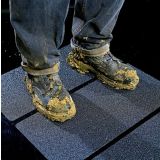 Safety Track Non-Skid Tape - Coarse$170.00This material fits your specific needs, in assorted shapes and sizes. Assists in preventing costly slip and fall accidents and helps in complying with strict OSHA safety standards. This material can be used indoors or out, wet or dry, even around oil and grease. It goes on like tape
...
This material fits your specific needs, in assorted shapes and sizes. Assists in preventing costly slip and fall accidents...
- This material fits your specific needs, in assorted shapes and sizes.
- Assists in preventing costly slip and fall accidents and helps in complying with strict OSHA safety standards.
- This material can be used indoors or out, wet or dry, even around oil and grease.
- It goes on like tape to a clean, dry surface and is ready for immediate service.
↑
- This material fits your specific needs, in assorted shapes and sizes.
- Assists in preventing costly slip and fall accidents and helps in complying with strict OSHA safety standards.
- This material can be used indoors or out, wet or dry, even around oil and grease.
- It goes on like tape to a clean, dry surface and is ready for immediate service.
↑
View Details
View Details
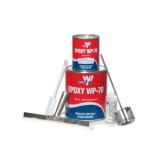 WP-70 Non-Skid Epoxy Coating$298.00WP-70 Non-Skid Epoxy Coating Upgrade your flooring with WP-70 Non-Skid Epoxy Coating, engineered for durability, chemical resistance, and exceptional slip prevention. Ideal for industrial, marine, and commercial environments. Exceptional Slip Resistance: Reduces risk of accidents in wet and dry conditions. Heavy-Duty Durability: Withstands traffic, impact, and harsh chemicals. Versatile
...
WP-70 Non-Skid Epoxy Coating Upgrade your flooring with WP-70 Non-Skid Epoxy Coating, engineered for durability, chemical resistance, and exceptional...
WP-70 Non-Skid Epoxy Coating
Upgrade your flooring with WP-70 Non-Skid Epoxy Coating, engineered for durability, chemical resistance, and exceptional slip prevention. Ideal for industrial, marine, and commercial environments.
- Exceptional Slip Resistance: Reduces risk of accidents in wet and dry conditions.
- Heavy-Duty Durability: Withstands traffic, impact, and harsh chemicals.
- Versatile Application: Bonds to concrete, wood, and metal surfaces.
- Fast Curing: Minimizes downtime with quick-set formula.
- Easy Maintenance: Seamless surface resists stains and simplifies cleaning.
- Thick, Trowel-On System: 2-part epoxy with a tough, long-lasting finish.
- Industrial Strength: Ideal for breweries, canneries, and offshore platforms.
- Application Method: Requires trowel and squeegee for best results.
- Coverage: 25–30 sq ft per gallon; sold in 1-gallon kits per case.
- Low VOC: Eco-conscious formulation with no flash or volatile solvents.
- Pot Life: 30–60 minutes; cures fully in 18–24 hours.
- Note: Mixing blade and squeegee not included.
Designed for harsh industrial and marine environments, this non-skid epoxy coating delivers exceptional durability, chemical resistance, and long-lasting slip protection. WP-70 Epoxy is the trusted choice for commercial floors demanding performance and safety.
↑
WP-70 Non-Skid Epoxy Coating
Upgrade your flooring with WP-70 Non-Skid Epoxy Coating, engineered for durability, chemical resistance, and exceptional slip prevention. Ideal for industrial, marine, and commercial environments.
- Exceptional Slip Resistance: Reduces risk of accidents in wet and dry conditions.
- Heavy-Duty Durability: Withstands traffic, impact, and harsh chemicals.
- Versatile Application: Bonds to concrete, wood, and metal surfaces.
- Fast Curing: Minimizes downtime with quick-set formula.
- Easy Maintenance: Seamless surface resists stains and simplifies cleaning.
- Thick, Trowel-On System: 2-part epoxy with a tough, long-lasting finish.
- Industrial Strength: Ideal for breweries, canneries, and offshore platforms.
- Application Method: Requires trowel and squeegee for best results.
- Coverage: 25–30 sq ft per gallon; sold in 1-gallon kits per case.
- Low VOC: Eco-conscious formulation with no flash or volatile solvents.
- Pot Life: 30–60 minutes; cures fully in 18–24 hours.
- Note: Mixing blade and squeegee not included.
Designed for harsh industrial and marine environments, this non-skid epoxy coating delivers exceptional durability, chemical resistance, and long-lasting slip protection. WP-70 Epoxy is the trusted choice for commercial floors demanding performance and safety.
↑
View Details
View Details
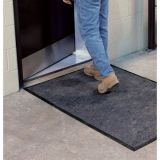 Oil Trap Absorbent Mat Pads with Tray$80.00Oil Absorbing Mats with Tray Ensure a clean and safe workspace with our oil absorbing mat. These are specifically designed to soak up coolants, solvents, oils, and water, making them an essential tool for maintaining cleanliness in any industrial setting. Superior Absorption: Made from 100% recycled post-consumer fibers, these pads
...
Oil Absorbing Mats with Tray Ensure a clean and safe workspace with our oil absorbing mat. These are specifically designed...
Oil Absorbing Mats with Tray
Ensure a clean and safe workspace with our oil absorbing mat. These are specifically designed to soak up coolants, solvents, oils, and water, making them an essential tool for maintaining cleanliness in any industrial setting.
- Superior Absorption: Made from 100% recycled post-consumer fibers, these pads efficiently soak up oils, coolants, solvents, and water.
- Versatile Use: Ideal for garages, workshops, and industrial environments where spills are common.
- Quick Response: Rapid absorption capacity reduces cleanup time and increases efficiency.
- Eco-Friendly Option: Constructed from environmentally friendly materials, these mats are both effective and sustainable.
- Durability: Features mid-range abrasion resistance, making it suitable for moderate foot traffic areas.
- Practical Design: Excellent for use in pathways leading into offices and other clean spaces, helping to maintain cleanliness and safety.
- Complete Set: Our oil absorbing mat set includes a reusable nitrile rubber tray and 12 disposable pads, providing convenience and long-term usability.
↑
Oil Absorbing Mats with Tray
Ensure a clean and safe workspace with our oil absorbing mat. These are specifically designed to soak up coolants, solvents, oils, and water, making them an essential tool for maintaining cleanliness in any industrial setting.
- Superior Absorption: Made from 100% recycled post-consumer fibers, these pads efficiently soak up oils, coolants, solvents, and water.
- Versatile Use: Ideal for garages, workshops, and industrial environments where spills are common.
- Quick Response: Rapid absorption capacity reduces cleanup time and increases efficiency.
- Eco-Friendly Option: Constructed from environmentally friendly materials, these mats are both effective and sustainable.
- Durability: Features mid-range abrasion resistance, making it suitable for moderate foot traffic areas.
- Practical Design: Excellent for use in pathways leading into offices and other clean spaces, helping to maintain cleanliness and safety.
- Complete Set: Our oil absorbing mat set includes a reusable nitrile rubber tray and 12 disposable pads, providing convenience and long-term usability.
↑
View Details
View Details
 Dri-Dek Interlocking Tiles
Starting at $2.66
What Dri-Dek does before standing water turns a floor slick and moldy In a shower, sauna, locker room, or pool deck, water doesn't just make the floor slick — it sits. A flat surface, even a textured one, holds a film of water right where bare feet land, and the...
What Dri-Dek does before standing water turns a floor slick and moldy In a shower, sauna, locker room, or pool...
What Dri-Dek does before standing water turns a floor slick and moldy
In a shower, sauna, locker room, or pool deck, water doesn't just make the floor slick — it sits. A flat surface, even a textured one, holds a film of water right where bare feet land, and the warm, damp film that lingers between uses is exactly what mold, mildew, and germs feed on. Mopping buys you a few minutes; the water comes back.
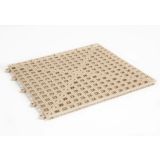
Dri-Dek solves it from a different angle: it lifts you above the water. Each tile is a raised, knobby, perforated grid, so water drains straight through and flows away underneath while you stand on the dry high points on top. Air circulates in the gap below, so the floor actually dries between uses instead of staying wet. You get grip up top and a floor that isn't a permanent puddle.
That combination matters in barefoot wet areas. Hygiene and cleaning authorities like ISSA stress that standing water and damp, hard-to-dry floors are what drive both slip risk and microbial growth in showers and locker rooms. A surface that keeps feet up out of the water and lets the floor beneath dry is tackling the slip and the mold problem at the same time.
Why an interlocking raised-vinyl build, and why this one
Dri-Dek is molded from a tough, UV-stabilized virgin vinyl in a flame- and chemical-resistant formulation, which is what lets it live on a wet floor for years. It resists the inorganic acids, oils, grease, detergents, and brine that wet areas and cleaning routines throw at it, holds up from -30°F to 167°F, and carries UV stabilizers so outdoor sun doesn't break it down. The same material is made to resist mold, mildew, and bacteria rather than harbor them.
The design is the other half. Each 12-by-12-inch tile is 9/16 inch thick with a knobby, perforated top, so it drains in every direction and cushions underfoot at the same time — the flex in the raised knobs takes some of the ache out of standing on hard concrete or tile. It's also flame resistant, having passed the UL 94V-0 vertical flame test, and it's tough, with a tensile strength around 2,750 PSI.
Best of all, it goes down without a contractor. The tiles, sheets, and rolls snap together on all four sides to build a surface of any size or shape, and they trim with a knife to fit wall-to-wall or around a drain, a bench, or a corner. Beveled edge and corner pieces finish the exposed borders into gentle ramps. When it's time to clean, you hose it, pressure-wash it, or lift a section and rinse under it.
Where it belongs — and what it isn't
Dri-Dek is at home anywhere a floor gets wet and stays wet. That's pool decks and pool surrounds, showers, saunas, steam and changing rooms, locker rooms, and the damp ring around a spa or hot tub. Because it interlocks into any shape and handles sun and temperature swings, it works indoors and out, in commercial facilities and in a home bathroom, basement, or patio alike.
It helps to be clear about what this isn't. It's a walk-on modular floor surface, not a flotation device, and not the liner sheet that goes under an above-ground pool. If you want a mat to put under a pool or a float for the water, this isn't that product. Dri-Dek installs on top of your existing floor — concrete, tile, or decking — and turns it into a dry, draining surface.
One honest note on chemistry: the vinyl resists most acids, oils, and solvents, but a few aggressive industrial solvents are the exception, so for a specialized chemical environment it's worth checking the specifics with us. In a normal pool, shower, or locker-room setting, chlorine, cleaning products, and daily wear are well within what it's built to take.
Three Things to Check Before You Spec It
Dri-Dek is simple to order once you've settled three things.
First, choose your format. Loose 1-by-1-foot tiles are the most flexible for a small or intricate space and for lifting individually to clean. Pre-assembled 3-by-4-foot sheets or 3-by-12-foot rolls cover a big pool deck or locker room far faster, snapping to each other just like the tiles. Many jobs mix them: rolls for the open floor, loose tiles to fill the edges.
Second, plan your edges. Wherever the surface meets open floor that people step onto, the beveled edge strips and corner pieces turn the 9/16-inch height into a gentle ramp, so there's no lip to trip on and carts or wheelchairs can roll on. Decide which sides are exposed before you order so you have the right trim on hand.
Third, pick a color with the room in mind. It comes in twelve colors, so you can go practical or design-led. Pool Blue and Blue lean fresh and aquatic on a deck; gray, black, and almond read neutral and hide grit in a locker room; brighter colors can zone an area or match a brand. Darker, muted tones show debris the least between cleanings.
Why Mats Inc.
We've been matching mats to real floors since 1964, and a wet floor is one place where the right surface pays off every single day. We'll help you work out how many tiles, sheets, or rolls your space needs, which edge and corner pieces to add, and which of the twelve colors suits the room — and we'll flag anything about your setting that matters before you order. It's part of our wider lineup of pool and wet-area matting, and every order is backed by our 1-year limited warranty.
Material UV-stabilized virgin vinyl (PVC); flame- and chemical-resistant formulation Construction Interlocking modular tile; raised knobby, perforated self-draining surface Tile size 12" x 12" x 9/16" Formats 1' x 1' tiles; 3' x 4' sheets; 3' x 12' rolls (all interlock) Edge / corner pieces 2" x 12" beveled edge; 2" x 2" corner Weight ~14.5 oz per tile (~0.9 lb/sq ft) Colors Twelve (Pool Blue, Blue, Teal, Gray, Black, Almond, Green, Hunter Green, Burgundy, Yellow, White, Red) Temperature range -30°F to 167°F (ASTM D746) Chemical resistance Resists inorganic acids, oils, grease, detergents, brine, most solvents (a few aggressive solvents excepted) Tensile strength ~2,750 PSI (ASTM D412); elongation 348% Weather / UV UV-stabilized; ~98–99% retention of tensile strength and color at 720 hrs Flammability Passed UL 94V-0 vertical flame test Hygiene Resists mold, mildew, and bacteria Installation Snaps together on all sides; trims with a knife Warranty 1-year limited (Mats Inc.) Frequently Asked Questions
How does Dri-Dek keep you out of the water, exactly?
Answered by Dustin Thompson, Owner & CEO
It works by lifting you above the floor instead of just draining the top. Each tile is a raised grid of knobs with a perforated, open surface, so water falls straight through and flows away underneath while your feet rest on the dry high points. The gap beneath lets air move and the floor dry between uses, which is what stops the standing water and the mold and mildew that come with it. It's molded from a tough, UV-stabilized vinyl in a flame- and chemical-resistant formulation built to live in that wet environment.
Will it hold up to chlorine, sun, and years of wet use?
Answered by Dustin Thompson, Owner & CEO
It's built for exactly that. The vinyl resists inorganic acids, oils, grease, detergents, and the brine and chlorine of a pool environment, and it's UV-stabilized so sun doesn't make it brittle — in weatherometer testing it held around 98 to 99 percent of its tensile strength and color. It works continuously from -30°F to 167°F, so an outdoor deck through summer and winter is no problem, and it passed the UL 94V-0 vertical flame test. A couple of aggressive industrial solvents are the exception, so for a specialized chemical setting, check with us first.
How do the tiles, sheets, and rolls differ, and which should I get?
Answered by Dustin Thompson, Owner & CEO
They're the same surface in three formats, and they all interlock with each other. Loose 1-by-1-foot tiles are the most flexible — best for small or intricate spaces and for lifting one at a time to clean under. The 3-by-4-foot sheets and 3-by-12-foot rolls are pre-assembled tiles that cover a big pool deck or locker room much faster. Most large jobs mix them: rolls or sheets for the open floor, loose tiles to fill in edges and odd corners.
Where does Dri-Dek work best?
Answered by Jinna Hopson, VP of Marketing
Anywhere a floor gets wet and stays wet, indoors or out. It's a natural on pool decks and surrounds, in showers, saunas, steam and changing rooms, and locker rooms, and around the damp base of a spa or hot tub. Because it snaps into any shape and handles sun and temperature swings, it's just as at home in a commercial aquatic center as in a home bathroom, basement, mudroom, or patio. If the floor gets wet, it has a place there.
What colors does it come in, and how should I choose?
Answered by Jinna Hopson, VP of Marketing
It comes in twelve colors, which is part of what makes it easy to fit a space rather than fight it. Pool Blue and Blue feel fresh and aquatic on a deck or around a spa; gray, black, and almond read neutral and professional in a locker room and hide grit well; and the brighter colors — red, yellow, teal, green — can zone an area or pick up a facility's branding. If you want the floor to disappear and stay looking clean between washes, the darker, muted tones show the least debris.
My space is an odd shape — can I make it fit, and even design a pattern?
Answered by Jinna Hopson, VP of Marketing
Yes, and that's one of the best things about it. Because every piece interlocks on all sides and trims with a knife, you can build a surface to any footprint — around a drain, a bench, a curved pool edge — and finish the exposed sides with beveled edge and corner pieces for a clean, ramped border. And since it comes in twelve colors, you can mix them to create borders, lanes, or a simple pattern, or match a brand color. Send us your layout and we'll help you plan the pieces and colors.
Written by Jinna Hopson, VP of Marketing, Mats Inc.
↑
What Dri-Dek does before standing water turns a floor slick and moldy
In a shower, sauna, locker room, or pool deck, water doesn't just make the floor slick — it sits. A flat surface, even a textured one, holds a film of water right where bare feet land, and the warm, damp film that lingers between uses is exactly what mold, mildew, and germs feed on. Mopping buys you a few minutes; the water comes back.
Dri-Dek solves it from a different angle: it lifts you above the water. Each tile is a raised, knobby, perforated grid, so water drains straight through and flows away underneath while you stand on the dry high points on top. Air circulates in the gap below, so the floor actually dries between uses instead of staying wet. You get grip up top and a floor that isn't a permanent puddle.
That combination matters in barefoot wet areas. Hygiene and cleaning authorities like ISSA stress that standing water and damp, hard-to-dry floors are what drive both slip risk and microbial growth in showers and locker rooms. A surface that keeps feet up out of the water and lets the floor beneath dry is tackling the slip and the mold problem at the same time.
Why an interlocking raised-vinyl build, and why this one
Dri-Dek is molded from a tough, UV-stabilized virgin vinyl in a flame- and chemical-resistant formulation, which is what lets it live on a wet floor for years. It resists the inorganic acids, oils, grease, detergents, and brine that wet areas and cleaning routines throw at it, holds up from -30°F to 167°F, and carries UV stabilizers so outdoor sun doesn't break it down. The same material is made to resist mold, mildew, and bacteria rather than harbor them.
The design is the other half. Each 12-by-12-inch tile is 9/16 inch thick with a knobby, perforated top, so it drains in every direction and cushions underfoot at the same time — the flex in the raised knobs takes some of the ache out of standing on hard concrete or tile. It's also flame resistant, having passed the UL 94V-0 vertical flame test, and it's tough, with a tensile strength around 2,750 PSI.
Best of all, it goes down without a contractor. The tiles, sheets, and rolls snap together on all four sides to build a surface of any size or shape, and they trim with a knife to fit wall-to-wall or around a drain, a bench, or a corner. Beveled edge and corner pieces finish the exposed borders into gentle ramps. When it's time to clean, you hose it, pressure-wash it, or lift a section and rinse under it.
Where it belongs — and what it isn't
Dri-Dek is at home anywhere a floor gets wet and stays wet. That's pool decks and pool surrounds, showers, saunas, steam and changing rooms, locker rooms, and the damp ring around a spa or hot tub. Because it interlocks into any shape and handles sun and temperature swings, it works indoors and out, in commercial facilities and in a home bathroom, basement, or patio alike.
It helps to be clear about what this isn't. It's a walk-on modular floor surface, not a flotation device, and not the liner sheet that goes under an above-ground pool. If you want a mat to put under a pool or a float for the water, this isn't that product. Dri-Dek installs on top of your existing floor — concrete, tile, or decking — and turns it into a dry, draining surface.
One honest note on chemistry: the vinyl resists most acids, oils, and solvents, but a few aggressive industrial solvents are the exception, so for a specialized chemical environment it's worth checking the specifics with us. In a normal pool, shower, or locker-room setting, chlorine, cleaning products, and daily wear are well within what it's built to take.
Three Things to Check Before You Spec It
Dri-Dek is simple to order once you've settled three things.
First, choose your format. Loose 1-by-1-foot tiles are the most flexible for a small or intricate space and for lifting individually to clean. Pre-assembled 3-by-4-foot sheets or 3-by-12-foot rolls cover a big pool deck or locker room far faster, snapping to each other just like the tiles. Many jobs mix them: rolls for the open floor, loose tiles to fill the edges.
Second, plan your edges. Wherever the surface meets open floor that people step onto, the beveled edge strips and corner pieces turn the 9/16-inch height into a gentle ramp, so there's no lip to trip on and carts or wheelchairs can roll on. Decide which sides are exposed before you order so you have the right trim on hand.
Third, pick a color with the room in mind. It comes in twelve colors, so you can go practical or design-led. Pool Blue and Blue lean fresh and aquatic on a deck; gray, black, and almond read neutral and hide grit in a locker room; brighter colors can zone an area or match a brand. Darker, muted tones show debris the least between cleanings.
Why Mats Inc.
We've been matching mats to real floors since 1964, and a wet floor is one place where the right surface pays off every single day. We'll help you work out how many tiles, sheets, or rolls your space needs, which edge and corner pieces to add, and which of the twelve colors suits the room — and we'll flag anything about your setting that matters before you order. It's part of our wider lineup of pool and wet-area matting, and every order is backed by our 1-year limited warranty.
Material UV-stabilized virgin vinyl (PVC); flame- and chemical-resistant formulation Construction Interlocking modular tile; raised knobby, perforated self-draining surface Tile size 12" x 12" x 9/16" Formats 1' x 1' tiles; 3' x 4' sheets; 3' x 12' rolls (all interlock) Edge / corner pieces 2" x 12" beveled edge; 2" x 2" corner Weight ~14.5 oz per tile (~0.9 lb/sq ft) Colors Twelve (Pool Blue, Blue, Teal, Gray, Black, Almond, Green, Hunter Green, Burgundy, Yellow, White, Red) Temperature range -30°F to 167°F (ASTM D746) Chemical resistance Resists inorganic acids, oils, grease, detergents, brine, most solvents (a few aggressive solvents excepted) Tensile strength ~2,750 PSI (ASTM D412); elongation 348% Weather / UV UV-stabilized; ~98–99% retention of tensile strength and color at 720 hrs Flammability Passed UL 94V-0 vertical flame test Hygiene Resists mold, mildew, and bacteria Installation Snaps together on all sides; trims with a knife Warranty 1-year limited (Mats Inc.) Frequently Asked Questions
How does Dri-Dek keep you out of the water, exactly?
Answered by Dustin Thompson, Owner & CEO
It works by lifting you above the floor instead of just draining the top. Each tile is a raised grid of knobs with a perforated, open surface, so water falls straight through and flows away underneath while your feet rest on the dry high points. The gap beneath lets air move and the floor dry between uses, which is what stops the standing water and the mold and mildew that come with it. It's molded from a tough, UV-stabilized vinyl in a flame- and chemical-resistant formulation built to live in that wet environment.
Will it hold up to chlorine, sun, and years of wet use?
Answered by Dustin Thompson, Owner & CEO
It's built for exactly that. The vinyl resists inorganic acids, oils, grease, detergents, and the brine and chlorine of a pool environment, and it's UV-stabilized so sun doesn't make it brittle — in weatherometer testing it held around 98 to 99 percent of its tensile strength and color. It works continuously from -30°F to 167°F, so an outdoor deck through summer and winter is no problem, and it passed the UL 94V-0 vertical flame test. A couple of aggressive industrial solvents are the exception, so for a specialized chemical setting, check with us first.
How do the tiles, sheets, and rolls differ, and which should I get?
Answered by Dustin Thompson, Owner & CEO
They're the same surface in three formats, and they all interlock with each other. Loose 1-by-1-foot tiles are the most flexible — best for small or intricate spaces and for lifting one at a time to clean under. The 3-by-4-foot sheets and 3-by-12-foot rolls are pre-assembled tiles that cover a big pool deck or locker room much faster. Most large jobs mix them: rolls or sheets for the open floor, loose tiles to fill in edges and odd corners.
Where does Dri-Dek work best?
Answered by Jinna Hopson, VP of Marketing
Anywhere a floor gets wet and stays wet, indoors or out. It's a natural on pool decks and surrounds, in showers, saunas, steam and changing rooms, and locker rooms, and around the damp base of a spa or hot tub. Because it snaps into any shape and handles sun and temperature swings, it's just as at home in a commercial aquatic center as in a home bathroom, basement, mudroom, or patio. If the floor gets wet, it has a place there.
What colors does it come in, and how should I choose?
Answered by Jinna Hopson, VP of Marketing
It comes in twelve colors, which is part of what makes it easy to fit a space rather than fight it. Pool Blue and Blue feel fresh and aquatic on a deck or around a spa; gray, black, and almond read neutral and professional in a locker room and hide grit well; and the brighter colors — red, yellow, teal, green — can zone an area or pick up a facility's branding. If you want the floor to disappear and stay looking clean between washes, the darker, muted tones show the least debris.
My space is an odd shape — can I make it fit, and even design a pattern?
Answered by Jinna Hopson, VP of Marketing
Yes, and that's one of the best things about it. Because every piece interlocks on all sides and trims with a knife, you can build a surface to any footprint — around a drain, a bench, a curved pool edge — and finish the exposed sides with beveled edge and corner pieces for a clean, ramped border. And since it comes in twelve colors, you can mix them to create borders, lanes, or a simple pattern, or match a brand color. Send us your layout and we'll help you plan the pieces and colors.
Written by Jinna Hopson, VP of Marketing, Mats Inc.
↑
View Details
View Details
 Wide Rib Vinyl Matting
Starting at $588.00
Wide Rib Vinyl Matting is a 1/8-inch vinyl floor runner with semi-circular ribs spaced far apart, running lengthwise, on a textured back. The wide spacing is the point: there is no narrow groove to pack with grit, so the runner sweeps and mops clean instead of needing a hose. It...
Wide Rib Vinyl Matting is a 1/8-inch vinyl floor runner with semi-circular ribs spaced far apart, running lengthwise, on a...
Wide Rib Vinyl Matting is a 1/8-inch vinyl floor runner with semi-circular ribs spaced far apart, running lengthwise, on a textured back. The wide spacing is the point: there is no narrow groove to pack with grit, so the runner sweeps and mops clean instead of needing a hose. It resists oil, grease, and chemicals, meets FMVSS 302 flammability requirements, and comes in black or gray in widths from 24 to 60 inches on 105-foot rolls.
What a Wide Rib Runner Does Before the Corridor Gets Dirty and Slick
Most vinyl matting fails a hallway in one of two ways. A smooth runner protects the floor but gives a wet shoe nothing to hold. A tightly ribbed runner grips well and then fills its grooves with tracked-in dirt, so by midweek it looks worse than the floor it was covering and the ribs stop doing anything. A corridor that has to look presentable and stay safe needs a surface that does both and cleans in a pass.
Rounded ribs with wide spacing solve it. The ribs give a sole an edge to bite against and channel water along the run; the wide gaps between them let a broom or a mop reach the bottom. Dirt and moisture land in open channels that clear on the next sweep, not in narrow slots that hold them until someone gets out a pressure washer.
Under all of that, the runner is doing the floor's job for it: taking the boot traffic, the cart wheels, and the tracked grit so the tile or concrete underneath does not wear in a stripe. When the runner is done, a roll gets replaced; the floor does not.
Why Rounded, Widely Spaced Ribs, and Why This One
The rib profile is semi-circular rather than square or angular. A rounded rib has no sharp shoulder to chip under a caster or catch a broom bristle, and it wears evenly rather than losing an edge first. It is also easier underfoot; the vendor describes the runner as comfortable, and it is the rib shape that makes the difference over a long walk.
The spacing is the second decision. Ribs set far apart leave a wide flat channel between them, which is what makes sweeping and mopping work. The ribbing runs lengthwise, so water and debris move along the runner toward the end rather than pooling across it. A textured back gives the sheet friction against the floor so a loose-laid length holds its position.
The compound is the vendor's industrial vinyl runner formulation: oil, grease, and chemical resistant, meeting FMVSS 302 flammability requirements. That is what separates this runner from a hardware-store vinyl roll; it is built to meet shop fluids and cleaners without softening. Custom colors, gauges, widths, and lengths are available for fitted and OEM work.
Width and color are where this runner stands out. Stock widths run 24, 36, 48, and 60 inches, the widest single roll among the standard ribbed runners, and black or gray, with green and white produced on request. Roll weights run from 140 pounds for the 24-inch to 340 pounds for the 60-inch, all at 105 feet.
Where It Belongs, and What It Is Not
Run it down corridors and walkways where people see the floor and cleaning is a daily task: retail stockroom aisles, hospital and school service halls, hotel back corridors, office building loading routes, ramps, and the walkway from a lobby to a service door. The 60-inch width covers a wide corridor in one piece. It sits among the industrial and commercial vinyl floor runners we stock as the one for lanes that have to look kept as well as be safe.
Gray is the reason a lot of these go into commercial buildings. A gray runner reads lighter and more finished than black in a corridor, and it shows tracked-in grit sooner, which for a facility that sweeps daily is a cue rather than a problem. Black is the pick where oil and scuffs are the normal condition and hiding them matters more.
What it is not is a heavy-equipment runner or a cushion mat. At 1/8 inch it is built for foot traffic and light carts; steady pallet-jack traffic wants a thicker gauge. And a solid vinyl sheet has no foam under it, so a standing station still needs an anti-fatigue mat. It channels water along the ribs but does not drain it through; a floor that stays wet wants a perforated mat.
Three Things to Check Before You Spec It
First, confirm the traffic is feet and light wheels. Walkers, rolling chairs, hand carts, and housekeeping carts are what a 1/8-inch ribbed runner is built for. If a loaded pallet jack or a floor scrubber crosses the lane daily, move up in gauge; the rib tops on a thin runner will wear through in the wheel track first.
Second, pick width by the corridor and color by what the floor sees. Twenty-four inches covers a single-file path; 36 inches a standard corridor; 48 and 60 inches a wide hall or a double-door route in one piece. Gray for corridors that are seen and swept daily, black for back-of-house lanes with oil and scuffs. Rolls are 105 feet and are cut to length on site.
Third, plan the cleaning pass. This runner earns its place by sweeping and mopping clean, so make sure the routine actually includes it: a broom or a mop along the length of the ribs, not across them, so the channels clear toward the end of the run. Where the runner crosses a doorway or turns a corner, tape or glue the edges so a cart cannot lift them.
Why Mats Inc.
We carry this runner for the building where the corridor is part of the impression: a hospital service hall, a hotel back route, a stockroom a customer might glimpse through a door. Ribs that grip, gaps that sweep clean, a gray option that looks finished, and a 60-inch roll that covers the hall in one piece is the right answer there, and Mats Inc. has been fitting runners to real corridors since 1964.
Type Ribbed vinyl runner matting, sold by the roll Material Vinyl Top surface Semi-circular ribs, widely spaced, running lengthwise Back Textured Thickness 1/8" Stock sizes & roll weights Black: 24" x 105' — 140 lbs
Black: 36" x 105' — 210 lbs
Black: 48" x 105' — 280 lbs
Black: 60" x 105' — 340 lbs
Gray: 36" x 105' — 210 lbs
Gray: 48" x 105' — 280 lbsColors Black, gray; green and white on request Resistance Oil, grease, and chemical resistant Flammability Meets FMVSS 302 Custom Custom colors, gauges, widths, and lengths available Cleaning Sweep or mop along the ribs Warranty 1-year limited (Mats Inc.) Frequently Asked Questions
How is this runner built, and what is the difference from a corrugated runner?
Answered by Dustin Thompson, Owner & CEO
It is a solid 1/8-inch vinyl sheet with semi-circular ribs molded into the top and a textured back, one material through with no layers to separate. The ribs run lengthwise and are set far apart, leaving a wide flat channel between them. The compound is oil, grease, and chemical resistant and meets FMVSS 302 flammability requirements.
A corrugated runner uses angular, closely spaced teeth. That gives a sharper bite but narrow grooves that pack with grit. Rounded ribs with wide gaps trade a little of that bite for a surface that sweeps and mops clean and is easier underfoot, which is the right trade in a corridor and the wrong one in a wet shop lane.
How long does it last, and what wears it out?
Answered by Dustin Thompson, Owner & CEO
The vendor does not publish a service-life figure, and on a runner the traffic decides it. Rounded ribs wear evenly rather than losing an edge, so under the foot and light-cart traffic it is built for, the runner stays in service until the rib tops in the busiest stripe are worn low enough to stop gripping. It carries a 1-year limited (Mats Inc.) warranty; check the rib height in the main track once a year.
What ends it early is wheels heavier than it is built for and loose edges. A pallet jack or floor scrubber running the same line daily will wear through the rib tops in months, and an edge that is not fixed down where carts cross gets kicked, folded, and torn. Match the gauge to the load and fix the edges, and it outlasts the floor finish under it.
Do I need to glue it down, and how do I clean it?
Answered by Dustin Thompson, Owner & CEO
Not for a straight run on a clean, dry floor. The textured back and the roll's weight, 140 to 340 pounds depending on width, hold it flat, and loose-lay lets you lift it to wash the floor beneath. Tape or glue the edges and end cuts where it crosses a doorway, turns a corner, or takes cart traffic at an edge. Cut it with a sharp utility knife along a straightedge after letting the roll relax flat at room temperature.
Cleaning is the reason to buy it: sweep or mop along the length of the ribs so the channels clear toward the end of the run. There are no narrow grooves to dig out, so a daily pass with the corridor's normal equipment keeps it looking right.
Which width should I choose for a corridor?
Answered by Jinna Hopson, Vice President of Marketing
Cover the lane people actually use without leaving a strip of bare floor along the wall to collect dirt. Twenty-four inches suits a single-file path or a ramp; 36 inches is the standard corridor width; 48 inches covers a wide hall or a lane with cart traffic; 60 inches covers a double-door route or a broad service corridor in one piece with no seam.
All widths come on 105-foot rolls and are cut to length on site, so a long corridor is one continuous run. Custom widths and lengths are available for a fitted installation. Measure the corridor wall to wall, then subtract the margin you want on each side.
What does it look like, and which color should I pick?
Answered by Jinna Hopson, Vice President of Marketing
Rounded ribs spaced well apart, running the length of the runner, on a flat sheet. The look is cleaner and more open than a corrugated runner; the ribs read as soft lines rather than a dense pattern, and the wide channels between them stay visibly clean. It suits corridors that are seen as well as walked.
Gray is the choice for a corridor that has to look finished: it is lighter, reads as a floor rather than a piece of equipment, and shows grit early so it gets swept. Black hides oil and scuffs and is the pick for back-of-house lanes where that is the daily condition. Green and white are produced on request for color-coded or branded floors.
Is this the right runner for a hospital, school, or hotel service hall?
Answered by Jinna Hopson, Vice President of Marketing
Yes; that is the corridor it is built for. Those halls carry housekeeping carts, food-service carts, and constant foot traffic, they get mopped every day, and staff and visitors see them. A runner that grips, cleans in one pass, and looks kept in gray covers all three, and the 48- or 60-inch widths cover the hall wall to wall so there is no dirt strip along the edge.
Keep the fit honest: it is a walkway runner, not a cushion, and it channels water rather than draining it. Where a station in that hall has someone standing still, add an anti-fatigue mat; where a floor stays wet, use a perforated mat instead.
By Jinna Hopson, Vice President of Marketing, Mats Inc.
↑
Wide Rib Vinyl Matting is a 1/8-inch vinyl floor runner with semi-circular ribs spaced far apart, running lengthwise, on a textured back. The wide spacing is the point: there is no narrow groove to pack with grit, so the runner sweeps and mops clean instead of needing a hose. It resists oil, grease, and chemicals, meets FMVSS 302 flammability requirements, and comes in black or gray in widths from 24 to 60 inches on 105-foot rolls.
What a Wide Rib Runner Does Before the Corridor Gets Dirty and Slick
Most vinyl matting fails a hallway in one of two ways. A smooth runner protects the floor but gives a wet shoe nothing to hold. A tightly ribbed runner grips well and then fills its grooves with tracked-in dirt, so by midweek it looks worse than the floor it was covering and the ribs stop doing anything. A corridor that has to look presentable and stay safe needs a surface that does both and cleans in a pass.
Rounded ribs with wide spacing solve it. The ribs give a sole an edge to bite against and channel water along the run; the wide gaps between them let a broom or a mop reach the bottom. Dirt and moisture land in open channels that clear on the next sweep, not in narrow slots that hold them until someone gets out a pressure washer.
Under all of that, the runner is doing the floor's job for it: taking the boot traffic, the cart wheels, and the tracked grit so the tile or concrete underneath does not wear in a stripe. When the runner is done, a roll gets replaced; the floor does not.
Why Rounded, Widely Spaced Ribs, and Why This One
The rib profile is semi-circular rather than square or angular. A rounded rib has no sharp shoulder to chip under a caster or catch a broom bristle, and it wears evenly rather than losing an edge first. It is also easier underfoot; the vendor describes the runner as comfortable, and it is the rib shape that makes the difference over a long walk.
The spacing is the second decision. Ribs set far apart leave a wide flat channel between them, which is what makes sweeping and mopping work. The ribbing runs lengthwise, so water and debris move along the runner toward the end rather than pooling across it. A textured back gives the sheet friction against the floor so a loose-laid length holds its position.
The compound is the vendor's industrial vinyl runner formulation: oil, grease, and chemical resistant, meeting FMVSS 302 flammability requirements. That is what separates this runner from a hardware-store vinyl roll; it is built to meet shop fluids and cleaners without softening. Custom colors, gauges, widths, and lengths are available for fitted and OEM work.
Width and color are where this runner stands out. Stock widths run 24, 36, 48, and 60 inches, the widest single roll among the standard ribbed runners, and black or gray, with green and white produced on request. Roll weights run from 140 pounds for the 24-inch to 340 pounds for the 60-inch, all at 105 feet.
Where It Belongs, and What It Is Not
Run it down corridors and walkways where people see the floor and cleaning is a daily task: retail stockroom aisles, hospital and school service halls, hotel back corridors, office building loading routes, ramps, and the walkway from a lobby to a service door. The 60-inch width covers a wide corridor in one piece. It sits among the industrial and commercial vinyl floor runners we stock as the one for lanes that have to look kept as well as be safe.
Gray is the reason a lot of these go into commercial buildings. A gray runner reads lighter and more finished than black in a corridor, and it shows tracked-in grit sooner, which for a facility that sweeps daily is a cue rather than a problem. Black is the pick where oil and scuffs are the normal condition and hiding them matters more.
What it is not is a heavy-equipment runner or a cushion mat. At 1/8 inch it is built for foot traffic and light carts; steady pallet-jack traffic wants a thicker gauge. And a solid vinyl sheet has no foam under it, so a standing station still needs an anti-fatigue mat. It channels water along the ribs but does not drain it through; a floor that stays wet wants a perforated mat.
Three Things to Check Before You Spec It
First, confirm the traffic is feet and light wheels. Walkers, rolling chairs, hand carts, and housekeeping carts are what a 1/8-inch ribbed runner is built for. If a loaded pallet jack or a floor scrubber crosses the lane daily, move up in gauge; the rib tops on a thin runner will wear through in the wheel track first.
Second, pick width by the corridor and color by what the floor sees. Twenty-four inches covers a single-file path; 36 inches a standard corridor; 48 and 60 inches a wide hall or a double-door route in one piece. Gray for corridors that are seen and swept daily, black for back-of-house lanes with oil and scuffs. Rolls are 105 feet and are cut to length on site.
Third, plan the cleaning pass. This runner earns its place by sweeping and mopping clean, so make sure the routine actually includes it: a broom or a mop along the length of the ribs, not across them, so the channels clear toward the end of the run. Where the runner crosses a doorway or turns a corner, tape or glue the edges so a cart cannot lift them.
Why Mats Inc.
We carry this runner for the building where the corridor is part of the impression: a hospital service hall, a hotel back route, a stockroom a customer might glimpse through a door. Ribs that grip, gaps that sweep clean, a gray option that looks finished, and a 60-inch roll that covers the hall in one piece is the right answer there, and Mats Inc. has been fitting runners to real corridors since 1964.
Type Ribbed vinyl runner matting, sold by the roll Material Vinyl Top surface Semi-circular ribs, widely spaced, running lengthwise Back Textured Thickness 1/8" Stock sizes & roll weights Black: 24" x 105' — 140 lbs
Black: 36" x 105' — 210 lbs
Black: 48" x 105' — 280 lbs
Black: 60" x 105' — 340 lbs
Gray: 36" x 105' — 210 lbs
Gray: 48" x 105' — 280 lbsColors Black, gray; green and white on request Resistance Oil, grease, and chemical resistant Flammability Meets FMVSS 302 Custom Custom colors, gauges, widths, and lengths available Cleaning Sweep or mop along the ribs Warranty 1-year limited (Mats Inc.) Frequently Asked Questions
How is this runner built, and what is the difference from a corrugated runner?
Answered by Dustin Thompson, Owner & CEO
It is a solid 1/8-inch vinyl sheet with semi-circular ribs molded into the top and a textured back, one material through with no layers to separate. The ribs run lengthwise and are set far apart, leaving a wide flat channel between them. The compound is oil, grease, and chemical resistant and meets FMVSS 302 flammability requirements.
A corrugated runner uses angular, closely spaced teeth. That gives a sharper bite but narrow grooves that pack with grit. Rounded ribs with wide gaps trade a little of that bite for a surface that sweeps and mops clean and is easier underfoot, which is the right trade in a corridor and the wrong one in a wet shop lane.
How long does it last, and what wears it out?
Answered by Dustin Thompson, Owner & CEO
The vendor does not publish a service-life figure, and on a runner the traffic decides it. Rounded ribs wear evenly rather than losing an edge, so under the foot and light-cart traffic it is built for, the runner stays in service until the rib tops in the busiest stripe are worn low enough to stop gripping. It carries a 1-year limited (Mats Inc.) warranty; check the rib height in the main track once a year.
What ends it early is wheels heavier than it is built for and loose edges. A pallet jack or floor scrubber running the same line daily will wear through the rib tops in months, and an edge that is not fixed down where carts cross gets kicked, folded, and torn. Match the gauge to the load and fix the edges, and it outlasts the floor finish under it.
Do I need to glue it down, and how do I clean it?
Answered by Dustin Thompson, Owner & CEO
Not for a straight run on a clean, dry floor. The textured back and the roll's weight, 140 to 340 pounds depending on width, hold it flat, and loose-lay lets you lift it to wash the floor beneath. Tape or glue the edges and end cuts where it crosses a doorway, turns a corner, or takes cart traffic at an edge. Cut it with a sharp utility knife along a straightedge after letting the roll relax flat at room temperature.
Cleaning is the reason to buy it: sweep or mop along the length of the ribs so the channels clear toward the end of the run. There are no narrow grooves to dig out, so a daily pass with the corridor's normal equipment keeps it looking right.
Which width should I choose for a corridor?
Answered by Jinna Hopson, Vice President of Marketing
Cover the lane people actually use without leaving a strip of bare floor along the wall to collect dirt. Twenty-four inches suits a single-file path or a ramp; 36 inches is the standard corridor width; 48 inches covers a wide hall or a lane with cart traffic; 60 inches covers a double-door route or a broad service corridor in one piece with no seam.
All widths come on 105-foot rolls and are cut to length on site, so a long corridor is one continuous run. Custom widths and lengths are available for a fitted installation. Measure the corridor wall to wall, then subtract the margin you want on each side.
What does it look like, and which color should I pick?
Answered by Jinna Hopson, Vice President of Marketing
Rounded ribs spaced well apart, running the length of the runner, on a flat sheet. The look is cleaner and more open than a corrugated runner; the ribs read as soft lines rather than a dense pattern, and the wide channels between them stay visibly clean. It suits corridors that are seen as well as walked.
Gray is the choice for a corridor that has to look finished: it is lighter, reads as a floor rather than a piece of equipment, and shows grit early so it gets swept. Black hides oil and scuffs and is the pick for back-of-house lanes where that is the daily condition. Green and white are produced on request for color-coded or branded floors.
Is this the right runner for a hospital, school, or hotel service hall?
Answered by Jinna Hopson, Vice President of Marketing
Yes; that is the corridor it is built for. Those halls carry housekeeping carts, food-service carts, and constant foot traffic, they get mopped every day, and staff and visitors see them. A runner that grips, cleans in one pass, and looks kept in gray covers all three, and the 48- or 60-inch widths cover the hall wall to wall so there is no dirt strip along the edge.
Keep the fit honest: it is a walkway runner, not a cushion, and it channels water rather than draining it. Where a station in that hall has someone standing still, add an anti-fatigue mat; where a floor stays wet, use a perforated mat instead.
By Jinna Hopson, Vice President of Marketing, Mats Inc.
↑
View Details
View Details
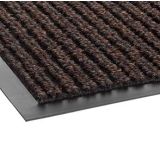 Needle Rib Matting
Starting at $55.00
Needle Rib Matting is a low-profile, linear-ribbed entrance mat built for lighter-traffic doors — side entrances, small storefronts, boutiques, and interior thresholds that see foot traffic but not a flood of it. The close ribbed surface wipes moisture off shoes and holds it on the mat, so a smaller entrance...
Needle Rib Matting is a low-profile, linear-ribbed entrance mat built for lighter-traffic doors — side entrances, small storefronts, boutiques, and...
Needle Rib Matting is a low-profile, linear-ribbed entrance mat built for lighter-traffic doors — side entrances, small storefronts, boutiques, and interior thresholds that see foot traffic but not a flood of it. The close ribbed surface wipes moisture off shoes and holds it on the mat, so a smaller entrance stays cleaner and the floor past it stays drier.
What Needle Rib Matting Does Before Water Reaches Your Floor
Even a quiet entrance lets dirt and water in on shoes. ISSA field data shows a building takes on up to 12 times more dirt during wet weather, and it takes six to eight steps to walk a sole dry. A mat at a lighter-traffic door is what keeps that moisture from spreading onto the floor just past it.
Needle Rib leans on moisture. The linear ribbed surface scrapes off light grit and, more importantly, pulls water off shoes and holds it in the mat — it's a strong moisture-retaining mat first and a light scraper second. The vinyl backing keeps that trapped water off the floor underneath rather than letting it bleed through.
Why a Ribbed Needle-Punched Surface, and Why This One
The surface is a needle-punched blend of polypropylene and polyester fiber, made with 50% recycled PET content. The linear rib runs the length of the mat, which is what gives it its action — shoes cross the ribs and leave moisture behind in the channels. The fiber is quick-drying and fade-resistant, so it dries between uses and keeps its color.
Underneath is a DINP-free PVC vinyl backing that holds the mat to the floor and protects it from the moisture the mat collects. This is a lighter-duty construction than a heavy bi-level rubber mat — which is the point. It's matched to lighter traffic, where a heavyweight mat would be more than the door needs.
Where It Belongs (and Where It Doesn't)
This mat is for interior, light-traffic spots — small businesses, boutiques, side and secondary entrances, back offices, and similar doors that don't take a constant stream of people. It's also certified high-traction by the National Floor Safety Institute, so a smaller entry still gets a safe, slip-resistant surface.
Where it's the wrong call is a busy main entrance or any outdoor spot. Put a light-traffic mat under heavy footfall and the surface crushes and saturates fast, and it stops doing its job; outdoors it isn't built for weather at all. For a high-traffic front door, step up to a heavier bi-level mat, and keep Needle Rib for the lighter doors it's sized for.
Three Things to Check Before You Spec It
Three things decide whether Needle Rib fits your entrance.
First, the traffic. This is a light-traffic mat — right for a side door or a small shop, wrong for a main lobby that sees hundreds of people a day. Match the mat to the footfall, or a busier door will wear it down before its time.
Second, the size and shape. It comes in standard sizes from 2'×3' up to 6'×10', plus 60-foot rolls cut to length — but only in standard widths, with no custom width cuts. Plan around the standard widths, and size the length to cover the steps it takes to dry a sole.
Third, the floor and the finish. The vinyl backing suits hard floors and low carpet and protects the surface beneath from trapped moisture. If the mat will sit out in the open rather than wall-to-wall, order edged ends, since standard rolls ship without edging unless you ask.
Why Mats Inc.
Mats Inc. has specified commercial matting since 1964, so when a door doesn't need a heavyweight mat, we'll tell you — and point you to the one that's actually sized for the traffic instead of putting more mat at the door than the spot calls for. We help you match construction to footfall, pick sizes that fit, and set up a matting plan across a building's doors. For the rest of the indoor range, see our all indoor entrance mats.
Specifications Type Indoor entrance mat, light traffic Surface Needle-punched polypropylene / polyester, linear rib pattern Recycled content 50% recycled PET fiber surface Thickness 5/16" Backing DINP-free PVC vinyl (2.5 lb vinyl strength, ASTM D624 die-T) Flammability Passes DOC-FF-1-70 Traction Certified high-traction by the National Floor Safety Institute (NFSI) Colors Blue, Brown, Charcoal, Gray Standard sizes 2'×3', 3'×4', 3'×5', 3'×6', 3'×8', 3'×10', 4'×6', 4'×8', 4'×10', 6'×10' Roll sizes 3'×60', 4'×60', 6'×60' (cut to length; no custom widths) Warranty 1-year limited (Mats Inc.) Frequently Asked Questions
How does the ribbed surface clean shoes?
Answered by Dustin Thompson, Owner & CEO
The surface is a linear ribbed fiber — rows of raised ribs running the length of the mat. As someone walks across, the ribs scrape light grit off the shoe and, more importantly, the fiber pulls moisture off the sole and holds it in the channels between the ribs. It's built to retain water rather than just push it around, so a wet shoe leaves most of its moisture on the mat. The vinyl backing then keeps that water off the floor underneath instead of letting it soak through.
How much traffic can it take?
Answered by Dustin Thompson, Owner & CEO
It's rated for light traffic — think a side entrance, a small shop, or a back-office door, not a main lobby. In the right spot it holds up well for years; in the wrong one it wears out fast. A light-traffic mat under heavy footfall crushes flat and saturates, and once it does that it stops scraping and holding water and just sits there wet.
So the honest answer is that durability here is about matching the mat to the door. Kept to the lighter traffic it's made for, and cleaned regularly, it keeps working and protecting the floor. Pushed past that, it gives up early.
Can I use it outdoors or at a busy main entrance?
Answered by Dustin Thompson, Owner & CEO
Neither is a good fit. Needle Rib is an interior, light-traffic mat — it isn't built for weather, so outdoor use is out, and a busy main entrance will overwhelm it. The better setup is to use it where it belongs — a quieter interior door — and put a heavier bi-level mat at the high-traffic front entrance and a coarse scraper outside. Matching each door to the right mat keeps more dirt and water off your floors than stretching one light mat past what it's made for.
What sizes can I get, and can it be cut to fit?
Answered by Jinna Hopson, Vice President of Marketing
It comes in standard sizes from 2'×3' up to 6'×10', and in 60-foot rolls that can be cut to length. The one limit is width: there are no custom width cuts, so you work within the standard widths rather than a made-to-measure size.
Size the length to cover the steps it takes to dry a sole, not just the doorway. And if the mat will sit out in the open rather than wall-to-wall, ask for edged ends — standard rolls ship without edging unless you specify it.
What does it look like, and what colors are there?
Answered by Jinna Hopson, Vice President of Marketing
It has a simple, low-profile linear-rib look — clean and unobtrusive rather than decorative, which suits a small shop or a quiet interior door where you want the mat to blend into the space. There are four colors: Blue, Brown, Charcoal, and Gray. The darker tones like Charcoal and Brown hide tracked-in dirt better between cleanings, which helps a lighter-traffic mat keep looking tidy without constant attention.
Can I get it in a custom size or with a logo?
Answered by Jinna Hopson, Vice President of Marketing
Not really, on either count. There are no custom width cuts — you choose from standard widths, with rolls cut to length — and this is a plain ribbed mat, not a logo or printed construction. If you need a branded mat for the same kind of entrance, that's a different product — a logo mat — and we can point you to one. For a simple, clean mat that holds moisture at a lighter-traffic door, Needle Rib does that job without the extras.
By Dustin Thompson, Owner & CEO, Mats Inc.
↑
Needle Rib Matting is a low-profile, linear-ribbed entrance mat built for lighter-traffic doors — side entrances, small storefronts, boutiques, and interior thresholds that see foot traffic but not a flood of it. The close ribbed surface wipes moisture off shoes and holds it on the mat, so a smaller entrance stays cleaner and the floor past it stays drier.
What Needle Rib Matting Does Before Water Reaches Your Floor
Even a quiet entrance lets dirt and water in on shoes. ISSA field data shows a building takes on up to 12 times more dirt during wet weather, and it takes six to eight steps to walk a sole dry. A mat at a lighter-traffic door is what keeps that moisture from spreading onto the floor just past it.
Needle Rib leans on moisture. The linear ribbed surface scrapes off light grit and, more importantly, pulls water off shoes and holds it in the mat — it's a strong moisture-retaining mat first and a light scraper second. The vinyl backing keeps that trapped water off the floor underneath rather than letting it bleed through.
Why a Ribbed Needle-Punched Surface, and Why This One
The surface is a needle-punched blend of polypropylene and polyester fiber, made with 50% recycled PET content. The linear rib runs the length of the mat, which is what gives it its action — shoes cross the ribs and leave moisture behind in the channels. The fiber is quick-drying and fade-resistant, so it dries between uses and keeps its color.
Underneath is a DINP-free PVC vinyl backing that holds the mat to the floor and protects it from the moisture the mat collects. This is a lighter-duty construction than a heavy bi-level rubber mat — which is the point. It's matched to lighter traffic, where a heavyweight mat would be more than the door needs.
Where It Belongs (and Where It Doesn't)
This mat is for interior, light-traffic spots — small businesses, boutiques, side and secondary entrances, back offices, and similar doors that don't take a constant stream of people. It's also certified high-traction by the National Floor Safety Institute, so a smaller entry still gets a safe, slip-resistant surface.
Where it's the wrong call is a busy main entrance or any outdoor spot. Put a light-traffic mat under heavy footfall and the surface crushes and saturates fast, and it stops doing its job; outdoors it isn't built for weather at all. For a high-traffic front door, step up to a heavier bi-level mat, and keep Needle Rib for the lighter doors it's sized for.
Three Things to Check Before You Spec It
Three things decide whether Needle Rib fits your entrance.
First, the traffic. This is a light-traffic mat — right for a side door or a small shop, wrong for a main lobby that sees hundreds of people a day. Match the mat to the footfall, or a busier door will wear it down before its time.
Second, the size and shape. It comes in standard sizes from 2'×3' up to 6'×10', plus 60-foot rolls cut to length — but only in standard widths, with no custom width cuts. Plan around the standard widths, and size the length to cover the steps it takes to dry a sole.
Third, the floor and the finish. The vinyl backing suits hard floors and low carpet and protects the surface beneath from trapped moisture. If the mat will sit out in the open rather than wall-to-wall, order edged ends, since standard rolls ship without edging unless you ask.
Why Mats Inc.
Mats Inc. has specified commercial matting since 1964, so when a door doesn't need a heavyweight mat, we'll tell you — and point you to the one that's actually sized for the traffic instead of putting more mat at the door than the spot calls for. We help you match construction to footfall, pick sizes that fit, and set up a matting plan across a building's doors. For the rest of the indoor range, see our all indoor entrance mats.
Specifications Type Indoor entrance mat, light traffic Surface Needle-punched polypropylene / polyester, linear rib pattern Recycled content 50% recycled PET fiber surface Thickness 5/16" Backing DINP-free PVC vinyl (2.5 lb vinyl strength, ASTM D624 die-T) Flammability Passes DOC-FF-1-70 Traction Certified high-traction by the National Floor Safety Institute (NFSI) Colors Blue, Brown, Charcoal, Gray Standard sizes 2'×3', 3'×4', 3'×5', 3'×6', 3'×8', 3'×10', 4'×6', 4'×8', 4'×10', 6'×10' Roll sizes 3'×60', 4'×60', 6'×60' (cut to length; no custom widths) Warranty 1-year limited (Mats Inc.) Frequently Asked Questions
How does the ribbed surface clean shoes?
Answered by Dustin Thompson, Owner & CEO
The surface is a linear ribbed fiber — rows of raised ribs running the length of the mat. As someone walks across, the ribs scrape light grit off the shoe and, more importantly, the fiber pulls moisture off the sole and holds it in the channels between the ribs. It's built to retain water rather than just push it around, so a wet shoe leaves most of its moisture on the mat. The vinyl backing then keeps that water off the floor underneath instead of letting it soak through.
How much traffic can it take?
Answered by Dustin Thompson, Owner & CEO
It's rated for light traffic — think a side entrance, a small shop, or a back-office door, not a main lobby. In the right spot it holds up well for years; in the wrong one it wears out fast. A light-traffic mat under heavy footfall crushes flat and saturates, and once it does that it stops scraping and holding water and just sits there wet.
So the honest answer is that durability here is about matching the mat to the door. Kept to the lighter traffic it's made for, and cleaned regularly, it keeps working and protecting the floor. Pushed past that, it gives up early.
Can I use it outdoors or at a busy main entrance?
Answered by Dustin Thompson, Owner & CEO
Neither is a good fit. Needle Rib is an interior, light-traffic mat — it isn't built for weather, so outdoor use is out, and a busy main entrance will overwhelm it. The better setup is to use it where it belongs — a quieter interior door — and put a heavier bi-level mat at the high-traffic front entrance and a coarse scraper outside. Matching each door to the right mat keeps more dirt and water off your floors than stretching one light mat past what it's made for.
What sizes can I get, and can it be cut to fit?
Answered by Jinna Hopson, Vice President of Marketing
It comes in standard sizes from 2'×3' up to 6'×10', and in 60-foot rolls that can be cut to length. The one limit is width: there are no custom width cuts, so you work within the standard widths rather than a made-to-measure size.
Size the length to cover the steps it takes to dry a sole, not just the doorway. And if the mat will sit out in the open rather than wall-to-wall, ask for edged ends — standard rolls ship without edging unless you specify it.
What does it look like, and what colors are there?
Answered by Jinna Hopson, Vice President of Marketing
It has a simple, low-profile linear-rib look — clean and unobtrusive rather than decorative, which suits a small shop or a quiet interior door where you want the mat to blend into the space. There are four colors: Blue, Brown, Charcoal, and Gray. The darker tones like Charcoal and Brown hide tracked-in dirt better between cleanings, which helps a lighter-traffic mat keep looking tidy without constant attention.
Can I get it in a custom size or with a logo?
Answered by Jinna Hopson, Vice President of Marketing
Not really, on either count. There are no custom width cuts — you choose from standard widths, with rolls cut to length — and this is a plain ribbed mat, not a logo or printed construction. If you need a branded mat for the same kind of entrance, that's a different product — a logo mat — and we can point you to one. For a simple, clean mat that holds moisture at a lighter-traffic door, Needle Rib does that job without the extras.
By Dustin Thompson, Owner & CEO, Mats Inc.
↑
View Details
View Details
 Rely-On Olefin Matting
Starting at $25.00
Rely-On Olefin Matting is the plain interior wiper for a door that sees a steady trickle of people rather than a crowd: a 3/8" cut-pile olefin mat on a vinyl moisture barrier, in six solid colors, low enough to slide under most doors. It pulls water and fine dust off...
Rely-On Olefin Matting is the plain interior wiper for a door that sees a steady trickle of people rather than...
Rely-On Olefin Matting is the plain interior wiper for a door that sees a steady trickle of people rather than a crowd: a 3/8" cut-pile olefin mat on a vinyl moisture barrier, in six solid colors, low enough to slide under most doors. It pulls water and fine dust off a sole and holds it in the pile, and the maker rates it to hold up to a gallon of water per square yard before it is full.
What a Light-Traffic Wiper Does Before the Floor Shows Footprints
A boutique, a branch office, or a side entrance does not get mud. It gets wet shoes, dust, and the fine grit that rides in on dry days and turns into gray footprints on a polished floor. A wiper mat is built for exactly that load: the pile makes contact with the sole, lifts the moisture and the fines, and keeps them in the fiber instead of on the tile.
The maker gives this mat a wiping rating of 80 out of 100 and a scraping rating of 20. That is the honest shape of the product. It is not built to take mud off a boot; it is built to finish drying a shoe that has already crossed a threshold. At a light-traffic door that is the whole job, and a water absorbent mat that does it quietly in a color that matches the floor is what most small commercial entries actually need.
Capacity is where wipers differ, and the maker publishes this one's: up to 1 gallon of water per square yard. A 3' by 5' mat holds roughly a gallon and two-thirds before every shoe starts leaving wetter than it landed. For a side door or a boutique, that is a wet day's worth. For a busy lobby, it is a wet hour, which is why the maker rates it for light traffic and not more.
Why Cut-Pile Olefin on a Vinyl Back, and Why This One
The face is cut-pile polypropylene at 12 ounces per square yard, 3/8" thick overall. Polypropylene does not absorb water into the fiber itself; it holds water between the fibers, which is why the pile dries quickly and does not sour, and why the maker rates the colors to resist fading, staining, mold, and mildew. A cut pile also wipes better than a loop at this weight, which is where the 80 wiping score comes from.
Under it is a DINP-free PVC backing that works as a moisture barrier. The water the pile collects stays in the mat rather than wicking through to the floor, and the vinyl lies flat without a rubber border to trip on. The maker publishes the backing's tear strength at 2.5 pounds by the ASTM D624 die-T method and lists the mat as meeting the DOC FF-1-70 flammability standard for floor coverings.
The 3/8" profile is the detail that decides a lot of doors. A thicker wiper catches on the bottom of an inward-swinging door and gets kicked out of position all day; this one fits under most doors and stays where it was laid. The maker also offers a flocked logo on this mat, so a small business can put its name at the door without moving up to a heavier construction.
Where It Belongs, and What It Is Not
The maker's applications are interior light-traffic areas: small businesses, boutiques, and side entrances. In practice that is the retail shop on a strip, the branch office, the salon, the clinic waiting room, the employee door at the back of a building, and the interior side of a vestibule where a scraper outside has already taken the grit. It is a dry-side mat; it lives inside the door, out of the weather.
It is not a medium- or heavy-traffic mat. At a door that sees a few hundred people a day the pile packs down and the gallon capacity is spent by mid-morning; that door wants the plush version of this construction or a bi-level mat with a water dam. And it is not a scraper. Mud and coarse grit need a coir mat or a rubber-nub mat ahead of it, or the pile clogs and stops wiping. The rest of the water-absorbent floor mats range covers both of those doors.
It is also not an outdoor mat. The pile that makes it a good wiper does not survive sun, freeze, and hosing down. Keep it inside and let the outdoor mat take the weather.
Three Things to Check Before You Spec It
First, the traffic. The maker rates this mat for light traffic, which in its own guidance means a door well under a few hundred people a day. Count a normal weekday. If the number is in the hundreds, step up to a medium-traffic wiper; if it is dozens, this is the right mat, and a heavier one would be more mat than the door can use.
Second, the door swing and the floor. Measure the gap under an inward-opening door; at 3/8" this mat clears most, but a door already scraping the floor will catch any mat. Then look at what is under it. On sealed tile or polished concrete the vinyl backing lies flat and stays put. On carpet it can creep, so plan the placement where it is boxed in by walls or fixtures.
Third, the size and the edge. Stock sizes run from 2' by 3' to 6' by 10', and rolls come in 3', 4', and 6' widths at 60 feet; there are no custom width cuts, so a run must be one of those three widths. A roll cut to length has no edging on the cut ends unless you ask for it, so specify finished ends if the run will sit in an open walkway rather than against a wall.
Why Mats Inc.
We sell a lot of this mat to small businesses that were about to buy a heavier one they did not need. A boutique door does not need a water dam; it needs a wiper that fits under the door, matches the floor, and holds a day of rain. Tell us the door, the traffic, and the color of the floor, and we will say whether this is the mat or whether the door has grown past it. If you want your name on it, send the artwork and we will confirm the flocked logo option before you order.
Type Wiper mat, light traffic, interior Face Cut-pile polypropylene (olefin), 12 oz per sq yd Backing DINP-free PVC vinyl moisture barrier Thickness 3/8" Water capacity Holds up to 1 gallon per square yard Maker's performance ratings Scraping 20, wiping 80, durability 60 (out of 100) Colors Black, Castellan Red, Charcoal, Marlin Blue, Pebble Brown, Walnut Stock sizes 2' x 3', 3' x 4', 3' x 5', 3' x 6', 3' x 8', 3' x 10', 4' x 6', 4' x 8', 4' x 10', 6' x 10' Roll sizes 3' x 60', 4' x 60', 6' x 60'; no custom width cuts; cut ends unedged unless specified Vinyl strength 2.5 lb, ASTM D624 die-T Flammability DOC FF-1-70 Customization Flocked logo available Warranty 1-year limited (Mats Inc.) Frequently Asked Questions
What is this mat made of, and how does it hold water?
Answered by Dustin Thompson, Owner & CEO
A cut-pile polypropylene face, 12 ounces per square yard, on a DINP-free vinyl backing, 3/8" thick in total. Polypropylene fiber does not soak up water into itself; it holds water in the spaces between the fibers, which is why the maker can rate the mat at up to 1 gallon per square yard and why the pile dries fast once the door quiets down. The vinyl backing is the moisture barrier that keeps that gallon off the floor.
There is no rubber border or water dam. The water stays in the pile, not behind a lip, so the mat should be vacuumed wet rather than left to hold a puddle.
How long does it last, and what wears it out?
Answered by Dustin Thompson, Owner & CEO
The maker publishes no year figure but rates the mat 60 out of 100 for durability, which places it as a light-duty mat that lasts when it is used as one. The pile is the wear part: at the light traffic it is rated for, it keeps its face for years; at a door with hundreds of people a day it packs flat in a season and stops wiping. The maker rates the colors to resist fading, staining, mold, and mildew, so the mat does not sour as it takes on water.
What shortens it is the wrong door: heavy traffic, coarse grit with no scraper ahead of it, or being left saturated. The mat carries a 1-year limited (Mats Inc.) warranty.
Will it fit under my door?
Answered by Dustin Thompson, Owner & CEO
Usually. At 3/8" thick with no raised border, the maker notes it fits under most doors, which is the reason it is the wiper we suggest for an inward-swinging door with a tight sweep. Measure the gap at the low point of the door's arc, not at the hinge side. If it clears 3/8" with a little to spare, the mat can sit right at the threshold where it does the most good.
If the door drags the floor already, no mat will clear it; adjust the sweep or set the mat just inside the swing.
What size should I get, and can I get a custom width?
Answered by Jinna Hopson, Vice President of Marketing
For a single door, a 3' by 5' is the usual pick; it gives two full steps and fits most entries. A 2' by 3' suits a very small shop or an interior office door. For a corridor or a line of doors, rolls come in 3', 4', and 6' widths at 60 feet and we cut to length. The maker does not offer custom widths, so choose the closest of those three.
A cut roll has no finished edging on the ends unless you ask for it. If the run ends in an open walkway, ask; if it ends at a wall, you can skip it.
Which color should I choose, and will it show dirt?
Answered by Jinna Hopson, Vice President of Marketing
Six solid colors: Black, Castellan Red, Charcoal, Marlin Blue, Pebble Brown, and Walnut. Charcoal, Pebble Brown, and Walnut hide the fine gray soil a wiper collects between vacuumings; Black shows lint and light dust; Castellan Red and Marlin Blue are for a door where the mat is meant to be seen. The cut pile reads as a small run of carpet rather than a utility mat, which is the point of the product.
The maker rates all six to resist fading and staining, so the color you pick is the color you keep.
Can I put my logo on it?
Answered by Jinna Hopson, Vice President of Marketing
Yes. The maker offers this mat with a flocked logo, where the design is applied to the face of the pile, so a boutique or a branch office can put its name at the door on the same light-traffic wiper. It is the right way to brand a door that is out of the weather and not overrun; a flocked logo at a wet, busy main entrance wears before the mat does, and that door wants a heavier logo construction.
Send us the artwork and the door and we will confirm the option and the size before you commit.
By Jinna Hopson, Vice President of Marketing, Mats Inc.
↑
Rely-On Olefin Matting is the plain interior wiper for a door that sees a steady trickle of people rather than a crowd: a 3/8" cut-pile olefin mat on a vinyl moisture barrier, in six solid colors, low enough to slide under most doors. It pulls water and fine dust off a sole and holds it in the pile, and the maker rates it to hold up to a gallon of water per square yard before it is full.
What a Light-Traffic Wiper Does Before the Floor Shows Footprints
A boutique, a branch office, or a side entrance does not get mud. It gets wet shoes, dust, and the fine grit that rides in on dry days and turns into gray footprints on a polished floor. A wiper mat is built for exactly that load: the pile makes contact with the sole, lifts the moisture and the fines, and keeps them in the fiber instead of on the tile.
The maker gives this mat a wiping rating of 80 out of 100 and a scraping rating of 20. That is the honest shape of the product. It is not built to take mud off a boot; it is built to finish drying a shoe that has already crossed a threshold. At a light-traffic door that is the whole job, and a water absorbent mat that does it quietly in a color that matches the floor is what most small commercial entries actually need.
Capacity is where wipers differ, and the maker publishes this one's: up to 1 gallon of water per square yard. A 3' by 5' mat holds roughly a gallon and two-thirds before every shoe starts leaving wetter than it landed. For a side door or a boutique, that is a wet day's worth. For a busy lobby, it is a wet hour, which is why the maker rates it for light traffic and not more.
Why Cut-Pile Olefin on a Vinyl Back, and Why This One
The face is cut-pile polypropylene at 12 ounces per square yard, 3/8" thick overall. Polypropylene does not absorb water into the fiber itself; it holds water between the fibers, which is why the pile dries quickly and does not sour, and why the maker rates the colors to resist fading, staining, mold, and mildew. A cut pile also wipes better than a loop at this weight, which is where the 80 wiping score comes from.
Under it is a DINP-free PVC backing that works as a moisture barrier. The water the pile collects stays in the mat rather than wicking through to the floor, and the vinyl lies flat without a rubber border to trip on. The maker publishes the backing's tear strength at 2.5 pounds by the ASTM D624 die-T method and lists the mat as meeting the DOC FF-1-70 flammability standard for floor coverings.
The 3/8" profile is the detail that decides a lot of doors. A thicker wiper catches on the bottom of an inward-swinging door and gets kicked out of position all day; this one fits under most doors and stays where it was laid. The maker also offers a flocked logo on this mat, so a small business can put its name at the door without moving up to a heavier construction.
Where It Belongs, and What It Is Not
The maker's applications are interior light-traffic areas: small businesses, boutiques, and side entrances. In practice that is the retail shop on a strip, the branch office, the salon, the clinic waiting room, the employee door at the back of a building, and the interior side of a vestibule where a scraper outside has already taken the grit. It is a dry-side mat; it lives inside the door, out of the weather.
It is not a medium- or heavy-traffic mat. At a door that sees a few hundred people a day the pile packs down and the gallon capacity is spent by mid-morning; that door wants the plush version of this construction or a bi-level mat with a water dam. And it is not a scraper. Mud and coarse grit need a coir mat or a rubber-nub mat ahead of it, or the pile clogs and stops wiping. The rest of the water-absorbent floor mats range covers both of those doors.
It is also not an outdoor mat. The pile that makes it a good wiper does not survive sun, freeze, and hosing down. Keep it inside and let the outdoor mat take the weather.
Three Things to Check Before You Spec It
First, the traffic. The maker rates this mat for light traffic, which in its own guidance means a door well under a few hundred people a day. Count a normal weekday. If the number is in the hundreds, step up to a medium-traffic wiper; if it is dozens, this is the right mat, and a heavier one would be more mat than the door can use.
Second, the door swing and the floor. Measure the gap under an inward-opening door; at 3/8" this mat clears most, but a door already scraping the floor will catch any mat. Then look at what is under it. On sealed tile or polished concrete the vinyl backing lies flat and stays put. On carpet it can creep, so plan the placement where it is boxed in by walls or fixtures.
Third, the size and the edge. Stock sizes run from 2' by 3' to 6' by 10', and rolls come in 3', 4', and 6' widths at 60 feet; there are no custom width cuts, so a run must be one of those three widths. A roll cut to length has no edging on the cut ends unless you ask for it, so specify finished ends if the run will sit in an open walkway rather than against a wall.
Why Mats Inc.
We sell a lot of this mat to small businesses that were about to buy a heavier one they did not need. A boutique door does not need a water dam; it needs a wiper that fits under the door, matches the floor, and holds a day of rain. Tell us the door, the traffic, and the color of the floor, and we will say whether this is the mat or whether the door has grown past it. If you want your name on it, send the artwork and we will confirm the flocked logo option before you order.
Type Wiper mat, light traffic, interior Face Cut-pile polypropylene (olefin), 12 oz per sq yd Backing DINP-free PVC vinyl moisture barrier Thickness 3/8" Water capacity Holds up to 1 gallon per square yard Maker's performance ratings Scraping 20, wiping 80, durability 60 (out of 100) Colors Black, Castellan Red, Charcoal, Marlin Blue, Pebble Brown, Walnut Stock sizes 2' x 3', 3' x 4', 3' x 5', 3' x 6', 3' x 8', 3' x 10', 4' x 6', 4' x 8', 4' x 10', 6' x 10' Roll sizes 3' x 60', 4' x 60', 6' x 60'; no custom width cuts; cut ends unedged unless specified Vinyl strength 2.5 lb, ASTM D624 die-T Flammability DOC FF-1-70 Customization Flocked logo available Warranty 1-year limited (Mats Inc.) Frequently Asked Questions
What is this mat made of, and how does it hold water?
Answered by Dustin Thompson, Owner & CEO
A cut-pile polypropylene face, 12 ounces per square yard, on a DINP-free vinyl backing, 3/8" thick in total. Polypropylene fiber does not soak up water into itself; it holds water in the spaces between the fibers, which is why the maker can rate the mat at up to 1 gallon per square yard and why the pile dries fast once the door quiets down. The vinyl backing is the moisture barrier that keeps that gallon off the floor.
There is no rubber border or water dam. The water stays in the pile, not behind a lip, so the mat should be vacuumed wet rather than left to hold a puddle.
How long does it last, and what wears it out?
Answered by Dustin Thompson, Owner & CEO
The maker publishes no year figure but rates the mat 60 out of 100 for durability, which places it as a light-duty mat that lasts when it is used as one. The pile is the wear part: at the light traffic it is rated for, it keeps its face for years; at a door with hundreds of people a day it packs flat in a season and stops wiping. The maker rates the colors to resist fading, staining, mold, and mildew, so the mat does not sour as it takes on water.
What shortens it is the wrong door: heavy traffic, coarse grit with no scraper ahead of it, or being left saturated. The mat carries a 1-year limited (Mats Inc.) warranty.
Will it fit under my door?
Answered by Dustin Thompson, Owner & CEO
Usually. At 3/8" thick with no raised border, the maker notes it fits under most doors, which is the reason it is the wiper we suggest for an inward-swinging door with a tight sweep. Measure the gap at the low point of the door's arc, not at the hinge side. If it clears 3/8" with a little to spare, the mat can sit right at the threshold where it does the most good.
If the door drags the floor already, no mat will clear it; adjust the sweep or set the mat just inside the swing.
What size should I get, and can I get a custom width?
Answered by Jinna Hopson, Vice President of Marketing
For a single door, a 3' by 5' is the usual pick; it gives two full steps and fits most entries. A 2' by 3' suits a very small shop or an interior office door. For a corridor or a line of doors, rolls come in 3', 4', and 6' widths at 60 feet and we cut to length. The maker does not offer custom widths, so choose the closest of those three.
A cut roll has no finished edging on the ends unless you ask for it. If the run ends in an open walkway, ask; if it ends at a wall, you can skip it.
Which color should I choose, and will it show dirt?
Answered by Jinna Hopson, Vice President of Marketing
Six solid colors: Black, Castellan Red, Charcoal, Marlin Blue, Pebble Brown, and Walnut. Charcoal, Pebble Brown, and Walnut hide the fine gray soil a wiper collects between vacuumings; Black shows lint and light dust; Castellan Red and Marlin Blue are for a door where the mat is meant to be seen. The cut pile reads as a small run of carpet rather than a utility mat, which is the point of the product.
The maker rates all six to resist fading and staining, so the color you pick is the color you keep.
Can I put my logo on it?
Answered by Jinna Hopson, Vice President of Marketing
Yes. The maker offers this mat with a flocked logo, where the design is applied to the face of the pile, so a boutique or a branch office can put its name at the door on the same light-traffic wiper. It is the right way to brand a door that is out of the weather and not overrun; a flocked logo at a wet, busy main entrance wears before the mat does, and that door wants a heavier logo construction.
Send us the artwork and the door and we will confirm the option and the size before you commit.
By Jinna Hopson, Vice President of Marketing, Mats Inc.
↑
View Details
View Details
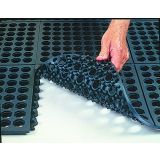 Safety Step Rubber Mats
Starting at $35.00
Safety Step rubber mats take a different approach to wet-area matting: instead of one big mat, you build the footprint you need from 3-by-3-foot modular sections with molded-in connectors on two sides. Perforations drain water and oil through the surface, cushioned rubber eases long standing shifts, and when one...
Safety Step rubber mats take a different approach to wet-area matting: instead of one big mat, you build the...
Safety Step rubber mats take a different approach to wet-area matting: instead of one big mat, you build the footprint you need from 3-by-3-foot modular sections with molded-in connectors on two sides. Perforations drain water and oil through the surface, cushioned rubber eases long standing shifts, and when one section finally wears out, you replace that section — not the whole installation.
What Safety Step Does Before a Layout Outgrows Its Matting
Most wet-area mats are cut to a rectangle and stay that way. Work areas aren't. Lines wrap around equipment, stations get added, a sanding cell moves across the shop — and a fixed mat that fit last year now leaves gaps where feet land on bare, wet floor.
A modular anti-fatigue mat solves that at the design level. Sections connect into whatever shape the work takes, wrap odd corners, and re-assemble when the layout changes. Underneath, a multi-nib backing lifts the whole surface off the floor so drained liquid keeps moving and the floor beneath can actually dry, instead of holding a wet film under the rubber.
Why This Construction, and Why This One
The mat comes in two compounds, and choosing between them is most of the spec decision. The black version is general-purpose rubber for wet duty — water, washdowns, standard cleaners — with recycled content up to 47%. The terra cotta version is a nitrile rubber blend built to resist grease, for kitchens and stations where oil reaches the floor daily.
Both wear hard: surface loss measures at or under 1% after 1,000 abrasion cycles on the standard test. And both share the modular system's quiet economics — a high-wear section at the sink or the grinder swaps out individually, while the rest of the installation stays in service.
Edging is optional rather than built in. Snap-on beveled ramps finish exposed sides where traffic steps on and off; sides butted against equipment or walls can stay square. Adding edging extends the mat roughly 3 inches per finished side, which matters when you're sizing to a tight footprint.
Where It Belongs, and What It Is Not
Safety Step earns its place in factories, workstations, sanding and grinding cells, dish rooms, and food service areas — heavy-duty wet and oily zones, and especially the large or odd-shaped ones a single rectangular mat can't cover cleanly. If the matting footprint might change in the next few years, modular is the format that keeps up.
It is not a dry-station comfort mat — a salon chair or standing desk wants a solid surface, not perforations. And for one fixed, standard-sized station that will never move, a single one-piece mat from the anti-fatigue mats and runners range does the job without assembly. This mat's case is coverage that's big, irregular, or likely to change.
Three Things to Check Before You Spec It
First, what reaches the floor. Water and cleaning solution point to the black general-purpose version. Grease, fryer oil, or petroleum-based fluids point to the terra cotta nitrile blend — putting the general-purpose compound under daily grease shortens its life and turns the surface slick sooner.
Second, the true footprint. Sections are 3-by-3, custom assemblies run up to 12 by 30 feet, and workstation layouts order in full-foot increments. Sketch the actual standing and walking zone around the equipment — the point of modular is covering that real shape, not the rectangle that approximates it.
Third, the exposed edges. Count the sides where people step on and off, and spec snap-on ramps for those; remember each finished side adds about 3 inches to the overall dimension. An unramped edge in a walk path is a stubbed toe waiting for a rush.
Why Mats Inc.
Modular matting gets ordered wrong in predictable ways — the compound that doesn't match the fluids, the layout that forgot the edging inches, the section count that's one short. Send us a sketch of the work area with what lands on the floor, and we'll spec the sections, compound, and ramps so the kit that arrives assembles into the mat you actually needed.
Format Modular sections, molded-in connectors on two adjoining sides Section size 3' x 3' Custom assemblies Up to 12' x 30'; workstations in full-foot increments Compounds / colors Black — general-purpose rubber (recycled content up to 47%); Terra Cotta — grease-resistant nitrile rubber blend Drainage Perforated surface; multi-nib backing aerates so floors dry quickly Hardness Black 55 / Terra Cotta 60 (ASTM D2240 durometer) Abrasion resistance ≤1% loss at 1,000 cycles (ASTM D3884), both compounds Edging Optional snap-on beveled ramps; each finished side adds ~3" Warranty 1-year limited (Mats Inc.) Frequently Asked Questions
What's the difference between the black and terra cotta versions?
Answered by Dustin Thompson, Owner & CEO
The compound. Black is general-purpose rubber — right for wet zones where water and standard cleaners are the exposure, and it carries up to 47% recycled content. Terra cotta is a nitrile rubber blend formulated to resist grease and oil, which is what you want under a fry line, in a machine shop, or anywhere petroleum-based fluids hit the floor.
If you're unsure, name the messiest thing that reaches that floor in a normal week. Grease in the answer means terra cotta.
How long does a modular drainage mat like this last?
Answered by Dustin Thompson, Owner & CEO
The wear data is unusually strong: both compounds lose 1% or less of their surface after 1,000 cycles on the standard abrasion test, which puts heavy daily duty in the multi-year range — three to five years is a fair expectation with routine rinsing.
The modular format changes the replacement math, though. Wear never lands evenly — the section at the sink or the grinder goes first. Here you swap that one section and keep the rest in service, instead of retiring a whole mat because one corner died.
How do the sections install, and do they need adhesive?
Answered by Dustin Thompson, Owner & CEO
No adhesive. Each section has connectors molded into two adjoining sides, so you lay the first section at the primary work position and snap outward until the footprint is covered. Check every joint as you go — a proud seam collects debris and catches toes.
Start on a clean, dry floor, orient the assembly so drainage runs toward the floor drain, and snap ramps onto any edge that faces foot traffic. Reconfiguring later is the same process in reverse.
Will terra cotta look better than black in a kitchen guests can see into?
Answered by Jinna Hopson, VP of Marketing
Often, yes — and not just on looks. Terra cotta is the traditional working color of commercial kitchens, so in an open-kitchen or chef's-counter setting it reads as authentic professional equipment. It also happens to be the grease-resistant compound, so the aesthetic choice and the right technical choice usually point the same direction in food service.
Black suits back-of-house and industrial floors where it disappears against dark concrete. Whichever you pick, keep it consistent across connected sections — a checkerboard of mixed colors reads as patched.
What sizes can I build, and can it fit an odd-shaped area?
Answered by Jinna Hopson, VP of Marketing
Odd shapes are the point. Sections are 3-by-3 feet and connect in any direction, so an L around a prep island, a U inside a work cell, or a long dish-room run all assemble from the same units. Custom assemblies go up to 12 by 30 feet, ordered in full-foot increments.
Two sizing notes: optional edging adds about 3 inches per finished side, and it's worth ordering to the real standing zone rather than rounding down — a footprint that stops one section short leaves someone half off the cushion all shift.
Is this the right choice over a single one-piece drainage mat?
Answered by Jinna Hopson, VP of Marketing
It depends on the shape and the future. One fixed station with standard dimensions is happily served by a one-piece mat — nothing to assemble, nothing to seam. Choose modular when the area is large, wraps equipment, doesn't match stock rectangles, or is likely to be rearranged.
The section-replacement benefit tips close calls: if one spot in your layout takes far more punishment than the rest, modular means that spot never forces a full replacement.
By Dustin Thompson, Owner & CEO, Mats Inc.
↑
Safety Step rubber mats take a different approach to wet-area matting: instead of one big mat, you build the footprint you need from 3-by-3-foot modular sections with molded-in connectors on two sides. Perforations drain water and oil through the surface, cushioned rubber eases long standing shifts, and when one section finally wears out, you replace that section — not the whole installation.
What Safety Step Does Before a Layout Outgrows Its Matting
Most wet-area mats are cut to a rectangle and stay that way. Work areas aren't. Lines wrap around equipment, stations get added, a sanding cell moves across the shop — and a fixed mat that fit last year now leaves gaps where feet land on bare, wet floor.
A modular anti-fatigue mat solves that at the design level. Sections connect into whatever shape the work takes, wrap odd corners, and re-assemble when the layout changes. Underneath, a multi-nib backing lifts the whole surface off the floor so drained liquid keeps moving and the floor beneath can actually dry, instead of holding a wet film under the rubber.
Why This Construction, and Why This One
The mat comes in two compounds, and choosing between them is most of the spec decision. The black version is general-purpose rubber for wet duty — water, washdowns, standard cleaners — with recycled content up to 47%. The terra cotta version is a nitrile rubber blend built to resist grease, for kitchens and stations where oil reaches the floor daily.
Both wear hard: surface loss measures at or under 1% after 1,000 abrasion cycles on the standard test. And both share the modular system's quiet economics — a high-wear section at the sink or the grinder swaps out individually, while the rest of the installation stays in service.
Edging is optional rather than built in. Snap-on beveled ramps finish exposed sides where traffic steps on and off; sides butted against equipment or walls can stay square. Adding edging extends the mat roughly 3 inches per finished side, which matters when you're sizing to a tight footprint.
Where It Belongs, and What It Is Not
Safety Step earns its place in factories, workstations, sanding and grinding cells, dish rooms, and food service areas — heavy-duty wet and oily zones, and especially the large or odd-shaped ones a single rectangular mat can't cover cleanly. If the matting footprint might change in the next few years, modular is the format that keeps up.
It is not a dry-station comfort mat — a salon chair or standing desk wants a solid surface, not perforations. And for one fixed, standard-sized station that will never move, a single one-piece mat from the anti-fatigue mats and runners range does the job without assembly. This mat's case is coverage that's big, irregular, or likely to change.
Three Things to Check Before You Spec It
First, what reaches the floor. Water and cleaning solution point to the black general-purpose version. Grease, fryer oil, or petroleum-based fluids point to the terra cotta nitrile blend — putting the general-purpose compound under daily grease shortens its life and turns the surface slick sooner.
Second, the true footprint. Sections are 3-by-3, custom assemblies run up to 12 by 30 feet, and workstation layouts order in full-foot increments. Sketch the actual standing and walking zone around the equipment — the point of modular is covering that real shape, not the rectangle that approximates it.
Third, the exposed edges. Count the sides where people step on and off, and spec snap-on ramps for those; remember each finished side adds about 3 inches to the overall dimension. An unramped edge in a walk path is a stubbed toe waiting for a rush.
Why Mats Inc.
Modular matting gets ordered wrong in predictable ways — the compound that doesn't match the fluids, the layout that forgot the edging inches, the section count that's one short. Send us a sketch of the work area with what lands on the floor, and we'll spec the sections, compound, and ramps so the kit that arrives assembles into the mat you actually needed.
Format Modular sections, molded-in connectors on two adjoining sides Section size 3' x 3' Custom assemblies Up to 12' x 30'; workstations in full-foot increments Compounds / colors Black — general-purpose rubber (recycled content up to 47%); Terra Cotta — grease-resistant nitrile rubber blend Drainage Perforated surface; multi-nib backing aerates so floors dry quickly Hardness Black 55 / Terra Cotta 60 (ASTM D2240 durometer) Abrasion resistance ≤1% loss at 1,000 cycles (ASTM D3884), both compounds Edging Optional snap-on beveled ramps; each finished side adds ~3" Warranty 1-year limited (Mats Inc.) Frequently Asked Questions
What's the difference between the black and terra cotta versions?
Answered by Dustin Thompson, Owner & CEO
The compound. Black is general-purpose rubber — right for wet zones where water and standard cleaners are the exposure, and it carries up to 47% recycled content. Terra cotta is a nitrile rubber blend formulated to resist grease and oil, which is what you want under a fry line, in a machine shop, or anywhere petroleum-based fluids hit the floor.
If you're unsure, name the messiest thing that reaches that floor in a normal week. Grease in the answer means terra cotta.
How long does a modular drainage mat like this last?
Answered by Dustin Thompson, Owner & CEO
The wear data is unusually strong: both compounds lose 1% or less of their surface after 1,000 cycles on the standard abrasion test, which puts heavy daily duty in the multi-year range — three to five years is a fair expectation with routine rinsing.
The modular format changes the replacement math, though. Wear never lands evenly — the section at the sink or the grinder goes first. Here you swap that one section and keep the rest in service, instead of retiring a whole mat because one corner died.
How do the sections install, and do they need adhesive?
Answered by Dustin Thompson, Owner & CEO
No adhesive. Each section has connectors molded into two adjoining sides, so you lay the first section at the primary work position and snap outward until the footprint is covered. Check every joint as you go — a proud seam collects debris and catches toes.
Start on a clean, dry floor, orient the assembly so drainage runs toward the floor drain, and snap ramps onto any edge that faces foot traffic. Reconfiguring later is the same process in reverse.
Will terra cotta look better than black in a kitchen guests can see into?
Answered by Jinna Hopson, VP of Marketing
Often, yes — and not just on looks. Terra cotta is the traditional working color of commercial kitchens, so in an open-kitchen or chef's-counter setting it reads as authentic professional equipment. It also happens to be the grease-resistant compound, so the aesthetic choice and the right technical choice usually point the same direction in food service.
Black suits back-of-house and industrial floors where it disappears against dark concrete. Whichever you pick, keep it consistent across connected sections — a checkerboard of mixed colors reads as patched.
What sizes can I build, and can it fit an odd-shaped area?
Answered by Jinna Hopson, VP of Marketing
Odd shapes are the point. Sections are 3-by-3 feet and connect in any direction, so an L around a prep island, a U inside a work cell, or a long dish-room run all assemble from the same units. Custom assemblies go up to 12 by 30 feet, ordered in full-foot increments.
Two sizing notes: optional edging adds about 3 inches per finished side, and it's worth ordering to the real standing zone rather than rounding down — a footprint that stops one section short leaves someone half off the cushion all shift.
Is this the right choice over a single one-piece drainage mat?
Answered by Jinna Hopson, VP of Marketing
It depends on the shape and the future. One fixed station with standard dimensions is happily served by a one-piece mat — nothing to assemble, nothing to seam. Choose modular when the area is large, wraps equipment, doesn't match stock rectangles, or is likely to be rearranged.
The section-replacement benefit tips close calls: if one spot in your layout takes far more punishment than the rest, modular means that spot never forces a full replacement.
By Dustin Thompson, Owner & CEO, Mats Inc.
↑
View Details
View Details
 Cushion-Lok Mats
Starting at $139.00
What Cushion-Lok Does Before Spillage Decides Where People Stand Cushion-Lok is a raised, interlocking drainage mat that turns a wet, oily workstation into a dry standing platform. Hundreds of portholes carry liquids and debris down through the surface, while a series of blades elevates the worker above the spillage —...
What Cushion-Lok Does Before Spillage Decides Where People Stand Cushion-Lok is a raised, interlocking drainage mat that turns a wet,...
What Cushion-Lok Does Before Spillage Decides Where People Stand
Cushion-Lok is a raised, interlocking drainage mat that turns a wet, oily workstation into a dry standing platform. Hundreds of portholes carry liquids and debris down through the surface, while a series of blades elevates the worker above the spillage — footing stays gripped and dry even when the floor beneath isn't.
On a plant floor, spills don't wait for cleanup schedules. Cutting fluids drift off machines, wash water travels, and the person stationed in the middle of it stands there for a full shift. Without a raised platform, the choice is bad footing or constant mopping. With one, the liquid goes down and the work goes on.
Why Injection-Molded PVC, and Why This One
The material is a tough, injection-molded PVC — with black components manufactured from 100 percent recycled PVC — chosen for its resistance to harsh industrial chemicals, cutting fluids, oils, and greases. That chemistry is what lets the mat live where it's needed most: directly in the splash zone that destroys ordinary rubber and foam.
The build quality reads in the numbers: a 7/8-inch overall thickness, 1.9 pounds per square foot of injection-molded structure, beveled edges, and a heavy-duty usage rating. The manufacturer rates it "Best" — its top tier — for anti-fatigue, slip resistance, and wear resistance all at once, a rare trifecta in one construction.
The compliance sheet is equally clean: the available yellow borders along the sides comply with OSHA code 1910-144, the mat passes US fire rating requirements, it's REACH compliant, and the material is free of DOP, DMF, ozone-depleting substances, silicone, and heavy metals.
Where It Belongs, and What It Is Not
Cushion-Lok belongs in wet, dry, and oily industrial spaces: manufacturing plants, assembly lines, picking, packing and logistics warehouses, and individual work stations wherever spillage meets standing work. Because it interlocks, it's as much a flooring system as a mat — sized to a single post or built out across an entire work cell.
What it is not: a plush front-of-house comfort mat. This is industrial platform equipment, engineered for chemical exposure and heavy duty rather than for a hotel front desk — those softer stations are served by the comfort options in our anti-fatigue mats and runners lineup. Match the tool to the floor, and this one owns the harsh end.
Three Things to Check Before You Spec It
First, decide between stock and built-to-fit. Eight assembled stock sizes run from 30 by 36 inches up to 42 inches by 10 feet — or the interlocking tiles, ramps, and corners let you create your own configuration around machines, columns, and odd footprints. Factory-assembled custom configurations are available too.
Second, plan the borders and transitions. Yellow side borders meeting OSHA code 1910-144 mark the platform edge where forklifts and foot traffic pass close, and the yellow ramp and corner pieces give carts and hurried feet a proper transition onto the raised surface instead of a step up.
Third, match the chemistry to your floor. The PVC resists most chemicals, cutting fluids, oils, and greases — but "most" deserves a check when your process uses something aggressive. Tell us what actually reaches the floor at the station, and we'll verify compatibility before the mat ships.
Why Mats Inc.
Some stations don't need a mat so much as a small piece of infrastructure — and since 1964 we've helped plants build exactly that, one interlocking section at a time. We carry this system for the wet, oily floors that defeat everything simpler, we verify every claim here against the manufacturer's published specifications, and we back it with a 1-year limited Mats Inc. warranty.
Construction Raised interlocking drainage mat; porthole drainage surface over blade footing; injection molded Material PVC; black components manufactured from 100% recycled PVC; resistant to most chemicals, cutting fluids, oils, and greases Thickness 7/8" Colors Black, with yellow border options (yellow side borders comply with OSHA code 1910-144) Standard Sizes 30" x 36", 30" x 48", 30" x 60", 30" x 72", 30" x 96", 42" x 72", 42" x 96", 42" x 120" Modular Components 12" x 12" tiles (black), 6" x 12" ramps (yellow), 6" x 6" corners (yellow); factory-assembled custom configurations available Edges Beveled Weight 1.9 lbs per square foot Ratings Heavy duty; manufacturer-rated "Best" for anti-fatigue, slip resistance, and wear resistance Compliance US fire rating: pass; REACH compliant; free of DOP, DMF, ozone-depleting substances, silicone, and heavy metals Use Area Wet, dry, and oily areas; manufacturing, assembly, picking/packing and logistics, individual workstations Warranty 1-year limited (Mats Inc.) Frequently Asked Questions
How does the raised design actually keep feet out of spills?
Answered by Dustin Thompson, Owner & CEO
Two mechanisms stacked. The surface carries hundreds of portholes, so liquids and debris drop through instead of sitting where shoes land. Beneath the surface, the worker stands on a series of molded blades that elevate footing above whatever collected below — traction up top, spillage down below, and the two never meet. It's the difference between a mat that gets wet with the floor and a platform that stands above it.
Will cutting fluids and industrial chemicals break it down?
Answered by Dustin Thompson, Owner & CEO
Resisting them is this construction's reason for existing. The injection-molded PVC — 100 percent recycled in the black components — was chosen specifically for resistance to harsh industrial chemicals, cutting fluids, oils, and greases, and the manufacturer rates the mat at its top tier for wear resistance on a heavy-duty rating. For genuinely aggressive process chemistry, name the specific exposure and we'll confirm compatibility before you commit a work cell to it.
What does the compliance list actually cover?
Answered by Dustin Thompson, Owner & CEO
More than most mats bother to document. The available yellow side borders comply with OSHA code 1910-144 for safety color marking, the mat passes US fire rating requirements, and the material is REACH compliant and free of DOP, DMF, ozone-depleting substances, silicone, and heavy metals. For facilities where purchasing has to answer to a safety office, that paper trail is part of what you're buying.
Can it really be built around machines and odd layouts?
Answered by Jinna Hopson, Vice President of Marketing
That's the system's signature. Interlocking 12 by 12 inch tiles build the platform in any footprint — an L around a press, a ring around a column, a full runway down a work cell — and the yellow ramps and corners finish every open edge with a proper transition. If assembling it yourself isn't appealing, factory-assembled custom configurations arrive ready to lay down. The mat fits the station instead of the station adapting to the mat.
Which stock size fits a single workstation versus a line?
Answered by Jinna Hopson, Vice President of Marketing
Match the width to the stance and the length to the walk. The 30-inch width covers a single planted post — the 30 by 36 or 30 by 48 for one operator at one machine. Where workers slide station to station, step up to the longer runs: 30 inches by 8 feet, or the 42-inch width at 6, 8, and 10 feet for lines where people pass behind each other. Eight assembled stock sizes cover most stations before custom work even enters the conversation.
What does the yellow border communicate on a busy floor?
Answered by Jinna Hopson, Vice President of Marketing
It draws the official line between the standing platform and everything moving past it. Yellow is the recognized safety-marking color — these borders comply with OSHA code 1910-144 — so forklift operators, cart pushers, and visitors read the platform edge at a glance, from a distance, without a painted line that wears away. And because the border travels with the mat, the marking stays accurate every time the layout changes.
By Dustin Thompson, Owner & CEO, Mats Inc.
↑
What Cushion-Lok Does Before Spillage Decides Where People Stand
Cushion-Lok is a raised, interlocking drainage mat that turns a wet, oily workstation into a dry standing platform. Hundreds of portholes carry liquids and debris down through the surface, while a series of blades elevates the worker above the spillage — footing stays gripped and dry even when the floor beneath isn't.
On a plant floor, spills don't wait for cleanup schedules. Cutting fluids drift off machines, wash water travels, and the person stationed in the middle of it stands there for a full shift. Without a raised platform, the choice is bad footing or constant mopping. With one, the liquid goes down and the work goes on.
Why Injection-Molded PVC, and Why This One
The material is a tough, injection-molded PVC — with black components manufactured from 100 percent recycled PVC — chosen for its resistance to harsh industrial chemicals, cutting fluids, oils, and greases. That chemistry is what lets the mat live where it's needed most: directly in the splash zone that destroys ordinary rubber and foam.
The build quality reads in the numbers: a 7/8-inch overall thickness, 1.9 pounds per square foot of injection-molded structure, beveled edges, and a heavy-duty usage rating. The manufacturer rates it "Best" — its top tier — for anti-fatigue, slip resistance, and wear resistance all at once, a rare trifecta in one construction.
The compliance sheet is equally clean: the available yellow borders along the sides comply with OSHA code 1910-144, the mat passes US fire rating requirements, it's REACH compliant, and the material is free of DOP, DMF, ozone-depleting substances, silicone, and heavy metals.
Where It Belongs, and What It Is Not
Cushion-Lok belongs in wet, dry, and oily industrial spaces: manufacturing plants, assembly lines, picking, packing and logistics warehouses, and individual work stations wherever spillage meets standing work. Because it interlocks, it's as much a flooring system as a mat — sized to a single post or built out across an entire work cell.
What it is not: a plush front-of-house comfort mat. This is industrial platform equipment, engineered for chemical exposure and heavy duty rather than for a hotel front desk — those softer stations are served by the comfort options in our anti-fatigue mats and runners lineup. Match the tool to the floor, and this one owns the harsh end.
Three Things to Check Before You Spec It
First, decide between stock and built-to-fit. Eight assembled stock sizes run from 30 by 36 inches up to 42 inches by 10 feet — or the interlocking tiles, ramps, and corners let you create your own configuration around machines, columns, and odd footprints. Factory-assembled custom configurations are available too.
Second, plan the borders and transitions. Yellow side borders meeting OSHA code 1910-144 mark the platform edge where forklifts and foot traffic pass close, and the yellow ramp and corner pieces give carts and hurried feet a proper transition onto the raised surface instead of a step up.
Third, match the chemistry to your floor. The PVC resists most chemicals, cutting fluids, oils, and greases — but "most" deserves a check when your process uses something aggressive. Tell us what actually reaches the floor at the station, and we'll verify compatibility before the mat ships.
Why Mats Inc.
Some stations don't need a mat so much as a small piece of infrastructure — and since 1964 we've helped plants build exactly that, one interlocking section at a time. We carry this system for the wet, oily floors that defeat everything simpler, we verify every claim here against the manufacturer's published specifications, and we back it with a 1-year limited Mats Inc. warranty.
Construction Raised interlocking drainage mat; porthole drainage surface over blade footing; injection molded Material PVC; black components manufactured from 100% recycled PVC; resistant to most chemicals, cutting fluids, oils, and greases Thickness 7/8" Colors Black, with yellow border options (yellow side borders comply with OSHA code 1910-144) Standard Sizes 30" x 36", 30" x 48", 30" x 60", 30" x 72", 30" x 96", 42" x 72", 42" x 96", 42" x 120" Modular Components 12" x 12" tiles (black), 6" x 12" ramps (yellow), 6" x 6" corners (yellow); factory-assembled custom configurations available Edges Beveled Weight 1.9 lbs per square foot Ratings Heavy duty; manufacturer-rated "Best" for anti-fatigue, slip resistance, and wear resistance Compliance US fire rating: pass; REACH compliant; free of DOP, DMF, ozone-depleting substances, silicone, and heavy metals Use Area Wet, dry, and oily areas; manufacturing, assembly, picking/packing and logistics, individual workstations Warranty 1-year limited (Mats Inc.) Frequently Asked Questions
How does the raised design actually keep feet out of spills?
Answered by Dustin Thompson, Owner & CEO
Two mechanisms stacked. The surface carries hundreds of portholes, so liquids and debris drop through instead of sitting where shoes land. Beneath the surface, the worker stands on a series of molded blades that elevate footing above whatever collected below — traction up top, spillage down below, and the two never meet. It's the difference between a mat that gets wet with the floor and a platform that stands above it.
Will cutting fluids and industrial chemicals break it down?
Answered by Dustin Thompson, Owner & CEO
Resisting them is this construction's reason for existing. The injection-molded PVC — 100 percent recycled in the black components — was chosen specifically for resistance to harsh industrial chemicals, cutting fluids, oils, and greases, and the manufacturer rates the mat at its top tier for wear resistance on a heavy-duty rating. For genuinely aggressive process chemistry, name the specific exposure and we'll confirm compatibility before you commit a work cell to it.
What does the compliance list actually cover?
Answered by Dustin Thompson, Owner & CEO
More than most mats bother to document. The available yellow side borders comply with OSHA code 1910-144 for safety color marking, the mat passes US fire rating requirements, and the material is REACH compliant and free of DOP, DMF, ozone-depleting substances, silicone, and heavy metals. For facilities where purchasing has to answer to a safety office, that paper trail is part of what you're buying.
Can it really be built around machines and odd layouts?
Answered by Jinna Hopson, Vice President of Marketing
That's the system's signature. Interlocking 12 by 12 inch tiles build the platform in any footprint — an L around a press, a ring around a column, a full runway down a work cell — and the yellow ramps and corners finish every open edge with a proper transition. If assembling it yourself isn't appealing, factory-assembled custom configurations arrive ready to lay down. The mat fits the station instead of the station adapting to the mat.
Which stock size fits a single workstation versus a line?
Answered by Jinna Hopson, Vice President of Marketing
Match the width to the stance and the length to the walk. The 30-inch width covers a single planted post — the 30 by 36 or 30 by 48 for one operator at one machine. Where workers slide station to station, step up to the longer runs: 30 inches by 8 feet, or the 42-inch width at 6, 8, and 10 feet for lines where people pass behind each other. Eight assembled stock sizes cover most stations before custom work even enters the conversation.
What does the yellow border communicate on a busy floor?
Answered by Jinna Hopson, Vice President of Marketing
It draws the official line between the standing platform and everything moving past it. Yellow is the recognized safety-marking color — these borders comply with OSHA code 1910-144 — so forklift operators, cart pushers, and visitors read the platform edge at a glance, from a distance, without a painted line that wears away. And because the border travels with the mat, the marking stays accurate every time the layout changes.
By Dustin Thompson, Owner & CEO, Mats Inc.
↑
View Details
View Details
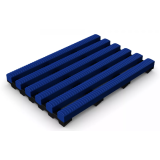 Heronrib Duckboard Vinyl Matting
Starting at $1,020.00
What Heronrib does before a wet shower floor becomes a health hazard For as long as there have been communal showers and changing rooms, there have been duckboards — slatted wooden boards laid down to keep bare feet up out of the water. The idea is right; the wood is...
What Heronrib does before a wet shower floor becomes a health hazard For as long as there have been communal...
What Heronrib does before a wet shower floor becomes a health hazard
For as long as there have been communal showers and changing rooms, there have been duckboards — slatted wooden boards laid down to keep bare feet up out of the water. The idea is right; the wood is the problem. Timber slats soak up water, go slimy underneath, splinter with age, and become a home for the athlete's foot fungus that thrives on shared wet floors.
Heronrib is a duckboard reimagined in vinyl. Like a good slatted board, it holds you up above the wet floor: its open-grid body, built from nonporous extruded PVC sections, lets water drain through and clear away beneath while you stand on a firm, embossed surface. Unlike wood, it's non-porous and carries anti-bacterial and anti-fungal additives, so it doesn't rot, splinter, or breed what wood breeds.
In a shared, barefoot wet area, that hygiene difference is the whole point. Cleaning and hygiene authorities like ISSA point to damp, hard-to-clean surfaces as a driver of both slips and the spread of fungal infection in showers and locker rooms. A duckboard that keeps feet dry, grips when wet, and rinses clean is doing real health work, not just covering a floor.
Why a vinyl duckboard beats a wooden one, and why this one
The case for vinyl over timber comes down to what water does to each. Wood absorbs it — swelling, rotting, and harboring bacteria in every grain and joint. Heronrib is made from nonporous extruded PVC, so water can't soak in; it drains off and the surface dries. That single difference is why a vinyl duckboard stays hygienic for years where a wooden one slowly turns into a liability.
The open-grid construction does the duckboard's lifting job better than slats can. The extruded PVC sections raise the walking surface and let water fall through the grid and away, while the embossed top grips bare feet — and it's certified for it, earning the full A+B+C classification on the DIN 51097 barefoot ramp test, with a 0.6 dry / 0.5 wet reading on ASTM F1677. There are no gaps wide enough to catch a toe, and no loose boards to shift underfoot.
It also outlasts wood in the conditions that destroy it. On the maker's own scale it rates a perfect 100 for durability, resists UV without degrading (apart from the red), and works from below freezing to 140°F, indoors or out. And it's kinder underfoot than bare slats on concrete: it's rated for anti-fatigue comfort, giving a firmer, warmer, more forgiving surface to stand on barefoot.
Where it belongs — and what it isn't
Heronrib belongs anywhere a duckboard or slatted mat has traditionally done the job. That's communal and shared showers, changing rooms and locker rooms, the pool deck and its surround, and sauna, spa, and Jacuzzi areas. Built for heavy barefoot traffic and effective indoors or out, it suits a busy public leisure center as readily as a smaller club — or a home wet room or shower, where wood is a constant maintenance headache.
It's worth saying what this isn't. It's a walk-on duckboard surface, not a flotation device, and not the liner sheet that goes under an above-ground pool. If you want a mat to put under a pool or a float for the water, this isn't that product. Heronrib lays on top of your existing floor — tile, concrete, or decking — and turns it into a dry, gripped, barefoot-safe surface.
The other break from tradition is coverage. Where wooden duckboards are loose sections that leave gaps and shift around, Heronrib rolls out to cover a whole floor. It comes in rolls up to 40 feet long that cut to fit on site, so a full changing room or shower block becomes one continuous surface in long strips rather than a scatter of separate boards, and we can advise on finishing the exposed borders.
Three Things to Check Before You Spec It
Replacing wooden boards with a vinyl duckboard is straightforward once you've settled three things.
First, decide roll-out or sectional. To turn a whole changing room or shower block into one continuous dry surface, order the long rolls and run them wall to wall. If you only need to cover a bench area or a single shower bay, a cut section works like a drop-in duckboard. Measure the full barefoot area, not just the walkway, so there's no wet gap where someone steps off.
Second, confirm it's the barefoot-rated surface for your traffic. This carries the top A+B+C barefoot slip classification, which is exactly what a shower or changing room needs, and it's built for heavy barefoot traffic. It also holds up under shoes in poolside and staff areas, so knowing where bare feet and shod traffic mix helps you size the coverage and place any transitions.
Third, match the color to sun and setting. It comes in blue, gray, and red, with more colors available on request. For an outdoor deck in constant sun, choose blue or gray, since the red isn't UV-stable and will fade outdoors. Indoors, any color holds up — blue reads fresh by a pool, gray stays neutral in a locker room, and red can mark off a zone.
Why Mats Inc.
We've been matching mats to real floors since 1964, and swapping tired wooden duckboards for a hygienic vinyl one is a change people feel underfoot right away. We'll help you size Heronrib to cover a whole shower or changing room, plan the roll runs and borders, and choose the right color for a barefoot communal space indoors or out. It's part of our wider lineup of pool and wet-area matting, and every order is backed by our 1-year limited warranty.
Material Nonporous extruded PVC Construction Open-grid; slip-resistant embossed surface Thickness 13/32" Weight 1.12 lb / sq ft Roll sizes 2', 3', and 4' widths x 40' (cut to fit on site) Slip resistance DIN 51097: Classification A+B+C (barefoot); ASTM F1677 dry/wet: 0.6/0.5 Hygiene Nonporous PVC with anti-bacterial and anti-fungal additives Temperature range -9°F to +140°F UV UV resistant (except red) Colors Blue, gray, red (more available on request) Mfr. rating (0–100) Durability 100 · Traction 90 · Anti-fatigue 70 Warranty 1-year limited (Mats Inc.) Frequently Asked Questions
How is a vinyl duckboard different from a traditional wooden one?
Answered by Dustin Thompson, Owner & CEO
It does the same core job — holding your feet up above the wet floor — but the way it's built solves everything wood gets wrong. Heronrib is an open grid of nonporous extruded PVC sections: the grid lifts the walking surface off the floor and lets water fall straight through and away, just like the gaps in a slatted board, while the embossed top grips bare feet. Because the vinyl doesn't absorb water, it won't swell, rot, splinter, or grow the fungus that wooden boards trap in their grain, and it carries anti-bacterial and anti-fungal additives on top of that.
Is it actually more hygienic and grippy than wooden boards?
Answered by Dustin Thompson, Owner & CEO
On both counts, yes. The nonporous PVC gives fungus and bacteria nowhere to live, and the anti-bacterial and anti-fungal additives actively resist them — a real difference from timber that soaks up water and harbors athlete's foot. For grip, it earns the full A+B+C barefoot classification on the DIN 51097 ramp test, with a 0.6 dry / 0.5 wet reading on ASTM F1677. It's also rated a perfect 100 for durability, handles UV (apart from the red), and works from below freezing to 140°F, so it stays sound where wood would rot or crack.
Can it cover a whole changing-room floor instead of loose boards?
Answered by Dustin Thompson, Owner & CEO
That's one of its biggest advantages over traditional duckboards. It comes in rolls up to 40 feet long, in 2-, 3-, and 4-foot widths, and cuts to fit on site — so instead of a scatter of loose boards with gaps between them, you can run long continuous strips across a whole room. For a small shower bay, a single cut section does it, and we can help finish the exposed borders so the edges look intentional and there's no lip to trip on.
Where would I use a vinyl duckboard?
Answered by Jinna Hopson, VP of Marketing
Anywhere you'd once have laid slatted boards to keep feet out of the water. The classic spots are communal showers, changing rooms, and locker rooms, plus pool decks and surrounds, saunas, spas, and Jacuzzi areas. Because it's built for heavy barefoot traffic and works indoors or out, it fits a busy public leisure center as easily as a smaller club — or a home wet room or shower, where wood is a constant maintenance headache. If it's a barefoot space that stays wet, a vinyl duckboard belongs there.
What does it feel like to walk on, and what colors can I get?
Answered by Jinna Hopson, VP of Marketing
It feels reassuringly solid and dry, which is the point. Instead of the cold, slick slap of wet tile or the give and splinters of old wood, you get a firm, cushioned surface with an embossed grip your feet can trust barefoot. It comes in blue, gray, and red, with more colors available on request — blue reads fresh and aquatic by a pool, gray stays neutral and hides grit in a locker room, and red can mark off a zone. Just keep the red to indoor or shaded spots, since it isn't UV-stable in constant sun.
How do I keep it clean in a busy shared shower?
Answered by Jinna Hopson, VP of Marketing
Easily, and that's a big part of why it beats wood in a communal space. Because it's nonporous and rolls up, you can hose or pressure-wash the surface, then lift a section to rinse and dry the floor underneath — no waterlogged boards, no slimy undersides. Regular cleaning keeps both the grip and the hygiene at their best. In a shared shower or changing room, that quick lift-and-rinse routine is what keeps the whole space feeling fresh rather than neglected.
Written by Jinna Hopson, VP of Marketing, Mats Inc.
↑
What Heronrib does before a wet shower floor becomes a health hazard
For as long as there have been communal showers and changing rooms, there have been duckboards — slatted wooden boards laid down to keep bare feet up out of the water. The idea is right; the wood is the problem. Timber slats soak up water, go slimy underneath, splinter with age, and become a home for the athlete's foot fungus that thrives on shared wet floors.
Heronrib is a duckboard reimagined in vinyl. Like a good slatted board, it holds you up above the wet floor: its open-grid body, built from nonporous extruded PVC sections, lets water drain through and clear away beneath while you stand on a firm, embossed surface. Unlike wood, it's non-porous and carries anti-bacterial and anti-fungal additives, so it doesn't rot, splinter, or breed what wood breeds.
In a shared, barefoot wet area, that hygiene difference is the whole point. Cleaning and hygiene authorities like ISSA point to damp, hard-to-clean surfaces as a driver of both slips and the spread of fungal infection in showers and locker rooms. A duckboard that keeps feet dry, grips when wet, and rinses clean is doing real health work, not just covering a floor.
Why a vinyl duckboard beats a wooden one, and why this one
The case for vinyl over timber comes down to what water does to each. Wood absorbs it — swelling, rotting, and harboring bacteria in every grain and joint. Heronrib is made from nonporous extruded PVC, so water can't soak in; it drains off and the surface dries. That single difference is why a vinyl duckboard stays hygienic for years where a wooden one slowly turns into a liability.
The open-grid construction does the duckboard's lifting job better than slats can. The extruded PVC sections raise the walking surface and let water fall through the grid and away, while the embossed top grips bare feet — and it's certified for it, earning the full A+B+C classification on the DIN 51097 barefoot ramp test, with a 0.6 dry / 0.5 wet reading on ASTM F1677. There are no gaps wide enough to catch a toe, and no loose boards to shift underfoot.
It also outlasts wood in the conditions that destroy it. On the maker's own scale it rates a perfect 100 for durability, resists UV without degrading (apart from the red), and works from below freezing to 140°F, indoors or out. And it's kinder underfoot than bare slats on concrete: it's rated for anti-fatigue comfort, giving a firmer, warmer, more forgiving surface to stand on barefoot.
Where it belongs — and what it isn't
Heronrib belongs anywhere a duckboard or slatted mat has traditionally done the job. That's communal and shared showers, changing rooms and locker rooms, the pool deck and its surround, and sauna, spa, and Jacuzzi areas. Built for heavy barefoot traffic and effective indoors or out, it suits a busy public leisure center as readily as a smaller club — or a home wet room or shower, where wood is a constant maintenance headache.
It's worth saying what this isn't. It's a walk-on duckboard surface, not a flotation device, and not the liner sheet that goes under an above-ground pool. If you want a mat to put under a pool or a float for the water, this isn't that product. Heronrib lays on top of your existing floor — tile, concrete, or decking — and turns it into a dry, gripped, barefoot-safe surface.
The other break from tradition is coverage. Where wooden duckboards are loose sections that leave gaps and shift around, Heronrib rolls out to cover a whole floor. It comes in rolls up to 40 feet long that cut to fit on site, so a full changing room or shower block becomes one continuous surface in long strips rather than a scatter of separate boards, and we can advise on finishing the exposed borders.
Three Things to Check Before You Spec It
Replacing wooden boards with a vinyl duckboard is straightforward once you've settled three things.
First, decide roll-out or sectional. To turn a whole changing room or shower block into one continuous dry surface, order the long rolls and run them wall to wall. If you only need to cover a bench area or a single shower bay, a cut section works like a drop-in duckboard. Measure the full barefoot area, not just the walkway, so there's no wet gap where someone steps off.
Second, confirm it's the barefoot-rated surface for your traffic. This carries the top A+B+C barefoot slip classification, which is exactly what a shower or changing room needs, and it's built for heavy barefoot traffic. It also holds up under shoes in poolside and staff areas, so knowing where bare feet and shod traffic mix helps you size the coverage and place any transitions.
Third, match the color to sun and setting. It comes in blue, gray, and red, with more colors available on request. For an outdoor deck in constant sun, choose blue or gray, since the red isn't UV-stable and will fade outdoors. Indoors, any color holds up — blue reads fresh by a pool, gray stays neutral in a locker room, and red can mark off a zone.
Why Mats Inc.
We've been matching mats to real floors since 1964, and swapping tired wooden duckboards for a hygienic vinyl one is a change people feel underfoot right away. We'll help you size Heronrib to cover a whole shower or changing room, plan the roll runs and borders, and choose the right color for a barefoot communal space indoors or out. It's part of our wider lineup of pool and wet-area matting, and every order is backed by our 1-year limited warranty.
Material Nonporous extruded PVC Construction Open-grid; slip-resistant embossed surface Thickness 13/32" Weight 1.12 lb / sq ft Roll sizes 2', 3', and 4' widths x 40' (cut to fit on site) Slip resistance DIN 51097: Classification A+B+C (barefoot); ASTM F1677 dry/wet: 0.6/0.5 Hygiene Nonporous PVC with anti-bacterial and anti-fungal additives Temperature range -9°F to +140°F UV UV resistant (except red) Colors Blue, gray, red (more available on request) Mfr. rating (0–100) Durability 100 · Traction 90 · Anti-fatigue 70 Warranty 1-year limited (Mats Inc.) Frequently Asked Questions
How is a vinyl duckboard different from a traditional wooden one?
Answered by Dustin Thompson, Owner & CEO
It does the same core job — holding your feet up above the wet floor — but the way it's built solves everything wood gets wrong. Heronrib is an open grid of nonporous extruded PVC sections: the grid lifts the walking surface off the floor and lets water fall straight through and away, just like the gaps in a slatted board, while the embossed top grips bare feet. Because the vinyl doesn't absorb water, it won't swell, rot, splinter, or grow the fungus that wooden boards trap in their grain, and it carries anti-bacterial and anti-fungal additives on top of that.
Is it actually more hygienic and grippy than wooden boards?
Answered by Dustin Thompson, Owner & CEO
On both counts, yes. The nonporous PVC gives fungus and bacteria nowhere to live, and the anti-bacterial and anti-fungal additives actively resist them — a real difference from timber that soaks up water and harbors athlete's foot. For grip, it earns the full A+B+C barefoot classification on the DIN 51097 ramp test, with a 0.6 dry / 0.5 wet reading on ASTM F1677. It's also rated a perfect 100 for durability, handles UV (apart from the red), and works from below freezing to 140°F, so it stays sound where wood would rot or crack.
Can it cover a whole changing-room floor instead of loose boards?
Answered by Dustin Thompson, Owner & CEO
That's one of its biggest advantages over traditional duckboards. It comes in rolls up to 40 feet long, in 2-, 3-, and 4-foot widths, and cuts to fit on site — so instead of a scatter of loose boards with gaps between them, you can run long continuous strips across a whole room. For a small shower bay, a single cut section does it, and we can help finish the exposed borders so the edges look intentional and there's no lip to trip on.
Where would I use a vinyl duckboard?
Answered by Jinna Hopson, VP of Marketing
Anywhere you'd once have laid slatted boards to keep feet out of the water. The classic spots are communal showers, changing rooms, and locker rooms, plus pool decks and surrounds, saunas, spas, and Jacuzzi areas. Because it's built for heavy barefoot traffic and works indoors or out, it fits a busy public leisure center as easily as a smaller club — or a home wet room or shower, where wood is a constant maintenance headache. If it's a barefoot space that stays wet, a vinyl duckboard belongs there.
What does it feel like to walk on, and what colors can I get?
Answered by Jinna Hopson, VP of Marketing
It feels reassuringly solid and dry, which is the point. Instead of the cold, slick slap of wet tile or the give and splinters of old wood, you get a firm, cushioned surface with an embossed grip your feet can trust barefoot. It comes in blue, gray, and red, with more colors available on request — blue reads fresh and aquatic by a pool, gray stays neutral and hides grit in a locker room, and red can mark off a zone. Just keep the red to indoor or shaded spots, since it isn't UV-stable in constant sun.
How do I keep it clean in a busy shared shower?
Answered by Jinna Hopson, VP of Marketing
Easily, and that's a big part of why it beats wood in a communal space. Because it's nonporous and rolls up, you can hose or pressure-wash the surface, then lift a section to rinse and dry the floor underneath — no waterlogged boards, no slimy undersides. Regular cleaning keeps both the grip and the hygiene at their best. In a shared shower or changing room, that quick lift-and-rinse routine is what keeps the whole space feeling fresh rather than neglected.
Written by Jinna Hopson, VP of Marketing, Mats Inc.
↑
View Details
View Details
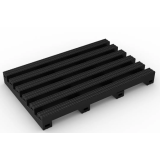 Heronair Matting
Starting at $588.00
What Heronair does before a wet work floor causes a fall In a busy work area, the floor gets wet and stays wet — washdown, splashes, drips, tracked-in water. It's easy to assume a quick mop or a coat of non-slip paint keeps people safe. The catch is that water...
What Heronair does before a wet work floor causes a fall In a busy work area, the floor gets wet...
What Heronair does before a wet work floor causes a fall
In a busy work area, the floor gets wet and stays wet — washdown, splashes, drips, tracked-in water. It's easy to assume a quick mop or a coat of non-slip paint keeps people safe. The catch is that water spreads into a thin film on a hard floor, right where people walk and stand, and a painted or tiled surface that grips dry can turn slick the moment it's wet.
Heronair is built to take that film out of play. It's an open-grid PVC mat that's impermeable to fluids, so water and debris drop through and disperse below the surface instead of pooling on top. The etched surface gives shoes traction, and the mat keeps draining even when the floor around it is soaked. That's the difference between a real non-slip wet-area mat and a surface that only behaves when it's dry.
A wet, slick work floor isn't a minor nuisance. The National Floor Safety Institute ties wet, hard floors to a large share of slip, trip, and fall injuries, and a walkway or wet work zone keeps feeding that risk shift after shift. A mat that drains the water away and holds grip underfoot is doing safety work the whole time it's down.
Why a lightweight tubular PVC build, and why this one
Heronair is made from non-porous PVC in a two-layer, tubular construction — and that hollow build is the heart of what makes it different. The tubes make the mat genuinely light: at around 0.9 pounds per square foot, it's easy to lift, roll, and reposition by hand. In a space where mats get pulled up for cleaning or moved between tasks, that lightness is a real day-to-day advantage.
The same open structure that keeps it light also keeps it draining. Liquids pass straight through and clear away beneath the mat, and it's certified slip resistant at R11 with V10 drainage under DIN 51130. Grip comes from an etched surface, so traction is strongest across the lines of the pattern. The hollow body also insulates against a cold floor and absorbs sound, taking some of the chill and clatter out of a hard work area.
Because people stand on these floors for hours, the cushioning matters. The give in the tubular build reduces fatigue underfoot, which is easier on legs and backs than bare concrete. The PVC itself resists most acids, alkalines, and oils, handles UV without degrading, and works from below freezing up to 140°F. Made in black, it's produced from post-industrial recycled material — averaging at least 30% recycled content — and the whole mat is 100% recyclable.
Where it belongs — and what it isn't
Heronair belongs in wet, working spaces where people are on their feet in shoes. Think light-industrial areas and walkways, washdown zones, beverage and prep stations, and the wet service and back-of-house areas around a pool — pump and equipment rooms, plant rooms, and staff walkways — rather than the barefoot deck itself. Wherever liquids underfoot meet standing workers, it earns its place.
It's worth being clear about what this mat is not. It's a shod, walk-on work mat — not a barefoot-certified pool mat, not a flotation device, and not the liner sheet that goes under an above-ground pool. For the barefoot pool deck, shower, or changing room, a barefoot-rated mat is the right call. Heronair's job is the working wet floor, in shoes, where drainage and anti-fatigue support matter most.
How it goes down is simple. It comes in 33-foot rolls, cuts to fit on site, and contours to uneven surfaces, so it follows a real floor instead of fighting it. For larger areas, rolls join side-to-side and end-to-end with connector clips or welded snap track, and ramped edging finishes an exposed border so the mat doesn't become a trip point.
Three Things to Check Before You Spec It
Heronair is easy to order well once you've thought through three things.
First, match it to the duty. This is the lighter, more versatile end of wet-area matting — ideal where you want easy handling, anti-fatigue support, and reliable drainage in shoes. For the most punishing wet floors or the highest wet-grip demands, a heavier, higher-traction mat may suit better. Be honest about how hard the floor gets worked before you choose.
Second, measure the whole wet path and plan the joins. Size the mat to cover wherever liquid actually reaches — the full washdown zone, the length of a walkway — since a dry-foot gap is where the next slip waits. For bigger areas, map where rolls will join with clips or snap track and where ramped edging finishes the border.
Third, plan for heat and movement. The PVC handles a wide temperature range, but like any thermoplastic it can shrink slightly — up to about 2%, faster in heat — so in a hot space or an exposed spot, leave a little room at fixed edges rather than butting it tight wall to wall, and use edging or clips to keep sections in place.
Why Mats Inc.
We've been matching mats to real floors since 1964, and wet work areas are where the wrong mat shows up fastest — in sore legs, slick steps, and mats too heavy to bother moving. We'll help you decide whether Heronair's lightweight, easy-handling build fits your space or whether a heavier mat suits the duty, size it to your actual wet path, and plan the seams and edging. It's part of our wider lineup of pool and wet-area matting, and every order is backed by our 1-year limited warranty.
Material Non-porous flexible PVC Construction Two-layer tubular (hollow); etched open-grid surface Thickness 3/8" (10 mm) Weight 0.9 lb / sq ft Roll options 33' lengths in 2', 3', and 4' widths (cut to fit on site) Custom sizes Custom matting available Slip resistance DIN 51130: R11; ASTM F1677: 0.6/0.6; ASTM E303 wet: 58–77 (by direction) Drainage DIN 51130: V10 Chemical resistance Most acids, alkalines, and oils Temperature range -9°F to +140°F Hygiene Non-porous PVC; naturally resists bacteria growth Acoustic / thermal Sound absorption; insulating Environmental 100% recyclable; black made from ≥30% post-industrial recycled content; no SVHC (REACH) UV Resists PVC degradation Color Black (other colors available) Warranty 1-year limited (Mats Inc.) Frequently Asked Questions
What's Heronair made of, and why is it so light?
Answered by Dustin Thompson, Owner & CEO
It's made from non-porous PVC in a two-layer, tubular construction — essentially an open grid of hollow tubes. That hollow build is why it's light: about 0.9 pounds per square foot, easy to lift, roll, and move by hand. The open structure also means it's impermeable to fluids — water and debris drop straight through and clear away underneath instead of pooling on top. So the same thing that makes it light also makes it drain, and keeps the walking surface usable when the floor's wet.
How slip-resistant and tough is it, especially with chemicals around?
Answered by Dustin Thompson, Owner & CEO
It's certified slip resistant at R11 with V10 drainage under DIN 51130, with traction coming from an etched surface — grip is strongest across the lines of the pattern, reading 58 to 77 wet on the ASTM E303 pendulum test depending on direction. On toughness, the PVC resists most acids, alkalines, and oils, stands up to UV without degrading, and works from below freezing up to 140°F. That's what lets the same mat hold up in a washdown area, a chemical-prone work zone, or an outdoor walkway without going brittle.
What sizes does it come in, and can it cover a large floor?
Answered by Dustin Thompson, Owner & CEO
It comes in 33-foot rolls in 2-, 3-, and 4-foot widths, and you cut it to fit on site. For a large floor, rolls join side-to-side and end-to-end with connector clips or welded snap track, so you can cover a whole walkway or work area in one continuous surface. Because it contours to uneven ground, it follows a real floor rather than needing a perfectly flat one, and custom matting is available when a standard width won't fit.
Can I use this around a pool, or is it really a workplace mat?
Answered by Jinna Hopson, VP of Marketing
It's really a workplace mat, and that's where it shines — light-industrial areas, walkways, washdown and prep zones. Around a pool, its place is the working, in-shoes areas: pump and plant rooms, staff walkways, and back-of-house service spaces, rather than the barefoot deck or shower. For those barefoot areas you'd want a barefoot-rated pool mat instead. If your space is a wet floor where people work on their feet in shoes, Heronair fits.
What does it look like underfoot?
Answered by Jinna Hopson, VP of Marketing
It has a practical, industrial look — an open, etched grid that clearly reads as a working surface built to drain and grip, not as decoration. The standard color is black, which is the easy choice for a work area because it hides the grit, oil, and debris these floors collect between cleanings; the black version is also the one made from recycled material. Other colors are available if you want to mark off a zone or match a scheme — tell us what you need and we'll confirm the options.
My work area has an awkward layout — will it fit, and is it easy to live with?
Answered by Jinna Hopson, VP of Marketing
Yes on both counts. Because it cuts to fit on site and contours to uneven surfaces, you can shape a run around machinery, drains, and corners instead of forcing the space to match a fixed mat. And it's genuinely easy to live with day to day: it's light enough to lift or roll up for cleaning by hand, needs no special tools, and rinses down with a hose. Send us your layout and we'll help you plan widths, joins, and edging.
Written by Dustin Thompson, Owner & CEO, Mats Inc.
↑
What Heronair does before a wet work floor causes a fall
In a busy work area, the floor gets wet and stays wet — washdown, splashes, drips, tracked-in water. It's easy to assume a quick mop or a coat of non-slip paint keeps people safe. The catch is that water spreads into a thin film on a hard floor, right where people walk and stand, and a painted or tiled surface that grips dry can turn slick the moment it's wet.
Heronair is built to take that film out of play. It's an open-grid PVC mat that's impermeable to fluids, so water and debris drop through and disperse below the surface instead of pooling on top. The etched surface gives shoes traction, and the mat keeps draining even when the floor around it is soaked. That's the difference between a real non-slip wet-area mat and a surface that only behaves when it's dry.
A wet, slick work floor isn't a minor nuisance. The National Floor Safety Institute ties wet, hard floors to a large share of slip, trip, and fall injuries, and a walkway or wet work zone keeps feeding that risk shift after shift. A mat that drains the water away and holds grip underfoot is doing safety work the whole time it's down.
Why a lightweight tubular PVC build, and why this one
Heronair is made from non-porous PVC in a two-layer, tubular construction — and that hollow build is the heart of what makes it different. The tubes make the mat genuinely light: at around 0.9 pounds per square foot, it's easy to lift, roll, and reposition by hand. In a space where mats get pulled up for cleaning or moved between tasks, that lightness is a real day-to-day advantage.
The same open structure that keeps it light also keeps it draining. Liquids pass straight through and clear away beneath the mat, and it's certified slip resistant at R11 with V10 drainage under DIN 51130. Grip comes from an etched surface, so traction is strongest across the lines of the pattern. The hollow body also insulates against a cold floor and absorbs sound, taking some of the chill and clatter out of a hard work area.
Because people stand on these floors for hours, the cushioning matters. The give in the tubular build reduces fatigue underfoot, which is easier on legs and backs than bare concrete. The PVC itself resists most acids, alkalines, and oils, handles UV without degrading, and works from below freezing up to 140°F. Made in black, it's produced from post-industrial recycled material — averaging at least 30% recycled content — and the whole mat is 100% recyclable.
Where it belongs — and what it isn't
Heronair belongs in wet, working spaces where people are on their feet in shoes. Think light-industrial areas and walkways, washdown zones, beverage and prep stations, and the wet service and back-of-house areas around a pool — pump and equipment rooms, plant rooms, and staff walkways — rather than the barefoot deck itself. Wherever liquids underfoot meet standing workers, it earns its place.
It's worth being clear about what this mat is not. It's a shod, walk-on work mat — not a barefoot-certified pool mat, not a flotation device, and not the liner sheet that goes under an above-ground pool. For the barefoot pool deck, shower, or changing room, a barefoot-rated mat is the right call. Heronair's job is the working wet floor, in shoes, where drainage and anti-fatigue support matter most.
How it goes down is simple. It comes in 33-foot rolls, cuts to fit on site, and contours to uneven surfaces, so it follows a real floor instead of fighting it. For larger areas, rolls join side-to-side and end-to-end with connector clips or welded snap track, and ramped edging finishes an exposed border so the mat doesn't become a trip point.
Three Things to Check Before You Spec It
Heronair is easy to order well once you've thought through three things.
First, match it to the duty. This is the lighter, more versatile end of wet-area matting — ideal where you want easy handling, anti-fatigue support, and reliable drainage in shoes. For the most punishing wet floors or the highest wet-grip demands, a heavier, higher-traction mat may suit better. Be honest about how hard the floor gets worked before you choose.
Second, measure the whole wet path and plan the joins. Size the mat to cover wherever liquid actually reaches — the full washdown zone, the length of a walkway — since a dry-foot gap is where the next slip waits. For bigger areas, map where rolls will join with clips or snap track and where ramped edging finishes the border.
Third, plan for heat and movement. The PVC handles a wide temperature range, but like any thermoplastic it can shrink slightly — up to about 2%, faster in heat — so in a hot space or an exposed spot, leave a little room at fixed edges rather than butting it tight wall to wall, and use edging or clips to keep sections in place.
Why Mats Inc.
We've been matching mats to real floors since 1964, and wet work areas are where the wrong mat shows up fastest — in sore legs, slick steps, and mats too heavy to bother moving. We'll help you decide whether Heronair's lightweight, easy-handling build fits your space or whether a heavier mat suits the duty, size it to your actual wet path, and plan the seams and edging. It's part of our wider lineup of pool and wet-area matting, and every order is backed by our 1-year limited warranty.
Material Non-porous flexible PVC Construction Two-layer tubular (hollow); etched open-grid surface Thickness 3/8" (10 mm) Weight 0.9 lb / sq ft Roll options 33' lengths in 2', 3', and 4' widths (cut to fit on site) Custom sizes Custom matting available Slip resistance DIN 51130: R11; ASTM F1677: 0.6/0.6; ASTM E303 wet: 58–77 (by direction) Drainage DIN 51130: V10 Chemical resistance Most acids, alkalines, and oils Temperature range -9°F to +140°F Hygiene Non-porous PVC; naturally resists bacteria growth Acoustic / thermal Sound absorption; insulating Environmental 100% recyclable; black made from ≥30% post-industrial recycled content; no SVHC (REACH) UV Resists PVC degradation Color Black (other colors available) Warranty 1-year limited (Mats Inc.) Frequently Asked Questions
What's Heronair made of, and why is it so light?
Answered by Dustin Thompson, Owner & CEO
It's made from non-porous PVC in a two-layer, tubular construction — essentially an open grid of hollow tubes. That hollow build is why it's light: about 0.9 pounds per square foot, easy to lift, roll, and move by hand. The open structure also means it's impermeable to fluids — water and debris drop straight through and clear away underneath instead of pooling on top. So the same thing that makes it light also makes it drain, and keeps the walking surface usable when the floor's wet.
How slip-resistant and tough is it, especially with chemicals around?
Answered by Dustin Thompson, Owner & CEO
It's certified slip resistant at R11 with V10 drainage under DIN 51130, with traction coming from an etched surface — grip is strongest across the lines of the pattern, reading 58 to 77 wet on the ASTM E303 pendulum test depending on direction. On toughness, the PVC resists most acids, alkalines, and oils, stands up to UV without degrading, and works from below freezing up to 140°F. That's what lets the same mat hold up in a washdown area, a chemical-prone work zone, or an outdoor walkway without going brittle.
What sizes does it come in, and can it cover a large floor?
Answered by Dustin Thompson, Owner & CEO
It comes in 33-foot rolls in 2-, 3-, and 4-foot widths, and you cut it to fit on site. For a large floor, rolls join side-to-side and end-to-end with connector clips or welded snap track, so you can cover a whole walkway or work area in one continuous surface. Because it contours to uneven ground, it follows a real floor rather than needing a perfectly flat one, and custom matting is available when a standard width won't fit.
Can I use this around a pool, or is it really a workplace mat?
Answered by Jinna Hopson, VP of Marketing
It's really a workplace mat, and that's where it shines — light-industrial areas, walkways, washdown and prep zones. Around a pool, its place is the working, in-shoes areas: pump and plant rooms, staff walkways, and back-of-house service spaces, rather than the barefoot deck or shower. For those barefoot areas you'd want a barefoot-rated pool mat instead. If your space is a wet floor where people work on their feet in shoes, Heronair fits.
What does it look like underfoot?
Answered by Jinna Hopson, VP of Marketing
It has a practical, industrial look — an open, etched grid that clearly reads as a working surface built to drain and grip, not as decoration. The standard color is black, which is the easy choice for a work area because it hides the grit, oil, and debris these floors collect between cleanings; the black version is also the one made from recycled material. Other colors are available if you want to mark off a zone or match a scheme — tell us what you need and we'll confirm the options.
My work area has an awkward layout — will it fit, and is it easy to live with?
Answered by Jinna Hopson, VP of Marketing
Yes on both counts. Because it cuts to fit on site and contours to uneven surfaces, you can shape a run around machinery, drains, and corners instead of forcing the space to match a fixed mat. And it's genuinely easy to live with day to day: it's light enough to lift or roll up for cleaning by hand, needs no special tools, and rinses down with a hose. Send us your layout and we'll help you plan widths, joins, and edging.
Written by Dustin Thompson, Owner & CEO, Mats Inc.
↑
View Details
View Details