




Description
What Heronair does before a wet work floor causes a fall
In a busy work area, the floor gets wet and stays wet — washdown, splashes, drips, tracked-in water. It's easy to assume a quick mop or a coat of non-slip paint keeps people safe. The catch is that water spreads into a thin film on a hard floor, right where people walk and stand, and a painted or tiled surface that grips dry can turn slick the moment it's wet.
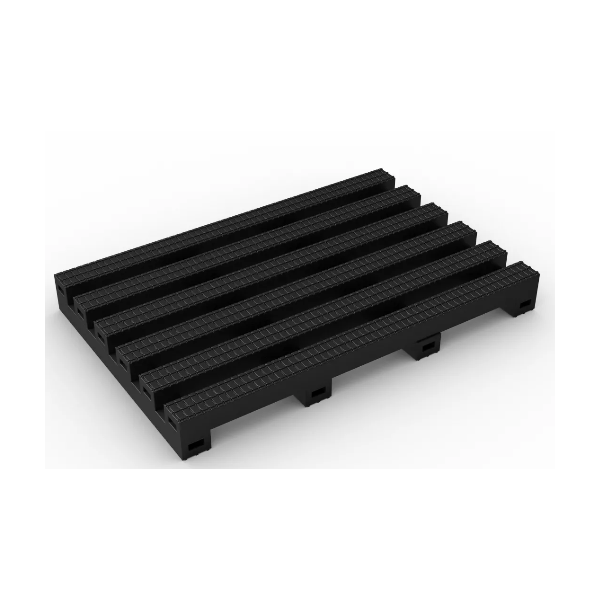
Heronair is built to take that film out of play. It's an open-grid PVC mat that's impermeable to fluids, so water and debris drop through and disperse below the surface instead of pooling on top. The etched surface gives shoes traction, and the mat keeps draining even when the floor around it is soaked. That's the difference between a real non-slip wet-area mat and a surface that only behaves when it's dry.
A wet, slick work floor isn't a minor nuisance. The National Floor Safety Institute ties wet, hard floors to a large share of slip, trip, and fall injuries, and a walkway or wet work zone keeps feeding that risk shift after shift. A mat that drains the water away and holds grip underfoot is doing safety work the whole time it's down.
Why a lightweight tubular PVC build, and why this one
Heronair is made from non-porous PVC in a two-layer, tubular construction — and that hollow build is the heart of what makes it different. The tubes make the mat genuinely light: at around 0.9 pounds per square foot, it's easy to lift, roll, and reposition by hand. In a space where mats get pulled up for cleaning or moved between tasks, that lightness is a real day-to-day advantage.
The same open structure that keeps it light also keeps it draining. Liquids pass straight through and clear away beneath the mat, and it's certified slip resistant at R11 with V10 drainage under DIN 51130. Grip comes from an etched surface, so traction is strongest across the lines of the pattern. The hollow body also insulates against a cold floor and absorbs sound, taking some of the chill and clatter out of a hard work area.
Because people stand on these floors for hours, the cushioning matters. The give in the tubular build reduces fatigue underfoot, which is easier on legs and backs than bare concrete. The PVC itself resists most acids, alkalines, and oils, handles UV without degrading, and works from below freezing up to 140°F. Made in black, it's produced from post-industrial recycled material — averaging at least 30% recycled content — and the whole mat is 100% recyclable.
Where it belongs — and what it isn't
Heronair belongs in wet, working spaces where people are on their feet in shoes. Think light-industrial areas and walkways, washdown zones, beverage and prep stations, and the wet service and back-of-house areas around a pool — pump and equipment rooms, plant rooms, and staff walkways — rather than the barefoot deck itself. Wherever liquids underfoot meet standing workers, it earns its place.
It's worth being clear about what this mat is not. It's a shod, walk-on work mat — not a barefoot-certified pool mat, not a flotation device, and not the liner sheet that goes under an above-ground pool. For the barefoot pool deck, shower, or changing room, a barefoot-rated mat is the right call. Heronair's job is the working wet floor, in shoes, where drainage and anti-fatigue support matter most.
How it goes down is simple. It comes in 33-foot rolls, cuts to fit on site, and contours to uneven surfaces, so it follows a real floor instead of fighting it. For larger areas, rolls join side-to-side and end-to-end with connector clips or welded snap track, and ramped edging finishes an exposed border so the mat doesn't become a trip point.
Three Things to Check Before You Spec It
Heronair is easy to order well once you've thought through three things.
First, match it to the duty. This is the lighter, more versatile end of wet-area matting — ideal where you want easy handling, anti-fatigue support, and reliable drainage in shoes. For the most punishing wet floors or the highest wet-grip demands, a heavier, higher-traction mat may suit better. Be honest about how hard the floor gets worked before you choose.
Second, measure the whole wet path and plan the joins. Size the mat to cover wherever liquid actually reaches — the full washdown zone, the length of a walkway — since a dry-foot gap is where the next slip waits. For bigger areas, map where rolls will join with clips or snap track and where ramped edging finishes the border.
Third, plan for heat and movement. The PVC handles a wide temperature range, but like any thermoplastic it can shrink slightly — up to about 2%, faster in heat — so in a hot space or an exposed spot, leave a little room at fixed edges rather than butting it tight wall to wall, and use edging or clips to keep sections in place.
Why Mats Inc.
We've been matching mats to real floors since 1964, and wet work areas are where the wrong mat shows up fastest — in sore legs, slick steps, and mats too heavy to bother moving. We'll help you decide whether Heronair's lightweight, easy-handling build fits your space or whether a heavier mat suits the duty, size it to your actual wet path, and plan the seams and edging. It's part of our wider lineup of pool and wet-area matting, and every order is backed by our 1-year limited warranty.
| Material | Non-porous flexible PVC |
| Construction | Two-layer tubular (hollow); etched open-grid surface |
| Thickness | 3/8" (10 mm) |
| Weight | 0.9 lb / sq ft |
| Roll options | 33' lengths in 2', 3', and 4' widths (cut to fit on site) |
| Custom sizes | Custom matting available |
| Slip resistance | DIN 51130: R11; ASTM F1677: 0.6/0.6; ASTM E303 wet: 58–77 (by direction) |
| Drainage | DIN 51130: V10 |
| Chemical resistance | Most acids, alkalines, and oils |
| Temperature range | -9°F to +140°F |
| Hygiene | Non-porous PVC; naturally resists bacteria growth |
| Acoustic / thermal | Sound absorption; insulating |
| Environmental | 100% recyclable; black made from ≥30% post-industrial recycled content; no SVHC (REACH) |
| UV | Resists PVC degradation |
| Color | Black (other colors available) |
| Warranty | 1-year limited (Mats Inc.) |
Frequently Asked Questions
What's Heronair made of, and why is it so light?
Answered by Dustin Thompson, Owner & CEO
It's made from non-porous PVC in a two-layer, tubular construction — essentially an open grid of hollow tubes. That hollow build is why it's light: about 0.9 pounds per square foot, easy to lift, roll, and move by hand. The open structure also means it's impermeable to fluids — water and debris drop straight through and clear away underneath instead of pooling on top. So the same thing that makes it light also makes it drain, and keeps the walking surface usable when the floor's wet.
How slip-resistant and tough is it, especially with chemicals around?
Answered by Dustin Thompson, Owner & CEO
It's certified slip resistant at R11 with V10 drainage under DIN 51130, with traction coming from an etched surface — grip is strongest across the lines of the pattern, reading 58 to 77 wet on the ASTM E303 pendulum test depending on direction. On toughness, the PVC resists most acids, alkalines, and oils, stands up to UV without degrading, and works from below freezing up to 140°F. That's what lets the same mat hold up in a washdown area, a chemical-prone work zone, or an outdoor walkway without going brittle.
What sizes does it come in, and can it cover a large floor?
Answered by Dustin Thompson, Owner & CEO
It comes in 33-foot rolls in 2-, 3-, and 4-foot widths, and you cut it to fit on site. For a large floor, rolls join side-to-side and end-to-end with connector clips or welded snap track, so you can cover a whole walkway or work area in one continuous surface. Because it contours to uneven ground, it follows a real floor rather than needing a perfectly flat one, and custom matting is available when a standard width won't fit.
Can I use this around a pool, or is it really a workplace mat?
Answered by Jinna Hopson, VP of Marketing
It's really a workplace mat, and that's where it shines — light-industrial areas, walkways, washdown and prep zones. Around a pool, its place is the working, in-shoes areas: pump and plant rooms, staff walkways, and back-of-house service spaces, rather than the barefoot deck or shower. For those barefoot areas you'd want a barefoot-rated pool mat instead. If your space is a wet floor where people work on their feet in shoes, Heronair fits.
What does it look like underfoot?
Answered by Jinna Hopson, VP of Marketing
It has a practical, industrial look — an open, etched grid that clearly reads as a working surface built to drain and grip, not as decoration. The standard color is black, which is the easy choice for a work area because it hides the grit, oil, and debris these floors collect between cleanings; the black version is also the one made from recycled material. Other colors are available if you want to mark off a zone or match a scheme — tell us what you need and we'll confirm the options.
My work area has an awkward layout — will it fit, and is it easy to live with?
Answered by Jinna Hopson, VP of Marketing
Yes on both counts. Because it cuts to fit on site and contours to uneven surfaces, you can shape a run around machinery, drains, and corners instead of forcing the space to match a fixed mat. And it's genuinely easy to live with day to day: it's light enough to lift or roll up for cleaning by hand, needs no special tools, and rinses down with a hose. Send us your layout and we'll help you plan widths, joins, and edging.
Written by Dustin Thompson, Owner & CEO, Mats Inc.
Ordering Info
| Size | Black | Gray | Blue |
| 2' x 33' | $588.00 | $588.00 | $683.00 |
| 3' x 33' | $938.00 | $938.00 | $1,029.00 |
| 4' x 33' | $1,298.00 | $1,298.00 | $1,351.00 |
| 2' x 40' | $685.00 | $685.00 | $799.00 |
| 3' x 40' | $1,091.00 | $1,091.00 | $1,201.00 |
| 4' x 40' | $1,439.00 | $1,439.00 | $1,585.00 |
Reviews
Write Your Own Review
Related Products
Super Scrape Rubber Mats
Safety Track Non-Skid Tape - Coarse
Smooth Marbleized Vinyl Switchboard Matting (Mil Spec)
Super Scrape Rubber Logo Mats
Strip Doors
Perfec Clean 3/8" Rollup Mats - Aluminum Hinge
Perfec Clean 3/8" Rollup Mats - Rubber Hinge
Perfec Clean 3/4" Rollup Grate - Rubber Hinge
Perfec Clean 1-5/8" Grate
WP-70 Non-Skid Epoxy Coating