




Waterhog Floor Mat
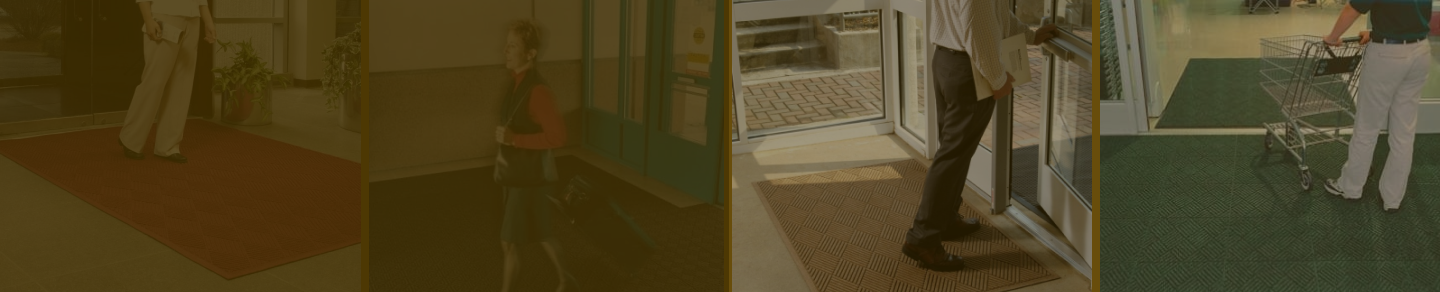
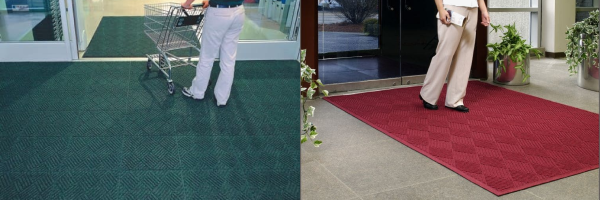
Waterhog is the industry-leading brand known for its durable and highly effective floor mats, designed to trap dirt and moisture. With patented designs and high-performance materials, Waterhog mats are perfect for both residential and commercial use. Their unique bi-level construction and water-dam border capture water, dirt, and debris, keeping floors clean and safe in high-traffic areas.
From entrance mats to outdoor mats, Waterhog products are engineered for superior durability and slip resistance. These mats are made from eco-friendly materials, ensuring sustainability without compromising performance. Whether you need an entrance mat for your business or a durable outdoor mat for your home, Waterhog mats provide long-lasting protection in any environment.
 Waterhog Inlay Logo Mats$227.00Waterhog Inlay Logo Mats put your logo into the proven Waterhog bi-level mat rather than on top of it. The inlay is the difference: the area that will carry the logo is cut out of the mat and the colors are hand-laid into the cut-out like a jigsaw, so
...
Waterhog Inlay Logo Mats put your logo into the proven Waterhog bi-level mat rather than on top of it....
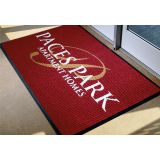
Waterhog Inlay Logo Mats put your logo into the proven Waterhog bi-level mat rather than on top of it. The inlay is the difference: the area that will carry the logo is cut out of the mat and the colors are hand-laid into the cut-out like a jigsaw, so the logo becomes part of the surface and wears with it. It's the most precise of our Waterhog branding options, which is why it leads our indoor logo mats for a sharp, lasting brand at the door.
Under the logo, it's a full Waterhog. The bi-level surface scrapes dirt and moisture off shoes and traps them below shoe level so they don't track inside, and the raised water-dam border holds moisture on the mat — up to about 1.5 gallons per square yard — keeping it off your floors. Most of the dirt inside a building arrives on foot traffic, per ISSA, and that bi-level scrape-and-trap design is built to handle the load.
It's made to keep its look. Reinforced rubber nubs hold the pile up so it resists crushing under traffic, and the solution-dyed fabric resists fading, so both the mat and the inlaid logo stay sharp longer. It runs on a 68-mil SBR rubber backing in smooth or universal-cleated, with beveled edges for a safe floor-to-mat transition, and it's certified high-traction by the NFSI. The rubber backing also carries 20% post-consumer recycled content from car tires.
It's built for branding at commercial entrances — hotels, retail, restaurants, offices, schools and universities, and commercial buildings — and it's rated for indoor and outdoor use. There are 19 colors to work from, with a choice of a classic rubber border or a fashion fabric border, and it's made to order in sizes up to 6' x 20'. Because the nubs and solution-dyeing slow both crushing and fading, it holds appearance for years; replace it when the inlaid logo finally dulls or the surface packs down in the main traffic path.
Surface Solution-dyed fabric, 24 oz/yd², needle-punched (bi-level) Logo method Inlay — colors cut in and hand-laid into the surface Overall thickness 3/8" (0.375") Backing SBR rubber, 68-mil, smooth or universal cleated Border Classic rubber or fashion fabric Colors 19 (no PMS matching) Minimum lettering Text 3" tall; lines and spacing 3/8" (no gradients, tints, or screens) Water retention Up to 1.5 gal/yd² (water-dam border) Traction NFSI Certified high-traction Recycled content Backing contains 20% post-consumer recycled rubber Sizes 2'×3' to 6'×20'; custom within 3', 4', and 6' widths Use Indoor and outdoor commercial entrances Warranty 1-year limited (Mats Inc.) Frequently Asked Questions
How is the logo made, and will it wear off?
Answered by Jinna Hopson, Vice President of Marketing
It's an inlay, not a print. The logo area is cut out of the mat and the colored sections are hand-laid into the cut-out like a jigsaw, so the logo is built into the surface rather than coated on top — there's no print layer to scuff away. The fabric is solution-dyed, which means color runs through the fiber and resists fading. Between the inlay construction and the solution-dyeing, the logo holds up about as well as the mat itself does, which is the point of choosing this one for branding.
What colors and border options are available?
Answered by Jinna Hopson, Vice President of Marketing
There are 19 colors to build the logo and field from, plus a choice of border: a classic rubber border for a clean, utilitarian edge, or a fashion fabric border when you want the surround to feel more finished. Because the inlay is hand-laid in distinct color sections, it suits bold, well-defined logos and lettering — text at least 3 inches tall, lines at least 3/8 inch — rather than fine gradients or tiny detail. Send us your artwork and brand colors and we'll lay out how it translates into the inlay and confirm the color match before production.
How well does it handle dirt and water?
Answered by Dustin Thompson, Owner & CEO
This is where the Waterhog construction earns its name. The bi-level surface scrapes dirt and moisture off shoes and drops it below shoe level, so it's held in the mat instead of tracking across your floors, and the raised water-dam border keeps moisture on the mat — up to roughly 1.5 gallons of water per square yard. That makes it a strong performer at a busy or wet entrance, not just a branded mat. Lifting it periodically so the floor underneath dries keeps it working at its best.
Can it go outside, and is it slip-safe?
Answered by Dustin Thompson, Owner & CEO
Yes on both. It's rated for indoor and outdoor commercial entrances, and the solution-dyed fabric resists fading outdoors. On safety, it has beveled edges that give a safe transition from floor to mat instead of a trip lip, and it's certified high-traction by the NFSI, so it holds grip as people come through. The 68-mil SBR rubber backing — smooth or universal-cleated — keeps it planted; choose cleated for hard floors where you want extra grip underneath.
By Jinna Hopson, Vice President of Marketing, Mats Inc.
↑
Waterhog Inlay Logo Mats put your logo into the proven Waterhog bi-level mat rather than on top of it. The inlay is the difference: the area that will carry the logo is cut out of the mat and the colors are hand-laid into the cut-out like a jigsaw, so the logo becomes part of the surface and wears with it. It's the most precise of our Waterhog branding options, which is why it leads our indoor logo mats for a sharp, lasting brand at the door.
Under the logo, it's a full Waterhog. The bi-level surface scrapes dirt and moisture off shoes and traps them below shoe level so they don't track inside, and the raised water-dam border holds moisture on the mat — up to about 1.5 gallons per square yard — keeping it off your floors. Most of the dirt inside a building arrives on foot traffic, per ISSA, and that bi-level scrape-and-trap design is built to handle the load.
It's made to keep its look. Reinforced rubber nubs hold the pile up so it resists crushing under traffic, and the solution-dyed fabric resists fading, so both the mat and the inlaid logo stay sharp longer. It runs on a 68-mil SBR rubber backing in smooth or universal-cleated, with beveled edges for a safe floor-to-mat transition, and it's certified high-traction by the NFSI. The rubber backing also carries 20% post-consumer recycled content from car tires.
It's built for branding at commercial entrances — hotels, retail, restaurants, offices, schools and universities, and commercial buildings — and it's rated for indoor and outdoor use. There are 19 colors to work from, with a choice of a classic rubber border or a fashion fabric border, and it's made to order in sizes up to 6' x 20'. Because the nubs and solution-dyeing slow both crushing and fading, it holds appearance for years; replace it when the inlaid logo finally dulls or the surface packs down in the main traffic path.
Surface Solution-dyed fabric, 24 oz/yd², needle-punched (bi-level) Logo method Inlay — colors cut in and hand-laid into the surface Overall thickness 3/8" (0.375") Backing SBR rubber, 68-mil, smooth or universal cleated Border Classic rubber or fashion fabric Colors 19 (no PMS matching) Minimum lettering Text 3" tall; lines and spacing 3/8" (no gradients, tints, or screens) Water retention Up to 1.5 gal/yd² (water-dam border) Traction NFSI Certified high-traction Recycled content Backing contains 20% post-consumer recycled rubber Sizes 2'×3' to 6'×20'; custom within 3', 4', and 6' widths Use Indoor and outdoor commercial entrances Warranty 1-year limited (Mats Inc.) Frequently Asked Questions
How is the logo made, and will it wear off?
Answered by Jinna Hopson, Vice President of Marketing
It's an inlay, not a print. The logo area is cut out of the mat and the colored sections are hand-laid into the cut-out like a jigsaw, so the logo is built into the surface rather than coated on top — there's no print layer to scuff away. The fabric is solution-dyed, which means color runs through the fiber and resists fading. Between the inlay construction and the solution-dyeing, the logo holds up about as well as the mat itself does, which is the point of choosing this one for branding.
What colors and border options are available?
Answered by Jinna Hopson, Vice President of Marketing
There are 19 colors to build the logo and field from, plus a choice of border: a classic rubber border for a clean, utilitarian edge, or a fashion fabric border when you want the surround to feel more finished. Because the inlay is hand-laid in distinct color sections, it suits bold, well-defined logos and lettering — text at least 3 inches tall, lines at least 3/8 inch — rather than fine gradients or tiny detail. Send us your artwork and brand colors and we'll lay out how it translates into the inlay and confirm the color match before production.
How well does it handle dirt and water?
Answered by Dustin Thompson, Owner & CEO
This is where the Waterhog construction earns its name. The bi-level surface scrapes dirt and moisture off shoes and drops it below shoe level, so it's held in the mat instead of tracking across your floors, and the raised water-dam border keeps moisture on the mat — up to roughly 1.5 gallons of water per square yard. That makes it a strong performer at a busy or wet entrance, not just a branded mat. Lifting it periodically so the floor underneath dries keeps it working at its best.
Can it go outside, and is it slip-safe?
Answered by Dustin Thompson, Owner & CEO
Yes on both. It's rated for indoor and outdoor commercial entrances, and the solution-dyed fabric resists fading outdoors. On safety, it has beveled edges that give a safe transition from floor to mat instead of a trip lip, and it's certified high-traction by the NFSI, so it holds grip as people come through. The 68-mil SBR rubber backing — smooth or universal-cleated — keeps it planted; choose cleated for hard floors where you want extra grip underneath.
By Jinna Hopson, Vice President of Marketing, Mats Inc.
↑
View Details
View Details
 Waterhog Carpet Tiles$215.00Waterhog Carpet Tiles are an entrance system built in modular form. The surface is bi-level — raised nubs that scrape dirt and moisture off shoes and drop it below shoe level, where it stops getting tracked forward. The backing is 100-mil cleated SBR rubber, which is what holds the whole
...
Waterhog Carpet Tiles are an entrance system built in modular form. The surface is bi-level — raised nubs that scrape...
Waterhog Carpet Tiles are an entrance system built in modular form. The surface is bi-level — raised nubs that scrape dirt and moisture off shoes and drop it below shoe level, where it stops getting tracked forward. The backing is 100-mil cleated SBR rubber, which is what holds the whole thing flat and in place.
What the tile format adds is scale. Entrance protection is usually sold as a mat, and a mat covers whatever area a mat covers. Tiles come 18 inches square, 12 to a case covering 27 square feet, so you cover the area the entrance actually needs.
What a Modular Entrance System Does Before Half Your Traffic Walks Around It
Here is the failure nobody notices until it is pointed out. A building puts a mat inside its main door. The door is twelve feet wide, the mat is five. People come in at an angle, cut toward the elevator, and a large share of them never set foot on it.
The mat is doing its job perfectly. It is just not in the path of most of the traffic, so most of what walks in walks straight past it and onto the finished floor beyond.
Getting soil off a shoe also takes distance, not just contact. One or two steps on a scraping surface removes a fraction of what is on a sole. It takes several strides of continuous walk-off to get the bulk of it, which a single mat length cannot physically provide.
A tile system fixes both problems at once, because you are no longer buying a mat size — you are covering an area. Run the tiles wall to wall across the entry and out as far as the traffic pattern needs, and there is no way around and no shortage of distance.
Why a Bi-Level Surface Over Cleated Rubber, and Why This One
Bi-level means the surface works on two planes. Reinforced rubber nubs stand up through the fabric and do the scraping, and the space between them is where the debris goes. Once it drops below the level a shoe touches, it stops being picked back up and carried inside.
Those nubs do a second job. They hold the surrounding fibers upright under traffic, so the pile does not crush flat in the highest-use strip. Crushed pile is what kills an entrance surface — once it flattens, the scraping action goes with it.
The fabric is solution-dyed PET at 30 ounces per square yard, so color is locked into the fiber rather than applied to it. It resists staining, dries quickly, and will not fade or rot — which matters at an entrance more than anywhere else in a building, since that is the surface that gets wet.
The backing is 100-mil universal cleated SBR rubber, bringing overall tile thickness to 1/4 inch. Cleated means it grips both hard floors and carpet, so the tiles lie flat rather than creeping under traffic. The tiles are certified high-traction by the National Floor Safety Institute, which is a tested slip-resistance rating rather than a marketing claim.
The modular format also changes what happens when something goes wrong. A worn or damaged tile lifts out and gets replaced on its own, so a burn mark or a torn corner is a single 18 inch square rather than a reason to pull the whole entrance.
There is a recycled-content story here that holds up to scrutiny. The PET fabric is made from at least 90% recycled content reclaimed from plastic, and the rubber backing contains 20% recycled rubber from car tires.
Where It Belongs, and Where It Is Not the Right Tile
This belongs at entrances, and specifically at wide or busy ones. Main building doors, storefronts, lobby entries, school and office front doors, and vestibules where traffic arrives from several directions at once. Anywhere the entry is too wide for a mat to cover honestly.
It also suits large-format applications a mat cannot address — long entry corridors, transitional areas between an exterior door and an interior floor, or a whole vestibule floor treated as one continuous walk-off surface. The tiles can be installed inside or outside, so a covered entry approach and the vestibule behind it can run the same surface without a change of product at the threshold.
The tiles work in surface or recessed installations. Recessed is worth considering on new construction or a renovation with a mat well, since it brings the entrance flush with the surrounding floor and removes the edge entirely.
What this is not is a field tile. A rubber-backed scraping surface is the wrong thing to run through an open office or a conference room, and at 1/4 inch it is a different height than most interior tiles. Its role is to protect what comes after it, which is how the full range of carpet tiles is organized — entrance construction first, interior floor behind it.
Three Things to Check Before You Spec It
First, measure the door and watch the traffic, not the entry mat you already have. Note how wide the opening is and which directions people actually travel once inside. That walking pattern, not the doorway dimension, tells you how much area the tiles need to cover, and at 27 square feet per case the arithmetic is straightforward once you know the area.
Second, decide surface or recessed early, and plan the edge either way. Recessed installation needs a mat well of the right depth, which is a construction decision rather than a flooring one. Surface installation works anywhere but leaves a perimeter, and vinyl nosing is available to finish that border — worth deciding on before the order rather than after the tiles are down.
Third, order the adhesive with the tiles. Installation requires a solvent-free adhesive, supplied separately, and confirming that at order time avoids a crew arriving with tiles and nothing to bond them with. While you are at it, confirm the 1/4 inch overall height against the adjoining floor so the transition is designed rather than discovered.
Why Mats Inc.
Entrance protection is the one flooring decision where the common mistake is buying too little rather than the wrong thing. We have been specifying entrance systems since 1964, and the question we ask first is how wide your doors are and where people go once they are through them. Send us the opening dimensions and a description of the traffic and we will work out how much area actually needs covering.
Tile size 18 in. x 18 in. Tiles per case 12 Coverage per case 27 sq. ft. Case weight 29 lbs. Overall thickness 1/4 in. Construction Bi-level with reinforced rubber nubs Surface material Solution-dyed PET (polyethylene terephthalate) Surface weight 30 oz/yd² Backing SBR rubber, universal cleated, 100-mil Patterns Diamond, diagonal, geometric Colors Seven: Black Smoke, Chestnut Brown, Grey Ash, Indigo, Khaki, Maroon, Southern Pine Application Indoor or outdoor Installation Surface or recessed; solvent-free adhesive required, supplied separately Border option Vinyl nosing, supplied separately Traction Certified high-traction (NFSI) Recycled content Surface at least 90% recycled PET; backing 20% recycled rubber Warranty 1-year limited (Mats Inc.) Frequently Asked Questions
What does bi-level mean, and why does it beat a flat surface?
Answered by Dustin Thompson, Owner & CEO
Bi-level means the surface operates on two heights. Reinforced rubber nubs project up through the fabric and scrape the sole of the shoe, and the recessed space between them collects what comes off. Once debris is below the level a shoe reaches, it stays there instead of being picked up again on the next pass.
A flat surface has nowhere to put anything. It holds soil at the same height the shoe contacts, so a good portion gets redistributed with every step across it and eventually walked onto your floor. The nubs also hold the surrounding fibers upright under traffic, which keeps the pile from crushing flat and losing its scraping action.
How well does it hold up in constant entrance traffic?
Answered by Dustin Thompson, Owner & CEO
The construction is aimed squarely at that. A 30 ounce per square yard PET surface over a 100-mil cleated rubber backing is a substantial build, and the reinforced nubs are specifically there to extend performance life by stopping the pile from crushing under the heaviest footfall.
PET also handles what entrances actually face. It is solution dyed, so color runs through the fiber rather than sitting on it, and it resists staining, sheds water quickly, and will not fade or rot. And because the system is modular, a tile that does eventually give out is replaced on its own rather than triggering a whole new entrance. Vacuum regularly, daily in the busiest areas, and let it dry fully before it goes back into service. Waterhog Carpet Tiles carry a 1-year limited warranty from Mats Inc.
How much area do we need to cover, and how does it install?
Answered by Dustin Thompson, Owner & CEO
Cover the full width of the opening, then run it inward far enough that people take several strides on it. Tiles are 18 inches square and ship 12 to a case covering 27 square feet at 29 pounds, so once you know the area the count works itself out. The most common mistake is treating an entrance as a doormat-sized problem.
Installation goes surface or recessed, and either way it is a bonded installation — a solvent-free adhesive is required and is supplied separately, so order it alongside the tiles. Surface installation needs a flat, dry subfloor and leaves a perimeter, which vinyl nosing can finish. Recessed drops the system into a mat well and brings it flush with the surrounding floor. Confirm the 1/4 inch height against the adjoining floor before ordering either way.
What do the three patterns actually look like?
Answered by Jinna Hopson, Vice President of Marketing
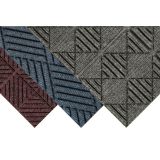
Diamond is the most familiar and the most forgiving — a repeating diamond grid that reads as texture and hides soil well between cleanings. Diagonal runs on the angle, which draws the eye forward into the building and works nicely where the entry leads somewhere specific.
Geometric is the most contemporary of the three and holds its own in a designed lobby rather than looking like protective equipment. All three are working surfaces first, so none of them will disappear into a room, but the pattern choice genuinely changes how deliberate the entrance looks.
How do we pick a color that works with the floor behind it?
Answered by Jinna Hopson, Vice President of Marketing
Seven colors gives you real room: Black Smoke, Grey Ash and Indigo on the cooler side, Chestnut Brown and Khaki running warm, plus Maroon and Southern Pine when the entrance should carry some depth. The useful instinct is to go darker than your interior floor rather than matching it, since this is the surface holding everything that came in off the street.
Beyond that, treat it as the transition rather than a match. An entrance that relates to your interior palette without copying it reads as intentional, and it keeps the eye moving into the space instead of stopping at a seam where two nearly-identical tones meet.
Can we get a logo or custom artwork in the entrance?
Answered by Jinna Hopson, Vice President of Marketing
These tiles are a stock program — three patterns, seven colors, no custom artwork built into the tile itself. That is deliberate, since the modular format is about covering an area properly rather than about branding.
The usual approach is to do both jobs in sequence. Custom branded entrance products do exist, and pairing one with a tiled walk-off area gives you the logo where people look and the coverage where the traffic actually is. Tell us your entrance dimensions and what you want to display and we will lay out how the two pieces work together.
By Dustin Thompson, Owner & CEO, Mats Inc.
↑
Waterhog Carpet Tiles are an entrance system built in modular form. The surface is bi-level — raised nubs that scrape dirt and moisture off shoes and drop it below shoe level, where it stops getting tracked forward. The backing is 100-mil cleated SBR rubber, which is what holds the whole thing flat and in place.
What the tile format adds is scale. Entrance protection is usually sold as a mat, and a mat covers whatever area a mat covers. Tiles come 18 inches square, 12 to a case covering 27 square feet, so you cover the area the entrance actually needs.
What a Modular Entrance System Does Before Half Your Traffic Walks Around It
Here is the failure nobody notices until it is pointed out. A building puts a mat inside its main door. The door is twelve feet wide, the mat is five. People come in at an angle, cut toward the elevator, and a large share of them never set foot on it.
The mat is doing its job perfectly. It is just not in the path of most of the traffic, so most of what walks in walks straight past it and onto the finished floor beyond.
Getting soil off a shoe also takes distance, not just contact. One or two steps on a scraping surface removes a fraction of what is on a sole. It takes several strides of continuous walk-off to get the bulk of it, which a single mat length cannot physically provide.
A tile system fixes both problems at once, because you are no longer buying a mat size — you are covering an area. Run the tiles wall to wall across the entry and out as far as the traffic pattern needs, and there is no way around and no shortage of distance.
Why a Bi-Level Surface Over Cleated Rubber, and Why This One
Bi-level means the surface works on two planes. Reinforced rubber nubs stand up through the fabric and do the scraping, and the space between them is where the debris goes. Once it drops below the level a shoe touches, it stops being picked back up and carried inside.
Those nubs do a second job. They hold the surrounding fibers upright under traffic, so the pile does not crush flat in the highest-use strip. Crushed pile is what kills an entrance surface — once it flattens, the scraping action goes with it.
The fabric is solution-dyed PET at 30 ounces per square yard, so color is locked into the fiber rather than applied to it. It resists staining, dries quickly, and will not fade or rot — which matters at an entrance more than anywhere else in a building, since that is the surface that gets wet.
The backing is 100-mil universal cleated SBR rubber, bringing overall tile thickness to 1/4 inch. Cleated means it grips both hard floors and carpet, so the tiles lie flat rather than creeping under traffic. The tiles are certified high-traction by the National Floor Safety Institute, which is a tested slip-resistance rating rather than a marketing claim.
The modular format also changes what happens when something goes wrong. A worn or damaged tile lifts out and gets replaced on its own, so a burn mark or a torn corner is a single 18 inch square rather than a reason to pull the whole entrance.
There is a recycled-content story here that holds up to scrutiny. The PET fabric is made from at least 90% recycled content reclaimed from plastic, and the rubber backing contains 20% recycled rubber from car tires.
Where It Belongs, and Where It Is Not the Right Tile
This belongs at entrances, and specifically at wide or busy ones. Main building doors, storefronts, lobby entries, school and office front doors, and vestibules where traffic arrives from several directions at once. Anywhere the entry is too wide for a mat to cover honestly.
It also suits large-format applications a mat cannot address — long entry corridors, transitional areas between an exterior door and an interior floor, or a whole vestibule floor treated as one continuous walk-off surface. The tiles can be installed inside or outside, so a covered entry approach and the vestibule behind it can run the same surface without a change of product at the threshold.
The tiles work in surface or recessed installations. Recessed is worth considering on new construction or a renovation with a mat well, since it brings the entrance flush with the surrounding floor and removes the edge entirely.
What this is not is a field tile. A rubber-backed scraping surface is the wrong thing to run through an open office or a conference room, and at 1/4 inch it is a different height than most interior tiles. Its role is to protect what comes after it, which is how the full range of carpet tiles is organized — entrance construction first, interior floor behind it.
Three Things to Check Before You Spec It
First, measure the door and watch the traffic, not the entry mat you already have. Note how wide the opening is and which directions people actually travel once inside. That walking pattern, not the doorway dimension, tells you how much area the tiles need to cover, and at 27 square feet per case the arithmetic is straightforward once you know the area.
Second, decide surface or recessed early, and plan the edge either way. Recessed installation needs a mat well of the right depth, which is a construction decision rather than a flooring one. Surface installation works anywhere but leaves a perimeter, and vinyl nosing is available to finish that border — worth deciding on before the order rather than after the tiles are down.
Third, order the adhesive with the tiles. Installation requires a solvent-free adhesive, supplied separately, and confirming that at order time avoids a crew arriving with tiles and nothing to bond them with. While you are at it, confirm the 1/4 inch overall height against the adjoining floor so the transition is designed rather than discovered.
Why Mats Inc.
Entrance protection is the one flooring decision where the common mistake is buying too little rather than the wrong thing. We have been specifying entrance systems since 1964, and the question we ask first is how wide your doors are and where people go once they are through them. Send us the opening dimensions and a description of the traffic and we will work out how much area actually needs covering.
Tile size 18 in. x 18 in. Tiles per case 12 Coverage per case 27 sq. ft. Case weight 29 lbs. Overall thickness 1/4 in. Construction Bi-level with reinforced rubber nubs Surface material Solution-dyed PET (polyethylene terephthalate) Surface weight 30 oz/yd² Backing SBR rubber, universal cleated, 100-mil Patterns Diamond, diagonal, geometric Colors Seven: Black Smoke, Chestnut Brown, Grey Ash, Indigo, Khaki, Maroon, Southern Pine Application Indoor or outdoor Installation Surface or recessed; solvent-free adhesive required, supplied separately Border option Vinyl nosing, supplied separately Traction Certified high-traction (NFSI) Recycled content Surface at least 90% recycled PET; backing 20% recycled rubber Warranty 1-year limited (Mats Inc.) Frequently Asked Questions
What does bi-level mean, and why does it beat a flat surface?
Answered by Dustin Thompson, Owner & CEO
Bi-level means the surface operates on two heights. Reinforced rubber nubs project up through the fabric and scrape the sole of the shoe, and the recessed space between them collects what comes off. Once debris is below the level a shoe reaches, it stays there instead of being picked up again on the next pass.
A flat surface has nowhere to put anything. It holds soil at the same height the shoe contacts, so a good portion gets redistributed with every step across it and eventually walked onto your floor. The nubs also hold the surrounding fibers upright under traffic, which keeps the pile from crushing flat and losing its scraping action.
How well does it hold up in constant entrance traffic?
Answered by Dustin Thompson, Owner & CEO
The construction is aimed squarely at that. A 30 ounce per square yard PET surface over a 100-mil cleated rubber backing is a substantial build, and the reinforced nubs are specifically there to extend performance life by stopping the pile from crushing under the heaviest footfall.
PET also handles what entrances actually face. It is solution dyed, so color runs through the fiber rather than sitting on it, and it resists staining, sheds water quickly, and will not fade or rot. And because the system is modular, a tile that does eventually give out is replaced on its own rather than triggering a whole new entrance. Vacuum regularly, daily in the busiest areas, and let it dry fully before it goes back into service. Waterhog Carpet Tiles carry a 1-year limited warranty from Mats Inc.
How much area do we need to cover, and how does it install?
Answered by Dustin Thompson, Owner & CEO
Cover the full width of the opening, then run it inward far enough that people take several strides on it. Tiles are 18 inches square and ship 12 to a case covering 27 square feet at 29 pounds, so once you know the area the count works itself out. The most common mistake is treating an entrance as a doormat-sized problem.
Installation goes surface or recessed, and either way it is a bonded installation — a solvent-free adhesive is required and is supplied separately, so order it alongside the tiles. Surface installation needs a flat, dry subfloor and leaves a perimeter, which vinyl nosing can finish. Recessed drops the system into a mat well and brings it flush with the surrounding floor. Confirm the 1/4 inch height against the adjoining floor before ordering either way.
What do the three patterns actually look like?
Answered by Jinna Hopson, Vice President of Marketing
Diamond is the most familiar and the most forgiving — a repeating diamond grid that reads as texture and hides soil well between cleanings. Diagonal runs on the angle, which draws the eye forward into the building and works nicely where the entry leads somewhere specific.
Geometric is the most contemporary of the three and holds its own in a designed lobby rather than looking like protective equipment. All three are working surfaces first, so none of them will disappear into a room, but the pattern choice genuinely changes how deliberate the entrance looks.
How do we pick a color that works with the floor behind it?
Answered by Jinna Hopson, Vice President of Marketing
Seven colors gives you real room: Black Smoke, Grey Ash and Indigo on the cooler side, Chestnut Brown and Khaki running warm, plus Maroon and Southern Pine when the entrance should carry some depth. The useful instinct is to go darker than your interior floor rather than matching it, since this is the surface holding everything that came in off the street.
Beyond that, treat it as the transition rather than a match. An entrance that relates to your interior palette without copying it reads as intentional, and it keeps the eye moving into the space instead of stopping at a seam where two nearly-identical tones meet.
Can we get a logo or custom artwork in the entrance?
Answered by Jinna Hopson, Vice President of Marketing
These tiles are a stock program — three patterns, seven colors, no custom artwork built into the tile itself. That is deliberate, since the modular format is about covering an area properly rather than about branding.
The usual approach is to do both jobs in sequence. Custom branded entrance products do exist, and pairing one with a tiled walk-off area gives you the logo where people look and the coverage where the traffic actually is. Tell us your entrance dimensions and what you want to display and we will lay out how the two pieces work together.
By Dustin Thompson, Owner & CEO, Mats Inc.
↑
View Details
View Details
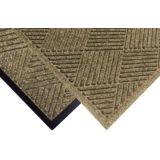 Waterhog Diamond Mats$50.00The Waterhog Diamond is the version of the mat you reach for when the entrance is on display. It does the same dirt-and-water work as the rest of the Waterhog entrance mat line, but with a diamond surface pattern and a heavier face that give it a more finished look
...
The Waterhog Diamond is the version of the mat you reach for when the entrance is on display. It does...
The Waterhog Diamond is the version of the mat you reach for when the entrance is on display. It does the same dirt-and-water work as the rest of the Waterhog entrance mat line, but with a diamond surface pattern and a heavier face that give it a more finished look at the door. It's the step up for lobbies and front entries where you want the mat to look as intentional as it performs.
What a Waterhog Diamond Mat Does Before Dirt Reaches Your Floor
The job of any entrance mat is to take the dirt and water off shoes before either reaches your floor. The Diamond does that with a bi-level surface: raised nubs scrape grit and moisture off the sole and drop it into the channels below shoe level, where it stays instead of tracking inside.
The diamond layout adds something the square pattern doesn't — it scrapes from every direction, so it catches feet approaching the door from any angle. The raised water-dam border then holds the moisture on the mat, up to 1.5 gallons per square yard, keeping the floor past it dry and safer underfoot.
Why the Heavier Diamond Construction Holds Up
The surface is a 30 oz/yd² solution-dyed PET fiber — a heavier face than the standard Waterhog line, which means more material doing the scraping and a denser, more substantial feel underfoot. Solution-dyed means the color runs through the fiber, so it resists staining and won't fade or rot, and the PET is made from at least 90% recycled plastic.
Reinforced rubber nubs keep that heavier pile from crushing flat, which is what protects both the look and the scrape over time. Underneath is a 78-mil SBR rubber backing — with 20% recycled rubber — in smooth or cleated form, with beveled edges for a safe step onto the mat and NFSI-certified high-traction underfoot.
Where It Belongs — and What It Isn't
The Diamond earns its place at entrances that are part of the first impression — hotel and office lobbies, retail entries, restaurants, and healthcare reception areas — and at wide doorways where people come in from several directions. Indoors or out, it pairs strong scraping with a look that reads more finished than a utilitarian mat.
What it isn't is the cheapest way to cover a back door. The heavier face and diamond pattern are an upgrade you choose for appearance and feel; if a service entrance just needs to catch grit and nobody's looking at it, the standard square Waterhog does that job without the step up. The Diamond is for when the entrance is meant to be seen.
Three Things to Check Before You Spec It
First, match the backing to the floor. Smooth backing is for hard floors like tile, stone, and sealed concrete; cleated backing is made to sit on carpet without shifting. The wrong one is how a mat creeps or ripples underfoot.
Second, plan the size around the walking path and the backing rules. It takes several steps to wipe shoes clean, so cover the real path, not just the threshold. Mats up to 40 feet come with either backing; longer runs come in smooth backing only, which matters for long lobby or corridor layouts.
Third, choose the border and color for the setting. The classic rubber border is the more rugged, weather-ready edge; the fashion fabric border gives a softer, more finished surround for indoor lobbies. Since the diamond look is the reason to choose this mat, pick a color that suits the space and hides everyday soil between cleanings.
Why Mats Inc.
The Diamond is the mat we point to when the entrance has to look good and still do the work — but it isn't the right answer for every door, and that's the part we help with. We'll tell you honestly when the heavier diamond face earns its place and when the standard square Waterhog would do the same job, then spec the size, backing, and border to fit. Every order is backed by our one-year limited warranty.
Waterhog Diamond Mat — Specifications Surface fiber Solution-dyed PET, 30 oz/yd², needle-punched Surface pattern Bi-level diamond Recycled content PET surface ≥90% recycled; SBR backing 20% recycled rubber Backing 78-mil SBR rubber (143-mil border) — smooth (hard floors) or universal cleated (carpet) Border options Classic rubber or fashion fabric Water retention Up to 1.5 gallons per square yard Edges Beveled for a safe floor-to-mat transition Traction NFSI-certified high-traction Sizing & backing Mats up to 40' in smooth or cleated backing; over 40' in smooth backing only Warranty One-year limited (Mats Inc.) Frequently Asked Questions
How does the diamond pattern trap dirt and water?
Answered by Dustin Thompson, Owner & CEO
The mat has a bi-level surface — raised nubs with recessed channels between them. The nubs scrape grit and moisture off your shoes, and it drops into the channels below shoe level, so it stays in the mat instead of getting tracked across the floor. The diamond layout adds multi-directional scraping: where a square pattern works best with traffic moving straight across, the diamond catches shoes approaching from any angle, which helps at busy or wide entrances. A raised water-dam border around the edge holds the moisture in — up to 1.5 gallons per square yard.
Is the heavier face actually more durable?
Answered by Dustin Thompson, Owner & CEO
The face is a 30-ounce solution-dyed PET fiber, heavier than the standard Waterhog line, so there's more material taking the abuse before it shows wear. The color is dyed through the fiber, so it resists staining and won't fade or rot, and reinforced rubber nubs keep the pile from crushing flat — the thing that usually makes a mat look tired. The 78-mil SBR backing resists curling and cracking through temperature changes. Kept clean and sized right, it holds up for years in a busy entrance, and Mats Inc. backs every order with a one-year limited warranty.
Can I use it outside, and which backing should I pick?
Answered by Dustin Thompson, Owner & CEO
Yes — it's an indoor/outdoor mat, so it works at exterior entries as well as indoor lobbies, and it isn't bothered by salt or ice melt. The backing is the choice that matters: smooth backing for hard floors like tile, stone, or sealed concrete, and cleated backing for carpet, where the cleats keep it from sliding. One thing to plan for on long runs — mats up to 40 feet come with either backing, but anything longer comes in smooth backing only. Tell us the floor and the length and we'll match it.
Why choose the diamond pattern over the standard square?
Answered by Jinna Hopson, Vice President of Marketing
It comes down to the look. The classic Waterhog uses a square "waffle" pattern; the Diamond uses a diamond layout that reads as more finished and less utilitarian, which is why it's the usual pick for entrances people actually notice — lobbies, reception areas, hotel and retail entries. The performance is in the same family, so you're really choosing the diamond for its appearance and the heavier, more substantial feel it gives the doorway. If the look of the entrance matters, the diamond is the more polished choice.
What colors does it come in, and how do I choose?
Answered by Jinna Hopson, Vice President of Marketing
It comes in a range of colors with a choice of classic rubber or fashion fabric border, so you can tune it to the space. The practical advice is the same for any entrance mat: a mid-tone or darker color hides everyday soil between cleanings and keeps the mat looking intentional, while very light shades show dirt quickly in a high-traffic doorway. Since the diamond pattern is the reason to choose this mat, pick a color that lets the look land while staying realistic about traffic. We can confirm the current color options for the size you need.
When is the heavier 30-ounce Diamond worth it over a standard mat?
Answered by Jinna Hopson, Vice President of Marketing
When the entrance is on display and gets real traffic. The heavier face and diamond pattern are an upgrade you choose for appearance and a more substantial feel, so they make the most sense at front entries, lobbies, and wide doorways where the mat is part of the first impression and catches feet from several directions. For a back door or service entrance where nobody's looking and the job is just to grab grit, a standard square Waterhog does that with less fuss. We're happy to help you draw that line for each doorway.
By Jinna Hopson, Vice President of Marketing, Mats Inc.
↑
The Waterhog Diamond is the version of the mat you reach for when the entrance is on display. It does the same dirt-and-water work as the rest of the Waterhog entrance mat line, but with a diamond surface pattern and a heavier face that give it a more finished look at the door. It's the step up for lobbies and front entries where you want the mat to look as intentional as it performs.
What a Waterhog Diamond Mat Does Before Dirt Reaches Your Floor
The job of any entrance mat is to take the dirt and water off shoes before either reaches your floor. The Diamond does that with a bi-level surface: raised nubs scrape grit and moisture off the sole and drop it into the channels below shoe level, where it stays instead of tracking inside.
The diamond layout adds something the square pattern doesn't — it scrapes from every direction, so it catches feet approaching the door from any angle. The raised water-dam border then holds the moisture on the mat, up to 1.5 gallons per square yard, keeping the floor past it dry and safer underfoot.
Why the Heavier Diamond Construction Holds Up
The surface is a 30 oz/yd² solution-dyed PET fiber — a heavier face than the standard Waterhog line, which means more material doing the scraping and a denser, more substantial feel underfoot. Solution-dyed means the color runs through the fiber, so it resists staining and won't fade or rot, and the PET is made from at least 90% recycled plastic.
Reinforced rubber nubs keep that heavier pile from crushing flat, which is what protects both the look and the scrape over time. Underneath is a 78-mil SBR rubber backing — with 20% recycled rubber — in smooth or cleated form, with beveled edges for a safe step onto the mat and NFSI-certified high-traction underfoot.
Where It Belongs — and What It Isn't
The Diamond earns its place at entrances that are part of the first impression — hotel and office lobbies, retail entries, restaurants, and healthcare reception areas — and at wide doorways where people come in from several directions. Indoors or out, it pairs strong scraping with a look that reads more finished than a utilitarian mat.
What it isn't is the cheapest way to cover a back door. The heavier face and diamond pattern are an upgrade you choose for appearance and feel; if a service entrance just needs to catch grit and nobody's looking at it, the standard square Waterhog does that job without the step up. The Diamond is for when the entrance is meant to be seen.
Three Things to Check Before You Spec It
First, match the backing to the floor. Smooth backing is for hard floors like tile, stone, and sealed concrete; cleated backing is made to sit on carpet without shifting. The wrong one is how a mat creeps or ripples underfoot.
Second, plan the size around the walking path and the backing rules. It takes several steps to wipe shoes clean, so cover the real path, not just the threshold. Mats up to 40 feet come with either backing; longer runs come in smooth backing only, which matters for long lobby or corridor layouts.
Third, choose the border and color for the setting. The classic rubber border is the more rugged, weather-ready edge; the fashion fabric border gives a softer, more finished surround for indoor lobbies. Since the diamond look is the reason to choose this mat, pick a color that suits the space and hides everyday soil between cleanings.
Why Mats Inc.
The Diamond is the mat we point to when the entrance has to look good and still do the work — but it isn't the right answer for every door, and that's the part we help with. We'll tell you honestly when the heavier diamond face earns its place and when the standard square Waterhog would do the same job, then spec the size, backing, and border to fit. Every order is backed by our one-year limited warranty.
Waterhog Diamond Mat — Specifications Surface fiber Solution-dyed PET, 30 oz/yd², needle-punched Surface pattern Bi-level diamond Recycled content PET surface ≥90% recycled; SBR backing 20% recycled rubber Backing 78-mil SBR rubber (143-mil border) — smooth (hard floors) or universal cleated (carpet) Border options Classic rubber or fashion fabric Water retention Up to 1.5 gallons per square yard Edges Beveled for a safe floor-to-mat transition Traction NFSI-certified high-traction Sizing & backing Mats up to 40' in smooth or cleated backing; over 40' in smooth backing only Warranty One-year limited (Mats Inc.) Frequently Asked Questions
How does the diamond pattern trap dirt and water?
Answered by Dustin Thompson, Owner & CEO
The mat has a bi-level surface — raised nubs with recessed channels between them. The nubs scrape grit and moisture off your shoes, and it drops into the channels below shoe level, so it stays in the mat instead of getting tracked across the floor. The diamond layout adds multi-directional scraping: where a square pattern works best with traffic moving straight across, the diamond catches shoes approaching from any angle, which helps at busy or wide entrances. A raised water-dam border around the edge holds the moisture in — up to 1.5 gallons per square yard.
Is the heavier face actually more durable?
Answered by Dustin Thompson, Owner & CEO
The face is a 30-ounce solution-dyed PET fiber, heavier than the standard Waterhog line, so there's more material taking the abuse before it shows wear. The color is dyed through the fiber, so it resists staining and won't fade or rot, and reinforced rubber nubs keep the pile from crushing flat — the thing that usually makes a mat look tired. The 78-mil SBR backing resists curling and cracking through temperature changes. Kept clean and sized right, it holds up for years in a busy entrance, and Mats Inc. backs every order with a one-year limited warranty.
Can I use it outside, and which backing should I pick?
Answered by Dustin Thompson, Owner & CEO
Yes — it's an indoor/outdoor mat, so it works at exterior entries as well as indoor lobbies, and it isn't bothered by salt or ice melt. The backing is the choice that matters: smooth backing for hard floors like tile, stone, or sealed concrete, and cleated backing for carpet, where the cleats keep it from sliding. One thing to plan for on long runs — mats up to 40 feet come with either backing, but anything longer comes in smooth backing only. Tell us the floor and the length and we'll match it.
Why choose the diamond pattern over the standard square?
Answered by Jinna Hopson, Vice President of Marketing
It comes down to the look. The classic Waterhog uses a square "waffle" pattern; the Diamond uses a diamond layout that reads as more finished and less utilitarian, which is why it's the usual pick for entrances people actually notice — lobbies, reception areas, hotel and retail entries. The performance is in the same family, so you're really choosing the diamond for its appearance and the heavier, more substantial feel it gives the doorway. If the look of the entrance matters, the diamond is the more polished choice.
What colors does it come in, and how do I choose?
Answered by Jinna Hopson, Vice President of Marketing
It comes in a range of colors with a choice of classic rubber or fashion fabric border, so you can tune it to the space. The practical advice is the same for any entrance mat: a mid-tone or darker color hides everyday soil between cleanings and keeps the mat looking intentional, while very light shades show dirt quickly in a high-traffic doorway. Since the diamond pattern is the reason to choose this mat, pick a color that lets the look land while staying realistic about traffic. We can confirm the current color options for the size you need.
When is the heavier 30-ounce Diamond worth it over a standard mat?
Answered by Jinna Hopson, Vice President of Marketing
When the entrance is on display and gets real traffic. The heavier face and diamond pattern are an upgrade you choose for appearance and a more substantial feel, so they make the most sense at front entries, lobbies, and wide doorways where the mat is part of the first impression and catches feet from several directions. For a back door or service entrance where nobody's looking and the job is just to grab grit, a standard square Waterhog does that with less fuss. We're happy to help you draw that line for each doorway.
By Jinna Hopson, Vice President of Marketing, Mats Inc.
↑
View Details
View Details
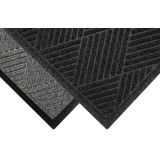 Waterhog Eco Premier Mats$52.00Waterhog Eco Premier Mats put a heavy-duty bi-level Waterhog surface at the door, with a diamond-pattern face that scrapes grit and pulls water off shoes from any direction. The raised pattern traps dirt and moisture below the walking surface so it isn't tracked deeper inside, and a rubber-reinforced face keeps
...
Waterhog Eco Premier Mats put a heavy-duty bi-level Waterhog surface at the door, with a diamond-pattern face that scrapes grit...
Waterhog Eco Premier Mats put a heavy-duty bi-level Waterhog surface at the door, with a diamond-pattern face that scrapes grit and pulls water off shoes from any direction. The raised pattern traps dirt and moisture below the walking surface so it isn't tracked deeper inside, and a rubber-reinforced face keeps the mat doing that for years instead of crushing flat under traffic.
What a Waterhog Eco Premier Mat Stops Before It Reaches Your Floor
Most of the dirt and water in a building comes in on shoes. ISSA field data shows a building takes on up to 12 times more dirt during wet weather, and it takes six to eight steps to walk a sole dry. A mat at the entrance is what decides whether that grit and moisture get caught — or get ground into the floor past the door.
The Waterhog surface is bi-level: raised ridges scrape grit and water off shoes, and recessed channels hold both below the walking surface so they aren't picked back up. A raised water-dam border rings the mat and keeps what it collects — up to 1.5 gallons of water per square yard — on the mat instead of spreading toward your floor.
Why the Diamond Waterhog Surface, and Why This One
The face is solution-dyed PET fiber, 24 ounces per square yard, made from at least 90% recycled content reclaimed from plastic bottles. The diamond pattern gives it multi-directional bite — it scrapes just as well whether foot or cart traffic crosses it straight on or at an angle, which is how traffic actually moves through a wide doorway.
What keeps it working is the rubber reinforcement molded through the raised pattern. It stops the pile from crushing flat under steady traffic, and a crushed mat is the usual reason an entrance mat gets pulled early — once it lies down it stops scraping and starts looking worn. The solution-dyed fiber also resists staining and won't fade or rot, so it keeps its color and grip.
Underneath is a 78-mil SBR rubber backing with 20% recycled tire content, in a universal cleated version for carpet or a smooth version for hard floors. Beveled edges ease the step on and off. You choose a classic rubber border for a tougher, more utilitarian edge, or a fashion fabric border that color-matches the mat for a cleaner, more finished look.
Where It Belongs (and Where It Doesn't)
This is a workhorse entrance mat for indoor and outdoor commercial entries — hotel and office lobbies, retail and restaurant doors, healthcare entrances, schools, and similar high-traffic thresholds. The PET face is rated for indoor or outdoor use and isn't bothered by salt or ice melt, so it holds up at a real front door through the seasons. It's also certified high-traction by the National Floor Safety Institute.
Where it's less suited is the heaviest coarse-debris duty — a loading dock caked in mud and gravel, or a job-site door. It scrapes and holds a lot, but for that kind of punishment you'd put a coarse outdoor scraper first and let the Waterhog finish the job a step inside. As the main entrance mat for ordinary commercial traffic, though, it's built to be the one that does the work.
Three Things to Check Before You Spec It
Three things decide whether this is the right Waterhog for your door.
First, the floor under it. A universal cleated backing grips carpet and stops the mat creeping; a smooth backing is the one for tile, stone, polished concrete, or other hard floors, where cleats can rock. Match the backing to the surface or the mat will shift as people walk it.
Second, the size of the run. It comes in standard sizes from 2'×3' up to 6'×20', plus longer custom lengths. Size it to cover the six-to-eight steps it takes to dry a sole, not just the door opening — an undersized mat lets damp shoes finish the job on your floor and takes all the wear in one strip.
Third, the border. A classic rubber border is the more rugged, lower-maintenance edge for heavy or outdoor use; a fashion fabric border color-matches the mat for a more polished look indoors. Pick by how exposed the spot is and how much the appearance matters at that threshold.
Why Mats Inc.
Mats Inc. has specified commercial entrance matting since 1964, so when you're choosing a Waterhog for a specific door, you're working with people who match the surface, backing, and border to your floor and your traffic rather than reading a box. We help you size the run, pick the backing for your floor, and choose the border for the look you want — and we'll tell you when a coarser scraper belongs in front of it. For the rest of the indoor range, see our all indoor entrance mats.
Specifications Type Indoor/outdoor commercial entrance mat Surface Solution-dyed PET, needle-punched, bi-level diamond pattern Face weight 24 oz/yd² Recycled content At least 90% recycled PET face; SBR rubber backing with 20% recycled tire content Thickness 3/8" overall (78-mil SBR backing) Backing SBR rubber — universal cleated (carpet) or smooth (hard floors) Border Classic rubber or fashion fabric Water capacity Up to 1.5 gallons per square yard Edges / traction Beveled edges; certified high-traction by the National Floor Safety Institute (NFSI) Flammability Passes DOC-FF1-70 (CPSC FF 1-70) Colors 11 Sizes Standard 2'×3' to 6'×20'; longer custom lengths available Warranty 1-year limited (Mats Inc.) Frequently Asked Questions
How does the bi-level diamond surface work?
Answered by Dustin Thompson, Owner & CEO
It works on two levels. The raised diamond ridges scrape grit and water off the bottom of shoes, and the recessed channels between them hold what's scraped below the walking surface, so it isn't picked up again and tracked deeper inside. The diamond layout also means it scrapes from any direction — useful at a wide door where people cross at all angles. A raised water-dam border rings the mat and holds the moisture it collects, up to 1.5 gallons per square yard, keeping it on the mat instead of on your floor.
How long does it hold up, and what wears it out?
Answered by Dustin Thompson, Owner & CEO
In ordinary commercial traffic, expect years of service. The reason it lasts is the rubber reinforcement molded through the raised pattern — it keeps the pile from crushing flat. A crushed pile is what usually ends a mat's life: once it lies down it stops scraping and starts looking worn.
The 24-ounce solution-dyed PET face resists staining and won't fade or rot, so it holds its look indoors or out. What shortens its life early is the wrong backing for the floor, or sizing it too small so a narrow strip takes all the traffic.
Can I use it outside, and how do I clean it?
Answered by Dustin Thompson, Owner & CEO
Yes — the PET face is rated for indoor or outdoor use and isn't affected by salt or ice melt, so it works at a real exterior door through the seasons, or just inside one. The main limit is the heaviest coarse debris: against mud and gravel, put a rugged scraper first and let this mat finish the job. Cleaning is simple — vacuum regularly, and hose or extract it when it's heavily soiled, then hang it to dry before putting it back down.
What sizes can I get?
Answered by Jinna Hopson, Vice President of Marketing
Standard sizes run from 2'×3' up to 6'×20', and longer custom lengths are available for a wide entry or a long walkway.
Size it to the traffic, not just the door. Aim to cover the six-to-eight steps it takes to dry a sole, so the mat protects the floor across the whole approach rather than getting walked past in a stride or two. For a busy entrance, lean toward the larger end.
What does it look like, and what colors are there?
Answered by Jinna Hopson, Vice President of Marketing
The diamond pattern gives it a more refined, finished look than a plain ribbed or waffle mat — it reads as upscale enough for a lobby while still being a serious working mat. There are 11 colors to match a building palette, and darker or neutral tones hide tracked-in dirt better between cleanings. Because the reinforced surface doesn't crush into shiny lanes, it keeps an even appearance across the whole mat instead of showing where everyone walks.
What's the difference between the classic and fashion border?
Answered by Jinna Hopson, Vice President of Marketing
The border changes both the look and the durability. A classic rubber border is the tougher, lower-maintenance edge — a good match for heavy traffic or outdoor exposure, where it takes abuse without showing it. A fashion fabric border color-matches the mat for a cleaner, more seamless look that suits a polished indoor entrance. Neither changes how the mat cleans shoes; it's about how rugged versus how finished you want the edge to look at that particular door.
By Dustin Thompson, Owner & CEO, Mats Inc.
↑
Waterhog Eco Premier Mats put a heavy-duty bi-level Waterhog surface at the door, with a diamond-pattern face that scrapes grit and pulls water off shoes from any direction. The raised pattern traps dirt and moisture below the walking surface so it isn't tracked deeper inside, and a rubber-reinforced face keeps the mat doing that for years instead of crushing flat under traffic.
What a Waterhog Eco Premier Mat Stops Before It Reaches Your Floor
Most of the dirt and water in a building comes in on shoes. ISSA field data shows a building takes on up to 12 times more dirt during wet weather, and it takes six to eight steps to walk a sole dry. A mat at the entrance is what decides whether that grit and moisture get caught — or get ground into the floor past the door.
The Waterhog surface is bi-level: raised ridges scrape grit and water off shoes, and recessed channels hold both below the walking surface so they aren't picked back up. A raised water-dam border rings the mat and keeps what it collects — up to 1.5 gallons of water per square yard — on the mat instead of spreading toward your floor.
Why the Diamond Waterhog Surface, and Why This One
The face is solution-dyed PET fiber, 24 ounces per square yard, made from at least 90% recycled content reclaimed from plastic bottles. The diamond pattern gives it multi-directional bite — it scrapes just as well whether foot or cart traffic crosses it straight on or at an angle, which is how traffic actually moves through a wide doorway.
What keeps it working is the rubber reinforcement molded through the raised pattern. It stops the pile from crushing flat under steady traffic, and a crushed mat is the usual reason an entrance mat gets pulled early — once it lies down it stops scraping and starts looking worn. The solution-dyed fiber also resists staining and won't fade or rot, so it keeps its color and grip.
Underneath is a 78-mil SBR rubber backing with 20% recycled tire content, in a universal cleated version for carpet or a smooth version for hard floors. Beveled edges ease the step on and off. You choose a classic rubber border for a tougher, more utilitarian edge, or a fashion fabric border that color-matches the mat for a cleaner, more finished look.
Where It Belongs (and Where It Doesn't)
This is a workhorse entrance mat for indoor and outdoor commercial entries — hotel and office lobbies, retail and restaurant doors, healthcare entrances, schools, and similar high-traffic thresholds. The PET face is rated for indoor or outdoor use and isn't bothered by salt or ice melt, so it holds up at a real front door through the seasons. It's also certified high-traction by the National Floor Safety Institute.
Where it's less suited is the heaviest coarse-debris duty — a loading dock caked in mud and gravel, or a job-site door. It scrapes and holds a lot, but for that kind of punishment you'd put a coarse outdoor scraper first and let the Waterhog finish the job a step inside. As the main entrance mat for ordinary commercial traffic, though, it's built to be the one that does the work.
Three Things to Check Before You Spec It
Three things decide whether this is the right Waterhog for your door.
First, the floor under it. A universal cleated backing grips carpet and stops the mat creeping; a smooth backing is the one for tile, stone, polished concrete, or other hard floors, where cleats can rock. Match the backing to the surface or the mat will shift as people walk it.
Second, the size of the run. It comes in standard sizes from 2'×3' up to 6'×20', plus longer custom lengths. Size it to cover the six-to-eight steps it takes to dry a sole, not just the door opening — an undersized mat lets damp shoes finish the job on your floor and takes all the wear in one strip.
Third, the border. A classic rubber border is the more rugged, lower-maintenance edge for heavy or outdoor use; a fashion fabric border color-matches the mat for a more polished look indoors. Pick by how exposed the spot is and how much the appearance matters at that threshold.
Why Mats Inc.
Mats Inc. has specified commercial entrance matting since 1964, so when you're choosing a Waterhog for a specific door, you're working with people who match the surface, backing, and border to your floor and your traffic rather than reading a box. We help you size the run, pick the backing for your floor, and choose the border for the look you want — and we'll tell you when a coarser scraper belongs in front of it. For the rest of the indoor range, see our all indoor entrance mats.
Specifications Type Indoor/outdoor commercial entrance mat Surface Solution-dyed PET, needle-punched, bi-level diamond pattern Face weight 24 oz/yd² Recycled content At least 90% recycled PET face; SBR rubber backing with 20% recycled tire content Thickness 3/8" overall (78-mil SBR backing) Backing SBR rubber — universal cleated (carpet) or smooth (hard floors) Border Classic rubber or fashion fabric Water capacity Up to 1.5 gallons per square yard Edges / traction Beveled edges; certified high-traction by the National Floor Safety Institute (NFSI) Flammability Passes DOC-FF1-70 (CPSC FF 1-70) Colors 11 Sizes Standard 2'×3' to 6'×20'; longer custom lengths available Warranty 1-year limited (Mats Inc.) Frequently Asked Questions
How does the bi-level diamond surface work?
Answered by Dustin Thompson, Owner & CEO
It works on two levels. The raised diamond ridges scrape grit and water off the bottom of shoes, and the recessed channels between them hold what's scraped below the walking surface, so it isn't picked up again and tracked deeper inside. The diamond layout also means it scrapes from any direction — useful at a wide door where people cross at all angles. A raised water-dam border rings the mat and holds the moisture it collects, up to 1.5 gallons per square yard, keeping it on the mat instead of on your floor.
How long does it hold up, and what wears it out?
Answered by Dustin Thompson, Owner & CEO
In ordinary commercial traffic, expect years of service. The reason it lasts is the rubber reinforcement molded through the raised pattern — it keeps the pile from crushing flat. A crushed pile is what usually ends a mat's life: once it lies down it stops scraping and starts looking worn.
The 24-ounce solution-dyed PET face resists staining and won't fade or rot, so it holds its look indoors or out. What shortens its life early is the wrong backing for the floor, or sizing it too small so a narrow strip takes all the traffic.
Can I use it outside, and how do I clean it?
Answered by Dustin Thompson, Owner & CEO
Yes — the PET face is rated for indoor or outdoor use and isn't affected by salt or ice melt, so it works at a real exterior door through the seasons, or just inside one. The main limit is the heaviest coarse debris: against mud and gravel, put a rugged scraper first and let this mat finish the job. Cleaning is simple — vacuum regularly, and hose or extract it when it's heavily soiled, then hang it to dry before putting it back down.
What sizes can I get?
Answered by Jinna Hopson, Vice President of Marketing
Standard sizes run from 2'×3' up to 6'×20', and longer custom lengths are available for a wide entry or a long walkway.
Size it to the traffic, not just the door. Aim to cover the six-to-eight steps it takes to dry a sole, so the mat protects the floor across the whole approach rather than getting walked past in a stride or two. For a busy entrance, lean toward the larger end.
What does it look like, and what colors are there?
Answered by Jinna Hopson, Vice President of Marketing
The diamond pattern gives it a more refined, finished look than a plain ribbed or waffle mat — it reads as upscale enough for a lobby while still being a serious working mat. There are 11 colors to match a building palette, and darker or neutral tones hide tracked-in dirt better between cleanings. Because the reinforced surface doesn't crush into shiny lanes, it keeps an even appearance across the whole mat instead of showing where everyone walks.
What's the difference between the classic and fashion border?
Answered by Jinna Hopson, Vice President of Marketing
The border changes both the look and the durability. A classic rubber border is the tougher, lower-maintenance edge — a good match for heavy traffic or outdoor exposure, where it takes abuse without showing it. A fashion fabric border color-matches the mat for a cleaner, more seamless look that suits a polished indoor entrance. Neither changes how the mat cleans shoes; it's about how rugged versus how finished you want the edge to look at that particular door.
By Dustin Thompson, Owner & CEO, Mats Inc.
↑
View Details
View Details
Why Choose Waterhog?
- Superior Dirt and Water Trapping: The bi-level design traps dirt, moisture, and debris, ensuring cleaner floors.
- Slip-Resistant: Designed to reduce slip hazards in wet conditions, ideal for high-traffic areas.
- Durable & Eco-Friendly: Made from recycled materials, Waterhog mats are built to last while contributing to environmental sustainability.
- Versatile Applications: Ideal for entrances, outdoor areas, and any location prone to moisture and dirt buildup.
Waterhog is trusted by businesses and homeowners alike for its unmatched ability to protect floors and enhance safety. Explore the Waterhog collection and discover the ideal solution for your space.