




Portico Systems Commercial Flooring & Entrance Mats
Portico is a leading provider of innovative, high-performance flooring solutions designed to enhance spaces in commercial, healthcare, education, and hospitality environments. Known for exceptional durability, style, and sustainability, Portico offers a wide range of products, including luxury vinyl plank, carpet tiles, and custom flooring solutions, tailored to meet the unique demands of various industries.
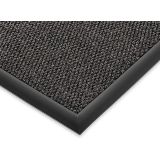 Super Berber Matting
Starting at $60.00
Super Berber Matting is a dense berber entrance mat that does the two hardest jobs at a busy door at once: it scrapes grit off shoes and soaks up the moisture they carry. The needle-punch berber surface is solution-dyed in up to 40 colors, and a custom logo can...
Super Berber Matting is a dense berber entrance mat that does the two hardest jobs at a busy door...
Super Berber Matting is a dense berber entrance mat that does the two hardest jobs at a busy door at once: it scrapes grit off shoes and soaks up the moisture they carry. The needle-punch berber surface is solution-dyed in up to 40 colors, and a custom logo can be inlaid right into it — so it cleans the entrance and carries the brand in the same mat.
What Super Berber Does Before Dirt and Water Reach the Floor
At a busy entrance, dirt and water arrive on shoes — ISSA research shows the door is where most of a building's dirt comes in. Left to cross the threshold, that grit grinds at the floor and wet shoes leave a lobby slick. The dense berber pile catches both: it scrapes solids loose and holds moisture in the fiber, while the all-weather rubber backing keeps the mat planted, so the dirt and water stay on the mat, not the floor.
Why Solution-Dyed Berber, and Why This One
The mat is built from 100% solution-dyed polypropylene berber, needle-punched into a dense half-inch pile that weighs about 52 ounces per square yard. Solution-dyed means the color is locked into the fiber rather than printed on top, so it does not bleach or wear pale. The polypropylene is UV- and abrasion-resistant, which is what lets the mat hold its look under heavy traffic and sun.
Of the two jobs an entrance mat does, this one leans toward wiping — the deep pile is built to pull moisture and fine dirt off shoes and keep it there, with strong scraping behind it. An all-weather rubber backing grips the floor and stands up to wet conditions, so the mat works at an interior lobby or a covered outdoor entrance alike.
Where It Belongs, and What It Is Not
Super Berber fits heavy-traffic entrances where appearance counts as much as cleaning — office buildings, shops, lobbies, schools, airports, and sport concourses. It works indoors or at a covered outdoor entrance, and it sits in our range of moisture-control entrance matting as the absorbent option that traps water in the pile rather than channeling it away.
What it is not is a drainage grid or a heavy-mud scraper. It holds the moisture it collects, so where standing water has to drain off, an open grid mat is the better tool — and where shoes arrive caked in mud, a coarse scraper out front will spare the pile. Super Berber is the mat that finishes the job: wiping shoes clean and dry once the worst is knocked off.
Three Things to Check Before You Spec It
First, decide what the door mostly throws at it. If the entrance is about moisture and a clean, finished look, Super Berber is built for exactly that. If shoes arrive heavy with mud or grit, set a coarse scraper ahead of it so the berber handles the wiping rather than clogging with debris it was not meant to take alone.
Second, size it and pick the edge. It comes in standard mats up to four by fourteen feet, in rolls, or custom-cut to your dimensions — up to thirteen feet two inches wide and inlaid runs to a hundred feet. Borders can be heat-sealed, square-cut, or beveled, and custom shapes are on the table if the entrance calls for one.
Third, plan the logo and colors early. The logo is needle-punched into the pile from a palette of up to 40 colors, so it needs camera-ready artwork before a quote. One thing to know up front: this construction does not do exact PMS brand-color matching — you choose from the 40 — so check that your colors are covered before you commit.
Why Mats Inc.
We have specified entrance matting since 1964, and a logo mat only works if the artwork, the colors, and the size are right before it is made. We take your logo, match it to the available colors, confirm the size and border, and lay out the inlay — so the mat that arrives cleans the entrance and reads as your brand, not a near-miss. Send your artwork and we will start there.
Super Berber Matting — Specifications Construction 100% solution-dyed polypropylene berber, needle-punch Pile weight 52 oz/sq yd Thickness 1/2" Backing All-weather rubber Properties UV-resistant, abrasion-resistant; solution-dyed (color through the fiber) Strengths Strong scraping; high wiping / moisture absorption Colors Up to 40 (no PMS color match) Logo Needle-punch inlay; custom shapes; camera-ready artwork required Borders Heat-sealed, square-cut, or beveled (standard black; brown / yellow on request) Standard sizes 2'×3' through 4'×14' Roll sizes 4'×16'–4'×20', 6'×5'–6'×20' Custom Width to 13'2"; inlay length to 100' Use Indoor or outdoor; heavy traffic Origin Made in USA Warranty 1-year limited (Mats Inc.) Frequently Asked Questions
What is Super Berber Matting made of?
Answered by Dustin Thompson, Owner & CEO
It is built from 100% solution-dyed polypropylene berber, needle-punched into a dense half-inch pile of about 52 ounces per square yard, over an all-weather rubber backing. Solution-dyed means the color runs through each fiber instead of sitting on the surface, so it resists fading and bleaching. The polypropylene is UV- and abrasion-resistant, which is what lets the mat keep its look under heavy traffic, indoors or at a covered outdoor entrance.
How much traffic can it take, and how well does it handle water?
Answered by Dustin Thompson, Owner & CEO
It is rated for heavy traffic, and wiping is its strong suit — the deep berber pile is built to pull moisture and fine dirt off shoes and hold it down in the fiber, away from the floor. The solution-dyed, UV- and abrasion-resistant construction keeps it from looking worn or faded as the traffic adds up. Like any pile mat, it performs best when it is vacuumed regularly and washed when it needs it, so the trapped soil does not pack down into the pile.
Is it a scraper or a wiper, and where should I place it?
Answered by Dustin Thompson, Owner & CEO
It does both, but it leans wiper — it is at its best absorbing moisture and fine grit rather than knocking off heavy mud. Place it where it covers the full walking path so shoes take several steps on it. If the entrance sees heavy mud or sand, put a coarse scraper mat outside the door first and let Super Berber do the wiping inside; that two-stage setup keeps the pile from clogging and keeps the floor beyond it clean and dry.
Can you inlay our logo, and how sharp will it look?
Answered by Jinna Hopson, Vice President of Marketing
Yes — the logo is needle-punched right into the berber pile, not printed on top, so it wears in with the mat instead of scuffing off. It is one of the largest custom logo mats made, which gives a logo room to read cleanly at the door, and custom shapes are possible if you want the mat itself to follow a form. We do need camera-ready artwork before quoting, so the inlay is laid out accurately from the start.
What colors can we get, and can you match our exact brand color?
Answered by Jinna Hopson, Vice President of Marketing
There are up to 40 colors to build the base and the logo from, which covers most brand palettes. The one honest limit to flag: this construction does not offer exact PMS brand-color matching — you choose from the 40 standard colors rather than a custom-mixed shade. Because the colors are solution-dyed into the fiber, whatever you pick holds up without fading. Send your brand colors and we will confirm the closest matches before anything is made.
Will it still look professional after a season of heavy use?
Answered by Jinna Hopson, Vice President of Marketing
That is what the solution-dyed berber is for. With the color locked into the fiber and the polypropylene resisting UV and abrasion, the mat holds its appearance far better than a surface-printed mat, which tends to go pale and tired at a busy door. The berber texture reads clean and upscale rather than utilitarian, so it suits a lobby or storefront where the entrance is part of the first impression.
By Jinna Hopson, Vice President of Marketing, Mats Inc.
↑
Super Berber Matting is a dense berber entrance mat that does the two hardest jobs at a busy door at once: it scrapes grit off shoes and soaks up the moisture they carry. The needle-punch berber surface is solution-dyed in up to 40 colors, and a custom logo can be inlaid right into it — so it cleans the entrance and carries the brand in the same mat.
What Super Berber Does Before Dirt and Water Reach the Floor
At a busy entrance, dirt and water arrive on shoes — ISSA research shows the door is where most of a building's dirt comes in. Left to cross the threshold, that grit grinds at the floor and wet shoes leave a lobby slick. The dense berber pile catches both: it scrapes solids loose and holds moisture in the fiber, while the all-weather rubber backing keeps the mat planted, so the dirt and water stay on the mat, not the floor.
Why Solution-Dyed Berber, and Why This One
The mat is built from 100% solution-dyed polypropylene berber, needle-punched into a dense half-inch pile that weighs about 52 ounces per square yard. Solution-dyed means the color is locked into the fiber rather than printed on top, so it does not bleach or wear pale. The polypropylene is UV- and abrasion-resistant, which is what lets the mat hold its look under heavy traffic and sun.
Of the two jobs an entrance mat does, this one leans toward wiping — the deep pile is built to pull moisture and fine dirt off shoes and keep it there, with strong scraping behind it. An all-weather rubber backing grips the floor and stands up to wet conditions, so the mat works at an interior lobby or a covered outdoor entrance alike.
Where It Belongs, and What It Is Not
Super Berber fits heavy-traffic entrances where appearance counts as much as cleaning — office buildings, shops, lobbies, schools, airports, and sport concourses. It works indoors or at a covered outdoor entrance, and it sits in our range of moisture-control entrance matting as the absorbent option that traps water in the pile rather than channeling it away.
What it is not is a drainage grid or a heavy-mud scraper. It holds the moisture it collects, so where standing water has to drain off, an open grid mat is the better tool — and where shoes arrive caked in mud, a coarse scraper out front will spare the pile. Super Berber is the mat that finishes the job: wiping shoes clean and dry once the worst is knocked off.
Three Things to Check Before You Spec It
First, decide what the door mostly throws at it. If the entrance is about moisture and a clean, finished look, Super Berber is built for exactly that. If shoes arrive heavy with mud or grit, set a coarse scraper ahead of it so the berber handles the wiping rather than clogging with debris it was not meant to take alone.
Second, size it and pick the edge. It comes in standard mats up to four by fourteen feet, in rolls, or custom-cut to your dimensions — up to thirteen feet two inches wide and inlaid runs to a hundred feet. Borders can be heat-sealed, square-cut, or beveled, and custom shapes are on the table if the entrance calls for one.
Third, plan the logo and colors early. The logo is needle-punched into the pile from a palette of up to 40 colors, so it needs camera-ready artwork before a quote. One thing to know up front: this construction does not do exact PMS brand-color matching — you choose from the 40 — so check that your colors are covered before you commit.
Why Mats Inc.
We have specified entrance matting since 1964, and a logo mat only works if the artwork, the colors, and the size are right before it is made. We take your logo, match it to the available colors, confirm the size and border, and lay out the inlay — so the mat that arrives cleans the entrance and reads as your brand, not a near-miss. Send your artwork and we will start there.
Super Berber Matting — Specifications Construction 100% solution-dyed polypropylene berber, needle-punch Pile weight 52 oz/sq yd Thickness 1/2" Backing All-weather rubber Properties UV-resistant, abrasion-resistant; solution-dyed (color through the fiber) Strengths Strong scraping; high wiping / moisture absorption Colors Up to 40 (no PMS color match) Logo Needle-punch inlay; custom shapes; camera-ready artwork required Borders Heat-sealed, square-cut, or beveled (standard black; brown / yellow on request) Standard sizes 2'×3' through 4'×14' Roll sizes 4'×16'–4'×20', 6'×5'–6'×20' Custom Width to 13'2"; inlay length to 100' Use Indoor or outdoor; heavy traffic Origin Made in USA Warranty 1-year limited (Mats Inc.) Frequently Asked Questions
What is Super Berber Matting made of?
Answered by Dustin Thompson, Owner & CEO
It is built from 100% solution-dyed polypropylene berber, needle-punched into a dense half-inch pile of about 52 ounces per square yard, over an all-weather rubber backing. Solution-dyed means the color runs through each fiber instead of sitting on the surface, so it resists fading and bleaching. The polypropylene is UV- and abrasion-resistant, which is what lets the mat keep its look under heavy traffic, indoors or at a covered outdoor entrance.
How much traffic can it take, and how well does it handle water?
Answered by Dustin Thompson, Owner & CEO
It is rated for heavy traffic, and wiping is its strong suit — the deep berber pile is built to pull moisture and fine dirt off shoes and hold it down in the fiber, away from the floor. The solution-dyed, UV- and abrasion-resistant construction keeps it from looking worn or faded as the traffic adds up. Like any pile mat, it performs best when it is vacuumed regularly and washed when it needs it, so the trapped soil does not pack down into the pile.
Is it a scraper or a wiper, and where should I place it?
Answered by Dustin Thompson, Owner & CEO
It does both, but it leans wiper — it is at its best absorbing moisture and fine grit rather than knocking off heavy mud. Place it where it covers the full walking path so shoes take several steps on it. If the entrance sees heavy mud or sand, put a coarse scraper mat outside the door first and let Super Berber do the wiping inside; that two-stage setup keeps the pile from clogging and keeps the floor beyond it clean and dry.
Can you inlay our logo, and how sharp will it look?
Answered by Jinna Hopson, Vice President of Marketing
Yes — the logo is needle-punched right into the berber pile, not printed on top, so it wears in with the mat instead of scuffing off. It is one of the largest custom logo mats made, which gives a logo room to read cleanly at the door, and custom shapes are possible if you want the mat itself to follow a form. We do need camera-ready artwork before quoting, so the inlay is laid out accurately from the start.
What colors can we get, and can you match our exact brand color?
Answered by Jinna Hopson, Vice President of Marketing
There are up to 40 colors to build the base and the logo from, which covers most brand palettes. The one honest limit to flag: this construction does not offer exact PMS brand-color matching — you choose from the 40 standard colors rather than a custom-mixed shade. Because the colors are solution-dyed into the fiber, whatever you pick holds up without fading. Send your brand colors and we will confirm the closest matches before anything is made.
Will it still look professional after a season of heavy use?
Answered by Jinna Hopson, Vice President of Marketing
That is what the solution-dyed berber is for. With the color locked into the fiber and the polypropylene resisting UV and abrasion, the mat holds its appearance far better than a surface-printed mat, which tends to go pale and tired at a busy door. The berber texture reads clean and upscale rather than utilitarian, so it suits a lobby or storefront where the entrance is part of the first impression.
By Jinna Hopson, Vice President of Marketing, Mats Inc.
↑
View Details
View Details
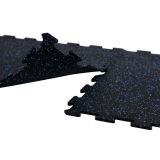 Interlocking Rubber Tiles
Starting at $17.00
Interlocking rubber tiles are the gym floor you can put down yourself. They snap together edge to edge — no glue, no adhesive, no installer — so a garage, basement, or home gym goes from bare slab to finished rubber floor in an afternoon. And because they lock rather than...
Interlocking rubber tiles are the gym floor you can put down yourself. They snap together edge to edge — no...
Interlocking rubber tiles are the gym floor you can put down yourself. They snap together edge to edge — no glue, no adhesive, no installer — so a garage, basement, or home gym goes from bare slab to finished rubber floor in an afternoon. And because they lock rather than bond, you can add to them, pull them up, or take them with you when the space changes.
What Interlocking Rubber Tiles Do Before Your Floor Pays for It
A workout floor takes a beating — dropped dumbbells, dragged equipment, foot traffic, sweat. On bare concrete or a finished floor, that wear lands directly on the surface. Interlocking tiles put a layer of dense rubber between the workout and the floor, soaking up impact and protecting what's underneath.
They also give you grip and a little cushion underfoot, which matters for safety and comfort during a session. Because each tile locks to the next, the surface holds together as a single floor instead of sliding mats — no shifting, no gaps to trip on, no edges curling up mid-workout.
Why Interlocking Tiles, and Why These
The whole idea of a tile is the locking edge. Each one snaps into its neighbors with no adhesive, so you cover exactly the area you want and can expand or rearrange it later — something a glued roll can't do. That makes tiles the easiest rubber floor to install, and the only one you can realistically take with you.
These are made from recycled rubber diverted from the waste stream, so the same density that makes them tough also keeps material out of a landfill. They're tested low for VOCs — the gases that flooring can off-gas indoors — and they contribute toward LEED credits, which matters on commercial and institutional projects.
They come in three thicknesses, from 1/4 inch up to 1/2 inch, so you can match the tile to the load, and in 19 colors with a standard 10% color fleck mixed into the rubber — so the floor can match a brand palette or simply look better than plain black.
Where Interlocking Tiles Belong, and Where They Don't
Tiles are the natural pick for spaces that change or grow: home and garage gyms, basements, multi-use rooms, studios, and any layout you might rearrange. The no-adhesive install means no damage to the floor below, which is ideal for a rental or a finished basement.
Where they're less suited is a dedicated heavy-drop zone — for repeated dropped barbells and Olympic lifts, our heavy-duty gym matting is built for that punishment. And for a large, permanent, wall-to-wall commercial floor, rolls give you fewer seams.
Tiles win on flexibility; rolls win on seamlessness; heavy-duty matting wins in the drop zone. All three are part of the wider gym flooring lineup, because different spaces call for different surfaces.
Three Things to Check Before You Spec Them
Three things decide whether tiles are right and which ones you need.
First, thickness against use. For bodyweight training, cardio, and general fitness, 1/4 inch to 3/8 inch is usually enough. For busier rooms and heavier equipment, step up to 1/2 inch. If you're regularly dropping loaded barbells, that's past what tiles are for — the heavy-duty matting is the surface built to absorb it.
Second, the coverage and layout. Each tile is 25 inches across including the locking tabs, so measure your space and plan for the border tiles you'll trim to fit walls, doorways, and equipment. Decide on color while you're at it — there are 19 to choose from.
Third, the subfloor. Tiles want a clean, flat, dry surface to lock over. They go down without adhesive and hold together by the locks and their own weight, so the prep is simple — but a level subfloor keeps the seams tight and the floor flat over time.
Why Mats Inc.
Mats Inc. has matched surfaces to floors since 1964, and a tile floor is a friendly project once we know the room and how it gets used. We'll help you settle on a thickness, pick from the 19 colors, and work out the tile count so you order the right amount with the fewest offcuts.
We specify rather than install, so the focus is getting the spec and the layout right — and pointing you to recycled, low-emitting tiles that earn their place on a green-building project. Every order is backed by our one-year limited warranty.
Format Interlocking tiles — snap together, no adhesive Tile size 25″ across, including locking tabs (24″ square style also available) Thickness 1/4″ (6 mm), 3/8″ (9 mm), 1/2″ (12 mm) Material Recycled rubber, diverted from the waste stream Colors 19 colors, standard 10% color fleck Density 68.3 lb/ft³ (ASTM E96) Tensile strength 265 psi (ASTM D412) Hardness Shore A 65 ±5 (ASTM D2240) Slip resistance Coefficient of friction 0.84–0.90 (ASTM C1028) Abrasion 0.33–0.35 g loss, 2,000 cycles (Taber, ASTM D4060) VOC emissions < 0.05 mg/m³ (CDPH v1.2 — low-emitting) LEED Contributes toward MR and EQ credits Installation Snap-together over a clean, flat, dry subfloor; no adhesive Maintenance Sweep or vacuum; damp mop with a neutral cleaner Warranty 1-year limited (Mats Inc.) Frequently Asked Questions
What are interlocking rubber tiles made of?
Answered by Dustin Thompson, Owner & CEO
They're made from recycled rubber — material diverted from the waste stream and bound into a dense, solid tile. That density is what does the work: at about 68 pounds per cubic foot with a firm Shore A 65 hardness, the rubber absorbs impact and stands up to equipment without compressing. The recycled content puts reclaimed material back to use, and the tiles test low for VOCs, so they're a sound choice for indoor air.
How durable are they, and what wears them out?
Answered by Dustin Thompson, Owner & CEO
Built right, a rubber tile floor lasts many years — often a decade or more — because dense recycled rubber shrugs off foot traffic and equipment. The numbers back it up, with 265 psi tensile strength and very low abrasion loss in standard Taber testing.
What shortens their life is usually the wrong thickness for the load, gaps left between poorly fitted tiles, or harsh solvent cleaners. A thickness matched to use and a neutral cleaner keep them going.
How do interlocking tiles install — do I need glue?
Answered by Dustin Thompson, Owner & CEO
No glue. Each tile has interlocking edges that snap into the next, so the floor goes down as a connected sheet held by the locks and its own weight. Start from one corner, work across a clean, flat, dry subfloor, and trim the border tiles to fit walls and around racks.
Because there's no adhesive, you can lift and relock them later — which is what makes tiles so easy to live with, and so kind to the floor underneath.
What size are the tiles, and how many do I need?
Answered by Jinna Hopson, Vice President of Marketing
Each interlocking tile is 25 inches across, including the locking tabs, so a handful covers a surprising amount of floor. Measure your space, then plan for the border tiles you'll trim to fit walls, doorways, and equipment.
Tell us the room dimensions and we'll help you work out the tile count — and whether a 24-inch square tile style suits a glued or loose-laid layout better for your room.
What colors do they come in?
Answered by Jinna Hopson, Vice President of Marketing
Nineteen, which is unusual for gym flooring. Every tile comes with a standard 10% color fleck mixed into the rubber, in shades from grey, blue, and teal to red, green, gold and more, plus near-solid charcoal and black.
A commercial studio can match its brand palette, and a home gym can pick something that doesn't look industrial. Because the color is part of the rubber rather than a coating, it won't wear off underfoot.
Are interlocking tiles a good choice for a home or basement gym?
Answered by Jinna Hopson, Vice President of Marketing
They're one of the best, especially when you don't want to glue anything down. The tiles lock together over a basement, garage, or spare-room floor with no adhesive and no damage to what's underneath, so they suit a rental or a finished space. You can floor just the training area, add tiles as the gym grows, and pull them up if you move. For the heaviest lifting, pair them with heavier matting in the drop zone.
By Jinna Hopson, Vice President of Marketing, Mats Inc.
↑
Interlocking rubber tiles are the gym floor you can put down yourself. They snap together edge to edge — no glue, no adhesive, no installer — so a garage, basement, or home gym goes from bare slab to finished rubber floor in an afternoon. And because they lock rather than bond, you can add to them, pull them up, or take them with you when the space changes.
What Interlocking Rubber Tiles Do Before Your Floor Pays for It
A workout floor takes a beating — dropped dumbbells, dragged equipment, foot traffic, sweat. On bare concrete or a finished floor, that wear lands directly on the surface. Interlocking tiles put a layer of dense rubber between the workout and the floor, soaking up impact and protecting what's underneath.
They also give you grip and a little cushion underfoot, which matters for safety and comfort during a session. Because each tile locks to the next, the surface holds together as a single floor instead of sliding mats — no shifting, no gaps to trip on, no edges curling up mid-workout.
Why Interlocking Tiles, and Why These
The whole idea of a tile is the locking edge. Each one snaps into its neighbors with no adhesive, so you cover exactly the area you want and can expand or rearrange it later — something a glued roll can't do. That makes tiles the easiest rubber floor to install, and the only one you can realistically take with you.
These are made from recycled rubber diverted from the waste stream, so the same density that makes them tough also keeps material out of a landfill. They're tested low for VOCs — the gases that flooring can off-gas indoors — and they contribute toward LEED credits, which matters on commercial and institutional projects.
They come in three thicknesses, from 1/4 inch up to 1/2 inch, so you can match the tile to the load, and in 19 colors with a standard 10% color fleck mixed into the rubber — so the floor can match a brand palette or simply look better than plain black.
Where Interlocking Tiles Belong, and Where They Don't
Tiles are the natural pick for spaces that change or grow: home and garage gyms, basements, multi-use rooms, studios, and any layout you might rearrange. The no-adhesive install means no damage to the floor below, which is ideal for a rental or a finished basement.
Where they're less suited is a dedicated heavy-drop zone — for repeated dropped barbells and Olympic lifts, our heavy-duty gym matting is built for that punishment. And for a large, permanent, wall-to-wall commercial floor, rolls give you fewer seams.
Tiles win on flexibility; rolls win on seamlessness; heavy-duty matting wins in the drop zone. All three are part of the wider gym flooring lineup, because different spaces call for different surfaces.
Three Things to Check Before You Spec Them
Three things decide whether tiles are right and which ones you need.
First, thickness against use. For bodyweight training, cardio, and general fitness, 1/4 inch to 3/8 inch is usually enough. For busier rooms and heavier equipment, step up to 1/2 inch. If you're regularly dropping loaded barbells, that's past what tiles are for — the heavy-duty matting is the surface built to absorb it.
Second, the coverage and layout. Each tile is 25 inches across including the locking tabs, so measure your space and plan for the border tiles you'll trim to fit walls, doorways, and equipment. Decide on color while you're at it — there are 19 to choose from.
Third, the subfloor. Tiles want a clean, flat, dry surface to lock over. They go down without adhesive and hold together by the locks and their own weight, so the prep is simple — but a level subfloor keeps the seams tight and the floor flat over time.
Why Mats Inc.
Mats Inc. has matched surfaces to floors since 1964, and a tile floor is a friendly project once we know the room and how it gets used. We'll help you settle on a thickness, pick from the 19 colors, and work out the tile count so you order the right amount with the fewest offcuts.
We specify rather than install, so the focus is getting the spec and the layout right — and pointing you to recycled, low-emitting tiles that earn their place on a green-building project. Every order is backed by our one-year limited warranty.
Format Interlocking tiles — snap together, no adhesive Tile size 25″ across, including locking tabs (24″ square style also available) Thickness 1/4″ (6 mm), 3/8″ (9 mm), 1/2″ (12 mm) Material Recycled rubber, diverted from the waste stream Colors 19 colors, standard 10% color fleck Density 68.3 lb/ft³ (ASTM E96) Tensile strength 265 psi (ASTM D412) Hardness Shore A 65 ±5 (ASTM D2240) Slip resistance Coefficient of friction 0.84–0.90 (ASTM C1028) Abrasion 0.33–0.35 g loss, 2,000 cycles (Taber, ASTM D4060) VOC emissions < 0.05 mg/m³ (CDPH v1.2 — low-emitting) LEED Contributes toward MR and EQ credits Installation Snap-together over a clean, flat, dry subfloor; no adhesive Maintenance Sweep or vacuum; damp mop with a neutral cleaner Warranty 1-year limited (Mats Inc.) Frequently Asked Questions
What are interlocking rubber tiles made of?
Answered by Dustin Thompson, Owner & CEO
They're made from recycled rubber — material diverted from the waste stream and bound into a dense, solid tile. That density is what does the work: at about 68 pounds per cubic foot with a firm Shore A 65 hardness, the rubber absorbs impact and stands up to equipment without compressing. The recycled content puts reclaimed material back to use, and the tiles test low for VOCs, so they're a sound choice for indoor air.
How durable are they, and what wears them out?
Answered by Dustin Thompson, Owner & CEO
Built right, a rubber tile floor lasts many years — often a decade or more — because dense recycled rubber shrugs off foot traffic and equipment. The numbers back it up, with 265 psi tensile strength and very low abrasion loss in standard Taber testing.
What shortens their life is usually the wrong thickness for the load, gaps left between poorly fitted tiles, or harsh solvent cleaners. A thickness matched to use and a neutral cleaner keep them going.
How do interlocking tiles install — do I need glue?
Answered by Dustin Thompson, Owner & CEO
No glue. Each tile has interlocking edges that snap into the next, so the floor goes down as a connected sheet held by the locks and its own weight. Start from one corner, work across a clean, flat, dry subfloor, and trim the border tiles to fit walls and around racks.
Because there's no adhesive, you can lift and relock them later — which is what makes tiles so easy to live with, and so kind to the floor underneath.
What size are the tiles, and how many do I need?
Answered by Jinna Hopson, Vice President of Marketing
Each interlocking tile is 25 inches across, including the locking tabs, so a handful covers a surprising amount of floor. Measure your space, then plan for the border tiles you'll trim to fit walls, doorways, and equipment.
Tell us the room dimensions and we'll help you work out the tile count — and whether a 24-inch square tile style suits a glued or loose-laid layout better for your room.
What colors do they come in?
Answered by Jinna Hopson, Vice President of Marketing
Nineteen, which is unusual for gym flooring. Every tile comes with a standard 10% color fleck mixed into the rubber, in shades from grey, blue, and teal to red, green, gold and more, plus near-solid charcoal and black.
A commercial studio can match its brand palette, and a home gym can pick something that doesn't look industrial. Because the color is part of the rubber rather than a coating, it won't wear off underfoot.
Are interlocking tiles a good choice for a home or basement gym?
Answered by Jinna Hopson, Vice President of Marketing
They're one of the best, especially when you don't want to glue anything down. The tiles lock together over a basement, garage, or spare-room floor with no adhesive and no damage to what's underneath, so they suit a rental or a finished space. You can floor just the training area, add tiles as the gym grows, and pull them up if you move. For the heaviest lifting, pair them with heavier matting in the drop zone.
By Jinna Hopson, Vice President of Marketing, Mats Inc.
↑
View Details
View Details
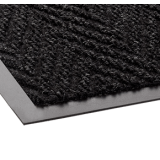 Chevron Matting$42.00Chevron Matting is an indoor entrance mat that catches grit and pulls moisture off shoes a few steps inside the door, before either reaches your floor. Its V-pattern surface works traffic coming from any direction, and a crush-resistant face keeps it doing that job for years instead of matting down
...
Chevron Matting is an indoor entrance mat that catches grit and pulls moisture off shoes a few steps inside the...
Chevron Matting is an indoor entrance mat that catches grit and pulls moisture off shoes a few steps inside the door, before either reaches your floor. Its V-pattern surface works traffic coming from any direction, and a crush-resistant face keeps it doing that job for years instead of matting down and looking tired after one busy season.
What Chevron Matting Does Before Dirt Reaches Your Floor
Most of the dirt and water in a building arrives on shoes. ISSA field data shows a building takes on up to 12 times more dirt during wet weather, and it takes six to eight steps to walk a sole dry. An interior mat in that landing zone is what decides whether grit and moisture get caught — or get ground into your floor.
Chevron does two jobs at once. The raised V-pattern scrapes coarser grit off the shoe, and the polypropylene face soaks up and holds moisture so it isn't tracked deeper inside. It leans toward moisture pickup more than heavy scraping, which is what an interior entrance needs once the worst of the outdoor debris is already off.
Why This Construction, and Why This One
The face is needle-punched polypropylene, about 18 ounces per square yard, made with 50% recycled content. The V-pattern isn't only decorative — it gives the mat multi-directional bite, so it works whether people cross it straight on or at an angle, which is how foot traffic actually moves through a doorway.
The surface is built to resist crushing. That matters more than it sounds: a matted-down mat stops standing up to clean shoes and starts showing every traffic lane, which is the usual reason an interior mat looks worn and gets pulled. A crush-resistant face holds its texture and hides foot-traffic patterns longer.
Underneath is a DINP-free PVC vinyl backing that grips the floor and protects it from the mat itself — no bleed-through, no staining the surface below. It's the kind of backing that lets the mat sit flat on a hard floor or low carpet without curling or sliding.
Where Chevron Belongs (and Where It Doesn't)
This is an interior, medium-traffic mat. It fits office building lobbies, small retail floors, banks, postal counters, motels, and similar spaces — places where people are already mostly indoors and you want the floor to stay clean and dry. It's also certified high-traction by the National Floor Safety Institute, which is the reassurance you want on the wet side of an entrance.
It is not an aggressive outdoor scraper for mud, snowmelt, or gravel, and it isn't a boot brush for a job-site door. Put it where the heaviest debris has already come off outside — as the interior mat in a two-mat system — not as the first line against a parking lot. Used that way it finishes the job; used outdoors against raw grit, it gives up its look fast.
Three Things to Check Before You Spec It
Three things decide whether Chevron is the right mat for your door.
First, where it sits in the system. Chevron is built for the interior landing, not the coarse outdoor scraper that takes the first hit. If you only have room for one mat against heavy outdoor debris, this isn't it; if you're finishing the job a few steps inside, it's built for exactly that.
Second, the size of the run. It comes in standard sizes from 2'×3' up to 6'×10', plus 60-foot rolls you can cut to a custom length. Size it for the six-to-eight steps it takes to dry a sole, not just the door opening — a mat that ends too soon lets damp shoes finish the job on your floor.
Third, the floor under it. The vinyl backing is made to protect the floor and stay put on hard surfaces and low carpet. On very high or plush carpet it won't sit as flat, so confirm the surface before you order, and order edged ends if the mat will sit out in the open rather than wall-to-wall.
Why Mats Inc.
Mats Inc. has specified commercial matting since 1964, so when you ask where a mat like this fits in your entrance, you're talking to people who lay out matting systems for a living rather than reading a spec sheet back to you. We help you match the mat to the traffic and the floor, size the run to the doorway, and tell you honestly when a different construction would hold up better. For the rest of the range, start with our commercial entrance mats.
Specifications Type Indoor entrance mat, medium traffic Surface Needle-punched polypropylene, chevron V-pattern Pile weight 18 oz/yd² Recycled content 50% recycled-content surface Thickness 5/16" Backing DINP-free PVC vinyl (4 lb vinyl strength, ASTM D624 die-T) Flammability Passes DOC-FF-1-70 Traction Certified high-traction by the National Floor Safety Institute (NFSI) Colors Steel Blue, Brown, Burgundy, Charcoal, Forest Green Standard sizes 2'×3', 3'×4', 3'×5', 3'×6', 3'×8', 3'×10', 4'×6', 4'×8', 4'×10', 6'×10' Roll sizes 3'×60', 4'×60', 6'×60' (cut to custom length) Customization Custom sizes available Warranty 1-year limited (Mats Inc.) Frequently Asked Questions
Does Chevron scrape dirt or absorb moisture?
Answered by Dustin Thompson, Owner & CEO
It does both, but it's stronger at moisture. The raised V-pattern knocks medium grit off the bottom of a shoe, and the polypropylene face soaks up and holds the moisture that's left so it isn't tracked deeper inside. That balance is exactly what an interior entrance needs: by the time someone is a few steps inside, the heavy outdoor debris is mostly gone, and what's left is damp shoes and fine dirt — which is what this surface is built to handle.
How long does it hold up, and what wears it out?
Answered by Dustin Thompson, Owner & CEO
In a medium-traffic interior spot, expect years of service. This V-pattern is a long-proven construction, not an unknown. The thing that ends an interior mat's life early is pile crush: once the surface mats down, it stops cleaning shoes and every traffic lane starts to show.
Chevron's surface is built to resist that crushing, so it holds its texture and hides foot-traffic patterns longer than a softer mat. What shortens its life is using it outdoors against raw grit, or sizing it too small so a few square feet take all the traffic.
Can I use it outside the front door?
Answered by Dustin Thompson, Owner & CEO
Better not. Chevron is an interior, medium-traffic mat — its job is the landing a few steps inside the door, after the worst outdoor debris is already off. Outdoors against mud, gravel, and snowmelt the surface loads up and mats down fast, and it isn't built to take constant weather. The right setup is a coarse scraper outside and Chevron just inside to finish the job; that two-mat approach keeps far more dirt and water off your floor than one mat trying to do everything.
What sizes can I get, and how do I pick one?
Answered by Jinna Hopson, Vice President of Marketing
Standard sizes run from 2'×3' up to 6'×10', and it also comes in 60-foot rolls that can be cut to a custom length for a long entry or a specific opening. If you don't see your size, a custom cut is available.
To pick one, measure the walking path, not just the door. Aim to cover the six-to-eight steps it takes to dry a sole, so size toward the larger end if the doorway is busy. If the mat will sit out in the open instead of running wall-to-wall, order edged ends so it lies clean.
What does it look like, and will it show dirt?
Answered by Jinna Hopson, Vice President of Marketing
It has a clean, decorative V-pattern rather than a plain ribbed look, so it reads as finished rather than industrial. There are five colors — Steel Blue, Brown, Burgundy, Charcoal, and Forest Green — and the darker tones like Charcoal and Burgundy are good at hiding fine dirt between cleanings. The crush-resistant surface helps here too: because it doesn't mat down into shiny lanes, it keeps looking even across the whole mat instead of showing where everyone walks.
Can I get a custom size or match it to our space?
Answered by Jinna Hopson, Vice President of Marketing
Yes on size — the rolls cut to custom lengths, so you can fit an odd opening or a long entry run. Color choice lets you tie it to an interior scheme: pick a tone that works with the floor and the lobby rather than fighting them. If you specifically want a logo or printed artwork at the door, that's a different construction — an image or logo mat — so let us know and we'll point you to the right one. Chevron itself is about clean, patterned coverage, not custom print.
By Dustin Thompson, Owner & CEO, Mats Inc.
↑
Chevron Matting is an indoor entrance mat that catches grit and pulls moisture off shoes a few steps inside the door, before either reaches your floor. Its V-pattern surface works traffic coming from any direction, and a crush-resistant face keeps it doing that job for years instead of matting down and looking tired after one busy season.
What Chevron Matting Does Before Dirt Reaches Your Floor
Most of the dirt and water in a building arrives on shoes. ISSA field data shows a building takes on up to 12 times more dirt during wet weather, and it takes six to eight steps to walk a sole dry. An interior mat in that landing zone is what decides whether grit and moisture get caught — or get ground into your floor.
Chevron does two jobs at once. The raised V-pattern scrapes coarser grit off the shoe, and the polypropylene face soaks up and holds moisture so it isn't tracked deeper inside. It leans toward moisture pickup more than heavy scraping, which is what an interior entrance needs once the worst of the outdoor debris is already off.
Why This Construction, and Why This One
The face is needle-punched polypropylene, about 18 ounces per square yard, made with 50% recycled content. The V-pattern isn't only decorative — it gives the mat multi-directional bite, so it works whether people cross it straight on or at an angle, which is how foot traffic actually moves through a doorway.
The surface is built to resist crushing. That matters more than it sounds: a matted-down mat stops standing up to clean shoes and starts showing every traffic lane, which is the usual reason an interior mat looks worn and gets pulled. A crush-resistant face holds its texture and hides foot-traffic patterns longer.
Underneath is a DINP-free PVC vinyl backing that grips the floor and protects it from the mat itself — no bleed-through, no staining the surface below. It's the kind of backing that lets the mat sit flat on a hard floor or low carpet without curling or sliding.
Where Chevron Belongs (and Where It Doesn't)
This is an interior, medium-traffic mat. It fits office building lobbies, small retail floors, banks, postal counters, motels, and similar spaces — places where people are already mostly indoors and you want the floor to stay clean and dry. It's also certified high-traction by the National Floor Safety Institute, which is the reassurance you want on the wet side of an entrance.
It is not an aggressive outdoor scraper for mud, snowmelt, or gravel, and it isn't a boot brush for a job-site door. Put it where the heaviest debris has already come off outside — as the interior mat in a two-mat system — not as the first line against a parking lot. Used that way it finishes the job; used outdoors against raw grit, it gives up its look fast.
Three Things to Check Before You Spec It
Three things decide whether Chevron is the right mat for your door.
First, where it sits in the system. Chevron is built for the interior landing, not the coarse outdoor scraper that takes the first hit. If you only have room for one mat against heavy outdoor debris, this isn't it; if you're finishing the job a few steps inside, it's built for exactly that.
Second, the size of the run. It comes in standard sizes from 2'×3' up to 6'×10', plus 60-foot rolls you can cut to a custom length. Size it for the six-to-eight steps it takes to dry a sole, not just the door opening — a mat that ends too soon lets damp shoes finish the job on your floor.
Third, the floor under it. The vinyl backing is made to protect the floor and stay put on hard surfaces and low carpet. On very high or plush carpet it won't sit as flat, so confirm the surface before you order, and order edged ends if the mat will sit out in the open rather than wall-to-wall.
Why Mats Inc.
Mats Inc. has specified commercial matting since 1964, so when you ask where a mat like this fits in your entrance, you're talking to people who lay out matting systems for a living rather than reading a spec sheet back to you. We help you match the mat to the traffic and the floor, size the run to the doorway, and tell you honestly when a different construction would hold up better. For the rest of the range, start with our commercial entrance mats.
Specifications Type Indoor entrance mat, medium traffic Surface Needle-punched polypropylene, chevron V-pattern Pile weight 18 oz/yd² Recycled content 50% recycled-content surface Thickness 5/16" Backing DINP-free PVC vinyl (4 lb vinyl strength, ASTM D624 die-T) Flammability Passes DOC-FF-1-70 Traction Certified high-traction by the National Floor Safety Institute (NFSI) Colors Steel Blue, Brown, Burgundy, Charcoal, Forest Green Standard sizes 2'×3', 3'×4', 3'×5', 3'×6', 3'×8', 3'×10', 4'×6', 4'×8', 4'×10', 6'×10' Roll sizes 3'×60', 4'×60', 6'×60' (cut to custom length) Customization Custom sizes available Warranty 1-year limited (Mats Inc.) Frequently Asked Questions
Does Chevron scrape dirt or absorb moisture?
Answered by Dustin Thompson, Owner & CEO
It does both, but it's stronger at moisture. The raised V-pattern knocks medium grit off the bottom of a shoe, and the polypropylene face soaks up and holds the moisture that's left so it isn't tracked deeper inside. That balance is exactly what an interior entrance needs: by the time someone is a few steps inside, the heavy outdoor debris is mostly gone, and what's left is damp shoes and fine dirt — which is what this surface is built to handle.
How long does it hold up, and what wears it out?
Answered by Dustin Thompson, Owner & CEO
In a medium-traffic interior spot, expect years of service. This V-pattern is a long-proven construction, not an unknown. The thing that ends an interior mat's life early is pile crush: once the surface mats down, it stops cleaning shoes and every traffic lane starts to show.
Chevron's surface is built to resist that crushing, so it holds its texture and hides foot-traffic patterns longer than a softer mat. What shortens its life is using it outdoors against raw grit, or sizing it too small so a few square feet take all the traffic.
Can I use it outside the front door?
Answered by Dustin Thompson, Owner & CEO
Better not. Chevron is an interior, medium-traffic mat — its job is the landing a few steps inside the door, after the worst outdoor debris is already off. Outdoors against mud, gravel, and snowmelt the surface loads up and mats down fast, and it isn't built to take constant weather. The right setup is a coarse scraper outside and Chevron just inside to finish the job; that two-mat approach keeps far more dirt and water off your floor than one mat trying to do everything.
What sizes can I get, and how do I pick one?
Answered by Jinna Hopson, Vice President of Marketing
Standard sizes run from 2'×3' up to 6'×10', and it also comes in 60-foot rolls that can be cut to a custom length for a long entry or a specific opening. If you don't see your size, a custom cut is available.
To pick one, measure the walking path, not just the door. Aim to cover the six-to-eight steps it takes to dry a sole, so size toward the larger end if the doorway is busy. If the mat will sit out in the open instead of running wall-to-wall, order edged ends so it lies clean.
What does it look like, and will it show dirt?
Answered by Jinna Hopson, Vice President of Marketing
It has a clean, decorative V-pattern rather than a plain ribbed look, so it reads as finished rather than industrial. There are five colors — Steel Blue, Brown, Burgundy, Charcoal, and Forest Green — and the darker tones like Charcoal and Burgundy are good at hiding fine dirt between cleanings. The crush-resistant surface helps here too: because it doesn't mat down into shiny lanes, it keeps looking even across the whole mat instead of showing where everyone walks.
Can I get a custom size or match it to our space?
Answered by Jinna Hopson, Vice President of Marketing
Yes on size — the rolls cut to custom lengths, so you can fit an odd opening or a long entry run. Color choice lets you tie it to an interior scheme: pick a tone that works with the floor and the lobby rather than fighting them. If you specifically want a logo or printed artwork at the door, that's a different construction — an image or logo mat — so let us know and we'll point you to the right one. Chevron itself is about clean, patterned coverage, not custom print.
By Dustin Thompson, Owner & CEO, Mats Inc.
↑
View Details
View Details
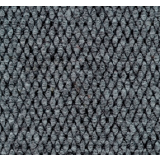 Berber Carpet Tile$205.00Berber Carpet Tile is a dense, needlepunched tile built for the areas most carpet gives up on — entryways, wet zones and floors that carry traffic all day. It is a 54 ounce all-weather construction in solution-dyed polypropylene, and it comes in 21 colors, so a tile chosen for how
...
Berber Carpet Tile is a dense, needlepunched tile built for the areas most carpet gives up on — entryways, wet...
Berber Carpet Tile is a dense, needlepunched tile built for the areas most carpet gives up on — entryways, wet zones and floors that carry traffic all day. It is a 54 ounce all-weather construction in solution-dyed polypropylene, and it comes in 21 colors, so a tile chosen for how it performs does not have to look like a utility product.
It is also unusually flexible about where it goes. The same tile works at a college entrance, down an office corridor and across a retail floor, which is rarer than it sounds in a category where most products are built for one job.
What a Wet-Area Tile Does Before the Damp Zone Behind Your Door Gives Out
Most buildings plan for moisture at exactly one point: the door. An entrance mat goes down, and everything past it gets treated as dry floor. On a rainy Tuesday that assumption falls apart within about twenty feet.
Water travels further than people expect. Umbrellas drip, coats drip, and shoes stay damp well past whatever walk-off surface they crossed. The zone just beyond the entrance stays wet for hours in bad weather, and it is usually specified as though it never gets damp at all.
Carpet that stays damp does not simply dry and carry on. Persistent moisture keeps the surface matted, holds soil in place rather than letting it release, and works its way into the structure where it eventually causes odor and adhesion problems.
Specifying an all-weather tile through that transitional zone closes the gap. You get a surface that handles being wet as a normal condition rather than an emergency, and the dry interior floor beyond it stops absorbing damage it was never built for.
Why a Needlepunched Berber Construction, and Why This One
This is not a tufted carpet. The fibers are mechanically entangled into a dense non-woven fabric rather than stitched into a backing as loops, and the berber look comes from a hobnail surface pattern pressed into that fabric. It is closer in construction to a commercial entrance textile than to an office carpet.
That distinction is the whole reason it survives a wet doorway. There is no tufted yarn to be pulled, so nothing can snag and run. A caster wheel, a dragged table leg or a dolly crossing the floor meets a continuous fabric rather than individual loops sitting proud of a backing.
The fiber does the moisture work. It is 100 percent solution-dyed polypropylene, which absorbs almost no water — moisture sits at the surface and releases rather than wicking into the structure. Solution dyeing puts the color into the fiber itself, and the fiber is UV stabilized, so a floor in direct sun through entrance glazing holds its color instead of fading along the bright edge.
The weights are what separate this from a general-purpose tile. Pile weight is 54 ounces per square yard against a 169 ounce total, at a 0.25 inch pile within a 0.47 inch total height. That is a low, extremely dense surface rather than a tall soft one, which is exactly what you want where wet shoes land and where wheels cross.
Color is where it stops behaving like a durability product. Twenty-one colors are stocked, spanning warm neutrals like coir, natural beige, taupe and sterling, deeper tones in chocolate, walnut, teak and black shadow, and genuine saturated options — cardinal red, garnet, azure, midnight blue, verde and hunter green, loden, rosewood and autumn.
Where It Belongs, and Where It Is Not the Right Tile
Put it in the transitional zones first. The stretch of floor between an entrance mat and the dry interior, vestibule floors, corridors that lead in from exterior doors, and any area where wet weather regularly reaches the carpet. That is where the specification pays for itself.
Beyond that it is genuinely versatile. Office environments, airports, conference rooms, lobbies, libraries, retail and department stores, resorts, restaurant entryways and spas all use it as a general-purpose floor, not only in the wet spots. The same material is also the most widely used logo mat substrate in the range, which is why an entrance mat and the floor behind it can match exactly.
What it does not do is scrape. Pulling grit off a shoe and holding standing water in a recessed border are jobs for a rubber scraper grid or a drainage system, and no textile does them. Think of this as the resilient floor working immediately behind that hardware, which is how the full range of carpet tiles is organized.
Two constraints are worth settling early. It is an indoor product rated for zones two and three, not the exposed threshold itself. And it is not recommended over in-floor heating, because the insulation value of the tile works against the system underneath.
Three Things to Check Before You Spec It
First, trace where wet weather actually reaches. Walk the building on a rainy day rather than estimating from a plan. The damp zone is almost always larger than people assume, and knowing its real extent tells you how far this tile should run before a standard interior tile takes over.
Second, check your transitions and confirm the flame rating against your specification. At 0.47 inches total height this sits taller than most interior tile, so any threshold where it meets a thinner floor needs a transition planned rather than improvised. The radiant panel rating is Class II, so if your project calls for Class I in corridors or exit paths, confirm that before you commit.
Third, plan the layout and the quantities together. Tiles run 19.69 inches square and ship 12 to a box covering 32.5 square feet. Alternate tiles are turned 90 degrees to a checker pattern with an arrow on the back marking pile direction, so order five to ten percent above coverage in the same run, store it flat and dry, and lay only tiles carrying the same batch number.
Why Mats Inc.
Moisture is the failure nobody specifies for, because the floor looks fine the day it goes in and the problem only shows up in bad weather eight months later. We have been putting floors into commercial buildings since 1964, and on this product the question we ask is where your doors are and how far the wet gets past them. Tell us that and the boundary between this tile and your interior floor draws itself.
Tile size 19.69 in. x 19.69 in. (±2%) Tiles per box 12 Coverage per box 32.5 sq. ft. Total height 0.47 in. (±7.5%) Pile height 0.25 in. (±0.5 mm) Colorways 21: Cardinal Red, Garnet, Coir/Natural, Natural Beige, Loden, Taupe, Azure, Steel Blue, Midnight Blue, Prism, Verde Green, Hunter Green, Zinc, Autumn, Rosewood, Chocolate, Walnut, Teak, Sterling, Black Shadow, Gris/Charcoal Manufacturing process Non-woven, needlepunched Surface aspect Hobnail (berber) pattern Fiber 100% solution-dyed, UV-stabilized polypropylene Backing Premium eco bitumen Pile weight 54 oz/sy (±7.5%) Total weight 169 oz/sy (±7.5%) Application Indoor only; zones 2–3 Indoor air quality CRI Green Label Plus certified Dimensional stability Pass (EN 986) Sound insulation ≥24 dB (ISO 10140-1:2010) Thermal retention 0.13 m·K/W, pass (ISO 11092) Electrostatic propensity >2 kV (EN 1815) Electrical resistivity Pass at RH ≥40% (IBM / ICL) Radiant panel Class II (ASTM E648) Smoke density Pass (ASTM E662) Surface flammability Pass (FF 1-70 / ASTM D2859) Color fastness Light 5; water 5; shampoo 5; rubbing 4 dry, 3–4 wet (ISO 105) LEED-NC MR Credit 4; IEQ Credits 4.1, 4.3, 5 Warranty 1-year limited (Mats Inc.); professional installation required for coverage Frequently Asked Questions
What makes Berber different from other commercial carpet tiles?
Answered by Dustin Thompson, Owner & CEO
It is made a different way. Most commercial tile is tufted, with yarn stitched through a backing and left as loops or sheared into a cut pile. This one is needlepunched — the fibers are mechanically entangled into a single dense fabric, and the berber look comes from a hobnail pattern pressed into that surface rather than from individual loops.
The practical difference shows up under abuse. There is no tufted yarn to catch, so nothing can be pulled or run, which matters where dollies, casters and dragged furniture cross the floor daily. At 54 ounces of pile weight it is also a considerably denser build than a general-purpose office tile, and the textured surface scatters light so footprints and tracked soil break up across the pattern.
How does it handle areas that get wet?
Answered by Dustin Thompson, Owner & CEO
The fiber is the answer. It is 100 percent polypropylene, which absorbs almost no water, so moisture stays at the surface and releases rather than wicking down into the structure and sitting there. That is what the all-weather description refers to, and it is the reason this holds up in a vestibule that gets soaked every time it rains.
It is worth being clear about the limits. This is a moisture-tolerant floor covering, not a drainage product and not an outdoor surface — it is rated for indoor use. Standing water or a permanently saturated area needs a drainage construction with somewhere for the water to actually go.
How long does it last, and how much should we order?
Answered by Dustin Thompson, Owner & CEO
Commercial carpet tile plans out at ten to fifteen years in light-use rooms and seven to ten across busier floors, with entrance-adjacent zones turning over faster than anything else in a building. A 54 ounce needlepunched construction is one of the better builds for reaching the top of whichever band applies.
Boxes hold 12 tiles and cover 32.5 square feet, so take your area, add for perimeter cuts, then add five to ten percent as attic stock ordered in the same run and stored flat and dry. In a wet zone that reserve matters more than usual, since those tiles are the most likely to need replacing individually. Berber Carpet Tile carries a 1-year limited warranty from Mats Inc., and warranty coverage on this line depends on professional installation.
What colors are available?
Answered by Jinna Hopson, Vice President of Marketing
Twenty-one, which is a remarkable range for a tile chosen mainly on performance. The neutrals run from coir and natural beige through taupe, sterling, zinc and gris to black shadow. The warm tones cover chocolate, walnut, teak, rosewood and autumn. And there are real colors in here too — cardinal red, garnet, azure, steel blue, midnight blue, loden, verde and hunter green.
My advice is to view samples in the actual light of the space and, if it is going into a damp zone, to look at one wet as well as dry. Carpet darkens noticeably when damp, and a mid-tone absorbs that shift far more gracefully than a pale color does. Because the same material is the standard logo mat substrate, an entrance mat can be matched to the floor exactly rather than approximately.
Can we use it across a whole building or only in the wet areas?
Answered by Jinna Hopson, Vice President of Marketing
Across the whole building, and plenty of people do exactly that. Its flexibility is the selling point — the same tile works at a college entry, down an administrative corridor and out across an open office, so you are not managing three products and three color decisions on one project.
Whether you should depends on how much of the floor genuinely needs it. A firm, dense surface is the right call where traffic and weather reach, and a quieter zone may be better served by a softer interior tile. One thing to confirm first: the radiant panel rating here is Class II, so if your corridors or exit paths are specified for Class I, that will shape where this can run.
Does it work in a home?
Answered by Jinna Hopson, Vice President of Marketing
It suits the rooms in a house that behave most like commercial spaces. A mudroom, a back entry, a basement stair landing, a laundry room — all places where wet shoes and heavy use arrive together, and where residential carpet tends to look tired quickly. The fact that nothing can snag makes it a reasonable choice around pets, too.
The thing to weigh is comfort. This is a firm, low, dense surface rather than a plush one, and at 0.47 inches total height it sits taller than most residential flooring, so any doorway where it meets an existing floor will need a transition. A bedroom wanting softness underfoot points toward a cushion-backed tile instead.
By Dustin Thompson, Owner & CEO, Mats Inc.
↑
Berber Carpet Tile is a dense, needlepunched tile built for the areas most carpet gives up on — entryways, wet zones and floors that carry traffic all day. It is a 54 ounce all-weather construction in solution-dyed polypropylene, and it comes in 21 colors, so a tile chosen for how it performs does not have to look like a utility product.
It is also unusually flexible about where it goes. The same tile works at a college entrance, down an office corridor and across a retail floor, which is rarer than it sounds in a category where most products are built for one job.
What a Wet-Area Tile Does Before the Damp Zone Behind Your Door Gives Out
Most buildings plan for moisture at exactly one point: the door. An entrance mat goes down, and everything past it gets treated as dry floor. On a rainy Tuesday that assumption falls apart within about twenty feet.
Water travels further than people expect. Umbrellas drip, coats drip, and shoes stay damp well past whatever walk-off surface they crossed. The zone just beyond the entrance stays wet for hours in bad weather, and it is usually specified as though it never gets damp at all.
Carpet that stays damp does not simply dry and carry on. Persistent moisture keeps the surface matted, holds soil in place rather than letting it release, and works its way into the structure where it eventually causes odor and adhesion problems.
Specifying an all-weather tile through that transitional zone closes the gap. You get a surface that handles being wet as a normal condition rather than an emergency, and the dry interior floor beyond it stops absorbing damage it was never built for.
Why a Needlepunched Berber Construction, and Why This One
This is not a tufted carpet. The fibers are mechanically entangled into a dense non-woven fabric rather than stitched into a backing as loops, and the berber look comes from a hobnail surface pattern pressed into that fabric. It is closer in construction to a commercial entrance textile than to an office carpet.
That distinction is the whole reason it survives a wet doorway. There is no tufted yarn to be pulled, so nothing can snag and run. A caster wheel, a dragged table leg or a dolly crossing the floor meets a continuous fabric rather than individual loops sitting proud of a backing.
The fiber does the moisture work. It is 100 percent solution-dyed polypropylene, which absorbs almost no water — moisture sits at the surface and releases rather than wicking into the structure. Solution dyeing puts the color into the fiber itself, and the fiber is UV stabilized, so a floor in direct sun through entrance glazing holds its color instead of fading along the bright edge.
The weights are what separate this from a general-purpose tile. Pile weight is 54 ounces per square yard against a 169 ounce total, at a 0.25 inch pile within a 0.47 inch total height. That is a low, extremely dense surface rather than a tall soft one, which is exactly what you want where wet shoes land and where wheels cross.
Color is where it stops behaving like a durability product. Twenty-one colors are stocked, spanning warm neutrals like coir, natural beige, taupe and sterling, deeper tones in chocolate, walnut, teak and black shadow, and genuine saturated options — cardinal red, garnet, azure, midnight blue, verde and hunter green, loden, rosewood and autumn.
Where It Belongs, and Where It Is Not the Right Tile
Put it in the transitional zones first. The stretch of floor between an entrance mat and the dry interior, vestibule floors, corridors that lead in from exterior doors, and any area where wet weather regularly reaches the carpet. That is where the specification pays for itself.
Beyond that it is genuinely versatile. Office environments, airports, conference rooms, lobbies, libraries, retail and department stores, resorts, restaurant entryways and spas all use it as a general-purpose floor, not only in the wet spots. The same material is also the most widely used logo mat substrate in the range, which is why an entrance mat and the floor behind it can match exactly.
What it does not do is scrape. Pulling grit off a shoe and holding standing water in a recessed border are jobs for a rubber scraper grid or a drainage system, and no textile does them. Think of this as the resilient floor working immediately behind that hardware, which is how the full range of carpet tiles is organized.
Two constraints are worth settling early. It is an indoor product rated for zones two and three, not the exposed threshold itself. And it is not recommended over in-floor heating, because the insulation value of the tile works against the system underneath.
Three Things to Check Before You Spec It
First, trace where wet weather actually reaches. Walk the building on a rainy day rather than estimating from a plan. The damp zone is almost always larger than people assume, and knowing its real extent tells you how far this tile should run before a standard interior tile takes over.
Second, check your transitions and confirm the flame rating against your specification. At 0.47 inches total height this sits taller than most interior tile, so any threshold where it meets a thinner floor needs a transition planned rather than improvised. The radiant panel rating is Class II, so if your project calls for Class I in corridors or exit paths, confirm that before you commit.
Third, plan the layout and the quantities together. Tiles run 19.69 inches square and ship 12 to a box covering 32.5 square feet. Alternate tiles are turned 90 degrees to a checker pattern with an arrow on the back marking pile direction, so order five to ten percent above coverage in the same run, store it flat and dry, and lay only tiles carrying the same batch number.
Why Mats Inc.
Moisture is the failure nobody specifies for, because the floor looks fine the day it goes in and the problem only shows up in bad weather eight months later. We have been putting floors into commercial buildings since 1964, and on this product the question we ask is where your doors are and how far the wet gets past them. Tell us that and the boundary between this tile and your interior floor draws itself.
Tile size 19.69 in. x 19.69 in. (±2%) Tiles per box 12 Coverage per box 32.5 sq. ft. Total height 0.47 in. (±7.5%) Pile height 0.25 in. (±0.5 mm) Colorways 21: Cardinal Red, Garnet, Coir/Natural, Natural Beige, Loden, Taupe, Azure, Steel Blue, Midnight Blue, Prism, Verde Green, Hunter Green, Zinc, Autumn, Rosewood, Chocolate, Walnut, Teak, Sterling, Black Shadow, Gris/Charcoal Manufacturing process Non-woven, needlepunched Surface aspect Hobnail (berber) pattern Fiber 100% solution-dyed, UV-stabilized polypropylene Backing Premium eco bitumen Pile weight 54 oz/sy (±7.5%) Total weight 169 oz/sy (±7.5%) Application Indoor only; zones 2–3 Indoor air quality CRI Green Label Plus certified Dimensional stability Pass (EN 986) Sound insulation ≥24 dB (ISO 10140-1:2010) Thermal retention 0.13 m·K/W, pass (ISO 11092) Electrostatic propensity >2 kV (EN 1815) Electrical resistivity Pass at RH ≥40% (IBM / ICL) Radiant panel Class II (ASTM E648) Smoke density Pass (ASTM E662) Surface flammability Pass (FF 1-70 / ASTM D2859) Color fastness Light 5; water 5; shampoo 5; rubbing 4 dry, 3–4 wet (ISO 105) LEED-NC MR Credit 4; IEQ Credits 4.1, 4.3, 5 Warranty 1-year limited (Mats Inc.); professional installation required for coverage Frequently Asked Questions
What makes Berber different from other commercial carpet tiles?
Answered by Dustin Thompson, Owner & CEO
It is made a different way. Most commercial tile is tufted, with yarn stitched through a backing and left as loops or sheared into a cut pile. This one is needlepunched — the fibers are mechanically entangled into a single dense fabric, and the berber look comes from a hobnail pattern pressed into that surface rather than from individual loops.
The practical difference shows up under abuse. There is no tufted yarn to catch, so nothing can be pulled or run, which matters where dollies, casters and dragged furniture cross the floor daily. At 54 ounces of pile weight it is also a considerably denser build than a general-purpose office tile, and the textured surface scatters light so footprints and tracked soil break up across the pattern.
How does it handle areas that get wet?
Answered by Dustin Thompson, Owner & CEO
The fiber is the answer. It is 100 percent polypropylene, which absorbs almost no water, so moisture stays at the surface and releases rather than wicking down into the structure and sitting there. That is what the all-weather description refers to, and it is the reason this holds up in a vestibule that gets soaked every time it rains.
It is worth being clear about the limits. This is a moisture-tolerant floor covering, not a drainage product and not an outdoor surface — it is rated for indoor use. Standing water or a permanently saturated area needs a drainage construction with somewhere for the water to actually go.
How long does it last, and how much should we order?
Answered by Dustin Thompson, Owner & CEO
Commercial carpet tile plans out at ten to fifteen years in light-use rooms and seven to ten across busier floors, with entrance-adjacent zones turning over faster than anything else in a building. A 54 ounce needlepunched construction is one of the better builds for reaching the top of whichever band applies.
Boxes hold 12 tiles and cover 32.5 square feet, so take your area, add for perimeter cuts, then add five to ten percent as attic stock ordered in the same run and stored flat and dry. In a wet zone that reserve matters more than usual, since those tiles are the most likely to need replacing individually. Berber Carpet Tile carries a 1-year limited warranty from Mats Inc., and warranty coverage on this line depends on professional installation.
What colors are available?
Answered by Jinna Hopson, Vice President of Marketing
Twenty-one, which is a remarkable range for a tile chosen mainly on performance. The neutrals run from coir and natural beige through taupe, sterling, zinc and gris to black shadow. The warm tones cover chocolate, walnut, teak, rosewood and autumn. And there are real colors in here too — cardinal red, garnet, azure, steel blue, midnight blue, loden, verde and hunter green.
My advice is to view samples in the actual light of the space and, if it is going into a damp zone, to look at one wet as well as dry. Carpet darkens noticeably when damp, and a mid-tone absorbs that shift far more gracefully than a pale color does. Because the same material is the standard logo mat substrate, an entrance mat can be matched to the floor exactly rather than approximately.
Can we use it across a whole building or only in the wet areas?
Answered by Jinna Hopson, Vice President of Marketing
Across the whole building, and plenty of people do exactly that. Its flexibility is the selling point — the same tile works at a college entry, down an administrative corridor and out across an open office, so you are not managing three products and three color decisions on one project.
Whether you should depends on how much of the floor genuinely needs it. A firm, dense surface is the right call where traffic and weather reach, and a quieter zone may be better served by a softer interior tile. One thing to confirm first: the radiant panel rating here is Class II, so if your corridors or exit paths are specified for Class I, that will shape where this can run.
Does it work in a home?
Answered by Jinna Hopson, Vice President of Marketing
It suits the rooms in a house that behave most like commercial spaces. A mudroom, a back entry, a basement stair landing, a laundry room — all places where wet shoes and heavy use arrive together, and where residential carpet tends to look tired quickly. The fact that nothing can snag makes it a reasonable choice around pets, too.
The thing to weigh is comfort. This is a firm, low, dense surface rather than a plush one, and at 0.47 inches total height it sits taller than most residential flooring, so any doorway where it meets an existing floor will need a transition. A bedroom wanting softness underfoot points toward a cushion-backed tile instead.
By Dustin Thompson, Owner & CEO, Mats Inc.
↑
View Details
View Details
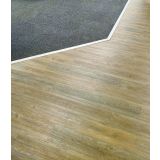 6" x 36" Natures View Luxury Vinyl Plank$223.00This 6" x 36" luxury vinyl plank has a rustic wood look and one of the thickest top layers we carry, at 40 mil. It was made for rooms that take a beating — heavy foot traffic, rolling carts, dropped equipment. It handles 2,000 psi of pressure without denting. What
...
This 6" x 36" luxury vinyl plank has a rustic wood look and one of the thickest top layers we...
This 6" x 36" luxury vinyl plank has a rustic wood look and one of the thickest top layers we carry, at 40 mil. It was made for rooms that take a beating — heavy foot traffic, rolling carts, dropped equipment. It handles 2,000 psi of pressure without denting.
What a 40 Mil Wear Layer Does Before Your Floor Takes the Room Out of Service
Wood floors don't fail dramatically. They accumulate. A dropped tray dents one board, a rolling cart scars a lane, a spill sits too long near a doorway. None of it is urgent alone, and none of it can be fixed alone either.
That's the real cost of hardwood in a commercial space. Repair means refinishing, refinishing means sanding and sealing across a whole area, and the room is unusable for days. A retail floor, a hotel lobby, a clinic corridor — none can go dark while a crew works.
Vinyl plank flooring changes that arithmetic twice over. Damage stays local to the plank it happened to, and replacement is genuinely simple: warm the plank with a hair dryer to soften the adhesive, lift it with a putty knife, prep the spot, set a new one. The room is back in use the same day.
The wear layer is what keeps damage rare in the first place. It's the clear film over the printed surface, measured in mils, and at 40 mil this sits above the 28 mil tier most specifications treat as heavy commercial. Abrasion resistance tests at under 0.15 grams per 1,000 cycles, and static load holds to 2,000 psi.
What actually consumes a wear layer is grit. Sand and street soil ride in on shoes and grind at the surface underfoot, and guidance from ISSA holds that soil keeps transferring off shoes for the first six to eight footsteps past a door. Entrance matting ahead of a vinyl floor extends its life by more than most people expect.
Why 40 Mil, a Rustic Visual, and a 1x Coating
Overall thickness is 3.175 mm — an eighth of an inch — with 1.0 mm of that being wear layer. That ratio matters more than the total. Two planks of identical thickness can carry very different wear layers, and the wear layer is the part standing between traffic and the printed visual underneath.
The surface carries a protective coating the manufacturer measures at a 26.6% improvement over most leading coatings on the market. That's a scratch-resistance claim rather than a wear-layer claim, and the two work on different problems — the coating handles the daily scuffs, the wear layer handles the years.
The rustic character does something practical alongside the aesthetic. Grain movement, knots, and tonal variation break up the surface visually, so scuffs and everyday marks have nothing uniform to contrast against. A smooth pale floor announces every scratch; a rustic one absorbs them. It's a Type B embossed surface, so the texture is physical rather than printed.
The test results back the commercial positioning. Flammability passes ASTM E648 Radiant Panel at Class 1, smoke density passes ASTM E662 under 450, and slip resistance measures 0.61 to ASTM D2047 — exceeding ADA standards. Indentation resistance passes under 8%, stain and chemical resistance rates excellent, and it exceeds HUD and FHA requirements.
One spec worth noting for anyone doing acoustic work: sound insulation measures 4 dB to DIN 52210. That's modest, and in spaces where noise transmission matters you'll want an underlayment conversation rather than relying on the plank.
Where It Belongs, and Where It Doesn't
The manufacturer's suggested uses run wide: beauty salons, conference rooms, corporate lunchrooms, general office, hospitals, libraries, pharmacies, retail and department stores, resorts, restaurants, spas, and supermarkets. The common thread is steady traffic on a floor that still has to look considered.
Within a building it belongs in circulation and occupied space — corridors, open offices, sales floors, waiting areas, and guest rooms. It also goes where wood couldn't, since vinyl doesn't swell or cup with moisture. It sits with the rest of our vinyl flooring, which spans the other plank formats and tile.
It's rated indoor only, and that's a hard limit rather than a preference. No covered patios, no sunrooms with direct exposure, no anywhere temperature swings.
It's also not an entrance surface. Vinyl plank is not matting, and making it the first thing a wet, gritty shoe touches means it absorbs the full abrasive load daily. Put a proper scraper and wiper system at the door and let the plank start behind it.
And it isn't a stair tread. Stairs need a purpose-built tread with a proper nosing for edge definition and grip, and running plank up a staircase is a different product decision with real safety implications. We carry treads separately for that reason.
Three Things to Check Before You Spec It
First, plan for professional glue-down installation. This is a wet-set adhesive product requiring a 1/16 inch square-notch trowel and a 100 pound three-section roller, with the floor re-rolled after an hour or two. Material and adhesive both need conditioning at 65°F minimum for 24 hours before and after. It also must be professionally installed to validate the manufacturer's warranty.
Second, test the subfloor for moisture before anything else. The instructions are explicit that adhesive must not be used where moisture is present in concrete or wood subfloors, because moisture can retard or prevent the adhesive setting entirely. On concrete, a latex primer both aids adhesion and helps block moisture between plank and slab. Test first — this is the most common reason a good floor fails early.
Third, expect real variation and see it at scale. The manufacturer states plainly that significant color and design variation is normal and part of the design. That's the point of a rustic visual, but a small swatch can't show how much movement appears across a full floor. Ask us for large samples and lay several out in the actual room, in the actual light.
Why Mats Inc.
We've been specifying commercial flooring since 1964, and vinyl is where a sample box does buyers the most damage. A chip shows the color and hides everything that decides whether the floor survives — the wear layer, the static load rating, whether it was built for a supermarket or a spare bedroom. This one publishes all of it, which is why we carry it. Tell us what happens in your space and we'll confirm the numbers match before you order.
Product Type Luxury vinyl plank (LVP), glue down Plank Size 6 in. x 36 in. Wear Layer 40 mil (1.0 mm) Overall Thickness 0.125 in. (3.175 mm) Manufacturing Standard Class III printed film vinyl plank, coated, Type B embossed surface Visual Rustic wood grain — Weathered Barn Packing 26 planks per carton / 39 sq. ft. / 38.82 lb. Slip Resistance ASTM D2047 — 0.61, exceeds ADA standards Static Load ASTM F970 modified — 2,000 psi Abrasion Resistance EN 660 — excellent, less than 0.15 g per 1,000 cycles Indentation Resistance F 1914 — pass, less than 8% Stain & Chemical Resistance ASTM 925 — excellent Flammability ASTM E648 Radiant Panel — Class 1 Smoke Density ASTM E662 — pass, less than 450 sdi Sound Insulation DIN 52210 — 4 dB Other Standards FloorScore certified; stability EN 986 pass; light resistance F 1515 pass; heat stability ASTM 1514 pass; exceeds HUD/FHA requirements Use Rating Zone 3, indoor only Installation Glue down, wet set; professional installation required Warranty 1-year limited (Mats Inc.) Frequently Asked Questions
What does a 40 mil wear layer actually mean?
The wear layer is the clear protective film over the printed surface, and it's measured in mils — thousandths of an inch. At 40 mil, or 1.0 mm, this sits at the top of the commercial range. Light residential product often runs 6 to 12 mil, and 20 to 28 mil is common for commercial work, so this is above the tier most specifications treat as heavy duty.
What that buys you is time before the printed visual underneath starts showing through. The abrasion testing supports it — under 0.15 grams lost per 1,000 cycles, rated excellent to EN 660. Worth understanding that wear layer is separate from overall thickness. Total thickness here is 0.125 inch, but a plank of the same thickness with a 12 mil wear layer is a fundamentally different product. Always compare the wear layer, not the total. — Dustin Thompson, Owner & CEO, Mats Inc.
Will it handle heavy equipment, carts, and point loads?
Static load tests at 2,000 psi under ASTM F970 modified, which covers the concentrated loads that come from shelving legs, equipment feet, and furniture in commercial use. Indentation resistance passes under 8% to F 1914, meaning it recovers rather than holding a permanent dimple.
Two practical notes from the maintenance guidance. Vacuum wheels can cause indenting and scuffing, so check them for embedded grit — a wheel with a stone in it will mark a floor faster than foot traffic. And when vacuuming, turn the beater bar off and use a hose or upholstery attachment instead. Small habits, but they're the difference between a floor that ages well and one that looks worn early. — Dustin Thompson, Owner & CEO, Mats Inc.
How does it install, and can I do it myself?
It's a glue-down wet-set product, and the manufacturer requires professional installation to validate the warranty — so this isn't a self-install job. The method is specific: 1/16 inch square-notch trowel, adhesive spread in small sections so it doesn't skin over, each section rolled immediately with a 100 pound three-section roller, then the whole floor re-rolled after an hour or two.
Conditioning matters too. Planks and adhesive both need to sit at 65°F minimum for 24 hours before installation and 24 hours after. Don't wash or treat the floor for at least 48 hours. And the subfloor has to be structurally sound, clean, smooth, and dry — adhesive must not be used where moisture is present in concrete or wood, since moisture can prevent it setting. Over concrete, a latex primer aids adhesion and helps block moisture. Test the slab before you schedule anyone. — Dustin Thompson, Owner & CEO, Mats Inc.
How much do I need, and what does a carton cover?
Each carton holds 26 planks covering 39 square feet and weighs 38.82 pounds, which makes the math straightforward and the cartons easy to move around a site.
Measure each room's length and width in feet, multiply for square footage, add your rooms together, then add roughly ten percent for cuts around door frames, columns, and irregular walls, plus attic stock for later replacements. Push that closer to fifteen percent if the space has a lot of angles, built-ins, or a diagonal layout, since all three generate more offcuts. Divide the total by 39 and round up for cartons — or send us the room dimensions and we'll run it with you. — Jinna Hopson, Vice President of Marketing, Mats Inc.
What does the rustic visual look like across a whole floor?
It's a weathered barn wood character — grain movement, knots, tonal shifts, the marks a real reclaimed board carries. The surface is Type B embossed, meaning the texture is physically pressed into the plank rather than printed, so it reads as wood underfoot as well as to the eye.
The manufacturer is direct that significant color and design variation is normal and enhances the look, and that's worth taking seriously in both directions. It's what makes the floor convincing rather than a repeating print, and it means a small swatch genuinely can't represent the finished result. There's a maintenance dividend as well: all that variation gives scuffs and everyday marks nothing uniform to sit against, so the floor stays presentable between cleanings. Ask us for large samples and see them in your own light. — Jinna Hopson, Vice President of Marketing, Mats Inc.
Does it work in a modern or branded space, and what about air quality?
Rustic wood usually works better in a contemporary space than a clean visual does. Warmth and texture are what stop a room full of glass, metal, and painted drywall from feeling clinical, which is exactly why modern interiors reach for natural texture so often. As a warm neutral base it sits underneath signage, fixtures, and your palette rather than competing with them.
On air quality, it's FloorScore certified — the standard for indoor air quality emissions in hard surface flooring, and one that matters for occupied spaces like hospitals, libraries, and offices, as well as for green building credits. If you're working to a brand standard or chasing certification points, send us the requirements and we'll tell you how this fits. A custom logo mat at the entrance gives you a deliberate brand moment with the plank running the space behind it. — Jinna Hopson, Vice President of Marketing, Mats Inc.
Written by Dustin Thompson, Owner & CEO, Mats Inc.
↑
This 6" x 36" luxury vinyl plank has a rustic wood look and one of the thickest top layers we carry, at 40 mil. It was made for rooms that take a beating — heavy foot traffic, rolling carts, dropped equipment. It handles 2,000 psi of pressure without denting.
What a 40 Mil Wear Layer Does Before Your Floor Takes the Room Out of Service
Wood floors don't fail dramatically. They accumulate. A dropped tray dents one board, a rolling cart scars a lane, a spill sits too long near a doorway. None of it is urgent alone, and none of it can be fixed alone either.
That's the real cost of hardwood in a commercial space. Repair means refinishing, refinishing means sanding and sealing across a whole area, and the room is unusable for days. A retail floor, a hotel lobby, a clinic corridor — none can go dark while a crew works.
Vinyl plank flooring changes that arithmetic twice over. Damage stays local to the plank it happened to, and replacement is genuinely simple: warm the plank with a hair dryer to soften the adhesive, lift it with a putty knife, prep the spot, set a new one. The room is back in use the same day.
The wear layer is what keeps damage rare in the first place. It's the clear film over the printed surface, measured in mils, and at 40 mil this sits above the 28 mil tier most specifications treat as heavy commercial. Abrasion resistance tests at under 0.15 grams per 1,000 cycles, and static load holds to 2,000 psi.
What actually consumes a wear layer is grit. Sand and street soil ride in on shoes and grind at the surface underfoot, and guidance from ISSA holds that soil keeps transferring off shoes for the first six to eight footsteps past a door. Entrance matting ahead of a vinyl floor extends its life by more than most people expect.
Why 40 Mil, a Rustic Visual, and a 1x Coating
Overall thickness is 3.175 mm — an eighth of an inch — with 1.0 mm of that being wear layer. That ratio matters more than the total. Two planks of identical thickness can carry very different wear layers, and the wear layer is the part standing between traffic and the printed visual underneath.
The surface carries a protective coating the manufacturer measures at a 26.6% improvement over most leading coatings on the market. That's a scratch-resistance claim rather than a wear-layer claim, and the two work on different problems — the coating handles the daily scuffs, the wear layer handles the years.
The rustic character does something practical alongside the aesthetic. Grain movement, knots, and tonal variation break up the surface visually, so scuffs and everyday marks have nothing uniform to contrast against. A smooth pale floor announces every scratch; a rustic one absorbs them. It's a Type B embossed surface, so the texture is physical rather than printed.
The test results back the commercial positioning. Flammability passes ASTM E648 Radiant Panel at Class 1, smoke density passes ASTM E662 under 450, and slip resistance measures 0.61 to ASTM D2047 — exceeding ADA standards. Indentation resistance passes under 8%, stain and chemical resistance rates excellent, and it exceeds HUD and FHA requirements.
One spec worth noting for anyone doing acoustic work: sound insulation measures 4 dB to DIN 52210. That's modest, and in spaces where noise transmission matters you'll want an underlayment conversation rather than relying on the plank.
Where It Belongs, and Where It Doesn't
The manufacturer's suggested uses run wide: beauty salons, conference rooms, corporate lunchrooms, general office, hospitals, libraries, pharmacies, retail and department stores, resorts, restaurants, spas, and supermarkets. The common thread is steady traffic on a floor that still has to look considered.
Within a building it belongs in circulation and occupied space — corridors, open offices, sales floors, waiting areas, and guest rooms. It also goes where wood couldn't, since vinyl doesn't swell or cup with moisture. It sits with the rest of our vinyl flooring, which spans the other plank formats and tile.
It's rated indoor only, and that's a hard limit rather than a preference. No covered patios, no sunrooms with direct exposure, no anywhere temperature swings.
It's also not an entrance surface. Vinyl plank is not matting, and making it the first thing a wet, gritty shoe touches means it absorbs the full abrasive load daily. Put a proper scraper and wiper system at the door and let the plank start behind it.
And it isn't a stair tread. Stairs need a purpose-built tread with a proper nosing for edge definition and grip, and running plank up a staircase is a different product decision with real safety implications. We carry treads separately for that reason.
Three Things to Check Before You Spec It
First, plan for professional glue-down installation. This is a wet-set adhesive product requiring a 1/16 inch square-notch trowel and a 100 pound three-section roller, with the floor re-rolled after an hour or two. Material and adhesive both need conditioning at 65°F minimum for 24 hours before and after. It also must be professionally installed to validate the manufacturer's warranty.
Second, test the subfloor for moisture before anything else. The instructions are explicit that adhesive must not be used where moisture is present in concrete or wood subfloors, because moisture can retard or prevent the adhesive setting entirely. On concrete, a latex primer both aids adhesion and helps block moisture between plank and slab. Test first — this is the most common reason a good floor fails early.
Third, expect real variation and see it at scale. The manufacturer states plainly that significant color and design variation is normal and part of the design. That's the point of a rustic visual, but a small swatch can't show how much movement appears across a full floor. Ask us for large samples and lay several out in the actual room, in the actual light.
Why Mats Inc.
We've been specifying commercial flooring since 1964, and vinyl is where a sample box does buyers the most damage. A chip shows the color and hides everything that decides whether the floor survives — the wear layer, the static load rating, whether it was built for a supermarket or a spare bedroom. This one publishes all of it, which is why we carry it. Tell us what happens in your space and we'll confirm the numbers match before you order.
Product Type Luxury vinyl plank (LVP), glue down Plank Size 6 in. x 36 in. Wear Layer 40 mil (1.0 mm) Overall Thickness 0.125 in. (3.175 mm) Manufacturing Standard Class III printed film vinyl plank, coated, Type B embossed surface Visual Rustic wood grain — Weathered Barn Packing 26 planks per carton / 39 sq. ft. / 38.82 lb. Slip Resistance ASTM D2047 — 0.61, exceeds ADA standards Static Load ASTM F970 modified — 2,000 psi Abrasion Resistance EN 660 — excellent, less than 0.15 g per 1,000 cycles Indentation Resistance F 1914 — pass, less than 8% Stain & Chemical Resistance ASTM 925 — excellent Flammability ASTM E648 Radiant Panel — Class 1 Smoke Density ASTM E662 — pass, less than 450 sdi Sound Insulation DIN 52210 — 4 dB Other Standards FloorScore certified; stability EN 986 pass; light resistance F 1515 pass; heat stability ASTM 1514 pass; exceeds HUD/FHA requirements Use Rating Zone 3, indoor only Installation Glue down, wet set; professional installation required Warranty 1-year limited (Mats Inc.) Frequently Asked Questions
What does a 40 mil wear layer actually mean?
The wear layer is the clear protective film over the printed surface, and it's measured in mils — thousandths of an inch. At 40 mil, or 1.0 mm, this sits at the top of the commercial range. Light residential product often runs 6 to 12 mil, and 20 to 28 mil is common for commercial work, so this is above the tier most specifications treat as heavy duty.
What that buys you is time before the printed visual underneath starts showing through. The abrasion testing supports it — under 0.15 grams lost per 1,000 cycles, rated excellent to EN 660. Worth understanding that wear layer is separate from overall thickness. Total thickness here is 0.125 inch, but a plank of the same thickness with a 12 mil wear layer is a fundamentally different product. Always compare the wear layer, not the total. — Dustin Thompson, Owner & CEO, Mats Inc.
Will it handle heavy equipment, carts, and point loads?
Static load tests at 2,000 psi under ASTM F970 modified, which covers the concentrated loads that come from shelving legs, equipment feet, and furniture in commercial use. Indentation resistance passes under 8% to F 1914, meaning it recovers rather than holding a permanent dimple.
Two practical notes from the maintenance guidance. Vacuum wheels can cause indenting and scuffing, so check them for embedded grit — a wheel with a stone in it will mark a floor faster than foot traffic. And when vacuuming, turn the beater bar off and use a hose or upholstery attachment instead. Small habits, but they're the difference between a floor that ages well and one that looks worn early. — Dustin Thompson, Owner & CEO, Mats Inc.
How does it install, and can I do it myself?
It's a glue-down wet-set product, and the manufacturer requires professional installation to validate the warranty — so this isn't a self-install job. The method is specific: 1/16 inch square-notch trowel, adhesive spread in small sections so it doesn't skin over, each section rolled immediately with a 100 pound three-section roller, then the whole floor re-rolled after an hour or two.
Conditioning matters too. Planks and adhesive both need to sit at 65°F minimum for 24 hours before installation and 24 hours after. Don't wash or treat the floor for at least 48 hours. And the subfloor has to be structurally sound, clean, smooth, and dry — adhesive must not be used where moisture is present in concrete or wood, since moisture can prevent it setting. Over concrete, a latex primer aids adhesion and helps block moisture. Test the slab before you schedule anyone. — Dustin Thompson, Owner & CEO, Mats Inc.
How much do I need, and what does a carton cover?
Each carton holds 26 planks covering 39 square feet and weighs 38.82 pounds, which makes the math straightforward and the cartons easy to move around a site.
Measure each room's length and width in feet, multiply for square footage, add your rooms together, then add roughly ten percent for cuts around door frames, columns, and irregular walls, plus attic stock for later replacements. Push that closer to fifteen percent if the space has a lot of angles, built-ins, or a diagonal layout, since all three generate more offcuts. Divide the total by 39 and round up for cartons — or send us the room dimensions and we'll run it with you. — Jinna Hopson, Vice President of Marketing, Mats Inc.
What does the rustic visual look like across a whole floor?
It's a weathered barn wood character — grain movement, knots, tonal shifts, the marks a real reclaimed board carries. The surface is Type B embossed, meaning the texture is physically pressed into the plank rather than printed, so it reads as wood underfoot as well as to the eye.
The manufacturer is direct that significant color and design variation is normal and enhances the look, and that's worth taking seriously in both directions. It's what makes the floor convincing rather than a repeating print, and it means a small swatch genuinely can't represent the finished result. There's a maintenance dividend as well: all that variation gives scuffs and everyday marks nothing uniform to sit against, so the floor stays presentable between cleanings. Ask us for large samples and see them in your own light. — Jinna Hopson, Vice President of Marketing, Mats Inc.
Does it work in a modern or branded space, and what about air quality?
Rustic wood usually works better in a contemporary space than a clean visual does. Warmth and texture are what stop a room full of glass, metal, and painted drywall from feeling clinical, which is exactly why modern interiors reach for natural texture so often. As a warm neutral base it sits underneath signage, fixtures, and your palette rather than competing with them.
On air quality, it's FloorScore certified — the standard for indoor air quality emissions in hard surface flooring, and one that matters for occupied spaces like hospitals, libraries, and offices, as well as for green building credits. If you're working to a brand standard or chasing certification points, send us the requirements and we'll tell you how this fits. A custom logo mat at the entrance gives you a deliberate brand moment with the plank running the space behind it. — Jinna Hopson, Vice President of Marketing, Mats Inc.
Written by Dustin Thompson, Owner & CEO, Mats Inc.
↑
View Details
View Details
 18" x 18" StoneCrest Luxury Vinyl Tile$202.00StoneCrest gives you the look and feel of natural stone and stained concrete without the stone. It is an 18" x 18" luxury vinyl tile that glues down to the floor, and its thick 40 mil top layer is built for places that stay busy all day — stores,
...
StoneCrest gives you the look and feel of natural stone and stained concrete without the stone. It is an...
StoneCrest gives you the look and feel of natural stone and stained concrete without the stone. It is an 18" x 18" luxury vinyl tile that glues down to the floor, and its thick 40 mil top layer is built for places that stay busy all day — stores, clinics, hotels, restaurants.
Square-format vinyl floor tiles behave differently from plank. Layouts stay simple, cuts stay predictable, and a damaged tile comes up and goes back down without disturbing the run around it. What follows is what the tile is built from, where it belongs, and what to confirm before you put it on a drawing.
What StoneCrest Does Before Traffic Wears the Pattern Off Your Floor
Every shoe that crosses a lobby carries grit. Grit does not scratch a floor all at once. It polishes and abrades, one pass at a time, along the paths people actually walk. That is why traffic lanes go dull and patchy while the corners of the same room still look new after years of service.
The wear layer is the clear thickness sitting above the printed pattern. It takes the abrasion, and it is meant to be consumed slowly. At 40 mil — 1.0 mm — StoneCrest gives that process a long runway. Abrasion testing puts material loss under 0.15 g per 1,000 cycles, which is where commercial-rated vinyl flooring needs to sit.
When a thin wear layer runs out, the pattern goes with it. A printed floor cannot be refinished. The area gets closed off, the tile comes up, and the room works around the crew until the new material has set. A thicker wear layer pushes that day further out.
Why This Construction, and Why This Tile
StoneCrest is a Class III printed film vinyl tile — a layered build rather than a solid one. From the bottom up: an extruded vinyl core and backing, an adhesive layer, a high-definition photographic layer carrying the stone pattern, a 40 mil transparent wear layer, and a factory-applied 1x surface coating. Overall thickness is 3.175 mm, or 0.125".
The surface is Type B embossed. That texture is registered to the printed image, so the grain and pitting you see line up with what your hand feels. It is the difference between a stone-look floor that reads as stone from three feet away and one that reads as a photograph of stone.
Load is the other half of the argument. Static load resistance is rated at 2,000 psi under modified ASTM F970, and indentation stays under 8 percent on ASTM F1914. Display fixtures, casework legs, and rolling carts press into the same few square inches all day, and those two numbers say whether they leave a mark behind.
Dimensional stability passes EN 986, so tiles hold their size and joints stay tight instead of opening into visible seams. On flammability, the tile is Class 1 on the ASTM E648 radiant panel test with smoke density under 450 sdi on E662 — the rating most commercial corridor and exit-path specifications call for.
Where It Belongs, and What It Is Not
This is an indoor, glue-down commercial floor. It was built for beauty salons, spas, conference rooms, corporate lunchrooms, general office, hospitals, libraries, pharmacies, retail and department stores, resorts, restaurants, and supermarkets — spaces where the floor is on display all day and still absorbs a full day of feet.
Across our vinyl flooring line, the square tile format is what you reach for when the design calls for a stone read and a grid layout rather than a directional plank run. It is also the format that lets a single damaged piece be replaced without touching its neighbors.
What it is not: not a floating floor, not a loose-lay tile, and not rated for outdoor use. It is also not a mat. It will not stop water or grit at the door — that job belongs to entrance matting, and a stone-look vinyl floor holds its finish far longer when something upstream is catching the grit first.
Slip resistance passes ASTM D2047 and exceeds ADA recommendations. The ADA Standards for Accessible Design call for floor surfaces that are stable, firm, and slip resistant, and this tile tests above that line dry. Standing water is a separate problem, and no hard surface solves it alone.
Three Things to Check Before You Spec It
First, the subfloor. StoneCrest is adhered directly to the substrate, which means the floor you end up with is the floor underneath it. Slab moisture, high spots, old adhesive residue, and cracks all telegraph through the tile. Test the slab, prepare it properly, and use a professional installer — professional vinyl flooring installation is a condition of the warranty, not a recommendation.
Second, the traffic and the load. Foot count tells you what the wear layer has to survive. Fixtures and equipment tell you what the core has to survive. If the space runs pallet jacks, heavy rolling gear, or point loads above 2,000 psi, that sits outside what this tile is rated for and you want a different floor under it.
Third, the light and the variation. Shade and pattern variation between tiles is intentional here. The designs are cut from a larger natural image, so no two tiles are identical, and that is exactly what keeps a stone floor from looking printed. Request samples, view them under the room's real lighting, and keep material from one production run together.
Why Mats Inc.
We have supplied commercial floors since 1964, which means we have watched a lot of specifications meet a lot of real buildings. On a tile like this, that shows up in the unglamorous parts of the conversation: whether your slab is ready, how many cartons a 36 sq. ft. yield actually gets you, and whether the colorway you fell for is one of the ones that also comes in 18" x 36". Ask us before the order goes in. We would rather answer it now.
18" x 18" StoneCrest Luxury Vinyl Tile — Specifications Tile size 18" x 18" (select colorways also available in 18" x 36") Format Square luxury vinyl tile, glue-down Manufacturing standard Class III printed film vinyl tile; 1x-coated Surface Type B embossed Overall thickness 3.175 mm • 0.125" Wear layer thickness 1.0 mm • 40 mil Abrasion resistance (EN 660) Excellent — under 0.15 g / 1,000 cycles Static load (ASTM F970, modified) 2,000 psi Indentation resistance (ASTM F1914) Pass — under 8% Dimensional stability (EN 986) Pass Slip resistance (ASTM D2047) Pass — exceeds ADA recommendations Stain & chemical resistance (ASTM 925) Pass Light resistance (ASTM F1515) Pass Sound insulation (DIN 52210) 4 dB Radiant panel test (ASTM E648) Class 1 Smoke density (ASTM E662) Pass — under 450 sdi Heat stability (ASTM 1514) Pass HUD/FHA requirements Exceeds Packaging 16 tiles per carton • 36 sq. ft. per carton Weight 2.08 lbs per tile • 36 lbs per carton Use Indoor only Installation Glue-down over prepared subfloor; professional installation required Warranty 1-year limited (Mats Inc.) Frequently Asked Questions
What is actually in a 40 mil wear layer, and why does that number matter?
The wear layer is a clear vinyl film sitting on top of the printed pattern, and 40 mil means it is 1.0 mm thick. Nothing about it is decorative. It is sacrificial material that takes the abrasion from foot traffic, grit, and cleaning equipment so the pattern underneath stays untouched for as long as possible.
The number matters because it is the closest thing to a service-life figure you get on a printed floor. Residential-grade vinyl often runs 6 to 12 mil. At 40 mil with abrasion loss under 0.15 g per 1,000 cycles, this tile is built for spaces where the same square foot gets walked on thousands of times a week.
— Dustin Thompson, Owner & CEO, Mats Inc.
How much traffic and load can this tile handle?
Two separate questions live inside that one. Foot traffic is handled by the wear layer, and this tile is rated for heavy commercial use. Point and rolling loads are handled by the core, and that is where the static load figure comes in: 2,000 psi under modified ASTM F970, with indentation staying under 8 percent on ASTM F1914.
In practice that covers display fixtures, casework, office chairs, service carts, and gurneys. What it does not cover is industrial rolling load — pallet jacks, forklifts, heavy equipment on small hard wheels. If that is your traffic, tell us and we will point you at a floor built for it instead.
— Dustin Thompson, Owner & CEO, Mats Inc.
How many tiles come in a carton, and how do I estimate what to order?
Each carton holds 16 tiles and covers 36 square feet. A tile weighs 2.08 lbs, so a full carton runs about 36 lbs, which matters if the material has to go up stairs or into a building without a service elevator.
Take the square footage of the space, divide by 36, and round up. Then add material on top of that for perimeter cuts and for attic stock, because keeping spare tiles from the same production run is the difference between an invisible repair three years from now and a patch that does not quite match. Send us the layout and we will run the count with you.
— Dustin Thompson, Owner & CEO, Mats Inc.
Where does this tile work best, and where should I not put it?
It shines in rooms where the floor is part of the design and still has to work: salons, spas, resort lobbies, restaurants, retail and department stores, pharmacies, hospitals, libraries, conference rooms, corporate lunchrooms, and supermarkets. Anywhere a client walks in and forms an impression before anyone greets them, a stone-look floor is doing quiet work.
Where it should not go: outdoors, in any wet area that needs drainage, or over a subfloor that has not been tested and prepared. It also should not be the first surface inside an exterior door. Put matting there and let this tile live in the rooms beyond it, where it stays looking the way you specified it.
— Jinna Hopson, Vice President of Marketing, Mats Inc.
Will every tile look the same once it is installed?
No, and that is deliberate. Each design is cut from one larger natural image, so shade and marking shift from tile to tile the way they would in a real stone floor. Uniform tiles are what make a printed floor read as printed. The variation is what makes this one read as stone.
Two practical notes. Order samples and look at them in the actual room, under the actual lighting, at the time of day the space is busiest — showroom light flatters everything. And ask your installer to open several cartons at once and mix tiles as they lay, so the variation spreads evenly instead of clustering in one corner.
— Jinna Hopson, Vice President of Marketing, Mats Inc.
How do I choose a colorway, and can I bring in a larger format?
Start with what is already fixed in the room. Millwork, countertops, and wall color are harder to change than a floor, so let them narrow the palette first. The range runs from cool greys and slate through warm oyster and almond tones, so the honest question is usually whether the room wants the floor to recede or to be part of the story.
On format: several colorways are also produced in 18 by 36 inch tiles, which opens up running-bond and mixed-format layouts. Not every color offers it, so decide on the layout and the color together rather than in sequence. Tell us the direction you are heading and we will confirm which colorways can do both.
— Jinna Hopson, Vice President of Marketing, Mats Inc.
Written by Jinna Hopson, Vice President of Marketing, Mats Inc.
↑
StoneCrest gives you the look and feel of natural stone and stained concrete without the stone. It is an 18" x 18" luxury vinyl tile that glues down to the floor, and its thick 40 mil top layer is built for places that stay busy all day — stores, clinics, hotels, restaurants.
Square-format vinyl floor tiles behave differently from plank. Layouts stay simple, cuts stay predictable, and a damaged tile comes up and goes back down without disturbing the run around it. What follows is what the tile is built from, where it belongs, and what to confirm before you put it on a drawing.
What StoneCrest Does Before Traffic Wears the Pattern Off Your Floor
Every shoe that crosses a lobby carries grit. Grit does not scratch a floor all at once. It polishes and abrades, one pass at a time, along the paths people actually walk. That is why traffic lanes go dull and patchy while the corners of the same room still look new after years of service.
The wear layer is the clear thickness sitting above the printed pattern. It takes the abrasion, and it is meant to be consumed slowly. At 40 mil — 1.0 mm — StoneCrest gives that process a long runway. Abrasion testing puts material loss under 0.15 g per 1,000 cycles, which is where commercial-rated vinyl flooring needs to sit.
When a thin wear layer runs out, the pattern goes with it. A printed floor cannot be refinished. The area gets closed off, the tile comes up, and the room works around the crew until the new material has set. A thicker wear layer pushes that day further out.
Why This Construction, and Why This Tile
StoneCrest is a Class III printed film vinyl tile — a layered build rather than a solid one. From the bottom up: an extruded vinyl core and backing, an adhesive layer, a high-definition photographic layer carrying the stone pattern, a 40 mil transparent wear layer, and a factory-applied 1x surface coating. Overall thickness is 3.175 mm, or 0.125".
The surface is Type B embossed. That texture is registered to the printed image, so the grain and pitting you see line up with what your hand feels. It is the difference between a stone-look floor that reads as stone from three feet away and one that reads as a photograph of stone.
Load is the other half of the argument. Static load resistance is rated at 2,000 psi under modified ASTM F970, and indentation stays under 8 percent on ASTM F1914. Display fixtures, casework legs, and rolling carts press into the same few square inches all day, and those two numbers say whether they leave a mark behind.
Dimensional stability passes EN 986, so tiles hold their size and joints stay tight instead of opening into visible seams. On flammability, the tile is Class 1 on the ASTM E648 radiant panel test with smoke density under 450 sdi on E662 — the rating most commercial corridor and exit-path specifications call for.
Where It Belongs, and What It Is Not
This is an indoor, glue-down commercial floor. It was built for beauty salons, spas, conference rooms, corporate lunchrooms, general office, hospitals, libraries, pharmacies, retail and department stores, resorts, restaurants, and supermarkets — spaces where the floor is on display all day and still absorbs a full day of feet.
Across our vinyl flooring line, the square tile format is what you reach for when the design calls for a stone read and a grid layout rather than a directional plank run. It is also the format that lets a single damaged piece be replaced without touching its neighbors.
What it is not: not a floating floor, not a loose-lay tile, and not rated for outdoor use. It is also not a mat. It will not stop water or grit at the door — that job belongs to entrance matting, and a stone-look vinyl floor holds its finish far longer when something upstream is catching the grit first.
Slip resistance passes ASTM D2047 and exceeds ADA recommendations. The ADA Standards for Accessible Design call for floor surfaces that are stable, firm, and slip resistant, and this tile tests above that line dry. Standing water is a separate problem, and no hard surface solves it alone.
Three Things to Check Before You Spec It
First, the subfloor. StoneCrest is adhered directly to the substrate, which means the floor you end up with is the floor underneath it. Slab moisture, high spots, old adhesive residue, and cracks all telegraph through the tile. Test the slab, prepare it properly, and use a professional installer — professional vinyl flooring installation is a condition of the warranty, not a recommendation.
Second, the traffic and the load. Foot count tells you what the wear layer has to survive. Fixtures and equipment tell you what the core has to survive. If the space runs pallet jacks, heavy rolling gear, or point loads above 2,000 psi, that sits outside what this tile is rated for and you want a different floor under it.
Third, the light and the variation. Shade and pattern variation between tiles is intentional here. The designs are cut from a larger natural image, so no two tiles are identical, and that is exactly what keeps a stone floor from looking printed. Request samples, view them under the room's real lighting, and keep material from one production run together.
Why Mats Inc.
We have supplied commercial floors since 1964, which means we have watched a lot of specifications meet a lot of real buildings. On a tile like this, that shows up in the unglamorous parts of the conversation: whether your slab is ready, how many cartons a 36 sq. ft. yield actually gets you, and whether the colorway you fell for is one of the ones that also comes in 18" x 36". Ask us before the order goes in. We would rather answer it now.
18" x 18" StoneCrest Luxury Vinyl Tile — Specifications Tile size 18" x 18" (select colorways also available in 18" x 36") Format Square luxury vinyl tile, glue-down Manufacturing standard Class III printed film vinyl tile; 1x-coated Surface Type B embossed Overall thickness 3.175 mm • 0.125" Wear layer thickness 1.0 mm • 40 mil Abrasion resistance (EN 660) Excellent — under 0.15 g / 1,000 cycles Static load (ASTM F970, modified) 2,000 psi Indentation resistance (ASTM F1914) Pass — under 8% Dimensional stability (EN 986) Pass Slip resistance (ASTM D2047) Pass — exceeds ADA recommendations Stain & chemical resistance (ASTM 925) Pass Light resistance (ASTM F1515) Pass Sound insulation (DIN 52210) 4 dB Radiant panel test (ASTM E648) Class 1 Smoke density (ASTM E662) Pass — under 450 sdi Heat stability (ASTM 1514) Pass HUD/FHA requirements Exceeds Packaging 16 tiles per carton • 36 sq. ft. per carton Weight 2.08 lbs per tile • 36 lbs per carton Use Indoor only Installation Glue-down over prepared subfloor; professional installation required Warranty 1-year limited (Mats Inc.) Frequently Asked Questions
What is actually in a 40 mil wear layer, and why does that number matter?
The wear layer is a clear vinyl film sitting on top of the printed pattern, and 40 mil means it is 1.0 mm thick. Nothing about it is decorative. It is sacrificial material that takes the abrasion from foot traffic, grit, and cleaning equipment so the pattern underneath stays untouched for as long as possible.
The number matters because it is the closest thing to a service-life figure you get on a printed floor. Residential-grade vinyl often runs 6 to 12 mil. At 40 mil with abrasion loss under 0.15 g per 1,000 cycles, this tile is built for spaces where the same square foot gets walked on thousands of times a week.
— Dustin Thompson, Owner & CEO, Mats Inc.
How much traffic and load can this tile handle?
Two separate questions live inside that one. Foot traffic is handled by the wear layer, and this tile is rated for heavy commercial use. Point and rolling loads are handled by the core, and that is where the static load figure comes in: 2,000 psi under modified ASTM F970, with indentation staying under 8 percent on ASTM F1914.
In practice that covers display fixtures, casework, office chairs, service carts, and gurneys. What it does not cover is industrial rolling load — pallet jacks, forklifts, heavy equipment on small hard wheels. If that is your traffic, tell us and we will point you at a floor built for it instead.
— Dustin Thompson, Owner & CEO, Mats Inc.
How many tiles come in a carton, and how do I estimate what to order?
Each carton holds 16 tiles and covers 36 square feet. A tile weighs 2.08 lbs, so a full carton runs about 36 lbs, which matters if the material has to go up stairs or into a building without a service elevator.
Take the square footage of the space, divide by 36, and round up. Then add material on top of that for perimeter cuts and for attic stock, because keeping spare tiles from the same production run is the difference between an invisible repair three years from now and a patch that does not quite match. Send us the layout and we will run the count with you.
— Dustin Thompson, Owner & CEO, Mats Inc.
Where does this tile work best, and where should I not put it?
It shines in rooms where the floor is part of the design and still has to work: salons, spas, resort lobbies, restaurants, retail and department stores, pharmacies, hospitals, libraries, conference rooms, corporate lunchrooms, and supermarkets. Anywhere a client walks in and forms an impression before anyone greets them, a stone-look floor is doing quiet work.
Where it should not go: outdoors, in any wet area that needs drainage, or over a subfloor that has not been tested and prepared. It also should not be the first surface inside an exterior door. Put matting there and let this tile live in the rooms beyond it, where it stays looking the way you specified it.
— Jinna Hopson, Vice President of Marketing, Mats Inc.
Will every tile look the same once it is installed?
No, and that is deliberate. Each design is cut from one larger natural image, so shade and marking shift from tile to tile the way they would in a real stone floor. Uniform tiles are what make a printed floor read as printed. The variation is what makes this one read as stone.
Two practical notes. Order samples and look at them in the actual room, under the actual lighting, at the time of day the space is busiest — showroom light flatters everything. And ask your installer to open several cartons at once and mix tiles as they lay, so the variation spreads evenly instead of clustering in one corner.
— Jinna Hopson, Vice President of Marketing, Mats Inc.
How do I choose a colorway, and can I bring in a larger format?
Start with what is already fixed in the room. Millwork, countertops, and wall color are harder to change than a floor, so let them narrow the palette first. The range runs from cool greys and slate through warm oyster and almond tones, so the honest question is usually whether the room wants the floor to recede or to be part of the story.
On format: several colorways are also produced in 18 by 36 inch tiles, which opens up running-bond and mixed-format layouts. Not every color offers it, so decide on the layout and the color together rather than in sequence. Tell us the direction you are heading and we will confirm which colorways can do both.
— Jinna Hopson, Vice President of Marketing, Mats Inc.
Written by Jinna Hopson, Vice President of Marketing, Mats Inc.
↑
View Details
View Details
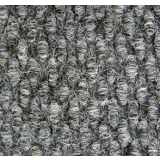 Astoria Nop$346.00Astoria Nop is the low-profile roll in our needlepunched carpet line: a dense 37-ounce polypropylene felt with a hobnail berber surface, three-eighths of an inch thick overall, in six neutral colors. It is rated for indoor use and for outdoor use under an overhang, and it is light enough to
...
Astoria Nop is the low-profile roll in our needlepunched carpet line: a dense 37-ounce polypropylene felt with a hobnail berber...
Astoria Nop is the low-profile roll in our needlepunched carpet line: a dense 37-ounce polypropylene felt with a hobnail berber surface, three-eighths of an inch thick overall, in six neutral colors. It is rated for indoor use and for outdoor use under an overhang, and it is light enough to lift and move as loose matting. When a corridor or entry needs a commercial carpet roll that stays flat, moves easily for cleaning, and does not argue with the decor, this is the one.
What Astoria Nop Does Before a Lifted Edge Becomes a Trip Point
Every walk-off carpet has to do two things at once. It has to pull grit and water off shoes, and it has to stay flat while doing it. A carpet that curls, ripples, or creeps at the threshold stops being a floor protector and becomes a hazard, and that risk grows every time a heavy mat gets dragged aside for mopping and dropped back crooked.
Astoria Nop is built with that second job in mind. At 64 ounces per square yard total, it weighs a good deal less than the heavier needlepunched rolls, so a facilities crew can lift a 10- or 20-foot runner, clean beneath it, and set it back square without a second person. A mat that gets moved gets cleaned under, and the floor beneath it stays sound.
The first job is still covered. The felted hobnail surface holds sand and salt in the low spots between the bumps, and the composite rubber backing keeps that grit and any water on the carpet rather than working through to the floor. What gets past a walk-off carpet is what grinds the finish off terrazzo, polished concrete, and wood, and that damage does not mop away.
Why Dense, Lightweight Needlepunch, and Why This One
Needlepunched carpet is felt, not fabric. Fibers are locked together by barbed needles rather than stitched through a backing in rows, so there is no loop to catch and no row to run. That construction also lets the material be cut to any shape without the edges raveling, which is why the maker recommends it for both plain runners and inlaid logo mats.
The word to notice on the spec sheet is dense. Astoria Nop packs 37 ounces of fiber per square yard into a pile only an eighth of an inch high. The maker's own description says that density is what keeps the mat from crushing under heavy traffic. A thin pile that stays upright wears better than a tall pile that flattens in the walking lane.
The fiber is 100 percent solution-dyed, UV-stabilized polypropylene. Color is locked into the fiber when it is made, not applied afterward, so sun and cleaning chemicals do not lift it. The maker states the material is not affected by extreme climate conditions, which is why it carries an indoor/outdoor rating. The color-fastness results back that up: 5 to light and 5 to water on the ISO 105 scale.
For a spec file, the material passes ASTM D2859 surface flammability and ASTM E662 smoke density, passes ASTM D7570 for dimensional stability, and is Green Label Plus certified for indoor air quality. It can contribute toward LEED-NC MR Credit 4 and IEQ Credits 4.1, 4.3, and 5.
Where It Belongs and What It Is Not
The maker lists office environments, runners, conference rooms, lobbies, libraries, department stores, and entryways as the intended uses. In practice it lands in three places: as a loose-laid runner in a corridor that gets mopped around it, as a low-profile entry carpet where a thicker roll would catch a door sweep, and as the field for a cut-shape or logo mat.
That low profile matters at doors. At 0.375 inch total height, Astoria Nop clears most door sweeps and sits close to flush with adjoining hard floor, so there is less of a lip at the transition. In a revolving-door well or a shallow recess, that is often the difference between a carpet that fits and one that binds.
Outdoors, the rating comes with a condition: the maker specifies outdoor use with an overhang. A covered walkway or an entry canopy is right. An open patio that takes standing rain is not, because the pile will hold the water and has nowhere to send it.
What it is not: a heavy scraper for caked mud, a cushioned anti-fatigue surface, or a runner for pallet jacks and loaded stock carts. Put a rubber or coir scraper ahead of it where boots arrive muddy, and use a vinyl or rubber runner in lanes that take constant heavy rolling loads.
Three Things to Check Before You Spec It
First, will the mat be moved, or fixed in place? Astoria Nop is the roll to choose when the answer is moved. Its handling weight and dimensional stability are what make loose-lay practical. If the run is long, turns a corner, or sits where doors pivot across it, an adhesive is still the right call, and the maker requires professional installation to honor its own warranty.
Second, check the clearance at the door. Measure the gap under the door sweep and the depth of any recess before ordering. Astoria Nop's 0.375-inch total height is one of the lowest in the roll-goods line. If the gap is tighter than that, a recessed frame is the fix, not a thinner carpet.
Third, pick from the palette you actually have. Six colors are offered: sterling, charcoal, steel blue, sisal, zinc, and walnut. All are neutrals meant to sit quietly against stone, tile, and wood. If the project needs a brand red or a school blue, this is not the roll. If it needs to disappear into a finished lobby, it is.
Why Mats Inc.
The question we hear most about Astoria Nop is whether a dense, thin carpet can really replace a thicker one at a busy door. The honest answer depends on the door. We ask about sweep clearance, whether the crew will lift the mat to clean, and how far the wet track runs, and we will say when a heavier roll or a scraper ahead of it is the better fit. Rolls are cut to length, and shapes for wells and turns are routine.
Specifications Construction Non-woven, needlepunched Surface Hobnail (berber) pattern Fiber 100% solution-dyed, UV-stabilized polypropylene Backing Composite rubber Pile height 0.125" (±0.5 mm) Total height 0.375" (±7.5%) Pile weight 37 oz/sq yd (±7.5%) Total weight 64 oz/sq yd (±7.5%) Roll width 6' 7" or 13' 2" (±2%) Lengths 10' to 100' in 10' steps; custom lengths and cut shapes available Use Indoor; outdoor with an overhang Colors Sterling, Charcoal, Steel Blue, Sisal, Zinc, Walnut Edge Can be cut to any shape without edge ravel Dimensional stability ASTM D7570: Pass Flammability Surface flammability (FF 1-70 / ASTM D2859): Pass; Smoke density (ASTM E662): Pass Color fastness To light (ISO 105 B02): 5; to water (ISO 105 E01): 5; to shampoo (ISO 105 C06): 4-5; to rubbing (ISO 105 X12): 4 dry, 3-4 wet Indoor air quality Green Label Plus certified LEED-NC May contribute to MR Credit 4; IEQ Credits 4.1, 4.3, 5 Maintenance Vacuum with a motor-driven brush and beater bar: weekly in low-traffic areas, daily or twice daily in high-traffic areas Warranty 1-year limited (Mats Inc.) Frequently Asked Questions
How can a carpet this thin hold up under heavy foot traffic?
Answered by Dustin Thompson, Owner & CEO
Because it is dense, not because it is tall. Astoria Nop packs 37 ounces of polypropylene fiber into every square yard of a pile that stands just an eighth of an inch. The fibers are needlepunched into a felt, so they support each other from the side rather than standing alone like tufted yarn. The maker states plainly that this density is what prevents the mat from crushing.
The practical result is a carpet that looks the same in the walking lane as it does at the edges long after a taller pile would show a flattened track. The low height also means there is less fiber to hold moisture, so it dries faster between wet rushes.
How long should Astoria Nop last, and what wears it out?
Answered by Dustin Thompson, Owner & CEO
The maker defines wear as complete removal of the wear layer, pattern, and color under normal traffic and backs the material for five years of commercial service against that. In our experience a well-kept runner in a busy corridor reaches that mark, and a loose-laid mat that gets lifted and vacuumed on schedule often goes longer. Mats Inc. covers the product with a 1-year limited warranty.
What ends it early is ground-in soil. The maker notes that roughly 15 percent of tracked-in dirt is oil, which bonds grit to the fiber if it sits. Regular vacuuming with a beater bar removes up to 80 percent of surface dirt before that happens. Daily in a busy entry, weekly in a quiet hall, and the carpet keeps both its look and its grip on grit.
Can I use it outside, and does it have to be glued down?
Answered by Dustin Thompson, Owner & CEO
Outside, yes, with a roof over it. The maker rates Astoria Nop for outdoor use with an overhang and states that extreme climate does not affect the material, so covered walkways, covered porches, and entry canopies are fine. Skip it where rain can stand on the surface with no drainage.
Gluing is a choice, not a requirement, for short straight runs indoors. The lighter weight is exactly why many buildings loose-lay it and lift it to clean. Long runs, corners, and doorways with pivoting traffic should be set with adhesive, and the maker requires professional installation to honor its own warranty. Tell us the location and we will recommend the method.
What sizes come standard, and can it be cut to an odd shape?
Answered by Jinna Hopson, Vice President of Marketing
Rolls are 6 feet 7 inches wide and cut in ten-foot steps from 10 to 100 feet, with a 13-foot-2-inch width available for wide lobbies and double doors. Custom lengths between those steps are no trouble.
Odd shapes are where this material shines. The maker confirms it can be cut into any shape without the edges raveling, so a curved recess, a revolving-door well, or an L-shaped corridor mat can be cut to fit and hold a clean edge without binding. Send a sketch with dimensions and we will plan the cut.
What does Astoria Nop look like in a finished space?
Answered by Jinna Hopson, Vice President of Marketing
Quiet and even. The hobnail berber texture reads as a fine, uniform pebble rather than a bold pattern, and the low profile keeps it from looking like a mat dropped on the floor. It reads as part of the flooring, which is what most lobby and corridor designs want from a walk-off carpet.
The six colors are all neutrals: sterling and zinc on the gray side, charcoal for a dark floor, steel blue for a cool accent, and sisal and walnut for warm interiors with wood or stone. Because a felted fiber shifts under lobby lighting, ask us for a swatch and look at it in the actual space before committing a whole run.
Is Astoria Nop a good choice for a logo mat?
Answered by Jinna Hopson, Vice President of Marketing
Yes, and the maker says so directly, listing it as a good choice for both logo and plain mats. The clean-cut edge is the reason: an inlaid logo is a set of shapes cut and fitted together, and a material that does not ravel at the cut gives those shapes crisp lines that stay crisp.
The trade-off is palette. With six neutral colors, Astoria Nop suits a tone-on-tone mark, a monogram, or a wayfinding word set into a gray or walnut field. A full-color brand logo needs a wider color range, and we will steer you to the right material for that. Send your artwork through the proof request on this page and we will return a digital proof before anything is cut.
By Dustin Thompson, Owner & CEO, Mats Inc.
↑
Astoria Nop is the low-profile roll in our needlepunched carpet line: a dense 37-ounce polypropylene felt with a hobnail berber surface, three-eighths of an inch thick overall, in six neutral colors. It is rated for indoor use and for outdoor use under an overhang, and it is light enough to lift and move as loose matting. When a corridor or entry needs a commercial carpet roll that stays flat, moves easily for cleaning, and does not argue with the decor, this is the one.
What Astoria Nop Does Before a Lifted Edge Becomes a Trip Point
Every walk-off carpet has to do two things at once. It has to pull grit and water off shoes, and it has to stay flat while doing it. A carpet that curls, ripples, or creeps at the threshold stops being a floor protector and becomes a hazard, and that risk grows every time a heavy mat gets dragged aside for mopping and dropped back crooked.
Astoria Nop is built with that second job in mind. At 64 ounces per square yard total, it weighs a good deal less than the heavier needlepunched rolls, so a facilities crew can lift a 10- or 20-foot runner, clean beneath it, and set it back square without a second person. A mat that gets moved gets cleaned under, and the floor beneath it stays sound.
The first job is still covered. The felted hobnail surface holds sand and salt in the low spots between the bumps, and the composite rubber backing keeps that grit and any water on the carpet rather than working through to the floor. What gets past a walk-off carpet is what grinds the finish off terrazzo, polished concrete, and wood, and that damage does not mop away.
Why Dense, Lightweight Needlepunch, and Why This One
Needlepunched carpet is felt, not fabric. Fibers are locked together by barbed needles rather than stitched through a backing in rows, so there is no loop to catch and no row to run. That construction also lets the material be cut to any shape without the edges raveling, which is why the maker recommends it for both plain runners and inlaid logo mats.
The word to notice on the spec sheet is dense. Astoria Nop packs 37 ounces of fiber per square yard into a pile only an eighth of an inch high. The maker's own description says that density is what keeps the mat from crushing under heavy traffic. A thin pile that stays upright wears better than a tall pile that flattens in the walking lane.
The fiber is 100 percent solution-dyed, UV-stabilized polypropylene. Color is locked into the fiber when it is made, not applied afterward, so sun and cleaning chemicals do not lift it. The maker states the material is not affected by extreme climate conditions, which is why it carries an indoor/outdoor rating. The color-fastness results back that up: 5 to light and 5 to water on the ISO 105 scale.
For a spec file, the material passes ASTM D2859 surface flammability and ASTM E662 smoke density, passes ASTM D7570 for dimensional stability, and is Green Label Plus certified for indoor air quality. It can contribute toward LEED-NC MR Credit 4 and IEQ Credits 4.1, 4.3, and 5.
Where It Belongs and What It Is Not
The maker lists office environments, runners, conference rooms, lobbies, libraries, department stores, and entryways as the intended uses. In practice it lands in three places: as a loose-laid runner in a corridor that gets mopped around it, as a low-profile entry carpet where a thicker roll would catch a door sweep, and as the field for a cut-shape or logo mat.
That low profile matters at doors. At 0.375 inch total height, Astoria Nop clears most door sweeps and sits close to flush with adjoining hard floor, so there is less of a lip at the transition. In a revolving-door well or a shallow recess, that is often the difference between a carpet that fits and one that binds.
Outdoors, the rating comes with a condition: the maker specifies outdoor use with an overhang. A covered walkway or an entry canopy is right. An open patio that takes standing rain is not, because the pile will hold the water and has nowhere to send it.
What it is not: a heavy scraper for caked mud, a cushioned anti-fatigue surface, or a runner for pallet jacks and loaded stock carts. Put a rubber or coir scraper ahead of it where boots arrive muddy, and use a vinyl or rubber runner in lanes that take constant heavy rolling loads.
Three Things to Check Before You Spec It
First, will the mat be moved, or fixed in place? Astoria Nop is the roll to choose when the answer is moved. Its handling weight and dimensional stability are what make loose-lay practical. If the run is long, turns a corner, or sits where doors pivot across it, an adhesive is still the right call, and the maker requires professional installation to honor its own warranty.
Second, check the clearance at the door. Measure the gap under the door sweep and the depth of any recess before ordering. Astoria Nop's 0.375-inch total height is one of the lowest in the roll-goods line. If the gap is tighter than that, a recessed frame is the fix, not a thinner carpet.
Third, pick from the palette you actually have. Six colors are offered: sterling, charcoal, steel blue, sisal, zinc, and walnut. All are neutrals meant to sit quietly against stone, tile, and wood. If the project needs a brand red or a school blue, this is not the roll. If it needs to disappear into a finished lobby, it is.
Why Mats Inc.
The question we hear most about Astoria Nop is whether a dense, thin carpet can really replace a thicker one at a busy door. The honest answer depends on the door. We ask about sweep clearance, whether the crew will lift the mat to clean, and how far the wet track runs, and we will say when a heavier roll or a scraper ahead of it is the better fit. Rolls are cut to length, and shapes for wells and turns are routine.
Specifications Construction Non-woven, needlepunched Surface Hobnail (berber) pattern Fiber 100% solution-dyed, UV-stabilized polypropylene Backing Composite rubber Pile height 0.125" (±0.5 mm) Total height 0.375" (±7.5%) Pile weight 37 oz/sq yd (±7.5%) Total weight 64 oz/sq yd (±7.5%) Roll width 6' 7" or 13' 2" (±2%) Lengths 10' to 100' in 10' steps; custom lengths and cut shapes available Use Indoor; outdoor with an overhang Colors Sterling, Charcoal, Steel Blue, Sisal, Zinc, Walnut Edge Can be cut to any shape without edge ravel Dimensional stability ASTM D7570: Pass Flammability Surface flammability (FF 1-70 / ASTM D2859): Pass; Smoke density (ASTM E662): Pass Color fastness To light (ISO 105 B02): 5; to water (ISO 105 E01): 5; to shampoo (ISO 105 C06): 4-5; to rubbing (ISO 105 X12): 4 dry, 3-4 wet Indoor air quality Green Label Plus certified LEED-NC May contribute to MR Credit 4; IEQ Credits 4.1, 4.3, 5 Maintenance Vacuum with a motor-driven brush and beater bar: weekly in low-traffic areas, daily or twice daily in high-traffic areas Warranty 1-year limited (Mats Inc.) Frequently Asked Questions
How can a carpet this thin hold up under heavy foot traffic?
Answered by Dustin Thompson, Owner & CEO
Because it is dense, not because it is tall. Astoria Nop packs 37 ounces of polypropylene fiber into every square yard of a pile that stands just an eighth of an inch. The fibers are needlepunched into a felt, so they support each other from the side rather than standing alone like tufted yarn. The maker states plainly that this density is what prevents the mat from crushing.
The practical result is a carpet that looks the same in the walking lane as it does at the edges long after a taller pile would show a flattened track. The low height also means there is less fiber to hold moisture, so it dries faster between wet rushes.
How long should Astoria Nop last, and what wears it out?
Answered by Dustin Thompson, Owner & CEO
The maker defines wear as complete removal of the wear layer, pattern, and color under normal traffic and backs the material for five years of commercial service against that. In our experience a well-kept runner in a busy corridor reaches that mark, and a loose-laid mat that gets lifted and vacuumed on schedule often goes longer. Mats Inc. covers the product with a 1-year limited warranty.
What ends it early is ground-in soil. The maker notes that roughly 15 percent of tracked-in dirt is oil, which bonds grit to the fiber if it sits. Regular vacuuming with a beater bar removes up to 80 percent of surface dirt before that happens. Daily in a busy entry, weekly in a quiet hall, and the carpet keeps both its look and its grip on grit.
Can I use it outside, and does it have to be glued down?
Answered by Dustin Thompson, Owner & CEO
Outside, yes, with a roof over it. The maker rates Astoria Nop for outdoor use with an overhang and states that extreme climate does not affect the material, so covered walkways, covered porches, and entry canopies are fine. Skip it where rain can stand on the surface with no drainage.
Gluing is a choice, not a requirement, for short straight runs indoors. The lighter weight is exactly why many buildings loose-lay it and lift it to clean. Long runs, corners, and doorways with pivoting traffic should be set with adhesive, and the maker requires professional installation to honor its own warranty. Tell us the location and we will recommend the method.
What sizes come standard, and can it be cut to an odd shape?
Answered by Jinna Hopson, Vice President of Marketing
Rolls are 6 feet 7 inches wide and cut in ten-foot steps from 10 to 100 feet, with a 13-foot-2-inch width available for wide lobbies and double doors. Custom lengths between those steps are no trouble.
Odd shapes are where this material shines. The maker confirms it can be cut into any shape without the edges raveling, so a curved recess, a revolving-door well, or an L-shaped corridor mat can be cut to fit and hold a clean edge without binding. Send a sketch with dimensions and we will plan the cut.
What does Astoria Nop look like in a finished space?
Answered by Jinna Hopson, Vice President of Marketing
Quiet and even. The hobnail berber texture reads as a fine, uniform pebble rather than a bold pattern, and the low profile keeps it from looking like a mat dropped on the floor. It reads as part of the flooring, which is what most lobby and corridor designs want from a walk-off carpet.
The six colors are all neutrals: sterling and zinc on the gray side, charcoal for a dark floor, steel blue for a cool accent, and sisal and walnut for warm interiors with wood or stone. Because a felted fiber shifts under lobby lighting, ask us for a swatch and look at it in the actual space before committing a whole run.
Is Astoria Nop a good choice for a logo mat?
Answered by Jinna Hopson, Vice President of Marketing
Yes, and the maker says so directly, listing it as a good choice for both logo and plain mats. The clean-cut edge is the reason: an inlaid logo is a set of shapes cut and fitted together, and a material that does not ravel at the cut gives those shapes crisp lines that stay crisp.
The trade-off is palette. With six neutral colors, Astoria Nop suits a tone-on-tone mark, a monogram, or a wayfinding word set into a gray or walnut field. A full-color brand logo needs a wider color range, and we will steer you to the right material for that. Send your artwork through the proof request on this page and we will return a digital proof before anything is cut.
By Dustin Thompson, Owner & CEO, Mats Inc.
↑
View Details
View Details
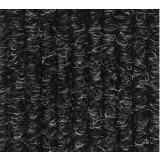 Axis Rib$395.00Axis Rib is a needlepunched carpet with a one-by-one corduroy rib running the length of the roll. Its dense 44-ounce polypropylene pile is solution-dyed and UV stabilized, it sits on a composite rubber backing, and it comes in three grays: sterling, charcoal, and black shadow. Of the carpet rolls we
...
Axis Rib is a needlepunched carpet with a one-by-one corduroy rib running the length of the roll. Its dense 44-ounce...
Axis Rib is a needlepunched carpet with a one-by-one corduroy rib running the length of the roll. Its dense 44-ounce polypropylene pile is solution-dyed and UV stabilized, it sits on a composite rubber backing, and it comes in three grays: sterling, charcoal, and black shadow. Of the carpet rolls we cut to length, this is the one that makes a long corridor look longer and hides the traffic lane while it does it.
What Axis Rib Does Before the Traffic Lane Shows
Every entry carpet develops a lane. People walk the same line from the door to the elevator, and within months that strip looks different from the edges: darker where soil settles, flatter where the pile has been pressed ten thousand times. On a flat or pebbled surface the lane reads as a stripe of wear. On a ribbed surface it does not read at all.
That is the corduroy pattern's quiet advantage. Rows of raised ribs and recessed channels already carry a strong line, so a slight flattening in the walking lane disappears into it. Dirt that would sit on top of a flat carpet drops into the channels between the ribs, where a beater-bar vacuum lifts it. The carpet looks even from the door to the far wall for longer.
The stakes past the carpet are the same as for any walk-off surface. Sand and salt that reach polished stone, terrazzo, or sealed concrete scratch the finish, and that finish does not come back with cleaning. Axis Rib's job is to hold that grit in its channels and give the crew a way to remove it before it travels.
Why a Corduroy Rib Needlepunch, and Why This One
Needlepunched carpet is made by tangling loose fibers into a dense felt with barbed needles, rather than stitching yarn through a backing. The felt is then patterned. On Axis Rib the pattern is a one-by-one corduroy: one raised rib, one channel, repeated across the roll. Because there is no stitched row, the material can be cut into any shape without the edge raveling.
The pile is 44 ounces per square yard at 0.18 inch high, on a total height of 0.47 inch and a total weight of 65 ounces per square yard. The maker describes that as heavy fiber in a dense construction and credits it with crush resistance and what it calls long-term comfort underfoot. Among the needlepunched rolls it is the middle weight, heavier than the low-profile options and lighter than the thickest berber.
The fiber is 100 percent solution-dyed, UV-stabilized polypropylene, which means the gray is in the plastic itself, not on the surface. Bleach and sun do not lift it. The color-fastness results on the cut sheet are 5 to light and 5 to water on the ISO 105 scale, and the material is rated stain resistant.
For the spec file, Axis Rib passes ASTM D2859 surface flammability and ASTM E662 smoke density, passes ASTM D7570 for dimensional stability, and is Green Label Plus certified for indoor air quality. It can contribute toward LEED-NC MR Credit 4 and IEQ Credits 4.1, 4.3, and 5.
Where It Belongs and What It Is Not
The maker's suggested uses are lobbies, libraries, department stores, entryways, and other high-traffic areas, plus spaces where people stand for extended periods. That last one is worth noting. A reception desk, a check-in counter, a museum gallery, or a pharmacy waiting line is exactly the kind of spot where a dense 44-ounce pile is more pleasant to stand on than a thin runner or bare tile.
The rib pattern also earns its place visually. Laid with the ribs running the direction of travel, it draws the eye down a corridor and makes a narrow hall feel longer and more orderly. Laid across the direction of travel it reads as a series of bars and the lane shows sooner, so orientation is a real decision, not a detail.
Axis Rib carries an indoor rating on its cut sheet. Use it inside the door: the vestibule, the lobby, the corridor, the standing area. For a covered exterior walkway or an open-air entry, a roll rated for outdoor use is the right tool.
What it is not: a scraper for caked mud, a full anti-fatigue mat for an eight-hour shift, or a runner for pallet jacks and stock carts. Put a rubber or coir scraper ahead of it where boots arrive muddy. Where people stand all day on a hard floor, a purpose-built anti-fatigue mat is the honest answer, and heavy rolling loads belong on vinyl or rubber.
Three Things to Check Before You Spec It
First, which way does the traffic run? Decide the rib direction before you order the cut. Ribs parallel to travel hide the lane and lengthen the space; ribs across travel do neither. For an L-shaped corridor, plan the turn so the ribs on each leg follow that leg's traffic, which usually means two pieces with a seam at the corner rather than one bent run.
Second, confirm it stays indoors. The cut sheet rates Axis Rib for indoor use. A vestibule inside the outer door qualifies. A porch or a walkway under a canopy does not, however dry it looks on a clear day. If the run has to start outside, ask us about an outdoor-rated roll for the exterior leg and Axis Rib for the interior leg.
Third, pick the gray that hides your soil. Three colors are offered. Sterling is the lightest and shows dark tracked-in soil first. Black shadow is the darkest and shows light dust and salt residue first. Charcoal sits between them and is the usual choice where the soil is mixed. Look at what actually comes through the door and match against it, not against the wall paint.
Why Mats Inc.
With Axis Rib the thing that goes wrong is almost never the carpet. It is a roll cut without thinking about rib direction, or a corner laid as one bent piece so the ribs fight the traffic on one leg. We ask how the space is walked before we plan the cut, and for a turn we lay out the two pieces and the seam line for you. Send a sketch with door and corridor dimensions and we will return a cut plan before anything ships.
Specifications Construction Non-woven, needlepunched Surface One-by-one corduroy rib pattern Fiber 100% solution-dyed, UV-stabilized polypropylene Backing Composite rubber Pile height 0.18" (±0.5 mm) Total height 0.47" (±7.5%) Pile weight 44 oz/sq yd (±7.5%) Total weight 65 oz/sq yd (±7.5%) Roll width 6' 7" or 13' 2" (±2%) Lengths 10' to 100' in 10' steps; custom lengths and cut shapes available Use Indoor Colors Sterling, Charcoal, Black Shadow Edge Can be cut to any shape without edge ravel Dimensional stability ASTM D7570: Pass Flammability Surface flammability (FF 1-70 / ASTM D2859): Pass; Smoke density (ASTM E662): Pass Color fastness To light (ISO 105 B02): 5; to water (ISO 105 E01): 5; to shampoo (ISO 105 C06): 4-5; to rubbing (ISO 105 X12): 4 dry, 3-4 wet Indoor air quality Green Label Plus certified LEED-NC May contribute to MR Credit 4; IEQ Credits 4.1, 4.3, 5 Maintenance Vacuum with a motor-driven brush and beater bar: weekly in low-traffic areas, daily or twice daily in high-traffic areas Warranty 1-year limited (Mats Inc.) Frequently Asked Questions
What is a corduroy rib carpet, and how is it different from a berber?
Answered by Dustin Thompson, Owner & CEO
Both start as the same kind of needlepunched felt: loose polypropylene fibers locked together by barbed needles into a dense mat. The difference is the pattern pressed into the surface. A berber has a scattered hobnail bump. A corduroy rib has straight, parallel rows, one rib and one channel repeating across the roll.
In use, the rib gives grit a channel to fall into and a beater bar a straight path to lift it out. It also carries a strong visual line, which is why wear in the walking lane shows later on a ribbed carpet than on a flatter one. At 44 ounces of pile per square yard, Axis Rib has plenty of fiber in those ribs to hold what comes through the door.
How long does Axis Rib last, and what shortens its life?
Answered by Dustin Thompson, Owner & CEO
The maker warrants the material against wear for five years of commercial use, defining wear as complete loss of the wear layer, pattern, and color. In a busy lobby that is a realistic service life with routine care, and a corridor run often goes longer. Because the fiber is solution-dyed and UV stabilized, the gray does not fade; what eventually ends the carpet is matting of the ribs in the lane. Mats Inc. covers this product with a 1-year limited warranty.
What shortens it is soil left in the channels. About 15 percent of tracked-in dirt is oil, which glues grit to the fiber if it sits, and the maker notes that regular beater-bar vacuuming removes up to 80 percent of surface dirt before that happens. Daily in a high-traffic entry, weekly in a quiet hall.
Can Axis Rib go outdoors, and how should it be installed?
Answered by Dustin Thompson, Owner & CEO
Keep it indoors. The cut sheet rates Axis Rib for indoor use, so the right home is the vestibule, lobby, corridor, or standing area inside the outer door. If an entry needs coverage that starts outside, we will pair an outdoor-rated roll on the exterior leg with Axis Rib inside.
On installation, the maker requires professional installation to honor its own warranty. For a long run, a corner, or a doorway with pivoting traffic, set it with adhesive so the leading edge stays flat. A short, straight runner can lay loose on its rubber backing. Whichever method you use, lay the ribs in the direction people walk.
What sizes does it come in, and can you cut it to fit an odd space?
Answered by Jinna Hopson, Vice President of Marketing
The roll is 6 feet 7 inches wide and cut in ten-foot steps from 10 to 100 feet. A 13-foot-2-inch width is available for wide lobbies and double-door entries so the opening can be covered without a seam down the center. Custom lengths between the standard steps are routine.
Odd shapes are fine because the material can be cut into any shape without the edge raveling. The one thing to plan with a ribbed carpet is direction: a corner or an L-shaped hall is usually cut as two pieces so the ribs follow the traffic on each leg. Send a sketch and we will lay out the pieces and the seam for you.
How does the rib pattern read in a finished lobby or corridor?
Answered by Jinna Hopson, Vice President of Marketing
Tailored. The one-by-one rib has the look of fine corduroy or a pinstripe, and in a long corridor the lines pull the eye toward the far end, so the space reads longer and more ordered. In a lobby it reads as a deliberate design choice rather than a utility mat, especially in charcoal or black shadow against light stone.
The three grays are meant to sit quietly with almost any interior palette. Sterling is a light silver, charcoal a true mid-gray, and black shadow a near-black with depth. Because a ribbed surface catches light differently along and across the rows, ask us for a swatch and look at it on the floor, in the orientation you plan to lay it.
Is Axis Rib a good fit for a branded or logo entrance?
Answered by Jinna Hopson, Vice President of Marketing
It is a strong field for a restrained brand presence. The clean-cut edge lets a shape or a wayfinding word be inlaid without fraying, and the corduroy texture gives the surrounding carpet a finished, architectural look that suits law offices, financial lobbies, hotels, and libraries.
With only three grays, it is not the roll for a full-color logo. Use it where the brand is expressed through the building's materials and a tone-on-tone mark, and pair it with a full-palette logo mat at the door if the mark itself needs color. Send your artwork through the proof request on this page and we will return a digital proof before anything is cut.
By Jinna Hopson, Vice President of Marketing, Mats Inc.
↑
Axis Rib is a needlepunched carpet with a one-by-one corduroy rib running the length of the roll. Its dense 44-ounce polypropylene pile is solution-dyed and UV stabilized, it sits on a composite rubber backing, and it comes in three grays: sterling, charcoal, and black shadow. Of the carpet rolls we cut to length, this is the one that makes a long corridor look longer and hides the traffic lane while it does it.
What Axis Rib Does Before the Traffic Lane Shows
Every entry carpet develops a lane. People walk the same line from the door to the elevator, and within months that strip looks different from the edges: darker where soil settles, flatter where the pile has been pressed ten thousand times. On a flat or pebbled surface the lane reads as a stripe of wear. On a ribbed surface it does not read at all.
That is the corduroy pattern's quiet advantage. Rows of raised ribs and recessed channels already carry a strong line, so a slight flattening in the walking lane disappears into it. Dirt that would sit on top of a flat carpet drops into the channels between the ribs, where a beater-bar vacuum lifts it. The carpet looks even from the door to the far wall for longer.
The stakes past the carpet are the same as for any walk-off surface. Sand and salt that reach polished stone, terrazzo, or sealed concrete scratch the finish, and that finish does not come back with cleaning. Axis Rib's job is to hold that grit in its channels and give the crew a way to remove it before it travels.
Why a Corduroy Rib Needlepunch, and Why This One
Needlepunched carpet is made by tangling loose fibers into a dense felt with barbed needles, rather than stitching yarn through a backing. The felt is then patterned. On Axis Rib the pattern is a one-by-one corduroy: one raised rib, one channel, repeated across the roll. Because there is no stitched row, the material can be cut into any shape without the edge raveling.
The pile is 44 ounces per square yard at 0.18 inch high, on a total height of 0.47 inch and a total weight of 65 ounces per square yard. The maker describes that as heavy fiber in a dense construction and credits it with crush resistance and what it calls long-term comfort underfoot. Among the needlepunched rolls it is the middle weight, heavier than the low-profile options and lighter than the thickest berber.
The fiber is 100 percent solution-dyed, UV-stabilized polypropylene, which means the gray is in the plastic itself, not on the surface. Bleach and sun do not lift it. The color-fastness results on the cut sheet are 5 to light and 5 to water on the ISO 105 scale, and the material is rated stain resistant.
For the spec file, Axis Rib passes ASTM D2859 surface flammability and ASTM E662 smoke density, passes ASTM D7570 for dimensional stability, and is Green Label Plus certified for indoor air quality. It can contribute toward LEED-NC MR Credit 4 and IEQ Credits 4.1, 4.3, and 5.
Where It Belongs and What It Is Not
The maker's suggested uses are lobbies, libraries, department stores, entryways, and other high-traffic areas, plus spaces where people stand for extended periods. That last one is worth noting. A reception desk, a check-in counter, a museum gallery, or a pharmacy waiting line is exactly the kind of spot where a dense 44-ounce pile is more pleasant to stand on than a thin runner or bare tile.
The rib pattern also earns its place visually. Laid with the ribs running the direction of travel, it draws the eye down a corridor and makes a narrow hall feel longer and more orderly. Laid across the direction of travel it reads as a series of bars and the lane shows sooner, so orientation is a real decision, not a detail.
Axis Rib carries an indoor rating on its cut sheet. Use it inside the door: the vestibule, the lobby, the corridor, the standing area. For a covered exterior walkway or an open-air entry, a roll rated for outdoor use is the right tool.
What it is not: a scraper for caked mud, a full anti-fatigue mat for an eight-hour shift, or a runner for pallet jacks and stock carts. Put a rubber or coir scraper ahead of it where boots arrive muddy. Where people stand all day on a hard floor, a purpose-built anti-fatigue mat is the honest answer, and heavy rolling loads belong on vinyl or rubber.
Three Things to Check Before You Spec It
First, which way does the traffic run? Decide the rib direction before you order the cut. Ribs parallel to travel hide the lane and lengthen the space; ribs across travel do neither. For an L-shaped corridor, plan the turn so the ribs on each leg follow that leg's traffic, which usually means two pieces with a seam at the corner rather than one bent run.
Second, confirm it stays indoors. The cut sheet rates Axis Rib for indoor use. A vestibule inside the outer door qualifies. A porch or a walkway under a canopy does not, however dry it looks on a clear day. If the run has to start outside, ask us about an outdoor-rated roll for the exterior leg and Axis Rib for the interior leg.
Third, pick the gray that hides your soil. Three colors are offered. Sterling is the lightest and shows dark tracked-in soil first. Black shadow is the darkest and shows light dust and salt residue first. Charcoal sits between them and is the usual choice where the soil is mixed. Look at what actually comes through the door and match against it, not against the wall paint.
Why Mats Inc.
With Axis Rib the thing that goes wrong is almost never the carpet. It is a roll cut without thinking about rib direction, or a corner laid as one bent piece so the ribs fight the traffic on one leg. We ask how the space is walked before we plan the cut, and for a turn we lay out the two pieces and the seam line for you. Send a sketch with door and corridor dimensions and we will return a cut plan before anything ships.
Specifications Construction Non-woven, needlepunched Surface One-by-one corduroy rib pattern Fiber 100% solution-dyed, UV-stabilized polypropylene Backing Composite rubber Pile height 0.18" (±0.5 mm) Total height 0.47" (±7.5%) Pile weight 44 oz/sq yd (±7.5%) Total weight 65 oz/sq yd (±7.5%) Roll width 6' 7" or 13' 2" (±2%) Lengths 10' to 100' in 10' steps; custom lengths and cut shapes available Use Indoor Colors Sterling, Charcoal, Black Shadow Edge Can be cut to any shape without edge ravel Dimensional stability ASTM D7570: Pass Flammability Surface flammability (FF 1-70 / ASTM D2859): Pass; Smoke density (ASTM E662): Pass Color fastness To light (ISO 105 B02): 5; to water (ISO 105 E01): 5; to shampoo (ISO 105 C06): 4-5; to rubbing (ISO 105 X12): 4 dry, 3-4 wet Indoor air quality Green Label Plus certified LEED-NC May contribute to MR Credit 4; IEQ Credits 4.1, 4.3, 5 Maintenance Vacuum with a motor-driven brush and beater bar: weekly in low-traffic areas, daily or twice daily in high-traffic areas Warranty 1-year limited (Mats Inc.) Frequently Asked Questions
What is a corduroy rib carpet, and how is it different from a berber?
Answered by Dustin Thompson, Owner & CEO
Both start as the same kind of needlepunched felt: loose polypropylene fibers locked together by barbed needles into a dense mat. The difference is the pattern pressed into the surface. A berber has a scattered hobnail bump. A corduroy rib has straight, parallel rows, one rib and one channel repeating across the roll.
In use, the rib gives grit a channel to fall into and a beater bar a straight path to lift it out. It also carries a strong visual line, which is why wear in the walking lane shows later on a ribbed carpet than on a flatter one. At 44 ounces of pile per square yard, Axis Rib has plenty of fiber in those ribs to hold what comes through the door.
How long does Axis Rib last, and what shortens its life?
Answered by Dustin Thompson, Owner & CEO
The maker warrants the material against wear for five years of commercial use, defining wear as complete loss of the wear layer, pattern, and color. In a busy lobby that is a realistic service life with routine care, and a corridor run often goes longer. Because the fiber is solution-dyed and UV stabilized, the gray does not fade; what eventually ends the carpet is matting of the ribs in the lane. Mats Inc. covers this product with a 1-year limited warranty.
What shortens it is soil left in the channels. About 15 percent of tracked-in dirt is oil, which glues grit to the fiber if it sits, and the maker notes that regular beater-bar vacuuming removes up to 80 percent of surface dirt before that happens. Daily in a high-traffic entry, weekly in a quiet hall.
Can Axis Rib go outdoors, and how should it be installed?
Answered by Dustin Thompson, Owner & CEO
Keep it indoors. The cut sheet rates Axis Rib for indoor use, so the right home is the vestibule, lobby, corridor, or standing area inside the outer door. If an entry needs coverage that starts outside, we will pair an outdoor-rated roll on the exterior leg with Axis Rib inside.
On installation, the maker requires professional installation to honor its own warranty. For a long run, a corner, or a doorway with pivoting traffic, set it with adhesive so the leading edge stays flat. A short, straight runner can lay loose on its rubber backing. Whichever method you use, lay the ribs in the direction people walk.
What sizes does it come in, and can you cut it to fit an odd space?
Answered by Jinna Hopson, Vice President of Marketing
The roll is 6 feet 7 inches wide and cut in ten-foot steps from 10 to 100 feet. A 13-foot-2-inch width is available for wide lobbies and double-door entries so the opening can be covered without a seam down the center. Custom lengths between the standard steps are routine.
Odd shapes are fine because the material can be cut into any shape without the edge raveling. The one thing to plan with a ribbed carpet is direction: a corner or an L-shaped hall is usually cut as two pieces so the ribs follow the traffic on each leg. Send a sketch and we will lay out the pieces and the seam for you.
How does the rib pattern read in a finished lobby or corridor?
Answered by Jinna Hopson, Vice President of Marketing
Tailored. The one-by-one rib has the look of fine corduroy or a pinstripe, and in a long corridor the lines pull the eye toward the far end, so the space reads longer and more ordered. In a lobby it reads as a deliberate design choice rather than a utility mat, especially in charcoal or black shadow against light stone.
The three grays are meant to sit quietly with almost any interior palette. Sterling is a light silver, charcoal a true mid-gray, and black shadow a near-black with depth. Because a ribbed surface catches light differently along and across the rows, ask us for a swatch and look at it on the floor, in the orientation you plan to lay it.
Is Axis Rib a good fit for a branded or logo entrance?
Answered by Jinna Hopson, Vice President of Marketing
It is a strong field for a restrained brand presence. The clean-cut edge lets a shape or a wayfinding word be inlaid without fraying, and the corduroy texture gives the surrounding carpet a finished, architectural look that suits law offices, financial lobbies, hotels, and libraries.
With only three grays, it is not the roll for a full-color logo. Use it where the brand is expressed through the building's materials and a tone-on-tone mark, and pair it with a full-palette logo mat at the door if the mark itself needs color. Send your artwork through the proof request on this page and we will return a digital proof before anything is cut.
By Jinna Hopson, Vice President of Marketing, Mats Inc.
↑
View Details
View Details
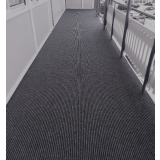 Avenue Rib$388.00Avenue Rib is a 44-ounce needlepunched carpet with a double-rib pattern, offered in one color: charcoal. The fiber is solution-dyed, UV-stabilized polypropylene on a composite rubber backing, cut to length from 6-foot-7-inch or 13-foot-2-inch rolls. For a facilities team that manages more than one building, it is the commercial carpet
...
Avenue Rib is a 44-ounce needlepunched carpet with a double-rib pattern, offered in one color: charcoal. The fiber is solution-dyed,...
Avenue Rib is a 44-ounce needlepunched carpet with a double-rib pattern, offered in one color: charcoal. The fiber is solution-dyed, UV-stabilized polypropylene on a composite rubber backing, cut to length from 6-foot-7-inch or 13-foot-2-inch rolls. For a facilities team that manages more than one building, it is the commercial carpet roll that turns entry matting into a standard instead of a decision.
What Avenue Rib Does Before Entrances Start to Drift
The quiet failure in multi-site matting is drift. One store orders a gray runner, the next orders a slightly different gray, the third picks a pattern, and within a year the chain's front doors no longer look like the same company. Replacement orders repeat the problem, because nobody remembers which gray the first store had.
Avenue Rib closes that door by having one answer. Every roll is charcoal, every roll carries the same double-rib pattern, and every roll is the same 44-ounce felt on the same rubber backing. A replacement run ordered three years from now will match the original beside it. That is what makes it a specification rather than a purchase.
Underneath the consistency, it does the ordinary job. The rib channels catch the sand and salt that would otherwise scratch stone, terrazzo, or sealed concrete past the mat, and the dense fiber holds water off the hard floor until it dries. The maker rates it for medium-to-heavy foot traffic, which describes most retail, pharmacy, office, and school entries.
Why a Double-Rib Needlepunch, and Why This One
Needlepunched carpet is a felt: loose polypropylene fibers driven together by barbed needles until they lock into a dense mat, then pressed with a surface pattern. No yarn, no stitched rows, so a cut edge stays clean and the material can be shaped to a well or a corner without raveling.
The pattern here is a double rib. Where a single-rib carpet alternates one ridge and one channel, Avenue Rib pairs the ridges, giving a wider ridge and a channel that reads as a bolder line. The maker calls it a uniquely patterned carpet, and the difference is visible from standing height: a firmer, more graphic stripe than a fine corduroy.
The numbers are the same heavy-duty class: 44 ounces of pile per square yard at 0.18 inch high, 65 ounces total at 0.47 inch overall height. The maker credits that density with preventing crushing while keeping the roll easy to move or install. The composite rubber backing grips the floor and keeps moisture in the pile rather than under it.
Solution-dyed fiber means the charcoal is mixed into the polypropylene before it is spun, so it cannot be bleached or sun-faded off the surface. The cut sheet backs that with color-fastness ratings of 5 to light and 5 to water on the ISO 105 scale, and describes the material as resilient in extreme climate conditions.
For the spec binder, Avenue Rib passes ASTM D2859 surface flammability and ASTM E662 smoke density, passes ASTM D7570 for dimensional stability, and carries Green Label Plus certification for indoor air quality. It can contribute toward LEED-NC MR Credit 4 and IEQ Credits 4.1, 4.3, and 5.
Where It Belongs and What It Is Not
The maker's suggested uses are lobbies, libraries, retail and department stores, entryways, and other high-traffic spaces. Its own photography shows the product in a drugstore vestibule, at an elevator bank, and on a stairwell landing, which is a fair picture of where it ends up: the working entries and circulation paths of buildings that see a steady crowd every day.
It fits best where the mat is expected to disappear. Charcoal reads as a neutral against almost any floor, and the double rib gives it enough texture that it does not look like a bare strip. It is the roll for the employee entrance, the back corridor, the elevator lobby, and the chain store front where every location should look the same.
The cut sheet rates Avenue Rib for indoor and outdoor use and attaches a condition to the outdoor rating that it does not spell out. Treat indoor and covered entries as clear, and ask us before specifying it for an exposed exterior location so we can confirm the condition with the maker first.
What it is not: a color choice, a heavy-mud scraper, or an anti-fatigue mat. If the brand needs its own color at the door, a multi-color roll or a logo mat is the right tool. Put a rubber or coir scraper ahead of it where boots arrive caked, and keep pallet jacks and loaded stock carts on vinyl or rubber runners.
Three Things to Check Before You Spec It
First, is one color the right answer for this portfolio? Avenue Rib is the standardizer. If you are writing a matting spec for a chain, a campus, or a property group, a single charcoal roll means every replacement matches and every site orders the same line item. If one flagship location needs a brand color, spec it separately and keep Avenue Rib as the default everywhere else.
Second, plan the rib direction and the run length. Lay the double rib parallel to travel so the channels carry grit along the path rather than damming it. Measure from the door to where the crowd fans out and order that length; rolls come in ten-foot steps from 10 to 100 feet, and the 13-foot-2-inch width covers a double door without a center seam.
Third, settle the exposure. Inside the door or under a solid canopy is straightforward. For an entry that takes direct rain, hold the order until we confirm the maker's outdoor condition for you. It is a one-day question and it keeps the warranty conversation simple later.
Why Mats Inc.
Avenue Rib is the roll we recommend when a facilities manager tells us the last thing they want is another choice. Tell us the roll length, width, and rib direction once, and reordering for the next location or the next replacement becomes a phone call rather than a new spec. If a site turns out to need something the standard cannot do, we will say so and propose the exception rather than bend the standard to fit.
Specifications Construction Non-woven, needlepunched Surface Double-rib pattern Fiber 100% solution-dyed, UV-stabilized polypropylene Backing Composite rubber Pile height 0.18" (±0.5 mm) Total height 0.47" (±7.5%) Pile weight 44 oz/sq yd (±7.5%) Total weight 65 oz/sq yd (±7.5%) Roll width 6' 7" or 13' 2" (±2%) Lengths 10' to 100' in 10' steps; custom lengths and cut shapes available Traffic rating Medium to heavy foot traffic Use Indoor; outdoor rating carries a maker's condition (ask before specifying exposed locations) Color Charcoal (only) Edge Can be cut to any shape without edge ravel Dimensional stability ASTM D7570: Pass Flammability Surface flammability (FF 1-70 / ASTM D2859): Pass; Smoke density (ASTM E662): Pass Color fastness To light (ISO 105 B02): 5; to water (ISO 105 E01): 5; to shampoo (ISO 105 C06): 4-5; to rubbing (ISO 105 X12): 4 dry, 3-4 wet Indoor air quality Green Label Plus certified LEED-NC May contribute to MR Credit 4; IEQ Credits 4.1, 4.3, 5 Maintenance Vacuum with a motor-driven brush and beater bar: weekly in low-traffic areas, daily or twice daily in high-traffic areas Warranty 1-year limited (Mats Inc.) Frequently Asked Questions
What is a double-rib carpet, and what does the second rib do?
Answered by Dustin Thompson, Owner & CEO
A rib carpet has raised ridges and recessed channels running the length of the roll. In a single rib they alternate one to one. In Avenue Rib's double rib the ridges are paired, so the surface reads as wider bands with a channel between each pair. The base material is the same needlepunched polypropylene felt: fibers locked together by barbed needles rather than stitched as yarn.
In practice the wider ridge gives the shoe a larger bearing surface, and the channel still gives grit somewhere to fall and a beater bar a straight path to lift it. Visually it is a bolder stripe than a fine corduroy, which reads well in charcoal against a light floor.
How long does Avenue Rib last, and what shortens it?
Answered by Dustin Thompson, Owner & CEO
The maker warrants Avenue Rib against wear for five years in commercial use and defines wear as complete removal of the wear layer, pattern, and color. In a medium-to-heavy traffic entry with routine care, five years is a realistic working life, and back corridors and elevator lobbies often go longer. The color does not fade, because it is solution-dyed through the fiber; what ends the carpet is matting in the walking lane. Mats Inc. covers it with a 1-year limited warranty.
Two things shorten it. Soil left in the channels, since roughly 15 percent of tracked-in dirt is oil that bonds grit to the fiber if it sits. And skipping the vacuum: the maker's guidance is that a motor-driven brush and beater bar lifts up to 80 percent of surface dirt, daily in busy entries and weekly in quiet ones.
Can Avenue Rib be used outside, and how should it be installed?
Answered by Dustin Thompson, Owner & CEO
Indoors and under cover, yes. The cut sheet rates the material for indoor and outdoor use and describes it as resilient in extreme climates, but it attaches a condition to the outdoor rating that the sheet does not print. Until we confirm that condition with the maker for your project, treat vestibules, lobbies, corridors, and solidly covered entries as clear, and ask before specifying an exposed location.
On installation, the maker requires professional installation to honor its own warranty. Long runs, corners, and doorways with pivoting traffic should be set with adhesive so the leading edge stays flat; a short, straight indoor runner can lay loose on its rubber backing. Lay the ribs in the direction of travel.
What sizes does it come in, and can it be cut for a recess or a corner?
Answered by Jinna Hopson, Vice President of Marketing
Rolls are 6 feet 7 inches wide, cut in ten-foot steps from 10 to 100 feet, with a 13-foot-2-inch width available for wide lobbies and double doors. Custom lengths between the steps are routine.
Because the needlepunched felt can be cut to any shape without the edge raveling, a recessed well, a curved vestibule, or an L-shaped corridor is straightforward. For a corner, we usually cut two pieces so the ribs follow the traffic on each leg. Send a sketch with dimensions and we will return a cut plan.
What does charcoal Avenue Rib look like in a finished space?
Answered by Jinna Hopson, Vice President of Marketing
Understated and consistent. Charcoal is dark enough to hide the mixed soil most entries see, light enough not to read as black, and neutral enough to sit against stone, tile, wood, or polished concrete without a color argument. The double rib adds a clean linear texture, so the run looks like part of the floor design rather than a utility mat.
The single color is the point for many buyers. A property group or a retail chain can specify Avenue Rib across every location and know the entrances will read the same from one address to the next. Ask us for a swatch if you want to see the charcoal against your floor before ordering a full run.
Can Avenue Rib carry a logo or match our brand colors?
Answered by Jinna Hopson, Vice President of Marketing
Not in color, and that is by design. Avenue Rib comes in charcoal only, so it is the roll for a brand that expresses itself through the building rather than the mat. Its clean-cut edge does allow a tone-on-tone inlay, such as a wayfinding word or a simple mark cut into the field, if a subtle touch is wanted.
Where the brand needs its actual colors at the door, the usual approach is a full-color logo mat at the threshold with Avenue Rib running behind it as the standard field. That keeps the brand moment where people see it and the rest of the run consistent across every location. Send artwork through the proof request on this page and we will return a digital proof before anything is cut.
By Dustin Thompson, Owner & CEO, Mats Inc.
↑
Avenue Rib is a 44-ounce needlepunched carpet with a double-rib pattern, offered in one color: charcoal. The fiber is solution-dyed, UV-stabilized polypropylene on a composite rubber backing, cut to length from 6-foot-7-inch or 13-foot-2-inch rolls. For a facilities team that manages more than one building, it is the commercial carpet roll that turns entry matting into a standard instead of a decision.
What Avenue Rib Does Before Entrances Start to Drift
The quiet failure in multi-site matting is drift. One store orders a gray runner, the next orders a slightly different gray, the third picks a pattern, and within a year the chain's front doors no longer look like the same company. Replacement orders repeat the problem, because nobody remembers which gray the first store had.
Avenue Rib closes that door by having one answer. Every roll is charcoal, every roll carries the same double-rib pattern, and every roll is the same 44-ounce felt on the same rubber backing. A replacement run ordered three years from now will match the original beside it. That is what makes it a specification rather than a purchase.
Underneath the consistency, it does the ordinary job. The rib channels catch the sand and salt that would otherwise scratch stone, terrazzo, or sealed concrete past the mat, and the dense fiber holds water off the hard floor until it dries. The maker rates it for medium-to-heavy foot traffic, which describes most retail, pharmacy, office, and school entries.
Why a Double-Rib Needlepunch, and Why This One
Needlepunched carpet is a felt: loose polypropylene fibers driven together by barbed needles until they lock into a dense mat, then pressed with a surface pattern. No yarn, no stitched rows, so a cut edge stays clean and the material can be shaped to a well or a corner without raveling.
The pattern here is a double rib. Where a single-rib carpet alternates one ridge and one channel, Avenue Rib pairs the ridges, giving a wider ridge and a channel that reads as a bolder line. The maker calls it a uniquely patterned carpet, and the difference is visible from standing height: a firmer, more graphic stripe than a fine corduroy.
The numbers are the same heavy-duty class: 44 ounces of pile per square yard at 0.18 inch high, 65 ounces total at 0.47 inch overall height. The maker credits that density with preventing crushing while keeping the roll easy to move or install. The composite rubber backing grips the floor and keeps moisture in the pile rather than under it.
Solution-dyed fiber means the charcoal is mixed into the polypropylene before it is spun, so it cannot be bleached or sun-faded off the surface. The cut sheet backs that with color-fastness ratings of 5 to light and 5 to water on the ISO 105 scale, and describes the material as resilient in extreme climate conditions.
For the spec binder, Avenue Rib passes ASTM D2859 surface flammability and ASTM E662 smoke density, passes ASTM D7570 for dimensional stability, and carries Green Label Plus certification for indoor air quality. It can contribute toward LEED-NC MR Credit 4 and IEQ Credits 4.1, 4.3, and 5.
Where It Belongs and What It Is Not
The maker's suggested uses are lobbies, libraries, retail and department stores, entryways, and other high-traffic spaces. Its own photography shows the product in a drugstore vestibule, at an elevator bank, and on a stairwell landing, which is a fair picture of where it ends up: the working entries and circulation paths of buildings that see a steady crowd every day.
It fits best where the mat is expected to disappear. Charcoal reads as a neutral against almost any floor, and the double rib gives it enough texture that it does not look like a bare strip. It is the roll for the employee entrance, the back corridor, the elevator lobby, and the chain store front where every location should look the same.
The cut sheet rates Avenue Rib for indoor and outdoor use and attaches a condition to the outdoor rating that it does not spell out. Treat indoor and covered entries as clear, and ask us before specifying it for an exposed exterior location so we can confirm the condition with the maker first.
What it is not: a color choice, a heavy-mud scraper, or an anti-fatigue mat. If the brand needs its own color at the door, a multi-color roll or a logo mat is the right tool. Put a rubber or coir scraper ahead of it where boots arrive caked, and keep pallet jacks and loaded stock carts on vinyl or rubber runners.
Three Things to Check Before You Spec It
First, is one color the right answer for this portfolio? Avenue Rib is the standardizer. If you are writing a matting spec for a chain, a campus, or a property group, a single charcoal roll means every replacement matches and every site orders the same line item. If one flagship location needs a brand color, spec it separately and keep Avenue Rib as the default everywhere else.
Second, plan the rib direction and the run length. Lay the double rib parallel to travel so the channels carry grit along the path rather than damming it. Measure from the door to where the crowd fans out and order that length; rolls come in ten-foot steps from 10 to 100 feet, and the 13-foot-2-inch width covers a double door without a center seam.
Third, settle the exposure. Inside the door or under a solid canopy is straightforward. For an entry that takes direct rain, hold the order until we confirm the maker's outdoor condition for you. It is a one-day question and it keeps the warranty conversation simple later.
Why Mats Inc.
Avenue Rib is the roll we recommend when a facilities manager tells us the last thing they want is another choice. Tell us the roll length, width, and rib direction once, and reordering for the next location or the next replacement becomes a phone call rather than a new spec. If a site turns out to need something the standard cannot do, we will say so and propose the exception rather than bend the standard to fit.
Specifications Construction Non-woven, needlepunched Surface Double-rib pattern Fiber 100% solution-dyed, UV-stabilized polypropylene Backing Composite rubber Pile height 0.18" (±0.5 mm) Total height 0.47" (±7.5%) Pile weight 44 oz/sq yd (±7.5%) Total weight 65 oz/sq yd (±7.5%) Roll width 6' 7" or 13' 2" (±2%) Lengths 10' to 100' in 10' steps; custom lengths and cut shapes available Traffic rating Medium to heavy foot traffic Use Indoor; outdoor rating carries a maker's condition (ask before specifying exposed locations) Color Charcoal (only) Edge Can be cut to any shape without edge ravel Dimensional stability ASTM D7570: Pass Flammability Surface flammability (FF 1-70 / ASTM D2859): Pass; Smoke density (ASTM E662): Pass Color fastness To light (ISO 105 B02): 5; to water (ISO 105 E01): 5; to shampoo (ISO 105 C06): 4-5; to rubbing (ISO 105 X12): 4 dry, 3-4 wet Indoor air quality Green Label Plus certified LEED-NC May contribute to MR Credit 4; IEQ Credits 4.1, 4.3, 5 Maintenance Vacuum with a motor-driven brush and beater bar: weekly in low-traffic areas, daily or twice daily in high-traffic areas Warranty 1-year limited (Mats Inc.) Frequently Asked Questions
What is a double-rib carpet, and what does the second rib do?
Answered by Dustin Thompson, Owner & CEO
A rib carpet has raised ridges and recessed channels running the length of the roll. In a single rib they alternate one to one. In Avenue Rib's double rib the ridges are paired, so the surface reads as wider bands with a channel between each pair. The base material is the same needlepunched polypropylene felt: fibers locked together by barbed needles rather than stitched as yarn.
In practice the wider ridge gives the shoe a larger bearing surface, and the channel still gives grit somewhere to fall and a beater bar a straight path to lift it. Visually it is a bolder stripe than a fine corduroy, which reads well in charcoal against a light floor.
How long does Avenue Rib last, and what shortens it?
Answered by Dustin Thompson, Owner & CEO
The maker warrants Avenue Rib against wear for five years in commercial use and defines wear as complete removal of the wear layer, pattern, and color. In a medium-to-heavy traffic entry with routine care, five years is a realistic working life, and back corridors and elevator lobbies often go longer. The color does not fade, because it is solution-dyed through the fiber; what ends the carpet is matting in the walking lane. Mats Inc. covers it with a 1-year limited warranty.
Two things shorten it. Soil left in the channels, since roughly 15 percent of tracked-in dirt is oil that bonds grit to the fiber if it sits. And skipping the vacuum: the maker's guidance is that a motor-driven brush and beater bar lifts up to 80 percent of surface dirt, daily in busy entries and weekly in quiet ones.
Can Avenue Rib be used outside, and how should it be installed?
Answered by Dustin Thompson, Owner & CEO
Indoors and under cover, yes. The cut sheet rates the material for indoor and outdoor use and describes it as resilient in extreme climates, but it attaches a condition to the outdoor rating that the sheet does not print. Until we confirm that condition with the maker for your project, treat vestibules, lobbies, corridors, and solidly covered entries as clear, and ask before specifying an exposed location.
On installation, the maker requires professional installation to honor its own warranty. Long runs, corners, and doorways with pivoting traffic should be set with adhesive so the leading edge stays flat; a short, straight indoor runner can lay loose on its rubber backing. Lay the ribs in the direction of travel.
What sizes does it come in, and can it be cut for a recess or a corner?
Answered by Jinna Hopson, Vice President of Marketing
Rolls are 6 feet 7 inches wide, cut in ten-foot steps from 10 to 100 feet, with a 13-foot-2-inch width available for wide lobbies and double doors. Custom lengths between the steps are routine.
Because the needlepunched felt can be cut to any shape without the edge raveling, a recessed well, a curved vestibule, or an L-shaped corridor is straightforward. For a corner, we usually cut two pieces so the ribs follow the traffic on each leg. Send a sketch with dimensions and we will return a cut plan.
What does charcoal Avenue Rib look like in a finished space?
Answered by Jinna Hopson, Vice President of Marketing
Understated and consistent. Charcoal is dark enough to hide the mixed soil most entries see, light enough not to read as black, and neutral enough to sit against stone, tile, wood, or polished concrete without a color argument. The double rib adds a clean linear texture, so the run looks like part of the floor design rather than a utility mat.
The single color is the point for many buyers. A property group or a retail chain can specify Avenue Rib across every location and know the entrances will read the same from one address to the next. Ask us for a swatch if you want to see the charcoal against your floor before ordering a full run.
Can Avenue Rib carry a logo or match our brand colors?
Answered by Jinna Hopson, Vice President of Marketing
Not in color, and that is by design. Avenue Rib comes in charcoal only, so it is the roll for a brand that expresses itself through the building rather than the mat. Its clean-cut edge does allow a tone-on-tone inlay, such as a wayfinding word or a simple mark cut into the field, if a subtle touch is wanted.
Where the brand needs its actual colors at the door, the usual approach is a full-color logo mat at the threshold with Avenue Rib running behind it as the standard field. That keeps the brand moment where people see it and the rest of the run consistent across every location. Send artwork through the proof request on this page and we will return a digital proof before anything is cut.
By Dustin Thompson, Owner & CEO, Mats Inc.
↑
View Details
View Details
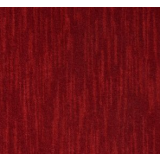 Kensington Carpet$593.00Kensington Carpet is the designer roll in our lineup: a tufted 30-ounce nylon carpet with a striated pattern drawn from the grain lines in stone and wood, in dark gray, charcoal black, navy blue, taupe, and red. It is an indoor product on a composite rubber backing, cut to length
...
Kensington Carpet is the designer roll in our lineup: a tufted 30-ounce nylon carpet with a striated pattern drawn from...
Kensington Carpet is the designer roll in our lineup: a tufted 30-ounce nylon carpet with a striated pattern drawn from the grain lines in stone and wood, in dark gray, charcoal black, navy blue, taupe, and red. It is an indoor product on a composite rubber backing, cut to length from a 6-foot-7-inch or 13-foot-2-inch roll. When a lobby or retail floor needs a commercial carpet roll that reads as interior design rather than matting, this is the one.
What Kensington Carpet Does Before the Lobby Stops Looking Finished
A lobby is specified for how it looks on opening day. The carpet that gets walked on afterward decides how long it keeps looking that way. Flat, single-color carpet shows every footpath, every coffee spill, and every dark drift of soil at the door, and a space that was designed with care starts reading tired within a season.
Kensington Carpet is built around appearance retention. The striated pattern is a field of fine, irregular lines in shifting tones of the same color, so soil that lands on it and the slight flattening in a walking lane both disappear into the pattern. The nylon fiber springs back from footfall in a way that softer fibers do not, and the tufted pile stays even across the run.
The stakes are the impression at the threshold. A hotel guest, a client, or a shopper forms an opinion of the building in the first few steps, and the floor is a large share of what they see. Carpet that still looks intended after two years of traffic is doing brand work. Carpet that looks worn is undoing it.
Why Tufted Space-Dyed Nylon, and Why This One
Most of our roll carpets are needlepunched polypropylene, a dense felt patterned on the surface. Kensington Carpet is a different construction. It is tufted: nylon yarn is stitched through a primary backing in rows, then bonded to a composite rubber backing. Tufting is how most commercial broadloom is made, and it is what gives Kensington its cut-pile hand and finished look.
The fiber is 100 percent PA6 nylon, space dyed. Space dyeing colors the yarn in short, shifting segments before it is tufted, which is what produces the striated pattern: no two inches of the roll repeat exactly, and the color reads as a blend of light and dark tones rather than a flat field. It is a design technique, but it is also why soil and traffic are hard to see on this carpet.
The pile is 30 ounces per square yard at 0.275 inch high, on a total height of 0.375 inch and a total weight of 70 ounces per square yard. That is a low overall profile with a relatively tall, soft pile, which is where the underfoot comfort the maker describes comes from. The rubber backing holds the roll to the floor and keeps moisture in the pile rather than under it.
For the spec file, Kensington Carpet carries an ASTM E648 radiant panel rating of Class 1, the flooring flammability class most institutional and corridor specifications call for. It also passes ASTM E662 smoke density and ASTM D2859 surface flammability, passes ASTM D7570 for dimensional stability, and is Green Label Plus certified for indoor air quality. It can contribute toward LEED-NC MR Credit 4 and IEQ Credits 4.1, 4.3, and 5.
Where It Belongs and What It Is Not
The maker's suggested uses read like a hospitality and corporate list: office environments, airports, conference rooms, lobbies, libraries, retail and department stores, resorts, restaurant entryways, and spas. Its own photography shows the product in a shoe boutique, an elevator lobby, a lounge, and a poolside corridor. It belongs where the carpet is part of the room, not a mat placed in it.
It also belongs deeper into the building than a walk-off mat. The maker rates it for the second and third zones of an entrance system, meaning the vestibule interior and the lobby or corridor beyond, rather than the exposed first zone at the door itself. Put a scraper or a heavier walk-off roll at the threshold and let Kensington carry the finished space behind it.
Kensington Carpet is rated for indoor use only. Nylon space-dyed yarn is not the fiber for a sun-exposed vestibule or a covered exterior walkway, and the cut sheet does not extend it there. Keep it inside the outer door.
What it is not: a scraper, a wet-weather walk-off for the first step inside, or a runner for carts and rolling loads. Grit and standing water should be stopped before they reach it. Where the same look is wanted on a floor that will be lifted and replaced in sections, the maker also produces the pattern as a 19.69-inch carpet tile and as custom logo matting.
Three Things to Check Before You Spec It
First, what sits ahead of it at the door? Kensington Carpet is a second- and third-zone product. It wants a scraper or a dense walk-off roll at the threshold to take the grit and the wet, so the striated pile gets clean shoes and does its appearance work. If the entry has no first-zone mat, add one before you specify this carpet.
Second, plan the run for pattern, not just length. Because the striae run the length of the roll, decide which direction the lines should read in the room before the cut. A 13-foot-2-inch width covers most lobbies without a center seam; where a seam is unavoidable, a striated pattern hides it far better than a solid, but the two pieces should run the same direction.
Third, choose the color for the room, then check it in the room. Dark gray and charcoal black suit cool, modern interiors and hide the most soil. Taupe warms up wood and stone. Navy blue and red carry a stronger design or brand statement. Space-dyed yarn shifts under different lighting, so ask us for a swatch and look at it under the actual fixtures.
Why Mats Inc.
Kensington Carpet is the roll our customers buy for the way a space looks, so the conversation is about pattern direction, seam placement, and what goes at the door ahead of it. Send the room dimensions and door location; we will tell you whether one 13-foot width clears the space and set up a first-zone mat in front so the carpet keeps the look you chose it for. Rolls are cut to length, and the matching tile and logo versions are available on request.
Specifications Construction Tufted Surface Designer striae (striated) pattern Fiber 100% PA6 space-dyed nylon Backing (roll goods) Composite rubber Pile height 0.275" (±0.5 mm) Total height 0.375" (±7.5%) Pile weight 30 oz/sq yd (±7.5%) Total weight 70 oz/sq yd (±7.5%) Roll width 6' 7" or 13' 2" (±2%) Lengths 10' to 100' in 10' steps; custom lengths available Also available as Carpet tile (19.69" x 19.69") and custom logo matting, on request Use Indoor only; entrance zones 2 and 3 (interior vestibule, lobby, corridor) Colors Dark Gray, Charcoal Black, Navy Blue, Taupe, Red Flammability Radiant panel (ASTM E648): Class 1; Smoke density (ASTM E662): Pass; Surface flammability (FF 1-70 / ASTM D2859): Pass Dimensional stability ASTM D7570: Pass Indoor air quality Green Label Plus certified LEED-NC May contribute to MR Credit 4; IEQ Credits 4.1, 4.3, 5 Maintenance Vacuum with a motor-driven brush and beater bar: weekly in low-traffic areas, daily or twice daily in high-traffic areas Warranty 1-year limited (Mats Inc.) Frequently Asked Questions
How is a tufted nylon carpet different from the needlepunched rolls?
Answered by Dustin Thompson, Owner & CEO
A needlepunched carpet is a felt: loose polypropylene fibers locked together by needles and patterned on top. Kensington Carpet is tufted, which means nylon yarn is stitched through a backing in rows and then bonded to a composite rubber base. Tufting gives a true cut pile with a soft hand and a finished, upholstered look.
Nylon also behaves differently underfoot. It springs back from compression better than polypropylene, so the pile stays even in the walking lane, and its 30-ounce weight sits on a low 0.375-inch overall profile. The trade-off is that nylon is an indoor fiber here; the needlepunched rolls take the door, and Kensington takes the room behind it.
How long will Kensington Carpet keep its look, and what ends it?
Answered by Dustin Thompson, Owner & CEO
The maker warrants the material against wear for five years of commercial use, defining wear as complete removal of the wear layer, pattern, and color. Because the striated, space-dyed pattern hides soil and lane flattening, this carpet tends to look acceptable well past the point where a solid would look tired, and a lobby that keeps grit off it at the door commonly reaches that mark still looking intended. Mats Inc. covers the product with a 1-year limited warranty.
What ends it early is grit that gets past the door. Sand works into a cut pile and abrades the yarn from inside, and the maker notes that about 15 percent of tracked-in soil is oil that binds that grit to the fiber. A first-zone scraper ahead of it and a beater-bar vacuum on schedule, daily in busy areas and weekly in quiet ones, are what protect the look.
Can it go in a vestibule or outdoors, and how is it installed?
Answered by Dustin Thompson, Owner & CEO
Indoors only, and preferably one step back from the door. The cut sheet rates Kensington Carpet for indoor use and for the second and third entrance zones, meaning the interior side of the vestibule, the lobby, and the corridors beyond. The first zone at the threshold, where the wet and the grit land, should be a scraper or a dense walk-off roll.
The maker requires professional installation to honor its own warranty, and for a carpet chosen for its look we agree. A glued-down run stays flat, keeps the pattern direction true, and lets a seam be placed and matched properly. Tell us the room and we will recommend the adhesive and the layout.
What widths and lengths does it come in, and how do seams work with a pattern?
Answered by Jinna Hopson, Vice President of Marketing
Rolls come 6 feet 7 inches wide and are cut in ten-foot steps from 10 to 100 feet; a 13-foot-2-inch width is available for lobbies and wide corridors so most rooms can be covered without a center seam. Custom lengths between the steps are routine.
Where a seam is unavoidable, the striated pattern is your friend. Its irregular lines break up the seam far better than a solid color would, provided both pieces run the same direction. Send us the room dimensions and door location and we will plan the layout so the lines read consistently across the space.
How does the striated pattern look in a real space?
Answered by Jinna Hopson, Vice President of Marketing
Warm and in motion. The maker describes the design as inspired by striae patterns found in nature, and that is how it reads: fine, shifting lines of lighter and darker tone within one color, like the grain in stone or wood. It gives a large floor energy without a repeating motif, so it works in a lounge, a boutique, or an elevator lobby without competing with the rest of the room.
Dark gray and charcoal black lean modern and corporate. Taupe is the warm neutral for hospitality and wood-heavy interiors. Navy blue and red are the statement colors, often used to carry a brand palette across a whole floor. Because space-dyed yarn changes character under different lighting, look at a swatch under your fixtures before you commit.
Can Kensington Carpet be matched to carpet tile or made into a logo mat?
Answered by Jinna Hopson, Vice President of Marketing
Yes to both. The maker produces the same striated pattern as a 19.69-inch carpet tile and as custom logo matting, so a building can run the roll in the lobby, tile in an office area that will be lifted and replaced in sections, and a logo mat at the elevator bank, all in one pattern and palette. Ask us for the tile or logo version when you order.
For a logo, the striated field is a flattering background: a solid-color mark set into the moving pattern reads as intentional rather than stamped on. Send your artwork through the proof request on this page and we will return a digital proof before anything is made.
By Jinna Hopson, Vice President of Marketing, Mats Inc.
↑
Kensington Carpet is the designer roll in our lineup: a tufted 30-ounce nylon carpet with a striated pattern drawn from the grain lines in stone and wood, in dark gray, charcoal black, navy blue, taupe, and red. It is an indoor product on a composite rubber backing, cut to length from a 6-foot-7-inch or 13-foot-2-inch roll. When a lobby or retail floor needs a commercial carpet roll that reads as interior design rather than matting, this is the one.
What Kensington Carpet Does Before the Lobby Stops Looking Finished
A lobby is specified for how it looks on opening day. The carpet that gets walked on afterward decides how long it keeps looking that way. Flat, single-color carpet shows every footpath, every coffee spill, and every dark drift of soil at the door, and a space that was designed with care starts reading tired within a season.
Kensington Carpet is built around appearance retention. The striated pattern is a field of fine, irregular lines in shifting tones of the same color, so soil that lands on it and the slight flattening in a walking lane both disappear into the pattern. The nylon fiber springs back from footfall in a way that softer fibers do not, and the tufted pile stays even across the run.
The stakes are the impression at the threshold. A hotel guest, a client, or a shopper forms an opinion of the building in the first few steps, and the floor is a large share of what they see. Carpet that still looks intended after two years of traffic is doing brand work. Carpet that looks worn is undoing it.
Why Tufted Space-Dyed Nylon, and Why This One
Most of our roll carpets are needlepunched polypropylene, a dense felt patterned on the surface. Kensington Carpet is a different construction. It is tufted: nylon yarn is stitched through a primary backing in rows, then bonded to a composite rubber backing. Tufting is how most commercial broadloom is made, and it is what gives Kensington its cut-pile hand and finished look.
The fiber is 100 percent PA6 nylon, space dyed. Space dyeing colors the yarn in short, shifting segments before it is tufted, which is what produces the striated pattern: no two inches of the roll repeat exactly, and the color reads as a blend of light and dark tones rather than a flat field. It is a design technique, but it is also why soil and traffic are hard to see on this carpet.
The pile is 30 ounces per square yard at 0.275 inch high, on a total height of 0.375 inch and a total weight of 70 ounces per square yard. That is a low overall profile with a relatively tall, soft pile, which is where the underfoot comfort the maker describes comes from. The rubber backing holds the roll to the floor and keeps moisture in the pile rather than under it.
For the spec file, Kensington Carpet carries an ASTM E648 radiant panel rating of Class 1, the flooring flammability class most institutional and corridor specifications call for. It also passes ASTM E662 smoke density and ASTM D2859 surface flammability, passes ASTM D7570 for dimensional stability, and is Green Label Plus certified for indoor air quality. It can contribute toward LEED-NC MR Credit 4 and IEQ Credits 4.1, 4.3, and 5.
Where It Belongs and What It Is Not
The maker's suggested uses read like a hospitality and corporate list: office environments, airports, conference rooms, lobbies, libraries, retail and department stores, resorts, restaurant entryways, and spas. Its own photography shows the product in a shoe boutique, an elevator lobby, a lounge, and a poolside corridor. It belongs where the carpet is part of the room, not a mat placed in it.
It also belongs deeper into the building than a walk-off mat. The maker rates it for the second and third zones of an entrance system, meaning the vestibule interior and the lobby or corridor beyond, rather than the exposed first zone at the door itself. Put a scraper or a heavier walk-off roll at the threshold and let Kensington carry the finished space behind it.
Kensington Carpet is rated for indoor use only. Nylon space-dyed yarn is not the fiber for a sun-exposed vestibule or a covered exterior walkway, and the cut sheet does not extend it there. Keep it inside the outer door.
What it is not: a scraper, a wet-weather walk-off for the first step inside, or a runner for carts and rolling loads. Grit and standing water should be stopped before they reach it. Where the same look is wanted on a floor that will be lifted and replaced in sections, the maker also produces the pattern as a 19.69-inch carpet tile and as custom logo matting.
Three Things to Check Before You Spec It
First, what sits ahead of it at the door? Kensington Carpet is a second- and third-zone product. It wants a scraper or a dense walk-off roll at the threshold to take the grit and the wet, so the striated pile gets clean shoes and does its appearance work. If the entry has no first-zone mat, add one before you specify this carpet.
Second, plan the run for pattern, not just length. Because the striae run the length of the roll, decide which direction the lines should read in the room before the cut. A 13-foot-2-inch width covers most lobbies without a center seam; where a seam is unavoidable, a striated pattern hides it far better than a solid, but the two pieces should run the same direction.
Third, choose the color for the room, then check it in the room. Dark gray and charcoal black suit cool, modern interiors and hide the most soil. Taupe warms up wood and stone. Navy blue and red carry a stronger design or brand statement. Space-dyed yarn shifts under different lighting, so ask us for a swatch and look at it under the actual fixtures.
Why Mats Inc.
Kensington Carpet is the roll our customers buy for the way a space looks, so the conversation is about pattern direction, seam placement, and what goes at the door ahead of it. Send the room dimensions and door location; we will tell you whether one 13-foot width clears the space and set up a first-zone mat in front so the carpet keeps the look you chose it for. Rolls are cut to length, and the matching tile and logo versions are available on request.
Specifications Construction Tufted Surface Designer striae (striated) pattern Fiber 100% PA6 space-dyed nylon Backing (roll goods) Composite rubber Pile height 0.275" (±0.5 mm) Total height 0.375" (±7.5%) Pile weight 30 oz/sq yd (±7.5%) Total weight 70 oz/sq yd (±7.5%) Roll width 6' 7" or 13' 2" (±2%) Lengths 10' to 100' in 10' steps; custom lengths available Also available as Carpet tile (19.69" x 19.69") and custom logo matting, on request Use Indoor only; entrance zones 2 and 3 (interior vestibule, lobby, corridor) Colors Dark Gray, Charcoal Black, Navy Blue, Taupe, Red Flammability Radiant panel (ASTM E648): Class 1; Smoke density (ASTM E662): Pass; Surface flammability (FF 1-70 / ASTM D2859): Pass Dimensional stability ASTM D7570: Pass Indoor air quality Green Label Plus certified LEED-NC May contribute to MR Credit 4; IEQ Credits 4.1, 4.3, 5 Maintenance Vacuum with a motor-driven brush and beater bar: weekly in low-traffic areas, daily or twice daily in high-traffic areas Warranty 1-year limited (Mats Inc.) Frequently Asked Questions
How is a tufted nylon carpet different from the needlepunched rolls?
Answered by Dustin Thompson, Owner & CEO
A needlepunched carpet is a felt: loose polypropylene fibers locked together by needles and patterned on top. Kensington Carpet is tufted, which means nylon yarn is stitched through a backing in rows and then bonded to a composite rubber base. Tufting gives a true cut pile with a soft hand and a finished, upholstered look.
Nylon also behaves differently underfoot. It springs back from compression better than polypropylene, so the pile stays even in the walking lane, and its 30-ounce weight sits on a low 0.375-inch overall profile. The trade-off is that nylon is an indoor fiber here; the needlepunched rolls take the door, and Kensington takes the room behind it.
How long will Kensington Carpet keep its look, and what ends it?
Answered by Dustin Thompson, Owner & CEO
The maker warrants the material against wear for five years of commercial use, defining wear as complete removal of the wear layer, pattern, and color. Because the striated, space-dyed pattern hides soil and lane flattening, this carpet tends to look acceptable well past the point where a solid would look tired, and a lobby that keeps grit off it at the door commonly reaches that mark still looking intended. Mats Inc. covers the product with a 1-year limited warranty.
What ends it early is grit that gets past the door. Sand works into a cut pile and abrades the yarn from inside, and the maker notes that about 15 percent of tracked-in soil is oil that binds that grit to the fiber. A first-zone scraper ahead of it and a beater-bar vacuum on schedule, daily in busy areas and weekly in quiet ones, are what protect the look.
Can it go in a vestibule or outdoors, and how is it installed?
Answered by Dustin Thompson, Owner & CEO
Indoors only, and preferably one step back from the door. The cut sheet rates Kensington Carpet for indoor use and for the second and third entrance zones, meaning the interior side of the vestibule, the lobby, and the corridors beyond. The first zone at the threshold, where the wet and the grit land, should be a scraper or a dense walk-off roll.
The maker requires professional installation to honor its own warranty, and for a carpet chosen for its look we agree. A glued-down run stays flat, keeps the pattern direction true, and lets a seam be placed and matched properly. Tell us the room and we will recommend the adhesive and the layout.
What widths and lengths does it come in, and how do seams work with a pattern?
Answered by Jinna Hopson, Vice President of Marketing
Rolls come 6 feet 7 inches wide and are cut in ten-foot steps from 10 to 100 feet; a 13-foot-2-inch width is available for lobbies and wide corridors so most rooms can be covered without a center seam. Custom lengths between the steps are routine.
Where a seam is unavoidable, the striated pattern is your friend. Its irregular lines break up the seam far better than a solid color would, provided both pieces run the same direction. Send us the room dimensions and door location and we will plan the layout so the lines read consistently across the space.
How does the striated pattern look in a real space?
Answered by Jinna Hopson, Vice President of Marketing
Warm and in motion. The maker describes the design as inspired by striae patterns found in nature, and that is how it reads: fine, shifting lines of lighter and darker tone within one color, like the grain in stone or wood. It gives a large floor energy without a repeating motif, so it works in a lounge, a boutique, or an elevator lobby without competing with the rest of the room.
Dark gray and charcoal black lean modern and corporate. Taupe is the warm neutral for hospitality and wood-heavy interiors. Navy blue and red are the statement colors, often used to carry a brand palette across a whole floor. Because space-dyed yarn changes character under different lighting, look at a swatch under your fixtures before you commit.
Can Kensington Carpet be matched to carpet tile or made into a logo mat?
Answered by Jinna Hopson, Vice President of Marketing
Yes to both. The maker produces the same striated pattern as a 19.69-inch carpet tile and as custom logo matting, so a building can run the roll in the lobby, tile in an office area that will be lifted and replaced in sections, and a logo mat at the elevator bank, all in one pattern and palette. Ask us for the tile or logo version when you order.
For a logo, the striated field is a flattering background: a solid-color mark set into the moving pattern reads as intentional rather than stamped on. Send your artwork through the proof request on this page and we will return a digital proof before anything is made.
By Jinna Hopson, Vice President of Marketing, Mats Inc.
↑
View Details
View Details
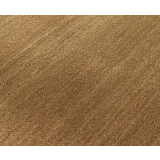 Coco Coir Rolls$711.00Coco coir rolls bring a natural-fiber entrance to a recessed well: warm, brush-textured coconut coir bonded to a sealed vinyl base, cut from the roll to fit your recess. The coir brushes grit off shoes and the vinyl backing keeps dirt and moisture on the mat instead of letting it
...
Coco coir rolls bring a natural-fiber entrance to a recessed well: warm, brush-textured coconut coir bonded to a sealed vinyl...
Coco coir rolls bring a natural-fiber entrance to a recessed well: warm, brush-textured coconut coir bonded to a sealed vinyl base, cut from the roll to fit your recess. The coir brushes grit off shoes and the vinyl backing keeps dirt and moisture on the mat instead of letting it reach the floor below — all while giving the doorway the classic, welcoming look people associate with a well-kept entrance.
What coco coir does before grit reaches your floor
Coir is the stiff, brushy fiber from coconut husks — the original boot-scraping material. Set into a recessed well at the entrance, a coir mat brushes dirt and debris off shoes as people come in, holding grit and moisture on the mat so it doesn't track across the floor beyond the door. It does that while looking like natural fiber, not industrial matting.
What keeps it off your floor is the backing. Unlike a plain woven coco mat that lets water seep straight through, this one is built on a sealed vinyl base, so moisture and grit stay on top of the mat rather than reaching the floor underneath. Recessed coir matting sits down in the well, flush with the surrounding floor, doing that work without a trip lip or a utilitarian look.
Why natural coir, and why this one
Coir's appeal is the material itself. The coconut fiber is naturally stiff and brushy, so it captures grit well, and it carries a warm, golden, textured look that synthetic mats imitate but don't quite match. For an entrance where the first impression matters — a hotel, a boutique, a traditional lobby — that natural character is the whole point.
The coir is fusion-bonded into the vinyl base at a total height of about 5/8" — roughly 0.422" of that is the coir pile — which locks the fibers in so the mat can be cut to any shape without unraveling. That's what makes it work in a recessed well, and why an odd-shaped recess or a wide entry is straightforward: a large well is laid out from the roll to read as one clean mat.
It comes in rolls about 6'7" wide, cut to your opening, and can be made with or without an inlaid logo. Color isn't limited to the natural tone, either — beyond the classic golden coir, it's offered in grey, black, blue, green, brown, and red, so the mat can stay traditional or pick up a brand or interior palette.
Coir also carries a real sustainability story: it's a renewable byproduct of the coconut harvest, and as a semipermanent, maintained walk-off system at least ten feet long it can contribute toward LEED-NC — toward recycled-content and low-emitting-material credits, with a releasable adhesive rated at zero VOC. Because the exact contribution depends on the LEED version and the credits in play, tell us the points you're targeting and we'll confirm how it fits.
Where it belongs, and what it is not
Coir belongs at indoor and covered entrances — lobbies, vestibules, conference rooms, libraries, retail floors, and recessed wells at sheltered doors. It's a natural fit for offices, retail, schools, government buildings, and hospitality entries that want a warm, natural threshold. It's one of our recessed mat inserts, cut to drop into the well flush with the floor.
It's rated for indoor use, not for an exposed outdoor doorway, for two reasons. Coir is a natural fiber that fades and wears faster in direct sun and rain than a synthetic, and the dyed colors are vegetable-based, so they can transfer if the mat gets wet. For a fully exposed entrance, a weatherproof scraper or grate is the better tool, and we'll point you to one. Expect a little natural shedding from coir early on, too.
Three things to check before you spec it
First, keep it to indoor and covered spots. Coir is at its best inside — a lobby, a vestibule, a recessed indoor well. In an open doorway taking direct sun and rain, it'll fade and wear sooner, and the vegetable-dyed colors can run if they get soaked. Save coir for sheltered entries and use a weatherproof mat where the weather hits directly.
Second, measure the opening, especially a recess. The matting comes in rolls about 6'7" wide and is cut to your dimensions, so custom shapes are workable and the cut edges hold without unraveling. For a recess wider than a single piece, sections are laid out so the well reads as one mat. Send the well dimensions and we'll plan the cut.
Third, pick the color and look. The natural golden tone is what most people picture at a front door, while the dyed options read more finished or pick up a brand color, and a logo can be inlaid. Keep in mind the colors are vegetable-dyed, so choose with the indoor setting and the impression you want at the door in mind.
Why Mats Inc.
We've specified entrance flooring since 1964, and coir is one of those materials where the right call is as much about where it goes as what it is. We help you judge whether an entrance is sheltered enough for natural fiber, size the mat to your recess, and choose the color or logo to suit the doorway — then cut it to fit and ship it ready to set. If a spot is too exposed for coir, we'll tell you and point you to something weatherproof instead.
Specifications Fiber Natural coconut fibers (coir) Backing Vinyl — sealed base keeps moisture and dirt on the mat, not through to the floor Manufacturing Fusion bonded Surface Non-directional, smooth / velour Pile height 0.422" Total height 0.625" (about 5/8") Pile weight 60 oz/sy Total weight 166 oz/sy Roll / sheet width 6'7", cut to length; custom sizes and logo mats available Flammability ASTM E648 (radiant panel): Class II LEED (LEED-NC v3) Can contribute toward MR Credit 4 (recycled content), IEQ Credit 4.1 (releasable adhesive, 0 g/L VOC), and IEQ Credit 5 (semipermanent entrance system at least 10 ft, maintained weekly) Use Indoor only; recessed wells and entryways Installation Semipermanent; set with a releasable adhesive, cut to fit flush Colors Natural, grey, black, blue, green, brown, red (vegetable-dyed except natural); with or without inlaid logo Maintenance Regular vacuuming with a motor-driven brush and beater bar Warranty 1-year limited (Mats Inc.) Frequently Asked Questions
What exactly is coco coir, and how does it clean shoes?
Answered by Dustin Thompson, Owner & CEO
Coir is the coarse natural fiber from coconut husks — the same stiff, brushy material people have used as a boot scraper for generations. Here it's fusion-bonded onto a sealed vinyl base at about 5/8" thick. As people walk across it, the coir fibers comb grit and debris off their shoes, and the vinyl backing keeps that dirt and any moisture on the mat instead of letting it seep through to the floor below.
How long does a coir mat last, and how do I keep it looking good?
Answered by Dustin Thompson, Owner & CEO
Indoors and maintained, coir holds up well — the fibers are fusion-bonded into the vinyl base, so they don't shed loose or pull out the way a woven mat can. The thing that shortens its life is weather, which is why it's rated for indoor use.
Maintenance does the rest. A regular pass with a motor-driven brush and beater bar lifts the grit ground into the fiber and removes up to 80% of the surface dirt — that's what keeps both the look and the scraping working over time.
How is it installed in a recessed well?
Answered by Dustin Thompson, Owner & CEO
It's a semipermanent installation. The mat is cut to the size and shape of the well and set down into it with a releasable adhesive, so the top finishes flush with the surrounding floor — no lip at the threshold — and it can still be lifted for a deep cleaning or replacement. Set flush, it brushes shoes the same way it would sitting proud, but it reads as a built-in part of the entrance. Send us the well dimensions and we'll cut it to fit.
What colors does it come in?
Answered by Jinna Hopson, Vice President of Marketing
Beyond the classic natural coir tone — the warm, golden look most people picture at a front door — it comes in grey, black, blue, green, brown, and red, so the mat can stay traditional or pick up a brand or interior color.
One thing to know: every color except the natural tone is vegetable-dyed, which is part of why it's an indoor product, since the dyes can transfer if the mat gets soaked. Because color shifts between a screen and the real fiber, ask for a sample before you commit.
Can it be cut to a custom size or odd-shaped recess, and can I add a logo?
Answered by Jinna Hopson, Vice President of Marketing
Yes to both. It's supplied in rolls about 6'7" wide and cut to your opening, so custom sizes and shapes are straightforward — the cut edges hold without unraveling because the fibers are bonded into the base. For a recess wider than a single piece, sections are laid out so a large well reads as one clean mat. It can also be made with or without an inlaid logo, so a coir entrance can carry a name or mark while keeping its natural texture.
Does coir suit a modern space, or only traditional entrances?
Answered by Jinna Hopson, Vice President of Marketing
Coir reads natural and classic — the brushy texture and warm tone are what people associate with a welcoming, well-kept doorway, which is why it suits hospitality, retail, and traditional or warm entrances especially well. In a sleek, minimal modern lobby, a finished synthetic or a metal grate often fits the look better. But for an entrance you want to feel natural and inviting under cover, coir looks the part in a way engineered matting doesn't quite reach.
By Jinna Hopson, Vice President of Marketing, Mats Inc.
↑
Coco coir rolls bring a natural-fiber entrance to a recessed well: warm, brush-textured coconut coir bonded to a sealed vinyl base, cut from the roll to fit your recess. The coir brushes grit off shoes and the vinyl backing keeps dirt and moisture on the mat instead of letting it reach the floor below — all while giving the doorway the classic, welcoming look people associate with a well-kept entrance.
What coco coir does before grit reaches your floor
Coir is the stiff, brushy fiber from coconut husks — the original boot-scraping material. Set into a recessed well at the entrance, a coir mat brushes dirt and debris off shoes as people come in, holding grit and moisture on the mat so it doesn't track across the floor beyond the door. It does that while looking like natural fiber, not industrial matting.
What keeps it off your floor is the backing. Unlike a plain woven coco mat that lets water seep straight through, this one is built on a sealed vinyl base, so moisture and grit stay on top of the mat rather than reaching the floor underneath. Recessed coir matting sits down in the well, flush with the surrounding floor, doing that work without a trip lip or a utilitarian look.
Why natural coir, and why this one
Coir's appeal is the material itself. The coconut fiber is naturally stiff and brushy, so it captures grit well, and it carries a warm, golden, textured look that synthetic mats imitate but don't quite match. For an entrance where the first impression matters — a hotel, a boutique, a traditional lobby — that natural character is the whole point.
The coir is fusion-bonded into the vinyl base at a total height of about 5/8" — roughly 0.422" of that is the coir pile — which locks the fibers in so the mat can be cut to any shape without unraveling. That's what makes it work in a recessed well, and why an odd-shaped recess or a wide entry is straightforward: a large well is laid out from the roll to read as one clean mat.
It comes in rolls about 6'7" wide, cut to your opening, and can be made with or without an inlaid logo. Color isn't limited to the natural tone, either — beyond the classic golden coir, it's offered in grey, black, blue, green, brown, and red, so the mat can stay traditional or pick up a brand or interior palette.
Coir also carries a real sustainability story: it's a renewable byproduct of the coconut harvest, and as a semipermanent, maintained walk-off system at least ten feet long it can contribute toward LEED-NC — toward recycled-content and low-emitting-material credits, with a releasable adhesive rated at zero VOC. Because the exact contribution depends on the LEED version and the credits in play, tell us the points you're targeting and we'll confirm how it fits.
Where it belongs, and what it is not
Coir belongs at indoor and covered entrances — lobbies, vestibules, conference rooms, libraries, retail floors, and recessed wells at sheltered doors. It's a natural fit for offices, retail, schools, government buildings, and hospitality entries that want a warm, natural threshold. It's one of our recessed mat inserts, cut to drop into the well flush with the floor.
It's rated for indoor use, not for an exposed outdoor doorway, for two reasons. Coir is a natural fiber that fades and wears faster in direct sun and rain than a synthetic, and the dyed colors are vegetable-based, so they can transfer if the mat gets wet. For a fully exposed entrance, a weatherproof scraper or grate is the better tool, and we'll point you to one. Expect a little natural shedding from coir early on, too.
Three things to check before you spec it
First, keep it to indoor and covered spots. Coir is at its best inside — a lobby, a vestibule, a recessed indoor well. In an open doorway taking direct sun and rain, it'll fade and wear sooner, and the vegetable-dyed colors can run if they get soaked. Save coir for sheltered entries and use a weatherproof mat where the weather hits directly.
Second, measure the opening, especially a recess. The matting comes in rolls about 6'7" wide and is cut to your dimensions, so custom shapes are workable and the cut edges hold without unraveling. For a recess wider than a single piece, sections are laid out so the well reads as one mat. Send the well dimensions and we'll plan the cut.
Third, pick the color and look. The natural golden tone is what most people picture at a front door, while the dyed options read more finished or pick up a brand color, and a logo can be inlaid. Keep in mind the colors are vegetable-dyed, so choose with the indoor setting and the impression you want at the door in mind.
Why Mats Inc.
We've specified entrance flooring since 1964, and coir is one of those materials where the right call is as much about where it goes as what it is. We help you judge whether an entrance is sheltered enough for natural fiber, size the mat to your recess, and choose the color or logo to suit the doorway — then cut it to fit and ship it ready to set. If a spot is too exposed for coir, we'll tell you and point you to something weatherproof instead.
Specifications Fiber Natural coconut fibers (coir) Backing Vinyl — sealed base keeps moisture and dirt on the mat, not through to the floor Manufacturing Fusion bonded Surface Non-directional, smooth / velour Pile height 0.422" Total height 0.625" (about 5/8") Pile weight 60 oz/sy Total weight 166 oz/sy Roll / sheet width 6'7", cut to length; custom sizes and logo mats available Flammability ASTM E648 (radiant panel): Class II LEED (LEED-NC v3) Can contribute toward MR Credit 4 (recycled content), IEQ Credit 4.1 (releasable adhesive, 0 g/L VOC), and IEQ Credit 5 (semipermanent entrance system at least 10 ft, maintained weekly) Use Indoor only; recessed wells and entryways Installation Semipermanent; set with a releasable adhesive, cut to fit flush Colors Natural, grey, black, blue, green, brown, red (vegetable-dyed except natural); with or without inlaid logo Maintenance Regular vacuuming with a motor-driven brush and beater bar Warranty 1-year limited (Mats Inc.) Frequently Asked Questions
What exactly is coco coir, and how does it clean shoes?
Answered by Dustin Thompson, Owner & CEO
Coir is the coarse natural fiber from coconut husks — the same stiff, brushy material people have used as a boot scraper for generations. Here it's fusion-bonded onto a sealed vinyl base at about 5/8" thick. As people walk across it, the coir fibers comb grit and debris off their shoes, and the vinyl backing keeps that dirt and any moisture on the mat instead of letting it seep through to the floor below.
How long does a coir mat last, and how do I keep it looking good?
Answered by Dustin Thompson, Owner & CEO
Indoors and maintained, coir holds up well — the fibers are fusion-bonded into the vinyl base, so they don't shed loose or pull out the way a woven mat can. The thing that shortens its life is weather, which is why it's rated for indoor use.
Maintenance does the rest. A regular pass with a motor-driven brush and beater bar lifts the grit ground into the fiber and removes up to 80% of the surface dirt — that's what keeps both the look and the scraping working over time.
How is it installed in a recessed well?
Answered by Dustin Thompson, Owner & CEO
It's a semipermanent installation. The mat is cut to the size and shape of the well and set down into it with a releasable adhesive, so the top finishes flush with the surrounding floor — no lip at the threshold — and it can still be lifted for a deep cleaning or replacement. Set flush, it brushes shoes the same way it would sitting proud, but it reads as a built-in part of the entrance. Send us the well dimensions and we'll cut it to fit.
What colors does it come in?
Answered by Jinna Hopson, Vice President of Marketing
Beyond the classic natural coir tone — the warm, golden look most people picture at a front door — it comes in grey, black, blue, green, brown, and red, so the mat can stay traditional or pick up a brand or interior color.
One thing to know: every color except the natural tone is vegetable-dyed, which is part of why it's an indoor product, since the dyes can transfer if the mat gets soaked. Because color shifts between a screen and the real fiber, ask for a sample before you commit.
Can it be cut to a custom size or odd-shaped recess, and can I add a logo?
Answered by Jinna Hopson, Vice President of Marketing
Yes to both. It's supplied in rolls about 6'7" wide and cut to your opening, so custom sizes and shapes are straightforward — the cut edges hold without unraveling because the fibers are bonded into the base. For a recess wider than a single piece, sections are laid out so a large well reads as one clean mat. It can also be made with or without an inlaid logo, so a coir entrance can carry a name or mark while keeping its natural texture.
Does coir suit a modern space, or only traditional entrances?
Answered by Jinna Hopson, Vice President of Marketing
Coir reads natural and classic — the brushy texture and warm tone are what people associate with a welcoming, well-kept doorway, which is why it suits hospitality, retail, and traditional or warm entrances especially well. In a sleek, minimal modern lobby, a finished synthetic or a metal grate often fits the look better. But for an entrance you want to feel natural and inviting under cover, coir looks the part in a way engineered matting doesn't quite reach.
By Jinna Hopson, Vice President of Marketing, Mats Inc.
↑
View Details
View Details
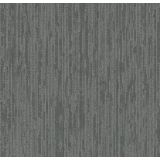 Noordic Carpet Tile$280.00Noordic is a textured loop tile built for the floors people actually walk across all day — lobbies, library floors, retail aisles and the stretch of floor just inside an entryway. It is an indoor tile, and it is meant to look presentable years into its life rather than only
...
Noordic is a textured loop tile built for the floors people actually walk across all day — lobbies, library floors,...
Noordic is a textured loop tile built for the floors people actually walk across all day — lobbies, library floors, retail aisles and the stretch of floor just inside an entryway. It is an indoor tile, and it is meant to look presentable years into its life rather than only on the day it goes down.
Most of what determines that is the surface. A loop that scatters light and a color that runs all the way through the fiber will hide a working floor's ordinary soil far longer than a smooth, surface-dyed one.
What a Textured Loop Tile Does Before Your Floor Starts Looking Tired
Commercial carpet tiles rarely fail by wearing through. They fail by looking dull. Soil works its way down into the fiber, dulls the color, and the floor reads dirty even after it has been vacuumed. Once that happens, nobody cares how much life is technically left in the tile.
A textured loop surface fights that. The loops sit at varying heights, so the surface breaks up light instead of reflecting it evenly. Footprints, vacuum lines and light soil scatter across that texture rather than showing as clean marks on a flat field.
Routine vacuuming with a motor-driven brush and beater bar pulls up to 80% of surface dirt off a carpet tile floor, and doing it on schedule is the single most effective thing you can do for the floor's appearance. Weekly is enough in light-use rooms. Higher-traffic areas want daily, sometimes twice daily.
The remaining fraction is the problem. Roughly 15% of soil content clings to the fiber and resists vacuuming outright, building into soil reservoirs that get tracked deeper into the building over time. Frequent light cleaning keeps that from accumulating; waiting until the floor looks bad means a much harder restoration.
Why a Solution-Dyed Textured Loop, and Why This One
The fiber is PET — polyethylene terephthalate, the same polymer family as a beverage bottle — and it is solution dyed. That means the color is added while the fiber is still liquid, so it runs through the strand instead of sitting on the outside of it.
The practical result is color that holds. There is no dyed surface layer to abrade off in a traffic lane, and the tile passes lightfastness testing, so a floor near a glass entry or a south-facing window does not fade unevenly against the rest of the room.
Construction is a 20 oz per square yard face weight at a 1/10 gauge, on a modular backing, with a total nominal thickness of 0.246 inches. That is a mid-weight commercial specification: substantial enough for a library or a retail floor, and honestly not the tile for a loading corridor or an industrial floor.
A soil-release treatment is applied to the face, which is what makes routine vacuuming and light cleaning work as well as they do. The tile also carries a static rating below 3.0 kV under AATCC-134 — enough to keep ordinary walking shocks down in a dry building, though not a substitute for a dedicated static-control tile in a room full of electronics.
On the environmental side, the tile is NSF/ANSI 140 Gold certified with 40.71% total recycled content, and it contributes to LEED-NC under MR Credit 4 and IEQ Credits 4.1, 4.3 and 5. It is Class 1 under the flooring radiant panel test, passes the pill test, holds smoke density under 450 flaming per ASTM E 662, and is compliant for ADA accessible routes.
Where It Belongs, and Where It Is Not the Right Tile
The sweet spot is indoor floors that carry steady foot traffic and still have to look composed: lobbies, library reading rooms and stacks, retail and department store floors, and the interior stretch behind an entryway. It handles the traffic those spaces see without reading as a heavy-duty industrial product.
It belongs behind an entrance mat, not in place of one. Grit walked in from outside is abrasive, and a mid-weight loop is not built to absorb that job. Let a scraping and moisture-holding construction handle the first several feet inside the door and let Noordic take the floor beyond it.
Two situations rule it out. It is an indoor tile, so exterior and covered-exterior positions are off the table. And because a carpet tile has a high insulation value, it is not recommended over under-floor heating systems that are in use — the heat does not pass through it usefully and the assembly is working against itself.
It also is not the answer for a room full of sensitive electronics. The static rating is good for a general-purpose floor, but a server room or an electronics assembly bench needs a purpose-built static-control tile. When you are working out which tile handles which zone, the full range of carpet tiles sorts by exactly that question.
Three Things to Check Before You Spec It
First, check the subfloor before you check anything else. Tiles can be loose laid over a flat, dry floor that is free of oil, grease and other impurities. Cracks need filling, uneven floors need hardboard over them, and dusty floors need priming. Let the tiles acclimate at 60 to 70 degrees Fahrenheit for 24 hours before laying.
Second, check what rolls across it. Loose laid works for ordinary foot traffic, and securing one row in five with double-sided tape is advisable on large installations. Under caster chairs, that is not enough — those areas need to be fully secured, or the chairs will walk the tiles apart over a few months.
Third, check your quantities and your batch numbers. Tiles are 24 inches by 24 inches and ship 18 to a carton, covering 72 square feet at 43.4 pounds per carton. Order attic stock in the same run, and only lay tiles from the same batch together — mixed batches will read as a shading difference across the floor.
Why Mats Inc.
We specify rather than install, which means we have no reason to push a heavier tile than your traffic warrants or a lighter one than it needs. A 20 oz textured loop is right for a lot of floors and wrong for some, and we will tell you which one you have. Since 1964 that has been the whole job: matching the construction to the zone.
Construction Textured loop Fiber PET (polyethylene terephthalate) Dye method Solution dyed Face weight 20 oz/sy (678 g/m²) Gauge 1/10 (3.94 rows/cm) Total thickness 0.246 in. nominal average Tile size 18 in. x 18 in. approx. (45.72 x 45.72 cm) Coverage per case 27 sq. ft. (2.51 m²) Pattern repeat None Backing Modular; cushion backing available as an option Surface treatment Soil release Adhesive Commercial premium modular and LVT adhesive; adhesive tabs optional Packaging 12 tiles per case, 27 sq. ft., [CONFIRM case weight] lbs. Recycled content 40.71% total NSF/ANSI 140 Gold certified Flooring radiant panel Class 1 Smoke density Less than 450.0 flaming (ASTM E 662) Static Less than 3.0 kV (AATCC-134) Accessibility Compliant for ADA accessible routes LEED-NC MR Credit 4; IEQ Credits 4.1, 4.3, 5 Warranty 1-year limited (Mats Inc.) Frequently Asked Questions
What is a textured loop, and how is it different from a cut pile carpet tile?
Answered by Dustin Thompson, Owner & CEO
In a loop construction the yarn stays looped at the surface instead of being sheared open. A textured loop varies the height of those loops, so the surface is uneven rather than flat and uniform. Nothing is exposed at the fiber tip the way it is in a cut pile.
That matters for how the floor ages. Cut pile shows footprints, vacuum tracks and crushing plainly, because you are looking at a smooth surface. A textured loop scatters all of that. It is the reason loop constructions dominate commercial and high traffic carpet tiles while cut pile stays mostly residential.
How long will this tile last, and what shortens it?
Answered by Dustin Thompson, Owner & CEO
For a 20 oz commercial loop tile, plan on roughly ten to fifteen years in offices, libraries and other moderate-use rooms, and seven to ten years across busier lobby and retail floors. Traffic lanes inside an entryway are the first area to show age, and often need replacing before the field does.
What ends it early is almost always soil, not wear. Abrasive grit tracked in from outside grinds at the fiber, and the 15% of soil that resists vacuuming builds up until the color dulls permanently. An entrance mat at the door and a real vacuuming schedule do more for service life than anything else. The tile carries a 1-year limited warranty from Mats Inc.
What does the subfloor need before installation, and can we lay it ourselves?
Answered by Dustin Thompson, Owner & CEO
A capable in-house crew can handle it. The floor needs to be flat, dry and free of oil, grease and other impurities. Fill cracks, cover uneven areas with hardboard, prime anything dusty, and let the tiles sit at 60 to 70 degrees Fahrenheit for 24 hours first.
Snap a marker cross at the center of the room and work outward, shifting the cross if it helps land full tiles in doorways. Turn every alternate tile 90 degrees for a checkerboard — an arrow on the back shows pile direction. Tiles can be loose laid, with one row in five taped on large jobs, but any area under caster chairs has to be fully secured.
Will the color fade or shade unevenly over time?
Answered by Jinna Hopson, Vice President of Marketing
Fading is not the concern here. The fiber is solution dyed, so the color is locked into the strand rather than applied to the outside of it, and the tile passes lightfastness testing. A floor beside a glass entry will hold its color against a shaded corner of the same room.
Shading is a different issue, and it is an installation one. Lay tiles from two different batch numbers side by side and the eye will pick up the difference under raking light. Keep batches together, and if you are patching years later, pull from attic stock rather than ordering fresh.
Can this be used in a home, or is it strictly commercial?
Answered by Jinna Hopson, Vice President of Marketing
It works in a home, and people use commercial carpet squares residentially for exactly the reason you would expect — one damaged square comes up and gets replaced without touching the rest of the room. Home offices, finished basements and family rooms are the usual spots.
Two cautions. This is an indoor tile, so a sunroom or a covered porch is out. And if the room has under-floor heating in use, this is the wrong product — a carpet tile insulates well enough that the heat does not come through usefully.
Are there cushioned or coordinating options if the space needs something softer?
Answered by Jinna Hopson, Vice President of Marketing
Yes. A cushion backing is available as an option in place of the standard modular backing, which gives you a softer step and a quieter room without laying a separate underlay. That is worth considering for a library, a waiting area, or anywhere people stand rather than pass through.
For a floor that needs more than one look, the 24 by 24 module lets you build a pattern from stock. Two colorways in a checkerboard or plank layout, or a darker run down a corridor, reads as a designed floor while keeping every square individually replaceable. Tell us the space and we will work out the layout with you.
By Dustin Thompson, Owner & CEO, Mats Inc.
↑
Noordic is a textured loop tile built for the floors people actually walk across all day — lobbies, library floors, retail aisles and the stretch of floor just inside an entryway. It is an indoor tile, and it is meant to look presentable years into its life rather than only on the day it goes down.
Most of what determines that is the surface. A loop that scatters light and a color that runs all the way through the fiber will hide a working floor's ordinary soil far longer than a smooth, surface-dyed one.
What a Textured Loop Tile Does Before Your Floor Starts Looking Tired
Commercial carpet tiles rarely fail by wearing through. They fail by looking dull. Soil works its way down into the fiber, dulls the color, and the floor reads dirty even after it has been vacuumed. Once that happens, nobody cares how much life is technically left in the tile.
A textured loop surface fights that. The loops sit at varying heights, so the surface breaks up light instead of reflecting it evenly. Footprints, vacuum lines and light soil scatter across that texture rather than showing as clean marks on a flat field.
Routine vacuuming with a motor-driven brush and beater bar pulls up to 80% of surface dirt off a carpet tile floor, and doing it on schedule is the single most effective thing you can do for the floor's appearance. Weekly is enough in light-use rooms. Higher-traffic areas want daily, sometimes twice daily.
The remaining fraction is the problem. Roughly 15% of soil content clings to the fiber and resists vacuuming outright, building into soil reservoirs that get tracked deeper into the building over time. Frequent light cleaning keeps that from accumulating; waiting until the floor looks bad means a much harder restoration.
Why a Solution-Dyed Textured Loop, and Why This One
The fiber is PET — polyethylene terephthalate, the same polymer family as a beverage bottle — and it is solution dyed. That means the color is added while the fiber is still liquid, so it runs through the strand instead of sitting on the outside of it.
The practical result is color that holds. There is no dyed surface layer to abrade off in a traffic lane, and the tile passes lightfastness testing, so a floor near a glass entry or a south-facing window does not fade unevenly against the rest of the room.
Construction is a 20 oz per square yard face weight at a 1/10 gauge, on a modular backing, with a total nominal thickness of 0.246 inches. That is a mid-weight commercial specification: substantial enough for a library or a retail floor, and honestly not the tile for a loading corridor or an industrial floor.
A soil-release treatment is applied to the face, which is what makes routine vacuuming and light cleaning work as well as they do. The tile also carries a static rating below 3.0 kV under AATCC-134 — enough to keep ordinary walking shocks down in a dry building, though not a substitute for a dedicated static-control tile in a room full of electronics.
On the environmental side, the tile is NSF/ANSI 140 Gold certified with 40.71% total recycled content, and it contributes to LEED-NC under MR Credit 4 and IEQ Credits 4.1, 4.3 and 5. It is Class 1 under the flooring radiant panel test, passes the pill test, holds smoke density under 450 flaming per ASTM E 662, and is compliant for ADA accessible routes.
Where It Belongs, and Where It Is Not the Right Tile
The sweet spot is indoor floors that carry steady foot traffic and still have to look composed: lobbies, library reading rooms and stacks, retail and department store floors, and the interior stretch behind an entryway. It handles the traffic those spaces see without reading as a heavy-duty industrial product.
It belongs behind an entrance mat, not in place of one. Grit walked in from outside is abrasive, and a mid-weight loop is not built to absorb that job. Let a scraping and moisture-holding construction handle the first several feet inside the door and let Noordic take the floor beyond it.
Two situations rule it out. It is an indoor tile, so exterior and covered-exterior positions are off the table. And because a carpet tile has a high insulation value, it is not recommended over under-floor heating systems that are in use — the heat does not pass through it usefully and the assembly is working against itself.
It also is not the answer for a room full of sensitive electronics. The static rating is good for a general-purpose floor, but a server room or an electronics assembly bench needs a purpose-built static-control tile. When you are working out which tile handles which zone, the full range of carpet tiles sorts by exactly that question.
Three Things to Check Before You Spec It
First, check the subfloor before you check anything else. Tiles can be loose laid over a flat, dry floor that is free of oil, grease and other impurities. Cracks need filling, uneven floors need hardboard over them, and dusty floors need priming. Let the tiles acclimate at 60 to 70 degrees Fahrenheit for 24 hours before laying.
Second, check what rolls across it. Loose laid works for ordinary foot traffic, and securing one row in five with double-sided tape is advisable on large installations. Under caster chairs, that is not enough — those areas need to be fully secured, or the chairs will walk the tiles apart over a few months.
Third, check your quantities and your batch numbers. Tiles are 24 inches by 24 inches and ship 18 to a carton, covering 72 square feet at 43.4 pounds per carton. Order attic stock in the same run, and only lay tiles from the same batch together — mixed batches will read as a shading difference across the floor.
Why Mats Inc.
We specify rather than install, which means we have no reason to push a heavier tile than your traffic warrants or a lighter one than it needs. A 20 oz textured loop is right for a lot of floors and wrong for some, and we will tell you which one you have. Since 1964 that has been the whole job: matching the construction to the zone.
Construction Textured loop Fiber PET (polyethylene terephthalate) Dye method Solution dyed Face weight 20 oz/sy (678 g/m²) Gauge 1/10 (3.94 rows/cm) Total thickness 0.246 in. nominal average Tile size 18 in. x 18 in. approx. (45.72 x 45.72 cm) Coverage per case 27 sq. ft. (2.51 m²) Pattern repeat None Backing Modular; cushion backing available as an option Surface treatment Soil release Adhesive Commercial premium modular and LVT adhesive; adhesive tabs optional Packaging 12 tiles per case, 27 sq. ft., [CONFIRM case weight] lbs. Recycled content 40.71% total NSF/ANSI 140 Gold certified Flooring radiant panel Class 1 Smoke density Less than 450.0 flaming (ASTM E 662) Static Less than 3.0 kV (AATCC-134) Accessibility Compliant for ADA accessible routes LEED-NC MR Credit 4; IEQ Credits 4.1, 4.3, 5 Warranty 1-year limited (Mats Inc.) Frequently Asked Questions
What is a textured loop, and how is it different from a cut pile carpet tile?
Answered by Dustin Thompson, Owner & CEO
In a loop construction the yarn stays looped at the surface instead of being sheared open. A textured loop varies the height of those loops, so the surface is uneven rather than flat and uniform. Nothing is exposed at the fiber tip the way it is in a cut pile.
That matters for how the floor ages. Cut pile shows footprints, vacuum tracks and crushing plainly, because you are looking at a smooth surface. A textured loop scatters all of that. It is the reason loop constructions dominate commercial and high traffic carpet tiles while cut pile stays mostly residential.
How long will this tile last, and what shortens it?
Answered by Dustin Thompson, Owner & CEO
For a 20 oz commercial loop tile, plan on roughly ten to fifteen years in offices, libraries and other moderate-use rooms, and seven to ten years across busier lobby and retail floors. Traffic lanes inside an entryway are the first area to show age, and often need replacing before the field does.
What ends it early is almost always soil, not wear. Abrasive grit tracked in from outside grinds at the fiber, and the 15% of soil that resists vacuuming builds up until the color dulls permanently. An entrance mat at the door and a real vacuuming schedule do more for service life than anything else. The tile carries a 1-year limited warranty from Mats Inc.
What does the subfloor need before installation, and can we lay it ourselves?
Answered by Dustin Thompson, Owner & CEO
A capable in-house crew can handle it. The floor needs to be flat, dry and free of oil, grease and other impurities. Fill cracks, cover uneven areas with hardboard, prime anything dusty, and let the tiles sit at 60 to 70 degrees Fahrenheit for 24 hours first.
Snap a marker cross at the center of the room and work outward, shifting the cross if it helps land full tiles in doorways. Turn every alternate tile 90 degrees for a checkerboard — an arrow on the back shows pile direction. Tiles can be loose laid, with one row in five taped on large jobs, but any area under caster chairs has to be fully secured.
Will the color fade or shade unevenly over time?
Answered by Jinna Hopson, Vice President of Marketing
Fading is not the concern here. The fiber is solution dyed, so the color is locked into the strand rather than applied to the outside of it, and the tile passes lightfastness testing. A floor beside a glass entry will hold its color against a shaded corner of the same room.
Shading is a different issue, and it is an installation one. Lay tiles from two different batch numbers side by side and the eye will pick up the difference under raking light. Keep batches together, and if you are patching years later, pull from attic stock rather than ordering fresh.
Can this be used in a home, or is it strictly commercial?
Answered by Jinna Hopson, Vice President of Marketing
It works in a home, and people use commercial carpet squares residentially for exactly the reason you would expect — one damaged square comes up and gets replaced without touching the rest of the room. Home offices, finished basements and family rooms are the usual spots.
Two cautions. This is an indoor tile, so a sunroom or a covered porch is out. And if the room has under-floor heating in use, this is the wrong product — a carpet tile insulates well enough that the heat does not come through usefully.
Are there cushioned or coordinating options if the space needs something softer?
Answered by Jinna Hopson, Vice President of Marketing
Yes. A cushion backing is available as an option in place of the standard modular backing, which gives you a softer step and a quieter room without laying a separate underlay. That is worth considering for a library, a waiting area, or anywhere people stand rather than pass through.
For a floor that needs more than one look, the 24 by 24 module lets you build a pattern from stock. Two colorways in a checkerboard or plank layout, or a darker run down a corridor, reads as a designed floor while keeping every square individually replaceable. Tell us the space and we will work out the layout with you.
By Dustin Thompson, Owner & CEO, Mats Inc.
↑
View Details
View Details
Why Choose Portico Flooring Solutions?
Portico’s flooring solutions are crafted from top-quality materials to provide long-lasting beauty, comfort, and functionality. With a commitment to innovation, Portico offers floors that are easy to maintain, resistant to wear, and available in various designs, textures, and colors to fit any aesthetic. From stylish luxury vinyl to durable carpet tiles, Portico products are made to elevate your space while standing up to heavy foot traffic.
- Durability & Style: Engineered to resist wear and tear while adding a modern look to any commercial space.
- Eco-Friendly Materials: Many products are made with sustainable materials, meeting environmental standards without compromising quality.
- Wide Range of Applications: Ideal for offices, healthcare facilities, schools, hospitality, and retail spaces.
- Low Maintenance: Designed for easy upkeep, ensuring that your flooring remains clean and attractive with minimal effort.
Explore Portico’s collection of luxury vinyl, carpet tiles, and other versatile flooring options to find the perfect fit for your project. With Portico, experience the blend of innovation, quality, and style that defines exceptional flooring.