




Horse Stall & Rubber Stable Mats for Barns, Stalls & Trailers
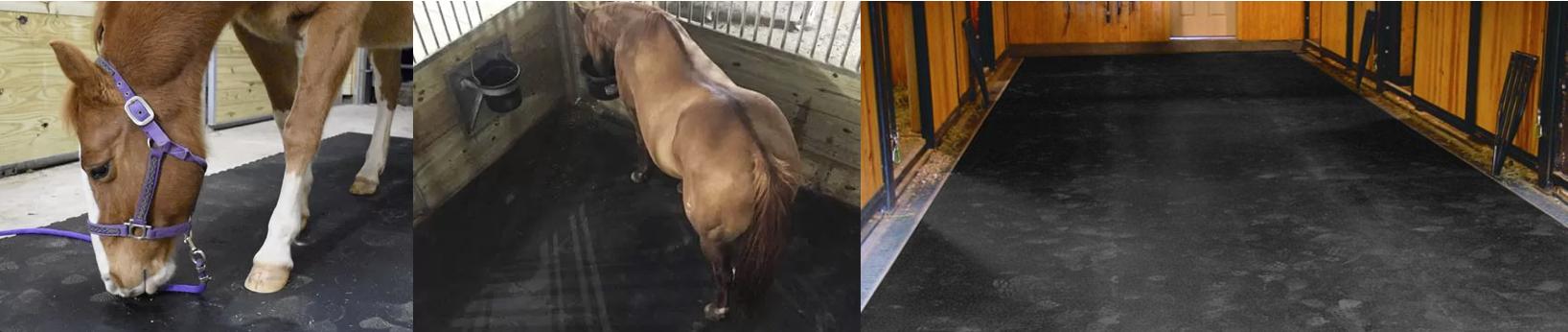
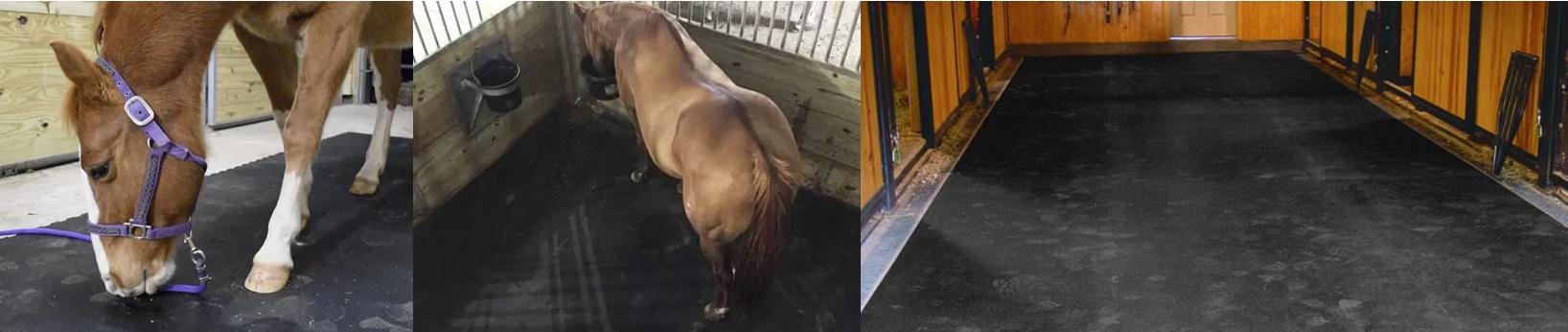
Horse stall mats from Mats Inc. handle real barn conditions where weight, moisture, and daily use take a toll on flooring. In working stalls, the right mat helps protect the subfloor, improve footing, and reduce stress on horses that spend long periods standing in place. This category includes stall mats, trailer matting, and related rubber flooring options used across barns, trailers, and wash areas where durability and stability matter. When properly selected and installed, these mats hold their position, limit moisture issues, and provide a more consistent surface for both horses and handlers.
Horse Stall Mats Built for Real Barn Conditions
Mats Inc. has supplied commercial rubber matting since 1964, and in equine environments, performance comes down to how mats handle weight, moisture, and constant movement.
Horse stall mats are not just floor coverings; they protect subfloors, reduce joint stress on horses, and help control bedding consumption and ammonia buildup in working barns, veterinary facilities, and trailers. Research from Penn State Extension identifies subfloor drainage and joint-impact reduction as the two factors most strongly correlated with long-term equine flooring performance.
In real-world installations, the difference between a residential-grade mat and a commercial-grade rubber mat shows up quickly through shifting, odor buildup, and edge breakdown.
Horse Stall Mat Types
Straight-Edge Stall Mats
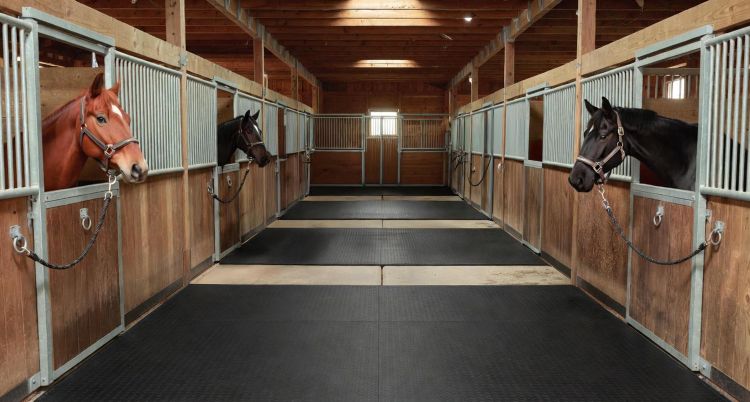
Straight-edge stall mats remain the most widely used option for permanent stall installations. When installed wall-to-wall over a properly prepared base, they provide long-term stability for stalls, aisles, grooming areas, and feed rooms. The full range of in-stall options is covered on our Stall Mats for Horses sub-category page, including standard rubber, cushioned mattress systems, drainage grids, and pre-sized stall kits.
Interlocking Stall Mat Kits
Interlocking stall mat kits reduce seam separation and simplify installation, especially in full-stall layouts. They limit bedding and moisture migration between seams while allowing individual sections to be removed and replaced when needed.
Horse Trailer Mats
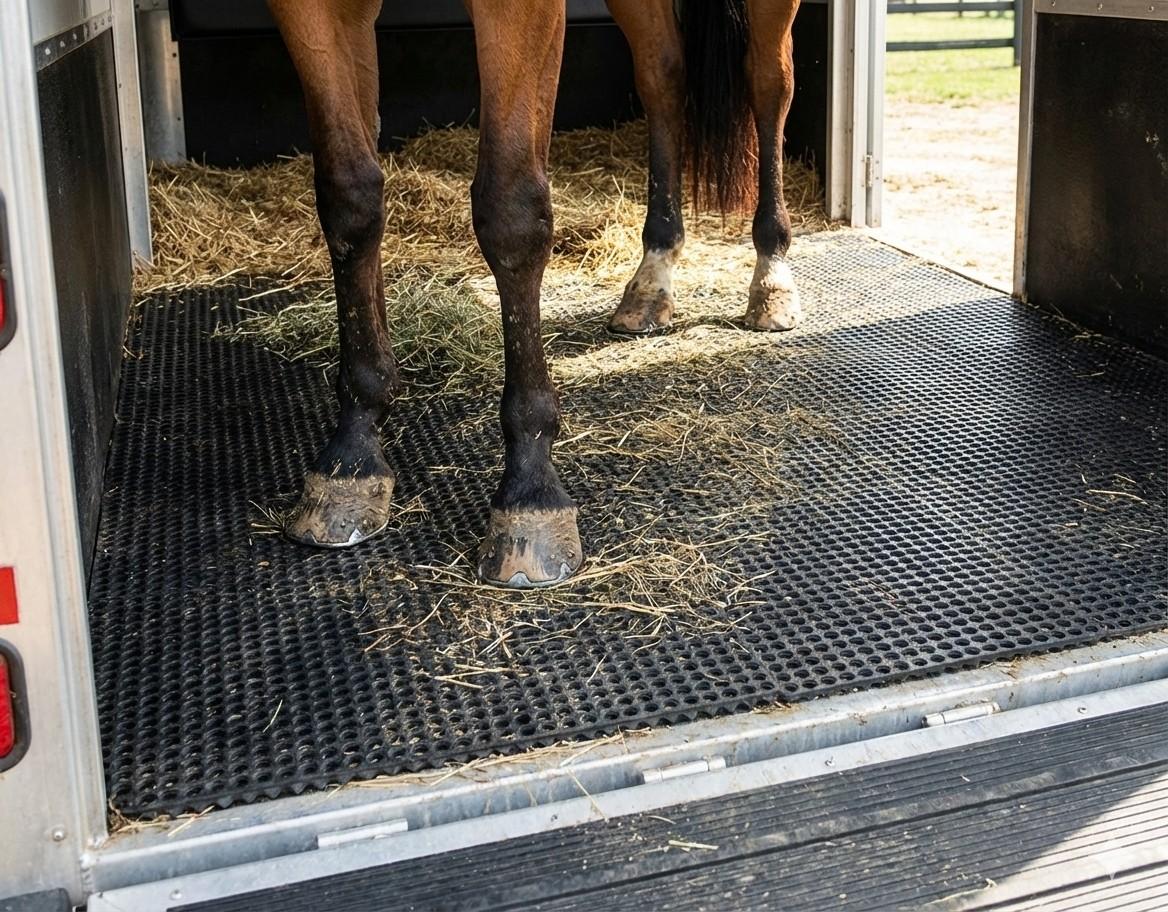
Horse trailer mats protect trailer floors from hoof impact, moisture, and long-term wear during transport. Textured rubber surfaces help maintain traction during loading, unloading, and travel. Transport flooring has different demands than in-stall matting — see our Horse Trailer Floor Mats sub-category for interlocking trailer mats and ramp-specific products.
Wash Stall Mats
Wash stall mats manage water flow and maintain footing in wet conditions. Drainage-style designs reduce standing water in wash bays, grooming stalls, and prep areas.
Horse stall mats are also frequently repurposed for home gyms and training spaces — for that use case, our Rubber Gym Flooring Rolls category covers products built specifically for gym applications.
Choosing the Right Thickness
Thickness directly impacts performance, stability, and lifespan. Most barns use 3/4" rubber for stalls where horses stand for extended periods, while 1/2" mats are typically used in aisles or secondary areas. Thinner mats are easier to handle but are more likely to shift, curl, and wear at the corners under repeated hoof traffic.
Horse Stall Mat Comparison: What Actually Works
Not all stall mats perform the same once installed, especially under real barn conditions where moisture, weight, and daily cleaning all come into play. Straight-edge rubber stall mats are typically best for permanent installations because their weight helps prevent movement and supports long-term durability. Interlocking stall mats can be easier to align and may help reduce gaps between seams, but lower-density versions may separate over time under heavy use.
Foam or lightweight mats may feel soft at first, but they compress quickly under weight and aren't suitable for horse stalls or heavy-use barn environments. In most working barns, heavier rubber stall mats consistently outperform lighter alternatives by maintaining position, reducing seam separation, and holding up under repeated hoof traffic.
Subfloor Preparation and Installation
Subfloor preparation is one of the biggest factors in how stall mats perform over time. Mats installed over uneven or soft ground will shift, separate, and wear prematurely. A properly compacted base with crushed stone, stone dust, or a smooth sloped concrete surface keeps mats stable and supports better drainage. Proper installation should also allow a small expansion gap along walls while keeping seams tight enough to limit bedding and moisture intrusion.
What We See Go Wrong Most Often
Across equine installations, the same failure patterns appear repeatedly. Low-density or filler-based rubber breaks down within a few years in barns with moisture, ammonia exposure, and frequent cleaning. Thinner mats curl at the edges, creating gaps, trip hazards, and spaces where bedding and debris collect. Moisture and urine collect under poorly fitted mats, leading to odor, bacterial growth, and more frequent maintenance.
After 62 years supplying barn flooring, we can tell you that most stall mat problems trace back to either poor material selection or improper installation — not to mat brand or thickness alone.
Moisture, Odor, and Long-Term Maintenance
Moisture control is one of the most important factors in stall mat performance. When seams aren't tight or subfloors aren't graded, liquids collect underneath mats and create odor problems over time. Best practices include tight wall-to-wall installation, proper subfloor grading, regular cleaning, bedding management, and periodic lifting of mats to clean the subfloor. Industry guidance from TheHorse.com on stable management reinforces that ammonia control depends on the bedding-and-subfloor system as a whole, not the mat alone.
With proper maintenance, high-quality rubber stall mats last well over a decade in working environments.
What Makes a High-Quality Stall Mat
Not all rubber stall mats are built the same, even when they appear similar in size and thickness. Higher-quality mats are typically made from dense recycled rubber or vulcanized compounds that resist compression and maintain shape over time. Lower-density mats often include filler materials that break down faster, especially in environments with moisture, ammonia exposure, and frequent cleaning. A high-quality stall mat should have consistent thickness, strong edge stability, resistance to curling, and enough weight to stay in place once installed.
Horse Stall Mats for Sale
Our horse stall mats come in multiple sizes, thicknesses, and configurations to match different barn layouts and usage requirements. Common options include 4' x 6' horse stall mats, 1/2" rubber mats, 3/4" rubber mats, and heavier matting options for high-use equine installations. These mats fit horse stalls, barns, trailers, grooming areas, wash bays, and other spaces where durability, traction, and moisture control are critical.
Why Mats Inc.
Mats Inc. has been a family-run commercial flooring company since 1964 — over six decades of supplying matting to barns, veterinary facilities, equine centers, and commercial operations across the U.S. Our focus on equine flooring comes from working with the same kind of customers year after year: facility managers who don't want to re-floor a barn every five years, breeders who need traction in foaling stalls, and trainers who notice when a mat shifts under a horse. Spec consultation available if you want a second opinion on a specific installation before committing.
Frequently Asked Questions
What thickness horse stall mats should I use?
Answered by Dustin Thompson, Owner & CEO
For most stalls, 3/4" rubber mats are the standard because they provide a balance of durability and cushioning for horses that stand for long periods. Thinner mats may work in aisles or temporary setups, but they tend to shift more and wear faster under regular stall use.
Are rubber horse stall mats better than foam mats?
Answered by Dustin Thompson, Owner & CEO
Rubber stall mats are generally preferred because they hold their shape under weight, resist movement, and last longer in barn environments. Foam mats may feel softer at first but compress quickly and aren't built for the weight and wear of horses.
How long do horse stall mats typically last?
Answered by Dustin Thompson, Owner & CEO
High-quality rubber stall mats last 10 to 20 years depending on usage, installation, and maintenance. Mats installed over stable, well-drained subfloors last significantly longer than those placed over uneven ground.
What is the best base for installing horse stall mats?
Answered by Dustin Thompson, Owner & CEO
A compacted crushed stone base with a layer of stone dust, or a smooth sloped concrete surface, provides the best support. A stable base prevents shifting and improves drainage over time. Mats installed over uneven or soft ground will shift, separate, and wear prematurely regardless of mat quality.
What sizes and configurations work for different barn layouts?
Answered by Jinna Hopson, Vice President of Marketing
The standard 4' x 6' stall mat covers a 12' x 12' stall with minimal cutting using six mats — that's the most common configuration in working barns. Larger stalls (14' x 14' or foaling stalls) work with the same mats in a different layout, sometimes requiring trim cuts at the perimeter or interlocking systems for tighter seams. Aisles and grooming areas typically use 1/2" thickness with longer rectangular formats. For non-standard stall dimensions, recessed wash bays, or custom layouts at boarding and training facilities, we can configure kit sizing and cuts before the order ships to minimize on-site trim work.
For multi-barn operations, should we use the same stall mats across all stalls?
Answered by Jinna Hopson, Vice President of Marketing
For breeding facilities, training centers, and multi-barn boarding operations, using consistent stall mats across all standard stalls simplifies inventory, replacement, and the operational rhythm at every barn. Foaling stalls and rehab stalls may warrant different specifications — typically thicker matting or cushioned mattress systems for horses spending extended time lying down. Wash stalls and grooming areas need their own moisture-rated specification independent of the standard stall program. The pattern that works for most multi-barn operations is one primary stall mat across all working stalls plus a small set of specialty mats for the foaling, rehab, and wash applications.
By Dustin Thompson, Owner & CEO, Mats Inc.