




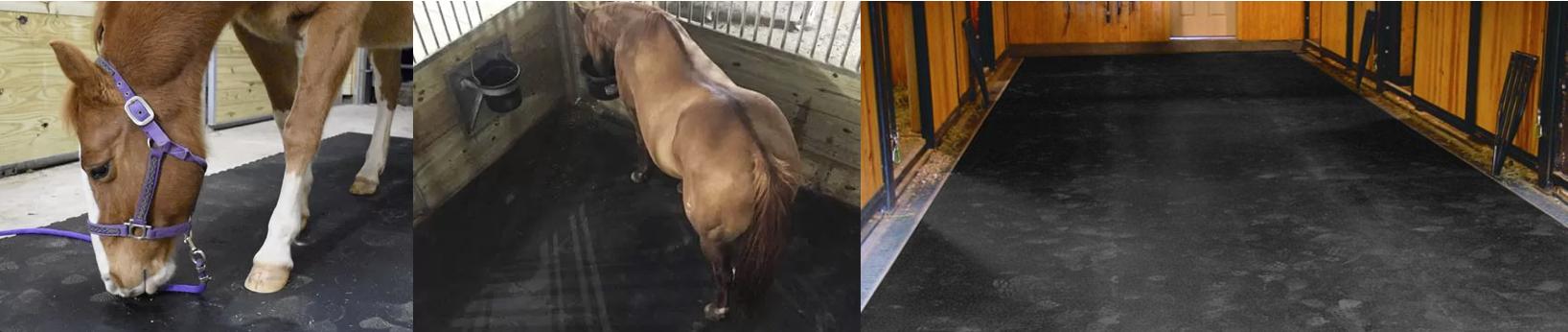
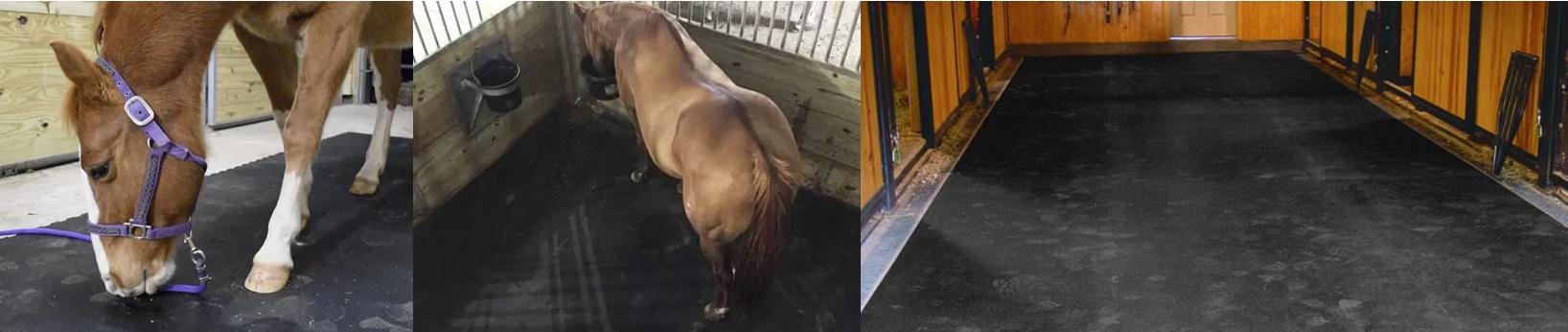
Horse Trailer Floor Mats
This page covers matting built specifically for transport — interlocking floor mats sized for two-horse, three-horse, slant-load, and stock trailers, plus ramp mats made for the loading zone, where slip risk is highest. Each is built for a different part of the trailer. All of it is part of our wider horse stall and barn flooring range.
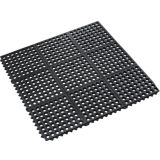 Interlocking Horse Trailer Mat$75.00The Interlocking Horse Trailer Mat is a perforated rubber tile that locks edge to edge into a continuous floor. The interlocking design keeps tiles from sliding underfoot, and the open, perforated surface lets water and waste drain through instead of pooling on top. Each tile is light enough to
...
The Interlocking Horse Trailer Mat is a perforated rubber tile that locks edge to edge into a continuous floor....
View Details
View Details
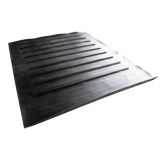 Horse Trailer Ramp Mat$679.00The Horse Trailer Ramp Mat covers the loading ramp — the spot where a horse is most likely to slip. It gives the horse a steady, grippy surface to step on while entering and leaving the trailer. Unlike a flat floor mat, it's shaped to fit the ramp itself,
...
The Horse Trailer Ramp Mat covers the loading ramp — the spot where a horse is most likely to...
View Details
View Details
What Makes Trailer Matting Different
A trailer mat does two jobs at once. It protects the horse — traction on loading, cushion through sudden stops, footing through cornering. It also protects the trailer itself. Wood subfloors rot when urine sits on them, and aluminum corrodes the same way. The mat is the barrier between daily moisture and the floor that carries your horse's full weight in motion.
Why You Don't Glue or Screw Trailer Mats Down
The most common mistake we see in horse trailers is gluing or screwing the mats down to stop them sliding. That traps moisture against the subfloor — the exact thing the mat is there to prevent. After more than 60 years supplying barn and trailer flooring, we usually find rotted plywood or pitted aluminum under mats that were fixed in place.
The fix is the opposite of fastening them down. A correctly sized mat fits snugly on its own, then lifts out for cleaning. The Rutgers Equine Science Center advises lifting mats after use, sweeping or hosing the floor, and drying it fully before the mats go back — and warns that the most serious result of poor upkeep is a horse falling through rotted floorboards in transit.
What Trailer Matting Has to Handle
- Highway vibration: mats that shift at 65 mph bunch at the back of the trailer or slide under hooves.
- Sudden stops and cornering: forces a stationary mat never sees — texture and weight both matter.
- Loading and unloading traction: ramp angles, wet conditions, and a horse stepping into an enclosed space concentrate slip risk here.
- Subfloor protection: wood rots and aluminum corrodes when urine sits against them.
- Frequent removal: mats must come up regularly for floor inspection and cleaning, so weight and handling matter.
How to Choose Trailer Matting
Floor Coverage — Interlocking Trailer Mats
The Interlocking Horse Trailer Mats use 3'x3' tiles that lock together at the edges. The connected floor can't creep toward the back of the trailer or bunch under a braced horse, so there's no need for glue or screws. Built-in drainage holes keep water from pooling against the subfloor — the most common cause of premature trailer floor failure.
Heavy-duty rubber handles the weight of horses bracing through stops and turns. The tiles also make wear easy to manage. When one section wears — usually the front, where horses brace against deceleration — you swap that 3'x3' tile instead of re-flooring the trailer. The sections lay out to fit two-horse, three-horse, slant-load, and stock trailers.
Loading Zone Protection — Trailer Ramp Mats
The ramp is the highest-wear zone on any trailer. It takes hoof strike at different angles, often in the wet, while it flexes under the horse. Standard floor mats aren't built for that — they're made for the stable surface inside the trailer. The Horse Trailer Ramp Mats use a slip-resistant surface built for the loading transition, with shock absorption and sizing to match ramps of different lengths and shapes.
Why Mats Inc.
Mats Inc. has supplied commercial and equine flooring since 1964. We specify matting for the job rather than installing it, which keeps the focus on matching construction to how the mat is actually used. Trailer floors and loading ramps are different problems with different wear, so we carry a mat built for each rather than one product stretched across both jobs.
Cleaning and Maintenance Cadence
A practical maintenance rhythm for trailer mats:
- Every trip: sweep loose debris, hose down with low-pressure water, and let it air dry before the next use.
- Monthly: lift all mats out, hose the underside and the trailer subfloor, inspect wood for soft spots and aluminum for pitting, and dry fully before reinstalling.
- Quarterly: spray with a barn-safe disinfectant, allow a 10-minute contact time, rinse, and air dry in sunlight if possible.
- Annually: check mat edges for curling or wear and replace any section whose surface has degraded enough to affect traction.
For ammonia odor that builds up between cleanings, diluted white vinegar works better than perfumed products and leaves no slick residue on the mat surface.
Frequently Asked Questions
How do interlocking trailer mats stay in place at highway speed without glue or screws?
Answered by Dustin Thompson, Owner & CEO
The 3'x3' tiles lock to each other at the edges, so the whole floor behaves as one connected surface that can't creep toward the back of the trailer or bunch under a braced horse. Weight does the rest — heavy-duty rubber stays put through vibration, sudden stops, and cornering. That's the point of not adhering them: you stop the mats from shifting without trapping moisture against the subfloor, which is what causes the wood rot and aluminum corrosion underneath.
How often should I lift the mats, and why does it matter?
Answered by Dustin Thompson, Owner & CEO
Lift them monthly — hose the underside and the trailer subfloor, check wood for soft spots and aluminum for pitting, and dry everything before reinstalling. Between trips, sweep and rinse the surface and let it air dry. The mat only protects the floor when moisture isn't sealed against it, so fastening mats down is exactly what traps that moisture and leads to rot or corrosion.
Why use a separate ramp mat instead of running floor matting onto the ramp?
Answered by Dustin Thompson, Owner & CEO
The ramp is the highest-wear, highest-slip zone on the trailer — it takes hoof strike at varying angles, often wet, while the ramp flexes under the horse's weight. Floor mats are built for the stable surface inside the trailer, not for that. The ramp mat uses a slip-resistant surface engineered specifically for the loading transition, with shock absorption and sizing to match the ramp's length and shape. Matching the product to the zone is what keeps loading safe.
Will these fit my trailer — two-horse, slant-load, or stock?
Answered by Jinna Hopson, Vice President of Marketing
Yes. The interlocking floor mats come in 3'x3' modular sections that lay out to fit two-horse, three-horse, slant-load, and stock trailer floors, with tiles trimmed at the edges where the layout needs it. Because the system is modular rather than a single fixed sheet, it adapts to the odd shapes trailers actually come in. Send your trailer's interior floor dimensions and we'll confirm the tile layout before you order.
Can the ramp mat be sized to my specific ramp?
Answered by Jinna Hopson, Vice President of Marketing
Yes — ramp mats are customizable to fit ramps of different lengths and shapes, since ramp dimensions vary widely between trailer makes and models. Send the ramp's length and width and we'll size the mat to cover the working surface where the horse steps, so there's no short edge or overhang to catch a hoof. Getting ramp coverage right is a safety detail, not just a fit one.
We run several trailers — should we standardize the matting across the fleet?
Answered by Jinna Hopson, Vice President of Marketing
For an operation running multiple trailers, standardizing on the same interlocking floor system across the fleet keeps replacement simple — the 3'x3' tiles are interchangeable, so a worn front tile in one trailer gets swapped from common stock rather than re-flooring the whole unit. Ramp mats can be sized per trailer where ramps differ. One floor system across the fleet, plus ramp mats matched to each ramp, is the pattern that's easiest to maintain.
By Dustin Thompson, Owner & CEO, Mats Inc.