






Anti-Fatigue Floor Mats
Anti-fatigue floor mats change what a full shift on your feet feels like. Whether your crew stands at a prep line, a styling chair, a cashier stand, or a welding bench, the right standing mat takes the strain off legs, knees, and lower backs before it turns into sore employees and slow afternoons. The range here breaks into three groups: drainage mats with holes for wet floors, solid cushioned mats for dry stations, and welding-rated mats and runners for fabrication work.
What Anti-Fatigue Mats Do Before the Aches Take Over
Standing still on concrete or tile is harder on the body than walking. Muscles lock, circulation slows, and pressure settles into heels, knees, and the lower back. An anti-fatigue mat puts a resilient layer underfoot that keeps the small muscles in your feet and legs gently working, which keeps blood moving and spreads your weight instead of stacking it on the same joints for hours.
That's why these mats show up anywhere people hold a position: commercial kitchens, hair salons and barber shops, packing lines, machine shops, retail counters, and offices with standing desks. The ergonomic benefit isn't a luxury add-on. Crews that stand comfortably stay sharper late in the shift, and the floor stops being the thing everyone blames by Friday.
The Mistake That Burns Standing Crews
The instinct is to buy by squish — the softest, thickest cushioned mat on the page. Softness matters, but a mat that's all give compresses flat under commercial use. Once the foam stops rebounding, the support is gone even though the mat still looks fine, and the leg strain it was bought to solve comes right back.
The second miss is ignoring what lands on the floor. Put a solid mat in a greasy dish pit or a wet wash bay and liquid pools on top of it, trading sore feet for a slip-and-fall exposure. Wet floors need drainage underfoot; dry stations need a sealed surface that won't collect debris. Match the mat to the floor first, then to the feet.
How the Range Breaks Down
Three groups cover the standing environments commercial buildings actually have. Start with the floor conditions at the station, and the right group picks itself.
Anti-Fatigue Mats with Holes
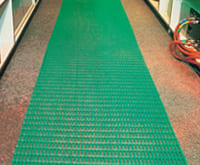
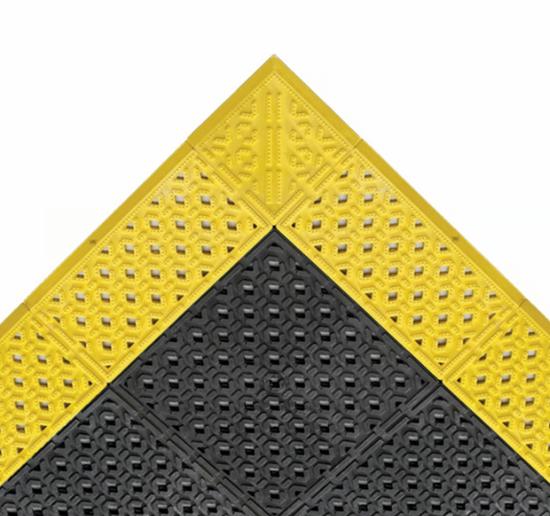
Built for floors that stay wet: commercial kitchen lines, dish pits, food processing areas, and wash bays. The open construction drains liquid through instead of letting it pool, so footing holds while the cushion does its job. Most rinse clean with a hose or pressure washer between shifts, which matters anywhere grease and food debris are part of the day.
Anti-Fatigue Mats Without Holes
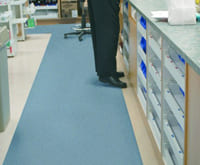
The pick for dry stations — salon and barber chairs, cashier stands, assembly benches, retail counters, and standing desks. A sealed surface gives consistent cushion across the whole mat with nothing for hair, dust, or packaging debris to settle into. Beveled edges keep the profile low where clients and customers walk, and rubber or foam construction lets you match density to how hard the station gets used.
Welding Mats & Runners
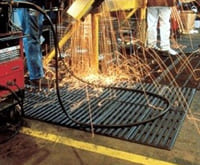
Fabrication shops, welding bays, and garages need cushion that shrugs off what the work throws down. These mats resist sparks, grinding debris, oils, and solvents while still easing the strain of long stretches at the bench. Runner formats stretch coverage along workbenches and equipment lines so a welder isn't stepping on and off the mat all day.
Three Things to Check Before You Pick
First, wet or dry. If liquid reaches the floor at that station — even just mop water and the occasional spill — go to the mats with holes. If the floor stays dry, the solid-surface group gives you more choice in feel and appearance. Sparks and oil send you straight to the welding group.
Second, how long people stand and what's under them. An hour at a home kitchen counter is a different job than a ten-hour shift on bare concrete. Concrete floors and long shifts call for denser, thicker construction that keeps its rebound; lighter foam suits shorter, gentler duty.
Third, the footprint. A single station needs one well-placed mat centered where feet actually land. A prep line or bench run does better with an anti-fatigue runner, and larger zones can go wall-to-wall with interlocking mats sized to the space.
Why Mats Inc.
Mats Inc. has been putting the right matting under commercial buildings since 1964, and standing comfort is one of the oldest problems we solve. The range here runs from wet kitchen lines to fabrication bays to front-of-house salon floors, so you're choosing from options built for your actual conditions — and if you're not sure which group fits, our team will walk the decision with you before you order.
Frequently Asked Questions
How do I choose between anti-fatigue mats with holes and without holes?
Answered by Dustin Thompson, Owner & CEO
Run the wet-or-dry test at the exact spot the mat will sit. If water, grease, or wash-down chemicals reach that floor — dish pits, prep lines, wash bays — you want holes, because drainage keeps liquid from pooling where people stand. If the floor stays dry, a solid mat gives you seamless cushion with nothing for debris to collect in.
Welding is the exception to both: sparks and oil call for the welding-rated group no matter how wet or dry the bay runs.
How long does an anti-fatigue mat last, and what ends its life early?
Answered by Dustin Thompson, Owner & CEO
A commercial rubber anti-fatigue mat in steady daily use typically gives you three to five years. Lighter foam under the same duty often flattens within a year or two. The mat is done when the cushion stops rebounding — press a thumb in, and if the dent stays, the support is gone even if the surface looks fine.
What ends life early: soft mats crushed by duty they weren't built for, grease breaking down compounds that aren't oil-resistant, and edges curling after a mat gets dragged around instead of sized to the station.
Do anti-fatigue mats need adhesive, and where should they sit at a workstation?
Answered by Dustin Thompson, Owner & CEO
No adhesive. These mats lay flat on the existing floor, and anti-slip backing plus the mat's own weight hold position. Center the mat on the spot where feet actually land through the shift — at the sink, in front of the register, at the bench — rather than splitting the difference across a station.
Keep edges out of cart paths and walk lanes, and use a runner where the job moves along a line, so nobody spends the day stepping on and off the cushion.
Will an anti-fatigue mat look out of place in a salon or customer-facing space?
Answered by Jinna Hopson, VP of Marketing
It shouldn't, and the right one won't. Solid-surface salon mats sit low, read clean against the floor, and stay put at the styling chair instead of announcing themselves. Clients notice a stylist who's relaxed and unhurried at hour seven far more than they notice what's underfoot.
If your space leans polished, choose a smooth sealed surface in a dark neutral and let the beveled edge disappear into the floor line. Comfort back-of-house and a composed look front-of-house aren't in conflict here.
Can I get anti-fatigue mats in custom sizes or longer runner lengths?
Answered by Jinna Hopson, VP of Marketing
Yes. Runners handle long prep lines and bench runs in one continuous piece, and interlocking options build out wall-to-wall coverage for larger zones — you size the footprint to the space instead of tiling standard mats and living with the seams.
If your stations don't fit standard dimensions, reach out about custom sizing. Matching mats across every station also keeps a multi-chair salon or multi-line kitchen looking intentional rather than pieced together.
What should I look for in a kitchen anti-fatigue mat for home versus a restaurant?
Answered by Jinna Hopson, VP of Marketing
The plush memory-foam kitchen mats sold for home use feel wonderful, and for an hour of dinner prep they're a fine choice. The trouble starts when that construction meets restaurant duty — grease, nightly mopping, and ten-hour shifts flatten it fast.
A commercial kitchen should go rubber, with drainage if the line runs wet. Home cooks who genuinely live at the counter often step up to a commercial-grade cushioned kitchen mat for the same reason: it still feels good in year three.
By Dustin Thompson, Owner & CEO, Mats Inc.