






- Home
- Products
- Anti-Fatigue Mats & Runners
- Welding Mats & Runners
Anti Fatigue Welding Mats
Welding Mats & Runners are built for fabrication and repair environments where footing, fatigue relief, and cleanup all matter on the same shift. For welding bays, metal shops, and automotive service areas, Mats Inc helps you choose matting that supports long-duration standing while holding up to debris, traffic, and shop conditions.
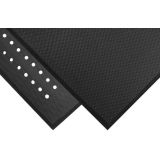 Traction Hog Anti-Fatigue Runner Mats
Starting at $85.00
Traction Hog Anti-Fatigue Runner Mats are cushioned rubber runners for the line of stations where people stand in place all shift, on a floor that may be wet, greasy, or both. The mat is 5/8 inch of nitrile/PVC-blended foam with beveled edges, made in stock sizes from 2 by 3...
Traction Hog Anti-Fatigue Runner Mats are cushioned rubber runners for the line of stations where people stand in place all...
Traction Hog Anti-Fatigue Runner Mats are cushioned rubber runners for the line of stations where people stand in place all shift, on a floor that may be wet, greasy, or both. The mat is 5/8 inch of nitrile/PVC-blended foam with beveled edges, made in stock sizes from 2 by 3 feet to a 3-by-10-foot runner and in custom lengths to 75 feet. It comes solid or with drainage holes, is built for indoor use, and is a comfort mat first, which decides where it goes.
What an Anti-Fatigue Rubber Mat Does Before the Shift Gets Long
Standing still on a hard floor is harder on the body than walking on it. The legs lock, blood pools, and by hour six the lower back is doing work the feet were supposed to do. A cushioned rubber standing mat gives the floor a small amount of give, so the muscles in the legs keep making tiny adjustments instead of freezing in place.
That is the comfort side. The safety side is footing. A dish pit, a fry station, a wet packing line, or a cooler floor puts water and grease under the same person for hours, and a mat that cushions but slides is worse than no mat. This one is certified high-traction by the National Floor Safety Institute, an independent slip-resistance testing program, not a manufacturer claim.
The third job is the edge. A thick mat with a square edge is a trip hazard and a cart stopper. Beveled edges taper the mat down to the floor so a foot or a caster rolls onto it rather than catching, which is what keeps a comfort mat from causing the fall it was meant to prevent.
Why Nitrile-Blend Foam, and Why This One
The cushion is a 5/8-inch nitrile/PVC-blended foam. Nitrile is the rubber that tolerates oil, and it is the reason this mat is grease and oil resistant and chemical resistant rather than a plain sponge that swells and softens the first time fryer oil hits it. Nightly sanitizing with standard cleaners does not eat it.
The foam is treated with an anti-microbial that provides lifetime protection from odors and degradation. On a wet-area mat that is the difference between a mat that is hosed off and returns to service and one that starts to smell by the second month and has to be thrown out.
The two configurations are the real choice. The solid mat suits dry stations and damp ones where spills are wiped up. The version with drainage holes is for truly wet work: liquid falls through to the floor instead of pooling under a boot, which is why a rubber mat with holes belongs at a dish machine or a wash-down station and a solid one belongs at a register or an assembly bench.
It is also lightweight and flexible. A 3-by-5-foot mat weighs 13.8 pounds, and the largest stock size, 4 by 8 feet, weighs 26.7 pounds. One person picks it up, hoses it, hangs it, and puts it back, which is what actually determines whether a mat gets cleaned on schedule.
Where It Belongs, and What It Is Not
Put it wherever a person holds one position on a hard indoor floor: dish pits, fry and prep stations, bar wells, packing and inspection stations, cashier stands, lab benches, and the floor in front of a machine control panel. Wet zones take the holed version; dry and damp zones take the solid one. It is one of several cushioned and traction mats in the heavy-duty rubber runner mats range, and it is the one to reach for when comfort is the problem.
What it is not is a traffic-lane mat. Foam cushion under cart wheels and constant foot traffic compresses at the edges and wears out early, and a thick mat in a busy lane is something to walk around. Where the floor problem is people and carts crossing wet tile, a thin solid-rubber traction runner is the right product, and the two are usually used together in the same room.
It is also rated for indoor use. Outdoor UV and freeze cycles are outside what the foam is built for, so a loading dock apron or an exterior landing needs a different mat.
Three Things to Check Before You Spec It
First, decide wet or dry, and buy the matching version. If water or grease reaches the floor around the station more than occasionally, take the holed mat. If the station is dry or only sees a wiped-up spill, the solid mat is easier to keep clean and gives a smoother surface. Buying solid for a wet zone is the most common mistake with this product.
Second, size the runner to the line of stations, not the room. Measure end to end along the positions people hold: a prep line, a dish run, a packing table, an assembly bench. Custom lengths run in whole feet to 75 feet in 3-foot and 4-foot widths, so one continuous runner covers the line with no seam to lift. The 3-by-10 stock runner handles most single long stations; the five shorter stock sizes cover one or two fixed positions. Finished sizes vary 3 to 5 percent as rubber moves with temperature.
Third, plan the cleaning routine before the mat arrives. A wet-area mat has to come up, get rinsed, and dry before it goes back down. Confirm there is a place to hang it and a person on the closing shift who owns the task. A lightweight mat helps, but the schedule is what keeps the anti-microbial doing its job instead of fighting a losing battle.
Why Mats Inc.
We carry this mat because it answers the question a hard kitchen or plant floor asks every shift: how do you keep the person at the station comfortable and upright without putting something under them that soaks up grease and slides. A nitrile-blend cushion with a third-party traction certification and a holed option does that. Mats Inc. has been matching mats to standing zones since 1964, and this is the one we put where people stand still on wet floors.
Type Anti-fatigue rubber runner mat, indoor Material Nitrile/PVC-blended foam Thickness 5/8" Traction Certified high-traction by the National Floor Safety Institute (NFSI) Edges Beveled Resistance Grease and oil resistant; chemical resistant Anti-microbial Treated; lifetime protection from odors and degradation Configurations Solid, or with drainage holes for wet areas Color Black Custom runner lengths 3' (36") and 4' (48") widths; whole-foot lengths up to 75' Stock sizes & weights 2' x 3' (24" x 36") — 6.3 lbs
3' x 4' (36" x 48") — 10 lbs
3' x 5' (36" x 60") — 13.8 lbs
3' x 10' (36" x 120") — 25.6 lbs
4' x 6' (48" x 72") — 20 lbs
4' x 8' (48" x 96") — 26.7 lbsSize tolerance 3–5% manufacturing variance Cleaning Lightweight and flexible for handling; rinse, hang, and return to service dry Origin Made in the USA Warranty 1-year limited (Mats Inc.) Frequently Asked Questions
What is the mat made of, and how thick is it?
Answered by Dustin Thompson, Owner & CEO
It is a single layer of nitrile/PVC-blended foam, 5/8 inch thick, with beveled edges molded around the perimeter. There is no separate top sheet or fabric layer, so there is nothing to delaminate. The nitrile content is what gives it grease, oil, and chemical resistance; a plain PVC or polyurethane foam of the same thickness softens and breaks down under fryer oil and sanitizer much sooner.
The foam is also treated with an anti-microbial that carries lifetime protection from odors and degradation. That treatment is doing real work on a mat that lives in a wet area and gets rinsed rather than replaced.
How long will it last, and what shortens its life?
Answered by Dustin Thompson, Owner & CEO
The maker does not publish a year figure, and the honest answer is that the floor decides. Kept at a standing station, rinsed on schedule, and allowed to dry before it goes back down, the anti-microbial treatment and nitrile blend are built to hold up for years of shifts. The mat carries a 1-year limited (Mats Inc.) warranty, and a 12-month check for edge compression and surface wear is a reasonable habit.
Three things end it early. Putting it in a traffic lane where carts and constant foot traffic compress the edges. Leaving it down wet so it never dries, which no anti-microbial fully overcomes. And putting an indoor-rated foam mat outside, where UV and freezing stiffen and crack it. Avoid those three and it outlasts most of the equipment around it.
Where should I put it, and where should I not?
Answered by Dustin Thompson, Owner & CEO
Put it where one person stands in one place on a hard indoor floor: dish machines, fry and prep stations, bar wells, packing and inspection stations, register stands, lab benches, machine control positions. If the floor around that station gets wet, use the version with drainage holes so water goes through instead of sitting under a boot. If it stays dry or only sees a wiped-up spill, the solid mat is the cleaner surface.
Do not put it in a walking lane or under cart traffic; cushion compresses and wears at the edges there, and a thick mat in a lane is an obstacle. Do not put it outdoors. For a wet lane that carts cross, a thin solid-rubber traction runner is the right product, and most kitchens run both.
Which size should I pick, and can I get a custom length?
Answered by Jinna Hopson, Vice President of Marketing
Start with the run. Custom lengths are available in whole feet up to 75 feet, in 3-foot and 4-foot widths, so a prep line, a dish run, or a packing table becomes one continuous runner instead of a row of mats with seams to trip on and lift. Three feet of width covers a single row of workers; four feet covers a row that steps back from the bench.
For a single position, pick from the six stock sizes. A 2-by-3 covers a register stand; 3-by-4 or 3-by-5 covers a station where someone shifts a step left and right; 3-by-10 handles one long station; 4-by-6 and 4-by-8 suit two people side by side. Allow 3 to 5 percent on finished dimensions, since rubber shrinks and expands with temperature and time.
What does it look like on the floor?
Answered by Jinna Hopson, Vice President of Marketing
Black, with a fine textured surface and a beveled border that slopes down to the floor on all four sides, so it reads as a finished piece rather than a slab of foam. The holed version has a grid of round drainage openings across the face; the solid version is unbroken. Both sit 5/8 inch high, which is noticeable underfoot but low enough not to look like an obstacle.
Because it is black and textured, scuffs and dried spills blend in until cleaning day rather than showing white. It looks right in a back-of-house kitchen, a plant floor, a lab, or a retail counter; for a customer-facing spot where the mat is part of the decor, a fabric-topped anti-fatigue mat is the better-looking option.
Is this a good fit for a commercial kitchen, and does it handle the cleaning?
Answered by Jinna Hopson, Vice President of Marketing
Yes; wet and greasy kitchens are what the holed version is for. Water and cooking oil drain through, the nitrile blend resists grease and standard sanitizers, and the NFSI high-traction certification means the surface has been independently tested for slip resistance rather than just described as non-slip. Put it at the dish machine, the fry station, and the prep line where people stand.
The cleaning routine is the part to plan. At close, the mat comes up, gets rinsed, and hangs to dry before it goes back down. At 13.8 pounds for a 3-by-5, one person handles it. That nightly lift is what keeps a kitchen mat from becoming the thing that smells, so pick the size someone will actually move.
By Jinna Hopson, Vice President of Marketing, Mats Inc.
↑
Traction Hog Anti-Fatigue Runner Mats are cushioned rubber runners for the line of stations where people stand in place all shift, on a floor that may be wet, greasy, or both. The mat is 5/8 inch of nitrile/PVC-blended foam with beveled edges, made in stock sizes from 2 by 3 feet to a 3-by-10-foot runner and in custom lengths to 75 feet. It comes solid or with drainage holes, is built for indoor use, and is a comfort mat first, which decides where it goes.
What an Anti-Fatigue Rubber Mat Does Before the Shift Gets Long
Standing still on a hard floor is harder on the body than walking on it. The legs lock, blood pools, and by hour six the lower back is doing work the feet were supposed to do. A cushioned rubber standing mat gives the floor a small amount of give, so the muscles in the legs keep making tiny adjustments instead of freezing in place.
That is the comfort side. The safety side is footing. A dish pit, a fry station, a wet packing line, or a cooler floor puts water and grease under the same person for hours, and a mat that cushions but slides is worse than no mat. This one is certified high-traction by the National Floor Safety Institute, an independent slip-resistance testing program, not a manufacturer claim.
The third job is the edge. A thick mat with a square edge is a trip hazard and a cart stopper. Beveled edges taper the mat down to the floor so a foot or a caster rolls onto it rather than catching, which is what keeps a comfort mat from causing the fall it was meant to prevent.
Why Nitrile-Blend Foam, and Why This One
The cushion is a 5/8-inch nitrile/PVC-blended foam. Nitrile is the rubber that tolerates oil, and it is the reason this mat is grease and oil resistant and chemical resistant rather than a plain sponge that swells and softens the first time fryer oil hits it. Nightly sanitizing with standard cleaners does not eat it.
The foam is treated with an anti-microbial that provides lifetime protection from odors and degradation. On a wet-area mat that is the difference between a mat that is hosed off and returns to service and one that starts to smell by the second month and has to be thrown out.
The two configurations are the real choice. The solid mat suits dry stations and damp ones where spills are wiped up. The version with drainage holes is for truly wet work: liquid falls through to the floor instead of pooling under a boot, which is why a rubber mat with holes belongs at a dish machine or a wash-down station and a solid one belongs at a register or an assembly bench.
It is also lightweight and flexible. A 3-by-5-foot mat weighs 13.8 pounds, and the largest stock size, 4 by 8 feet, weighs 26.7 pounds. One person picks it up, hoses it, hangs it, and puts it back, which is what actually determines whether a mat gets cleaned on schedule.
Where It Belongs, and What It Is Not
Put it wherever a person holds one position on a hard indoor floor: dish pits, fry and prep stations, bar wells, packing and inspection stations, cashier stands, lab benches, and the floor in front of a machine control panel. Wet zones take the holed version; dry and damp zones take the solid one. It is one of several cushioned and traction mats in the heavy-duty rubber runner mats range, and it is the one to reach for when comfort is the problem.
What it is not is a traffic-lane mat. Foam cushion under cart wheels and constant foot traffic compresses at the edges and wears out early, and a thick mat in a busy lane is something to walk around. Where the floor problem is people and carts crossing wet tile, a thin solid-rubber traction runner is the right product, and the two are usually used together in the same room.
It is also rated for indoor use. Outdoor UV and freeze cycles are outside what the foam is built for, so a loading dock apron or an exterior landing needs a different mat.
Three Things to Check Before You Spec It
First, decide wet or dry, and buy the matching version. If water or grease reaches the floor around the station more than occasionally, take the holed mat. If the station is dry or only sees a wiped-up spill, the solid mat is easier to keep clean and gives a smoother surface. Buying solid for a wet zone is the most common mistake with this product.
Second, size the runner to the line of stations, not the room. Measure end to end along the positions people hold: a prep line, a dish run, a packing table, an assembly bench. Custom lengths run in whole feet to 75 feet in 3-foot and 4-foot widths, so one continuous runner covers the line with no seam to lift. The 3-by-10 stock runner handles most single long stations; the five shorter stock sizes cover one or two fixed positions. Finished sizes vary 3 to 5 percent as rubber moves with temperature.
Third, plan the cleaning routine before the mat arrives. A wet-area mat has to come up, get rinsed, and dry before it goes back down. Confirm there is a place to hang it and a person on the closing shift who owns the task. A lightweight mat helps, but the schedule is what keeps the anti-microbial doing its job instead of fighting a losing battle.
Why Mats Inc.
We carry this mat because it answers the question a hard kitchen or plant floor asks every shift: how do you keep the person at the station comfortable and upright without putting something under them that soaks up grease and slides. A nitrile-blend cushion with a third-party traction certification and a holed option does that. Mats Inc. has been matching mats to standing zones since 1964, and this is the one we put where people stand still on wet floors.
Type Anti-fatigue rubber runner mat, indoor Material Nitrile/PVC-blended foam Thickness 5/8" Traction Certified high-traction by the National Floor Safety Institute (NFSI) Edges Beveled Resistance Grease and oil resistant; chemical resistant Anti-microbial Treated; lifetime protection from odors and degradation Configurations Solid, or with drainage holes for wet areas Color Black Custom runner lengths 3' (36") and 4' (48") widths; whole-foot lengths up to 75' Stock sizes & weights 2' x 3' (24" x 36") — 6.3 lbs
3' x 4' (36" x 48") — 10 lbs
3' x 5' (36" x 60") — 13.8 lbs
3' x 10' (36" x 120") — 25.6 lbs
4' x 6' (48" x 72") — 20 lbs
4' x 8' (48" x 96") — 26.7 lbsSize tolerance 3–5% manufacturing variance Cleaning Lightweight and flexible for handling; rinse, hang, and return to service dry Origin Made in the USA Warranty 1-year limited (Mats Inc.) Frequently Asked Questions
What is the mat made of, and how thick is it?
Answered by Dustin Thompson, Owner & CEO
It is a single layer of nitrile/PVC-blended foam, 5/8 inch thick, with beveled edges molded around the perimeter. There is no separate top sheet or fabric layer, so there is nothing to delaminate. The nitrile content is what gives it grease, oil, and chemical resistance; a plain PVC or polyurethane foam of the same thickness softens and breaks down under fryer oil and sanitizer much sooner.
The foam is also treated with an anti-microbial that carries lifetime protection from odors and degradation. That treatment is doing real work on a mat that lives in a wet area and gets rinsed rather than replaced.
How long will it last, and what shortens its life?
Answered by Dustin Thompson, Owner & CEO
The maker does not publish a year figure, and the honest answer is that the floor decides. Kept at a standing station, rinsed on schedule, and allowed to dry before it goes back down, the anti-microbial treatment and nitrile blend are built to hold up for years of shifts. The mat carries a 1-year limited (Mats Inc.) warranty, and a 12-month check for edge compression and surface wear is a reasonable habit.
Three things end it early. Putting it in a traffic lane where carts and constant foot traffic compress the edges. Leaving it down wet so it never dries, which no anti-microbial fully overcomes. And putting an indoor-rated foam mat outside, where UV and freezing stiffen and crack it. Avoid those three and it outlasts most of the equipment around it.
Where should I put it, and where should I not?
Answered by Dustin Thompson, Owner & CEO
Put it where one person stands in one place on a hard indoor floor: dish machines, fry and prep stations, bar wells, packing and inspection stations, register stands, lab benches, machine control positions. If the floor around that station gets wet, use the version with drainage holes so water goes through instead of sitting under a boot. If it stays dry or only sees a wiped-up spill, the solid mat is the cleaner surface.
Do not put it in a walking lane or under cart traffic; cushion compresses and wears at the edges there, and a thick mat in a lane is an obstacle. Do not put it outdoors. For a wet lane that carts cross, a thin solid-rubber traction runner is the right product, and most kitchens run both.
Which size should I pick, and can I get a custom length?
Answered by Jinna Hopson, Vice President of Marketing
Start with the run. Custom lengths are available in whole feet up to 75 feet, in 3-foot and 4-foot widths, so a prep line, a dish run, or a packing table becomes one continuous runner instead of a row of mats with seams to trip on and lift. Three feet of width covers a single row of workers; four feet covers a row that steps back from the bench.
For a single position, pick from the six stock sizes. A 2-by-3 covers a register stand; 3-by-4 or 3-by-5 covers a station where someone shifts a step left and right; 3-by-10 handles one long station; 4-by-6 and 4-by-8 suit two people side by side. Allow 3 to 5 percent on finished dimensions, since rubber shrinks and expands with temperature and time.
What does it look like on the floor?
Answered by Jinna Hopson, Vice President of Marketing
Black, with a fine textured surface and a beveled border that slopes down to the floor on all four sides, so it reads as a finished piece rather than a slab of foam. The holed version has a grid of round drainage openings across the face; the solid version is unbroken. Both sit 5/8 inch high, which is noticeable underfoot but low enough not to look like an obstacle.
Because it is black and textured, scuffs and dried spills blend in until cleaning day rather than showing white. It looks right in a back-of-house kitchen, a plant floor, a lab, or a retail counter; for a customer-facing spot where the mat is part of the decor, a fabric-topped anti-fatigue mat is the better-looking option.
Is this a good fit for a commercial kitchen, and does it handle the cleaning?
Answered by Jinna Hopson, Vice President of Marketing
Yes; wet and greasy kitchens are what the holed version is for. Water and cooking oil drain through, the nitrile blend resists grease and standard sanitizers, and the NFSI high-traction certification means the surface has been independently tested for slip resistance rather than just described as non-slip. Put it at the dish machine, the fry station, and the prep line where people stand.
The cleaning routine is the part to plan. At close, the mat comes up, gets rinsed, and hangs to dry before it goes back down. At 13.8 pounds for a 3-by-5, one person handles it. That nightly lift is what keeps a kitchen mat from becoming the thing that smells, so pick the size someone will actually move.
By Jinna Hopson, Vice President of Marketing, Mats Inc.
↑
View Details
View Details
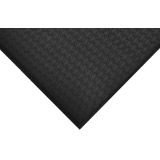 Traction Tread Rubber Runner Mats$97.00Non-slip kitchen floor mats have one job, and this runner does it about as well as rubber can. It is a thin, solid nitrile sheet built to hold grip on a floor that has water, grease, or cleaning chemicals on it. It is a traction and floor protection mat, not
...
Non-slip kitchen floor mats have one job, and this runner does it about as well as rubber can. It is...
Non-slip kitchen floor mats have one job, and this runner does it about as well as rubber can. It is a thin, solid nitrile sheet built to hold grip on a floor that has water, grease, or cleaning chemicals on it. It is a traction and floor protection mat, not a cushioned comfort mat, and knowing that up front saves you a return.
What a Non-Slip Kitchen Runner Does Before the Floor Gets Slick
Kitchen floors get dangerous in the walking lanes, not at the stations. Someone carries a hot pan from the range to the pass, crosses a wet patch by the dish area, and their footing is the only thing between them and the tile. That lane is where a traction runner belongs.
The measured grip on this one is unusually high. Under ASTM C1028-96 it holds a static coefficient of friction of 0.97 dry and 0.93 wet. A lot of surfaces look fine on a dry test and collapse when water is introduced. This one gives up very little.
It is also certified high-traction by the National Floor Safety Institute, which runs independent slip-resistance testing for commercial floor products. That certification is a third-party check on the numbers rather than a manufacturer's own claim.
The second job is protecting what is underneath. A rubber runner takes the dropped pans, the dragged crates, and the cart wheels that would otherwise chip tile or gouge a sealed floor. On a quarry tile line, that is the difference between resealing on schedule and repairing early.
Why Solid Nitrile Rubber, and Why This One
This mat is one material all the way through: solid nitrile rubber, 1/8 inch thick. There is no cushion layer, no fabric, and no backing to come apart. Nothing is bonded to anything, so there is no seam or glue line that can fail.
That construction is what lets it survive a kitchen. It is grease and oil proof and chemical resistant, so nightly sanitizing does not degrade it. It will not crack or curl, and the manufacturer states it provides years of service life.
The heat tolerance is where it separates from ordinary rubber matting. Melt point is over 500 degrees Fahrenheit, and it has been tested at temperatures up to 1800 degrees Fahrenheit for welding and slag resistance. In a kitchen that means a dropped ember or a hot pan is a non-event.
It also carries an ESD rating of electrically conductive and passes flammability standard BS 4790, tested by the metal nut method. Those are specifications you rarely need in a kitchen and absolutely need in a plant, which is why the same mat covers both rooms. The mat is made in the USA and is rated for indoor use.
The 1/8-inch profile matters more than it sounds. A thin mat lies flat, so carts and hand trucks roll across it instead of catching an edge, and it does not eat door clearance. That thinness is the trade-off for having no cushion.
Where It Belongs, and What It Will Not Do
Put it in the walking lanes and the transition zones. The path between the range and the pass, the strip in front of a dish machine, the run along a bar back, the approach to a walk-in, the stretch of floor by an ice machine. Anywhere feet move across a floor that gets wet.
It works the same way outside a kitchen. Production aisles, wash bays, machine approaches, and any indoor commercial or industrial floor that needs more slip resistance or protection than the floor itself provides.
Here is what it will not do: relieve fatigue. There is no cushion in it, so standing on this all shift feels much like standing on the floor. If someone holds one spot for hours, they need a cushioned anti-fatigue mat instead. The full range of kitchen mats covers both needs, and most working kitchens end up using each in different places.
The common mistake is buying one mat for both jobs. A comfort mat in a walking lane gets destroyed by cart traffic; a traction runner at a prep station leaves people sore. Split the floor by what happens on it and buy accordingly.
Three Things to Check Before You Spec It
First, map the lane, not the room. Walk the path people actually take and note where it crosses wet floor. Seven sizes are available, from 2' x 3' (23" x 32") up to 4' x 12' (46" x 143"), including 3' x 9', 3' x 12', 4' x 6', and 4' x 9'. Long lanes usually need two runners end to end rather than one oversized mat.
Second, decide between a 3-foot and a 4-foot width. Three feet covers a single-file lane where people pass one at a time. Four feet is the right call where two staff pass each other carrying things, or where a cart and a person share the lane at the same time.
Third, confirm the standing zones are covered separately. This runner handles the walking. If the same kitchen has a fry station or a prep table where someone stays put, that spot needs a cushioned mat. Specifying both at once is cheaper on your time than discovering the gap after install.
Why Mats Inc.
We stock this runner because it answers a question comfort matting cannot: how do you make a wet lane safe without putting something in the way of a cart. A thin, solid rubber sheet with a 0.93 wet traction rating does that, and nothing about it needs babying. Mats Inc. has been sorting floors into standing zones and moving zones since 1964, and this is what goes in the moving ones.
Specifications
Material Solid nitrile rubber (single-layer; no cushion or backing) Thickness 1/8" (0.125") Traction Certified high-traction by the National Floor Safety Institute (NFSI); ASTM C1028-96 static coefficient of friction: dry 0.97, wet 0.93 Heat resistance Melt point over 500°F; tested at temperatures up to 1800°F for welding/slag resistance Resistance Grease/oil proof; chemical resistant; welding safe Static ESD rating of electrically conductive Flammability Passes BS 4790 (metal nut method) Durability Will not crack or curl Stock sizes & weights 2' x 3' (23" x 32") — 4.7 lbs.
3' x 5' (32" x 58") — 11.6 lbs.
3' x 9' (32" x 108") — 20.9 lbs.
3' x 12' (32" x 143") — 27.9 lbs.
4' x 6' (46" x 70") — 18.7 lbs.
4' x 9' (46" x 108") — 28 lbs.
4' x 12' (46" x 143") — 37.4 lbs.Size tolerance 3–5% manufacturing variance Recommended use Indoor commercial and industrial settings requiring additional slip resistance or floor protection Cleaning Scrub with a deck brush as needed, using a neutral pH detergent; rinse with a hose or pressure washer; lay flat or hang to dry; return to service dry Origin Made in the USA Warranty 1-year limited (Mats Inc.) Frequently Asked Questions
Is this an anti-fatigue mat?
Answered by Dustin Thompson, Owner & CEO
No, and it is worth being direct about that. This is solid nitrile rubber at 1/8 inch thick, one material the whole way through. There is no foam cushion, so it does not compress under you and it will not relieve leg or back fatigue.
What that construction buys you instead is grip, floor protection, and a mat that survives conditions a cushioned mat cannot. If your problem is people standing in one spot getting sore, you want a cushioned comfort mat. If your problem is a slick floor in a walking lane, this is the right product.
How much grip does it actually have, and what can it take?
Answered by Dustin Thompson, Owner & CEO
The tested figures are 0.97 dry and 0.93 wet under ASTM C1028-96. The wet number is what matters in a kitchen, and losing only four hundredths between dry and wet is the useful part. It is also certified high-traction by the National Floor Safety Institute.
On the abuse side, it is grease and oil proof, chemical resistant, and welding safe. Melt point is over 500 degrees Fahrenheit, and it has been tested at temperatures up to 1800 degrees for welding and slag resistance. It also passes flammability standard BS 4790 and carries an ESD rating of electrically conductive.
Where should it go in a working kitchen?
Answered by Dustin Thompson, Owner & CEO
In the lanes people walk, especially the wet ones. The run between the range and the pass, the strip in front of the dish machine, the path to the walk-in, the floor by an ice machine, and the space behind a bar are all standard placements. It is rated for indoor use.
The 1/8-inch profile is a real advantage in those spots. It lies flat enough that carts and hand trucks roll straight over it rather than catching an edge, and it does not interfere with door swing. Cleaning is a deck brush scrub with a neutral pH detergent, then a hose or pressure washer rinse. Lay it flat or hang it to dry, and do not put it back down wet.
What sizes come in a runner length?
Answered by Jinna Hopson, Vice President of Marketing
Seven sizes, and four of them are true runner proportions: 3' x 9' (32" x 108") at 20.9 lbs., 3' x 12' (32" x 143") at 27.9 lbs., 4' x 9' (46" x 108") at 28 lbs., and 4' x 12' (46" x 143") at 37.4 lbs. The shorter options are 2' x 3' (4.7 lbs.), 3' x 5' (11.6 lbs.), and 4' x 6' (18.7 lbs.).
Those weights are worth knowing before cleaning day, since someone has to lift the mat to hose it down. For a lane longer than twelve feet, run two mats end to end rather than looking for one long piece. Measure the lane first and allow a little tolerance, since rubber shrinks and expands with temperature and time and finished sizes run within about 3% to 5% of nominal.
What does it look like, and will it suit a visible area?
Answered by Jinna Hopson, Vice President of Marketing
Understated, and more finished-looking than most people expect from a safety mat. The surface carries a raised tread molded across the whole face in a fine repeating pattern, so it reads as texture rather than as machinery. At 1/8 inch it sits low and flat against the floor instead of standing proud of it.
That low profile is what lets it work in semi-visible spots like a bar back, a service corridor, or a cafeteria floor, where a thick mat would look like an obstacle. For a front-of-house floor that customers stand on and look at, a fabric-topped comfort mat is still the better-looking answer.
Would this work in a home kitchen?
Answered by Jinna Hopson, Vice President of Marketing
It can, but it is usually more mat than a home needs and less comfort than a home wants. Most people shopping for a kitchen mat at home are after cushion underfoot at the sink or the stove, and this one does not provide that.
Where it genuinely fits at home is a slick tile floor that has become a problem, or a spot that takes real abuse, such as a mudroom-to-kitchen transition or the floor by a utility sink. If comfort is the goal, tell us where you stand longest and we will point you at a cushioned option instead.
By Dustin Thompson, Owner & CEO, Mats Inc.
↑
Non-slip kitchen floor mats have one job, and this runner does it about as well as rubber can. It is a thin, solid nitrile sheet built to hold grip on a floor that has water, grease, or cleaning chemicals on it. It is a traction and floor protection mat, not a cushioned comfort mat, and knowing that up front saves you a return.
What a Non-Slip Kitchen Runner Does Before the Floor Gets Slick
Kitchen floors get dangerous in the walking lanes, not at the stations. Someone carries a hot pan from the range to the pass, crosses a wet patch by the dish area, and their footing is the only thing between them and the tile. That lane is where a traction runner belongs.
The measured grip on this one is unusually high. Under ASTM C1028-96 it holds a static coefficient of friction of 0.97 dry and 0.93 wet. A lot of surfaces look fine on a dry test and collapse when water is introduced. This one gives up very little.
It is also certified high-traction by the National Floor Safety Institute, which runs independent slip-resistance testing for commercial floor products. That certification is a third-party check on the numbers rather than a manufacturer's own claim.
The second job is protecting what is underneath. A rubber runner takes the dropped pans, the dragged crates, and the cart wheels that would otherwise chip tile or gouge a sealed floor. On a quarry tile line, that is the difference between resealing on schedule and repairing early.
Why Solid Nitrile Rubber, and Why This One
This mat is one material all the way through: solid nitrile rubber, 1/8 inch thick. There is no cushion layer, no fabric, and no backing to come apart. Nothing is bonded to anything, so there is no seam or glue line that can fail.
That construction is what lets it survive a kitchen. It is grease and oil proof and chemical resistant, so nightly sanitizing does not degrade it. It will not crack or curl, and the manufacturer states it provides years of service life.
The heat tolerance is where it separates from ordinary rubber matting. Melt point is over 500 degrees Fahrenheit, and it has been tested at temperatures up to 1800 degrees Fahrenheit for welding and slag resistance. In a kitchen that means a dropped ember or a hot pan is a non-event.
It also carries an ESD rating of electrically conductive and passes flammability standard BS 4790, tested by the metal nut method. Those are specifications you rarely need in a kitchen and absolutely need in a plant, which is why the same mat covers both rooms. The mat is made in the USA and is rated for indoor use.
The 1/8-inch profile matters more than it sounds. A thin mat lies flat, so carts and hand trucks roll across it instead of catching an edge, and it does not eat door clearance. That thinness is the trade-off for having no cushion.
Where It Belongs, and What It Will Not Do
Put it in the walking lanes and the transition zones. The path between the range and the pass, the strip in front of a dish machine, the run along a bar back, the approach to a walk-in, the stretch of floor by an ice machine. Anywhere feet move across a floor that gets wet.
It works the same way outside a kitchen. Production aisles, wash bays, machine approaches, and any indoor commercial or industrial floor that needs more slip resistance or protection than the floor itself provides.
Here is what it will not do: relieve fatigue. There is no cushion in it, so standing on this all shift feels much like standing on the floor. If someone holds one spot for hours, they need a cushioned anti-fatigue mat instead. The full range of kitchen mats covers both needs, and most working kitchens end up using each in different places.
The common mistake is buying one mat for both jobs. A comfort mat in a walking lane gets destroyed by cart traffic; a traction runner at a prep station leaves people sore. Split the floor by what happens on it and buy accordingly.
Three Things to Check Before You Spec It
First, map the lane, not the room. Walk the path people actually take and note where it crosses wet floor. Seven sizes are available, from 2' x 3' (23" x 32") up to 4' x 12' (46" x 143"), including 3' x 9', 3' x 12', 4' x 6', and 4' x 9'. Long lanes usually need two runners end to end rather than one oversized mat.
Second, decide between a 3-foot and a 4-foot width. Three feet covers a single-file lane where people pass one at a time. Four feet is the right call where two staff pass each other carrying things, or where a cart and a person share the lane at the same time.
Third, confirm the standing zones are covered separately. This runner handles the walking. If the same kitchen has a fry station or a prep table where someone stays put, that spot needs a cushioned mat. Specifying both at once is cheaper on your time than discovering the gap after install.
Why Mats Inc.
We stock this runner because it answers a question comfort matting cannot: how do you make a wet lane safe without putting something in the way of a cart. A thin, solid rubber sheet with a 0.93 wet traction rating does that, and nothing about it needs babying. Mats Inc. has been sorting floors into standing zones and moving zones since 1964, and this is what goes in the moving ones.
Specifications
Material Solid nitrile rubber (single-layer; no cushion or backing) Thickness 1/8" (0.125") Traction Certified high-traction by the National Floor Safety Institute (NFSI); ASTM C1028-96 static coefficient of friction: dry 0.97, wet 0.93 Heat resistance Melt point over 500°F; tested at temperatures up to 1800°F for welding/slag resistance Resistance Grease/oil proof; chemical resistant; welding safe Static ESD rating of electrically conductive Flammability Passes BS 4790 (metal nut method) Durability Will not crack or curl Stock sizes & weights 2' x 3' (23" x 32") — 4.7 lbs.
3' x 5' (32" x 58") — 11.6 lbs.
3' x 9' (32" x 108") — 20.9 lbs.
3' x 12' (32" x 143") — 27.9 lbs.
4' x 6' (46" x 70") — 18.7 lbs.
4' x 9' (46" x 108") — 28 lbs.
4' x 12' (46" x 143") — 37.4 lbs.Size tolerance 3–5% manufacturing variance Recommended use Indoor commercial and industrial settings requiring additional slip resistance or floor protection Cleaning Scrub with a deck brush as needed, using a neutral pH detergent; rinse with a hose or pressure washer; lay flat or hang to dry; return to service dry Origin Made in the USA Warranty 1-year limited (Mats Inc.) Frequently Asked Questions
Is this an anti-fatigue mat?
Answered by Dustin Thompson, Owner & CEO
No, and it is worth being direct about that. This is solid nitrile rubber at 1/8 inch thick, one material the whole way through. There is no foam cushion, so it does not compress under you and it will not relieve leg or back fatigue.
What that construction buys you instead is grip, floor protection, and a mat that survives conditions a cushioned mat cannot. If your problem is people standing in one spot getting sore, you want a cushioned comfort mat. If your problem is a slick floor in a walking lane, this is the right product.
How much grip does it actually have, and what can it take?
Answered by Dustin Thompson, Owner & CEO
The tested figures are 0.97 dry and 0.93 wet under ASTM C1028-96. The wet number is what matters in a kitchen, and losing only four hundredths between dry and wet is the useful part. It is also certified high-traction by the National Floor Safety Institute.
On the abuse side, it is grease and oil proof, chemical resistant, and welding safe. Melt point is over 500 degrees Fahrenheit, and it has been tested at temperatures up to 1800 degrees for welding and slag resistance. It also passes flammability standard BS 4790 and carries an ESD rating of electrically conductive.
Where should it go in a working kitchen?
Answered by Dustin Thompson, Owner & CEO
In the lanes people walk, especially the wet ones. The run between the range and the pass, the strip in front of the dish machine, the path to the walk-in, the floor by an ice machine, and the space behind a bar are all standard placements. It is rated for indoor use.
The 1/8-inch profile is a real advantage in those spots. It lies flat enough that carts and hand trucks roll straight over it rather than catching an edge, and it does not interfere with door swing. Cleaning is a deck brush scrub with a neutral pH detergent, then a hose or pressure washer rinse. Lay it flat or hang it to dry, and do not put it back down wet.
What sizes come in a runner length?
Answered by Jinna Hopson, Vice President of Marketing
Seven sizes, and four of them are true runner proportions: 3' x 9' (32" x 108") at 20.9 lbs., 3' x 12' (32" x 143") at 27.9 lbs., 4' x 9' (46" x 108") at 28 lbs., and 4' x 12' (46" x 143") at 37.4 lbs. The shorter options are 2' x 3' (4.7 lbs.), 3' x 5' (11.6 lbs.), and 4' x 6' (18.7 lbs.).
Those weights are worth knowing before cleaning day, since someone has to lift the mat to hose it down. For a lane longer than twelve feet, run two mats end to end rather than looking for one long piece. Measure the lane first and allow a little tolerance, since rubber shrinks and expands with temperature and time and finished sizes run within about 3% to 5% of nominal.
What does it look like, and will it suit a visible area?
Answered by Jinna Hopson, Vice President of Marketing
Understated, and more finished-looking than most people expect from a safety mat. The surface carries a raised tread molded across the whole face in a fine repeating pattern, so it reads as texture rather than as machinery. At 1/8 inch it sits low and flat against the floor instead of standing proud of it.
That low profile is what lets it work in semi-visible spots like a bar back, a service corridor, or a cafeteria floor, where a thick mat would look like an obstacle. For a front-of-house floor that customers stand on and look at, a fabric-topped comfort mat is still the better-looking answer.
Would this work in a home kitchen?
Answered by Jinna Hopson, Vice President of Marketing
It can, but it is usually more mat than a home needs and less comfort than a home wants. Most people shopping for a kitchen mat at home are after cushion underfoot at the sink or the stove, and this one does not provide that.
Where it genuinely fits at home is a slick tile floor that has become a problem, or a spot that takes real abuse, such as a mudroom-to-kitchen transition or the floor by a utility sink. If comfort is the goal, tell us where you stand longest and we will point you at a cushioned option instead.
By Dustin Thompson, Owner & CEO, Mats Inc.
↑
View Details
View Details
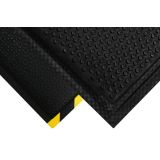 Happy Feet Anti-Fatigue Mats$114.00Happy Feet Anti-Fatigue Mats are the half-inch nitrile mat you put where a foam mat would die: a wet station, a grate, a welding bench, or an assembly post where the parts on the table cannot take a static discharge. A dense rubber cushion is sealed inside a solid
...
Happy Feet Anti-Fatigue Mats are the half-inch nitrile mat you put where a foam mat would die: a wet...
Happy Feet Anti-Fatigue Mats are the half-inch nitrile mat you put where a foam mat would die: a wet station, a grate, a welding bench, or an assembly post where the parts on the table cannot take a static discharge. A dense rubber cushion is sealed inside a solid nitrile skin on every side, and the maker rates the mat electrically conductive. Its maker now sells the same mat under the name DuraComfort.
What Happy Feet Does Before the Floor, the Water, or the Static Wins
Standing on concrete for a shift is hard on the legs and back, and the usual fix, a foam mat, has a weakness. Foam drinks. At a wash-down station or over a grate, water works into an open-edged cushion, the cushion softens, and the mat starts to slide and smell. The comfort lasts a season; the mat does not.
This mat closes that door. The cushion is fully encapsulated in nitrile rubber, so water, grease, and chemicals stay on the outside where they can be hosed off. The maker calls the surface penetration proof, which is the plain way of saying a dropped tool or a heel edge does not open it. That is why it is popular over grates, where an open-backed mat gets chewed from below.
The third job is static. As a person shifts and steps at a bench, their body builds a charge, and on an insulating mat that charge waits for the first grounded thing they touch. The nitrile here is conductive, with a published surface-to-surface resistance of 1.9 × 10⁴ ohms at 50 percent humidity and 2.0 × 10⁴ at 12 percent. Connected to ground, it drains the charge as it forms.
Why an Encapsulated Nitrile Mat, and Why This One
Most anti-fatigue mats are two materials stacked: a rubber or vinyl top glued or molded onto a foam base, with the foam exposed at the edges or the underside. This one is a 3/8 inch natural rubber cushion, 18 to 20 pounds per cubic foot, sealed inside a nitrile skin that wraps the whole block. The finished mat is half an inch thick with low, beveled edges.
Nitrile is the rubber chosen when the floor sees oil, grease, animal fat, or solvent. The maker rates the mat grease and oil proof, chemical resistant, and welding safe, so a spark or a hot slag drop does not burn a hole through it. Because the skin is one piece, there is no glue line to let go and no exposed foam edge to start the peel.
The surface comes two ways. The textured surface is for dry and damp floors and tests at 88 on the ASTM E303 pendulum dry and 34 wet. The grip surface is for wet floors and tests at 105 dry and 82 wet. Both versions are certified high-traction by the National Floor Safety Institute. Pick the surface by how wet the floor actually gets, not by how it looks.
The cushion compresses 32.2 percent under 20 psi and 44.9 percent under 40 psi, which is the feel of a firm mat that still gives under a shift of weight. Two flammability standards are published: CPSC FF1-70 and BS-4790. Mats Inc. offers it in 2 by 3 and 3 by 5 foot sizes, each with a solid black border or an OSHA yellow striped border.
Where It Belongs, and What It Is Not
The maker places it in wet or dry industrial settings, and that breadth is the point. A single-person workstation on an assembly line, a welding cell, a parts-washing sink, a food-plant prep post, a lab bench with wet cleanup, a machine tended over a floor grate: one mat covers all of those without choosing between wet and dry.
Because it is conductive, it also belongs at the bench where sensitive electronics are handled, provided it is connected to ground. It is one of the mats in our anti-static matting lineup built for the shop that needs comfort, grip, and a static path from the same square of floor. Add the yellow border where the mat also marks a hazard zone.
What it is not: a large-area mat. Two stock sizes cover a person, not a room, and there is no roll version of this construction. It is also not a cushioned floor for a whole line; a linkable system or a runner does that. And it is not a bench-top ESD mat for the work surface, since it goes under feet, not under the parts.
It is not a plush mat either. At half an inch with a firm natural-rubber core, it supports rather than sinks. A cashier who wants a soft mat at a dry counter will find it firm. A machinist who has flattened three foam mats will find it exactly right.
Three Things to Check Before You Spec It
First, how wet is the floor at its worst. A station that is dry most of the day but hosed down at close counts as damp; the textured surface handles it. A station where the floor is wet through the shift, or where fat and grease sit on the surface, wants the grip surface and its 82 wet pendulum number. Order the surface for the bad hour, not the average one.
Second, whether static matters at this post. If the person on the mat handles boards, sensors, or anything a discharge can ruin, connect the mat to building ground with a grounding cord and have workers in rubber-soled shoes wear heel grounders. A conductive mat that is not grounded protects nothing. If static does not matter here, the same mat is simply a very tough anti-fatigue mat.
Third, size to the stance. The 2 by 3 covers a person who stands in one spot: a sink, a press, a single bench seat. The 3 by 5 covers a person who shifts side to side across a work surface or turns between a machine and a table. Rubber sizes run within 3 to 5 percent of nominal, so leave that much room in a tight bay.
Why Mats Inc.
We have watched foam mats fail at wet stations in Houston plants for sixty years, and the ones that survive are the ones sealed all the way around. That is why we carry this construction and why every number on this page comes from the maker's published test data rather than a description. Tell us the floor, the exposure, and whether the bench is static-sensitive, and we will tell you which surface and which border to order.
Surface Nitrile rubber, encapsulating the entire cushion; textured or grip Cushion Natural rubber, 3/8", 18–20 lb per cubic foot Overall thickness 1/2" ESD rating Electrically conductive; 1.9 × 10⁴ ohms surface to surface at 50% RH, 2.0 × 10⁴ at 12% RH Traction NFSI certified high-traction; ASTM E303 BPN textured 88 dry / 34 wet, grip 105 dry / 82 wet Compression deflection 32.2% at 20 psi; 44.9% at 40 psi Resistance Grease and oil proof; chemical resistant; welding safe; penetration-proof surface Flammability Passes CPSC FF1-70 and BS-4790 (metal nut method) Sizes 2' x 3' (24" x 35"), 3' x 5' (35" x 59"); 3–5% manufacturing variance Borders Solid black or OSHA yellow striped; low-profile beveled edges Use area Wet or dry indoor industrial settings, including over grates Cleaning Deck brush with neutral-pH detergent, hose or pressure wash, hang to dry; textured surface may be autoclaved Warranty 1-year limited (Mats Inc.) Frequently Asked Questions
What is Happy Feet made of, and why is the cushion sealed inside the rubber?
Answered by Dustin Thompson, Owner & CEO
The core is a 3/8 inch natural rubber cushion at 18 to 20 pounds per cubic foot. Around it, on every side, is a solid nitrile rubber skin, which brings the finished mat to half an inch. Nitrile is the rubber that shrugs off oil, grease, and most shop chemicals, and the maker rates this skin penetration proof.
Sealing the cushion is what lets one mat work wet and dry. An open-edged foam mat takes on water at a wash-down station and breaks down from the inside. Here nothing reaches the cushion. It is also why the mat holds up over a floor grate, where the underside of an ordinary mat gets abraded and torn.
How long will it last, and what shortens its life?
Answered by Dustin Thompson, Owner & CEO
At a single station, expect five years and often more; that is our field judgment for encapsulated nitrile mats, not a maker's figure. The cushion compression the maker publishes, 32.2 percent at 20 psi and 44.9 percent at 40, describes a firm core that rebounds rather than packing down, which is what keeps year five feeling like year one.
What shortens it is the wrong surface in the wrong place, and neglect. A textured mat left in standing grease gets slick and gets kicked aside; a grip mat is the fix. A mat put back on the floor wet traps water underneath. Scrub it with a neutral detergent, hose it, hang it to dry, and it comes back to service ready.
Does it need a grounding cord to work as an ESD mat?
Answered by Dustin Thompson, Owner & CEO
Yes, if static control is the reason you are buying it. The nitrile is conductive on its own, with a published surface-to-surface resistance around 2 × 10⁴ ohms, but conductivity only helps when the charge has somewhere to go. A grounding cord clipped to the mat and fastened to a verified building ground gives it that path.
Workers in rubber-soled boots also need heel grounders, or the charge never leaves the body to reach the mat. If you are buying it purely as a wet-area comfort mat, skip all of that; the mat works the same underfoot either way. Just do not assume a static-safe bench because the mat is conductive if nobody ran the cord.
Which size fits a single workstation, and can I get it in a runner?
Answered by Jinna Hopson, Vice President of Marketing
Two sizes. The 2 by 3, which actually measures about 24 by 35 inches, covers someone who stands in one spot at a sink, a press, or a bench seat. The 3 by 5, about 35 by 59 inches, covers someone who moves side to side along a work surface or turns between a machine and a table. Rubber sizes vary 3 to 5 percent, so allow for it in a tight bay.
There is no roll or runner version of this particular construction. For a long line, the answer is either several mats placed station by station or a linkable system built for continuous runs. Tell us the length of the line and how many people stand on it, and we will suggest which.
What does it look like, and which border should I choose?
Answered by Jinna Hopson, Vice President of Marketing
It is a black rubber mat with a low, beveled edge and one of two faces: a fine textured surface that reads matte and even, or a grip surface with a raised pattern you can see from across the shop. Neither is decorative. Both are meant to be hosed down and put back.
The border is the choice. Solid black disappears into a dark floor. The OSHA yellow striped border marks the mat as a zone, which is useful where the station is a hazard area, where forklifts pass, or where you want a clear visual line around a static-safe bench. If your safety program uses color, yellow is the version that speaks it.
Is this the right mat for a home shop, a lab, or a kitchen line?
Answered by Jinna Hopson, Vice President of Marketing
A home shop with a welder or a parts washer, yes; this is a small mat that takes sparks and solvents and hoses clean. A lab, yes, especially where the bench sees wet cleanup and the textured version can be autoclaved between uses. A kitchen line, yes with the grip surface, since animal fat on the floor is exactly what nitrile and an 82 wet pendulum number are for.
Where it is not the right pick is a dry front-of-house counter where softness and a fabric look matter more than durability, or a bench that needs a static-dissipative rating rather than a conductive one for a written program. If you are not sure which class your spec calls for, ask us before you order rather than after.
By Dustin Thompson, Owner & CEO, Mats Inc.
↑
Happy Feet Anti-Fatigue Mats are the half-inch nitrile mat you put where a foam mat would die: a wet station, a grate, a welding bench, or an assembly post where the parts on the table cannot take a static discharge. A dense rubber cushion is sealed inside a solid nitrile skin on every side, and the maker rates the mat electrically conductive. Its maker now sells the same mat under the name DuraComfort.
What Happy Feet Does Before the Floor, the Water, or the Static Wins
Standing on concrete for a shift is hard on the legs and back, and the usual fix, a foam mat, has a weakness. Foam drinks. At a wash-down station or over a grate, water works into an open-edged cushion, the cushion softens, and the mat starts to slide and smell. The comfort lasts a season; the mat does not.
This mat closes that door. The cushion is fully encapsulated in nitrile rubber, so water, grease, and chemicals stay on the outside where they can be hosed off. The maker calls the surface penetration proof, which is the plain way of saying a dropped tool or a heel edge does not open it. That is why it is popular over grates, where an open-backed mat gets chewed from below.
The third job is static. As a person shifts and steps at a bench, their body builds a charge, and on an insulating mat that charge waits for the first grounded thing they touch. The nitrile here is conductive, with a published surface-to-surface resistance of 1.9 × 10⁴ ohms at 50 percent humidity and 2.0 × 10⁴ at 12 percent. Connected to ground, it drains the charge as it forms.
Why an Encapsulated Nitrile Mat, and Why This One
Most anti-fatigue mats are two materials stacked: a rubber or vinyl top glued or molded onto a foam base, with the foam exposed at the edges or the underside. This one is a 3/8 inch natural rubber cushion, 18 to 20 pounds per cubic foot, sealed inside a nitrile skin that wraps the whole block. The finished mat is half an inch thick with low, beveled edges.
Nitrile is the rubber chosen when the floor sees oil, grease, animal fat, or solvent. The maker rates the mat grease and oil proof, chemical resistant, and welding safe, so a spark or a hot slag drop does not burn a hole through it. Because the skin is one piece, there is no glue line to let go and no exposed foam edge to start the peel.
The surface comes two ways. The textured surface is for dry and damp floors and tests at 88 on the ASTM E303 pendulum dry and 34 wet. The grip surface is for wet floors and tests at 105 dry and 82 wet. Both versions are certified high-traction by the National Floor Safety Institute. Pick the surface by how wet the floor actually gets, not by how it looks.
The cushion compresses 32.2 percent under 20 psi and 44.9 percent under 40 psi, which is the feel of a firm mat that still gives under a shift of weight. Two flammability standards are published: CPSC FF1-70 and BS-4790. Mats Inc. offers it in 2 by 3 and 3 by 5 foot sizes, each with a solid black border or an OSHA yellow striped border.
Where It Belongs, and What It Is Not
The maker places it in wet or dry industrial settings, and that breadth is the point. A single-person workstation on an assembly line, a welding cell, a parts-washing sink, a food-plant prep post, a lab bench with wet cleanup, a machine tended over a floor grate: one mat covers all of those without choosing between wet and dry.
Because it is conductive, it also belongs at the bench where sensitive electronics are handled, provided it is connected to ground. It is one of the mats in our anti-static matting lineup built for the shop that needs comfort, grip, and a static path from the same square of floor. Add the yellow border where the mat also marks a hazard zone.
What it is not: a large-area mat. Two stock sizes cover a person, not a room, and there is no roll version of this construction. It is also not a cushioned floor for a whole line; a linkable system or a runner does that. And it is not a bench-top ESD mat for the work surface, since it goes under feet, not under the parts.
It is not a plush mat either. At half an inch with a firm natural-rubber core, it supports rather than sinks. A cashier who wants a soft mat at a dry counter will find it firm. A machinist who has flattened three foam mats will find it exactly right.
Three Things to Check Before You Spec It
First, how wet is the floor at its worst. A station that is dry most of the day but hosed down at close counts as damp; the textured surface handles it. A station where the floor is wet through the shift, or where fat and grease sit on the surface, wants the grip surface and its 82 wet pendulum number. Order the surface for the bad hour, not the average one.
Second, whether static matters at this post. If the person on the mat handles boards, sensors, or anything a discharge can ruin, connect the mat to building ground with a grounding cord and have workers in rubber-soled shoes wear heel grounders. A conductive mat that is not grounded protects nothing. If static does not matter here, the same mat is simply a very tough anti-fatigue mat.
Third, size to the stance. The 2 by 3 covers a person who stands in one spot: a sink, a press, a single bench seat. The 3 by 5 covers a person who shifts side to side across a work surface or turns between a machine and a table. Rubber sizes run within 3 to 5 percent of nominal, so leave that much room in a tight bay.
Why Mats Inc.
We have watched foam mats fail at wet stations in Houston plants for sixty years, and the ones that survive are the ones sealed all the way around. That is why we carry this construction and why every number on this page comes from the maker's published test data rather than a description. Tell us the floor, the exposure, and whether the bench is static-sensitive, and we will tell you which surface and which border to order.
Surface Nitrile rubber, encapsulating the entire cushion; textured or grip Cushion Natural rubber, 3/8", 18–20 lb per cubic foot Overall thickness 1/2" ESD rating Electrically conductive; 1.9 × 10⁴ ohms surface to surface at 50% RH, 2.0 × 10⁴ at 12% RH Traction NFSI certified high-traction; ASTM E303 BPN textured 88 dry / 34 wet, grip 105 dry / 82 wet Compression deflection 32.2% at 20 psi; 44.9% at 40 psi Resistance Grease and oil proof; chemical resistant; welding safe; penetration-proof surface Flammability Passes CPSC FF1-70 and BS-4790 (metal nut method) Sizes 2' x 3' (24" x 35"), 3' x 5' (35" x 59"); 3–5% manufacturing variance Borders Solid black or OSHA yellow striped; low-profile beveled edges Use area Wet or dry indoor industrial settings, including over grates Cleaning Deck brush with neutral-pH detergent, hose or pressure wash, hang to dry; textured surface may be autoclaved Warranty 1-year limited (Mats Inc.) Frequently Asked Questions
What is Happy Feet made of, and why is the cushion sealed inside the rubber?
Answered by Dustin Thompson, Owner & CEO
The core is a 3/8 inch natural rubber cushion at 18 to 20 pounds per cubic foot. Around it, on every side, is a solid nitrile rubber skin, which brings the finished mat to half an inch. Nitrile is the rubber that shrugs off oil, grease, and most shop chemicals, and the maker rates this skin penetration proof.
Sealing the cushion is what lets one mat work wet and dry. An open-edged foam mat takes on water at a wash-down station and breaks down from the inside. Here nothing reaches the cushion. It is also why the mat holds up over a floor grate, where the underside of an ordinary mat gets abraded and torn.
How long will it last, and what shortens its life?
Answered by Dustin Thompson, Owner & CEO
At a single station, expect five years and often more; that is our field judgment for encapsulated nitrile mats, not a maker's figure. The cushion compression the maker publishes, 32.2 percent at 20 psi and 44.9 percent at 40, describes a firm core that rebounds rather than packing down, which is what keeps year five feeling like year one.
What shortens it is the wrong surface in the wrong place, and neglect. A textured mat left in standing grease gets slick and gets kicked aside; a grip mat is the fix. A mat put back on the floor wet traps water underneath. Scrub it with a neutral detergent, hose it, hang it to dry, and it comes back to service ready.
Does it need a grounding cord to work as an ESD mat?
Answered by Dustin Thompson, Owner & CEO
Yes, if static control is the reason you are buying it. The nitrile is conductive on its own, with a published surface-to-surface resistance around 2 × 10⁴ ohms, but conductivity only helps when the charge has somewhere to go. A grounding cord clipped to the mat and fastened to a verified building ground gives it that path.
Workers in rubber-soled boots also need heel grounders, or the charge never leaves the body to reach the mat. If you are buying it purely as a wet-area comfort mat, skip all of that; the mat works the same underfoot either way. Just do not assume a static-safe bench because the mat is conductive if nobody ran the cord.
Which size fits a single workstation, and can I get it in a runner?
Answered by Jinna Hopson, Vice President of Marketing
Two sizes. The 2 by 3, which actually measures about 24 by 35 inches, covers someone who stands in one spot at a sink, a press, or a bench seat. The 3 by 5, about 35 by 59 inches, covers someone who moves side to side along a work surface or turns between a machine and a table. Rubber sizes vary 3 to 5 percent, so allow for it in a tight bay.
There is no roll or runner version of this particular construction. For a long line, the answer is either several mats placed station by station or a linkable system built for continuous runs. Tell us the length of the line and how many people stand on it, and we will suggest which.
What does it look like, and which border should I choose?
Answered by Jinna Hopson, Vice President of Marketing
It is a black rubber mat with a low, beveled edge and one of two faces: a fine textured surface that reads matte and even, or a grip surface with a raised pattern you can see from across the shop. Neither is decorative. Both are meant to be hosed down and put back.
The border is the choice. Solid black disappears into a dark floor. The OSHA yellow striped border marks the mat as a zone, which is useful where the station is a hazard area, where forklifts pass, or where you want a clear visual line around a static-safe bench. If your safety program uses color, yellow is the version that speaks it.
Is this the right mat for a home shop, a lab, or a kitchen line?
Answered by Jinna Hopson, Vice President of Marketing
A home shop with a welder or a parts washer, yes; this is a small mat that takes sparks and solvents and hoses clean. A lab, yes, especially where the bench sees wet cleanup and the textured version can be autoclaved between uses. A kitchen line, yes with the grip surface, since animal fat on the floor is exactly what nitrile and an 82 wet pendulum number are for.
Where it is not the right pick is a dry front-of-house counter where softness and a fabric look matter more than durability, or a bench that needs a static-dissipative rating rather than a conductive one for a written program. If you are not sure which class your spec calls for, ask us before you order rather than after.
By Dustin Thompson, Owner & CEO, Mats Inc.
↑
View Details
View Details
Why Welding and Fabrication Environments Need Specialized Matting
Welders and technicians often work in fixed stances where small posture changes impact comfort and precision. Concrete floors accelerate leg fatigue and lower-back strain, while metal shavings and shop debris demand surfaces that clean fast and stay stable. Welding mats and runner coverage help define safer work zones around benches, weld cells, and service bays without adding unnecessary complexity to daily cleanup.
Best Welding Mats & Runners for Metal Shops and Service Bays
Hog Heaven is commonly selected for welding and fabrication areas where workers stay planted at benches, grinders, or weld stations for long runs. Happy Feet Anti-Fatigue mats are often used in active work cells where technicians move between tasks and still need consistent underfoot support. Comfort Flow Anti-Fatigue Mats are a practical fit when you want straightforward placement and easy day-to-day maintenance in high-use shop areas.
Key Features for Welding and Fabrication Applications
Prioritize surfaces that stay reliable under shop traffic and resist becoming a debris trap during grinding and cutting. Look for stable edges that reduce trip risk when workers step on and off the mat throughout the day. In areas where spills occur, choose layouts that support traction and simplify cleaning rather than forcing constant repositioning.
Installation and Setup for Welding Shops
Start by placing mats where the stance is most consistent, such as weld benches, fabrication tables, and grinding stations. Keep runner coverage aligned with the workflow so technicians are not stepping on and off support every few feet. If carts move through the area, maintain clear transitions so mats do not shift or create edge lift from repeated passes.
Maintenance for Welding and Fabrication Environments
Sweep or vacuum frequently to remove metal shavings and shop debris before it migrates under edges. Lift and clean beneath mats on a regular schedule in heavy-use bays to prevent grit buildup against the floor surface. If oils or coolants are present, use cleaning methods consistent with the area’s normal shop protocols and keep the surface dry before returning to service.
Why Choose Mats Inc. for Your Welding and Fabrication Needs?
Mats Inc supports commercial and industrial facilities that need matting decisions to be practical, not theoretical. You get help selecting options that fit the way your bays operate, with product choices that align to real shop traffic and standing-time demands.
Ready to Upgrade Your Welding Shop Floor?
Choose a setup that improves comfort at the work position and keeps cleanup straightforward at the end of the day. Explore the recommended options below or contact our team for help matching coverage to your bays, benches, and workflow.
Hog Heaven
Best For: Fixed welding stations, fabrication benches, grinding areas, and long-duration standing positions.
Why It Works: Supports consistent underfoot comfort where technicians stay planted during precision work.
Key Specs: Built for demanding shop environments where daily use and cleanup are routine.
Installation: Place at primary work positions to reduce stepping on and off support throughout the shift.
Happy Feet Anti-Fatigue mats
Best For: Active work cells, multi-task bays, and areas where technicians rotate between stations.
Why It Works: Helps reduce fatigue while supporting natural movement across common shop workflows.
Key Specs: A practical choice for high-traffic shop zones that need reliable day-to-day performance.
Installation: Position along the path of work to keep support underfoot as tasks shift between tools and equipment.
Comfort Flow Anti-Fatigue Mats
Best For: General welding bays, fabrication zones, and maintenance areas needing simple placement and upkeep.
Why It Works: Balances comfort and usability for shops that want support without complicated floor changes.
Key Specs: Designed for straightforward use in commercial and industrial work environments.
Installation: Set in primary standing zones and keep edges aligned to reduce shifting from repeated foot traffic.
Frequently Asked Questions
Where should Welding Mats & Runners be placed in a fabrication shop?
Place mats at the positions where technicians stand the longest, such as weld benches, fabrication tables, and grinding stations.
How do I decide between mat coverage and runner coverage in welding bays?
Use mats for fixed work positions and use runner coverage when technicians move along a bench line or between repeated stations.
What is the best way to handle metal shavings and debris on shop matting?
Sweep or vacuum frequently and lift mats on a routine schedule to remove grit that can collect underneath edges.
Can Welding Mats & Runners be used in automotive service bays?
Yes, they are commonly used around welding positions, workbenches, and repair zones where technicians spend long periods standing on concrete.
How do I reduce mat shifting in high-traffic welding and maintenance areas?
Align mats to the workflow and keep edges clean and flat so repeated stepping and cart traffic do not encourage movement.
What cleaning approach works best when oils or fluids are present in the shop?
Clean using the facility’s normal shop protocols, remove residue promptly, and return the mat to service only after the surface is stable and dry.
How do I plan coverage for multiple welding bays in the same facility?
Start with the highest-use bays first, then expand coverage based on where technicians stand the longest and where fatigue is most noticeable.