




More Information
| Manufacturer | Crown Matting |
|---|
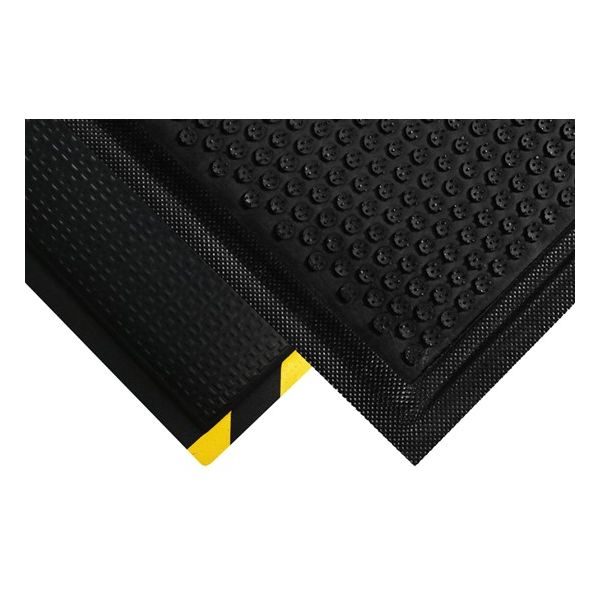
$114.00

Have a question? We're here to help!
Description
Happy Feet Anti-Fatigue Mats are the half-inch nitrile mat you put where a foam mat would die: a wet station, a grate, a welding bench, or an assembly post where the parts on the table cannot take a static discharge. A dense rubber cushion is sealed inside a solid nitrile skin on every side, and the maker rates the mat electrically conductive. Its maker now sells the same mat under the name DuraComfort.
What Happy Feet Does Before the Floor, the Water, or the Static Wins
Standing on concrete for a shift is hard on the legs and back, and the usual fix, a foam mat, has a weakness. Foam drinks. At a wash-down station or over a grate, water works into an open-edged cushion, the cushion softens, and the mat starts to slide and smell. The comfort lasts a season; the mat does not.
This mat closes that door. The cushion is fully encapsulated in nitrile rubber, so water, grease, and chemicals stay on the outside where they can be hosed off. The maker calls the surface penetration proof, which is the plain way of saying a dropped tool or a heel edge does not open it. That is why it is popular over grates, where an open-backed mat gets chewed from below.
The third job is static. As a person shifts and steps at a bench, their body builds a charge, and on an insulating mat that charge waits for the first grounded thing they touch. The nitrile here is conductive, with a published surface-to-surface resistance of 1.9 × 10⁴ ohms at 50 percent humidity and 2.0 × 10⁴ at 12 percent. Connected to ground, it drains the charge as it forms.
Why an Encapsulated Nitrile Mat, and Why This One
Most anti-fatigue mats are two materials stacked: a rubber or vinyl top glued or molded onto a foam base, with the foam exposed at the edges or the underside. This one is a 3/8 inch natural rubber cushion, 18 to 20 pounds per cubic foot, sealed inside a nitrile skin that wraps the whole block. The finished mat is half an inch thick with low, beveled edges.
Nitrile is the rubber chosen when the floor sees oil, grease, animal fat, or solvent. The maker rates the mat grease and oil proof, chemical resistant, and welding safe, so a spark or a hot slag drop does not burn a hole through it. Because the skin is one piece, there is no glue line to let go and no exposed foam edge to start the peel.
The surface comes two ways. The textured surface is for dry and damp floors and tests at 88 on the ASTM E303 pendulum dry and 34 wet. The grip surface is for wet floors and tests at 105 dry and 82 wet. Both versions are certified high-traction by the National Floor Safety Institute. Pick the surface by how wet the floor actually gets, not by how it looks.
The cushion compresses 32.2 percent under 20 psi and 44.9 percent under 40 psi, which is the feel of a firm mat that still gives under a shift of weight. Two flammability standards are published: CPSC FF1-70 and BS-4790. Mats Inc. offers it in 2 by 3 and 3 by 5 foot sizes, each with a solid black border or an OSHA yellow striped border.
Where It Belongs, and What It Is Not
The maker places it in wet or dry industrial settings, and that breadth is the point. A single-person workstation on an assembly line, a welding cell, a parts-washing sink, a food-plant prep post, a lab bench with wet cleanup, a machine tended over a floor grate: one mat covers all of those without choosing between wet and dry.
Because it is conductive, it also belongs at the bench where sensitive electronics are handled, provided it is connected to ground. It is one of the mats in our anti-static matting lineup built for the shop that needs comfort, grip, and a static path from the same square of floor. Add the yellow border where the mat also marks a hazard zone.
What it is not: a large-area mat. Two stock sizes cover a person, not a room, and there is no roll version of this construction. It is also not a cushioned floor for a whole line; a linkable system or a runner does that. And it is not a bench-top ESD mat for the work surface, since it goes under feet, not under the parts.
It is not a plush mat either. At half an inch with a firm natural-rubber core, it supports rather than sinks. A cashier who wants a soft mat at a dry counter will find it firm. A machinist who has flattened three foam mats will find it exactly right.
Three Things to Check Before You Spec It
First, how wet is the floor at its worst. A station that is dry most of the day but hosed down at close counts as damp; the textured surface handles it. A station where the floor is wet through the shift, or where fat and grease sit on the surface, wants the grip surface and its 82 wet pendulum number. Order the surface for the bad hour, not the average one.
Second, whether static matters at this post. If the person on the mat handles boards, sensors, or anything a discharge can ruin, connect the mat to building ground with a grounding cord and have workers in rubber-soled shoes wear heel grounders. A conductive mat that is not grounded protects nothing. If static does not matter here, the same mat is simply a very tough anti-fatigue mat.
Third, size to the stance. The 2 by 3 covers a person who stands in one spot: a sink, a press, a single bench seat. The 3 by 5 covers a person who shifts side to side across a work surface or turns between a machine and a table. Rubber sizes run within 3 to 5 percent of nominal, so leave that much room in a tight bay.
Why Mats Inc.
We have watched foam mats fail at wet stations in Houston plants for sixty years, and the ones that survive are the ones sealed all the way around. That is why we carry this construction and why every number on this page comes from the maker's published test data rather than a description. Tell us the floor, the exposure, and whether the bench is static-sensitive, and we will tell you which surface and which border to order.
| Surface | Nitrile rubber, encapsulating the entire cushion; textured or grip |
| Cushion | Natural rubber, 3/8", 18–20 lb per cubic foot |
| Overall thickness | 1/2" |
| ESD rating | Electrically conductive; 1.9 × 10⁴ ohms surface to surface at 50% RH, 2.0 × 10⁴ at 12% RH |
| Traction | NFSI certified high-traction; ASTM E303 BPN textured 88 dry / 34 wet, grip 105 dry / 82 wet |
| Compression deflection | 32.2% at 20 psi; 44.9% at 40 psi |
| Resistance | Grease and oil proof; chemical resistant; welding safe; penetration-proof surface |
| Flammability | Passes CPSC FF1-70 and BS-4790 (metal nut method) |
| Sizes | 2' x 3' (24" x 35"), 3' x 5' (35" x 59"); 3–5% manufacturing variance |
| Borders | Solid black or OSHA yellow striped; low-profile beveled edges |
| Use area | Wet or dry indoor industrial settings, including over grates |
| Cleaning | Deck brush with neutral-pH detergent, hose or pressure wash, hang to dry; textured surface may be autoclaved |
| Warranty | 1-year limited (Mats Inc.) |
Frequently Asked Questions
What is Happy Feet made of, and why is the cushion sealed inside the rubber?
Answered by Dustin Thompson, Owner & CEO
The core is a 3/8 inch natural rubber cushion at 18 to 20 pounds per cubic foot. Around it, on every side, is a solid nitrile rubber skin, which brings the finished mat to half an inch. Nitrile is the rubber that shrugs off oil, grease, and most shop chemicals, and the maker rates this skin penetration proof.
Sealing the cushion is what lets one mat work wet and dry. An open-edged foam mat takes on water at a wash-down station and breaks down from the inside. Here nothing reaches the cushion. It is also why the mat holds up over a floor grate, where the underside of an ordinary mat gets abraded and torn.
How long will it last, and what shortens its life?
Answered by Dustin Thompson, Owner & CEO
At a single station, expect five years and often more; that is our field judgment for encapsulated nitrile mats, not a maker's figure. The cushion compression the maker publishes, 32.2 percent at 20 psi and 44.9 percent at 40, describes a firm core that rebounds rather than packing down, which is what keeps year five feeling like year one.
What shortens it is the wrong surface in the wrong place, and neglect. A textured mat left in standing grease gets slick and gets kicked aside; a grip mat is the fix. A mat put back on the floor wet traps water underneath. Scrub it with a neutral detergent, hose it, hang it to dry, and it comes back to service ready.
Does it need a grounding cord to work as an ESD mat?
Answered by Dustin Thompson, Owner & CEO
Yes, if static control is the reason you are buying it. The nitrile is conductive on its own, with a published surface-to-surface resistance around 2 × 10⁴ ohms, but conductivity only helps when the charge has somewhere to go. A grounding cord clipped to the mat and fastened to a verified building ground gives it that path.
Workers in rubber-soled boots also need heel grounders, or the charge never leaves the body to reach the mat. If you are buying it purely as a wet-area comfort mat, skip all of that; the mat works the same underfoot either way. Just do not assume a static-safe bench because the mat is conductive if nobody ran the cord.
Which size fits a single workstation, and can I get it in a runner?
Answered by Jinna Hopson, Vice President of Marketing
Two sizes. The 2 by 3, which actually measures about 24 by 35 inches, covers someone who stands in one spot at a sink, a press, or a bench seat. The 3 by 5, about 35 by 59 inches, covers someone who moves side to side along a work surface or turns between a machine and a table. Rubber sizes vary 3 to 5 percent, so allow for it in a tight bay.
There is no roll or runner version of this particular construction. For a long line, the answer is either several mats placed station by station or a linkable system built for continuous runs. Tell us the length of the line and how many people stand on it, and we will suggest which.
What does it look like, and which border should I choose?
Answered by Jinna Hopson, Vice President of Marketing
It is a black rubber mat with a low, beveled edge and one of two faces: a fine textured surface that reads matte and even, or a grip surface with a raised pattern you can see from across the shop. Neither is decorative. Both are meant to be hosed down and put back.
The border is the choice. Solid black disappears into a dark floor. The OSHA yellow striped border marks the mat as a zone, which is useful where the station is a hazard area, where forklifts pass, or where you want a clear visual line around a static-safe bench. If your safety program uses color, yellow is the version that speaks it.
Is this the right mat for a home shop, a lab, or a kitchen line?
Answered by Jinna Hopson, Vice President of Marketing
A home shop with a welder or a parts washer, yes; this is a small mat that takes sparks and solvents and hoses clean. A lab, yes, especially where the bench sees wet cleanup and the textured version can be autoclaved between uses. A kitchen line, yes with the grip surface, since animal fat on the floor is exactly what nitrile and an 82 wet pendulum number are for.
Where it is not the right pick is a dry front-of-house counter where softness and a fabric look matter more than durability, or a bench that needs a static-dissipative rating rather than a conductive one for a written program. If you are not sure which class your spec calls for, ask us before you order rather than after.
By Dustin Thompson, Owner & CEO, Mats Inc.
Reviews
Write Your Own Review
Related Products
Super Scrape Rubber Mats
Safety Track Non-Skid Tape - Coarse

Smooth Marbleized Vinyl Switchboard Matting (Mil Spec)
Super Scrape Rubber Logo Mats
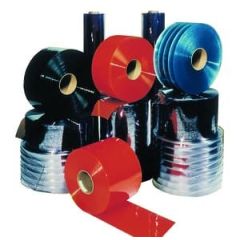
Strip Doors
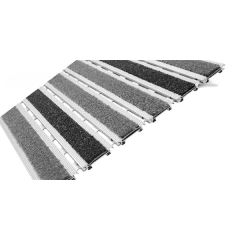
Perfec Clean 3/8" Rollup Mats - Aluminum Hinge
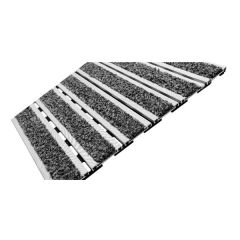
Perfec Clean 3/8" Rollup Mats - Rubber Hinge
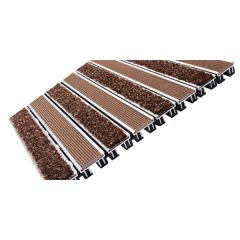
Perfec Clean 3/4" Rollup Grate - Rubber Hinge
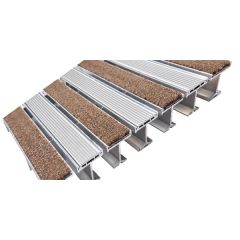
Perfec Clean 1-5/8" Grate
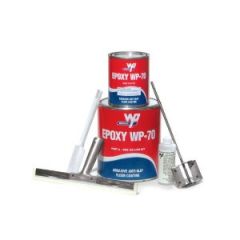
WP-70 Non-Skid Epoxy Coating