






- Home
- Products
- Anti-Fatigue Mats & Runners
- Anti-Fatigue Mats With Holes
Anti-Fatigue Mats With Holes
Anti-fatigue mats with holes solve two problems at once: they drain the water, grease, and cleaning solution off the walking surface, and they cushion the people standing in it all shift. The three options here — Comfort Flow, Safe Walk Jr., and Cushion-Lok — cover wet floors from a single dish station to a full production line.
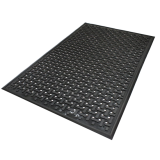 Comfort Flow Anti-Fatigue Mats$75.00What Comfort Flow Does Before a Wet Floor Becomes a Slip Report Comfort Flow is a flow-through anti-fatigue mat built for the places where water, grease, and long standing shifts all land on the same floor. Drainage holes carry liquid straight through instead of letting it pool underfoot, while a
...
What Comfort Flow Does Before a Wet Floor Becomes a Slip Report Comfort Flow is a flow-through anti-fatigue mat built...
What Comfort Flow Does Before a Wet Floor Becomes a Slip Report
Comfort Flow is a flow-through anti-fatigue mat built for the places where water, grease, and long standing shifts all land on the same floor. Drainage holes carry liquid straight through instead of letting it pool underfoot, while a high-density nitrile rubber cushion softens every hour spent standing over that floor.
Wet floors punish twice. Standing water and grease take footing first — one hurried step at a busy station is all a slip needs — and the hard, damp floor underneath grinds away at feet, knees, and backs through the rest of the shift. A wet-area mat has to solve both problems at once, or it isn't solving either.
Why Flow-Through Nitrile, and Why This One
The cushion is a high-density, closed-cell nitrile rubber foam — grease and oil proof, chemical resistant, and welding safe. Closed-cell matters in a wet zone: the material resists soaking up what lands on it, so the mat keeps working in conditions that break down ordinary foam.
Safety is certified, not assumed. The mat is certified high-traction by the National Floor Safety Institute, and beveled edges give feet and carts a safe transition from floor to mat instead of a trip point. A lifetime anti-microbial treatment works between cleanings to prevent odors and degradation of the mat itself.
Then there's the part your closing crew will notice: the design is lightweight and flexible. When the shift ends, the mat picks up easily, hoses down, and goes back into service — no wrestling a waterlogged slab of rubber across a wet kitchen floor at eleven at night.
Where It Belongs, and What It Is Not
Comfort Flow belongs in wet areas where grease, oil, or chemicals show up on the floor: dish stations and prep lines, wet industrial work cells, wash bays, and stations where hoses run daily. Anywhere staff stand over a floor that never quite dries, the drainage holes and cushion earn their place together.
What it is not: a solid-surface comfort mat for dry stations. If the floor stays dry, drainage holes solve a problem you don't have, and the solid dry-area constructions in our anti-fatigue mats and runners lineup are the better match. This one is purpose-built for the wet zone.
Three Things to Check Before You Spec It
First, confirm it's a true wet zone. Walk the station during a real shift: if water, grease, or rinse-down runoff reaches the floor daily, flow-through drainage earns its place. If the mess is occasional, a solid-top mat is easier to live with and keeps crumbs and small parts from falling through.
Second, plan the cleaning routine before the mat arrives. The whole point of a lightweight, flexible design is that it actually gets lifted — hosed down, drained, and returned — instead of being cleaned around. Decide who lifts it and when, and the anti-microbial treatment handles the hours in between.
Third, look at the traffic crossing it. Beveled edges keep the floor-to-mat transition safe, but placement still matters: set the mat so hurried foot traffic lands on the certified high-traction surface, not on a wet strip of bare floor between two mats.
Why Mats Inc.
We've been putting the right mat under wet, hard-working floors since 1964, and this one covers a need the heavy-duty drainage class doesn't: crews who need real wet-area protection they can lift with one hand at closing. We confirm what's behind every product we sell, and this mat carries a 1-year limited Mats Inc. warranty.
Construction Flow-through mat with drainage holes Cushion High-density, closed-cell nitrile rubber foam Resistance Grease and oil proof; chemical resistant; welding safe Traction Certified high-traction by NFSI Edges Beveled for safe floor-to-mat transition Hygiene Lifetime anti-microbial treatment against odors and mat degradation Handling Lightweight, flexible; lifts for hose-down cleaning Use Area Wet areas where grease, oil, or chemicals may be present Warranty 1-year limited (Mats Inc.) Frequently Asked Questions
How does one mat fight slips and fatigue at the same time?
Answered by Dustin Thompson, Owner & CEO
The two jobs share one design. Drainage holes carry water and grease through the mat instead of letting them sit where shoes land, and the surface itself is certified high-traction by the National Floor Safety Institute — so footing holds even mid-rush. Meanwhile the high-density, closed-cell nitrile rubber foam underneath cushions every standing hour. Solid mats in wet zones trap liquid on top; flow-through construction is what lets one mat do both jobs honestly.
Will daily grease and chemicals break the mat down?
Answered by Dustin Thompson, Owner & CEO
This construction is built for exactly that exposure: the nitrile rubber is grease and oil proof, chemical resistant, and welding safe, and the closed-cell foam resists soaking up what the shift throws at it. A lifetime anti-microbial treatment guards the mat against odors and material degradation between cleanings. Ordinary foam mats in a greasy wet zone swell, stink, and crumble — this one is specified so the environment that justifies the mat doesn't destroy it.
Is it safe where staff move fast across it?
Answered by Dustin Thompson, Owner & CEO
That's the setting it's certified for. NFSI high-traction certification means the surface has been independently tested for slip resistance, and the beveled edges slope down to the floor so a hurried step onto or off the mat doesn't catch a raised edge. Placement finishes the job: run the mat along the full standing-and-stepping path so quick feet stay on the traction surface rather than crossing wet bare floor between coverage.
We run a busy commercial kitchen — is this the right kind of mat for the line?
Answered by Jinna Hopson, Vice President of Marketing
If your line gets wet — dish spray, prep runoff, grease that finds the floor no matter how careful the crew is — then yes, this is the class of mat that belongs there. It's a different tool than the cushioned kitchen comfort mats made for dry home use: those are built for softness alone, while this one pairs the cushion with drainage and certified traction because a working line demands both. Match the mat to how your kitchen actually runs.
How hard is it to live with day to day?
Answered by Jinna Hopson, Vice President of Marketing
Easier than most wet-area mats, and that's by design. The lightweight, flexible build means one person can lift it at close, hose it down, let it drain, and set it back — a routine a tired crew will actually keep. That matters more than it sounds: heavy mats tend to get mopped around instead of cleaned under, and the floor beneath them quietly becomes the dirtiest spot in the building. A mat the team will lift stays part of the cleaning routine.
How much of the floor should it cover?
Answered by Jinna Hopson, Vice President of Marketing
Cover where the feet and the water actually are. Walk the station during a working shift and watch two things: where people stand longest, and where liquid lands or travels. The mat should span both — a strip that stops short leaves a wet gap right where someone steps off. For stations, size to the work zone with a little margin on each side; for longer runs along a line or sink row, plan coverage as one continuous path. Our team can help match available sizes to your layout.
By Dustin Thompson, Owner & CEO, Mats Inc.
↑
What Comfort Flow Does Before a Wet Floor Becomes a Slip Report
Comfort Flow is a flow-through anti-fatigue mat built for the places where water, grease, and long standing shifts all land on the same floor. Drainage holes carry liquid straight through instead of letting it pool underfoot, while a high-density nitrile rubber cushion softens every hour spent standing over that floor.
Wet floors punish twice. Standing water and grease take footing first — one hurried step at a busy station is all a slip needs — and the hard, damp floor underneath grinds away at feet, knees, and backs through the rest of the shift. A wet-area mat has to solve both problems at once, or it isn't solving either.
Why Flow-Through Nitrile, and Why This One
The cushion is a high-density, closed-cell nitrile rubber foam — grease and oil proof, chemical resistant, and welding safe. Closed-cell matters in a wet zone: the material resists soaking up what lands on it, so the mat keeps working in conditions that break down ordinary foam.
Safety is certified, not assumed. The mat is certified high-traction by the National Floor Safety Institute, and beveled edges give feet and carts a safe transition from floor to mat instead of a trip point. A lifetime anti-microbial treatment works between cleanings to prevent odors and degradation of the mat itself.
Then there's the part your closing crew will notice: the design is lightweight and flexible. When the shift ends, the mat picks up easily, hoses down, and goes back into service — no wrestling a waterlogged slab of rubber across a wet kitchen floor at eleven at night.
Where It Belongs, and What It Is Not
Comfort Flow belongs in wet areas where grease, oil, or chemicals show up on the floor: dish stations and prep lines, wet industrial work cells, wash bays, and stations where hoses run daily. Anywhere staff stand over a floor that never quite dries, the drainage holes and cushion earn their place together.
What it is not: a solid-surface comfort mat for dry stations. If the floor stays dry, drainage holes solve a problem you don't have, and the solid dry-area constructions in our anti-fatigue mats and runners lineup are the better match. This one is purpose-built for the wet zone.
Three Things to Check Before You Spec It
First, confirm it's a true wet zone. Walk the station during a real shift: if water, grease, or rinse-down runoff reaches the floor daily, flow-through drainage earns its place. If the mess is occasional, a solid-top mat is easier to live with and keeps crumbs and small parts from falling through.
Second, plan the cleaning routine before the mat arrives. The whole point of a lightweight, flexible design is that it actually gets lifted — hosed down, drained, and returned — instead of being cleaned around. Decide who lifts it and when, and the anti-microbial treatment handles the hours in between.
Third, look at the traffic crossing it. Beveled edges keep the floor-to-mat transition safe, but placement still matters: set the mat so hurried foot traffic lands on the certified high-traction surface, not on a wet strip of bare floor between two mats.
Why Mats Inc.
We've been putting the right mat under wet, hard-working floors since 1964, and this one covers a need the heavy-duty drainage class doesn't: crews who need real wet-area protection they can lift with one hand at closing. We confirm what's behind every product we sell, and this mat carries a 1-year limited Mats Inc. warranty.
Construction Flow-through mat with drainage holes Cushion High-density, closed-cell nitrile rubber foam Resistance Grease and oil proof; chemical resistant; welding safe Traction Certified high-traction by NFSI Edges Beveled for safe floor-to-mat transition Hygiene Lifetime anti-microbial treatment against odors and mat degradation Handling Lightweight, flexible; lifts for hose-down cleaning Use Area Wet areas where grease, oil, or chemicals may be present Warranty 1-year limited (Mats Inc.) Frequently Asked Questions
How does one mat fight slips and fatigue at the same time?
Answered by Dustin Thompson, Owner & CEO
The two jobs share one design. Drainage holes carry water and grease through the mat instead of letting them sit where shoes land, and the surface itself is certified high-traction by the National Floor Safety Institute — so footing holds even mid-rush. Meanwhile the high-density, closed-cell nitrile rubber foam underneath cushions every standing hour. Solid mats in wet zones trap liquid on top; flow-through construction is what lets one mat do both jobs honestly.
Will daily grease and chemicals break the mat down?
Answered by Dustin Thompson, Owner & CEO
This construction is built for exactly that exposure: the nitrile rubber is grease and oil proof, chemical resistant, and welding safe, and the closed-cell foam resists soaking up what the shift throws at it. A lifetime anti-microbial treatment guards the mat against odors and material degradation between cleanings. Ordinary foam mats in a greasy wet zone swell, stink, and crumble — this one is specified so the environment that justifies the mat doesn't destroy it.
Is it safe where staff move fast across it?
Answered by Dustin Thompson, Owner & CEO
That's the setting it's certified for. NFSI high-traction certification means the surface has been independently tested for slip resistance, and the beveled edges slope down to the floor so a hurried step onto or off the mat doesn't catch a raised edge. Placement finishes the job: run the mat along the full standing-and-stepping path so quick feet stay on the traction surface rather than crossing wet bare floor between coverage.
We run a busy commercial kitchen — is this the right kind of mat for the line?
Answered by Jinna Hopson, Vice President of Marketing
If your line gets wet — dish spray, prep runoff, grease that finds the floor no matter how careful the crew is — then yes, this is the class of mat that belongs there. It's a different tool than the cushioned kitchen comfort mats made for dry home use: those are built for softness alone, while this one pairs the cushion with drainage and certified traction because a working line demands both. Match the mat to how your kitchen actually runs.
How hard is it to live with day to day?
Answered by Jinna Hopson, Vice President of Marketing
Easier than most wet-area mats, and that's by design. The lightweight, flexible build means one person can lift it at close, hose it down, let it drain, and set it back — a routine a tired crew will actually keep. That matters more than it sounds: heavy mats tend to get mopped around instead of cleaned under, and the floor beneath them quietly becomes the dirtiest spot in the building. A mat the team will lift stays part of the cleaning routine.
How much of the floor should it cover?
Answered by Jinna Hopson, Vice President of Marketing
Cover where the feet and the water actually are. Walk the station during a working shift and watch two things: where people stand longest, and where liquid lands or travels. The mat should span both — a strip that stops short leaves a wet gap right where someone steps off. For stations, size to the work zone with a little margin on each side; for longer runs along a line or sink row, plan coverage as one continuous path. Our team can help match available sizes to your layout.
By Dustin Thompson, Owner & CEO, Mats Inc.
↑
View Details
View Details
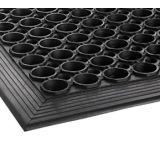 Safe Walk Jr. Rubber Mats$137.00What Safe Walk Jr. Does Before a Wet Floor Takes Someone Down Safe Walk Jr. is a lightweight anti-fatigue drainage mat for wet areas. Its raised base keeps liquids moving underneath instead of pooling where shoes land, while the rubber surface gives feet better slip resistance than the ceramic and
...
What Safe Walk Jr. Does Before a Wet Floor Takes Someone Down Safe Walk Jr. is a lightweight anti-fatigue drainage...
What Safe Walk Jr. Does Before a Wet Floor Takes Someone Down
Safe Walk Jr. is a lightweight anti-fatigue drainage mat for wet areas. Its raised base keeps liquids moving underneath instead of pooling where shoes land, while the rubber surface gives feet better slip resistance than the ceramic and cement floors it covers — and cushions the hours spent standing over them.
Wet floors don't announce themselves. Rinse water, dish spray, and spills collect through a shift, and the moment someone hurries — a rush order, a carried tray — is exactly when footing matters most. A slip at a busy station means an injured worker, a stopped line, and an incident report. Drainage under the feet changes those odds.
Why a Raised-Base Drainage Design, and Why This One
The mechanism is simple and constant: the raised base holds the standing surface above the floor, so spills and rinse-down drain through and keep moving rather than sitting under someone's next step. The result the vendor testing points to is a safer work environment — traction that outperforms bare ceramic and cement underfoot.
The rubber is a general-purpose SBR compound in black — the workhorse choice for everyday water duty. It's the right material where the floor's daily challenge is moisture rather than chemistry: dependable grip, a cushioned stand, and a surface that shrugs off the constant wet-dry cycle of a working station without fuss.
The rest of the design is built around easy living. A low profile with molded edging keeps the transition on and off the mat clean, the whole mat contains up to 60 percent recycled material, and the lightweight build means it actually gets lifted, hosed off, and put back — clean underneath included.
Where It Belongs, and What It Is Not
Safe Walk Jr. is a medium-duty solution for wet floors: dish and rinse-down stations, kitchens and cafeterias, food processing facilities, and packaging operations. It suits the stations where water is a daily reality but not an extreme one — and where the crew doing nightly cleanup will appreciate a mat one person can handle.
What it is not: the answer to every hard floor. Where oil and fats hit the floor daily, a grease-rated nitrile compound is the honest spec, and where deep grease, harsh chemicals, or punishing traffic rule the zone, the heavier-duty drainage constructions in our anti-fatigue mats and runners lineup carry that load. Matching the duty level honestly is what makes this one earn its keep for years.
Three Things to Check Before You Spec It
First, confirm water is the main event. Walk the station at the end of a real shift: if what's on the floor is rinse water, dish spray, and the day's spills, this general-purpose rubber is squarely in its lane. If there's an oil film in the picture daily, spec a grease-rated compound instead — same drainage idea, different chemistry.
Second, plan the run. Every size is 3 feet wide, with lengths of 5, 10, 15, and 20 feet, so a single mat can trace a full dish line or packing row. One planning note: mats 10 feet and longer carry a seam every 5 feet — worth knowing before you map coverage.
Third, be honest about duty level. This is a medium-duty mat by design — that's what makes it light enough to lift daily and easy to keep clean. If your environment reads heavy-industrial, step up a class instead of asking a lighter mat to survive it.
Why Mats Inc.
Not every wet floor needs the heaviest mat in the warehouse — and we've spent decades since 1964 helping buyers land on the right duty level rather than the biggest one. We carry this mat for the kitchens and lines it genuinely fits, we verify what's behind it before it ships, and we back it with a 1-year limited Mats Inc. warranty.
Construction Drainage mat; raised base promotes movement of liquids Material SBR rubber (general purpose) Color Black Thickness 1/2" Sizes 3' x 5', 3' x 10', 3' x 15', 3' x 20' (10' and longer have a seam every 5') Edges Low profile, molded edging Traction Provides better slip resistance than ceramic and cement floors Recycled Content Up to 60% Duty / Use Area Medium duty; wet areas Warranty 1-year limited (Mats Inc.) Frequently Asked Questions
How does the raised base actually make the floor safer?
Answered by Dustin Thompson, Owner & CEO
It separates feet from liquid. The raised base lifts the standing surface off the floor, so water drains down and keeps moving instead of forming the slick film that causes falls. Up top, the rubber surface grips better than the ceramic and cement floors it typically covers — so the shoe meets traction while the spill meets the drain path. The low-profile molded edging finishes the safety picture at the transition on and off the mat.
What is the mat made of, and how long will it hold up?
Answered by Dustin Thompson, Owner & CEO
It's a general-purpose SBR rubber — a proven, hard-wearing compound for water duty — with up to 60 percent recycled material in the mat. Kept in its lane, it holds up well: the wet-dry cycle of a dish station or rinse-down zone is exactly what it's built to live with. What ages it early is asking it to do a different mat's job — daily oil and fats belong on a grease-rated compound, and harsh industrial zones belong on a heavier class.
How heavy-duty is it, honestly?
Answered by Dustin Thompson, Owner & CEO
It's a medium-duty mat, and that's a feature, not a confession. Kitchens, cafeterias, dish lines, food processing, and packaging floors get exactly the drainage and traction they need in a build light enough for one person to lift and hose off nightly. Where the environment turns heavy-industrial — deep grease, harsh chemicals, relentless cart traffic — a heavier drainage class is the honest spec. Matching duty to reality is what makes any mat last.
Is a plain black mat the right look outside the back of house?
Answered by Jinna Hopson, Vice President of Marketing
Black earns its place almost anywhere a wet-area mat lives. It disappears visually against most commercial flooring, hides the scuffs and soil that land between cleanings, and the low profile keeps it reading as part of the floor rather than an obstacle on it. In a cafeteria serving line or a visible dish pass, that quiet, tidy look is usually exactly right — the mat does its safety work without asking anyone to notice it.
What lengths should I plan for a dish line?
Answered by Jinna Hopson, Vice President of Marketing
Measure the working run, not the room. Every size is 3 feet wide, and lengths of 5, 10, 15, and 20 feet let one mat follow the full path a dish crew or packer actually walks — no gaps where a wet stride lands on bare floor between two short mats. Note that mats 10 feet and longer carry a seam every 5 feet, so plan seam positions away from the busiest pivot points where you can.
Will the crew actually keep it clean?
Answered by Jinna Hopson, Vice President of Marketing
That's the quiet advantage of the lightweight build. A mat that's easy to handle gets lifted at close, rinsed, and set back — while heavy mats tend to get mopped around, letting the floor beneath become the dirtiest surface in the kitchen. This one is designed to be easy to handle, clean, and maintain, which means the drainage path stays open and the whole system keeps doing its job week after week instead of just the first one.
By Dustin Thompson, Owner & CEO, Mats Inc.
↑
What Safe Walk Jr. Does Before a Wet Floor Takes Someone Down
Safe Walk Jr. is a lightweight anti-fatigue drainage mat for wet areas. Its raised base keeps liquids moving underneath instead of pooling where shoes land, while the rubber surface gives feet better slip resistance than the ceramic and cement floors it covers — and cushions the hours spent standing over them.
Wet floors don't announce themselves. Rinse water, dish spray, and spills collect through a shift, and the moment someone hurries — a rush order, a carried tray — is exactly when footing matters most. A slip at a busy station means an injured worker, a stopped line, and an incident report. Drainage under the feet changes those odds.
Why a Raised-Base Drainage Design, and Why This One
The mechanism is simple and constant: the raised base holds the standing surface above the floor, so spills and rinse-down drain through and keep moving rather than sitting under someone's next step. The result the vendor testing points to is a safer work environment — traction that outperforms bare ceramic and cement underfoot.
The rubber is a general-purpose SBR compound in black — the workhorse choice for everyday water duty. It's the right material where the floor's daily challenge is moisture rather than chemistry: dependable grip, a cushioned stand, and a surface that shrugs off the constant wet-dry cycle of a working station without fuss.
The rest of the design is built around easy living. A low profile with molded edging keeps the transition on and off the mat clean, the whole mat contains up to 60 percent recycled material, and the lightweight build means it actually gets lifted, hosed off, and put back — clean underneath included.
Where It Belongs, and What It Is Not
Safe Walk Jr. is a medium-duty solution for wet floors: dish and rinse-down stations, kitchens and cafeterias, food processing facilities, and packaging operations. It suits the stations where water is a daily reality but not an extreme one — and where the crew doing nightly cleanup will appreciate a mat one person can handle.
What it is not: the answer to every hard floor. Where oil and fats hit the floor daily, a grease-rated nitrile compound is the honest spec, and where deep grease, harsh chemicals, or punishing traffic rule the zone, the heavier-duty drainage constructions in our anti-fatigue mats and runners lineup carry that load. Matching the duty level honestly is what makes this one earn its keep for years.
Three Things to Check Before You Spec It
First, confirm water is the main event. Walk the station at the end of a real shift: if what's on the floor is rinse water, dish spray, and the day's spills, this general-purpose rubber is squarely in its lane. If there's an oil film in the picture daily, spec a grease-rated compound instead — same drainage idea, different chemistry.
Second, plan the run. Every size is 3 feet wide, with lengths of 5, 10, 15, and 20 feet, so a single mat can trace a full dish line or packing row. One planning note: mats 10 feet and longer carry a seam every 5 feet — worth knowing before you map coverage.
Third, be honest about duty level. This is a medium-duty mat by design — that's what makes it light enough to lift daily and easy to keep clean. If your environment reads heavy-industrial, step up a class instead of asking a lighter mat to survive it.
Why Mats Inc.
Not every wet floor needs the heaviest mat in the warehouse — and we've spent decades since 1964 helping buyers land on the right duty level rather than the biggest one. We carry this mat for the kitchens and lines it genuinely fits, we verify what's behind it before it ships, and we back it with a 1-year limited Mats Inc. warranty.
Construction Drainage mat; raised base promotes movement of liquids Material SBR rubber (general purpose) Color Black Thickness 1/2" Sizes 3' x 5', 3' x 10', 3' x 15', 3' x 20' (10' and longer have a seam every 5') Edges Low profile, molded edging Traction Provides better slip resistance than ceramic and cement floors Recycled Content Up to 60% Duty / Use Area Medium duty; wet areas Warranty 1-year limited (Mats Inc.) Frequently Asked Questions
How does the raised base actually make the floor safer?
Answered by Dustin Thompson, Owner & CEO
It separates feet from liquid. The raised base lifts the standing surface off the floor, so water drains down and keeps moving instead of forming the slick film that causes falls. Up top, the rubber surface grips better than the ceramic and cement floors it typically covers — so the shoe meets traction while the spill meets the drain path. The low-profile molded edging finishes the safety picture at the transition on and off the mat.
What is the mat made of, and how long will it hold up?
Answered by Dustin Thompson, Owner & CEO
It's a general-purpose SBR rubber — a proven, hard-wearing compound for water duty — with up to 60 percent recycled material in the mat. Kept in its lane, it holds up well: the wet-dry cycle of a dish station or rinse-down zone is exactly what it's built to live with. What ages it early is asking it to do a different mat's job — daily oil and fats belong on a grease-rated compound, and harsh industrial zones belong on a heavier class.
How heavy-duty is it, honestly?
Answered by Dustin Thompson, Owner & CEO
It's a medium-duty mat, and that's a feature, not a confession. Kitchens, cafeterias, dish lines, food processing, and packaging floors get exactly the drainage and traction they need in a build light enough for one person to lift and hose off nightly. Where the environment turns heavy-industrial — deep grease, harsh chemicals, relentless cart traffic — a heavier drainage class is the honest spec. Matching duty to reality is what makes any mat last.
Is a plain black mat the right look outside the back of house?
Answered by Jinna Hopson, Vice President of Marketing
Black earns its place almost anywhere a wet-area mat lives. It disappears visually against most commercial flooring, hides the scuffs and soil that land between cleanings, and the low profile keeps it reading as part of the floor rather than an obstacle on it. In a cafeteria serving line or a visible dish pass, that quiet, tidy look is usually exactly right — the mat does its safety work without asking anyone to notice it.
What lengths should I plan for a dish line?
Answered by Jinna Hopson, Vice President of Marketing
Measure the working run, not the room. Every size is 3 feet wide, and lengths of 5, 10, 15, and 20 feet let one mat follow the full path a dish crew or packer actually walks — no gaps where a wet stride lands on bare floor between two short mats. Note that mats 10 feet and longer carry a seam every 5 feet, so plan seam positions away from the busiest pivot points where you can.
Will the crew actually keep it clean?
Answered by Jinna Hopson, Vice President of Marketing
That's the quiet advantage of the lightweight build. A mat that's easy to handle gets lifted at close, rinsed, and set back — while heavy mats tend to get mopped around, letting the floor beneath become the dirtiest surface in the kitchen. This one is designed to be easy to handle, clean, and maintain, which means the drainage path stays open and the whole system keeps doing its job week after week instead of just the first one.
By Dustin Thompson, Owner & CEO, Mats Inc.
↑
View Details
View Details
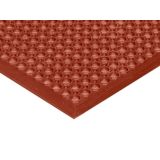 Safe Walk Jr. Rubber Mats - Grease Resistant$189.00What Safe Walk Jr. Grease Resistant Does Before Fryer Oil Wins the Floor Safe Walk Jr. Grease Resistant is a nitrile-blend drainage mat built for the stations where oil and fats are part of the job. The nitrile rubber compound raises the mat's resistance to grease, the raised base underneath
...
What Safe Walk Jr. Grease Resistant Does Before Fryer Oil Wins the Floor Safe Walk Jr. Grease Resistant is a...
What Safe Walk Jr. Grease Resistant Does Before Fryer Oil Wins the Floor
Safe Walk Jr. Grease Resistant is a nitrile-blend drainage mat built for the stations where oil and fats are part of the job. The nitrile rubber compound raises the mat's resistance to grease, the raised base underneath keeps liquids moving away from footing, and the cushioned surface eases the standing hours in between.
Grease is the floor hazard that doesn't behave like water. It doesn't evaporate, it doesn't rinse off with a splash, and it turns tile treacherous in a film too thin to see. Worse, it works on the mat itself — ordinary rubber in a fryer zone slowly gives up. Beating it takes a compound chosen for it, not just a mat placed over it.
Why a Nitrile Blend, and Why This One
The compound is the headline. This version is built from a nitrile rubber blend specifically because nitrile increases resistance to oil and fats — so the daily splatter that reaches the floor around a fryer or grill doesn't shorten the mat's working life the way it would for a general-purpose rubber.
Under the surface, the raised base gives oil and rinse water somewhere to go, moving liquids through rather than holding them where shoes land — the design the vendor's own testing ties to a safer work environment. Up top, traction outperforms the ceramic and cement floors the mat typically covers, and a low profile with molded edging keeps every step on and off clean.
The practical details round it out: a 1/2-inch profile, a build light enough for one person to lift and rinse, and up to 60 percent recycled material in the mat. It's a working tool sized for daily handling — which, in a grease zone, is exactly what keeps it effective.
Where It Belongs, and What It Is Not
This mat belongs where fats meet the floor: fryer and grill lines, greasy prep and dish zones, food processing areas where rendered oils reach the concrete, and packaging floors that handle oils daily. It's a medium-duty answer for the food-service and processing spaces where grease is constant but conditions stop short of heavy-industrial.
What it is not: the mat for every wet floor. Where the challenge is water alone — rinse-down, dish spray, cafeteria spills without the oil — the general-purpose wet-area options in our anti-fatigue mats and runners lineup fit that duty. Spec the nitrile blend where grease is real; that's the condition it was compounded for.
Three Things to Check Before You Spec It
First, confirm grease is the daily reality, not the occasional accident. Walk the station at the end of a normal shift: if there's an oil film near the fryer, splatter tracking off the grill line, or fats reaching the floor in processing, this compound earns its place. That's the honest trigger for choosing it.
Second, map the run from the grease source outward. Every size is 3 feet wide with lengths of 5, 10, 15, and 20 feet, so coverage can start at the fryer and follow the path oily shoes actually travel. Mats 10 feet and longer carry a seam every 5 feet — set seams away from the hardest-working spots when you plan the layout.
Third, pair it with a degreasing routine. Resistance means the compound stands up to oil; it doesn't mean grease should live on the surface indefinitely. The lightweight build makes the lift-rinse-return cycle a one-person job, which keeps the drainage path open and the traction honest.
Why Mats Inc.
Grease zones are where we see the most mats fail early — bought for wet duty, dissolved by fryer duty. Since 1964 we've helped kitchens and processors match the compound to the contaminant, and we carry this nitrile-blend version for exactly that call. Every claim here is checked against the manufacturer's published data, and the mat carries a 1-year limited Mats Inc. warranty.
Construction Drainage mat; raised base promotes movement of liquids Material Nitrile rubber blend — increased resistance to oil and fats Color Terra Cotta Thickness 1/2" Sizes 3' x 5', 3' x 10', 3' x 15', 3' x 20' (10' and longer have a seam every 5') Edges Low profile, molded edging Traction Provides better slip resistance than ceramic and cement floors Recycled Content Up to 60% Duty / Use Area Medium duty; wet and oily areas Warranty 1-year limited (Mats Inc.) Frequently Asked Questions
What actually makes this version grease resistant?
Answered by Dustin Thompson, Owner & CEO
The rubber itself. This mat is built from a nitrile rubber blend, and nitrile's defining trait is increased resistance to oil and fats — the exact substances that degrade general-purpose rubber over months of fryer-line duty. It's not a coating that wears off; the resistance is the compound, top to bottom. Pair that with the raised drainage base moving oil off the footing zone, and the mat is fighting grease on both fronts at once.
If it resists grease, do we still have to clean it?
Answered by Dustin Thompson, Owner & CEO
Yes — and the distinction matters. Resistance means oil and fats don't break the compound down the way they would ordinary rubber; it doesn't mean a grease film on the walking surface is harmless to footing. Build a regular degreasing rinse into the closing routine. The mat is designed to be easy to handle, clean, and maintain, so the lift-rinse-return cycle stays a quick one-person job rather than a chore that gets skipped.
How does it handle traction on slick tile?
Answered by Dustin Thompson, Owner & CEO
Better than the floor it covers — the surface provides better slip resistance than ceramic and cement, which are precisely the floors most kitchens and processing lines stand on. The raised base does the quieter half of the work, giving oil and rinse water a path through instead of a place to pool under the next step, and the low-profile molded edging keeps the on-and-off transition from becoming its own hazard during a rush.
Why terra cotta instead of black?
Answered by Jinna Hopson, Vice President of Marketing
The color is the compound's signature — terra cotta is how this nitrile blend comes, so it doubles as an at-a-glance marker that the grease-rated mat is where it belongs. It's also simply a pleasant color to have in sight: in an open kitchen or a serving-adjacent line, terra cotta reads warm and deliberate where a black industrial mat can feel like back-of-house equipment that wandered out front. Function chose the color; the look holds its own anyway.
What size makes sense for a fry station versus a full line?
Answered by Jinna Hopson, Vice President of Marketing
Start where the oil starts. A single fry or grill station is usually well served by the 3 by 5; a hood-to-pass line where cooks slide station to station wants one continuous run — 10, 15, or 20 feet — so nobody's pivot lands on bare, greasy tile between mats. Remember that lengths of 10 feet and up carry a seam every 5 feet, so lay the run out with seams falling between stations rather than under the busiest feet.
We already run general wet-area mats — when should we switch to this one?
Answered by Jinna Hopson, Vice President of Marketing
Switch wherever grease shows up daily. General wet-area mats are the right call for rinse water and spills, but a fryer zone quietly asks more of the rubber than water duty ever does — and that's where an all-purpose mat ages fastest. The practical approach many kitchens land on: nitrile blend at the fryer and grill, general-purpose everywhere else. Each floor zone gets the compound its mess demands, and no mat is asked to survive a job it wasn't built for.
By Dustin Thompson, Owner & CEO, Mats Inc.
↑
What Safe Walk Jr. Grease Resistant Does Before Fryer Oil Wins the Floor
Safe Walk Jr. Grease Resistant is a nitrile-blend drainage mat built for the stations where oil and fats are part of the job. The nitrile rubber compound raises the mat's resistance to grease, the raised base underneath keeps liquids moving away from footing, and the cushioned surface eases the standing hours in between.
Grease is the floor hazard that doesn't behave like water. It doesn't evaporate, it doesn't rinse off with a splash, and it turns tile treacherous in a film too thin to see. Worse, it works on the mat itself — ordinary rubber in a fryer zone slowly gives up. Beating it takes a compound chosen for it, not just a mat placed over it.
Why a Nitrile Blend, and Why This One
The compound is the headline. This version is built from a nitrile rubber blend specifically because nitrile increases resistance to oil and fats — so the daily splatter that reaches the floor around a fryer or grill doesn't shorten the mat's working life the way it would for a general-purpose rubber.
Under the surface, the raised base gives oil and rinse water somewhere to go, moving liquids through rather than holding them where shoes land — the design the vendor's own testing ties to a safer work environment. Up top, traction outperforms the ceramic and cement floors the mat typically covers, and a low profile with molded edging keeps every step on and off clean.
The practical details round it out: a 1/2-inch profile, a build light enough for one person to lift and rinse, and up to 60 percent recycled material in the mat. It's a working tool sized for daily handling — which, in a grease zone, is exactly what keeps it effective.
Where It Belongs, and What It Is Not
This mat belongs where fats meet the floor: fryer and grill lines, greasy prep and dish zones, food processing areas where rendered oils reach the concrete, and packaging floors that handle oils daily. It's a medium-duty answer for the food-service and processing spaces where grease is constant but conditions stop short of heavy-industrial.
What it is not: the mat for every wet floor. Where the challenge is water alone — rinse-down, dish spray, cafeteria spills without the oil — the general-purpose wet-area options in our anti-fatigue mats and runners lineup fit that duty. Spec the nitrile blend where grease is real; that's the condition it was compounded for.
Three Things to Check Before You Spec It
First, confirm grease is the daily reality, not the occasional accident. Walk the station at the end of a normal shift: if there's an oil film near the fryer, splatter tracking off the grill line, or fats reaching the floor in processing, this compound earns its place. That's the honest trigger for choosing it.
Second, map the run from the grease source outward. Every size is 3 feet wide with lengths of 5, 10, 15, and 20 feet, so coverage can start at the fryer and follow the path oily shoes actually travel. Mats 10 feet and longer carry a seam every 5 feet — set seams away from the hardest-working spots when you plan the layout.
Third, pair it with a degreasing routine. Resistance means the compound stands up to oil; it doesn't mean grease should live on the surface indefinitely. The lightweight build makes the lift-rinse-return cycle a one-person job, which keeps the drainage path open and the traction honest.
Why Mats Inc.
Grease zones are where we see the most mats fail early — bought for wet duty, dissolved by fryer duty. Since 1964 we've helped kitchens and processors match the compound to the contaminant, and we carry this nitrile-blend version for exactly that call. Every claim here is checked against the manufacturer's published data, and the mat carries a 1-year limited Mats Inc. warranty.
Construction Drainage mat; raised base promotes movement of liquids Material Nitrile rubber blend — increased resistance to oil and fats Color Terra Cotta Thickness 1/2" Sizes 3' x 5', 3' x 10', 3' x 15', 3' x 20' (10' and longer have a seam every 5') Edges Low profile, molded edging Traction Provides better slip resistance than ceramic and cement floors Recycled Content Up to 60% Duty / Use Area Medium duty; wet and oily areas Warranty 1-year limited (Mats Inc.) Frequently Asked Questions
What actually makes this version grease resistant?
Answered by Dustin Thompson, Owner & CEO
The rubber itself. This mat is built from a nitrile rubber blend, and nitrile's defining trait is increased resistance to oil and fats — the exact substances that degrade general-purpose rubber over months of fryer-line duty. It's not a coating that wears off; the resistance is the compound, top to bottom. Pair that with the raised drainage base moving oil off the footing zone, and the mat is fighting grease on both fronts at once.
If it resists grease, do we still have to clean it?
Answered by Dustin Thompson, Owner & CEO
Yes — and the distinction matters. Resistance means oil and fats don't break the compound down the way they would ordinary rubber; it doesn't mean a grease film on the walking surface is harmless to footing. Build a regular degreasing rinse into the closing routine. The mat is designed to be easy to handle, clean, and maintain, so the lift-rinse-return cycle stays a quick one-person job rather than a chore that gets skipped.
How does it handle traction on slick tile?
Answered by Dustin Thompson, Owner & CEO
Better than the floor it covers — the surface provides better slip resistance than ceramic and cement, which are precisely the floors most kitchens and processing lines stand on. The raised base does the quieter half of the work, giving oil and rinse water a path through instead of a place to pool under the next step, and the low-profile molded edging keeps the on-and-off transition from becoming its own hazard during a rush.
Why terra cotta instead of black?
Answered by Jinna Hopson, Vice President of Marketing
The color is the compound's signature — terra cotta is how this nitrile blend comes, so it doubles as an at-a-glance marker that the grease-rated mat is where it belongs. It's also simply a pleasant color to have in sight: in an open kitchen or a serving-adjacent line, terra cotta reads warm and deliberate where a black industrial mat can feel like back-of-house equipment that wandered out front. Function chose the color; the look holds its own anyway.
What size makes sense for a fry station versus a full line?
Answered by Jinna Hopson, Vice President of Marketing
Start where the oil starts. A single fry or grill station is usually well served by the 3 by 5; a hood-to-pass line where cooks slide station to station wants one continuous run — 10, 15, or 20 feet — so nobody's pivot lands on bare, greasy tile between mats. Remember that lengths of 10 feet and up carry a seam every 5 feet, so lay the run out with seams falling between stations rather than under the busiest feet.
We already run general wet-area mats — when should we switch to this one?
Answered by Jinna Hopson, Vice President of Marketing
Switch wherever grease shows up daily. General wet-area mats are the right call for rinse water and spills, but a fryer zone quietly asks more of the rubber than water duty ever does — and that's where an all-purpose mat ages fastest. The practical approach many kitchens land on: nitrile blend at the fryer and grill, general-purpose everywhere else. Each floor zone gets the compound its mess demands, and no mat is asked to survive a job it wasn't built for.
By Dustin Thompson, Owner & CEO, Mats Inc.
↑
View Details
View Details
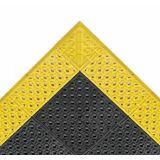 Cushion-Lok Mats
Starting at $139.00
What Cushion-Lok Does Before Spillage Decides Where People Stand Cushion-Lok is a raised, interlocking drainage mat that turns a wet, oily workstation into a dry standing platform. Hundreds of portholes carry liquids and debris down through the surface, while a series of blades elevates the worker above the spillage —...
What Cushion-Lok Does Before Spillage Decides Where People Stand Cushion-Lok is a raised, interlocking drainage mat that turns a wet,...
What Cushion-Lok Does Before Spillage Decides Where People Stand
Cushion-Lok is a raised, interlocking drainage mat that turns a wet, oily workstation into a dry standing platform. Hundreds of portholes carry liquids and debris down through the surface, while a series of blades elevates the worker above the spillage — footing stays gripped and dry even when the floor beneath isn't.
On a plant floor, spills don't wait for cleanup schedules. Cutting fluids drift off machines, wash water travels, and the person stationed in the middle of it stands there for a full shift. Without a raised platform, the choice is bad footing or constant mopping. With one, the liquid goes down and the work goes on.
Why Injection-Molded PVC, and Why This One
The material is a tough, injection-molded PVC — with black components manufactured from 100 percent recycled PVC — chosen for its resistance to harsh industrial chemicals, cutting fluids, oils, and greases. That chemistry is what lets the mat live where it's needed most: directly in the splash zone that destroys ordinary rubber and foam.
The build quality reads in the numbers: a 7/8-inch overall thickness, 1.9 pounds per square foot of injection-molded structure, beveled edges, and a heavy-duty usage rating. The manufacturer rates it "Best" — its top tier — for anti-fatigue, slip resistance, and wear resistance all at once, a rare trifecta in one construction.
The compliance sheet is equally clean: the available yellow borders along the sides comply with OSHA code 1910-144, the mat passes US fire rating requirements, it's REACH compliant, and the material is free of DOP, DMF, ozone-depleting substances, silicone, and heavy metals.
Where It Belongs, and What It Is Not
Cushion-Lok belongs in wet, dry, and oily industrial spaces: manufacturing plants, assembly lines, picking, packing and logistics warehouses, and individual work stations wherever spillage meets standing work. Because it interlocks, it's as much a flooring system as a mat — sized to a single post or built out across an entire work cell.
What it is not: a plush front-of-house comfort mat. This is industrial platform equipment, engineered for chemical exposure and heavy duty rather than for a hotel front desk — those softer stations are served by the comfort options in our anti-fatigue mats and runners lineup. Match the tool to the floor, and this one owns the harsh end.
Three Things to Check Before You Spec It
First, decide between stock and built-to-fit. Eight assembled stock sizes run from 30 by 36 inches up to 42 inches by 10 feet — or the interlocking tiles, ramps, and corners let you create your own configuration around machines, columns, and odd footprints. Factory-assembled custom configurations are available too.
Second, plan the borders and transitions. Yellow side borders meeting OSHA code 1910-144 mark the platform edge where forklifts and foot traffic pass close, and the yellow ramp and corner pieces give carts and hurried feet a proper transition onto the raised surface instead of a step up.
Third, match the chemistry to your floor. The PVC resists most chemicals, cutting fluids, oils, and greases — but "most" deserves a check when your process uses something aggressive. Tell us what actually reaches the floor at the station, and we'll verify compatibility before the mat ships.
Why Mats Inc.
Some stations don't need a mat so much as a small piece of infrastructure — and since 1964 we've helped plants build exactly that, one interlocking section at a time. We carry this system for the wet, oily floors that defeat everything simpler, we verify every claim here against the manufacturer's published specifications, and we back it with a 1-year limited Mats Inc. warranty.
Construction Raised interlocking drainage mat; porthole drainage surface over blade footing; injection molded Material PVC; black components manufactured from 100% recycled PVC; resistant to most chemicals, cutting fluids, oils, and greases Thickness 7/8" Colors Black, with yellow border options (yellow side borders comply with OSHA code 1910-144) Standard Sizes 30" x 36", 30" x 48", 30" x 60", 30" x 72", 30" x 96", 42" x 72", 42" x 96", 42" x 120" Modular Components 12" x 12" tiles (black), 6" x 12" ramps (yellow), 6" x 6" corners (yellow); factory-assembled custom configurations available Edges Beveled Weight 1.9 lbs per square foot Ratings Heavy duty; manufacturer-rated "Best" for anti-fatigue, slip resistance, and wear resistance Compliance US fire rating: pass; REACH compliant; free of DOP, DMF, ozone-depleting substances, silicone, and heavy metals Use Area Wet, dry, and oily areas; manufacturing, assembly, picking/packing and logistics, individual workstations Warranty 1-year limited (Mats Inc.) Frequently Asked Questions
How does the raised design actually keep feet out of spills?
Answered by Dustin Thompson, Owner & CEO
Two mechanisms stacked. The surface carries hundreds of portholes, so liquids and debris drop through instead of sitting where shoes land. Beneath the surface, the worker stands on a series of molded blades that elevate footing above whatever collected below — traction up top, spillage down below, and the two never meet. It's the difference between a mat that gets wet with the floor and a platform that stands above it.
Will cutting fluids and industrial chemicals break it down?
Answered by Dustin Thompson, Owner & CEO
Resisting them is this construction's reason for existing. The injection-molded PVC — 100 percent recycled in the black components — was chosen specifically for resistance to harsh industrial chemicals, cutting fluids, oils, and greases, and the manufacturer rates the mat at its top tier for wear resistance on a heavy-duty rating. For genuinely aggressive process chemistry, name the specific exposure and we'll confirm compatibility before you commit a work cell to it.
What does the compliance list actually cover?
Answered by Dustin Thompson, Owner & CEO
More than most mats bother to document. The available yellow side borders comply with OSHA code 1910-144 for safety color marking, the mat passes US fire rating requirements, and the material is REACH compliant and free of DOP, DMF, ozone-depleting substances, silicone, and heavy metals. For facilities where purchasing has to answer to a safety office, that paper trail is part of what you're buying.
Can it really be built around machines and odd layouts?
Answered by Jinna Hopson, Vice President of Marketing
That's the system's signature. Interlocking 12 by 12 inch tiles build the platform in any footprint — an L around a press, a ring around a column, a full runway down a work cell — and the yellow ramps and corners finish every open edge with a proper transition. If assembling it yourself isn't appealing, factory-assembled custom configurations arrive ready to lay down. The mat fits the station instead of the station adapting to the mat.
Which stock size fits a single workstation versus a line?
Answered by Jinna Hopson, Vice President of Marketing
Match the width to the stance and the length to the walk. The 30-inch width covers a single planted post — the 30 by 36 or 30 by 48 for one operator at one machine. Where workers slide station to station, step up to the longer runs: 30 inches by 8 feet, or the 42-inch width at 6, 8, and 10 feet for lines where people pass behind each other. Eight assembled stock sizes cover most stations before custom work even enters the conversation.
What does the yellow border communicate on a busy floor?
Answered by Jinna Hopson, Vice President of Marketing
It draws the official line between the standing platform and everything moving past it. Yellow is the recognized safety-marking color — these borders comply with OSHA code 1910-144 — so forklift operators, cart pushers, and visitors read the platform edge at a glance, from a distance, without a painted line that wears away. And because the border travels with the mat, the marking stays accurate every time the layout changes.
By Dustin Thompson, Owner & CEO, Mats Inc.
↑
What Cushion-Lok Does Before Spillage Decides Where People Stand
Cushion-Lok is a raised, interlocking drainage mat that turns a wet, oily workstation into a dry standing platform. Hundreds of portholes carry liquids and debris down through the surface, while a series of blades elevates the worker above the spillage — footing stays gripped and dry even when the floor beneath isn't.
On a plant floor, spills don't wait for cleanup schedules. Cutting fluids drift off machines, wash water travels, and the person stationed in the middle of it stands there for a full shift. Without a raised platform, the choice is bad footing or constant mopping. With one, the liquid goes down and the work goes on.
Why Injection-Molded PVC, and Why This One
The material is a tough, injection-molded PVC — with black components manufactured from 100 percent recycled PVC — chosen for its resistance to harsh industrial chemicals, cutting fluids, oils, and greases. That chemistry is what lets the mat live where it's needed most: directly in the splash zone that destroys ordinary rubber and foam.
The build quality reads in the numbers: a 7/8-inch overall thickness, 1.9 pounds per square foot of injection-molded structure, beveled edges, and a heavy-duty usage rating. The manufacturer rates it "Best" — its top tier — for anti-fatigue, slip resistance, and wear resistance all at once, a rare trifecta in one construction.
The compliance sheet is equally clean: the available yellow borders along the sides comply with OSHA code 1910-144, the mat passes US fire rating requirements, it's REACH compliant, and the material is free of DOP, DMF, ozone-depleting substances, silicone, and heavy metals.
Where It Belongs, and What It Is Not
Cushion-Lok belongs in wet, dry, and oily industrial spaces: manufacturing plants, assembly lines, picking, packing and logistics warehouses, and individual work stations wherever spillage meets standing work. Because it interlocks, it's as much a flooring system as a mat — sized to a single post or built out across an entire work cell.
What it is not: a plush front-of-house comfort mat. This is industrial platform equipment, engineered for chemical exposure and heavy duty rather than for a hotel front desk — those softer stations are served by the comfort options in our anti-fatigue mats and runners lineup. Match the tool to the floor, and this one owns the harsh end.
Three Things to Check Before You Spec It
First, decide between stock and built-to-fit. Eight assembled stock sizes run from 30 by 36 inches up to 42 inches by 10 feet — or the interlocking tiles, ramps, and corners let you create your own configuration around machines, columns, and odd footprints. Factory-assembled custom configurations are available too.
Second, plan the borders and transitions. Yellow side borders meeting OSHA code 1910-144 mark the platform edge where forklifts and foot traffic pass close, and the yellow ramp and corner pieces give carts and hurried feet a proper transition onto the raised surface instead of a step up.
Third, match the chemistry to your floor. The PVC resists most chemicals, cutting fluids, oils, and greases — but "most" deserves a check when your process uses something aggressive. Tell us what actually reaches the floor at the station, and we'll verify compatibility before the mat ships.
Why Mats Inc.
Some stations don't need a mat so much as a small piece of infrastructure — and since 1964 we've helped plants build exactly that, one interlocking section at a time. We carry this system for the wet, oily floors that defeat everything simpler, we verify every claim here against the manufacturer's published specifications, and we back it with a 1-year limited Mats Inc. warranty.
Construction Raised interlocking drainage mat; porthole drainage surface over blade footing; injection molded Material PVC; black components manufactured from 100% recycled PVC; resistant to most chemicals, cutting fluids, oils, and greases Thickness 7/8" Colors Black, with yellow border options (yellow side borders comply with OSHA code 1910-144) Standard Sizes 30" x 36", 30" x 48", 30" x 60", 30" x 72", 30" x 96", 42" x 72", 42" x 96", 42" x 120" Modular Components 12" x 12" tiles (black), 6" x 12" ramps (yellow), 6" x 6" corners (yellow); factory-assembled custom configurations available Edges Beveled Weight 1.9 lbs per square foot Ratings Heavy duty; manufacturer-rated "Best" for anti-fatigue, slip resistance, and wear resistance Compliance US fire rating: pass; REACH compliant; free of DOP, DMF, ozone-depleting substances, silicone, and heavy metals Use Area Wet, dry, and oily areas; manufacturing, assembly, picking/packing and logistics, individual workstations Warranty 1-year limited (Mats Inc.) Frequently Asked Questions
How does the raised design actually keep feet out of spills?
Answered by Dustin Thompson, Owner & CEO
Two mechanisms stacked. The surface carries hundreds of portholes, so liquids and debris drop through instead of sitting where shoes land. Beneath the surface, the worker stands on a series of molded blades that elevate footing above whatever collected below — traction up top, spillage down below, and the two never meet. It's the difference between a mat that gets wet with the floor and a platform that stands above it.
Will cutting fluids and industrial chemicals break it down?
Answered by Dustin Thompson, Owner & CEO
Resisting them is this construction's reason for existing. The injection-molded PVC — 100 percent recycled in the black components — was chosen specifically for resistance to harsh industrial chemicals, cutting fluids, oils, and greases, and the manufacturer rates the mat at its top tier for wear resistance on a heavy-duty rating. For genuinely aggressive process chemistry, name the specific exposure and we'll confirm compatibility before you commit a work cell to it.
What does the compliance list actually cover?
Answered by Dustin Thompson, Owner & CEO
More than most mats bother to document. The available yellow side borders comply with OSHA code 1910-144 for safety color marking, the mat passes US fire rating requirements, and the material is REACH compliant and free of DOP, DMF, ozone-depleting substances, silicone, and heavy metals. For facilities where purchasing has to answer to a safety office, that paper trail is part of what you're buying.
Can it really be built around machines and odd layouts?
Answered by Jinna Hopson, Vice President of Marketing
That's the system's signature. Interlocking 12 by 12 inch tiles build the platform in any footprint — an L around a press, a ring around a column, a full runway down a work cell — and the yellow ramps and corners finish every open edge with a proper transition. If assembling it yourself isn't appealing, factory-assembled custom configurations arrive ready to lay down. The mat fits the station instead of the station adapting to the mat.
Which stock size fits a single workstation versus a line?
Answered by Jinna Hopson, Vice President of Marketing
Match the width to the stance and the length to the walk. The 30-inch width covers a single planted post — the 30 by 36 or 30 by 48 for one operator at one machine. Where workers slide station to station, step up to the longer runs: 30 inches by 8 feet, or the 42-inch width at 6, 8, and 10 feet for lines where people pass behind each other. Eight assembled stock sizes cover most stations before custom work even enters the conversation.
What does the yellow border communicate on a busy floor?
Answered by Jinna Hopson, Vice President of Marketing
It draws the official line between the standing platform and everything moving past it. Yellow is the recognized safety-marking color — these borders comply with OSHA code 1910-144 — so forklift operators, cart pushers, and visitors read the platform edge at a glance, from a distance, without a painted line that wears away. And because the border travels with the mat, the marking stays accurate every time the layout changes.
By Dustin Thompson, Owner & CEO, Mats Inc.
↑
View Details
View Details
 Multi-Mat II Rubber Matting$85.00Multi-Mat II Rubber Matting is a reversible drainage mat for wet and greasy floors. The open-pattern rubber lets water, rinse, and light grease fall through to the floor instead of pooling under a boot, the non-skid surface holds footing on both faces, and a low profile lets carts roll on
...
Multi-Mat II Rubber Matting is a reversible drainage mat for wet and greasy floors. The open-pattern rubber lets water, rinse,...
Multi-Mat II Rubber Matting is a reversible drainage mat for wet and greasy floors. The open-pattern rubber lets water, rinse, and light grease fall through to the floor instead of pooling under a boot, the non-skid surface holds footing on both faces, and a low profile lets carts roll on and off without a bump. When one side wears, flip it. Cut sizes run from 2 by 3 feet to 4 by 8 feet in black general-purpose rubber.
What a Drainage Mat Does Before Standing Water Puts Someone Down
A solid mat on a wet floor moves the problem, it does not solve it. Water runs off the edges or sits on top, and a boot on a wet solid surface is a boot on a slide. Dish pits, wash-down bays, bar wells, locker-room walkways, and food-prep lines all put liquid on the floor faster than anyone mops it, and the person standing there is the one who pays for it.
A drainage mat changes the physics. The surface is an open grid of rubber with holes through it, so liquid drops through to the floor and away from the sole. The rubber that is left is what the foot lands on, and its non-skid texture does the gripping. The worker stands on a surface that stays clear even while the floor under it is soaked.
The stakes are simple. A wet-area slip is the injury that shows up most in kitchens and wash bays, and the fix is not a sign or a mop schedule; it is putting a surface between the worker and the water. This mat is built for that specific job, and the way it is built decides how long it keeps doing it.
Why a Reversible Open-Grid Rubber Mat, and Why This One
The mat is solid rubber with no top layer, backing, or foam core, molded as an open drainage pattern that is identical on both faces. That is what makes it reversible: when the top face wears or gets stained, turn the mat over and the second face is new. The vendor's own phrase for it is a design that adds to the service life of the mat, and in practice it doubles the surface you paid for.
The compound is general-purpose rubber in black, manufactured with an anti-microbial additive that inhibits the growth of bacteria and fungi in the rubber. On a mat that spends its life wet, that is the difference between one that is hosed and returned to service and one that smells by the second month. The vendor also produces a heavy-duty nitrile version in red for heavier grease and oil exposure; the black mat here is rated for some exposure to grease, oil, and water.
The profile is low. A drainage mat that sits tall becomes a lip that carts and hand trucks catch on and a step that tired feet trip over. This one is designed for easy cart access, so a bus cart, a dish rack dolly, or a keg on a hand truck rolls across it. That is why the vendor lists it for longer runs as well as single stations.
Underfoot there is a little give in the rubber, enough to be kinder than bare tile, but this is not a cushion mat. Its comfort comes from getting the water away from the feet and giving them something to grip, not from foam.
Where It Belongs, and What It Is Not
Put it where liquid hits the floor and someone has to stand or walk on it anyway: dish machines and pot sinks, bar wells and beer coolers, wash-down bays, food-prep and packing lines, shower and locker-room walkways, and the strip along a wet counter. The vendor specifies it for workstation environments and longer runs where drainage, a non-slip surface, and cart clearance are the requirements. It sits among the heavy-duty rubber runner mats as the one that lets the water through.
The black general-purpose compound is right for water and light grease. Where the floor sees heavy fryer oil, fat, or constant petroleum exposure, the vendor's nitrile version is the one to ask about instead. Match the compound to the liquid.
What it is not is an anti-fatigue mat or a dry-area runner. It does not have foam under it, so someone standing eight hours at a dry register wants a cushioned mat. And on a dry floor the open grid has nothing to drain and simply collects crumbs and grit; a solid runner is the better surface there.
Three Things to Check Before You Spec It
First, confirm the floor is actually wet, and with what. If water pools or runs across the floor during a shift, a drainage mat earns its place. If the liquid is mostly water and rinse with light grease, the black general-purpose compound covers it. If it is heavy oil or fat every shift, ask about the nitrile version rather than putting general-purpose rubber in a fryer zone.
Second, size it to the wet zone and to the carts that cross it. A 2-by-3 covers a single sink or bar-well position. A 3-by-4 or 3-by-5 covers a dish station where the worker moves a step either way. A 4-by-6 or 4-by-8 covers a wash-down area or a short run along a wet line. Keep the mat clear of the drain grate itself and leave room at the edges for the cart wheels to roll on square.
Third, plan the flip and the rinse. The mat is reversible, so mark a date and turn it over on schedule rather than waiting for one face to look tired. At close, pick it up, hose both faces, and let it drain before it goes back down; the anti-microbial compound does its best work on a mat that dries. A mat left down on a wet floor around the clock never gets that chance.
Why Mats Inc.
We stock this mat for the floors that are wet by design: the dish pit, the bar back, the wash bay. A solid runner in those spots just moves the puddle, and a cushion mat soaks it up. An open rubber grid that drains, grips on both faces, flips over when one side wears, and lets a cart roll across it is the right tool for that floor, and Mats Inc. has been putting the right tool on the right floor since 1964.
Type Reversible drainage anti-slip mat Material General-purpose rubber, black (heavy-duty nitrile version in red available on request) Surface Non-skid, open drainage pattern; identical on both faces Reversible Yes; flip to extend service life Profile Low profile for easy cart access Anti-microbial Rubber compound inhibits growth of bacteria and fungi Exposure rating Wet or dry; some exposure to grease, oil, and water Sizes Cut sizes from 2' x 3' to 4' x 8'; longer roll lengths available on request Cleaning Lift, hose both faces, allow to drain before replacing Warranty 1-year limited (Mats Inc.) Frequently Asked Questions
How is Multi-Mat II built, and what is it made of?
Answered by Dustin Thompson, Owner & CEO
It is a single piece of molded rubber with an open drainage pattern that runs all the way through, so both faces are the same non-skid surface. There is no foam core, fabric, or bonded backing. The black version is a general-purpose rubber compound, manufactured with an anti-microbial additive that inhibits bacteria and fungi in the rubber itself rather than as a coating that washes off.
Because the two faces are identical, the mat is reversible: flip it when the top face wears or stains and you are standing on a fresh surface. The vendor also makes the same mat in a heavy-duty nitrile compound, colored red, for heavier grease and oil.
How long does it last, and what shortens its life?
Answered by Dustin Thompson, Owner & CEO
The vendor does not publish a service-life figure. What it does state is that the reversible construction adds to the service life, and that is the practical number: two working faces instead of one, so a mat that would be worn out on one side keeps going on the other. It carries a 1-year limited (Mats Inc.) warranty, and flipping it on a schedule rather than when it looks tired is what gets the most out of it.
What shortens it is the wrong liquid and no dry time. General-purpose rubber rated for some grease exposure will soften and get slick under heavy fryer oil every shift; that floor wants the nitrile version. And a drainage mat left down wet around the clock never dries, which defeats the anti-microbial compound. Lift it, hose it, let it drain.
Where should I use it, and where should I not?
Answered by Dustin Thompson, Owner & CEO
Use it where the floor is wet while someone works on it: dish machines and pot sinks, bar wells, wash-down bays, food-prep and packing lines, shower and locker-room walkways, and along wet counters. The vendor specifies it for workstations and longer runs that need drainage, a non-slip surface, and low-profile cart access, and the black compound is right for water and light grease.
Do not use it as a cushion for a dry standing station; it has no foam and an anti-fatigue mat does that job. Do not put it on a dry floor as a runner, where the open grid only collects grit. And do not put the black general-purpose compound under constant heavy oil; ask about the nitrile version for that.
Which size should I pick?
Answered by Jinna Hopson, Vice President of Marketing
Size it to the wet zone, not the room. A 2-by-3 covers one sink or one bar-well position. A 3-by-4 or 3-by-5 covers a dish station where the worker takes a step either way. A 4-by-6 or 4-by-8 covers a wash-down area, a two-person station, or a short run along a wet line. Longer runs are available as roll lengths on request.
Two placement habits help. Keep the mat clear of the floor drain grate so the water it sheds has somewhere to go, and leave a few inches at the cart side so wheels roll on square rather than catching a corner. Measure the puddle, not the floor plan.
What does it look like in a kitchen or bar?
Answered by Jinna Hopson, Vice President of Marketing
A black open-grid rubber mat: a lattice of textured rubber with regular drainage openings, low to the floor, and the same pattern on both faces. It reads as working equipment rather than decor, which is exactly right for a dish pit, a bar back, or a wash bay where staff see it and customers do not. Black hides the stains that a wet, greasy floor puts on any mat between rinses.
Because the vendor's nitrile version comes in red, some operations use the two colors as a code: red where the fryer oil is, black everywhere else wet. For a front-of-house floor where the mat is on display, this is not the product; it lives behind the line.
Is this a good fit for a dish pit or wash bay where carts come through?
Answered by Jinna Hopson, Vice President of Marketing
Yes; that combination of standing water and rolling carts is the case it was designed around. The drainage pattern takes the rinse water and light grease off the surface, the non-skid faces keep the dish crew upright, and the low profile means a bus cart, dish dolly, or hand truck rolls across it instead of stopping at a lip. The vendor specifies it for exactly that: drainage, anti-slip surface, low profile for cart traffic.
Plan the routine and it stays that way: lift at close, hose both faces, let it drain, and flip it on a schedule so the two faces wear evenly. At a dish machine that runs all day, that habit is what keeps the mat from becoming the thing that smells.
By Dustin Thompson, Owner & CEO, Mats Inc.
↑
Multi-Mat II Rubber Matting is a reversible drainage mat for wet and greasy floors. The open-pattern rubber lets water, rinse, and light grease fall through to the floor instead of pooling under a boot, the non-skid surface holds footing on both faces, and a low profile lets carts roll on and off without a bump. When one side wears, flip it. Cut sizes run from 2 by 3 feet to 4 by 8 feet in black general-purpose rubber.
What a Drainage Mat Does Before Standing Water Puts Someone Down
A solid mat on a wet floor moves the problem, it does not solve it. Water runs off the edges or sits on top, and a boot on a wet solid surface is a boot on a slide. Dish pits, wash-down bays, bar wells, locker-room walkways, and food-prep lines all put liquid on the floor faster than anyone mops it, and the person standing there is the one who pays for it.
A drainage mat changes the physics. The surface is an open grid of rubber with holes through it, so liquid drops through to the floor and away from the sole. The rubber that is left is what the foot lands on, and its non-skid texture does the gripping. The worker stands on a surface that stays clear even while the floor under it is soaked.
The stakes are simple. A wet-area slip is the injury that shows up most in kitchens and wash bays, and the fix is not a sign or a mop schedule; it is putting a surface between the worker and the water. This mat is built for that specific job, and the way it is built decides how long it keeps doing it.
Why a Reversible Open-Grid Rubber Mat, and Why This One
The mat is solid rubber with no top layer, backing, or foam core, molded as an open drainage pattern that is identical on both faces. That is what makes it reversible: when the top face wears or gets stained, turn the mat over and the second face is new. The vendor's own phrase for it is a design that adds to the service life of the mat, and in practice it doubles the surface you paid for.
The compound is general-purpose rubber in black, manufactured with an anti-microbial additive that inhibits the growth of bacteria and fungi in the rubber. On a mat that spends its life wet, that is the difference between one that is hosed and returned to service and one that smells by the second month. The vendor also produces a heavy-duty nitrile version in red for heavier grease and oil exposure; the black mat here is rated for some exposure to grease, oil, and water.
The profile is low. A drainage mat that sits tall becomes a lip that carts and hand trucks catch on and a step that tired feet trip over. This one is designed for easy cart access, so a bus cart, a dish rack dolly, or a keg on a hand truck rolls across it. That is why the vendor lists it for longer runs as well as single stations.
Underfoot there is a little give in the rubber, enough to be kinder than bare tile, but this is not a cushion mat. Its comfort comes from getting the water away from the feet and giving them something to grip, not from foam.
Where It Belongs, and What It Is Not
Put it where liquid hits the floor and someone has to stand or walk on it anyway: dish machines and pot sinks, bar wells and beer coolers, wash-down bays, food-prep and packing lines, shower and locker-room walkways, and the strip along a wet counter. The vendor specifies it for workstation environments and longer runs where drainage, a non-slip surface, and cart clearance are the requirements. It sits among the heavy-duty rubber runner mats as the one that lets the water through.
The black general-purpose compound is right for water and light grease. Where the floor sees heavy fryer oil, fat, or constant petroleum exposure, the vendor's nitrile version is the one to ask about instead. Match the compound to the liquid.
What it is not is an anti-fatigue mat or a dry-area runner. It does not have foam under it, so someone standing eight hours at a dry register wants a cushioned mat. And on a dry floor the open grid has nothing to drain and simply collects crumbs and grit; a solid runner is the better surface there.
Three Things to Check Before You Spec It
First, confirm the floor is actually wet, and with what. If water pools or runs across the floor during a shift, a drainage mat earns its place. If the liquid is mostly water and rinse with light grease, the black general-purpose compound covers it. If it is heavy oil or fat every shift, ask about the nitrile version rather than putting general-purpose rubber in a fryer zone.
Second, size it to the wet zone and to the carts that cross it. A 2-by-3 covers a single sink or bar-well position. A 3-by-4 or 3-by-5 covers a dish station where the worker moves a step either way. A 4-by-6 or 4-by-8 covers a wash-down area or a short run along a wet line. Keep the mat clear of the drain grate itself and leave room at the edges for the cart wheels to roll on square.
Third, plan the flip and the rinse. The mat is reversible, so mark a date and turn it over on schedule rather than waiting for one face to look tired. At close, pick it up, hose both faces, and let it drain before it goes back down; the anti-microbial compound does its best work on a mat that dries. A mat left down on a wet floor around the clock never gets that chance.
Why Mats Inc.
We stock this mat for the floors that are wet by design: the dish pit, the bar back, the wash bay. A solid runner in those spots just moves the puddle, and a cushion mat soaks it up. An open rubber grid that drains, grips on both faces, flips over when one side wears, and lets a cart roll across it is the right tool for that floor, and Mats Inc. has been putting the right tool on the right floor since 1964.
Type Reversible drainage anti-slip mat Material General-purpose rubber, black (heavy-duty nitrile version in red available on request) Surface Non-skid, open drainage pattern; identical on both faces Reversible Yes; flip to extend service life Profile Low profile for easy cart access Anti-microbial Rubber compound inhibits growth of bacteria and fungi Exposure rating Wet or dry; some exposure to grease, oil, and water Sizes Cut sizes from 2' x 3' to 4' x 8'; longer roll lengths available on request Cleaning Lift, hose both faces, allow to drain before replacing Warranty 1-year limited (Mats Inc.) Frequently Asked Questions
How is Multi-Mat II built, and what is it made of?
Answered by Dustin Thompson, Owner & CEO
It is a single piece of molded rubber with an open drainage pattern that runs all the way through, so both faces are the same non-skid surface. There is no foam core, fabric, or bonded backing. The black version is a general-purpose rubber compound, manufactured with an anti-microbial additive that inhibits bacteria and fungi in the rubber itself rather than as a coating that washes off.
Because the two faces are identical, the mat is reversible: flip it when the top face wears or stains and you are standing on a fresh surface. The vendor also makes the same mat in a heavy-duty nitrile compound, colored red, for heavier grease and oil.
How long does it last, and what shortens its life?
Answered by Dustin Thompson, Owner & CEO
The vendor does not publish a service-life figure. What it does state is that the reversible construction adds to the service life, and that is the practical number: two working faces instead of one, so a mat that would be worn out on one side keeps going on the other. It carries a 1-year limited (Mats Inc.) warranty, and flipping it on a schedule rather than when it looks tired is what gets the most out of it.
What shortens it is the wrong liquid and no dry time. General-purpose rubber rated for some grease exposure will soften and get slick under heavy fryer oil every shift; that floor wants the nitrile version. And a drainage mat left down wet around the clock never dries, which defeats the anti-microbial compound. Lift it, hose it, let it drain.
Where should I use it, and where should I not?
Answered by Dustin Thompson, Owner & CEO
Use it where the floor is wet while someone works on it: dish machines and pot sinks, bar wells, wash-down bays, food-prep and packing lines, shower and locker-room walkways, and along wet counters. The vendor specifies it for workstations and longer runs that need drainage, a non-slip surface, and low-profile cart access, and the black compound is right for water and light grease.
Do not use it as a cushion for a dry standing station; it has no foam and an anti-fatigue mat does that job. Do not put it on a dry floor as a runner, where the open grid only collects grit. And do not put the black general-purpose compound under constant heavy oil; ask about the nitrile version for that.
Which size should I pick?
Answered by Jinna Hopson, Vice President of Marketing
Size it to the wet zone, not the room. A 2-by-3 covers one sink or one bar-well position. A 3-by-4 or 3-by-5 covers a dish station where the worker takes a step either way. A 4-by-6 or 4-by-8 covers a wash-down area, a two-person station, or a short run along a wet line. Longer runs are available as roll lengths on request.
Two placement habits help. Keep the mat clear of the floor drain grate so the water it sheds has somewhere to go, and leave a few inches at the cart side so wheels roll on square rather than catching a corner. Measure the puddle, not the floor plan.
What does it look like in a kitchen or bar?
Answered by Jinna Hopson, Vice President of Marketing
A black open-grid rubber mat: a lattice of textured rubber with regular drainage openings, low to the floor, and the same pattern on both faces. It reads as working equipment rather than decor, which is exactly right for a dish pit, a bar back, or a wash bay where staff see it and customers do not. Black hides the stains that a wet, greasy floor puts on any mat between rinses.
Because the vendor's nitrile version comes in red, some operations use the two colors as a code: red where the fryer oil is, black everywhere else wet. For a front-of-house floor where the mat is on display, this is not the product; it lives behind the line.
Is this a good fit for a dish pit or wash bay where carts come through?
Answered by Jinna Hopson, Vice President of Marketing
Yes; that combination of standing water and rolling carts is the case it was designed around. The drainage pattern takes the rinse water and light grease off the surface, the non-skid faces keep the dish crew upright, and the low profile means a bus cart, dish dolly, or hand truck rolls across it instead of stopping at a lip. The vendor specifies it for exactly that: drainage, anti-slip surface, low profile for cart traffic.
Plan the routine and it stays that way: lift at close, hose both faces, let it drain, and flip it on a schedule so the two faces wear evenly. At a dish machine that runs all day, that habit is what keeps the mat from becoming the thing that smells.
By Dustin Thompson, Owner & CEO, Mats Inc.
↑
View Details
View Details
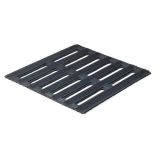 Nyracord Counter Tread Matting$799.00What Counter Tread Does Before Oil and Slag Own the Walkway Counter Tread is a heavy-duty, open-slot rubber drainage runner for the toughest walking paths in a facility. Open slots let oil, water, and debris drop through instead of pooling underfoot, a multi-directional rib surface grips shoes from every angle,
...
What Counter Tread Does Before Oil and Slag Own the Walkway Counter Tread is a heavy-duty, open-slot rubber drainage runner...
What Counter Tread Does Before Oil and Slag Own the Walkway
Counter Tread is a heavy-duty, open-slot rubber drainage runner for the toughest walking paths in a facility. Open slots let oil, water, and debris drop through instead of pooling underfoot, a multi-directional rib surface grips shoes from every angle, and the dense rubber body adds anti-fatigue give to floors that offer none.
The walkways it's built for punish everything: welding lines shedding slag, machine-shop aisles slick with cutting oil, catwalks and grating where footing is the whole safety story. Left bare, these paths collect the day's hazards exactly where boots land. A runner built for that duty changes the surface people actually walk on.
Why Dense Recycled Rubber in an Open-Slot Runner
The body is dense rubber manufactured with 50 percent recycled content — and made in the USA. Density is the design choice here: instead of a foam that harsh exposure would break down, the rubber itself provides the cushion, the wear resistance, and the mass that keeps a long runner lying flat under cart wheels and constant boots.
Up top, the multi-directional rib design does two jobs at once. The ribs give shoes traction in every direction of travel — forward down the line, sideways at a station, pivoting at a junction — while the raised profile adds comfort underfoot. Between the ribs, the open slots keep liquids moving through, and the water-repellant rubber sheds what lands on it.
The format is a true runner: rolls in 2, 3, and 4 foot widths at 20-foot lengths, with special cuts available in those widths up to 20 feet. One roll traces an entire welding line or catwalk in a single piece, so the protection has no gaps where a wet boot meets bare steel or concrete.
Where It Belongs, and What It Is Not
Counter Tread belongs on the hard-duty paths: welding areas, heavy assembly lines, grating and catwalks, and the machine shops and production floors where oil and solvents reach the ground daily. Anywhere a long walking or standing run needs drainage, traction, and cushioning at industrial strength, this is the format built for it.
What it is not: a lift-and-hose kitchen mat or a light station pad. This is walkway infrastructure — rolls run 90 to 176 pounds — meant to be placed deliberately and left working. Food-service lines and lighter standing stations are better matched to the options in our anti-fatigue mats and runners lineup built for daily handling.
Three Things to Check Before You Spec It
First, walk the run and measure the true path. Widths of 2, 3, and 4 feet at 20-foot lengths cover most lines and catwalks in one piece, and special cuts in the same widths handle in-between lengths — so map where boots actually travel, including the pivot points at each end, before choosing.
Second, plan the placement like an install, not a toss-down. At 90 to 176 pounds per roll, positioning is a two-person job done once — which is exactly what keeps a runner flat, aligned, and trip-free on a catwalk. Decide the layout, place it deliberately, and it stays where the work is.
Third, check every direction traffic crosses it. Because the rib design grips multi-directionally, junctions, station turn-ins, and crossing paths keep their traction — but the runner still needs to cover those spots. Extend coverage through intersections rather than stopping short, so no hurried sidestep lands on bare, oily floor.
Why Mats Inc.
Welding lines and catwalks are where we're most careful about what we recommend, because the floor is doing safety work every minute of a shift. We've specified runner matting for these paths since 1964, this one is American-made with half its rubber recycled, and every claim on this page is verified against the manufacturer's published materials. Backed by a 1-year limited Mats Inc. warranty.
Construction Heavy-duty open-slot rubber drainage runner; multi-directional rib surface Material Dense rubber, 50% recycled content; water repellant; wear resistant Color Black Roll Sizes 2' x 20', 3' x 20', 4' x 20' Custom Cuts 2', 3', and 4' widths up to 20' in length; custom configurations available Roll Weight 90–176 lbs depending on size Origin Made in USA Use Area Welding, heavy assembly, grating and catwalks, machine shops, production areas with oil and solvents Warranty 1-year limited (Mats Inc.) Frequently Asked Questions
How does dense rubber cushion without any foam?
Answered by Dustin Thompson, Owner & CEO
The give comes from the geometry as much as the material. The raised multi-directional ribs flex under each step, and the dense rubber body returns that energy instead of packing down the way foam does under harsh service. It's a deliberate trade: a foam core would cushion more softly and die quickly around slag and solvents, while dense rubber cushions honestly and simply refuses to quit — which is the right math for a welding line.
How does it hold up around slag, oil, and solvents?
Answered by Dustin Thompson, Owner & CEO
This is the environment it's recommended for by design — welding, heavy assembly, and the machine shops and production areas where oil and solvents are part of the floor's daily life. The wear-resistant, water-repellant rubber sheds what lands on it, and the open slots keep liquids from sitting on the walking surface at all. Half the rubber already survived a previous industrial life as recycled content, which tells you something about the material's temperament.
Why is it recommended for grating and catwalks specifically?
Answered by Dustin Thompson, Owner & CEO
Catwalks concentrate every footing risk in one narrow path: elevated, often slick, no room to step around a hazard. A runner there has to drain rather than pool, grip in every direction a worker might move, and lie dead flat without curling into a trip edge — which is exactly the open-slot, ribbed, heavy-bodied combination this construction delivers. Its own mass is part of the safety design: a runner this dense stays put.
What sizes should I order for a full line?
Answered by Jinna Hopson, Vice President of Marketing
Measure the walking path end to end, then pick the width by how people use it. The 2-foot width suits a strict single-file catwalk, 3 feet covers a standard working aisle, and 4 feet gives room where workers pass each other or step back from a station. Standard rolls run 20 feet, special cuts come in the same widths up to 20 feet, and custom configurations are available — so odd layouts don't have to settle for gaps.
How hard is it to handle and put in place?
Answered by Jinna Hopson, Vice President of Marketing
Treat it as a small install rather than a daily chore. Rolls weigh 90 to 176 pounds depending on size, so plan a two-person placement, decide the layout before unrolling, and set it once — after that, the weight works for you, holding the runner flat and in position through months of traffic. It's a different rhythm than a lift-and-rinse kitchen mat, and for a permanent walkway that's precisely the point.
Does the recycled content actually mean something?
Answered by Jinna Hopson, Vice President of Marketing
It's a real, reportable figure: the runner is manufactured with 50 percent recycled rubber content, and it's made in the USA. For facilities tracking sustainability goals or domestic-sourcing requirements, that's two line items satisfied by the same purchase — and neither comes at the cost of duty rating, since the recycled dense rubber is the very thing that makes the runner tough enough for welding lines in the first place.
By Dustin Thompson, Owner & CEO, Mats Inc.
↑
What Counter Tread Does Before Oil and Slag Own the Walkway
Counter Tread is a heavy-duty, open-slot rubber drainage runner for the toughest walking paths in a facility. Open slots let oil, water, and debris drop through instead of pooling underfoot, a multi-directional rib surface grips shoes from every angle, and the dense rubber body adds anti-fatigue give to floors that offer none.
The walkways it's built for punish everything: welding lines shedding slag, machine-shop aisles slick with cutting oil, catwalks and grating where footing is the whole safety story. Left bare, these paths collect the day's hazards exactly where boots land. A runner built for that duty changes the surface people actually walk on.
Why Dense Recycled Rubber in an Open-Slot Runner
The body is dense rubber manufactured with 50 percent recycled content — and made in the USA. Density is the design choice here: instead of a foam that harsh exposure would break down, the rubber itself provides the cushion, the wear resistance, and the mass that keeps a long runner lying flat under cart wheels and constant boots.
Up top, the multi-directional rib design does two jobs at once. The ribs give shoes traction in every direction of travel — forward down the line, sideways at a station, pivoting at a junction — while the raised profile adds comfort underfoot. Between the ribs, the open slots keep liquids moving through, and the water-repellant rubber sheds what lands on it.
The format is a true runner: rolls in 2, 3, and 4 foot widths at 20-foot lengths, with special cuts available in those widths up to 20 feet. One roll traces an entire welding line or catwalk in a single piece, so the protection has no gaps where a wet boot meets bare steel or concrete.
Where It Belongs, and What It Is Not
Counter Tread belongs on the hard-duty paths: welding areas, heavy assembly lines, grating and catwalks, and the machine shops and production floors where oil and solvents reach the ground daily. Anywhere a long walking or standing run needs drainage, traction, and cushioning at industrial strength, this is the format built for it.
What it is not: a lift-and-hose kitchen mat or a light station pad. This is walkway infrastructure — rolls run 90 to 176 pounds — meant to be placed deliberately and left working. Food-service lines and lighter standing stations are better matched to the options in our anti-fatigue mats and runners lineup built for daily handling.
Three Things to Check Before You Spec It
First, walk the run and measure the true path. Widths of 2, 3, and 4 feet at 20-foot lengths cover most lines and catwalks in one piece, and special cuts in the same widths handle in-between lengths — so map where boots actually travel, including the pivot points at each end, before choosing.
Second, plan the placement like an install, not a toss-down. At 90 to 176 pounds per roll, positioning is a two-person job done once — which is exactly what keeps a runner flat, aligned, and trip-free on a catwalk. Decide the layout, place it deliberately, and it stays where the work is.
Third, check every direction traffic crosses it. Because the rib design grips multi-directionally, junctions, station turn-ins, and crossing paths keep their traction — but the runner still needs to cover those spots. Extend coverage through intersections rather than stopping short, so no hurried sidestep lands on bare, oily floor.
Why Mats Inc.
Welding lines and catwalks are where we're most careful about what we recommend, because the floor is doing safety work every minute of a shift. We've specified runner matting for these paths since 1964, this one is American-made with half its rubber recycled, and every claim on this page is verified against the manufacturer's published materials. Backed by a 1-year limited Mats Inc. warranty.
Construction Heavy-duty open-slot rubber drainage runner; multi-directional rib surface Material Dense rubber, 50% recycled content; water repellant; wear resistant Color Black Roll Sizes 2' x 20', 3' x 20', 4' x 20' Custom Cuts 2', 3', and 4' widths up to 20' in length; custom configurations available Roll Weight 90–176 lbs depending on size Origin Made in USA Use Area Welding, heavy assembly, grating and catwalks, machine shops, production areas with oil and solvents Warranty 1-year limited (Mats Inc.) Frequently Asked Questions
How does dense rubber cushion without any foam?
Answered by Dustin Thompson, Owner & CEO
The give comes from the geometry as much as the material. The raised multi-directional ribs flex under each step, and the dense rubber body returns that energy instead of packing down the way foam does under harsh service. It's a deliberate trade: a foam core would cushion more softly and die quickly around slag and solvents, while dense rubber cushions honestly and simply refuses to quit — which is the right math for a welding line.
How does it hold up around slag, oil, and solvents?
Answered by Dustin Thompson, Owner & CEO
This is the environment it's recommended for by design — welding, heavy assembly, and the machine shops and production areas where oil and solvents are part of the floor's daily life. The wear-resistant, water-repellant rubber sheds what lands on it, and the open slots keep liquids from sitting on the walking surface at all. Half the rubber already survived a previous industrial life as recycled content, which tells you something about the material's temperament.
Why is it recommended for grating and catwalks specifically?
Answered by Dustin Thompson, Owner & CEO
Catwalks concentrate every footing risk in one narrow path: elevated, often slick, no room to step around a hazard. A runner there has to drain rather than pool, grip in every direction a worker might move, and lie dead flat without curling into a trip edge — which is exactly the open-slot, ribbed, heavy-bodied combination this construction delivers. Its own mass is part of the safety design: a runner this dense stays put.
What sizes should I order for a full line?
Answered by Jinna Hopson, Vice President of Marketing
Measure the walking path end to end, then pick the width by how people use it. The 2-foot width suits a strict single-file catwalk, 3 feet covers a standard working aisle, and 4 feet gives room where workers pass each other or step back from a station. Standard rolls run 20 feet, special cuts come in the same widths up to 20 feet, and custom configurations are available — so odd layouts don't have to settle for gaps.
How hard is it to handle and put in place?
Answered by Jinna Hopson, Vice President of Marketing
Treat it as a small install rather than a daily chore. Rolls weigh 90 to 176 pounds depending on size, so plan a two-person placement, decide the layout before unrolling, and set it once — after that, the weight works for you, holding the runner flat and in position through months of traffic. It's a different rhythm than a lift-and-rinse kitchen mat, and for a permanent walkway that's precisely the point.
Does the recycled content actually mean something?
Answered by Jinna Hopson, Vice President of Marketing
It's a real, reportable figure: the runner is manufactured with 50 percent recycled rubber content, and it's made in the USA. For facilities tracking sustainability goals or domestic-sourcing requirements, that's two line items satisfied by the same purchase — and neither comes at the cost of duty rating, since the recycled dense rubber is the very thing that makes the runner tough enough for welding lines in the first place.
By Dustin Thompson, Owner & CEO, Mats Inc.
↑
View Details
View Details
What Drainage Mats Do Before the Floor Gets Someone Hurt
On a wet line, liquid is constant — washdowns, spills, dripping racks, oil off equipment. A solid surface lets that liquid sit exactly where feet land. Perforated anti-fatigue mats send it through instead, so the standing surface stays grippy while the cushion underneath keeps legs and lower backs working comfortably through the shift.
That's why these mats belong in commercial kitchens, dish pits, food processing areas, breweries, automotive service bays, and industrial workstations. Anywhere the floor gets rinsed as part of the job, drainage underfoot is the difference between a anti-fatigue floor mat that helps and one that becomes the slickest spot in the room.
The Mistake That Turns a Drainage Mat Into a Hazard
The common miss is treating every rubber mat as interchangeable. Put a standard compound under fryer grease or automotive oil and the rubber softens, swells, and breaks down — the mat that was supposed to manage the mess becomes part of it. Oil exposure needs an oil-resistant compound, full stop.
The second miss is neglect. Perforations clogged with food debris or metal fines stop draining, and now liquid pools on a textured surface everyone assumes is safe. A drainage mat that isn't rinsed on schedule quietly trades its safety benefit for slip-and-fall exposure and an early replacement.
How the Three Options Compare
Comfort Flow Anti-Fatigue Mats pair a raised surface pattern with drainage holes so liquid moves through fast while footing stays sure during service. The cushion is tuned for long prep and dish shifts rather than heavy equipment. The right pick for restaurant kitchens, dish stations, bar service areas, brewery taprooms, and food prep lines.
Safe Walk Jr. Rubber Mats are the heavy-duty option: a dense rubber build with reinforced perforations that shrug off dropped tools, rolling loads, and aggressive cleaning, draining oil and coolant as readily as water. The strongest fit for automotive service bays, manufacturing floors, warehouses, and industrial wash areas.
Cushion-Lok Mats take the modular route — interlocking sections that build continuous drainage coverage across whatever footprint the work demands, with individual tiles swappable if one section wears first. The right pick for food processing plants, commercial laundries, janitorial stations, and multi-station work cells.
Three Things to Check Before You Pick
First, what's in the liquid. Water and standard kitchen cleaners are easy company; grease, fryer oil, coolant, and solvents are not. If oil touches this floor, that points you to Safe Walk Jr. and its oil-tolerant construction rather than a general-purpose compound.
Second, the footprint. One person at one station does fine with a single mat like Comfort Flow sized to the stance zone. A line where staff slide between positions needs continuous coverage — that's Cushion-Lok territory, built out section by section without seams that catch heels or block drainage.
Third, your cleaning routine. These mats earn their keep only when the holes stay open. If the space gets a nightly hose-down, any of the three fits the workflow. If cleaning is weekly at best, pick the option you can lift and rinse easily rather than a wall-to-wall layout.
Why Mats Inc.
Wet floors are where matting either works or fails, and we've been matching compounds and hole patterns to kitchens, plants, and service bays long enough to know the difference isn't visible in a product photo. Tell us what lands on your floor and how it gets cleaned, and we'll point you at the option that holds up — not just the one that fits the space.
Frequently Asked Questions
How do I choose between Comfort Flow, Safe Walk Jr., and Cushion-Lok?
Answered by Dustin Thompson, Owner & CEO
Start with the liquid, then the layout. Water and food service cleaners at a single station point to Comfort Flow. Oil, coolant, or heavy equipment traffic point to Safe Walk Jr. And when the job is covering a large or odd-shaped area in one continuous surface, Cushion-Lok's interlocking sections do what a single mat can't.
How long do anti-fatigue mats with holes last?
Answered by Dustin Thompson, Owner & CEO
Matched to its environment and rinsed on schedule, a commercial drainage mat commonly runs three to five years of daily service. What cuts that short is almost never foot traffic — it's grease attacking a compound that wasn't built for oil, perforations left clogged until the rubber tears, or permanent compression once the cushion stops rebounding.
Retire a mat when a thumb-press dent stays, or when torn holes start catching shoes. Both mean the safety benefit is already gone.
How should drainage mats be positioned and installed?
Answered by Dustin Thompson, Owner & CEO
Start on a fully clean, dry floor — moisture trapped underneath breeds odor and mildew and works against the drainage above. Where a floor drain exists, orient the mat so liquid moves toward it rather than toward the walk path.
For interlocking layouts, build outward from the main workstation and check every connection, since a gapped seam collects debris and trips toes. Lift or flip mats periodically so the underside dries completely.
Will a drainage mat look industrial in a customer-facing space like a bar or taproom?
Answered by Jinna Hopson, VP of Marketing
Behind the bar, a perforated mat in a dark neutral reads as professional equipment, not clutter — guests see a bartender moving confidently on wet ground, which is exactly the impression you want. The mat itself sits low and stays out of the sightline from the stools.
Keep it to the working side of the rail and let the guest side stay finished floor. The contrast keeps the front-of-house look intentional.
Can drainage mats be configured to fit a custom line or unusual layout?
Answered by Jinna Hopson, VP of Marketing
Yes — that's the case interlocking systems were made for. Cushion-Lok sections assemble to the shape of your line, wrap around equipment, and grow with the facility, so an L-shaped prep line or a multi-station cell gets full coverage instead of a patchwork of loose mats.
It also keeps the floor looking planned. Matching sections across every station reads far cleaner than mixed mats collected over the years.
Do wet-area anti-fatigue mats make sense outside the kitchen?
Answered by Jinna Hopson, VP of Marketing
Anywhere staff stand on ground that gets wet as part of the work: dish pits, florist prep counters, grooming stations, car wash bays, brewery and winery bottling lines, janitorial closets. If the job includes a hose, a bucket, or a washdown at close, a perforated standing mat belongs under it.
The tell is what your team does now — if there's a towel or cardboard on the floor somewhere, that's the spot.
By Dustin Thompson, Owner & CEO, Mats Inc.