




Description
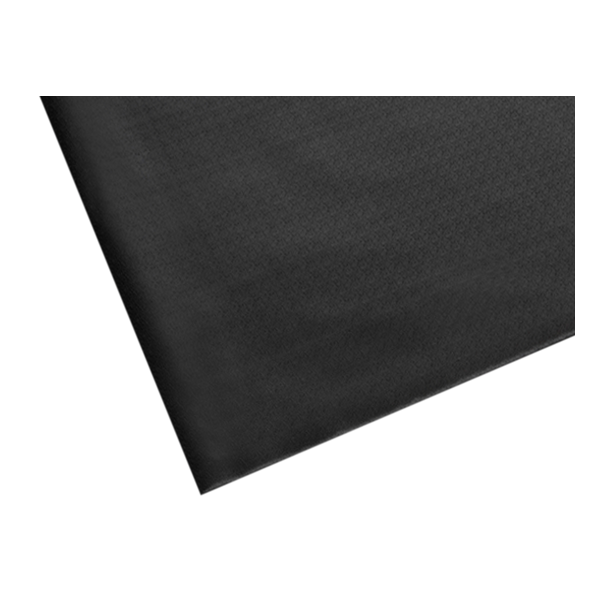
Protect Vinyl Matting is a 1/8-inch vinyl floor runner for dry areas, with a pebble-textured surface that is slip resistant and chemical resistant. It is light and flexible enough for one person to roll up and move, sits low enough that it does not become a trip hazard, and comes in black in 3-, 4-, and 6-foot widths on 60-foot rolls, with custom cut lengths up to 60 feet. It is the plain, wide, textured runner for the floors that just need protecting.
What a Dry-Area Vinyl Runner Does Before the Floor Under It Is Ruined
A lot of floors do not have a slip problem or a water problem. They have a wear problem. A stock room, an assembly line, a church hall, a warehouse aisle: the traffic is dry, but it is constant, and the sealed concrete or tile takes every boot, dolly wheel, and dropped part in the same stripe until the finish is gone. Refinishing that floor means shutting the area down.
A vinyl floor protector runner takes the wear instead. It is a sacrificial surface: replaced as a roll rather than as a floor, easy to lift when the floor underneath needs cleaning, and wide enough here, at up to 6 feet, to cover a whole lane in one piece. When it is worn, a roll is swapped and the floor beneath it is still new.
The pebble surface adds the second job. A plain smooth runner protects the floor but gives a shoe nothing to hold; a pebble texture keeps footing secure on a dry floor without the deep grooves of a ribbed runner that trap grit. It is the middle ground between a protective sheet and a traction mat.
Why Pebble-Surface Extruded Vinyl, and Why This One
The runner is solid extruded vinyl, one material through its 1/8-inch thickness, with the pebble pattern formed into the surface. The vendor publishes the numbers behind that: an average density of 40 to 45 pounds per cubic foot and an average hardness of 70 to 80 on the Shore scale, measured under ASTM D-2240. That is a firm, dense sheet that lies flat and does not compress or dent under a dolly wheel.
Wear is the spec that matters most on a floor protector, and it is published too: under the Taber abrasion test, ASTM D-4060 with an H-38 wheel for 2,000 revolutions, the surface loses less than 1 percent of its material. In plain terms, the pebble texture that provides the footing does not sand away under foot traffic the way a softer runner does.
The other two design choices are about handling. It is light and flexible, so a 4-by-60-foot length rolls up and moves without a crew, which is what makes it practical to lift for floor cleaning or to relocate when a line changes. And it is low profile: at 1/8 inch, the edge is thin enough that it does not catch a foot or a cart, which is the trip hazard a thicker runner introduces.
Widths are the standout. Three feet covers a standard walkway, 4 feet a wide aisle, and 6 feet a full lane or a double-wide stock-room row in one piece with no seam, which few runners offer. Rolls are 60 feet, with custom cut lengths up to 60 feet, in black.
Where It Belongs, and What It Is Not
The vendor's own application list is the right one: factories, finishing and assembly stations, churches, warehouses, stock rooms, and storage areas. In practice that means the aisle between racks, the floor along a bench line, the corridor behind a sanctuary, the walkway through a storage cage, and any dry lane where the floor needs a protective layer that people can still walk on safely. It sits among the industrial and commercial vinyl floor runners we stock as the wide, plain, dry-area protector.
The 6-foot width is what makes it different in use. Where a narrow runner leaves bare floor on either side that still wears, a 6-foot roll protects the full lane, and a stock room can be covered wall to wall in two or three lengths laid side by side.
What it is not is a wet-area runner, a heavy-wheel runner, or a cushion. The vendor rates it for dry areas, and the pebble surface is not a drainage or wet-traction pattern; a floor that gets wet wants a ribbed, pyramid, or perforated surface. At 1/8 inch it is built for foot traffic and light carts, not pallet jacks. And a solid vinyl sheet has no foam, so a standing station still wants an anti-fatigue mat.
Three Things to Check Before You Spec It
First, confirm the floor is dry. This is the one spec that decides it. If the lane sees tracked-in rain, mop water, coolant, or spills during a shift, choose a runner with a wet-traction surface instead. If the problem is wear and footing on a dry floor, this is the right runner and the wide widths make it the efficient one.
Second, size the width to the wear, not the walkway. Look at where the floor is actually scuffed. If the wear stripe is a single path, 3 feet covers it. If carts pass walkers, 4 feet. If the whole lane between racks or benches shows wear, 6 feet covers it in one piece and stops the bare-floor strips on either side from wearing next. Rolls are 60 feet and are cut to length on site or ordered as a custom cut length.
Third, plan for lifting it. One of the reasons to choose a light, flexible runner is that it comes up for floor cleaning and goes back down. Loose-lay is fine for a straight run on a clean, dry floor; tape the edges only where a cart crosses the side or the runner turns a corner. If the runner is going to be moved regularly, keep the seams simple and butt lengths square rather than overlapping.
Why Mats Inc.
We stock this runner for the customer who calls about a worn floor rather than a slippery one: the stock room whose sealed concrete is going gray in the aisle, the assembly line whose tile is chipping under the dollies. A dense, abrasion-rated vinyl protector in a 6-foot width that one person can roll up is the answer to that call, and Mats Inc. has been putting protection between traffic and floors since 1964.
| Type | Dry-area vinyl floor runner, sold by the roll |
| Material | Solid extruded vinyl |
| Surface | Pebble pattern; slip resistant |
| Thickness | 1/8" (0.110"–0.140") |
| Density | 40–45 lb/ft³ (average) |
| Hardness | 70–80 Shore (average), ASTM D-2240 |
| Abrasion | <1.0% loss, H-38 wheel, 2,000 revolutions, ASTM D-4060 |
| Resistance | Chemical resistant |
| Stock sizes | 3' x 60' 4' x 60' 6' x 60' |
| Custom | Custom cut lengths up to 60' |
| Color | Black |
| Use | Dry areas: factories, finishing and assembly stations, churches, warehouses, stock rooms, storage areas |
| Handling | Lightweight and flexible; low profile |
| Warranty | 1-year limited (Mats Inc.) |
Frequently Asked Questions
What is it made of, and what do the hardness and density numbers mean?
Answered by Dustin Thompson, Owner & CEO
Solid extruded vinyl, one material through the 1/8-inch thickness, with a pebble texture formed into the top. The vendor publishes an average density of 40 to 45 pounds per cubic foot and an average hardness of 70 to 80 Shore under ASTM D-2240. Together those describe a firm, dense sheet: it lies flat, it does not dent under a dolly wheel, and it does not stretch or bunch when it is dragged into position.
Hardness in the 70s is the same range as a hard rubber sole. Soft enough to flex and roll, firm enough that the pebble texture holds its shape under traffic instead of mashing flat.
How long does it last, and what wears it out?
Answered by Dustin Thompson, Owner & CEO
The vendor does not publish a year figure, but it does publish the wear test, which is more useful. Under ASTM D-4060, an H-38 abrasive wheel run 2,000 revolutions over the surface removes less than 1 percent of the material. That is a low loss rate for a vinyl runner, and it is why the pebble texture keeps its footing under daily foot traffic rather than polishing smooth. It carries a 1-year limited (Mats Inc.) warranty.
What shortens it is use outside its rating. It is a dry-area runner; standing water and constant wet cleaning are not what it is built for. It is a foot-and-light-cart runner; a pallet jack running the same line cuts through a 1/8-inch sheet in months. And a loose edge in a cart lane gets kicked and torn. Keep it dry, keep the heavy wheels off it, and fix the edges where carts cross.
Where should I use it, and where should I not?
Answered by Dustin Thompson, Owner & CEO
Use it on dry floors that need protecting and safe footing: warehouse and stock-room aisles, the floor along an assembly or finishing line, storage cages, church halls and corridors, factory walkways, and the lane behind a counter. The vendor lists exactly those. The 6-foot width is the one to use when the whole lane shows wear rather than a single path.
Do not use it where the floor gets wet during a shift; a ribbed, pyramid, or perforated surface is built for that and this one is not. Do not put it under pallet jacks or forklifts. And do not treat it as a cushion; a solid vinyl sheet has no foam, so a station where someone stands all day wants an anti-fatigue mat.
Which width should I choose, and can I get a custom length?
Answered by Jinna Hopson, Vice President of Marketing
Match the width to the wear on the floor. If the scuffing is one path down the middle, 3 feet covers it. If carts and walkers share the lane, 4 feet. If the whole floor between the racks or benches is wearing, 6 feet covers it edge to edge in a single piece, and a wide room can be covered wall to wall with two or three lengths side by side.
Standard rolls are 60 feet in all three widths, and custom cut lengths are available up to 60 feet, so you can order the exact run instead of trimming a roll on site. Measure the lane end to end and, for side-by-side coverage, the room width, before ordering.
What does it look like on the floor?
Answered by Jinna Hopson, Vice President of Marketing
A flat black runner with a fine, even pebble texture across the surface, like a matte grain rather than a pattern. It has no ribs or raised shapes, so it reads as a plain protective sheet, and at 1/8 inch it sits nearly flush with the floor. The texture is subtle enough that the runner looks like part of the floor from a few feet away, which suits a church corridor or a showroom stock room as well as a warehouse.
Black hides scuffs and dust between cleanings. It comes in black only; where a floor needs a lighter or color-coded runner, a rounded-rib runner in gray is the option in this range.
Is this the right runner for a church hall or a retail stock room?
Answered by Jinna Hopson, Vice President of Marketing
Yes; the vendor names churches and stock rooms specifically, and they share the same profile: dry floors, steady foot traffic, occasional carts or dollies, and a need to protect a finished floor without making the space look industrial. A plain black pebble runner does that, and its light weight means the facilities team can roll it up for a floor clean or an event and put it back without help.
Use the 3- or 4-foot width for a corridor or aisle and the 6-foot width where a whole floor section needs covering, such as the path from a loading door through a stock room. Keep it to dry areas; the entry itself wants a proper entrance mat.
By Dustin Thompson, Owner & CEO, Mats Inc.
Ordering Info
COLOR: Black
| THICKNESS | WIDTH | LENGTH | WT/SF |
| *1/8" | 36" | 60 LF | 0.50# |
| *1/8" | 48" | 60 LF | 0.50# |
| 1/8" | 72" | 60 LF | 0.50# |
*Full Rolls Only
Reviews
Write Your Own Review
Related Products
Super Scrape Rubber Mats
Safety Track Non-Skid Tape - Coarse

Smooth Marbleized Vinyl Switchboard Matting (Mil Spec)
Super Scrape Rubber Logo Mats
Strip Doors
Perfec Clean 3/8" Rollup Mats - Aluminum Hinge
Perfec Clean 3/8" Rollup Mats - Rubber Hinge
Perfec Clean 3/4" Rollup Grate - Rubber Hinge
Perfec Clean 1-5/8" Grate
WP-70 Non-Skid Epoxy Coating