




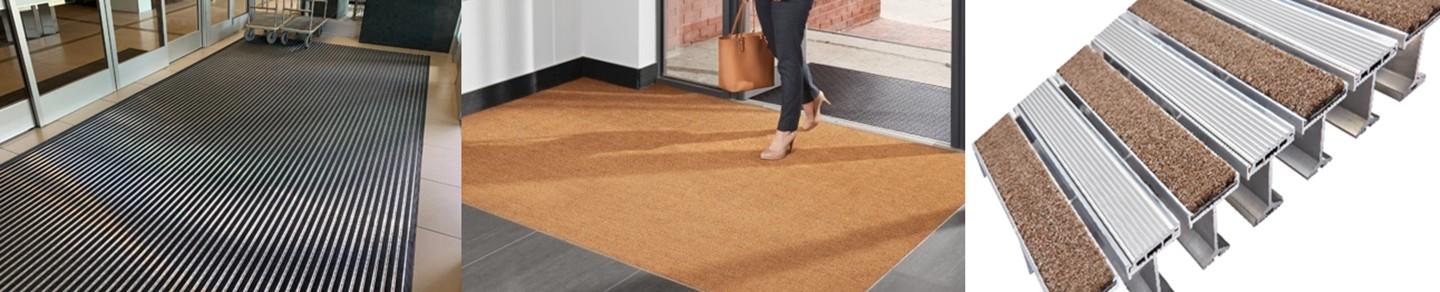

Commercial Floor Grates & Recessed Grate Systems
Commercial floor grates and recessed grate systems for commercial entry wells where the threshold needs to handle the heaviest daily traffic while staying flush with the surrounding floor. The grid below covers five grate constructions plus the aluminum housing frame that holds them — Perfec Clean Rollup Mats in aluminum or rubber hinge for textile-insert performance at standard well depths, Perfec Clean 3/4" and 1-5/8" Grates for deeper wells with heavier scraping and reservoir capacity, Design Links for modular layouts with custom configuration flexibility, and the Mat Recess Frame as the housing accessory that ties any of the constructions into a new or renovation installation. Each grate construction fits a different combination of well depth, traffic profile, and installation specification.
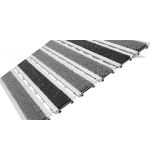 Perfec Clean 3/8" Rollup Mats - Aluminum HingeThe Perfec Clean 3/8" Rollup Mats — Aluminum Hinge is a recessed walk-off mat engineered for the busiest commercial entrances. The aluminum tread-rail surface scrapes dirt off incoming shoes and channels water and snow down into the well below, so the threshold stays presentable while the debris stays out
...
The Perfec Clean 3/8" Rollup Mats — Aluminum Hinge is a recessed walk-off mat engineered for the busiest commercial...
View Details
View Details
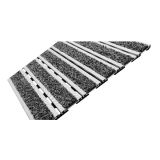 Perfec Clean 3/8" Rollup Mats - Rubber HingeA recessed rubber-hinged mat sits flush in a well at your entrance and does two jobs at once: it scrapes grit and water off shoes into the recess below, and its soft vinyl hinges cushion each step so foot traffic lands quietly. It's the lighter, quieter version of a recessed
...
A recessed rubber-hinged mat sits flush in a well at your entrance and does two jobs at once: it scrapes...
View Details
View Details
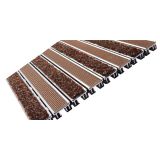 Perfec Clean 3/4" Rollup Grate - Rubber HingeA recessed roll-up grate is the heavy-duty option for a busy entrance: a deep, open grate that scrapes grit and drains water into a pit below, holds up under rolling loads like carts and luggage trolleys, and still stays quiet underfoot thanks to rubber hinges between the rails. It rolls
...
A recessed roll-up grate is the heavy-duty option for a busy entrance: a deep, open grate that scrapes grit and...
View Details
View Details
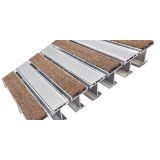 Perfec Clean 1-5/8" GrateThe 1-5/8" rigid grate is the heaviest-built recessed entrance grate we carry — aluminum sections locked and welded into one solid surface, set into a deep pit that scrapes grit and drains water well below the floor. It's the grate you spec for the busiest entrances, where you want maximum
...
The 1-5/8" rigid grate is the heaviest-built recessed entrance grate we carry — aluminum sections locked and welded into one...
View Details
View Details
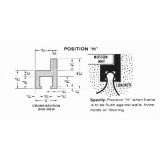 Mat Recess Frame$222.00A recessed mat well only works if its edges are clean and square — and that's the job of the recess frame. It's an extruded aluminum border set into the floor around the well, giving the recess a finished, durable edge that holds the mat flush and keeps the surrounding
...
A recessed mat well only works if its edges are clean and square — and that's the job of the...
View Details
View Details
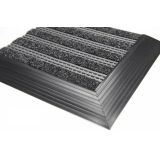 Design LinksDesign Links is a modular walk-off matting system for high-traffic commercial entrances — the kind of doorway where one mat will not cover the span and the entrance is part of how the building presents itself. Its open-weave grid scrapes shoes on every step while alternating carpet strips dry
...
Design Links is a modular walk-off matting system for high-traffic commercial entrances — the kind of doorway where one...
View Details
View Details
What a Grate System Does Differently
A recessed grate system works on a different principle than flat insert matting. Instead of absorbing dirt and moisture at the surface, the rail-and-insert construction channels both down into the well underneath. Walking traffic passes over the top of the rails; the insert strips between the rails do the scraping and wiping; dirt and water fall through into the well below the walking surface, keeping the visible threshold cleaner than what's actually been removed from incoming shoes.
This is the construction approach commercial entrances at the top of the traffic range need, because flat matting saturates and pile-crushes faster than the cleaning schedule can keep up with. Grate systems uncouple the surface presentation from the dirt load — the surface stays presentable while the well underneath does the actual work.
The Failure Mode for Grate Systems
The failure pattern at recessed grate installations isn't usually the grate system itself — it's the spec mismatch around it. Three patterns repeat. First, the well is too shallow for the system specified: grate systems need 5/8-inch to 1-inch minimum well depth depending on construction, and an installation that tries to fit a 3/4-inch system into a 1/2-inch well creates a raised edge that defeats the recessed installation entirely.
Second, the insert strips don't get replaced on schedule — the rigid rail housing is designed to outlast the textile or scraping inserts by years, and buyers who don't plan for insert replacement end up with a degraded threshold appearance while the underlying system is still mechanically sound.
Third, the system gets specified by traffic volume but not by debris type: industrial-leaning entrances handling heavy gravel and sand need scraping-aggressive insert configurations rather than textile-dominant inserts intended for fine dirt and moisture loads.
ISSA research on entrance dirt loads supports the general principle — commercial entries handle 12 times more debris during wet weather, and the system spec has to be sized for the worst-case load, not the average. The grate construction itself is durable; the failure mode lives in specification and maintenance planning.
How the Six Options Compare
Each option in the grid is the right call for a different combination of well depth, traffic profile, and installation requirement.
Perfec Clean 3/8" Rollup Mats - Aluminum Hinge uses 3/8" aluminum rail construction with textile or scraping inserts between the rails. The aluminum hinge gives the system a more guided, structured roll-up for cleaning — pulls up cleanly from the well, stays aligned during the cleaning cycle, lays back flat when reinstalled. Right pick when the recessed entrance benefits from a structured retrieval mechanism, particularly at installations where the maintenance team rotates and the system needs to handle a roll-up without requiring specific technique. Standard for corporate lobbies and hospitality entries running on regular cleaning schedules.
Perfec Clean 3/8" Rollup Mats - Rubber Hinge uses the same 3/8" rail spacing with a rubber hinge mechanism. The rubber hinge handles quieter and flexes more on removal — the system rolls up with less ambient noise and tolerates more variation in the cleaning surface beneath. Right pick when the recessed entrance is in a quieter space where mechanical sound during cleaning matters — healthcare corridors, hospitality during occupied hours, executive offices — or where the surrounding floor profile has minor variation that a rigid aluminum hinge would not accommodate.
Perfec Clean 3/4" Rollup Grate - Rubber Hinge moves up to 3/4" rail height for deeper wells and more aggressive dirt-and-water handling capacity. The deeper construction means more space between the rails for inserts and more reservoir capacity in the well below — water and debris that would saturate a 3/8" system get held below the walking surface in the deeper construction.
Right pick when the entrance handles continuous-wet conditions, heavy debris from outdoor traffic, or volume that overwhelms the 3/8" systems. Common at building entrances in wet climates, transitions from outdoor to indoor at facilities with significant outdoor staging, and entrances facing high gravel and sand exposure.
Perfec Clean 1-5/8" Grate is the heaviest construction in the grid at 1-5/8" rail height. Built for deep recessed wells at industrial-leaning commercial installations — manufacturing facility entrances, transportation hubs, warehouse-adjacent thresholds, anywhere the volume and aggression of incoming debris justifies the deeper well. The 1-5/8" depth gives the system substantial reservoir capacity for water, snow melt, and heavy debris loads that smaller systems can't hold. Specification requires confirming the well depth before order — a 1-5/8" system won't retrofit into a well designed for a 3/8" or 3/4" construction.
Design Links is the modular system in the grid. Instead of continuous rails running the length of the entrance, Design Links uses interlocking modular sections that allow for custom layouts, color combinations, and configurations that fit specific entrance shapes. The modular design handles non-standard entry geometry that continuous-rail systems can't — angled thresholds, multi-zone entries, branded color blocking, and architectural placements where the entrance flooring is part of the design intent rather than just a functional matting layer.
Right pick when the recessed entrance is an architectural moment and the rail-and-insert geometry needs to fit the design rather than the other way around.
Mat Recess Frame is the aluminum housing component rather than a matting product — extruded 6063 aluminum alloy fabricated to exact dimensions, supplied with mitered corners, anchor keys, and corner pins for on-site assembly. Required for new construction or renovation installations where the well needs the proper edge profile and frame structure to receive any of the grate systems above. Specified alongside the grate selection when the recess is being built; not required when a well frame is already in place.
Three Things to Check Before You Pick
First, the well depth — already built or to be built. Already-built wells dictate the maximum system depth that will fit; planned wells can be designed around the system that fits the use case. Send the well depth (or the planned depth) with the spec request and we can confirm which systems will work.
Second, the traffic and debris profile. Lobbies with primarily foot traffic and fine dirt loads work fine with 3/8" systems. Entrances with heavy water exposure, snow-and-salt loads, or significant gravel and sand intake push the spec to 3/4" or 1-5/8" constructions where the reservoir capacity matters. Industrial-leaning entrances and transportation-adjacent thresholds usually warrant the heaviest construction.
Third, the maintenance plan. Roll-up grate systems require regular cleaning — typically lifting the system out, vacuuming or hosing the well underneath, and replacing the matting back in position. Aluminum hinge systems handle this with more structural guidance during the lift cycle; rubber hinge systems handle quieter and tolerate more cleaning-surface variation. Match the hinge mechanism to who's doing the maintenance and how often.
Why Mats Inc.
Recessed grate systems are a specification-driven product family — picking the right construction depends on well dimensions, traffic profile, and installation context that varies by building. The six options above are what's left after watching which constructions hold up at commercial recessed entrances over the decades. Specification consultation is part of how we work: send the well dimensions, the entrance traffic profile, and the surrounding floor finish, and we'll spec the grate construction that fits.
Frequently Asked Questions
How do I figure out which grate height — 3/8", 3/4", or 1-5/8" — is right for my entrance?
Answered by Dustin Thompson, Owner & CEO
Three variables drive the decision. First, what depth your well supports — if the well is already in place, that often sets the maximum grate height you can install.
Second, the traffic profile — primarily foot traffic with fine dirt loads works fine on 3/8" systems; heavy water exposure, snow-and-salt loads, or industrial-leaning debris pushes to 3/4" or 1-5/8".
Third, the cleaning frequency — deeper systems hold more debris between cleaning cycles, which matters at high-volume entrances or facilities where the maintenance cycle is weekly rather than daily.
If the well is still in the design stage, decide the construction first and design the well to fit. Send well dimensions and traffic details and we can spec the right depth.
How long should a recessed grate system last in commercial use?
Answered by Dustin Thompson, Owner & CEO
The rail housing and hinge construction can run 15 to 20 years at moderate-traffic commercial installations, longer at low-traffic placements. The textile or scraping inserts between the rails are the wear component — those run three to seven years depending on traffic volume and debris exposure before replacement.
The system is designed for serviceable insert replacement without replacing the rail structure, which is what makes the construction hold its value over the long service life. The most common cause of premature replacement isn't the grate system failing; it's installation-related — well sized wrong, frame not properly anchored, or the system specified for the wrong debris load and run beyond its design parameters.
What's the minimum well depth required to install one of these systems?
Answered by Dustin Thompson, Owner & CEO
Depends on the construction. 3/8" rollup systems require a well depth of approximately 1/2" to accommodate the rail height plus the recessed seating tolerance. The 3/4" rollup grate needs approximately 7/8" minimum. The 1-5/8" grate needs approximately 1-3/4" minimum well depth. Design Links varies by configuration; we'll spec for your specific layout.
For new construction, design the well around the system you intend to use rather than retrofitting later. For existing wells, measure the actual depth available and we'll confirm which constructions will fit. The Mat Recess Frame can be specified alongside the grate to handle the proper edge profile and anchoring.
What's the realistic cleaning protocol for a recessed grate installation?
Answered by Dustin Thompson, Owner & CEO
Daily or near-daily for the surface — vacuuming or sweeping the top of the rails to remove loose debris before it works into the inserts. Weekly to monthly for deeper cleaning, depending on traffic volume: lift the system out using the hinge mechanism, hose or vacuum the well underneath, vacuum the inserts directly, and replace the system. Heavier-debris installations need the deeper cleaning more often; lower-traffic placements can run on extended schedules.
The aluminum hinge construction handles the lift cycle with more structural guidance; the rubber hinge tolerates more variation in the surface beneath without binding. Insert strips get inspected during deep cleaning and replaced when they show visible wear — typically every three to seven years depending on placement.
How do these read visually at a high-end entrance — do they look industrial?
Answered by Jinna Hopson, Vice President of Marketing
The visual impression depends on the construction and the insert choice. The aluminum rail systems can read very refined at high-end installations — the visible aluminum strips between textile insert bands give the entrance an architectural, intentional appearance that fits corporate, hospitality, and museum thresholds where the entrance is meant to be seen as part of the building's design rather than as a functional add-on.
Insert color, pattern, and texture choices significantly affect the final read — neutral textile inserts in matching tones present quiet and refined; high-contrast inserts present more architectural and modern; scraping inserts present more industrial-functional. Design Links offers the most aesthetic flexibility because the modular sections allow for custom configurations that fit specific design intents. For a specific space, we can send samples of insert options before specifying.
Can we get a grate system in custom colors or with our brand identity at the threshold?
Answered by Jinna Hopson, Vice President of Marketing
Yes, with options across the construction range. Insert strip colors can be specified across the available palette to coordinate with brand standards — for branded entrances, color-blocking the insert sections to match brand identity at the threshold is a common approach without using a traditional logo presentation. Design Links offers the most direct brand customization through the modular section system — different colored sections can form patterns, color-blocks, or branded geometric layouts within the recessed installation.
The aluminum rail housing itself comes in standard finishes but can be specified with custom anodizing on larger orders. For specific brand applications, send the brand color palette and the well dimensions and we'll scope what's manufacturable. Custom orders typically take three to five weeks depending on configuration complexity.
By Dustin Thompson, Owner & CEO, Mats Inc.