




- Home
- Products
- Entrance Mats
- Outdoor Mats & Runners
Outdoor Entrance Mats & Runners
Outdoor entrance mats take the first hit at the door: the mud, snow, gravel, and grit that have to come off the shoe before indoor matting can do its job. Everything in the outdoor range sits on this page, from rubber scraper mats for heavy debris to design-led link mats for customer-facing entries. Pick by what your entrance is fighting, then size for the walk-off path.
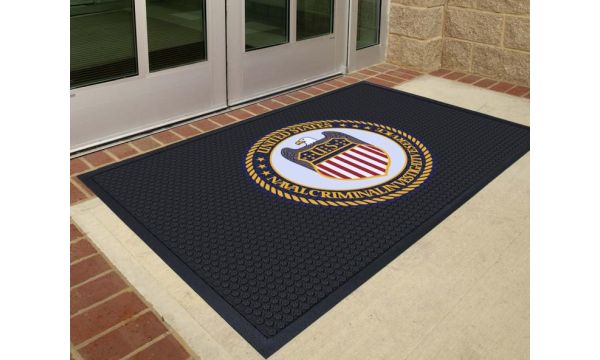 Super Scrape Rubber Logo Mats$185.00Super Scrape Rubber Logo Mats put your logo on a mat that earns its place at the door. The nitrile rubber surface uses raised circular cleats to scrape dirt and water off shoes before they reach your floors, and the artwork is set into the rubber rather than coated
...
Super Scrape Rubber Logo Mats put your logo on a mat that earns its place at the door. The...
Super Scrape Rubber Logo Mats put your logo on a mat that earns its place at the door. The nitrile rubber surface uses raised circular cleats to scrape dirt and water off shoes before they reach your floors, and the artwork is set into the rubber rather than coated on top — so the branding holds up through heavy traffic instead of scuffing away. They're among the most rugged of our outdoor logo mats, built for real commercial use indoors or out.
The logo is digitally printed on a polymeric film, then heat-pressed into the nitrile rubber so it becomes part of the mat. That process reproduces photo-realistic detail — multi-color artwork, tones, and gradients all come through cleanly, which is what separates these printed floor mats from simple one-color welcome mats. You get 150 standard colors to work from, with PMS matching available — up to four PMS colors per design — when a logo has to be exact.
The raised cleats give the mat a high-traction surface that's certified by the National Floor Safety Institute, which matters at a wet entrance where a slip turns into a liability claim. The all-nitrile build also resists oils and chemicals, so the mat holds up at tougher doorways — entries near commercial kitchens, service bays, and manufacturing floors — not just clean lobby entrances. It works indoors or out, though under constant direct sun the printed color softens over time.
The mat comes in standard sizes from 2.5' x 3' up to 6' x 8', so most entrances are covered without custom cutting — what's custom is the artwork, built to your logo and colors. Cleaning is simple: shake or sweep off loose debris and hose it down, or have it commercially laundered. Plan to replace it when the cleats wear smooth or the printed color has faded enough to lose its punch at the door.
Material Nitrile rubber (oil- and chemical-resistant) Logo / image Digitally printed polymeric film, heat-pressed into the rubber Thickness 3/16" (0.1875") Surface Raised circular cleats; high-traction Traction rating NFSI Certified high-traction Colors 150 standard; PMS matching available (up to 4 per design) Standard sizes 2.5'×3', 3'×4', 3'×5', 3'×10', 4'×6', 4'×8', 6'×6', 6'×8' Use Indoor and outdoor Care Hose off, sweep, or commercially launder Warranty 1-year limited (Mats Inc.) Frequently Asked Questions
How well does the logo hold up outdoors and under heavy traffic?
Answered by Dustin Thompson, Owner & CEO
Better than a surface-printed mat. The artwork is printed on a film and heat-pressed into the nitrile rubber, so it's set into the mat instead of sitting on top as a coating that can scuff or peel. Under heavy door traffic, the raised cleats usually wear smooth before the logo gives out. Outdoors, direct sun is the limiting factor — the color softens gradually over the years rather than failing all at once.
Can you match our exact brand colors?
Answered by Jinna Hopson, Vice President of Marketing
Yes. There are 150 standard colors to work from, which covers most logos as they are. When a brand needs precise color, PMS matching is available for up to four colors per design. Because the image is digitally printed before it's pressed into the rubber, photo-realistic detail holds up — multi-color marks, gradients, and fine type come through cleanly instead of being simplified into flat blocks.
What artwork do you need from us, and how detailed can the logo get?
Answered by Jinna Hopson, Vice President of Marketing
Print-ready artwork works best — vector files or high-resolution images reproduce most cleanly. The process handles real detail, including photo-realistic images, multi-color designs, and shaded tones. As a rule of thumb, keep text at least half an inch tall and lines at least a sixteenth of an inch thick so they hold up in production. Send us the logo and the size you need, and we'll confirm how it reproduces before anything is made.
Can these go near kitchens or areas with oil and chemicals?
Answered by Dustin Thompson, Owner & CEO
Yes — that's one of the real advantages of nitrile rubber. Standard rubber softens and breaks down with regular oil and chemical exposure, while nitrile resists both. That lets the mat hold up at doorways near commercial kitchens, auto and service bays, manufacturing floors, and food-service areas, where a standard logo mat would degrade.
By Dustin Thompson, Owner & CEO, Mats Inc.
↑
View Details
View Details
 Vinyl Link Mat
Starting at $209.00
A vinyl link mat is an entrance mat made of short vinyl links woven tightly over steel wires. The close weave grips shoes, pulls dirt off at the door, and stays safe for high heels. It comes in thirteen colors and can carry a custom logo or lettering, so...
A vinyl link mat is an entrance mat made of short vinyl links woven tightly over steel wires. The...
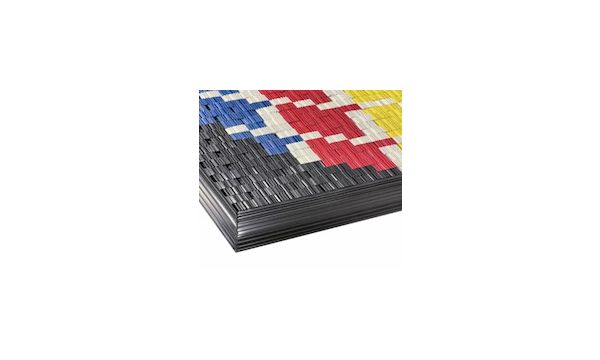
A vinyl link mat is an entrance mat made of short vinyl links woven tightly over steel wires. The close weave grips shoes, pulls dirt off at the door, and stays safe for high heels. It comes in thirteen colors and can carry a custom logo or lettering, so the mat that cleans shoes can also greet visitors with your brand.
What a Vinyl Link Mat Does Before Dirt Reaches the Floor
Most of the dirt inside a building walks in on shoes, and ISSA field data shows about twelve times more dirt comes in during wet weather. A vinyl link mat gives every step a firm, textured surface to scrape against. Grit comes off at the threshold instead of being tracked across the floor inside.
It also handles a problem many entrance mats ignore: footing. The gaps between the links are less than one-eighth of an inch, too narrow for a heel to sink into. That makes it a strong fit for lobbies, offices, and event spaces where dress shoes and high heels cross the door all day.
Why Woven Vinyl Links, and Why This One
Each link is a piece of extruded vinyl, half an inch wide and two inches long. The links are threaded onto galvanized steel wires and packed close together. The finished mat is seven-sixteenths of an inch thick and weighs about 2.3 pounds per square foot, so it lies flat and stays put under steady foot traffic.
The vinyl is stain-resistant, which helps the mat keep a clean look at a busy door. It comes in thirteen colors: black, blue, gray, green, brown, rust, light blue, yellow, maroon, purple, red, white, and sand. Logos and lettering are set into the mat in contrasting colored links, with bold block letters a popular style.
The edge is finished one of two ways. A beveled edge slopes down to meet the floor, for a mat that sits on top of the surface. A square edge is made for a recessed well, where the mat drops in level with the floor around it. You pick the edge color separately from the mat color.
Where It Belongs, and What It Is Not
A vinyl link mat fits entrances where cleaning and first impressions both count: office lobbies, hotels, banks, churches, schools, and retail storefronts. It works as a surface mat or set into a recessed well, and it sits in our range of entrance mats for the door that needs a scraper with a finished look.
What it is not is a drying mat. It is built to scrape and grip, not to soak up water. At a door that sees rain, pair it with an absorbent mat just inside so wet shoes dry before they reach a hard floor. That two-mat setup keeps both the dirt and the water at the entrance.
Three Things to Check Before You Spec It
First, look at who walks through the door. If dress shoes and high heels are common, the tight link spacing is the main reason to choose this mat, because heels do not catch in openings under one-eighth of an inch. For a door that mostly sees work boots and heavy mud, a more open, aggressive scraper may be the better call.
Second, measure the opening and choose the edge. Width runs left to right across the door, and length runs in the direction people walk. The recommended maximum width is eight feet. Pick a beveled edge for a mat that sits on the floor or a square edge for a recessed well, then choose the edge color.
Third, decide whether the mat should carry your brand. A plain mat can be ordered in any of the thirteen colors. A logo mat needs high-resolution digital artwork, as a JPEG, TIFF, or EPS file, and a signed proof before it goes into production. Build that approval step into your timeline.
Why Mats Inc.
We have specified entrance matting since 1964, and a vinyl link mat is one we build to the opening, not pull off a shelf. Send us the door width, the walking direction, and whether the mat sits on the floor or in a well. We will help you choose the edge, settle the colors, and walk your logo artwork through proof approval.
Vinyl Link Mat — Specifications Construction Extruded vinyl links (1/2" × 2") woven on galvanized steel wires Thickness 7/16" Weight ~2.3 lb/sq ft Surface Close weave; link openings under 1/8" (safe for high-heel traffic) Properties Stain-resistant vinyl; good traction underfoot Colors Black, blue, gray, green, brown, rust, light blue, yellow, maroon, purple, red, white, sand Edging Beveled (surface application) or square (recess application); edge color specified separately Sizing Made to your width (left to right) and length (traffic direction); recommended maximum width 8' Size tolerance ±1/4" beveled edge; +0/−1/8" square edge Logos & lettering Available; high-resolution JPEG, TIFF, or EPS artwork; signed proof required before production Warranty 1-year limited (Mats Inc.) Frequently Asked Questions
What is a vinyl link mat made of, and how does it hold up?
Answered by Dustin Thompson, Owner & CEO
It is built from extruded vinyl links, each half an inch by two inches, woven tightly onto galvanized steel wires. The finished mat is seven-sixteenths of an inch thick and weighs about 2.3 pounds per square foot, so it lies flat and resists shifting. The vinyl is stain-resistant, which helps it keep a clean look at a busy door.
How long it lasts depends on the traffic it sees and how much grit crosses it. Rather than quote a number of years, we size and spec it to your door so it is working in the conditions it was built for.
Is a vinyl link mat safe for high heels?
Answered by Dustin Thompson, Owner & CEO
Yes, and that is one of its main strengths. The links are woven close together, leaving openings of less than one-eighth of an inch. A heel tip has nowhere to sink or catch, which is a real concern on open scraper mats with wide gaps. The textured vinyl also gives good traction underfoot, so it suits lobbies, offices, and event spaces where dress shoes are the norm.
Can it sit on the floor, or does it need a recessed well?
Answered by Dustin Thompson, Owner & CEO
Either works, and the edge decides it. For a mat that sits on top of the floor, order a beveled edge, which slopes down to meet the surface. For a recessed well, order a square edge so the mat drops in level with the floor around it.
Square-edge mats are held to a tighter tolerance, plus zero to minus one-eighth of an inch, so they fit the well snugly. Beveled mats hold to plus or minus a quarter inch.
What colors does it come in?
Answered by Jinna Hopson, Vice President of Marketing
Thirteen: black, blue, gray, green, brown, rust, light blue, yellow, maroon, purple, red, white, and sand. You choose the mat color and the edge color separately, so you can match a building's palette or frame the mat with a contrasting border. Darker shades such as black, brown, and gray hide everyday dirt well, while brighter colors make a bolder statement at the front door.
Can you add our logo or lettering?
Answered by Jinna Hopson, Vice President of Marketing
Yes. Logos and lettering are set into the mat in contrasting colored links, and bold block letters are a popular style. We need your artwork as a high-resolution digital file: a JPEG, TIFF, or EPS.
Before production, you will get a proof to review and sign, and nothing is made until that signed approval comes back. That step makes sure the colors and layout look right before your mat is built.
How do I size and order a custom vinyl link mat?
Answered by Jinna Hopson, Vice President of Marketing
Every mat is built to the size you give us. Measure width as the left-to-right distance across the door, and length in the direction people walk. The recommended maximum width is eight feet. Along with the size, tell us the mat color, the edge color, and whether you want a beveled or square edge, and we will take it from there.
By Jinna Hopson, Vice President of Marketing, Mats Inc.
↑
View Details
View Details
 Mat-A-Dor Mats
Starting at $88.00
What Mat-A-Dor Does Before the Dirt Reaches Your Door Mat-A-Dor is a heavy-traffic outdoor scraper built around one job: stripping mud, grit, and snow off shoes before they ever reach the door. A dense field of flexible rubber fingers covers the surface, and each one flexes and snaps back the...
What Mat-A-Dor Does Before the Dirt Reaches Your Door Mat-A-Dor is a heavy-traffic outdoor scraper built around one job: stripping...
What Mat-A-Dor Does Before the Dirt Reaches Your Door
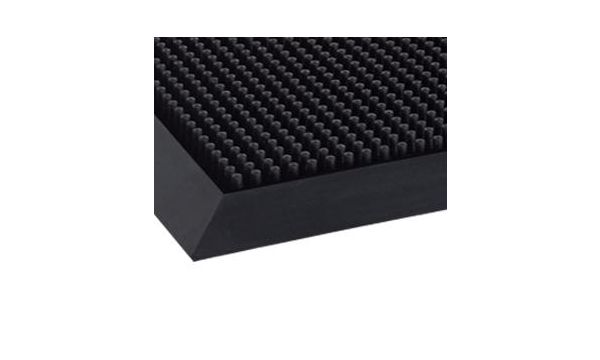
Mat-A-Dor is a heavy-traffic outdoor scraper built around one job: stripping mud, grit, and snow off shoes before they ever reach the door. A dense field of flexible rubber fingers covers the surface, and each one flexes and snaps back the instant it's stepped on, prying packed debris out of shoe treads instead of smearing it across the mat the way a flat surface would.
That matters because most of what dirties a building walks in on feet. ISSA field data shows 12 times more dirt enters during wet weather, and the exterior threshold is where that load is meant to come off. Catch it at the door with an aggressive scraper and far less of it rides inside on soles to wear the floor and overload the matting beyond.
Why a Fingertip Scraper, and Why This One
What separates Mat-A-Dor from an ordinary fingertip mat is density and toughness. It packs about 50% more fingers than a standard fingertip mat, so more of every footstep lands on a scraping edge rather than slipping between fingers. More contact points mean more debris pulled off per step, which is what makes it a true scraper rather than a surface wipe.
The SBR rubber is built for a hard exterior life. It stays flexible in the coldest temperatures instead of stiffening and cracking, and it resists the acids, alkalis, and road salt that break down lesser mats at a salted winter entrance. At 5/8 inch thick and 2.1 pounds per square foot, it has the heft to stay put under heavy traffic, and its linear-serration backing grips the surface beneath it.
The beveled edge does double duty as a reservoir, holding up to a gallon of liquid per square yard so meltwater and runoff stay penned in the mat rather than sheeting across the entry — and that same beveled border gives a clean, trip-free transition underfoot. The mat is built with about 30% recycled content.
Scraper, Not Absorber — Where It Belongs
One thing to be clear about: this is a scraper, not an absorber. It rates near the top for scraping but only middling for pulling up moisture, which is exactly how an exterior mat should be tuned. The job outside is to knock the heavy debris off; an absorbent mat just inside the door then finishes on residual water. Run alone at a wet entrance, Mat-A-Dor will clear the grit but won't dry the shoe.
That makes it a fit for high-traffic exterior entrances where debris arrives daily — universities, airports, hospitals, retail stores, shopping malls, and schools. It's one of several outdoor scraper and traction mats in the lineup, each built to clear a different kind of mess at the door.
Three Things to Check Before You Spec It
First, the exposure. Mat-A-Dor is rated for heavy exterior traffic and shrugs off UV, freeze/thaw, and de-icing chemicals — so it belongs exactly where indoor-rated mats fail. If the entrance sees mud, gravel, or snow daily, an aggressive finger scraper is the right tool for it.
Second, the size — and size to the traffic path, not the doorway. It comes in four standard sizes up to 36 by 72 inches; the mat isn't made in custom dimensions, so at a wide or double-door entrance, lay mats side by side so the bulk of inbound traffic actually crosses the fingers instead of stepping around a single undersized mat.
Third, what comes after it. Because it's a scraper, it should hand off to an absorbent mat inside the door so the entrance catches both debris and moisture. Run on its own, it clears the grit but leaves wet soles to track water across the interior floor within a few steps.
Why Mats Inc.
Mat-A-Dor has stayed in our outdoor lineup because it does the hard part of an entrance mat's job without quitting early. The fingertip scraper survives the UV, freeze/thaw, and de-icing salt that retire carpet-faced and lighter mats within a season or two, and it keeps scraping the whole time. When an exterior entrance needs debris gone before it crosses the threshold, this is the construction we reach for.
Surface SBR rubber, dense fingertip scraper (about 50% more fingers than a standard fingertip mat) Thickness 5/8" Weight 2.1 lb/ft² Backing Linear serration Edge Beveled reservoir border, retains up to 1 gallon of liquid per yd² Chemical resistance Common acids, alkalis, and salt Cold performance Stays flexible in the coldest temperatures Recycled content 30% Color Black Standard sizes 24"×32", 32"×39", 36"×60", 36"×72" Use Exterior, heavy traffic Warranty 1-year limited (Mats Inc.) Frequently Asked Questions
How is Mat-A-Dor different from a standard fingertip mat?
Answered by Dustin Thompson, Owner & CEO
It comes down to density and how the surface actually works. Mat-A-Dor carries about 50% more fingers than a standard fingertip mat, so more of every footstep lands on a scraping edge instead of slipping into the gaps between fingers. Each flexible rubber finger flexes and snaps back on contact, prying packed mud and grit out of shoe treads rather than just wiping across the top of the sole.
That matters most at a debris-heavy entrance. A flat mat tends to smear what it picks up and hand some of it back to the next shoe; the finger surface drops debris down between the fingers and off the walking plane, and the beveled reservoir around the edge holds up to a gallon of liquid per square yard so meltwater stays in the mat instead of on your threshold.
How long does Mat-A-Dor last, and what maintenance does it need?
Answered by Dustin Thompson, Owner & CEO
At a moderate-traffic commercial entrance, plan on three to five years; two to three at the busiest high-volume doors. The SBR rubber handles UV, freeze/thaw, and exposure to acids, alkalis, and road salt without breaking down, and it stays flexible in the coldest temperatures, so it won't stiffen and crack through a hard winter.
Because the construction itself rarely fails first, what usually ends the lifespan early is skipped maintenance. Grit works its way under the mat and grinds at the backing from below, so lift it about once a month and clear out what's collected underneath. That one habit is the difference between the low end of the range and the high end.
Where should Mat-A-Dor go, and does it need to be fixed down?
Answered by Dustin Thompson, Owner & CEO
Set it directly outside the door, with the long dimension running along the way people actually walk in, so the bulk of inbound traffic crosses the fingers before reaching the threshold. The most common placement mistake is tucking a mat tight to the doorframe where much of the traffic steps around it.
It doesn't need to be fixed down. At 2.1 pounds per square foot with a linear-serration backing, the mat has the weight and grip to stay put under heavy traffic. Just lift it about once a month to sweep out the grit that collects underneath — left alone, that grit is what grinds at the backing and shortens the mat's life.
What sizes does Mat-A-Dor come in, and what about a wide entrance?
Answered by Jinna Hopson, Vice President of Marketing
It comes in four standard sizes, from 24 by 32 inches up to 36 by 72 inches, which cover most standard single-door openings. The mat isn't made in custom dimensions, so for a wider opening or a double door the right move is to lay mats side by side to span the full width of the traffic path.
The principle to get right is sizing to the path, not the doorway. A mat sized to the door alone leaves shoes crossing bare ground on either side, and that traffic carries debris straight past the scraper and inside. Send us the opening width and how people actually approach the door, and we'll lay out how many mats it takes to cover it.
Does Mat-A-Dor look right at a customer-facing entrance?
Answered by Jinna Hopson, Vice President of Marketing
It reads as intentional commercial rather than strictly utilitarian. The dense rubber-finger surface has a distinctive, tidy texture that suits universities, healthcare, retail, and corporate exteriors where the entrance still needs to feel considered, and the beveled border keeps the edges clean and trip-free rather than leaving a raw lip.
It's equally at home at a back-of-house or service entry, so it works across the building, not just at the front. For a presentable look paired with pure scraping function, Mat-A-Dor holds its own at a customer-facing door — the texture reads as deliberate, not industrial.
What if we want our branding at the entrance too?
Answered by Jinna Hopson, Vice President of Marketing
Mat-A-Dor itself isn't a branded mat — it comes in black only and isn't made in custom configurations, so it's built for pure function rather than presentation. It still looks intentional at a customer-facing door, but it won't carry a logo.
If brand presence at the threshold is a priority, the branded route is a molded rubber logo scraper, which builds the logo right into an all-rubber outdoor surface so it survives the weather. Many buildings use a branded scraper at the main entrance and Mat-A-Dor at the service, side, and high-debris doors where function is all that matters.
By Dustin Thompson, Owner & CEO, Mats Inc.
↑
View Details
View Details
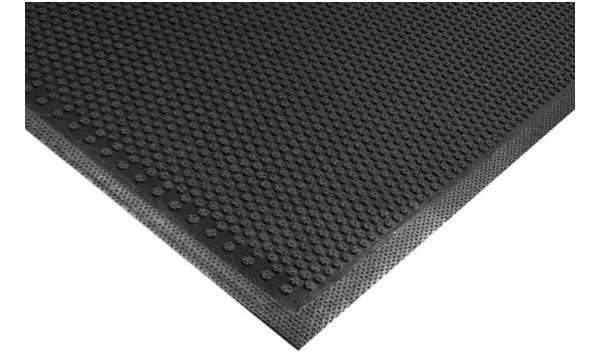 Safety Scrape Rubber Mats
Starting at $46.00
A rubber scraper mat earns its place at the door by doing two jobs at once: pulling grit off shoes, and holding footing where a wet floor turns slick. Safety Scrape does both. Its molded grip surface bites in wet, greasy, and oily conditions that leave smoother mats treacherous,...
A rubber scraper mat earns its place at the door by doing two jobs at once: pulling grit off...
A rubber scraper mat earns its place at the door by doing two jobs at once: pulling grit off shoes, and holding footing where a wet floor turns slick. Safety Scrape does both. Its molded grip surface bites in wet, greasy, and oily conditions that leave smoother mats treacherous, so it works as well inside a wet kitchen as it does outside as an exterior scraper.
What Safety Scrape Does Before a Slick Floor Becomes a Claim
The trouble with most entrance mats shows up the moment the floor gets wet. A surface that grips when dry can go slippery underfoot, and that is exactly when a slip-and-fall claim starts. Safety Scrape is built for that moment. The cleated surface keeps traction in wet and oily conditions, and those same cleats scrape dirt and sand off shoes so loose grit does not track across the floor behind it.
Why Molded Nitrile, and Why This One
The mat is molded from solid nitrile rubber — a synthetic rubber that shrugs off oil, grease, and harsh chemicals instead of breaking down in them. That is why it holds up in kitchens and production areas where animal fats and cleaners would degrade a cheaper mat. The grip comes from cleats molded into the face, not a coating that wears off.
The traction is a tested rating, not just a textured look. Safety Scrape is certified high-traction by the National Floor Safety Institute, the independent body that rates slip resistance, and it posts a static coefficient of friction — a standard grip measurement — of 0.74 dry under ASTM C1028-96, which sits in the high-traction range. It also passes the DOC FF1-70 surface-flammability standard.
Where It Belongs, and Where It Doesn't
Safety Scrape fits anywhere wet or oily footing meets incoming dirt: commercial kitchens, food-prep and processing areas, locker rooms, industrial workshops, and exterior building entrances in wet climates. It reads as utility-first, so it is at home behind the counter, at a service entry, or on an inclined walkway where safe footing matters more than polish. It is one of the exterior scraper and traction mats we carry, chosen for the wet-and-greasy end of that range.
What it is not is a lobby showpiece. The molded surface is functional, not decorative, so for a customer-facing main entrance where presentation leads, a finished entrance mat usually carries the look better. Use Safety Scrape where the real job is footing and scraping — indoors or out.
Three Things to Check Before You Spec It
First, match the surface to the conditions. If the floor sees standing water, grease, or chemical splash, the nitrile build and cleated grip are the whole point — that is where Safety Scrape outperforms a smooth or fabric mat. In a dry, low-risk spot, a lighter mat may be enough.
Second, size it to the traffic path, not the doorway. Grit needs several footsteps on the mat to come off, and ISSA field data shows roughly 12 times more dirt enters a building during wet weather — which is also when footing is least stable. A mat too short for the path lets shoes skip both the cleats and the grip surface.
Third, plan placement and upkeep. A scraper works best paired with an absorbent mat just inside, so the scraper knocks off grit and the second stage takes the moisture. Lift and clear trapped grit underneath on a regular schedule, since debris packed beneath a mat is what shortens its life early.
Why Mats Inc.
We have specified entrance and safety matting since 1964, and we choose traction products by the test data, not the sales sheet. Safety Scrape earns its spot because its slip rating is independently certified and its nitrile build survives the kitchens and entrances that break down lesser mats. Tell us the conditions and the traffic path, and we will confirm it is the right call for your floor.
Safety Scrape — Specifications Material 100% nitrile rubber Surface Molded grip-surface cleats Thickness 3/16" (about 0.19") Slip resistance NFSI-certified high-traction; 0.74 dry static coefficient of friction (ASTM C1028-96) Flammability Passes DOC FF1-70 (surface flammability) Resistance Oil, grease, and chemical resistant Cleaning Hose or pressure-wash; deck brush with neutral-pH detergent; commercial-dishwasher safe; autoclave-sterilizable Standard sizes 2'×3', 3'×5', 3'×10', 4'×6', 4'×10' (approximate; rubber varies 3–5% with temperature) Best for Commercial kitchens, food processing, locker rooms, industrial workshops, wet or greasy areas, exterior entrances Frequently Asked Questions
What is Safety Scrape made of, and how slip-resistant is it really?
Answered by Dustin Thompson, Owner & CEO
Safety Scrape is molded from solid nitrile rubber, with the grip cleats built into the face rather than coated on top, so the traction does not wear away. The slip resistance is a tested rating: it is certified high-traction by the National Floor Safety Institute and posts a 0.74 dry static coefficient of friction under ASTM C1028-96, which sits in the high-traction range. It also passes the DOC FF1-70 surface-flammability standard. The cleats hold footing in wet and oily conditions — exactly where smooth mats turn slick.
How do I clean it, and how long should it last?
Answered by Dustin Thompson, Owner & CEO
Cleaning is about as simple as commercial matting gets. Shake off the loose grit, then hose or pressure-wash it; for a deeper clean, scrub with a deck brush and a neutral-pH detergent and hang it to dry before putting it back. It is safe in a commercial dishwasher and can be sterilized in an autoclave where that is required. At a commercial placement, plan on several years of service. The habit that extends it is lifting the mat regularly to clear grit trapped underneath, since packed debris is what wears a mat out early.
Can I use it both indoors and outdoors, and will it stay in place?
Answered by Dustin Thompson, Owner & CEO
Yes — it is built for both. Indoors it suits wet zones like kitchens, food-prep areas, and locker rooms; outdoors it works as an exterior scraper at building entrances, especially in wet climates. The mat is lightweight and flexible, which makes it easy to lift and clean, so on a smooth floor in a busy path it is worth checking that it sits flat and is not shifting. The best results come from placing it right where the wet meets the foot traffic, not off to the side of the path.
What sizes does it come in, and how do I pick the right one?
Answered by Jinna Hopson, Vice President of Marketing
Safety Scrape comes in a set of standard sizes, from a compact 2-by-3-foot mat up to a 3-by-10-foot runner, with a few widths in between. The size that matters is the one matched to the actual traffic path — people need several steps on the mat for the cleats to do their work, so a mat chosen to look tidy rather than to cover where feet land lets shoes miss the grip surface entirely. Tell us the doorway width and how far the path runs, and we will point you to the size that fits.
Will it look out of place at a customer-facing entrance?
Answered by Jinna Hopson, Vice President of Marketing
Its look is functional first. The molded grip surface reads as purpose-built — clean and intentional, but utilitarian rather than decorative. That suits service entries, back-of-house doors, and wet work zones perfectly. For a main lobby or a storefront where the entrance is part of the first impression, a more finished mat usually carries the look better. The simplest approach is to let the role decide: where safe footing is the real job, Safety Scrape looks exactly as serious as it is.
Does it come in different colors, or can I add a logo?
Answered by Jinna Hopson, Vice President of Marketing
Safety Scrape is a single functional construction — a molded black grip surface — so it is not a color or logo product. The trade-off is deliberate: every part of the design works toward traction and scraping, not appearance. If you want a brand or a custom color at the door, that belongs on a logo or carpet-inlay construction built for print, which we can point you to. Where the priority is footing and dirt control, the standard surface is the right tool.
By Dustin Thompson, Owner & CEO, Mats Inc.
↑
View Details
View Details
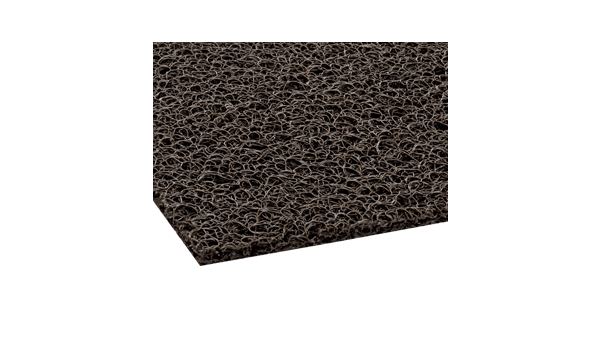 Spaghetti Mats$61.00Spaghetti Mats are an open-loop outdoor scraper built for lighter-traffic entrances — the doors where a heavy cleated mat is more than the spot needs. The tangled vinyl-loop surface scrapes from every direction at once, so it pulls dirt off shoes no matter which way someone crosses it, and
...
Spaghetti Mats are an open-loop outdoor scraper built for lighter-traffic entrances — the doors where a heavy cleated mat...
Spaghetti Mats are an open-loop outdoor scraper built for lighter-traffic entrances — the doors where a heavy cleated mat is more than the spot needs. The tangled vinyl-loop surface scrapes from every direction at once, so it pulls dirt off shoes no matter which way someone crosses it, and the open structure lets grit and water fall through instead of sitting on top.
The surface is a PVC vinyl loop — a coiled, spaghetti-like structure that gives the mat its name. Two versions cover different needs: a foam-backed build that stays planted on a finished surface, and an unbacked version that lets water flow straight through, which suits spots where rain or snowmelt needs somewhere to go. Either way the vinyl dries quickly and resists mildew and fading, so sun and wet don't stiffen it or wash out the color.
Because the loop pattern is non-directional, it doubles as slip-resistant footing — there's no single grain to skid along, which helps where wet shoes are common. It comes in standard 3-by-5 and 4-by-6 sizes and in rolls up to 20 feet long, and it can be custom-sized up to four feet wide for larger entries or run as a continuous walkway. Brown, gray, and black keep it neutral against most building exteriors.
Spaghetti Mats fit lighter-traffic commercial entrances — office buildings, small retail stores, banks, churches, and motels — where the door needs a real scraper but not the heavy-duty construction a high-volume entry demands. It's one of the outdoor entrance mats in the lineup, and as with any exterior scraper, sizing it to the actual walking path matters more than matching the doorway — a mat that's too short lets shoes clear it before the loops have done their work.
Frequently Asked Questions
What's the difference between the backed and unbacked Spaghetti Mat?
Answered by Dustin Thompson, Owner & CEO
It comes down to whether you need the mat to stay put or to drain. The foam-backed version grips a finished surface and stays in place under foot traffic — the right call on a covered entry, a landing, or any spot with a solid floor underneath. The unbacked version is open top to bottom so water runs straight through it, which is what you want where rain or snowmelt pools and needs somewhere to go. Same scraping surface on both.
How does Spaghetti Mat hold up outdoors, and how long does it last?
Answered by Dustin Thompson, Owner & CEO
It's built for lighter-traffic entrances, so at an office, bank, or similar door expect several years of service. The vinyl dries quickly and resists mildew and fading, so sun and wet don't stiffen it or wash out the color the way they do lower-grade outdoor carpet. What shortens its life is putting it somewhere too busy for its grade, or letting debris pack into the loops — lift it and shake or hose it out regularly and it holds up well.
Can I get Spaghetti Mat custom-sized or in a specific color?
Answered by Jinna Hopson, Vice President of Marketing
Yes. Standard sizes are 3-by-5 and 4-by-6, and it comes in rolls up to 20 feet long for a continuous run down a walkway or across a wide entry. Custom widths up to four feet are available, so non-standard openings and longer approaches are easy to cover. Color options are brown, gray, and black — neutrals chosen to sit quietly against most building exteriors rather than draw the eye.
Where does Spaghetti Mat look right?
Answered by Jinna Hopson, Vice President of Marketing
It reads clean and unobtrusive — the open loop surface and neutral colors suit professional, lighter-traffic entrances like offices, small retail, banks, churches, and motels, where the entrance should look tidy without making a statement. It's the kind of mat that does its job and stays out of the way visually. For a high-volume or industrial door that takes heavy debris, a more aggressive scraper construction is the better fit — but for a polished light-traffic entry, Spaghetti Mat looks right.
By Jinna Hopson, Vice President of Marketing, Mats Inc.
↑
View Details
View Details
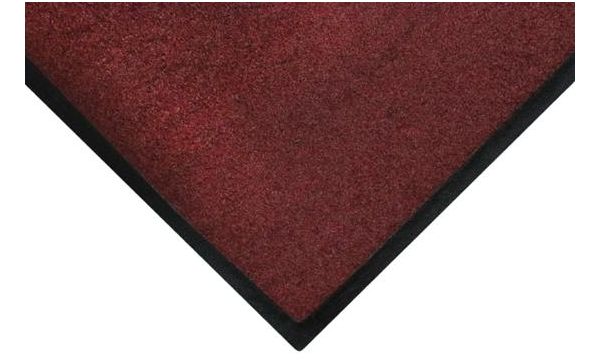 Brush Hog Mats$64.00Brush Hog Mats put a coarse, brush-like nylon surface at the door — the kind of aggressive scraping a wet or muddy outdoor entrance needs. The stiff turf-pile fibers strip dirt and water off shoes and filter both down below the surface, while drainable borders carry water off the mat.
...
Brush Hog Mats put a coarse, brush-like nylon surface at the door — the kind of aggressive scraping a wet...
Brush Hog Mats put a coarse, brush-like nylon surface at the door — the kind of aggressive scraping a wet or muddy outdoor entrance needs. The stiff turf-pile fibers strip dirt and water off shoes and filter both down below the surface, while drainable borders carry water off the mat. It is built for outdoor entryways where keeping grit outside the building is the whole job.
What Brush Hog Does Before Dirt Tracks Inside
An outdoor entrance is where a building's dirt arrives — ISSA research shows most of it comes in on shoes at the door. A coarse scraper like Brush Hog takes that grit off early and filters it down below the pile, so it does not ride across the floor inside. The drainable borders let rain and snowmelt run off the mat instead of pooling on top, which keeps the surface working in wet weather rather than turning into a puddle at the threshold.
Why Coarse Turf-Pile Nylon, and Why This One
The scraping surface is extra-coarse solution-dyed nylon in a dense turf pile, weighing about 26 ounces per square yard over a 3/8-inch-thick mat. The stiff fiber is what does the scraping, and because it is solution-dyed — the color locked into the fiber — it does not fade in sunlight the way a surface-dyed mat would after a season outdoors.
Underneath is an SBR rubber backing — a synthetic rubber — that holds the mat in place, and it is made with 20% recycled rubber reclaimed from car tires. The mat is certified high-traction by the National Floor Safety Institute and passes the DOC-FF1-70 surface-flammability standard. It comes with a smooth backing as standard, or a cleated backing that grips a carpeted floor.
Where It Belongs, and What It Is Not
Brush Hog is built for outdoor building entrances — the first mat a shoe hits, where the job is stripping off the worst of the dirt and water. The drainable borders and below-surface filtering make it a fit for wet, exposed thresholds, and it sits in our range of outdoor entrance mats as the coarse scraper that keeps grit and standing water off the floor inside.
What it is not is a wiper or a soft, finished mat. The coarse pile is aggressive by design, so it scrapes far better than it dries — pair it with an absorbent mat just inside to take the moisture off shoes once Brush Hog has done the rough work. Its look is purely functional, which suits a service or exterior entrance more than a polished lobby.
Three Things to Check Before You Spec It
First, pick the backing for the floor it sits on. The standard smooth backing is right for a hard outdoor surface. If the mat will sit on carpet or you want extra hold against shifting, the cleated backing grips better. One limit to note: mats longer than 40 feet come only with the smooth backing.
Second, size it to the traffic path. It comes in a wide range of standard sizes, and in custom widths of three, four, or six feet cut to length up to sixty feet. Size it so shoes take several steps across the pile — a mat too short for the path lets feet skip the scraping surface entirely.
Third, plan it as the first stage, not the only one. Brush Hog scrapes and filters outside; it does not dry feet on its own. Set an absorbent mat just inside the door so the scraper knocks off the grit and water and the second mat takes whatever moisture is left, keeping the floor beyond it clean and dry.
Why Mats Inc.
We have specified entrance matting since 1964, and an outdoor scraper only works if it is matched to the door and the floor. We will help you weigh smooth against cleated backing, size the mat to the traffic path, and set it up as the first stage in a two-mat system so the dirt stops outside. Tell us the entrance and we will spec it to fit.
Brush Hog Mats — Specifications Surface Extra-coarse solution-dyed nylon, turf-pile Face weight 26 oz/sq yd Overall thickness 3/8" Backing SBR rubber, 78-mil — smooth (standard) or cleated (option); 20% post-consumer recycled rubber Traction NFSI-certified high-traction Flammability Passes DOC-FF1-70 (surface flammability) Custom sizing 3', 4', or 6' widths, cut to length up to 60'; over 40' smooth backing only Use Outdoor building entrances Warranty 1-year limited (Mats Inc.) Frequently Asked Questions
How does Brush Hog handle a wet entrance?
Answered by Dustin Thompson, Owner & CEO
The coarse turf pile strips water and grit off shoes and filters both down below the walking surface, while the drainable borders let rain and snowmelt run off the mat instead of pooling on top. That keeps the surface scraping in wet weather. It scrapes far better than it dries, so pair it with an absorbent mat just inside the door.
Smooth or cleated backing — which do I need?
Answered by Dustin Thompson, Owner & CEO
The standard smooth backing is right for hard outdoor surfaces like concrete. Choose the cleated backing if the mat sits on carpet or you want extra hold against shifting. One limit: mats longer than 40 feet come only with the smooth backing.
How slip-resistant is it?
Answered by Dustin Thompson, Owner & CEO
Brush Hog is certified high-traction by the National Floor Safety Institute, the independent body that rates slip resistance. It also passes the DOC-FF1-70 surface-flammability standard. To keep that traction working, lift the mat regularly and clear the grit that collects underneath.
Can I get Brush Hog in a custom size?
Answered by Jinna Hopson, Vice President of Marketing
Yes. Beyond the standard sizes, it comes in custom widths of three, four, or six feet, cut to any length up to sixty feet. That covers wide doors, long approaches, and continuous walkway runs. Send us the width of the opening and how far the traffic path runs, and we will size it to fit.
Will the color fade outdoors?
Answered by Jinna Hopson, Vice President of Marketing
It is built not to. The nylon is solution-dyed, which means the color is locked into the fiber itself rather than applied to the surface. That is why it holds its color through sun exposure that washes out surface-dyed mats within a season.
Does Brush Hog look right at a customer-facing entrance?
Answered by Jinna Hopson, Vice President of Marketing
Its look is functional first. The coarse pile reads as a working scraper, which suits service entries, side doors, and exposed exterior thresholds. For a polished main lobby where the entrance is part of the first impression, a more finished mat usually carries the look better, with Brush Hog doing the heavy scraping outside.
By Dustin Thompson, Owner & CEO, Mats Inc.
↑
View Details
View Details
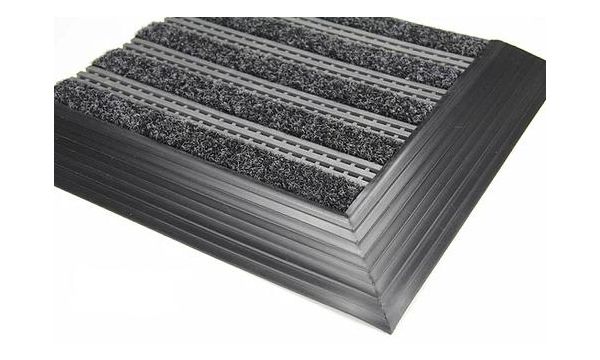 Design LinksDesign Links is a modular walk-off matting system for high-traffic commercial entrances — the kind of doorway where one mat will not cover the span and the entrance is part of how the building presents itself. Its open-weave grid scrapes shoes on every step while alternating carpet strips dry
...
Design Links is a modular walk-off matting system for high-traffic commercial entrances — the kind of doorway where one...
Design Links is a modular walk-off matting system for high-traffic commercial entrances — the kind of doorway where one mat will not cover the span and the entrance is part of how the building presents itself. Its open-weave grid scrapes shoes on every step while alternating carpet strips dry them, and the panels are engineered to fit an entry of almost any size or shape.
What Design Links Does Before the Entrance Wears the Floor Inside
Most of a building's dirt and moisture arrives on shoes at the front door — ISSA research shows the entrance is where the bulk of it enters. Left unchecked, that grit grinds down interior flooring and wet shoes turn a lobby floor slick. Design Links stops both at the threshold: the grid scrapes the dirt off, the open weave drops it below the walking surface, and the carpet strips wick the water, so shoes leave the mat cleaner and drier than they arrived.
Why an Open-Weave Grid with Carpet Strips, and Why This One
The system is built from flexible, injection-molded PVC panels in an open-weave, grid-rib design. The raised ribs scrape shoe bottoms from every direction, and the gaps between them let dirt and water fall through to the well below, out of the traffic path. Set between the ribs are dense polypropylene carpet strips that pull moisture off shoes — the drying half of a scrape-and-dry surface.
It comes with permanent carpet strips or easily replaceable ones, plus a heavy-duty build for pallet-jack and heavy wheel traffic. The surface is genuinely slip-resistant, not just textured: under ASTM D2047 it measures a static coefficient of friction — a standard grip rating — of 0.79 dry and 1.04 wet, where anything above 0.5 counts as slip-resistant. So it grips harder wet than many floors do dry.
Where It Belongs, and Where It Doesn't
Design Links fits busy commercial entrances where appearance and performance both matter — medical buildings, schools, offices, banks, retail floors with shopping carts, and apartment lobbies. It is built for high foot, cart, and pallet-jack traffic, and it reads as a designed part of the entrance rather than a mat dropped on the floor. It sits in our range of exterior entrance matting for entries that need a full walk-off system.
What it is not is a quick single-door doormat. It is a configured system, engineered to a floor plan, so it is more than a low-traffic side entrance needs. It is also an entryway system at heart — the optional aluminum trim is all-weather, but plan it for the entrance threshold and vestibule, where a scrape-and-dry grid earns its place, rather than as an open-air mat out in the elements.
Three Things to Check Before You Spec It
First, decide how it sits in the floor. Recessed into a half-inch well, the mat finishes flush with the surrounding floor — no lip to trip on, which is what makes it ADA-friendly and the cleanest-looking option. Surface-mounted, it sits on top inside a ramped aluminum frame. Either way, the floor underneath needs to be hard and smooth.
Second, match the version to the traffic. Permanent carpet strips suit steady foot traffic and a fixed look; replaceable strips let you swap worn or restyled inserts without redoing the mat; and the heavy-duty build is the one for pallet jacks and heavy rolling loads. Be honest about what crosses the door, because that choice drives how long the surface lasts.
Third, measure the opening and pick the finishes. The panels are custom-engineered to your width, length, and door swing, so wide, long, or irregular entries are all workable. Then choose the base color, the carpet-strip tone, and — if you are recessing it — the anodized trim finish, so the entrance reads the way you want it to.
Why Mats Inc.
We have specified entrance systems since 1964, and a walk-off system lives or dies on the layout. We take your opening, your door swing, and your traffic, then engineer the panel configuration and help you choose the version and finishes — so the grid covers the path without awkward gaps and the entrance protects the floor behind it. Send the measurements and we will lay it out.
Design Links — Specifications Construction Injection-molded PVC open-weave grid with alternating carpet strips Mat profile 1/2" (fits a 1/2"-deep recessed well) Action Grid ribs scrape; open weave drops debris below; carpet strips dry Carpet strips Permanent or replaceable (Velcro); heavy-duty build for pallet-jack / heavy wheel traffic Carpet fiber 100% polypropylene, dense cut pile, 26 oz/sq yd Slip resistance ASTM D2047 static coefficient of friction — 0.79 dry, 1.04 wet (≥ 0.5 = slip-resistant) Base (vinyl) colors Black, gray, brown, green; custom available Carpet-strip colors Charcoal, gingerbread, emerald Aluminum trim Anodized; clear, black, bronze, or gold (all-weather) Installation Surface-mounted (ramped frame) or recessed flush (1/2" well); hard, smooth subfloor Sizing Custom-engineered to any width and length; cut and fit on-site Compliance ADA compliant; recyclable PVC and aluminum (may contribute toward LEED credits — confirm in writing) Origin Made in USA Warranty 1-year limited (Mats Inc.) Frequently Asked Questions
How does Design Links install — can it go flush into the floor?
Answered by Dustin Thompson, Owner & CEO
Two main ways. Recessed, it drops into a half-inch-deep well and finishes flush with the surrounding floor, so there is no raised edge — that is the ADA-friendly option and the one that looks built-in. Surface-mounted, it sits on top of the floor inside a ramped aluminum frame that eases the edges. In both cases the floor underneath should be hard and smooth, and the panels are custom-engineered and fit to the opening on-site.
Can Design Links handle carts and heavy traffic, and how slip-resistant is it?
Answered by Dustin Thompson, Owner & CEO
Yes — it is built for heavy foot, cart, and pallet-jack traffic, with a heavy-duty version for the busiest rolling loads, so it holds up at retail, healthcare, and institutional entrances where lighter mats break down. On slip resistance it tests well above the bar: under ASTM D2047 it measures a static coefficient of friction of 0.79 dry and 1.04 wet, where anything over 0.5 is considered slip-resistant. As with any walk-off system, lifting the panels periodically to vacuum out the debris collected beneath them is what keeps it performing and extends its life. It carries our standard one-year warranty.
How does it scrape and dry at the same time?
Answered by Dustin Thompson, Owner & CEO
The surface does two jobs. The raised PVC grid ribs scrape grit off shoe bottoms with every step, and because the grid is open, that loosened dirt and water fall through to the well below instead of riding back up onto the next shoe. Running between the ribs are dense polypropylene carpet strips that wick moisture off shoes. So one pass scrapes the solids loose and dries the wet, which is what keeps both off the floor inside.
What are the color and finish options?
Answered by Jinna Hopson, Vice President of Marketing
More than most entrance systems. The PVC base comes in black, gray, brown, and green, with custom base colors available for a specific palette. The carpet strips come in charcoal, gingerbread, and emerald. And if you are recessing the mat, the anodized aluminum trim is offered in clear, black, bronze, and gold. That range is the point — it lets the entrance read as a designed part of the space, which is usually why a building chooses this over a plain walk-off mat.
Can Design Links be made to fit an odd-shaped or oversized entry?
Answered by Jinna Hopson, Vice President of Marketing
That is exactly what the modular design is for. The panels are custom-engineered and cut to your width and length, and laid out around doors and floor-plan features, so wide double-door entries, long approaches, and irregular footprints are all workable. There is no standard size to force the space into. Send the area's measurements and shape, along with the door swing, and we will lay out a configuration that covers it cleanly, without partial pieces stranded at the edges.
Will it look upscale, or like a utility mat?
Answered by Jinna Hopson, Vice President of Marketing
It is designed for upscale entrances, and it shows. The grid-and-carpet surface looks deliberate and finished, especially recessed flush with anodized trim framing it, so it presents as part of the architecture rather than a mat thrown down at the door. With the base color, carpet tone, and trim finish chosen to match the space, it carries the entrance instead of cluttering it — which is the reason buildings specify a system like this where appearance counts.
By Jinna Hopson, Vice President of Marketing, Mats Inc.
↑
View Details
View Details
Outdoor Scraper Mats for Heavy Debris
Scraper mats knock dirt off the shoe rather than soak it up. That mechanical action is what keeps mud, gravel, and snow outside instead of on your lobby floor.
Super Scrape Rubber Mats use raised cleats for aggressive scraping at busy commercial doors. Super Scrape Rubber Logo Mats do the same job with your logo set into the rubber. Mat-A-Dor Mats use flexible rubber fingers that strip mud and snow from every step, and Spaghetti Mats are an open-loop vinyl scraper for lighter-traffic doors.
Outdoor Rubber Mats for All-Weather Durability
Rubber holds up to what destroys carpet-faced mats outside: sun, freeze/thaw cycles, oil, and standing water. That is why commercial outdoor rubber mats are the default for exposed thresholds, service entries, and loading docks.
Safety Scrape Rubber Mats put traction first, with a molded grip surface that holds footing in wet, greasy, or oily conditions. Brush Hog Mats pair a coarse, UV-resistant nylon surface with drainable borders for wet, muddy entries.
Design-Led Exterior Matting for Customer-Facing Entries
At a main entrance, the mat is part of the first impression. Vinyl Link Mat weaves vinyl links over steel wire, comes in thirteen colors, and can carry a logo or lettering. Design Links is a modular walk-off system with an open-weave grid and carpet strips, built for wide or non-standard entrances.
The Mistake That Kills Outdoor Mats in One Season
The most common failure is putting an indoor-rated mat outside. Carpet faces fade, vinyl backings curl, and the mat becomes a trip hazard before its first winter is over. ISSA field data shows 12 times more dirt enters during wet weather, and wet thresholds are where the slip risk NFSI tracks climbs fastest.
Three Things to Check Before You Pick
First, what the mat is fighting. Heavy mud, gravel, or snow calls for Super Scrape or Mat-A-Dor. Wet, oily, or sloped footing calls for Safety Scrape. Wet, muddy entries with drainage needs suit Brush Hog.
Second, how the entrance presents. Customer-facing main doors suit Vinyl Link Mat, Design Links, or Super Scrape Rubber Logo Mats. Service entries and loading docks work fine with utility rubber.
Third, coverage. A mat sized to the door width lets most traffic skip it. Size to the walk-off path, and pair an outdoor scraper with an indoor mat past the door.
Why Mats Inc.
Mats Inc. has outfitted commercial entrances since 1964. The outdoor constructions on this page are the ones that held up to UV, freeze/thaw, and real traffic; the ones that did not left the catalog. Outdoor matting is the first stage of a complete entrance matting plan, and we can help you spec it door by door.
Frequently Asked Questions
Can I use a carpet-style or Waterhog mat outside?
Answered by Dustin Thompson, Owner & CEO
Not at a fully exposed door. Carpet faces fade in the sun and their backings curl through freeze/thaw cycles, turning the mat into a trip hazard within a season. Use rubber or a scraper construction outside, and keep carpet-faced mats under cover or inside the door.
Do I need a scraper mat or a rubber traction mat?
Answered by Dustin Thompson, Owner & CEO
Look at what the door is fighting. If it is mud, gravel, or snow, a scraper like Super Scrape or Mat-A-Dor does the most work. If the problem is slick footing from water, grease, or a slope, Safety Scrape keeps traction first. Busy wet-climate entries often use both.
What backing should an outdoor mat have?
Answered by Dustin Thompson, Owner & CEO
One rated for freeze/thaw cycling. Vinyl backings that are fine indoors curl and crack in the cold. Nitrile rubber handles the widest temperature range and resists oil and chemicals. Avoid any indoor-only backing at an exposed placement.
How long should an outdoor mat last?
Answered by Dustin Thompson, Owner & CEO
A properly specified commercial outdoor mat runs 2 to 4 years at heavy-traffic placements and 4 to 6 years at moderate traffic. Wrong construction, undersizing, and skipped maintenance end it early. Lift the mat monthly to clear grit from underneath so it does not wear the backing from below.
Can outdoor mats carry our logo?
Answered by Jinna Hopson, Vice President of Marketing
Yes. Super Scrape Rubber Logo Mats set your logo into an all-rubber cleated scraper, and Vinyl Link Mat can carry a logo or lettering in its link pattern. Both are built for exterior exposure, unlike carpet-faced logo mats that belong under cover. For more options, see our logo floor mats.
Should outdoor mats match across multiple locations?
Answered by Jinna Hopson, Vice President of Marketing
At customer-facing main entrances, yes. The same mat at every main door signals a consistent brand before a visitor reaches the lobby. Service entries and loading docks do not need to match; spec those to the traffic and conditions they actually see.
By Dustin Thompson, Owner & CEO, Mats Inc.