




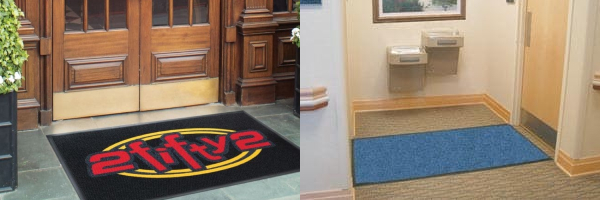
Outdoor Entrance Mats & Runners
Outdoor mats and runners from Mats Inc. sit on the exterior side of the entrance — the matting that handles mud, snow, gravel, and weather before traffic reaches the door. Fully-exposed placements ask different things from a mat than indoor placements do, which is why exterior constructions exist as a separate category. Three options below cover the range: scraper and traction for heavy debris, rubber exterior for all-weather durability, and drainage for water-management at uncovered thresholds. Each one handles a different kind of exterior exposure.
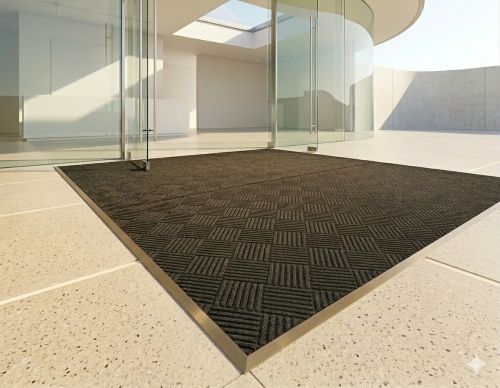
Where Outdoor Mats & Runners Fit in the Entrance Plan
Outdoor mats sit fully outside the building — at the exterior threshold, in the covered approach, or along the walkway that funnels traffic to the door. They handle the first hit of dirt, snow, and weather, which is what lets the indoor matting on the other side of the threshold actually do its job. The Entrance Mats parent covers the full entrance matting lineup; the three construction types here cover the exterior-specific scenarios, and the full outdoor range collects every exterior option in one grid.
The Mistake That Kills Outdoor Mats Within a Single Season
The most common mistake we see with outdoor matting is using an indoor-rated mat in an exterior placement. The construction tolerances are not interchangeable. ISSA field data shows 12 times more dirt enters a building during wet weather, and outdoor placements take the full force of UV exposure, freeze/thaw cycling, and standing water that an indoor mat was never built to handle. An indoor mat placed outside typically curls at the edges within 4 to 6 months, becomes a trip hazard, and fails before its first winter is over. The slip-and-fall risk that NFSI tracks at building entrances spikes when curled or saturated mats fail at the threshold during wet weather.
The fix is to match the construction to the exposure. UV-stable rubber or nitrile face for sun-exposed thresholds. Drainage-oriented surface for rain or snow-prone entries. Aggressive scraper texture for mud, gravel, and heavy debris. Backing rated for freeze/thaw cycling so the mat stays planted through winter without curling or migrating. The three options below break the choice down by what the mat is fighting.
The Three Outdoor Construction Types and What Each One Fights
Scraper & Traction Mats
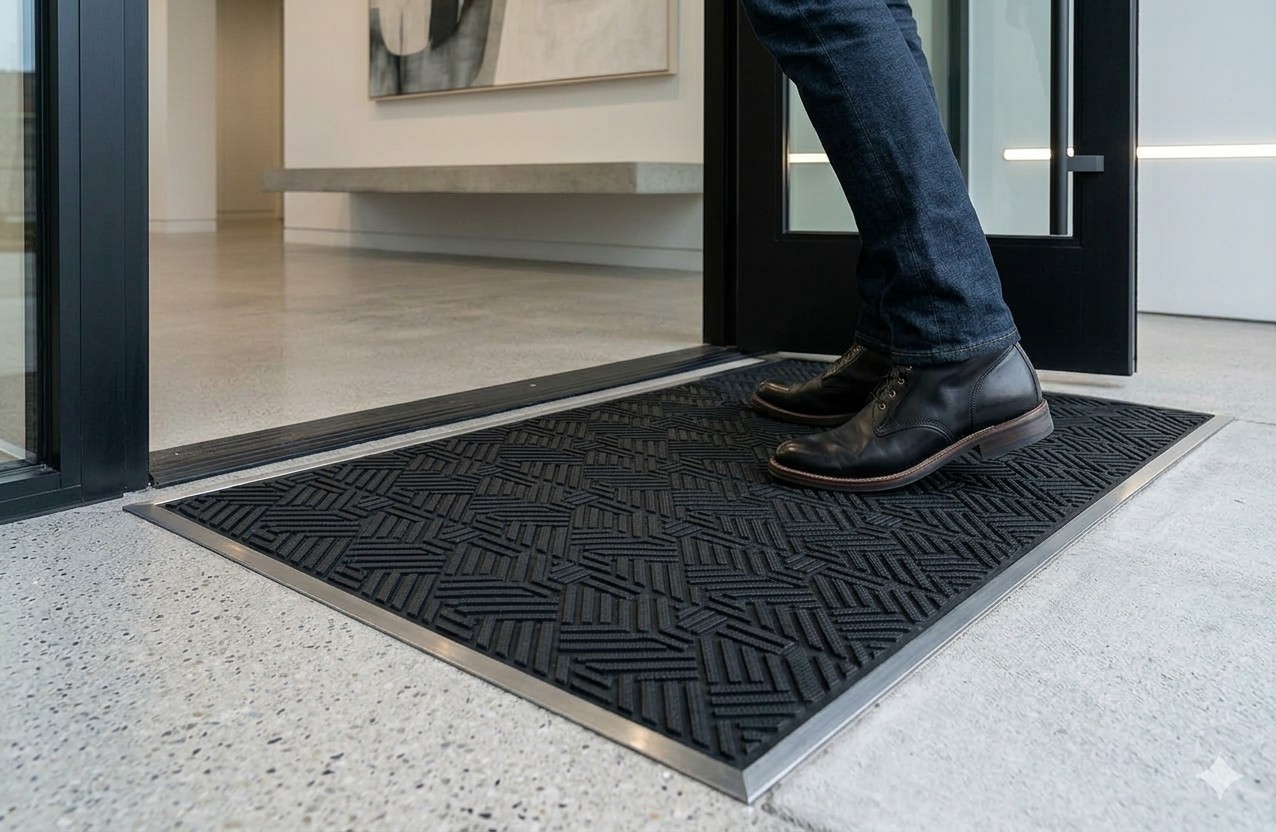
The aggressive-texture first defenders. Molded cleats, raised brush ridges, or coarse rubber surfaces dig into shoe treads to dislodge mud, gravel, snow, and the heavy debris that walks up to the door. Scraper construction prioritizes mechanical action over moisture absorption — the goal is to knock the dirt off the shoe, not soak it up. Best for exterior thresholds at schools, retail entries, hospitals, and any door where the bulk of what arrives is heavy debris that has to come off before the moisture-management work happens at the next stage.
Outdoor Rubber Mats
The all-weather workhorses. Solid or perforated rubber construction holds up to UV, freeze/thaw cycling, oil and chemical exposure, and the constant flexing that exterior placements demand. Rubber stays stable across the temperature range that destroys carpet-faced indoor mats outdoors, and the right rubber compound resists curling, cracking, and color migration through years of exposure. Best for service entrances, loading docks, industrial doorways, and exterior placements where the mat needs to survive whatever the climate and the workload throw at it.
Outdoor Carpet Mats
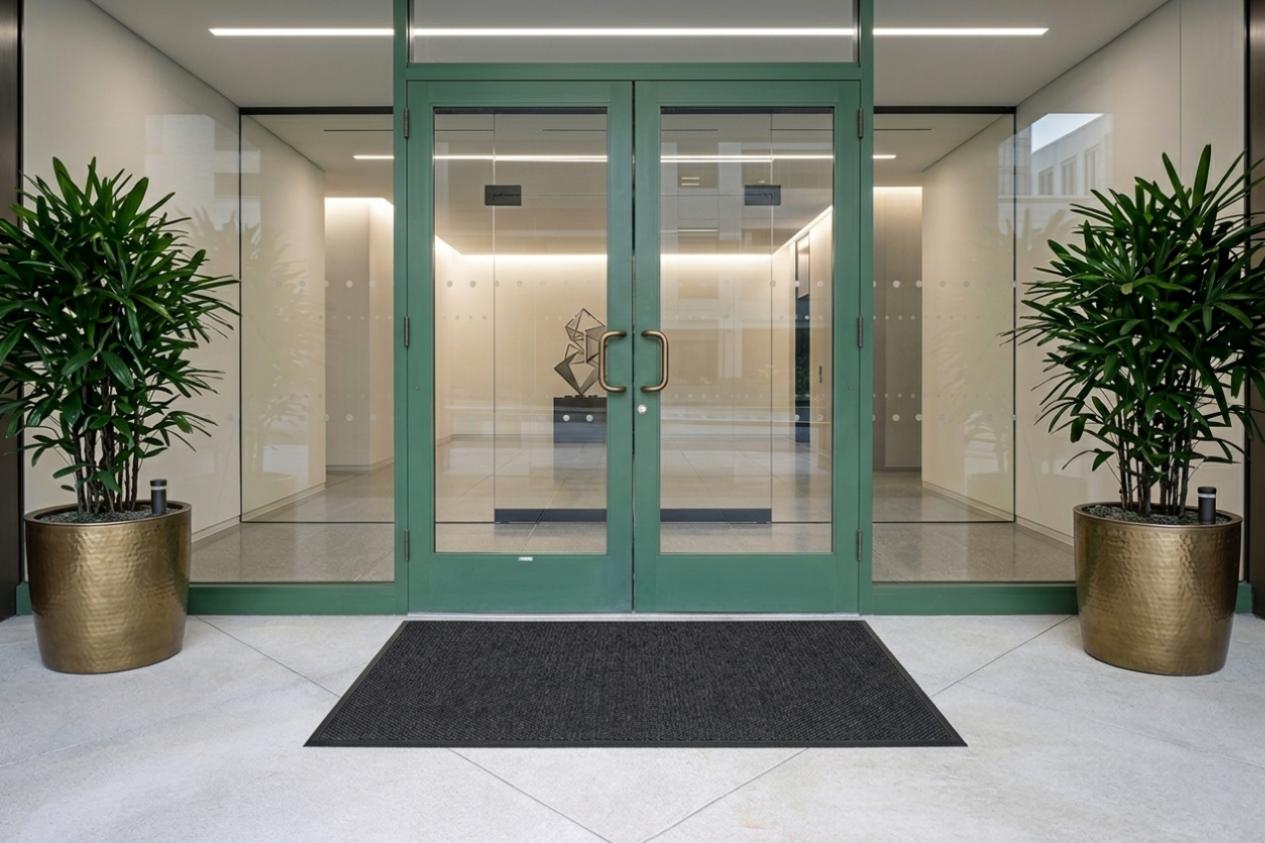
The moisture-management specialists. Carpet-faced constructions handle water through absorption, bi-level channeling, or raised-nub surface elevation — trapping moisture in the mat or routing it below the walking surface so it doesn't spread across the threshold. Best for covered exterior entries and wet-weather thresholds where the mat needs to absorb the water arriving on shoes while keeping the entrance presentable. What these constructions don't do is let standing water pass through entirely — when the placement calls for that, at pool decks, showers, and sustained-wet zones, pool drainage mats carry the open-grid construction that used to live in this branch.
How to Pick Between Scraper, Rubber, and Drainage Constructions
The choice comes down to what the mat is primarily fighting. If the dominant problem is heavy debris — mud, gravel, snow, pet waste — the scraper construction does the most work. If the dominant problem is exposure — sun, freeze/thaw, oil, industrial conditions — the rubber construction handles the survival side and still scrapes effectively. If the dominant problem is water — rain, snowmelt, standing puddles — the drainage construction is the only one that keeps the walking surface above the wet. Many entrances need more than one. Pairing a scraper at the door with a drainage mat at the approach is a common configuration for exterior thresholds in wet climates.
Frequently Asked Questions
Can I use a Waterhog or carpet-style mat outside?
Answered by Dustin Thompson, Owner & CEO
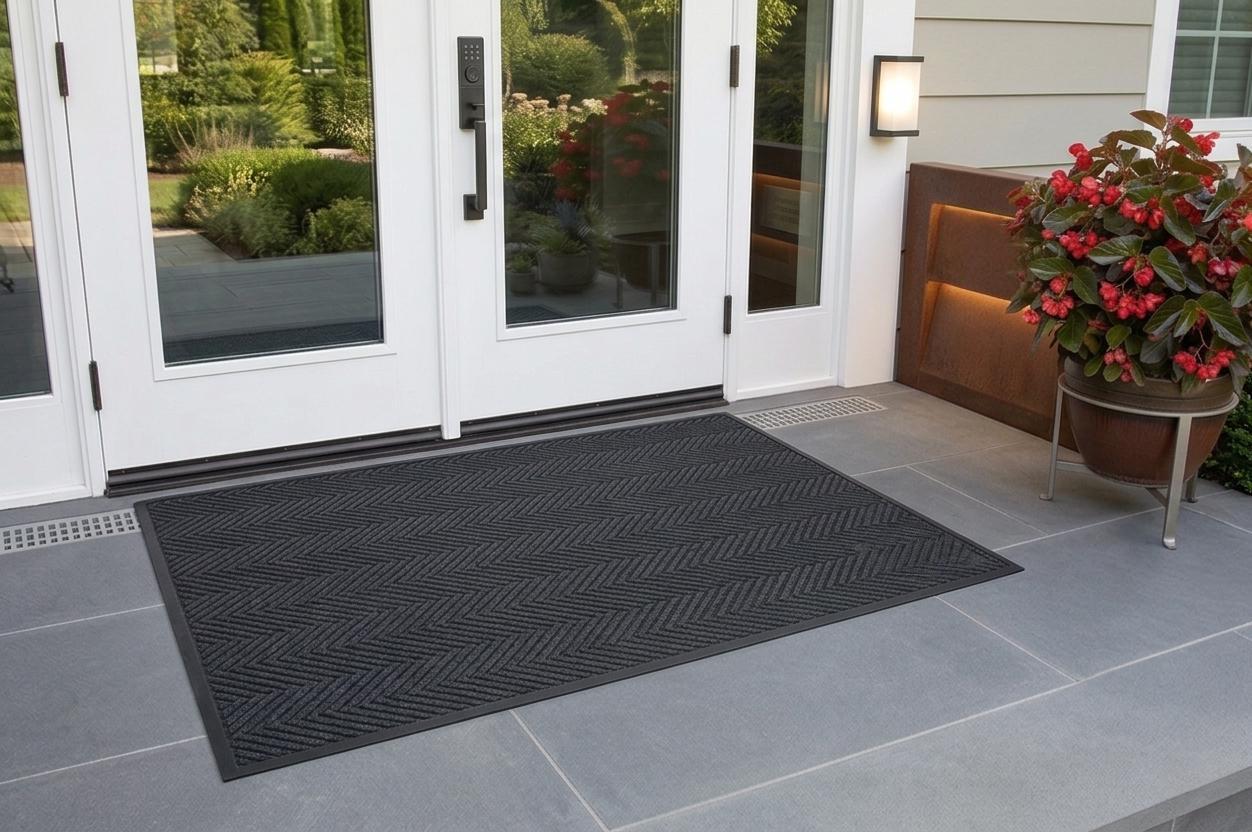
No, and it's the most common mistake we see. Indoor mats with carpet-style faces — including Waterhog Elite Herringbone and similar bi-level constructions — are built for moisture absorption inside the building, where UV doesn't degrade the fiber and the backing doesn't go through freeze/thaw cycles. Place that same mat outside and the carpet face fades within a few months, the backing curls at the edges, and the mat becomes a trip hazard before its first winter ends. For exterior placements, use a rubber, nitrile, or scraper construction specifically rated for outdoor conditions. Indoor and outdoor categories exist to keep the constructions separate so the mat lasts the way it should.
How do I know if I need drainage or just a scraper mat?
Answered by Dustin Thompson, Owner & CEO
Look at what the mat is actually fighting. If the entrance is in a dry climate or the mat sits under cover where rain doesn't reach it, a scraper construction handles the work and drainage isn't critical. If the mat is in an uncovered exterior placement, in a wet climate, or at a doorway where puddles regularly form, drainage construction is the right call — without it, the mat becomes a saturated sponge that spreads water onto the threshold instead of holding it. For high-traffic entries in mixed conditions, pairing a scraper at the door with a drainage mat at the approach gives you both functions.
What backing should I look for on an outdoor mat?
Answered by Dustin Thompson, Owner & CEO
The backing matters more outdoors than indoors because the temperature range is so much wider. Look for a backing rated for freeze/thaw cycling — a vinyl backing that's fine indoors will curl, crack, or migrate in cold weather. Nitrile rubber backing handles the widest temperature range and resists oil and chemical exposure. Recycled rubber backings are durable and eco-spec compliant. Avoid any backing rated for indoor use only on an outdoor placement; the mat won't survive its first winter, regardless of what the carpet face looks like.
How long should an outdoor mat last?
Answered by Dustin Thompson, Owner & CEO
A properly-spec'd outdoor commercial mat runs 2 to 4 years in heavy-traffic exterior placements and 4 to 6 years in moderate-traffic placements with covered approaches. The variables that end the lifespan first are usually wrong-construction (indoor mat used outdoors), undersizing (mat catches too few footsteps and saturates with debris), and skipped maintenance — outdoor mats need to be lifted regularly to clear accumulated grit and debris from beneath, otherwise the trapped material breaks down the backing from the bottom up. Matching the construction to the exposure and lifting the mat for monthly cleaning are the two decisions that drive most of the service life.
Can I get outdoor mats with a logo or in custom colors to match the building exterior?
Answered by Jinna Hopson, Vice President of Marketing
Yes, with options that depend on the construction. Outdoor logo mats are available in rubber-faced and impression-style constructions specifically rated for exterior UV and weather exposure — different from indoor logo mats, which use carpet faces that won't hold up outside. Color options vary by construction; rubber and nitrile exteriors come in a narrower color range than indoor matting because the compound chemistry has to prioritize weatherability. For high-end corporate, hospitality, and retail entries where the outdoor mat is part of the building's curb-appeal presentation, we can pull samples to test against the exterior finishes before committing. Branded outdoor matting at a customer-facing main entrance carries weight indoor branded mats can't — the first impression a visitor builds of a brand actually happens at the exterior threshold, not the lobby.
For multi-location buildings, should outdoor mats match across all sites?
Answered by Jinna Hopson, Vice President of Marketing
For customer-facing main entrances, yes — visual consistency at the exterior reinforces brand presence across the portfolio in a way that matters more than most multi-location operators realize. A visitor's first impression of a brand is built at the exterior threshold before they ever reach the lobby. Matching outdoor mat construction, color, and (if applicable) logo at every customer-facing exterior creates an immediate signal that the operation is intentional and consistent across sites. Service entries, loading docks, and back-of-house exteriors don't need to match — those placements should be spec'd to whatever traffic and conditions they actually see. The pattern that works for most multi-location programs is one premium outdoor mat at every customer-facing main exterior and traffic-appropriate workhorse mats everywhere else.
By Dustin Thompson, Owner & CEO, Mats Inc.