




- Home
- Products
- Entrance Mats
- Custom Logo Mats
Personalized Logo Mats
Custom logo mats from Mats Inc. — built specifically for the entrance, where the brand impression and the matting work happen at the same threshold. This is the entrance-buyer path to logo matting: constructions that handle the scraping, wiping, and traction work the door demands while integrating your logo, brand colors, or building identity into the mat face. For the broader logo mat catalog across lobbies, retail floors, and non-entrance applications, the top-level Custom Logo Mats cluster covers the full range.
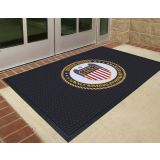 Super Scrape Rubber Logo Mats$185.00Super Scrape Rubber Logo Mats put your logo on a mat that earns its place at the door. The nitrile rubber surface uses raised circular cleats to scrape dirt and water off shoes before they reach your floors, and the artwork is set into the rubber rather than coated
...
Super Scrape Rubber Logo Mats put your logo on a mat that earns its place at the door. The...
Super Scrape Rubber Logo Mats put your logo on a mat that earns its place at the door. The nitrile rubber surface uses raised circular cleats to scrape dirt and water off shoes before they reach your floors, and the artwork is set into the rubber rather than coated on top — so the branding holds up through heavy traffic instead of scuffing away. They're among the most rugged of our outdoor logo mats, built for real commercial use indoors or out.
The logo is digitally printed on a polymeric film, then heat-pressed into the nitrile rubber so it becomes part of the mat. That process reproduces photo-realistic detail — multi-color artwork, tones, and gradients all come through cleanly, which is what separates these printed floor mats from simple one-color welcome mats. You get 150 standard colors to work from, with PMS matching available — up to four PMS colors per design — when a logo has to be exact.
The raised cleats give the mat a high-traction surface that's certified by the National Floor Safety Institute, which matters at a wet entrance where a slip turns into a liability claim. The all-nitrile build also resists oils and chemicals, so the mat holds up at tougher doorways — entries near commercial kitchens, service bays, and manufacturing floors — not just clean lobby entrances. It works indoors or out, though under constant direct sun the printed color softens over time.
The mat comes in standard sizes from 2.5' x 3' up to 6' x 8', so most entrances are covered without custom cutting — what's custom is the artwork, built to your logo and colors. Cleaning is simple: shake or sweep off loose debris and hose it down, or have it commercially laundered. Plan to replace it when the cleats wear smooth or the printed color has faded enough to lose its punch at the door.
Material Nitrile rubber (oil- and chemical-resistant) Logo / image Digitally printed polymeric film, heat-pressed into the rubber Thickness 3/16" (0.1875") Surface Raised circular cleats; high-traction Traction rating NFSI Certified high-traction Colors 150 standard; PMS matching available (up to 4 per design) Standard sizes 2.5'×3', 3'×4', 3'×5', 3'×10', 4'×6', 4'×8', 6'×6', 6'×8' Use Indoor and outdoor Care Hose off, sweep, or commercially launder Warranty 1-year limited (Mats Inc.) Frequently Asked Questions
How well does the logo hold up outdoors and under heavy traffic?
Answered by Dustin Thompson, Owner & CEO
Better than a surface-printed mat. The artwork is printed on a film and heat-pressed into the nitrile rubber, so it's set into the mat instead of sitting on top as a coating that can scuff or peel. Under heavy door traffic, the raised cleats usually wear smooth before the logo gives out. Outdoors, direct sun is the limiting factor — the color softens gradually over the years rather than failing all at once.
Can you match our exact brand colors?
Answered by Jinna Hopson, Vice President of Marketing
Yes. There are 150 standard colors to work from, which covers most logos as they are. When a brand needs precise color, PMS matching is available for up to four colors per design. Because the image is digitally printed before it's pressed into the rubber, photo-realistic detail holds up — multi-color marks, gradients, and fine type come through cleanly instead of being simplified into flat blocks.
What artwork do you need from us, and how detailed can the logo get?
Answered by Jinna Hopson, Vice President of Marketing
Print-ready artwork works best — vector files or high-resolution images reproduce most cleanly. The process handles real detail, including photo-realistic images, multi-color designs, and shaded tones. As a rule of thumb, keep text at least half an inch tall and lines at least a sixteenth of an inch thick so they hold up in production. Send us the logo and the size you need, and we'll confirm how it reproduces before anything is made.
Can these go near kitchens or areas with oil and chemicals?
Answered by Dustin Thompson, Owner & CEO
Yes — that's one of the real advantages of nitrile rubber. Standard rubber softens and breaks down with regular oil and chemical exposure, while nitrile resists both. That lets the mat hold up at doorways near commercial kitchens, auto and service bays, manufacturing floors, and food-service areas, where a standard logo mat would degrade.
By Dustin Thompson, Owner & CEO, Mats Inc.
↑
Super Scrape Rubber Logo Mats put your logo on a mat that earns its place at the door. The nitrile rubber surface uses raised circular cleats to scrape dirt and water off shoes before they reach your floors, and the artwork is set into the rubber rather than coated on top — so the branding holds up through heavy traffic instead of scuffing away. They're among the most rugged of our outdoor logo mats, built for real commercial use indoors or out.
The logo is digitally printed on a polymeric film, then heat-pressed into the nitrile rubber so it becomes part of the mat. That process reproduces photo-realistic detail — multi-color artwork, tones, and gradients all come through cleanly, which is what separates these printed floor mats from simple one-color welcome mats. You get 150 standard colors to work from, with PMS matching available — up to four PMS colors per design — when a logo has to be exact.
The raised cleats give the mat a high-traction surface that's certified by the National Floor Safety Institute, which matters at a wet entrance where a slip turns into a liability claim. The all-nitrile build also resists oils and chemicals, so the mat holds up at tougher doorways — entries near commercial kitchens, service bays, and manufacturing floors — not just clean lobby entrances. It works indoors or out, though under constant direct sun the printed color softens over time.
The mat comes in standard sizes from 2.5' x 3' up to 6' x 8', so most entrances are covered without custom cutting — what's custom is the artwork, built to your logo and colors. Cleaning is simple: shake or sweep off loose debris and hose it down, or have it commercially laundered. Plan to replace it when the cleats wear smooth or the printed color has faded enough to lose its punch at the door.
Material Nitrile rubber (oil- and chemical-resistant) Logo / image Digitally printed polymeric film, heat-pressed into the rubber Thickness 3/16" (0.1875") Surface Raised circular cleats; high-traction Traction rating NFSI Certified high-traction Colors 150 standard; PMS matching available (up to 4 per design) Standard sizes 2.5'×3', 3'×4', 3'×5', 3'×10', 4'×6', 4'×8', 6'×6', 6'×8' Use Indoor and outdoor Care Hose off, sweep, or commercially launder Warranty 1-year limited (Mats Inc.) Frequently Asked Questions
How well does the logo hold up outdoors and under heavy traffic?
Answered by Dustin Thompson, Owner & CEO
Better than a surface-printed mat. The artwork is printed on a film and heat-pressed into the nitrile rubber, so it's set into the mat instead of sitting on top as a coating that can scuff or peel. Under heavy door traffic, the raised cleats usually wear smooth before the logo gives out. Outdoors, direct sun is the limiting factor — the color softens gradually over the years rather than failing all at once.
Can you match our exact brand colors?
Answered by Jinna Hopson, Vice President of Marketing
Yes. There are 150 standard colors to work from, which covers most logos as they are. When a brand needs precise color, PMS matching is available for up to four colors per design. Because the image is digitally printed before it's pressed into the rubber, photo-realistic detail holds up — multi-color marks, gradients, and fine type come through cleanly instead of being simplified into flat blocks.
What artwork do you need from us, and how detailed can the logo get?
Answered by Jinna Hopson, Vice President of Marketing
Print-ready artwork works best — vector files or high-resolution images reproduce most cleanly. The process handles real detail, including photo-realistic images, multi-color designs, and shaded tones. As a rule of thumb, keep text at least half an inch tall and lines at least a sixteenth of an inch thick so they hold up in production. Send us the logo and the size you need, and we'll confirm how it reproduces before anything is made.
Can these go near kitchens or areas with oil and chemicals?
Answered by Dustin Thompson, Owner & CEO
Yes — that's one of the real advantages of nitrile rubber. Standard rubber softens and breaks down with regular oil and chemical exposure, while nitrile resists both. That lets the mat hold up at doorways near commercial kitchens, auto and service bays, manufacturing floors, and food-service areas, where a standard logo mat would degrade.
By Dustin Thompson, Owner & CEO, Mats Inc.
↑
View Details
View Details
 Berber Logo Mats
Starting at $194.00
Berber Logo Mats put your logo at the door on a looped berber surface — a tight, low-profile weave with a subtle hobnail texture that reads as upscale rather than promotional. The logo is digitally printed in high definition, so the artwork stays crisp, and the same tight weave that...
Berber Logo Mats put your logo at the door on a looped berber surface — a tight, low-profile weave with...
Berber Logo Mats put your logo at the door on a looped berber surface — a tight, low-profile weave with a subtle hobnail texture that reads as upscale rather than promotional. The logo is digitally printed in high definition, so the artwork stays crisp, and the same tight weave that holds the print also scrapes dirt and moisture off shoes before either reaches your floor.
What a Berber Logo Mat Does Before Your Brand Looks Tired at the Door
A logo mat is doing two jobs from the moment someone walks up: it shows your brand and it protects the floor. ISSA field data shows a building takes on up to 12 times more dirt during wet weather, and it takes six to eight steps to walk a sole dry. A mat that catches that grit keeps your entrance clean — and keeps the logo from sitting in a smear of tracked-in dirt.
The looped berber weave is tight enough to scrape and hold dirt and moisture, so the floor past the mat stays cleaner and the logo stays legible instead of muddy. That matters because a worn or grimy logo mat does the opposite of its job — it makes the brand look neglected at the exact spot where a visitor forms a first impression.
Why Berber Loop, and Why This One
The surface is needle-punched PET fiber, about 44 ounces per square yard, made with at least 80% recycled content reclaimed from plastic bottles. The loop-pile berber has a smooth, even face, which is what lets the logo print crisply — the artwork is built up in layers of color and matched to a standard palette of 56 colors, so edges and lettering stay sharp.
Berber's tight weave is the durable part. It stands up to heavy foot traffic without the surface breaking down, and the hobnail texture gives it an upscale look that plain printed mats miss. The fiber is naturally stain- and fade-resistant, so the logo holds its color through regular cleaning rather than washing out after a season.
Underneath is an SBR rubber backing that contains 20% recycled tire content and keeps the mat in place to cut slipping. You can spec a universal cleated backing for carpet or a smooth backing for hard floors, and the whole mat sits low — easy to clean by vacuuming or hosing off, and low enough not to catch a door swing.
Where It Belongs (and Where It Doesn't)
This is a branding mat for indoor and covered-outdoor entries — lobbies, front desks, storefronts, building entrances, and anywhere you want a company logo greeting people as they arrive. As premium carpet logo mats go, the berber loop is on the upscale end, and it works equally well as commercial rugs with logo inside reception areas and retail floors.
What it is not is a full-sun outdoor mat. The print fades in direct sunlight, so it belongs under a canopy, an overhang, a vestibule, or indoors — not exposed on an open sidewalk. It's also a branding mat that catches dirt and moisture, not an aggressive scraper for mud and gravel; keep the heaviest debris to a coarse outdoor mat and let the berber handle the finish and the logo.
Three Things to Check Before You Spec It
Three things decide whether a berber logo mat is the right call.
First, the light. The print fades in direct sun, so this mat is for covered or indoor spots only. If your entrance faces open sky for hours a day, a different construction will hold its color better — be honest about the exposure before you commit the logo to it.
Second, the artwork. Logos print best with text at least 1.5 inches tall and lines no thinner than a quarter inch, and very fine detail or pale backgrounds don't translate well — light colors also show dirt faster. Simple, bold artwork in darker or neutral tones reads cleanly and stays looking sharp.
Third, the floor and the size. Choose a cleated backing for carpet or a smooth one for hard floors, and size the mat to the traffic, not just the doorway — aim to cover the six-to-eight steps it takes to dry a sole. Standard sizes run up to 6'×12', with custom lengths to 20 feet.
Why Mats Inc.
Mats Inc. has specified commercial matting since 1964, so when you're putting your brand on the floor, you're working with people who know which logo construction survives your specific entrance — and which will fade or flatten in it. We help you set up the artwork inside the print limits, pick the backing for your floor, and size the run so the mat protects as well as it presents. For the rest of the range, start with our commercial entrance mats.
Specifications Type Custom logo entrance mat — indoor / covered outdoor Surface Needle-punched PET, loop-pile berber with hobnail texture Weight 44 oz/yd² Recycled content At least 80% recycled PET face; SBR rubber backing with 20% recycled tire content Logo HD digital print, color matched to a 56-color standard palette Backing SBR rubber — smooth or universal cleated Colors 56 standard Use Indoor and covered outdoor; not for direct sunlight (print fades) Print limits Minimum text 1.5"; minimum line thickness 1/4" Sizes Standard 2'×3' to 6'×12'; custom widths in lengths up to 20' Warranty 1-year limited (Mats Inc.) Frequently Asked Questions
How is the logo actually printed, and will it stay sharp?
Answered by Dustin Thompson, Owner & CEO
The logo is built up in layers of color on the smooth berber surface and matched to a standard palette of 56 colors. That layering is what gives the high-definition look — crisp edges and clean lettering — as long as the artwork respects the print limits: text at least 1.5 inches tall, lines no thinner than a quarter inch, and no fine tints or transparencies. Bold, simple artwork holds up best. The fiber is naturally stain- and fade-resistant, so the print stays sharp through regular cleaning rather than washing out.
How well does it hold up to heavy traffic?
Answered by Dustin Thompson, Owner & CEO
The tight berber weave is the durable part — it's built to take heavy foot traffic without the surface breaking down, and the hobnail loop holds its texture rather than crushing flat the way a softer pile would. A mat that mats down stops scraping and starts looking worn, so that crush resistance is what keeps both the logo and the floor protection working.
The one thing that shortens its life is sunlight: the print fades in direct sun, so a covered or indoor spot is essential. Used under cover and cleaned regularly — vacuumed, or hosed off and hung to dry — it holds its look for years.
Can I put it outside?
Answered by Dustin Thompson, Owner & CEO
Only under cover. Berber logo mats are made for indoor and covered-outdoor entries — under a canopy, in a vestibule, or inside a lobby. They're not built for full sun, because the print fades when it's exposed directly, and they're branding mats rather than coarse scrapers for mud and gravel. The best setup outdoors is a rugged scraper mat first to take the heavy debris, with the berber logo mat just inside or under the overhang where it stays clean, dry, and out of direct light.
What sizes can I get?
Answered by Jinna Hopson, Vice President of Marketing
Standard sizes run from 2'×3' up to 6'×12', and custom lengths are available in standard widths up to 20 feet — useful for a wide storefront entry or a long lobby walkway.
Size it to the traffic, not just the door opening. Aim to cover the six-to-eight steps it takes to dry a sole, so the mat protects the floor and shows the logo at full size rather than getting walked past in a stride or two.
What does it look like, and what colors are there?
Answered by Jinna Hopson, Vice President of Marketing
It has an upscale, low-profile look — the looped berber weave with a subtle hobnail texture reads as refined rather than promotional, which suits a polished lobby or reception area. There are 56 standard colors to build the logo and background from, so you can match a brand palette closely. One tip: skip very light background colors, since pale tones show tracked-in dirt faster — darker or neutral backgrounds keep the mat looking clean longer between cleanings.
Can it match our exact brand colors, and what artwork works best?
Answered by Jinna Hopson, Vice President of Marketing
Colors are matched to a standard 56-color palette rather than exact PMS values, so it's a close brand match within that range rather than a precise ink match — worth knowing if your brand standard is strict. For artwork, bold logos and clear lettering reproduce beautifully; very fine detail, thin lines, gradients, and transparencies don't translate well to the woven surface. Send us your logo and we'll tell you straight whether it'll read well at mat scale or needs a small adjustment first.
By Jinna Hopson, Vice President of Marketing, Mats Inc.
↑
Berber Logo Mats put your logo at the door on a looped berber surface — a tight, low-profile weave with a subtle hobnail texture that reads as upscale rather than promotional. The logo is digitally printed in high definition, so the artwork stays crisp, and the same tight weave that holds the print also scrapes dirt and moisture off shoes before either reaches your floor.
What a Berber Logo Mat Does Before Your Brand Looks Tired at the Door
A logo mat is doing two jobs from the moment someone walks up: it shows your brand and it protects the floor. ISSA field data shows a building takes on up to 12 times more dirt during wet weather, and it takes six to eight steps to walk a sole dry. A mat that catches that grit keeps your entrance clean — and keeps the logo from sitting in a smear of tracked-in dirt.
The looped berber weave is tight enough to scrape and hold dirt and moisture, so the floor past the mat stays cleaner and the logo stays legible instead of muddy. That matters because a worn or grimy logo mat does the opposite of its job — it makes the brand look neglected at the exact spot where a visitor forms a first impression.
Why Berber Loop, and Why This One
The surface is needle-punched PET fiber, about 44 ounces per square yard, made with at least 80% recycled content reclaimed from plastic bottles. The loop-pile berber has a smooth, even face, which is what lets the logo print crisply — the artwork is built up in layers of color and matched to a standard palette of 56 colors, so edges and lettering stay sharp.
Berber's tight weave is the durable part. It stands up to heavy foot traffic without the surface breaking down, and the hobnail texture gives it an upscale look that plain printed mats miss. The fiber is naturally stain- and fade-resistant, so the logo holds its color through regular cleaning rather than washing out after a season.
Underneath is an SBR rubber backing that contains 20% recycled tire content and keeps the mat in place to cut slipping. You can spec a universal cleated backing for carpet or a smooth backing for hard floors, and the whole mat sits low — easy to clean by vacuuming or hosing off, and low enough not to catch a door swing.
Where It Belongs (and Where It Doesn't)
This is a branding mat for indoor and covered-outdoor entries — lobbies, front desks, storefronts, building entrances, and anywhere you want a company logo greeting people as they arrive. As premium carpet logo mats go, the berber loop is on the upscale end, and it works equally well as commercial rugs with logo inside reception areas and retail floors.
What it is not is a full-sun outdoor mat. The print fades in direct sunlight, so it belongs under a canopy, an overhang, a vestibule, or indoors — not exposed on an open sidewalk. It's also a branding mat that catches dirt and moisture, not an aggressive scraper for mud and gravel; keep the heaviest debris to a coarse outdoor mat and let the berber handle the finish and the logo.
Three Things to Check Before You Spec It
Three things decide whether a berber logo mat is the right call.
First, the light. The print fades in direct sun, so this mat is for covered or indoor spots only. If your entrance faces open sky for hours a day, a different construction will hold its color better — be honest about the exposure before you commit the logo to it.
Second, the artwork. Logos print best with text at least 1.5 inches tall and lines no thinner than a quarter inch, and very fine detail or pale backgrounds don't translate well — light colors also show dirt faster. Simple, bold artwork in darker or neutral tones reads cleanly and stays looking sharp.
Third, the floor and the size. Choose a cleated backing for carpet or a smooth one for hard floors, and size the mat to the traffic, not just the doorway — aim to cover the six-to-eight steps it takes to dry a sole. Standard sizes run up to 6'×12', with custom lengths to 20 feet.
Why Mats Inc.
Mats Inc. has specified commercial matting since 1964, so when you're putting your brand on the floor, you're working with people who know which logo construction survives your specific entrance — and which will fade or flatten in it. We help you set up the artwork inside the print limits, pick the backing for your floor, and size the run so the mat protects as well as it presents. For the rest of the range, start with our commercial entrance mats.
Specifications Type Custom logo entrance mat — indoor / covered outdoor Surface Needle-punched PET, loop-pile berber with hobnail texture Weight 44 oz/yd² Recycled content At least 80% recycled PET face; SBR rubber backing with 20% recycled tire content Logo HD digital print, color matched to a 56-color standard palette Backing SBR rubber — smooth or universal cleated Colors 56 standard Use Indoor and covered outdoor; not for direct sunlight (print fades) Print limits Minimum text 1.5"; minimum line thickness 1/4" Sizes Standard 2'×3' to 6'×12'; custom widths in lengths up to 20' Warranty 1-year limited (Mats Inc.) Frequently Asked Questions
How is the logo actually printed, and will it stay sharp?
Answered by Dustin Thompson, Owner & CEO
The logo is built up in layers of color on the smooth berber surface and matched to a standard palette of 56 colors. That layering is what gives the high-definition look — crisp edges and clean lettering — as long as the artwork respects the print limits: text at least 1.5 inches tall, lines no thinner than a quarter inch, and no fine tints or transparencies. Bold, simple artwork holds up best. The fiber is naturally stain- and fade-resistant, so the print stays sharp through regular cleaning rather than washing out.
How well does it hold up to heavy traffic?
Answered by Dustin Thompson, Owner & CEO
The tight berber weave is the durable part — it's built to take heavy foot traffic without the surface breaking down, and the hobnail loop holds its texture rather than crushing flat the way a softer pile would. A mat that mats down stops scraping and starts looking worn, so that crush resistance is what keeps both the logo and the floor protection working.
The one thing that shortens its life is sunlight: the print fades in direct sun, so a covered or indoor spot is essential. Used under cover and cleaned regularly — vacuumed, or hosed off and hung to dry — it holds its look for years.
Can I put it outside?
Answered by Dustin Thompson, Owner & CEO
Only under cover. Berber logo mats are made for indoor and covered-outdoor entries — under a canopy, in a vestibule, or inside a lobby. They're not built for full sun, because the print fades when it's exposed directly, and they're branding mats rather than coarse scrapers for mud and gravel. The best setup outdoors is a rugged scraper mat first to take the heavy debris, with the berber logo mat just inside or under the overhang where it stays clean, dry, and out of direct light.
What sizes can I get?
Answered by Jinna Hopson, Vice President of Marketing
Standard sizes run from 2'×3' up to 6'×12', and custom lengths are available in standard widths up to 20 feet — useful for a wide storefront entry or a long lobby walkway.
Size it to the traffic, not just the door opening. Aim to cover the six-to-eight steps it takes to dry a sole, so the mat protects the floor and shows the logo at full size rather than getting walked past in a stride or two.
What does it look like, and what colors are there?
Answered by Jinna Hopson, Vice President of Marketing
It has an upscale, low-profile look — the looped berber weave with a subtle hobnail texture reads as refined rather than promotional, which suits a polished lobby or reception area. There are 56 standard colors to build the logo and background from, so you can match a brand palette closely. One tip: skip very light background colors, since pale tones show tracked-in dirt faster — darker or neutral backgrounds keep the mat looking clean longer between cleanings.
Can it match our exact brand colors, and what artwork works best?
Answered by Jinna Hopson, Vice President of Marketing
Colors are matched to a standard 56-color palette rather than exact PMS values, so it's a close brand match within that range rather than a precise ink match — worth knowing if your brand standard is strict. For artwork, bold logos and clear lettering reproduce beautifully; very fine detail, thin lines, gradients, and transparencies don't translate well to the woven surface. Send us your logo and we'll tell you straight whether it'll read well at mat scale or needs a small adjustment first.
By Jinna Hopson, Vice President of Marketing, Mats Inc.
↑
View Details
View Details
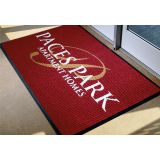 Waterhog Inlay Logo Mats$227.00Waterhog Inlay Logo Mats put your logo into the proven Waterhog bi-level mat rather than on top of it. The inlay is the difference: the area that will carry the logo is cut out of the mat and the colors are hand-laid into the cut-out like a jigsaw, so
...
Waterhog Inlay Logo Mats put your logo into the proven Waterhog bi-level mat rather than on top of it....
Waterhog Inlay Logo Mats put your logo into the proven Waterhog bi-level mat rather than on top of it. The inlay is the difference: the area that will carry the logo is cut out of the mat and the colors are hand-laid into the cut-out like a jigsaw, so the logo becomes part of the surface and wears with it. It's the most precise of our Waterhog branding options, which is why it leads our indoor logo mats for a sharp, lasting brand at the door.
Under the logo, it's a full Waterhog. The bi-level surface scrapes dirt and moisture off shoes and traps them below shoe level so they don't track inside, and the raised water-dam border holds moisture on the mat — up to about 1.5 gallons per square yard — keeping it off your floors. Most of the dirt inside a building arrives on foot traffic, per ISSA, and that bi-level scrape-and-trap design is built to handle the load.
It's made to keep its look. Reinforced rubber nubs hold the pile up so it resists crushing under traffic, and the solution-dyed fabric resists fading, so both the mat and the inlaid logo stay sharp longer. It runs on a 68-mil SBR rubber backing in smooth or universal-cleated, with beveled edges for a safe floor-to-mat transition, and it's certified high-traction by the NFSI. The rubber backing also carries 20% post-consumer recycled content from car tires.
It's built for branding at commercial entrances — hotels, retail, restaurants, offices, schools and universities, and commercial buildings — and it's rated for indoor and outdoor use. There are 19 colors to work from, with a choice of a classic rubber border or a fashion fabric border, and it's made to order in sizes up to 6' x 20'. Because the nubs and solution-dyeing slow both crushing and fading, it holds appearance for years; replace it when the inlaid logo finally dulls or the surface packs down in the main traffic path.
Surface Solution-dyed fabric, 24 oz/yd², needle-punched (bi-level) Logo method Inlay — colors cut in and hand-laid into the surface Overall thickness 3/8" (0.375") Backing SBR rubber, 68-mil, smooth or universal cleated Border Classic rubber or fashion fabric Colors 19 (no PMS matching) Minimum lettering Text 3" tall; lines and spacing 3/8" (no gradients, tints, or screens) Water retention Up to 1.5 gal/yd² (water-dam border) Traction NFSI Certified high-traction Recycled content Backing contains 20% post-consumer recycled rubber Sizes 2'×3' to 6'×20'; custom within 3', 4', and 6' widths Use Indoor and outdoor commercial entrances Warranty 1-year limited (Mats Inc.) Frequently Asked Questions
How is the logo made, and will it wear off?
Answered by Jinna Hopson, Vice President of Marketing
It's an inlay, not a print. The logo area is cut out of the mat and the colored sections are hand-laid into the cut-out like a jigsaw, so the logo is built into the surface rather than coated on top — there's no print layer to scuff away. The fabric is solution-dyed, which means color runs through the fiber and resists fading. Between the inlay construction and the solution-dyeing, the logo holds up about as well as the mat itself does, which is the point of choosing this one for branding.
What colors and border options are available?
Answered by Jinna Hopson, Vice President of Marketing
There are 19 colors to build the logo and field from, plus a choice of border: a classic rubber border for a clean, utilitarian edge, or a fashion fabric border when you want the surround to feel more finished. Because the inlay is hand-laid in distinct color sections, it suits bold, well-defined logos and lettering — text at least 3 inches tall, lines at least 3/8 inch — rather than fine gradients or tiny detail. Send us your artwork and brand colors and we'll lay out how it translates into the inlay and confirm the color match before production.
How well does it handle dirt and water?
Answered by Dustin Thompson, Owner & CEO
This is where the Waterhog construction earns its name. The bi-level surface scrapes dirt and moisture off shoes and drops it below shoe level, so it's held in the mat instead of tracking across your floors, and the raised water-dam border keeps moisture on the mat — up to roughly 1.5 gallons of water per square yard. That makes it a strong performer at a busy or wet entrance, not just a branded mat. Lifting it periodically so the floor underneath dries keeps it working at its best.
Can it go outside, and is it slip-safe?
Answered by Dustin Thompson, Owner & CEO
Yes on both. It's rated for indoor and outdoor commercial entrances, and the solution-dyed fabric resists fading outdoors. On safety, it has beveled edges that give a safe transition from floor to mat instead of a trip lip, and it's certified high-traction by the NFSI, so it holds grip as people come through. The 68-mil SBR rubber backing — smooth or universal-cleated — keeps it planted; choose cleated for hard floors where you want extra grip underneath.
By Jinna Hopson, Vice President of Marketing, Mats Inc.
↑
Waterhog Inlay Logo Mats put your logo into the proven Waterhog bi-level mat rather than on top of it. The inlay is the difference: the area that will carry the logo is cut out of the mat and the colors are hand-laid into the cut-out like a jigsaw, so the logo becomes part of the surface and wears with it. It's the most precise of our Waterhog branding options, which is why it leads our indoor logo mats for a sharp, lasting brand at the door.
Under the logo, it's a full Waterhog. The bi-level surface scrapes dirt and moisture off shoes and traps them below shoe level so they don't track inside, and the raised water-dam border holds moisture on the mat — up to about 1.5 gallons per square yard — keeping it off your floors. Most of the dirt inside a building arrives on foot traffic, per ISSA, and that bi-level scrape-and-trap design is built to handle the load.
It's made to keep its look. Reinforced rubber nubs hold the pile up so it resists crushing under traffic, and the solution-dyed fabric resists fading, so both the mat and the inlaid logo stay sharp longer. It runs on a 68-mil SBR rubber backing in smooth or universal-cleated, with beveled edges for a safe floor-to-mat transition, and it's certified high-traction by the NFSI. The rubber backing also carries 20% post-consumer recycled content from car tires.
It's built for branding at commercial entrances — hotels, retail, restaurants, offices, schools and universities, and commercial buildings — and it's rated for indoor and outdoor use. There are 19 colors to work from, with a choice of a classic rubber border or a fashion fabric border, and it's made to order in sizes up to 6' x 20'. Because the nubs and solution-dyeing slow both crushing and fading, it holds appearance for years; replace it when the inlaid logo finally dulls or the surface packs down in the main traffic path.
Surface Solution-dyed fabric, 24 oz/yd², needle-punched (bi-level) Logo method Inlay — colors cut in and hand-laid into the surface Overall thickness 3/8" (0.375") Backing SBR rubber, 68-mil, smooth or universal cleated Border Classic rubber or fashion fabric Colors 19 (no PMS matching) Minimum lettering Text 3" tall; lines and spacing 3/8" (no gradients, tints, or screens) Water retention Up to 1.5 gal/yd² (water-dam border) Traction NFSI Certified high-traction Recycled content Backing contains 20% post-consumer recycled rubber Sizes 2'×3' to 6'×20'; custom within 3', 4', and 6' widths Use Indoor and outdoor commercial entrances Warranty 1-year limited (Mats Inc.) Frequently Asked Questions
How is the logo made, and will it wear off?
Answered by Jinna Hopson, Vice President of Marketing
It's an inlay, not a print. The logo area is cut out of the mat and the colored sections are hand-laid into the cut-out like a jigsaw, so the logo is built into the surface rather than coated on top — there's no print layer to scuff away. The fabric is solution-dyed, which means color runs through the fiber and resists fading. Between the inlay construction and the solution-dyeing, the logo holds up about as well as the mat itself does, which is the point of choosing this one for branding.
What colors and border options are available?
Answered by Jinna Hopson, Vice President of Marketing
There are 19 colors to build the logo and field from, plus a choice of border: a classic rubber border for a clean, utilitarian edge, or a fashion fabric border when you want the surround to feel more finished. Because the inlay is hand-laid in distinct color sections, it suits bold, well-defined logos and lettering — text at least 3 inches tall, lines at least 3/8 inch — rather than fine gradients or tiny detail. Send us your artwork and brand colors and we'll lay out how it translates into the inlay and confirm the color match before production.
How well does it handle dirt and water?
Answered by Dustin Thompson, Owner & CEO
This is where the Waterhog construction earns its name. The bi-level surface scrapes dirt and moisture off shoes and drops it below shoe level, so it's held in the mat instead of tracking across your floors, and the raised water-dam border keeps moisture on the mat — up to roughly 1.5 gallons of water per square yard. That makes it a strong performer at a busy or wet entrance, not just a branded mat. Lifting it periodically so the floor underneath dries keeps it working at its best.
Can it go outside, and is it slip-safe?
Answered by Dustin Thompson, Owner & CEO
Yes on both. It's rated for indoor and outdoor commercial entrances, and the solution-dyed fabric resists fading outdoors. On safety, it has beveled edges that give a safe transition from floor to mat instead of a trip lip, and it's certified high-traction by the NFSI, so it holds grip as people come through. The 68-mil SBR rubber backing — smooth or universal-cleated — keeps it planted; choose cleated for hard floors where you want extra grip underneath.
By Jinna Hopson, Vice President of Marketing, Mats Inc.
↑
View Details
View Details
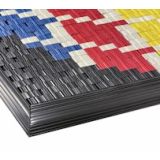 Vinyl Link Mat
Starting at $209.00
A Spaghetti Mat is an open, coiled-vinyl scraper — the looped surface looks like a tangle of spaghetti, and that tangle is what pulls mud and grit off shoes at the door. It is a light-traffic outdoor scraper that drains and dries fast, made to keep debris outside the...
A Spaghetti Mat is an open, coiled-vinyl scraper — the looped surface looks like a tangle of spaghetti, and...
A Spaghetti Mat is an open, coiled-vinyl scraper — the looped surface looks like a tangle of spaghetti, and that tangle is what pulls mud and grit off shoes at the door. It is a light-traffic outdoor scraper that drains and dries fast, made to keep debris outside the building instead of tracked across the floor inside.
What a Spaghetti Mat Does Before the Dirt Gets Inside
An outdoor entrance is where most of a building's dirt arrives. A scraper mat's job is to take that dirt off shoes before it crosses the threshold — and that matters, because ISSA field data shows about twelve times more dirt enters a building during wet weather. The coiled loops scrape from every direction and let the loosened grit and water fall through to the surface below, so it stays off the floor inside.
Why Coiled Vinyl, and Why This One
The mat is built from looped PVC — vinyl coiled into an open, springy surface about three-eighths of an inch thick. The loops run in no single direction, so they scrape a shoe no matter which way someone steps. The vinyl resists mildew and fading, and the open structure dries quickly instead of staying soggy after rain.
It comes two ways. A backed version has a foam backing that helps it sit still on a hard floor; an unbacked version skips the backing so water runs straight through, which suits a recessed well or any spot where drainage matters. Both are slip-resistant, and either can be finished with an applied vinyl edge.
Where It Belongs, and Where It Doesn't
A Spaghetti Mat fits lighter-traffic entrances — office buildings, small retail stores, banks, post offices, churches, and motels — and it is at its best outdoors, where draining and scraping count more than a finished look. It works in a surface spot or dropped into a recessed well, and it sits in our range of exterior entrance mats for the door that needs a workhorse scraper.
What it is not is a heavy-traffic mat or a drying mat. It is rated for light to medium use, so a high-volume entrance will wear it faster than it should — step up to a heavier scraper there. And it scrapes far better than it wipes, so it will not dry wet shoes on its own. Pair it with an absorbent mat inside for that.
Three Things to Check Before You Spec It
First, be honest about the traffic. The Spaghetti Mat is a light-to-medium-traffic scraper, and that is where it earns its keep. At a busy main entrance with constant footfall, a heavier-built scraper will hold up longer, so save this one for secondary doors, service entries, and lower-volume buildings.
Second, choose backed or unbacked, and size it. Pick the backed version to keep the mat planted on a hard floor, or the unbacked version where water needs to drain straight through, such as a recessed well. Standard sizes are three by five and four by six feet, with rolls up to four feet wide cut to length.
Third, plan what pairs with it. Because it scrapes but does not absorb, set an absorbent mat just inside the door so the Spaghetti Mat knocks off the mud and water outside and the second mat dries what is left. That two-stage setup is what keeps the floor inside clean and dry.
Why Mats Inc.
We have specified entrance matting since 1964, and the right scraper depends on the door it guards. We will help you weigh backed against unbacked, match the size to the opening, and decide whether a light-traffic scraper is the right call or the entrance needs something heavier. Tell us the traffic and the setting, and we will spec it to fit.
Spaghetti Mat — Specifications Construction Looped PVC (vinyl) scraper surface Thickness 3/8" Pattern Non-directional loop (scrapes from any direction) Backing Backed (foam) or unbacked (open, for drainage) Colors Backed — brown, gray, black; Unbacked — brown, gray Weight Backed ~0.69 lb/sq ft; unbacked ~0.53 lb/sq ft Standard sizes 3'×5', 4'×6' Roll sizes 3'×20', 4'×20' Custom Cut to size up to 4' wide (specify edged sides) Edging Optional applied vinyl edge Properties Slip-resistant; resists mildew and fading; fast drying Use Light to medium traffic; indoor or outdoor Warranty 1-year limited (Mats Inc.) Frequently Asked Questions
What is a Spaghetti Mat made of?
Answered by Dustin Thompson, Owner & CEO
It is built from looped PVC — vinyl coiled into an open, springy surface about three-eighths of an inch thick. The loops run in no single direction, so the mat scrapes a shoe whichever way someone steps onto it. It comes in a backed version, with a foam backing that helps it stay put on a hard floor, and an unbacked version that lets water run straight through. The vinyl resists mildew and fading, so it holds up to weather outdoors.
How much traffic can it handle, and how long will it last?
Answered by Dustin Thompson, Owner & CEO
It is a light-to-medium-traffic scraper, so it is happiest at secondary doors, smaller retail spaces, offices, and similar buildings rather than a high-volume main entrance. The backed version weighs about 0.69 pounds per square foot and the unbacked about 0.53, enough to stay in place without being a chore to lift and clean. Because the vinyl resists mildew and fading, it keeps its look outdoors. In a busier doorway, plan to step up to a heavier scraper that will last longer under constant footfall.
Does it drain, and should I get the backed or unbacked version?
Answered by Dustin Thompson, Owner & CEO
Both scrape well; the difference is what happens to the water. The unbacked version is open underneath, so water and grit fall straight through — that is the one for a recessed well or any spot where drainage matters. The backed version has a foam backing that keeps it planted on a hard, flat floor where you do not want it sliding. If the mat is going outdoors where rain needs somewhere to go, unbacked is usually the call; on a dry interior floor, backed.
What colors does it come in, and will it look right out front?
Answered by Jinna Hopson, Vice President of Marketing
It comes in brown, gray, and black in the backed version, and brown or gray unbacked. The look is honest and utilitarian — a practical scraper rather than a decorative mat — so it suits service entries, side doors, and lower-key building fronts. For a polished main entrance where the mat is part of the first impression, a more finished entrance mat usually fits the look better, with the Spaghetti Mat doing the rough work elsewhere.
Can I get it in a custom size?
Answered by Jinna Hopson, Vice President of Marketing
Yes, within its width. Standard mats come in three-by-five and four-by-six feet, and it is also sold in rolls up to four feet wide that we cut to the length you need — so a long or non-standard run is straightforward as long as it stays within that four-foot width. If you want the cut edges finished, just tell us which sides, and we will add an applied vinyl edge there.
Can you add our logo to it?
Answered by Jinna Hopson, Vice President of Marketing
Not this mat — the Spaghetti Mat is a plain functional scraper, with no logo or custom-color option. Its job is taking dirt and water off shoes, not carrying a brand. If you want your logo at the door, that belongs on a logo construction made for it, which we can point you to. Many buyers use both: a logo mat where people see it, and a scraper like this one where the real cleaning happens.
By Dustin Thompson, Owner & CEO, Mats Inc.
↑
A Spaghetti Mat is an open, coiled-vinyl scraper — the looped surface looks like a tangle of spaghetti, and that tangle is what pulls mud and grit off shoes at the door. It is a light-traffic outdoor scraper that drains and dries fast, made to keep debris outside the building instead of tracked across the floor inside.
What a Spaghetti Mat Does Before the Dirt Gets Inside
An outdoor entrance is where most of a building's dirt arrives. A scraper mat's job is to take that dirt off shoes before it crosses the threshold — and that matters, because ISSA field data shows about twelve times more dirt enters a building during wet weather. The coiled loops scrape from every direction and let the loosened grit and water fall through to the surface below, so it stays off the floor inside.
Why Coiled Vinyl, and Why This One
The mat is built from looped PVC — vinyl coiled into an open, springy surface about three-eighths of an inch thick. The loops run in no single direction, so they scrape a shoe no matter which way someone steps. The vinyl resists mildew and fading, and the open structure dries quickly instead of staying soggy after rain.
It comes two ways. A backed version has a foam backing that helps it sit still on a hard floor; an unbacked version skips the backing so water runs straight through, which suits a recessed well or any spot where drainage matters. Both are slip-resistant, and either can be finished with an applied vinyl edge.
Where It Belongs, and Where It Doesn't
A Spaghetti Mat fits lighter-traffic entrances — office buildings, small retail stores, banks, post offices, churches, and motels — and it is at its best outdoors, where draining and scraping count more than a finished look. It works in a surface spot or dropped into a recessed well, and it sits in our range of exterior entrance mats for the door that needs a workhorse scraper.
What it is not is a heavy-traffic mat or a drying mat. It is rated for light to medium use, so a high-volume entrance will wear it faster than it should — step up to a heavier scraper there. And it scrapes far better than it wipes, so it will not dry wet shoes on its own. Pair it with an absorbent mat inside for that.
Three Things to Check Before You Spec It
First, be honest about the traffic. The Spaghetti Mat is a light-to-medium-traffic scraper, and that is where it earns its keep. At a busy main entrance with constant footfall, a heavier-built scraper will hold up longer, so save this one for secondary doors, service entries, and lower-volume buildings.
Second, choose backed or unbacked, and size it. Pick the backed version to keep the mat planted on a hard floor, or the unbacked version where water needs to drain straight through, such as a recessed well. Standard sizes are three by five and four by six feet, with rolls up to four feet wide cut to length.
Third, plan what pairs with it. Because it scrapes but does not absorb, set an absorbent mat just inside the door so the Spaghetti Mat knocks off the mud and water outside and the second mat dries what is left. That two-stage setup is what keeps the floor inside clean and dry.
Why Mats Inc.
We have specified entrance matting since 1964, and the right scraper depends on the door it guards. We will help you weigh backed against unbacked, match the size to the opening, and decide whether a light-traffic scraper is the right call or the entrance needs something heavier. Tell us the traffic and the setting, and we will spec it to fit.
Spaghetti Mat — Specifications Construction Looped PVC (vinyl) scraper surface Thickness 3/8" Pattern Non-directional loop (scrapes from any direction) Backing Backed (foam) or unbacked (open, for drainage) Colors Backed — brown, gray, black; Unbacked — brown, gray Weight Backed ~0.69 lb/sq ft; unbacked ~0.53 lb/sq ft Standard sizes 3'×5', 4'×6' Roll sizes 3'×20', 4'×20' Custom Cut to size up to 4' wide (specify edged sides) Edging Optional applied vinyl edge Properties Slip-resistant; resists mildew and fading; fast drying Use Light to medium traffic; indoor or outdoor Warranty 1-year limited (Mats Inc.) Frequently Asked Questions
What is a Spaghetti Mat made of?
Answered by Dustin Thompson, Owner & CEO
It is built from looped PVC — vinyl coiled into an open, springy surface about three-eighths of an inch thick. The loops run in no single direction, so the mat scrapes a shoe whichever way someone steps onto it. It comes in a backed version, with a foam backing that helps it stay put on a hard floor, and an unbacked version that lets water run straight through. The vinyl resists mildew and fading, so it holds up to weather outdoors.
How much traffic can it handle, and how long will it last?
Answered by Dustin Thompson, Owner & CEO
It is a light-to-medium-traffic scraper, so it is happiest at secondary doors, smaller retail spaces, offices, and similar buildings rather than a high-volume main entrance. The backed version weighs about 0.69 pounds per square foot and the unbacked about 0.53, enough to stay in place without being a chore to lift and clean. Because the vinyl resists mildew and fading, it keeps its look outdoors. In a busier doorway, plan to step up to a heavier scraper that will last longer under constant footfall.
Does it drain, and should I get the backed or unbacked version?
Answered by Dustin Thompson, Owner & CEO
Both scrape well; the difference is what happens to the water. The unbacked version is open underneath, so water and grit fall straight through — that is the one for a recessed well or any spot where drainage matters. The backed version has a foam backing that keeps it planted on a hard, flat floor where you do not want it sliding. If the mat is going outdoors where rain needs somewhere to go, unbacked is usually the call; on a dry interior floor, backed.
What colors does it come in, and will it look right out front?
Answered by Jinna Hopson, Vice President of Marketing
It comes in brown, gray, and black in the backed version, and brown or gray unbacked. The look is honest and utilitarian — a practical scraper rather than a decorative mat — so it suits service entries, side doors, and lower-key building fronts. For a polished main entrance where the mat is part of the first impression, a more finished entrance mat usually fits the look better, with the Spaghetti Mat doing the rough work elsewhere.
Can I get it in a custom size?
Answered by Jinna Hopson, Vice President of Marketing
Yes, within its width. Standard mats come in three-by-five and four-by-six feet, and it is also sold in rolls up to four feet wide that we cut to the length you need — so a long or non-standard run is straightforward as long as it stays within that four-foot width. If you want the cut edges finished, just tell us which sides, and we will add an applied vinyl edge there.
Can you add our logo to it?
Answered by Jinna Hopson, Vice President of Marketing
Not this mat — the Spaghetti Mat is a plain functional scraper, with no logo or custom-color option. Its job is taking dirt and water off shoes, not carrying a brand. If you want your logo at the door, that belongs on a logo construction made for it, which we can point you to. Many buyers use both: a logo mat where people see it, and a scraper like this one where the real cleaning happens.
By Dustin Thompson, Owner & CEO, Mats Inc.
↑
View Details
View Details
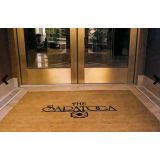 Custom Coco Mats$168.00Custom Coco Mats are made from real coconut fiber — coir — for entrances where a warm, natural-material look matters as much as keeping the floor clean. The coarse fiber scrapes grit and traps dirt at the door, while the organic texture gives a threshold a premium feel that
...
Custom Coco Mats are made from real coconut fiber — coir — for entrances where a warm, natural-material look...
Custom Coco Mats are made from real coconut fiber — coir — for entrances where a warm, natural-material look matters as much as keeping the floor clean. The coarse fiber scrapes grit and traps dirt at the door, while the organic texture gives a threshold a premium feel that synthetic mats don't replicate. They sit among our indoor logo mats as the natural-fiber option, built specifically for recessed entrance wells.
Coir earns its place at the door through the fiber itself. The coarse natural strands scrape soil off shoes and hold it down in the pile, away from the walking surface. Most of the dirt inside a building arrives on foot traffic, per ISSA, and a dense coir face is built to catch it.
The coir is bonded to a vinyl backing and supplied as sheet and roll goods, so each mat is cut to the exact opening rather than forced to a stock size. It's a semipermanent installation for recessed wells: set into the recess with a releasable adhesive and sized so it sits flush with the surrounding floor. Give us the well dimensions and we cut it to fit; if you're specifying a new well, we can work from the opening you're planning.
Coir also carries a real sustainability story: it's a natural, renewable fiber — a byproduct of the coconut harvest — which is part of why it gets specified for green-minded and design-forward projects. A recessed coir entrance system can contribute toward LEED when it's specified as a maintained walk-off system and documented for the credits a project is pursuing. Because the exact contribution depends on the LEED version and the credits in play, send us the points you're targeting and we'll confirm how this fits.
This is an indoor mat. Coir is a natural fiber, so it belongs at interior and covered entrances — lobbies, vestibule wells, hospitality and institutional entries, and design-forward or sustainability-minded spaces. It isn't built for open exterior or wet exposure, where natural fiber breaks down; a synthetic scraper is the right call there.
It's custom-cut to your well, with bold logo and border options worked into the coir. Vacuum and clean it on a regular schedule, and replace it when the fiber thins or wears in the main path.
Surface Natural coconut fiber (coir) Construction Coir bonded to a vinyl backing Format Sheet & roll goods, custom-cut to the well Installation Semipermanent; set into a recessed well with releasable adhesive, sized to recess depth to sit flush Logo Bold inlaid logo and border options Use Indoor and covered entrances only Sustainability Natural, renewable fiber; may contribute toward LEED when specified as a maintained walk-off system Maintenance Vacuum and clean on a regular schedule; replace when the fiber thins Warranty 1-year limited (Mats Inc.) Frequently Asked Questions
Can we put our logo on a coco mat?
Answered by Jinna Hopson, Vice President of Marketing
Yes, within what the fiber does well. Coir takes bold, clean branding — a company name, a simple logo, a border or color block — worked into the natural mat. What it can't do is the fine detail, gradients, or photographic artwork that a printed carpet mat handles, because the fiber is coarse by nature. If your logo is bold and reads at a glance, coir gives it a distinctive, organic look; if it's intricate, we'd point you to a printed mat instead. Send us the artwork and we'll tell you honestly how it will translate.
Why choose natural coir over a synthetic entrance mat?
Answered by Jinna Hopson, Vice President of Marketing
It's about the impression and the material story. Coir reads as warm and natural in a way a synthetic mat doesn't — it suits lobbies, hospitality entries, and spaces designed around natural materials, and it pairs with a genuine sustainability message because the fiber is natural and renewable. You're trading some of the all-weather toughness of a synthetic for a premium, organic look. For an indoor entrance where first impressions and values both matter, that's often the right trade.
Does it work in a recessed entrance well, and how is it installed?
Answered by Dustin Thompson, Owner & CEO
That's what it's built for. It comes as sheet and roll goods cut to your well, and it's sized to the recess depth so it sits flush in a standard recess. It's a semipermanent installation — set in with a releasable adhesive rather than loose-laid — so it stays put as a permanent part of the entrance. Give us the well dimensions and we'll cut it to fit; if you're specifying a new well, we can work from the opening size you're planning.
Can it help with LEED certification?
Answered by Dustin Thompson, Owner & CEO
It can contribute, and it's worth setting expectations precisely. Coir is a natural, renewable material, and a recessed coir mat installed as a maintained walk-off entrance system is the kind of entryway system LEED has historically recognized — typically when it runs at least 10 feet in the main direction of travel and is cleaned on a regular schedule. The exact credit and point value depend on which LEED version your project is using, so tell us the rating system and the credits you're targeting, and we'll confirm in writing how this product fits before you spec it.
By Dustin Thompson, Owner & CEO, Mats Inc.
↑
Custom Coco Mats are made from real coconut fiber — coir — for entrances where a warm, natural-material look matters as much as keeping the floor clean. The coarse fiber scrapes grit and traps dirt at the door, while the organic texture gives a threshold a premium feel that synthetic mats don't replicate. They sit among our indoor logo mats as the natural-fiber option, built specifically for recessed entrance wells.
Coir earns its place at the door through the fiber itself. The coarse natural strands scrape soil off shoes and hold it down in the pile, away from the walking surface. Most of the dirt inside a building arrives on foot traffic, per ISSA, and a dense coir face is built to catch it.
The coir is bonded to a vinyl backing and supplied as sheet and roll goods, so each mat is cut to the exact opening rather than forced to a stock size. It's a semipermanent installation for recessed wells: set into the recess with a releasable adhesive and sized so it sits flush with the surrounding floor. Give us the well dimensions and we cut it to fit; if you're specifying a new well, we can work from the opening you're planning.
Coir also carries a real sustainability story: it's a natural, renewable fiber — a byproduct of the coconut harvest — which is part of why it gets specified for green-minded and design-forward projects. A recessed coir entrance system can contribute toward LEED when it's specified as a maintained walk-off system and documented for the credits a project is pursuing. Because the exact contribution depends on the LEED version and the credits in play, send us the points you're targeting and we'll confirm how this fits.
This is an indoor mat. Coir is a natural fiber, so it belongs at interior and covered entrances — lobbies, vestibule wells, hospitality and institutional entries, and design-forward or sustainability-minded spaces. It isn't built for open exterior or wet exposure, where natural fiber breaks down; a synthetic scraper is the right call there.
It's custom-cut to your well, with bold logo and border options worked into the coir. Vacuum and clean it on a regular schedule, and replace it when the fiber thins or wears in the main path.
Surface Natural coconut fiber (coir) Construction Coir bonded to a vinyl backing Format Sheet & roll goods, custom-cut to the well Installation Semipermanent; set into a recessed well with releasable adhesive, sized to recess depth to sit flush Logo Bold inlaid logo and border options Use Indoor and covered entrances only Sustainability Natural, renewable fiber; may contribute toward LEED when specified as a maintained walk-off system Maintenance Vacuum and clean on a regular schedule; replace when the fiber thins Warranty 1-year limited (Mats Inc.) Frequently Asked Questions
Can we put our logo on a coco mat?
Answered by Jinna Hopson, Vice President of Marketing
Yes, within what the fiber does well. Coir takes bold, clean branding — a company name, a simple logo, a border or color block — worked into the natural mat. What it can't do is the fine detail, gradients, or photographic artwork that a printed carpet mat handles, because the fiber is coarse by nature. If your logo is bold and reads at a glance, coir gives it a distinctive, organic look; if it's intricate, we'd point you to a printed mat instead. Send us the artwork and we'll tell you honestly how it will translate.
Why choose natural coir over a synthetic entrance mat?
Answered by Jinna Hopson, Vice President of Marketing
It's about the impression and the material story. Coir reads as warm and natural in a way a synthetic mat doesn't — it suits lobbies, hospitality entries, and spaces designed around natural materials, and it pairs with a genuine sustainability message because the fiber is natural and renewable. You're trading some of the all-weather toughness of a synthetic for a premium, organic look. For an indoor entrance where first impressions and values both matter, that's often the right trade.
Does it work in a recessed entrance well, and how is it installed?
Answered by Dustin Thompson, Owner & CEO
That's what it's built for. It comes as sheet and roll goods cut to your well, and it's sized to the recess depth so it sits flush in a standard recess. It's a semipermanent installation — set in with a releasable adhesive rather than loose-laid — so it stays put as a permanent part of the entrance. Give us the well dimensions and we'll cut it to fit; if you're specifying a new well, we can work from the opening size you're planning.
Can it help with LEED certification?
Answered by Dustin Thompson, Owner & CEO
It can contribute, and it's worth setting expectations precisely. Coir is a natural, renewable material, and a recessed coir mat installed as a maintained walk-off entrance system is the kind of entryway system LEED has historically recognized — typically when it runs at least 10 feet in the main direction of travel and is cleaned on a regular schedule. The exact credit and point value depend on which LEED version your project is using, so tell us the rating system and the credits you're targeting, and we'll confirm in writing how this product fits before you spec it.
By Dustin Thompson, Owner & CEO, Mats Inc.
↑
View Details
View Details
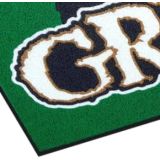 Spaghetti Logo Mats$148.00Spaghetti Logo Mats carry a logo on a distinctive open coiled-vinyl surface that scrapes grit off shoes and lets water fall below the walking line instead of pooling on top. The look is the draw — an airy, textured coil unlike a flat printed mat — but it's a
...
Spaghetti Logo Mats carry a logo on a distinctive open coiled-vinyl surface that scrapes grit off shoes and lets...
Spaghetti Logo Mats carry a logo on a distinctive open coiled-vinyl surface that scrapes grit off shoes and lets water fall below the walking line instead of pooling on top. The look is the draw — an airy, textured coil unlike a flat printed mat — but it's a working scraper underneath, which is why these sit among our custom logo mats as the promotional, presentation-forward option for light-traffic doors.
The coiled vinyl does the work. Its open loops scrape dirt and channel water down off the surface, and because the vinyl is non-absorbent it dries fast and resists mildew and fading rather than holding moisture. Most of the dirt inside a building arrives on foot traffic, per ISSA, and an open scraper face is built to catch it and keep it off the walking line.
It comes in two versions. The backed mat has a vinyl backing that holds dirt and water on the mat to protect the floor underneath, while the unbacked mat lets water flow straight through, which is the one to use for wet or exterior spots.
The logo is inlaid into the coil rather than printed on top, so it's part of the mat rather than a coating that scuffs off, available across 20 colors. The open-coil texture gives the entrance a different look from a standard scraper or carpet mat — part of why it works as a promotional piece. Beyond rectangles, it can be built in custom shapes — round, half-moon, even an elevator-floor fit — to match an unusual threshold or make a statement at the door.
One thing to size correctly: this is a light-traffic mat, not a heavy-industrial scraper. It's the right call for storefronts, offices, showrooms, hospitality entries, and promotional placements indoors or out. For the busiest high-volume or industrial doors, a heavier scraper holds up better.
Plan to replace it when the coil packs down along the main path or the inlaid logo starts to show wear — at a light-traffic door, that's a long stretch of service.
Material Vinyl coiled-web (PVC loop), air-entangled Logo method Inlaid Thickness 7/16" (±1/32") Weight 118 oz/yd² unbacked; 130 oz/yd² backed Backing Vinyl (PVC) backed, or unbacked Colors 20 Traffic rating Light traffic Standard sizes 2'×3', 3'×4', 3'×5', 3'×10', 4'×6', 4'×8', 4'×10', 4'×12', 4'×16', 4'×20' Custom Widths to 8' with one seam; shapes (round, half-moon, elevator) Use Indoor or outdoor (backed protects floors; unbacked for wet areas) Care Non-absorbent; easy to clean Warranty 1-year limited (Mats Inc.) Frequently Asked Questions
Can you make it in a custom shape or match our logo colors?
Answered by Jinna Hopson, Vice President of Marketing
Yes on both. The logo is inlaid into the coil and built from a palette of 20 colors, so it carries your brand rather than a rough match. Beyond standard rectangles, the mat can be made in custom shapes — round, half-moon, or an elevator-floor fit — and in custom widths to about 8 feet with a single seam. Send your artwork and the shape and dimensions you need, and we'll confirm what's buildable.
Is this a good choice for promoting our brand at the entrance?
Answered by Jinna Hopson, Vice President of Marketing
That's exactly where it fits. The open-coil texture stands out from a flat mat, so it draws the eye to the logo while still doing real scraping work — a promotional piece that earns its spot rather than just sitting there. It suits storefronts, showrooms, hospitality entries, and event or seasonal placements where you want the brand front and center. If the door is a hard-use industrial entrance, we'd steer you to a heavier mat and keep this for the presentation-forward spots.
How much foot traffic can it handle?
Answered by Dustin Thompson, Owner & CEO
It's rated for light traffic, and the honest answer is to match it to the door. At a storefront, office, or showroom entrance it holds up well and keeps its look. At the busiest high-volume or industrial doors, the coil packs down faster than a heavy-duty scraper would, so that's not the place for it. If you tell us the daily volume at the entrance, we'll tell you straight whether this is the right mat or whether a heavier construction makes more sense.
Can it go outside or in wet areas?
Answered by Dustin Thompson, Owner & CEO
Yes — it's built for it. The vinyl is non-absorbent, dries quickly, and resists mildew and fading, so it handles outdoor and wet placements that would degrade a carpet-faced mat. For genuinely wet spots — pool decks, covered exterior entries, washdown areas — the unbacked version is the one to use, since it lets water drain straight through instead of holding it on a backing. For drier indoor entries, the backed version keeps dirt and water on the mat.
By Jinna Hopson, Vice President of Marketing, Mats Inc.
↑
Spaghetti Logo Mats carry a logo on a distinctive open coiled-vinyl surface that scrapes grit off shoes and lets water fall below the walking line instead of pooling on top. The look is the draw — an airy, textured coil unlike a flat printed mat — but it's a working scraper underneath, which is why these sit among our custom logo mats as the promotional, presentation-forward option for light-traffic doors.
The coiled vinyl does the work. Its open loops scrape dirt and channel water down off the surface, and because the vinyl is non-absorbent it dries fast and resists mildew and fading rather than holding moisture. Most of the dirt inside a building arrives on foot traffic, per ISSA, and an open scraper face is built to catch it and keep it off the walking line.
It comes in two versions. The backed mat has a vinyl backing that holds dirt and water on the mat to protect the floor underneath, while the unbacked mat lets water flow straight through, which is the one to use for wet or exterior spots.
The logo is inlaid into the coil rather than printed on top, so it's part of the mat rather than a coating that scuffs off, available across 20 colors. The open-coil texture gives the entrance a different look from a standard scraper or carpet mat — part of why it works as a promotional piece. Beyond rectangles, it can be built in custom shapes — round, half-moon, even an elevator-floor fit — to match an unusual threshold or make a statement at the door.
One thing to size correctly: this is a light-traffic mat, not a heavy-industrial scraper. It's the right call for storefronts, offices, showrooms, hospitality entries, and promotional placements indoors or out. For the busiest high-volume or industrial doors, a heavier scraper holds up better.
Plan to replace it when the coil packs down along the main path or the inlaid logo starts to show wear — at a light-traffic door, that's a long stretch of service.
Material Vinyl coiled-web (PVC loop), air-entangled Logo method Inlaid Thickness 7/16" (±1/32") Weight 118 oz/yd² unbacked; 130 oz/yd² backed Backing Vinyl (PVC) backed, or unbacked Colors 20 Traffic rating Light traffic Standard sizes 2'×3', 3'×4', 3'×5', 3'×10', 4'×6', 4'×8', 4'×10', 4'×12', 4'×16', 4'×20' Custom Widths to 8' with one seam; shapes (round, half-moon, elevator) Use Indoor or outdoor (backed protects floors; unbacked for wet areas) Care Non-absorbent; easy to clean Warranty 1-year limited (Mats Inc.) Frequently Asked Questions
Can you make it in a custom shape or match our logo colors?
Answered by Jinna Hopson, Vice President of Marketing
Yes on both. The logo is inlaid into the coil and built from a palette of 20 colors, so it carries your brand rather than a rough match. Beyond standard rectangles, the mat can be made in custom shapes — round, half-moon, or an elevator-floor fit — and in custom widths to about 8 feet with a single seam. Send your artwork and the shape and dimensions you need, and we'll confirm what's buildable.
Is this a good choice for promoting our brand at the entrance?
Answered by Jinna Hopson, Vice President of Marketing
That's exactly where it fits. The open-coil texture stands out from a flat mat, so it draws the eye to the logo while still doing real scraping work — a promotional piece that earns its spot rather than just sitting there. It suits storefronts, showrooms, hospitality entries, and event or seasonal placements where you want the brand front and center. If the door is a hard-use industrial entrance, we'd steer you to a heavier mat and keep this for the presentation-forward spots.
How much foot traffic can it handle?
Answered by Dustin Thompson, Owner & CEO
It's rated for light traffic, and the honest answer is to match it to the door. At a storefront, office, or showroom entrance it holds up well and keeps its look. At the busiest high-volume or industrial doors, the coil packs down faster than a heavy-duty scraper would, so that's not the place for it. If you tell us the daily volume at the entrance, we'll tell you straight whether this is the right mat or whether a heavier construction makes more sense.
Can it go outside or in wet areas?
Answered by Dustin Thompson, Owner & CEO
Yes — it's built for it. The vinyl is non-absorbent, dries quickly, and resists mildew and fading, so it handles outdoor and wet placements that would degrade a carpet-faced mat. For genuinely wet spots — pool decks, covered exterior entries, washdown areas — the unbacked version is the one to use, since it lets water drain straight through instead of holding it on a backing. For drier indoor entries, the backed version keeps dirt and water on the mat.
By Jinna Hopson, Vice President of Marketing, Mats Inc.
↑
View Details
View Details
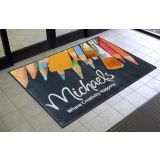 Premium Carpet Logo Mats$99.00Premium Carpet Logo Mats print your logo right onto a dense carpet surface, in high definition so it looks sharp and exact. Fine details, color blends, shading, and even photo-quality images come through — not just a flat one-color shape. That print quality is why these lead our indoor
...
Premium Carpet Logo Mats print your logo right onto a dense carpet surface, in high definition so it looks...
Premium Carpet Logo Mats print your logo right onto a dense carpet surface, in high definition so it looks sharp and exact. Fine details, color blends, shading, and even photo-quality images come through — not just a flat one-color shape. That print quality is why these lead our indoor logo mats for lobbies and entrances where the brand has to look right.
The surface is a 32-ounce cut-pile carpet made from PET — polyester spun fully from recycled plastic. The logo is digitally printed at high resolution and matched to a palette of 150 standard colors, which covers most brand palettes cleanly.
The thick pile also does the real work of an entrance mat, pulling dirt and water off shoes. Most dirt inside a building comes in on people's feet, per ISSA, and a dense carpet face is built to hold it.
PET is why the look lasts. The yarn resists fading and stains and keeps its color through repeated washing, earning the top grade in stain-resistance testing. The mat is also NFSI-certified for high traction, so it stays safe underfoot.
It's 3/8 inch thick on a rubber backing — SBR or nitrile, in weights from standard up to a heavy, high-hold option matched to how busy the door is. With a nitrile backing, the mat is commercially launderable, so it can run on a laundry program and still look sharp.
This is an indoor mat, built for entryways, lobbies, reception desks, and corporate, retail, and hospitality spaces where the logo is part of the first impression. Don't use it outside or in wet spots — a rubber or vinyl scraper is the right call there.
It comes in standard sizes from 2' x 3' up to 6' x 12', with special sizes available for a specific entrance. Care is simple: launder it on a regular schedule so dirt and oils don't build up in the pile, and the printed logo stays sharp for years.
Surface PET (polyester) cut pile, 32 oz/yd², 100% recycled content Print HD digital, 76 dpi (photographic quality) Colors 150 standard Overall thickness 3/8" (0.375") Backing SBR (48-mil) or nitrile (52 / 65 / 90 / 100-mil high-hold) Traction NFSI Certified high-traction Stain resistance AATCC Grade 10 (no staining) Standard sizes 2'×3', 3'×4', 3'×5', 3'×10', 4'×6', 4'×8', 5'×8', 5'×10', 6'×10', 6'×12' (special sizes available) Minimum lettering 1" serif / 1/2" sans serif; lines 1/8" (1/4" for white or light) Use Indoor only Care Fade/stain resistant; commercially launderable with nitrile backing Warranty 1-year limited (Mats Inc.) Frequently Asked Questions
How sharp can the printed logo be, and what colors can you match?
Answered by Jinna Hopson, Vice President of Marketing
Very sharp. The logo is digitally printed at high resolution, so fine details, shading, color blends, and even 3D-style images reproduce cleanly rather than as flat one-color shapes. Color is matched from a palette of 150 standard options, which covers most brand palettes. Send us your artwork and the colors you're targeting, and we'll provide a proof for approval before anything is made.
What artwork do you need, and are there design limits?
Answered by Jinna Hopson, Vice President of Marketing
Send print-ready vector files or high-resolution images. A few limits are worth planning around: keep text at least 1 inch tall for serif fonts and half an inch for sans serif, and lines at least an eighth of an inch thick, a bit more for white or light colors. It's also best to avoid light background colors, which show dirt, and screens, tints, or transparencies, which don't convert cleanly to the color palette.
Can it be laundered, and how do I keep it looking sharp?
Answered by Dustin Thompson, Owner & CEO
Yes — when it's backed with nitrile rubber, it's made for commercial laundering. The PET yarn resists fading and staining and holds its color through repeated washing, so a regular laundry schedule keeps the pile from loading up with dirt and oils. Launder it on a set cadence rather than waiting for it to look dirty, and the printed logo stays crisp for years.
Where should it go, and which backing should I choose?
Answered by Dustin Thompson, Owner & CEO
This is an indoor mat — entryways, lobbies, reception desks, and similar commercial spaces. Keep it out of direct outdoor exposure and wet areas, where a rubber or vinyl scraper belongs instead. For backing, choose SBR for a standard install, or step up through the nitrile weights to a heavier, high-hold backing for busier doors or if you're putting it on a laundry program. It's NFSI-certified for high traction either way.
By Jinna Hopson, Vice President of Marketing, Mats Inc.
↑
Premium Carpet Logo Mats print your logo right onto a dense carpet surface, in high definition so it looks sharp and exact. Fine details, color blends, shading, and even photo-quality images come through — not just a flat one-color shape. That print quality is why these lead our indoor logo mats for lobbies and entrances where the brand has to look right.
The surface is a 32-ounce cut-pile carpet made from PET — polyester spun fully from recycled plastic. The logo is digitally printed at high resolution and matched to a palette of 150 standard colors, which covers most brand palettes cleanly.
The thick pile also does the real work of an entrance mat, pulling dirt and water off shoes. Most dirt inside a building comes in on people's feet, per ISSA, and a dense carpet face is built to hold it.
PET is why the look lasts. The yarn resists fading and stains and keeps its color through repeated washing, earning the top grade in stain-resistance testing. The mat is also NFSI-certified for high traction, so it stays safe underfoot.
It's 3/8 inch thick on a rubber backing — SBR or nitrile, in weights from standard up to a heavy, high-hold option matched to how busy the door is. With a nitrile backing, the mat is commercially launderable, so it can run on a laundry program and still look sharp.
This is an indoor mat, built for entryways, lobbies, reception desks, and corporate, retail, and hospitality spaces where the logo is part of the first impression. Don't use it outside or in wet spots — a rubber or vinyl scraper is the right call there.
It comes in standard sizes from 2' x 3' up to 6' x 12', with special sizes available for a specific entrance. Care is simple: launder it on a regular schedule so dirt and oils don't build up in the pile, and the printed logo stays sharp for years.
Surface PET (polyester) cut pile, 32 oz/yd², 100% recycled content Print HD digital, 76 dpi (photographic quality) Colors 150 standard Overall thickness 3/8" (0.375") Backing SBR (48-mil) or nitrile (52 / 65 / 90 / 100-mil high-hold) Traction NFSI Certified high-traction Stain resistance AATCC Grade 10 (no staining) Standard sizes 2'×3', 3'×4', 3'×5', 3'×10', 4'×6', 4'×8', 5'×8', 5'×10', 6'×10', 6'×12' (special sizes available) Minimum lettering 1" serif / 1/2" sans serif; lines 1/8" (1/4" for white or light) Use Indoor only Care Fade/stain resistant; commercially launderable with nitrile backing Warranty 1-year limited (Mats Inc.) Frequently Asked Questions
How sharp can the printed logo be, and what colors can you match?
Answered by Jinna Hopson, Vice President of Marketing
Very sharp. The logo is digitally printed at high resolution, so fine details, shading, color blends, and even 3D-style images reproduce cleanly rather than as flat one-color shapes. Color is matched from a palette of 150 standard options, which covers most brand palettes. Send us your artwork and the colors you're targeting, and we'll provide a proof for approval before anything is made.
What artwork do you need, and are there design limits?
Answered by Jinna Hopson, Vice President of Marketing
Send print-ready vector files or high-resolution images. A few limits are worth planning around: keep text at least 1 inch tall for serif fonts and half an inch for sans serif, and lines at least an eighth of an inch thick, a bit more for white or light colors. It's also best to avoid light background colors, which show dirt, and screens, tints, or transparencies, which don't convert cleanly to the color palette.
Can it be laundered, and how do I keep it looking sharp?
Answered by Dustin Thompson, Owner & CEO
Yes — when it's backed with nitrile rubber, it's made for commercial laundering. The PET yarn resists fading and staining and holds its color through repeated washing, so a regular laundry schedule keeps the pile from loading up with dirt and oils. Launder it on a set cadence rather than waiting for it to look dirty, and the printed logo stays crisp for years.
Where should it go, and which backing should I choose?
Answered by Dustin Thompson, Owner & CEO
This is an indoor mat — entryways, lobbies, reception desks, and similar commercial spaces. Keep it out of direct outdoor exposure and wet areas, where a rubber or vinyl scraper belongs instead. For backing, choose SBR for a standard install, or step up through the nitrile weights to a heavier, high-hold backing for busier doors or if you're putting it on a laundry program. It's NFSI-certified for high traction either way.
By Jinna Hopson, Vice President of Marketing, Mats Inc.
↑
View Details
View Details
 Waterhog Mat with Printed Logo$161.00A printed Waterhog logo mat does two jobs at once: it puts your name or logo at the door, and it does the real work of a Waterhog — scraping grit and holding water before either reaches your floor. That pairing is the whole point. A logo on a thin
...
A printed Waterhog logo mat does two jobs at once: it puts your name or logo at the door, and...
A printed Waterhog logo mat does two jobs at once: it puts your name or logo at the door, and it does the real work of a Waterhog — scraping grit and holding water before either reaches your floor. That pairing is the whole point. A logo on a thin promo mat wears off and curls; a logo printed into a genuine Waterhog entrance mat keeps working long after the first impression lands.
What a Printed Waterhog Logo Mat Does Before Grit Reaches Your Floor
Every entrance makes two impressions at once — what visitors see, and what their shoes leave behind. A printed Waterhog logo mat handles both. The bi-level surface scrapes dirt and moisture off shoes and drops it down between the raised nubs, below shoe level, so it stays in the mat instead of tracking across your lobby.
The raised water-dam border holds that moisture in — up to 1.5 gallons of water per square yard — so the floor behind it stays dry. Your logo sits on a surface that's actually doing the cleaning, not just decorating the doorway.
Why This Construction Holds Up Where a Promo Mat Won't
The surface is a 30 oz/yd² PET polyester fiber, needle-punched into the raised Waterhog nub pattern and bonded to a molded nitrile rubber backing. The reinforced rubber nubs are what keep the pile from crushing flat under traffic — the usual way a logo mat dies, with the print going patchy as the surface mats down. Here the nubs hold the pile up, so the image stays crisp and the mat keeps scraping.
The logo is built up through a color-layering print process rather than sitting on top as a coating, and the PET fiber is made largely from recycled plastic — up to 85% recycled content. The nitrile backing resists curling and cracking in heat or cold, which is what lets the same mat work at an indoor lobby or a covered outdoor entrance.
Where It Belongs — and What It Isn't
This is a commercial entrance mat first and a sign second. It earns its place at front doors, lobbies, reception areas, and front desks — anywhere in hotels, retail, restaurants, offices, schools, and healthcare where the first thing a visitor meets is the floor. Pick smooth backing for hard floors and cleated backing for carpet.
What it isn't is a canvas for fine detail. The print reproduces bold logos, lettering, and clean shapes — not photographic gradients, tiny text, or thin hairlines. Text should be at least 1.5 inches tall and lines at least a quarter-inch thick. Very light background colors are best avoided, since pale fields show everyday soil faster than darker or neutral tones.
Three Things to Check Before You Spec It
First, match the backing to the floor it's going on. Smooth backing grips hard surfaces like tile, stone, and sealed concrete; cleated backing is made to sit on carpet without creeping. Getting this wrong is how a mat slides or ripples underfoot.
Second, pressure-test your artwork before you commit to it. Bold logos and clear lettering reproduce beautifully; gradients, screens, and PMS-specific color matching don't. Build the design around at least 1.5-inch text and quarter-inch lines, and lean toward a darker background that hides soil between cleanings.
Third, size the mat to the entrance, not just the doorway. People need several steps on the surface to leave their dirt behind, so a mat that spans the actual walking path cleans far better than a small one tucked at the threshold. Measure the opening and the stride past it before you choose a size.
Why Mats Inc.
Mats Inc. has specified commercial entrance matting since 1964, and a logo mat is where performance and presentation have to land together — get one right and the other wrong, and the mat fails at the door. We help you spec both: the surface and backing for how the entrance is used, and the artwork so it actually reproduces on the mat. You'll see a proof before anything is produced, and the order is backed by our one-year limited warranty.
Waterhog Printed Logo Mat — Specifications Surface fiber PET polyester, 30 oz/yd², needle-punched Surface pattern Bi-level raised-nub (waffle) walk-off surface Recycled content Up to 85% recycled PET Backing Molded nitrile rubber — smooth (hard floors) or cleated (carpet) Backing thickness 65-mil body / 155-mil border Border options Classic rubber or fashion fabric (rubber border is commercially launderable) Water retention Up to 1.5 gallons per square yard Edges Beveled for a safe floor-to-mat transition Traction NFSI-certified high-traction Color options 56 standard colors Artwork minimums Text ≥ 1.5"; lines ≥ 1/4"; no PMS matching, gradients, or transparencies Placement Indoor and covered outdoor commercial entrances Warranty One-year limited (Mats Inc.) Frequently Asked Questions
How can a mat show a logo and still keep my floors clean?
Answered by Dustin Thompson, Owner & CEO
Because the logo is printed into a working Waterhog surface, not onto a flat promo mat. The bi-level pattern of raised nubs scrapes grit and moisture off shoes and traps it down below shoe level, while the water-dam border holds water on the mat — up to 1.5 gallons per square yard. So the printed surface is doing the same scraping-and-holding job as a plain Waterhog; the artwork just rides on top of it. Your logo greets people while the mat quietly keeps the lobby floor dry.
How long will the logo and the mat hold up under traffic?
Answered by Dustin Thompson, Owner & CEO
The thing that usually kills a logo mat is pile crush — the surface flattens under foot traffic and the print goes patchy. This construction fights that with reinforced rubber nubs that hold the pile upright, so the image stays crisp and the mat keeps working through heavy use. The nitrile backing resists curling and cracking in heat and cold, and a rubber-bordered mat can even be commercially laundered. Kept clean and sized right, it holds up for years, and Mats Inc. backs every order with a one-year limited warranty.
Can I use it both indoors and outdoors, and which backing do I pick?
Answered by Dustin Thompson, Owner & CEO
It works at indoor lobbies and covered outdoor entrances alike, because the PET fiber and nitrile backing handle moisture and temperature swings without breaking down. The backing is the choice to get right: smooth backing for hard floors like tile, stone, or sealed concrete, and cleated backing for carpet, where it grips instead of creeping. For a fully exposed outdoor spot that takes constant sun and standing water, talk to us first so we can match the mat to the conditions.
What can I have printed on the mat?
Answered by Jinna Hopson, Vice President of Marketing
Bold logos, lettering, and clean shapes reproduce really well. The print is built up in color layers, so it's made for crisp, well-defined artwork rather than photographic gradients or fine detail. Keep text at least 1.5 inches tall and lines at least a quarter-inch thick, and skip tints, screens, and transparencies. PMS color matching isn't available, but there's a wide standard palette to build from. Send us your artwork and we'll show you how it translates to the mat before anything is made.
What colors does it come in, and does the background matter?
Answered by Jinna Hopson, Vice President of Marketing
There are 56 standard colors to build the logo and background from, which is plenty to match most brand palettes. The one thing worth planning around is the background tone: very light or white fields look sharp on day one but show everyday soil faster than darker or neutral colors. For an entrance that gets real traffic, a mid-tone or darker background keeps the mat looking intentional longer between cleanings, while your logo still reads clearly on top.
What sizes can I get, and how do I pick the right one?
Answered by Jinna Hopson, Vice President of Marketing
It comes in a wide range of standard sizes, from a small 2-by-3 up through long runners and large lobby formats, so you can fit a single door or a wide entrance. The trick is to size it to the walking path, not just the doorway — people need several steps on the mat to leave their dirt behind, so a mat that's too short lets grit slip past. Measure the opening and the few steps beyond it, and we'll help you land on a size that both fits the space and shows the logo well.
By Jinna Hopson, Vice President of Marketing, Mats Inc.
↑
A printed Waterhog logo mat does two jobs at once: it puts your name or logo at the door, and it does the real work of a Waterhog — scraping grit and holding water before either reaches your floor. That pairing is the whole point. A logo on a thin promo mat wears off and curls; a logo printed into a genuine Waterhog entrance mat keeps working long after the first impression lands.
What a Printed Waterhog Logo Mat Does Before Grit Reaches Your Floor
Every entrance makes two impressions at once — what visitors see, and what their shoes leave behind. A printed Waterhog logo mat handles both. The bi-level surface scrapes dirt and moisture off shoes and drops it down between the raised nubs, below shoe level, so it stays in the mat instead of tracking across your lobby.
The raised water-dam border holds that moisture in — up to 1.5 gallons of water per square yard — so the floor behind it stays dry. Your logo sits on a surface that's actually doing the cleaning, not just decorating the doorway.
Why This Construction Holds Up Where a Promo Mat Won't
The surface is a 30 oz/yd² PET polyester fiber, needle-punched into the raised Waterhog nub pattern and bonded to a molded nitrile rubber backing. The reinforced rubber nubs are what keep the pile from crushing flat under traffic — the usual way a logo mat dies, with the print going patchy as the surface mats down. Here the nubs hold the pile up, so the image stays crisp and the mat keeps scraping.
The logo is built up through a color-layering print process rather than sitting on top as a coating, and the PET fiber is made largely from recycled plastic — up to 85% recycled content. The nitrile backing resists curling and cracking in heat or cold, which is what lets the same mat work at an indoor lobby or a covered outdoor entrance.
Where It Belongs — and What It Isn't
This is a commercial entrance mat first and a sign second. It earns its place at front doors, lobbies, reception areas, and front desks — anywhere in hotels, retail, restaurants, offices, schools, and healthcare where the first thing a visitor meets is the floor. Pick smooth backing for hard floors and cleated backing for carpet.
What it isn't is a canvas for fine detail. The print reproduces bold logos, lettering, and clean shapes — not photographic gradients, tiny text, or thin hairlines. Text should be at least 1.5 inches tall and lines at least a quarter-inch thick. Very light background colors are best avoided, since pale fields show everyday soil faster than darker or neutral tones.
Three Things to Check Before You Spec It
First, match the backing to the floor it's going on. Smooth backing grips hard surfaces like tile, stone, and sealed concrete; cleated backing is made to sit on carpet without creeping. Getting this wrong is how a mat slides or ripples underfoot.
Second, pressure-test your artwork before you commit to it. Bold logos and clear lettering reproduce beautifully; gradients, screens, and PMS-specific color matching don't. Build the design around at least 1.5-inch text and quarter-inch lines, and lean toward a darker background that hides soil between cleanings.
Third, size the mat to the entrance, not just the doorway. People need several steps on the surface to leave their dirt behind, so a mat that spans the actual walking path cleans far better than a small one tucked at the threshold. Measure the opening and the stride past it before you choose a size.
Why Mats Inc.
Mats Inc. has specified commercial entrance matting since 1964, and a logo mat is where performance and presentation have to land together — get one right and the other wrong, and the mat fails at the door. We help you spec both: the surface and backing for how the entrance is used, and the artwork so it actually reproduces on the mat. You'll see a proof before anything is produced, and the order is backed by our one-year limited warranty.
Waterhog Printed Logo Mat — Specifications Surface fiber PET polyester, 30 oz/yd², needle-punched Surface pattern Bi-level raised-nub (waffle) walk-off surface Recycled content Up to 85% recycled PET Backing Molded nitrile rubber — smooth (hard floors) or cleated (carpet) Backing thickness 65-mil body / 155-mil border Border options Classic rubber or fashion fabric (rubber border is commercially launderable) Water retention Up to 1.5 gallons per square yard Edges Beveled for a safe floor-to-mat transition Traction NFSI-certified high-traction Color options 56 standard colors Artwork minimums Text ≥ 1.5"; lines ≥ 1/4"; no PMS matching, gradients, or transparencies Placement Indoor and covered outdoor commercial entrances Warranty One-year limited (Mats Inc.) Frequently Asked Questions
How can a mat show a logo and still keep my floors clean?
Answered by Dustin Thompson, Owner & CEO
Because the logo is printed into a working Waterhog surface, not onto a flat promo mat. The bi-level pattern of raised nubs scrapes grit and moisture off shoes and traps it down below shoe level, while the water-dam border holds water on the mat — up to 1.5 gallons per square yard. So the printed surface is doing the same scraping-and-holding job as a plain Waterhog; the artwork just rides on top of it. Your logo greets people while the mat quietly keeps the lobby floor dry.
How long will the logo and the mat hold up under traffic?
Answered by Dustin Thompson, Owner & CEO
The thing that usually kills a logo mat is pile crush — the surface flattens under foot traffic and the print goes patchy. This construction fights that with reinforced rubber nubs that hold the pile upright, so the image stays crisp and the mat keeps working through heavy use. The nitrile backing resists curling and cracking in heat and cold, and a rubber-bordered mat can even be commercially laundered. Kept clean and sized right, it holds up for years, and Mats Inc. backs every order with a one-year limited warranty.
Can I use it both indoors and outdoors, and which backing do I pick?
Answered by Dustin Thompson, Owner & CEO
It works at indoor lobbies and covered outdoor entrances alike, because the PET fiber and nitrile backing handle moisture and temperature swings without breaking down. The backing is the choice to get right: smooth backing for hard floors like tile, stone, or sealed concrete, and cleated backing for carpet, where it grips instead of creeping. For a fully exposed outdoor spot that takes constant sun and standing water, talk to us first so we can match the mat to the conditions.
What can I have printed on the mat?
Answered by Jinna Hopson, Vice President of Marketing
Bold logos, lettering, and clean shapes reproduce really well. The print is built up in color layers, so it's made for crisp, well-defined artwork rather than photographic gradients or fine detail. Keep text at least 1.5 inches tall and lines at least a quarter-inch thick, and skip tints, screens, and transparencies. PMS color matching isn't available, but there's a wide standard palette to build from. Send us your artwork and we'll show you how it translates to the mat before anything is made.
What colors does it come in, and does the background matter?
Answered by Jinna Hopson, Vice President of Marketing
There are 56 standard colors to build the logo and background from, which is plenty to match most brand palettes. The one thing worth planning around is the background tone: very light or white fields look sharp on day one but show everyday soil faster than darker or neutral colors. For an entrance that gets real traffic, a mid-tone or darker background keeps the mat looking intentional longer between cleanings, while your logo still reads clearly on top.
What sizes can I get, and how do I pick the right one?
Answered by Jinna Hopson, Vice President of Marketing
It comes in a wide range of standard sizes, from a small 2-by-3 up through long runners and large lobby formats, so you can fit a single door or a wide entrance. The trick is to size it to the walking path, not just the doorway — people need several steps on the mat to leave their dirt behind, so a mat that's too short lets grit slip past. Measure the opening and the few steps beyond it, and we'll help you land on a size that both fits the space and shows the logo well.
By Jinna Hopson, Vice President of Marketing, Mats Inc.
↑
View Details
View Details
Where Custom Logo Mats Fit at the Entrance
A logo mat at the entrance is doing two jobs at once. It carries the brand impression — the first thing visitors, customers, and employees see when they walk in — and it does the matting work the entry zone requires, whether that's scraping mud at an exterior threshold, wiping moisture in a lobby, or holding traction across a vestibule transition. The Entrance Mats parent covers the full 3-zone framework; this sub-category is specifically about the logo-construction options that work at each zone of the entrance plan.
The Mistake That Undermines Most Branded Entrance Programs
The most common mistake we see with custom logo entrance mats is picking the construction by appearance rather than by where the mat will sit. A Berber-faced logo mat looks polished in a corporate lobby and works for months as the brand statement at the door — until someone places that same Berber construction at an uncovered exterior threshold and it fades, curls, and ends up replaced within a single season. A Super Scrape nitrile logo mat handles outdoor abuse for years — but place it in a polished hospitality entry and the utilitarian texture undermines the brand impression the buyer paid for. ISSA data confirms what construction-matched buyers already know: entrance matting fails fastest when the construction doesn't match the exposure.
The fix is to match the logo mat construction to the zone before choosing the artwork. Outdoor scraper construction (nitrile, recycled rubber) for exterior thresholds. Indoor wiper construction (Berber, polypropylene, premium carpet) for fully-interior placements. Hybrid constructions (Waterhog Inlay, Vinyl Link) for vestibules and transition zones that face mixed conditions. The four construction families below are organized by where the mat sits, not just by what the logo looks like.
Logo Mat Constructions for Entrance Placements
Waterhog Inlay Logo Mats
The hybrid bi-level workhorse. NFSI certified for high-traction performance, 1.6 KV anti-static rating, and NFPA 99 medical-environment compliance. Available in 18 standard logo colors with up to 5 colors per mat. The bi-level construction scrapes residual grit while the recessed wells channel moisture below the walking surface — which means the logo stays visible instead of disappearing under saturation. Best for vestibule placements at corporate offices, hospitals, retail storefronts, and any branded entrance where the mat handles mixed indoor-outdoor exposure.
Super Scrape Logo Mats
The exterior-rated logo scraper. 100% nitrile rubber construction at 3/16-inch thickness, available in 150 colors with PMS color matching (upcharge applies). Handles UV exposure, freeze/thaw cycling, oil and chemical contact, and the heavy debris that walks up to a fully-exposed exterior door. The molded surface scrapes mud and grit while keeping the logo legible through the working life of the mat. Best for uncovered exterior thresholds, service entrances, and any branded entry where the mat takes the first hit from outdoor conditions before the indoor matting finishes the work.
Berber Logo Mats
The polished interior brand statement. Made in USA with recycled content. Dense berber loop construction conceals soil and traffic patterns longer than smoother surfaces, which keeps the brand impression sharp between cleanings. Best for corporate office lobbies, multi-tenant building entries, hospitality reception areas, and architectural interiors where appearance retention is part of the brand commitment. Indoor-only construction — pair with an outdoor scraper at the threshold to do the heavy entrance work first.
Premium Carpet Logo Mats
The high-resolution interior logo platform. Made in USA with recycled content. Premium carpet face supports detailed logo reproduction with crisp color fidelity and refined edge definition — the construction choice when the logo itself is doing real branding work and the mat needs to look like part of the interior design rather than a utilitarian floor covering. Best for executive lobbies, brand-flagship retail, hospitality entries, and any indoor placement where the logo is a visible brand asset, not just signage.
How to Pick the Right Logo Mat Construction in Three Questions
Three questions narrow the choice. First, where does the mat sit — fully outside, fully inside, or in a covered transition zone? Outdoor placements need scraper or nitrile construction; interior placements need carpet-face construction; transition zones work with Waterhog Inlay or similar hybrids. Second, how detailed is the logo? Simple shapes and brand colors work across all constructions; intricate logo work with fine line detail benefits from premium carpet or Waterhog Inlay where the resolution holds up. Third, is the entrance a single placement or part of a multi-location program? Multi-location programs benefit from spec consistency — pick one construction per placement type and apply across all locations rather than mixing constructions site by site.
Why Mats Inc. for Branded Entrance Matting
Mats Inc. has supplied branded entrance matting to commercial buyers since 1964 — long enough to have seen what fails in real installations and what holds up across years of foot traffic and weather exposure. Free shipping on every order and our price match guarantee mean the freight math doesn't get in the way of specifying the right construction for the right zone. For multi-location programs and corporate identity rollouts, the spec consistency across our construction families makes it straightforward to keep the brand impression consistent at every door.
Frequently Asked Questions
Can I put my logo mat outside or does it have to be indoors?
Answered by Jinna Hopson, VP of Marketing
Both — but the construction has to match the placement. For exterior thresholds, the right call is Super Scrape nitrile rubber, which handles UV, freeze/thaw, and the heavy debris that walks up to an outdoor door without losing the logo color. For interior placements, Berber or Premium Carpet are the constructions that hold the brand impression long-term. The most common mistake is choosing a logo mat by how it looks in the showroom and then placing it in an exposure profile it wasn't built for. Pick the placement first, then the construction, then the artwork.
How many colors can I use in a custom logo mat?
Answered by Jinna Hopson, VP of Marketing
The color count depends on the construction. Waterhog Inlay supports up to 5 colors per mat from a standard 18-color palette. Super Scrape supports 150 standard colors with PMS color matching available (upcharge applies for PMS). Berber and Premium Carpet support detailed logo reproduction with broader color fidelity, including gradients and fine artwork that simpler constructions can't render cleanly. For a brand that already has a defined color system, send the artwork and the brand color reference and we'll work back to the construction that best supports the reproduction.
What's the difference between this page and the main Custom Logo Mats catalog?
Answered by Jinna Hopson, VP of Marketing
This page is the entrance-buyer's path to logo matting — constructions specifically organized around where the mat sits in the entrance plan (outdoor threshold, indoor lobby, transition zone). The main Custom Logo Mats cluster covers the full logo mat catalog including non-entrance applications (counters, conference rooms, brand-experience floors, promotional placements). If you arrived here from the Entrance Mats hub, this page is organized for the decision you're making. If you're outfitting a broader brand-floor program, the main cluster covers more options.
How long should a custom logo entrance mat last?
Answered by Jinna Hopson, VP of Marketing
A construction-matched logo entrance mat runs 3 to 5 years in moderate-traffic placements and 1 to 3 years in heavy-traffic placements like retail storefronts and high-volume office lobbies. The variables that end the lifespan first are usually wrong-construction (Berber used outdoors, Super Scrape used in polished interiors), undersizing (mat catches too few footsteps and saturates), and skipped maintenance — logo mats need to be lifted regularly to clean and dry beneath, otherwise moisture trapped under the mat breaks down the backing and fades the logo color from underneath.
Are any of the logo mat constructions Made in USA?
Answered by Jinna Hopson, VP of Marketing
Yes — Berber Logo Mats and Premium Carpet Logo Mats are both Made in USA and built with recycled content, which makes them the right call for buyers with Buy American Act procurement requirements, GSA contract considerations, or sustainability-spec construction programs. For exterior placements where the construction is nitrile rubber (Super Scrape), country-of-origin and recycled-content specs vary by product line — confirm with our team for specific procurement requirements before placing the order.
Where do I start if I'm rolling out branded matting across multiple locations?
Answered by Jinna Hopson, VP of Marketing
Start by grouping your locations by entrance type — exterior-only entries, vestibule entries, fully-interior entries — and assign a construction to each group rather than mixing constructions site by site. Spec consistency across the program is what keeps the brand impression consistent at every door. Send us your brand artwork, color references, and a list of locations with entrance types, and we can map the right construction family to each placement profile.
By Jinna Hopson, VP of Marketing, Mats Inc.