




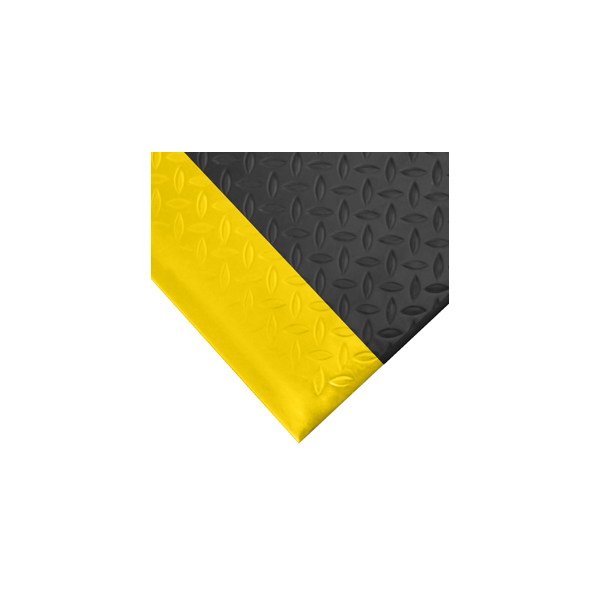
Safety Striped Tuff-Spun Anti-Fatigue Matting
Product Number:
#0604S-G
Description
What Safety Striped Tuff-Spun Does Before Traffic and Standing Work Collide
Safety Striped Tuff-Spun is a dry-area anti-fatigue mat that does two safety jobs at once. High-visibility yellow striping marks exactly where the mat — and the person standing on it — begins, while the cushioned vinyl-top construction eases the long hours a worker spends planted at that station.
In a busy facility, the standing zones and the traffic lanes share real estate. Carts clip unmarked mat edges, hurried feet misjudge transitions, and the fatigue of a full shift on hard flooring slows everything down by the afternoon. A mat that announces its own footprint keeps the zone visible; the cushion keeps the worker fresh inside it.
Why a Vinyl Top Over Fused Sponge, and Why This One
The working surface is a durable, abrasion-resistant vinyl top — tested at 0.4 gram or less of material lost under the Taber method — bonded to a low-density PVC sponge that supplies the anti-fatigue give. The surface is also strongly puncture-resistant, so dropped tools and sharp debris don't open the cushion to wear.
How the layers join matters as much as what they are. The top and sponge are fused together without adhesives, which means there's no glue line to fail under years of foot traffic — the classic way layered mats delaminate at the edges. The result is a non-slip surface built to reduce the risk of falls for the long haul.
The figures behind the comfort: resiliency of 32 percent or better per ASTM D-2632, compression of .17 at 7 psi per ASTM D1667, a working weight of 7.2 pounds per square yard, and a 9/16-inch profile. Flammability passes DOC FF1-1-70 under the pill test, and the surface comes in diamond or pebble emboss.
Where It Belongs, and What It Is Not
Safety Striped Tuff-Spun is a medium-duty answer for dry standing areas where visibility matters: work stations along shared aisles, pick modules where carts and people interleave, pharmacy fill counters, and packaging lines. The yellow striping earns its keep wherever rolling traffic passes close to planted feet.
What it is not: a wet-area or grease-zone mat. This construction is built for dry duty, and floors that see water, oil, or washdown belong to the drainage-style options in our anti-fatigue mats and runners lineup. Keep it dry, and the vinyl top's wear numbers get to prove themselves for years.
Three Things to Check Before You Spec It
First, choose the surface emboss for the work. The diamond pattern gives shoes a more aggressive texture for active stations, while the pebble emboss offers a smoother feel where workers shift and pivot in place all day. Both share the same vinyl top and fused construction underneath.
Second, size to the station or the run. Standard mats span 2 by 3 feet up to 4 by 12 feet, full rolls run 75 feet in 2, 3, and 4 foot widths, and custom cuts are available in those same widths. One planning note: full rolls are not beveled on the ends unless specified — say so at order time if a roll end lands in a walking path.
Third, confirm the striping is doing real work. Yellow borders belong where mixed traffic makes the mat edge a genuine hazard line — beside forklift lanes, at aisle-facing stations, along marked walkways. Where the mat sits in a closed room away from traffic, the plain version of this same construction may be the quieter fit.
Why Mats Inc.
Marked standing zones are one of the simplest safety upgrades a facility can make, and we've been helping operations draw those lines since 1964 — with matting that holds up to the traffic it's warning about. Every figure on this page is verified against the manufacturer's published testing, and the mat is backed by a 1-year limited Mats Inc. warranty.
| Construction | Abrasion-resistant vinyl top bonded to low-density PVC sponge; layers fused without adhesives |
| Color | Black with yellow safety striping |
| Surface Patterns | Diamond emboss, pebble emboss |
| Thickness | 9/16" |
| Standard Sizes | 2' x 3', 3' x 5', 3' x 12', 4' x 6', 4' x 12' |
| Roll Sizes | 2' x 75', 3' x 75', 4' x 75' (roll ends not beveled unless specified) |
| Customization | Custom cuts in 2', 3', and 4' widths |
| Abrasion | ≤ 0.4 gram (Taber) |
| Resiliency | ≥ 32% per ASTM D-2632 |
| Compression | .17 at 7 psi per ASTM D1667 |
| Weight | 7.2 lbs per square yard |
| Flammability | DOC FF1-1-70 (pill test) |
| Use Area | Dry areas; medium duty |
| Warranty | 1-year limited (Mats Inc.) |
Frequently Asked Questions
What holds the layers together if there's no adhesive?
Answered by Dustin Thompson, Owner & CEO
The vinyl top and the PVC sponge beneath it are fused directly to each other — no glue layer in between. That's a durability decision: adhesive bonds are where layered mats traditionally fail, peeling at the edges under years of heel strikes and cart wheels until the mat becomes its own trip hazard. Fused construction removes that failure point entirely, so the wear surface and the cushion age as one piece instead of two.
How do the durability numbers translate to real shifts?
Answered by Dustin Thompson, Owner & CEO
Three figures tell the story. Taber abrasion of 0.4 gram or less means the vinyl top sheds almost no material under standardized wear — that's years of shoe traffic, not months. The puncture-resistant surface shrugs off dropped tools and sharp debris that would open up a foam mat. And resiliency of 32 percent or better per ASTM D-2632 means the cushion keeps pushing back shift after shift rather than compressing flat under the same pair of boots.
Can it handle a station that occasionally gets damp?
Answered by Dustin Thompson, Owner & CEO
Spec it for the floor's normal day, and this mat's normal day is dry. It's built as a dry-area construction — work stations, pick modules, pharmacies, packaging lines — where the non-slip vinyl surface does its fall-reduction work on solid footing. If water, oil, or washdown is part of the routine rather than the exception, a drainage-style wet-area mat is the honest spec; asking a dry-area mat to live wet shortens everyone's patience with it.
What does the yellow striping actually change day to day?
Answered by Jinna Hopson, Vice President of Marketing
It turns the mat into signage. The yellow border draws a bright, permanent line around the standing zone, so forklift operators see the workstation before they're beside it, visitors read the walkway without a tour guide, and new hires learn the floor's geography on day one. It's wayfinding that never needs repainting and moves with the mat if the layout changes — the safety message and the safety equipment in a single piece.
Mats, rolls, or custom cuts — how do I choose?
Answered by Jinna Hopson, Vice President of Marketing
Let the length of the standing path decide. Individual stations suit the standard mats, from 2 by 3 up to 4 by 12 feet. A full line or long marked walkway is a job for the 75-foot rolls in 2, 3, or 4 foot widths — one continuous striped run instead of a chain of mats. Custom cuts in the same widths handle the in-between lengths. One ordering note: roll ends aren't beveled unless you ask, so specify it where a cut end meets foot traffic.
When should I pick the striped version over the plain one?
Answered by Jinna Hopson, Vice President of Marketing
Ask who else uses the space. If the mat sits where carts, lifts, or through-traffic pass close to planted workers — aisle-facing stations, pick modules, shared corridors — the striping is doing genuine safety work and belongs there. If the station lives in a closed room or a quiet corner where nobody crosses the zone but the person working it, the plain version of the same construction keeps the floor visually calm. Same mat underneath; the border is about the traffic around it.
By Dustin Thompson, Owner & CEO, Mats Inc.
Reviews
Write Your Own Review
Related Products
Super Scrape Rubber Mats
Safety Track Non-Skid Tape - Coarse

Smooth Marbleized Vinyl Switchboard Matting (Mil Spec)
Super Scrape Rubber Logo Mats
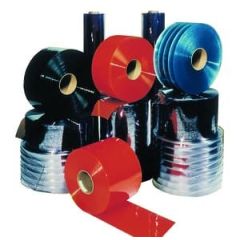
Strip Doors
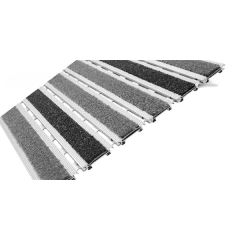
Perfec Clean 3/8" Rollup Mats - Aluminum Hinge
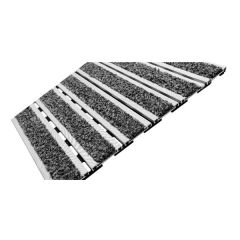
Perfec Clean 3/8" Rollup Mats - Rubber Hinge
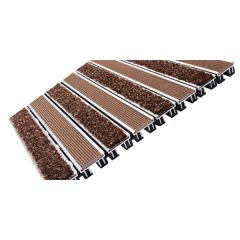
Perfec Clean 3/4" Rollup Grate - Rubber Hinge
Perfec Clean 1-5/8" Grate
WP-70 Non-Skid Epoxy Coating