




More Information
| Manufacturer | Durable Corporation |
|---|
$71.00

Have a question? We're here to help!
Description
What Tire Link Mats Do Before Heavy Traffic Grinds a Walkway Down
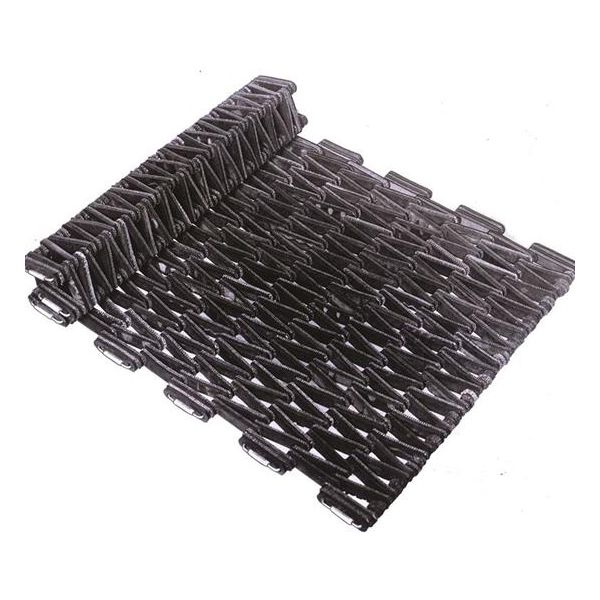
Tire link mats are the brute-force answer to the hardest-working floors: recycled tire rubber links woven on galvanized steel wire into an open mesh that water and debris fall straight through. The walking surface stays clear while the mess collects below shoe level — and the links themselves are built to take the heaviest traffic for years.
High-traffic wet zones defeat ordinary matting quickly. Grit grinds surfaces down, water sits where boots land, and the mat that looked sturdy in month one is curling and bald by winter's end. This is a different class of tool — rubber that already survived life as a tire, doing a second tour on your busiest walkway.
Why Recycled Tire Links on Steel Wire, and Why This One
The construction is nearly a century old for a reason: the design was first patented in 1923, and it endures because nothing about it is delicate. Links cut from bias-ply tire rubber are woven on galvanized steel wires, producing a 5/8-inch-thick mat with no coating to wear off and no foam to crush flat.
The open mesh is the working feature. Rain, slush, mud, and grit pass through the weave instead of pooling on top, so traction lives on a clear surface even in weather that soaks everything else. When it's time to clean, the mat simply rolls up — sweep or hose what gathered beneath, roll it back out, done.
There's also a genuine sustainability story built in: the mat consists of approximately 90 percent recycled content, and every 12 square feet puts one whole recycled tire back to work. Two weave patterns are available — herringbone and straight — and edges can be finished with beveled or squared nosing.
Where It Belongs, and What It Is Not
Tire link mats belong where traffic is relentless and conditions are wet: building entrances and service doors, outdoor walkways and steps, dock and yard transitions, and the muddy, slushy approaches that see boots by the hundreds. The harder the duty, the more this construction makes sense.
What it is not: a cushioned standing mat. Its job is surviving traffic and shedding water, not easing a fixed shift at a workstation — that comfort work belongs to the options in our anti-fatigue mats and runners lineup. Give the tire links the doorway and the walkway, and let a purpose-built cushion handle the standing post.
Three Things to Check Before You Spec It
First, pick the weave for the setting. The herringbone pattern lays the links in an angled, woven look that reads a touch more finished; the straight weave keeps rows aligned for a plainer, utilitarian face. Both share identical construction and thickness — the choice is visual and traffic will never know the difference.
Second, plan sizes and edges together. Standard mats run from compact doorway sizes up to 3 feet by 12 feet, with custom sizing available. Dimensions are approximate unless nosing is specified, so order beveled or squared nosing where exact fit or a finished transition edge matters. Runs over 12 feet should be sectionalized for easier handling, and oversized mats carry special handling.
Third, build the simple cleaning habit. Everything the mesh swallows is waiting underneath, so the routine is: roll the mat up, clear what collected, roll it back. It's a two-minute job that keeps the drainage path open — and it's the only maintenance this construction really asks for.
Why Mats Inc.
Some products earn their place with technology; this one earned it with a hundred years of doorways. We've been sending tire link matting into the wettest, busiest entries our customers own since 1964, because it simply refuses to quit there. We verify what's behind every product we carry, and this mat is backed by a 1-year limited Mats Inc. warranty.
| Material | Recycled rubber links from bias-ply tires, woven on galvanized steel wires |
| Thickness | 5/8" |
| Surface | Open mesh; non-directional |
| Weave Patterns | Herringbone, straight |
| Recycled Content | Approximately 90%; every 12 sq ft contains one recycled tire |
| Standard Sizes | From 17" x 25" up to 36" x 144"; custom sizing available |
| Edging | Beveled or squared nosing available; dimensions approximate without nosing |
| Handling Notes | Made in one piece where possible; mats over 12' long should be sectionalized; special handling applies over 7' wide or 25' long |
| Use Area | High-traffic and wet areas |
| Warranty | 1-year limited (Mats Inc.) |
Frequently Asked Questions
What makes tire links tougher than a regular rubber mat?
Answered by Dustin Thompson, Owner & CEO
The rubber's first job was being a tire. Links cut from bias-ply tire rubber carry the toughness that material was engineered for — abrasion, weather, load — and the galvanized steel wire weave holds them together without glue, stitching, or a backing that can delaminate. The design was patented back in 1923 and has outlived generations of newer matting for a simple reason: there's no weak layer to fail first.
How long does it really last under constant traffic?
Answered by Dustin Thompson, Owner & CEO
This construction is rated to withstand the heaviest traffic for several years — and that's the punishing kind of duty, not office hallways. Thick rubber links wear the way a tire tread does, gradually and evenly, rather than the way coated mats fail, all at once when the surface gives. On a doorway that eats ordinary mats every season, the arithmetic of a mat measured in years changes the whole maintenance picture.
How does the open weave keep the surface safer when it's wet?
Answered by Dustin Thompson, Owner & CEO
Water can't make a surface slick if it isn't on the surface. The mesh openings let rain, slush, and grit drop through immediately, so boots meet rubber links instead of a film of water sitting on top of a solid mat. Debris works the same way — tracked-in gravel and mud fall below shoe level rather than rolling underfoot. The surface is non-directional too, so there's no wrong way to lay it for traction.
Will it look right at our entrance, or too industrial?
Answered by Jinna Hopson, Vice President of Marketing
It wears its toughness openly, and in the right setting that's exactly the message. At a plant door, a service entrance, a campus building that sees weather, or a farm and yard transition, the woven rubber reads as purposeful — especially in the herringbone pattern, which gives the surface an orderly, almost textile look. For a polished lobby where softness and color set the tone, pair it outside the door and let interior matting take over past the threshold.
How do I get the size and edges right?
Answered by Jinna Hopson, Vice President of Marketing
Start with the traffic path, then decide the edges. Standard sizes run from compact doorway mats up to 3 by 12 feet, with custom sizing available for wider or longer runs. Two details matter at order time: dimensions are approximate unless you specify nosing, so choose beveled or squared nosing where the fit is exact or the edge meets open floor — and plan runs over 12 feet as sections, which makes lifting and cleaning a one-person job instead of a project.
What does the recycled content actually amount to?
Answered by Jinna Hopson, Vice President of Marketing
Something you can count. The mat is roughly 90 percent recycled content, and every 12 square feet contains one full recycled tire — so a 3 by 8 foot doorway mat is two tires that stayed out of a landfill and went back to work. For organizations tracking sustainability commitments, it's a rare line item where the greener choice is also the most durable one on the list, and the math is simple enough to put in the report.
By Dustin Thompson, Owner & CEO, Mats Inc.
Reviews
Write Your Own Review
Related Products
Super Scrape Rubber Mats
Safety Track Non-Skid Tape - Coarse

Smooth Marbleized Vinyl Switchboard Matting (Mil Spec)
Super Scrape Rubber Logo Mats
Strip Doors
Perfec Clean 3/8" Rollup Mats - Aluminum Hinge
Perfec Clean 3/8" Rollup Mats - Rubber Hinge
Perfec Clean 3/4" Rollup Grate - Rubber Hinge
Perfec Clean 1-5/8" Grate
WP-70 Non-Skid Epoxy Coating