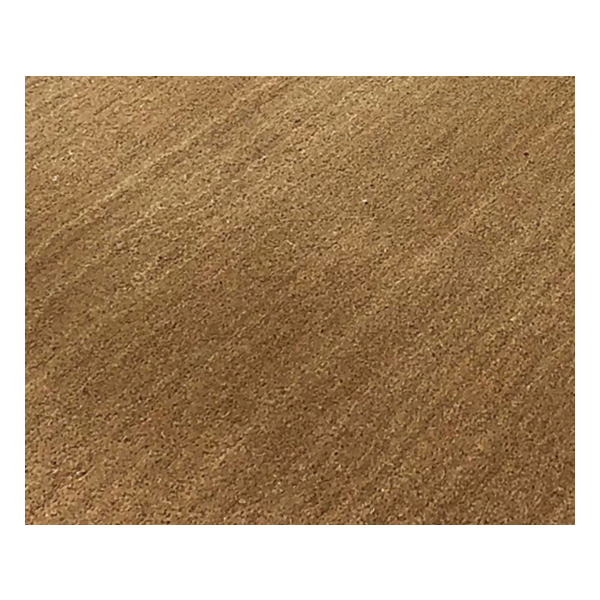
Coco coir rolls bring a natural-fiber entrance to a recessed well: warm, brush-textured coconut coir bonded to a sealed vinyl base, cut from the roll to fit your recess. The coir brushes grit off shoes and the vinyl backing keeps dirt and moisture on the mat instead of letting it reach the floor below — all while giving the doorway the classic, welcoming look people associate with a well-kept entrance.
What coco coir does before grit reaches your floor
Coir is the stiff, brushy fiber from coconut husks — the original boot-scraping material. Set into a recessed well at the entrance, a coir mat brushes dirt and debris off shoes as people come in, holding grit and moisture on the mat so it doesn't track across the floor beyond the door. It does that while looking like natural fiber, not industrial matting.
What keeps it off your floor is the backing. Unlike a plain woven coco mat that lets water seep straight through, this one is built on a sealed vinyl base, so moisture and grit stay on top of the mat rather than reaching the floor underneath. Recessed coir matting sits down in the well, flush with the surrounding floor, doing that work without a trip lip or a utilitarian look.
Why natural coir, and why this one
Coir's appeal is the material itself. The coconut fiber is naturally stiff and brushy, so it captures grit well, and it carries a warm, golden, textured look that synthetic mats imitate but don't quite match. For an entrance where the first impression matters — a hotel, a boutique, a traditional lobby — that natural character is the whole point.
The coir is fusion-bonded into the vinyl base at a total height of about 5/8" — roughly 0.422" of that is the coir pile — which locks the fibers in so the mat can be cut to any shape without unraveling. That's what makes it work in a recessed well, and why an odd-shaped recess or a wide entry is straightforward: a large well is laid out from the roll to read as one clean mat.
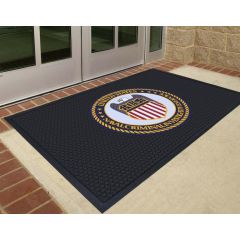
It comes in rolls about 6'7" wide, cut to your opening, and can be made with or without an inlaid logo. Color isn't limited to the natural tone, either — beyond the classic golden coir, it's offered in grey, black, blue, green, brown, and red, so the mat can stay traditional or pick up a brand or interior palette.
Coir also carries a real sustainability story: it's a renewable byproduct of the coconut harvest, and as a semipermanent, maintained walk-off system at least ten feet long it can contribute toward LEED-NC — toward recycled-content and low-emitting-material credits, with a releasable adhesive rated at zero VOC. Because the exact contribution depends on the LEED version and the credits in play, tell us the points you're targeting and we'll confirm how it fits.
Where it belongs, and what it is not
Coir belongs at indoor and covered entrances — lobbies, vestibules, conference rooms, libraries, retail floors, and recessed wells at sheltered doors. It's a natural fit for offices, retail, schools, government buildings, and hospitality entries that want a warm, natural threshold. It's one of our recessed mat inserts, cut to drop into the well flush with the floor.
It's rated for indoor use, not for an exposed outdoor doorway, for two reasons. Coir is a natural fiber that fades and wears faster in direct sun and rain than a synthetic, and the dyed colors are vegetable-based, so they can transfer if the mat gets wet. For a fully exposed entrance, a weatherproof scraper or grate is the better tool, and we'll point you to one. Expect a little natural shedding from coir early on, too.
Three things to check before you spec it
First, keep it to indoor and covered spots. Coir is at its best inside — a lobby, a vestibule, a recessed indoor well. In an open doorway taking direct sun and rain, it'll fade and wear sooner, and the vegetable-dyed colors can run if they get soaked. Save coir for sheltered entries and use a weatherproof mat where the weather hits directly.
Second, measure the opening, especially a recess. The matting comes in rolls about 6'7" wide and is cut to your dimensions, so custom shapes are workable and the cut edges hold without unraveling. For a recess wider than a single piece, sections are laid out so the well reads as one mat. Send the well dimensions and we'll plan the cut.
Third, pick the color and look. The natural golden tone is what most people picture at a front door, while the dyed options read more finished or pick up a brand color, and a logo can be inlaid. Keep in mind the colors are vegetable-dyed, so choose with the indoor setting and the impression you want at the door in mind.
Why Mats Inc.
We've specified entrance flooring since 1964, and coir is one of those materials where the right call is as much about where it goes as what it is. We help you judge whether an entrance is sheltered enough for natural fiber, size the mat to your recess, and choose the color or logo to suit the doorway — then cut it to fit and ship it ready to set. If a spot is too exposed for coir, we'll tell you and point you to something weatherproof instead.
Specifications
| Fiber | Natural coconut fibers (coir) |
| Backing | Vinyl — sealed base keeps moisture and dirt on the mat, not through to the floor |
| Manufacturing | Fusion bonded |
| Surface | Non-directional, smooth / velour |
| Pile height | 0.422" |
| Total height | 0.625" (about 5/8") |
| Pile weight | 60 oz/sy |
| Total weight | 166 oz/sy |
| Roll / sheet width | 6'7", cut to length; custom sizes and logo mats available |
| Flammability | ASTM E648 (radiant panel): Class II |
| LEED (LEED-NC v3) | Can contribute toward MR Credit 4 (recycled content), IEQ Credit 4.1 (releasable adhesive, 0 g/L VOC), and IEQ Credit 5 (semipermanent entrance system at least 10 ft, maintained weekly) |
| Use | Indoor only; recessed wells and entryways |
| Installation | Semipermanent; set with a releasable adhesive, cut to fit flush |
| Colors | Natural, grey, black, blue, green, brown, red (vegetable-dyed except natural); with or without inlaid logo |
| Maintenance | Regular vacuuming with a motor-driven brush and beater bar |
| Warranty | 1-year limited (Mats Inc.) |
Frequently Asked Questions
What exactly is coco coir, and how does it clean shoes?
Answered by Dustin Thompson, Owner & CEO
Coir is the coarse natural fiber from coconut husks — the same stiff, brushy material people have used as a boot scraper for generations. Here it's fusion-bonded onto a sealed vinyl base at about 5/8" thick. As people walk across it, the coir fibers comb grit and debris off their shoes, and the vinyl backing keeps that dirt and any moisture on the mat instead of letting it seep through to the floor below.
How long does a coir mat last, and how do I keep it looking good?
Answered by Dustin Thompson, Owner & CEO
Indoors and maintained, coir holds up well — the fibers are fusion-bonded into the vinyl base, so they don't shed loose or pull out the way a woven mat can. The thing that shortens its life is weather, which is why it's rated for indoor use.
Maintenance does the rest. A regular pass with a motor-driven brush and beater bar lifts the grit ground into the fiber and removes up to 80% of the surface dirt — that's what keeps both the look and the scraping working over time.
How is it installed in a recessed well?
Answered by Dustin Thompson, Owner & CEO
It's a semipermanent installation. The mat is cut to the size and shape of the well and set down into it with a releasable adhesive, so the top finishes flush with the surrounding floor — no lip at the threshold — and it can still be lifted for a deep cleaning or replacement. Set flush, it brushes shoes the same way it would sitting proud, but it reads as a built-in part of the entrance. Send us the well dimensions and we'll cut it to fit.
What colors does it come in?
Answered by Jinna Hopson, Vice President of Marketing
Beyond the classic natural coir tone — the warm, golden look most people picture at a front door — it comes in grey, black, blue, green, brown, and red, so the mat can stay traditional or pick up a brand or interior color.
One thing to know: every color except the natural tone is vegetable-dyed, which is part of why it's an indoor product, since the dyes can transfer if the mat gets soaked. Because color shifts between a screen and the real fiber, ask for a sample before you commit.
Can it be cut to a custom size or odd-shaped recess, and can I add a logo?
Answered by Jinna Hopson, Vice President of Marketing
Yes to both. It's supplied in rolls about 6'7" wide and cut to your opening, so custom sizes and shapes are straightforward — the cut edges hold without unraveling because the fibers are bonded into the base. For a recess wider than a single piece, sections are laid out so a large well reads as one clean mat. It can also be made with or without an inlaid logo, so a coir entrance can carry a name or mark while keeping its natural texture.
Does coir suit a modern space, or only traditional entrances?
Answered by Jinna Hopson, Vice President of Marketing
Coir reads natural and classic — the brushy texture and warm tone are what people associate with a welcoming, well-kept doorway, which is why it suits hospitality, retail, and traditional or warm entrances especially well. In a sleek, minimal modern lobby, a finished synthetic or a metal grate often fits the look better. But for an entrance you want to feel natural and inviting under cover, coir looks the part in a way engineered matting doesn't quite reach.
By Jinna Hopson, Vice President of Marketing, Mats Inc.