




More Information
| Manufacturer | Musson Rubber Company |
|---|
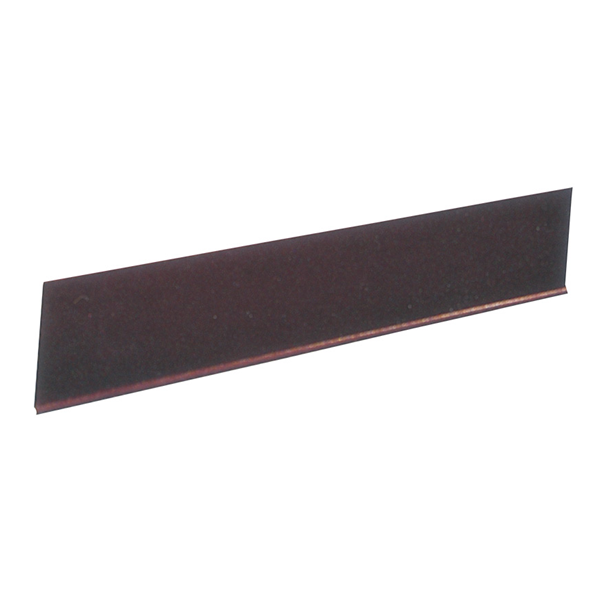
$14.00

Have a question? We're here to help!
Description
The riser is the part of a staircase nobody protects and everybody looks at. It never gets walked on, so it rarely makes the specification list, but it takes toe kicks, mop heads, vacuum bumpers, and cart wheels all day long. Vinyl cove stair risers cover that vertical face and close the joint at its base, so the stair reads as finished rather than half-renovated.
What Vinyl Cove Stair Risers Do Before the Vertical Face Starts Showing Its Age
A riser cover works differently from a tread. There is no foot traffic wearing it down, so the damage arrives as impact and abrasion from the side: shoes catching the face on the way up, cleaning equipment run along the base, and furniture or carts brought down the flight. Wood risers chip and split at the bottom edge; concrete and plaster risers spall.
The bigger problem is the joint. Where the riser meets the tread below, there is a right-angle seam that collects grit and holds mop water. Left open, that seam works water into the substrate and gives dirt a permanent home no amount of cleaning reaches. Covering the tread and leaving the riser bare solves half the problem and leaves the seam untouched.
Stair riser covers put a continuous sealed surface across the vertical face and turn that sharp seam into a curve. Together with stair tread covers, they give you a stairwell that cleans as one surface rather than as a series of edges and corners.
Why a Coved Toe, and Why This Riser
The defining feature is the 5/8" coved toe at the base. Instead of stopping flat where the riser meets the tread, the material curves forward and lays 5/8" onto the horizontal surface below. That curve eliminates the ninety-degree seam entirely. A mop rides over it, water sheds off it, and grit has nothing to lodge in.
The face measures 7" high and the material is 1/8" thick. Because a riser is not a wear surface, 1/8" is the right amount of material — enough to resist impact and hold its shape across the face, without adding bulk that would make the trim work harder than it needs to be.
The back is ribbed. Those ribs give adhesive a mechanical key to grab, which matters more on a vertical surface than a horizontal one, since gravity is working against the bond for the entire cure. A smooth-backed riser relies on the adhesive film alone; a ribbed back gives it something to hold onto.
The riser is trimmable in both height and length, and it comes in eleven stock lengths matching the stair tread sizes, so tread and riser can be ordered as a pair for the same flight without a separate size lookup.
Where It Belongs — and Where It Doesn't
This riser belongs on interior closed-riser stairs of almost any construction — apartment and multi-family stairwells, schools, offices, healthcare and municipal buildings, basement and back-of-house flights. It pairs with vinyl or rubber treads, either in a matching color for a continuous look or in a contrasting one. It sits alongside the rest of the interior stair tread and riser line and is usually ordered with treads on the same flight.
It is specified for interior use. On exterior stairs, freeze-thaw movement and water sitting behind the cove work the bond loose, and a riser that releases at the top edge peels forward into the walking path. Exterior stairs need materials built for weather.
It also is not a structural repair. If a riser board is cracked through, rotted, or pulling away from the stringer, covering it hides a problem instead of fixing one. Repair or replace the riser first, then cover it. And on an open-riser stair there is no vertical face to cover, so this product has no application there.
Three Things to Check Before You Spec It
Riser work fails on measurement more often than on material. Three checks before ordering will keep the install straightforward.
First, measure the actual riser height. The face covers 7", with the coved toe projecting 5/8" forward at the base. Codes commonly allow risers taller than that, so measure a few steps rather than assuming. The material trims down easily but it cannot be stretched up, so if your face exceeds 7" you need a different approach — tell us the measurement and we will work it out.
Second, inspect the joint and the substrate before you order. Look at the seam where each riser meets the tread below it. Loose material, old adhesive ridges, and crumbling edges all have to be dealt with in prep, because the coved toe needs a flat landing to sit against. A toe bridging over a ridge leaves a void that fails within a season.
Third, plan tread and riser together. Risers come in the same lengths as the treads, so ordering both for one flight is a single width decision rather than two. Decide the color pairing at the same time, and order enough adhesive for both surfaces — running short on adhesive halfway up a flight is the most common way this install stalls.
Why Mats Inc.
Mats Inc. has specified stair coverings since 1964, and risers are where most stairwell projects get scoped incorrectly — usually by being left out entirely until the treads are already down. We will run the riser height, the step count, the color pairing, and the adhesive quantity with you before anything ships, so the flight arrives as a complete package. Send the measurements and we will handle the math.
| Material | Homogeneous vinyl, plain solid color |
|---|---|
| Thickness | 1/8" |
| Face height | 7" |
| Toe | 5/8" coved toe |
| Back | Ribbed |
| Lengths | 18", 24", 30", 36", 42", 48", 54", 60", 72", 84", 96" |
| Colors | Brown, Sand, Gray, Black |
| Trimming | Trimmable in height and length |
| Pairing | Matches or contrasts with vinyl and rubber stair treads |
| Application | Interior use |
| Installation | Contact adhesive or double-sided mounting tape |
| Warranty | 1-year limited (Mats Inc.) |
Frequently Asked Questions
What is the coved toe actually for?
Answered by Dustin Thompson, Owner & CEO
It closes the seam. On any stair, the riser meets the tread below it at a hard ninety-degree corner, and that corner is where grit packs in and mop water sits. Over years it works moisture into the substrate and becomes the one spot in the stairwell that never actually comes clean.
The coved toe curves the material forward and lays 5/8" flat onto the surface below, so the corner becomes a radius instead of a crack. A mop head rides straight over it, water sheds rather than pooling, and there is no gap for debris to collect in. It is the same logic as coved base at a wall-to-floor junction, applied to a stair.
Is 1/8" thick enough on a riser?
Answered by Dustin Thompson, Owner & CEO
Yes, because a riser is not a wear surface. Nobody stands on it. The forces it sees are impact and scuffing from the side — shoe toes on the way up, vacuum and mop heads along the base, the occasional cart or piece of furniture coming down.
At 1/8" the material absorbs those impacts and holds its shape across a 7" face without being so rigid that trimming becomes a fight. Adding thickness on a riser buys you very little and makes the height cut noticeably harder on every step of the flight. If you compare it to a tread spec and it looks thin, that is the right instinct applied to the wrong surface.
Can I install these over risers that are already damaged, or on an outdoor stair?
Answered by Dustin Thompson, Owner & CEO
Not outdoors — these are interior risers. On an exterior stair, water gets behind the cove and freeze-thaw movement works the bond loose. A riser that releases at the top edge peels forward into the walking path, which is a worse hazard than the scuffed riser you started with.
On damaged risers, it depends on the damage. Surface scuffing, minor chipping, and old paint are all fine to cover once the surface is cleaned and sound. A riser board that is cracked through, rotted, or pulling away from the stringer is a repair, not a covering job — fix it first. The give-away is whether the surface moves when you push on it.
What lengths do these come in, and how much trimming is involved?
Answered by Jinna Hopson, Vice President of Marketing
Eleven stock lengths: 18", 24", 30", 36", 42", 48", 54", 60", 72", 84", and 96" — the same sizes as the stair treads, which makes ordering a flight much simpler. You pick one width for both.
Trimming happens in two directions, and that is worth planning for. Length is the easy cut. Height is the one to think about: the face is 7", and if your risers measure less than that you will be cutting every piece down. That is entirely normal and the material handles it well, but it is time on site, so measure a few steps first and tell your installer what to expect rather than letting them discover it on step one.
Should I match the riser to the tread or use a contrasting color?
Answered by Jinna Hopson, Vice President of Marketing
Both work, and they do different jobs. Matching tread and riser in the same color gives you a continuous surface that reads as one finished stair — the cleanest look, and the usual choice in offices, healthcare, and anywhere the stairwell is part of the finished space.
Contrasting gives every step a visible horizontal line, which genuinely helps people read the flight on the way down. In senior housing, schools, and dimly lit back stairs that is a real safety benefit, not just a design choice. A common pairing is a darker tread with a lighter riser, or the reverse. There are four colors — Brown, Sand, Gray, and Black — so both approaches are easy to build.
How do I work out how many risers to order?
Answered by Jinna Hopson, Vice President of Marketing
Count the risers, not the treads — they are not always the same number. A flight running from one floor to a landing usually has one more riser than it has treads, because the top riser sits under the landing with no tread above it. Miss that and you come up one short on every flight in the building.
Then take the widest step measurement in the flight and order that length for all of them, trimming down as you go. Add adhesive for both treads and risers in the same order. If you send us the flight count, the step count per flight, and the width, we will do the arithmetic and tell you exactly what to order.
Written by Dustin Thompson, Owner & CEO, Mats Inc.
Reviews
Write Your Own Review
Related Products
Super Scrape Rubber Mats
Safety Track Non-Skid Tape - Coarse

Smooth Marbleized Vinyl Switchboard Matting (Mil Spec)
Super Scrape Rubber Logo Mats
Strip Doors
Perfec Clean 3/8" Rollup Mats - Aluminum Hinge
Perfec Clean 3/8" Rollup Mats - Rubber Hinge
Perfec Clean 3/4" Rollup Grate - Rubber Hinge
Perfec Clean 1-5/8" Grate
WP-70 Non-Skid Epoxy Coating