




More Information
| Manufacturer | LRP Rubber |
|---|
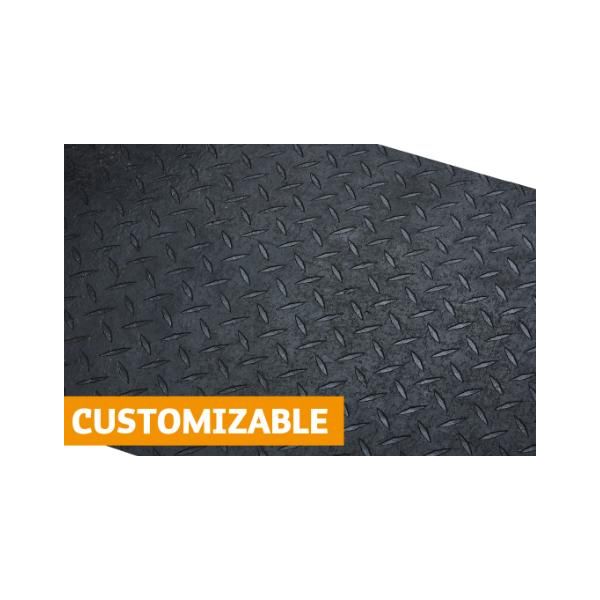
$282.00

Have a question? We're here to help!
Description
Soft Stall Mats are the lighter, made-to-measure option in the line. At 1/2 inch, they're thinner and easier to handle than the heavier 3/4-inch stall mats, and they're cut to your stall's exact dimensions — in sizes up to 6 by 16 feet — rather than forcing a standard mat into the space. For stalls that don't need the heaviest mat, or that are an awkward size, this is the one built to fit.
The mat is 1/2-inch rubber, laid as a barrier between the hoof and the hard floor below. Penn State Extension notes that a rubber mat over a hard subfloor gives a horse a more forgiving surface than bare concrete, and that's the core of what this mat does — it also insulates against cold and damp. The lighter weight makes a large custom mat easier to move, position, and lift for cleaning than a heavier mat of the same footprint.
Because the mats are made to measure and can be supplied interlocking on request, a large or irregular stall gets covered as one clean layout instead of a patchwork of standard mats. The rubber is non-absorbent, so urine and moisture stay on top and off the subfloor, and the surface wipes and rinses clean. Within the stall mats for horses range, it's the lighter, custom-fit choice.
This mat suits stalls with lighter or moderate traffic, setups where a thinner, low-profile floor helps at doorways and thresholds, and spaces where easy handling matters. For heavy-traffic stalls and maximum durability, the thicker 3/4-inch mats are the better call. Installed over a level, prepared base and cleaned on a normal routine, a 1/2-inch mat holds up well; as with any stall floor, an uneven base or trapped moisture underneath is what shortens its life.
| Thickness | 1/2" |
| Material | Rubber |
| Sizing | Made to measure, up to 6' × 16' |
| Edges | Straight, or interlocking on request |
| Care | Sweep, then damp-mop or hose |
| Installation | Over a level prepared base |
Frequently Asked Questions
When should I choose the 1/2-inch mat over a thicker 3/4-inch one?
Answered by Dustin Thompson, Owner & CEO
The 1/2-inch mat fits stalls with lighter or moderate traffic, spots where a thinner, low-profile floor helps at doorways or thresholds, and setups where easy handling matters — it's lighter to move and position, especially in large custom sizes. For heavy-traffic stalls where you want the most durability and mass underfoot, step up to a 3/4-inch mat. Both do the core job: a non-absorbent rubber barrier over the hard floor.
How durable is a 1/2-inch mat, and what base does it need?
Answered by Dustin Thompson, Owner & CEO
It's built to take normal stall use over years, provided it's on the right base. Lay it over a level, prepared surface — concrete or well-compacted stone — so it sits flat and doesn't flex over voids. The rubber is non-absorbent, so it keeps moisture off the subfloor. As with any stall mat, the fastest way to shorten its life is an uneven base or water trapped underneath, not the rubber itself.
Can the mats be cut to my exact stall size?
Answered by Jinna Hopson, Vice President of Marketing
Yes — that's the main reason to choose these. Rather than forcing standard mats into the space, they're made to measure to your stall's dimensions, in sizes up to 6 by 16 feet, and can be supplied interlocking on request. That suits oversized stalls and the irregular layouts in older barns, where standard mats leave awkward gaps. Send your measurements and anything to work around, and we'll lay out a clean, full-floor fit.
How do I order a custom size?
Answered by Jinna Hopson, Vice President of Marketing
Because each mat is made to your dimensions, it's a custom order rather than an off-the-shelf size. Send the stall's measurements — and note any posts, drains, or openings to work around — and we'll lay out the right configuration, including whether interlocking edges make sense for your layout, before anything is cut. If you're doing several stalls, send all the dimensions so the set is consistent across the barn.
By Dustin Thompson, Owner & CEO, Mats Inc.
Reviews
Write Your Own Review
Related Products
Super Scrape Rubber Mats
Safety Track Non-Skid Tape - Coarse

Smooth Marbleized Vinyl Switchboard Matting (Mil Spec)
Super Scrape Rubber Logo Mats
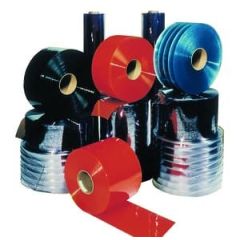
Strip Doors
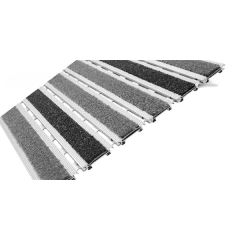
Perfec Clean 3/8" Rollup Mats - Aluminum Hinge
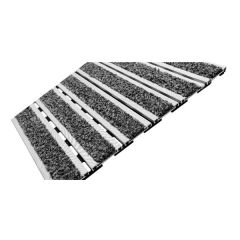
Perfec Clean 3/8" Rollup Mats - Rubber Hinge
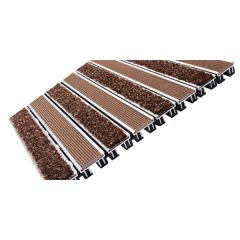
Perfec Clean 3/4" Rollup Grate - Rubber Hinge
Perfec Clean 1-5/8" Grate
WP-70 Non-Skid Epoxy Coating