




- Home
- Products
- Stair Treads, Risers, Landing Tiles & Adhesives
- All Stair Treads, Risers & Landing Tiles
All Stair Treads & Risers
This is the whole stair tread range in one place — every interior and exterior tread, every riser cover, every landing tile, and the adhesives that hold them down. If you already know which way your stairs point, the three groups below will get you there faster. If you are still working out what the building needs, start here.
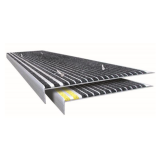 Renovation Stair Treads
Starting at $168.00
What a non-slip stair tread does before a worn step becomes an incident Stairs do not fail all at once. The nose rounds off, the walking surface polishes smooth under thousands of footfalls, and a step that once had grip turns into a slick edge people trust without looking. Non...
What a non-slip stair tread does before a worn step becomes an incident Stairs do not fail all at once....
What a non-slip stair tread does before a worn step becomes an incident
Stairs do not fail all at once. The nose rounds off, the walking surface polishes smooth under thousands of footfalls, and a step that once had grip turns into a slick edge people trust without looking. Non slip stair treads cover that surface with a hard abrasive face, putting traction back exactly where a foot lands and body weight shifts forward.
These are stair tread covers, not replacement steps. The tread fastens down over the step already in place. The abrasive face does the gripping, and the aluminum body underneath carries traffic and shields the nose from further wear. Nothing structural comes out, and the stairway stays in service through the work.
The descent is where the risk concentrates. A person going down a flight commits weight to the front third of each step, and that is the first area to wear smooth and the last area anyone inspects. A tread with a formed nose puts the grip surface over the edge itself rather than stopping short of it.
Traction is a measurable property, not an impression. The National Floor Safety Institute maintains ANSI/NFSI B101.1, the standard method for measuring wet traction on walking surfaces, which is the framework facility teams use when they audit a stairway rather than guess at it.
Why extruded aluminum with abrasive filler, and why this profile
The base is 6063-T5 extruded aluminum, heat treated and corrosion resistant. Extrusion matters here because it produces a consistent cross section along the full length of the tread, so the nose geometry and the filler channels are identical from one end of an 8-foot run to the other. There are no welds and no fasteners fighting a rolled or stamped shape.
The anti-slip surface is not a coating sitting on top of the metal. It is a filler packed into channels in the extrusion, and the specification calls for no less than 65% virgin grain aluminum oxide and silicon carbide abrasive. That is a mineral hardness argument: the grit outlasts the shoe leather and grit tracked across it rather than polishing under it.
Color runs uniformly through the filler instead of sitting on the surface as paint. Practically, that means the center of the stair, where every person walks, does not turn into a faded stripe against untouched edges after a season of traffic. Eleven standard colors are available, and black is supplied when no color is specified on the order.
The profile is what separates this tread from a flat plate. It measures 11 inches deep and 9/32 of an inch thick, with a 1-1/8 inch nose on the underside and a beveled back edge. The nose wraps the leading edge of the existing step. The beveled back lets the tread sit down against the step without creating a lip that catches a toe on the way up.
The assembly is noncombustible, tested under Federal Test Method Standard No. 501a, Method 6411 — a specification line that matters in stairwells serving as means of egress, where combustibility of applied finishes gets asked about during review.
Where it belongs, and where it is not the answer
This tread is built for renovation. It goes over stairs that already exist and have worn out, polished up, or were never slip resistant to begin with: concrete stairs in a parking structure, terrazzo in a school building, steel pan stairs in a plant, tile landings in a lobby, wood stairs in an older building.
It works interior and exterior. Outdoors, the corrosion-resistant aluminum handles weather and the abrasive face keeps working when the surface is wet — which is why it reads as a strong fit among exterior stair treads on loading docks, entry steps, and stairs exposed to freeze-thaw cycling. A special tread sealer is available for wood substrates and saltwater exposure.
Where it is not the answer: this is not a decorative finish tread and it is not carpet. It is also not the right call on a step whose structure is failing. If the concrete is spalling or a wood stringer is soft, the tread will fasten to a substrate that cannot hold an anchor, and the repair belongs before the tread, not under it.
It is also not a landing solution on its own. An 11-inch depth covers a stair tread, not a landing surface, so landings usually need a tile or a wider covering handled separately. The tread's job is the step; think of it as one component of the stairway package rather than the whole of it.
Three Things to Check Before You Spec It
First, confirm exposure and traffic. Interior and exterior are both in scope, but exterior stairs and stairs seeing constant traffic are where the abrasive content earns its keep. If the stair is exposed to saltwater or is being installed over wood, ask about the tread sealer at the time of order rather than after installation, because it is applied as part of the job.
Second, measure the step, not the stairway. You need the depth of the existing tread and the run length of each step, because lengths are made to order. Maximum length is 8 feet in a single section, and anything longer is supplied in equal sections. Decide up front whether treads run the full width less 1/8 inch of clearance, or terminate 4 inches short of each end — the short termination leaves a channel that is easier to clean out.
Third, settle the substrate and the anchor. Anchor type has to be specified on the order: Tapcons, wood screws, machine screws, or screws with expansion shields, depending on whether you are fastening into concrete, wood, or steel. Dished or worn steps need leveling compound troweled to a feather edge first, and smooth surfaces such as marble, terrazzo, or tile have to be roughed up so adhesive grabs. Drilled and countersunk holes come standard.
Why Mats Inc.
Stair treads get ordered wrong more often than almost anything else we sell, because the person measuring is rarely the person specifying the anchor. We take the step dimensions, the substrate, and the exposure together, and we confirm the length breakdown before anything gets cut, so a stairwell does not end up with a run of treads that are 3 inches short at the top landing. Sixty years of shipping into commercial and industrial jobs is most of what that judgment is built on.
Renovation Stair Treads — Specifications Base material 6063-T5 extruded aluminum, heat treated and corrosion resistant Anti-slip surface Abrasive filler, not less than 65% virgin grain aluminum oxide / silicon carbide Tread depth 11" Thickness 9/32" Nose 1-1/8" underside, beveled back End treatment Beveled or square ends Lengths Made to order; 8'0" maximum in one section (longer runs supplied in equal sections) Color 11 standard colors; color extends uniformly through the filler; black supplied if none specified Two-tone option Contrasting color available on the first two ribs Fire performance Noncombustible per Federal Test Method Standard No. 501a, Method 6411 Anchoring Drilled and countersunk holes standard; Tapcons, wood screws, machine screws, or screws with expansion shields (anchor type specified at order) Installation Construction adhesive plus mechanical fasteners over prepared, level substrate Application Interior and exterior stair renovation Warranty 1-year limited (Mats Inc.) Frequently Asked Questions
What are these stair treads actually made of?
Answered by Dustin Thompson, Owner & CEO, Mats Inc.
The body is 6063-T5 extruded aluminum, heat treated and corrosion resistant. The gripping surface is a separate abrasive filler packed into channels formed into that extrusion, specified at no less than 65% virgin grain aluminum oxide and silicon carbide. Those two minerals sit near the top of the hardness scale, which is the whole point — grit tracked in on boots does not polish them down.
The distinction that matters is filler versus coating. A painted or sprayed anti-slip surface wears through and exposes bare substrate. Here the abrasive is a body of material with real depth to it, held in a metal channel. When people ask why the tread is 9/32 of an inch thick rather than a thin plate, that thickness is what makes room for the abrasive to have somewhere to go.
How well do they hold up under constant foot traffic?
Answered by Dustin Thompson, Owner & CEO, Mats Inc.
Durability here comes from three specific things rather than a general claim. The abrasive content is a minimum of 65% virgin grain aluminum oxide and silicon carbide. The base is heat-treated 6063-T5 aluminum, so it does not deform under point loads the way a soft metal would. And the color is carried through the filler, so wear does not show up first as a bleached path down the middle of the stairway.
The failure mode we see on these is almost never the tread surface. It is the fastening. A tread installed with adhesive and mechanical anchors into a properly leveled step stays put. A tread set on a dished step without leveling compound rocks under traffic, works the anchors loose, and gets blamed on the product. Our warranty is 1-year limited.
Can these go on outdoor concrete steps, or are they indoor only?
Answered by Dustin Thompson, Owner & CEO, Mats Inc.
They are specified for both interior and exterior stair renovation, and outdoor concrete is one of the most common applications we ship into. The aluminum is corrosion resistant, the abrasive face keeps working wet, and there is nothing in the assembly that absorbs water and freezes. Parking garage stairs, dock steps, and exterior entry stairs are all in scope.
Two things to raise before you order for an outdoor job. If the stair is near saltwater, ask for the tread sealer — it is applied at installation, not after. And if the concrete is spalling or the nose has broken away, that gets patched and leveled first. The tread needs a sound step to anchor into; it restores the walking surface, it does not rebuild the step.
How do I measure my stairs and order the right lengths?
Answered by Jinna Hopson, Vice President of Marketing, Mats Inc.
Two measurements per stairway: the depth of the existing tread front to back, and the width of the step from stringer to stringer. Depth tells us whether the 11-inch profile fits your step. Width sets the cut length, and lengths are made to order rather than pulled from stock sizes, so you are not forced into a standard that leaves a gap.
Maximum length is 8 feet in one continuous section. Anything wider than that comes in equal sections rather than one long piece and one stub, which looks deliberate instead of patched. You will also want to decide whether treads run the full width of the step less 1/8 inch of clearance, or stop 4 inches short of each end. The short termination is the easier one to keep clean in a stairwell that gets mopped.
Will the color fade or wear off where people walk?
Answered by Jinna Hopson, Vice President of Marketing, Mats Inc.
No, and that is a deliberate design choice rather than a coating quality. The color extends uniformly through the abrasive filler, so as the surface wears the exposed material is the same color as what was there originally. A stairway does not end up with a pale traffic lane down the middle and saturated color at the untouched edges, which is exactly how a painted or coated stair ages.
There are eleven standard colors, and if no color is specified on the order, black is what ships. For property managers matching an existing palette across a building, that range is usually enough to land close on a stairwell without a custom run.
Can I get a contrasting nose so the step edge stands out?
Answered by Jinna Hopson, Vice President of Marketing, Mats Inc.
Yes. A two-tone tread with a contrasting color on the first two ribs is available, and it is worth asking about on almost any public stairway. A high-contrast leading edge makes the boundary between one step and the next legible to someone descending quickly, in low light, or with reduced vision. Safety yellow against a dark body is the combination most people picture, but the contrast can be built from any of the standard colors.
It also gives you a design lever in a lobby or an entry stair where a stripe of tape would look like a temporary fix. Because the contrast comes from filler color rather than an applied marking, it wears at the same rate as the rest of the tread and does not peel at the nose. Specify the two-tone at the time of order — it is not something added after the treads are made.
Written by Dustin Thompson, Owner & CEO, Mats Inc.
↑
What a non-slip stair tread does before a worn step becomes an incident
Stairs do not fail all at once. The nose rounds off, the walking surface polishes smooth under thousands of footfalls, and a step that once had grip turns into a slick edge people trust without looking. Non slip stair treads cover that surface with a hard abrasive face, putting traction back exactly where a foot lands and body weight shifts forward.
These are stair tread covers, not replacement steps. The tread fastens down over the step already in place. The abrasive face does the gripping, and the aluminum body underneath carries traffic and shields the nose from further wear. Nothing structural comes out, and the stairway stays in service through the work.
The descent is where the risk concentrates. A person going down a flight commits weight to the front third of each step, and that is the first area to wear smooth and the last area anyone inspects. A tread with a formed nose puts the grip surface over the edge itself rather than stopping short of it.
Traction is a measurable property, not an impression. The National Floor Safety Institute maintains ANSI/NFSI B101.1, the standard method for measuring wet traction on walking surfaces, which is the framework facility teams use when they audit a stairway rather than guess at it.
Why extruded aluminum with abrasive filler, and why this profile
The base is 6063-T5 extruded aluminum, heat treated and corrosion resistant. Extrusion matters here because it produces a consistent cross section along the full length of the tread, so the nose geometry and the filler channels are identical from one end of an 8-foot run to the other. There are no welds and no fasteners fighting a rolled or stamped shape.
The anti-slip surface is not a coating sitting on top of the metal. It is a filler packed into channels in the extrusion, and the specification calls for no less than 65% virgin grain aluminum oxide and silicon carbide abrasive. That is a mineral hardness argument: the grit outlasts the shoe leather and grit tracked across it rather than polishing under it.
Color runs uniformly through the filler instead of sitting on the surface as paint. Practically, that means the center of the stair, where every person walks, does not turn into a faded stripe against untouched edges after a season of traffic. Eleven standard colors are available, and black is supplied when no color is specified on the order.
The profile is what separates this tread from a flat plate. It measures 11 inches deep and 9/32 of an inch thick, with a 1-1/8 inch nose on the underside and a beveled back edge. The nose wraps the leading edge of the existing step. The beveled back lets the tread sit down against the step without creating a lip that catches a toe on the way up.
The assembly is noncombustible, tested under Federal Test Method Standard No. 501a, Method 6411 — a specification line that matters in stairwells serving as means of egress, where combustibility of applied finishes gets asked about during review.
Where it belongs, and where it is not the answer
This tread is built for renovation. It goes over stairs that already exist and have worn out, polished up, or were never slip resistant to begin with: concrete stairs in a parking structure, terrazzo in a school building, steel pan stairs in a plant, tile landings in a lobby, wood stairs in an older building.
It works interior and exterior. Outdoors, the corrosion-resistant aluminum handles weather and the abrasive face keeps working when the surface is wet — which is why it reads as a strong fit among exterior stair treads on loading docks, entry steps, and stairs exposed to freeze-thaw cycling. A special tread sealer is available for wood substrates and saltwater exposure.
Where it is not the answer: this is not a decorative finish tread and it is not carpet. It is also not the right call on a step whose structure is failing. If the concrete is spalling or a wood stringer is soft, the tread will fasten to a substrate that cannot hold an anchor, and the repair belongs before the tread, not under it.
It is also not a landing solution on its own. An 11-inch depth covers a stair tread, not a landing surface, so landings usually need a tile or a wider covering handled separately. The tread's job is the step; think of it as one component of the stairway package rather than the whole of it.
Three Things to Check Before You Spec It
First, confirm exposure and traffic. Interior and exterior are both in scope, but exterior stairs and stairs seeing constant traffic are where the abrasive content earns its keep. If the stair is exposed to saltwater or is being installed over wood, ask about the tread sealer at the time of order rather than after installation, because it is applied as part of the job.
Second, measure the step, not the stairway. You need the depth of the existing tread and the run length of each step, because lengths are made to order. Maximum length is 8 feet in a single section, and anything longer is supplied in equal sections. Decide up front whether treads run the full width less 1/8 inch of clearance, or terminate 4 inches short of each end — the short termination leaves a channel that is easier to clean out.
Third, settle the substrate and the anchor. Anchor type has to be specified on the order: Tapcons, wood screws, machine screws, or screws with expansion shields, depending on whether you are fastening into concrete, wood, or steel. Dished or worn steps need leveling compound troweled to a feather edge first, and smooth surfaces such as marble, terrazzo, or tile have to be roughed up so adhesive grabs. Drilled and countersunk holes come standard.
Why Mats Inc.
Stair treads get ordered wrong more often than almost anything else we sell, because the person measuring is rarely the person specifying the anchor. We take the step dimensions, the substrate, and the exposure together, and we confirm the length breakdown before anything gets cut, so a stairwell does not end up with a run of treads that are 3 inches short at the top landing. Sixty years of shipping into commercial and industrial jobs is most of what that judgment is built on.
Renovation Stair Treads — Specifications Base material 6063-T5 extruded aluminum, heat treated and corrosion resistant Anti-slip surface Abrasive filler, not less than 65% virgin grain aluminum oxide / silicon carbide Tread depth 11" Thickness 9/32" Nose 1-1/8" underside, beveled back End treatment Beveled or square ends Lengths Made to order; 8'0" maximum in one section (longer runs supplied in equal sections) Color 11 standard colors; color extends uniformly through the filler; black supplied if none specified Two-tone option Contrasting color available on the first two ribs Fire performance Noncombustible per Federal Test Method Standard No. 501a, Method 6411 Anchoring Drilled and countersunk holes standard; Tapcons, wood screws, machine screws, or screws with expansion shields (anchor type specified at order) Installation Construction adhesive plus mechanical fasteners over prepared, level substrate Application Interior and exterior stair renovation Warranty 1-year limited (Mats Inc.) Frequently Asked Questions
What are these stair treads actually made of?
Answered by Dustin Thompson, Owner & CEO, Mats Inc.
The body is 6063-T5 extruded aluminum, heat treated and corrosion resistant. The gripping surface is a separate abrasive filler packed into channels formed into that extrusion, specified at no less than 65% virgin grain aluminum oxide and silicon carbide. Those two minerals sit near the top of the hardness scale, which is the whole point — grit tracked in on boots does not polish them down.
The distinction that matters is filler versus coating. A painted or sprayed anti-slip surface wears through and exposes bare substrate. Here the abrasive is a body of material with real depth to it, held in a metal channel. When people ask why the tread is 9/32 of an inch thick rather than a thin plate, that thickness is what makes room for the abrasive to have somewhere to go.
How well do they hold up under constant foot traffic?
Answered by Dustin Thompson, Owner & CEO, Mats Inc.
Durability here comes from three specific things rather than a general claim. The abrasive content is a minimum of 65% virgin grain aluminum oxide and silicon carbide. The base is heat-treated 6063-T5 aluminum, so it does not deform under point loads the way a soft metal would. And the color is carried through the filler, so wear does not show up first as a bleached path down the middle of the stairway.
The failure mode we see on these is almost never the tread surface. It is the fastening. A tread installed with adhesive and mechanical anchors into a properly leveled step stays put. A tread set on a dished step without leveling compound rocks under traffic, works the anchors loose, and gets blamed on the product. Our warranty is 1-year limited.
Can these go on outdoor concrete steps, or are they indoor only?
Answered by Dustin Thompson, Owner & CEO, Mats Inc.
They are specified for both interior and exterior stair renovation, and outdoor concrete is one of the most common applications we ship into. The aluminum is corrosion resistant, the abrasive face keeps working wet, and there is nothing in the assembly that absorbs water and freezes. Parking garage stairs, dock steps, and exterior entry stairs are all in scope.
Two things to raise before you order for an outdoor job. If the stair is near saltwater, ask for the tread sealer — it is applied at installation, not after. And if the concrete is spalling or the nose has broken away, that gets patched and leveled first. The tread needs a sound step to anchor into; it restores the walking surface, it does not rebuild the step.
How do I measure my stairs and order the right lengths?
Answered by Jinna Hopson, Vice President of Marketing, Mats Inc.
Two measurements per stairway: the depth of the existing tread front to back, and the width of the step from stringer to stringer. Depth tells us whether the 11-inch profile fits your step. Width sets the cut length, and lengths are made to order rather than pulled from stock sizes, so you are not forced into a standard that leaves a gap.
Maximum length is 8 feet in one continuous section. Anything wider than that comes in equal sections rather than one long piece and one stub, which looks deliberate instead of patched. You will also want to decide whether treads run the full width of the step less 1/8 inch of clearance, or stop 4 inches short of each end. The short termination is the easier one to keep clean in a stairwell that gets mopped.
Will the color fade or wear off where people walk?
Answered by Jinna Hopson, Vice President of Marketing, Mats Inc.
No, and that is a deliberate design choice rather than a coating quality. The color extends uniformly through the abrasive filler, so as the surface wears the exposed material is the same color as what was there originally. A stairway does not end up with a pale traffic lane down the middle and saturated color at the untouched edges, which is exactly how a painted or coated stair ages.
There are eleven standard colors, and if no color is specified on the order, black is what ships. For property managers matching an existing palette across a building, that range is usually enough to land close on a stairwell without a custom run.
Can I get a contrasting nose so the step edge stands out?
Answered by Jinna Hopson, Vice President of Marketing, Mats Inc.
Yes. A two-tone tread with a contrasting color on the first two ribs is available, and it is worth asking about on almost any public stairway. A high-contrast leading edge makes the boundary between one step and the next legible to someone descending quickly, in low light, or with reduced vision. Safety yellow against a dark body is the combination most people picture, but the contrast can be built from any of the standard colors.
It also gives you a design lever in a lobby or an entry stair where a stripe of tape would look like a temporary fix. Because the contrast comes from filler color rather than an applied marking, it wears at the same rate as the rest of the tread and does not peel at the nose. Specify the two-tone at the time of order — it is not something added after the treads are made.
Written by Dustin Thompson, Owner & CEO, Mats Inc.
↑
View Details
View Details
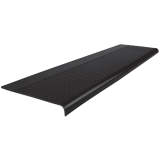 Diamond Design Rubber Stair Treads$71.00Diamond design rubber stair treads put a raised diamond field across the walking surface of a step and wrap a molded nose over the leading edge. They come in two nose profiles: a square nose for steps with a squared-off edge, and a round nose shaped to a 3/4 inch
...
Diamond design rubber stair treads put a raised diamond field across the walking surface of a step and wrap a...
Diamond design rubber stair treads put a raised diamond field across the walking surface of a step and wrap a molded nose over the leading edge. They come in two nose profiles: a square nose for steps with a squared-off edge, and a round nose shaped to a 3/4 inch radius for bullnose steps.
Picking the wrong one is the most common way this goes badly. The two configurations differ in depth, gauge, length range and whether the nose adjusts at all, so the decision has to happen before the order rather than on the stairs.
What a Rubber Stair Tread Does Before a Worn Nose Becomes the Thing People Trip On
Stairs fail at the front edge first. Every foot going up lands on the nose, and every foot coming down pushes off it. Concrete crumbles there, terrazzo polishes smooth, wood splinters and rounds over, and the edge that people rely on to judge where the step ends stops being a crisp line.
That matters more than the wear looks like it should. On a descending flight, people read the nosing rather than the tread, often at speed and often without looking directly at it. A rounded, chipped or shiny edge gives them worse information about where to put their foot.
The usual response is patching, and patching the nose of a stair rarely holds. A skim of repair mortar on a high-traffic edge takes the same abuse that destroyed the original and starts breaking up again within a season, this time with a joint underneath it to fail along.
A rubber tread cover takes that abuse instead of the step. The molded nose absorbs impact and rebuilds the visual edge, the diamond field gives the walking surface texture, and the whole assembly is replaceable when it wears rather than requiring the stair itself to be repaired. The full range of stair treads, risers and landing tiles is organised around that difference.
Why Two Nose Profiles, and Which One Your Stairs Take
The square nose version is the flexible one. It runs 12-1/16 inches deep from inside the nose at 3/16 inch thick, tapering to 1/8 inch at the back edge, with a 1-9/16 inch nose at 1/8 inch thick. Both tapered and adjustable, so it accommodates the variation you find in existing steps.
That adjustability is why it handles retrofit work well. Steps that have been walked on for thirty years are not uniform, and a nose with some give in it sits tight against edges that a rigid profile would bridge. It also comes in lengths from 36 inches to 108 inches, which covers wide institutional stairs without a joint.
The round nose version is a different part with a different job. It is shaped to a 3/4 inch radius to wrap a bullnose step, running 12-5/16 inches deep at 1/4 inch thick tapering to 3/16 inch, with a shorter 1-3/8 inch nose at 7/64 inch. It is heavier gauge across the whole tread.
The trade-off is that the round nose is neither tapered nor adjustable. The radius is fixed, so the step it goes on has to actually match it. Lengths also top out at 72 inches rather than 108, which rules it out for the widest stairs.
Read that as a decision rather than a preference. If the steps are squared off, the square nose is the answer and the adjustability is a bonus. If they are bullnosed, measure the radius before ordering, because a fixed 3/4 inch profile on a step with a different curve leaves either a gap under the nose or an edge standing proud of it.
Both configurations weigh 2.25 pounds per linear foot and carry the same raised diamond field. The pattern is a continuous field rather than a directional rib, so it presents the same texture whichever way a foot crosses it and does not create an edge running along the direction of travel.
Where It Belongs, and Where It Is Not the Right Tread
Specify it on interior stairs carrying steady traffic where the existing steps are structurally sound but worn at the edges: schools, offices, hospitals, apartment blocks, municipal buildings and back-of-house stairs. It works over concrete, terrazzo, wood and metal pan stairs, provided the surface underneath is solid and flat.
It is a strong retrofit choice specifically because it covers rather than replaces. A stair with chipped nosings and a scuffed walking surface can be brought back to a uniform finished condition without touching the structure, and each tread is independently replaceable afterward.
Where it is not the right answer is a stair that has lost its geometry. If noses are broken back an inch, if the tread surface has deep spalling, or if steps vary noticeably in depth from one to the next, a cover follows those problems rather than fixing them. Repair the substrate first or the finished stair shows every flaw.
It also is not a riser product. This covers the horizontal step and the leading edge only, so a stairwell that needs the vertical faces finished as well takes a separate riser or a one-piece tread and riser assembly instead.
Three Things to Check Before You Spec It
First, identify the nose profile on the actual stairs, not from the original drawings. Squared-off steps take the square nose. Bullnosed steps need the radius measured against the 3/4 inch round nose profile before anything is ordered. Buildings that have been renovated in stages sometimes have both in the same stairwell.
Second, measure the widest step and check it against the length range. The square nose configuration goes to 108 inches, the round nose to 72. Anything wider than the available length means a butt joint mid-step, which is a seam in exactly the spot you least want one.
Third, confirm depth against the actual tread. The square nose covers 12-1/16 inches from inside the nose, the round nose 12-5/16 inches. Stairs shallower than that need the tread trimmed at the back; stairs deeper than that leave an exposed strip behind the covering that has to be dealt with deliberately.
Why Mats Inc.
Most stair tread orders that go wrong go wrong on geometry, not on product choice. Somebody measures one step, assumes the rest match, and finds out at installation that the nose profile changes halfway up the flight. We have been supplying commercial stair coverings since 1964, and the useful half hour is the one spent measuring before anything is ordered.
Specification Square nose Round nose Lengths 36 in. to 108 in. 36 in. to 72 in. Depth from inside of nose 12-1/16 in. nominal 12-5/16 in. nominal Thickness 3/16 in. tapering to 1/8 in. 1/4 in. tapering to 3/16 in. Nose length 1-9/16 in. 1-3/8 in. Nose thickness 1/8 in. 7/64 in. Nose radius — 3/4 in. Tapered nose Yes No Adjustable nose Yes No Per carton 6 up to 72 in.; 4 for lengths over 6 ft. 6 Weight 2.25 lbs. per linear foot 2.25 lbs. per linear foot Surface Raised diamond pattern, continuous field Colorways 26 total — 13 solid, 13 marbleized Solid colors Black, chocolate, charcoal, wine, light gray, medium gray, red, sand, dark blue, brown, light blue, green, cream Marbleized colors Black, chocolate, charcoal, wine, light gray, medium gray, red, sand, dark blue, brown, light blue, green, cream Warranty 1-year limited (Mats Inc.); professional installation required for coverage Frequently Asked Questions
How do I tell which nose profile my stairs need?
Answered by Dustin Thompson, Owner & CEO
Look at the leading edge of a step from the side. If it comes to a squared corner, you want the square nose version. If it curves over, you want the round nose, and you need to check that the curve is close to a 3/4 inch radius rather than assuming it.
Check several steps, not one. Buildings renovated in phases often have different stair construction on different flights, and a landing rebuilt at some point may not match the flight above it. It is also worth checking the top and bottom steps specifically, because those get modified more often than the ones in between.
What happens if the nose profile is close but not exact?
Answered by Dustin Thompson, Owner & CEO
It depends which version you are fitting. The square nose is tapered and adjustable, so it absorbs a reasonable amount of variation and still sits tight against the edge. That tolerance is the practical reason it is the safer specification when the stairs are old and nobody is certain what they will find.
The round nose has no adjustment in it. The 3/4 inch radius is molded and fixed, so a step with a tighter or looser curve leaves a void under the nose or an edge standing proud. A void under a nose is the worst outcome, since it flexes underfoot, works the adhesive loose, and eventually becomes the loose edge somebody catches a toe on.
What does the step underneath need to look like, and how does it install?
Answered by Dustin Thompson, Owner & CEO
Sound, flat, clean and dry. Strip any previous covering and get the old adhesive off completely, because a ridge of dried mastic telegraphs straight through a 3/16 inch tread. Fill spalled areas and chipped nosings, and let patching material cure fully before anything goes over it.
Treads are cut to length on site and bedded in full-spread adhesive, worked from the nose backward so air escapes rather than getting trapped at the front edge. Let the cartons acclimate to room temperature first, and keep the flight closed until the adhesive has set. Most crews do a stairwell in halves so the building keeps a usable route.
What do the colors look like, and which suit a busy stairwell?
Answered by Jinna Hopson, Vice President of Marketing
Twenty-six in total, and they pair up: thirteen solids with a marbleized version of each. The range covers the expected neutrals in black, charcoal, light and medium gray, plus warmer options in chocolate, brown, sand and cream, and stronger tones including wine, red, green and two blues.
For a working stairwell, the marbleized version of whatever color you like is almost always the better call. The swirl breaks up the surface so scuffs, tracked grit and the sheen that develops in the main walking path disappear into the pattern. A flat solid on a busy flight shows every mark until the next deep clean.
Can the treads contrast with the rest of the stairwell?
Answered by Jinna Hopson, Vice President of Marketing
They can, and a deliberate contrast is often the better design decision. Running darker treads against a lighter landing, or the reverse, makes the change in level obvious to anyone glancing down a flight, which is worth real consideration in a stairwell that is not brightly lit.
A matching landing tile in the same diamond pattern is available if you would rather the surface read as continuous from the bottom step onto the floor. Either approach works. What tends to look unresolved is the near-match, where the landing almost agrees with the treads but sits slightly off, which reads as a mistake rather than a choice.
How many do I order, and what ships in a carton?
Answered by Jinna Hopson, Vice President of Marketing
Count the steps, measure the widest one, and order to that length so everything can be trimmed down on site. Square nose treads ship six to a carton up to 72 inches and four to a carton above six feet. Round nose treads ship six to a carton. Both run 2.25 pounds per linear foot.
Add a spare piece to the order. Color runs vary between production batches, so a replacement tread bought a year later may sit visibly against its neighbors, and a single damaged step over a stairwell's life is routine rather than unusual. One extra piece turns that into a straight swap.
By Dustin Thompson, Owner & CEO, Mats Inc.
↑
Diamond design rubber stair treads put a raised diamond field across the walking surface of a step and wrap a molded nose over the leading edge. They come in two nose profiles: a square nose for steps with a squared-off edge, and a round nose shaped to a 3/4 inch radius for bullnose steps.
Picking the wrong one is the most common way this goes badly. The two configurations differ in depth, gauge, length range and whether the nose adjusts at all, so the decision has to happen before the order rather than on the stairs.
What a Rubber Stair Tread Does Before a Worn Nose Becomes the Thing People Trip On
Stairs fail at the front edge first. Every foot going up lands on the nose, and every foot coming down pushes off it. Concrete crumbles there, terrazzo polishes smooth, wood splinters and rounds over, and the edge that people rely on to judge where the step ends stops being a crisp line.
That matters more than the wear looks like it should. On a descending flight, people read the nosing rather than the tread, often at speed and often without looking directly at it. A rounded, chipped or shiny edge gives them worse information about where to put their foot.
The usual response is patching, and patching the nose of a stair rarely holds. A skim of repair mortar on a high-traffic edge takes the same abuse that destroyed the original and starts breaking up again within a season, this time with a joint underneath it to fail along.
A rubber tread cover takes that abuse instead of the step. The molded nose absorbs impact and rebuilds the visual edge, the diamond field gives the walking surface texture, and the whole assembly is replaceable when it wears rather than requiring the stair itself to be repaired. The full range of stair treads, risers and landing tiles is organised around that difference.
Why Two Nose Profiles, and Which One Your Stairs Take
The square nose version is the flexible one. It runs 12-1/16 inches deep from inside the nose at 3/16 inch thick, tapering to 1/8 inch at the back edge, with a 1-9/16 inch nose at 1/8 inch thick. Both tapered and adjustable, so it accommodates the variation you find in existing steps.
That adjustability is why it handles retrofit work well. Steps that have been walked on for thirty years are not uniform, and a nose with some give in it sits tight against edges that a rigid profile would bridge. It also comes in lengths from 36 inches to 108 inches, which covers wide institutional stairs without a joint.
The round nose version is a different part with a different job. It is shaped to a 3/4 inch radius to wrap a bullnose step, running 12-5/16 inches deep at 1/4 inch thick tapering to 3/16 inch, with a shorter 1-3/8 inch nose at 7/64 inch. It is heavier gauge across the whole tread.
The trade-off is that the round nose is neither tapered nor adjustable. The radius is fixed, so the step it goes on has to actually match it. Lengths also top out at 72 inches rather than 108, which rules it out for the widest stairs.
Read that as a decision rather than a preference. If the steps are squared off, the square nose is the answer and the adjustability is a bonus. If they are bullnosed, measure the radius before ordering, because a fixed 3/4 inch profile on a step with a different curve leaves either a gap under the nose or an edge standing proud of it.
Both configurations weigh 2.25 pounds per linear foot and carry the same raised diamond field. The pattern is a continuous field rather than a directional rib, so it presents the same texture whichever way a foot crosses it and does not create an edge running along the direction of travel.
Where It Belongs, and Where It Is Not the Right Tread
Specify it on interior stairs carrying steady traffic where the existing steps are structurally sound but worn at the edges: schools, offices, hospitals, apartment blocks, municipal buildings and back-of-house stairs. It works over concrete, terrazzo, wood and metal pan stairs, provided the surface underneath is solid and flat.
It is a strong retrofit choice specifically because it covers rather than replaces. A stair with chipped nosings and a scuffed walking surface can be brought back to a uniform finished condition without touching the structure, and each tread is independently replaceable afterward.
Where it is not the right answer is a stair that has lost its geometry. If noses are broken back an inch, if the tread surface has deep spalling, or if steps vary noticeably in depth from one to the next, a cover follows those problems rather than fixing them. Repair the substrate first or the finished stair shows every flaw.
It also is not a riser product. This covers the horizontal step and the leading edge only, so a stairwell that needs the vertical faces finished as well takes a separate riser or a one-piece tread and riser assembly instead.
Three Things to Check Before You Spec It
First, identify the nose profile on the actual stairs, not from the original drawings. Squared-off steps take the square nose. Bullnosed steps need the radius measured against the 3/4 inch round nose profile before anything is ordered. Buildings that have been renovated in stages sometimes have both in the same stairwell.
Second, measure the widest step and check it against the length range. The square nose configuration goes to 108 inches, the round nose to 72. Anything wider than the available length means a butt joint mid-step, which is a seam in exactly the spot you least want one.
Third, confirm depth against the actual tread. The square nose covers 12-1/16 inches from inside the nose, the round nose 12-5/16 inches. Stairs shallower than that need the tread trimmed at the back; stairs deeper than that leave an exposed strip behind the covering that has to be dealt with deliberately.
Why Mats Inc.
Most stair tread orders that go wrong go wrong on geometry, not on product choice. Somebody measures one step, assumes the rest match, and finds out at installation that the nose profile changes halfway up the flight. We have been supplying commercial stair coverings since 1964, and the useful half hour is the one spent measuring before anything is ordered.
Specification Square nose Round nose Lengths 36 in. to 108 in. 36 in. to 72 in. Depth from inside of nose 12-1/16 in. nominal 12-5/16 in. nominal Thickness 3/16 in. tapering to 1/8 in. 1/4 in. tapering to 3/16 in. Nose length 1-9/16 in. 1-3/8 in. Nose thickness 1/8 in. 7/64 in. Nose radius — 3/4 in. Tapered nose Yes No Adjustable nose Yes No Per carton 6 up to 72 in.; 4 for lengths over 6 ft. 6 Weight 2.25 lbs. per linear foot 2.25 lbs. per linear foot Surface Raised diamond pattern, continuous field Colorways 26 total — 13 solid, 13 marbleized Solid colors Black, chocolate, charcoal, wine, light gray, medium gray, red, sand, dark blue, brown, light blue, green, cream Marbleized colors Black, chocolate, charcoal, wine, light gray, medium gray, red, sand, dark blue, brown, light blue, green, cream Warranty 1-year limited (Mats Inc.); professional installation required for coverage Frequently Asked Questions
How do I tell which nose profile my stairs need?
Answered by Dustin Thompson, Owner & CEO
Look at the leading edge of a step from the side. If it comes to a squared corner, you want the square nose version. If it curves over, you want the round nose, and you need to check that the curve is close to a 3/4 inch radius rather than assuming it.
Check several steps, not one. Buildings renovated in phases often have different stair construction on different flights, and a landing rebuilt at some point may not match the flight above it. It is also worth checking the top and bottom steps specifically, because those get modified more often than the ones in between.
What happens if the nose profile is close but not exact?
Answered by Dustin Thompson, Owner & CEO
It depends which version you are fitting. The square nose is tapered and adjustable, so it absorbs a reasonable amount of variation and still sits tight against the edge. That tolerance is the practical reason it is the safer specification when the stairs are old and nobody is certain what they will find.
The round nose has no adjustment in it. The 3/4 inch radius is molded and fixed, so a step with a tighter or looser curve leaves a void under the nose or an edge standing proud. A void under a nose is the worst outcome, since it flexes underfoot, works the adhesive loose, and eventually becomes the loose edge somebody catches a toe on.
What does the step underneath need to look like, and how does it install?
Answered by Dustin Thompson, Owner & CEO
Sound, flat, clean and dry. Strip any previous covering and get the old adhesive off completely, because a ridge of dried mastic telegraphs straight through a 3/16 inch tread. Fill spalled areas and chipped nosings, and let patching material cure fully before anything goes over it.
Treads are cut to length on site and bedded in full-spread adhesive, worked from the nose backward so air escapes rather than getting trapped at the front edge. Let the cartons acclimate to room temperature first, and keep the flight closed until the adhesive has set. Most crews do a stairwell in halves so the building keeps a usable route.
What do the colors look like, and which suit a busy stairwell?
Answered by Jinna Hopson, Vice President of Marketing
Twenty-six in total, and they pair up: thirteen solids with a marbleized version of each. The range covers the expected neutrals in black, charcoal, light and medium gray, plus warmer options in chocolate, brown, sand and cream, and stronger tones including wine, red, green and two blues.
For a working stairwell, the marbleized version of whatever color you like is almost always the better call. The swirl breaks up the surface so scuffs, tracked grit and the sheen that develops in the main walking path disappear into the pattern. A flat solid on a busy flight shows every mark until the next deep clean.
Can the treads contrast with the rest of the stairwell?
Answered by Jinna Hopson, Vice President of Marketing
They can, and a deliberate contrast is often the better design decision. Running darker treads against a lighter landing, or the reverse, makes the change in level obvious to anyone glancing down a flight, which is worth real consideration in a stairwell that is not brightly lit.
A matching landing tile in the same diamond pattern is available if you would rather the surface read as continuous from the bottom step onto the floor. Either approach works. What tends to look unresolved is the near-match, where the landing almost agrees with the treads but sits slightly off, which reads as a mistake rather than a choice.
How many do I order, and what ships in a carton?
Answered by Jinna Hopson, Vice President of Marketing
Count the steps, measure the widest one, and order to that length so everything can be trimmed down on site. Square nose treads ship six to a carton up to 72 inches and four to a carton above six feet. Round nose treads ship six to a carton. Both run 2.25 pounds per linear foot.
Add a spare piece to the order. Color runs vary between production batches, so a replacement tread bought a year later may sit visibly against its neighbors, and a single damaged step over a stairwell's life is routine rather than unusual. One extra piece turns that into a straight swap.
By Dustin Thompson, Owner & CEO, Mats Inc.
↑
View Details
View Details
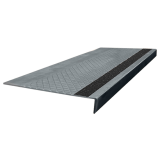 Diamond Design Rubber Stair Treads with Abrasive Strips$75.00These are diamond design rubber stair treads with a safety insert running along the leading edge. The insert is molded into the tread rather than applied to a finished surface, and it comes two ways: as abrasive grit strips, or as a ribbed or smooth rubber strip in a contrasting
...
These are diamond design rubber stair treads with a safety insert running along the leading edge. The insert is molded...
These are diamond design rubber stair treads with a safety insert running along the leading edge. The insert is molded into the tread rather than applied to a finished surface, and it comes two ways: as abrasive grit strips, or as a ribbed or smooth rubber strip in a contrasting color.
Both treat the part of the step that carries descending weight, and both are permanent parts of the tread rather than something applied afterward. Which one a building needs comes down to whether the concern is traction underfoot, visibility of the step edge, or both at once.
What an Inlaid Safety Insert Does Before a Stairwell Starts Generating Incident Reports
A plain rubber tread relies on its molded pattern for texture. That works while the surface is dry and clean. Add rain tracked in from a lobby, a spilled drink, or the film of dust that builds on any stair between cleanings, and a molded pattern gives up a lot of what it had.
The nose is where that matters. Descending traffic loads the front two or three inches of every step, often at speed, and a foot that slides there has nowhere to recover to. That is the geometry behind most stairwell falls, and it is why a defined leading-edge treatment is worth more than uniform texture across the whole tread.
Stick-on grit tape is the usual improvised answer and a poor one. The adhesive edge lifts, cleaning equipment catches it, and within a year the strips are curling, half-missing and doing a worse job than nothing while making the whole stairwell look neglected into the bargain.
An inlaid insert is part of the tread instead. No separate adhesive layer to fail, no raised edge for a mop to catch, no maintenance task attached. It wears at roughly the rate the tread wears, so the safety surface lasts as long as the covering does. The full range of stair treads, risers and landing tiles includes both treated and untreated versions of most patterns.
Why an Inlaid Insert, and Which Configuration Your Building Needs
Start with the tread underneath, because it is the same one either way. The raised diamond field covers 8-1/4 inches of the walking surface with a 3 inch smooth back, so the pattern sits where feet land rather than running to the rear edge where it would only complicate cleaning.
The round nose version is the heavier gauge of the two: 1/4 inch tapering to 3/16 inch, 12-5/16 inches deep, with a 1-3/8 inch nose shaped to a 3/4 inch radius. It is neither tapered nor adjustable, and it runs in seven lengths from 36 to 72 inches. The square nose version is 3/16 inch tapering to 1/8 inch, 12-1/16 inches deep, with a tapered and adjustable 1-9/16 inch nose and lengths to 108 inches.
Now the insert. Abrasive grit is the choice where traction is the whole point, and it comes in eight colors: safety yellow, black, pebble white, ocean gray, teak brown, beige, galley red, and a glow strip. Ribbed or smooth rubber inserts are the alternative, available in safety yellow, almond, black, dark gray and brown.
The difference is what each one is really for. Grit gives a genuinely different surface texture under a shoe. A rubber insert gives a colour break and a change in surface without the abrasive bite, which suits a building that wants the step edge marked clearly but does not want a rough band underfoot.
Colour choice does more work here than people expect. Safety yellow against a charcoal or black tread is the strongest contrast available and reads from the top of a flight. Beige or ocean gray against a similar tread nearly disappears, which is right where the insert is there for footing rather than for marking. The glow strip is worth knowing about for stairwells that go dark during a power interruption.
On the round nose version, tested performance is documented. The static coefficient of friction measures 0.50 or better under ASTM D2047, and the tread classifies as Type TS, Class 2, Group 1 and 2, Grade 1 under ASTM F2169. It carries a Class 1 critical radiant flux rating at 0.45 W/cm² or better.
Where It Belongs, and Where It Is Not the Right Tread
Specify it on interior stairs in commercial, industrial and institutional buildings where slip resistance is an active concern rather than an afterthought: schools, hospitals, transit buildings, factories, municipal stairwells, and any flight people regularly descend while carrying something that blocks their view of the steps.
It earns its place particularly on the first flight inside an entrance. That stair takes tracked-in water for months of the year and is the single most predictable slip location in most buildings. It also suits any stairwell where a review, an insurer, or a facility standard has asked for a defined leading-edge treatment.
The compliance profile matters on public and institutional work. The round nose version carries FloorScore, GREENGUARD Gold and NSF/ANSI 332 Platinum, and contributes to LEED v4 and v4.1. It is made in the USA and meets both the Buy America and Buy American Acts, which is frequently the deciding factor on federally funded projects.
This is an interior product, and that is a manufacturer position rather than a caution. Only one rubber tread in the range is recommended for exterior use, and this is not it. Freeze-thaw cycling and UV exposure both attack a compound formulated for indoor service, so an outdoor flight needs a tread built for it.
It is also not a fix for a stair that has lost its shape. An insert addresses traction and visibility, not geometry. Steps that vary noticeably in depth, badly spalled treads and broken nosings all need attention before a covering goes over them, because a tread follows those problems rather than correcting them.
Three Things to Check Before You Spec It
First, check the gap between the step nose and the tread radius. Most current construction uses a metal pan filled with concrete at a 1/2 inch maximum nose radius, which fits without help. On worn metal, wood or existing flooring, a gap over 1/4 inch requires an epoxy nose filler, and a gap of 1/2 inch or more means the substrate needs preparing another way entirely.
Second, settle the insert type and colour before ordering. Grit and rubber inserts are different products and neither can be changed once the tread is molded. If an accessibility review is anywhere in the project, or the stairwell is part of an egress route, get the requirement in writing rather than choosing by default.
Third, plan for pattern alignment on wide stairs. Treads are made to be trimmed on both ends and on the depth, and the manufacturer recommends ordering the next size up where a wide stairwell needs the diamond pattern to line up across a butted joint. Dry fit before any adhesive goes down.
Why Mats Inc.
Grit-insert treads usually get specified after something has already happened, which means the decision gets made fast and often gets made wrong. We have been supplying commercial stair coverings since 1964, and the questions worth answering first are which flights actually present the risk, whether anyone is applying an accessibility or procurement standard to the job, and what shape the existing noses are in.
Specification Square nose Round nose Lengths 36 in. to 108 in. 36 in. to 72 in. Depth from inside of nose 12-1/16 in. 12-5/16 in. Thickness 3/16 in. tapering to 1/8 in. 1/4 in. tapering to 3/16 in. Nose 1-9/16 in.; tapered and adjustable 1-3/8 in. at 3/4 in. radius; fixed Diamond surface 8-1/4 in. deep with a 3 in. smooth back Insert options Abrasive grit in 8 colors, including a glow strip; or ribbed / smooth rubber in 5 colors Tread colorways 26 — 13 solid, each with a marbleized version Weight 2.25 lbs. per linear foot Application Interior only; 48-hour acclimation before installation Adhesive Wet-set acrylic, contact, urethane, or urethane-enhanced epoxy; epoxy nose filler where required Warranty 1-year limited (Mats Inc.); professional installation required for coverage Tested performance — round nose with insert Slip resistance Static coefficient of friction ≥0.50 (ASTM D2047, dry) Fire performance Class 1 critical radiant flux, ≥0.45 W/cm² (ASTM E648); passes smoke density (ASTM E662) Certifications FloorScore; GREENGUARD Gold; NSF/ANSI 332 Platinum; contributes to LEED v4 / v4.1 Sourcing Made in the USA; meets Buy America and Buy American Acts Frequently Asked Questions
How is an inlaid insert different from stick-on stair tape?
Answered by Dustin Thompson, Owner & CEO
The insert is set into the tread during manufacture rather than applied to a finished surface. There is no separate adhesive layer, no raised edge sitting proud of the rubber, and nothing for a mop head or a scrubber brush to catch and start lifting.
Stick-on tape fails predictably. An edge lifts, dirt gets underneath, cleaning accelerates it, and within a year you have curling strips that look worse than a bare tread and no longer do the job. An inlaid insert wears down with the tread around it instead, so it stays flush and stays functional for the life of the covering.
What does the coefficient of friction figure actually tell me?
Answered by Dustin Thompson, Owner & CEO
The round nose version measures 0.50 or better under ASTM D2047, using a James Machine with a leather foot under dry conditions. That is the number most specifications ask for, and it is worth knowing it is a dry-condition test rather than a wet one.
Read it as a documented baseline rather than a guarantee. The ADA standard asks that a floor surface be stable, firm and slip resistant without setting a numeric threshold, so the figure supports a specification rather than satisfying one outright. Site-applied finishes, polishes and sealers all change the walking surface, which is a good argument for keeping maintenance simple on a stair.
How does it fit an existing step, and when do I need a nose filler?
Answered by Dustin Thompson, Owner & CEO
Most current construction is a metal formed pan filled with concrete, at a nose radius of 1/2 inch maximum under ADA guidance. On those steps the round nose tread fits directly and no filler is needed, provided the tread is fitted tight to the substrate.
Older or worn substrates are different. Check the gap between the tread radius and the step edge: over 1/4 inch, an epoxy nose filler is required to close it. At 1/2 inch or more, the substrate itself needs preparing by other means before a tread goes on. A void under a nose flexes underfoot, works the adhesive loose, and eventually becomes the loose edge somebody catches. Filler is always acceptable to use even where it is not required.
Grit strip or rubber insert, and what colour?
Answered by Jinna Hopson, Vice President of Marketing
Grit gives an abrasive texture underfoot and comes in eight colours, from safety yellow and galley red through neutrals like pebble white, ocean gray, beige and teak brown, plus black as the quiet default and a glow strip option. Rubber inserts come ribbed or smooth in five colours and give a colour break without the rough band.
Choose the colour against the tread deliberately. Safety yellow on charcoal or black is the strongest contrast available and marks each step edge clearly from the top of a flight. Beige or ocean gray against a similar tread nearly disappears, which suits a lobby stair where the insert is there for footing rather than for marking. The combination to avoid is one that neither matches nor contrasts.
Can the treads still coordinate with the rest of the stairwell?
Answered by Jinna Hopson, Vice President of Marketing
Yes, and it is worth planning. The tread body comes in the full range of twenty-six colours, thirteen solids each with a marbleized version, so it can match risers, landing tile and anything else in the stairwell exactly as an untreated tread would. The insert then sits as a deliberate line on top of that.
Marbleized versions are the more forgiving choice on a working flight. Swirled tones break up the surface so scuffs and the sheen that develops along the main walking path fold into the pattern rather than standing out. A flat solid shows every mark until the next deep clean, which matters more on stairs than almost anywhere else in a building.
How do I work out what to order?
Answered by Jinna Hopson, Vice President of Marketing
Count the steps and measure the widest one. Round nose treads come in seven lengths from 36 to 72 inches; square nose runs to 108. Treads are made to be trimmed on both ends and on the depth, so order to the widest step and cut down from there rather than ordering to an average.
On a wide stairwell where the diamond pattern needs to line up across a butted joint, order the next size up and dry fit the whole flight before any adhesive goes down. Add a spare piece too, since colour runs vary between batches and a replacement bought a year later may sit visibly against its neighbours.
By Dustin Thompson, Owner & CEO, Mats Inc.
↑
These are diamond design rubber stair treads with a safety insert running along the leading edge. The insert is molded into the tread rather than applied to a finished surface, and it comes two ways: as abrasive grit strips, or as a ribbed or smooth rubber strip in a contrasting color.
Both treat the part of the step that carries descending weight, and both are permanent parts of the tread rather than something applied afterward. Which one a building needs comes down to whether the concern is traction underfoot, visibility of the step edge, or both at once.
What an Inlaid Safety Insert Does Before a Stairwell Starts Generating Incident Reports
A plain rubber tread relies on its molded pattern for texture. That works while the surface is dry and clean. Add rain tracked in from a lobby, a spilled drink, or the film of dust that builds on any stair between cleanings, and a molded pattern gives up a lot of what it had.
The nose is where that matters. Descending traffic loads the front two or three inches of every step, often at speed, and a foot that slides there has nowhere to recover to. That is the geometry behind most stairwell falls, and it is why a defined leading-edge treatment is worth more than uniform texture across the whole tread.
Stick-on grit tape is the usual improvised answer and a poor one. The adhesive edge lifts, cleaning equipment catches it, and within a year the strips are curling, half-missing and doing a worse job than nothing while making the whole stairwell look neglected into the bargain.
An inlaid insert is part of the tread instead. No separate adhesive layer to fail, no raised edge for a mop to catch, no maintenance task attached. It wears at roughly the rate the tread wears, so the safety surface lasts as long as the covering does. The full range of stair treads, risers and landing tiles includes both treated and untreated versions of most patterns.
Why an Inlaid Insert, and Which Configuration Your Building Needs
Start with the tread underneath, because it is the same one either way. The raised diamond field covers 8-1/4 inches of the walking surface with a 3 inch smooth back, so the pattern sits where feet land rather than running to the rear edge where it would only complicate cleaning.
The round nose version is the heavier gauge of the two: 1/4 inch tapering to 3/16 inch, 12-5/16 inches deep, with a 1-3/8 inch nose shaped to a 3/4 inch radius. It is neither tapered nor adjustable, and it runs in seven lengths from 36 to 72 inches. The square nose version is 3/16 inch tapering to 1/8 inch, 12-1/16 inches deep, with a tapered and adjustable 1-9/16 inch nose and lengths to 108 inches.
Now the insert. Abrasive grit is the choice where traction is the whole point, and it comes in eight colors: safety yellow, black, pebble white, ocean gray, teak brown, beige, galley red, and a glow strip. Ribbed or smooth rubber inserts are the alternative, available in safety yellow, almond, black, dark gray and brown.
The difference is what each one is really for. Grit gives a genuinely different surface texture under a shoe. A rubber insert gives a colour break and a change in surface without the abrasive bite, which suits a building that wants the step edge marked clearly but does not want a rough band underfoot.
Colour choice does more work here than people expect. Safety yellow against a charcoal or black tread is the strongest contrast available and reads from the top of a flight. Beige or ocean gray against a similar tread nearly disappears, which is right where the insert is there for footing rather than for marking. The glow strip is worth knowing about for stairwells that go dark during a power interruption.
On the round nose version, tested performance is documented. The static coefficient of friction measures 0.50 or better under ASTM D2047, and the tread classifies as Type TS, Class 2, Group 1 and 2, Grade 1 under ASTM F2169. It carries a Class 1 critical radiant flux rating at 0.45 W/cm² or better.
Where It Belongs, and Where It Is Not the Right Tread
Specify it on interior stairs in commercial, industrial and institutional buildings where slip resistance is an active concern rather than an afterthought: schools, hospitals, transit buildings, factories, municipal stairwells, and any flight people regularly descend while carrying something that blocks their view of the steps.
It earns its place particularly on the first flight inside an entrance. That stair takes tracked-in water for months of the year and is the single most predictable slip location in most buildings. It also suits any stairwell where a review, an insurer, or a facility standard has asked for a defined leading-edge treatment.
The compliance profile matters on public and institutional work. The round nose version carries FloorScore, GREENGUARD Gold and NSF/ANSI 332 Platinum, and contributes to LEED v4 and v4.1. It is made in the USA and meets both the Buy America and Buy American Acts, which is frequently the deciding factor on federally funded projects.
This is an interior product, and that is a manufacturer position rather than a caution. Only one rubber tread in the range is recommended for exterior use, and this is not it. Freeze-thaw cycling and UV exposure both attack a compound formulated for indoor service, so an outdoor flight needs a tread built for it.
It is also not a fix for a stair that has lost its shape. An insert addresses traction and visibility, not geometry. Steps that vary noticeably in depth, badly spalled treads and broken nosings all need attention before a covering goes over them, because a tread follows those problems rather than correcting them.
Three Things to Check Before You Spec It
First, check the gap between the step nose and the tread radius. Most current construction uses a metal pan filled with concrete at a 1/2 inch maximum nose radius, which fits without help. On worn metal, wood or existing flooring, a gap over 1/4 inch requires an epoxy nose filler, and a gap of 1/2 inch or more means the substrate needs preparing another way entirely.
Second, settle the insert type and colour before ordering. Grit and rubber inserts are different products and neither can be changed once the tread is molded. If an accessibility review is anywhere in the project, or the stairwell is part of an egress route, get the requirement in writing rather than choosing by default.
Third, plan for pattern alignment on wide stairs. Treads are made to be trimmed on both ends and on the depth, and the manufacturer recommends ordering the next size up where a wide stairwell needs the diamond pattern to line up across a butted joint. Dry fit before any adhesive goes down.
Why Mats Inc.
Grit-insert treads usually get specified after something has already happened, which means the decision gets made fast and often gets made wrong. We have been supplying commercial stair coverings since 1964, and the questions worth answering first are which flights actually present the risk, whether anyone is applying an accessibility or procurement standard to the job, and what shape the existing noses are in.
Specification Square nose Round nose Lengths 36 in. to 108 in. 36 in. to 72 in. Depth from inside of nose 12-1/16 in. 12-5/16 in. Thickness 3/16 in. tapering to 1/8 in. 1/4 in. tapering to 3/16 in. Nose 1-9/16 in.; tapered and adjustable 1-3/8 in. at 3/4 in. radius; fixed Diamond surface 8-1/4 in. deep with a 3 in. smooth back Insert options Abrasive grit in 8 colors, including a glow strip; or ribbed / smooth rubber in 5 colors Tread colorways 26 — 13 solid, each with a marbleized version Weight 2.25 lbs. per linear foot Application Interior only; 48-hour acclimation before installation Adhesive Wet-set acrylic, contact, urethane, or urethane-enhanced epoxy; epoxy nose filler where required Warranty 1-year limited (Mats Inc.); professional installation required for coverage Tested performance — round nose with insert Slip resistance Static coefficient of friction ≥0.50 (ASTM D2047, dry) Fire performance Class 1 critical radiant flux, ≥0.45 W/cm² (ASTM E648); passes smoke density (ASTM E662) Certifications FloorScore; GREENGUARD Gold; NSF/ANSI 332 Platinum; contributes to LEED v4 / v4.1 Sourcing Made in the USA; meets Buy America and Buy American Acts Frequently Asked Questions
How is an inlaid insert different from stick-on stair tape?
Answered by Dustin Thompson, Owner & CEO
The insert is set into the tread during manufacture rather than applied to a finished surface. There is no separate adhesive layer, no raised edge sitting proud of the rubber, and nothing for a mop head or a scrubber brush to catch and start lifting.
Stick-on tape fails predictably. An edge lifts, dirt gets underneath, cleaning accelerates it, and within a year you have curling strips that look worse than a bare tread and no longer do the job. An inlaid insert wears down with the tread around it instead, so it stays flush and stays functional for the life of the covering.
What does the coefficient of friction figure actually tell me?
Answered by Dustin Thompson, Owner & CEO
The round nose version measures 0.50 or better under ASTM D2047, using a James Machine with a leather foot under dry conditions. That is the number most specifications ask for, and it is worth knowing it is a dry-condition test rather than a wet one.
Read it as a documented baseline rather than a guarantee. The ADA standard asks that a floor surface be stable, firm and slip resistant without setting a numeric threshold, so the figure supports a specification rather than satisfying one outright. Site-applied finishes, polishes and sealers all change the walking surface, which is a good argument for keeping maintenance simple on a stair.
How does it fit an existing step, and when do I need a nose filler?
Answered by Dustin Thompson, Owner & CEO
Most current construction is a metal formed pan filled with concrete, at a nose radius of 1/2 inch maximum under ADA guidance. On those steps the round nose tread fits directly and no filler is needed, provided the tread is fitted tight to the substrate.
Older or worn substrates are different. Check the gap between the tread radius and the step edge: over 1/4 inch, an epoxy nose filler is required to close it. At 1/2 inch or more, the substrate itself needs preparing by other means before a tread goes on. A void under a nose flexes underfoot, works the adhesive loose, and eventually becomes the loose edge somebody catches. Filler is always acceptable to use even where it is not required.
Grit strip or rubber insert, and what colour?
Answered by Jinna Hopson, Vice President of Marketing
Grit gives an abrasive texture underfoot and comes in eight colours, from safety yellow and galley red through neutrals like pebble white, ocean gray, beige and teak brown, plus black as the quiet default and a glow strip option. Rubber inserts come ribbed or smooth in five colours and give a colour break without the rough band.
Choose the colour against the tread deliberately. Safety yellow on charcoal or black is the strongest contrast available and marks each step edge clearly from the top of a flight. Beige or ocean gray against a similar tread nearly disappears, which suits a lobby stair where the insert is there for footing rather than for marking. The combination to avoid is one that neither matches nor contrasts.
Can the treads still coordinate with the rest of the stairwell?
Answered by Jinna Hopson, Vice President of Marketing
Yes, and it is worth planning. The tread body comes in the full range of twenty-six colours, thirteen solids each with a marbleized version, so it can match risers, landing tile and anything else in the stairwell exactly as an untreated tread would. The insert then sits as a deliberate line on top of that.
Marbleized versions are the more forgiving choice on a working flight. Swirled tones break up the surface so scuffs and the sheen that develops along the main walking path fold into the pattern rather than standing out. A flat solid shows every mark until the next deep clean, which matters more on stairs than almost anywhere else in a building.
How do I work out what to order?
Answered by Jinna Hopson, Vice President of Marketing
Count the steps and measure the widest one. Round nose treads come in seven lengths from 36 to 72 inches; square nose runs to 108. Treads are made to be trimmed on both ends and on the depth, so order to the widest step and cut down from there rather than ordering to an average.
On a wide stairwell where the diamond pattern needs to line up across a butted joint, order the next size up and dry fit the whole flight before any adhesive goes down. Add a spare piece too, since colour runs vary between batches and a replacement bought a year later may sit visibly against its neighbours.
By Dustin Thompson, Owner & CEO, Mats Inc.
↑
View Details
View Details
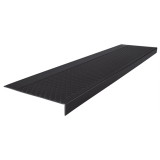 Rubber Outdoor Stair Tread$77.00What an outdoor rubber stair tread does before an exterior step turns slick Outdoor steps fail on a weather cycle, not a traffic cycle. Rain sits on a smooth surface and turns it into a slide. Freeze-thaw works into the concrete and rounds the leading edge. By the time a
...
What an outdoor rubber stair tread does before an exterior step turns slick Outdoor steps fail on a weather cycle,...
What an outdoor rubber stair tread does before an exterior step turns slick
Outdoor steps fail on a weather cycle, not a traffic cycle. Rain sits on a smooth surface and turns it into a slide. Freeze-thaw works into the concrete and rounds the leading edge. By the time a step reads as worn, it has usually been slick in bad weather for a season or two already.
Rubber outdoor stair treads cover that surface with a raised diamond pattern. The pattern is doing real work: the raised diamonds carry the load while the channels between them give water somewhere to go, so a shoe contacts high points instead of floating on a film. That is the mechanism behind traction on a wet exterior step.
The square nose wraps the leading edge and drops 1-9/16 inches down the riser face. That matters more outdoors than in, because the nose is where ice forms first, where a foot lands on the way down, and where a concrete step chips and crumbles. Covering it protects the edge and puts grip exactly where the descent commits weight.
The back three inches of the tread are molded smooth rather than patterned. Debris does not pack into a pattern that is not there, so leaves, sand, and ice melt sweep off the back border instead of building up against the riser where they hold moisture.
Why an exterior rubber compound, and why this profile
Most rubber stair treads are built for interior service. Put one outside and the compound is the part that gives up first: it hardens in cold, chalks under sun, and loses its bond when water works under the edge. This tread is molded from a compound formulated specifically for exterior use, which is the whole reason it exists as a separate product.
Thickness runs 3/16 of an inch at the front and tapers to 1/8 inch toward the back. The taper is deliberate. Material sits where impact lands and where a nose takes abuse, and thins out toward the back edge so the tread feathers into the step rather than creating a lip that catches a toe or peels up under a snow shovel.
The tread weighs 2 pounds per linear foot. On a 60-inch step that is roughly 10 pounds of material sitting on a single tread, which is part of why it stays put under freeze-thaw movement instead of curling at the corners the way a thin mat does.
A trim mark is molded into the smooth back border. It gives an installer a reference line to cut against in the field, so a tread can be brought down to a non-standard depth on site without guessing where to run the blade. Standard lengths run 36, 42, 48, 54, 60, and 72 inches, square nose only.
One thing is not optional: this tread bonds with #775 epoxy adhesive. The contact and water-based adhesives used on interior treads are not rated for the moisture and temperature swing an exterior step sees, and substituting one is the most common reason an outdoor tread lifts within a year.
Where it belongs, and where it is not the answer
This is a heavy-traffic exterior tread. The applications it was built around are ice rinks, sports arenas, and high-traffic entryways — places where footwear arrives wet, cold, and often cleated or studded, and where the volume of people through a stairway is high enough that a general-purpose covering does not last.
Beyond that, it earns its place on any stairway where weather and traffic stack up together: building entrances, loading dock steps, stadium and bleacher stairs, exterior egress stairs on parking structures, and concrete steps at service entrances. It fits well alongside other exterior stair treads where the substrate is sound concrete, steel, or wood.
Where it is not the answer: this is not an interior product. Indoors, the color range and adhesive options on interior-rated rubber treads are wider, and there is no reason to give those up. It also comes in black only, so if a design requires a specific stairway color, this is not the tread that delivers it.
It is also not a fix for a failing step. Epoxy needs a sound, clean surface to bond to. Spalling concrete, a crumbled nose, or a soft wood stringer all have to be repaired and leveled first — otherwise the tread bonds to material that is already on its way off the step.
Three Things to Check Before You Spec It
First, confirm the step depth against 12-1/16 inches. That is the depth from the inside of the nose back. If your steps run shallower, the trim mark in the smooth back border is your cut line and the tread comes down cleanly. If your steps run deeper than that, you will have an exposed strip at the back of every step, and the answer is usually a landing tile or riser treatment rather than forcing the tread.
Second, measure step width and map it to the standard lengths. Standard runs are 36, 42, 48, 54, 60, and 72 inches. A tread cut down from the next size up looks intentional; a tread that lands short of the stringer does not, and it leaves an exposed edge where water gets underneath. Work out the length per step before ordering, not per stairway, because exterior stairs are less consistent step to step than interior ones.
Third, plan the substrate prep and the epoxy. The surface has to be clean, sound, and dry when the epoxy goes down, which on an exterior job means watching the forecast and the surface temperature, not just the calendar. Smooth concrete, terrazzo, and steel all need to be roughed up so the epoxy has something to key into. Order the #775 epoxy with the treads so nothing gets substituted on site.
Why Mats Inc.
The mistake we catch most often on exterior stair jobs is an interior tread ordered for an outdoor step, usually because the specs looked close enough on paper. They are not close: different compound, different adhesive, different service life outdoors. We ask where the stair is and what hits it before we quote, and if the answer is weather, we route you to a tread rated for it. Sixty years of shipping into commercial and industrial work is mostly what that habit is built from.
Rubber Outdoor Stair Tread — Specifications Material Rubber, compound formulated for exterior use Surface Raised diamond pattern with 3" smooth back border Depth 12-1/16" nominal from inside of nose Thickness 3/16" tapering to 1/8" Nose Square, 1-9/16" drop, 1/8" thick Standard lengths 36", 42", 48", 54", 60", 72" Weight 2 lbs. per linear foot Color Black Field trimming Trim mark molded into the smooth back border Adhesive #775 epoxy adhesive (required) Application Exterior Warranty 1-year limited (Mats Inc.) Frequently Asked Questions
What makes this different from a standard rubber stair tread?
Answered by Dustin Thompson, Owner & CEO, Mats Inc.
The compound. Interior rubber treads and this one can look similar on a spec sheet, but the rubber itself is mixed for different service. This one is formulated for outdoor exposure, which is why it is the tread we point people to for exterior stairs and why we do not treat an interior tread as a substitute when the price looks close.
The profile is built around the same idea. A raised diamond surface with channels between the diamonds gives water a path off the tread rather than a film to sit on. The back three inches are molded smooth so debris sweeps off instead of packing in. Every one of those choices is answering weather, not foot traffic.
How does it hold up to constant traffic and weather?
Answered by Dustin Thompson, Owner & CEO, Mats Inc.
The material is where it starts. Thickness is 3/16 of an inch at the front, tapering to 1/8 inch at the back, and the tread runs 2 pounds per linear foot. That mass and thickness are concentrated at the nose and the walking area, which is exactly where an exterior step takes impact and abrasion. Ice rinks and arenas are named applications for a reason — that is footwear designed to chew up a surface.
The failure we actually see is almost never the rubber. It is the bond. An exterior tread put down with an interior adhesive lifts at the corners in the first freeze-thaw season, water gets underneath, and it goes downhill from there. Use the #775 epoxy on a clean, dry, sound surface and this stays where you put it. Our warranty is 1-year limited.
What surfaces can it be installed on outdoors?
Answered by Dustin Thompson, Owner & CEO, Mats Inc.
Concrete, steel, and wood all work, provided they are sound and prepared. Smooth surfaces such as troweled concrete, terrazzo, or painted steel need to be roughed up so the epoxy has something to grab. Anything dirty, oily, or damp gets cleaned and dried first — epoxy is unforgiving about what it is asked to stick to.
What it cannot do is compensate for a step that is coming apart. If the concrete is spalling or the nose has broken away, patch and level before the tread goes down. I would also flag surface temperature on exterior work: crews plan around rain but forget that a cold slab slows the epoxy cure, and a tread walked on before it has set will move.
My steps are not a standard size — can these be cut to fit?
Answered by Jinna Hopson, Vice President of Marketing, Mats Inc.
Yes, in both directions, and the tread is designed for it. Depth is 12-1/16 inches measured from the inside of the nose, and there is a trim mark molded into the smooth back border that gives your installer a reference line to cut against. That means a shallower step gets a clean, straight cut instead of a freehand one.
Length works by trimming down from the next standard size up. Standard runs are 36, 42, 48, 54, 60, and 72 inches. Measure each step individually rather than assuming a stairway is consistent — exterior stairs settle and get patched over the years, and it is common to find a half-inch of variation between the top and bottom of a flight.
It only comes in black — is that a problem for a visible entrance?
Answered by Jinna Hopson, Vice President of Marketing, Mats Inc.
Black is the only color, and for most exterior stairways it turns out to be the practical choice anyway. Outdoor steps collect road grit, salt residue, and mud, and a lighter tread shows every bit of it between cleanings. Black reads as finished and intentional at a service entrance or a loading dock rather than looking like a patch.
Where it is worth pausing is a formal front entrance with a specific palette, or a stairway where you want a high-contrast leading edge for visibility. Neither is available here. If that is the requirement, tell us before you order and we will look at what else covers exterior duty, because working around a color limitation after installation is not really possible.
Can I match risers and landings to the treads?
Answered by Jinna Hopson, Vice President of Marketing, Mats Inc.
Partly, and it is worth planning up front rather than discovering it mid-install. This tread covers the step surface and the nose, and the 1-9/16 inch nose drop covers the very top of the riser face. Everything below that on the riser, and any landing at the top or bottom of the flight, is a separate item.
On an exterior stairway most facilities handle the risers with paint or a coating rather than a covering, since the riser face does not take foot traffic and a black tread against a painted riser looks deliberate. Landings are the piece people forget, and a landing at the head of an exterior flight is often the wettest surface in the whole assembly. Bring us the full stairway dimensions and we will work out what covers what.
Written by Dustin Thompson, Owner & CEO, Mats Inc.
↑
What an outdoor rubber stair tread does before an exterior step turns slick
Outdoor steps fail on a weather cycle, not a traffic cycle. Rain sits on a smooth surface and turns it into a slide. Freeze-thaw works into the concrete and rounds the leading edge. By the time a step reads as worn, it has usually been slick in bad weather for a season or two already.
Rubber outdoor stair treads cover that surface with a raised diamond pattern. The pattern is doing real work: the raised diamonds carry the load while the channels between them give water somewhere to go, so a shoe contacts high points instead of floating on a film. That is the mechanism behind traction on a wet exterior step.
The square nose wraps the leading edge and drops 1-9/16 inches down the riser face. That matters more outdoors than in, because the nose is where ice forms first, where a foot lands on the way down, and where a concrete step chips and crumbles. Covering it protects the edge and puts grip exactly where the descent commits weight.
The back three inches of the tread are molded smooth rather than patterned. Debris does not pack into a pattern that is not there, so leaves, sand, and ice melt sweep off the back border instead of building up against the riser where they hold moisture.
Why an exterior rubber compound, and why this profile
Most rubber stair treads are built for interior service. Put one outside and the compound is the part that gives up first: it hardens in cold, chalks under sun, and loses its bond when water works under the edge. This tread is molded from a compound formulated specifically for exterior use, which is the whole reason it exists as a separate product.
Thickness runs 3/16 of an inch at the front and tapers to 1/8 inch toward the back. The taper is deliberate. Material sits where impact lands and where a nose takes abuse, and thins out toward the back edge so the tread feathers into the step rather than creating a lip that catches a toe or peels up under a snow shovel.
The tread weighs 2 pounds per linear foot. On a 60-inch step that is roughly 10 pounds of material sitting on a single tread, which is part of why it stays put under freeze-thaw movement instead of curling at the corners the way a thin mat does.
A trim mark is molded into the smooth back border. It gives an installer a reference line to cut against in the field, so a tread can be brought down to a non-standard depth on site without guessing where to run the blade. Standard lengths run 36, 42, 48, 54, 60, and 72 inches, square nose only.
One thing is not optional: this tread bonds with #775 epoxy adhesive. The contact and water-based adhesives used on interior treads are not rated for the moisture and temperature swing an exterior step sees, and substituting one is the most common reason an outdoor tread lifts within a year.
Where it belongs, and where it is not the answer
This is a heavy-traffic exterior tread. The applications it was built around are ice rinks, sports arenas, and high-traffic entryways — places where footwear arrives wet, cold, and often cleated or studded, and where the volume of people through a stairway is high enough that a general-purpose covering does not last.
Beyond that, it earns its place on any stairway where weather and traffic stack up together: building entrances, loading dock steps, stadium and bleacher stairs, exterior egress stairs on parking structures, and concrete steps at service entrances. It fits well alongside other exterior stair treads where the substrate is sound concrete, steel, or wood.
Where it is not the answer: this is not an interior product. Indoors, the color range and adhesive options on interior-rated rubber treads are wider, and there is no reason to give those up. It also comes in black only, so if a design requires a specific stairway color, this is not the tread that delivers it.
It is also not a fix for a failing step. Epoxy needs a sound, clean surface to bond to. Spalling concrete, a crumbled nose, or a soft wood stringer all have to be repaired and leveled first — otherwise the tread bonds to material that is already on its way off the step.
Three Things to Check Before You Spec It
First, confirm the step depth against 12-1/16 inches. That is the depth from the inside of the nose back. If your steps run shallower, the trim mark in the smooth back border is your cut line and the tread comes down cleanly. If your steps run deeper than that, you will have an exposed strip at the back of every step, and the answer is usually a landing tile or riser treatment rather than forcing the tread.
Second, measure step width and map it to the standard lengths. Standard runs are 36, 42, 48, 54, 60, and 72 inches. A tread cut down from the next size up looks intentional; a tread that lands short of the stringer does not, and it leaves an exposed edge where water gets underneath. Work out the length per step before ordering, not per stairway, because exterior stairs are less consistent step to step than interior ones.
Third, plan the substrate prep and the epoxy. The surface has to be clean, sound, and dry when the epoxy goes down, which on an exterior job means watching the forecast and the surface temperature, not just the calendar. Smooth concrete, terrazzo, and steel all need to be roughed up so the epoxy has something to key into. Order the #775 epoxy with the treads so nothing gets substituted on site.
Why Mats Inc.
The mistake we catch most often on exterior stair jobs is an interior tread ordered for an outdoor step, usually because the specs looked close enough on paper. They are not close: different compound, different adhesive, different service life outdoors. We ask where the stair is and what hits it before we quote, and if the answer is weather, we route you to a tread rated for it. Sixty years of shipping into commercial and industrial work is mostly what that habit is built from.
Rubber Outdoor Stair Tread — Specifications Material Rubber, compound formulated for exterior use Surface Raised diamond pattern with 3" smooth back border Depth 12-1/16" nominal from inside of nose Thickness 3/16" tapering to 1/8" Nose Square, 1-9/16" drop, 1/8" thick Standard lengths 36", 42", 48", 54", 60", 72" Weight 2 lbs. per linear foot Color Black Field trimming Trim mark molded into the smooth back border Adhesive #775 epoxy adhesive (required) Application Exterior Warranty 1-year limited (Mats Inc.) Frequently Asked Questions
What makes this different from a standard rubber stair tread?
Answered by Dustin Thompson, Owner & CEO, Mats Inc.
The compound. Interior rubber treads and this one can look similar on a spec sheet, but the rubber itself is mixed for different service. This one is formulated for outdoor exposure, which is why it is the tread we point people to for exterior stairs and why we do not treat an interior tread as a substitute when the price looks close.
The profile is built around the same idea. A raised diamond surface with channels between the diamonds gives water a path off the tread rather than a film to sit on. The back three inches are molded smooth so debris sweeps off instead of packing in. Every one of those choices is answering weather, not foot traffic.
How does it hold up to constant traffic and weather?
Answered by Dustin Thompson, Owner & CEO, Mats Inc.
The material is where it starts. Thickness is 3/16 of an inch at the front, tapering to 1/8 inch at the back, and the tread runs 2 pounds per linear foot. That mass and thickness are concentrated at the nose and the walking area, which is exactly where an exterior step takes impact and abrasion. Ice rinks and arenas are named applications for a reason — that is footwear designed to chew up a surface.
The failure we actually see is almost never the rubber. It is the bond. An exterior tread put down with an interior adhesive lifts at the corners in the first freeze-thaw season, water gets underneath, and it goes downhill from there. Use the #775 epoxy on a clean, dry, sound surface and this stays where you put it. Our warranty is 1-year limited.
What surfaces can it be installed on outdoors?
Answered by Dustin Thompson, Owner & CEO, Mats Inc.
Concrete, steel, and wood all work, provided they are sound and prepared. Smooth surfaces such as troweled concrete, terrazzo, or painted steel need to be roughed up so the epoxy has something to grab. Anything dirty, oily, or damp gets cleaned and dried first — epoxy is unforgiving about what it is asked to stick to.
What it cannot do is compensate for a step that is coming apart. If the concrete is spalling or the nose has broken away, patch and level before the tread goes down. I would also flag surface temperature on exterior work: crews plan around rain but forget that a cold slab slows the epoxy cure, and a tread walked on before it has set will move.
My steps are not a standard size — can these be cut to fit?
Answered by Jinna Hopson, Vice President of Marketing, Mats Inc.
Yes, in both directions, and the tread is designed for it. Depth is 12-1/16 inches measured from the inside of the nose, and there is a trim mark molded into the smooth back border that gives your installer a reference line to cut against. That means a shallower step gets a clean, straight cut instead of a freehand one.
Length works by trimming down from the next standard size up. Standard runs are 36, 42, 48, 54, 60, and 72 inches. Measure each step individually rather than assuming a stairway is consistent — exterior stairs settle and get patched over the years, and it is common to find a half-inch of variation between the top and bottom of a flight.
It only comes in black — is that a problem for a visible entrance?
Answered by Jinna Hopson, Vice President of Marketing, Mats Inc.
Black is the only color, and for most exterior stairways it turns out to be the practical choice anyway. Outdoor steps collect road grit, salt residue, and mud, and a lighter tread shows every bit of it between cleanings. Black reads as finished and intentional at a service entrance or a loading dock rather than looking like a patch.
Where it is worth pausing is a formal front entrance with a specific palette, or a stairway where you want a high-contrast leading edge for visibility. Neither is available here. If that is the requirement, tell us before you order and we will look at what else covers exterior duty, because working around a color limitation after installation is not really possible.
Can I match risers and landings to the treads?
Answered by Jinna Hopson, Vice President of Marketing, Mats Inc.
Partly, and it is worth planning up front rather than discovering it mid-install. This tread covers the step surface and the nose, and the 1-9/16 inch nose drop covers the very top of the riser face. Everything below that on the riser, and any landing at the top or bottom of the flight, is a separate item.
On an exterior stairway most facilities handle the risers with paint or a coating rather than a covering, since the riser face does not take foot traffic and a black tread against a painted riser looks deliberate. Landings are the piece people forget, and a landing at the head of an exterior flight is often the wettest surface in the whole assembly. Bring us the full stairway dimensions and we will work out what covers what.
Written by Dustin Thompson, Owner & CEO, Mats Inc.
↑
View Details
View Details
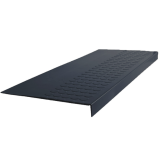 High Profile Raised Disc Pattern Stair Tread$78.00What a Raised Disc Stair Tread Does Before Someone Misses a Step A stair tread cover is the last surface between a shoe and a hard landing. On interior stairs the failure almost never starts in the middle of the step. It starts at the nose, where the edge wears
...
What a Raised Disc Stair Tread Does Before Someone Misses a Step A stair tread cover is the last surface...
What a Raised Disc Stair Tread Does Before Someone Misses a Step
A stair tread cover is the last surface between a shoe and a hard landing. On interior stairs the failure almost never starts in the middle of the step. It starts at the nose, where the edge wears round, loses grip, and stops reading as an edge at all. A raised disc tread rebuilds that edge and puts a textured walking surface on top of it.
The disc pattern works by contact geometry. Raised circular buttons stand above the field of the tread, so a sole meets many small high points instead of one flat plane. Water, grit, or floor finish that would sheet across a smooth step gets displaced into the low areas between the discs, and the shoe keeps finding rubber.
That matters most on stairs carrying the same footfall every day — school corridors, hospital wings, apartment cores, plant mezzanines. Once a nosing wears round, the choices narrow to rebuilding the step or covering it. Non slip stair treads bonded over the existing step restore both the edge and the walking surface without taking the stairwell out of service for long.
Why the Raised Disc Profile, and Why This One
This is the high-profile version of the disc design. The disc surface runs 7 inches deep across the walking area, backed by a 4-1/4 inch smooth section toward the rear of the step. Depth is 12-1/16 inches nominal measured from inside the nose, and the tread is 3/16 inch thick at the front, tapering to 1/8 inch at the back so it feathers out rather than leaving a lip to catch.
The nose is where the engineering shows. It runs 1-9/16 inches long at 1/8 inch thick, and it is both tapered and adjustable — a trim mark is molded into the underside behind the nose so the drop can be set to the actual step edge instead of hoping the step matches the tread. That adjustability is the difference between a tread that sits down flat and one that bridges.
Profile height is the real decision between this tread and a low-profile disc. Taller discs give a more aggressive footing and a texture that reads clearly underfoot, which is why raised patterns land on stairs that run wet, dirty, or heavily loaded. A flatter disc gives up some of that bite in exchange for a surface that sweeps clean with less effort.
For stairs that need more than pattern alone, an abrasive-strip version is available — either 2-3/4 inch strips or a single 2 inch strip. The single-strip configuration is the visually impaired option, marking the leading edge with contrast as well as grit. Strip colors are black as standard, with safety yellow, beige, gray, and brown also offered.
Color is a specification choice too, not an afterthought. Thirteen colors are stocked, each available in both a solid and a marbleized finish: black, chocolate, charcoal, wine, light gray, medium gray, red, sand, dark blue, brown, light blue, green, and cream. Marbleized surfaces carry the scuffing and tracked grit a stairwell collects between cleanings better than a flat solid does.
Where It Belongs, and What It Is Not
This is an interior tread. It is built for commercial, industrial, and institutional buildings — the stairwells in schools, hospitals, offices, plants, and multifamily properties that see continuous traffic and get cleaned on a schedule. It works as a cover bonded over an existing step rather than as a structural tread, so the step underneath still carries the load.
What it is not is an exterior tread. Rubber stair treads for outdoor steps use a compound built for UV exposure and freeze-thaw cycling, and this one is specified for interior use. Putting an indoor tread on an exterior stair shortens its service life and puts the adhesive bond under conditions it was never chosen for.
On a full stairwell job the tread is one part of an assembly. Coved risers close the back of the step and cut the fitting work at the riser joint, and a matching high-profile disc landing tile carries the same pattern and color across landings. It sits alongside the rest of the interior stair treads Mats Inc. stocks, which share the same adhesive families and the same color logic.
Three Things to Check Before You Spec It
First, match the profile to the traffic. High profile is the answer when the stair sees constant volume, tracked-in grit, or wet shoes, because the raised discs keep working when the surface is contaminated. If the stair is quiet and the priority is a fast mop, a low-profile disc pattern covers the same ground with less texture to clean around.
Second, measure the step, not the stair. Depth is 12-1/16 inches nominal from inside the nose, and the nose itself is square nose only at 1-9/16 inches long — so a rounded or bullnose step edge is worth confirming before you order. Because the nose is adjustable at the trim mark, the drop has some give; the depth and the width do not.
Third, decide what goes around it. Three adhesive families are specified for this tread — acrylic, neoprene contact, and water-based contact — and which one fits depends on the substrate and site conditions, so settle that before the treads arrive. If risers and landings fall inside the same scope, coved risers and the matching disc landing tile keep pattern and color consistent.
Why Mats Inc.
Mats Inc. has been specifying stair treads for commercial buildings since 1964, and stair work is where the small details decide the outcome: nose length against the actual step, where the trim mark falls, which adhesive suits the substrate, whether the risers and landing tile need to match. We publish the spec figures the manufacturer documents and say plainly when a number is not published rather than filling the gap.
Product type Interior rubber stair tread cover, high-profile raised disc pattern Thickness 3/16 in., tapering to 1/8 in. at the back Depth 12-1/16 in. nominal, from inside of nose Nose Square nose only; 1-9/16 in. long, 1/8 in. thick; tapered and adjustable at molded trim mark Disc pattern area 7 in. deep Smooth back area 4-1/4 in. deep Standard lengths 36 in. to 108 in. in 6-in. increments Weight 2 lbs per linear foot Packaging 6 treads per carton through 72 in.; 4 treads per carton above 72 in. Colors 13 colors, each in solid and marbleized (26 total): black, chocolate, charcoal, wine, light gray, medium gray, red, sand, dark blue, brown, light blue, green, cream Abrasive strip option 2-3/4 in. strips or single 2 in. strip; black (standard), safety yellow, beige, gray, brown Installation Adhesive bonded — acrylic, neoprene contact, or water-based contact adhesive Matching landing tile 19-11/16 in. x 19-11/16 in. (50 x 50 cm); 5/32 in. overall thickness, 1/8 in. excluding disc profile; 3/64 in. profile height; 16 tiles / 43 sq. ft. per carton Application Interior use Warranty 1-year limited (Mats Inc.) Frequently Asked Questions
What does the raised disc pattern do that a smooth tread does not?
Answered by Dustin Thompson, Owner & CEO
It changes what the shoe actually touches. A smooth tread gives the sole one continuous plane, and anything sitting on that plane — water, dust, fresh floor finish — ends up between the shoe and the rubber. The raised discs break that plane into many small high points with channels between them, so contaminants have somewhere to go and the sole still finds rubber.
The high-profile version stands those discs up further than the low-profile version does. On a stair that stays clean and dry, the difference is modest. On a stair taking wet shoes off a lobby floor every morning, it is the whole reason you specified a textured tread.
How thick is this tread, and where does it wear first?
Answered by Dustin Thompson, Owner & CEO
It is 3/16 inch thick at the front and tapers to 1/8 inch at the back, over a depth of 12-1/16 inches measured from inside the nose. The disc pattern covers the front 7 inches, which is where people actually land, and the remaining 4-1/4 inches is smooth back sitting toward the riser. The nose is 1-9/16 inches long at 1/8 inch thick.
Wear concentrates at the nose, because that is where the foot strikes on the way down. A published wear-life figure is not part of the spec sheet for this tread, so we do not quote one. What we will say is that the nose is the part to inspect, and the abrasive-strip version exists for stairs where the nose takes an unusual beating.
Can these be installed on outdoor steps?
Answered by Dustin Thompson, Owner & CEO
No. This tread is specified for interior use. Exterior stairs need a compound formulated for UV exposure and freeze-thaw cycling, and putting an interior tread outside shortens its service life and stresses the adhesive bond under conditions it was not chosen for. If the stair is outside, ask us for the exterior tread instead.
Indoors, installation is adhesive bonded, with acrylic, neoprene contact, and water-based contact being the three specified. Whatever the step is built from, it needs to be sound, clean, and dry before adhesive goes down. A tread bonded over dust or trapped moisture lifts at the nose first, and the nose is the one place you cannot afford a loose edge.
What lengths do these come in, and what if my steps are wider than the longest tread?
Answered by Jinna Hopson, Vice President of Marketing
Standard lengths run from 36 inches to 108 inches in 6-inch increments. Depth is fixed at 12-1/16 inches from inside the nose, so length is really the only dimension you are choosing. The nose is adjustable at a molded trim mark, which gives you some latitude on the step edge but none on width. Treads pack 6 per carton through 72 inches and 4 per carton above that, at roughly 2 pounds per linear foot.
Measure each step width rather than assuming they all match, because older stairs drift more than people expect. For steps wider than 108 inches the usual approach is two treads butted at a seam, and where that seam lands is worth deciding on purpose rather than leaving to whoever shows up with the adhesive.
What colors are available, and which ones hold up best in a busy stairwell?
Answered by Jinna Hopson, Vice President of Marketing
Thirteen colors, each offered in a solid and a marbleized finish, so 26 choices in total: black, chocolate, charcoal, wine, light gray, medium gray, red, sand, dark blue, brown, light blue, green, and cream. We can send the current color card before you commit, because colors on a screen are never the colors on a stair.
For a stairwell with real traffic, marbleized almost always wins. A flat solid shows every scuff, every dropped coffee, and every bit of grit tracked up from the lobby between cleanings. Marbleized patterns carry that same soil without looking neglected, which is why they stay on institutional stairs year after year while solids get replaced early for looking tired.
Can the risers and landings be matched to the treads?
Answered by Jinna Hopson, Vice President of Marketing
Yes, and it is worth doing. Coved risers finish the back of the step and pull the same color up the riser face, so the stair reads as one surface instead of a tread stuck onto a bare step. They also cut down the fitting work where the tread meets the riser.
Landings are the other half. A matching high-profile disc landing tile carries the identical pattern and color across the landing at 19-11/16 inches square, 5/32 inch thick overall and 1/8 inch excluding the disc profile, so the pattern does not stop and restart at every turn. Each carton covers 43 square feet. Specifying tread, riser, and tile together in one color is the difference between a finished stairwell and a repaired one.
By Dustin Thompson, Owner & CEO, Mats Inc.
↑
What a Raised Disc Stair Tread Does Before Someone Misses a Step
A stair tread cover is the last surface between a shoe and a hard landing. On interior stairs the failure almost never starts in the middle of the step. It starts at the nose, where the edge wears round, loses grip, and stops reading as an edge at all. A raised disc tread rebuilds that edge and puts a textured walking surface on top of it.
The disc pattern works by contact geometry. Raised circular buttons stand above the field of the tread, so a sole meets many small high points instead of one flat plane. Water, grit, or floor finish that would sheet across a smooth step gets displaced into the low areas between the discs, and the shoe keeps finding rubber.
That matters most on stairs carrying the same footfall every day — school corridors, hospital wings, apartment cores, plant mezzanines. Once a nosing wears round, the choices narrow to rebuilding the step or covering it. Non slip stair treads bonded over the existing step restore both the edge and the walking surface without taking the stairwell out of service for long.
Why the Raised Disc Profile, and Why This One
This is the high-profile version of the disc design. The disc surface runs 7 inches deep across the walking area, backed by a 4-1/4 inch smooth section toward the rear of the step. Depth is 12-1/16 inches nominal measured from inside the nose, and the tread is 3/16 inch thick at the front, tapering to 1/8 inch at the back so it feathers out rather than leaving a lip to catch.
The nose is where the engineering shows. It runs 1-9/16 inches long at 1/8 inch thick, and it is both tapered and adjustable — a trim mark is molded into the underside behind the nose so the drop can be set to the actual step edge instead of hoping the step matches the tread. That adjustability is the difference between a tread that sits down flat and one that bridges.
Profile height is the real decision between this tread and a low-profile disc. Taller discs give a more aggressive footing and a texture that reads clearly underfoot, which is why raised patterns land on stairs that run wet, dirty, or heavily loaded. A flatter disc gives up some of that bite in exchange for a surface that sweeps clean with less effort.
For stairs that need more than pattern alone, an abrasive-strip version is available — either 2-3/4 inch strips or a single 2 inch strip. The single-strip configuration is the visually impaired option, marking the leading edge with contrast as well as grit. Strip colors are black as standard, with safety yellow, beige, gray, and brown also offered.
Color is a specification choice too, not an afterthought. Thirteen colors are stocked, each available in both a solid and a marbleized finish: black, chocolate, charcoal, wine, light gray, medium gray, red, sand, dark blue, brown, light blue, green, and cream. Marbleized surfaces carry the scuffing and tracked grit a stairwell collects between cleanings better than a flat solid does.
Where It Belongs, and What It Is Not
This is an interior tread. It is built for commercial, industrial, and institutional buildings — the stairwells in schools, hospitals, offices, plants, and multifamily properties that see continuous traffic and get cleaned on a schedule. It works as a cover bonded over an existing step rather than as a structural tread, so the step underneath still carries the load.
What it is not is an exterior tread. Rubber stair treads for outdoor steps use a compound built for UV exposure and freeze-thaw cycling, and this one is specified for interior use. Putting an indoor tread on an exterior stair shortens its service life and puts the adhesive bond under conditions it was never chosen for.
On a full stairwell job the tread is one part of an assembly. Coved risers close the back of the step and cut the fitting work at the riser joint, and a matching high-profile disc landing tile carries the same pattern and color across landings. It sits alongside the rest of the interior stair treads Mats Inc. stocks, which share the same adhesive families and the same color logic.
Three Things to Check Before You Spec It
First, match the profile to the traffic. High profile is the answer when the stair sees constant volume, tracked-in grit, or wet shoes, because the raised discs keep working when the surface is contaminated. If the stair is quiet and the priority is a fast mop, a low-profile disc pattern covers the same ground with less texture to clean around.
Second, measure the step, not the stair. Depth is 12-1/16 inches nominal from inside the nose, and the nose itself is square nose only at 1-9/16 inches long — so a rounded or bullnose step edge is worth confirming before you order. Because the nose is adjustable at the trim mark, the drop has some give; the depth and the width do not.
Third, decide what goes around it. Three adhesive families are specified for this tread — acrylic, neoprene contact, and water-based contact — and which one fits depends on the substrate and site conditions, so settle that before the treads arrive. If risers and landings fall inside the same scope, coved risers and the matching disc landing tile keep pattern and color consistent.
Why Mats Inc.
Mats Inc. has been specifying stair treads for commercial buildings since 1964, and stair work is where the small details decide the outcome: nose length against the actual step, where the trim mark falls, which adhesive suits the substrate, whether the risers and landing tile need to match. We publish the spec figures the manufacturer documents and say plainly when a number is not published rather than filling the gap.
Product type Interior rubber stair tread cover, high-profile raised disc pattern Thickness 3/16 in., tapering to 1/8 in. at the back Depth 12-1/16 in. nominal, from inside of nose Nose Square nose only; 1-9/16 in. long, 1/8 in. thick; tapered and adjustable at molded trim mark Disc pattern area 7 in. deep Smooth back area 4-1/4 in. deep Standard lengths 36 in. to 108 in. in 6-in. increments Weight 2 lbs per linear foot Packaging 6 treads per carton through 72 in.; 4 treads per carton above 72 in. Colors 13 colors, each in solid and marbleized (26 total): black, chocolate, charcoal, wine, light gray, medium gray, red, sand, dark blue, brown, light blue, green, cream Abrasive strip option 2-3/4 in. strips or single 2 in. strip; black (standard), safety yellow, beige, gray, brown Installation Adhesive bonded — acrylic, neoprene contact, or water-based contact adhesive Matching landing tile 19-11/16 in. x 19-11/16 in. (50 x 50 cm); 5/32 in. overall thickness, 1/8 in. excluding disc profile; 3/64 in. profile height; 16 tiles / 43 sq. ft. per carton Application Interior use Warranty 1-year limited (Mats Inc.) Frequently Asked Questions
What does the raised disc pattern do that a smooth tread does not?
Answered by Dustin Thompson, Owner & CEO
It changes what the shoe actually touches. A smooth tread gives the sole one continuous plane, and anything sitting on that plane — water, dust, fresh floor finish — ends up between the shoe and the rubber. The raised discs break that plane into many small high points with channels between them, so contaminants have somewhere to go and the sole still finds rubber.
The high-profile version stands those discs up further than the low-profile version does. On a stair that stays clean and dry, the difference is modest. On a stair taking wet shoes off a lobby floor every morning, it is the whole reason you specified a textured tread.
How thick is this tread, and where does it wear first?
Answered by Dustin Thompson, Owner & CEO
It is 3/16 inch thick at the front and tapers to 1/8 inch at the back, over a depth of 12-1/16 inches measured from inside the nose. The disc pattern covers the front 7 inches, which is where people actually land, and the remaining 4-1/4 inches is smooth back sitting toward the riser. The nose is 1-9/16 inches long at 1/8 inch thick.
Wear concentrates at the nose, because that is where the foot strikes on the way down. A published wear-life figure is not part of the spec sheet for this tread, so we do not quote one. What we will say is that the nose is the part to inspect, and the abrasive-strip version exists for stairs where the nose takes an unusual beating.
Can these be installed on outdoor steps?
Answered by Dustin Thompson, Owner & CEO
No. This tread is specified for interior use. Exterior stairs need a compound formulated for UV exposure and freeze-thaw cycling, and putting an interior tread outside shortens its service life and stresses the adhesive bond under conditions it was not chosen for. If the stair is outside, ask us for the exterior tread instead.
Indoors, installation is adhesive bonded, with acrylic, neoprene contact, and water-based contact being the three specified. Whatever the step is built from, it needs to be sound, clean, and dry before adhesive goes down. A tread bonded over dust or trapped moisture lifts at the nose first, and the nose is the one place you cannot afford a loose edge.
What lengths do these come in, and what if my steps are wider than the longest tread?
Answered by Jinna Hopson, Vice President of Marketing
Standard lengths run from 36 inches to 108 inches in 6-inch increments. Depth is fixed at 12-1/16 inches from inside the nose, so length is really the only dimension you are choosing. The nose is adjustable at a molded trim mark, which gives you some latitude on the step edge but none on width. Treads pack 6 per carton through 72 inches and 4 per carton above that, at roughly 2 pounds per linear foot.
Measure each step width rather than assuming they all match, because older stairs drift more than people expect. For steps wider than 108 inches the usual approach is two treads butted at a seam, and where that seam lands is worth deciding on purpose rather than leaving to whoever shows up with the adhesive.
What colors are available, and which ones hold up best in a busy stairwell?
Answered by Jinna Hopson, Vice President of Marketing
Thirteen colors, each offered in a solid and a marbleized finish, so 26 choices in total: black, chocolate, charcoal, wine, light gray, medium gray, red, sand, dark blue, brown, light blue, green, and cream. We can send the current color card before you commit, because colors on a screen are never the colors on a stair.
For a stairwell with real traffic, marbleized almost always wins. A flat solid shows every scuff, every dropped coffee, and every bit of grit tracked up from the lobby between cleanings. Marbleized patterns carry that same soil without looking neglected, which is why they stay on institutional stairs year after year while solids get replaced early for looking tired.
Can the risers and landings be matched to the treads?
Answered by Jinna Hopson, Vice President of Marketing
Yes, and it is worth doing. Coved risers finish the back of the step and pull the same color up the riser face, so the stair reads as one surface instead of a tread stuck onto a bare step. They also cut down the fitting work where the tread meets the riser.
Landings are the other half. A matching high-profile disc landing tile carries the identical pattern and color across the landing at 19-11/16 inches square, 5/32 inch thick overall and 1/8 inch excluding the disc profile, so the pattern does not stop and restart at every turn. Each carton covers 43 square feet. Specifying tread, riser, and tile together in one color is the difference between a finished stairwell and a repaired one.
By Dustin Thompson, Owner & CEO, Mats Inc.
↑
View Details
View Details
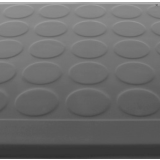 Low Profile Raised Disc Pattern Stair Tread$71.00What a Low Profile Disc Tread Does Before a Stairwell Turns Slick A stair does not have to be dirty to be dangerous. Plenty of interior stairs are slick because the surface is smooth and the finish is fresh, not because anything got tracked in. A low profile disc tread
...
What a Low Profile Disc Tread Does Before a Stairwell Turns Slick A stair does not have to be dirty...
What a Low Profile Disc Tread Does Before a Stairwell Turns Slick
A stair does not have to be dirty to be dangerous. Plenty of interior stairs are slick because the surface is smooth and the finish is fresh, not because anything got tracked in. A low profile disc tread lays a shallow, repeating texture across the whole step so the sole has something to catch on, in a form that still looks like part of a finished floor.
The discs work by interrupting contact. Instead of one flat plane where a thin film of water or floor polish sits between shoe and surface, the sole meets a field of small raised circles with shallow channels running between them. The film gets pushed aside, the shoe finds rubber, and the step stops behaving like glass the moment it is damp.
Profile depth matters as much as the pattern itself. Texture standing too proud on a lightly used stair traps grit in the low areas and slows every cleaning, and a tread that never gets cleaned properly loses the grip it was specified for. Shallow relief is the working compromise: enough interruption to do the job, little enough to sweep and mop without fighting it.
Why the Low Profile Disc, and Why This One
This is the low profile member of the disc family. The tread is 3/16 inch thick at the front and tapers to a nominal 1/8 inch at the back, over a nominal depth of 12-1/2 inches measured from inside the nose. The nose runs 1-9/16 inches long at 9/64 inch thick, and the whole tread weighs about 1.5 pounds per linear foot.
The nose is fixed, and that is the single most important thing to know before ordering. It is neither tapered nor adjustable, and there is no trim mark molded into the underside. The tread has to suit the step as the step already is, because there is no adjustment available to make it sit down on a nosing it was not sized for.
Set against a high profile disc, this tread trades bite for a flatter walking surface. The shallower relief sweeps and mops with less effort and reads as a quieter, more finished floor, which is why low profile turns up on stairs that are part of the designed space rather than back-of-house. Where shoes arrive wet every morning, the taller profile is the better answer.
For stairs that want more warning at the edge, an abrasive-strip version is available — either 2-3/4 inch strips or a single 2 inch strip. The single-strip configuration is the visually impaired option, using contrast at the leading edge as well as grit. Strip colors are black as standard, with safety yellow, beige, gray, and brown also offered.
Color runs deep here for a technical product. Thirteen colors are stocked, each available in both a solid and a marbleized finish: black, chocolate, charcoal, wine, light gray, medium gray, red, sand, dark blue, brown, light blue, green, and cream. Twenty-six choices is more range than most people expect from a stair tread, and it is the reason these land in specified interiors.
Where It Belongs, and What It Is Not
This is an interior tread built for commercial, industrial, and institutional buildings. It suits stairs in offices, schools, healthcare corridors, and multifamily buildings where the stairwell is a finished space that gets cleaned on a routine and does not take a beating from tracked-in weather. It works as a cover bonded over an existing step, so the step underneath still carries the load.
What it is not is an exterior tread. Outdoor stairs need a compound formulated for UV and freeze-thaw cycling, and this one is specified for interior use only. It is also not the right pick for a stair that takes heavy contamination every day — that is what the deeper disc profile exists for, and specifying the shallow one there is a false economy in traction.
Where it does earn its place, it earns it as part of an assembly rather than alone. Coved risers close the back of the step and cut fitting work at the riser joint, and a matching low profile disc landing tile carries the pattern across landings. It shares adhesive families and the full color range with the rest of the interior stair treads Mats Inc. stocks, so a whole stairwell can be specified in one color.
Three Things to Check Before You Spec It
First, be honest about how the stair gets used and cleaned. Low profile rewards a building with a real cleaning routine and moderate traffic. If the stair sits at the bottom of an entrance run, takes wet shoes daily, or catches grit from a loading area, the shallow relief will not hold up its end and the deeper disc pattern is the correct specification.
Second, measure the step before you order, because this tread will not adapt. Depth is 12-1/2 inches nominal from inside the nose, and the 1-9/16 inch nose is square, fixed, and non-adjustable. Standard lengths run 36 to 72 inches in 6-inch increments, and 72 inches is the ceiling — wider stairs need two treads and a planned seam, not a special order.
Third, settle the rest of the assembly early. Three adhesive families are specified for this tread — acrylic, neoprene contact, and water-based contact — and which one fits depends on the substrate and site conditions, so decide before the treads land on site. If risers and landings are in scope, coved risers and the matching disc landing tile keep pattern and color continuous.
Why Mats Inc.
Stair work punishes assumptions, and this tread punishes them more than most, because a fixed nose gives an installer nothing to work with if the measurement was wrong. Mats Inc. has been specifying commercial stair treads since 1964, and we would rather talk through step depth, nosing shape, and seam placement before an order than sort it out after. We publish the figures the manufacturer documents and say so plainly when a figure does not exist.
Product type Interior rubber stair tread cover, low profile raised disc pattern Thickness 3/16 in., tapering to 1/8 in. nominal at the back Depth 12-1/2 in. nominal, from inside of nose Nose length 1-9/16 in. nominal Nose thickness 9/64 in. Tapered nose No Adjustable nose No Standard lengths 36 in. to 72 in. in 6-in. increments Weight 1.5 lbs per linear foot Packaging 6 treads per carton Colors 13 colors, each in solid and marbleized (26 total): black, chocolate, charcoal, wine, light gray, medium gray, red, sand, dark blue, brown, light blue, green, cream Abrasive strip option 2-3/4 in. strips or single 2 in. strip; black (standard), safety yellow, beige, gray, brown Installation Adhesive bonded — acrylic, neoprene contact, or water-based contact adhesive Matching landing tile 19-11/16 in. x 19-11/16 in. (50 x 50 cm); 1/8 in. overall thickness, 7/64 in. excluding profile; 1/64 in. profile height, 1-9/64 in. profile diameter; 16 tiles / 43 sq. ft. / 42 lbs per carton Application Interior use Warranty 1-year limited (Mats Inc.) Frequently Asked Questions
How much traction does a shallow disc pattern actually give up?
Answered by Dustin Thompson, Owner & CEO
Less than people assume on a clean stair, and more than they assume on a dirty one. The mechanism is the same either way: the discs break up the flat plane so a film of water or floor finish cannot sit continuously between the sole and the rubber. On a dry, maintained stair the shallow pattern does that job as well as a deep one.
The gap opens when the surface gets contaminated. Deeper relief has more room to push water and grit out of the contact area, so it keeps working further into a bad day. If the stair regularly sees wet shoes or tracked-in debris, that headroom is worth buying. If it does not, you are paying for texture that mostly makes cleaning harder.
How thick is this tread, and how does the fixed nose affect installation?
Answered by Dustin Thompson, Owner & CEO
It is 3/16 inch at the front, tapering to a nominal 1/8 inch at the back across a nominal depth of 12-1/2 inches from inside the nose. The nose is 1-9/16 inches long at 9/64 inch thick. At about 1.5 pounds per linear foot, it is a lighter tread than the deep-profile version and easier for one person to handle on a stair.
The fixed nose changes how installation goes. There is no taper and no adjustment, so the tread cannot be coaxed onto a nosing that is a different shape or drop than it expects. That makes the pre-order measurement the whole job. Get it right and installation is straightforward; get it wrong and there is no field remedy short of a different tread.
Can these go outside, and what does the step underneath need to be like?
Answered by Dustin Thompson, Owner & CEO
Not outside. This is an interior specification. Exterior stairs need a compound built for UV exposure and freeze-thaw movement, and an interior tread put outdoors gives up service life and stresses the adhesive bond in ways it was never chosen for. If the stair is exposed to weather, ask us for the exterior tread instead.
Indoors, the tread bonds with adhesive — acrylic, neoprene contact, or water-based contact are the three specified. Whatever the step is built from, the surface needs to be sound, clean, and dry before adhesive goes down. Bond a tread over dust or trapped moisture and it lifts at the nose first, which is the one edge you cannot afford to have loose.
What lengths are available, and what do I do about a wide stair?
Answered by Jinna Hopson, Vice President of Marketing
Standard lengths run 36 to 72 inches in 6-inch increments, and 72 inches is the ceiling on this profile. Depth is fixed at 12-1/2 inches nominal from inside the nose, and the nose is not adjustable, so length is genuinely the only dimension you are selecting. Treads pack six to a carton at roughly 1.5 pounds per linear foot.
Anything wider than 72 inches means two treads and a seam. That is normal on institutional stairs, but decide where the seam lands rather than leaving it to the installer — centered looks deliberate, off-center looks like a mistake. Measure every step individually too, because stairs built decades apart in the same building rarely agree with each other.
What colors are there, and how do I choose one for a stairwell people actually see?
Answered by Jinna Hopson, Vice President of Marketing
Thirteen colors, each offered in a solid and a marbleized finish, so 26 in all: black, chocolate, charcoal, wine, light gray, medium gray, red, sand, dark blue, brown, light blue, green, and cream. We can send the current color card before you commit, because a color on a screen and a color on a stair are two different things.
For a visible stairwell, the choice usually comes down to how much soil you want to see between cleanings. Marbleized carries scuffs and tracked grit without looking neglected, which is why it dominates in schools and healthcare. Solids read cleaner and more contemporary and suit a stair that gets attention, particularly in charcoal, sand, or light gray against a painted riser.
Do the risers and landings match, and does the landing tile really line up with the tread?
Answered by Jinna Hopson, Vice President of Marketing
They do, and matching them is what separates a specified stairwell from a patched one. Coved risers pull the same color up the riser face so the stair reads as a single surface, and they reduce the fitting work where tread meets riser at the back of the step.
The landing tile is the piece people forget. The low profile disc tile measures 19-11/16 inches square at 1/8 inch overall thickness, with the disc pattern standing 1/64 inch proud — a genuinely shallow relief, against 3/64 inch on the high profile tile. Each carton covers 43 square feet. Specify tread, riser, and tile in one color and the pattern never stops and restarts at a landing.
By Jinna Hopson, Vice President of Marketing, Mats Inc.
↑
What a Low Profile Disc Tread Does Before a Stairwell Turns Slick
A stair does not have to be dirty to be dangerous. Plenty of interior stairs are slick because the surface is smooth and the finish is fresh, not because anything got tracked in. A low profile disc tread lays a shallow, repeating texture across the whole step so the sole has something to catch on, in a form that still looks like part of a finished floor.
The discs work by interrupting contact. Instead of one flat plane where a thin film of water or floor polish sits between shoe and surface, the sole meets a field of small raised circles with shallow channels running between them. The film gets pushed aside, the shoe finds rubber, and the step stops behaving like glass the moment it is damp.
Profile depth matters as much as the pattern itself. Texture standing too proud on a lightly used stair traps grit in the low areas and slows every cleaning, and a tread that never gets cleaned properly loses the grip it was specified for. Shallow relief is the working compromise: enough interruption to do the job, little enough to sweep and mop without fighting it.
Why the Low Profile Disc, and Why This One
This is the low profile member of the disc family. The tread is 3/16 inch thick at the front and tapers to a nominal 1/8 inch at the back, over a nominal depth of 12-1/2 inches measured from inside the nose. The nose runs 1-9/16 inches long at 9/64 inch thick, and the whole tread weighs about 1.5 pounds per linear foot.
The nose is fixed, and that is the single most important thing to know before ordering. It is neither tapered nor adjustable, and there is no trim mark molded into the underside. The tread has to suit the step as the step already is, because there is no adjustment available to make it sit down on a nosing it was not sized for.
Set against a high profile disc, this tread trades bite for a flatter walking surface. The shallower relief sweeps and mops with less effort and reads as a quieter, more finished floor, which is why low profile turns up on stairs that are part of the designed space rather than back-of-house. Where shoes arrive wet every morning, the taller profile is the better answer.
For stairs that want more warning at the edge, an abrasive-strip version is available — either 2-3/4 inch strips or a single 2 inch strip. The single-strip configuration is the visually impaired option, using contrast at the leading edge as well as grit. Strip colors are black as standard, with safety yellow, beige, gray, and brown also offered.
Color runs deep here for a technical product. Thirteen colors are stocked, each available in both a solid and a marbleized finish: black, chocolate, charcoal, wine, light gray, medium gray, red, sand, dark blue, brown, light blue, green, and cream. Twenty-six choices is more range than most people expect from a stair tread, and it is the reason these land in specified interiors.
Where It Belongs, and What It Is Not
This is an interior tread built for commercial, industrial, and institutional buildings. It suits stairs in offices, schools, healthcare corridors, and multifamily buildings where the stairwell is a finished space that gets cleaned on a routine and does not take a beating from tracked-in weather. It works as a cover bonded over an existing step, so the step underneath still carries the load.
What it is not is an exterior tread. Outdoor stairs need a compound formulated for UV and freeze-thaw cycling, and this one is specified for interior use only. It is also not the right pick for a stair that takes heavy contamination every day — that is what the deeper disc profile exists for, and specifying the shallow one there is a false economy in traction.
Where it does earn its place, it earns it as part of an assembly rather than alone. Coved risers close the back of the step and cut fitting work at the riser joint, and a matching low profile disc landing tile carries the pattern across landings. It shares adhesive families and the full color range with the rest of the interior stair treads Mats Inc. stocks, so a whole stairwell can be specified in one color.
Three Things to Check Before You Spec It
First, be honest about how the stair gets used and cleaned. Low profile rewards a building with a real cleaning routine and moderate traffic. If the stair sits at the bottom of an entrance run, takes wet shoes daily, or catches grit from a loading area, the shallow relief will not hold up its end and the deeper disc pattern is the correct specification.
Second, measure the step before you order, because this tread will not adapt. Depth is 12-1/2 inches nominal from inside the nose, and the 1-9/16 inch nose is square, fixed, and non-adjustable. Standard lengths run 36 to 72 inches in 6-inch increments, and 72 inches is the ceiling — wider stairs need two treads and a planned seam, not a special order.
Third, settle the rest of the assembly early. Three adhesive families are specified for this tread — acrylic, neoprene contact, and water-based contact — and which one fits depends on the substrate and site conditions, so decide before the treads land on site. If risers and landings are in scope, coved risers and the matching disc landing tile keep pattern and color continuous.
Why Mats Inc.
Stair work punishes assumptions, and this tread punishes them more than most, because a fixed nose gives an installer nothing to work with if the measurement was wrong. Mats Inc. has been specifying commercial stair treads since 1964, and we would rather talk through step depth, nosing shape, and seam placement before an order than sort it out after. We publish the figures the manufacturer documents and say so plainly when a figure does not exist.
Product type Interior rubber stair tread cover, low profile raised disc pattern Thickness 3/16 in., tapering to 1/8 in. nominal at the back Depth 12-1/2 in. nominal, from inside of nose Nose length 1-9/16 in. nominal Nose thickness 9/64 in. Tapered nose No Adjustable nose No Standard lengths 36 in. to 72 in. in 6-in. increments Weight 1.5 lbs per linear foot Packaging 6 treads per carton Colors 13 colors, each in solid and marbleized (26 total): black, chocolate, charcoal, wine, light gray, medium gray, red, sand, dark blue, brown, light blue, green, cream Abrasive strip option 2-3/4 in. strips or single 2 in. strip; black (standard), safety yellow, beige, gray, brown Installation Adhesive bonded — acrylic, neoprene contact, or water-based contact adhesive Matching landing tile 19-11/16 in. x 19-11/16 in. (50 x 50 cm); 1/8 in. overall thickness, 7/64 in. excluding profile; 1/64 in. profile height, 1-9/64 in. profile diameter; 16 tiles / 43 sq. ft. / 42 lbs per carton Application Interior use Warranty 1-year limited (Mats Inc.) Frequently Asked Questions
How much traction does a shallow disc pattern actually give up?
Answered by Dustin Thompson, Owner & CEO
Less than people assume on a clean stair, and more than they assume on a dirty one. The mechanism is the same either way: the discs break up the flat plane so a film of water or floor finish cannot sit continuously between the sole and the rubber. On a dry, maintained stair the shallow pattern does that job as well as a deep one.
The gap opens when the surface gets contaminated. Deeper relief has more room to push water and grit out of the contact area, so it keeps working further into a bad day. If the stair regularly sees wet shoes or tracked-in debris, that headroom is worth buying. If it does not, you are paying for texture that mostly makes cleaning harder.
How thick is this tread, and how does the fixed nose affect installation?
Answered by Dustin Thompson, Owner & CEO
It is 3/16 inch at the front, tapering to a nominal 1/8 inch at the back across a nominal depth of 12-1/2 inches from inside the nose. The nose is 1-9/16 inches long at 9/64 inch thick. At about 1.5 pounds per linear foot, it is a lighter tread than the deep-profile version and easier for one person to handle on a stair.
The fixed nose changes how installation goes. There is no taper and no adjustment, so the tread cannot be coaxed onto a nosing that is a different shape or drop than it expects. That makes the pre-order measurement the whole job. Get it right and installation is straightforward; get it wrong and there is no field remedy short of a different tread.
Can these go outside, and what does the step underneath need to be like?
Answered by Dustin Thompson, Owner & CEO
Not outside. This is an interior specification. Exterior stairs need a compound built for UV exposure and freeze-thaw movement, and an interior tread put outdoors gives up service life and stresses the adhesive bond in ways it was never chosen for. If the stair is exposed to weather, ask us for the exterior tread instead.
Indoors, the tread bonds with adhesive — acrylic, neoprene contact, or water-based contact are the three specified. Whatever the step is built from, the surface needs to be sound, clean, and dry before adhesive goes down. Bond a tread over dust or trapped moisture and it lifts at the nose first, which is the one edge you cannot afford to have loose.
What lengths are available, and what do I do about a wide stair?
Answered by Jinna Hopson, Vice President of Marketing
Standard lengths run 36 to 72 inches in 6-inch increments, and 72 inches is the ceiling on this profile. Depth is fixed at 12-1/2 inches nominal from inside the nose, and the nose is not adjustable, so length is genuinely the only dimension you are selecting. Treads pack six to a carton at roughly 1.5 pounds per linear foot.
Anything wider than 72 inches means two treads and a seam. That is normal on institutional stairs, but decide where the seam lands rather than leaving it to the installer — centered looks deliberate, off-center looks like a mistake. Measure every step individually too, because stairs built decades apart in the same building rarely agree with each other.
What colors are there, and how do I choose one for a stairwell people actually see?
Answered by Jinna Hopson, Vice President of Marketing
Thirteen colors, each offered in a solid and a marbleized finish, so 26 in all: black, chocolate, charcoal, wine, light gray, medium gray, red, sand, dark blue, brown, light blue, green, and cream. We can send the current color card before you commit, because a color on a screen and a color on a stair are two different things.
For a visible stairwell, the choice usually comes down to how much soil you want to see between cleanings. Marbleized carries scuffs and tracked grit without looking neglected, which is why it dominates in schools and healthcare. Solids read cleaner and more contemporary and suit a stair that gets attention, particularly in charcoal, sand, or light gray against a painted riser.
Do the risers and landings match, and does the landing tile really line up with the tread?
Answered by Jinna Hopson, Vice President of Marketing
They do, and matching them is what separates a specified stairwell from a patched one. Coved risers pull the same color up the riser face so the stair reads as a single surface, and they reduce the fitting work where tread meets riser at the back of the step.
The landing tile is the piece people forget. The low profile disc tile measures 19-11/16 inches square at 1/8 inch overall thickness, with the disc pattern standing 1/64 inch proud — a genuinely shallow relief, against 3/64 inch on the high profile tile. Each carton covers 43 square feet. Specify tread, riser, and tile in one color and the pattern never stops and restarts at a landing.
By Jinna Hopson, Vice President of Marketing, Mats Inc.
↑
View Details
View Details
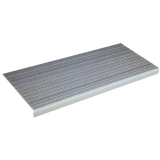 Medium Duty Vinyl Stair Treads$24.00Stair treads absorb more concentrated wear than any other surface in a building. Every step lands on the same narrow band of nosing, and once that edge breaks down, the repair closes the stairwell while it happens. Medium duty vinyl stair treads put a replaceable wear surface over the step
...
Stair treads absorb more concentrated wear than any other surface in a building. Every step lands on the same narrow...
Stair treads absorb more concentrated wear than any other surface in a building. Every step lands on the same narrow band of nosing, and once that edge breaks down, the repair closes the stairwell while it happens. Medium duty vinyl stair treads put a replaceable wear surface over the step face and the nose in one piece, so the damage lands on the tread instead of the structure underneath.
What Vinyl Stair Treads Do Before a Stairwell Starts Failing
A stair tread cover is a wear layer, not a decorative finish. It sits on the step and takes the foot traffic, the tracked grit, and the cleaning chemicals that would otherwise grind directly into concrete, wood, or the original finish. When the tread eventually wears, you replace one piece on one step. The step itself never entered the conversation.
The nose is where this matters most. Traffic concentrates on the leading edge, and a worn or rounded nose is the single most common cause of stair falls in a building. A full-depth vinyl tread cover holds a defined edge and a ribbed walking surface, which is why slip resistant stair treads are usually the first specification item on a stairwell renovation.
Why Homogeneous Vinyl, and Why This Tread
These treads are made from first quality homogeneous vinyl, which means the color runs through the entire thickness rather than sitting on top as a printed or coated layer. As the surface wears, it stays the same color it started as. A tread that fades to a different shade in the traffic lane reads as neglected long before it is actually worn out.
The tread is 3/16" thick and 12" deep, with a 1-1/4" nose available in a square or a curved profile. The material is built up thicker at the front, putting the most material exactly where the wear concentrates. The 12" depth covers a standard step run in one piece, so there is no seam sitting in the middle of the walking surface.
The vinyl is nonporous and contains no asbestos fiber. Nonporous matters for maintenance: spills, salt, and cleaning solution sit on the surface instead of soaking in, and a damp mop resets the tread rather than working dirt deeper into it with every pass.
Where It Belongs — and Where It Doesn't
This is an interior tread. It earns its place in apartment and multi-family stairwells, back-of-house stairs, school and office egress runs, basement stairs, and any interior staircase where the original steps are worn, uneven, or slippery. It works over concrete, wood, and existing stair surfaces that have been properly prepared, and it sits naturally alongside the rest of the interior stair tread program.
It is not an exterior product. The manufacturer specifies interior use, and outdoor steps introduce freeze-thaw cycling, UV exposure, and moisture migration under the tread that this construction is not built to handle. Exterior steps need a tread engineered for weather. It is also not the right answer for heavy impact traffic — loading docks, tool carts, and steel-wheeled equipment call for a thicker rubber tread instead.
Three Things to Check Before You Spec It
Most stair tread problems are measurement problems, not product problems. Three checks up front will keep the install clean and prevent a second order.
First, measure the step run, not the tread. The depth is fixed at 12", so a step with a run deeper than 12" will leave an exposed strip at the back. That is usually fine against a riser, but you need to know it before the treads arrive. Measure the run at the top, middle, and bottom of the flight — older stairs are rarely consistent.
Second, decide on the nose profile. Square nose and curved nose are not interchangeable once the treads are cut and bonded. Match the profile to the existing step edge: a square-edged concrete or wood step takes the square nose, and a bullnose or rounded step edge takes the curved nose. Mixing profiles in one stairwell is visible from the landing.
Third, plan the substrate and the adhesive. Vinyl stair treads bond to a clean, sound, dry surface. Loose finish, old adhesive residue, cracked nosing, and moisture in a slab all have to be resolved before installation, or the bond fails at the nose first. Order the adhesive with the treads so the crew is not waiting on a second delivery mid-flight.
Why Mats Inc.
Mats Inc. has supplied commercial stair treads since 1964, and stairwells are one of the places where a wrong order is genuinely expensive in labor. Our team works through step counts, run depths, nose profiles, and adhesive selection before the order is placed, and we ship full-length treads that get cut on site rather than guessing at widths from a catalog. If your flight has an odd measurement, tell us and we will spec around it.
Medium Duty Vinyl Stair Treads — Specifications Material First quality homogeneous vinyl, color throughout thickness Thickness 3/16" (built up thicker at the nose) Depth 12" Nose 1-1/4", square or curved profile Surface Ribbed, nonporous, abrasion resistant Lengths 18", 24", 30", 36", 42", 48", 54", 60", 72", 84", 96" Colors Brown, Sand, Gray, Black Composition Contains no asbestos fiber Standard Meets Fed. Spec. RR-T-650E, Type B Application Interior use Warranty 1-year limited (Mats Inc.) Frequently Asked Questions
How is a full vinyl stair tread different from a stair nosing strip?
Answered by Dustin Thompson, Owner & CEO
A nosing strip covers only the leading edge of the step, usually two to three inches of it. That protects the edge but leaves the rest of the step face exposed to traffic, grit, and cleaning. A full tread cover is 12" deep, which covers the nose and the entire step run in one continuous piece. There is no seam in the walking path for dirt to collect in and no transition for a shoe to catch on. If the step surface itself is worn or slippery, a nosing strip does not solve the problem.
How thick are these treads, and does the color wear off over time?
Answered by Dustin Thompson, Owner & CEO
The tread is 3/16" thick, with additional material built up at the front where the nose takes the concentrated wear. The color does not wear off, because it is not a surface layer. This is homogeneous vinyl, so the color runs through the full thickness of the material. As the ribbed surface abrades over years of traffic, it exposes more of the same color rather than a different substrate underneath. That is the practical difference between a homogeneous tread and a printed or coated one in a stairwell that gets cleaned every day.
Can these be installed on outdoor steps?
Answered by Dustin Thompson, Owner & CEO
No. These are specified for interior use only. Exterior steps put three forces on a tread that this construction is not built for: freeze-thaw cycling that works the bond loose at the nose, UV exposure that degrades the vinyl over time, and water that migrates under the tread and stays there. The usual failure is the nose lifting after the first winter, which turns a safety product into a trip hazard. Exterior stairs need a tread engineered for weather exposure and an adhesive rated for it.
What lengths are available, and what if my stairs are an unusual width?
Answered by Jinna Hopson, Vice President of Marketing
Treads come in 18", 24", 30", 36", 42", 48", 54", 60", 72", 84", and 96" lengths, all at a fixed 12" depth. If your stair width falls between two sizes, order the next length up and trim it to fit on site — vinyl cuts cleanly with a straightedge and a sharp utility knife. Measure a few steps rather than one, since older stairwells often vary by a quarter inch or more from top to bottom. Ordering short is the one mistake that cannot be corrected on site.
Which color holds up best visually in a high-traffic stairwell?
Answered by Jinna Hopson, Vice President of Marketing
Brown, Sand, Gray, and Black are the four options. Gray and Sand are the most forgiving in buildings that track in grit, dust, and drywall residue, because the tone sits between what gets tracked in and what shows against a dark surface. Black looks sharp in a finished lobby stair but shows salt residue and light dust clearly in winter months. Brown reads warmer and works well in residential and multi-family stairwells where the goal is to look intentional rather than institutional.
Can I match risers to these treads for a finished stairwell?
Answered by Jinna Hopson, Vice President of Marketing
Yes. Coved vinyl risers are ordered separately and pair with these treads to finish the vertical face of each step in a matching color. The combination covers the whole stair — tread, nose, and riser — which is what makes a renovated stairwell read as new rather than patched. If you are also covering landings, matching landing tiles complete the run. Tell us the step count and we will work out tread, riser, and adhesive quantities together so nothing arrives short.
Written by Dustin Thompson, Owner & CEO, Mats Inc.
↑
Stair treads absorb more concentrated wear than any other surface in a building. Every step lands on the same narrow band of nosing, and once that edge breaks down, the repair closes the stairwell while it happens. Medium duty vinyl stair treads put a replaceable wear surface over the step face and the nose in one piece, so the damage lands on the tread instead of the structure underneath.
What Vinyl Stair Treads Do Before a Stairwell Starts Failing
A stair tread cover is a wear layer, not a decorative finish. It sits on the step and takes the foot traffic, the tracked grit, and the cleaning chemicals that would otherwise grind directly into concrete, wood, or the original finish. When the tread eventually wears, you replace one piece on one step. The step itself never entered the conversation.
The nose is where this matters most. Traffic concentrates on the leading edge, and a worn or rounded nose is the single most common cause of stair falls in a building. A full-depth vinyl tread cover holds a defined edge and a ribbed walking surface, which is why slip resistant stair treads are usually the first specification item on a stairwell renovation.
Why Homogeneous Vinyl, and Why This Tread
These treads are made from first quality homogeneous vinyl, which means the color runs through the entire thickness rather than sitting on top as a printed or coated layer. As the surface wears, it stays the same color it started as. A tread that fades to a different shade in the traffic lane reads as neglected long before it is actually worn out.
The tread is 3/16" thick and 12" deep, with a 1-1/4" nose available in a square or a curved profile. The material is built up thicker at the front, putting the most material exactly where the wear concentrates. The 12" depth covers a standard step run in one piece, so there is no seam sitting in the middle of the walking surface.
The vinyl is nonporous and contains no asbestos fiber. Nonporous matters for maintenance: spills, salt, and cleaning solution sit on the surface instead of soaking in, and a damp mop resets the tread rather than working dirt deeper into it with every pass.
Where It Belongs — and Where It Doesn't
This is an interior tread. It earns its place in apartment and multi-family stairwells, back-of-house stairs, school and office egress runs, basement stairs, and any interior staircase where the original steps are worn, uneven, or slippery. It works over concrete, wood, and existing stair surfaces that have been properly prepared, and it sits naturally alongside the rest of the interior stair tread program.
It is not an exterior product. The manufacturer specifies interior use, and outdoor steps introduce freeze-thaw cycling, UV exposure, and moisture migration under the tread that this construction is not built to handle. Exterior steps need a tread engineered for weather. It is also not the right answer for heavy impact traffic — loading docks, tool carts, and steel-wheeled equipment call for a thicker rubber tread instead.
Three Things to Check Before You Spec It
Most stair tread problems are measurement problems, not product problems. Three checks up front will keep the install clean and prevent a second order.
First, measure the step run, not the tread. The depth is fixed at 12", so a step with a run deeper than 12" will leave an exposed strip at the back. That is usually fine against a riser, but you need to know it before the treads arrive. Measure the run at the top, middle, and bottom of the flight — older stairs are rarely consistent.
Second, decide on the nose profile. Square nose and curved nose are not interchangeable once the treads are cut and bonded. Match the profile to the existing step edge: a square-edged concrete or wood step takes the square nose, and a bullnose or rounded step edge takes the curved nose. Mixing profiles in one stairwell is visible from the landing.
Third, plan the substrate and the adhesive. Vinyl stair treads bond to a clean, sound, dry surface. Loose finish, old adhesive residue, cracked nosing, and moisture in a slab all have to be resolved before installation, or the bond fails at the nose first. Order the adhesive with the treads so the crew is not waiting on a second delivery mid-flight.
Why Mats Inc.
Mats Inc. has supplied commercial stair treads since 1964, and stairwells are one of the places where a wrong order is genuinely expensive in labor. Our team works through step counts, run depths, nose profiles, and adhesive selection before the order is placed, and we ship full-length treads that get cut on site rather than guessing at widths from a catalog. If your flight has an odd measurement, tell us and we will spec around it.
Medium Duty Vinyl Stair Treads — Specifications Material First quality homogeneous vinyl, color throughout thickness Thickness 3/16" (built up thicker at the nose) Depth 12" Nose 1-1/4", square or curved profile Surface Ribbed, nonporous, abrasion resistant Lengths 18", 24", 30", 36", 42", 48", 54", 60", 72", 84", 96" Colors Brown, Sand, Gray, Black Composition Contains no asbestos fiber Standard Meets Fed. Spec. RR-T-650E, Type B Application Interior use Warranty 1-year limited (Mats Inc.) Frequently Asked Questions
How is a full vinyl stair tread different from a stair nosing strip?
Answered by Dustin Thompson, Owner & CEO
A nosing strip covers only the leading edge of the step, usually two to three inches of it. That protects the edge but leaves the rest of the step face exposed to traffic, grit, and cleaning. A full tread cover is 12" deep, which covers the nose and the entire step run in one continuous piece. There is no seam in the walking path for dirt to collect in and no transition for a shoe to catch on. If the step surface itself is worn or slippery, a nosing strip does not solve the problem.
How thick are these treads, and does the color wear off over time?
Answered by Dustin Thompson, Owner & CEO
The tread is 3/16" thick, with additional material built up at the front where the nose takes the concentrated wear. The color does not wear off, because it is not a surface layer. This is homogeneous vinyl, so the color runs through the full thickness of the material. As the ribbed surface abrades over years of traffic, it exposes more of the same color rather than a different substrate underneath. That is the practical difference between a homogeneous tread and a printed or coated one in a stairwell that gets cleaned every day.
Can these be installed on outdoor steps?
Answered by Dustin Thompson, Owner & CEO
No. These are specified for interior use only. Exterior steps put three forces on a tread that this construction is not built for: freeze-thaw cycling that works the bond loose at the nose, UV exposure that degrades the vinyl over time, and water that migrates under the tread and stays there. The usual failure is the nose lifting after the first winter, which turns a safety product into a trip hazard. Exterior stairs need a tread engineered for weather exposure and an adhesive rated for it.
What lengths are available, and what if my stairs are an unusual width?
Answered by Jinna Hopson, Vice President of Marketing
Treads come in 18", 24", 30", 36", 42", 48", 54", 60", 72", 84", and 96" lengths, all at a fixed 12" depth. If your stair width falls between two sizes, order the next length up and trim it to fit on site — vinyl cuts cleanly with a straightedge and a sharp utility knife. Measure a few steps rather than one, since older stairwells often vary by a quarter inch or more from top to bottom. Ordering short is the one mistake that cannot be corrected on site.
Which color holds up best visually in a high-traffic stairwell?
Answered by Jinna Hopson, Vice President of Marketing
Brown, Sand, Gray, and Black are the four options. Gray and Sand are the most forgiving in buildings that track in grit, dust, and drywall residue, because the tone sits between what gets tracked in and what shows against a dark surface. Black looks sharp in a finished lobby stair but shows salt residue and light dust clearly in winter months. Brown reads warmer and works well in residential and multi-family stairwells where the goal is to look intentional rather than institutional.
Can I match risers to these treads for a finished stairwell?
Answered by Jinna Hopson, Vice President of Marketing
Yes. Coved vinyl risers are ordered separately and pair with these treads to finish the vertical face of each step in a matching color. The combination covers the whole stair — tread, nose, and riser — which is what makes a renovated stairwell read as new rather than patched. If you are also covering landings, matching landing tiles complete the run. Tell us the step count and we will work out tread, riser, and adhesive quantities together so nothing arrives short.
Written by Dustin Thompson, Owner & CEO, Mats Inc.
↑
View Details
View Details
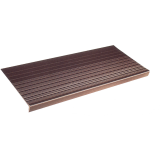 Heavy Duty Vinyl Stair Treads$21.00In a stairwell that moves real traffic, the tread is a consumable and the staircase is not. Every foot lands on the same few inches of nosing, hundreds of times a day, and once that edge is gone the repair means closing the flight. Heavy duty vinyl stair treads put
...
In a stairwell that moves real traffic, the tread is a consumable and the staircase is not. Every foot lands...
In a stairwell that moves real traffic, the tread is a consumable and the staircase is not. Every foot lands on the same few inches of nosing, hundreds of times a day, and once that edge is gone the repair means closing the flight. Heavy duty vinyl stair treads put a quarter inch of wear material exactly where the traffic concentrates, so the step underneath never becomes the problem.
What Heavy Duty Vinyl Stair Treads Do Before a Stairwell Becomes a Liability
A stair tread cover is a sacrificial surface. It absorbs the foot traffic, the tracked grit, and the daily cleaning that would otherwise abrade concrete, wear the finish off wood, or polish a terrazzo step into something slick. When the tread finally gives out, you pull one piece off one step. The structure was never in the wear path.
The nose carries the load. Worn, rounded, or chipped nosings are the leading physical cause of stair falls in commercial buildings, because a foot that lands on a degraded edge gets no defined stopping point. A full-depth tread holds a crisp edge and a ribbed walking surface across the whole step, which is why slip resistant stair treads are usually the first item specified in a stairwell renovation.
Why a 1/4" Sharp-Rib Vinyl Tread, and Why This One
This is the heavy gauge end of the vinyl range. The tread measures 1/4" thick at the wear area, with extra material built up at the front where the nose takes the concentrated traffic. That is meaningfully more material than a medium duty vinyl tread carries, and in a high-count stairwell that difference shows up as years of service rather than a thicker line on a spec sheet.
The surface is a sharp-rib design, engineered for the heaviest traffic loads. Ribs give the foot something to bite against and channel tracked water and grit off the walking line instead of letting it sit as a film across the step. The rib profile also hides the scuffing that a smooth vinyl surface displays from the landing.
The material is first quality homogeneous vinyl with color running through the full thickness. There is no printed layer to wear off and no different-colored substrate waiting underneath. A tread that abrades to a lighter shade in the traffic lane reads as neglected long before it has actually failed, and homogeneous construction removes that failure mode entirely.
The tread is 12" deep with a 1-1/4" square nose, contains no asbestos fiber, and meets Fed. Spec. RR-T-650E, Type B. It is trimmable, so a single stock length can be cut to fit the actual step rather than forcing the stair to match the catalog.
Where It Belongs — and Where It Doesn't
This tread installs over concrete, metal, wood, and terrazzo, which covers most of what a commercial stairwell is actually built from. It belongs in school and university egress stairs, hospital and municipal buildings, office towers, transit and back-of-house runs, apartment and multi-family stairwells, and any flight where the step count and the traffic count are both high. Among interior stair treads, it sits at the top of the vinyl gauge range.
It is specified for interior use. Outdoor steps introduce freeze-thaw cycling that works the bond loose at the nose, UV exposure that degrades vinyl over time, and water that migrates underneath and stays there. The usual result is a lifted nose after one winter, which converts a safety product into a trip hazard. Exterior stairs need a tread built for weather and an adhesive rated for it.
The nose is square only. On a step with a rounded or bullnose edge, a square-nose tread will not seat against the profile, and the gap that opens under the nose becomes the failure point. Bullnose steps need a curved-nose tread instead. This is also not the answer for steel-wheeled cart traffic or tool-cart impact, where a rubber tread handles the point loading better.
Three Things to Check Before You Spec It
Most stair tread failures start as measurement or preparation problems, not product problems. Three checks before the order goes in will keep the install clean and prevent a second delivery mid-project.
First, confirm the step edge is square. Walk the flight and look at the nosing profile, not just the step surface. A square-edged concrete, metal-pan, wood, or terrazzo step takes this tread directly. A worn edge that has rounded over from years of traffic needs to be built back square during prep, or the tread will bridge the gap instead of bonding to it.
Second, measure the run and the width at three points in the flight. The depth is fixed at 12", so a step with a deeper run leaves an exposed strip at the back — usually fine against a riser, but you want to know before delivery. Widths in older stairwells drift by a quarter inch or more from top to bottom, so measure the top, middle, and bottom step and order to the widest.
Third, plan the substrate prep and the bonding system. The manufacturer specifies a neoprene contact adhesive applied to the back of the tread, the back of the nose, and the step itself, plus an epoxy nose caulk inside the joint where the nose meets the tread. The surface has to be clean, sound, and dry first. Old adhesive residue and slab moisture both cause the nose to release before anything else does.
Why Mats Inc.
Mats Inc. has specified commercial stair treads since 1964, and a heavy-traffic stairwell is where a wrong order costs the most in labor. We work through step counts, run depths, edge profiles, substrate condition, and the adhesive and caulk together before the order is placed, rather than shipping treads and leaving the crew to sort out the bonding system on site. If your flight has an odd measurement or a mixed substrate, tell us and we will spec around it.
Heavy Duty Vinyl Stair Treads — Specifications Material First quality homogeneous vinyl, color throughout thickness Surface design Heavy gauge sharp-rib, for heaviest traffic Thickness 1/4" at wear area; extra thickness at the front Depth 12" Nose 1-1/4" square nose Lengths 24", 30", 36", 42", 48", 54", 60", 72", 84", 96" Colors Brown, Sand, Gray, Black Substrates Concrete, metal, wood, terrazzo Composition Contains no asbestos fiber Standard Meets Fed. Spec. RR-T-650E, Type B Application Interior use Installation Neoprene contact adhesive plus epoxy nose caulk Warranty 1-year limited (Mats Inc.) Frequently Asked Questions
What does "heavy gauge sharp-rib" actually mean on a stair tread?
Answered by Dustin Thompson, Owner & CEO
Two separate things. Heavy gauge refers to the amount of material — 1/4" at the wear area, which is the thickest vinyl tread commonly specified for interior stairs. Sharp-rib refers to the surface profile: defined raised ribs running across the walking direction rather than a smooth or lightly textured face.
The ribs do real work. They give the sole of a shoe an edge to engage, and they keep tracked water and grit from spreading into an even film across the step. On a smooth tread, that film is what makes a stairwell slippery on a wet morning. The rib channels also hide scuff marks, which matters in a stairwell that gets looked at from the landing above.
How much difference does the 1/4" thickness make in a busy stairwell?
Answered by Dustin Thompson, Owner & CEO
More than the number suggests. A medium duty vinyl tread runs 3/16" at the wear area; this one runs 1/4", with additional material built up at the front nose. Wear is not spread evenly across a tread — it concentrates in a narrow band on the nose and the first few inches behind it, so the extra material sits exactly where the abrasion happens.
In a stairwell with heavy daily traffic, that difference is the gap between replacing treads on a maintenance cycle and replacing them because the nose wore through. The color also runs through the full thickness, so the tread looks the same at year six as it did at year one even as the rib profile softens.
Can these be installed on metal pan stairs, or only concrete?
Answered by Dustin Thompson, Owner & CEO
Metal is one of the four approved substrates, along with concrete, wood, and terrazzo. Metal pan stairs are a common application, and the tread bonds directly to the pan surface once it is clean, sound, and dry. What matters more than the substrate material is the condition of the surface and the squareness of the nose edge.
One caution on metal: pan stairs sometimes have a filled or poured surface that has cracked or separated from the pan. Bonding a tread over a loose fill puts the adhesive on something that is already moving, and the tread releases at the nose within a season. Resolve the fill before the treads go down. These are interior treads and should not be used on exterior stairs regardless of substrate.
What lengths are available, and what if my stairs measure between sizes?
Answered by Jinna Hopson, Vice President of Marketing
Stock lengths run 24", 30", 36", 42", 48", 54", 60", 72", 84", and 96", all at a fixed 12" depth. If your stair width falls between two sizes, order the next length up and trim to fit on site — the vinyl cuts cleanly with a straightedge and a sharp blade, and trimming to the step is how these are designed to be installed.
Measure more than one step. Stairwells built before the 1990s frequently vary by a quarter inch or more across a flight, and ordering to a single measurement means the last few treads come up short. Short is the one error that cannot be corrected on site. Note that this tread does not come in an 18" length; the range starts at 24".
Which color works best in a high-traffic commercial stairwell?
Answered by Jinna Hopson, Vice President of Marketing
There are four standard colors: Brown, Sand, Gray, and Black. Gray is the workhorse in commercial and institutional buildings — it sits between what gets tracked in and what shows against a dark surface, so grit, dust, and salt residue are all less visible between cleanings. Sand behaves similarly in buildings with lighter finishes.
Black looks sharp against a painted riser and reads as intentional in a finished lobby stair, but it shows winter salt clearly and needs a tighter cleaning cadence to keep looking right. Brown reads warmer and works well in residential and multi-family stairwells. Whichever you pick, the color runs through the material, so it does not shift as the surface wears.
Can I match risers to these treads for a finished stairwell?
Answered by Jinna Hopson, Vice President of Marketing
Yes. Coved vinyl risers are ordered separately in matching colors and cover the vertical face of each step, and they can be trimmed in both height and length to fit the actual stair. Some specifiers match tread and riser exactly; others run a contrasting riser, which gives each step a visible horizontal line and helps people read the flight on the way down.
Covering treads, noses, risers, and landings together is what makes a renovated stairwell read as new rather than patched. Send us the step count and the flight dimensions and we will work out tread, riser, and adhesive quantities in one pass so nothing arrives short mid-install.
Written by Dustin Thompson, Owner & CEO, Mats Inc.
↑
In a stairwell that moves real traffic, the tread is a consumable and the staircase is not. Every foot lands on the same few inches of nosing, hundreds of times a day, and once that edge is gone the repair means closing the flight. Heavy duty vinyl stair treads put a quarter inch of wear material exactly where the traffic concentrates, so the step underneath never becomes the problem.
What Heavy Duty Vinyl Stair Treads Do Before a Stairwell Becomes a Liability
A stair tread cover is a sacrificial surface. It absorbs the foot traffic, the tracked grit, and the daily cleaning that would otherwise abrade concrete, wear the finish off wood, or polish a terrazzo step into something slick. When the tread finally gives out, you pull one piece off one step. The structure was never in the wear path.
The nose carries the load. Worn, rounded, or chipped nosings are the leading physical cause of stair falls in commercial buildings, because a foot that lands on a degraded edge gets no defined stopping point. A full-depth tread holds a crisp edge and a ribbed walking surface across the whole step, which is why slip resistant stair treads are usually the first item specified in a stairwell renovation.
Why a 1/4" Sharp-Rib Vinyl Tread, and Why This One
This is the heavy gauge end of the vinyl range. The tread measures 1/4" thick at the wear area, with extra material built up at the front where the nose takes the concentrated traffic. That is meaningfully more material than a medium duty vinyl tread carries, and in a high-count stairwell that difference shows up as years of service rather than a thicker line on a spec sheet.
The surface is a sharp-rib design, engineered for the heaviest traffic loads. Ribs give the foot something to bite against and channel tracked water and grit off the walking line instead of letting it sit as a film across the step. The rib profile also hides the scuffing that a smooth vinyl surface displays from the landing.
The material is first quality homogeneous vinyl with color running through the full thickness. There is no printed layer to wear off and no different-colored substrate waiting underneath. A tread that abrades to a lighter shade in the traffic lane reads as neglected long before it has actually failed, and homogeneous construction removes that failure mode entirely.
The tread is 12" deep with a 1-1/4" square nose, contains no asbestos fiber, and meets Fed. Spec. RR-T-650E, Type B. It is trimmable, so a single stock length can be cut to fit the actual step rather than forcing the stair to match the catalog.
Where It Belongs — and Where It Doesn't
This tread installs over concrete, metal, wood, and terrazzo, which covers most of what a commercial stairwell is actually built from. It belongs in school and university egress stairs, hospital and municipal buildings, office towers, transit and back-of-house runs, apartment and multi-family stairwells, and any flight where the step count and the traffic count are both high. Among interior stair treads, it sits at the top of the vinyl gauge range.
It is specified for interior use. Outdoor steps introduce freeze-thaw cycling that works the bond loose at the nose, UV exposure that degrades vinyl over time, and water that migrates underneath and stays there. The usual result is a lifted nose after one winter, which converts a safety product into a trip hazard. Exterior stairs need a tread built for weather and an adhesive rated for it.
The nose is square only. On a step with a rounded or bullnose edge, a square-nose tread will not seat against the profile, and the gap that opens under the nose becomes the failure point. Bullnose steps need a curved-nose tread instead. This is also not the answer for steel-wheeled cart traffic or tool-cart impact, where a rubber tread handles the point loading better.
Three Things to Check Before You Spec It
Most stair tread failures start as measurement or preparation problems, not product problems. Three checks before the order goes in will keep the install clean and prevent a second delivery mid-project.
First, confirm the step edge is square. Walk the flight and look at the nosing profile, not just the step surface. A square-edged concrete, metal-pan, wood, or terrazzo step takes this tread directly. A worn edge that has rounded over from years of traffic needs to be built back square during prep, or the tread will bridge the gap instead of bonding to it.
Second, measure the run and the width at three points in the flight. The depth is fixed at 12", so a step with a deeper run leaves an exposed strip at the back — usually fine against a riser, but you want to know before delivery. Widths in older stairwells drift by a quarter inch or more from top to bottom, so measure the top, middle, and bottom step and order to the widest.
Third, plan the substrate prep and the bonding system. The manufacturer specifies a neoprene contact adhesive applied to the back of the tread, the back of the nose, and the step itself, plus an epoxy nose caulk inside the joint where the nose meets the tread. The surface has to be clean, sound, and dry first. Old adhesive residue and slab moisture both cause the nose to release before anything else does.
Why Mats Inc.
Mats Inc. has specified commercial stair treads since 1964, and a heavy-traffic stairwell is where a wrong order costs the most in labor. We work through step counts, run depths, edge profiles, substrate condition, and the adhesive and caulk together before the order is placed, rather than shipping treads and leaving the crew to sort out the bonding system on site. If your flight has an odd measurement or a mixed substrate, tell us and we will spec around it.
Heavy Duty Vinyl Stair Treads — Specifications Material First quality homogeneous vinyl, color throughout thickness Surface design Heavy gauge sharp-rib, for heaviest traffic Thickness 1/4" at wear area; extra thickness at the front Depth 12" Nose 1-1/4" square nose Lengths 24", 30", 36", 42", 48", 54", 60", 72", 84", 96" Colors Brown, Sand, Gray, Black Substrates Concrete, metal, wood, terrazzo Composition Contains no asbestos fiber Standard Meets Fed. Spec. RR-T-650E, Type B Application Interior use Installation Neoprene contact adhesive plus epoxy nose caulk Warranty 1-year limited (Mats Inc.) Frequently Asked Questions
What does "heavy gauge sharp-rib" actually mean on a stair tread?
Answered by Dustin Thompson, Owner & CEO
Two separate things. Heavy gauge refers to the amount of material — 1/4" at the wear area, which is the thickest vinyl tread commonly specified for interior stairs. Sharp-rib refers to the surface profile: defined raised ribs running across the walking direction rather than a smooth or lightly textured face.
The ribs do real work. They give the sole of a shoe an edge to engage, and they keep tracked water and grit from spreading into an even film across the step. On a smooth tread, that film is what makes a stairwell slippery on a wet morning. The rib channels also hide scuff marks, which matters in a stairwell that gets looked at from the landing above.
How much difference does the 1/4" thickness make in a busy stairwell?
Answered by Dustin Thompson, Owner & CEO
More than the number suggests. A medium duty vinyl tread runs 3/16" at the wear area; this one runs 1/4", with additional material built up at the front nose. Wear is not spread evenly across a tread — it concentrates in a narrow band on the nose and the first few inches behind it, so the extra material sits exactly where the abrasion happens.
In a stairwell with heavy daily traffic, that difference is the gap between replacing treads on a maintenance cycle and replacing them because the nose wore through. The color also runs through the full thickness, so the tread looks the same at year six as it did at year one even as the rib profile softens.
Can these be installed on metal pan stairs, or only concrete?
Answered by Dustin Thompson, Owner & CEO
Metal is one of the four approved substrates, along with concrete, wood, and terrazzo. Metal pan stairs are a common application, and the tread bonds directly to the pan surface once it is clean, sound, and dry. What matters more than the substrate material is the condition of the surface and the squareness of the nose edge.
One caution on metal: pan stairs sometimes have a filled or poured surface that has cracked or separated from the pan. Bonding a tread over a loose fill puts the adhesive on something that is already moving, and the tread releases at the nose within a season. Resolve the fill before the treads go down. These are interior treads and should not be used on exterior stairs regardless of substrate.
What lengths are available, and what if my stairs measure between sizes?
Answered by Jinna Hopson, Vice President of Marketing
Stock lengths run 24", 30", 36", 42", 48", 54", 60", 72", 84", and 96", all at a fixed 12" depth. If your stair width falls between two sizes, order the next length up and trim to fit on site — the vinyl cuts cleanly with a straightedge and a sharp blade, and trimming to the step is how these are designed to be installed.
Measure more than one step. Stairwells built before the 1990s frequently vary by a quarter inch or more across a flight, and ordering to a single measurement means the last few treads come up short. Short is the one error that cannot be corrected on site. Note that this tread does not come in an 18" length; the range starts at 24".
Which color works best in a high-traffic commercial stairwell?
Answered by Jinna Hopson, Vice President of Marketing
There are four standard colors: Brown, Sand, Gray, and Black. Gray is the workhorse in commercial and institutional buildings — it sits between what gets tracked in and what shows against a dark surface, so grit, dust, and salt residue are all less visible between cleanings. Sand behaves similarly in buildings with lighter finishes.
Black looks sharp against a painted riser and reads as intentional in a finished lobby stair, but it shows winter salt clearly and needs a tighter cleaning cadence to keep looking right. Brown reads warmer and works well in residential and multi-family stairwells. Whichever you pick, the color runs through the material, so it does not shift as the surface wears.
Can I match risers to these treads for a finished stairwell?
Answered by Jinna Hopson, Vice President of Marketing
Yes. Coved vinyl risers are ordered separately in matching colors and cover the vertical face of each step, and they can be trimmed in both height and length to fit the actual stair. Some specifiers match tread and riser exactly; others run a contrasting riser, which gives each step a visible horizontal line and helps people read the flight on the way down.
Covering treads, noses, risers, and landings together is what makes a renovated stairwell read as new rather than patched. Send us the step count and the flight dimensions and we will work out tread, riser, and adhesive quantities in one pass so nothing arrives short mid-install.
Written by Dustin Thompson, Owner & CEO, Mats Inc.
↑
View Details
View Details
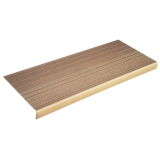 Light Duty Vinyl Stair Treads$21.00On a wood plank step, the front edge is the first thing to go. It takes the impact of every footfall, it splinters, and once it rounds over there is nothing left for a shoe to catch. Light duty vinyl stair treads with an extra long nose wrap that edge
...
On a wood plank step, the front edge is the first thing to go. It takes the impact of every...
On a wood plank step, the front edge is the first thing to go. It takes the impact of every footfall, it splinters, and once it rounds over there is nothing left for a shoe to catch. Light duty vinyl stair treads with an extra long nose wrap that edge completely, putting a replaceable surface over the exact inch and a half where the damage starts.
What Light Duty Vinyl Stair Treads Do Before a Plank Step Wears Through at the Edge
A stair tread cover works as a wear surface between traffic and the step. It absorbs the grit tracked in on shoes, the daily cleaning, and the constant abrasion on the walking line, so the wood or concrete underneath stays intact. When the tread eventually wears, one piece comes off one step and a new one goes down.
The difference on this tread is how far that protection reaches. A standard nose covers the top edge and stops. An extra long nose continues down the front face of the step, which matters on a 2" x 12" plank stair where the exposed front edge is bare lumber. Leave it uncovered and the step keeps degrading underneath a tread that looks fine from above.
A worn or rounded nosing is the most common physical cause of stair falls, because a foot landing on a degraded edge gets no defined stopping point. Full-coverage non slip stair treads hold a defined edge and a consistent ribbed walking surface from the front of the step to the back.
Why a 1-3/4" Extra Long Nose, and Why This Tread
The nose measures 1-3/4", which is a half inch deeper than the standard 1-1/4" nose on most vinyl stair tread covers. That half inch is the entire design argument. It is enough to wrap the front face of a nominal 2" x 12" plank step or a molded concrete step, so the step edge is covered rather than merely capped.
The tread body is 1/8" thick with 12" of depth, and carries heavier thickness at the front wear area where the traffic concentrates. This is the light traffic gauge in the vinyl range. It is built for the step counts a residential or multi-family stairwell actually sees, not for a transit stair moving thousands of people a day.
The surface is a flat rib design. Ribs give the sole of a shoe something to engage against and keep tracked water from spreading into an even film across the step, while the flat profile means a mop or a vacuum clears the whole surface without working dirt into deep channels.
The material is first quality homogeneous vinyl with color running through the full thickness. There is no printed wear layer and no different-colored substrate underneath, so the tread does not fade to a second shade in the traffic lane. It contains no asbestos fiber and meets Fed. Spec. RR-T-650E, Type B.
Where It Belongs — and Where It Doesn't
This tread earns its place in apartment buildings, multi-family housing, senior and supportive housing, condominium stairwells, basement and secondary stairs, and any interior flight built on plank steps or molded concrete where the front edge needs covering. Within the interior stair tread range, it is the specialist for step-edge coverage rather than for traffic volume.
It is specified for interior use only. Exterior steps bring freeze-thaw cycling that works the bond loose at the nose, UV exposure that degrades vinyl, and water that migrates underneath and stays there. At 1/8" the margin for that kind of abuse is thin, and the usual outcome is a lifted nose after one winter — which turns a safety product into a trip hazard.
It is also the wrong gauge for heavy commercial traffic. A school egress stair, a hospital corridor stair, or a transit flight needs a thicker tread with more material at the wear area. And the nose is square only, so a bullnose or rounded step edge needs a curved-nose tread instead — a square nose will not seat against a rounded profile.
Three Things to Check Before You Spec It
This tread is chosen for a specific step geometry, so the checks are different from a general-purpose tread. Three things settled before the order goes in will keep the install clean.
First, measure the front face of your step, not just the top. If the exposed edge is around 1-1/2" — a nominal 2" x 12" plank or a molded concrete step — the 1-3/4" nose is doing exactly what it was designed to do. If the edge is deeper than that, the nose will stop short and leave a visible band of bare step below the tread.
Second, match the gauge to the actual traffic. Count the people using the flight on a normal day, not the building's total occupancy. At 1/8" this tread suits residential and multi-family step counts. If the same stair carries deliveries, carts, or continuous commercial traffic, step up to a heavier gauge before the nose becomes a maintenance item.
Third, decide the installation method and prepare the substrate. The manufacturer documents two approaches for this tread: a contact adhesive applied to the tread back, the nose back, and the step, or a double-sided mounting tape system. Either way the surface has to be clean, sound, and dry first. Old adhesive residue and slab moisture both release the nose before anything else fails.
Why Mats Inc.
Mats Inc. has specified commercial and residential stair treads since 1964, and nose geometry is the detail most often gotten wrong on a plank stair. We will work through your step profile, the front edge measurement, and the flight count before the order goes in, and we will tell you plainly when a heavier gauge is the better call for your traffic. If the stair has an odd measurement, send it over and we will spec around it.
Light Duty Vinyl Stair Treads — Specifications Material First quality homogeneous vinyl, color throughout thickness Surface design Flat rib Thickness 1/8"; heavier thickness at the front wear area Depth 12" Nose 1-3/4" extra long square nose Step compatibility 2" x 12" plank step or molded concrete step Lengths 18", 24", 30", 36", 42", 48", 54", 60", 72", 84", 96" Colors Brown, Sand, Gray, Black Composition Contains no asbestos fiber Standard Meets Fed. Spec. RR-T-650E, Type B Application Interior use Installation Contact adhesive or double-sided mounting tape Warranty 1-year limited (Mats Inc.) Frequently Asked Questions
What does an "extra long nose" actually cover that a standard nose doesn't?
Answered by Dustin Thompson, Owner & CEO
The nose on this tread is 1-3/4" deep. Most vinyl stair tread covers use a 1-1/4" nose. That half inch is the difference between capping the top edge of a step and wrapping down the front face of it.
On a stair built from nominal 2" x 12" planks, the exposed front edge is roughly an inch and a half of bare lumber. A 1-1/4" nose stops short of the bottom of that edge, so the most vulnerable part of the step stays exposed to kicks, cart wheels, and vacuum heads. The extra long nose covers it. On a molded concrete step with a similar edge depth, the same geometry applies.
How much traffic will a 1/8" tread actually take?
Answered by Dustin Thompson, Owner & CEO
This is the light traffic gauge, and I would size it by daily footfalls on the specific flight rather than by building type. Apartment and multi-family stairwells, condominium stairs, senior housing, and basement or secondary stairs are all comfortable applications. The tread also carries heavier thickness at the front wear area, so the material is concentrated where abrasion actually happens.
Where I would not use it is a stair that carries commercial volume — school egress, hospital corridors, transit stairs, or any flight that also moves carts and deliveries. Those need a thicker gauge. Specifying a light duty tread into a heavy traffic stair does not fail dramatically; it just wears out years earlier than it should, and you pay for the install twice.
Can these go on outdoor steps or over an existing worn tread?
Answered by Dustin Thompson, Owner & CEO
Not outdoors. These are specified for interior use. Exterior steps add freeze-thaw movement, UV exposure, and water sitting under the tread, and at 1/8" there is very little margin for that. The nose lifts first, usually within a season, and a lifted nose is worse than the worn step you started with.
Installing over an existing tread is a different question, and the answer is usually no. Old treads rarely sit flat, the adhesive underneath has often already failed in places, and bonding new material to something that is already moving means the new tread inherits the old problem. Pull the old tread, clean the substrate back to a sound surface, then install.
What lengths are available, and how do I handle stairs that vary in width?
Answered by Jinna Hopson, Vice President of Marketing
There are eleven stock lengths: 18", 24", 30", 36", 42", 48", 54", 60", 72", 84", and 96", all at a fixed 12" depth. If your stair width falls between two sizes, order the next length up and trim on site. At 1/8" this vinyl cuts easily with a straightedge and a sharp blade, which is one of the practical advantages of the lighter gauge.
Measure at least three steps — top, middle, and bottom — before ordering. Older residential stairwells commonly drift a quarter inch or more across a flight, and if you order to a single measurement the last few treads come up short. Order to the widest measurement and trim down. Short is the one error you cannot fix on site.
Which color holds up best in a stairwell residents use every day?
Answered by Jinna Hopson, Vice President of Marketing
Four standard colors: Brown, Sand, Gray, and Black. In residential and multi-family buildings, Brown and Sand tend to look the most settled — they read as a finished stair rather than an institutional one, and they sit close enough to what gets tracked in that grit is not obvious between cleanings.
Gray is the most forgiving in buildings with heavy dust or construction traffic. Black looks sharp against a painted riser but shows salt residue clearly in winter and asks for a tighter cleaning schedule. The flat rib surface helps whichever you pick — there are no deep channels for dirt to settle into, so a mop actually resets the tread. And since the color runs through the material, none of these shift shade as the surface wears.
Can I use different tread gauges in the same building?
Answered by Jinna Hopson, Vice President of Marketing
You can, and in a building with a busy main stair and quiet secondary stairs it is often the sensible call. The thing to know is that the nose geometry differs between gauges. This tread has a 1-3/4" nose; heavier vinyl treads typically use 1-1/4". Those two do not look identical on the step edge, and someone walking between the two stairs will notice the line if the flights are visible to each other.
The practical rule is to keep one gauge per stairwell rather than one gauge per building, and to keep the color consistent across all of them. That way each flight reads as deliberate. If two stairs share a landing or a lobby sightline, match them. Send us the layout and we will map which flight gets which gauge.
Written by Jinna Hopson, Vice President of Marketing, Mats Inc.
↑
On a wood plank step, the front edge is the first thing to go. It takes the impact of every footfall, it splinters, and once it rounds over there is nothing left for a shoe to catch. Light duty vinyl stair treads with an extra long nose wrap that edge completely, putting a replaceable surface over the exact inch and a half where the damage starts.
What Light Duty Vinyl Stair Treads Do Before a Plank Step Wears Through at the Edge
A stair tread cover works as a wear surface between traffic and the step. It absorbs the grit tracked in on shoes, the daily cleaning, and the constant abrasion on the walking line, so the wood or concrete underneath stays intact. When the tread eventually wears, one piece comes off one step and a new one goes down.
The difference on this tread is how far that protection reaches. A standard nose covers the top edge and stops. An extra long nose continues down the front face of the step, which matters on a 2" x 12" plank stair where the exposed front edge is bare lumber. Leave it uncovered and the step keeps degrading underneath a tread that looks fine from above.
A worn or rounded nosing is the most common physical cause of stair falls, because a foot landing on a degraded edge gets no defined stopping point. Full-coverage non slip stair treads hold a defined edge and a consistent ribbed walking surface from the front of the step to the back.
Why a 1-3/4" Extra Long Nose, and Why This Tread
The nose measures 1-3/4", which is a half inch deeper than the standard 1-1/4" nose on most vinyl stair tread covers. That half inch is the entire design argument. It is enough to wrap the front face of a nominal 2" x 12" plank step or a molded concrete step, so the step edge is covered rather than merely capped.
The tread body is 1/8" thick with 12" of depth, and carries heavier thickness at the front wear area where the traffic concentrates. This is the light traffic gauge in the vinyl range. It is built for the step counts a residential or multi-family stairwell actually sees, not for a transit stair moving thousands of people a day.
The surface is a flat rib design. Ribs give the sole of a shoe something to engage against and keep tracked water from spreading into an even film across the step, while the flat profile means a mop or a vacuum clears the whole surface without working dirt into deep channels.
The material is first quality homogeneous vinyl with color running through the full thickness. There is no printed wear layer and no different-colored substrate underneath, so the tread does not fade to a second shade in the traffic lane. It contains no asbestos fiber and meets Fed. Spec. RR-T-650E, Type B.
Where It Belongs — and Where It Doesn't
This tread earns its place in apartment buildings, multi-family housing, senior and supportive housing, condominium stairwells, basement and secondary stairs, and any interior flight built on plank steps or molded concrete where the front edge needs covering. Within the interior stair tread range, it is the specialist for step-edge coverage rather than for traffic volume.
It is specified for interior use only. Exterior steps bring freeze-thaw cycling that works the bond loose at the nose, UV exposure that degrades vinyl, and water that migrates underneath and stays there. At 1/8" the margin for that kind of abuse is thin, and the usual outcome is a lifted nose after one winter — which turns a safety product into a trip hazard.
It is also the wrong gauge for heavy commercial traffic. A school egress stair, a hospital corridor stair, or a transit flight needs a thicker tread with more material at the wear area. And the nose is square only, so a bullnose or rounded step edge needs a curved-nose tread instead — a square nose will not seat against a rounded profile.
Three Things to Check Before You Spec It
This tread is chosen for a specific step geometry, so the checks are different from a general-purpose tread. Three things settled before the order goes in will keep the install clean.
First, measure the front face of your step, not just the top. If the exposed edge is around 1-1/2" — a nominal 2" x 12" plank or a molded concrete step — the 1-3/4" nose is doing exactly what it was designed to do. If the edge is deeper than that, the nose will stop short and leave a visible band of bare step below the tread.
Second, match the gauge to the actual traffic. Count the people using the flight on a normal day, not the building's total occupancy. At 1/8" this tread suits residential and multi-family step counts. If the same stair carries deliveries, carts, or continuous commercial traffic, step up to a heavier gauge before the nose becomes a maintenance item.
Third, decide the installation method and prepare the substrate. The manufacturer documents two approaches for this tread: a contact adhesive applied to the tread back, the nose back, and the step, or a double-sided mounting tape system. Either way the surface has to be clean, sound, and dry first. Old adhesive residue and slab moisture both release the nose before anything else fails.
Why Mats Inc.
Mats Inc. has specified commercial and residential stair treads since 1964, and nose geometry is the detail most often gotten wrong on a plank stair. We will work through your step profile, the front edge measurement, and the flight count before the order goes in, and we will tell you plainly when a heavier gauge is the better call for your traffic. If the stair has an odd measurement, send it over and we will spec around it.
Light Duty Vinyl Stair Treads — Specifications Material First quality homogeneous vinyl, color throughout thickness Surface design Flat rib Thickness 1/8"; heavier thickness at the front wear area Depth 12" Nose 1-3/4" extra long square nose Step compatibility 2" x 12" plank step or molded concrete step Lengths 18", 24", 30", 36", 42", 48", 54", 60", 72", 84", 96" Colors Brown, Sand, Gray, Black Composition Contains no asbestos fiber Standard Meets Fed. Spec. RR-T-650E, Type B Application Interior use Installation Contact adhesive or double-sided mounting tape Warranty 1-year limited (Mats Inc.) Frequently Asked Questions
What does an "extra long nose" actually cover that a standard nose doesn't?
Answered by Dustin Thompson, Owner & CEO
The nose on this tread is 1-3/4" deep. Most vinyl stair tread covers use a 1-1/4" nose. That half inch is the difference between capping the top edge of a step and wrapping down the front face of it.
On a stair built from nominal 2" x 12" planks, the exposed front edge is roughly an inch and a half of bare lumber. A 1-1/4" nose stops short of the bottom of that edge, so the most vulnerable part of the step stays exposed to kicks, cart wheels, and vacuum heads. The extra long nose covers it. On a molded concrete step with a similar edge depth, the same geometry applies.
How much traffic will a 1/8" tread actually take?
Answered by Dustin Thompson, Owner & CEO
This is the light traffic gauge, and I would size it by daily footfalls on the specific flight rather than by building type. Apartment and multi-family stairwells, condominium stairs, senior housing, and basement or secondary stairs are all comfortable applications. The tread also carries heavier thickness at the front wear area, so the material is concentrated where abrasion actually happens.
Where I would not use it is a stair that carries commercial volume — school egress, hospital corridors, transit stairs, or any flight that also moves carts and deliveries. Those need a thicker gauge. Specifying a light duty tread into a heavy traffic stair does not fail dramatically; it just wears out years earlier than it should, and you pay for the install twice.
Can these go on outdoor steps or over an existing worn tread?
Answered by Dustin Thompson, Owner & CEO
Not outdoors. These are specified for interior use. Exterior steps add freeze-thaw movement, UV exposure, and water sitting under the tread, and at 1/8" there is very little margin for that. The nose lifts first, usually within a season, and a lifted nose is worse than the worn step you started with.
Installing over an existing tread is a different question, and the answer is usually no. Old treads rarely sit flat, the adhesive underneath has often already failed in places, and bonding new material to something that is already moving means the new tread inherits the old problem. Pull the old tread, clean the substrate back to a sound surface, then install.
What lengths are available, and how do I handle stairs that vary in width?
Answered by Jinna Hopson, Vice President of Marketing
There are eleven stock lengths: 18", 24", 30", 36", 42", 48", 54", 60", 72", 84", and 96", all at a fixed 12" depth. If your stair width falls between two sizes, order the next length up and trim on site. At 1/8" this vinyl cuts easily with a straightedge and a sharp blade, which is one of the practical advantages of the lighter gauge.
Measure at least three steps — top, middle, and bottom — before ordering. Older residential stairwells commonly drift a quarter inch or more across a flight, and if you order to a single measurement the last few treads come up short. Order to the widest measurement and trim down. Short is the one error you cannot fix on site.
Which color holds up best in a stairwell residents use every day?
Answered by Jinna Hopson, Vice President of Marketing
Four standard colors: Brown, Sand, Gray, and Black. In residential and multi-family buildings, Brown and Sand tend to look the most settled — they read as a finished stair rather than an institutional one, and they sit close enough to what gets tracked in that grit is not obvious between cleanings.
Gray is the most forgiving in buildings with heavy dust or construction traffic. Black looks sharp against a painted riser but shows salt residue clearly in winter and asks for a tighter cleaning schedule. The flat rib surface helps whichever you pick — there are no deep channels for dirt to settle into, so a mop actually resets the tread. And since the color runs through the material, none of these shift shade as the surface wears.
Can I use different tread gauges in the same building?
Answered by Jinna Hopson, Vice President of Marketing
You can, and in a building with a busy main stair and quiet secondary stairs it is often the sensible call. The thing to know is that the nose geometry differs between gauges. This tread has a 1-3/4" nose; heavier vinyl treads typically use 1-1/4". Those two do not look identical on the step edge, and someone walking between the two stairs will notice the line if the flights are visible to each other.
The practical rule is to keep one gauge per stairwell rather than one gauge per building, and to keep the color consistent across all of them. That way each flight reads as deliberate. If two stairs share a landing or a lobby sightline, match them. Send us the layout and we will map which flight gets which gauge.
Written by Jinna Hopson, Vice President of Marketing, Mats Inc.
↑
View Details
View Details
 Vinyl Cove Stair Risers$14.00The riser is the part of a staircase nobody protects and everybody looks at. It never gets walked on, so it rarely makes the specification list, but it takes toe kicks, mop heads, vacuum bumpers, and cart wheels all day long. Vinyl cove stair risers cover that vertical face and
...
The riser is the part of a staircase nobody protects and everybody looks at. It never gets walked on, so...
The riser is the part of a staircase nobody protects and everybody looks at. It never gets walked on, so it rarely makes the specification list, but it takes toe kicks, mop heads, vacuum bumpers, and cart wheels all day long. Vinyl cove stair risers cover that vertical face and close the joint at its base, so the stair reads as finished rather than half-renovated.
What Vinyl Cove Stair Risers Do Before the Vertical Face Starts Showing Its Age
A riser cover works differently from a tread. There is no foot traffic wearing it down, so the damage arrives as impact and abrasion from the side: shoes catching the face on the way up, cleaning equipment run along the base, and furniture or carts brought down the flight. Wood risers chip and split at the bottom edge; concrete and plaster risers spall.
The bigger problem is the joint. Where the riser meets the tread below, there is a right-angle seam that collects grit and holds mop water. Left open, that seam works water into the substrate and gives dirt a permanent home no amount of cleaning reaches. Covering the tread and leaving the riser bare solves half the problem and leaves the seam untouched.
Stair riser covers put a continuous sealed surface across the vertical face and turn that sharp seam into a curve. Together with stair tread covers, they give you a stairwell that cleans as one surface rather than as a series of edges and corners.
Why a Coved Toe, and Why This Riser
The defining feature is the 5/8" coved toe at the base. Instead of stopping flat where the riser meets the tread, the material curves forward and lays 5/8" onto the horizontal surface below. That curve eliminates the ninety-degree seam entirely. A mop rides over it, water sheds off it, and grit has nothing to lodge in.
The face measures 7" high and the material is 1/8" thick. Because a riser is not a wear surface, 1/8" is the right amount of material — enough to resist impact and hold its shape across the face, without adding bulk that would make the trim work harder than it needs to be.
The back is ribbed. Those ribs give adhesive a mechanical key to grab, which matters more on a vertical surface than a horizontal one, since gravity is working against the bond for the entire cure. A smooth-backed riser relies on the adhesive film alone; a ribbed back gives it something to hold onto.
The riser is trimmable in both height and length, and it comes in eleven stock lengths matching the stair tread sizes, so tread and riser can be ordered as a pair for the same flight without a separate size lookup.
Where It Belongs — and Where It Doesn't
This riser belongs on interior closed-riser stairs of almost any construction — apartment and multi-family stairwells, schools, offices, healthcare and municipal buildings, basement and back-of-house flights. It pairs with vinyl or rubber treads, either in a matching color for a continuous look or in a contrasting one. It sits alongside the rest of the interior stair tread and riser line and is usually ordered with treads on the same flight.
It is specified for interior use. On exterior stairs, freeze-thaw movement and water sitting behind the cove work the bond loose, and a riser that releases at the top edge peels forward into the walking path. Exterior stairs need materials built for weather.
It also is not a structural repair. If a riser board is cracked through, rotted, or pulling away from the stringer, covering it hides a problem instead of fixing one. Repair or replace the riser first, then cover it. And on an open-riser stair there is no vertical face to cover, so this product has no application there.
Three Things to Check Before You Spec It
Riser work fails on measurement more often than on material. Three checks before ordering will keep the install straightforward.
First, measure the actual riser height. The face covers 7", with the coved toe projecting 5/8" forward at the base. Codes commonly allow risers taller than that, so measure a few steps rather than assuming. The material trims down easily but it cannot be stretched up, so if your face exceeds 7" you need a different approach — tell us the measurement and we will work it out.
Second, inspect the joint and the substrate before you order. Look at the seam where each riser meets the tread below it. Loose material, old adhesive ridges, and crumbling edges all have to be dealt with in prep, because the coved toe needs a flat landing to sit against. A toe bridging over a ridge leaves a void that fails within a season.
Third, plan tread and riser together. Risers come in the same lengths as the treads, so ordering both for one flight is a single width decision rather than two. Decide the color pairing at the same time, and order enough adhesive for both surfaces — running short on adhesive halfway up a flight is the most common way this install stalls.
Why Mats Inc.
Mats Inc. has specified stair coverings since 1964, and risers are where most stairwell projects get scoped incorrectly — usually by being left out entirely until the treads are already down. We will run the riser height, the step count, the color pairing, and the adhesive quantity with you before anything ships, so the flight arrives as a complete package. Send the measurements and we will handle the math.
Vinyl Cove Stair Risers — Specifications Material Homogeneous vinyl, plain solid color Thickness 1/8" Face height 7" Toe 5/8" coved toe Back Ribbed Lengths 18", 24", 30", 36", 42", 48", 54", 60", 72", 84", 96" Colors Brown, Sand, Gray, Black Trimming Trimmable in height and length Pairing Matches or contrasts with vinyl and rubber stair treads Application Interior use Installation Contact adhesive or double-sided mounting tape Warranty 1-year limited (Mats Inc.) Frequently Asked Questions
What is the coved toe actually for?
Answered by Dustin Thompson, Owner & CEO
It closes the seam. On any stair, the riser meets the tread below it at a hard ninety-degree corner, and that corner is where grit packs in and mop water sits. Over years it works moisture into the substrate and becomes the one spot in the stairwell that never actually comes clean.
The coved toe curves the material forward and lays 5/8" flat onto the surface below, so the corner becomes a radius instead of a crack. A mop head rides straight over it, water sheds rather than pooling, and there is no gap for debris to collect in. It is the same logic as coved base at a wall-to-floor junction, applied to a stair.
Is 1/8" thick enough on a riser?
Answered by Dustin Thompson, Owner & CEO
Yes, because a riser is not a wear surface. Nobody stands on it. The forces it sees are impact and scuffing from the side — shoe toes on the way up, vacuum and mop heads along the base, the occasional cart or piece of furniture coming down.
At 1/8" the material absorbs those impacts and holds its shape across a 7" face without being so rigid that trimming becomes a fight. Adding thickness on a riser buys you very little and makes the height cut noticeably harder on every step of the flight. If you compare it to a tread spec and it looks thin, that is the right instinct applied to the wrong surface.
Can I install these over risers that are already damaged, or on an outdoor stair?
Answered by Dustin Thompson, Owner & CEO
Not outdoors — these are interior risers. On an exterior stair, water gets behind the cove and freeze-thaw movement works the bond loose. A riser that releases at the top edge peels forward into the walking path, which is a worse hazard than the scuffed riser you started with.
On damaged risers, it depends on the damage. Surface scuffing, minor chipping, and old paint are all fine to cover once the surface is cleaned and sound. A riser board that is cracked through, rotted, or pulling away from the stringer is a repair, not a covering job — fix it first. The give-away is whether the surface moves when you push on it.
What lengths do these come in, and how much trimming is involved?
Answered by Jinna Hopson, Vice President of Marketing
Eleven stock lengths: 18", 24", 30", 36", 42", 48", 54", 60", 72", 84", and 96" — the same sizes as the stair treads, which makes ordering a flight much simpler. You pick one width for both.
Trimming happens in two directions, and that is worth planning for. Length is the easy cut. Height is the one to think about: the face is 7", and if your risers measure less than that you will be cutting every piece down. That is entirely normal and the material handles it well, but it is time on site, so measure a few steps first and tell your installer what to expect rather than letting them discover it on step one.
Should I match the riser to the tread or use a contrasting color?
Answered by Jinna Hopson, Vice President of Marketing
Both work, and they do different jobs. Matching tread and riser in the same color gives you a continuous surface that reads as one finished stair — the cleanest look, and the usual choice in offices, healthcare, and anywhere the stairwell is part of the finished space.
Contrasting gives every step a visible horizontal line, which genuinely helps people read the flight on the way down. In senior housing, schools, and dimly lit back stairs that is a real safety benefit, not just a design choice. A common pairing is a darker tread with a lighter riser, or the reverse. There are four colors — Brown, Sand, Gray, and Black — so both approaches are easy to build.
How do I work out how many risers to order?
Answered by Jinna Hopson, Vice President of Marketing
Count the risers, not the treads — they are not always the same number. A flight running from one floor to a landing usually has one more riser than it has treads, because the top riser sits under the landing with no tread above it. Miss that and you come up one short on every flight in the building.
Then take the widest step measurement in the flight and order that length for all of them, trimming down as you go. Add adhesive for both treads and risers in the same order. If you send us the flight count, the step count per flight, and the width, we will do the arithmetic and tell you exactly what to order.
Written by Dustin Thompson, Owner & CEO, Mats Inc.
↑
The riser is the part of a staircase nobody protects and everybody looks at. It never gets walked on, so it rarely makes the specification list, but it takes toe kicks, mop heads, vacuum bumpers, and cart wheels all day long. Vinyl cove stair risers cover that vertical face and close the joint at its base, so the stair reads as finished rather than half-renovated.
What Vinyl Cove Stair Risers Do Before the Vertical Face Starts Showing Its Age
A riser cover works differently from a tread. There is no foot traffic wearing it down, so the damage arrives as impact and abrasion from the side: shoes catching the face on the way up, cleaning equipment run along the base, and furniture or carts brought down the flight. Wood risers chip and split at the bottom edge; concrete and plaster risers spall.
The bigger problem is the joint. Where the riser meets the tread below, there is a right-angle seam that collects grit and holds mop water. Left open, that seam works water into the substrate and gives dirt a permanent home no amount of cleaning reaches. Covering the tread and leaving the riser bare solves half the problem and leaves the seam untouched.
Stair riser covers put a continuous sealed surface across the vertical face and turn that sharp seam into a curve. Together with stair tread covers, they give you a stairwell that cleans as one surface rather than as a series of edges and corners.
Why a Coved Toe, and Why This Riser
The defining feature is the 5/8" coved toe at the base. Instead of stopping flat where the riser meets the tread, the material curves forward and lays 5/8" onto the horizontal surface below. That curve eliminates the ninety-degree seam entirely. A mop rides over it, water sheds off it, and grit has nothing to lodge in.
The face measures 7" high and the material is 1/8" thick. Because a riser is not a wear surface, 1/8" is the right amount of material — enough to resist impact and hold its shape across the face, without adding bulk that would make the trim work harder than it needs to be.
The back is ribbed. Those ribs give adhesive a mechanical key to grab, which matters more on a vertical surface than a horizontal one, since gravity is working against the bond for the entire cure. A smooth-backed riser relies on the adhesive film alone; a ribbed back gives it something to hold onto.
The riser is trimmable in both height and length, and it comes in eleven stock lengths matching the stair tread sizes, so tread and riser can be ordered as a pair for the same flight without a separate size lookup.
Where It Belongs — and Where It Doesn't
This riser belongs on interior closed-riser stairs of almost any construction — apartment and multi-family stairwells, schools, offices, healthcare and municipal buildings, basement and back-of-house flights. It pairs with vinyl or rubber treads, either in a matching color for a continuous look or in a contrasting one. It sits alongside the rest of the interior stair tread and riser line and is usually ordered with treads on the same flight.
It is specified for interior use. On exterior stairs, freeze-thaw movement and water sitting behind the cove work the bond loose, and a riser that releases at the top edge peels forward into the walking path. Exterior stairs need materials built for weather.
It also is not a structural repair. If a riser board is cracked through, rotted, or pulling away from the stringer, covering it hides a problem instead of fixing one. Repair or replace the riser first, then cover it. And on an open-riser stair there is no vertical face to cover, so this product has no application there.
Three Things to Check Before You Spec It
Riser work fails on measurement more often than on material. Three checks before ordering will keep the install straightforward.
First, measure the actual riser height. The face covers 7", with the coved toe projecting 5/8" forward at the base. Codes commonly allow risers taller than that, so measure a few steps rather than assuming. The material trims down easily but it cannot be stretched up, so if your face exceeds 7" you need a different approach — tell us the measurement and we will work it out.
Second, inspect the joint and the substrate before you order. Look at the seam where each riser meets the tread below it. Loose material, old adhesive ridges, and crumbling edges all have to be dealt with in prep, because the coved toe needs a flat landing to sit against. A toe bridging over a ridge leaves a void that fails within a season.
Third, plan tread and riser together. Risers come in the same lengths as the treads, so ordering both for one flight is a single width decision rather than two. Decide the color pairing at the same time, and order enough adhesive for both surfaces — running short on adhesive halfway up a flight is the most common way this install stalls.
Why Mats Inc.
Mats Inc. has specified stair coverings since 1964, and risers are where most stairwell projects get scoped incorrectly — usually by being left out entirely until the treads are already down. We will run the riser height, the step count, the color pairing, and the adhesive quantity with you before anything ships, so the flight arrives as a complete package. Send the measurements and we will handle the math.
Vinyl Cove Stair Risers — Specifications Material Homogeneous vinyl, plain solid color Thickness 1/8" Face height 7" Toe 5/8" coved toe Back Ribbed Lengths 18", 24", 30", 36", 42", 48", 54", 60", 72", 84", 96" Colors Brown, Sand, Gray, Black Trimming Trimmable in height and length Pairing Matches or contrasts with vinyl and rubber stair treads Application Interior use Installation Contact adhesive or double-sided mounting tape Warranty 1-year limited (Mats Inc.) Frequently Asked Questions
What is the coved toe actually for?
Answered by Dustin Thompson, Owner & CEO
It closes the seam. On any stair, the riser meets the tread below it at a hard ninety-degree corner, and that corner is where grit packs in and mop water sits. Over years it works moisture into the substrate and becomes the one spot in the stairwell that never actually comes clean.
The coved toe curves the material forward and lays 5/8" flat onto the surface below, so the corner becomes a radius instead of a crack. A mop head rides straight over it, water sheds rather than pooling, and there is no gap for debris to collect in. It is the same logic as coved base at a wall-to-floor junction, applied to a stair.
Is 1/8" thick enough on a riser?
Answered by Dustin Thompson, Owner & CEO
Yes, because a riser is not a wear surface. Nobody stands on it. The forces it sees are impact and scuffing from the side — shoe toes on the way up, vacuum and mop heads along the base, the occasional cart or piece of furniture coming down.
At 1/8" the material absorbs those impacts and holds its shape across a 7" face without being so rigid that trimming becomes a fight. Adding thickness on a riser buys you very little and makes the height cut noticeably harder on every step of the flight. If you compare it to a tread spec and it looks thin, that is the right instinct applied to the wrong surface.
Can I install these over risers that are already damaged, or on an outdoor stair?
Answered by Dustin Thompson, Owner & CEO
Not outdoors — these are interior risers. On an exterior stair, water gets behind the cove and freeze-thaw movement works the bond loose. A riser that releases at the top edge peels forward into the walking path, which is a worse hazard than the scuffed riser you started with.
On damaged risers, it depends on the damage. Surface scuffing, minor chipping, and old paint are all fine to cover once the surface is cleaned and sound. A riser board that is cracked through, rotted, or pulling away from the stringer is a repair, not a covering job — fix it first. The give-away is whether the surface moves when you push on it.
What lengths do these come in, and how much trimming is involved?
Answered by Jinna Hopson, Vice President of Marketing
Eleven stock lengths: 18", 24", 30", 36", 42", 48", 54", 60", 72", 84", and 96" — the same sizes as the stair treads, which makes ordering a flight much simpler. You pick one width for both.
Trimming happens in two directions, and that is worth planning for. Length is the easy cut. Height is the one to think about: the face is 7", and if your risers measure less than that you will be cutting every piece down. That is entirely normal and the material handles it well, but it is time on site, so measure a few steps first and tell your installer what to expect rather than letting them discover it on step one.
Should I match the riser to the tread or use a contrasting color?
Answered by Jinna Hopson, Vice President of Marketing
Both work, and they do different jobs. Matching tread and riser in the same color gives you a continuous surface that reads as one finished stair — the cleanest look, and the usual choice in offices, healthcare, and anywhere the stairwell is part of the finished space.
Contrasting gives every step a visible horizontal line, which genuinely helps people read the flight on the way down. In senior housing, schools, and dimly lit back stairs that is a real safety benefit, not just a design choice. A common pairing is a darker tread with a lighter riser, or the reverse. There are four colors — Brown, Sand, Gray, and Black — so both approaches are easy to build.
How do I work out how many risers to order?
Answered by Jinna Hopson, Vice President of Marketing
Count the risers, not the treads — they are not always the same number. A flight running from one floor to a landing usually has one more riser than it has treads, because the top riser sits under the landing with no tread above it. Miss that and you come up one short on every flight in the building.
Then take the widest step measurement in the flight and order that length for all of them, trimming down as you go. Add adhesive for both treads and risers in the same order. If you send us the flight count, the step count per flight, and the width, we will do the arithmetic and tell you exactly what to order.
Written by Dustin Thompson, Owner & CEO, Mats Inc.
↑
View Details
View Details
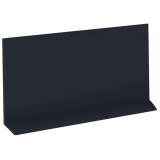 Rubber Cove Stair Risers$38.00What a cove stair riser does before the back of the step becomes the problem Put a rubber tread on a step and you solve the walking surface. What you create at the same time is a joint. The back edge of the tread meets a bare riser face at
...
What a cove stair riser does before the back of the step becomes the problem Put a rubber tread on...
What a cove stair riser does before the back of the step becomes the problem
Put a rubber tread on a step and you solve the walking surface. What you create at the same time is a joint. The back edge of the tread meets a bare riser face at a square inside corner, and that corner is where mop water, grit, and floor finish collect. It is the hardest inch of a stairway to reach and the first place a stairwell starts to look neglected.
Stair risers close that joint. This one is molded with a cove at the bottom, so the vertical riser face curves into the horizontal step instead of meeting it at a right angle. A mop head or an autoscrubber pad follows that curve. Nothing packs into a corner that has been rounded out of existence.
The second job is the riser face itself. A riser takes toe strikes, cart wheels, and vacuum heads all day, and on a painted or bare concrete riser that shows up as chipping and scuff marks within a season. A rubber riser cover takes that abuse as a wear surface and keeps the stairway looking finished.
The third is fit. Bare riser faces are rarely as flat or as square as the drawings suggest. Covering the riser hides the variation, which is why installers reach for these to reduce the fussy cutting and scribing work at the rear of each step.
Why a molded cove, and why 1/8-inch rubber
The cove is 5/8 of an inch and it is molded into the piece, not formed on site. That matters because a coved base made by bending sheet material springs back and opens up over time, especially at the ends of a run. A molded cove holds its radius because the material was cured in that shape.
Height is 7 inches, which covers a standard commercial riser face, and the material trims in both directions. You can cut it down in height for a shorter riser and cut it to length for the step width, so an irregular stairway does not force a custom order.
Thickness is 1/8 of an inch. That is deliberate on a vertical surface: enough material to absorb scuffing and cart impact, thin enough that the riser does not stand proud of the tread nose above it or create a shadow line where the two meet. A thicker riser would look applied rather than built in.
Colors run the same marbleized and solid range as the rubber stair treads in this line, which is the reason the product exists as a matched component rather than a generic strip. A riser in the same color as the tread reads as one continuous stairway. A riser in a near-miss color reads as a repair.
Standard lengths run from 36 inches up to 108 inches, so most step widths are covered without piecing. Longer standard runs matter more on risers than on treads, because a visible seam halfway across a riser face sits at eye level for anyone climbing.
Where it belongs, and what it is not
This is a finishing component for commercial, institutional, and industrial stairways — schools, hospitals, office stair towers, plants, and multifamily buildings. It belongs anywhere rubber treads are going down and the stairway needs to look complete rather than patched, and anywhere the cleaning crew is the one who has to live with the result.
It is worth specifying at the same time as the stair treads it pairs with, not afterward, because the color match depends on ordering both from the same range and the lengths need to agree step by step.
What it is not: this is not a safety product. A riser is a vertical surface that nobody walks on, so it contributes nothing to traction and should never be counted toward slip resistance on a stairway. That job belongs entirely to the tread.
It is also not structural and not a repair for a failing riser. If the riser face is crumbling concrete or a split board, the covering will telegraph every defect underneath and will not bond reliably. Patch and level first. And on stairs with open risers, there is nothing here to cover.
Three Things to Check Before You Spec It
First, measure your actual riser height. Seven inches is the supplied height and it trims down, but it does not trim up. Measure the exposed riser face from the top of the lower tread to the underside of the tread above, on more than one step — older stairways commonly vary by a half inch between the bottom flight and the top, and a riser cut for the wrong dimension leaves a gap at the tread nose.
Second, match lengths to the treads step by step. Standard lengths run 36, 42, 48, 54, 60, 66, 72, 78, 84, 90, 96, 102, and 108 inches. Order risers on the same length schedule as the treads so each step gets one continuous piece. Piecing a riser is visible in a way that piecing a tread is not, because the seam sits vertically in the sightline of anyone on the stairs.
Third, settle the adhesive and the surface prep. These bond with an acrylic adhesive, a neoprene contact adhesive, or a water-based contact adhesive. The riser face has to be clean, dry, and sound — vertical surfaces are less forgiving than horizontal ones because gravity works against you during the tack-up, and any dust or loose paint will show as a bubble within days. Order the adhesive with the risers so nothing gets improvised on site.
Why Mats Inc.
Risers are the piece that gets remembered second. A crew orders treads, installs them, and only then works out that the back of every step now needs finishing and that the color range they wanted is a lead-time away. We quote treads and risers together as one stairway package with one color decision and one length schedule, because ordering them in two passes is how stairwells end up two shades off. Sixty years of commercial and institutional work is where that habit comes from.
Rubber Cove Stair Risers — Specifications Material Molded rubber Height 7" (trims down on site) Thickness 1/8" Cove 5/8" molded toe Standard lengths 36", 42", 48", 54", 60", 66", 72", 78", 84", 90", 96", 102", 108" Colors Standard marbleized and solid colors, matched to the rubber stair tread range Field trimming Trims to fit in both height and length Adhesive Acrylic adhesive, #400 neoprene contact adhesive, or #300 water-based contact adhesive Warranty 1-year limited (Mats Inc.) Frequently Asked Questions
What exactly is the cove, and why does it matter?
Answered by Dustin Thompson, Owner & CEO, Mats Inc.
The cove is a 5/8-inch curve molded into the bottom edge of the riser. Instead of the riser face meeting the step at a square inside corner, it sweeps into it. That corner is the single hardest spot to clean on any stairway, and on a stairwell that gets mopped every night it is where dirt and floor finish build up into a dark line.
The part people miss is that it is molded, not bent. Coved bases formed from flat stock on site want to spring back open, and you see that as a gap at the corner six months later. This one holds its shape because it was cured that way. It also cuts down the fitting work at the back of each step, which on a long flight is real labor.
How well does it hold up on a busy stairway?
Answered by Dustin Thompson, Owner & CEO, Mats Inc.
A riser has an easier life than a tread — nobody stands on it. What it does take is toe strikes on the way up, cart and hand-truck wheels, and a vacuum or scrubber head run along its base every night. At 1/8 inch of rubber, there is enough material to absorb that without denting through to the substrate the way paint or a thin veneer does.
What fails on risers is almost always the bond, not the rubber. Vertical surfaces do not get the benefit of gravity or foot traffic pressing the material down while the adhesive grabs, so anything left on the riser face — dust, chalky old paint, damp concrete — turns into a bubble or a lifted top edge. Clean, dry, sound substrate and the right adhesive is the whole game. Warranty is 1-year limited.
What do I install these with, and what surfaces work?
Answered by Dustin Thompson, Owner & CEO, Mats Inc.
Acrylic adhesive, #400 neoprene contact adhesive, or #300 water-based contact adhesive all work. Which one you reach for usually comes down to the substrate and how fast the crew needs to move: contact adhesives grab immediately, which is helpful on a vertical face, while acrylic gives you a little more working time to position a long piece.
Concrete, wood, metal, and masonry riser faces all take it, provided they are prepared. Glossy paint needs scuffing. Old adhesive residue needs scraping. Fresh concrete needs to be fully cured and dry, and that is the one people rush — a riser bonded to a slab that is still giving off moisture will release at the top edge and there is no fixing it without pulling the piece.
My riser heights are not consistent — can these be trimmed?
Answered by Jinna Hopson, Vice President of Marketing, Mats Inc.
Yes, in both directions, and it is one of the more useful things about them. They come 7 inches high and trim down cleanly, and they cut to length for the step width. So a stairway where the bottom riser is a half inch taller than the rest — which is extremely common in older buildings — does not turn into a custom order.
The one thing to be careful about is that they trim down, not up. Measure the tallest exposed riser face in the flight before you order, not the average, and confirm it comes in under 7 inches. For length, standard runs go from 36 inches all the way to 108 inches, so pick the next size up from your widest step and cut back rather than trying to piece two together.
Will the color actually match my stair treads?
Answered by Jinna Hopson, Vice President of Marketing, Mats Inc.
They are made in the same standard marbleized and solid color range as the rubber stair treads in this line, which is the entire reason to use them rather than a generic wall base. A riser in the exact tread color makes the stairway read as one finished assembly. A riser that is close but not exact is more noticeable than no riser at all, because the eye catches the seam.
Two practical notes. Order treads and risers together so both come from the same range and, ideally, the same production window — rubber color can shift slightly between runs, and that shift is most visible at the joint where tread meets riser. And make your final color decision from a physical sample rather than a screen, since marbleized colors in particular photograph differently than they look installed.
Do I need risers, or can I just do the treads?
Answered by Jinna Hopson, Vice President of Marketing, Mats Inc.
You can absolutely do treads alone, and plenty of facilities do. The question is what the riser face looks like now and who has to maintain it. If it is sound painted concrete in a back-of-house stair tower, treads alone may be fine. If it is chipped, patched, or a color that will clash with new treads, the stairway will look half-finished the day it is done.
The maintenance argument usually settles it. Without a riser, you still have that square corner at the back of every step collecting grime, and your custodial team is the one chasing it with a mop every night. If the stairway is somewhere the public sees — a lobby stair, a school corridor, a hospital wing — I would treat risers as part of the job rather than an add-on, and price the whole stairway at once.
Written by Jinna Hopson, Vice President of Marketing, Mats Inc.
↑
What a cove stair riser does before the back of the step becomes the problem
Put a rubber tread on a step and you solve the walking surface. What you create at the same time is a joint. The back edge of the tread meets a bare riser face at a square inside corner, and that corner is where mop water, grit, and floor finish collect. It is the hardest inch of a stairway to reach and the first place a stairwell starts to look neglected.
Stair risers close that joint. This one is molded with a cove at the bottom, so the vertical riser face curves into the horizontal step instead of meeting it at a right angle. A mop head or an autoscrubber pad follows that curve. Nothing packs into a corner that has been rounded out of existence.
The second job is the riser face itself. A riser takes toe strikes, cart wheels, and vacuum heads all day, and on a painted or bare concrete riser that shows up as chipping and scuff marks within a season. A rubber riser cover takes that abuse as a wear surface and keeps the stairway looking finished.
The third is fit. Bare riser faces are rarely as flat or as square as the drawings suggest. Covering the riser hides the variation, which is why installers reach for these to reduce the fussy cutting and scribing work at the rear of each step.
Why a molded cove, and why 1/8-inch rubber
The cove is 5/8 of an inch and it is molded into the piece, not formed on site. That matters because a coved base made by bending sheet material springs back and opens up over time, especially at the ends of a run. A molded cove holds its radius because the material was cured in that shape.
Height is 7 inches, which covers a standard commercial riser face, and the material trims in both directions. You can cut it down in height for a shorter riser and cut it to length for the step width, so an irregular stairway does not force a custom order.
Thickness is 1/8 of an inch. That is deliberate on a vertical surface: enough material to absorb scuffing and cart impact, thin enough that the riser does not stand proud of the tread nose above it or create a shadow line where the two meet. A thicker riser would look applied rather than built in.
Colors run the same marbleized and solid range as the rubber stair treads in this line, which is the reason the product exists as a matched component rather than a generic strip. A riser in the same color as the tread reads as one continuous stairway. A riser in a near-miss color reads as a repair.
Standard lengths run from 36 inches up to 108 inches, so most step widths are covered without piecing. Longer standard runs matter more on risers than on treads, because a visible seam halfway across a riser face sits at eye level for anyone climbing.
Where it belongs, and what it is not
This is a finishing component for commercial, institutional, and industrial stairways — schools, hospitals, office stair towers, plants, and multifamily buildings. It belongs anywhere rubber treads are going down and the stairway needs to look complete rather than patched, and anywhere the cleaning crew is the one who has to live with the result.
It is worth specifying at the same time as the stair treads it pairs with, not afterward, because the color match depends on ordering both from the same range and the lengths need to agree step by step.
What it is not: this is not a safety product. A riser is a vertical surface that nobody walks on, so it contributes nothing to traction and should never be counted toward slip resistance on a stairway. That job belongs entirely to the tread.
It is also not structural and not a repair for a failing riser. If the riser face is crumbling concrete or a split board, the covering will telegraph every defect underneath and will not bond reliably. Patch and level first. And on stairs with open risers, there is nothing here to cover.
Three Things to Check Before You Spec It
First, measure your actual riser height. Seven inches is the supplied height and it trims down, but it does not trim up. Measure the exposed riser face from the top of the lower tread to the underside of the tread above, on more than one step — older stairways commonly vary by a half inch between the bottom flight and the top, and a riser cut for the wrong dimension leaves a gap at the tread nose.
Second, match lengths to the treads step by step. Standard lengths run 36, 42, 48, 54, 60, 66, 72, 78, 84, 90, 96, 102, and 108 inches. Order risers on the same length schedule as the treads so each step gets one continuous piece. Piecing a riser is visible in a way that piecing a tread is not, because the seam sits vertically in the sightline of anyone on the stairs.
Third, settle the adhesive and the surface prep. These bond with an acrylic adhesive, a neoprene contact adhesive, or a water-based contact adhesive. The riser face has to be clean, dry, and sound — vertical surfaces are less forgiving than horizontal ones because gravity works against you during the tack-up, and any dust or loose paint will show as a bubble within days. Order the adhesive with the risers so nothing gets improvised on site.
Why Mats Inc.
Risers are the piece that gets remembered second. A crew orders treads, installs them, and only then works out that the back of every step now needs finishing and that the color range they wanted is a lead-time away. We quote treads and risers together as one stairway package with one color decision and one length schedule, because ordering them in two passes is how stairwells end up two shades off. Sixty years of commercial and institutional work is where that habit comes from.
Rubber Cove Stair Risers — Specifications Material Molded rubber Height 7" (trims down on site) Thickness 1/8" Cove 5/8" molded toe Standard lengths 36", 42", 48", 54", 60", 66", 72", 78", 84", 90", 96", 102", 108" Colors Standard marbleized and solid colors, matched to the rubber stair tread range Field trimming Trims to fit in both height and length Adhesive Acrylic adhesive, #400 neoprene contact adhesive, or #300 water-based contact adhesive Warranty 1-year limited (Mats Inc.) Frequently Asked Questions
What exactly is the cove, and why does it matter?
Answered by Dustin Thompson, Owner & CEO, Mats Inc.
The cove is a 5/8-inch curve molded into the bottom edge of the riser. Instead of the riser face meeting the step at a square inside corner, it sweeps into it. That corner is the single hardest spot to clean on any stairway, and on a stairwell that gets mopped every night it is where dirt and floor finish build up into a dark line.
The part people miss is that it is molded, not bent. Coved bases formed from flat stock on site want to spring back open, and you see that as a gap at the corner six months later. This one holds its shape because it was cured that way. It also cuts down the fitting work at the back of each step, which on a long flight is real labor.
How well does it hold up on a busy stairway?
Answered by Dustin Thompson, Owner & CEO, Mats Inc.
A riser has an easier life than a tread — nobody stands on it. What it does take is toe strikes on the way up, cart and hand-truck wheels, and a vacuum or scrubber head run along its base every night. At 1/8 inch of rubber, there is enough material to absorb that without denting through to the substrate the way paint or a thin veneer does.
What fails on risers is almost always the bond, not the rubber. Vertical surfaces do not get the benefit of gravity or foot traffic pressing the material down while the adhesive grabs, so anything left on the riser face — dust, chalky old paint, damp concrete — turns into a bubble or a lifted top edge. Clean, dry, sound substrate and the right adhesive is the whole game. Warranty is 1-year limited.
What do I install these with, and what surfaces work?
Answered by Dustin Thompson, Owner & CEO, Mats Inc.
Acrylic adhesive, #400 neoprene contact adhesive, or #300 water-based contact adhesive all work. Which one you reach for usually comes down to the substrate and how fast the crew needs to move: contact adhesives grab immediately, which is helpful on a vertical face, while acrylic gives you a little more working time to position a long piece.
Concrete, wood, metal, and masonry riser faces all take it, provided they are prepared. Glossy paint needs scuffing. Old adhesive residue needs scraping. Fresh concrete needs to be fully cured and dry, and that is the one people rush — a riser bonded to a slab that is still giving off moisture will release at the top edge and there is no fixing it without pulling the piece.
My riser heights are not consistent — can these be trimmed?
Answered by Jinna Hopson, Vice President of Marketing, Mats Inc.
Yes, in both directions, and it is one of the more useful things about them. They come 7 inches high and trim down cleanly, and they cut to length for the step width. So a stairway where the bottom riser is a half inch taller than the rest — which is extremely common in older buildings — does not turn into a custom order.
The one thing to be careful about is that they trim down, not up. Measure the tallest exposed riser face in the flight before you order, not the average, and confirm it comes in under 7 inches. For length, standard runs go from 36 inches all the way to 108 inches, so pick the next size up from your widest step and cut back rather than trying to piece two together.
Will the color actually match my stair treads?
Answered by Jinna Hopson, Vice President of Marketing, Mats Inc.
They are made in the same standard marbleized and solid color range as the rubber stair treads in this line, which is the entire reason to use them rather than a generic wall base. A riser in the exact tread color makes the stairway read as one finished assembly. A riser that is close but not exact is more noticeable than no riser at all, because the eye catches the seam.
Two practical notes. Order treads and risers together so both come from the same range and, ideally, the same production window — rubber color can shift slightly between runs, and that shift is most visible at the joint where tread meets riser. And make your final color decision from a physical sample rather than a screen, since marbleized colors in particular photograph differently than they look installed.
Do I need risers, or can I just do the treads?
Answered by Jinna Hopson, Vice President of Marketing, Mats Inc.
You can absolutely do treads alone, and plenty of facilities do. The question is what the riser face looks like now and who has to maintain it. If it is sound painted concrete in a back-of-house stair tower, treads alone may be fine. If it is chipped, patched, or a color that will clash with new treads, the stairway will look half-finished the day it is done.
The maintenance argument usually settles it. Without a riser, you still have that square corner at the back of every step collecting grime, and your custodial team is the one chasing it with a mop every night. If the stairway is somewhere the public sees — a lobby stair, a school corridor, a hospital wing — I would treat risers as part of the job rather than an add-on, and price the whole stairway at once.
Written by Jinna Hopson, Vice President of Marketing, Mats Inc.
↑
View Details
View Details
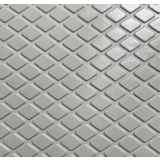 Diamond Design Rubber Tile$524.00A landing takes a kind of abuse the steps never see. People pivot on it, turn on it, set bags down on it, and drag carts across it. Every drop of water tracked up a flight gets deposited there. Cover the treads and leave the landing bare, and the landing
...
A landing takes a kind of abuse the steps never see. People pivot on it, turn on it, set bags...
A landing takes a kind of abuse the steps never see. People pivot on it, turn on it, set bags down on it, and drag carts across it. Every drop of water tracked up a flight gets deposited there. Cover the treads and leave the landing bare, and the landing becomes the worn spot — and the slick spot — at the exact point where people change direction.
What Diamond Design Rubber Tile Does Before a Landing Wears Out Ahead of the Stairs
Stair treads handle a single motion: a foot lands, presses forward, and lifts. A landing handles everything else. Traffic arrives from one direction and leaves in another, which means twisting loads on the surface rather than straight-line ones. That grinding motion is what polishes terrazzo, wears the finish off concrete, and drives grit into a floor.
Rubber landing tile puts a resilient, textured surface over that pivot point. The rubber absorbs the twist instead of transmitting it into the substrate, and the raised pattern gives shoes something to grip against while they are turning — which is exactly when a smooth wet floor stops working.
The other thing it does is finish the job. A renovated stairwell with new treads and an untouched landing looks unfinished from the flight above, and it cleans as two different surfaces. Tiling the landing means the whole stairwell maintains as one system.
Why a Diamond Pattern in Molded Rubber, and Why This Tile
The diamond pattern is a directional-traction answer to a multi-directional problem. Raised diamonds present edges on every axis, so a foot gets the same grip pivoting sideways as it does walking straight across. A linear rib pattern grips well in one direction and much less well across it, which is the wrong trade on a surface where nobody walks in a straight line.
The tile is 3/16" thick and factory cut to 27" x 27". Factory cutting matters more than it sounds — square, consistent tiles mean tight joints and fewer edges for dirt to work into. The pattern is a continuous field design, so it runs across the joints between tiles rather than resetting at each one, and a tiled landing reads as one surface instead of a grid.
That 3/16" thickness is chosen, not incidental. It matches the thickness of the diamond pattern rubber stair treads it is designed to pair with, so the tile and the tread meet flush at the top of the flight. A thickness mismatch there creates a lip at the busiest transition point in the whole stairwell.
The tile is also made to coordinate with those treads in color and design, so a landing and a flight can be specified as one visual package rather than as two products that happen to be in the same building.
Where It Belongs — and Where It Doesn't
Stair landings are the obvious application, and the one this tile is named for. It also works in lobbies, entrance vestibules, corridors and aisles, elevator cabs and elevator lobbies, ramps, and industrial floor areas — anywhere traffic concentrates, changes direction, or arrives wet. It sits alongside the rest of the interior stair and landing line and is usually specified with matching treads.
It is not a stair tread. There is no nose on a landing tile, so it cannot cover a step edge and should never be used on the steps themselves. The tread and the tile are two different products doing two different jobs on the same flight.
It is also not a loose-lay mat and not an interlocking tile. It is adhered to the substrate, permanently, which is what makes it hold up under cart wheels and pivoting traffic. If you need something removable, or something you can pull up seasonally, this is the wrong product category entirely.
Three Things to Check Before You Spec It
Tile work is won or lost in the layout, before anything is ordered. Three checks will keep the install clean and the cut edges where you want them.
First, measure the landing and plan where the cuts fall. At 27" square, the tile will not divide evenly into most landing dimensions, so there will be cut tiles somewhere. Decide in advance whether the partial tiles sit against the wall, at the stair edge, or split evenly on both sides. Landings are small enough that a badly placed cut row is immediately visible.
Second, check the substrate before ordering. The tile is adhered, so the floor underneath has to be flat, sound, dry, and free of old adhesive ridges. Rubber is resilient enough to conform to minor variation, which is a problem as much as a benefit — it will telegraph a high spot rather than bridge it. Adhesive selection also depends on the substrate, so tell us what you are bonding to.
Third, settle the pattern direction and the color pairing at the same time. Rubber tile carries a subtle marbleization that runs one way through the material, and tiles should be installed with that direction consistent across the landing. Decide it before the crew starts, and decide the tread pairing along with it.
Why Mats Inc.
Mats Inc. has supplied stair and landing coverings since 1964, and landings are the piece most often left off a stairwell order until the treads are already down. We will work the landing dimensions, the tile count, the cut layout, the tread pairing, and the adhesive with you in one pass, so the flight and the landing arrive together and go down together. Send us the measurements and we will do the layout math.
Diamond Design Rubber Tile — Specifications Material Molded rubber Pattern Raised diamond, continuous field design Tile size 27" x 27" (68.6 cm x 68.6 cm), factory cut Overall thickness 3/16" Coverage per tile 5.06 sq. ft. Coordination Matches diamond pattern rubber stair treads in color and design Traffic rating Heavy traffic areas Installation Adhered; adhesive selected to substrate Warranty 1-year limited (Mats Inc.) Frequently Asked Questions
Why a diamond pattern instead of ribs or discs?
Answered by Dustin Thompson, Owner & CEO
Because of how people move on a landing. Ribs are excellent when traffic runs perpendicular to them, which is why they work so well on stair treads — everybody crosses a step the same way. On a landing, nobody does. Traffic arrives from the flight, turns, and leaves in a different direction, often carrying something.
A raised diamond presents edges on every axis, so the grip is the same whichever way the foot is loaded. It also drains: the channels between the diamonds give tracked water somewhere to go instead of sitting as a film. Discs do a similar job with a different look, so the choice between them usually comes down to which pattern your treads use.
Is 3/16" enough for a heavy traffic landing?
Answered by Dustin Thompson, Owner & CEO
Yes, and this is the gauge specified for heavy traffic areas. Rubber does not fail on a landing the way a hard surface does. It deforms under load and recovers, so cart wheels and pivoting feet do not grind material away the way they abrade concrete or polish terrazzo.
There is a second reason 3/16" is the right number, and it has nothing to do with wear: it matches the thickness of the diamond pattern rubber stair treads. Where the top step meets the landing you get a flush transition instead of a lip. That transition is the single highest-traffic square foot in a stairwell, and a raised edge there is a trip point that will get reported.
Can I use this outside, or anywhere other than a stair landing?
Answered by Dustin Thompson, Owner & CEO
Away from stairs, absolutely. This tile is at home in lobbies, entrance vestibules, corridors, aisles, ramps, elevator cabs, and industrial floor areas. Anywhere traffic concentrates or changes direction is a reasonable application, and plenty of buildings use it as a general-purpose floor tile in high-wear zones rather than only on landings.
Exterior use is a different question and I would not want you to assume it. Outdoor installations bring freeze-thaw movement and water sitting under the tile, and the adhesive bond is what carries the whole system. Before you spec this on an exterior landing or an entry step, talk to us so we can confirm the right product and the right adhesive for that exposure.
How do I work out how many tiles I need?
Answered by Jinna Hopson, Vice President of Marketing
Each tile is 27" x 27", which covers just over five square feet. Measure your landing in inches, divide each dimension by 27, and round up on both — that gives you the tile count including the partial tiles you will cut. Do not calculate from square footage alone; it under-orders every time, because cut waste is real.
Then add a few extra tiles. Cuts go wrong, and landings often have a floor register, a door jamb, or a stringer detail that eats a tile you did not plan for. Having two or three spares in a closet also means a damaged tile years from now can be replaced from the same production run rather than a near-match. Send us the landing dimensions and we will run the count for you.
Will the tile match my stair treads, and does the direction matter when laying it?
Answered by Jinna Hopson, Vice President of Marketing
The tile is designed to coordinate with the diamond pattern rubber stair treads in both color and design, so the landing and the flight read as one surface rather than as two products that happen to share a stairwell. That coordination is the main reason to choose this pattern over another.
Direction does matter, and it is the detail installers most often miss. Rubber tile carries a subtle marbleization that runs one way through the material. Lay every tile with that direction consistent and the landing looks like a single poured surface. Rotate tiles ninety degrees to save cutting and you get a visible checkerboard under raking light — impossible to unsee once someone points it out, and it means pulling tiles up.
Can I tile the landing without redoing the stairs at the same time?
Answered by Jinna Hopson, Vice President of Marketing
You can, and sometimes it is the right call — a landing at the bottom of a flight often wears out well before the treads do, especially if it sits near an entrance where everything wet gets tracked in first. Replacing just that surface is a small, contained job.
The thing to think about is the transition. If your existing treads are a different thickness than 3/16", the tile will not sit flush against the top step and you will have a small step-up or step-down at the edge. Usually that is manageable, but it is worth measuring your current tread thickness before ordering rather than discovering it on install day. If you are planning to do the treads eventually anyway, doing both together removes the problem entirely.
Written by Jinna Hopson, Vice President of Marketing, Mats Inc.
↑
A landing takes a kind of abuse the steps never see. People pivot on it, turn on it, set bags down on it, and drag carts across it. Every drop of water tracked up a flight gets deposited there. Cover the treads and leave the landing bare, and the landing becomes the worn spot — and the slick spot — at the exact point where people change direction.
What Diamond Design Rubber Tile Does Before a Landing Wears Out Ahead of the Stairs
Stair treads handle a single motion: a foot lands, presses forward, and lifts. A landing handles everything else. Traffic arrives from one direction and leaves in another, which means twisting loads on the surface rather than straight-line ones. That grinding motion is what polishes terrazzo, wears the finish off concrete, and drives grit into a floor.
Rubber landing tile puts a resilient, textured surface over that pivot point. The rubber absorbs the twist instead of transmitting it into the substrate, and the raised pattern gives shoes something to grip against while they are turning — which is exactly when a smooth wet floor stops working.
The other thing it does is finish the job. A renovated stairwell with new treads and an untouched landing looks unfinished from the flight above, and it cleans as two different surfaces. Tiling the landing means the whole stairwell maintains as one system.
Why a Diamond Pattern in Molded Rubber, and Why This Tile
The diamond pattern is a directional-traction answer to a multi-directional problem. Raised diamonds present edges on every axis, so a foot gets the same grip pivoting sideways as it does walking straight across. A linear rib pattern grips well in one direction and much less well across it, which is the wrong trade on a surface where nobody walks in a straight line.
The tile is 3/16" thick and factory cut to 27" x 27". Factory cutting matters more than it sounds — square, consistent tiles mean tight joints and fewer edges for dirt to work into. The pattern is a continuous field design, so it runs across the joints between tiles rather than resetting at each one, and a tiled landing reads as one surface instead of a grid.
That 3/16" thickness is chosen, not incidental. It matches the thickness of the diamond pattern rubber stair treads it is designed to pair with, so the tile and the tread meet flush at the top of the flight. A thickness mismatch there creates a lip at the busiest transition point in the whole stairwell.
The tile is also made to coordinate with those treads in color and design, so a landing and a flight can be specified as one visual package rather than as two products that happen to be in the same building.
Where It Belongs — and Where It Doesn't
Stair landings are the obvious application, and the one this tile is named for. It also works in lobbies, entrance vestibules, corridors and aisles, elevator cabs and elevator lobbies, ramps, and industrial floor areas — anywhere traffic concentrates, changes direction, or arrives wet. It sits alongside the rest of the interior stair and landing line and is usually specified with matching treads.
It is not a stair tread. There is no nose on a landing tile, so it cannot cover a step edge and should never be used on the steps themselves. The tread and the tile are two different products doing two different jobs on the same flight.
It is also not a loose-lay mat and not an interlocking tile. It is adhered to the substrate, permanently, which is what makes it hold up under cart wheels and pivoting traffic. If you need something removable, or something you can pull up seasonally, this is the wrong product category entirely.
Three Things to Check Before You Spec It
Tile work is won or lost in the layout, before anything is ordered. Three checks will keep the install clean and the cut edges where you want them.
First, measure the landing and plan where the cuts fall. At 27" square, the tile will not divide evenly into most landing dimensions, so there will be cut tiles somewhere. Decide in advance whether the partial tiles sit against the wall, at the stair edge, or split evenly on both sides. Landings are small enough that a badly placed cut row is immediately visible.
Second, check the substrate before ordering. The tile is adhered, so the floor underneath has to be flat, sound, dry, and free of old adhesive ridges. Rubber is resilient enough to conform to minor variation, which is a problem as much as a benefit — it will telegraph a high spot rather than bridge it. Adhesive selection also depends on the substrate, so tell us what you are bonding to.
Third, settle the pattern direction and the color pairing at the same time. Rubber tile carries a subtle marbleization that runs one way through the material, and tiles should be installed with that direction consistent across the landing. Decide it before the crew starts, and decide the tread pairing along with it.
Why Mats Inc.
Mats Inc. has supplied stair and landing coverings since 1964, and landings are the piece most often left off a stairwell order until the treads are already down. We will work the landing dimensions, the tile count, the cut layout, the tread pairing, and the adhesive with you in one pass, so the flight and the landing arrive together and go down together. Send us the measurements and we will do the layout math.
Diamond Design Rubber Tile — Specifications Material Molded rubber Pattern Raised diamond, continuous field design Tile size 27" x 27" (68.6 cm x 68.6 cm), factory cut Overall thickness 3/16" Coverage per tile 5.06 sq. ft. Coordination Matches diamond pattern rubber stair treads in color and design Traffic rating Heavy traffic areas Installation Adhered; adhesive selected to substrate Warranty 1-year limited (Mats Inc.) Frequently Asked Questions
Why a diamond pattern instead of ribs or discs?
Answered by Dustin Thompson, Owner & CEO
Because of how people move on a landing. Ribs are excellent when traffic runs perpendicular to them, which is why they work so well on stair treads — everybody crosses a step the same way. On a landing, nobody does. Traffic arrives from the flight, turns, and leaves in a different direction, often carrying something.
A raised diamond presents edges on every axis, so the grip is the same whichever way the foot is loaded. It also drains: the channels between the diamonds give tracked water somewhere to go instead of sitting as a film. Discs do a similar job with a different look, so the choice between them usually comes down to which pattern your treads use.
Is 3/16" enough for a heavy traffic landing?
Answered by Dustin Thompson, Owner & CEO
Yes, and this is the gauge specified for heavy traffic areas. Rubber does not fail on a landing the way a hard surface does. It deforms under load and recovers, so cart wheels and pivoting feet do not grind material away the way they abrade concrete or polish terrazzo.
There is a second reason 3/16" is the right number, and it has nothing to do with wear: it matches the thickness of the diamond pattern rubber stair treads. Where the top step meets the landing you get a flush transition instead of a lip. That transition is the single highest-traffic square foot in a stairwell, and a raised edge there is a trip point that will get reported.
Can I use this outside, or anywhere other than a stair landing?
Answered by Dustin Thompson, Owner & CEO
Away from stairs, absolutely. This tile is at home in lobbies, entrance vestibules, corridors, aisles, ramps, elevator cabs, and industrial floor areas. Anywhere traffic concentrates or changes direction is a reasonable application, and plenty of buildings use it as a general-purpose floor tile in high-wear zones rather than only on landings.
Exterior use is a different question and I would not want you to assume it. Outdoor installations bring freeze-thaw movement and water sitting under the tile, and the adhesive bond is what carries the whole system. Before you spec this on an exterior landing or an entry step, talk to us so we can confirm the right product and the right adhesive for that exposure.
How do I work out how many tiles I need?
Answered by Jinna Hopson, Vice President of Marketing
Each tile is 27" x 27", which covers just over five square feet. Measure your landing in inches, divide each dimension by 27, and round up on both — that gives you the tile count including the partial tiles you will cut. Do not calculate from square footage alone; it under-orders every time, because cut waste is real.
Then add a few extra tiles. Cuts go wrong, and landings often have a floor register, a door jamb, or a stringer detail that eats a tile you did not plan for. Having two or three spares in a closet also means a damaged tile years from now can be replaced from the same production run rather than a near-match. Send us the landing dimensions and we will run the count for you.
Will the tile match my stair treads, and does the direction matter when laying it?
Answered by Jinna Hopson, Vice President of Marketing
The tile is designed to coordinate with the diamond pattern rubber stair treads in both color and design, so the landing and the flight read as one surface rather than as two products that happen to share a stairwell. That coordination is the main reason to choose this pattern over another.
Direction does matter, and it is the detail installers most often miss. Rubber tile carries a subtle marbleization that runs one way through the material. Lay every tile with that direction consistent and the landing looks like a single poured surface. Rotate tiles ninety degrees to save cutting and you get a visible checkerboard under raking light — impossible to unsee once someone points it out, and it means pulling tiles up.
Can I tile the landing without redoing the stairs at the same time?
Answered by Jinna Hopson, Vice President of Marketing
You can, and sometimes it is the right call — a landing at the bottom of a flight often wears out well before the treads do, especially if it sits near an entrance where everything wet gets tracked in first. Replacing just that surface is a small, contained job.
The thing to think about is the transition. If your existing treads are a different thickness than 3/16", the tile will not sit flush against the top step and you will have a small step-up or step-down at the edge. Usually that is manageable, but it is worth measuring your current tread thickness before ordering rather than discovering it on install day. If you are planning to do the treads eventually anyway, doing both together removes the problem entirely.
Written by Jinna Hopson, Vice President of Marketing, Mats Inc.
↑
View Details
View Details
What's Actually in the Range
Most of the catalog sorts by material before it sorts by anything else, because material decides where a tread can go and how it behaves underfoot. Three materials carry the range, and each one owns a different set of jobs.
Rubber is the volume workhorse. It grips when wet, absorbs impact, takes abrasion from grit without polishing smooth, and comes in the widest span of colors and surface textures. It covers more commercial stairs than the other two combined, indoors and out.
Vinyl runs thinner and cleans faster. It suits interior stairs where the look matters and the traffic is people rather than carts and equipment — lobbies, offices, apartment common stairs. It is also the closest match to luxury vinyl and resilient flooring already on the adjacent floors.
Metal handles the punishment cases. Aluminum and steel treads, and metal nosings fitted over other materials, go where wheels, tools, snow shovels, or sheer volume would chew through a resilient surface — plant stairs, dock steps, exterior fire stairs, back-of-house runs.
Risers and landing tiles cross all three. A riser covers the vertical face between steps and a landing tile carries the surface across the flat platform, so a flight finishes as one installation instead of new treads bolted onto old everything else.
The Mistake: One Tread for Every Stairway in the Building
Buildings rarely have one kind of stair. A single property might run a public lobby flight, two enclosed egress stairwells, a back stair to the loading area, and an exterior stoop at the side entrance. Ordering one tread for all of them is the most common way a stair project goes sideways.
What follows is predictable. The interior product on the outside steps stiffens and lets go at the nose through the first winter. The heavy exterior tread in the lobby looks industrial in a space that was supposed to look finished. Neither one is a bad product — both are in the wrong place.
The fix costs nothing at the specification stage. Walk the building, list every flight, and note two things per flight: whether it sees weather and what rolls over it. Those two answers sort almost any stair inventory into the right groups before a single price is checked.
Where to Go From Here
Interior Stair Treads
Everything inside the building envelope — stairwells, lobby flights, mezzanines, basement stairs, and the landings between them. Rubber and vinyl stair tread covers lead this group, with matching stair riser covers and landing tiles so a full flight finishes in one material and one color.
Exterior Stair Treads
Anything that takes weather. Standing water, freeze-thaw cycling, UV, and tracked-in salt and grit all shorten the life of an indoor product, so this group runs heavier rubber and metal surfaces built to stay walkable through a winter on stoops, dock steps, deck stairs, and exterior egress runs.
Stair Tread Adhesives
The bond decides how long the installation lasts. The right compound depends on the tread material, the substrate underneath, and whether the stair is wet, dry, interior, or exposed. Specifying it alongside the tread keeps a crew from improvising at the job site.
Three Things to Check Before You Order
Inventory the flights before you inventory the products. Count the steps in each stairway and measure tread depth and width on each one separately. Older buildings routinely run different dimensions floor to floor, and one measurement taken from the lobby stair will not carry through the rest of the building.
Look at what the tread has to bond to. Porous concrete, sealed concrete, wood, and steel pans all behave differently, and a substrate that is crumbling, painted, or still holding old adhesive needs prep before anything new goes down. This is the check that most often changes the adhesive line on the order.
Match the surface to how the stairs get cleaned. A deeply textured tread grips hard and holds grit that a dust mop will not lift. If housekeeping runs a mop and nothing else, a lighter texture stays cleaner and keeps looking better between deep cleans. Heavier texture belongs where the traction genuinely earns it.
Why Mats Inc.
Mats Inc. has supplied commercial flooring and matting since 1964. Sixty years in one category is what makes a page like this possible — the interior surfaces, the exterior surfaces, the risers, the landing tiles, and the adhesives all sourced to work together on the same flight rather than assembled from three suppliers who never spoke.
That matters most on multi-stair jobs, where the lobby flight and the dock steps need different products but the same order, the same delivery, and the same crew. Browse the range here, or go straight to the group that fits, and come back to commercial stair treads if you want the shorter overview.
Frequently Asked Questions
How do I choose between rubber, vinyl, and metal?
Answered by Dustin Thompson, Owner & CEO
Start with what crosses the stair. If it is people in shoes, rubber or vinyl both work, and the choice comes down to whether traction or appearance leads. If carts, hand trucks, tools, or equipment cross it, go rubber for the impact absorption or metal for the abrasion resistance. If the stair sees weather, that narrows it to exterior-rated rubber or metal regardless of what the interior stairs got.
We have several different stairways. How do we order for all of them at once?
Answered by Jinna Hopson, Vice President of Marketing
Send us the list. For each flight, give us the step count, the tread depth and width, whether it is interior or exterior, and what the stair is made of now. Photos of the leading edge help more than anything else you could send.
We will come back with the right product per flight and one consolidated order. Multi-building and multi-site programs work the same way, and keeping the color consistent across locations is easier to set up at the start than to correct later.
Can treads be installed without closing the stairwell?
Answered by Dustin Thompson, Owner & CEO
Often, yes — crews commonly work a flight in sections, or take one of two parallel stairwells at a time, so the building keeps a usable route. The limiting factor is adhesive cure time, not the tread itself, and that varies by compound and by how warm and dry the stairwell is. Confirm the cure window before you schedule, because that number decides whether the work fits an overnight, a weekend, or a longer closure.
What does upkeep look like once they are down?
Answered by Jinna Hopson, Vice President of Marketing
Light and routine. Sweep or vacuum the grit off, then damp mop with a neutral cleaner — grit left sitting in the texture is what dulls a surface early, so frequency matters more than effort. Skip harsh solvents and anything abrasive, which can haze rubber and vinyl. Speckled and marbled surfaces stay looking fresh longer between cleanings than solid colors, which is worth weighing on a stairwell nobody cleans daily.
Do stair treads have to meet a code or slip standard?
Answered by Dustin Thompson, Owner & CEO
Requirements come from your local building code and the authority having jurisdiction, and they vary by occupancy type and by where the stair sits in the egress path. Nosing projection, uniform riser height, and slip resistance are the provisions that usually apply. Tell us the occupancy and what the inspector is asking for, and we will send the documentation available for a given product so your architect or code consultant can check it against the requirement.
Can we get treads in a specific color?
Answered by Jinna Hopson, Vice President of Marketing
The standard ranges cover the commercial neutrals well — blacks, grays, browns, and speckled patterns — and several lines run brighter and custom colors for schools, campuses, and buildings working to a palette. A common approach is a contrasting nosing or accent tread on an otherwise neutral flight, which reads as intentional and makes the leading edge easier to see. Tell us the color you are matching to and we will show you what comes closest in the material your stairs need.
By Jinna Hopson, Vice President of Marketing, Mats Inc.