




Stair Tread & Landing Tile Adhesives
Stair tread adhesive decides whether a new tread stays put or starts lifting at the nose within a season. This range covers each job on a stairway: #400 Neoprene Contact Adhesive and #300 Water Based Contact Adhesive for treads and risers, #110 Epoxy Nose Caulk for the space under the nose, #560 Rubber Flooring Adhesive for rubber tile, and #775 Epoxy Flooring Adhesive for landing tile and outdoor treads.
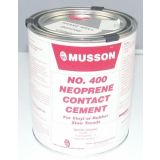 #400 Neoprene Contact Adhesive$68.00Rapid drying, solvent based contact adhesive. Formulated for bonding rubber and vinyl treads to concrete, terrazzo, metal, marble or wood. Brush both surfaces, installs approximately 75 lineal feet of treads per gallon. Contains solvent, highly flammable. Available in quarts or gallon cans.
...
Rapid drying, solvent based contact adhesive. Formulated for bonding rubber and vinyl treads to concrete, terrazzo, metal, marble or...
View Details
View Details
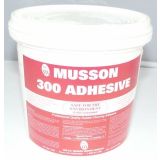 #300 Water Based Contact Adhesive$68.00A water based contact adhesive for bonding rubber and vinyl stair treads and risers to concrete, wood, terrazzo, metal or marble. Brush on both surfaces Installs approximately 75 feet of treads per gallon. Available in quart or gallon cans.
...
A water based contact adhesive for bonding rubber and vinyl stair treads and risers to concrete, wood, terrazzo, metal...
View Details
View Details
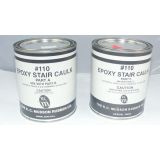 #110 Epoxy Nose Caulk$77.00Epoxy nose caulk should be used on all stair treads installations. It is necessary when Adjusta-Nose treads are being installed or when the step nosing is worn, broken or rounded. This two part epoxy nose calk will fill voids at the nose and give needed support underneath the stair
...
Epoxy nose caulk should be used on all stair treads installations. It is necessary when Adjusta-Nose treads are being...
View Details
View Details
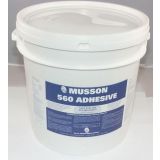 #560 Rubber Flooring Adhesive$114.00A latex adhesive for installation of rubber flooring or tiles over suspended wood or suspended concrete floors and over suitable on grade concrete floors. May be used with rubber stair treads. Where excessive moisture exist, installation is not recommended. Environmentally friendly. Covers approximately 150 square feet per gallon, single
...
A latex adhesive for installation of rubber flooring or tiles over suspended wood or suspended concrete floors and over...
View Details
View Details
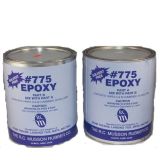 #775 Epoxy Flooring Adhesive$273.00A two part epoxy adhesive for installation of Disc-O-Tile and Disc-O-Tread. It is the only recommended adhesive for below grade flooring installation. Each unit contains a Part "A" and Part "B" packed in one gallon cans to be mixed to produce one gallon of adhesive. One unit will cover
...
A two part epoxy adhesive for installation of Disc-O-Tile and Disc-O-Tread. It is the only recommended adhesive for below...
View Details
View Details
What Stair Tread Adhesive Does Before a Loose Nose Becomes a Trip
A stair tread is only as good as its bond. The tread takes the wear, but the adhesive keeps it flat and tight to the step. When the bond fails, it fails at the front edge first, because that is where every footstep lands on the way down. A lifted nose is a trip hazard at the worst spot on the stair.
Each adhesive here is built for one part of that job. Contact adhesives hold the tread and riser to the step. An epoxy caulk fills the gap between the tread's nose and a worn step edge. Trowel-on flooring adhesives hold landing tiles and rubber flooring across flat areas. A full stair job often needs two or three of them.
Choosing the right one is part of choosing the tread. The treads, cove risers, and landing tiles in our stair treads, risers, and landing tiles range each call for a specific adhesive, and the pairings below follow that.
The Mistake: Treating Glue as Interchangeable
Most failed tread installs come down to the wrong adhesive or the right adhesive in the wrong place. A contact adhesive meant for treads gets spread under landing tile. A flooring adhesive goes onto a damp slab it was not rated for. A general-purpose glue from the hardware store goes onto a rubber tread it was never tested with.
The nose is the other common miss. Step edges wear round over the years, so a new tread's nose sits over a small empty space. With nothing under it, the nose flexes with every step. It dents, pulls away from the step, and wears out early, even though the rest of the tread is fine. Filling that space is a separate step, and it gets skipped.
Running short causes the third problem. A crew that runs out halfway down a flight either stops or thins what is left, and a thin bond lets go first. Working out how much you need before the job starts matters as much as picking the right type.
How the Five Adhesives Compare
#400 Neoprene Contact Adhesive is a solvent-based contact adhesive for rubber and vinyl stair treads. It brushes onto the back of the tread and nose, and it bonds to concrete, pan-filled steel, wood, metal, marble, and terrazzo. One gallon covers about 75 linear feet of treads. It contains solvents and is extremely flammable. It is the right pick for new construction, renovation work in empty buildings, and industrial stairs.
#300 Water Based Contact Adhesive does the same job without solvents. It bonds rubber and vinyl stair treads and cove risers to concrete, wood, terrazzo, metal, and marble, and covers about 75 linear feet of treads per gallon. Because it is not solvent-based, it is the strongest fit for occupied buildings such as schools, hospitals, offices, and apartment buildings, where fumes during the work matter.
#110 Epoxy Nose Caulk is a two-part epoxy that fills the space under a tread's nose. It sets hard and supports the nose, so the edge does not flex, dent, or separate from the step. It is low odor, non-flammable, and solvent-free. It is the right pick for any tread install, and it is essential on worn or rounded step edges and on treads with an adjustable nose.
#560 Rubber Flooring Adhesive is a water-based latex adhesive that trowels on straight from the can. It holds rubber floor tiles and rolls, and molded rubber treads with a sanded back. It works over dry on-grade concrete and over suspended concrete or wood floors. One gallon covers about 150 square feet. It is the right pick for rubber tile on landings and in lobbies where the floor stays dry.
#775 Epoxy Flooring Adhesive is a two-part, solvent-free epoxy that comes as a Part A can, a Part B can, and a stirring paddle. Each unit covers about 150 square feet. It is the only adhesive recommended for the Disc-O-Tile landing tile, it is rated for indoor and outdoor use, and it is required for the rubber outdoor stair tread. It is the strongest fit for disc tile landings and exterior rubber treads.
Three Things to Check Before You Pick
First, what you are gluing down. Treads and risers take a contact adhesive: the #400 Neoprene Contact Adhesive or the #300 Water Based Contact Adhesive. Rubber tile and rolls take the #560 Rubber Flooring Adhesive. Disc tile landings and outdoor rubber treads take the #775 Epoxy Flooring Adhesive. Every tread, whatever it is, benefits from the #110 Epoxy Nose Caulk under the nose.
Second, the building and the floor underneath. If the building is occupied during the work, the solvent-free #300 is the easier choice. If the stair is outside, the tread needs the #775 epoxy, not a contact adhesive. If a concrete floor holds moisture, the #560 is not the one to use, since the maker does not recommend it where excessive moisture exists.
Third, how much you need. Add up the length of every tread on the job: the contact adhesives cover about 75 linear feet per gallon. For landings and tiled areas, measure square feet: the #560 covers about 150 per gallon and the #775 about 150 per unit. Order a little extra so the crew does not thin the last few steps.
Why Mats Inc.
We don't sell adhesive on its own. We sell it as part of a stair job. When you order treads, risers, or landing tiles, we check which adhesive each one calls for and put it on the same order in the right amount. That way the crew arrives with what the job needs, not whatever was left on the shelf from the last one.
Mats Inc. has supplied commercial, industrial, and residential customers since 1964, and we ship across the lower 48 states and Canada. Send us your tread lengths and landing sizes, and we'll work out the adhesive count with you.
Frequently Asked Questions
Which adhesive goes with which stair tread or tile?
Answered by Dustin Thompson, Owner & CEO
Indoor rubber and vinyl treads, along with cove risers, go down with a contact adhesive, either the #400 neoprene or the #300 water-based. Rubber floor tiles and rolls take the #560 latex adhesive. The Disc-O-Tile landing tile and the rubber outdoor stair tread both take the #775 epoxy.
The #110 epoxy nose caulk goes in on top of whichever adhesive you use. It is not a substitute for the tread adhesive. It fills the space under the nose so the front edge has solid support. If you're unsure, tell us the product and we'll name the adhesive.
How much stair tread adhesive do I need?
Answered by Jinna Hopson, Vice President of Marketing
For treads, add up the total length. One gallon of #400 or #300 contact adhesive covers about 75 linear feet of treads. A flight of 20 steps at 48 inches wide is 80 linear feet, so it needs a little more than one gallon, and two is the safe order.
For landings and tile, measure square feet. The #560 covers about 150 square feet per gallon, and one unit of #775 covers about 150 square feet. Round up rather than down, because a crew that runs short tends to spread the rest too thin.
Can these adhesives be used outdoors or on damp concrete?
Answered by Dustin Thompson, Owner & CEO
Only the #775 epoxy is rated for both indoor and outdoor use, and it is the required adhesive for the rubber outdoor stair tread. The #110 nose caulk is intended for indoor installs. The makers don't rate the #400 or #300 contact adhesives for exterior stairs, so we don't use them outside.
Moisture is its own question. The #560 flooring adhesive is not recommended where excessive moisture exists. If a slab is damp, or you aren't sure, tell us before you order and we'll work through it with you rather than guess.
How long does the bond last, and what makes it fail early?
Answered by Dustin Thompson, Owner & CEO
The makers don't publish a bond life in years, so we don't quote one. A good bond should last as long as the tread itself. What shortens it is almost always the setup, not the adhesive: dust or old finish left on the step, a thin coat from running short, or the wrong type for the product.
The front edge is where early failure shows up. A nose left hollow over a worn step flexes until it separates, which is what the #110 caulk is there to stop. Check the noses once a year, and reseat anything that has started to lift before water or grit gets under it.
Will the adhesive or caulk change how the stairs look?
Answered by Jinna Hopson, Vice President of Marketing
It shouldn't, because all of it sits under the tread. What you'll notice is the difference over time. A nose supported by epoxy caulk keeps a crisp, straight edge. A hollow nose slowly dents and sags, and that sag is what makes a stairway look tired years before the tread surface wears out.
Flat tiles work the same way. An even trowel coat of #560 or #775 lets tiles lie flat with tight seams, so a landing reads as one surface. Patchy adhesive shows through as raised edges and seams that catch light and dirt.
Can I order adhesive to match a full stair package?
Answered by Jinna Hopson, Vice President of Marketing
Yes, and it is the easiest way to get it right. A typical indoor stairway uses a contact adhesive for the treads and risers plus the #110 nose caulk. If landings are tiled, add the #560 for rubber tile or the #775 for disc tile. An outdoor stairway uses the #775 for the treads.
Send us the tread lengths, the riser count, and the landing sizes. We'll match each product to its adhesive and work out the quantities, so everything for the stairway ships together.
By Dustin Thompson, Owner & CEO, Mats Inc.