





- Home
- Products
- Recessed Entrance Matting & Grate Systems
- All Recessed Entry Matting & Grates
All Recessed Entry Matting & Grates
Recessed entrance matting sits in a shallow well built into the floor, so the walking surface finishes flush with the surrounding tile or stone. Done right, it traps dirt and water at the door without leaving a raised mat edge for people to trip over or carts to catch. This page covers the full recessed range, which divides into two approaches: rigid grate systems and drop-in mat inserts.
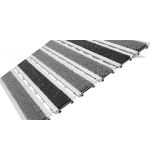 Perfec Clean 3/8" Rollup Mats - Aluminum HingeThe Perfec Clean 3/8" Rollup Mats — Aluminum Hinge is a recessed walk-off mat engineered for the busiest commercial entrances. The aluminum tread-rail surface scrapes dirt off incoming shoes and channels water and snow down into the well below, so the threshold stays presentable while the debris stays out
...
The Perfec Clean 3/8" Rollup Mats — Aluminum Hinge is a recessed walk-off mat engineered for the busiest commercial...
The Perfec Clean 3/8" Rollup Mats — Aluminum Hinge is a recessed walk-off mat engineered for the busiest commercial entrances. The aluminum tread-rail surface scrapes dirt off incoming shoes and channels water and snow down into the well below, so the threshold stays presentable while the debris stays out of sight. What sets it apart is the structured aluminum hinge — it rolls up cleanly for cleaning and lays back flat without requiring any particular technique from the maintenance team.
The construction is built for volume. Tread rails are 6063-T52 aluminum, spaced 2 inches on center and connected by a size-retentive aluminum hinge with slotted holes for maximum drainage. The system carries a 400-pound-per-wheel rolling load rating, so luggage carts, hand trucks, and wheeled equipment cross it without deflecting the rails. It's made in America and meets Buy American Act requirements — which matters when the specification runs through government or institutional procurement.
It installs two ways. Recessed, it seats into a well between 3/8 and 7/16 inch deep and finishes flush with the surrounding floor — the clean, continuous look a recessed mat in a tiled floor is specified for. Surface-mounted, it needs a beveled perimeter frame so the raised edge doesn't become a tripping hazard at the threshold. Send the measured well depth, or tell us you're mounting on the surface, and we'll spec the right frame to match.
This is the workhorse end of the recessed grate systems range — the right call for high-traffic commercial floor grates at corporate lobbies, hospitality entries, transportation hubs, and institutional front doors. Aluminum finish, tread insert type, and insert colors are all configurable, so the entrance reads as an intentional design element rather than a utility mat. The aluminum structure runs for decades; the tread inserts are the wear component and get replaced when they show it, without pulling the whole system.
Frequently Asked Questions
Can this be recessed or surface-mounted, and what depth does the well need?
Answered by Dustin Thompson, Owner & CEO
Both. For a recessed installation, the well should be 3/8 to 7/16 inch deep — the mat seats into it and finishes flush with the surrounding floor. For a surface-mounted installation, you add a beveled perimeter frame so the raised edge doesn't create a tripping hazard at the threshold. If the well is already built, send the measured depth and we'll confirm the fit; if it's still in the design stage, plan it to the 3/8-to-7/16-inch range.
How much traffic and rolling load can it handle?
Answered by Dustin Thompson, Owner & CEO
It's rated for 400 pounds per wheel, which covers luggage carts, hand trucks, wheelchairs, and most wheeled service equipment without the rails deflecting or the hinge loosening. The 6063-T52 aluminum tread rails are built to take continuous foot and wheeled traffic at the heaviest commercial entrances. The aluminum structure itself lasts for decades; what wears is the tread insert, which is designed to be replaced on its own without removing the rail system.
What finish and insert options are available?
Answered by Jinna Hopson, Vice President of Marketing
You can specify the aluminum finish, the tread insert type, and the insert colors — that's where the entrance gets its character. Neutral inserts in matching tones read quiet and refined; higher-contrast or color-blocked inserts make the threshold a deliberate design feature; scraping-style inserts lean functional for heavy-debris entries. Send your color palette or brand standards and we'll lay out the insert combinations that fit the space.
Does an aluminum grate look industrial, or can it suit a high-end entrance?
Answered by Jinna Hopson, Vice President of Marketing
It can read very refined. The visible aluminum rails between textile insert bands give the threshold an architectural, intentional look that fits corporate lobbies, hospitality grand entries, and museum or institutional thresholds where the entrance is part of the design. The insert choice drives the final impression more than the metal does — quiet tones for restraint, contrast for a modern statement. It only reads industrial if you spec it that way.
By Dustin Thompson, Owner & CEO, Mats Inc.
↑
The Perfec Clean 3/8" Rollup Mats — Aluminum Hinge is a recessed walk-off mat engineered for the busiest commercial entrances. The aluminum tread-rail surface scrapes dirt off incoming shoes and channels water and snow down into the well below, so the threshold stays presentable while the debris stays out of sight. What sets it apart is the structured aluminum hinge — it rolls up cleanly for cleaning and lays back flat without requiring any particular technique from the maintenance team.
The construction is built for volume. Tread rails are 6063-T52 aluminum, spaced 2 inches on center and connected by a size-retentive aluminum hinge with slotted holes for maximum drainage. The system carries a 400-pound-per-wheel rolling load rating, so luggage carts, hand trucks, and wheeled equipment cross it without deflecting the rails. It's made in America and meets Buy American Act requirements — which matters when the specification runs through government or institutional procurement.
It installs two ways. Recessed, it seats into a well between 3/8 and 7/16 inch deep and finishes flush with the surrounding floor — the clean, continuous look a recessed mat in a tiled floor is specified for. Surface-mounted, it needs a beveled perimeter frame so the raised edge doesn't become a tripping hazard at the threshold. Send the measured well depth, or tell us you're mounting on the surface, and we'll spec the right frame to match.
This is the workhorse end of the recessed grate systems range — the right call for high-traffic commercial floor grates at corporate lobbies, hospitality entries, transportation hubs, and institutional front doors. Aluminum finish, tread insert type, and insert colors are all configurable, so the entrance reads as an intentional design element rather than a utility mat. The aluminum structure runs for decades; the tread inserts are the wear component and get replaced when they show it, without pulling the whole system.
Frequently Asked Questions
Can this be recessed or surface-mounted, and what depth does the well need?
Answered by Dustin Thompson, Owner & CEO
Both. For a recessed installation, the well should be 3/8 to 7/16 inch deep — the mat seats into it and finishes flush with the surrounding floor. For a surface-mounted installation, you add a beveled perimeter frame so the raised edge doesn't create a tripping hazard at the threshold. If the well is already built, send the measured depth and we'll confirm the fit; if it's still in the design stage, plan it to the 3/8-to-7/16-inch range.
How much traffic and rolling load can it handle?
Answered by Dustin Thompson, Owner & CEO
It's rated for 400 pounds per wheel, which covers luggage carts, hand trucks, wheelchairs, and most wheeled service equipment without the rails deflecting or the hinge loosening. The 6063-T52 aluminum tread rails are built to take continuous foot and wheeled traffic at the heaviest commercial entrances. The aluminum structure itself lasts for decades; what wears is the tread insert, which is designed to be replaced on its own without removing the rail system.
What finish and insert options are available?
Answered by Jinna Hopson, Vice President of Marketing
You can specify the aluminum finish, the tread insert type, and the insert colors — that's where the entrance gets its character. Neutral inserts in matching tones read quiet and refined; higher-contrast or color-blocked inserts make the threshold a deliberate design feature; scraping-style inserts lean functional for heavy-debris entries. Send your color palette or brand standards and we'll lay out the insert combinations that fit the space.
Does an aluminum grate look industrial, or can it suit a high-end entrance?
Answered by Jinna Hopson, Vice President of Marketing
It can read very refined. The visible aluminum rails between textile insert bands give the threshold an architectural, intentional look that fits corporate lobbies, hospitality grand entries, and museum or institutional thresholds where the entrance is part of the design. The insert choice drives the final impression more than the metal does — quiet tones for restraint, contrast for a modern statement. It only reads industrial if you spec it that way.
By Dustin Thompson, Owner & CEO, Mats Inc.
↑
View Details
View Details
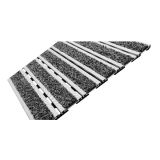 Perfec Clean 3/8" Rollup Mats - Rubber HingeA recessed rubber-hinged mat sits flush in a well at your entrance and does two jobs at once: it scrapes grit and water off shoes into the recess below, and its soft vinyl hinges cushion each step so foot traffic lands quietly. It's the lighter, quieter version of a recessed
...
A recessed rubber-hinged mat sits flush in a well at your entrance and does two jobs at once: it scrapes...
A recessed rubber-hinged mat sits flush in a well at your entrance and does two jobs at once: it scrapes grit and water off shoes into the recess below, and its soft vinyl hinges cushion each step so foot traffic lands quietly. It's the lighter, quieter version of a recessed entrance grate, made for entries that see steady but not punishing traffic.
What a recessed rubber-hinged mat does before grit reaches your floor
A recessed walk-off mat seats in a well cut into the floor at the door, so people cross it as they come in. The tread scrapes dirt and pulls moisture off shoes, and the open construction lets both fall into the recess below instead of spreading across your floor. What sets this one apart is the soft hinge between the rails, which takes the hard click out of footsteps.
Getting that capture right at the door matters. ISSA field data shows it takes about six to eight footsteps to remove most of the soil on a shoe, so a mat long enough to cover those steps keeps grit and water in the well rather than on your finished floor. Size it too short and the dirt simply walks past it.
Why soft vinyl hinges, and why this one
The mat is built from aluminum tread rails, but instead of linking them with metal hinges, this version joins them with flexible vinyl. That soft hinge flexes underfoot and absorbs the noise of foot traffic, so the mat is quieter to walk across than an all-metal grate. It's also lightweight, which makes it easy to roll back for cleaning the recess underneath.
The trade-off is traffic. The vinyl-hinged build is made for light-to-medium pedestrian entrances, not the busiest doors in a building. In return you get a mat that's quieter underfoot and gentler in spaces where a clattering metal grate would feel out of place.
The 3/8" profile keeps the mat low, so it suits a shallow recess. You still choose the tread that rides on the rails — bare serrated aluminum, a nylon carpet insert, Diamond Peak vinyl, or a polypropylene brush — depending on how much scraping the entrance needs and how you want it to look.
Where it belongs, and what it is not
This mat fits entrances that stay busy but civilized — office lobbies, hotels, clinics and healthcare waiting areas, boutiques, and other spaces where quiet matters and the traffic is light to medium. It's part of our lineup of recessed grate systems, set flush so there's no lip at the door.
It is not the mat for your busiest, grittiest doors — that's where an all-metal hinged grate earns its place. And it is not a soft drying mat or a logo mat. It handles the first scrape-and-drain step at a quieter entrance; pair it with an absorbent mat a few steps inside to finish drying shoes.
Three things to check before you spec it
First, match it to your traffic. This is a light-to-medium-duty mat, so the most common mistake is putting it in the hardest-working door in the building. In a high-traffic entrance it will wear faster than it should; in the office, hotel, or clinic doorway it's built for, it holds up and keeps things quiet.
Second, check the recess depth and frame. Seated flush in a properly cut well, the mat sits level with the floor and there's no trip lip. If you can't cut a recess, a surface-applied frame with a ramped edge sets the mat on top of the existing floor instead.
Third, pick the insert for the entrance. Brush knocks off coarser grit, carpet holds fine moisture and reads softer underfoot, vinyl gives a wipeable surface, and bare aluminum scrapes hardest. The same frame takes any of them, so you're matching the tread to the door, not changing the mat.
Why Mats Inc.
We've specified entrance flooring since 1964, and the rubber-hinged mat is a good example of why the spec matters — pick it for the right door and it's quiet, easy to maintain, and long-lived; drop it into a high-traffic entrance and it's the wrong tool. We help you match the mat, the recess depth, and the insert to your actual entrance, then ship it made to your opening. Mats Inc. specifies the system; your installer sets it into the prepared recess.
Specifications Profile thickness 3/8" Construction Aluminum tread rails joined by flexible vinyl (rubber) hinges; lightweight; rolls up for cleaning underneath Hinges Soft vinyl — flex underfoot and absorb foot-traffic noise Traffic rating Light to medium pedestrian Tread / insert options Bare serrated aluminum (no insert), nylon carpet, Diamond Peak vinyl, or polypropylene brush — one frame accepts any Color options Multiple per insert plus anodized aluminum finishes; sample card available for matching Installation Recessed (set flush in a floor well) or surface-applied with a ramped frame Drainage Open construction; dirt, grime, and moisture drop below the tread into the recess Spec section CSI 12 48 13 / 12 48 16 (Entrance Floor Mats & Grilles) Origin Made in the USA; Buy American Act compliant Warranty 1-year limited (Mats Inc.) Frequently Asked Questions
What makes a rubber-hinged mat different from an all-metal one?
Answered by Dustin Thompson, Owner & CEO
Both use aluminum tread rails, but this one links those rails with soft vinyl hinges instead of metal ones. The vinyl flexes as you step, which absorbs the noise of foot traffic and gives a little underfoot, so the mat is quieter and softer than an all-aluminum grate. It's also lighter, so it's easy to roll up when you want to clean the recess underneath.
The metal-hinged version trades that quiet for the ability to take heavier traffic. Which one is right comes down to how busy the door is.
How long will it last, and what wears it out?
Answered by Dustin Thompson, Owner & CEO
The biggest factor is whether it's matched to its traffic. This is a light-to-medium-duty mat, so used in the entrance it's built for, the aluminum rails don't rust and it holds up for years. Put it in a high-traffic door and the hinges and tread wear faster than they should.
After that, maintenance decides the rest — rolling the mat up to clear grit out of the recess keeps it working and looking right far longer.
Can it be installed without cutting a recess into the floor?
Answered by Dustin Thompson, Owner & CEO
Yes. The cleanest install seats the mat flush in a recessed well, so it's level with the floor and there's no lip to catch a toe. When recessing isn't an option — a slab you don't want to cut, or a fast retrofit — a surface-applied frame with a ramped edge mounts the mat on top of the floor instead. Recessed is the better look where you can do it; surface-applied gets you the same mat where you can't.
What insert and color options does it come with?
Answered by Jinna Hopson, Vice President of Marketing
The tread comes in four styles — bare serrated aluminum, nylon carpet, Diamond Peak vinyl, and polypropylene brush — and most offer a range of colors, from charcoal and black through warmer browns, with anodized finishes on the aluminum.
Because color looks different on a screen than in person, we send a sample card before you order, which helps when you're matching the mat to a floor or a brand palette.
Can it be made to fit an odd-shaped or oversized entry?
Answered by Jinna Hopson, Vice President of Marketing
Yes — the mat is made to your opening rather than pulled from a few stock sizes, so a wide vestibule or an entry that isn't a tidy rectangle can still get a mat that runs the full walking path. Send the recess dimensions, or the opening if you're surface-mounting, and we build the mat and frame to suit. Settling the fit at the order stage is what keeps it sitting flush and covering every step into the door.
Is it quiet enough for an office or hotel lobby, and how do I know it's the right pick?
Answered by Jinna Hopson, Vice President of Marketing
That's exactly the entrance it's made for. The soft vinyl hinges take the sharp click out of footsteps, so it suits places where a noisy metal grate would feel jarring — quiet lobbies, hotels, healthcare waiting areas, upscale retail.
The thing to confirm is traffic volume. If the door is light to medium, this mat is the right call; if it's one of the busiest in the building, step up to the heavier all-metal grate instead.
By Jinna Hopson, Vice President of Marketing, Mats Inc.
↑
A recessed rubber-hinged mat sits flush in a well at your entrance and does two jobs at once: it scrapes grit and water off shoes into the recess below, and its soft vinyl hinges cushion each step so foot traffic lands quietly. It's the lighter, quieter version of a recessed entrance grate, made for entries that see steady but not punishing traffic.
What a recessed rubber-hinged mat does before grit reaches your floor
A recessed walk-off mat seats in a well cut into the floor at the door, so people cross it as they come in. The tread scrapes dirt and pulls moisture off shoes, and the open construction lets both fall into the recess below instead of spreading across your floor. What sets this one apart is the soft hinge between the rails, which takes the hard click out of footsteps.
Getting that capture right at the door matters. ISSA field data shows it takes about six to eight footsteps to remove most of the soil on a shoe, so a mat long enough to cover those steps keeps grit and water in the well rather than on your finished floor. Size it too short and the dirt simply walks past it.
Why soft vinyl hinges, and why this one
The mat is built from aluminum tread rails, but instead of linking them with metal hinges, this version joins them with flexible vinyl. That soft hinge flexes underfoot and absorbs the noise of foot traffic, so the mat is quieter to walk across than an all-metal grate. It's also lightweight, which makes it easy to roll back for cleaning the recess underneath.
The trade-off is traffic. The vinyl-hinged build is made for light-to-medium pedestrian entrances, not the busiest doors in a building. In return you get a mat that's quieter underfoot and gentler in spaces where a clattering metal grate would feel out of place.
The 3/8" profile keeps the mat low, so it suits a shallow recess. You still choose the tread that rides on the rails — bare serrated aluminum, a nylon carpet insert, Diamond Peak vinyl, or a polypropylene brush — depending on how much scraping the entrance needs and how you want it to look.
Where it belongs, and what it is not
This mat fits entrances that stay busy but civilized — office lobbies, hotels, clinics and healthcare waiting areas, boutiques, and other spaces where quiet matters and the traffic is light to medium. It's part of our lineup of recessed grate systems, set flush so there's no lip at the door.
It is not the mat for your busiest, grittiest doors — that's where an all-metal hinged grate earns its place. And it is not a soft drying mat or a logo mat. It handles the first scrape-and-drain step at a quieter entrance; pair it with an absorbent mat a few steps inside to finish drying shoes.
Three things to check before you spec it
First, match it to your traffic. This is a light-to-medium-duty mat, so the most common mistake is putting it in the hardest-working door in the building. In a high-traffic entrance it will wear faster than it should; in the office, hotel, or clinic doorway it's built for, it holds up and keeps things quiet.
Second, check the recess depth and frame. Seated flush in a properly cut well, the mat sits level with the floor and there's no trip lip. If you can't cut a recess, a surface-applied frame with a ramped edge sets the mat on top of the existing floor instead.
Third, pick the insert for the entrance. Brush knocks off coarser grit, carpet holds fine moisture and reads softer underfoot, vinyl gives a wipeable surface, and bare aluminum scrapes hardest. The same frame takes any of them, so you're matching the tread to the door, not changing the mat.
Why Mats Inc.
We've specified entrance flooring since 1964, and the rubber-hinged mat is a good example of why the spec matters — pick it for the right door and it's quiet, easy to maintain, and long-lived; drop it into a high-traffic entrance and it's the wrong tool. We help you match the mat, the recess depth, and the insert to your actual entrance, then ship it made to your opening. Mats Inc. specifies the system; your installer sets it into the prepared recess.
Specifications Profile thickness 3/8" Construction Aluminum tread rails joined by flexible vinyl (rubber) hinges; lightweight; rolls up for cleaning underneath Hinges Soft vinyl — flex underfoot and absorb foot-traffic noise Traffic rating Light to medium pedestrian Tread / insert options Bare serrated aluminum (no insert), nylon carpet, Diamond Peak vinyl, or polypropylene brush — one frame accepts any Color options Multiple per insert plus anodized aluminum finishes; sample card available for matching Installation Recessed (set flush in a floor well) or surface-applied with a ramped frame Drainage Open construction; dirt, grime, and moisture drop below the tread into the recess Spec section CSI 12 48 13 / 12 48 16 (Entrance Floor Mats & Grilles) Origin Made in the USA; Buy American Act compliant Warranty 1-year limited (Mats Inc.) Frequently Asked Questions
What makes a rubber-hinged mat different from an all-metal one?
Answered by Dustin Thompson, Owner & CEO
Both use aluminum tread rails, but this one links those rails with soft vinyl hinges instead of metal ones. The vinyl flexes as you step, which absorbs the noise of foot traffic and gives a little underfoot, so the mat is quieter and softer than an all-aluminum grate. It's also lighter, so it's easy to roll up when you want to clean the recess underneath.
The metal-hinged version trades that quiet for the ability to take heavier traffic. Which one is right comes down to how busy the door is.
How long will it last, and what wears it out?
Answered by Dustin Thompson, Owner & CEO
The biggest factor is whether it's matched to its traffic. This is a light-to-medium-duty mat, so used in the entrance it's built for, the aluminum rails don't rust and it holds up for years. Put it in a high-traffic door and the hinges and tread wear faster than they should.
After that, maintenance decides the rest — rolling the mat up to clear grit out of the recess keeps it working and looking right far longer.
Can it be installed without cutting a recess into the floor?
Answered by Dustin Thompson, Owner & CEO
Yes. The cleanest install seats the mat flush in a recessed well, so it's level with the floor and there's no lip to catch a toe. When recessing isn't an option — a slab you don't want to cut, or a fast retrofit — a surface-applied frame with a ramped edge mounts the mat on top of the floor instead. Recessed is the better look where you can do it; surface-applied gets you the same mat where you can't.
What insert and color options does it come with?
Answered by Jinna Hopson, Vice President of Marketing
The tread comes in four styles — bare serrated aluminum, nylon carpet, Diamond Peak vinyl, and polypropylene brush — and most offer a range of colors, from charcoal and black through warmer browns, with anodized finishes on the aluminum.
Because color looks different on a screen than in person, we send a sample card before you order, which helps when you're matching the mat to a floor or a brand palette.
Can it be made to fit an odd-shaped or oversized entry?
Answered by Jinna Hopson, Vice President of Marketing
Yes — the mat is made to your opening rather than pulled from a few stock sizes, so a wide vestibule or an entry that isn't a tidy rectangle can still get a mat that runs the full walking path. Send the recess dimensions, or the opening if you're surface-mounting, and we build the mat and frame to suit. Settling the fit at the order stage is what keeps it sitting flush and covering every step into the door.
Is it quiet enough for an office or hotel lobby, and how do I know it's the right pick?
Answered by Jinna Hopson, Vice President of Marketing
That's exactly the entrance it's made for. The soft vinyl hinges take the sharp click out of footsteps, so it suits places where a noisy metal grate would feel jarring — quiet lobbies, hotels, healthcare waiting areas, upscale retail.
The thing to confirm is traffic volume. If the door is light to medium, this mat is the right call; if it's one of the busiest in the building, step up to the heavier all-metal grate instead.
By Jinna Hopson, Vice President of Marketing, Mats Inc.
↑
View Details
View Details
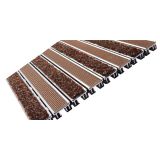 Perfec Clean 3/4" Rollup Grate - Rubber HingeA recessed roll-up grate is the heavy-duty option for a busy entrance: a deep, open grate that scrapes grit and drains water into a pit below, holds up under rolling loads like carts and luggage trolleys, and still stays quiet underfoot thanks to rubber hinges between the rails. It rolls
...
A recessed roll-up grate is the heavy-duty option for a busy entrance: a deep, open grate that scrapes grit and...
A recessed roll-up grate is the heavy-duty option for a busy entrance: a deep, open grate that scrapes grit and drains water into a pit below, holds up under rolling loads like carts and luggage trolleys, and still stays quiet underfoot thanks to rubber hinges between the rails. It rolls up in one piece so the pit underneath is easy to clean out.
What a recessed roll-up grate does before dirt and wheels reach your floor
A recessed walk-off grate sits flush in a pit cut into the floor at the entrance, so everyone crosses it on the way in. The open rails scrape grit and let water drop into the pit below, keeping both off your finished floor. Because this grate is built deep, the pit holds a lot more debris before it needs clearing.
That capacity matters most when the weather turns. ISSA field data shows about twelve times more dirt comes into a building during wet weather, so a deeper pit that holds more grit and melt between cleanings keeps a heavy entrance working instead of overflowing onto the floor.
Why a 3/4" rubber-hinged grate, and why this one
This grate is built thicker and deeper than a standard recessed mat — a 3/4" profile that gives it the strength to take rolling loads. The rubber hinges between the aluminum rails do two things at once: they soften the noise of foot traffic, and they hold the grate together under wheels rated to 1,000 pounds per wheel.
That combination is the point. Usually you pick between a quiet mat and one that can take a beating; here the rubber hinge gives you both, which is why it suits entrances with carts, luggage trolleys, or wheelchairs rolling across all day.
You also choose the tread, and you can mix them. Run grit-scraping treads like brush or bare aluminum where shoes hit first, then moisture-holding carpet behind them, so one grate both knocks off debris and soaks up the water it loosens.
Where it belongs, and what it is not
This is the grate for the hardest-working doors — busy retail and grocery entrances, hotel and convention lobbies, hospital and transit entrances, anywhere foot traffic mixes with wheeled traffic and weather. It belongs to our range of recessed grate systems, dropped into a pit so the surface finishes flush with the floor around it.
It is not a light-duty or surface-laid mat — it needs a recessed pit, and it's more grate than you need for a quiet, low-traffic side door. And it's not the soft mat that finishes drying shoes; it does the heavy scrape-and-drain at the threshold. Pair it with an interior absorbent mat a few steps in.
Three things to check before you spec it
First, confirm the pit depth. This grate is deeper than a standard recessed mat, so the pit has to be cut to suit it. On a new pour that's easy to plan; on an existing slab, check that you can cut a pit deep enough before you commit to this grate over a thinner one.
Second, size it to the rolling loads. The grate holds its shape under wheels up to 1,000 pounds each, which covers most carts, luggage trolleys, and mobility equipment. If your entrance sees heavier rolling loads than that, tell us, and we'll confirm it's the right grate before you order.
Third, plan the tread mix. Because you can alternate treads, decide where the scraping happens and where the moisture gets held. A common setup runs aggressive brush or bare aluminum at the leading edge and carpet behind it, so the grate both cleans and dries across its length.
Why Mats Inc.
We've specified entrance flooring since 1964, and a heavy-duty roll-up grate is one of the products where getting the spec right up front saves the most grief — the pit depth, the frame, the rolling-load rating, and the tread mix all have to suit the door before anything is cut into the floor. We help you settle those, then ship the grate made to your opening. Mats Inc. specifies the system; your installer sets it into the prepared pit.
Specifications Profile thickness 3/4" Construction Aluminum rails joined by rubber hinges; deep open grate; rolls up for cleaning the pit underneath Hinges Rubber — soften foot-traffic noise and hold integrity under rolling loads Traffic rating Heavy pedestrian and wheeled traffic Rolling load 1,000 lbs per wheel Pit Deeper pit holds more debris between cleanings Tread / insert options Bare serrated aluminum (no insert), nylon carpet, Diamond Peak vinyl, or polypropylene brush — can be alternated within one grate Color options Multiple per insert plus anodized aluminum finishes; sample card available for matching Installation Recessed (pit-embed); requires a deeper pit Drainage Open construction; grit and water drop into the pit below Spec section CSI 12 48 13 / 12 48 16 (Entrance Floor Mats & Grilles) Sustainability LEED documentation available on request Origin Made in the USA; Buy American Act compliant Warranty 1-year limited (Mats Inc.) Frequently Asked Questions
How does a roll-up grate handle heavy rolling loads and still stay quiet?
Answered by Dustin Thompson, Owner & CEO
The grate is made of aluminum rails linked by rubber hinges. The rubber does double duty — it flexes to absorb the noise of footsteps, and it holds the rails together under wheels, so the grate keeps its shape under rolling loads up to 1,000 pounds per wheel.
When it's time to clean, the whole grate rolls up so you can clear the pit underneath, then lays back down.
How much weight can it take, and what wears it out?
Answered by Dustin Thompson, Owner & CEO
It's rated to hold its integrity under rolling loads of 1,000 pounds per wheel, which covers most carts, luggage trolleys, and mobility equipment that cross a commercial entrance. The aluminum rails don't rust, so weather isn't the enemy — letting grit build up in the pit is.
Roll the grate up on a regular schedule, clear the pit, and a heavy-duty grate like this stays in service for the long haul.
Can it be surface-mounted, or does it need a pit?
Answered by Dustin Thompson, Owner & CEO
This one needs a recessed pit. It's a deep, heavy-duty grate, so it's designed to drop into a pit cut into the floor rather than sit on top with a ramp. That deeper pit is part of what makes it work — it holds more debris between cleanings. If you can't cut a pit deep enough, a thinner recessed mat is the better route, and we can point you to one.
What insert and color options does it come with?
Answered by Jinna Hopson, Vice President of Marketing
The tread comes in four types — bare serrated aluminum, nylon carpet, Diamond Peak vinyl, and polypropylene brush — each with a range of colors, plus anodized finishes on the aluminum. What's a little different with this grate is that you can combine treads in one unit, so the look can shift across its length.
We send a sample card before you order so the colors you pick match the floor or your brand.
Can it be built to fit a wide or unusual entrance?
Answered by Jinna Hopson, Vice President of Marketing
Yes — the grate is made to your opening rather than sold in a few fixed sizes, so a wide vestibule or a long entry corridor can get a grate that runs the full path. Send us the pit dimensions and we'll build the grate and frame to match. With a heavy-traffic door especially, you want the grate covering the whole width so no one steps around it onto the bare floor.
Is a heavy grate like this too industrial-looking for a nice lobby?
Answered by Jinna Hopson, Vice President of Marketing
It doesn't have to be. The same grate that takes 1,000-pound rolling loads can be finished to suit a polished space — a carpet insert in a tone that picks up the floor softens it, while anodized aluminum reads clean and architectural. Plenty of upscale hotel and retail entrances use a heavy-duty grate precisely because it's quiet underfoot and holds up to constant traffic without looking worn.
By Dustin Thompson, Owner & CEO, Mats Inc.
↑
A recessed roll-up grate is the heavy-duty option for a busy entrance: a deep, open grate that scrapes grit and drains water into a pit below, holds up under rolling loads like carts and luggage trolleys, and still stays quiet underfoot thanks to rubber hinges between the rails. It rolls up in one piece so the pit underneath is easy to clean out.
What a recessed roll-up grate does before dirt and wheels reach your floor
A recessed walk-off grate sits flush in a pit cut into the floor at the entrance, so everyone crosses it on the way in. The open rails scrape grit and let water drop into the pit below, keeping both off your finished floor. Because this grate is built deep, the pit holds a lot more debris before it needs clearing.
That capacity matters most when the weather turns. ISSA field data shows about twelve times more dirt comes into a building during wet weather, so a deeper pit that holds more grit and melt between cleanings keeps a heavy entrance working instead of overflowing onto the floor.
Why a 3/4" rubber-hinged grate, and why this one
This grate is built thicker and deeper than a standard recessed mat — a 3/4" profile that gives it the strength to take rolling loads. The rubber hinges between the aluminum rails do two things at once: they soften the noise of foot traffic, and they hold the grate together under wheels rated to 1,000 pounds per wheel.
That combination is the point. Usually you pick between a quiet mat and one that can take a beating; here the rubber hinge gives you both, which is why it suits entrances with carts, luggage trolleys, or wheelchairs rolling across all day.
You also choose the tread, and you can mix them. Run grit-scraping treads like brush or bare aluminum where shoes hit first, then moisture-holding carpet behind them, so one grate both knocks off debris and soaks up the water it loosens.
Where it belongs, and what it is not
This is the grate for the hardest-working doors — busy retail and grocery entrances, hotel and convention lobbies, hospital and transit entrances, anywhere foot traffic mixes with wheeled traffic and weather. It belongs to our range of recessed grate systems, dropped into a pit so the surface finishes flush with the floor around it.
It is not a light-duty or surface-laid mat — it needs a recessed pit, and it's more grate than you need for a quiet, low-traffic side door. And it's not the soft mat that finishes drying shoes; it does the heavy scrape-and-drain at the threshold. Pair it with an interior absorbent mat a few steps in.
Three things to check before you spec it
First, confirm the pit depth. This grate is deeper than a standard recessed mat, so the pit has to be cut to suit it. On a new pour that's easy to plan; on an existing slab, check that you can cut a pit deep enough before you commit to this grate over a thinner one.
Second, size it to the rolling loads. The grate holds its shape under wheels up to 1,000 pounds each, which covers most carts, luggage trolleys, and mobility equipment. If your entrance sees heavier rolling loads than that, tell us, and we'll confirm it's the right grate before you order.
Third, plan the tread mix. Because you can alternate treads, decide where the scraping happens and where the moisture gets held. A common setup runs aggressive brush or bare aluminum at the leading edge and carpet behind it, so the grate both cleans and dries across its length.
Why Mats Inc.
We've specified entrance flooring since 1964, and a heavy-duty roll-up grate is one of the products where getting the spec right up front saves the most grief — the pit depth, the frame, the rolling-load rating, and the tread mix all have to suit the door before anything is cut into the floor. We help you settle those, then ship the grate made to your opening. Mats Inc. specifies the system; your installer sets it into the prepared pit.
Specifications Profile thickness 3/4" Construction Aluminum rails joined by rubber hinges; deep open grate; rolls up for cleaning the pit underneath Hinges Rubber — soften foot-traffic noise and hold integrity under rolling loads Traffic rating Heavy pedestrian and wheeled traffic Rolling load 1,000 lbs per wheel Pit Deeper pit holds more debris between cleanings Tread / insert options Bare serrated aluminum (no insert), nylon carpet, Diamond Peak vinyl, or polypropylene brush — can be alternated within one grate Color options Multiple per insert plus anodized aluminum finishes; sample card available for matching Installation Recessed (pit-embed); requires a deeper pit Drainage Open construction; grit and water drop into the pit below Spec section CSI 12 48 13 / 12 48 16 (Entrance Floor Mats & Grilles) Sustainability LEED documentation available on request Origin Made in the USA; Buy American Act compliant Warranty 1-year limited (Mats Inc.) Frequently Asked Questions
How does a roll-up grate handle heavy rolling loads and still stay quiet?
Answered by Dustin Thompson, Owner & CEO
The grate is made of aluminum rails linked by rubber hinges. The rubber does double duty — it flexes to absorb the noise of footsteps, and it holds the rails together under wheels, so the grate keeps its shape under rolling loads up to 1,000 pounds per wheel.
When it's time to clean, the whole grate rolls up so you can clear the pit underneath, then lays back down.
How much weight can it take, and what wears it out?
Answered by Dustin Thompson, Owner & CEO
It's rated to hold its integrity under rolling loads of 1,000 pounds per wheel, which covers most carts, luggage trolleys, and mobility equipment that cross a commercial entrance. The aluminum rails don't rust, so weather isn't the enemy — letting grit build up in the pit is.
Roll the grate up on a regular schedule, clear the pit, and a heavy-duty grate like this stays in service for the long haul.
Can it be surface-mounted, or does it need a pit?
Answered by Dustin Thompson, Owner & CEO
This one needs a recessed pit. It's a deep, heavy-duty grate, so it's designed to drop into a pit cut into the floor rather than sit on top with a ramp. That deeper pit is part of what makes it work — it holds more debris between cleanings. If you can't cut a pit deep enough, a thinner recessed mat is the better route, and we can point you to one.
What insert and color options does it come with?
Answered by Jinna Hopson, Vice President of Marketing
The tread comes in four types — bare serrated aluminum, nylon carpet, Diamond Peak vinyl, and polypropylene brush — each with a range of colors, plus anodized finishes on the aluminum. What's a little different with this grate is that you can combine treads in one unit, so the look can shift across its length.
We send a sample card before you order so the colors you pick match the floor or your brand.
Can it be built to fit a wide or unusual entrance?
Answered by Jinna Hopson, Vice President of Marketing
Yes — the grate is made to your opening rather than sold in a few fixed sizes, so a wide vestibule or a long entry corridor can get a grate that runs the full path. Send us the pit dimensions and we'll build the grate and frame to match. With a heavy-traffic door especially, you want the grate covering the whole width so no one steps around it onto the bare floor.
Is a heavy grate like this too industrial-looking for a nice lobby?
Answered by Jinna Hopson, Vice President of Marketing
It doesn't have to be. The same grate that takes 1,000-pound rolling loads can be finished to suit a polished space — a carpet insert in a tone that picks up the floor softens it, while anodized aluminum reads clean and architectural. Plenty of upscale hotel and retail entrances use a heavy-duty grate precisely because it's quiet underfoot and holds up to constant traffic without looking worn.
By Dustin Thompson, Owner & CEO, Mats Inc.
↑
View Details
View Details
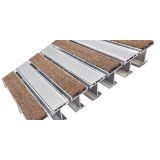 Perfec Clean 1-5/8" GrateThe 1-5/8" rigid grate is the heaviest-built recessed entrance grate we carry — aluminum sections locked and welded into one solid surface, set into a deep pit that scrapes grit and drains water well below the floor. It's the grate you spec for the busiest entrances, where you want maximum
...
The 1-5/8" rigid grate is the heaviest-built recessed entrance grate we carry — aluminum sections locked and welded into one...
The 1-5/8" rigid grate is the heaviest-built recessed entrance grate we carry — aluminum sections locked and welded into one solid surface, set into a deep pit that scrapes grit and drains water well below the floor. It's the grate you spec for the busiest entrances, where you want maximum strength underfoot and a pit deep enough to hold a season's worth of dirt between cleanings.
What a rigid recessed grate does before grit and water reach your floor
A recessed walk-off grate sits flush in a pit at the entrance, so everyone crosses it coming in. The open surface scrapes dirt off shoes and lets rain, snowmelt, and grit fall into the pit below instead of tracking across your floor. This grate is built deep, so that pit holds a large amount of debris before anyone needs to clear it.
At a busy door, that keeps more than the floor clean. A flush grate that drains water away leaves less standing moisture at the threshold, which is where slips happen. NFSI ties a meaningful share of slip-and-fall claims to building entrances, so pulling water off shoes and into the pit is a safety measure as much as a cleaning one.
Why a rigid welded grate, and why this one
Where the roll-up versions flex, this grate is rigid. The aluminum sections are locked and welded together into a solid structure built for maximum strength, which is what suits it to the heaviest, most constant traffic. There's no hinge to flex underfoot — it's a firm, stable surface.
It still comes apart when you need it to. Each section undocks on its own, so a crew can lift out a panel to clear the pit underneath or to handle the grate during maintenance, then lock it back in. You get the strength of a welded grate without it being a single immovable slab.
At 1-5/8", it's the deepest profile in the line, and the depth is the feature. A deep pit gives rain, snow, dirt, and debris room to collect at a high-traffic entrance, so the grate keeps working longer between cleanings instead of filling up and pushing grit back onto the floor.
As with the rest of the line, you choose the tread — bare serrated aluminum, nylon carpet, Diamond Peak vinyl, or a polypropylene brush — to match how much scraping the entrance needs and the look you want.
Where it belongs, and what it is not
This is the grate for the highest-traffic, most permanent entrances — major retail and grocery doors, transit hubs, convention and hospital entrances, anywhere a steady crowd and the weather come through all day. It's one of our recessed grate systems, set into a deep pit so the surface finishes flush with the floor around it.
It is not a surface-laid or light-duty mat — it needs a deep recessed pit, so it's a poor fit for a slab you can't cut into or a quiet, low-traffic door. And it's not the soft mat that dries shoes; it does the heavy scrape-and-drain at the threshold. Pair it with an absorbent interior mat a few steps inside.
Three things to check before you spec it
First, confirm the pit depth. This is the deepest grate in the line, so it needs a pit cut to suit it. On a new pour that's straightforward to design in; on an existing slab, make sure you can cut a pit deep enough before choosing this grate over a thinner one.
Second, plan how it gets cleaned. A deep pit holds a lot, but it still has to be cleared. The sections undock so a crew can lift them out and clean the pit, so think about access and who handles maintenance on a wide or heavy grate before you finalize the size.
Third, pick the tread for the entrance. Brush knocks off coarse grit, carpet holds fine moisture and reads softer, vinyl gives a wipeable surface, and bare aluminum scrapes hardest. The grate takes any of them, so you match the tread to the door without changing the grate.
Why Mats Inc.
We've specified entrance flooring since 1964, and a rigid recessed grate is a long-term commitment to the floor — once the pit is cut and the grate is set, it's there for years, so the spec has to be right the first time. We help you size the pit, choose the frame and tread, and plan for maintenance before anything gets cut, then ship the grate built to your opening. Mats Inc. specifies the system; your installer sets it into the prepared pit.
Specifications Profile thickness 1-5/8" (deepest profile in the line) Construction Rigid aluminum sections locked and welded together for maximum strength; sections undock individually for cleaning and handling Traffic rating High traffic; heaviest, most permanent entrances Pit Deep pit; large debris capacity between cleanings Tread / insert options Bare serrated aluminum (no insert), nylon carpet, Diamond Peak vinyl, or polypropylene brush Color options Multiple per insert plus anodized aluminum finishes; sample card available for matching Installation Recessed (pit-embed); deep pit required Drainage Open construction; rain, snow, dirt, and debris fall into the pit below Spec section CSI 12 48 13 / 12 48 16 (Entrance Floor Mats & Grilles) Origin Made in the USA; Buy American Act compliant Warranty 1-year limited (Mats Inc.) Frequently Asked Questions
What makes this a rigid grate instead of a roll-up?
Answered by Dustin Thompson, Owner & CEO
The difference is in how the sections are joined. A roll-up grate uses hinges so it can curl up for cleaning; this one locks and welds its aluminum sections together into a solid, rigid surface built for maximum strength, with no flex underfoot.
When you need to get into the pit, the sections undock individually, so a crew can lift them out, clean underneath, and lock them back in place.
How tough is it, and what shortens its life?
Answered by Dustin Thompson, Owner & CEO
The welded aluminum construction is built for maximum strength, which is why it's the grate for the busiest, most permanent entrances. Aluminum doesn't rust, so the structure isn't fighting the weather.
What actually shortens a grate's useful life is neglect — a deep pit that never gets cleared fills with grit, and once it's full it stops capturing dirt and starts pushing it back onto the floor. Keep the pit cleaned out and a rigid grate lasts a very long time.
Does it need a recessed pit, or can it sit on top of the floor?
Answered by Dustin Thompson, Owner & CEO
It needs a recessed pit. This is the deepest grate in the line, designed to drop into a pit cut into the floor rather than sit on top with a ramp — and that depth is the whole point, because it gives dirt and water room to collect at a busy door. If you can't cut a deep enough pit, a thinner recessed mat is the better fit, and we can steer you to one.
What insert and color options does it come with?
Answered by Jinna Hopson, Vice President of Marketing
The tread comes in four types — bare serrated aluminum, nylon carpet, Diamond Peak vinyl, and polypropylene brush — each in a range of colors, with anodized finishes available on the aluminum. So even though it's a heavy structural grate, you have real say over how it looks.
Because screen colors aren't exact, we send a sample card before you order so the tread matches your floor or your brand.
Can it be made to fit a wide or unusually shaped entrance?
Answered by Jinna Hopson, Vice President of Marketing
Yes. The grate is built in sections to your opening rather than sold in a few stock sizes, so a wide vestibule or a long entry run can be covered fully — the sections lock together across the span. Send us the pit dimensions and we'll build the grate and frame to fit. On a busy door you want it spanning the whole width so traffic can't step around it onto the bare floor.
Will it still look good in a high-traffic lobby a few years in?
Answered by Jinna Hopson, Vice President of Marketing
That's where a heavy grate earns its keep. A flush, rigid grate doesn't curl, ripple, or shift the way a lighter mat can once thousands of people have crossed it, so it tends to keep a clean, intentional look over time.
The tread does the visible aging — carpet shows wear sooner than brush or aluminum — so on the most punishing doors, a harder-wearing tread keeps the entrance looking sharp longer.
By Dustin Thompson, Owner & CEO, Mats Inc.
↑
The 1-5/8" rigid grate is the heaviest-built recessed entrance grate we carry — aluminum sections locked and welded into one solid surface, set into a deep pit that scrapes grit and drains water well below the floor. It's the grate you spec for the busiest entrances, where you want maximum strength underfoot and a pit deep enough to hold a season's worth of dirt between cleanings.
What a rigid recessed grate does before grit and water reach your floor
A recessed walk-off grate sits flush in a pit at the entrance, so everyone crosses it coming in. The open surface scrapes dirt off shoes and lets rain, snowmelt, and grit fall into the pit below instead of tracking across your floor. This grate is built deep, so that pit holds a large amount of debris before anyone needs to clear it.
At a busy door, that keeps more than the floor clean. A flush grate that drains water away leaves less standing moisture at the threshold, which is where slips happen. NFSI ties a meaningful share of slip-and-fall claims to building entrances, so pulling water off shoes and into the pit is a safety measure as much as a cleaning one.
Why a rigid welded grate, and why this one
Where the roll-up versions flex, this grate is rigid. The aluminum sections are locked and welded together into a solid structure built for maximum strength, which is what suits it to the heaviest, most constant traffic. There's no hinge to flex underfoot — it's a firm, stable surface.
It still comes apart when you need it to. Each section undocks on its own, so a crew can lift out a panel to clear the pit underneath or to handle the grate during maintenance, then lock it back in. You get the strength of a welded grate without it being a single immovable slab.
At 1-5/8", it's the deepest profile in the line, and the depth is the feature. A deep pit gives rain, snow, dirt, and debris room to collect at a high-traffic entrance, so the grate keeps working longer between cleanings instead of filling up and pushing grit back onto the floor.
As with the rest of the line, you choose the tread — bare serrated aluminum, nylon carpet, Diamond Peak vinyl, or a polypropylene brush — to match how much scraping the entrance needs and the look you want.
Where it belongs, and what it is not
This is the grate for the highest-traffic, most permanent entrances — major retail and grocery doors, transit hubs, convention and hospital entrances, anywhere a steady crowd and the weather come through all day. It's one of our recessed grate systems, set into a deep pit so the surface finishes flush with the floor around it.
It is not a surface-laid or light-duty mat — it needs a deep recessed pit, so it's a poor fit for a slab you can't cut into or a quiet, low-traffic door. And it's not the soft mat that dries shoes; it does the heavy scrape-and-drain at the threshold. Pair it with an absorbent interior mat a few steps inside.
Three things to check before you spec it
First, confirm the pit depth. This is the deepest grate in the line, so it needs a pit cut to suit it. On a new pour that's straightforward to design in; on an existing slab, make sure you can cut a pit deep enough before choosing this grate over a thinner one.
Second, plan how it gets cleaned. A deep pit holds a lot, but it still has to be cleared. The sections undock so a crew can lift them out and clean the pit, so think about access and who handles maintenance on a wide or heavy grate before you finalize the size.
Third, pick the tread for the entrance. Brush knocks off coarse grit, carpet holds fine moisture and reads softer, vinyl gives a wipeable surface, and bare aluminum scrapes hardest. The grate takes any of them, so you match the tread to the door without changing the grate.
Why Mats Inc.
We've specified entrance flooring since 1964, and a rigid recessed grate is a long-term commitment to the floor — once the pit is cut and the grate is set, it's there for years, so the spec has to be right the first time. We help you size the pit, choose the frame and tread, and plan for maintenance before anything gets cut, then ship the grate built to your opening. Mats Inc. specifies the system; your installer sets it into the prepared pit.
Specifications Profile thickness 1-5/8" (deepest profile in the line) Construction Rigid aluminum sections locked and welded together for maximum strength; sections undock individually for cleaning and handling Traffic rating High traffic; heaviest, most permanent entrances Pit Deep pit; large debris capacity between cleanings Tread / insert options Bare serrated aluminum (no insert), nylon carpet, Diamond Peak vinyl, or polypropylene brush Color options Multiple per insert plus anodized aluminum finishes; sample card available for matching Installation Recessed (pit-embed); deep pit required Drainage Open construction; rain, snow, dirt, and debris fall into the pit below Spec section CSI 12 48 13 / 12 48 16 (Entrance Floor Mats & Grilles) Origin Made in the USA; Buy American Act compliant Warranty 1-year limited (Mats Inc.) Frequently Asked Questions
What makes this a rigid grate instead of a roll-up?
Answered by Dustin Thompson, Owner & CEO
The difference is in how the sections are joined. A roll-up grate uses hinges so it can curl up for cleaning; this one locks and welds its aluminum sections together into a solid, rigid surface built for maximum strength, with no flex underfoot.
When you need to get into the pit, the sections undock individually, so a crew can lift them out, clean underneath, and lock them back in place.
How tough is it, and what shortens its life?
Answered by Dustin Thompson, Owner & CEO
The welded aluminum construction is built for maximum strength, which is why it's the grate for the busiest, most permanent entrances. Aluminum doesn't rust, so the structure isn't fighting the weather.
What actually shortens a grate's useful life is neglect — a deep pit that never gets cleared fills with grit, and once it's full it stops capturing dirt and starts pushing it back onto the floor. Keep the pit cleaned out and a rigid grate lasts a very long time.
Does it need a recessed pit, or can it sit on top of the floor?
Answered by Dustin Thompson, Owner & CEO
It needs a recessed pit. This is the deepest grate in the line, designed to drop into a pit cut into the floor rather than sit on top with a ramp — and that depth is the whole point, because it gives dirt and water room to collect at a busy door. If you can't cut a deep enough pit, a thinner recessed mat is the better fit, and we can steer you to one.
What insert and color options does it come with?
Answered by Jinna Hopson, Vice President of Marketing
The tread comes in four types — bare serrated aluminum, nylon carpet, Diamond Peak vinyl, and polypropylene brush — each in a range of colors, with anodized finishes available on the aluminum. So even though it's a heavy structural grate, you have real say over how it looks.
Because screen colors aren't exact, we send a sample card before you order so the tread matches your floor or your brand.
Can it be made to fit a wide or unusually shaped entrance?
Answered by Jinna Hopson, Vice President of Marketing
Yes. The grate is built in sections to your opening rather than sold in a few stock sizes, so a wide vestibule or a long entry run can be covered fully — the sections lock together across the span. Send us the pit dimensions and we'll build the grate and frame to fit. On a busy door you want it spanning the whole width so traffic can't step around it onto the bare floor.
Will it still look good in a high-traffic lobby a few years in?
Answered by Jinna Hopson, Vice President of Marketing
That's where a heavy grate earns its keep. A flush, rigid grate doesn't curl, ripple, or shift the way a lighter mat can once thousands of people have crossed it, so it tends to keep a clean, intentional look over time.
The tread does the visible aging — carpet shows wear sooner than brush or aluminum — so on the most punishing doors, a harder-wearing tread keeps the entrance looking sharp longer.
By Dustin Thompson, Owner & CEO, Mats Inc.
↑
View Details
View Details
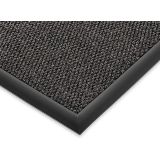 Super Berber Matting
Starting at $60.00
Super Berber Matting is a dense berber entrance mat that does the two hardest jobs at a busy door at once: it scrapes grit off shoes and soaks up the moisture they carry. The needle-punch berber surface is solution-dyed in up to 40 colors, and a custom logo can...
Super Berber Matting is a dense berber entrance mat that does the two hardest jobs at a busy door...
Super Berber Matting is a dense berber entrance mat that does the two hardest jobs at a busy door at once: it scrapes grit off shoes and soaks up the moisture they carry. The needle-punch berber surface is solution-dyed in up to 40 colors, and a custom logo can be inlaid right into it — so it cleans the entrance and carries the brand in the same mat.
What Super Berber Does Before Dirt and Water Reach the Floor
At a busy entrance, dirt and water arrive on shoes — ISSA research shows the door is where most of a building's dirt comes in. Left to cross the threshold, that grit grinds at the floor and wet shoes leave a lobby slick. The dense berber pile catches both: it scrapes solids loose and holds moisture in the fiber, while the all-weather rubber backing keeps the mat planted, so the dirt and water stay on the mat, not the floor.
Why Solution-Dyed Berber, and Why This One
The mat is built from 100% solution-dyed polypropylene berber, needle-punched into a dense half-inch pile that weighs about 52 ounces per square yard. Solution-dyed means the color is locked into the fiber rather than printed on top, so it does not bleach or wear pale. The polypropylene is UV- and abrasion-resistant, which is what lets the mat hold its look under heavy traffic and sun.
Of the two jobs an entrance mat does, this one leans toward wiping — the deep pile is built to pull moisture and fine dirt off shoes and keep it there, with strong scraping behind it. An all-weather rubber backing grips the floor and stands up to wet conditions, so the mat works at an interior lobby or a covered outdoor entrance alike.
Where It Belongs, and What It Is Not
Super Berber fits heavy-traffic entrances where appearance counts as much as cleaning — office buildings, shops, lobbies, schools, airports, and sport concourses. It works indoors or at a covered outdoor entrance, and it sits in our range of moisture-control entrance matting as the absorbent option that traps water in the pile rather than channeling it away.
What it is not is a drainage grid or a heavy-mud scraper. It holds the moisture it collects, so where standing water has to drain off, an open grid mat is the better tool — and where shoes arrive caked in mud, a coarse scraper out front will spare the pile. Super Berber is the mat that finishes the job: wiping shoes clean and dry once the worst is knocked off.
Three Things to Check Before You Spec It
First, decide what the door mostly throws at it. If the entrance is about moisture and a clean, finished look, Super Berber is built for exactly that. If shoes arrive heavy with mud or grit, set a coarse scraper ahead of it so the berber handles the wiping rather than clogging with debris it was not meant to take alone.
Second, size it and pick the edge. It comes in standard mats up to four by fourteen feet, in rolls, or custom-cut to your dimensions — up to thirteen feet two inches wide and inlaid runs to a hundred feet. Borders can be heat-sealed, square-cut, or beveled, and custom shapes are on the table if the entrance calls for one.
Third, plan the logo and colors early. The logo is needle-punched into the pile from a palette of up to 40 colors, so it needs camera-ready artwork before a quote. One thing to know up front: this construction does not do exact PMS brand-color matching — you choose from the 40 — so check that your colors are covered before you commit.
Why Mats Inc.
We have specified entrance matting since 1964, and a logo mat only works if the artwork, the colors, and the size are right before it is made. We take your logo, match it to the available colors, confirm the size and border, and lay out the inlay — so the mat that arrives cleans the entrance and reads as your brand, not a near-miss. Send your artwork and we will start there.
Super Berber Matting — Specifications Construction 100% solution-dyed polypropylene berber, needle-punch Pile weight 52 oz/sq yd Thickness 1/2" Backing All-weather rubber Properties UV-resistant, abrasion-resistant; solution-dyed (color through the fiber) Strengths Strong scraping; high wiping / moisture absorption Colors Up to 40 (no PMS color match) Logo Needle-punch inlay; custom shapes; camera-ready artwork required Borders Heat-sealed, square-cut, or beveled (standard black; brown / yellow on request) Standard sizes 2'×3' through 4'×14' Roll sizes 4'×16'–4'×20', 6'×5'–6'×20' Custom Width to 13'2"; inlay length to 100' Use Indoor or outdoor; heavy traffic Origin Made in USA Warranty 1-year limited (Mats Inc.) Frequently Asked Questions
What is Super Berber Matting made of?
Answered by Dustin Thompson, Owner & CEO
It is built from 100% solution-dyed polypropylene berber, needle-punched into a dense half-inch pile of about 52 ounces per square yard, over an all-weather rubber backing. Solution-dyed means the color runs through each fiber instead of sitting on the surface, so it resists fading and bleaching. The polypropylene is UV- and abrasion-resistant, which is what lets the mat keep its look under heavy traffic, indoors or at a covered outdoor entrance.
How much traffic can it take, and how well does it handle water?
Answered by Dustin Thompson, Owner & CEO
It is rated for heavy traffic, and wiping is its strong suit — the deep berber pile is built to pull moisture and fine dirt off shoes and hold it down in the fiber, away from the floor. The solution-dyed, UV- and abrasion-resistant construction keeps it from looking worn or faded as the traffic adds up. Like any pile mat, it performs best when it is vacuumed regularly and washed when it needs it, so the trapped soil does not pack down into the pile.
Is it a scraper or a wiper, and where should I place it?
Answered by Dustin Thompson, Owner & CEO
It does both, but it leans wiper — it is at its best absorbing moisture and fine grit rather than knocking off heavy mud. Place it where it covers the full walking path so shoes take several steps on it. If the entrance sees heavy mud or sand, put a coarse scraper mat outside the door first and let Super Berber do the wiping inside; that two-stage setup keeps the pile from clogging and keeps the floor beyond it clean and dry.
Can you inlay our logo, and how sharp will it look?
Answered by Jinna Hopson, Vice President of Marketing
Yes — the logo is needle-punched right into the berber pile, not printed on top, so it wears in with the mat instead of scuffing off. It is one of the largest custom logo mats made, which gives a logo room to read cleanly at the door, and custom shapes are possible if you want the mat itself to follow a form. We do need camera-ready artwork before quoting, so the inlay is laid out accurately from the start.
What colors can we get, and can you match our exact brand color?
Answered by Jinna Hopson, Vice President of Marketing
There are up to 40 colors to build the base and the logo from, which covers most brand palettes. The one honest limit to flag: this construction does not offer exact PMS brand-color matching — you choose from the 40 standard colors rather than a custom-mixed shade. Because the colors are solution-dyed into the fiber, whatever you pick holds up without fading. Send your brand colors and we will confirm the closest matches before anything is made.
Will it still look professional after a season of heavy use?
Answered by Jinna Hopson, Vice President of Marketing
That is what the solution-dyed berber is for. With the color locked into the fiber and the polypropylene resisting UV and abrasion, the mat holds its appearance far better than a surface-printed mat, which tends to go pale and tired at a busy door. The berber texture reads clean and upscale rather than utilitarian, so it suits a lobby or storefront where the entrance is part of the first impression.
By Jinna Hopson, Vice President of Marketing, Mats Inc.
↑
Super Berber Matting is a dense berber entrance mat that does the two hardest jobs at a busy door at once: it scrapes grit off shoes and soaks up the moisture they carry. The needle-punch berber surface is solution-dyed in up to 40 colors, and a custom logo can be inlaid right into it — so it cleans the entrance and carries the brand in the same mat.
What Super Berber Does Before Dirt and Water Reach the Floor
At a busy entrance, dirt and water arrive on shoes — ISSA research shows the door is where most of a building's dirt comes in. Left to cross the threshold, that grit grinds at the floor and wet shoes leave a lobby slick. The dense berber pile catches both: it scrapes solids loose and holds moisture in the fiber, while the all-weather rubber backing keeps the mat planted, so the dirt and water stay on the mat, not the floor.
Why Solution-Dyed Berber, and Why This One
The mat is built from 100% solution-dyed polypropylene berber, needle-punched into a dense half-inch pile that weighs about 52 ounces per square yard. Solution-dyed means the color is locked into the fiber rather than printed on top, so it does not bleach or wear pale. The polypropylene is UV- and abrasion-resistant, which is what lets the mat hold its look under heavy traffic and sun.
Of the two jobs an entrance mat does, this one leans toward wiping — the deep pile is built to pull moisture and fine dirt off shoes and keep it there, with strong scraping behind it. An all-weather rubber backing grips the floor and stands up to wet conditions, so the mat works at an interior lobby or a covered outdoor entrance alike.
Where It Belongs, and What It Is Not
Super Berber fits heavy-traffic entrances where appearance counts as much as cleaning — office buildings, shops, lobbies, schools, airports, and sport concourses. It works indoors or at a covered outdoor entrance, and it sits in our range of moisture-control entrance matting as the absorbent option that traps water in the pile rather than channeling it away.
What it is not is a drainage grid or a heavy-mud scraper. It holds the moisture it collects, so where standing water has to drain off, an open grid mat is the better tool — and where shoes arrive caked in mud, a coarse scraper out front will spare the pile. Super Berber is the mat that finishes the job: wiping shoes clean and dry once the worst is knocked off.
Three Things to Check Before You Spec It
First, decide what the door mostly throws at it. If the entrance is about moisture and a clean, finished look, Super Berber is built for exactly that. If shoes arrive heavy with mud or grit, set a coarse scraper ahead of it so the berber handles the wiping rather than clogging with debris it was not meant to take alone.
Second, size it and pick the edge. It comes in standard mats up to four by fourteen feet, in rolls, or custom-cut to your dimensions — up to thirteen feet two inches wide and inlaid runs to a hundred feet. Borders can be heat-sealed, square-cut, or beveled, and custom shapes are on the table if the entrance calls for one.
Third, plan the logo and colors early. The logo is needle-punched into the pile from a palette of up to 40 colors, so it needs camera-ready artwork before a quote. One thing to know up front: this construction does not do exact PMS brand-color matching — you choose from the 40 — so check that your colors are covered before you commit.
Why Mats Inc.
We have specified entrance matting since 1964, and a logo mat only works if the artwork, the colors, and the size are right before it is made. We take your logo, match it to the available colors, confirm the size and border, and lay out the inlay — so the mat that arrives cleans the entrance and reads as your brand, not a near-miss. Send your artwork and we will start there.
Super Berber Matting — Specifications Construction 100% solution-dyed polypropylene berber, needle-punch Pile weight 52 oz/sq yd Thickness 1/2" Backing All-weather rubber Properties UV-resistant, abrasion-resistant; solution-dyed (color through the fiber) Strengths Strong scraping; high wiping / moisture absorption Colors Up to 40 (no PMS color match) Logo Needle-punch inlay; custom shapes; camera-ready artwork required Borders Heat-sealed, square-cut, or beveled (standard black; brown / yellow on request) Standard sizes 2'×3' through 4'×14' Roll sizes 4'×16'–4'×20', 6'×5'–6'×20' Custom Width to 13'2"; inlay length to 100' Use Indoor or outdoor; heavy traffic Origin Made in USA Warranty 1-year limited (Mats Inc.) Frequently Asked Questions
What is Super Berber Matting made of?
Answered by Dustin Thompson, Owner & CEO
It is built from 100% solution-dyed polypropylene berber, needle-punched into a dense half-inch pile of about 52 ounces per square yard, over an all-weather rubber backing. Solution-dyed means the color runs through each fiber instead of sitting on the surface, so it resists fading and bleaching. The polypropylene is UV- and abrasion-resistant, which is what lets the mat keep its look under heavy traffic, indoors or at a covered outdoor entrance.
How much traffic can it take, and how well does it handle water?
Answered by Dustin Thompson, Owner & CEO
It is rated for heavy traffic, and wiping is its strong suit — the deep berber pile is built to pull moisture and fine dirt off shoes and hold it down in the fiber, away from the floor. The solution-dyed, UV- and abrasion-resistant construction keeps it from looking worn or faded as the traffic adds up. Like any pile mat, it performs best when it is vacuumed regularly and washed when it needs it, so the trapped soil does not pack down into the pile.
Is it a scraper or a wiper, and where should I place it?
Answered by Dustin Thompson, Owner & CEO
It does both, but it leans wiper — it is at its best absorbing moisture and fine grit rather than knocking off heavy mud. Place it where it covers the full walking path so shoes take several steps on it. If the entrance sees heavy mud or sand, put a coarse scraper mat outside the door first and let Super Berber do the wiping inside; that two-stage setup keeps the pile from clogging and keeps the floor beyond it clean and dry.
Can you inlay our logo, and how sharp will it look?
Answered by Jinna Hopson, Vice President of Marketing
Yes — the logo is needle-punched right into the berber pile, not printed on top, so it wears in with the mat instead of scuffing off. It is one of the largest custom logo mats made, which gives a logo room to read cleanly at the door, and custom shapes are possible if you want the mat itself to follow a form. We do need camera-ready artwork before quoting, so the inlay is laid out accurately from the start.
What colors can we get, and can you match our exact brand color?
Answered by Jinna Hopson, Vice President of Marketing
There are up to 40 colors to build the base and the logo from, which covers most brand palettes. The one honest limit to flag: this construction does not offer exact PMS brand-color matching — you choose from the 40 standard colors rather than a custom-mixed shade. Because the colors are solution-dyed into the fiber, whatever you pick holds up without fading. Send your brand colors and we will confirm the closest matches before anything is made.
Will it still look professional after a season of heavy use?
Answered by Jinna Hopson, Vice President of Marketing
That is what the solution-dyed berber is for. With the color locked into the fiber and the polypropylene resisting UV and abrasion, the mat holds its appearance far better than a surface-printed mat, which tends to go pale and tired at a busy door. The berber texture reads clean and upscale rather than utilitarian, so it suits a lobby or storefront where the entrance is part of the first impression.
By Jinna Hopson, Vice President of Marketing, Mats Inc.
↑
View Details
View Details
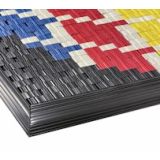 Vinyl Link Mat
Starting at $209.00
A vinyl link mat is an entrance mat made of short vinyl links woven tightly over steel wires. The close weave grips shoes, pulls dirt off at the door, and stays safe for high heels. It comes in thirteen colors and can carry a custom logo or lettering, so...
A vinyl link mat is an entrance mat made of short vinyl links woven tightly over steel wires. The...
A vinyl link mat is an entrance mat made of short vinyl links woven tightly over steel wires. The close weave grips shoes, pulls dirt off at the door, and stays safe for high heels. It comes in thirteen colors and can carry a custom logo or lettering, so the mat that cleans shoes can also greet visitors with your brand.
What a Vinyl Link Mat Does Before Dirt Reaches the Floor
Most of the dirt inside a building walks in on shoes, and ISSA field data shows about twelve times more dirt comes in during wet weather. A vinyl link mat gives every step a firm, textured surface to scrape against. Grit comes off at the threshold instead of being tracked across the floor inside.
It also handles a problem many entrance mats ignore: footing. The gaps between the links are less than one-eighth of an inch, too narrow for a heel to sink into. That makes it a strong fit for lobbies, offices, and event spaces where dress shoes and high heels cross the door all day.
Why Woven Vinyl Links, and Why This One
Each link is a piece of extruded vinyl, half an inch wide and two inches long. The links are threaded onto galvanized steel wires and packed close together. The finished mat is seven-sixteenths of an inch thick and weighs about 2.3 pounds per square foot, so it lies flat and stays put under steady foot traffic.
The vinyl is stain-resistant, which helps the mat keep a clean look at a busy door. It comes in thirteen colors: black, blue, gray, green, brown, rust, light blue, yellow, maroon, purple, red, white, and sand. Logos and lettering are set into the mat in contrasting colored links, with bold block letters a popular style.
The edge is finished one of two ways. A beveled edge slopes down to meet the floor, for a mat that sits on top of the surface. A square edge is made for a recessed well, where the mat drops in level with the floor around it. You pick the edge color separately from the mat color.
Where It Belongs, and What It Is Not
A vinyl link mat fits entrances where cleaning and first impressions both count: office lobbies, hotels, banks, churches, schools, and retail storefronts. It works as a surface mat or set into a recessed well, and it sits in our range of entrance mats for the door that needs a scraper with a finished look.
What it is not is a drying mat. It is built to scrape and grip, not to soak up water. At a door that sees rain, pair it with an absorbent mat just inside so wet shoes dry before they reach a hard floor. That two-mat setup keeps both the dirt and the water at the entrance.
Three Things to Check Before You Spec It
First, look at who walks through the door. If dress shoes and high heels are common, the tight link spacing is the main reason to choose this mat, because heels do not catch in openings under one-eighth of an inch. For a door that mostly sees work boots and heavy mud, a more open, aggressive scraper may be the better call.
Second, measure the opening and choose the edge. Width runs left to right across the door, and length runs in the direction people walk. The recommended maximum width is eight feet. Pick a beveled edge for a mat that sits on the floor or a square edge for a recessed well, then choose the edge color.
Third, decide whether the mat should carry your brand. A plain mat can be ordered in any of the thirteen colors. A logo mat needs high-resolution digital artwork, as a JPEG, TIFF, or EPS file, and a signed proof before it goes into production. Build that approval step into your timeline.
Why Mats Inc.
We have specified entrance matting since 1964, and a vinyl link mat is one we build to the opening, not pull off a shelf. Send us the door width, the walking direction, and whether the mat sits on the floor or in a well. We will help you choose the edge, settle the colors, and walk your logo artwork through proof approval.
Vinyl Link Mat — Specifications Construction Extruded vinyl links (1/2" × 2") woven on galvanized steel wires Thickness 7/16" Weight ~2.3 lb/sq ft Surface Close weave; link openings under 1/8" (safe for high-heel traffic) Properties Stain-resistant vinyl; good traction underfoot Colors Black, blue, gray, green, brown, rust, light blue, yellow, maroon, purple, red, white, sand Edging Beveled (surface application) or square (recess application); edge color specified separately Sizing Made to your width (left to right) and length (traffic direction); recommended maximum width 8' Size tolerance ±1/4" beveled edge; +0/−1/8" square edge Logos & lettering Available; high-resolution JPEG, TIFF, or EPS artwork; signed proof required before production Warranty 1-year limited (Mats Inc.) Frequently Asked Questions
What is a vinyl link mat made of, and how does it hold up?
Answered by Dustin Thompson, Owner & CEO
It is built from extruded vinyl links, each half an inch by two inches, woven tightly onto galvanized steel wires. The finished mat is seven-sixteenths of an inch thick and weighs about 2.3 pounds per square foot, so it lies flat and resists shifting. The vinyl is stain-resistant, which helps it keep a clean look at a busy door.
How long it lasts depends on the traffic it sees and how much grit crosses it. Rather than quote a number of years, we size and spec it to your door so it is working in the conditions it was built for.
Is a vinyl link mat safe for high heels?
Answered by Dustin Thompson, Owner & CEO
Yes, and that is one of its main strengths. The links are woven close together, leaving openings of less than one-eighth of an inch. A heel tip has nowhere to sink or catch, which is a real concern on open scraper mats with wide gaps. The textured vinyl also gives good traction underfoot, so it suits lobbies, offices, and event spaces where dress shoes are the norm.
Can it sit on the floor, or does it need a recessed well?
Answered by Dustin Thompson, Owner & CEO
Either works, and the edge decides it. For a mat that sits on top of the floor, order a beveled edge, which slopes down to meet the surface. For a recessed well, order a square edge so the mat drops in level with the floor around it.
Square-edge mats are held to a tighter tolerance, plus zero to minus one-eighth of an inch, so they fit the well snugly. Beveled mats hold to plus or minus a quarter inch.
What colors does it come in?
Answered by Jinna Hopson, Vice President of Marketing
Thirteen: black, blue, gray, green, brown, rust, light blue, yellow, maroon, purple, red, white, and sand. You choose the mat color and the edge color separately, so you can match a building's palette or frame the mat with a contrasting border. Darker shades such as black, brown, and gray hide everyday dirt well, while brighter colors make a bolder statement at the front door.
Can you add our logo or lettering?
Answered by Jinna Hopson, Vice President of Marketing
Yes. Logos and lettering are set into the mat in contrasting colored links, and bold block letters are a popular style. We need your artwork as a high-resolution digital file: a JPEG, TIFF, or EPS.
Before production, you will get a proof to review and sign, and nothing is made until that signed approval comes back. That step makes sure the colors and layout look right before your mat is built.
How do I size and order a custom vinyl link mat?
Answered by Jinna Hopson, Vice President of Marketing
Every mat is built to the size you give us. Measure width as the left-to-right distance across the door, and length in the direction people walk. The recommended maximum width is eight feet. Along with the size, tell us the mat color, the edge color, and whether you want a beveled or square edge, and we will take it from there.
By Jinna Hopson, Vice President of Marketing, Mats Inc.
↑
A vinyl link mat is an entrance mat made of short vinyl links woven tightly over steel wires. The close weave grips shoes, pulls dirt off at the door, and stays safe for high heels. It comes in thirteen colors and can carry a custom logo or lettering, so the mat that cleans shoes can also greet visitors with your brand.
What a Vinyl Link Mat Does Before Dirt Reaches the Floor
Most of the dirt inside a building walks in on shoes, and ISSA field data shows about twelve times more dirt comes in during wet weather. A vinyl link mat gives every step a firm, textured surface to scrape against. Grit comes off at the threshold instead of being tracked across the floor inside.
It also handles a problem many entrance mats ignore: footing. The gaps between the links are less than one-eighth of an inch, too narrow for a heel to sink into. That makes it a strong fit for lobbies, offices, and event spaces where dress shoes and high heels cross the door all day.
Why Woven Vinyl Links, and Why This One
Each link is a piece of extruded vinyl, half an inch wide and two inches long. The links are threaded onto galvanized steel wires and packed close together. The finished mat is seven-sixteenths of an inch thick and weighs about 2.3 pounds per square foot, so it lies flat and stays put under steady foot traffic.
The vinyl is stain-resistant, which helps the mat keep a clean look at a busy door. It comes in thirteen colors: black, blue, gray, green, brown, rust, light blue, yellow, maroon, purple, red, white, and sand. Logos and lettering are set into the mat in contrasting colored links, with bold block letters a popular style.
The edge is finished one of two ways. A beveled edge slopes down to meet the floor, for a mat that sits on top of the surface. A square edge is made for a recessed well, where the mat drops in level with the floor around it. You pick the edge color separately from the mat color.
Where It Belongs, and What It Is Not
A vinyl link mat fits entrances where cleaning and first impressions both count: office lobbies, hotels, banks, churches, schools, and retail storefronts. It works as a surface mat or set into a recessed well, and it sits in our range of entrance mats for the door that needs a scraper with a finished look.
What it is not is a drying mat. It is built to scrape and grip, not to soak up water. At a door that sees rain, pair it with an absorbent mat just inside so wet shoes dry before they reach a hard floor. That two-mat setup keeps both the dirt and the water at the entrance.
Three Things to Check Before You Spec It
First, look at who walks through the door. If dress shoes and high heels are common, the tight link spacing is the main reason to choose this mat, because heels do not catch in openings under one-eighth of an inch. For a door that mostly sees work boots and heavy mud, a more open, aggressive scraper may be the better call.
Second, measure the opening and choose the edge. Width runs left to right across the door, and length runs in the direction people walk. The recommended maximum width is eight feet. Pick a beveled edge for a mat that sits on the floor or a square edge for a recessed well, then choose the edge color.
Third, decide whether the mat should carry your brand. A plain mat can be ordered in any of the thirteen colors. A logo mat needs high-resolution digital artwork, as a JPEG, TIFF, or EPS file, and a signed proof before it goes into production. Build that approval step into your timeline.
Why Mats Inc.
We have specified entrance matting since 1964, and a vinyl link mat is one we build to the opening, not pull off a shelf. Send us the door width, the walking direction, and whether the mat sits on the floor or in a well. We will help you choose the edge, settle the colors, and walk your logo artwork through proof approval.
Vinyl Link Mat — Specifications Construction Extruded vinyl links (1/2" × 2") woven on galvanized steel wires Thickness 7/16" Weight ~2.3 lb/sq ft Surface Close weave; link openings under 1/8" (safe for high-heel traffic) Properties Stain-resistant vinyl; good traction underfoot Colors Black, blue, gray, green, brown, rust, light blue, yellow, maroon, purple, red, white, sand Edging Beveled (surface application) or square (recess application); edge color specified separately Sizing Made to your width (left to right) and length (traffic direction); recommended maximum width 8' Size tolerance ±1/4" beveled edge; +0/−1/8" square edge Logos & lettering Available; high-resolution JPEG, TIFF, or EPS artwork; signed proof required before production Warranty 1-year limited (Mats Inc.) Frequently Asked Questions
What is a vinyl link mat made of, and how does it hold up?
Answered by Dustin Thompson, Owner & CEO
It is built from extruded vinyl links, each half an inch by two inches, woven tightly onto galvanized steel wires. The finished mat is seven-sixteenths of an inch thick and weighs about 2.3 pounds per square foot, so it lies flat and resists shifting. The vinyl is stain-resistant, which helps it keep a clean look at a busy door.
How long it lasts depends on the traffic it sees and how much grit crosses it. Rather than quote a number of years, we size and spec it to your door so it is working in the conditions it was built for.
Is a vinyl link mat safe for high heels?
Answered by Dustin Thompson, Owner & CEO
Yes, and that is one of its main strengths. The links are woven close together, leaving openings of less than one-eighth of an inch. A heel tip has nowhere to sink or catch, which is a real concern on open scraper mats with wide gaps. The textured vinyl also gives good traction underfoot, so it suits lobbies, offices, and event spaces where dress shoes are the norm.
Can it sit on the floor, or does it need a recessed well?
Answered by Dustin Thompson, Owner & CEO
Either works, and the edge decides it. For a mat that sits on top of the floor, order a beveled edge, which slopes down to meet the surface. For a recessed well, order a square edge so the mat drops in level with the floor around it.
Square-edge mats are held to a tighter tolerance, plus zero to minus one-eighth of an inch, so they fit the well snugly. Beveled mats hold to plus or minus a quarter inch.
What colors does it come in?
Answered by Jinna Hopson, Vice President of Marketing
Thirteen: black, blue, gray, green, brown, rust, light blue, yellow, maroon, purple, red, white, and sand. You choose the mat color and the edge color separately, so you can match a building's palette or frame the mat with a contrasting border. Darker shades such as black, brown, and gray hide everyday dirt well, while brighter colors make a bolder statement at the front door.
Can you add our logo or lettering?
Answered by Jinna Hopson, Vice President of Marketing
Yes. Logos and lettering are set into the mat in contrasting colored links, and bold block letters are a popular style. We need your artwork as a high-resolution digital file: a JPEG, TIFF, or EPS.
Before production, you will get a proof to review and sign, and nothing is made until that signed approval comes back. That step makes sure the colors and layout look right before your mat is built.
How do I size and order a custom vinyl link mat?
Answered by Jinna Hopson, Vice President of Marketing
Every mat is built to the size you give us. Measure width as the left-to-right distance across the door, and length in the direction people walk. The recommended maximum width is eight feet. Along with the size, tell us the mat color, the edge color, and whether you want a beveled or square edge, and we will take it from there.
By Jinna Hopson, Vice President of Marketing, Mats Inc.
↑
View Details
View Details
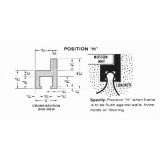 Mat Recess Frame$222.00A recessed mat well only works if its edges are clean and square — and that's the job of the recess frame. It's an extruded aluminum border set into the floor around the well, giving the recess a finished, durable edge that holds the mat flush and keeps the surrounding
...
A recessed mat well only works if its edges are clean and square — and that's the job of the...
A recessed mat well only works if its edges are clean and square — and that's the job of the recess frame. It's an extruded aluminum border set into the floor around the well, giving the recess a finished, durable edge that holds the mat flush and keeps the surrounding floor from chipping under traffic. It comes pre-cut and ready to drop in, so the well is ready when the mat arrives.
What a recess frame does before the well edge breaks down
A recessed mat well is a shallow pit cut into the floor that a walk-off mat or grate drops into so it sits flush. Without a finished border, the edge of that well is just raw concrete or cut tile — and a raw edge at a doorway chips, crumbles, and turns ragged fast under foot traffic.
The recess frame is the fix. It lines the perimeter of the well with a solid aluminum edge, so the mat seats cleanly against it, the floor finish outside it stays protected, and the threshold keeps a crisp, level line instead of a broken one. It's the difference between a recessed mat well that looks built-in and one that looks cut-in.
Why extruded aluminum, and why this frame
The frame is made from heavy-gauge 6063 T-5 extruded aluminum — an alloy and temper chosen for structural edges that take abuse without bending or corroding. That matters at a doorway, where the frame edge gets stepped on, rolled over, and scraped every day, and where rust would show.
It arrives pre-cut at the factory and ready to assemble on site, supplied with aluminum corner pins and steel anchor keys that lock it into the floor. Because it's cut to your dimensions ahead of time, you skip field measuring and the construction delays that come with it — you can order the mat in advance and drop it in once the frame is set.
Corners can come square for an open-end recess or mitered for a clean closed border, factory-cut or finished on the job. A single frame runs up to 17 feet, and for anything longer, straight connecting pins join sections into one continuous edge.
Where it belongs, and what it is not
A recess frame belongs anywhere you're setting a mat or grate into the floor rather than laying it on top — building lobbies, vestibules, and corridors where a flush, built-in entrance is the goal. It's the finishing edge for our recessed grate systems and recessed mats alike, sized to receive common mat and tile thicknesses.
It is not the walking surface itself — it's the border that holds and frames that surface. And it's not a surface-mount product; it's for recessed installations, where the well is cut into the floor and the frame defines its edge. If you're laying a mat on top of an existing floor, you want a surface-applied mat with its own ramped edge instead.
Three things to check before you spec it
First, order by the finished inside size. The size you give is the inside measurement of the frame — the finished opening where the mat fits — not the rough hole in the floor. Getting this right is what makes the mat drop in cleanly, so confirm it against the mat's finished dimensions before you order.
Second, match it to the mat thickness and floor build-up. The frame is set with a cement screed about 7/16" below the floor line so the mat finishes flush, and it installs in one of several positions to suit the floor outside it. Know the mat or tile thickness and the surrounding floor before you set the frame.
Third, plan the corners and the length. Decide whether you need square ends for an open recess or mitered corners for a closed border, and remember a single frame tops out at 17 feet. For a wider entrance, connecting pins join sections — but that's worth planning before the order, not after.
Why Mats Inc.
We've specified entrance flooring since 1964, and the frame is the part people forget until the edge of a recessed well starts breaking up. Getting it right means matching the frame to the mat, the thickness, and the floor it sits in, then having it pre-cut so the install goes in clean. We help you size and position it correctly and ship it ready to set. Mats Inc. specifies the system; your installer sets the frame and screeds the base.
Specifications Material Heavy-gauge 6063 T-5 extruded aluminum Function Forms the finished perimeter edge of a recessed mat or grate well; holds the mat flush and protects the floor edge Finish Mill aluminum standard; Medium Bronze available (electrostatically applied) Maximum single length 17'; straight connecting pins supplied for longer runs Corners / ends Square (open-end recess) or mitered (factory or on-site) Ordering Order by the finished inside dimension — the opening where the mat fits Supplied with Aluminum corner pins and steel anchor keys; pre-cut at factory Installation Recessed; set with a cement screed ~7/16" below floor level, using the frame edge as guide; multiple install positions to suit the floor build-up Receives Recessed entrance mats and tiles at common thicknesses (3/8", 7/16", 1/2") Warranty 1-year limited (Mats Inc.) Frequently Asked Questions
What is a recess mat frame, and what's it made of?
Answered by Dustin Thompson, Owner & CEO
It's the aluminum border that lines the edge of a recessed mat well — the well being the shallow pit a walk-off mat or grate sits down into. This one is made from heavy-gauge 6063 T-5 extruded aluminum, and it ships pre-cut with aluminum corner pins and steel anchor keys that lock it into the floor.
Set into the perimeter of the well, it gives the recess a clean, finished edge and holds the mat flush with the surrounding floor.
Why use a metal frame instead of just a concrete recess?
Answered by Dustin Thompson, Owner & CEO
A bare concrete or cut-tile edge at a doorway doesn't hold up. Every step, cart wheel, and dragged item works at that edge until it chips and crumbles, and a ragged recess edge becomes both an eyesore and a trip hazard.
The aluminum frame takes that abuse instead of the floor — it keeps the edge square and intact for years, protects the flooring outside the well, and gives the mat a solid border to seat against.
How is the frame installed?
Answered by Dustin Thompson, Owner & CEO
The frame sets into the perimeter of the recessed well. A cement base is screeded into the interior about 7/16 inch below the floor line — using the frame edge as the guide — so the mat finishes flush once it drops in. Steel anchor keys lock the frame to the floor, and it's installed in one of several positions to suit the surrounding floor build-up.
Because it's pre-cut, the install is mostly assembly and setting, not measuring and cutting on site.
Does it have to look like bare metal?
Answered by Jinna Hopson, Vice President of Marketing
Not necessarily. The standard frame is mill-finish aluminum, which reads clean and neutral against most floors, and a medium bronze finish is available when you want the edge to warm up or settle into a darker floor.
Since the frame is the visible line around your entrance mat, it's worth picking the finish with the surrounding floor in mind rather than defaulting to bare aluminum.
What size do I order, and can it fit a long or unusual entrance?
Answered by Jinna Hopson, Vice President of Marketing
You order by the finished inside size — the opening where the mat fits — so it's best to settle the mat's finished dimensions first and order the frame to match. A single frame runs up to 17 feet; for a wider entrance, sections join with connecting pins into one continuous edge.
Corners can be square for an open recess or mitered for a closed border, so an entry that isn't a simple rectangle can still get a clean frame.
How do I make sure the frame and mat actually fit together?
Answered by Jinna Hopson, Vice President of Marketing
The cleanest approach is to spec the frame and the mat as a pair, sized to the same finished dimensions, so the mat drops into the frame without gaps or trimming. Because the frame is pre-cut to order, you can have it on site and set ahead of time, then drop the mat in when it arrives.
Tell us the mat you're using and we'll size the frame to receive it — that's what makes a recessed entrance look built-in rather than improvised.
By Dustin Thompson, Owner & CEO, Mats Inc.
↑
A recessed mat well only works if its edges are clean and square — and that's the job of the recess frame. It's an extruded aluminum border set into the floor around the well, giving the recess a finished, durable edge that holds the mat flush and keeps the surrounding floor from chipping under traffic. It comes pre-cut and ready to drop in, so the well is ready when the mat arrives.
What a recess frame does before the well edge breaks down
A recessed mat well is a shallow pit cut into the floor that a walk-off mat or grate drops into so it sits flush. Without a finished border, the edge of that well is just raw concrete or cut tile — and a raw edge at a doorway chips, crumbles, and turns ragged fast under foot traffic.
The recess frame is the fix. It lines the perimeter of the well with a solid aluminum edge, so the mat seats cleanly against it, the floor finish outside it stays protected, and the threshold keeps a crisp, level line instead of a broken one. It's the difference between a recessed mat well that looks built-in and one that looks cut-in.
Why extruded aluminum, and why this frame
The frame is made from heavy-gauge 6063 T-5 extruded aluminum — an alloy and temper chosen for structural edges that take abuse without bending or corroding. That matters at a doorway, where the frame edge gets stepped on, rolled over, and scraped every day, and where rust would show.
It arrives pre-cut at the factory and ready to assemble on site, supplied with aluminum corner pins and steel anchor keys that lock it into the floor. Because it's cut to your dimensions ahead of time, you skip field measuring and the construction delays that come with it — you can order the mat in advance and drop it in once the frame is set.
Corners can come square for an open-end recess or mitered for a clean closed border, factory-cut or finished on the job. A single frame runs up to 17 feet, and for anything longer, straight connecting pins join sections into one continuous edge.
Where it belongs, and what it is not
A recess frame belongs anywhere you're setting a mat or grate into the floor rather than laying it on top — building lobbies, vestibules, and corridors where a flush, built-in entrance is the goal. It's the finishing edge for our recessed grate systems and recessed mats alike, sized to receive common mat and tile thicknesses.
It is not the walking surface itself — it's the border that holds and frames that surface. And it's not a surface-mount product; it's for recessed installations, where the well is cut into the floor and the frame defines its edge. If you're laying a mat on top of an existing floor, you want a surface-applied mat with its own ramped edge instead.
Three things to check before you spec it
First, order by the finished inside size. The size you give is the inside measurement of the frame — the finished opening where the mat fits — not the rough hole in the floor. Getting this right is what makes the mat drop in cleanly, so confirm it against the mat's finished dimensions before you order.
Second, match it to the mat thickness and floor build-up. The frame is set with a cement screed about 7/16" below the floor line so the mat finishes flush, and it installs in one of several positions to suit the floor outside it. Know the mat or tile thickness and the surrounding floor before you set the frame.
Third, plan the corners and the length. Decide whether you need square ends for an open recess or mitered corners for a closed border, and remember a single frame tops out at 17 feet. For a wider entrance, connecting pins join sections — but that's worth planning before the order, not after.
Why Mats Inc.
We've specified entrance flooring since 1964, and the frame is the part people forget until the edge of a recessed well starts breaking up. Getting it right means matching the frame to the mat, the thickness, and the floor it sits in, then having it pre-cut so the install goes in clean. We help you size and position it correctly and ship it ready to set. Mats Inc. specifies the system; your installer sets the frame and screeds the base.
Specifications Material Heavy-gauge 6063 T-5 extruded aluminum Function Forms the finished perimeter edge of a recessed mat or grate well; holds the mat flush and protects the floor edge Finish Mill aluminum standard; Medium Bronze available (electrostatically applied) Maximum single length 17'; straight connecting pins supplied for longer runs Corners / ends Square (open-end recess) or mitered (factory or on-site) Ordering Order by the finished inside dimension — the opening where the mat fits Supplied with Aluminum corner pins and steel anchor keys; pre-cut at factory Installation Recessed; set with a cement screed ~7/16" below floor level, using the frame edge as guide; multiple install positions to suit the floor build-up Receives Recessed entrance mats and tiles at common thicknesses (3/8", 7/16", 1/2") Warranty 1-year limited (Mats Inc.) Frequently Asked Questions
What is a recess mat frame, and what's it made of?
Answered by Dustin Thompson, Owner & CEO
It's the aluminum border that lines the edge of a recessed mat well — the well being the shallow pit a walk-off mat or grate sits down into. This one is made from heavy-gauge 6063 T-5 extruded aluminum, and it ships pre-cut with aluminum corner pins and steel anchor keys that lock it into the floor.
Set into the perimeter of the well, it gives the recess a clean, finished edge and holds the mat flush with the surrounding floor.
Why use a metal frame instead of just a concrete recess?
Answered by Dustin Thompson, Owner & CEO
A bare concrete or cut-tile edge at a doorway doesn't hold up. Every step, cart wheel, and dragged item works at that edge until it chips and crumbles, and a ragged recess edge becomes both an eyesore and a trip hazard.
The aluminum frame takes that abuse instead of the floor — it keeps the edge square and intact for years, protects the flooring outside the well, and gives the mat a solid border to seat against.
How is the frame installed?
Answered by Dustin Thompson, Owner & CEO
The frame sets into the perimeter of the recessed well. A cement base is screeded into the interior about 7/16 inch below the floor line — using the frame edge as the guide — so the mat finishes flush once it drops in. Steel anchor keys lock the frame to the floor, and it's installed in one of several positions to suit the surrounding floor build-up.
Because it's pre-cut, the install is mostly assembly and setting, not measuring and cutting on site.
Does it have to look like bare metal?
Answered by Jinna Hopson, Vice President of Marketing
Not necessarily. The standard frame is mill-finish aluminum, which reads clean and neutral against most floors, and a medium bronze finish is available when you want the edge to warm up or settle into a darker floor.
Since the frame is the visible line around your entrance mat, it's worth picking the finish with the surrounding floor in mind rather than defaulting to bare aluminum.
What size do I order, and can it fit a long or unusual entrance?
Answered by Jinna Hopson, Vice President of Marketing
You order by the finished inside size — the opening where the mat fits — so it's best to settle the mat's finished dimensions first and order the frame to match. A single frame runs up to 17 feet; for a wider entrance, sections join with connecting pins into one continuous edge.
Corners can be square for an open recess or mitered for a closed border, so an entry that isn't a simple rectangle can still get a clean frame.
How do I make sure the frame and mat actually fit together?
Answered by Jinna Hopson, Vice President of Marketing
The cleanest approach is to spec the frame and the mat as a pair, sized to the same finished dimensions, so the mat drops into the frame without gaps or trimming. Because the frame is pre-cut to order, you can have it on site and set ahead of time, then drop the mat in when it arrives.
Tell us the mat you're using and we'll size the frame to receive it — that's what makes a recessed entrance look built-in rather than improvised.
By Dustin Thompson, Owner & CEO, Mats Inc.
↑
View Details
View Details
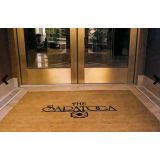 Custom Coco Mats$168.00Custom Coco Mats are made from real coconut fiber — coir — for entrances where a warm, natural-material look matters as much as keeping the floor clean. The coarse fiber scrapes grit and traps dirt at the door, while the organic texture gives a threshold a premium feel that
...
Custom Coco Mats are made from real coconut fiber — coir — for entrances where a warm, natural-material look...
Custom Coco Mats are made from real coconut fiber — coir — for entrances where a warm, natural-material look matters as much as keeping the floor clean. The coarse fiber scrapes grit and traps dirt at the door, while the organic texture gives a threshold a premium feel that synthetic mats don't replicate. They sit among our indoor logo mats as the natural-fiber option, built specifically for recessed entrance wells.
Coir earns its place at the door through the fiber itself. The coarse natural strands scrape soil off shoes and hold it down in the pile, away from the walking surface. Most of the dirt inside a building arrives on foot traffic, per ISSA, and a dense coir face is built to catch it.
The coir is bonded to a vinyl backing and supplied as sheet and roll goods, so each mat is cut to the exact opening rather than forced to a stock size. It's a semipermanent installation for recessed wells: set into the recess with a releasable adhesive and sized so it sits flush with the surrounding floor. Give us the well dimensions and we cut it to fit; if you're specifying a new well, we can work from the opening you're planning.
Coir also carries a real sustainability story: it's a natural, renewable fiber — a byproduct of the coconut harvest — which is part of why it gets specified for green-minded and design-forward projects. A recessed coir entrance system can contribute toward LEED when it's specified as a maintained walk-off system and documented for the credits a project is pursuing. Because the exact contribution depends on the LEED version and the credits in play, send us the points you're targeting and we'll confirm how this fits.
This is an indoor mat. Coir is a natural fiber, so it belongs at interior and covered entrances — lobbies, vestibule wells, hospitality and institutional entries, and design-forward or sustainability-minded spaces. It isn't built for open exterior or wet exposure, where natural fiber breaks down; a synthetic scraper is the right call there.
It's custom-cut to your well, with bold logo and border options worked into the coir. Vacuum and clean it on a regular schedule, and replace it when the fiber thins or wears in the main path.
Surface Natural coconut fiber (coir) Construction Coir bonded to a vinyl backing Format Sheet & roll goods, custom-cut to the well Installation Semipermanent; set into a recessed well with releasable adhesive, sized to recess depth to sit flush Logo Bold inlaid logo and border options Use Indoor and covered entrances only Sustainability Natural, renewable fiber; may contribute toward LEED when specified as a maintained walk-off system Maintenance Vacuum and clean on a regular schedule; replace when the fiber thins Warranty 1-year limited (Mats Inc.) Frequently Asked Questions
Can we put our logo on a coco mat?
Answered by Jinna Hopson, Vice President of Marketing
Yes, within what the fiber does well. Coir takes bold, clean branding — a company name, a simple logo, a border or color block — worked into the natural mat. What it can't do is the fine detail, gradients, or photographic artwork that a printed carpet mat handles, because the fiber is coarse by nature. If your logo is bold and reads at a glance, coir gives it a distinctive, organic look; if it's intricate, we'd point you to a printed mat instead. Send us the artwork and we'll tell you honestly how it will translate.
Why choose natural coir over a synthetic entrance mat?
Answered by Jinna Hopson, Vice President of Marketing
It's about the impression and the material story. Coir reads as warm and natural in a way a synthetic mat doesn't — it suits lobbies, hospitality entries, and spaces designed around natural materials, and it pairs with a genuine sustainability message because the fiber is natural and renewable. You're trading some of the all-weather toughness of a synthetic for a premium, organic look. For an indoor entrance where first impressions and values both matter, that's often the right trade.
Does it work in a recessed entrance well, and how is it installed?
Answered by Dustin Thompson, Owner & CEO
That's what it's built for. It comes as sheet and roll goods cut to your well, and it's sized to the recess depth so it sits flush in a standard recess. It's a semipermanent installation — set in with a releasable adhesive rather than loose-laid — so it stays put as a permanent part of the entrance. Give us the well dimensions and we'll cut it to fit; if you're specifying a new well, we can work from the opening size you're planning.
Can it help with LEED certification?
Answered by Dustin Thompson, Owner & CEO
It can contribute, and it's worth setting expectations precisely. Coir is a natural, renewable material, and a recessed coir mat installed as a maintained walk-off entrance system is the kind of entryway system LEED has historically recognized — typically when it runs at least 10 feet in the main direction of travel and is cleaned on a regular schedule. The exact credit and point value depend on which LEED version your project is using, so tell us the rating system and the credits you're targeting, and we'll confirm in writing how this product fits before you spec it.
By Dustin Thompson, Owner & CEO, Mats Inc.
↑
Custom Coco Mats are made from real coconut fiber — coir — for entrances where a warm, natural-material look matters as much as keeping the floor clean. The coarse fiber scrapes grit and traps dirt at the door, while the organic texture gives a threshold a premium feel that synthetic mats don't replicate. They sit among our indoor logo mats as the natural-fiber option, built specifically for recessed entrance wells.
Coir earns its place at the door through the fiber itself. The coarse natural strands scrape soil off shoes and hold it down in the pile, away from the walking surface. Most of the dirt inside a building arrives on foot traffic, per ISSA, and a dense coir face is built to catch it.
The coir is bonded to a vinyl backing and supplied as sheet and roll goods, so each mat is cut to the exact opening rather than forced to a stock size. It's a semipermanent installation for recessed wells: set into the recess with a releasable adhesive and sized so it sits flush with the surrounding floor. Give us the well dimensions and we cut it to fit; if you're specifying a new well, we can work from the opening you're planning.
Coir also carries a real sustainability story: it's a natural, renewable fiber — a byproduct of the coconut harvest — which is part of why it gets specified for green-minded and design-forward projects. A recessed coir entrance system can contribute toward LEED when it's specified as a maintained walk-off system and documented for the credits a project is pursuing. Because the exact contribution depends on the LEED version and the credits in play, send us the points you're targeting and we'll confirm how this fits.
This is an indoor mat. Coir is a natural fiber, so it belongs at interior and covered entrances — lobbies, vestibule wells, hospitality and institutional entries, and design-forward or sustainability-minded spaces. It isn't built for open exterior or wet exposure, where natural fiber breaks down; a synthetic scraper is the right call there.
It's custom-cut to your well, with bold logo and border options worked into the coir. Vacuum and clean it on a regular schedule, and replace it when the fiber thins or wears in the main path.
Surface Natural coconut fiber (coir) Construction Coir bonded to a vinyl backing Format Sheet & roll goods, custom-cut to the well Installation Semipermanent; set into a recessed well with releasable adhesive, sized to recess depth to sit flush Logo Bold inlaid logo and border options Use Indoor and covered entrances only Sustainability Natural, renewable fiber; may contribute toward LEED when specified as a maintained walk-off system Maintenance Vacuum and clean on a regular schedule; replace when the fiber thins Warranty 1-year limited (Mats Inc.) Frequently Asked Questions
Can we put our logo on a coco mat?
Answered by Jinna Hopson, Vice President of Marketing
Yes, within what the fiber does well. Coir takes bold, clean branding — a company name, a simple logo, a border or color block — worked into the natural mat. What it can't do is the fine detail, gradients, or photographic artwork that a printed carpet mat handles, because the fiber is coarse by nature. If your logo is bold and reads at a glance, coir gives it a distinctive, organic look; if it's intricate, we'd point you to a printed mat instead. Send us the artwork and we'll tell you honestly how it will translate.
Why choose natural coir over a synthetic entrance mat?
Answered by Jinna Hopson, Vice President of Marketing
It's about the impression and the material story. Coir reads as warm and natural in a way a synthetic mat doesn't — it suits lobbies, hospitality entries, and spaces designed around natural materials, and it pairs with a genuine sustainability message because the fiber is natural and renewable. You're trading some of the all-weather toughness of a synthetic for a premium, organic look. For an indoor entrance where first impressions and values both matter, that's often the right trade.
Does it work in a recessed entrance well, and how is it installed?
Answered by Dustin Thompson, Owner & CEO
That's what it's built for. It comes as sheet and roll goods cut to your well, and it's sized to the recess depth so it sits flush in a standard recess. It's a semipermanent installation — set in with a releasable adhesive rather than loose-laid — so it stays put as a permanent part of the entrance. Give us the well dimensions and we'll cut it to fit; if you're specifying a new well, we can work from the opening size you're planning.
Can it help with LEED certification?
Answered by Dustin Thompson, Owner & CEO
It can contribute, and it's worth setting expectations precisely. Coir is a natural, renewable material, and a recessed coir mat installed as a maintained walk-off entrance system is the kind of entryway system LEED has historically recognized — typically when it runs at least 10 feet in the main direction of travel and is cleaned on a regular schedule. The exact credit and point value depend on which LEED version your project is using, so tell us the rating system and the credits you're targeting, and we'll confirm in writing how this product fits before you spec it.
By Dustin Thompson, Owner & CEO, Mats Inc.
↑
View Details
View Details
 Coco Coir Rolls$711.00Coco coir rolls bring a natural-fiber entrance to a recessed well: warm, brush-textured coconut coir bonded to a sealed vinyl base, cut from the roll to fit your recess. The coir brushes grit off shoes and the vinyl backing keeps dirt and moisture on the mat instead of letting it
...
Coco coir rolls bring a natural-fiber entrance to a recessed well: warm, brush-textured coconut coir bonded to a sealed vinyl...
Coco coir rolls bring a natural-fiber entrance to a recessed well: warm, brush-textured coconut coir bonded to a sealed vinyl base, cut from the roll to fit your recess. The coir brushes grit off shoes and the vinyl backing keeps dirt and moisture on the mat instead of letting it reach the floor below — all while giving the doorway the classic, welcoming look people associate with a well-kept entrance.
What coco coir does before grit reaches your floor
Coir is the stiff, brushy fiber from coconut husks — the original boot-scraping material. Set into a recessed well at the entrance, a coir mat brushes dirt and debris off shoes as people come in, holding grit and moisture on the mat so it doesn't track across the floor beyond the door. It does that while looking like natural fiber, not industrial matting.
What keeps it off your floor is the backing. Unlike a plain woven coco mat that lets water seep straight through, this one is built on a sealed vinyl base, so moisture and grit stay on top of the mat rather than reaching the floor underneath. Recessed coir matting sits down in the well, flush with the surrounding floor, doing that work without a trip lip or a utilitarian look.
Why natural coir, and why this one
Coir's appeal is the material itself. The coconut fiber is naturally stiff and brushy, so it captures grit well, and it carries a warm, golden, textured look that synthetic mats imitate but don't quite match. For an entrance where the first impression matters — a hotel, a boutique, a traditional lobby — that natural character is the whole point.
The coir is fusion-bonded into the vinyl base at a total height of about 5/8" — roughly 0.422" of that is the coir pile — which locks the fibers in so the mat can be cut to any shape without unraveling. That's what makes it work in a recessed well, and why an odd-shaped recess or a wide entry is straightforward: a large well is laid out from the roll to read as one clean mat.
It comes in rolls about 6'7" wide, cut to your opening, and can be made with or without an inlaid logo. Color isn't limited to the natural tone, either — beyond the classic golden coir, it's offered in grey, black, blue, green, brown, and red, so the mat can stay traditional or pick up a brand or interior palette.
Coir also carries a real sustainability story: it's a renewable byproduct of the coconut harvest, and as a semipermanent, maintained walk-off system at least ten feet long it can contribute toward LEED-NC — toward recycled-content and low-emitting-material credits, with a releasable adhesive rated at zero VOC. Because the exact contribution depends on the LEED version and the credits in play, tell us the points you're targeting and we'll confirm how it fits.
Where it belongs, and what it is not
Coir belongs at indoor and covered entrances — lobbies, vestibules, conference rooms, libraries, retail floors, and recessed wells at sheltered doors. It's a natural fit for offices, retail, schools, government buildings, and hospitality entries that want a warm, natural threshold. It's one of our recessed mat inserts, cut to drop into the well flush with the floor.
It's rated for indoor use, not for an exposed outdoor doorway, for two reasons. Coir is a natural fiber that fades and wears faster in direct sun and rain than a synthetic, and the dyed colors are vegetable-based, so they can transfer if the mat gets wet. For a fully exposed entrance, a weatherproof scraper or grate is the better tool, and we'll point you to one. Expect a little natural shedding from coir early on, too.
Three things to check before you spec it
First, keep it to indoor and covered spots. Coir is at its best inside — a lobby, a vestibule, a recessed indoor well. In an open doorway taking direct sun and rain, it'll fade and wear sooner, and the vegetable-dyed colors can run if they get soaked. Save coir for sheltered entries and use a weatherproof mat where the weather hits directly.
Second, measure the opening, especially a recess. The matting comes in rolls about 6'7" wide and is cut to your dimensions, so custom shapes are workable and the cut edges hold without unraveling. For a recess wider than a single piece, sections are laid out so the well reads as one mat. Send the well dimensions and we'll plan the cut.
Third, pick the color and look. The natural golden tone is what most people picture at a front door, while the dyed options read more finished or pick up a brand color, and a logo can be inlaid. Keep in mind the colors are vegetable-dyed, so choose with the indoor setting and the impression you want at the door in mind.
Why Mats Inc.
We've specified entrance flooring since 1964, and coir is one of those materials where the right call is as much about where it goes as what it is. We help you judge whether an entrance is sheltered enough for natural fiber, size the mat to your recess, and choose the color or logo to suit the doorway — then cut it to fit and ship it ready to set. If a spot is too exposed for coir, we'll tell you and point you to something weatherproof instead.
Specifications Fiber Natural coconut fibers (coir) Backing Vinyl — sealed base keeps moisture and dirt on the mat, not through to the floor Manufacturing Fusion bonded Surface Non-directional, smooth / velour Pile height 0.422" Total height 0.625" (about 5/8") Pile weight 60 oz/sy Total weight 166 oz/sy Roll / sheet width 6'7", cut to length; custom sizes and logo mats available Flammability ASTM E648 (radiant panel): Class II LEED (LEED-NC v3) Can contribute toward MR Credit 4 (recycled content), IEQ Credit 4.1 (releasable adhesive, 0 g/L VOC), and IEQ Credit 5 (semipermanent entrance system at least 10 ft, maintained weekly) Use Indoor only; recessed wells and entryways Installation Semipermanent; set with a releasable adhesive, cut to fit flush Colors Natural, grey, black, blue, green, brown, red (vegetable-dyed except natural); with or without inlaid logo Maintenance Regular vacuuming with a motor-driven brush and beater bar Warranty 1-year limited (Mats Inc.) Frequently Asked Questions
What exactly is coco coir, and how does it clean shoes?
Answered by Dustin Thompson, Owner & CEO
Coir is the coarse natural fiber from coconut husks — the same stiff, brushy material people have used as a boot scraper for generations. Here it's fusion-bonded onto a sealed vinyl base at about 5/8" thick. As people walk across it, the coir fibers comb grit and debris off their shoes, and the vinyl backing keeps that dirt and any moisture on the mat instead of letting it seep through to the floor below.
How long does a coir mat last, and how do I keep it looking good?
Answered by Dustin Thompson, Owner & CEO
Indoors and maintained, coir holds up well — the fibers are fusion-bonded into the vinyl base, so they don't shed loose or pull out the way a woven mat can. The thing that shortens its life is weather, which is why it's rated for indoor use.
Maintenance does the rest. A regular pass with a motor-driven brush and beater bar lifts the grit ground into the fiber and removes up to 80% of the surface dirt — that's what keeps both the look and the scraping working over time.
How is it installed in a recessed well?
Answered by Dustin Thompson, Owner & CEO
It's a semipermanent installation. The mat is cut to the size and shape of the well and set down into it with a releasable adhesive, so the top finishes flush with the surrounding floor — no lip at the threshold — and it can still be lifted for a deep cleaning or replacement. Set flush, it brushes shoes the same way it would sitting proud, but it reads as a built-in part of the entrance. Send us the well dimensions and we'll cut it to fit.
What colors does it come in?
Answered by Jinna Hopson, Vice President of Marketing
Beyond the classic natural coir tone — the warm, golden look most people picture at a front door — it comes in grey, black, blue, green, brown, and red, so the mat can stay traditional or pick up a brand or interior color.
One thing to know: every color except the natural tone is vegetable-dyed, which is part of why it's an indoor product, since the dyes can transfer if the mat gets soaked. Because color shifts between a screen and the real fiber, ask for a sample before you commit.
Can it be cut to a custom size or odd-shaped recess, and can I add a logo?
Answered by Jinna Hopson, Vice President of Marketing
Yes to both. It's supplied in rolls about 6'7" wide and cut to your opening, so custom sizes and shapes are straightforward — the cut edges hold without unraveling because the fibers are bonded into the base. For a recess wider than a single piece, sections are laid out so a large well reads as one clean mat. It can also be made with or without an inlaid logo, so a coir entrance can carry a name or mark while keeping its natural texture.
Does coir suit a modern space, or only traditional entrances?
Answered by Jinna Hopson, Vice President of Marketing
Coir reads natural and classic — the brushy texture and warm tone are what people associate with a welcoming, well-kept doorway, which is why it suits hospitality, retail, and traditional or warm entrances especially well. In a sleek, minimal modern lobby, a finished synthetic or a metal grate often fits the look better. But for an entrance you want to feel natural and inviting under cover, coir looks the part in a way engineered matting doesn't quite reach.
By Jinna Hopson, Vice President of Marketing, Mats Inc.
↑
Coco coir rolls bring a natural-fiber entrance to a recessed well: warm, brush-textured coconut coir bonded to a sealed vinyl base, cut from the roll to fit your recess. The coir brushes grit off shoes and the vinyl backing keeps dirt and moisture on the mat instead of letting it reach the floor below — all while giving the doorway the classic, welcoming look people associate with a well-kept entrance.
What coco coir does before grit reaches your floor
Coir is the stiff, brushy fiber from coconut husks — the original boot-scraping material. Set into a recessed well at the entrance, a coir mat brushes dirt and debris off shoes as people come in, holding grit and moisture on the mat so it doesn't track across the floor beyond the door. It does that while looking like natural fiber, not industrial matting.
What keeps it off your floor is the backing. Unlike a plain woven coco mat that lets water seep straight through, this one is built on a sealed vinyl base, so moisture and grit stay on top of the mat rather than reaching the floor underneath. Recessed coir matting sits down in the well, flush with the surrounding floor, doing that work without a trip lip or a utilitarian look.
Why natural coir, and why this one
Coir's appeal is the material itself. The coconut fiber is naturally stiff and brushy, so it captures grit well, and it carries a warm, golden, textured look that synthetic mats imitate but don't quite match. For an entrance where the first impression matters — a hotel, a boutique, a traditional lobby — that natural character is the whole point.
The coir is fusion-bonded into the vinyl base at a total height of about 5/8" — roughly 0.422" of that is the coir pile — which locks the fibers in so the mat can be cut to any shape without unraveling. That's what makes it work in a recessed well, and why an odd-shaped recess or a wide entry is straightforward: a large well is laid out from the roll to read as one clean mat.
It comes in rolls about 6'7" wide, cut to your opening, and can be made with or without an inlaid logo. Color isn't limited to the natural tone, either — beyond the classic golden coir, it's offered in grey, black, blue, green, brown, and red, so the mat can stay traditional or pick up a brand or interior palette.
Coir also carries a real sustainability story: it's a renewable byproduct of the coconut harvest, and as a semipermanent, maintained walk-off system at least ten feet long it can contribute toward LEED-NC — toward recycled-content and low-emitting-material credits, with a releasable adhesive rated at zero VOC. Because the exact contribution depends on the LEED version and the credits in play, tell us the points you're targeting and we'll confirm how it fits.
Where it belongs, and what it is not
Coir belongs at indoor and covered entrances — lobbies, vestibules, conference rooms, libraries, retail floors, and recessed wells at sheltered doors. It's a natural fit for offices, retail, schools, government buildings, and hospitality entries that want a warm, natural threshold. It's one of our recessed mat inserts, cut to drop into the well flush with the floor.
It's rated for indoor use, not for an exposed outdoor doorway, for two reasons. Coir is a natural fiber that fades and wears faster in direct sun and rain than a synthetic, and the dyed colors are vegetable-based, so they can transfer if the mat gets wet. For a fully exposed entrance, a weatherproof scraper or grate is the better tool, and we'll point you to one. Expect a little natural shedding from coir early on, too.
Three things to check before you spec it
First, keep it to indoor and covered spots. Coir is at its best inside — a lobby, a vestibule, a recessed indoor well. In an open doorway taking direct sun and rain, it'll fade and wear sooner, and the vegetable-dyed colors can run if they get soaked. Save coir for sheltered entries and use a weatherproof mat where the weather hits directly.
Second, measure the opening, especially a recess. The matting comes in rolls about 6'7" wide and is cut to your dimensions, so custom shapes are workable and the cut edges hold without unraveling. For a recess wider than a single piece, sections are laid out so the well reads as one mat. Send the well dimensions and we'll plan the cut.
Third, pick the color and look. The natural golden tone is what most people picture at a front door, while the dyed options read more finished or pick up a brand color, and a logo can be inlaid. Keep in mind the colors are vegetable-dyed, so choose with the indoor setting and the impression you want at the door in mind.
Why Mats Inc.
We've specified entrance flooring since 1964, and coir is one of those materials where the right call is as much about where it goes as what it is. We help you judge whether an entrance is sheltered enough for natural fiber, size the mat to your recess, and choose the color or logo to suit the doorway — then cut it to fit and ship it ready to set. If a spot is too exposed for coir, we'll tell you and point you to something weatherproof instead.
Specifications Fiber Natural coconut fibers (coir) Backing Vinyl — sealed base keeps moisture and dirt on the mat, not through to the floor Manufacturing Fusion bonded Surface Non-directional, smooth / velour Pile height 0.422" Total height 0.625" (about 5/8") Pile weight 60 oz/sy Total weight 166 oz/sy Roll / sheet width 6'7", cut to length; custom sizes and logo mats available Flammability ASTM E648 (radiant panel): Class II LEED (LEED-NC v3) Can contribute toward MR Credit 4 (recycled content), IEQ Credit 4.1 (releasable adhesive, 0 g/L VOC), and IEQ Credit 5 (semipermanent entrance system at least 10 ft, maintained weekly) Use Indoor only; recessed wells and entryways Installation Semipermanent; set with a releasable adhesive, cut to fit flush Colors Natural, grey, black, blue, green, brown, red (vegetable-dyed except natural); with or without inlaid logo Maintenance Regular vacuuming with a motor-driven brush and beater bar Warranty 1-year limited (Mats Inc.) Frequently Asked Questions
What exactly is coco coir, and how does it clean shoes?
Answered by Dustin Thompson, Owner & CEO
Coir is the coarse natural fiber from coconut husks — the same stiff, brushy material people have used as a boot scraper for generations. Here it's fusion-bonded onto a sealed vinyl base at about 5/8" thick. As people walk across it, the coir fibers comb grit and debris off their shoes, and the vinyl backing keeps that dirt and any moisture on the mat instead of letting it seep through to the floor below.
How long does a coir mat last, and how do I keep it looking good?
Answered by Dustin Thompson, Owner & CEO
Indoors and maintained, coir holds up well — the fibers are fusion-bonded into the vinyl base, so they don't shed loose or pull out the way a woven mat can. The thing that shortens its life is weather, which is why it's rated for indoor use.
Maintenance does the rest. A regular pass with a motor-driven brush and beater bar lifts the grit ground into the fiber and removes up to 80% of the surface dirt — that's what keeps both the look and the scraping working over time.
How is it installed in a recessed well?
Answered by Dustin Thompson, Owner & CEO
It's a semipermanent installation. The mat is cut to the size and shape of the well and set down into it with a releasable adhesive, so the top finishes flush with the surrounding floor — no lip at the threshold — and it can still be lifted for a deep cleaning or replacement. Set flush, it brushes shoes the same way it would sitting proud, but it reads as a built-in part of the entrance. Send us the well dimensions and we'll cut it to fit.
What colors does it come in?
Answered by Jinna Hopson, Vice President of Marketing
Beyond the classic natural coir tone — the warm, golden look most people picture at a front door — it comes in grey, black, blue, green, brown, and red, so the mat can stay traditional or pick up a brand or interior color.
One thing to know: every color except the natural tone is vegetable-dyed, which is part of why it's an indoor product, since the dyes can transfer if the mat gets soaked. Because color shifts between a screen and the real fiber, ask for a sample before you commit.
Can it be cut to a custom size or odd-shaped recess, and can I add a logo?
Answered by Jinna Hopson, Vice President of Marketing
Yes to both. It's supplied in rolls about 6'7" wide and cut to your opening, so custom sizes and shapes are straightforward — the cut edges hold without unraveling because the fibers are bonded into the base. For a recess wider than a single piece, sections are laid out so a large well reads as one clean mat. It can also be made with or without an inlaid logo, so a coir entrance can carry a name or mark while keeping its natural texture.
Does coir suit a modern space, or only traditional entrances?
Answered by Jinna Hopson, Vice President of Marketing
Coir reads natural and classic — the brushy texture and warm tone are what people associate with a welcoming, well-kept doorway, which is why it suits hospitality, retail, and traditional or warm entrances especially well. In a sleek, minimal modern lobby, a finished synthetic or a metal grate often fits the look better. But for an entrance you want to feel natural and inviting under cover, coir looks the part in a way engineered matting doesn't quite reach.
By Jinna Hopson, Vice President of Marketing, Mats Inc.
↑
View Details
View Details
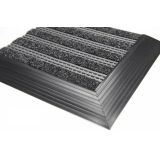 Design LinksDesign Links is a modular walk-off matting system for high-traffic commercial entrances — the kind of doorway where one mat will not cover the span and the entrance is part of how the building presents itself. Its open-weave grid scrapes shoes on every step while alternating carpet strips dry
...
Design Links is a modular walk-off matting system for high-traffic commercial entrances — the kind of doorway where one...
Design Links is a modular walk-off matting system for high-traffic commercial entrances — the kind of doorway where one mat will not cover the span and the entrance is part of how the building presents itself. Its open-weave grid scrapes shoes on every step while alternating carpet strips dry them, and the panels are engineered to fit an entry of almost any size or shape.
What Design Links Does Before the Entrance Wears the Floor Inside
Most of a building's dirt and moisture arrives on shoes at the front door — ISSA research shows the entrance is where the bulk of it enters. Left unchecked, that grit grinds down interior flooring and wet shoes turn a lobby floor slick. Design Links stops both at the threshold: the grid scrapes the dirt off, the open weave drops it below the walking surface, and the carpet strips wick the water, so shoes leave the mat cleaner and drier than they arrived.
Why an Open-Weave Grid with Carpet Strips, and Why This One
The system is built from flexible, injection-molded PVC panels in an open-weave, grid-rib design. The raised ribs scrape shoe bottoms from every direction, and the gaps between them let dirt and water fall through to the well below, out of the traffic path. Set between the ribs are dense polypropylene carpet strips that pull moisture off shoes — the drying half of a scrape-and-dry surface.
It comes with permanent carpet strips or easily replaceable ones, plus a heavy-duty build for pallet-jack and heavy wheel traffic. The surface is genuinely slip-resistant, not just textured: under ASTM D2047 it measures a static coefficient of friction — a standard grip rating — of 0.79 dry and 1.04 wet, where anything above 0.5 counts as slip-resistant. So it grips harder wet than many floors do dry.
Where It Belongs, and Where It Doesn't
Design Links fits busy commercial entrances where appearance and performance both matter — medical buildings, schools, offices, banks, retail floors with shopping carts, and apartment lobbies. It is built for high foot, cart, and pallet-jack traffic, and it reads as a designed part of the entrance rather than a mat dropped on the floor. It sits in our range of exterior entrance matting for entries that need a full walk-off system.
What it is not is a quick single-door doormat. It is a configured system, engineered to a floor plan, so it is more than a low-traffic side entrance needs. It is also an entryway system at heart — the optional aluminum trim is all-weather, but plan it for the entrance threshold and vestibule, where a scrape-and-dry grid earns its place, rather than as an open-air mat out in the elements.
Three Things to Check Before You Spec It
First, decide how it sits in the floor. Recessed into a half-inch well, the mat finishes flush with the surrounding floor — no lip to trip on, which is what makes it ADA-friendly and the cleanest-looking option. Surface-mounted, it sits on top inside a ramped aluminum frame. Either way, the floor underneath needs to be hard and smooth.
Second, match the version to the traffic. Permanent carpet strips suit steady foot traffic and a fixed look; replaceable strips let you swap worn or restyled inserts without redoing the mat; and the heavy-duty build is the one for pallet jacks and heavy rolling loads. Be honest about what crosses the door, because that choice drives how long the surface lasts.
Third, measure the opening and pick the finishes. The panels are custom-engineered to your width, length, and door swing, so wide, long, or irregular entries are all workable. Then choose the base color, the carpet-strip tone, and — if you are recessing it — the anodized trim finish, so the entrance reads the way you want it to.
Why Mats Inc.
We have specified entrance systems since 1964, and a walk-off system lives or dies on the layout. We take your opening, your door swing, and your traffic, then engineer the panel configuration and help you choose the version and finishes — so the grid covers the path without awkward gaps and the entrance protects the floor behind it. Send the measurements and we will lay it out.
Design Links — Specifications Construction Injection-molded PVC open-weave grid with alternating carpet strips Mat profile 1/2" (fits a 1/2"-deep recessed well) Action Grid ribs scrape; open weave drops debris below; carpet strips dry Carpet strips Permanent or replaceable (Velcro); heavy-duty build for pallet-jack / heavy wheel traffic Carpet fiber 100% polypropylene, dense cut pile, 26 oz/sq yd Slip resistance ASTM D2047 static coefficient of friction — 0.79 dry, 1.04 wet (≥ 0.5 = slip-resistant) Base (vinyl) colors Black, gray, brown, green; custom available Carpet-strip colors Charcoal, gingerbread, emerald Aluminum trim Anodized; clear, black, bronze, or gold (all-weather) Installation Surface-mounted (ramped frame) or recessed flush (1/2" well); hard, smooth subfloor Sizing Custom-engineered to any width and length; cut and fit on-site Compliance ADA compliant; recyclable PVC and aluminum (may contribute toward LEED credits — confirm in writing) Origin Made in USA Warranty 1-year limited (Mats Inc.) Frequently Asked Questions
How does Design Links install — can it go flush into the floor?
Answered by Dustin Thompson, Owner & CEO
Two main ways. Recessed, it drops into a half-inch-deep well and finishes flush with the surrounding floor, so there is no raised edge — that is the ADA-friendly option and the one that looks built-in. Surface-mounted, it sits on top of the floor inside a ramped aluminum frame that eases the edges. In both cases the floor underneath should be hard and smooth, and the panels are custom-engineered and fit to the opening on-site.
Can Design Links handle carts and heavy traffic, and how slip-resistant is it?
Answered by Dustin Thompson, Owner & CEO
Yes — it is built for heavy foot, cart, and pallet-jack traffic, with a heavy-duty version for the busiest rolling loads, so it holds up at retail, healthcare, and institutional entrances where lighter mats break down. On slip resistance it tests well above the bar: under ASTM D2047 it measures a static coefficient of friction of 0.79 dry and 1.04 wet, where anything over 0.5 is considered slip-resistant. As with any walk-off system, lifting the panels periodically to vacuum out the debris collected beneath them is what keeps it performing and extends its life. It carries our standard one-year warranty.
How does it scrape and dry at the same time?
Answered by Dustin Thompson, Owner & CEO
The surface does two jobs. The raised PVC grid ribs scrape grit off shoe bottoms with every step, and because the grid is open, that loosened dirt and water fall through to the well below instead of riding back up onto the next shoe. Running between the ribs are dense polypropylene carpet strips that wick moisture off shoes. So one pass scrapes the solids loose and dries the wet, which is what keeps both off the floor inside.
What are the color and finish options?
Answered by Jinna Hopson, Vice President of Marketing
More than most entrance systems. The PVC base comes in black, gray, brown, and green, with custom base colors available for a specific palette. The carpet strips come in charcoal, gingerbread, and emerald. And if you are recessing the mat, the anodized aluminum trim is offered in clear, black, bronze, and gold. That range is the point — it lets the entrance read as a designed part of the space, which is usually why a building chooses this over a plain walk-off mat.
Can Design Links be made to fit an odd-shaped or oversized entry?
Answered by Jinna Hopson, Vice President of Marketing
That is exactly what the modular design is for. The panels are custom-engineered and cut to your width and length, and laid out around doors and floor-plan features, so wide double-door entries, long approaches, and irregular footprints are all workable. There is no standard size to force the space into. Send the area's measurements and shape, along with the door swing, and we will lay out a configuration that covers it cleanly, without partial pieces stranded at the edges.
Will it look upscale, or like a utility mat?
Answered by Jinna Hopson, Vice President of Marketing
It is designed for upscale entrances, and it shows. The grid-and-carpet surface looks deliberate and finished, especially recessed flush with anodized trim framing it, so it presents as part of the architecture rather than a mat thrown down at the door. With the base color, carpet tone, and trim finish chosen to match the space, it carries the entrance instead of cluttering it — which is the reason buildings specify a system like this where appearance counts.
By Jinna Hopson, Vice President of Marketing, Mats Inc.
↑
Design Links is a modular walk-off matting system for high-traffic commercial entrances — the kind of doorway where one mat will not cover the span and the entrance is part of how the building presents itself. Its open-weave grid scrapes shoes on every step while alternating carpet strips dry them, and the panels are engineered to fit an entry of almost any size or shape.
What Design Links Does Before the Entrance Wears the Floor Inside
Most of a building's dirt and moisture arrives on shoes at the front door — ISSA research shows the entrance is where the bulk of it enters. Left unchecked, that grit grinds down interior flooring and wet shoes turn a lobby floor slick. Design Links stops both at the threshold: the grid scrapes the dirt off, the open weave drops it below the walking surface, and the carpet strips wick the water, so shoes leave the mat cleaner and drier than they arrived.
Why an Open-Weave Grid with Carpet Strips, and Why This One
The system is built from flexible, injection-molded PVC panels in an open-weave, grid-rib design. The raised ribs scrape shoe bottoms from every direction, and the gaps between them let dirt and water fall through to the well below, out of the traffic path. Set between the ribs are dense polypropylene carpet strips that pull moisture off shoes — the drying half of a scrape-and-dry surface.
It comes with permanent carpet strips or easily replaceable ones, plus a heavy-duty build for pallet-jack and heavy wheel traffic. The surface is genuinely slip-resistant, not just textured: under ASTM D2047 it measures a static coefficient of friction — a standard grip rating — of 0.79 dry and 1.04 wet, where anything above 0.5 counts as slip-resistant. So it grips harder wet than many floors do dry.
Where It Belongs, and Where It Doesn't
Design Links fits busy commercial entrances where appearance and performance both matter — medical buildings, schools, offices, banks, retail floors with shopping carts, and apartment lobbies. It is built for high foot, cart, and pallet-jack traffic, and it reads as a designed part of the entrance rather than a mat dropped on the floor. It sits in our range of exterior entrance matting for entries that need a full walk-off system.
What it is not is a quick single-door doormat. It is a configured system, engineered to a floor plan, so it is more than a low-traffic side entrance needs. It is also an entryway system at heart — the optional aluminum trim is all-weather, but plan it for the entrance threshold and vestibule, where a scrape-and-dry grid earns its place, rather than as an open-air mat out in the elements.
Three Things to Check Before You Spec It
First, decide how it sits in the floor. Recessed into a half-inch well, the mat finishes flush with the surrounding floor — no lip to trip on, which is what makes it ADA-friendly and the cleanest-looking option. Surface-mounted, it sits on top inside a ramped aluminum frame. Either way, the floor underneath needs to be hard and smooth.
Second, match the version to the traffic. Permanent carpet strips suit steady foot traffic and a fixed look; replaceable strips let you swap worn or restyled inserts without redoing the mat; and the heavy-duty build is the one for pallet jacks and heavy rolling loads. Be honest about what crosses the door, because that choice drives how long the surface lasts.
Third, measure the opening and pick the finishes. The panels are custom-engineered to your width, length, and door swing, so wide, long, or irregular entries are all workable. Then choose the base color, the carpet-strip tone, and — if you are recessing it — the anodized trim finish, so the entrance reads the way you want it to.
Why Mats Inc.
We have specified entrance systems since 1964, and a walk-off system lives or dies on the layout. We take your opening, your door swing, and your traffic, then engineer the panel configuration and help you choose the version and finishes — so the grid covers the path without awkward gaps and the entrance protects the floor behind it. Send the measurements and we will lay it out.
Design Links — Specifications Construction Injection-molded PVC open-weave grid with alternating carpet strips Mat profile 1/2" (fits a 1/2"-deep recessed well) Action Grid ribs scrape; open weave drops debris below; carpet strips dry Carpet strips Permanent or replaceable (Velcro); heavy-duty build for pallet-jack / heavy wheel traffic Carpet fiber 100% polypropylene, dense cut pile, 26 oz/sq yd Slip resistance ASTM D2047 static coefficient of friction — 0.79 dry, 1.04 wet (≥ 0.5 = slip-resistant) Base (vinyl) colors Black, gray, brown, green; custom available Carpet-strip colors Charcoal, gingerbread, emerald Aluminum trim Anodized; clear, black, bronze, or gold (all-weather) Installation Surface-mounted (ramped frame) or recessed flush (1/2" well); hard, smooth subfloor Sizing Custom-engineered to any width and length; cut and fit on-site Compliance ADA compliant; recyclable PVC and aluminum (may contribute toward LEED credits — confirm in writing) Origin Made in USA Warranty 1-year limited (Mats Inc.) Frequently Asked Questions
How does Design Links install — can it go flush into the floor?
Answered by Dustin Thompson, Owner & CEO
Two main ways. Recessed, it drops into a half-inch-deep well and finishes flush with the surrounding floor, so there is no raised edge — that is the ADA-friendly option and the one that looks built-in. Surface-mounted, it sits on top of the floor inside a ramped aluminum frame that eases the edges. In both cases the floor underneath should be hard and smooth, and the panels are custom-engineered and fit to the opening on-site.
Can Design Links handle carts and heavy traffic, and how slip-resistant is it?
Answered by Dustin Thompson, Owner & CEO
Yes — it is built for heavy foot, cart, and pallet-jack traffic, with a heavy-duty version for the busiest rolling loads, so it holds up at retail, healthcare, and institutional entrances where lighter mats break down. On slip resistance it tests well above the bar: under ASTM D2047 it measures a static coefficient of friction of 0.79 dry and 1.04 wet, where anything over 0.5 is considered slip-resistant. As with any walk-off system, lifting the panels periodically to vacuum out the debris collected beneath them is what keeps it performing and extends its life. It carries our standard one-year warranty.
How does it scrape and dry at the same time?
Answered by Dustin Thompson, Owner & CEO
The surface does two jobs. The raised PVC grid ribs scrape grit off shoe bottoms with every step, and because the grid is open, that loosened dirt and water fall through to the well below instead of riding back up onto the next shoe. Running between the ribs are dense polypropylene carpet strips that wick moisture off shoes. So one pass scrapes the solids loose and dries the wet, which is what keeps both off the floor inside.
What are the color and finish options?
Answered by Jinna Hopson, Vice President of Marketing
More than most entrance systems. The PVC base comes in black, gray, brown, and green, with custom base colors available for a specific palette. The carpet strips come in charcoal, gingerbread, and emerald. And if you are recessing the mat, the anodized aluminum trim is offered in clear, black, bronze, and gold. That range is the point — it lets the entrance read as a designed part of the space, which is usually why a building chooses this over a plain walk-off mat.
Can Design Links be made to fit an odd-shaped or oversized entry?
Answered by Jinna Hopson, Vice President of Marketing
That is exactly what the modular design is for. The panels are custom-engineered and cut to your width and length, and laid out around doors and floor-plan features, so wide double-door entries, long approaches, and irregular footprints are all workable. There is no standard size to force the space into. Send the area's measurements and shape, along with the door swing, and we will lay out a configuration that covers it cleanly, without partial pieces stranded at the edges.
Will it look upscale, or like a utility mat?
Answered by Jinna Hopson, Vice President of Marketing
It is designed for upscale entrances, and it shows. The grid-and-carpet surface looks deliberate and finished, especially recessed flush with anodized trim framing it, so it presents as part of the architecture rather than a mat thrown down at the door. With the base color, carpet tone, and trim finish chosen to match the space, it carries the entrance instead of cluttering it — which is the reason buildings specify a system like this where appearance counts.
By Jinna Hopson, Vice President of Marketing, Mats Inc.
↑
View Details
View Details
Recessed entrance matting sits in a shallow well built into the floor, so the walking surface finishes flush with the surrounding tile or stone. Done right, it traps dirt and water at the door without leaving a raised mat edge for people to trip over or carts to catch. This page covers the full recessed range, which divides into two approaches: rigid grate systems and drop-in mat inserts.
Why Put the Mat in the Floor
A surface mat does the cleaning job, but it always has an edge. In a busy entrance, that edge curls, shifts, and turns into a trip point — and wheeled traffic catches it. A recessed system removes the edge entirely. The mat or grate drops into a well so its top sits level with the floor, which keeps the entrance clean and the transition smooth underfoot.
Where Recessed Systems Go Wrong
The most common problem isn't the mat — it's the well. If the recess depth doesn't match the system, the surface sits proud and trips people, or sinks low and pools water. The other miss is undersizing. Too short a run and dirt rides straight past the entrance onto the interior floor, where it grinds into the finish and tracks through the building.
How the Two Recessed Builds Compare
The recessed range divides into two builds. Which one fits comes down to traffic, drainage, and the look you want at the door.
Recessed Grate Systems
Recessed Grate Systems use rigid aluminum or rubber rails set into the well, with replaceable tread inserts between them. They carry heavy foot and wheeled traffic, scrape grit off shoes, and let water and debris drop through to the well below the walking surface. This is the build for the busiest commercial entrances — the ones taking carts, luggage, or constant footfall.
Recessed Mat Inserts
Recessed Mat Inserts drop a coir, textile, or vinyl mat into the same kind of well, finishing flush with the floor. They lean toward absorbing moisture and giving the entrance a warmer, more finished look rather than carrying the heaviest traffic. This approach suits entrances that want a cleaner finish and moderate traffic over maximum durability.
Three Things to Check Before You Order
First, the well depth. The grate or insert has to match the recess so the surface finishes flush. Measure the existing well, or plan the depth into the build before the floor is poured.
Second, the traffic. Carts, luggage wheels, and constant footfall point toward a grate system. Moderate foot traffic and a softer look point toward a mat insert.
Third, what the entrance has to handle. If water and grit are the problem, you want a system that drains below the surface. If it's mostly drying wet feet, an absorbent insert does more of the work.
Why Mats Inc.
Mats Inc. has specified entrance flooring since 1964, and recessed systems are where that experience matters most — the mat, the well, and the floor around it all have to line up. We help match the system to your entrance and the recess you're working with, across both grate systems and drop-in inserts in our recessed entry mats and floor grates range, so the result sits flush and works from day one.
Frequently Asked Questions
How deep does the recess or well need to be?
Answered by Dustin Thompson, Owner & CEO
It depends on the system you choose — grate systems and mat inserts build up to different heights, and the recess has to match so the surface finishes flush. On new construction, plan the well depth into the floor before it's poured. On an existing floor, a recess frame can create or true up the well. Measure the opening and we'll tell you what depth to work to.
Can a recessed grate handle wheeled traffic like carts and luggage?
Answered by Dustin Thompson, Owner & CEO
Yes — that's what they're built for. Rigid aluminum or rubber rails carry rolling loads like carts and luggage without flexing or shifting, and the tread inserts between the rails take the grit. For an entrance with constant wheeled traffic, a grate system holds up where a softer insert would pack down and wear out faster.
How do you clean a recessed system?
Answered by Dustin Thompson, Owner & CEO
The well does part of the work by collecting what the mat pulls off shoes, so the routine is to empty it. Vacuum or sweep the surface regularly, then lift the inserts or grate sections to clear trapped grit and standing water from the well underneath. How often depends on traffic and weather — a wet season means checking it more.
How do I choose between a grate system and a mat insert?
Answered by Jinna Hopson, Vice President of Marketing
Start with traffic and what's coming through the door. Heavy foot traffic, wheeled loads, or a lot of water point to a grate system that drains below the surface. Moderate traffic, or an entrance where you want a warmer, finished look, points to a mat insert. Drainage need is usually the deciding factor between the two.
Will a recessed mat match the look of my floor?
Answered by Jinna Hopson, Vice President of Marketing
Inserts come in coir, textile, and vinyl in a range of colors, and they sit flush with the surrounding floor, so the entrance reads as one finished surface rather than a mat dropped on top. Grate systems have a cleaner, more architectural look. Either way, you can coordinate the surface with the floor and the entrance design.
Can a recessed system be sized for an odd-shaped or oversized entrance?
Answered by Jinna Hopson, Vice President of Marketing
Yes. Both grate systems and inserts can be sized and configured to fit the opening, including wider entrances and non-standard shapes. Send the dimensions of the entrance and the well, and note anything unusual about the layout, and we'll lay out a system that covers the full threshold without awkward gaps at the edges.
By Jinna Hopson, Vice President of Marketing, Mats Inc.