




More Information
| Manufacturer | Portico Systems |
|---|
Reviews
- Natural fiber mattingi appreciate Mats taking the time to get the logo RIGHT. I very happy with the purchase
Posted on
$168.00

Have a question? We're here to help!
Description
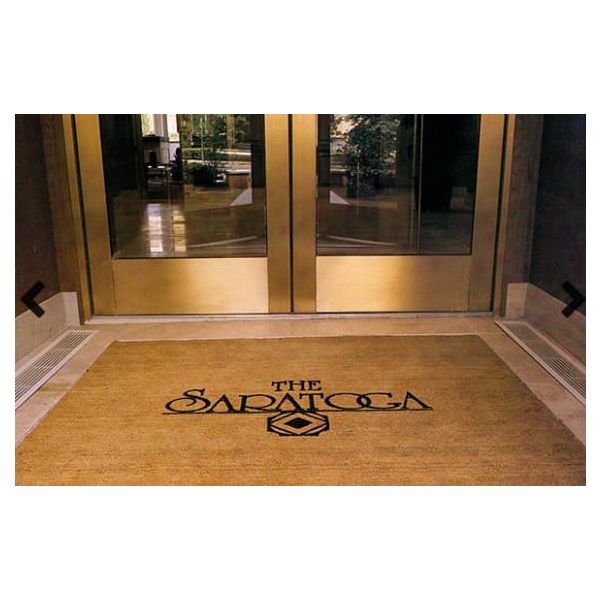
Custom Coco Mats are made from real coconut fiber — coir — for entrances where a warm, natural-material look matters as much as keeping the floor clean. The coarse fiber scrapes grit and traps dirt at the door, while the organic texture gives a threshold a premium feel that synthetic mats don't replicate. They sit among our indoor logo mats as the natural-fiber option, built specifically for recessed entrance wells.
Coir earns its place at the door through the fiber itself. The coarse natural strands scrape soil off shoes and hold it down in the pile, away from the walking surface. Most of the dirt inside a building arrives on foot traffic, per ISSA, and a dense coir face is built to catch it.
The coir is bonded to a vinyl backing and supplied as sheet and roll goods, so each mat is cut to the exact opening rather than forced to a stock size. It's a semipermanent installation for recessed wells: set into the recess with a releasable adhesive and sized so it sits flush with the surrounding floor. Give us the well dimensions and we cut it to fit; if you're specifying a new well, we can work from the opening you're planning.
Coir also carries a real sustainability story: it's a natural, renewable fiber — a byproduct of the coconut harvest — which is part of why it gets specified for green-minded and design-forward projects. A recessed coir entrance system can contribute toward LEED when it's specified as a maintained walk-off system and documented for the credits a project is pursuing. Because the exact contribution depends on the LEED version and the credits in play, send us the points you're targeting and we'll confirm how this fits.
This is an indoor mat. Coir is a natural fiber, so it belongs at interior and covered entrances — lobbies, vestibule wells, hospitality and institutional entries, and design-forward or sustainability-minded spaces. It isn't built for open exterior or wet exposure, where natural fiber breaks down; a synthetic scraper is the right call there.
It's custom-cut to your well, with bold logo and border options worked into the coir. Vacuum and clean it on a regular schedule, and replace it when the fiber thins or wears in the main path.
| Surface | Natural coconut fiber (coir) |
| Construction | Coir bonded to a vinyl backing |
| Format | Sheet & roll goods, custom-cut to the well |
| Installation | Semipermanent; set into a recessed well with releasable adhesive, sized to recess depth to sit flush |
| Logo | Bold inlaid logo and border options |
| Use | Indoor and covered entrances only |
| Sustainability | Natural, renewable fiber; may contribute toward LEED when specified as a maintained walk-off system |
| Maintenance | Vacuum and clean on a regular schedule; replace when the fiber thins |
| Warranty | 1-year limited (Mats Inc.) |
Frequently Asked Questions
Can we put our logo on a coco mat?
Answered by Jinna Hopson, Vice President of Marketing
Yes, within what the fiber does well. Coir takes bold, clean branding — a company name, a simple logo, a border or color block — worked into the natural mat. What it can't do is the fine detail, gradients, or photographic artwork that a printed carpet mat handles, because the fiber is coarse by nature. If your logo is bold and reads at a glance, coir gives it a distinctive, organic look; if it's intricate, we'd point you to a printed mat instead. Send us the artwork and we'll tell you honestly how it will translate.
Why choose natural coir over a synthetic entrance mat?
Answered by Jinna Hopson, Vice President of Marketing
It's about the impression and the material story. Coir reads as warm and natural in a way a synthetic mat doesn't — it suits lobbies, hospitality entries, and spaces designed around natural materials, and it pairs with a genuine sustainability message because the fiber is natural and renewable. You're trading some of the all-weather toughness of a synthetic for a premium, organic look. For an indoor entrance where first impressions and values both matter, that's often the right trade.
Does it work in a recessed entrance well, and how is it installed?
Answered by Dustin Thompson, Owner & CEO
That's what it's built for. It comes as sheet and roll goods cut to your well, and it's sized to the recess depth so it sits flush in a standard recess. It's a semipermanent installation — set in with a releasable adhesive rather than loose-laid — so it stays put as a permanent part of the entrance. Give us the well dimensions and we'll cut it to fit; if you're specifying a new well, we can work from the opening size you're planning.
Can it help with LEED certification?
Answered by Dustin Thompson, Owner & CEO
It can contribute, and it's worth setting expectations precisely. Coir is a natural, renewable material, and a recessed coir mat installed as a maintained walk-off entrance system is the kind of entryway system LEED has historically recognized — typically when it runs at least 10 feet in the main direction of travel and is cleaned on a regular schedule. The exact credit and point value depend on which LEED version your project is using, so tell us the rating system and the credits you're targeting, and we'll confirm in writing how this product fits before you spec it.
By Dustin Thompson, Owner & CEO, Mats Inc.
Reviews
Customer Reviews
- Natural fiber mattingi appreciate Mats taking the time to get the logo RIGHT. I very happy with the purchase
Posted on
Write Your Own Review
Related Products
Super Scrape Rubber Mats
Safety Track Non-Skid Tape - Coarse
Smooth Marbleized Vinyl Switchboard Matting (Mil Spec)
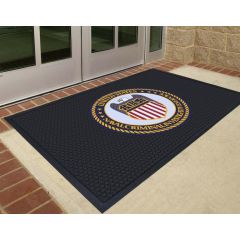
Super Scrape Rubber Logo Mats
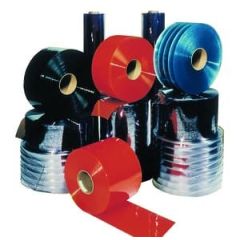
Strip Doors
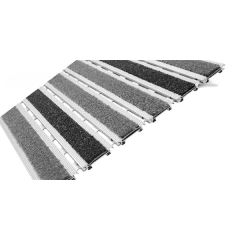
Perfec Clean 3/8" Rollup Mats - Aluminum Hinge
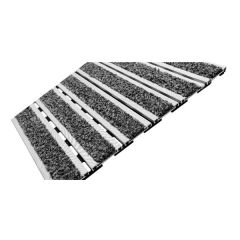
Perfec Clean 3/8" Rollup Mats - Rubber Hinge
Perfec Clean 3/4" Rollup Grate - Rubber Hinge
Perfec Clean 1-5/8" Grate
WP-70 Non-Skid Epoxy Coating