




More Information
| Manufacturer | Dimex |
|---|
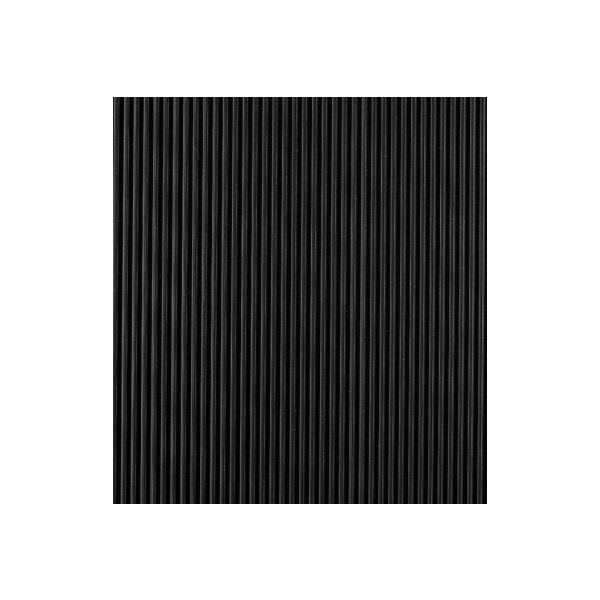
Corrugated Rubber Switchboard Matting (ASTM)
Product Number:
#0213
$1,606.00

Have a question? We're here to help!
Description
This is ASTM D178 Type I switchboard matting in a corrugated finish — an insulating rubber barrier for people working on or near energized electrical equipment. It's available in Class 2, Class 3, and Class 4, and the class you choose is the specification. Every roll is proof tested at the voltage specified for its class, across the entire surface.
What Switchboard Matting Does Before Current Finds a Path Through a Worker
Electricity needs a complete circuit. A worker standing on a concrete floor in front of an energized panel is a potential half of one — if their hand contacts something live, current travels through the body, down through the legs, and into the ground. The floor is what completes the path.
Switchboard matting interrupts that path. It's an insulating barrier between the worker and the floor, engineered so current cannot pass through it to reach ground. The person can still be exposed to a live conductor, but the circuit has nowhere to complete, and that difference is the entire point of the product.
This is worth stating plainly because it runs opposite to another kind of matting people confuse it with. Anti-static and ESD matting is deliberately conductive — it drains charge to ground on purpose. Dielectric matting blocks that path completely. Substituting one for the other, or grounding a mat that must never be grounded, removes the protection entirely.
The consequences here aren't measured in downtime or floor wear. Electrical incidents at switchgear and distribution equipment are the kind that end careers and lives. Insulating matting is one layer in an electrical safety program that also includes de-energizing where possible, proper protective equipment, and trained procedure. It is not a substitute for any of those.
Why Type I Rubber Construction, and Why Class Matters More Than Anything Else
ASTM D178 governs insulating matting for electrical work, and it sorts product two ways. Type identifies the compound the matting is made from. Class sets the voltage the material is tested and rated for. Both belong on a specification, and both have to match the job.
This is Type I — a vulcanized rubber compound. Rubber gives you a well-understood insulating material with the flexibility to lie flat, roll up, and stay workable across normal temperature ranges. It's the baseline construction in the standard, and for most indoor electrical rooms it's exactly what's called for.
Class is where your attention belongs. Class 2, Class 3, and Class 4 are three different products wearing the same name, and each carries its own proof test voltage and its own maximum recommended use voltage. Thickness increases with class, because insulating capacity comes from material. Picking a class because it was in stock rather than because it matched your equipment is the failure mode this whole category exists to prevent.
The testing detail that matters most: every roll is proof tested at its class voltage over the entire surface, not sampled. A dielectric barrier is only as good as its weakest square inch, and a spot check across a 75-foot roll would leave most of that surface unverified. Full-surface testing is the difference between a rated product and a plausible one.
Rolls are guaranteed single piece. That sounds like a shipping detail and isn't. A splice is a discontinuity in the insulating barrier, and discontinuities are where protection fails. A single-piece roll means the material in front of your panel is continuous end to end.
The corrugated surface runs as ridges across the mat, giving traction where workers stand for long periods and where the floor may pick up oil or moisture. Each piece is permanently marked at regular intervals with the manufacturer, the standard, the type, and the class — so what arrives on your dock can be verified on sight rather than taken on trust.
Where It Belongs, and Where It Doesn't
The applications are specific and they're all electrical: distribution boards, switchgear, sub-stations, transformers, generators, and electrical workbenches. The common factor is a person working at or near energized equipment who needs the floor beneath them to stop being a conductor.
Coverage is usually what people get wrong. The matting should extend across the full working area in front of the equipment, far enough that a worker can move, step back, or reach without ever having a foot off the mat. A strip narrower than the panel is a strip somebody will step past. It sits alongside the rest of our electrical and switchboard matting, which covers the other type and class combinations.
What it is not: an ESD or anti-static mat. It will not dissipate static charge, protect sensitive electronics, or work as a bench mat for soldering and component handling. Those products are conductive by design and belong to a completely different specification. If static control is what you need, this is the wrong product and it will not do that job.
It's also not an anti-fatigue mat, an entrance mat, or general floor protection — despite the corrugated surface offering traction. Specifying it for comfort or coverage means paying for dielectric performance where it isn't needed, and it can leave people assuming a work area is protected when the mat was never placed for that reason.
And it is not primary protection. Electrical safety work starts with de-energizing and verifying, then protective equipment and procedure. Insulating matting is a supplementary layer beneath all of that, not a reason to skip any of it.
Three Things to Check Before You Spec It
First, match the class to your actual working voltage. Find the real voltage at the equipment rather than assuming, then select the class rated at or above it with margin to spare. Class 2, 3, and 4 are all available here, and moving up a class costs far less than discovering mid-project that the mat under someone's feet was never rated for the panel in front of them.
Second, build inspection into your routine. Dielectric failure is invisible. A cut, a puncture, embedded metal debris, or chemical and oil contamination can compromise the insulating barrier while the mat still looks perfectly serviceable. Inspect regularly, replace anything damaged rather than working around it, and follow your facility's retest interval. A mat people trust and shouldn't is worse than no mat.
Third, size the coverage to the work, not to the equipment. Measure the area a worker actually occupies and moves through while working the panel, then choose a width that keeps them fully on the mat throughout. Cutting a roll into panel-length sections is normal practice. When it's a close call between two widths, take the wider one — the extra material is minimal across a full roll and it removes the most common coverage mistake.
Why Mats Inc.
We've been supplying industrial and commercial matting since 1964, and safety-rated electrical products are where getting the specification right matters more than anything else we sell. We'll ask what voltage you're working at and what the equipment is before we quote, because type and class aren't preferences — they're the whole product. If your application needs a class we don't have in front of you, we'd rather route you to it than sell you what's convenient.
| Product Type | Insulating (dielectric) switchboard matting |
| Standard | ANSI/ASTM D178, Type I |
| Classes Available | Class 2, Class 3, Class 4 |
| Material | High-quality vulcanized rubber compound |
| Surface | Corrugated |
| Color | Black |
| Class 2 Sizes | 24 inch, 36 inch, and 48 inch widths in 75 ft. rolls |
| Class 3 Sizes | 36 inch width in 75 ft. rolls |
| Class 4 Sizes | 36 inch and 48 inch widths in 30 ft. rolls |
| Class 2 Proof Test | 20,000 volts A.C., tested over the entire surface |
| Class 2 Max Use Voltage | 17,000 volts A.C. |
| Class 2 Dielectric Strength | 30,000 volts A.C. |
| Roll Guarantee | Single piece, full rolls only |
| Marking | Permanently marked with manufacturer, ASTM D178, type, and class |
| Recommended For | Distribution boards, switchgear, sub-stations, transformers, generators, electrical workbenches |
| Static Control | None — this is an insulator, not an ESD or anti-static product |
| Warranty | 1-year limited (Mats Inc.) |
Frequently Asked Questions
What do Type and Class mean on switchboard matting?
They're the two halves of the specification, and a quote that names only one isn't complete. Type identifies the compound the matting is manufactured from — this product is Type I, a vulcanized rubber compound. Class sets the voltage the material is tested and rated to handle.
Class is the one that changes what you're buying. This product is offered in Class 2, Class 3, and Class 4, and each has its own proof test voltage and its own maximum recommended use voltage, with thickness increasing as the class goes up. Two rolls that look identical on a dock can be rated for very different equipment. Always confirm the class against the voltage you're actually working at, not against what's convenient to order. — Dustin Thompson, Owner & CEO, Mats Inc.
How is it tested, and how do I know it's still protecting anyone a year from now?
Testing is the strongest thing about this product. Every roll is proof tested at the voltage specified for its class over the entire surface rather than sampled at intervals. A dielectric barrier is only as good as its weakest point, so full-surface testing is what separates a rated mat from one that's probably fine. Rolls are also guaranteed single piece, meaning no splice sits in the middle of your barrier. Class 2 material is proof tested at 20,000 volts A.C. with a maximum recommended use voltage of 17,000.
Ongoing, the honest answer is that you have to inspect it. Dielectric failure doesn't announce itself — a cut, a puncture, metal debris pressed into the surface, or oil and chemical contamination can compromise the insulation while the mat looks completely normal. Build inspection into your routine, follow your facility's retest interval, and replace damaged material instead of working around it. A mat people trust that no longer performs is more dangerous than bare floor, because bare floor doesn't create false confidence. — Dustin Thompson, Owner & CEO, Mats Inc.
Where should it be placed, and how much area does it need to cover?
It goes wherever people work at or near energized equipment — in front of distribution boards, switchgear, sub-stations, transformers, generators, and electrical workbenches. The mat's job is to break the path to ground beneath the worker, so it has to be under them the entire time they're exposed.
That's why coverage deserves real thought. Extend the matting across the full working area in front of the equipment, with enough margin that someone can shift their stance, step back, or reach sideways without a foot landing on bare floor. A strip narrower than the panel is a strip somebody will eventually step past, usually at the worst moment. And to be direct: this is supplementary protection. It sits underneath de-energizing, verification, protective equipment, and trained procedure — never in place of them. — Dustin Thompson, Owner & CEO, Mats Inc.
What sizes are available, and how do I work out what to order?
It depends on the class. Class 2 comes in 24, 36, and 48 inch widths in 75-foot rolls. Class 3 comes in 36 inch width in 75-foot rolls. Class 4 comes in 36 and 48 inch widths in 30-foot rolls — shorter because the material is thicker and heavier at that rating.
To work out quantity, go equipment by equipment. Measure the width of each panel or bench, then add margin on both sides so a worker never runs out of mat when they move. Total those lengths, and choose your width based on how far people stand back while working. Cutting a roll into panel-length sections is normal, so one roll usually serves several pieces of equipment. Send us your equipment list and the voltages, and we'll work through both the class and the quantity with you. — Jinna Hopson, Vice President of Marketing, Mats Inc.
What does it look like, and what's involved in handling it?
It's black with a corrugated surface — ridges running across the mat that give traction where people stand for long stretches or where the floor picks up oil and moisture. The look is straightforwardly industrial, which is right for the setting. Nobody is specifying switchboard matting for a lobby.
Handling is the practical thing to plan for. These rolls are heavy, and they get heavier as the class goes up, since higher classes mean thicker material. A full-width roll is genuinely a two-person job with equipment, so think about where it lands on the dock, how it gets to the electrical room, and where you'll cut it. Let it lie flat and relax before final placement, and cut with a sharp blade and a straightedge for clean, safe edges. — Jinna Hopson, Vice President of Marketing, Mats Inc.
Is this the same as an anti-static or ESD mat?
No, and this is the single most important thing to be clear about, because the two get confused constantly and the mistake runs in a dangerous direction. Anti-static and ESD matting is conductive or dissipative on purpose — it exists to give static charge a controlled path to ground so it doesn't damage sensitive electronics. It's designed to conduct.
Switchboard matting is the opposite. It's an insulator, engineered so electricity cannot pass through it to reach ground, which is exactly what protects a worker at a live panel. It offers no static control whatsoever and won't protect components on a bench. More seriously, treating it like an ESD product — grounding it, or swapping one in for the other — removes the protection it exists to provide. If you need static control, we carry proper ESD products and we'll point you at them. If you need shock protection at electrical equipment, this is the right category. They are not interchangeable. — Jinna Hopson, Vice President of Marketing, Mats Inc.
Written by Dustin Thompson, Owner & CEO, Mats Inc.
Reviews
Write Your Own Review
Related Products
Heritage Personalized Coir Door Mat
#775 Epoxy Flooring Adhesive
#560 Rubber Flooring Adhesive
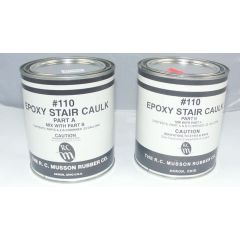
#110 Epoxy Nose Caulk
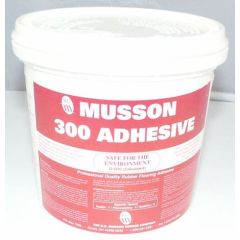
#300 Water Based Contact Adhesive
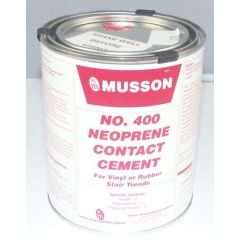
#400 Neoprene Contact Adhesive
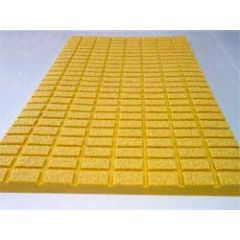
Rotary Table & Rig Floor Mats
Fore-Runner Mat
Safety Track Resilient Medium Non-Skid Tape
3M Vinyl Loop Wet Area Matting