




More Information
| Manufacturer | Musson Rubber Company |
|---|
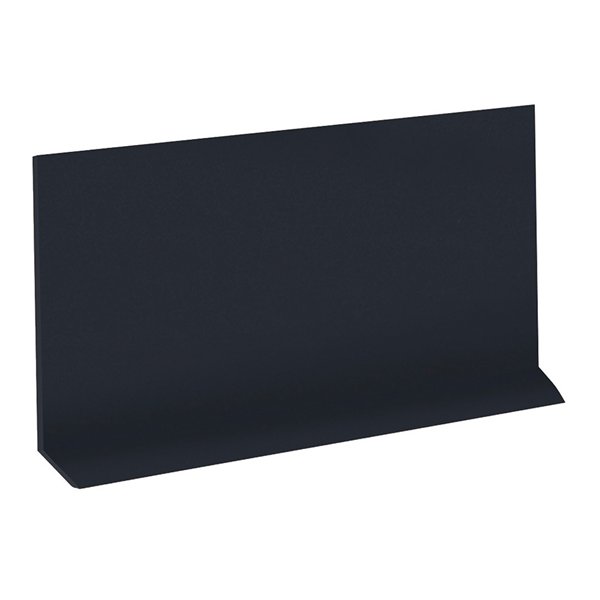
$38.00

Have a question? We're here to help!
Description
What a cove stair riser does before the back of the step becomes the problem
Put a rubber tread on a step and you solve the walking surface. What you create at the same time is a joint. The back edge of the tread meets a bare riser face at a square inside corner, and that corner is where mop water, grit, and floor finish collect. It is the hardest inch of a stairway to reach and the first place a stairwell starts to look neglected.
Stair risers close that joint. This one is molded with a cove at the bottom, so the vertical riser face curves into the horizontal step instead of meeting it at a right angle. A mop head or an autoscrubber pad follows that curve. Nothing packs into a corner that has been rounded out of existence.
The second job is the riser face itself. A riser takes toe strikes, cart wheels, and vacuum heads all day, and on a painted or bare concrete riser that shows up as chipping and scuff marks within a season. A rubber riser cover takes that abuse as a wear surface and keeps the stairway looking finished.
The third is fit. Bare riser faces are rarely as flat or as square as the drawings suggest. Covering the riser hides the variation, which is why installers reach for these to reduce the fussy cutting and scribing work at the rear of each step.
Why a molded cove, and why 1/8-inch rubber
The cove is 5/8 of an inch and it is molded into the piece, not formed on site. That matters because a coved base made by bending sheet material springs back and opens up over time, especially at the ends of a run. A molded cove holds its radius because the material was cured in that shape.
Height is 7 inches, which covers a standard commercial riser face, and the material trims in both directions. You can cut it down in height for a shorter riser and cut it to length for the step width, so an irregular stairway does not force a custom order.
Thickness is 1/8 of an inch. That is deliberate on a vertical surface: enough material to absorb scuffing and cart impact, thin enough that the riser does not stand proud of the tread nose above it or create a shadow line where the two meet. A thicker riser would look applied rather than built in.
Colors run the same marbleized and solid range as the rubber stair treads in this line, which is the reason the product exists as a matched component rather than a generic strip. A riser in the same color as the tread reads as one continuous stairway. A riser in a near-miss color reads as a repair.
Standard lengths run from 36 inches up to 108 inches, so most step widths are covered without piecing. Longer standard runs matter more on risers than on treads, because a visible seam halfway across a riser face sits at eye level for anyone climbing.
Where it belongs, and what it is not
This is a finishing component for commercial, institutional, and industrial stairways — schools, hospitals, office stair towers, plants, and multifamily buildings. It belongs anywhere rubber treads are going down and the stairway needs to look complete rather than patched, and anywhere the cleaning crew is the one who has to live with the result.
It is worth specifying at the same time as the stair treads it pairs with, not afterward, because the color match depends on ordering both from the same range and the lengths need to agree step by step.
What it is not: this is not a safety product. A riser is a vertical surface that nobody walks on, so it contributes nothing to traction and should never be counted toward slip resistance on a stairway. That job belongs entirely to the tread.
It is also not structural and not a repair for a failing riser. If the riser face is crumbling concrete or a split board, the covering will telegraph every defect underneath and will not bond reliably. Patch and level first. And on stairs with open risers, there is nothing here to cover.
Three Things to Check Before You Spec It
First, measure your actual riser height. Seven inches is the supplied height and it trims down, but it does not trim up. Measure the exposed riser face from the top of the lower tread to the underside of the tread above, on more than one step — older stairways commonly vary by a half inch between the bottom flight and the top, and a riser cut for the wrong dimension leaves a gap at the tread nose.
Second, match lengths to the treads step by step. Standard lengths run 36, 42, 48, 54, 60, 66, 72, 78, 84, 90, 96, 102, and 108 inches. Order risers on the same length schedule as the treads so each step gets one continuous piece. Piecing a riser is visible in a way that piecing a tread is not, because the seam sits vertically in the sightline of anyone on the stairs.
Third, settle the adhesive and the surface prep. These bond with an acrylic adhesive, a neoprene contact adhesive, or a water-based contact adhesive. The riser face has to be clean, dry, and sound — vertical surfaces are less forgiving than horizontal ones because gravity works against you during the tack-up, and any dust or loose paint will show as a bubble within days. Order the adhesive with the risers so nothing gets improvised on site.
Why Mats Inc.
Risers are the piece that gets remembered second. A crew orders treads, installs them, and only then works out that the back of every step now needs finishing and that the color range they wanted is a lead-time away. We quote treads and risers together as one stairway package with one color decision and one length schedule, because ordering them in two passes is how stairwells end up two shades off. Sixty years of commercial and institutional work is where that habit comes from.
| Material | Molded rubber |
|---|---|
| Height | 7" (trims down on site) |
| Thickness | 1/8" |
| Cove | 5/8" molded toe |
| Standard lengths | 36", 42", 48", 54", 60", 66", 72", 78", 84", 90", 96", 102", 108" |
| Colors | Standard marbleized and solid colors, matched to the rubber stair tread range |
| Field trimming | Trims to fit in both height and length |
| Adhesive | Acrylic adhesive, #400 neoprene contact adhesive, or #300 water-based contact adhesive |
| Warranty | 1-year limited (Mats Inc.) |
Frequently Asked Questions
What exactly is the cove, and why does it matter?
Answered by Dustin Thompson, Owner & CEO, Mats Inc.
The cove is a 5/8-inch curve molded into the bottom edge of the riser. Instead of the riser face meeting the step at a square inside corner, it sweeps into it. That corner is the single hardest spot to clean on any stairway, and on a stairwell that gets mopped every night it is where dirt and floor finish build up into a dark line.
The part people miss is that it is molded, not bent. Coved bases formed from flat stock on site want to spring back open, and you see that as a gap at the corner six months later. This one holds its shape because it was cured that way. It also cuts down the fitting work at the back of each step, which on a long flight is real labor.
How well does it hold up on a busy stairway?
Answered by Dustin Thompson, Owner & CEO, Mats Inc.
A riser has an easier life than a tread — nobody stands on it. What it does take is toe strikes on the way up, cart and hand-truck wheels, and a vacuum or scrubber head run along its base every night. At 1/8 inch of rubber, there is enough material to absorb that without denting through to the substrate the way paint or a thin veneer does.
What fails on risers is almost always the bond, not the rubber. Vertical surfaces do not get the benefit of gravity or foot traffic pressing the material down while the adhesive grabs, so anything left on the riser face — dust, chalky old paint, damp concrete — turns into a bubble or a lifted top edge. Clean, dry, sound substrate and the right adhesive is the whole game. Warranty is 1-year limited.
What do I install these with, and what surfaces work?
Answered by Dustin Thompson, Owner & CEO, Mats Inc.
Acrylic adhesive, #400 neoprene contact adhesive, or #300 water-based contact adhesive all work. Which one you reach for usually comes down to the substrate and how fast the crew needs to move: contact adhesives grab immediately, which is helpful on a vertical face, while acrylic gives you a little more working time to position a long piece.
Concrete, wood, metal, and masonry riser faces all take it, provided they are prepared. Glossy paint needs scuffing. Old adhesive residue needs scraping. Fresh concrete needs to be fully cured and dry, and that is the one people rush — a riser bonded to a slab that is still giving off moisture will release at the top edge and there is no fixing it without pulling the piece.
My riser heights are not consistent — can these be trimmed?
Answered by Jinna Hopson, Vice President of Marketing, Mats Inc.
Yes, in both directions, and it is one of the more useful things about them. They come 7 inches high and trim down cleanly, and they cut to length for the step width. So a stairway where the bottom riser is a half inch taller than the rest — which is extremely common in older buildings — does not turn into a custom order.
The one thing to be careful about is that they trim down, not up. Measure the tallest exposed riser face in the flight before you order, not the average, and confirm it comes in under 7 inches. For length, standard runs go from 36 inches all the way to 108 inches, so pick the next size up from your widest step and cut back rather than trying to piece two together.
Will the color actually match my stair treads?
Answered by Jinna Hopson, Vice President of Marketing, Mats Inc.
They are made in the same standard marbleized and solid color range as the rubber stair treads in this line, which is the entire reason to use them rather than a generic wall base. A riser in the exact tread color makes the stairway read as one finished assembly. A riser that is close but not exact is more noticeable than no riser at all, because the eye catches the seam.
Two practical notes. Order treads and risers together so both come from the same range and, ideally, the same production window — rubber color can shift slightly between runs, and that shift is most visible at the joint where tread meets riser. And make your final color decision from a physical sample rather than a screen, since marbleized colors in particular photograph differently than they look installed.
Do I need risers, or can I just do the treads?
Answered by Jinna Hopson, Vice President of Marketing, Mats Inc.
You can absolutely do treads alone, and plenty of facilities do. The question is what the riser face looks like now and who has to maintain it. If it is sound painted concrete in a back-of-house stair tower, treads alone may be fine. If it is chipped, patched, or a color that will clash with new treads, the stairway will look half-finished the day it is done.
The maintenance argument usually settles it. Without a riser, you still have that square corner at the back of every step collecting grime, and your custodial team is the one chasing it with a mop every night. If the stairway is somewhere the public sees — a lobby stair, a school corridor, a hospital wing — I would treat risers as part of the job rather than an add-on, and price the whole stairway at once.
Written by Jinna Hopson, Vice President of Marketing, Mats Inc.
Reviews
Write Your Own Review
Related Products
Heritage Personalized Coir Door Mat
#775 Epoxy Flooring Adhesive
#560 Rubber Flooring Adhesive
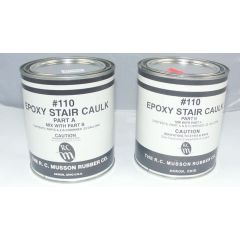
#110 Epoxy Nose Caulk
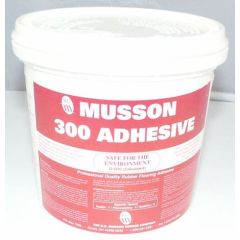
#300 Water Based Contact Adhesive
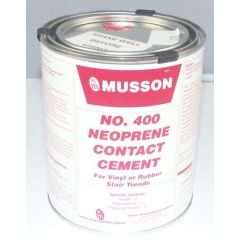
#400 Neoprene Contact Adhesive
Rotary Table & Rig Floor Mats
Fore-Runner Mat
Safety Track Resilient Medium Non-Skid Tape
3M Vinyl Loop Wet Area Matting