




More Information
| Manufacturer | Musson Rubber Company |
|---|
$21.00

Have a question? We're here to help!
Description
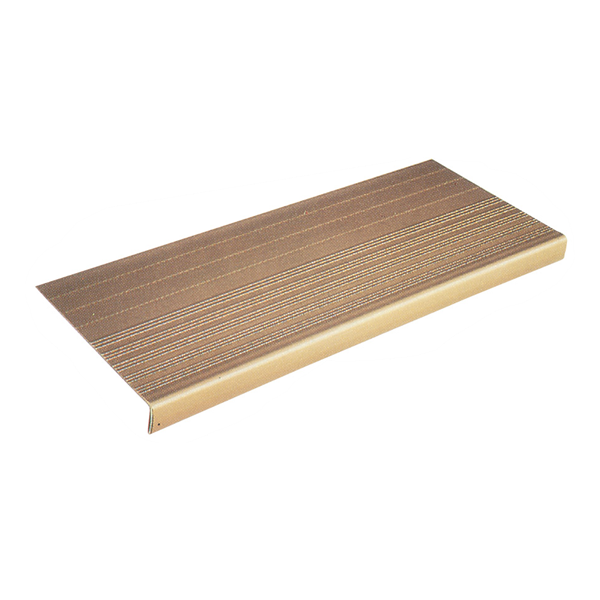
On a wood plank step, the front edge is the first thing to go. It takes the impact of every footfall, it splinters, and once it rounds over there is nothing left for a shoe to catch. Light duty vinyl stair treads with an extra long nose wrap that edge completely, putting a replaceable surface over the exact inch and a half where the damage starts.
What Light Duty Vinyl Stair Treads Do Before a Plank Step Wears Through at the Edge
A stair tread cover works as a wear surface between traffic and the step. It absorbs the grit tracked in on shoes, the daily cleaning, and the constant abrasion on the walking line, so the wood or concrete underneath stays intact. When the tread eventually wears, one piece comes off one step and a new one goes down.
The difference on this tread is how far that protection reaches. A standard nose covers the top edge and stops. An extra long nose continues down the front face of the step, which matters on a 2" x 12" plank stair where the exposed front edge is bare lumber. Leave it uncovered and the step keeps degrading underneath a tread that looks fine from above.
A worn or rounded nosing is the most common physical cause of stair falls, because a foot landing on a degraded edge gets no defined stopping point. Full-coverage non slip stair treads hold a defined edge and a consistent ribbed walking surface from the front of the step to the back.
Why a 1-3/4" Extra Long Nose, and Why This Tread
The nose measures 1-3/4", which is a half inch deeper than the standard 1-1/4" nose on most vinyl stair tread covers. That half inch is the entire design argument. It is enough to wrap the front face of a nominal 2" x 12" plank step or a molded concrete step, so the step edge is covered rather than merely capped.
The tread body is 1/8" thick with 12" of depth, and carries heavier thickness at the front wear area where the traffic concentrates. This is the light traffic gauge in the vinyl range. It is built for the step counts a residential or multi-family stairwell actually sees, not for a transit stair moving thousands of people a day.
The surface is a flat rib design. Ribs give the sole of a shoe something to engage against and keep tracked water from spreading into an even film across the step, while the flat profile means a mop or a vacuum clears the whole surface without working dirt into deep channels.
The material is first quality homogeneous vinyl with color running through the full thickness. There is no printed wear layer and no different-colored substrate underneath, so the tread does not fade to a second shade in the traffic lane. It contains no asbestos fiber and meets Fed. Spec. RR-T-650E, Type B.
Where It Belongs — and Where It Doesn't
This tread earns its place in apartment buildings, multi-family housing, senior and supportive housing, condominium stairwells, basement and secondary stairs, and any interior flight built on plank steps or molded concrete where the front edge needs covering. Within the interior stair tread range, it is the specialist for step-edge coverage rather than for traffic volume.
It is specified for interior use only. Exterior steps bring freeze-thaw cycling that works the bond loose at the nose, UV exposure that degrades vinyl, and water that migrates underneath and stays there. At 1/8" the margin for that kind of abuse is thin, and the usual outcome is a lifted nose after one winter — which turns a safety product into a trip hazard.
It is also the wrong gauge for heavy commercial traffic. A school egress stair, a hospital corridor stair, or a transit flight needs a thicker tread with more material at the wear area. And the nose is square only, so a bullnose or rounded step edge needs a curved-nose tread instead — a square nose will not seat against a rounded profile.
Three Things to Check Before You Spec It
This tread is chosen for a specific step geometry, so the checks are different from a general-purpose tread. Three things settled before the order goes in will keep the install clean.
First, measure the front face of your step, not just the top. If the exposed edge is around 1-1/2" — a nominal 2" x 12" plank or a molded concrete step — the 1-3/4" nose is doing exactly what it was designed to do. If the edge is deeper than that, the nose will stop short and leave a visible band of bare step below the tread.
Second, match the gauge to the actual traffic. Count the people using the flight on a normal day, not the building's total occupancy. At 1/8" this tread suits residential and multi-family step counts. If the same stair carries deliveries, carts, or continuous commercial traffic, step up to a heavier gauge before the nose becomes a maintenance item.
Third, decide the installation method and prepare the substrate. The manufacturer documents two approaches for this tread: a contact adhesive applied to the tread back, the nose back, and the step, or a double-sided mounting tape system. Either way the surface has to be clean, sound, and dry first. Old adhesive residue and slab moisture both release the nose before anything else fails.
Why Mats Inc.
Mats Inc. has specified commercial and residential stair treads since 1964, and nose geometry is the detail most often gotten wrong on a plank stair. We will work through your step profile, the front edge measurement, and the flight count before the order goes in, and we will tell you plainly when a heavier gauge is the better call for your traffic. If the stair has an odd measurement, send it over and we will spec around it.
| Material | First quality homogeneous vinyl, color throughout thickness |
|---|---|
| Surface design | Flat rib |
| Thickness | 1/8"; heavier thickness at the front wear area |
| Depth | 12" |
| Nose | 1-3/4" extra long square nose |
| Step compatibility | 2" x 12" plank step or molded concrete step |
| Lengths | 18", 24", 30", 36", 42", 48", 54", 60", 72", 84", 96" |
| Colors | Brown, Sand, Gray, Black |
| Composition | Contains no asbestos fiber |
| Standard | Meets Fed. Spec. RR-T-650E, Type B |
| Application | Interior use |
| Installation | Contact adhesive or double-sided mounting tape |
| Warranty | 1-year limited (Mats Inc.) |
Frequently Asked Questions
What does an "extra long nose" actually cover that a standard nose doesn't?
Answered by Dustin Thompson, Owner & CEO
The nose on this tread is 1-3/4" deep. Most vinyl stair tread covers use a 1-1/4" nose. That half inch is the difference between capping the top edge of a step and wrapping down the front face of it.
On a stair built from nominal 2" x 12" planks, the exposed front edge is roughly an inch and a half of bare lumber. A 1-1/4" nose stops short of the bottom of that edge, so the most vulnerable part of the step stays exposed to kicks, cart wheels, and vacuum heads. The extra long nose covers it. On a molded concrete step with a similar edge depth, the same geometry applies.
How much traffic will a 1/8" tread actually take?
Answered by Dustin Thompson, Owner & CEO
This is the light traffic gauge, and I would size it by daily footfalls on the specific flight rather than by building type. Apartment and multi-family stairwells, condominium stairs, senior housing, and basement or secondary stairs are all comfortable applications. The tread also carries heavier thickness at the front wear area, so the material is concentrated where abrasion actually happens.
Where I would not use it is a stair that carries commercial volume — school egress, hospital corridors, transit stairs, or any flight that also moves carts and deliveries. Those need a thicker gauge. Specifying a light duty tread into a heavy traffic stair does not fail dramatically; it just wears out years earlier than it should, and you pay for the install twice.
Can these go on outdoor steps or over an existing worn tread?
Answered by Dustin Thompson, Owner & CEO
Not outdoors. These are specified for interior use. Exterior steps add freeze-thaw movement, UV exposure, and water sitting under the tread, and at 1/8" there is very little margin for that. The nose lifts first, usually within a season, and a lifted nose is worse than the worn step you started with.
Installing over an existing tread is a different question, and the answer is usually no. Old treads rarely sit flat, the adhesive underneath has often already failed in places, and bonding new material to something that is already moving means the new tread inherits the old problem. Pull the old tread, clean the substrate back to a sound surface, then install.
What lengths are available, and how do I handle stairs that vary in width?
Answered by Jinna Hopson, Vice President of Marketing
There are eleven stock lengths: 18", 24", 30", 36", 42", 48", 54", 60", 72", 84", and 96", all at a fixed 12" depth. If your stair width falls between two sizes, order the next length up and trim on site. At 1/8" this vinyl cuts easily with a straightedge and a sharp blade, which is one of the practical advantages of the lighter gauge.
Measure at least three steps — top, middle, and bottom — before ordering. Older residential stairwells commonly drift a quarter inch or more across a flight, and if you order to a single measurement the last few treads come up short. Order to the widest measurement and trim down. Short is the one error you cannot fix on site.
Which color holds up best in a stairwell residents use every day?
Answered by Jinna Hopson, Vice President of Marketing
Four standard colors: Brown, Sand, Gray, and Black. In residential and multi-family buildings, Brown and Sand tend to look the most settled — they read as a finished stair rather than an institutional one, and they sit close enough to what gets tracked in that grit is not obvious between cleanings.
Gray is the most forgiving in buildings with heavy dust or construction traffic. Black looks sharp against a painted riser but shows salt residue clearly in winter and asks for a tighter cleaning schedule. The flat rib surface helps whichever you pick — there are no deep channels for dirt to settle into, so a mop actually resets the tread. And since the color runs through the material, none of these shift shade as the surface wears.
Can I use different tread gauges in the same building?
Answered by Jinna Hopson, Vice President of Marketing
You can, and in a building with a busy main stair and quiet secondary stairs it is often the sensible call. The thing to know is that the nose geometry differs between gauges. This tread has a 1-3/4" nose; heavier vinyl treads typically use 1-1/4". Those two do not look identical on the step edge, and someone walking between the two stairs will notice the line if the flights are visible to each other.
The practical rule is to keep one gauge per stairwell rather than one gauge per building, and to keep the color consistent across all of them. That way each flight reads as deliberate. If two stairs share a landing or a lobby sightline, match them. Send us the layout and we will map which flight gets which gauge.
Written by Jinna Hopson, Vice President of Marketing, Mats Inc.
Reviews
Write Your Own Review
Related Products
Super Scrape Rubber Mats
Safety Track Non-Skid Tape - Coarse

Smooth Marbleized Vinyl Switchboard Matting (Mil Spec)
Super Scrape Rubber Logo Mats
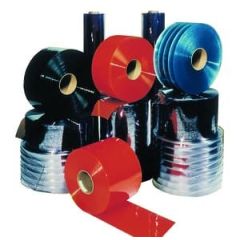
Strip Doors
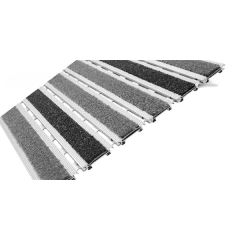
Perfec Clean 3/8" Rollup Mats - Aluminum Hinge
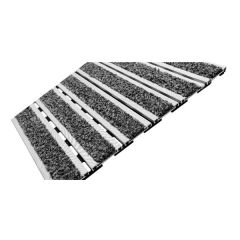
Perfec Clean 3/8" Rollup Mats - Rubber Hinge
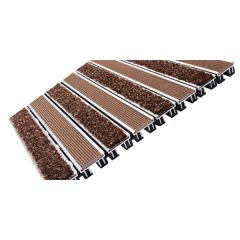
Perfec Clean 3/4" Rollup Grate - Rubber Hinge
Perfec Clean 1-5/8" Grate
WP-70 Non-Skid Epoxy Coating