




More Information
| Manufacturer | Musson Rubber Company |
|---|
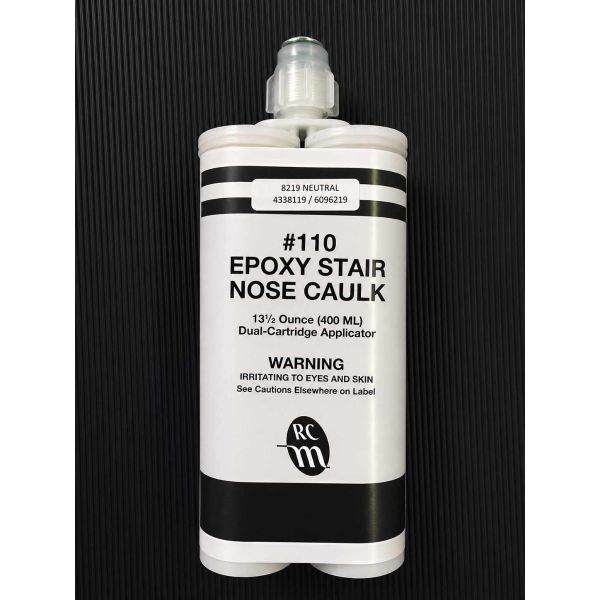
$77.00

Have a question? We're here to help!
Description
Epoxy stair nose caulk fills the hollow space under the nose of a rubber or vinyl stair tread, so the tread sits on solid support instead of air. The #110 Epoxy Nose Caulk is a two-part epoxy that sets hard. It is made for worn, rounded, or chipped step edges, and it also works as an adhesive for stair nosings. It is low odor, solvent-free, and non-flammable, so it suits occupied buildings.
What Epoxy Stair Nose Caulk Does Before a Tread Nose Splits
A stair tread nose is molded to a set curve. The step under it often is not. Years of foot traffic round off concrete, wear down metal, and chip wood. That leaves a gap between the inside of the tread nose and the edge of the step.
Every footstep on that gap pushes the nose down and lets it spring back. Over time the tread flexes, dents, pulls away from the step, and wears through at the edge. A loose or cracked nose at the edge of a step is exactly where people catch a heel. Filling the void with a hard-setting nose filler stops the flexing before it starts.
Why a Two-Part Epoxy, and Why This One
The #110 comes as two parts: a beige thick liquid and a dark grey thick paste. They stay separate in a 13.5 oz dual cartridge and mix inside the nozzle as you squeeze. Because it cures hard rather than staying rubbery, it gives the tread nose firm support that will not compress under traffic.
It goes on with a two-part caulking gun made for dual cartridges, and a mixing nozzle comes with the cartridge. There is no flash time, so the tread goes on right away. You then have about 60 minutes of working time to set and roll the tread. The same epoxy can bond stair nosings: run a bead on the back and spread it with a 1/8" sawtooth spreader.
It is also built with indoor air in mind. VOCs are 12 grams per liter or less. The product holds FloorScore certification, meets California CDPH V1.2 (Section 01350) and South Coast AQMD Rule 1168, and can contribute toward LEED v4 and v4.1 credits. A Health Product Declaration is available.
It is also made in the USA and qualifies under Build America, Buy America and the FAR Buy American construction-materials clause. That matters on schools, transit, and other publicly funded jobs where the spec calls for domestic materials.
Where It Belongs and What It Is Not
This is an indoor product. It is approved over properly prepared concrete (in place at least 45 days), APA-rated plywood, Portland cement patches and underlayments, primed gypsum underlayments, steel, aluminum, radiant-heat floors running no hotter than 85°F, and installed moisture mitigation systems. Worn metal, wood, and existing approved flooring are the steps where it earns its keep.
The deciding factor is the gap at the nose. If the space between the tread nose and the step is more than 1/4", nose filler is required. If the gap is 1/2" or more, the step needs to be built back up another way first. Epoxy alone should not be asked to fill that much.
Many newer buildings use metal pan stairs filled with concrete, with a nose curve of 1/2" or less per ADA guidelines. On those steps, a well-fitted tread that sits tight to the step does not need nose filler, though using it is still acceptable. The #110 is also not a moisture barrier and is not rated for outdoor stairs.
It works alongside the contact adhesives in our stair tread adhesives lineup. The nose filler supports the curved edge, while a contact adhesive bonds the flat of the tread to the step.
Three Things to Check Before You Spec It
First, measure the nose gap on several steps. Set a tread in place and check the space between its curved nose and the step edge. Under 1/4" on a tight-fitting tread, filler is optional. Over 1/4", plan on it. At 1/2" or more, repair the step before the treads go in.
Second, check the room and the slab. The stairwell should be closed in, with heat and air running at 60°F to 85°F for 48 hours before, during, and after the job, and humidity between 40% and 60%. Concrete should test within 90% relative humidity (ASTM F2170), 6 lbs per 1,000 sq. ft. per 24 hours (F1869), and a pH of 7 to 10.
Third, plan cartridges and downtime together. One cartridge runs about 50 linear feet with a 1/4" bead or about 25 linear feet with a 1/2" bead. Light foot traffic can return after 24 hours, heavy traffic after 48 hours, and cleaning machines after 72 hours. Stage the stairwell closure around those windows.
Why Mats Inc.
Mats Inc. has been in business since 1964, and stair treads, risers, and the adhesives that hold them are a regular part of what we supply. We can help you sort out whether your steps need nose filler at all, which tread nose profile fits your stairs, and how many cartridges to order for the run. Call 713-748-0200 or email mats@thematsinc.com and we will help you match the full stair package, shipped across the lower 48 and Canada.
| #110 Epoxy Nose Caulk Specifications | |
|---|---|
| Type | Two-part wet-set epoxy nose filler and nosing adhesive |
| Package | 13.5 oz dual cartridge; mixing nozzle provided; two-part dual-cartridge gun required |
| Color | Part A beige thick liquid; Part B dark grey thick paste |
| Cured set | Hard-set |
| Coverage per cartridge | About 50 lin. ft. at 1/4" bead; about 25 lin. ft. at 1/2" bead |
| Flash time / working time | None (install immediately) / 60 minutes |
| Return to service | Light traffic 24 hrs; heavy traffic 48 hrs; maintenance 72 hrs; full cure about 30 days |
| Moisture limits | 90% RH (ASTM F2170); 6 lbs/1,000 sq. ft./24 hrs (ASTM F1869); pH 7–10 (ASTM F710); not a moisture mitigation product |
| Service and storage temperature | 60°F – 85°F |
| Freeze-thaw stability | Up to 5 cycles, not below 0°F (ASTM D7149) |
| Shelf life | 2 years from manufacture date, unopened |
| VOC | 12.0 g/L or less (SCAQMD Rule 1168) |
| Certifications | FloorScore; CDPH V1.2 (CA Section 01350); contributes to LEED v4/4.1; HPD available |
| Origin | Made in USA; qualifies under BABAA and FAR 52.225-9 |
| Use | Indoor only |
Frequently Asked Questions
Do I need epoxy nose caulk for every stair tread installation?
Answered by Dustin Thompson, Owner & CEO
No. It depends on the gap between the tread nose and the step. On newer metal pan stairs filled with concrete, with a nose curve of 1/2" or less, a tread that fits tight usually needs no filler.
On worn metal, wood, or older flooring, check the gap. More than 1/4" means nose filler is required. At 1/2" or more, the step should be rebuilt first. Using filler on any install is acceptable if you want the extra support.
What tools do I need, and how is it applied?
Answered by Dustin Thompson, Owner & CEO
You need a two-part caulking gun built for dual cartridges. The mixing nozzle is provided and blends both parts as the epoxy comes out. Squeeze out and discard the first 5 to 6 inches from a fresh nozzle so the mix is even, then run a bead along the step nose and set the tread.
Use a fresh nozzle at the start of each day. To bond a stair nosing, run a bead on its back and spread it with a 1/8" sawtooth spreader before setting it.
How many cartridges do I need for my stairs?
Answered by Jinna Hopson, Vice President of Marketing
Start with the total width of all your step noses in linear feet. One cartridge covers about 50 linear feet with a 1/4" bead, or about 25 linear feet with a 1/2" bead. On 4-foot-wide steps, that works out to roughly 12 steps per cartridge with the smaller bead, or about 6 with the larger one.
Worn steps take more filler than the averages suggest, so order one extra cartridge for a long run.
How soon can people use the stairs after installation?
Answered by Dustin Thompson, Owner & CEO
Light foot traffic can return after 24 hours. Wait 48 hours for heavy traffic and 72 hours before scrubbing or running cleaning machines on the stairs. The epoxy reaches full cure in about 30 days. On a stairwell that cannot close for a full day, plan the job in sections.
How long does it last on the shelf, and how should I store it?
Answered by Dustin Thompson, Owner & CEO
Unopened cartridges last 2 years from the manufacture date when stored between 60°F and 85°F. The date code is printed under the UPC on the carton and on a white sticker on the cartridge. Skip the first letter and read the next six digits as year, month, and day. For example, 210201 means February 1, 2021.
It handles up to 5 freeze-thaw cycles in shipping, as long as it does not drop below 0°F. Bring it back to room temperature before use.
Will the epoxy show or stain my stairs?
Answered by Jinna Hopson, Vice President of Marketing
Once the tread is set, the filler sits hidden under the nose. The risk is squeeze-out. Dried epoxy can permanently discolor the tread surface, so wipe any excess while it is still wet with warm soapy water or denatured alcohol.
Avoid putting mineral spirits or other solvents straight on the flooring. If you do use them, use them sparingly and rinse with a neutral cleaner and clean water.
By Dustin Thompson, Owner & CEO, Mats Inc.
Reviews
Write Your Own Review
Related Products
Super Scrape Rubber Mats
Safety Track Non-Skid Tape - Coarse

Smooth Marbleized Vinyl Switchboard Matting (Mil Spec)
Super Scrape Rubber Logo Mats
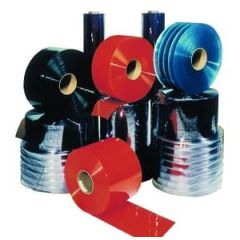
Strip Doors
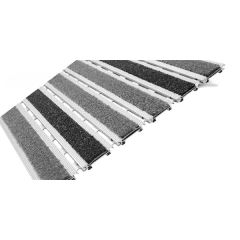
Perfec Clean 3/8" Rollup Mats - Aluminum Hinge
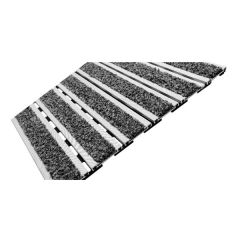
Perfec Clean 3/8" Rollup Mats - Rubber Hinge
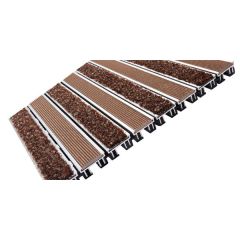
Perfec Clean 3/4" Rollup Grate - Rubber Hinge
Perfec Clean 1-5/8" Grate
WP-70 Non-Skid Epoxy Coating