




More Information
| Manufacturer | Portico Systems |
|---|
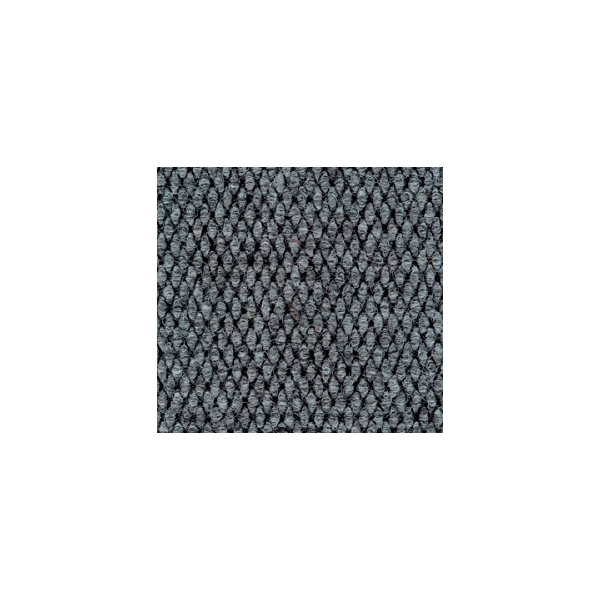
$205.00

Have a question? We're here to help!
Description
Berber Carpet Tile is a dense, needlepunched tile built for the areas most carpet gives up on — entryways, wet zones and floors that carry traffic all day. It is a 54 ounce all-weather construction in solution-dyed polypropylene, and it comes in 21 colors, so a tile chosen for how it performs does not have to look like a utility product.
It is also unusually flexible about where it goes. The same tile works at a college entrance, down an office corridor and across a retail floor, which is rarer than it sounds in a category where most products are built for one job.
What a Wet-Area Tile Does Before the Damp Zone Behind Your Door Gives Out
Most buildings plan for moisture at exactly one point: the door. An entrance mat goes down, and everything past it gets treated as dry floor. On a rainy Tuesday that assumption falls apart within about twenty feet.
Water travels further than people expect. Umbrellas drip, coats drip, and shoes stay damp well past whatever walk-off surface they crossed. The zone just beyond the entrance stays wet for hours in bad weather, and it is usually specified as though it never gets damp at all.
Carpet that stays damp does not simply dry and carry on. Persistent moisture keeps the surface matted, holds soil in place rather than letting it release, and works its way into the structure where it eventually causes odor and adhesion problems.
Specifying an all-weather tile through that transitional zone closes the gap. You get a surface that handles being wet as a normal condition rather than an emergency, and the dry interior floor beyond it stops absorbing damage it was never built for.
Why a Needlepunched Berber Construction, and Why This One
This is not a tufted carpet. The fibers are mechanically entangled into a dense non-woven fabric rather than stitched into a backing as loops, and the berber look comes from a hobnail surface pattern pressed into that fabric. It is closer in construction to a commercial entrance textile than to an office carpet.
That distinction is the whole reason it survives a wet doorway. There is no tufted yarn to be pulled, so nothing can snag and run. A caster wheel, a dragged table leg or a dolly crossing the floor meets a continuous fabric rather than individual loops sitting proud of a backing.
The fiber does the moisture work. It is 100 percent solution-dyed polypropylene, which absorbs almost no water — moisture sits at the surface and releases rather than wicking into the structure. Solution dyeing puts the color into the fiber itself, and the fiber is UV stabilized, so a floor in direct sun through entrance glazing holds its color instead of fading along the bright edge.
The weights are what separate this from a general-purpose tile. Pile weight is 54 ounces per square yard against a 169 ounce total, at a 0.25 inch pile within a 0.47 inch total height. That is a low, extremely dense surface rather than a tall soft one, which is exactly what you want where wet shoes land and where wheels cross.
Color is where it stops behaving like a durability product. Twenty-one colors are stocked, spanning warm neutrals like coir, natural beige, taupe and sterling, deeper tones in chocolate, walnut, teak and black shadow, and genuine saturated options — cardinal red, garnet, azure, midnight blue, verde and hunter green, loden, rosewood and autumn.
Where It Belongs, and Where It Is Not the Right Tile
Put it in the transitional zones first. The stretch of floor between an entrance mat and the dry interior, vestibule floors, corridors that lead in from exterior doors, and any area where wet weather regularly reaches the carpet. That is where the specification pays for itself.
Beyond that it is genuinely versatile. Office environments, airports, conference rooms, lobbies, libraries, retail and department stores, resorts, restaurant entryways and spas all use it as a general-purpose floor, not only in the wet spots. The same material is also the most widely used logo mat substrate in the range, which is why an entrance mat and the floor behind it can match exactly.
What it does not do is scrape. Pulling grit off a shoe and holding standing water in a recessed border are jobs for a rubber scraper grid or a drainage system, and no textile does them. Think of this as the resilient floor working immediately behind that hardware, which is how the full range of carpet tiles is organized.
Two constraints are worth settling early. It is an indoor product rated for zones two and three, not the exposed threshold itself. And it is not recommended over in-floor heating, because the insulation value of the tile works against the system underneath.
Three Things to Check Before You Spec It
First, trace where wet weather actually reaches. Walk the building on a rainy day rather than estimating from a plan. The damp zone is almost always larger than people assume, and knowing its real extent tells you how far this tile should run before a standard interior tile takes over.
Second, check your transitions and confirm the flame rating against your specification. At 0.47 inches total height this sits taller than most interior tile, so any threshold where it meets a thinner floor needs a transition planned rather than improvised. The radiant panel rating is Class II, so if your project calls for Class I in corridors or exit paths, confirm that before you commit.
Third, plan the layout and the quantities together. Tiles run 19.69 inches square and ship 12 to a box covering 32.5 square feet. Alternate tiles are turned 90 degrees to a checker pattern with an arrow on the back marking pile direction, so order five to ten percent above coverage in the same run, store it flat and dry, and lay only tiles carrying the same batch number.
Why Mats Inc.
Moisture is the failure nobody specifies for, because the floor looks fine the day it goes in and the problem only shows up in bad weather eight months later. We have been putting floors into commercial buildings since 1964, and on this product the question we ask is where your doors are and how far the wet gets past them. Tell us that and the boundary between this tile and your interior floor draws itself.
| Tile size | 19.69 in. x 19.69 in. (±2%) |
| Tiles per box | 12 |
| Coverage per box | 32.5 sq. ft. |
| Total height | 0.47 in. (±7.5%) |
| Pile height | 0.25 in. (±0.5 mm) |
| Colorways | 21: Cardinal Red, Garnet, Coir/Natural, Natural Beige, Loden, Taupe, Azure, Steel Blue, Midnight Blue, Prism, Verde Green, Hunter Green, Zinc, Autumn, Rosewood, Chocolate, Walnut, Teak, Sterling, Black Shadow, Gris/Charcoal |
| Manufacturing process | Non-woven, needlepunched |
| Surface aspect | Hobnail (berber) pattern |
| Fiber | 100% solution-dyed, UV-stabilized polypropylene |
| Backing | Premium eco bitumen |
| Pile weight | 54 oz/sy (±7.5%) |
| Total weight | 169 oz/sy (±7.5%) |
| Application | Indoor only; zones 2–3 |
| Indoor air quality | CRI Green Label Plus certified |
| Dimensional stability | Pass (EN 986) |
| Sound insulation | ≥24 dB (ISO 10140-1:2010) |
| Thermal retention | 0.13 m·K/W, pass (ISO 11092) |
| Electrostatic propensity | >2 kV (EN 1815) |
| Electrical resistivity | Pass at RH ≥40% (IBM / ICL) |
| Radiant panel | Class II (ASTM E648) |
| Smoke density | Pass (ASTM E662) |
| Surface flammability | Pass (FF 1-70 / ASTM D2859) |
| Color fastness | Light 5; water 5; shampoo 5; rubbing 4 dry, 3–4 wet (ISO 105) |
| LEED-NC | MR Credit 4; IEQ Credits 4.1, 4.3, 5 |
| Warranty | 1-year limited (Mats Inc.); professional installation required for coverage |
Frequently Asked Questions
What makes Berber different from other commercial carpet tiles?
Answered by Dustin Thompson, Owner & CEO
It is made a different way. Most commercial tile is tufted, with yarn stitched through a backing and left as loops or sheared into a cut pile. This one is needlepunched — the fibers are mechanically entangled into a single dense fabric, and the berber look comes from a hobnail pattern pressed into that surface rather than from individual loops.
The practical difference shows up under abuse. There is no tufted yarn to catch, so nothing can be pulled or run, which matters where dollies, casters and dragged furniture cross the floor daily. At 54 ounces of pile weight it is also a considerably denser build than a general-purpose office tile, and the textured surface scatters light so footprints and tracked soil break up across the pattern.
How does it handle areas that get wet?
Answered by Dustin Thompson, Owner & CEO
The fiber is the answer. It is 100 percent polypropylene, which absorbs almost no water, so moisture stays at the surface and releases rather than wicking down into the structure and sitting there. That is what the all-weather description refers to, and it is the reason this holds up in a vestibule that gets soaked every time it rains.
It is worth being clear about the limits. This is a moisture-tolerant floor covering, not a drainage product and not an outdoor surface — it is rated for indoor use. Standing water or a permanently saturated area needs a drainage construction with somewhere for the water to actually go.
How long does it last, and how much should we order?
Answered by Dustin Thompson, Owner & CEO
Commercial carpet tile plans out at ten to fifteen years in light-use rooms and seven to ten across busier floors, with entrance-adjacent zones turning over faster than anything else in a building. A 54 ounce needlepunched construction is one of the better builds for reaching the top of whichever band applies.
Boxes hold 12 tiles and cover 32.5 square feet, so take your area, add for perimeter cuts, then add five to ten percent as attic stock ordered in the same run and stored flat and dry. In a wet zone that reserve matters more than usual, since those tiles are the most likely to need replacing individually. Berber Carpet Tile carries a 1-year limited warranty from Mats Inc., and warranty coverage on this line depends on professional installation.
What colors are available?
Answered by Jinna Hopson, Vice President of Marketing
Twenty-one, which is a remarkable range for a tile chosen mainly on performance. The neutrals run from coir and natural beige through taupe, sterling, zinc and gris to black shadow. The warm tones cover chocolate, walnut, teak, rosewood and autumn. And there are real colors in here too — cardinal red, garnet, azure, steel blue, midnight blue, loden, verde and hunter green.
My advice is to view samples in the actual light of the space and, if it is going into a damp zone, to look at one wet as well as dry. Carpet darkens noticeably when damp, and a mid-tone absorbs that shift far more gracefully than a pale color does. Because the same material is the standard logo mat substrate, an entrance mat can be matched to the floor exactly rather than approximately.
Can we use it across a whole building or only in the wet areas?
Answered by Jinna Hopson, Vice President of Marketing
Across the whole building, and plenty of people do exactly that. Its flexibility is the selling point — the same tile works at a college entry, down an administrative corridor and out across an open office, so you are not managing three products and three color decisions on one project.
Whether you should depends on how much of the floor genuinely needs it. A firm, dense surface is the right call where traffic and weather reach, and a quieter zone may be better served by a softer interior tile. One thing to confirm first: the radiant panel rating here is Class II, so if your corridors or exit paths are specified for Class I, that will shape where this can run.
Does it work in a home?
Answered by Jinna Hopson, Vice President of Marketing
It suits the rooms in a house that behave most like commercial spaces. A mudroom, a back entry, a basement stair landing, a laundry room — all places where wet shoes and heavy use arrive together, and where residential carpet tends to look tired quickly. The fact that nothing can snag makes it a reasonable choice around pets, too.
The thing to weigh is comfort. This is a firm, low, dense surface rather than a plush one, and at 0.47 inches total height it sits taller than most residential flooring, so any doorway where it meets an existing floor will need a transition. A bedroom wanting softness underfoot points toward a cushion-backed tile instead.
By Dustin Thompson, Owner & CEO, Mats Inc.
Reviews
Write Your Own Review
Related Products
Super Scrape Rubber Mats
Safety Track Non-Skid Tape - Coarse
Smooth Marbleized Vinyl Switchboard Matting (Mil Spec)
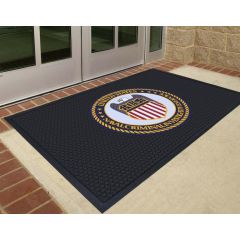
Super Scrape Rubber Logo Mats
Strip Doors
Perfec Clean 3/8" Rollup Mats - Aluminum Hinge
Perfec Clean 3/8" Rollup Mats - Rubber Hinge
Perfec Clean 3/4" Rollup Grate - Rubber Hinge
Perfec Clean 1-5/8" Grate
WP-70 Non-Skid Epoxy Coating