




More Information
| Manufacturer | KIMCO |
|---|
$24.00

Have a question? We're here to help!
Description
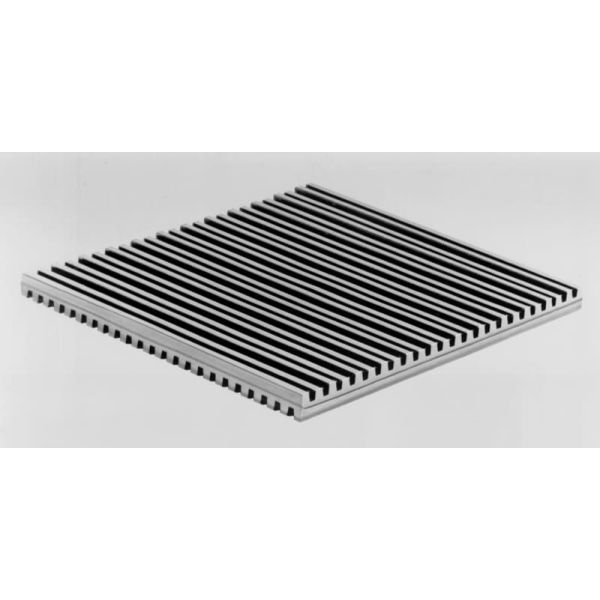
Anti-Vibration Pads are a ribbed rubber mounting pad, 3/8" thick, sold as an 18" square sheet you cut down to the feet of the machine you are setting. Slip a piece under each foot of a pump, a compressor, a condensing unit, or a front-load washer, and the pulse that used to run into the slab stops at the rubber instead.
What Anti-Vibration Pads Do Before the Vibration Reaches the Slab
A machine on bare concrete has nowhere to send its motion except into the building. Rubber isolation pads give it somewhere else to go. The rubber deflects a little under each foot with every cycle and gives that energy back as heat rather than passing it into the floor. Less of the motion reaches the slab, so less of it shows up as hum in the next room or a rattle in the ceiling grid below.
The ribs do a second job. Their anti-skid surface grips both the floor and the underside of the foot, so a machine that used to creep an inch a week stays where it was leveled. That matters more than it sounds: a walking machine strains its hoses and conduit, and an unlevel pump wears its bearings on one side.
Both of those jobs depend on one thing, which is loading the rubber inside the range the maker rates it for. The working range for this pad is 15 to 55 pounds per square inch, with a hard ceiling of 60. Everything else on this page comes back to that number.
Why a Ribbed Rubber Pad, and Why This One
This pad is a single-compound elastomer, molded at 55 durometer, with ribs on the top and bottom faces. Durometer is the hardness scale for rubber: 55 is firm enough to hold a machine foot without squashing out, and soft enough to flex under it. The maker rates the compound as ozone and water resistant, so an outdoor condenser or a washdown floor is inside its rating, and the ribs carry the anti-skid grip the whole series is built around.
Buyers searching for neoprene vibration isolation pads, cork isolation pads, or foam pads are usually weighing the same trade. Foam deflects more on light loads but takes a set. A cork-and-rubber composite adds a cork core for acoustic isolation and is a heavier-load pad. A ribbed single-compound pad sits in the middle: a published working range, a load ceiling, and a sheet you can cut with a knife. For unbolted equipment carrying tens to low hundreds of pounds per foot, that is the pad we would put under our own compressor.
We sell it as the full 18" by 18" sheet on purpose. A boxed set of 4" squares assumes every machine has the same feet and the same weight. The sheet lets you cut each pad to the size the load calculation actually calls for, which is the difference between rubber that isolates and rubber that just sits there.
Where It Belongs, and What It Is Not
The maker rates this pad for equipment where bolting is to be avoided and the vibration is minor and non-critical: pumps, motors, air conditioning units, generators, and the same class of machine in a shop or a laundry. That covers most of what a facility team sets on a floor. A front-load washer, a shop compressor, a circulating pump on a mechanical room slab, a small generator on a pad, a treadmill on a second-floor gym: all of these are inside the pad's rating.
Two cases are not. Equipment that must be anchored to the slab is out, because a bolt through the pad is a steel path that carries the vibration straight around the rubber. And critical isolation, a chiller over an occupied office or a press whose vibration the whole building feels, is a spring isolator job. A rubber pad there will reduce the problem but not remove it, and no pad size changes that.
Inside its rating, the pad is the same product whether it sits under a plant compressor or a home washer. The only thing that changes is how small you cut it. Light machines sit at the bottom of the load range and need a small pad to load the rubber at all; the rest of the anti-vibration floor mats question is arithmetic.
Three Things to Check Before You Spec It
First, the load on each foot, in pounds per square inch. Take the machine weight from its data plate, divide by the number of feet, and size each pad so that weight lands between 15 and 55 psi. An 800-pound compressor on four feet carries 200 pounds per foot, so each pad should fall between about 3.6 and 13 square inches, or roughly 2" to 3.5" square. A motor hung off one end shifts weight to two feet, so run each end separately.
Second, whether the foot covers the pad. The maker's install sheet is firm on this: the rating applies to the loaded area only, not to the whole pad. The foot or base must be at least as wide as the pad beneath it. If the foot is smaller than the pad your calculation calls for, the fix is a steel plate the size of the pad fixed to the base at that load point, so the whole pad carries the weight evenly.
Third, how it goes in. Raise the machine evenly, set the pads under the load points, lower it gradually, and do not slide the machine sideways once it is resting on the rubber. Then re-level it and confirm every foot is bearing. One foot in the air puts its weight on the other three and pushes them toward the 60 psi ceiling.
Why Mats Inc.
We are a Houston matting supplier that has been specifying rubber for plants and commercial buildings since 1964, and we sell this pad the way we would want to buy it: as a sheet, with the load range printed where you can see it, and with someone on the phone who will tell you when it is the wrong product. If the machine is bolted or the vibration is critical, we will say so and point you to a spring isolator instead of selling you a pad that disappoints.
| Material | Ozone- and water-resistant elastomer, single compound |
| Hardness | 55 durometer |
| Surface | Ribbed, anti-skid, top and bottom |
| Thickness | 3/8" |
| Sheet size | 18" x 18", cut to fit |
| Color | Black |
| Working load range | 15 to 55 psi on the loaded area |
| Maximum load | 60 psi |
| Mounting | No bolting; freestanding equipment only |
| Rated applications | Minor, non-critical vibration: pumps, motors, air conditioning units, generators |
| Warranty | 1-year limited (Mats Inc.) |
Frequently Asked Questions
What are these anti-vibration pads made of, and why are they ribbed?
Answered by Dustin Thompson, Owner & CEO
A single ozone- and water-resistant rubber compound molded at 55 durometer, with ribs on both faces. There is no cork core and no foam layer. The ribs are the anti-skid surface: they bite into the floor on the bottom and the foot on the top, which is what stops a machine from creeping. They also let the rubber deflect a little more under load than a flat slab of the same thickness would.
The maker has not published an oil or chemical resistance table for this compound, so we do not claim one. If the machine drips oil or the floor is washed with solvent, wipe the pads at service and check the edges.
How long will the pads last, and what wears them out?
Answered by Dustin Thompson, Owner & CEO
The maker publishes no service-life figure, so we will not invent a year count. What we can say is what shortens it. Loading past the 60 psi ceiling puts a permanent set in the rubber, and once the ribs have gone flat the pad has stopped isolating. Sliding a loaded machine across the pads tears the ribs. Solvent and hot oil pooling on the rubber soften it at the edges. Ozone and water are inside the compound's rating and are not the enemy.
A pad loaded inside 15 to 55 psi under a machine that is set once and left alone has nothing working against it, and it typically outlasts the equipment above it. The pad carries a 1-year limited (Mats Inc.) warranty.
How do I install the pads under a machine?
Answered by Dustin Thompson, Owner & CEO
Follow the maker's sequence. Cut a pad for each load point. Raise the machine evenly, lifting around it rather than from one corner. Place a pad under each foot, then lower the machine gradually onto them. Do not push or drag the machine sideways once it is sitting on the rubber; lift it again if it needs to move. Re-level, and confirm every foot is bearing on its pad.
One rule people miss: the load rating is for the area the foot actually covers. If the pad sticks out past the foot, the overhang is not carrying anything. Cut the pad to the foot, or put a plate under the foot the size of the pad.
What size should I cut each pad?
Answered by Jinna Hopson, Vice President of Marketing
Work from the weight on each foot, not from the size of the foot. Divide that weight by 55 to get the smallest pad and by 15 to get the largest, then cut something in between that the foot can still cover. A 300-pound washer on four feet carries 75 pounds per foot, so each pad wants to be between about 1.4 and 5 square inches, which is a 1.5" to 2" square. That is smaller than most people expect.
If the answer comes out bigger than the foot, cut to the foot and add a plate under it. If it comes out smaller than you can cut cleanly, go to the small end of the range and accept a little less deflection. One 18" sheet cuts into far more pads than one machine needs.
Will the pads be visible, and do they mark floors?
Answered by Jinna Hopson, Vice President of Marketing
Cut to the foot, the pad sits in the machine's own footprint and is nearly invisible from standing height. Black is the only color, and the ribbed black rubber reads as part of the equipment base rather than as something added. On a light showroom or laundry floor you can trim the front edge flush to the foot and leave any margin at the back.
The maker has not published a non-marking or non-staining rating, so we do not claim one. On a finished floor, put a test pad down for a week before you set the machine.
Is this the right pad for my equipment, or do I need something else?
Answered by Jinna Hopson, Vice President of Marketing
It is the right pad if the machine stands on its own feet, is not bolted down, and the problem is hum, rattle, or walking rather than vibration the whole building feels. Pumps, motors, condensers, compressors, generators, washers, and treadmills all fit that description, from a plant floor to a garage.
It is the wrong pad if the machine must be anchored, or if it sits over occupied space where any transmitted vibration is a complaint. Those need a spring isolator, and we would rather say so up front than sell you a pad that leaves the problem half solved. Call with the machine weight and we will tell you which side of that line you are on.
By Dustin Thompson, Owner & CEO, Mats Inc.
Ordering Info
COLOR: Black
| THICKNESS | SIZE | WT/EA |
| 3/8" | 18" x 18" | 5.0# |
| Size | Qty 1 Price |
| 18" x 18" | $24.00 |
Reviews
Write Your Own Review
Related Products

#775 Epoxy Flooring Adhesive
#560 Rubber Flooring Adhesive
#110 Epoxy Nose Caulk
#300 Water Based Contact Adhesive
#400 Neoprene Contact Adhesive
Rotary Table & Rig Floor Mats
Fore-Runner Mat
Safety Track Resilient Medium Non-Skid Tape
3M Vinyl Loop Wet Area Matting
Protect Vinyl Matting