




Description
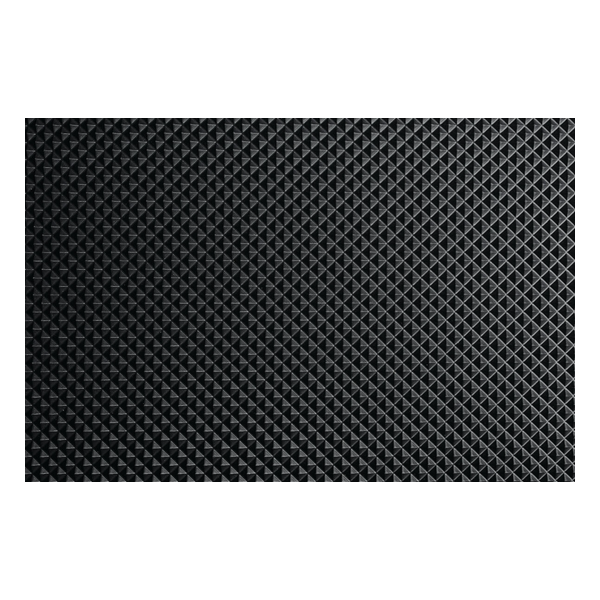
Pyramid Vinyl Matting is a 1/8-inch vinyl floor runner with a continuous, non-directional pyramid pattern molded across the whole surface. Each small raised pyramid gives a sole a point to land on and an edge to push against no matter which way the foot is moving, which is why the vendor rates the pattern for exceptional slip resistance. The runner is oil, grease, and chemical resistant, meets FMVSS 302 flammability requirements, and comes in black in 36- and 48-inch widths on 105-foot rolls.
What a Pyramid Runner Does Before a Wet Floor Catches Someone Mid-Step
Most slips happen on a step that is not straight: a turn into a doorway, a sideways shuffle at a counter, a pivot with a box in hand, the first stride off a ramp onto a smooth floor. On a runner with lengthwise ribs the sole follows the groove in those moments. On a smooth runner it hydroplanes. Either way, the foot is moving one direction and the grip is pointed another.
A pyramid pattern removes that gap. The surface is a field of small raised points with valleys between them. Water, mop residue, and tracked-in mud drop into the valleys; the sole lands on the points, and because pyramids have four faces, there is an edge to push against whichever way the step goes. The vendor's own description is a continuous pyramid design that assures safer foot traffic.
Under the pattern, the sheet is doing the plain job of a vinyl floor runner: taking the boots, the carts, and the grit so the floor underneath does not wear in a stripe. When the runner is worn, a roll is replaced; the tile or concrete under it is not.
Why a Continuous Pyramid Surface in 1/8-Inch Vinyl, and Why This One
The pyramids are molded into the vinyl sheet, not applied as a coating, so the traction is the full depth of the pattern and there is nothing to peel or flake. "Continuous" matters: the pattern runs edge to edge with no plain border or channel, so there is no strip along the side where the grip stops and the shoe finds smooth vinyl.
Non-directional is the design choice that separates this runner from the ribbed and corrugated family. Ribs grip along their length; pyramids grip in every direction equally. That makes the pyramid runner the one for floors where movement is unpredictable rather than a straight walk, and it is why the vendor lists it for slip resistance first and floor protection second.
The gauge is 1/8 inch, the foot-traffic gauge. It lies flat, crosses a threshold without a lip, and cuts and moves easily, which suits a runner that often goes down at an entry, a ramp, or a wet transition rather than in a fixed aisle. The compound is the industrial vinyl runner formulation: oil, grease, and chemical resistant, meeting FMVSS 302.
Two widths cover most lanes: 36 inches for a standard walkway and 48 inches for a wide corridor or a doorway approach covered edge to edge, both on 105-foot rolls. The vendor stocks it in black and also produces white, and custom colors, gauges, widths, and lengths are available for fitted and OEM installations.
Where It Belongs, and What It Is Not
Put it where feet land at odd angles on floors that get wet: the approach inside an entry door where rain gets tracked in, a ramp from a dock into a shop, the wet side of a kitchen or processing line, a locker-room corridor, a hallway that turns, the lane behind a wash sink or a bar. It is the multi-directional option among the industrial and commercial vinyl floor runners we stock, and the one to reach for when the traffic does not walk in a straight line.
Because the pattern is continuous and the gauge is thin, it also works as a fitted liner: cabinet floors, cart decks, van floors, and equipment bases where a non-slip surface is wanted without bulk. The same roll that covers an entry lane trims into those.
What it is not is a heavy-wheel runner, a cushion, or a drainage mat. At 1/8 inch it is built for foot traffic and light carts; pallet jacks want a heavier gauge. A solid vinyl sheet has no foam, so a standing station still wants an anti-fatigue mat. And pyramids shed water into their valleys but do not drain it through; a floor with standing water wants a perforated mat.
Three Things to Check Before You Spec It
First, confirm the problem is direction, not weight. If people slip because they turn, pivot, or step onto the runner sideways on a wet floor, the pyramid pattern is the right fix. If the problem is carts cutting through the runner or a lane that only sees straight-line traffic, a heavier or ribbed roll answers it better. The pyramid earns its place where the footing changes direction.
Second, choose width to the lane, not the room. Thirty-six inches covers a standard corridor, a ramp, or the lane inside an entry door. Forty-eight inches covers a wide hall, a double-door approach, or a wet zone you want protected edge to edge in one piece. Rolls are 105 feet and are cut to length on site; custom widths and lengths are available for a fitted run.
Third, plan the edges and the cleaning. Loose-lay holds a straight run on a clean, dry floor. Tape or glue the edges and end cuts at doorways, corners, and anywhere a cart crosses the side of the runner. Clean with a broom, mop, or hose; the valleys between the pyramids release grit and mop water rather than trapping them, and the surface dries quickly.
Why Mats Inc.
We stock this runner for the floor that gets people at the change of direction: the inside of a wet entry, the foot of a ramp, the turn in a kitchen corridor. Ribs do not help there and a smooth runner makes it worse. A continuous pyramid surface that grips from every angle, in a gauge that lays flat across a threshold, is the fix we send, and Mats Inc. has been matching runner surfaces to how people actually move since 1964.
| Type | Pyramid-pattern vinyl runner matting, sold by the roll |
| Material | Vinyl |
| Top surface | Continuous, non-directional pyramid pattern |
| Thickness | 1/8" |
| Stock sizes | 36" x 105' 48" x 105' |
| Color | Black; white and custom colors on request |
| Resistance | Oil, grease, and chemical resistant |
| Flammability | Meets FMVSS 302 |
| Function | Slip resistance and traction, floor protection, comfort |
| Custom | Custom colors, gauges, widths, and lengths available |
| Cleaning | Broom, mop, or hose |
| Warranty | 1-year limited (Mats Inc.) |
Frequently Asked Questions
How is the pyramid surface made, and what makes it non-directional?
Answered by Dustin Thompson, Owner & CEO
The pyramids are molded into a solid 1/8-inch vinyl sheet, one material through, so the pattern is as deep as the molding and there is no coating to wear off. Each pyramid has four sloped faces meeting at a point. A sole landing on the surface sits on the points, and whichever direction it tries to slide, it meets a face and an edge. That is what non-directional means in practice: the grip is the same going forward, sideways, or turning.
The pattern is continuous, edge to edge, with no plain margin, so there is no strip of smooth vinyl along the side of the runner where the traction gives out. The compound is oil, grease, and chemical resistant and meets FMVSS 302.
How long does it last, and what wears it out?
Answered by Dustin Thompson, Owner & CEO
The vendor does not publish a service-life figure; traffic decides it. Under the foot and light-cart traffic it is built for, the pyramid points wear down slowly and evenly, and the runner stays effective until the points in the busiest track are worn low enough to stop biting. It carries a 1-year limited (Mats Inc.) warranty, and a look at the pattern height in the main lane once a year tells you where it stands.
What ends it early is a wheel heavier than it is built for and a loose edge. A pallet jack on a 1/8-inch runner flattens the pyramids in its track in months; an unfixed edge where carts cross gets kicked, folded, and torn. The compound handles shop oil, grease, and common cleaners; wipe up strong solvents rather than letting them sit.
Do I need to glue it down, and how do I cut it?
Answered by Dustin Thompson, Owner & CEO
A straight run on a clean, dry floor loose-lays; the roll's weight holds it and you can lift it to wash underneath. Because this runner often goes down at an entry or a ramp, where people step onto it at an angle and doors swing across it, fix the leading edge and the end cuts with tape or glue so nothing can lift under a foot or a cart wheel.
Cut it with a sharp utility knife along a straightedge after unrolling it and letting it relax flat at room temperature; a roll cut cold holds a curve. Where two lengths meet, butt them square rather than overlapping, since an overlap is exactly the lip the pyramid pattern was chosen to avoid.
Which width should I order?
Answered by Jinna Hopson, Vice President of Marketing
Thirty-six inches covers a standard corridor, a ramp, the lane inside a single entry door, or the wet side of a prep line. Forty-eight inches covers a wide hall, a double-door approach, a locker-room corridor, or any wet zone you want covered edge to edge with no seam. If people step onto the runner from the side, go wider so the first step lands on the pattern, not the floor.
Both widths come on 105-foot rolls and are cut to length on site, so a long corridor is one continuous run. Custom widths and lengths are available for a fitted installation. Measure the lane, then pick the width that covers where the feet actually go.
What does it look like on the floor?
Answered by Jinna Hopson, Vice President of Marketing
A black runner with a fine, even grid of small raised pyramids across the whole surface, like a sheet of tiny studs. It reads as a uniform texture rather than a pattern with a direction, and it looks the same from any angle, which suits an entry approach or a corridor that turns. At 1/8 inch it sits nearly flush with the floor, and the black hides tracked-in grime between cleanings.
It looks right in a plant, a shop, a back-of-house corridor, a school or hospital service hall, or a locker room, anywhere a plain, purposeful black runner reads as safety equipment placed on purpose. For a front-of-house floor customers judge by eye, a carpeted runner is the better-looking answer. The vendor also produces white and custom colors for a color-coded floor.
Is this the right runner for an entry approach or a ramp that gets wet?
Answered by Jinna Hopson, Vice President of Marketing
Yes; that is the strongest case for it. Inside an entry door, people come off a wet mat at a turn; at the foot of a ramp, they change pace and angle. A non-directional pyramid surface grips those steps where ribs would send the shoe along the groove, and the valleys take the water so the points stay clear. The 48-inch width covers a double-door approach in one piece.
Keep the fit honest. It is an interior runner for foot traffic and light carts, not a heavy-wheel lane or an outdoor mat, and it is not a scraper: put a proper entrance mat outside the door to take the grit, and let the pyramid runner handle the wet turn inside.
By Dustin Thompson, Owner & CEO, Mats Inc.
Ordering Info
| Size | Qty 1 Price |
| 1/8" x 36" x 105' | $793.00 |
| 1/8" x 48" x 105' | $870.00 |
Reviews
Write Your Own Review
Related Products
Heritage Personalized Coir Door Mat
#775 Epoxy Flooring Adhesive
#560 Rubber Flooring Adhesive
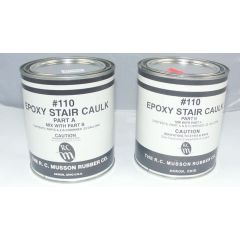
#110 Epoxy Nose Caulk
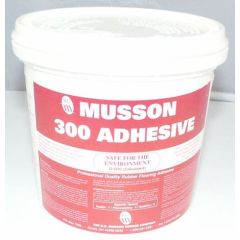
#300 Water Based Contact Adhesive
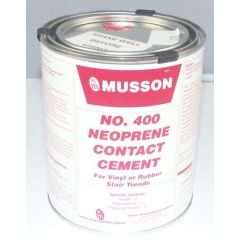
#400 Neoprene Contact Adhesive
Rotary Table & Rig Floor Mats
Fore-Runner Mat
Safety Track Resilient Medium Non-Skid Tape
3M Vinyl Loop Wet Area Matting