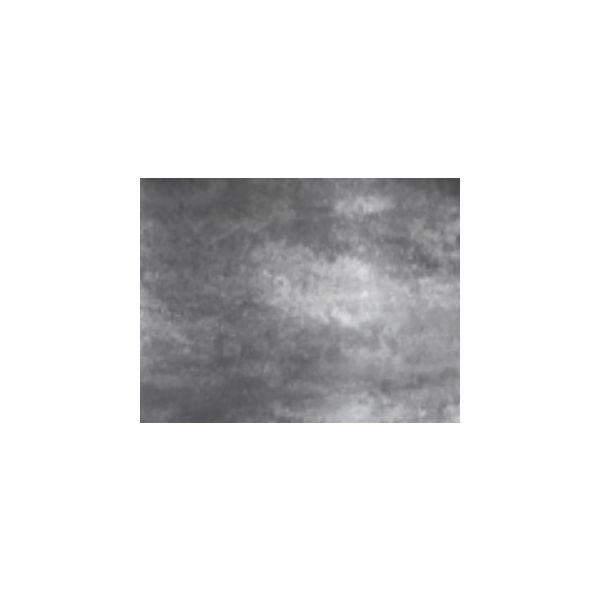
StoneCrest gives you the look and feel of natural stone and stained concrete without the stone. It is an 18" x 18" luxury vinyl tile that glues down to the floor, and its thick 40 mil top layer is built for places that stay busy all day — stores, clinics, hotels, restaurants.
Square-format vinyl floor tiles behave differently from plank. Layouts stay simple, cuts stay predictable, and a damaged tile comes up and goes back down without disturbing the run around it. What follows is what the tile is built from, where it belongs, and what to confirm before you put it on a drawing.
What StoneCrest Does Before Traffic Wears the Pattern Off Your Floor
Every shoe that crosses a lobby carries grit. Grit does not scratch a floor all at once. It polishes and abrades, one pass at a time, along the paths people actually walk. That is why traffic lanes go dull and patchy while the corners of the same room still look new after years of service.
The wear layer is the clear thickness sitting above the printed pattern. It takes the abrasion, and it is meant to be consumed slowly. At 40 mil — 1.0 mm — StoneCrest gives that process a long runway. Abrasion testing puts material loss under 0.15 g per 1,000 cycles, which is where commercial-rated vinyl flooring needs to sit.
When a thin wear layer runs out, the pattern goes with it. A printed floor cannot be refinished. The area gets closed off, the tile comes up, and the room works around the crew until the new material has set. A thicker wear layer pushes that day further out.
Why This Construction, and Why This Tile
StoneCrest is a Class III printed film vinyl tile — a layered build rather than a solid one. From the bottom up: an extruded vinyl core and backing, an adhesive layer, a high-definition photographic layer carrying the stone pattern, a 40 mil transparent wear layer, and a factory-applied 1x surface coating. Overall thickness is 3.175 mm, or 0.125".
The surface is Type B embossed. That texture is registered to the printed image, so the grain and pitting you see line up with what your hand feels. It is the difference between a stone-look floor that reads as stone from three feet away and one that reads as a photograph of stone.
Load is the other half of the argument. Static load resistance is rated at 2,000 psi under modified ASTM F970, and indentation stays under 8 percent on ASTM F1914. Display fixtures, casework legs, and rolling carts press into the same few square inches all day, and those two numbers say whether they leave a mark behind.
Dimensional stability passes EN 986, so tiles hold their size and joints stay tight instead of opening into visible seams. On flammability, the tile is Class 1 on the ASTM E648 radiant panel test with smoke density under 450 sdi on E662 — the rating most commercial corridor and exit-path specifications call for.
Where It Belongs, and What It Is Not
This is an indoor, glue-down commercial floor. It was built for beauty salons, spas, conference rooms, corporate lunchrooms, general office, hospitals, libraries, pharmacies, retail and department stores, resorts, restaurants, and supermarkets — spaces where the floor is on display all day and still absorbs a full day of feet.
Across our vinyl flooring line, the square tile format is what you reach for when the design calls for a stone read and a grid layout rather than a directional plank run. It is also the format that lets a single damaged piece be replaced without touching its neighbors.
What it is not: not a floating floor, not a loose-lay tile, and not rated for outdoor use. It is also not a mat. It will not stop water or grit at the door — that job belongs to entrance matting, and a stone-look vinyl floor holds its finish far longer when something upstream is catching the grit first.
Slip resistance passes ASTM D2047 and exceeds ADA recommendations. The ADA Standards for Accessible Design call for floor surfaces that are stable, firm, and slip resistant, and this tile tests above that line dry. Standing water is a separate problem, and no hard surface solves it alone.
Three Things to Check Before You Spec It
First, the subfloor. StoneCrest is adhered directly to the substrate, which means the floor you end up with is the floor underneath it. Slab moisture, high spots, old adhesive residue, and cracks all telegraph through the tile. Test the slab, prepare it properly, and use a professional installer — professional vinyl flooring installation is a condition of the warranty, not a recommendation.
Second, the traffic and the load. Foot count tells you what the wear layer has to survive. Fixtures and equipment tell you what the core has to survive. If the space runs pallet jacks, heavy rolling gear, or point loads above 2,000 psi, that sits outside what this tile is rated for and you want a different floor under it.
Third, the light and the variation. Shade and pattern variation between tiles is intentional here. The designs are cut from a larger natural image, so no two tiles are identical, and that is exactly what keeps a stone floor from looking printed. Request samples, view them under the room's real lighting, and keep material from one production run together.
Why Mats Inc.
We have supplied commercial floors since 1964, which means we have watched a lot of specifications meet a lot of real buildings. On a tile like this, that shows up in the unglamorous parts of the conversation: whether your slab is ready, how many cartons a 36 sq. ft. yield actually gets you, and whether the colorway you fell for is one of the ones that also comes in 18" x 36". Ask us before the order goes in. We would rather answer it now.
18" x 18" StoneCrest Luxury Vinyl Tile — Specifications
| Tile size | 18" x 18" (select colorways also available in 18" x 36") |
| Format | Square luxury vinyl tile, glue-down |
| Manufacturing standard | Class III printed film vinyl tile; 1x-coated |
| Surface | Type B embossed |
| Overall thickness | 3.175 mm • 0.125" |
| Wear layer thickness | 1.0 mm • 40 mil |
| Abrasion resistance (EN 660) | Excellent — under 0.15 g / 1,000 cycles |
| Static load (ASTM F970, modified) | 2,000 psi |
| Indentation resistance (ASTM F1914) | Pass — under 8% |
| Dimensional stability (EN 986) | Pass |
| Slip resistance (ASTM D2047) | Pass — exceeds ADA recommendations |
| Stain & chemical resistance (ASTM 925) | Pass |
| Light resistance (ASTM F1515) | Pass |
| Sound insulation (DIN 52210) | 4 dB |
| Radiant panel test (ASTM E648) | Class 1 |
| Smoke density (ASTM E662) | Pass — under 450 sdi |
| Heat stability (ASTM 1514) | Pass |
| HUD/FHA requirements | Exceeds |
| Packaging | 16 tiles per carton • 36 sq. ft. per carton |
| Weight | 2.08 lbs per tile • 36 lbs per carton |
| Use | Indoor only |
| Installation | Glue-down over prepared subfloor; professional installation required |
| Warranty | 1-year limited (Mats Inc.) |
Frequently Asked Questions
What is actually in a 40 mil wear layer, and why does that number matter?
The wear layer is a clear vinyl film sitting on top of the printed pattern, and 40 mil means it is 1.0 mm thick. Nothing about it is decorative. It is sacrificial material that takes the abrasion from foot traffic, grit, and cleaning equipment so the pattern underneath stays untouched for as long as possible.
The number matters because it is the closest thing to a service-life figure you get on a printed floor. Residential-grade vinyl often runs 6 to 12 mil. At 40 mil with abrasion loss under 0.15 g per 1,000 cycles, this tile is built for spaces where the same square foot gets walked on thousands of times a week.
— Dustin Thompson, Owner & CEO, Mats Inc.
How much traffic and load can this tile handle?
Two separate questions live inside that one. Foot traffic is handled by the wear layer, and this tile is rated for heavy commercial use. Point and rolling loads are handled by the core, and that is where the static load figure comes in: 2,000 psi under modified ASTM F970, with indentation staying under 8 percent on ASTM F1914.
In practice that covers display fixtures, casework, office chairs, service carts, and gurneys. What it does not cover is industrial rolling load — pallet jacks, forklifts, heavy equipment on small hard wheels. If that is your traffic, tell us and we will point you at a floor built for it instead.
— Dustin Thompson, Owner & CEO, Mats Inc.
How many tiles come in a carton, and how do I estimate what to order?
Each carton holds 16 tiles and covers 36 square feet. A tile weighs 2.08 lbs, so a full carton runs about 36 lbs, which matters if the material has to go up stairs or into a building without a service elevator.
Take the square footage of the space, divide by 36, and round up. Then add material on top of that for perimeter cuts and for attic stock, because keeping spare tiles from the same production run is the difference between an invisible repair three years from now and a patch that does not quite match. Send us the layout and we will run the count with you.
— Dustin Thompson, Owner & CEO, Mats Inc.
Where does this tile work best, and where should I not put it?
It shines in rooms where the floor is part of the design and still has to work: salons, spas, resort lobbies, restaurants, retail and department stores, pharmacies, hospitals, libraries, conference rooms, corporate lunchrooms, and supermarkets. Anywhere a client walks in and forms an impression before anyone greets them, a stone-look floor is doing quiet work.
Where it should not go: outdoors, in any wet area that needs drainage, or over a subfloor that has not been tested and prepared. It also should not be the first surface inside an exterior door. Put matting there and let this tile live in the rooms beyond it, where it stays looking the way you specified it.
— Jinna Hopson, Vice President of Marketing, Mats Inc.
Will every tile look the same once it is installed?
No, and that is deliberate. Each design is cut from one larger natural image, so shade and marking shift from tile to tile the way they would in a real stone floor. Uniform tiles are what make a printed floor read as printed. The variation is what makes this one read as stone.
Two practical notes. Order samples and look at them in the actual room, under the actual lighting, at the time of day the space is busiest — showroom light flatters everything. And ask your installer to open several cartons at once and mix tiles as they lay, so the variation spreads evenly instead of clustering in one corner.
— Jinna Hopson, Vice President of Marketing, Mats Inc.
How do I choose a colorway, and can I bring in a larger format?
Start with what is already fixed in the room. Millwork, countertops, and wall color are harder to change than a floor, so let them narrow the palette first. The range runs from cool greys and slate through warm oyster and almond tones, so the honest question is usually whether the room wants the floor to recede or to be part of the story.
On format: several colorways are also produced in 18 by 36 inch tiles, which opens up running-bond and mixed-format layouts. Not every color offers it, so decide on the layout and the color together rather than in sequence. Tell us the direction you are heading and we will confirm which colorways can do both.
— Jinna Hopson, Vice President of Marketing, Mats Inc.
Written by Jinna Hopson, Vice President of Marketing, Mats Inc.