




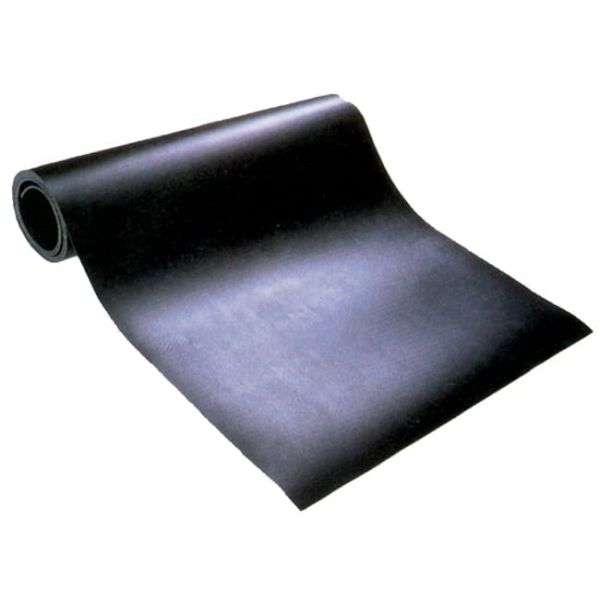
Description
Commercial Neoprene Sheet Rubber is smooth black sheet stock sold by the roll for cutting into gaskets, liners, pads, and protective covers. It is a 60-durometer neoprene, a medium-firm grade that holds up to sunlight, salt spray, ozone, and weathering, and to refrigerants and ammonia. Rolls come 36 or 48 inches wide in 1/8- and 1/4-inch thicknesses, and every piece is cut to shape on site. It is raw material for the maintenance shop, not a finished mat.
What Neoprene Sheet Does Before the Seal Fails or the Floor Gets Chewed
Most rubber in a building is not lying on a floor. It is sitting between a hatch and its frame, under a compressor, behind a machine foot, or on the shelf where a wrench gets dropped a hundred times a day. When that rubber is missing or the wrong compound, the consequence shows up as a weather leak, a gouged bench top, a vibrating pump loosening its own bolts, or a scarred concrete pad.
A roll of sheet rubber is the fix that fits all of those, because it is cut to whatever the job needs. A 36-inch roll yields a cabinet gasket, a strip under a skid, a bench liner, and a splash guard from the same length. Neoprene is the compound chosen for the outdoor and refrigeration versions of those jobs, where ozone, sun, and weather would harden a general-purpose rubber in a season.
The stakes are in what the sheet is protecting. A gasket that cracks lets water into an enclosure; a liner that softens under a leaking fitting has to be scraped off the surface it was meant to save. Getting the compound right at the start is the difference between rubber that stays in service for years and rubber that becomes the maintenance ticket.
Why 60-Durometer Neoprene, and Why This One
Durometer is hardness. Sixty on the Shore A scale is medium-firm, about the feel of a tire tread: soft enough to compress against a rough flange and seal, firm enough to carry a load without squashing flat or tearing at a bolt hole. Softer grades seal better against uneven surfaces but wear faster; harder grades hold shape under weight but stop sealing. Sixty is the general-purpose middle.
The compound is what separates neoprene from plain black rubber. This sheet stands up to sunlight, salt spray, ozone, and weathering, which makes it the choice for gaskets and covers that live outdoors or on marine equipment. It also resists refrigerants and ammonia, which is why it shows up in HVAC and refrigeration work, and it has inherent flame-retarding characteristics.
The vendor's 60-durometer line is also rated for moderate petroleum oil exposure, which covers lubricant drips, a leaking hydraulic fitting, and the film under most shop equipment. It is not the compound for chlorinated solvents or ketones; where those are in play, the vendor calls for a different material, and so do we.
Two thicknesses cover different jobs. Eighth-inch sheet is for gaskets, cabinet seals, shelf and drawer liners, and light pads where the rubber needs to flex and follow a surface. Quarter-inch is for equipment pads, skid strips, bench and dock-edge protection, and covers that take impact. Both are smooth-finished on each face and cut cleanly with a knife.
Where It Belongs, and What It Is Not
Cut it for gaskets and weather seals on enclosures, hatches, and panel doors; liners and pads under compressors, pumps, and machine feet; shelf and bench protection in maintenance shops and tool cribs; protective covers over equipment that sits outside; and refrigeration and HVAC sealing where ammonia or refrigerant contact rules out common rubbers. It is stocked alongside the roll runners and cut mats in the heavy-duty rubber runner mats range as the piece you shape yourself.
On floors, use it where a smooth, waterproof rubber layer is the point: under a piece of equipment to keep oil and vibration off the slab, as a liner in a truck bed or a cabinet base, or as a trimmed-to-fit pad on a bench or dock edge. The 48-inch width covers a wide machine base in one piece.
What it is not is a walkway or traction mat. The surface is smooth, it carries no slip-resistance rating, and it has no cushion. A lane people walk down on a wet floor needs a ribbed or textured runner; a station someone stands at needs an anti-fatigue mat. This sheet protects surfaces and seals gaps; it does not keep boots upright.
Three Things to Check Before You Spec It
First, check what the rubber will touch. Sun, salt, ozone, weather, refrigerants, ammonia, and moderate petroleum oil are inside this compound's range. Chlorinated solvents and ketones are outside it, and heavy or continuous fuel and oil immersion calls for a nitrile sheet instead. If the answer is "mostly water and weather," neoprene is the right call; if the answer includes a solvent name, stop and confirm compatibility first.
Second, match thickness to the job, not to instinct. A gasket that is too thick will not compress evenly and leaks at the corners; a pad that is too thin lets the equipment foot cut through to the slab. Eighth-inch for anything that has to flex, seal, or line a surface; quarter-inch for anything that has to carry weight, take impact, or space a load off a floor.
Third, plan the cut and the width. Thirty-six inches covers gaskets, liners, and most pads with little waste. Forty-eight inches is for a machine base, a wide bench, or a dock edge you want covered in one piece. Lay the roll flat and let it relax at room temperature before marking; cut with a sharp utility knife against a straightedge, and cut gasket holes with a punch rather than a blade so the edge does not tear under the bolt.
Why Mats Inc.
We stock neoprene sheet because the same customers who buy runners for their aisles come back needing a gasket for the compressor enclosure, a pad under the new press, and a strip to keep the forklift from chewing the dock edge, and it is easier to cut those from one roll on the shelf than to order a fabricated part each time. Mats Inc. has been supplying rubber to working floors since 1964; this is the roll we send when the answer is "cut it to fit."
| Type | Neoprene rubber sheet, sold by the roll |
| Material | Neoprene (chloroprene) rubber |
| Durometer | 60 Shore A |
| Finish | Smooth, both faces |
| Color | Black |
| Sizes | 1/8" x 36" x 20' 1/4" x 36" x 20' 1/4" x 48" x 20' |
| Weight | Approx. 18 lb per 3-foot length at 1/4" x 36" |
| Resists | Sunlight, salt spray, ozone and weathering; refrigerants and ammonia; moderate petroleum oil exposure |
| Not for | Chlorinated solvents or ketones |
| Flame behavior | Inherent flame-retarding characteristics |
| Typical uses | Gasket cutting, lining, padding, protective covering; marine equipment, HVAC and refrigeration, weather sealing and enclosures |
| Warranty | 1-year limited (Mats Inc.) |
Frequently Asked Questions
What does 60 durometer mean, and is this sheet hard or soft?
Answered by Dustin Thompson, Owner & CEO
Durometer is a hardness scale, and 60 on the Shore A scale is medium-firm, close to a car tire tread. Press a thumbnail into it and it gives a little and springs back. That is the balance most sealing and padding jobs want: soft enough to compress against a flange or a rough concrete pad and close the gap, firm enough to carry a machine foot or a stack of parts without going flat or tearing at a bolt hole.
Softer sheet, in the 40s, seals better against very uneven surfaces but wears and creeps faster under load. Harder sheet, 70 and up, holds shape under heavy weight but stops conforming. Sixty is the grade to start with unless the job is clearly at one end of that range.
How long does neoprene sheet last, and what breaks it down?
Answered by Dustin Thompson, Owner & CEO
The vendor does not publish a service-life figure, and with sheet rubber the exposure decides it. Neoprene's reason for existing is that sun, ozone, salt, and weather do not harden it the way they harden general-purpose rubber, so a gasket or cover cut from this sheet and left outdoors stays flexible for years where a plain black rubber would crack in a season or two. Every roll carries a 1-year limited (Mats Inc.) warranty.
What shortens it is the wrong chemistry. Chlorinated solvents and ketones swell and soften neoprene, and continuous immersion in fuel or heavy oil goes beyond the moderate exposure it is rated for. Under those conditions, use a nitrile or other compound built for the media. Keep neoprene to weather, refrigerant, ammonia, and light oil duty and it outlasts the parts around it.
Where should I use it, and where should I not?
Answered by Dustin Thompson, Owner & CEO
Use it anywhere you need a cut-to-fit rubber layer that will see weather, refrigerant, ammonia, or light oil: enclosure and hatch gaskets, pads and liners under compressors and pumps, bench and shelf protection, dock-edge and skid strips, covers over outdoor equipment, and sealing in HVAC and refrigeration cabinets. On a floor, put it under equipment as a waterproof, oil-tolerant layer between the machine and the slab.
Do not use it as a walkway. The sheet is smooth on both faces, carries no slip-resistance rating, and has no cushion, so it is neither a traction runner nor an anti-fatigue mat. And do not use it where chlorinated solvents or ketones are present; that job needs a different compound.
Which thickness and width should I order?
Answered by Jinna Hopson, Vice President of Marketing
Pick thickness by the job. Eighth-inch is the gasket, seal, and liner gauge; it flexes, follows a surface, and compresses evenly under bolts. Quarter-inch is the pad and protection gauge; it spaces a machine foot off the floor, takes impact on a bench or dock edge, and holds a skid strip flat. If you are unsure, the job that has to seal wants thin and the job that has to carry weight wants thick.
Pick width by the biggest single piece you need to cut. Thirty-six inches handles gaskets, liners, and most pads from one roll with little waste. Forty-eight inches is for a wide machine base, a long bench top, or a dock edge you want covered without a seam. All three rolls are 20 feet long.
What does it look like, and does it come in other colors?
Answered by Jinna Hopson, Vice President of Marketing
Black, smooth on both faces, with a soft sheen rather than a gloss. Unrolled on a bench it lies flat and reads as a clean, uniform sheet with no pattern, no texture, and no backing layer, which is what you want when the visible result is a trimmed gasket edge or a neat pad under a machine. It cuts with a crisp edge and does not fray.
It comes in black only. Where a shop wants a contrasting color to spot a wear pad or tell one compound from another on the shelf, the red SBR sheet in the same range does that job; neoprene is the one to reach for when the exposure, not the color, is what matters.
Is this the right sheet for outdoor or marine equipment?
Answered by Jinna Hopson, Vice President of Marketing
Yes; that is where neoprene earns its keep. The compound stands up to sunlight, salt spray, ozone, and weathering, so a gasket on a dockside enclosure, a pad under a rooftop unit, or a cover over equipment stored outside stays pliable through seasons that would harden and crack ordinary rubber. The vendor lists marine equipment and weather sealing among its standard applications.
It is also the sheet for refrigeration and HVAC work because it tolerates refrigerants and ammonia. Pair the outdoor rating with the 1/8-inch gauge for seals and the 1/4-inch for pads, cut on site, and one roll covers most of what a marine or rooftop maintenance crew runs into.
By Dustin Thompson, Owner & CEO, Mats Inc.
Ordering Info
| WIDTH | THICKNESS | LENGTH* | WT/LF |
| 36" | 1/8" 1/4" 1/2" 3/4" 1" |
25 LF 20 LF 25 LF 30 LF 30 LF |
2.6# 5.2# 10.4# 15.6# 20.8# |
| 48" | 1/8" 1/4" 1/2" 3/4" 1" |
25 LF 20 LF 25 LF 30 LF 30 LF |
3.5# 7.0# 14.0# 21.0# 28.0# |
ROLL LENGTHS MAY VARY.
Reviews
Write Your Own Review
Related Products
#775 Epoxy Flooring Adhesive
#560 Rubber Flooring Adhesive
#110 Epoxy Nose Caulk
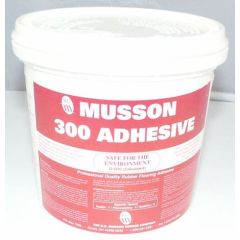
#300 Water Based Contact Adhesive
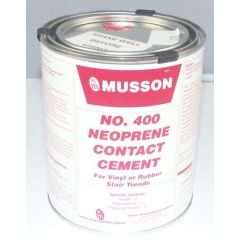
#400 Neoprene Contact Adhesive
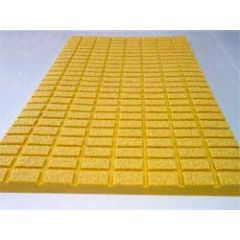
Rotary Table & Rig Floor Mats
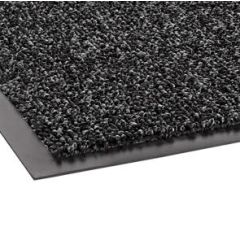
Fore-Runner Mat
Safety Track Resilient Medium Non-Skid Tape
3M Vinyl Loop Wet Area Matting
Protect Vinyl Matting