




More Information
| Manufacturer | M+A Matting |
|---|
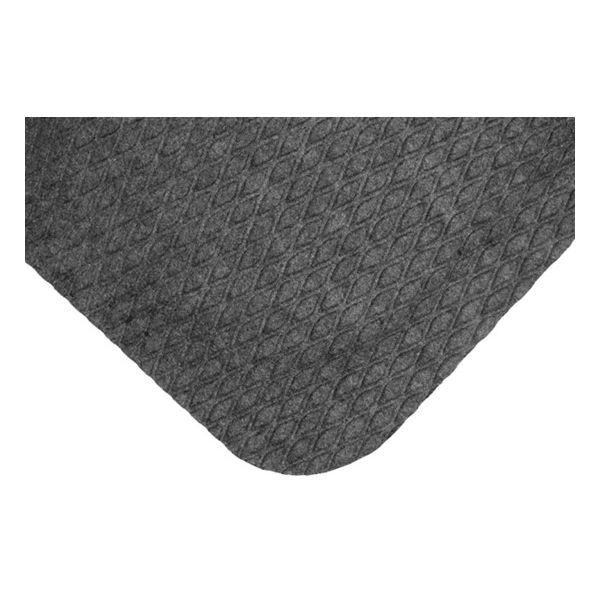
$64.00

Have a question? We're here to help!
Description
Anti-fatigue kitchen mats earn their keep in the first hour on your feet, not the tenth. Standing still on tile, stone, or concrete pushes pressure straight into your heels, knees, and lower back. This cushioned kitchen mat softens that load. It pairs a fabric top that reads like an area rug with a dense nitrile cushion built for indoor floors.
What a Cushioned Kitchen Mat Does Before Your Legs Feel It
A hard kitchen floor gives you nothing back. Every step lands and stops, and your legs absorb the whole thing. Stand at a sink or a prep counter for forty minutes and you feel it in your calves first, then your lower back.
A padded kitchen mat works by putting something compressible under you. This one uses a high-density, closed-cell nitrile-blended cushion, which helps eliminate pressure on the lower back and legs. That small amount of give is what keeps a long stretch of standing from turning into an ache.
The second job is traction. Kitchen floor mats sit in the one spot where water, oil, and dropped food all show up. A mat that slides, curls, or goes slick underfoot creates the exact hazard it was bought to prevent. This one is certified high-traction by the National Floor Safety Institute, which runs independent slip-resistance testing for commercial floor products.
The edges matter as much as the surface. They will not crack or curl, and they give a safe transition from the floor onto the mat. A curled corner is the most common way a comfort mat turns into a trip hazard.
Why a Fabric Top, and Why This One
Most anti-fatigue mats are black rubber or vinyl. They work, and they look like they belong in a warehouse. This one swaps that surface for needle-punched, solution-dyed PET fabric at 14 ounces per square yard. Solution-dyed means the color goes into the fiber itself rather than sitting on top of it, and the surface is fade-resistant as a result.
The part that matters most is how the two layers are joined. The fabric is molded to the nitrile-blended cushion, not glued to it, so it will not separate. That is the difference that shows up years in, when a glued mat starts lifting at a corner and this one does not.
Underneath sits high-density, closed-cell nitrile and PVC-blended foam. Closed-cell is the useful part of that description: the cells are sealed, so the cushion is not an absorbent layer. A spill stays where you can deal with it.
Overall thickness is 5/8 inch over a 48-mil backing. A Max version runs 7/8 inch over a 52-mil backing if you want more underfoot. Both come in the same three stock sizes.
Two more things worth knowing. The PET fabric surface is made from at least 90% recycled content reclaimed from plastic, which is unusual for a comfort mat and matters if you are specifying against sustainability targets. And the mat is made in the USA.
Where It Belongs, and Where It Does Not
This mat is made for dry indoor settings. Home kitchens are the obvious fit: the sink, the range, the prep counter, the island where someone stands and chops. It also works well at coffee bars, break rooms, hostess stands, retail counters, registration desks, copy stations, and standing desks. Retail floors are one of its most common homes.
It is not a wet-area mat, and this is the one thing to get right. A commercial cook line, a dish pit, or a bar well means standing water and grease all day. A fabric surface in that environment holds what lands on it and stays damp.
That is the failure mode with fabric-topped comfort mats, and it is almost always a placement mistake rather than a product problem. If the floor you are covering gets hosed down, drained, or mopped through a shift, you want a drainage or grease-rated mat instead. The wider range of kitchen mats covers those wet and greasy zones.
Put simply: if the floor is dry most of the day and the mat is going somewhere people can see it, this is the right call. If the floor is wet most of the day, it is the wrong one.
Three Things to Check Before You Spec It
First, be honest about how wet the floor gets. Not "does it ever get wet" — every kitchen floor gets wet. The question is whether water sits. A splash at the sink that gets wiped up is fine. A floor that is damp for hours is not. This is the single check that decides whether this mat is the right choice.
Second, size to the work zone, not to the room. Measure where your feet actually go. Stock sizes are 2' x 3' (23" x 32"), 3' x 5' (32" x 58"), and 3' x 12' (32" x 142"). The 3' x 12' is a true kitchen runner for a galley layout or a long counter. Custom sizes come in 3-foot (32-inch) widths at whole-foot lengths up to 60 feet.
Third, check thickness against your clearances. The 5/8-inch version clears most cabinet toe kicks and interior doors without trouble. The 7/8-inch Max gives more cushion but needs more room, so check any door that swings over the mat. Also remember that mat sizes are approximate — rubber shrinks and expands with temperature and time, and manufacturing variance runs 3% to 5%.
Why Mats Inc.
We stock this mat because customers kept asking the same question: something that helps my feet, but that I am not embarrassed to have in a kitchen people walk through. Most anti-fatigue matting answers the first half and ignores the second. Mats Inc. has been sourcing commercial matting since 1964, and we carry this construction specifically for the dry, visible spots where a black rubber mat would look wrong.
Specifications
| Surface material | Needle-punched, solution-dyed PET fabric, 14 oz/yd², molded (not glued) to nitrile rubber |
| Recycled content | PET fabric surface made from at least 90% recycled content reclaimed from plastic |
| Cushion | High-density, closed-cell nitrile/PVC-blended foam |
| Overall thickness | 5/8" (0.625") on 48-mil backing; Max version 7/8" (0.875") on 52-mil backing |
| Traction | Certified high-traction by the National Floor Safety Institute (NFSI) |
| Edges | Will not crack or curl; safe transition from floor to mat |
| Stock sizes & weights (5/8") | 2' x 3' (23" x 32") — 5.5 lbs. 3' x 5' (32" x 58") — 14.2 lbs. 3' x 12' (32" x 142") — 35.5 lbs. |
| Stock sizes & weights (7/8" Max) | 2' x 3' (23" x 32") — 6.5 lbs. 3' x 5' (32" x 58") — 16 lbs. 3' x 12' (32" x 142") — 38.3 lbs. |
| Custom sizes | 3' (32") widths, whole-foot lengths up to 60' |
| Size tolerance | 3–5% manufacturing variance |
| Colors | Coal Black, Cobalt Blue, Cocoa Brown, Granite |
| Recommended use | Dry, indoor settings where a fabric-topped anti-fatigue mat is preferred to a vinyl or rubber top |
| Cleaning | Rinse with a hose or pressure washer; lay flat or hang to dry; return to service dry |
| Origin | Made in the USA |
| Warranty | 1-year limited (Mats Inc.) |
Frequently Asked Questions
What is this kitchen mat actually made of?
Answered by Dustin Thompson, Owner & CEO
Two layers. The top is needle-punched, solution-dyed PET fabric at 14 ounces per square yard. Underneath is high-density, closed-cell nitrile and PVC-blended foam over a 48-mil backing. Overall thickness is 5/8 inch, or 7/8 inch on a 52-mil backing if you go with the Max version.
The detail that separates this from cheaper fabric-topped mats is the bond. The fabric is molded into the nitrile-blended cushion rather than glued on top of it, so the two layers will not separate. On a glued mat, the corner lifts, the top layer peels, and you are looking at a trip hazard. The mat is made in the USA.
How do I clean it, and what shortens its life?
Answered by Dustin Thompson, Owner & CEO
Cleaning is simple. Rinse it with a hose or a pressure washer, then lay it flat or hang it to dry. Put it back down only once it is dry — a damp mat on a hard floor traps moisture underneath and can leave a mark on some finishes.
What shortens its life is almost always placement rather than wear. This is a dry-area mat. Put it somewhere that stays wet and the fabric surface is working against what it was designed for. Keep it on a dry floor and clean it on a normal schedule, and the solution-dyed surface holds its color because the color is in the fiber, not printed on it.
Can I use this in a restaurant or commercial kitchen?
Answered by Dustin Thompson, Owner & CEO
In the front of house, yes. Host stands, register counters, coffee bars, back-office prep areas, and service corridors are all dry-floor zones where this mat performs and looks right.
On the cook line or in a dish pit, no. Those floors carry standing water and grease through an entire shift, and a fabric surface holds both. The manufacturer recommends this mat for dry indoor settings, and that recommendation is worth following. For wet zones you want a drainage-style or grease-resistant rubber mat that lets liquid pass through and gets scrubbed daily. Ask us and we will point you at the right construction for the zone.
What sizes can I get, and is there a runner length for a galley kitchen?
Answered by Jinna Hopson, Vice President of Marketing
Three stock sizes: 2' x 3' (23" x 32") for a sink or single station, 3' x 5' (32" x 58") for a prep counter or island, and 3' x 12' (32" x 142") as a kitchen runner. That last one is the answer for galley layouts and long counter runs where a small mat just leaves you stepping on and off it.
If none of those fit, custom sizes come in 3-foot (32-inch) widths at whole-foot lengths up to 60 feet. Measure where you actually stand rather than the room itself. And build in a little tolerance — the rubber shrinks and expands with temperature and time, so finished sizes run within about 3% to 5% of nominal.
Will it look like an area rug or like a shop mat?
Answered by Jinna Hopson, Vice President of Marketing
Like a rug, which is the whole point of it. The fabric surface has the texture and matte finish of a low-pile commercial carpet rather than the gloss of vinyl or the ribbing of rubber. Four colors are available: Coal Black, Cobalt Blue, Cocoa Brown, and Granite. All four are neutral enough to sit quietly next to cabinetry and countertops instead of announcing themselves.
Because the fabric is solution-dyed, the color runs through each fiber rather than sitting on the surface, and the surface is fade-resistant. That is what keeps it from going chalky in a kitchen with a lot of natural light.
Does this work in a home kitchen, or is it meant for businesses?
Answered by Jinna Hopson, Vice President of Marketing
Both, and home kitchens are one of the places it does its best work. Residential kitchen mats sold at big-box stores are usually thin foam with a printed surface. This is a commercial construction that happens to look residential.
Where it really earns its place at home is the spot you stand longest: the sink, or the counter where someone preps dinner every night. It is also the mat to choose when the kitchen is open to a living or dining area and you did not want something that looks like equipment. Just hold to the same rule a commercial buyer follows — dry floors only.
By Jinna Hopson, Vice President of Marketing, Mats Inc.
Ordering Info
| Thickness | ||
| Size | 5/8" | 7/8" |
| 2' x 3' | $64.00 | $71.00 |
| 3' x 5' | $157.00 | $173.00 |
| 3' x 12' | $353.00 | $396.00 |
Reviews
Write Your Own Review
Related Products
Super Scrape Rubber Mats
Safety Track Non-Skid Tape - Coarse

Smooth Marbleized Vinyl Switchboard Matting (Mil Spec)
Super Scrape Rubber Logo Mats
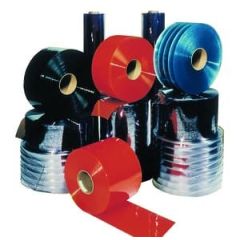
Strip Doors
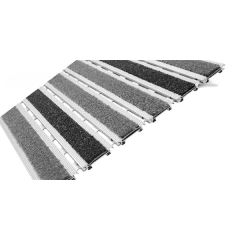
Perfec Clean 3/8" Rollup Mats - Aluminum Hinge
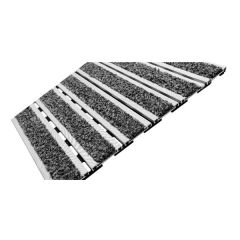
Perfec Clean 3/8" Rollup Mats - Rubber Hinge
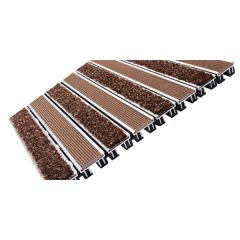
Perfec Clean 3/4" Rollup Grate - Rubber Hinge
Perfec Clean 1-5/8" Grate
WP-70 Non-Skid Epoxy Coating