




More Information
| Manufacturer | M+A Matting |
|---|
Reviews
- Waterhog Logo Mati was looking for a Eco-Friendly option for the front door of our business. i was able to customize the mat and it looks great! Thank You!
Posted on
$227.00

Have a question? We're here to help!
Description
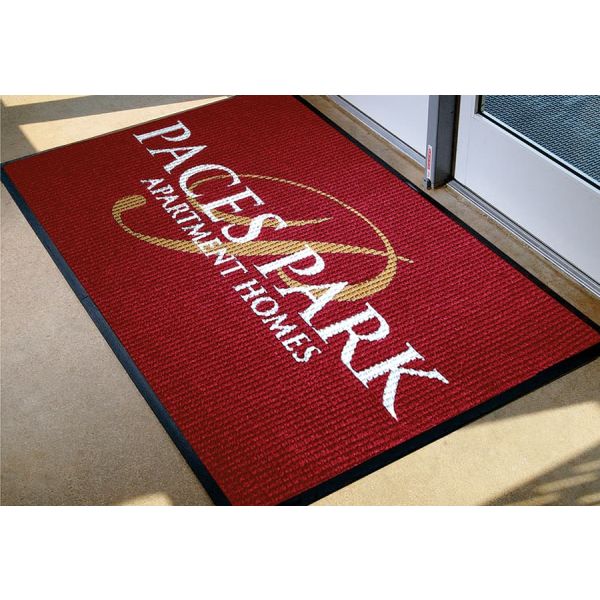
Waterhog Inlay Logo Mats put your logo into the proven Waterhog bi-level mat rather than on top of it. The inlay is the difference: the area that will carry the logo is cut out of the mat and the colors are hand-laid into the cut-out like a jigsaw, so the logo becomes part of the surface and wears with it. It's the most precise of our Waterhog branding options, which is why it leads our indoor logo mats for a sharp, lasting brand at the door.
Under the logo, it's a full Waterhog. The bi-level surface scrapes dirt and moisture off shoes and traps them below shoe level so they don't track inside, and the raised water-dam border holds moisture on the mat — up to about 1.5 gallons per square yard — keeping it off your floors. Most of the dirt inside a building arrives on foot traffic, per ISSA, and that bi-level scrape-and-trap design is built to handle the load.
It's made to keep its look. Reinforced rubber nubs hold the pile up so it resists crushing under traffic, and the solution-dyed fabric resists fading, so both the mat and the inlaid logo stay sharp longer. It runs on a 68-mil SBR rubber backing in smooth or universal-cleated, with beveled edges for a safe floor-to-mat transition, and it's certified high-traction by the NFSI. The rubber backing also carries 20% post-consumer recycled content from car tires.
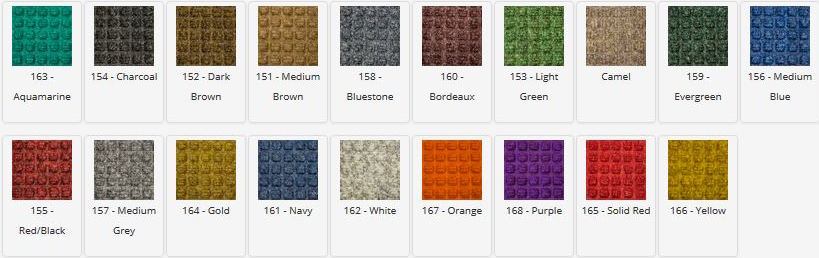
It's built for branding at commercial entrances — hotels, retail, restaurants, offices, schools and universities, and commercial buildings — and it's rated for indoor and outdoor use. There are 19 colors to work from, with a choice of a classic rubber border or a fashion fabric border, and it's made to order in sizes up to 6' x 20'. Because the nubs and solution-dyeing slow both crushing and fading, it holds appearance for years; replace it when the inlaid logo finally dulls or the surface packs down in the main traffic path.
| Surface | Solution-dyed fabric, 24 oz/yd², needle-punched (bi-level) |
| Logo method | Inlay — colors cut in and hand-laid into the surface |
| Overall thickness | 3/8" (0.375") |
| Backing | SBR rubber, 68-mil, smooth or universal cleated |
| Border | Classic rubber or fashion fabric |
| Colors | 19 (no PMS matching) |
| Minimum lettering | Text 3" tall; lines and spacing 3/8" (no gradients, tints, or screens) |
| Water retention | Up to 1.5 gal/yd² (water-dam border) |
| Traction | NFSI Certified high-traction |
| Recycled content | Backing contains 20% post-consumer recycled rubber |
| Sizes | 2'×3' to 6'×20'; custom within 3', 4', and 6' widths |
| Use | Indoor and outdoor commercial entrances |
| Warranty | 1-year limited (Mats Inc.) |
Frequently Asked Questions
How is the logo made, and will it wear off?
Answered by Jinna Hopson, Vice President of Marketing
It's an inlay, not a print. The logo area is cut out of the mat and the colored sections are hand-laid into the cut-out like a jigsaw, so the logo is built into the surface rather than coated on top — there's no print layer to scuff away. The fabric is solution-dyed, which means color runs through the fiber and resists fading. Between the inlay construction and the solution-dyeing, the logo holds up about as well as the mat itself does, which is the point of choosing this one for branding.
What colors and border options are available?
Answered by Jinna Hopson, Vice President of Marketing
There are 19 colors to build the logo and field from, plus a choice of border: a classic rubber border for a clean, utilitarian edge, or a fashion fabric border when you want the surround to feel more finished. Because the inlay is hand-laid in distinct color sections, it suits bold, well-defined logos and lettering — text at least 3 inches tall, lines at least 3/8 inch — rather than fine gradients or tiny detail. Send us your artwork and brand colors and we'll lay out how it translates into the inlay and confirm the color match before production.
How well does it handle dirt and water?
Answered by Dustin Thompson, Owner & CEO
This is where the Waterhog construction earns its name. The bi-level surface scrapes dirt and moisture off shoes and drops it below shoe level, so it's held in the mat instead of tracking across your floors, and the raised water-dam border keeps moisture on the mat — up to roughly 1.5 gallons of water per square yard. That makes it a strong performer at a busy or wet entrance, not just a branded mat. Lifting it periodically so the floor underneath dries keeps it working at its best.
Can it go outside, and is it slip-safe?
Answered by Dustin Thompson, Owner & CEO
Yes on both. It's rated for indoor and outdoor commercial entrances, and the solution-dyed fabric resists fading outdoors. On safety, it has beveled edges that give a safe transition from floor to mat instead of a trip lip, and it's certified high-traction by the NFSI, so it holds grip as people come through. The 68-mil SBR rubber backing — smooth or universal-cleated — keeps it planted; choose cleated for hard floors where you want extra grip underneath.
By Jinna Hopson, Vice President of Marketing, Mats Inc.
Ordering Info
WATERHOG INLAY COLORS
Reviews
Customer Reviews
- Waterhog Logo Mati was looking for a Eco-Friendly option for the front door of our business. i was able to customize the mat and it looks great! Thank You!
Posted on
Write Your Own Review
Related Products
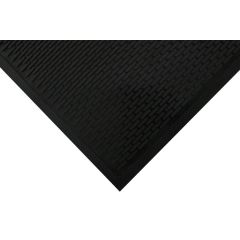
Super Scrape Rubber Mats
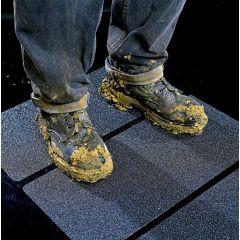
Safety Track Non-Skid Tape - Coarse
Smooth Marbleized Vinyl Switchboard Matting (Mil Spec)
Super Scrape Rubber Logo Mats
Strip Doors
Perfec Clean 3/8" Rollup Mats - Aluminum Hinge
Perfec Clean 3/8" Rollup Mats - Rubber Hinge
Perfec Clean 3/4" Rollup Grate - Rubber Hinge
Perfec Clean 1-5/8" Grate
WP-70 Non-Skid Epoxy Coating