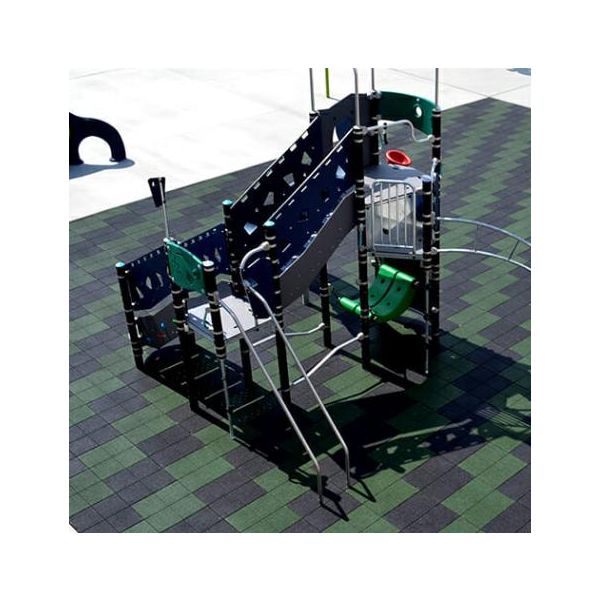
Rubber playground tiles turn a hard surface into a tested fall-protection floor. When a child comes off a slide or a climber, what's underneath decides whether it's a non-event or an injury — and loose fill like wood chips scatters, packs down, and stops protecting exactly where kids land most. These interlocking 2-by-2-foot tiles lay down a firm, even surface rated to specific fall heights and certified to the playground safety standard.
What Rubber Playground Tiles Do Before a Fall Becomes an Injury
Kids fall. The job of a playground surface is to absorb that impact so a fall from the equipment doesn't turn into a serious head or limb injury. Rubber tiles do that with a consistent, tested layer of cushioning that stays exactly where you put it — unlike sand, mulch, or wood fiber, which drift out of the high-traffic landing zones over time.
That consistency is the safety point. The surface is built and tested to ASTM F1292-18, the standard that governs impact protection in the use zone around playground equipment, and it carries IPEMA certification to back the rating. A tile floor also closes off the problems loose fill brings — buried objects, hidden animal waste, and the constant raking and topping-up that loose materials need.
How the Fall-Height Systems Work
This is the part to get right. Every playground surface has to match the fall height of the equipment above it — the higher kids can climb, the more cushioning the floor needs. These tiles come in a set of tested systems, and you pick the one rated for your structure.
The two thinner builds use the tile alone: a 1¾-inch (45 mm) tile is rated to a 4-foot fall height, and a 3⅛-inch (80 mm) tile is rated to 6 feet. For taller equipment, the tile sits over a 2-inch foam playpad — the 45 mm tile plus the pad reaches an 8-foot rating, and the 80 mm tile plus the pad reaches 10 feet.
Match the system to the highest accessible part of your equipment, not the average. If the structure allows an 8-foot fall, an 8-foot system is the floor — a lower-rated build would leave the exact gap the standard exists to close.
Where They Belong, and What They're Not
These earn their place anywhere kids play on fixed equipment: school and daycare playgrounds, municipal and community parks, church and recreation-center play areas, apartment and HOA play spaces, and residential backyard playsets. They work outdoors year-round and drain well, so the surface is usable again quickly after rain.
What they're not is a way around matching the right system to your equipment — the tiles protect to their rated height, not beyond. They're also not a gym lifting floor or a general walkway; this is purpose-built playground safety surfacing. They sit alongside our other rubber flooring, chosen specifically for fall protection.
Three Things to Check Before You Spec It
Three things decide which system you need and how it goes in.
First, the equipment's fall height. Measure the highest surface a child can stand or climb on, then match it to the rated system — 4, 6, 8, or 10 feet. This is the single most important number: the surface has to be rated at or above it, and a playground inspector will check exactly this.
Second, the base. The tiles install over a solid subbase like concrete or asphalt, or a well-compacted granular base. The underside has structural legs that let water drain away beneath the surface, so the base needs to shed water rather than pond it. A flat, stable base keeps the tiles level and the seams tight.
Third, color and layout. There are six standard colors, with custom EPDM speckle blends available, so the surface can mark zones, follow a theme, or simply look good. Map the area and the equipment footprint so we can work out tile counts and any border cuts.
Why Mats Inc.
Mats Inc. has matched surfaces to floors since 1964, and playground surfacing is a place where getting the spec right genuinely matters. We'll help you measure the fall height, choose the system that's rated for it, and plan the base and layout so the floor passes inspection and holds up outdoors.
We specify rather than install, so the focus is getting you the right rated system the first time — not the cheapest tile that leaves a safety gap. Every order is backed by our one-year limited warranty.
| Fall-height systems | 4 ft — 1¾″ (45 mm) tile · 6 ft — 3⅛″ (80 mm) tile · 8 ft — 45 mm tile + 2″ foam playpad · 10 ft — 80 mm tile + 2″ foam playpad |
| Safety standard | Tested to ASTM F1292-18; IPEMA certified |
| Tile size | 24″ × 24″ (2′ × 2′), 4 sq ft per tile |
| Tile weight | 20 lbs (45 mm) · 35 lbs / 8.75 lbs per sq ft (80 mm) |
| Foam playpad (8′/10′) | 2″ × 48″ × 60″, 0.85 lbs per sq ft |
| Material | Recycled SBR rubber; optional EPDM surface speckles |
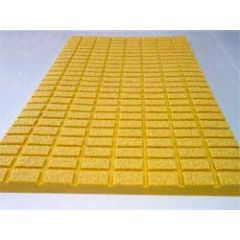
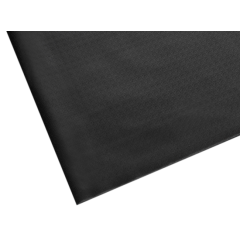
| Surface | 12″ × 12″ cross-hatch, slip-resistant |
| Colors | 6 standard — black, green, red, blue, grey, brown; EPDM speckle blends (custom) |
| Drainage | Structural underside legs channel water away beneath the surface |
| Installation | Alignment pins + edge adhesive into a monolithic surface (not bonded to the base); over solid subbase or compacted granular |
| Warranty | 1-year limited (Mats Inc.) |
Frequently Asked Questions
What are the tiles made of?
Answered by Dustin Thompson, Owner & CEO
They're molded from recycled SBR rubber — reclaimed tire rubber pressed into a dense, durable 2-by-2-foot tile with a 12-by-12-inch cross-hatch top for grip. The recycled content keeps material out of a landfill, and the dense rubber stands up to constant foot traffic, weather, and UV without cracking or fading the way looser surfaces do. The color speckles, when you add them, are EPDM — a tougher, more colorfast rubber used for the surface flecks.
How do I know which fall-height system I need?
Answered by Dustin Thompson, Owner & CEO
Match the system to your equipment's fall height — the distance from the highest place a child can stand or climb down to the surface. The tiles are rated in four steps: a 1¾-inch tile to 4 feet, a 3⅛-inch tile to 6 feet, and those same tiles over a 2-inch foam playpad to reach 8 and 10 feet.
Every system is built and tested to ASTM F1292-18 and is IPEMA-certified. When in doubt, measure the tallest accessible point and round up — the surface has to be rated at or above the real fall height.
How are the tiles installed?
Answered by Dustin Thompson, Owner & CEO
They go over a solid subbase — concrete or asphalt — or a well-compacted granular base. Alignment pins lock neighboring tiles together so they sit flush, and an edge adhesive joins them into one monolithic surface that isn't glued to the base underneath.
Structural legs on the underside lift the tiles just enough to let water drain away. A flat, well-drained base is the key to a level surface and tight seams that hold up over the years.
What size are the tiles, and how much do they cover?
Answered by Jinna Hopson, Vice President of Marketing
Each tile is 2 feet by 2 feet, so it covers 4 square feet, and they connect into any rectangular footprint you need. Measure the use zone around and under your equipment — the safety standard sets how far the surfacing has to extend — then plan for border tiles trimmed to fit the perimeter.
Send us the dimensions and the equipment layout, and we'll work out the tile count, the right fall-height system, and any cuts.
What colors do they come in?
Answered by Jinna Hopson, Vice President of Marketing
Six standard colors — black, green, red, blue, grey, and brown — and you can dress the surface up with EPDM color speckles in a range of shades at 25% or 50% intensity, ordered as a custom blend.
Color is an easy way to mark different play zones, follow a school or park theme, or simply make the space inviting. Because the color runs through the rubber, it won't wear off underfoot.
Are these only for big public playgrounds, or can I use them at home?
Answered by Jinna Hopson, Vice President of Marketing
Both. The same tiles that surface a school or municipal playground work just as well under a backyard playset — you just cover a smaller area. For a home swing set or climber, match the system to how high the kids can get, and you've got the same tested protection a public park uses, without loose mulch to rake and refill. It's a tidy, low-maintenance surface that drains after rain and stays put.
By Dustin Thompson, Owner & CEO, Mats Inc.