




Description
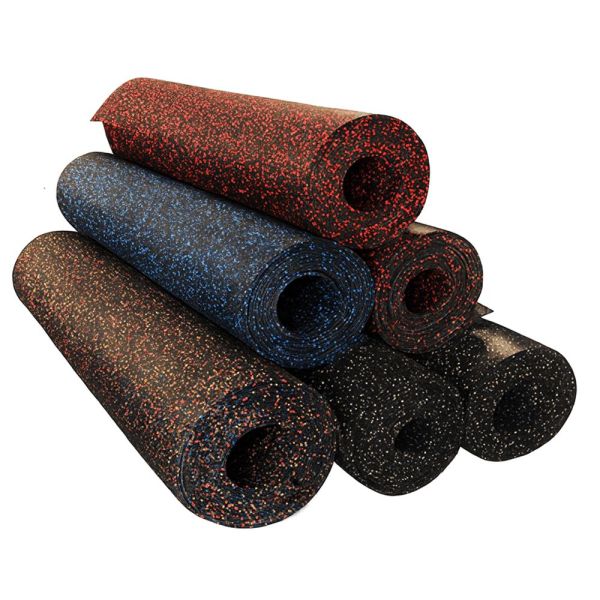
Rubber gym flooring rolls give you the most floor with the fewest seams. Where tiles and single mats leave you lines to manage, a roll lays down in long, continuous runs — cleaner to look at, faster to cover a big room, and harder for equipment to shift around. These are recycled-rubber rolls built to take dropped weights and heavy machines without passing the damage into the floor below.
What Rubber Gym Flooring Rolls Do Before Your Subfloor Pays for It
Every dropped dumbbell and loaded barbell sends force somewhere. On a bare slab or a finished floor, that force goes straight into the surface — cracked tile, dented concrete, gouged wood, and noise that travels through the building. A rubber roll sits between the workout and the floor and absorbs most of that energy before it lands.
That's the real job here: protecting the subfloor, the equipment, and the people training. The rolls also knock down the noise and shock that carry to rooms below — independent testing rates them high for both airborne sound (STC 59) and impact sound (IIC 69), strong marks for a floor over an occupied space. And the dense surface gives shoes and equipment enough grip to stay put.
Why Recycled Rubber Rolls, and Why This One
These rolls are made from recycled tire rubber — SBR (styrene-butadiene rubber) bound with polyurethane — at about 92% recycled content, so the same density that makes them tough also keeps a lot of scrap tire out of a landfill. That density is real, 65 to 80 pounds per cubic foot, which is what lets the rubber absorb impact and stay flat under weights instead of bouncing.
They come in three thicknesses, from 1/4 inch up to 1/2 inch, so you can match the floor to the load instead of buying one thickness for the whole building. Thinner runs suit cardio and general fitness; the half-inch handles busier rooms and heavier equipment. Because they're cut to length, a roll can cover a full room edge to edge with very few seams. For the heaviest lifting — dropped barbells and Olympic platforms — our heavy-duty gym matting is the surface built for that punishment.
Color isn't an afterthought either. Beyond solid black, the rolls come in fleck blends across blues, grays, reds, greens and more, so a commercial studio can match a brand palette and a home gym can skip the plain-industrial look.
Where Rolls Belong, and Where They Don't
Rolls are at their best in big, open, more-or-less permanent floors: commercial gyms, school and team weight rooms, fitness studios, and full garage or basement builds where you want wall-to-wall coverage. The flat, continuous surface makes a large room look finished and stay put under heavy traffic.
Where they're not the easy answer is a space that changes often. If you expect to rearrange the room, move equipment between spots, or take the floor with you, interlocking tiles handle that better — they come up and go back down without adhesive.
And for a dedicated drop zone — a deadlift or Olympic platform — our heavy-duty gym matting is purpose-built to take repeated heavy drops, rather than rolling the whole room. Rolls are one option in the wider gym flooring lineup, because different spaces call for different surfaces.
Three Things to Check Before You Spec Rolls
Three things decide whether a roll is right and which one to order.
First, thickness against the load. For bodyweight training, stretching, and cardio, 1/4 inch to 3/8 inch is usually enough. For busier rooms and heavier equipment, the 1/2 inch gives you more cushion and protection. If you're regularly dropping loaded barbells, that's past what these rolls are for — the heavy-duty gym matting is the surface built to absorb it. Speccing thin to save on material is the most common way subfloors get damaged.
Second, the room and the length. Measure the actual training area, not the whole slab — rolls cut to any length, so you only cover what you use. Note the doorways, posts, and racks you'll trim around, and decide whether you want one continuous run or a couple of shorter pieces that are easier to handle.
Third, how it attaches. A roll can sit loose under light use, but most installs use double-sided tape or adhesive so edges stay down and seams stay tight, especially in high-traffic and commercial rooms. Let the rubber relax to room temperature first, then trim to fit — that keeps it from shifting or curling later.
Why Mats Inc.
Mats Inc. has spent since 1964 figuring out which surface belongs on which floor, and rubber rolls are a straightforward call once we know the load and the room. We'll help you land on a thickness instead of guessing, work out how much length the space actually needs, and flag the install method that fits your subfloor.
We specify rather than install, so the advice is about getting the spec right the first time — not selling you more rubber than the room calls for. Every order is backed by our one-year limited warranty.
| Material | Recycled SBR (styrene-butadiene) tire rubber with polyurethane binder; ~92% recycled content |
| Thickness options | 1/4″ (6 mm), 3/8″ (9 mm), 1/2″ (12 mm) |
| Roll width | 4 ft (48″) |
| Length | Cut to length (standard runs 15–100 ft) |
| Density | 65–80 lb/ft³ |
| Slip resistance | Coefficient of friction > 0.9 (ASTM D2047) |
| Acoustics | STC 59 (airborne sound) / IIC 69 (impact sound) |
| Durability | Tensile > 220 psi; elongation 155%; tear 80 pli; abrasion < 1.7 g (1,000 cycles) |
| Flammability | Passes burning pill test |
| Color options | Solid black plus fleck blends — blues, grays, reds, greens, cocoa, and granite/sandstone tones |
| Installation | Acclimate to room temperature, trim to fit, secure with adhesive or double-sided tape |
| Maintenance | Sweep or vacuum; damp mop with a neutral cleaner |
| Warranty | 1-year limited (Mats Inc.) |
Frequently Asked Questions
What are these rolls actually made of?
Answered by Dustin Thompson, Owner & CEO
They're made from recycled tire rubber — SBR, short for styrene-butadiene rubber — ground down and bound with polyurethane into a dense, solid sheet at about 92% recycled content. That density is the point, around 65 to 80 pounds per cubic foot: it's what lets the roll absorb the impact of dropped weights and stay flat under heavy machines instead of compressing or bouncing. It also puts a lot of scrap tire to good use instead of a landfill.
How long will rubber gym flooring rolls last, and what wears them out?
Answered by Dustin Thompson, Owner & CEO
In a normal gym, quality rubber rolls last many years — often a decade or more — because dense recycled rubber handles foot traffic and equipment without breaking down. What ends their life early is usually the wrong thickness for the load: a thin roll under a platform takes punishment it wasn't built for.
Standing water trapped underneath and harsh solvent cleaners can also shorten the life. A thickness matched to the load, and a neutral cleaner instead of solvents, go a long way.
Do I have to glue them down?
Answered by Dustin Thompson, Owner & CEO
Not always. For a small, low-traffic area a roll can lie loose, held by its own weight. For most rooms — and almost any commercial floor — double-sided tape or adhesive is worth it, because it keeps the edges flat and the seams tight under daily use.
Whatever the method, let the roll relax to room temperature first and trim it to fit. Rubber that's been rolled tight needs time to settle before it lies flat.
How do I know how much to order if they're cut to length?
Answered by Jinna Hopson, Vice President of Marketing
Measure the area you'll actually train on, not the entire floor — most home and garage gyms only need the working zone covered. Because the rolls are cut to any length, you order to that measurement rather than forcing the room to fit fixed sizes.
Map out where doorways, racks, and posts fall so we can plan trims and seams, and tell us if you'd rather have one long run or a few shorter pieces that are easier to move and lay.
What colors do they come in?
Answered by Jinna Hopson, Vice President of Marketing
More than you might expect. The base is solid black, which hides scuffs and is the usual pick for hard-working commercial floors. From there, the rolls come in fleck blends — flecks of color mixed into the black rubber — in blues, grays, reds, greens, cocoa, and stone-like granite and sandstone tones.
A studio can pull its brand colors into the floor, and a home gym can land on something warmer than plain black. Because the color is in the material rather than a top coating, it won't wear off where you walk and train.
Will rubber rolls work in a home or basement gym, or are they just for commercial spaces?
Answered by Jinna Hopson, Vice President of Marketing
Both. The same rolls that go into commercial gyms work just as well in a basement, garage, or spare-room setup — you're just covering a smaller area. In a basement, the impact absorption and noise dampening are a real plus over a finished room or bedroom below.
Pick a thickness that matches what you'll lift, cover the training zone, and a home space gets the same protected, finished floor a commercial gym has — without redoing the whole slab.
By Jinna Hopson, Vice President of Marketing, Mats Inc.
Ordering Info
- Standard Width is 4' with
- Customizable lengths up to 100'
Q&A
Frequently Asked Questions
What thickness options are available for these rubber gym flooring rolls?
These rolls are available in multiple thickness options including 1/4 inch thick, 3/8 inch thick, and 1/2 inch thick allowing you to choose the right level of cushioning and protection based on your specific workout needs and equipment types.
Is adhesive necessary to keep these gym floor rolls in place?
In most cases, no adhesive is needed. The rubber material and roll weight provide sufficient grip to stay in position during typical gym activities. For high-traffic commercial settings or areas with aggressive movements, adhesive or double-sided tape can be used for extra security.
Are these rolls suitable for all type of exercise equipment and exercises?
Yes, these rolls are perfect for treadmills, ellipticals, stationary bikes, yoga areas, and general fitness activities. They provide excellent traction and floor protection for home gyms, fitness studios, and multipurpose workout spaces.
What is the best way to care for rubber gym floor rolls?
Keep your flooring looking great by sweeping or vacuuming regularly to remove dirt and dust. For deeper cleaning, use a damp mop with a gentle cleaning solution. Avoid using harsh chemicals that could break down the rubber material over time.
Will there be a noticeable rubber odor when I first install the rolls?
Some initial rubber scent is normal with recycled rubber products. This odor is temporary and will fade significantly within the first week, especially in areas with good air circulation. Opening windows or using fans can help speed up the process.
Product PDF Document
Reviews
Write Your Own Review
Related Products
Super Scrape Rubber Mats
Safety Track Non-Skid Tape - Coarse

Smooth Marbleized Vinyl Switchboard Matting (Mil Spec)
Super Scrape Rubber Logo Mats
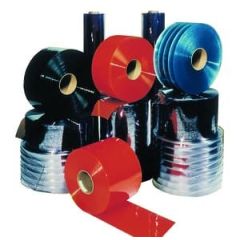
Strip Doors
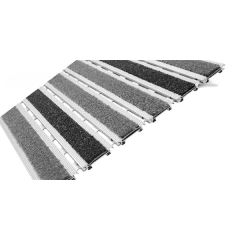
Perfec Clean 3/8" Rollup Mats - Aluminum Hinge
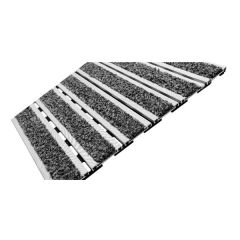
Perfec Clean 3/8" Rollup Mats - Rubber Hinge
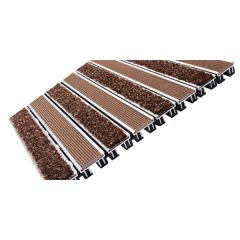
Perfec Clean 3/4" Rollup Grate - Rubber Hinge
Perfec Clean 1-5/8" Grate
WP-70 Non-Skid Epoxy Coating