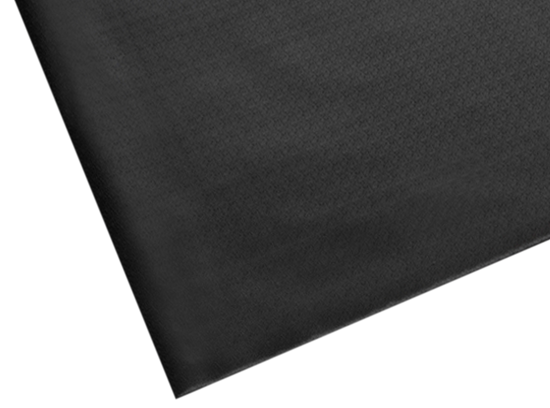
Three-quarter-inch rubber gym flooring is the thickest roll we carry, and it exists for one reason: the heaviest training. When loaded barbells and dropped dumbbells are part of the routine, a 3/4-inch roll puts the most rubber between the weight and the floor — the kind of protection a thinner surface can't match. It rolls out in continuous 4-foot-wide runs, so a serious weight room or lifting platform gets full, seamless coverage.
What 3/4-Inch Rubber Flooring Does Before Your Slab Takes the Hit
A dropped barbell sends a hard shock straight into whatever's under it. On bare concrete that means chips and cracks over time; on tile or a finished floor it means damage fast. At 3/4 inch, this is the thickness with the most rubber to absorb that force before it reaches the floor — which is why it's the one built for drop zones.
It's protecting the slab, the bar and plates, and the room around you all at once. The dense rubber also knocks down the noise and shock that travel to floors below — independent testing rates it high for both airborne sound (STC 59) and impact sound (IIC 69), strong marks for a floor over an occupied space. Put 3/4 inch where the heaviest weight lands and the floor underneath stops taking the punishment.
Why 3/4 Inch, and Why This Roll
Thickness is the whole point of this product. The thinner rolls handle cardio and general fitness; 3/4 inch is the heavy end, with enough dense rubber to absorb a real drop that a 1/4-inch or 3/8-inch surface would pass straight through. If weight regularly hits the floor where you train, this is the thickness that protects it.
The roll is recycled tire rubber — SBR (styrene-butadiene rubber) bound with polyurethane — at about 92% recycled content, so the density that makes it tough also keeps a lot of scrap tire out of a landfill. That density is real, 65 to 80 pounds per cubic foot, and it's what gives the surface both its shock absorption and its slip-resistant grip.
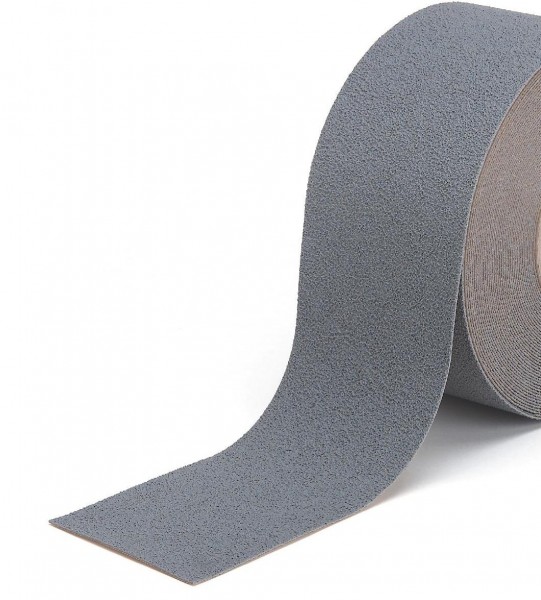
It rolls out 4 feet wide and is cut to the length your space needs, so a weight room or platform gets continuous coverage with very few seams. For the full range of thicknesses rather than just the heavy-duty one, the wider gym flooring lineup lays out the options.
Where 3/4-Inch Rolls Belong, and Where They Don't
This earns its keep wherever weight hits the floor: powerlifting and Olympic platforms, CrossFit boxes, collegiate and team weight rooms, and serious garage or basement gyms where heavy lifting happens. The full-width roll covers a lifting area edge to edge and stays flat under the worst of it.
Where 3/4 inch is more than you need is light cardio, stretching, and bodyweight areas — a thinner surface lies flatter and is easier to roll across open space. Match the thickness to the heaviest thing that drops on that spot; for a room that's mostly machines and mats, the thinner rolls are the simpler call.
Three Things to Check Before You Spec It
Three things decide whether 3/4 inch is the right thickness and how much you need.
First, the load. If you're regularly dropping loaded barbells or doing Olympic lifts, 3/4 inch is what protects the slab and the equipment. If nothing heavy ever hits the floor, you may not need this much rubber — spec the thickness to the worst impact the spot will see, not the average day.
Second, the coverage. The roll is 4 feet wide and cut to length, so measure the actual area you're flooring, not the whole room, and note the doorways, posts, and racks you'll trim around. Decide whether you want one long run or a few shorter pieces that are easier to handle.
Third, the install. Let the roll relax to room temperature so it lies flat, then trim to fit. The weight of 3/4-inch rubber helps it stay put, but the manufacturer's method for a full floor is double-sided tape or adhesive, which keeps edges down and seams tight under heavy use.
Why Mats Inc.
Mats Inc. has matched surfaces to floors since 1964, and a heavy lifting floor is a straightforward call once we know what you're dropping and where. We'll confirm 3/4 inch is the right thickness for your loads, work out how much 4-foot-wide roll the area takes, and sort out whether to tape it or glue it down.
We specify rather than install, so the focus is getting the spec and the layout right — not selling you the thickest rubber for floor that never sees a dropped weight. Every order is backed by our one-year limited warranty.
| Material | Recycled SBR (styrene-butadiene) tire rubber with polyurethane binder; ~92% recycled content |
| Thickness | 3/4″ (18 mm) |
| Roll width | 4 ft (48″) |
| Length | Cut to length (standard runs 15–100 ft) |
| Density | 65–80 lb/ft³ |
| Slip resistance | Coefficient of friction > 0.9 (ASTM D2047) |
| Acoustics | STC 59 (airborne sound) / IIC 69 (impact sound) |
| Durability | Tensile > 220 psi; elongation 155%; tear 80 pli; abrasion < 1.7 g (1,000 cycles) |
| Flammability | Passes burning pill test |
| Color options | Solid black plus fleck blends — blues, grays, reds, greens, cocoa, and granite/sandstone tones |
| Installation | Acclimate to room temperature, trim to fit, secure with adhesive or double-sided tape |
| Maintenance | Sweep or vacuum; damp mop with a neutral cleaner |
| Warranty | 1-year limited (Mats Inc.) |
Frequently Asked Questions
What is this 3/4-inch flooring made of?
Answered by Dustin Thompson, Owner & CEO
It's recycled tire rubber — SBR, or styrene-butadiene rubber — ground down and bound with polyurethane into a dense, solid sheet at about 92% recycled content. At 3/4 inch and 65 to 80 pounds per cubic foot, there's a lot of dense rubber in every square foot, and that mass is exactly what soaks up the shock of heavy drops instead of passing it into the floor. It also puts a lot of scrap tire to good use rather than a landfill.
How well does 3/4-inch flooring hold up to dropped weights over time?
Answered by Dustin Thompson, Owner & CEO
Very well — it's the thickness built for exactly that. Heavy recycled-rubber flooring in a drop zone routinely lasts well over a decade, because 3/4 inch absorbs repeated impact without breaking down or thinning where the weight lands. Lab testing backs the toughness up, with high tear and abrasion resistance.
What ages it early is trapped moisture underneath or solvent-based cleaners, so keep the install flat and dry and clean it with a neutral product.
How is 3/4-inch rolled flooring installed?
Answered by Dustin Thompson, Owner & CEO
Let the roll relax to room temperature first so it lies flat, then trim it to fit the space. From there, the manufacturer's method is double-sided tape or adhesive, which keeps the edges down and the seams tight under heavy use.
The thickness and weight help it stay in place, but for a full weight-room floor, taping or gluing is the way to keep everything flat and gap-free over time.
What width and lengths does it come in?
Answered by Jinna Hopson, Vice President of Marketing
It rolls out 4 feet wide and is cut to the length your space needs — manufacturer runs go from about 15 up to 100 feet. Because it's a continuous roll rather than separate pieces, a weight room or platform gets full coverage with very few seams.
Measure the area you're covering, note any doorways or racks to trim around, and we'll help you work out the run lengths so it lays in cleanly.
Does it only come in black?
Answered by Jinna Hopson, Vice President of Marketing
Black is the standard and the most common choice for a hard-working weight room. Beyond that, it comes in fleck blends — flecks of color mixed into the black rubber in blues, grays, reds, greens and more, plus stone-like granite and sandstone looks.
The color is part of the material rather than a surface coating, so heavy use and dropped weights won't wear it away.
Is 3/4 inch overkill for a home gym?
Answered by Jinna Hopson, Vice President of Marketing
It depends on what hits the floor. If you're dropping loaded barbells or doing Olympic lifts at home, 3/4 inch is the right call — it protects the slab and quiets the drops the way a thinner floor can't. If your training is mostly cardio, bodyweight, or light dumbbells, this is more thickness than that space needs, and a thinner rubber surface would be the simpler, flatter option. Match the thickness to the heaviest thing you'll drop.
By Dustin Thompson, Owner & CEO, Mats Inc.